null
Source link
Category: Featured
-
Rurality Matters in Evaluating Transfer Outcomes (opinion)
Transfer enrollment rose by 4.4 percent this year, according to recent data from the National Student Clearinghouse Research Center. In total, transfers have grown by 8 percent since 2020, signaling a steady rebound from the sharp declines seen during the pandemic. That’s encouraging news for students seeking affordable, flexible pathways to a degree, as well as for institutions focused on expanding access and supporting completion.
Less noticed, however, is just how much progress rural students are making. In fall 2023, rural community colleges experienced a 12.1 percent increase in students transferring to four-year institutions. This progress is even more impressive given the historic underinvestment in rural institutions and the well-documented barriers their students face on their path to a four-year degree.
Many of the country’s small, rural institutions remain on the margins of transfer conversations, partnerships and policy priorities. Here in California, for instance 60 percent of the community colleges with the lowest transfer rates are rural. From low-income students in Appalachia to Latino learners in Texas’s Rio Grande Valley, rural colleges are lifelines for students facing barriers such as poverty, food and housing insecurity, and limited access to transportation and technology. Yet these institutions tend to lack the support, visibility and resources of larger community college systems. They often remain excluded from the design and implementation of transfer initiatives.
Rural students bring tremendous talent, drive and potential to higher education. Many are the first in their families to attend college. They are often deeply rooted in their communities and, in many cases, seek to use their education to give back and contribute to their local economies.
Transferring to a four-year institution can dramatically increase the lifetime earnings of these learners, expand their career paths and help meet the growing demand for a highly skilled workforce. Individuals with a bachelor’s degree earn, on average, nearly 35 percent more per year than those with only an associate degree. Four-year degrees open doors to career advancement, civic engagement and personal growth.
Yet the systemic challenges rural community college students face—from more limited course offerings and degree options to long travel times to campuses to unreliable internet connections—require tailored support and intentional partnership. A one-size-fits-all approach to transfer doesn’t work when rural students are starting from a fundamentally different place than many of their peers.
For example, rural colleges may not have the staff capacity to manage complex articulation agreements or advocate for their students in statewide transfer initiatives. Their advisers may juggle many roles, serving as counselors, career coaches and transfer liaisons all at once. Meanwhile, students themselves may be unaware of transfer opportunities or discouraged by long distances to four-year campuses, especially when those pathways demand sacrifices they can’t afford to make.
The health of both our higher education ecosystem and our economy depends on ensuring that all students, regardless of ZIP code, can move easily between two-year and four-year institutions. If efforts to improve transfer overlook rural colleges, they risk deepening existing educational inequities and missing out on a significant segment of our nation’s talent pool.
Organizations such as the Rural Community College Alliance shine a needed spotlight on how to best collaborate with rural institutions across the country to improve transfer outcomes and better support rural students’ success. Progress starts with listening and taking the time to understand the unique strengths and challenges of rural communities rather than imposing outside solutions.
The policy landscape will need to evolve to support these efforts. This means increasing investment in rural higher education infrastructure, expanding funding for rural-serving institutions, and creating more flexible transfer frameworks that reflect the realities of rural learners, many of whom are working adults, members of the military, parents, or all of the above. Federal, state and higher education leaders should recognize rurality as a key lens through which to view improving student outcomes, on par with class or race.
Transfer rates are rising, and more students are finding affordable on-ramps to bachelor’s degrees. But this progress is incomplete unless it reaches every corner of the country, including the small towns and rural communities that are home to millions of students. In a moment when more students are finally moving forward, we can’t afford to leave these learners behind. When rural students succeed, our entire nation benefits.
-

College Programs Support Holistic Student Basic Needs
About three in five college students experienced some level of basic needs insecurity during the 2024 calendar year, according to survey data from Trellis Strategies. Over half (58 percent) of respondents said they experienced one or more forms of basic needs insecurity in the past 12 months.
Student financial challenges can negatively impact academic achievement and students’ ability to remain enrolled. About 57 percent of students said they’ve had to choose between college expenses and basic needs, according to a 2024 report from Ellucian.
While a growing number of colleges and universities are expanding support for basic needs resource centers—driven in part by state legislation that requires more accommodations for students in peril—not every campus dedicates funds to the centers. A 2024 survey by Swipe Out Hunger found that of 300-plus campus pantries, two in five were funded primarily through donations. Only 5 percent of food pantries had a dedicated budget from their institution as a primary source of funding.
Inside Higher Ed compiled four examples of institutions that are considering new or innovative ways to address students’ financial wellbeing and basic needs on campus.
Penn State University—School Supplies for Student Success
Previous research shows that when students have their relevant course materials provided on day one, they are more likely to pass their classes and succeed. Penn State’s Chaiken Center for Student Success launched a School Supplies for Student Success program that offers learners access to free supplies, including notebooks, writing utensils and headphones, to help them stay on track academically.
Students are able to visit the student success center on the University Park campus every two weeks to acquire items, which are also available at two other locations on campus. Learners attending Penn State Altoona and Penn State Hazleton can visit their respective student success center for supplies, as well.
The program is funded by a Barnes & Noble College Grant program and is sustained through physical and monetary donations from the university community.
Massachusetts College of Liberal Arts—Essential Needs Center
The Essential Needs Center was developed from a Service Leadership Capstone course, which required students to complete a community-based service project. One group of students explored rates of basic needs insecurity and established a food pantry to remedy hunger on campus.
“The program started as a drawer at my desk,” said Spencer Moser, assistant dean for Student Growth and Wellbeing, who taught the course. “Then it grew to fill a shelving unit, a closet and eventually its own space on campus.”
The center, now a one-stop shop for basic needs support on campus, provides students with small appliances, storage containers, personal care items and seasonal clothing, as well as resources to address housing and transportation needs, including emergency funding grants. Students can also apply for a “basic needs bundle” to select specific items they may require.
Paid student employees maintain the center but it’s also left “unstaffed” at some hours to address the stigma of seeking help for basic supplies. Between November 2023 and January 2025, over 1,300 students engaged with the center.
University of New Hampshire—Financial Wellness
A lack of financial stability can also have a negative impact on student thriving and success. To support students’ learning and financial wellbeing, the University of New Hampshire created an online digital hub that provides links to a budget worksheet, financial wellness self-evaluation, college cost calculator and loan simulator.
Students can also schedule an appointment to talk with an educator to discuss financial wellness or engage in a financial wellness workshop.
Roxbury Community College—the Rox Box
Most colleges operate on an academic calendar, with available hours and resources falling when class is in session. Roxbury Community College in Massachusetts launched a new initiative in winter 2023 to ensure students who were off campus for winter break didn’t experience food insecurity.
Before the break, staff at the college’s food pantry, the Rox Box, handed out Stop & Shop gift cards and grab-and-go meals, as well as a list of local places students could visit for meals over break.
Do you have a wellness intervention that might help others promote student success? Tell us about it.
-

New Government, familiar problems – By Chris Husbands
The higher education sector had high hopes of a new government last July. Early messaging from ministers suggested that they were justified. The Guardian quoted Peter Kyle, the Science Secretary, declaring an ‘end to the war on universities’. Speaking to the Commons in September 2024, the Education Secretary Bridget Phillipson said that ‘the last Government ..use[d] our world-leading sector as a political football, talking down institutions and watching on as the situation became…desperate. I [want to]…return universities to being the engines of growth and opportunity‘. In November, she announced a rise – albeit for just one year in the first instance – in the undergraduate tuition fee, with the prospect of alleviating pressure on higher education budgets.
Ten months on, the hopes look tarnished as financial, political and policy challenges mount. The scale of the higher education funding challenge is deepening, it seems, by the week. The OfS has reported that four in ten universities will report a deficit this year. Restructuring programmes are underway in scores of universities, with some institutions on their second, third or even fourth round of savings. The post-study graduate visa, an important lifeline for international student recruitment, appears to be under threat.
There are eerie echoes of headlines and comments under the last government. The Daily Telegraph declared that a ‘record number of universities [are] in deficit’. The Times claimed that universities that appeared to report relatively poor progression to graduate-level jobs were to be ‘named and shamed’. Following the success of Reform UK in local elections, some backbench Labour MPs have been sharply critical of universities: ‘I would close half our universities and turn them into vocational colleges’, wrote the Liverpool MP Dan Carden (BA, London School of Economics, since you ask), whilst Jonathan Hinder, MP for Pendle (MA Oxford) declared himself ‘happy to be bold and say I don’t think we should have anywhere near as many universities and university places‘. Philip Augar, who reviewed skills funding for Theresa May’s Government, wrote in the Financial Times that the ‘English higher education market is broken‘ as a result of a ‘failed free market experiment’. It seems terribly familiar: a sector in financial crisis, losing political traction and friends.
Policy direction appears to be unclear. The English higher education sector is still largely shaped by the coalition government’s policy decisions between 2010 and 2015. Its key design principles include uncapped student demand since number controls were abolished in 2013, assumed cross-subsidies across and between activity streams allowing for institutional flexibility, access to private capital markets since HEFCE capital funding was removed in 2011, diverse missions but largely homogenous delivery models based around traditional terms and full-time, three-year undergraduate provision, and jealously protected institutional autonomy. Familiar though these principles are in higher education policy, some are in truth relatively recent, and are creating tensions between what the nation wants from its university system, what universities can offer and what the government and others are willing to pay for.
Moreover, the sector we have in 2025 is not the sector which the 2017 Higher Education and Reform Act (HERA) envisaged: HERA was expected to significantly re-shape the sector. The government’s impact assessment of HERA suggested that there would be in the order of 800 HE providers by the mid-2020s. This did not happen, though the impact of private capital, often channelled through established institutions and now rapidly growing for-profit providers, should not be underestimated as a longer-term transformative force in the sector.
We are expecting both a three-year comprehensive spending review and a post-16 White Paper in a couple of months’ time. In my 2024 HEPI paper, ’Four Futures’, I sketched out possible scenarios for a sector facing intense challenges. The near-frozen undergraduate fee was reducing the unit of resource for undergraduate teaching as costs rose. Undergraduate demand seemed to be softening amongst (especially) disadvantaged eighteen-year-olds. International student demand remains volatile and subject to political change in visa regulations. The structural deficit on research funding deepened. ‘Four Futures’ outlined four scenarios, summarised in Table 1.
Of course, we all want a mixture of cost control, thriving universities, regional growth and research excellence, but it is difficult to have all of them. Governments and universities set priorities based on limited resources, so there are choices to be made and trade-offs to be confronted for both policymakers and institutional leaders.
Government needs to make decisions about universities in the context of competing and changing policy imperatives. It needs to balance restoring government finances, allocating resources to other needy sectors, securing economic growth, and, more obviously important than a year ago, protecting sovereign intellectual property assets and growing defence-related R&D. The Secretary of State’s letter to Vice-Chancellors in the Autumn identified growth, engagement with place, teaching excellence, widening participation and securing efficiencies, but did not unpick the tensions between them. That depends on articulating a stronger vision for higher education given the Government’s priorities and resources and the economic challenges facing institutions, and it is a task for the forthcoming White Paper.
But there are urgent choices too for institutions, and those need to be made quickly in many universities. Institutional and sector efficiencies are vital, and a key theme of the UUK Carrington Review, but they need to be considered in the light of sustainable operating models for both academic delivery and professional services. Institutions need a clearly articulated value proposition, communicated strongly and effectively and capable of driving the operating model. In the past, too many universities have tried to do too many things – and with resources scarce, the choices cannot be ducked. That means there is a consideration which links the choices facing government and those facing individual institutions. If a core strength of the English system lies in its diversity and its distributed excellence, individual institutions need to think about their place in, and responsibilities to, the wider HE system. For a sector characterised by intense competition, that is a profound cultural shift, notwithstanding the economic and legal challenges of collaboration.
The higher education sector now is not the sector we have always had, and therefore it won’t be the sector we always have. How the sector collectively, and institutions individually, confront choices is a test for policymakers and institutional leaders.
-

Higher education can cut through the immigration debate with a focus on quality
The surge for Reform in the recent local elections in England has increased fears in the higher education sector that Labour may feel compelled to focus on driving down immigration at the expense of its other priorities and missions – James Coe has set out the risks of this approach on Wonkhe.
Vice chancellors are understandably frustrated with the public debate on immigration and do not relish the prospect of rehearsing the same political cycle in the wake of the forthcoming white paper on legal migration. All can reel off data point after data point demonstrating the value of international student recruitment to their regions and communities, which according to the most recent London Economics calculations for the academic year 2022–23 brought £41.9bn a year in economic returns to the UK. That data is well supported by polling that suggests the public is generally pretty unfussed about international students compared to other forms of legal migration. The latest insight from British Future on the public’s attitudes to international students found:
International students are seen to boost the UK economy, fill skills gaps, improve local economies and create job opportunities for locals and make cities and towns more vibrant and culturally diverse.
Heads of institution also add that of all the many and varied problems and complaints that arise from engagement with their local communities and regions, international students have never once featured. The problem, they say, is not policy, it is politics. And when politics tilts towards finding any means to drive down overall migration, higher education inevitably finds itself in the position of being collateral damage, despite the economic and reputational harm done – because it’s much easier to reduce student numbers than to tackle some of the more complex and intransigent issues with immigration.
Standing the heat
To give the government its due, the signal it wants to send on student visas is not currently about eroding the UK’s international competitiveness as a destination for study, and much more about reducing the use of that system for purposes for which it was never designed, particularly as a route to claiming asylum. Measures proposed are likely to include additional scrutiny of those entering from Nigeria, Pakistan, and Sri Lanka, an approach that may sit uncomfortably as making broad assumptions about a whole cohort of applicants, but at least has the benefit of being risk-based. That nuance may be lost, however, in how the public conversation plays out both within the UK and in the countries where prospective international students and their governments and media pay close attention to the UK international policy landscape and associated mood music.
The political challenge is not limited to higher education. Recognising the derailing effect of constant short-term reactive announcements in immigration policy, a number of influential think tanks including the Institute for Government, the Institute for Public Policy Research, the Centre for Policy Studies, Onward, and British Future have called on the government to create an annual migration plan. The Institute for Government’s explanation of how it envisages an annual migration plan would work sets out benefits including clarity on overall objectives for the system with the ability to plan ahead, the segmentation of analysis and objectives by route, and the integration of wider government agendas such as those on skills, or foreign policy.
For the higher education sector, an annual planning approach could make a big difference, creating space for differentiated objectives, policy measures and monitoring of student and graduate visas – something that in many ways would be much more meaningful than removing student numbers from overall published net migration figures, or presenting them separately. It could open up a sensible discussion about what data represents a meaningful measure, what should be adopted as a target and what should be monitored. It could also open up space for a more productive conversation between higher education representatives and policymakers focused on making the most of the connections between international education, regional and national skills needs, and workforce planning.
In the weeks and months ahead the government is also expected to publish a refreshed international education strategy, which should give the sector a strong steer about what the government wants to see from international higher education. But it will be critical for that strategy to have a clear line of sight to other government priorities on both the economy and the wider immigration picture, to prevent it being siloed and becoming dispensable.
The fate of the last government’s international education strategy tells an instructive tale about what happens when government is not joined up in its agenda. Three years ago the sector and its champions in Westminster celebrated the achievement of a core objective of that strategy – attracting 600,000 students to the UK – eight years earlier than planned. But that rapid growth provided both unsustainable, as numbers dropped again in response to external shocks, and politically problematic, as students bringing dependents drove up overall numbers and the government responded with another shift in policy. The credibility and longevity of the refreshed strategy will depend on the government’s willingness to back it when the political heat is turned up in other parts of the immigration system.
Quality is our watchword
The higher education sector is justifiably proud of its international offer and keen to work with government on developing a shared plan to make the most of opportunities afforded by bringing students to the UK to study. The focus has to be on quality: attracting well-qualified and capable applicants; offering high-quality courses focused on developing career-relevant skills, particularly where there is strategic alignment with the government’s industrial strategy; and further enhancing the global employability of UK international graduates, whether it’s through securing a good job via the Graduate route, or elsewhere.
The value of international recruitment is not always very tangible to people living in communities in terms of valuable skills and cultural capital – and that breaks down to telling stories in ways that people can connect with. As one Labour Member of Parliament suggested to us, many parts of Britain are in the process of reimagining their collective identities, and part of the job is building a compelling identity connection with the new economy rather than harkening back to an imagined past. That is work that sits somewhat apart from simply explaining the value of international students, but may also turn out to be intimately connected to it.
Higher education institutions can work with employers, the regional and national policymakers concerned with skills, innovation and growth, and in local communities, to further that agenda, but they need the breathing space afforded by policy stability and a clear plan from government they can trust will be sustainable. To create that space, the sector will need to demonstrate that it has a high standard of practice and will not tolerate abuse of the system. “Abuse” is a loaded word; many of the practices that raise alarm are technically legal, but they put the system as a whole in jeopardy. The sector has a great track record on developing a shared standard of practice through instruments like the Agent Quality Framework, but it may also need to collectively think through whose job it is to call out those who fall short of those standards, to avoid the whole sector being tarred with the brush of irresponsible practice.
While the landscape is complicated and at times disheartening, UK higher education can cut through the noise by sticking like glue to its quality message. Many universities are bigger and longer standing than Premier League football clubs – but those bastions of community pride have also had to work through challenges with their places and update their practice as the landscape has shifted. There is an opportunity with the forthcoming white paper and international education strategy to get the government and the sector on the same side when it comes to international higher education. Both parties will need to show willing to hear where the other is coming from to avoid another five years of frustration.
This article is published in association with IDP Education. It draws on a private discussion held with policymakers and heads of institution on the theme of international higher education’s contribution to regional economic growth. The authors would like to thank all those who took part in that discussion.
-
How AI agents can lower student complaints – Episode 167 – Campus Review
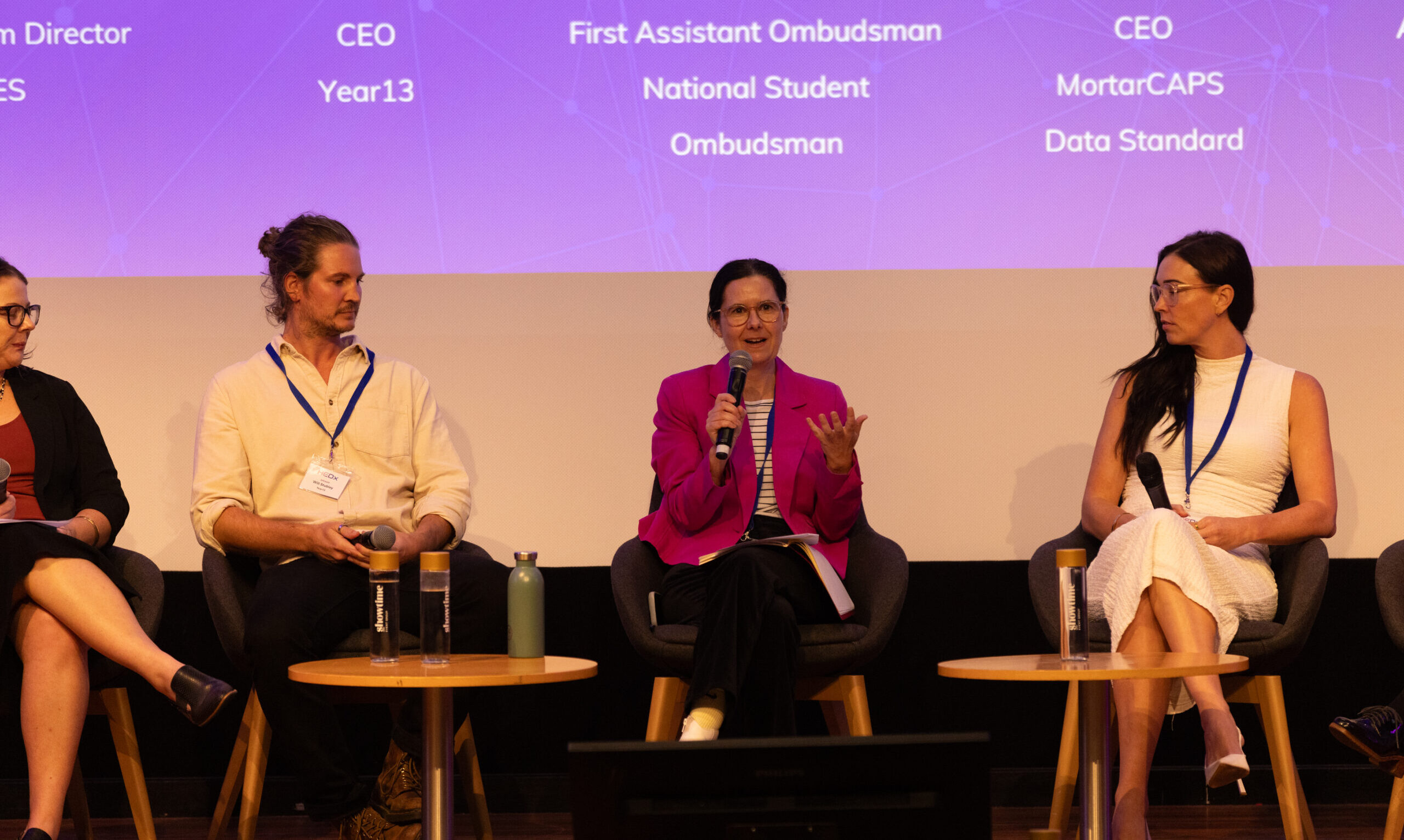
Sarah Bendall speaks at a HEDx event. Picture: HEDx
In this episode, vice-chancellor of La Trobe University Theo Farrell explains how artificial intelligence (AI) agents can serve the entire lifecycle of a university student.
Please login below to view content or subscribe now.
Membership Login
-

WSU continues industry partnership trend with Genetec – Campus Review
Physical security company Genetec’s Sydney office. Picture: Supplied
Western Sydney University (WSU) will send some of its students to intern at a Sydney-based tech company amid continued calls for universities to partner with industry to produce better quality graduates.
Please login below to view content or subscribe now.
Membership Login
-
USyd responds to student concerns about ‘two-lane’ AI policy – Campus Review
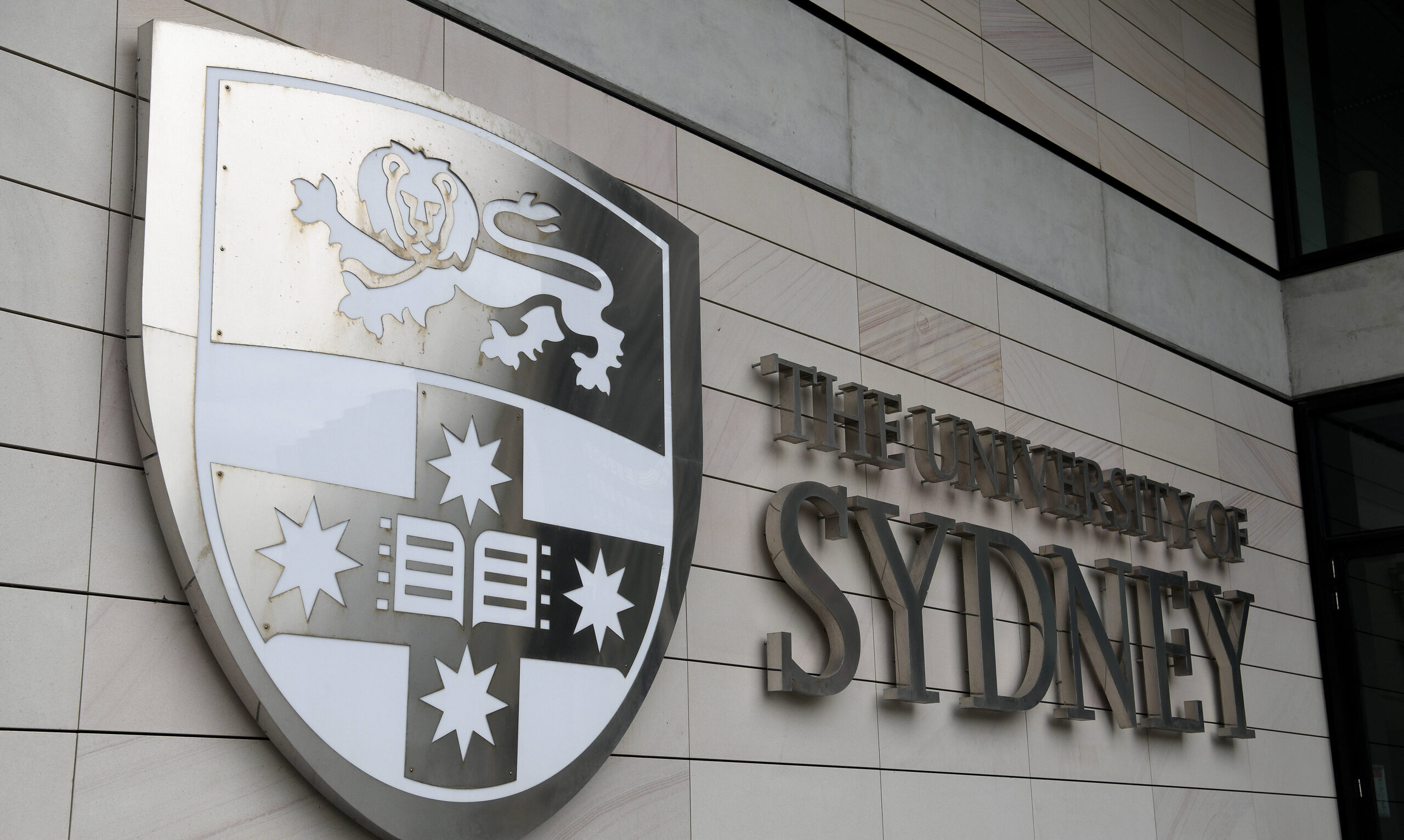
Signage at he University of Sydney campus in Sydney. Picture: Bianca De Marchi
The university arguably leading the sector in its use of artificial intelligence (AI) in assessment tasks has received criticism from some students who have complained they lost marks for not using AI in a test.
Please login below to view content or subscribe now.
Membership Login
-

Different kinds of value, different kinds of higher education
If Lionel Robbins – author of the first major review of higher education in 1964 – could have glimpsed the future, he would no doubt have been pleased with much of what he saw.
Back then, only about five per cent of young people attended university. His ambition was to extend opportunities to all who could benefit from a degree – and much of what he envisioned has come to pass.
Yet after years of expansion, universities are in a funding crisis, students are struggling with costs, many question the benefit of a degree, and both international and domestic student demand is under threat.
This is why I now find myself frequently debating how best to measure the value of higher education – for fear we may lose what we have failed to adequately value.
In research
The value of university research is perhaps the least disputed aspect. The UK, home to just one per cent of the world’s population, produces six per cent of global research output and over 13 per cent of the most highly cited articles, according to Universities UK. Over 60 per cent of this research involves international collaboration, and a third of academics come from abroad.
Whether measured by citations, publications, Nobel Prizes, or the ability to attract international talent, UK research performs strongly and is undeniably valuable. At the Leverhulme Trust, we certainly appreciate this. We receive far more outstanding ideas than we can support, and the research produced is extraordinary.
However, university research is not a standalone activity. In many, though not all, institutions, research and teaching are intertwined – and not only in a financial sense. Research informs teaching, and teaching shapes research.
Connectedness
Without a strong flow of talented students, the future of UK research looks bleak. This is why, with our mission to support research, we invest a lot in doctoral students. Calculations of value (and indeed policy) need to take this connectedness into account – tricky with different government departments responsible for research and teaching, and a one-size-fits-all funding model with cross-subsidy of research built in.
The sector’s status as a major export industry is also undeniable, contributing around £27 billion to national exports. But HE’s contribution to the national accounts does not capture its broader social impact, and I suspect Robbins might have been most heartened by the strides made to widen access.
Putting a value on this is tricky, but opportunities for individuals from working-class backgrounds to attend university have improved dramatically. Despite setbacks in recent years, it is noteworthy that nearly 30 per cent of students eligible for free school meals now progress to higher education. Remarkably, around half do in London. More than 60 per cent of Black students go on to university. The fact that the system is far more open to all students is of great value and worthy of celebrating.
Perceptions
But what about the value for students in this expanded sector? Various metrics have been employed to assess the worth of a degree: student satisfaction surveys, employment rates, job quality and wages. Each of these measures is limited in different ways. However, with taxpayers’ money funding a significant portion of costs, even such imperfect measures of value are necessary and informative.
On average, graduates earn more than their non-graduate peers, but averages are not helpful in understanding the scepticism among some students about the value of their degree. In regions lacking investment, transport and thriving industries, there is insufficient demand for graduate skills. Therefore, many graduates who are unable to relocate do poorly in the labour market.
Earnings and employability, particularly measured early in a graduate’s career, do not, of course, capture the full value of a degree. This is perhaps most obvious for those in jobs with high social value, such as nurses, or those in low-paid but creative jobs.
Demands
Nonetheless, in repeated surveys, students and graduates report concern about their job prospects. Many are struggling to find graduate jobs.
At the same time, there continue to be skill shortages in some fields. Skills England has the difficult task of addressing national skills needs, including any mismatch between supply and demand, and this must include consideration of graduate skills. Helping students make informed choices and ensuring that all degrees, irrespective of discipline, equip them with a broad, adaptable skill set is crucial. But we need to acknowledge that even in tough labour markets, this will still not ensure great jobs for all.
It is in those left behind areas with weak labour markets that assessing the value of universities for their local communities and economies is more difficult but vital. Universities can catalyse local growth – the evidence on agglomeration effects is substantial. Some institutions contribute nationally; others drive local innovation and regeneration.
In deprived areas, universities serve as social anchors and must help retrain adults for emerging jobs. Some universities in struggling regions have played critical roles not only in equipping students with skills for the modern economy but also in providing a sense of community and purpose during periods of industrial decline and economic hardship.
Risks
In the short term, as the UK grapples with its economic challenges and the sector with the funding crisis, we need to be alert to the risks of a shrinking HE system. Loss of teaching capacity will lead to loss of research capacity, and vice versa. If we are to preserve the sector’s strength, we need to recognise the varied roles that institutions play across teaching, research, local development and social mobility.
Looking forward, universities will continue to make a crucial contribution to economic growth by developing the skills of the workforce, but only if accompanied by other types of investment.
Above all, with such a diverse sector, a one-size-fits-all approach cannot work. Policy needs to actively shape the system and enable different universities to focus on where they can add the most value.