Category: Featured

  • AAUP Report Backs Tenured Pro-Palestine Prof. Who Was Fired

    AAUP Report Backs Tenured Pro-Palestine Prof. Who Was Fired

    A new American Association of University Professors investigative report concludes that Muhlenberg College violated the academic freedom of a tenured associate professor who said the institution fired her for pro-Palestinian speech.

    Maura Finkelstein’s situation made headlines last year as the first instance that major academic freedom advocacy groups had heard about of a tenured faculty member being fired for pro-Palestine or pro-Israel statements. Complaints against Finkelstein also became the subject of a U.S. Education Department Office for Civil Rights investigation.

    Finkelstein previously said she was fighting her May 2024 termination and was continuing to be paid during the appeals. But a college spokesperson told Inside Higher Ed this week that Finkelstein has now “resigned from the college to pursue other scholarship opportunities.” Finkelstein didn’t respond to Inside Higher Ed’s requests for comment.

    Finkelstein, who is Jewish, had said a panel of faculty and staff recommended axing her over her Instagram repost that told readers not to “normalize Zionists taking up space” and called Zionists “genocide-loving fascists” who shouldn’t be welcome “in your spaces.”

    Members of the college’s Faculty Personnel and Policies Committee later unanimously concluded that Finkelstein shouldn’t be fired, according to the AAUP report released Tuesday. The report is from a Committee of Inquiry composed of three faculty from other higher education institutions, and it’s been approved by the AAUP’s Committee A on Academic Freedom and Tenure.

    The report concludes, among other things, that “by initially dismissing Professor Finkelstein from the faculty solely because of one anti-Zionist repost on Instagram and without demonstrating—in fact, without ever seeking to demonstrate” that she was professionally unfit, “the Muhlenberg administration violated Professor Finkelstein’s academic freedom of extramural speech.” The report says the firing has “severely impaired the climate for academic freedom” at the college.

    A college spokesperson said the institution “has not been afforded the opportunity to review the amended report,” but pointed to the administration’s response to an earlier AAUP draft. That response, included in the final AAUP report, says Finkelstein “was afforded a fair and equitable process” and that “the cumulative effect of Professor Finkelstein’s conduct and post that called for the shaming of Zionists and to ‘not welcome them into your spaces,’ violated College policy.”

    Source link

  • Ex-NIH Director Says Trump Silenced Him, Others

    Ex-NIH Director Says Trump Silenced Him, Others

    A former director of the National Institutes of Health—who resigned in February—told CBS’s 60 Minutes that working at the agency became “untenable” after President Donald Trump started his second term Jan. 20. 

    Like “every other scientist, I was not allowed to speak in any kind of scientific meeting or public setting,” Francis Collins, a geneticist who had worked for the biomedical research agency since the 1990s, said during an episode that aired Sunday. He believed staying at the agency wouldn’t have helped. “I would have been pretty much in the circumstance of not being able to speak about it.”

    Over the past few months, the Trump administration has announced sweeping budget cuts and ideologically driven policy changes at numerous agencies across the federal government, including at the $47 billion NIH. The NIH is the largest funder of biomedical research in the world, sending about 80 percent of its budget to universities, medical colleges and other institutes in the form of extramural grants that support research on fatal diseases, such as cancer, Alzheimer’s and diabetes. 

    But scientists and medical research advocates say the work of the NIH—and the millions of patients it supports—is in jeopardy. 

    In late January, the NIH temporarily froze spending and communication and halted most reviews of grant applications; so far in 2025 it’s awarded about $2.8 billion less than usual at this point over the past five years. It’s also announced a plan to cap indirect research cost rates, which universities say would create gaping budget holes and slow the pace of medical breakthroughs. (A federal judge has since blocked the guidance.)

    The agency has also fired some 1,300 employees and terminated roughly $2 billion in grants—many focused on the health of women, LGBTQ+ people and racial minorities—that no longer effectuate “agency priorities.” (Researchers have since sued over the grant terminations). And earlier this month, The Washington Post reported that an internal White House budget proposal outlined plans to cut $20 billion from NIH’s annual budget and consolidate the NIH’s 27 institutes and centers into eight.

    Although research advocates have protested the cuts, the drastic changes have created an environment of fear and anxiety for both university scientists and the remaining NIH employees who support them and conduct their own medical research. 

    “I’ve never seen the morale of an institution change so abruptly to where we feel fear,” said an NIH researcher who spoke to 60 Minutes on the condition of anonymity. “You can’t run an organization as complicated as NIH without a support system … That has now been decimated … This doesn’t feel like a strategic plan to make the NIH better and more efficient. It feels like a wrecking ball.”

    Source link

  • At Least 15 Florida Institutions Have ICE Agreements

    At Least 15 Florida Institutions Have ICE Agreements

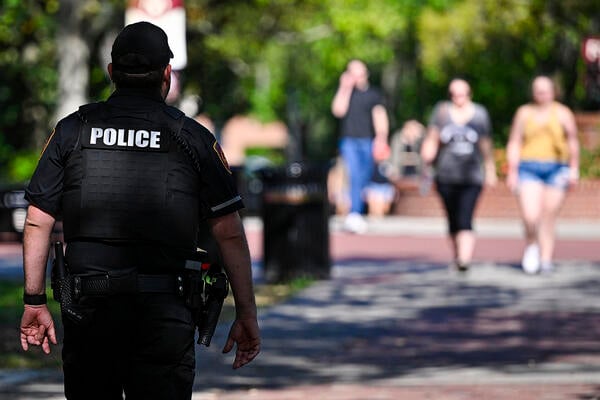
    At least three members of the Florida College System have signed agreements with the U.S. Immigration and Customs Enforcement to allow their campus police departments to enforce immigration law, bringing the total to 15 institutions across the state.

    Florida SouthWestern State College, Northwest Florida State College and Tallahassee State College have all signed 287(g) agreements with ICE, which allows the agency to delegate immigration enforcement powers to other law enforcement agencies, such as campus police. Those three agreements have been approved by ICE, according to a federal database. Others approved as participating agencies are the police at Florida A&M University, New College of Florida, the University of Central Florida, the University of Florida and the University of West Florida.

    None of the three latest colleges responded to requests for comment from Inside Higher Ed.

    Santa Fe College also has a draft agreement in place that has not yet been signed, a spokesperson said, noting the earliest that would be done is at a May 20 board meeting. A spokesperson for Pensacola State College said its campus police are considering an application to partner with ICE.

    Other institutions that have already signed agreements with ICE are:

    • Florida A&M University
    • Florida Atlantic University
    • Florida Gulf Coast University
    • Florida International University
    • Florida Polytechnic University
    • Florida State University
    • New College of Florida
    • University of Central Florida
    • University of Florida
    • University of North Florida
    • University of South Florida
    • University of West Florida

    While all 12 institutions in the State University System have signed on with ICE, Florida SouthWestern State, Northwest Florida State and Tallahassee State appear to be the first of the 28 members in the Florida College System to enter such arrangements.

    Not all of the state colleges have campus police departments. But of those that do have campus police departments, signing on with ICE isn’t a given. For instance, Florida State College of Jacksonville and Polk State College told Inside Higher Ed that neither have a memorandum of agreement with ICE.

    Leaders Defend Agreements

    The agreements with ICE come amid an immigration crackdown driven by Gov. Ron DeSantis and Florida’s Republican-controlled Legislature. In February, DeSantis directed state law enforcement agencies to sign agreements with ICE “to execute functions of immigration enforcement within the state” to make deportations more efficient, according to a news release.

    Florida colleges and universities soon followed by signing memorandums of understanding with ICE that will deputize campus police officers to carry out immigration duties on campus. Institutions have largely declined to speak publicly about the arrangements. However, a recent Faculty Senate meeting at Florida International University with FIU chief of police Alexander Casas yielded insights into why agreements were signed but left many lingering questions.

    Casas argued at the April 18 meeting that it would be better for university police to carry out immigration enforcement duties on campus than outside agencies.

    “I can’t control what ICE does. I can’t control what a state agency does that has jurisdiction. But if I don’t enter the agreement, I don’t even have the opportunity to say, ‘Call us first, let us deal with our community.’ That’s not even an option,” Casas said. He added he wanted to be “in the driver’s seat” but “without the agreement, I’m not even in the car.”

    FIU interim president Jeanette Nuñez, the former lieutenant governor under DeSantis, also defended the deal, telling the Faculty Senate the ICE agreement follows similar arrangements “at almost all of the state universities and many other universities across the country.”

    Immigration experts have told Inside Higher Ed they are unfamiliar with such agreements at universities in other states. Only Florida institutions appear in an ICE database that tracks active and pending 287(g) agreements. (FIU did not respond to questions about Nuñez’s claims.)

    FIU Faculty Senate members, however, did not seem swayed by Casas or Nuñez. Several professors spoke about their distrust for ICE—some clearly emotional—and referenced recent questionable actions by ICE, such as the widely publicized arrest of Juan Carlos Lopez-Gomez, an American citizen who was detained earlier this month and falsely accused of illegally entering Florida as an “unauthorized alien.” Federal officials later blamed Lopez-Gomez for his arrest.

    Ultimately, the Faculty Senate approved a resolution calling for the university to withdraw from the ICE agreement, which members argued ran counter to the values of the institution.

    Statewide Concerns

    Concerns about such agreements have also emerged at universities across the state.

    Students and faculty have protested such agreements at FIU, FAU and elsewhere. United Faculty of Florida, a union that represents professors across the state, condemned the agreements with ICE as a betrayal of the core values of higher education in a recent statement.

    “Our campuses must be institutions of learning, critical inquiry, and inclusion—not instruments of surveillance and state-sponsored oppression,” United Faculty of Florida officials said in a statement last week. “The presence and involvement of ICE on our campuses sows fear among students, staff, and faculty, particularly those from immigrant, undocumented, or international communities. It undermines the very mission of our higher education system: to foster open dialogue, intellectual freedom, and the free exchange of ideas across borders and identities.”

    The agreements also prompted pushback from the Florida Advisory Council of Faculty Senates, which issued a resolution that urged universities to withdraw from existing agreements with ICE.

    “To effectively protect our universities, campus police cultivate a unique relationship with campus communities,” council members wrote in a recent resolution. “They come to know our students, our educational spaces, and our communities. They are present at peaceful protests, in classrooms, and at student events. Repurposing this unique trust for federal immigration enforcement makes our campuses less safe, puts our officers in an untenable position, and chills students’ access to the support services they critically need to succeed.”

    That resolution has already been endorsed by some faculty senates, including at FAU.

    Source link

  • The balancing act goes on

    The balancing act goes on

    Balancing free speech and protection from harassment is a complex, evolving challenge with no one-size-fits-all solution.

    Decisions must be made based on the specific context and facts of each case.

    However, our experience shows these risks are dynamic – over time, new challenges emerge, stretching our policies, processes, and understanding. The question for HEIs then, is how to navigate such a landscape.

    Recently, OfS’ Regulatory Case Report for the University of Sussex has sparked extensive commentary. Jim Dickinson, in multiple articles on Wonkhe, has explored its implications for effective regulation, rightly emphasising the crucial role of collaboration and trust.

    Efficiency is the watchword of the day and the approach in the case report risks fostering a more expensive American-style adversarial legalism. But the stakes are higher than just the streamlined effectiveness of our regulatory system.

    The rights, experience and outcomes in education and career for HE students and staff often depend on our approach and decisions in these critical cases.

    Challenges and priorities

    The UK higher education sector has faced a significant challenge. Free speech has at times been overlooked in our policies and work, especially in areas of equity, diversity, and inclusion.

    The policy template in the Sussex case report was drafted by one of Advance HE’s predecessor organisations, the Equality Challenge Unit. However, the sector now shows a shared intent to prioritise free speech. Universities UK states:

    “It’s absolutely essential that universities uphold freedom of speech and academic freedom, and they are legally bound to do so. Universities must also create an environment where all people can work and learn together.

    There is increasing clarity on the “presumption in favour of free speech” in UK law and in higher education practice. This is evident in relation to free speech and protected beliefs, such as in the recent Court of Appeal judgment in the Higgs case, as well as in areas like Prevent and institutions’ responses to protests on Israel/Gaza.

    We would benefit from more openly recognising this shared intent and commitment to free speech and academic freedom. However, the answers to many of the difficult cases and questions that arise in these areas are not settled.

    New incidents will create different circumstances and illuminate different boundaries of law and regulation, and there will be new court cases and judgments to learn from (such as the Supreme Court ruling on the definition of a woman in the Equality Act 2010).

    We will continue to grapple with the challenging interplay between free speech, inclusion, and harassment. This tension is now explicit in the OfS regulatory framework, particularly between freedom of speech and Condition E6 on Harassment and Sexual Misconduct.

    The most important decisions about free speech and inclusion happen in our classrooms and offices. Academics navigate contentious topics and sensitive discussion, while managers respond to concerns about speech and harm, or debates that turn into allegations of harassment.

    These decisions are often uncertain, taken in individual contexts without clear legal precedent or direct policy instruction. Our staff and students therefore depend on our collective ability to make reasonable and proportionate decisions in heated, highly contextualised, and risky environments.

    These challenges are dynamic and will continue to evolve. Many HE policies and solutions from five or ten years ago are not fit for purpose now. We would be naïve to think our current approaches will not again need to evolve to meet future circumstances and challenges.

    How then can we ensure the rights to free speech and protection from harassment are upheld for staff and students under these circumstances?

    The way ahead will require proactive leadership, horizon scanning, and a willingness to collaborate and innovate in sensitive areas.

    Collaboration is key

    OfS itself has emphasised the importance of collaboration. Arif Ahmed, the Director for Freedom of Speech and Academic Freedom at OfS, noted:

    “I believe that there is much to be gained from collaboration with [the sector] on these important issues. I am therefore keen to engage with stakeholders now on the most effective ways to approach the promotion of freedom of speech.

    As a sector, we need to work collaboratively to find opportunities for innovation and allow UK higher education to experiment at the edges of promoting and protecting free speech while openly addressing clear instances of unlawful harassment. UUK, GuildHE and Advance HE alongside many individual institutions have been proactive recently in creating spaces for discussion and practice in balancing free speech and inclusion.

    We are not alone in this challenge. Other nations and HE sectors have similar values and intent but slightly different legal frameworks. The recent Hodgkinson Review from the University of Sydney demonstrates the potential that a more global conversation might offer to horizon scanning and innovation in the UK.

    Beyond collaboration, innovation and horizon scanning, securing free speech and protection from harassment will test institutional resilience to difficult and complex cases. This will require institutional competence, but more importantly, any long-term success demands individual capacity and judgment from academics and staff.

    One-off training programs will be quickly outdated. Staff will be more effective engaging with policies in context, with clear opportunities to escalate challenges and receive responsive feedback and support. Leaders and front-line staff will need to be supported to engage with and share learning from the most complex cases.

    The approach to regulation demonstrated by the Case Report on Sussex encourages institutions to prioritize free speech and embed it into policy and practice. But this is already well understood and underway. What the Case Report won’t do is encourage institutions to step into difficult and complex cases more openly and engage in challenges that don’t have clear answers.

    The hazard here is the possibility of an environment where HEIs and staff may feel compelled to remove risk from engagement with speech. Staff and students might avoid contentious topics in research and teaching and withdraw from activities where there are concerns about harassment and discrimination. This would limit the innovative and provocative speech we should protect and undermine our ability to add value at the boundaries of societal debate.

    New regulation, such as the complaints scheme, could be a powerful mechanism for horizon scanning and supporting learning and consistent practice across institutions. To build a more robust approach to free speech in UK higher education, we need more collaboration and trust, and to build on our shared commitment to free speech and protection from harassment.


    Source link

  • Advising in a time of uncertainty

    Advising in a time of uncertainty

    • By Sarra Jenkins, Director of Future Pathways at Loughborough Grammar School.

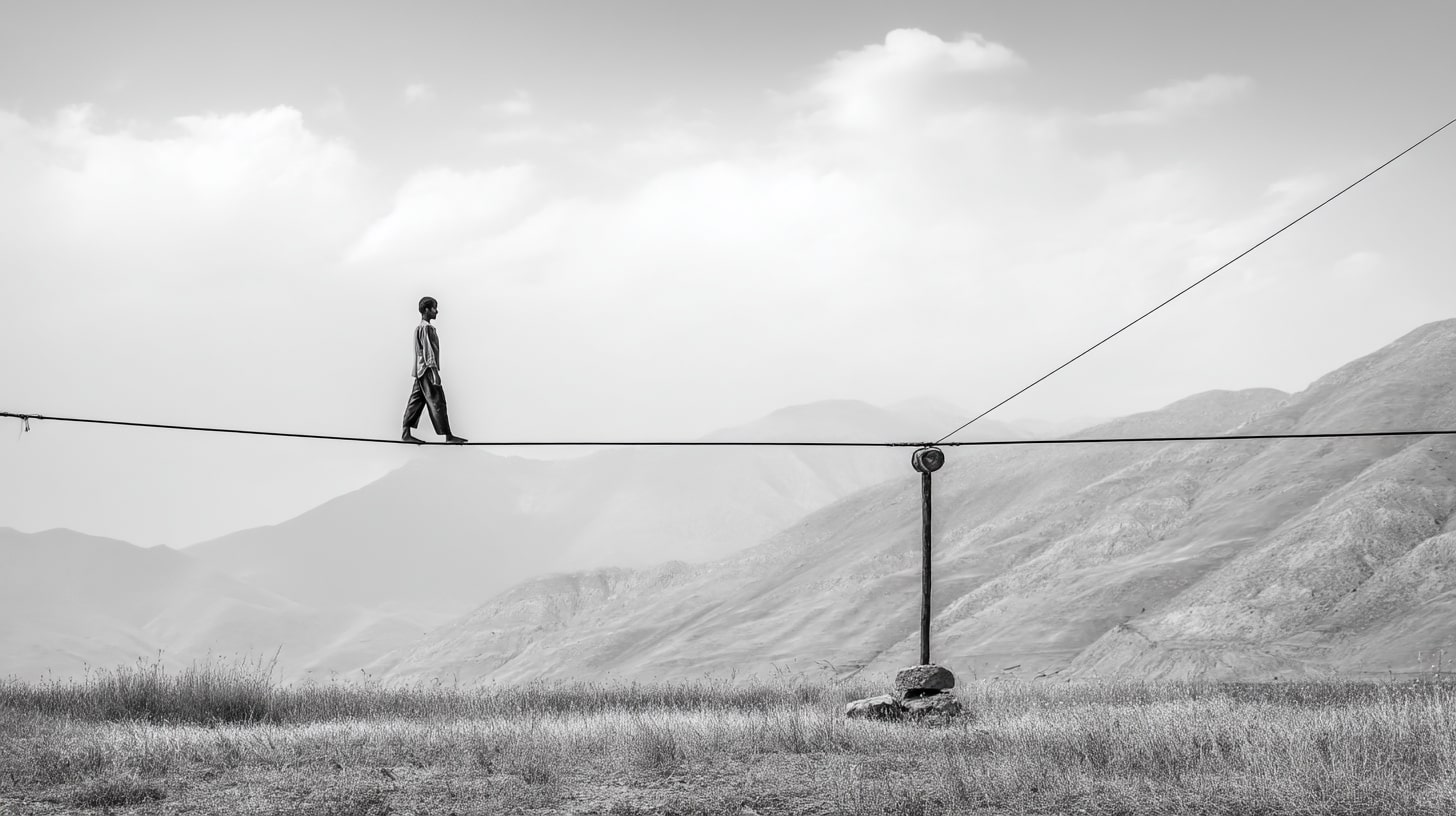
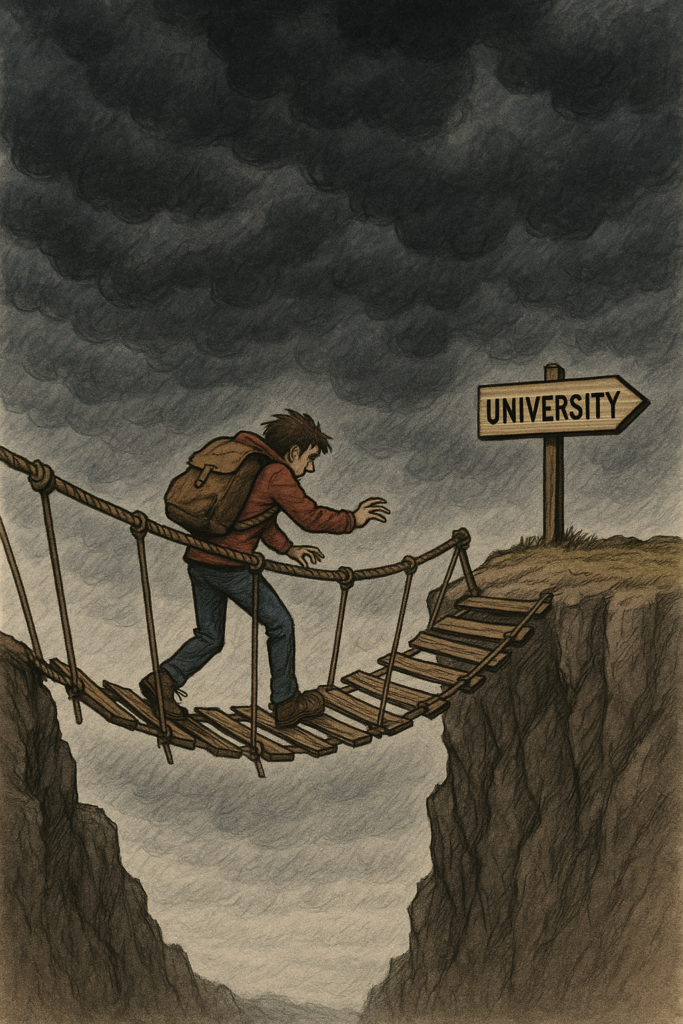
    The headlines made by the financial uncertainties within the Higher Education sector have been widespread in recent months. QMUCU has a running list of the currently 90 organisations with redundancy and restructuring programmes, and the Office for Students predicts more than one-third of universities will face ‘serious cash flow problems’. For the sector and those in it, this creates uncertainty. It also creates uncertainty for students making decisions on their university choices, in both an emotional and logistical way. So, what challenges do university advisers face when advising students in the current climate?

    Before application

    When students are considering their higher education options, research is crucial. I have previously written about the importance of ‘best fit’ for trying to ensure a student will thrive at university. However, when students are researching institutions about which headlines have been written in terms of their financial security, it creates uncertainty and raises questions for students. These questions are often ones that do not have obvious or immediate answers, but they can make it difficult for students to feel that they can make effective decisions.

    This also makes it difficult to advise students on the post-18 plans. When the sector within which the students are researching is facing the financial concerns that it currently is, it makes it challenging to advise them accurately. One training session I attended drew attention to this, but effectively argued that students should not be too concerned with what is going on. This is well-meaning advice, but it does little to reassure them in the face of the headlines they see when they conduct their research.

    Course withdrawals during application

    Another way students may experience the impact of the financial issues in higher education is through course withdrawals. There have been news reports of universities deciding to cut courses due to the financial challenges they face. But this also affects prospective students. If a course is withdrawn before an application is made, at least the research that a prospective student carries out can take this into account in their decision-making. However, what about after an application is made?

    I had a student this year who was delighted to get an offer from the university they wanted to be their first-choice institution. They had put considerable effort and focus into their post-18 research and were able to get their application sent very early in the application cycle. This allowed them to focus on their A Levels and on getting the grades they would need to get in if they received an offer. In October, they received the offer they wanted, only to have it withdrawn in January after it was decided the course would not run in this academic year. As all of this occurred before the Equal Consideration Deadline, the student could remove this withdrawn option and put another university and course onto their UCAS form. But this logistical solution hides the emotional toll this took on the student.

    Initially, all of their well-formed and carefully researched plans were now in disarray. They could look at other options, and we did identify similar courses at different institutions. But understandably, these other options were not what the student wanted or had planned for. Having received an offer, they had set both their heart and their head on accepting it. Having it withdrawn was not simply a case of ‘finding something else’; rather, it undid months of research in the manner that every university adviser hopes their students will approach this decision.

    Students may also see other changes occurring during their application. At one university, headlines were created when departments were merged. In this case, I had a student who held an offer at one of these departments, and who then raised questions about what this meant for them. The answer might be that such changes may have relatively little impact on the student experience, however it does create uncertainty and unsettles the student.

    As a university adviser in this situation, we can try and help the student make the best decisions in the circumstances. But it does undermine the plans they had started to put together, either internally or in reality, about their next steps. This could also potentially undermine the success and speed of their transition to HE.

    Course withdrawals during a course

    Some withdrawals happen once a course has begun. Whilst universities might be supportive of students who find themselves in this unfortunate situation, it still undermines the research a student has done and the subsequent choices that they have made in accepting and taking up an offer.

    I had a student get in touch this year having had their course withdrawn just before Easter of their first year. Being so relatively new to university, the student came back and sought advice and support for an entirely new application. They had been offered a place on a different course by their university, but it did not have the focus and modules that they wanted. Instead of seeking a transfer, they sought to re-apply to university and begin again elsewhere in the first year.

    Again, whilst universities or school university advisers can try and help students make the best decisions in these circumstances, a decision has ultimately been placed on the student beyond their control. This does happen within the world of work too, however when students are paying to take up their higher education choices, it is important that they have agency in the choice and that their decision is right for them, not simply a fallback over which they had little control.

    Moving forward

    None of these situations reflects a preferred situation for a university, let alone a student. Clearly, none of these decisions are taken lightly by universities. Equally, this is, of course, not a UK-specific problem. Having visited the Netherlands recently, we saw protest signs about higher education cuts in Utrecht, and as I write this piece, reports are coming from the US of the Pentagon ending all funding for social science research. Those facing redundancies and restructuring are undoubtedly feeling the brunt of these financial concerns.

    Additionally, though, perhaps it is worth recognising the impact of this uncertainty on prospective students. The resilience they need to deal with such changes may yet not be fully formed, and this is one of the first major decisions in their lives over which they are likely to have considerable agency. Knowing these possibilities can help university advisers better prepare students. As universities look to their new intake in September, and open day season in the coming months, perhaps they could consider the reassurances that are possible to prospective students too.

    Source link

  • Disabled students’ rights are still being ignored

    Disabled students’ rights are still being ignored

    In the context of wider financial pressures on providers, universities can be a challenging environment to work in at present.

    So, a crackdown on ensuring all disabled student support plans are both in place and implemented may have fallen to the bottom of the to-do list. Couple that with delays in the Disabled Students’ Allowance system and it’s a pretty bleak picture for disabled students.

    The findings of this year’s Office of the Independent Adjudicator (OIA) annual report echo these concerns.

    Like last year’s report, self-identified disabled students were over-represented in complaints, with the proportion rising for 2024 from a third to just over 40 per cent. Of those who did disclose details of their disability, mental health issues were the largest category selected by students (46 per cent), and specific learning differences accounted for a third.

    A bulk of complaints from students who self-identified as disabled related to support and reasonable adjustments to teaching and assessment not being implemented promptly or at all. This correlates to national trends as shown in Disabled Student UK’s annual survey of 1,200 disabled students across eight UK institutions, where only 39 per cent said they had their support needs implemented.

    Delayed

    OIA make it clear that delays to student support do happen and are not always a serious cause for concern. As they suggest, sometimes it may take a long time to identify what support works best for the student for their course of study, or the process is at a halt because a student’s application for DSA is significantly delayed.

    However, as the annual report highlights:

    there is no culture of accountability in place to ensure that disabled students receive the support that is necessary to place them on an equal footing for success with their peers.

    Additionally, the OIA recommends that providers train and support academic staff in meeting the requirements of the Equality Act, as too often academic staff have not fully understood what is required and, instead, “default to standard [teaching] practices that do not meet disabled students’ needs. As a result disabled students are often left to muddle through at a significant disadvantage to their non-disabled peers.

    Let’s recap

    Last week, the Disabled Students Commission published guidance clarifying the legal responsibilities of providers when it comes to competence standards and reasonable adjustments. Under the Equality Act 2010, providers are accountable for their acts and omissions in relation to disabled students. This includes a duty to make reasonable adjustments to ensure disabled applicants and students do not experience substantial disadvantages in comparison to non-disabled people.

    As the guidance explains, two considerations that should be used in decision-making as to what constitutes reasonable are whether the adjustment is possible and if there is a reasonable assumption that the adjustment might be effective in reducing substantial disadvantage for a disabled student.

    One of these considerations is whether a reasonable adjustment is financially viable. But while institutions must consider the total resource cost, this factor alone, according to the guidance, rarely automatically precludes an adjustment from being reasonable.

    It’s a squeeze

    A real risk here, given current financial circumstances, is that resources for disabled students continue to be squeezed, potentially making it harder to access adequate support.

    While financial strain alone is not a good enough reason not to implement a lawful duty, there is already significant evidence that disabled students’ needs are not currently being met. With a move towards self-service across student-facing roles, it paints an unpromising picture for future support for disabled students, unless something changes sharpish.

    Both the DSC and the OIA urge further signposting around competence standards for students and staff. The annual report suggests that they still instances where there is no clarity for students or staff within course documents about what competence standards will be assessed.

    If a competence standard is not defined, given that they are exempt from the duty to make reasonable adjustments, it is difficult for a provider to decide if a reasonable adjustment requested by a disabled student is, in fact, reasonable.

    Get it right

    Providers need to ensure that accurate information about competence standards and the possibility of reasonable adjustments is made available to both students and staff, including prospective students.

    Providers and individual staff are operating under strain at the moment, but it’s crucial to remember that supporting disabled students is not optional – it is a legal requirement. These aren’t practices and processes that can be prioritised based on finances, it’s a baseline, legal requirement disabled students are entitled to.

    Understandably in the current climate, some may feel resistant to adding additional responsibilities to an already heavy workload, especially as the number of students declaring a disability in recent years has increased. But addressing students’ needs proactively avoids the much greater financial and reputational costs associated with complaints and compensation. If institutions feel they don’t have the time or capacity to prioritise inclusive practices now, they risk spending a greater amount of time, money and resources later managing avoidable grievances.

    And if that isn’t enough, surely disabled students deserve better than having their legal rights to equity perpetually sidelined or ignored.

    Source link

  • New (old) models of teaching and assessment

    New (old) models of teaching and assessment

    On the face of it, saying that if we stopped teaching we would not need examinations sounds crazy.

    But it is not so hard to think of examples of rigorous assessment that do not entail examinations in the sense of written responses to a set of predetermined questions.

    For example, institutions regularly award PhDs to candidates who successfully demonstrate their grasp of a subject and associated skills, without requiring them to sit a written examination paper. The difference of course is that PhD students are not taught a fixed syllabus.

    The point of a PhD thesis is to demonstrate a unique contribution to knowledge of some kind. And as it is unique then it is not possible to set examination questions in advance to test it.

    What are we trying to assess?

    If written examinations are inappropriate for PhDs, then why are they the default mode of assessment for undergraduate and taught postgraduate students? The clue, of course, is in the word “taught”. If the primary intended learning outcomes of a course of study require all students to acquire the same body of knowledge and skills, as taught in the course, to the same level, then written examinations are a logical and efficient institutional response.

    But surely what we want as students, teachers, employers, professional bodies and funding bodies is graduates who are not just able to reproduce old knowledge and select solutions to a problem from a repertoire of previously learned responses? So why does so much undergraduate and postgraduate education emphasise teaching examinable knowledge and skills rather than developing more autonomous learners capable of constructing their own knowledge?

    It is not true that learners lack the motivation and ability to be autodidacts – the evidence of my young grandchildren acquiring complex cognitive skills (spoken language) and of motor abilities (walking and running) suggests we have all done it in the past. And the comprehensive knowledge of team players and team histories exhibited by football fans, and the ease and confidence with which some teenagers can strip down and reassemble a motorcycle engine suggest that autodidacticism is not confined to our early years.

    An example from design

    Is it feasible, practical or economic to run courses that offer undergraduates an educational framework within which to pursue and develop personal learning goals, akin to a PhD, but at a less advanced level? In this case, my own experience suggests we can. I studied at undergraduate level for four years, at the end of which I was awarded an honours degree. During the entire four years there were no written examinations.

    I was just one of many art and design students following programmes of study regulated and approved at a national level in the UK by the Council for National Academic Awards (CNAA).

    According to the QAA Art and Design subject benchmark statement:

    Learning in art and design stimulates the development of an enquiring, analytical and creative approach, and develops entrepreneurial capabilities. It also encourages the acquisition of independent judgement and critical self-awareness. Commencing with the acquisition of an understanding of underlying principles and appropriate knowledge and skills, students normally pursue a course of staged development progressing to increasingly independent learning.

    Of course some of the “appropriate knowledge and skills” referred to are subject specific, for example sewing techniques, material properties and history of fashion for creating fashion designs; properties of materials, industrial design history and machining techniques for product design; digital image production and historic stylistic trends in illustration and advertising for graphic design, and so on.

    Each subject has its own set of techniques and knowledge, but a lot of what students learn is determined by lines of enquiry selected by students themselves in response to design briefs set by course tutors. To be successful in their study they must learn to operate with a high degree of independence and self-direction, in many ways similar to PhD students.

    Lessons without teaching

    This high degree of independence and self-direction as learners has traditionally been fostered through an approach that differs crucially from the way most other undergraduate courses are taught.

    Art and design courses are organised around a series of questions or provocations called design briefs that must be answered, rather than around a series of answers or topics that must be learned. The learning that takes place is a consequence of activities undertaken by students to answer the design brief. Answers to briefs generated by art and design students still have to be assessed of course, but because the formal taught components (machining techniques, material properties, design history, etc.) are only incidental to the core intended learning outcomes (creativity, exploration, problem solving) then written examinations on these topics would be only marginally relevant.

    What is more important on these courses is what students have learned rather than what they have been taught, and a lot of what they have learned has been self-taught, albeit through carefully contrived learning activities and responsive guidance from tutors to scaffold the learning. Art and design students learn how to present their work for assessment through presentation of the designed artefact (ie. “the answer”), supported by verbal, written and illustrated explanations of the rationale for the final design and the development process that produced it, often shared with their peers in a discussion known as a “crit” (critique). Unlike written examinations, this assessment process is an authentic model of how students’ work will be judged in their future professional practice. It thus helps to develop important workplace skills.

    Could it work for other subjects?

    The approach to art and design education described here has been employed globally since the mid-twentieth century. However, aspects of the approach are evident in other subject domains, variously called “problem based learning”, “project based learning” and “guided discovery learning”. It has been successfully deployed in medical education but also in veterinary sciences, engineering, nursing , mathematics, geography and others. So why are traditional examinations still the de facto approach to assessment across most higher education disciplines and institutions?

    One significant barrier to adoption is the high cost of studio-based teaching at a time when institutions are under pressure to increase numbers while reducing costs. The diversity of enquiries initiated by art and design students responding to the same design brief requires high levels of personalised learning support, varied resources and diversity of staff expertise.

    Is now the time?

    As with other subjects, art and design education has been under attack from the combined forces of politics and market economics . In the face of such trends it might be considered naive to suggest that such an approach should be adopted more widely rather than less. But although these pressures to reduce costs and increase conformity will likely continue and accelerate in the future, there is another significant force at play now in the form of generative AI tools.

    These have the ability to write essays, but they can also suggest template ideas, solve maths problems, and generate original images from a text prompt, all in a matter of seconds. It is possible now to enter an examination question into one of several widely available online generative AIs and to receive a rapid response that is detailed, knowledgeable and plausible (if not always entirely accurate). If anyone is in any doubt about the ability of the current generation of AIs to generate successful examination question answers then the record of examinations passed by ChatGPT will be sobering reading.

    It is possible that a shift from asking questions, (answers to which the questioner already knows), to presenting learners with authentic problems that assess ability to present, explain, and justify their responses – is a way through the concerns that AI generated responses to other assessment forms present.

    Source link

  • 7 Questions with Dr. Simon Atkinson

    7 Questions with Dr. Simon Atkinson

    Leave a Reply

    Your email address will not be published. Required fields are marked *