Category: Featured

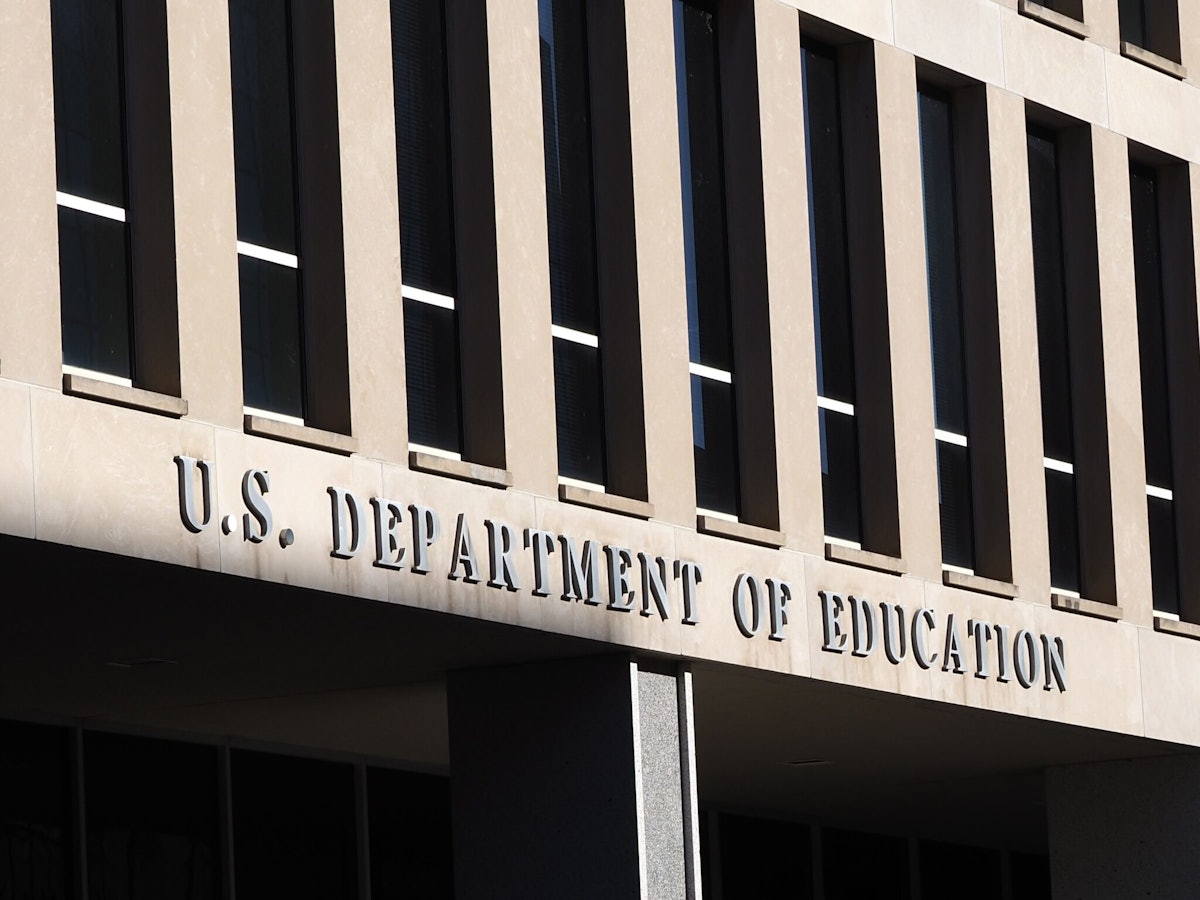
  • ‘The gatekeepers’: Trump’s action on accreditation sparks concerns over government intrusion

    ‘The gatekeepers’: Trump’s action on accreditation sparks concerns over government intrusion

    Dive Brief:

    • Some higher education experts slammed President Donald Trump’s executive order aiming to reshape the accreditation system, raising warnings about government intrusion into academic matters, while the accreditation sector defended its work. 
    • The president took aim at accreditor criteria related to diversity and equity while calling for new requirements of what he called “intellectual diversity” in faculty. He also called on U.S. Secretary Linda McMahon to “resume recognizing new accreditors to increase competition and accountability.” 
    • The order was part of a bevy of higher education-related executive orders that Trump signed late Wednesday night affecting different aspects of the sector, including workforce development and historically Black colleges.

    Dive Insight:

     In his order on accreditation, Trump decried the quality-control bodies as “the gatekeepers that decide which colleges and universities American students can spend the more than $100 billion in Federal student loans and Pell Grants dispersed each year.”

    He accused the organizations of having “failed in this responsibility to students, families, and American taxpayers,” and also of having “abused their enormous authority.”

    In the order, Trump launched into a 350-word castigation of accreditors’ diversity, equity and inclusion criteria. 

    He specifically named the Liaison Committee on Medical Education, which accredits medical programs, and the American Bar Association’s Council of the Section of Legal Education and Admissions to the Bar, which accredits law schools. 

    The ABA is suing the U.S. Department of Justice over allegations the department canceled federal grants as retaliation for the association “taking positions the current Administration disfavors,” including its diversity requirements

    Federal recognition will not be provided to accreditors engaging in unlawful discrimination in violation of Federal law,” Trump said in the order, without specifying which DEI criteria and laws may come in conflict.

    Trump also directed McMahon to hold accreditors “accountable” by denying, monitoring, suspending or terminating of accreditation powers for those who “fail to meet the applicable recognition criteria or otherwise violate Federal law.” 

    His order specifically mandates that accreditors require institutions to use program data on student outcomes “without reference to race, ethnicity, or sex.”

    Other elements of the order would smooth the path for federal recognition of new accreditors.

    The order also includes a provision directing McMahon to ensure “institutions support and appropriately prioritize intellectual diversity amongst faculty in order to advance academic freedom, intellectual inquiry, and student learning.”

    Trump also issued executive orders Wednesday on workforce development, artificial intelligence, foreign funding reporting requirements for colleges, and historically Black colleges and universities.

    Trump’s accreditation order drew a fierce rebuke from the American Association of University Professors, among others.

    Accreditors have been “important mechanisms for ensuring that academic institutions are accessible and inclusive, and provide high-quality education for all students,” the faculty group said in a statement Wednesday. 

    It added, “This executive order, however, uses the administration’s cruel and absurdist weaponization of antidiscrimination and civil rights law to prevent accrediting agencies from requiring that institutions take basic steps to ensure they are accessible to and inclusive of all students.”

    AAUP President Todd Wolfson described the order’s call for “intellectual diversity” as “code for a partisan agenda that will muzzle faculty who do not espouse Trump’s ideological agenda.”

    Sameer Gadkaree, president of The Institute for College Access & Success, similarly condemned the order, saying that it “undermines the aspects of the accreditation process that are designed to protect classroom instruction from political interference.”

    Gadkaree also panned the order’s ban on using demographic data to evaluate programs, warning that without that option “accreditors — along with researchers, evaluators, and policymakers — will lack the information they need to truly assess quality.” 

    Responses from the accreditation sector were quieter, but they defended the work of accreditors.  

    Accreditor’s DEI standards are “predicated on institutions implementing such requirements in accordance with applicable state and federal laws,” the Council of Regional Accrediting Commissions said in a statement Wednesday.  

    C-RAC called for the order’s required changes to be worked out through the Education Department’s negotiated rulemaking process, which brings together higher education representatives to hash out policy details. The organization also pointed to the regulated process for removing accreditor recognition, noting, “Ultimately, concerns about accreditor recognition can be escalated to federal court.”

    The Council for Higher Education Accreditation, an industry group that both vets and advocates for accrediting bodies, issued a statement Wednesday largely describing the work, standards and innovation already in place at accreditors and institutions. 

    Our focus is and always will be academic assurances,” said Cynthia Jackson Hammond, the organization’s president. “CHEA-recognized accreditation organizations meet those standards.”

    She closed by saying, “The independence of the accreditation process is essential in order to preserve and protect the integrity of quality assurance in higher education.”


    Source link

  • Columbia University vows to remove any future encampments

    Columbia University vows to remove any future encampments

    Columbia University officials said Wednesday they would immediately remove any future encampments on campus and threatened demonstrators with arrest amid reports that students were planning another wave of pro-Palestinian protests. 

    We have been made aware of possible plans to establish encampments on Columbia’s campuses,” the New York institution said in a public safety notice. “We want to clearly communicate that camping and encampments on Columbia’s campuses are prohibited by University Policy.”

    More than 100 people wearing masks to hide their identities met Tuesday to discuss establishing multiple encampments at Columbia this week, according to an NBC News report based on anonymous sources and a recording of the meeting. 

    At the time, the protesters intended to begin demonstrating at Columbia’s main campus in the Morningside Heights neighborhood on Thursday, followed by the Ivy League institution’s Manhattanville location on Friday, NBC reported Wednesday. 

    The planned demonstrations would come about a year after Columbia students first erected an encampment to protest the Israel-Hamas war and call on the university to divest from companies with links to Israel. The encampment at Columbia kicked off similar demonstrations across the nation’s colleges, stoking anger from conservative lawmakers and leading to hundreds of student arrests. 

    Since then, the university said it has hired more public safety officers, increased campus patrols and restricted access to its main campus.

    Still, President Donald Trump threatened to pull federal funding from colleges that don’t crack down on “illegal protests” in a March social media post that drew backlash from free speech and civil rights advocates.

    The Trump administration made good on this threat when it pulled $400 million in federal contracts and grants from Columbia in March, claiming it was yanking the funding over concerns the university hasn’t done enough to protect Jewish students from harassment. The administration has since pulled large swaths of fundingor threatened to — from other well-known colleges over similar allegations.

    A growing number of lawmakers, free speech experts and academics are accusing Trump of weaponizing antisemitism to target colleges. On Thursday, five Jewish Democratic senators lambasted the president for using “what is a real crisis as a pretext to attack people and institutions who do not agree with you.”

    “By doing so, he not only fails to address the threat of antisemitism but also exploits it to delegitimize higher education, while often ignoring or downplaying the rise of antisemitism within his own party,” they said in a statement.

    Last month, Columbia ceded to several demands from the Trump administration — including revamping its protest policies — with the hopes of retaining access to its federal funding

    U.S. Education Secretary Linda McMahon, along with other federal officials, has praised the university’s compliance. But the Trump administration has yet to publicly reinstate its funding and is reportedly pursuing a consent decree against Columbia, which would give a federal judge oversight of the institution’s compliance with the administration’s demands. 

    The administration is facing at least one lawsuit over allegations that it is overstepping its authority at Columbia.

    If protesters establish a new encampment at Columbia, the university vowed to immediately remove tents and other structures, restrict access to the campus and instruct demonstrators to leave, according to Wednesday’s announcement. If they don’t leave, they could face “removal from campus and possible arrest,” Columbia’s notice said. 

    Source link

  • Stop Marketing to Yesterday’s Students: A New Era for Higher Ed 

    Stop Marketing to Yesterday’s Students: A New Era for Higher Ed 

    Is your institution’s marketing truly reaching today’s students, or are you shouting into the void? Higher education marketing is undergoing a seismic shift. With rapid changes in student behavior, the rise of AI and mounting constraints on institutional funding, marketing leaders can no longer rely on yesterday’s strategies to meet today’s challenges. Student expectations have evolved. Budgets are tightening. And yet, many institutions are still using outdated strategies that fail to resonate with the Modern Learner.  

    To stay competitive, institutions must embrace the new era of higher education marketing—an era defined by personalized engagement, brand-building and data-driven decision-making. In a world where marketing dollars work must work harder than ever, rethinking your strategy is no longer optional. It is essential to long-term success.  

    Students no longer passively wait for information. They actively seek it across multiple channels, from social platforms to AI-powered search tools. Their behaviors are more self-directed than they were even a decade ago, and the expectations they bring to the table are shaped by instant access, transparency and digital convenience. Modern Learners want institutions that reflect their values and aspirations. As a result, branding plays an even more critical role in decision-making than ever before. Trust, authenticity, and alignment with personal identity all contribute to conversion. Meanwhile AI is accelerating these shifts by analyzing behavior in real time and delivering tailored experiences at scale.  

    These changes are not on the horizon—they are already here. Institutions that fail to adapt risk being left behind.  

    This evolution is shaping the standard of higher education marketing, and redefining what it takes to attract and engage Modern Learners. Today’s students are not yesterday’s prospects. They are savvy, value-driven and self-directed. Marketing strategies must evolve to meet them where they are—not where they used to be.  

    At EducationDynamics, we are not here to maintain the status quo; we are here to challenge it. We rethink, rebuild and drive your institution into a future where growth isn’t just a goal—it’s a guarantee. With solutions designed to empower, we are continually adapting to the evolving needs of our partners to equip them for long-term success.  

    Evolving Student Behavior: Implications for Higher Education Marketing 

    The Changing Search Journey 

    Today’s students are no longer waiting to be guided; they are leading the charge. With a strong sense of autonomy and purpose, Modern Learners navigate the enrollment journey on their own terms. Their decisions are shaped by what EducationDynamics identifies as the Three C’s: cost, convenience, and career outcomes. These components are central to a student’s decision to apply or enroll. The challenge for institutions is not just to deliver value, but to demonstrate that value clearly and quickly in the digital environments that students operate in.  

    The student search journey has undergone a fundamental shift. No longer do students begin with degree or program keywords. Instead, 58 percent of Modern Learners now initiate their search with specific school names, according to EducationDynamics’ 2025 Engaging the Modern Learner Report. If an institution is not top-of-mind, it is already at a disadvantage. 

    Compounding this shift, nearly 60 percent of education-related searches result in no clicks. Students are making faster decisions, often based on AI-generated overviews that appear directly within search results. Currently, 65 percent of education searches trigger these overviews. This marks the rise of zero-click search and the emergence of Generative Engine Optimization (GEO) as a critical strategy.  

    The message is clear: if your institution is not immediately visible and delivering value within the search experience, it risks being excluded from the student’s consideration entirely. 

    Search engines like Google are prioritizing quick, curated answers, reflecting broader shifts in how users engage with content. Education-related searches have become more intricate, with students asking detailed and personalized questions. They are no longer browsing—they are making decisions. A static, cumbersome website is not just outdated; it is actively repelling Modern Learners. Institutions must create digital experiences that are responsive, student-focused and seamlessly accessible across all digital touchpoints. A lack of dynamic, intuitive design is no longer an option; it’s a failure to meet Modern Learners’ expectations. 

    In today’s search environment, visibility alone is not enough. Institutions must deliver relevance, clarity and authenticity across channels that Modern Learners use.  Institutions that want to remain competitive must not only be present at the beginning of the search journey, but also deliver information with the speed, clarity and authenticity that Modern Learners expect. Those that rise to this challenge will earn attention and trust, while those that don’t will fall behind amid competition.  

    The Demand for Authentic and Engaging Content 

    If your institution’s content strategy still leads with rankings, tradition or campus accolades, it is missing the mark. Modern Learners are not making enrollment decisions based on institutional prestige alone. They are looking for evidence of belonging, support and authenticity. Colleges and universities must shift from promotional messaging to content that mirrors the lived experiences of their students. Modern Learners want to see real people, real stories and a real sense of community. 

    Video content, especially in short-form, is now one of the most powerful mediums for delivering the connection that Modern Learners seek. Today’s students are not flipping through text-heavy brochures or watching ten-minute promotional videos. They are forming impressions in literal seconds, with the rise of TikTok, Instagram Reels and YouTube Shorts. These channels are avenues where your institution’s brand can come to life, showcasing content that is concise, compelling and aligned with the pace of student attention. Highlighting faculty, student testimonials, campus culture and day-in-the-life content in thirty seconds or less can drive significantly more engagement than polished but impersonal campaigns.  

    Authenticity is not a trend—it is a requirement for building trust. User-generated content (UGC) plays a critical role in building credibility. When students and alumni share their own stories, they give prospective students a transparent view of your institution’s impact. An honest glimpse into campus life helps cultivate connections and bolster credibility in ways that other marketing mediums cannot achieve. 

    At the same time, social media is no longer just a place for amplification. Increasingly, it is becoming an integral steppingstone in the student research journey. Modern Learners actively use platforms like TikTok, Instagram and Facebook to evaluate how your institution aligns with their lives and goals. Marketing strategies must evolve to include social-first storytelling and platform-specific content that makes the institution feel approachable and relevant. 

    At EducationDynamics, we don’t just help institutions meet the demand; we empower them to exceed it. We deliver Creative Solutions that are not only strategic but deeply human. Our approach centers on compelling storytelling, a student-first mindset and content designed for the channels where prospective students are making key decisions. Whether through video, social campaigns or user-driven narratives, we equip colleges and universities to show up in ways that make real impact and drive measurable results. We help our partners shape the future, rather than follow it.  

    Key Shifts in Higher Education Digital Marketing

    Website Marketing Evolution 

    In today’s higher education environment, your website is not just an accessory to your digital strategy; it is the central nervous system of your brand, the engine behind your reputation and a key driver of student engagement and revenue. With deep expertise in enrollment marketing, our team of experts transforms websites into high-performing conversion machines. Through data-driven UX, advanced SEO, GEO and conversion strategies, we ensure your website continuously evolves to meet the changing demands of the industry. If your institution’s website isn’t delivering results, it’s not just underperforming—it’s limiting your growth potential. 

    To remain competitive, website marketing must shift from static, siloed approaches to dynamic, user-centric experiences. As student behavior changes and new digital platforms emerge, institutions must design websites that can withstand these digital disruptions and provide seamless navigation, personalized content and clear pathways to action.  

    Search engine algorithms are now more sophisticated and volatile, requiring deeper alignment with how students search and engage. Website optimization now requires more than traditional SEO tactics. It demands an integrated approach that combines content marketing, user journey optimization and brand amplification. A seamless student experience is essential, but so is a strategy that ensures your content reaches prospective students across multiple platforms.  

    The role of an institution’s website as the front door of your brand remains as vital as ever. However, the digital space has evolved beyond simply driving traffic through SEO. Today, success hinges on ensuring your content is discoverable across a wide range of digital channels, and understanding how that content is delivered to students within the search engine results pages (SERPs).   

    AI has become a pivotal force in content discovery and visibility within SERPS. Visual shifts in the SERPs now prioritize rich media and first-person expertise, meaning your content must not only reflect relevance but also showcase real-world experiences to stay competitive. First-person expertise, such as student stories, faculty insights and user-generated content, is increasingly favored by search engines, underscoring the growing demand for authenticity. Rich media—images, videos and interactive elements—boost engagement and click-through rates. As visual content continues to dominate SERPs, your strategy must adapt to harness these trends effectively. 

    Looking to 2025 and beyond, SEO will demand a comprehensive, integrated approach that encompasses both on-site and off-site elements. Institutions that focus exclusively on on-page SEO or create content in isolation risk falling short of maximizing their potential. The most successful strategies will seamlessly connect content across multiple digital channels, driving not just visibility but also meaningful engagement. 

    Modern website optimization will be multi-faceted and multi-channel, anchored by four key components: 

    1. SEO: Search Engine Optimization will remain foundational, still being a critical part of driving organic traffic to your website but now must be paired with user-focused content creation. A strategic blend of blog posts, video content, graphics and articles will ensure that your website remains relevant and discoverable in a competitive search environment.  
    2. User Journey Optimization: Understanding the student journey is essential for converting traffic into applications. A data-driven approach that identifies usability roadblocks and tests the optimal path to conversion is key. A/B testing and ongoing adjustments will ensure that every touchpoint on your website drives students to take meaningful actions.  
    3. Brand Amplification: Strong content deserves to be seen. To achieve this, institutions must invest in amplifying their brand through content promotion, social media engagement, local profile optimization and PR. Engaging in user-driven discussions on forums and social media platforms will strengthen your brand’s visibility and credibility, allowing your message to reach broader audiences. 
    4. Content Marketing: The creation of high-quality content is a cornerstone of digital marketing. By producing content that directly speaks to student needs, you reinforce your institution’s position as a trusted authority. Strategic content creation is not just about filling your website but aligning content with student expectations and ongoing digital trends. 

    With these changes, institutions must take the driver’s seat in shaping their digital presence and optimizing web strategies. Meeting the moment requires a proactive approach to evolving digital trends, ensuring that your institution remains competitive, relevant and positioned for long-term success in an increasingly dynamic online environment. 

    The Transformation of Paid Media 

    The transformation of paid media has been just as significant as the evolution in organic search. With AI now playing a central role in optimization, marketers have had to rethink not only where they invest but how they manage campaigns. Gone are the days of manual bids and rigid keyword targeting. In what was once a highly controlled environment, advertisers would apply uniform bids across all matching search queries, rely on static text ads, and build campaigns around exact or phrase match keywords. These strategies offered precision but lacked adaptability and scalability.  

    Today, optimization is driven by automation, data and real-time decision-making. Smart bidding adjusts bids dynamically based on user behavior, intent and context. Responsive search ads tailor messaging to the user’s query, while improved broad match capabilities allow for more relevant and flexible reach. This shift demands a new approach, one away from managing structure and more on shaping signals for AI-based optimization. 

    Performance Max (PMax) campaigns exemplify this change. By consolidating efforts into a single campaign that spans Google’s full inventory, advertisers can let AI optimize toward specific outcomes. Institutions are increasingly shifting towards investments in branded PMax campaigns, using them to drive awareness and conversions across the funnel. Unlocking their full potential, however, requires consideration on inputs such as audience insights, quality creative and defined performance goals.  

    In this environment, marketers must shift their focus. Rather than managing granular campaign structures or keyword-level bids, success depends on a streamlined structure. Over-segmentation is now the enemy of AI—limiting data flow and stalling machine learning algorithms. Instead, consolidation, automation and audience-centric strategies are key to maximizing performance and achieving scale. The more robust your audience signals and creative assets, the more effectively AI can optimize for effective campaigns.  

    The Central Role of Brand in Modern Higher Education Marketing

    Brand as a Differentiator 

    In a competitive and crowded marketplace, brand is your most powerful differentiator. As enrollment pressures intensify and prospective students become more discerning, a clear and compelling brand narrative is not an accessory to success; it is essential for it. Yet many institutions struggle with perceived value leaving prospective students unsure of what truly sets them apart.  

    According to Hanover Research’s 2024 Trends in Higher Education report, 66% of Americans believe colleges are “stuck in the past” and no longer meet the needs of today’s students. This perception gap presents a unique opportunity for institutions to not just rebrand but redefine the role and relevance for higher education in the modern world. 

    Brand marketing plays a transformative role in addressing these challenges. Brand is not merely visual identity or taglines, it is about storytelling that resonates across platforms and inspires connection. With students engaging across an increasingly fragmented digital landscape, institutions must show up consistently across every touchpoint.  

    The emotional connection is especially important today, as higher education faces intense scrutiny from multiple forces. Amid ongoing conversations about cost, access and accountability, there is a pressing need for institutions to reshape the narrative. By investing in brand marketing, institutions can demonstrate their alignment with the needs of Modern Learners, reinforce their commitment to student outcomes and build trust in a time categorized by uncertainty.  

    Brand and reputation go hand in hand. One reflects your promise. The other reflects your proof. When balanced well, they shape a perception that drives enrollment, builds revenue and sustains long term success. 

    Today’s higher education marketers must engage students before they start their search. This requires delivering authentic content across channels that builds trust and awareness over time. The Modern Learner’s journey begins with emotion, not just information. Your brand must be visible, relatable, and memorable. 

    In an era marked by uncertainty and choice overload, institutions must lead with empathy, clarity, and purpose. Showcase a brand that resonates, builds confidence and drives action. 

    Balancing Brand and Performance Marketing 

    In higher education marketing, finding the right balance between brand and performance marketing channels is crucial for long-term success. Historically, higher education institutions have leaned heavily into performance marketing, driven by the immediate need for results like inquiries and applications. However, this strategy is becoming less sustainable in today’s dynamic and competitive landscape. While performance marketing continues to be essential for driving immediate conversions, it cannot be the sole focus. 

    Brand marketing plays an increasingly important role, especially in the upper funnel, where students are still in the process of exploring and considering their options. This phase of the student journey is more about building awareness, shaping perceptions and creating emotional connections, rather than expecting immediate results. Students are making life-changing decisions that require time, research and deep consideration, so brand-building efforts often take longer to produce tangible outcomes. 

    To navigate this, higher education marketers must strategically allocate resources across both brand and performance media. A suggested allocation might be 20-35% for brand marketing, including channels like Connected TV (CTV), OTT streaming video and audio, out-of-home (OOH) ads, display ads, and paid social. The remaining 65-80% can be allocated to performance marketing, focusing on paid search, paid social and website marketing. This balance allows for consistent brand presence while still driving immediate performance goals. 

    However, finding the right mix will depend on your institution’s unique needs and goals. There is no one-size-fits-all approach. It’s important to embrace a testing mentality when allocating your budget, understanding that this is a multi-year investment. Brand marketing’s impact often requires indirect measurement and time to mature, with a holistic cost per enrollment being a long-term goal. 

    By adopting a balanced approach and a willingness to test and iterate, institutions can achieve the right blend of short-term performance and long-term brand growth. 

    Adapting to Thrive in the New Era

    The higher ed landscape is evolving and so are your students. Marketing strategies that once worked are no longer enough. To succeed, leaders must challenge the status quo, evolve their higher education marketing strategies, and fully embrace the behaviors, tools and technologies that are shaping this new era. 

    Now is the time to invest in transformation. Whether that means rethinking your website, shifting your media mix or consolidating campaigns to improve performance, the path forward begins with taking action. 

    The transformation does not have to be navigated alone. A higher education marketing agency can be a vital partner in this evolution. At EducationDynamics, we bring together proprietary research, full-funnel strategy and decades of expertise to help institutions like yours grow with confidence.  

    Let’s shape the future together. Connect with an EDDY expert to assess your current strategies and identify new opportunities for growth.  

    The institutions that succeed will be the ones that are bold enough to evolve—strategically, creatively and with purpose. Now is your opportunity to lead that change.  

    Source link

  • Federal Court Blocks Education Department’s Diversity Directive, Marking Victory for Academic Freedom Advocates

    Federal Court Blocks Education Department’s Diversity Directive, Marking Victory for Academic Freedom Advocates


    A federal judge in New Hampshire delivered a significant legal victory Thursday for proponents of diversity, equity, and inclusion (DEI) programs in education by granting a preliminary injunction against the U.S. Department of Education’s controversial February “Dear Colleague” letter that critics had denounced as an unprecedented attempt to restrict DEI initiatives nationwide.

    The ruling temporarily blocks the Education Department from enforcing its February 14, 2025, directive against the plaintiffs, their members, and affiliated organizations while litigation continues. The court determined the directive potentially contradicts established legal protections for academic freedom and may violate constitutional rights by imposing vague restrictions on curriculum and programming.

    The February directive had sent shockwaves through higher education institutions across the country, with many administrators and faculty expressing concern that their diversity programs could trigger federal funding cutoffs. According to court documents, some educators reported feeling targeted by what they characterized as a “witch hunt” that put their jobs and teaching credentials at risk.

    “Today’s ruling allows educators and schools to continue to be guided by what’s best for students, not by the threat of illegal restrictions and punishment,” said National Education Association President Becky Pringle in a statement following the decision. She further criticized the directive as part of broader “politically motivated attacks” designed to “stifle speech and erase critical lessons” in public education.

    The coalition of plaintiffs who filed the lawsuit on March 5 includes the National Education Association (NEA), NEA-New Hampshire, the American Civil Liberties Union (ACLU), ACLU of New Hampshire, ACLU of Massachusetts, and the Center for Black Educator Development.

    Sharif El-Mekki, CEO and founder of the Center for Black Educator Development, emphasized the significance of the ruling beyond its immediate legal implications. “While this interim agreement does not confirm the Department’s motives, we believe it should mark the beginning of a permanent withdrawal from the assault on teaching and learning,” he said. “The Department’s attempt to punish schools for acknowledging diversity, equity and inclusion is not only unconstitutional, but it’s also extremely dangerous — and functions as a direct misalignment with what we know to be just and future forward.”

    Education legal experts note that the case represents a critical battleground in the ongoing national debate about how issues of race, identity, and structural inequality should be addressed in educational settings. The preliminary injunction suggests the court found merit in the plaintiffs’ arguments that the Education Department overstepped its authority and potentially violated First Amendment protections.

    Sarah Hinger, deputy director of the ACLU Racial Justice Program, called the ruling “a victory for students, educators, and the fundamental principles of academic freedom,” adding that “every student deserves an education that reflects the full diversity of our society, free from political interference.”

    The lawsuit challenges the directive on multiple legal grounds, including violations of due process and First Amendment rights, limitations on academic freedom, and exceeding the department’s legal mandate by dictating curriculum content. The plaintiffs argue that the directive created a chilling effect on legitimate educational activities while imposing vague standards that left educators uncertain about compliance requirements.

    Gilles Bissonnette, legal director of the ACLU of New Hampshire, emphasized the importance of the ruling for educational inclusivity. “The court’s ruling today is a victory for academic freedom, the free speech rights of educators, and for New Hampshire students who have a right to an inclusive education free from censorship,” he said. “Every student, both in the Granite State and across the country, deserves to feel seen, heard, and connected in school – and that can’t happen when classroom censorship laws and policies are allowed to stand.”

    The injunction comes at a time when many colleges and universities have been reassessing their diversity initiatives amid increased public scrutiny and policy debates. Higher education institutions have expressed particular concern about maintaining both compliance with federal regulations and their commitments to creating inclusive learning environments.

    The Department of Education has not issued a public response to the court’s decision. The case will now proceed to further litigation as the court considers whether to permanently block the directive.

    Source link

  • A smaller Nation’s Report Card

    A smaller Nation’s Report Card

    As Education Secretary Linda McMahon was busy dismantling her cabinet department, she vowed to preserve one thing: the National Assessment of Educational Progress (NAEP), also known as the Nation’s Report Card. In early April, she told a gathering of ed tech companies and investors that the national exam was “something we absolutely need to keep,” because it’s a “way that we keep everybody honest” about the truth of how much students across the country actually know.  

    That was clearly a promise with an asterisk. 

    Less than two weeks later, on Monday of this week, substantial parts of NAEP came crumbling down when the board that oversees the exam reluctantly voted to kill more than a dozen of the assessments that comprise the Nation’s Report Card over the next seven years. 

    The main reading and math tests, which are required by Congress, were preserved. But to cut costs in an attempt to appease Elon Musk’s Department of Government Efficiency or DOGE, the National Assessment Governing Board (NAGB) scrapped a 2029 administration of the Long-Term Trend NAEP, an exam that has tracked student achievement since the 1970s.* Also cut were fourth grade science in 2028, 12th grade science in 2032 and 12th grade history in 2030. Writing assessments, which had been slated for 2032, were canceled entirely. State and local results were also dropped for an assortment of exams. For example, no state-level results will be reported for 12th grade reading and math in 2028, nor will there be district-level results for eighth grade science that year. 

    Related: Our free weekly newsletter alerts you to what research says about schools and classrooms.

    “These are recommendations that we are making with much pain,” said board chair Beverly Perdue, a former North Carolina governor who was appointed to this leadership role in 2018 during President Donald Trump’s first term. “None of us want to do this.”

    The board didn’t provide an official explanation for its moves. But the vice chair, Martin West, a Harvard professor of education, said in an interview that the cuts were an effort to save the 2026 assessments. “A moment of reckoning came more quickly because of the pressures on the program to reduce expenses in real time,” he said. 

    In other words, the board was effectively cutting off the patient’s appendages to try to save the brain and the heart. Despite the sacrifice, it’s still not clear that the gambit will work.

    Related: Chaos and confusion as the statistics arm of the Education Department is reduced to a skeletal staff of 3

    DOGE has been demanding 50 percent cuts to the $190 million a year testing program. Nearly all the work is handled by outside contractors, such as Westat and ETS, and five-year contracts were awarded at the end of 2024. But instead of paying the vendors annually, DOGE has diced the payments into shorter increments, putting pressure on the contractors to accept sharp cuts, according to several former Education Department employees. At the moment, several of the contracts are scheduled to run out of money in May and June, and DOGE’s approval is needed to restart the flow of money. Indeed, DOGE allowed one NAEP contract to run out of funds entirely on March 31, forcing ETS employees to stop work on writing new questions for future exams. 

    Reading and math tests are scheduled to start being administered in schools in January 2026, and so additional disruptions could derail the main NAEP assessment altogether. NAEP is taken by a sample of 450,000 students who are selected to represent all the fourth and eighth graders in the nation, and each student only takes part of a test. This sampling approach avoids the burden of testing every child in the country, but it requires Education Department contractors to make complicated statistical calculations for the number of test takers and the number of test sections needed to produce valid and reliable results. Contractors must then package the test sections into virtual test booklets for students to take online. The Education Department also must get approval from the federal Office of Management and Budget to begin testing in schools — yet another set of paperwork that is handled by contractors. 

    A DOGE dilemma 

    People familiar with the board’s deliberations were concerned that contractors might be pressured to agree to cuts that could harm the quality and the validity of the exam itself. Significant changes to the exam or its administration could make it impossible to compare student achievement with the 2024 results, potentially undermining the whole purpose of the assessment. 

    Board members were ultimately faced with a dilemma. They could cut corners on the full range of assessments or hope to maintain NAEP’s high quality with a much smaller basket of tests. They chose the latter.

    The cuts were designed to comply with congressional mandates. While the Long-Term Trend assessment is required by Congress, the law does not state how frequently it must be administered, and so the governing board has deferred it until 2033. Many testing experts have questioned whether this exam has become redundant now that the main NAEP has a 35-year history of student performance. The board has discussed scrapping this exam since 2017. “The passage of time raises questions about its continued value,” said West.

    Related: NAEP, the Nation’s Report Card, was supposed to be safe. It’s not

    The writing assessments, originally scheduled for 2032 for grades four, eight and 12, needed an overhaul and that would have been an expensive, difficult process especially with current debates over what it means to teach writing in the age of AI.

    The loss of state- and district-level results for some exams, such as high school reading and math, were some of the more painful cuts. The ability to compare student achievement across state lines has been one of the most valuable aspects of the NAEP tests because the comparison can provide role models for other states and districts. 

    Cost cutting

    “Everyone agrees that NAEP can be more efficient,” said West, who added that the board has been trying to cut costs for many years.  But he said that it is tricky to test changes for future exams without jeopardizing the validity and the quality of the current exam. That dual path can sometimes add costs in the short term. 

    It was unclear how many millions of dollars the governing board saved with its assessment cancellations Monday, but the savings are certainly less than the 50 percent cut that DOGE is demanding. The biggest driver of the costs is the main NAEP test, which is being preserved. The contracts are awarded by task and not by assessment, and so the contractors have to come back with estimates of how much the cancellation of some exams will affect its expenses. For example, now that fourth grade science isn’t being administered in 2028, no questions need to be written for it. But field staff will still need to go to schools that year to administer tests, including reading and math, which haven’t been cut.

    Compare old and new assessment schedules

    Outside observers decried the cuts on social media, with one education commentator saying the cancellations were “starting to cut into the muscle.” Science and history, though not mandated by Congress, are important to many. ”We should care about how our schools are teaching students science,” said Allison Socol, who leads preschool to high school policy at EdTrust, a nonprofit that advocates for equity in education. “Any data point you look at shows that future careers will rely heavily on STEM skills.”

    Socol worries that DOGE will not be satisfied with the board’s cuts and demand more. “It’s just so much easier to destroy things than to build them,” she said. “And it’s very easy, once you’ve taken one thing away, to take another one and another one and another one.”

    On April 17, the Education Department announced that the 2026 NAEP would proceed as planned. But after mass layoffs in March, it remained unclear if the department has the capacity to oversee the process, since only two employees with NAEP experience are left out of almost 30 who used to work on the test. McMahon might need to rehire some employees to pull it off, but new hiring would contradict the spirit of Trump’s executive order to close the department.

    Socol fears that the Trump administration doesn’t really want to measure student achievement. “There is a very clear push from the administration, not just in the education sector, to have a lot less information about how our public institutions are serving the people in this country,” Socol said. “It is a lot easier to ignore inequality if you can’t see it, and that is the point.”

    The Education Department did not respond to my questions about their intentions for NAEP. McMahon has been quite forceful in articulating the value of the assessments, but she might not have the final say since DOGE has to approve the NAEP contracts. “What’s very clear is that the office of the secretary does not completely control the DOGE people,” said a person with knowledge of the dynamics inside the Education Department. “McMahon’s views affect DOGE priorities, but McMahon doesn’t have direct control at all.”

    The ball is now in DOGE’s court.  

    Canceled assessments

    • Long-Term Trend (LTT) assessments in math and reading for 9, 13 and 17 year olds in 2029. (The Education Department previously canceled the 2025 LTT for 17 year olds in February 2025.)
    • Science: Fourth-grade in 2028, 12th grade in 2032
    • History: 12th grade in 2030
    • Writing:  Fourth, eighth and 12th grades in 2032
    • State-level results: 12th grade math and reading in 2028 and 2032, eighth grade history in 2030
    • District-level results: Eighth-grade science in 2028 and 2032

    For more details, refer to the new schedule, adopted in April 2025, and compare with the old, now-defunct schedule from 2023. 

    *Correction: An earlier version of this sentence incorrectly said that two administrations of the Long-Term Trend NAEP had been scrapped by the governing board on April 21. Only the 2029 administration was canceled by the board. The 2025 Long-Term Trend NAEP for 17 year olds was canceled by the Education Department in February. Nine- and 13-year-old students had already taken it by April.

    Contact staff writer Jill Barshay at 212-678-3595, jillbarshay.35 on Signal, or [email protected].

    This story about NAEP cuts was written by Jill Barshay and produced by The Hechinger Report, a nonprofit, independent news organization focused on inequality and innovation in education. Sign up for Proof Points and other Hechinger newsletters.

    The Hechinger Report provides in-depth, fact-based, unbiased reporting on education that is free to all readers. But that doesn’t mean it’s free to produce. Our work keeps educators and the public informed about pressing issues at schools and on campuses throughout the country. We tell the whole story, even when the details are inconvenient. Help us keep doing that.

    Join us today.

    Source link

  • Streamlining payroll for casual and contract staff in education  – Campus Review

    Streamlining payroll for casual and contract staff in education  – Campus Review

    Australia’s higher education sector is highly dependent on casual and contract staff. As of 2021, 43 per cent of higher education employees were employed as casual or fixed-term contract employees. This puts education among the top 10 industries in terms of casual employment utilisation.

    While this workforce model provides flexibility for universities, it also introduces significant payroll complexities, including managing multiple roles under different awards, ensuring accurate timesheet approvals, and meeting compliance obligations for both domestic and international employees.

    For staff, payroll errors – such as delayed payments, incorrect classifications, or missed superannuation contributions – can have severe financial and emotional consequences.

    To mitigate these risks, universities are looking to adopt modern payroll systems that automate compliance, improve accuracy, and enhance payroll transparency. Without effective payroll management, institutions risk financial penalties, reputational risk, and damage to staff wellbeing.

    ‘Wage theft’ or just outdated technology?

    Campus Review readers will no doubt be familiar with the many stories of underpayment in the education sector.

    Dubbed ‘wage theft’ in a report by the same name in 2023, the National Tertiary Education Union (NTEU) reported underpayments of $159 million since 2009, across 97,500 staff, 55 separate incidents and 32 different institutions.

    The union blamed these underpayments to casual workers on ‘conditions of the awards not being followed’, bit in reality, it isn’t so simple.

    In its response to the NTEU report, the Australian Higher Education Industrial Association (AHEIA) found that “complex industrial agreements and government policy and funding arrangements had contributed to the [wage underpayment] issue, however, institutions have an obligation to ensure appropriate governance settings and frameworks to avoid these circumstances emerging.”

    “This includes implementing updates and changes to workforce system architecture, such as payroll and time recording systems.”

    Universities operate under some of the most complex employment frameworks in Australia. Staff can hold multiple contracts simultaneously, such as teaching undergraduates while working on a research grant, all under separate pay structures.

    Without an integrated HR and payroll system, ensuring compliance across these contracts becomes a high-risk administrative challenge. Instead of focusing on past underpayments, the focus should be on modernising payroll technology to prevent future mistakes.

    To do this, universities and higher-education institutions across Australia are investing in payroll automation, real-time compliance tracking, and award interpretation tools to ensure correct payments, protect their reputations, and improve staff confidence in payroll accuracy.

    The role of payroll automation in reducing errors

    Companies that rely on manual data entry and updates to data always run the risk of payroll errors and compliance issues. Relying on paper or even spreadsheets to track time worked and manually keying this data into systems creates a huge risk right from the start of the process.

    Errors often stem from these outdated and manual payroll processes, not from negligence or cost-cutting. It’s in these systems where complexities such as irregular working hours, different payment structures, and compliance with visa and employment laws create administrative strain.

    By eliminating manual data entry and automating compliance checks, universities can ensure employees receive accurate and timely payments while reducing financial and reputational risks.

    Automation also simplifies complex payroll calculations – such as processing multiple roles under different pay scales – ensuring employees are paid according to their specific contract terms without administrative bottlenecks.

    How real-time payroll reporting improves accuracy and transparency

    Payroll transparency is essential for improving trust between universities and their employees, as is the ability to run payroll in real-time and see the impact of calculations. This becomes possible when organisations automate the process and focus on managing exceptions rather than processing errors.

    A real-time payroll calculation allows payroll teams to identify anomalies early in the cycle, chase missing or invalid timesheets, and pinpoint specific employees whose pay data needs to be adjusted without having to reprocess the entire payroll.

    The latest technologies, such as artificial intelligence (AI) and machine learning (ML), will further improve automation and exception handling. These tools will enable payroll managers to identify potential issues earlier in the pay cycle, ensuring errors are corrected before payroll is finalised.

    Real-time reporting also allows universities to forecast workforce expenses more effectively, preventing payroll overruns and ensuring compliance with both internal financial controls and external regulatory obligations.

    The benefits of integrated HR and payroll systems

    Managing payroll for casual and non-permanent staff has long been a challenge for universities, particularly when employees hold multiple roles across different departments with varying conditions and payment rules.

    To overcome payroll complexities, universities need integrated HR and payroll systems, automated payments and improved compliance tracking. A truly integrated system, such as TechnologyOne’s Human Resources & Payroll (HRP), provides:

    • A single source of truth for multiple roles within an institution, ensuring that casual staff who also hold permanent positions are accurately classified and compensated.
    • Seamless onboarding and payroll management, ensuring new staff are correctly set up for payroll from day one.
    • Automated compliance monitoring, reducing the administrative burden on payroll teams.
    • Flexible self-service tools, allowing casual and contract staff to manage their employment records independently.
    • Real-time cost tracking, ensuring payroll expenses align with funding allocations and institutional budgets.

    Universities that are now using TechnologyOne’s Human Resources & Payroll have benefited from a more efficient approach to payroll. Charles Darwin University, for example, transitioned from separate legacy HR, recruitment and payroll systems to a fully integrated HR and Finance platform, eliminating inefficiencies and reducing payroll errors.

    Similarly, the University of Dundee in the UK moved from highly bespoke, costly custom systems to a standardised enterprise platform, resulting in cost savings and process efficiency.

    Future-proofing payroll for higher education

    As universities continue to adapt to workforce casualisation and regulatory changes, investing in a scalable and automated payroll system is essential. Future-proofing payroll means ensuring that universities have a system capable of handling evolving award structures, diverse employment types, and increasing compliance demands.

    TechnologyOne’s Human Resources & Payroll (HRP) helps universities automate payroll, ensure compliance, and reduce payroll errors, delivering a seamless, integrated workforce management experience.

    Find out how TechnologyOne HRP can transform your university’s payroll processes.

    Andy Cox is TechnologyOne’s General Manager for HR & Payroll Products, leading the development of innovative solutions that help organisations manage the entire employee lifecycle from recruitment to retirement.

    Do you have an idea for a story?
    Email [email protected]

    Source link

  • Editorial: 60 Years of the Society for Research into Higher Education

    Editorial: 60 Years of the Society for Research into Higher Education

    by Rob Cuthbert

    Yesterday

    Issue No 60 of SRHE News appears by happy coincidence in the 60th year since the Society for Research into Higher Education was established (“all my troubles seemed so far away”). Reminiscences can often be reinforced by the musical soundtrack of the time, as ours will be. Many readers of SRHE News and Blog weren’t born in 1965, but let’s not allow such small obstacles to deflect us, when everybody knows the tunes anyway. Here are a few reminders of how things were 60 years ago, in 1965.

    (I Can’t Get No) Satisfaction

    As the Rolling Stones sang: “I tried, and I tried, and I tried and I tried, I can’t get no satisfaction”, the message resonated with 30,000 potential HE students who could not get admitted to higher education in UK universities in 1965, with only 50,000 places available. Only about 4% of the rising cohort of 18 year olds won admission to the 25 universities in existence in 1965. Most people left school at 15; the school-leaving age was only raised to 16 in 1971.

    The Robbins Report two years earlier had punctuated, but not initiated, the accelerating expansion of demand and need for more higher education, reflected in the 1960s with the creation of the new plateglass universities, including Kent and Warwick in 1965. Robbins had proposed a new breed of scientific and technological universities but these were not established; development relied instead on the organic growth and expansion of the colleges already in existence. That growth was significantly helped and supported by the new Council for National Academic Awards (CNAA), created in 1965 to begin the validation of degree courses outside universities.

    In a Parliamentary debate in December 1965 Lord Robbins aimed to set at rest the ‘more means worse’ argument championed by Kingsley Amis:

    “On the occasion of our last debate, the two leading issues discussed were the question of numbers and the question of the machinery of government. On the first of these issues, whether the expansion proposed by the Committee on Higher Education involved a lowering of entry standards, I think it may be said that discussion is at an end. Even The Times newspaper, which is not over-given to retraction, has had to admit that its accusations in this respect rested on misapprehension; 1250 and the latest figures of qualified persons coming forward show, without a doubt, what our Committee always emphasised: that its estimates were on the low side rather than on the high.”

    Continuing rapid expansion allowed more and more 18-year-olds to join: “I’m in with the in-crowd, I go where the in-crowd goes”. This was before fees; students had grants they didn’t have to repay, with their real value still rising (they peaked in 1968): boomers could happily sing with The Who about My Generation.

     We Can Work It Out

    The non-university colleges would first become polytechnics, following the 1966 White Paper A Plan for Polytechnics and Other Colleges, written by civil servant Toby Weaver. Secretary of State for Education Tony Crosland promoted the new policy idea of the binary system (“Try to see it my way”) in his seminal Woolwich speech in April 1965, but Crosland had been mainly occupied with the comprehensivisation of secondary schools. DES Circular 10/65 was the first of a series which dealt with the issue of comprehensivisation, as Harold Wilson’s Labour government asked local education authorities to submit plans for reorganising their schools on comprehensive lines. It was the first major schools reform since Butler’s 1944 Education Act under Prime Minister Winston Churchill, who died in 1965.

    Expansion of HE was substantially driven by the colleges, still very much part of the local authority sector. The polytechnics would increasingly chafe at the bureaucratic controls of local authorities but it would be more than 20 years before the 1988 Education Reform Act ripped the polytechnics out of the local authority sector. In 1965 the replacement of the London County Council by the Greater London Council was big news for the expanding HE sector, especially because it entailed the creation of the Inner London Education Authority, responsible for no fewer than five of the 30 polytechnics, and a range of other specialist HE institutions. Nowadays that kind of restructuring would barely merit a mention in Times Higher Education, which itself was not even a glint in the eye of Brian Macarthur, the first editor of the Times Higher Education Supplement, not launched until 1971.

    I Can’t Explain

    The colleges to become polytechnics would soon be calling for ‘parity of esteem’ (“Got a feeling inside – can’t explain”). Although ‘poly’ would eventually be replaced in the vernacular by the execrable but inescapable ‘uni’, some features of the HE system proved extremely persistent. League tables had not yet made an appearance but would soon become not only persistent but pernicious. Some things, like HE hierarchies of esteem, seem to be always with us, just as Frank Herbert’s mediocre scifi novel Dune, first published in 1965, has recently seen yet another movie remake.

    A World of Our Own

    In contrast David Lodge, professor of English Literature at Birmingham University, would go from strength to strength, writing about what he knew best – “we’ll live in a world of our own”. 1965 was before his campus trilogy, rated by some as the best novels ever about university life, but in 1965 he did write about a PhD student, in The British Museum Is Falling Down. In the same year Philip Larkin, still only halfway through his twenty years’ service as Librarian at the University of Hull, was awarded the Queen’s Gold Medal for Poetry.

    It’s Not Unusual

    For those whose memory is punctuated by sporting events there was still a year to wait before England’s triumph in the football World Cup, which sadly was unusual, indeed unique. A more usual hierarchy of football esteem began in 1965 with Liverpool’s first ever win in the FA Cup, and an era ended with Stanley Matthews’ final game in the English First Division. Tom Jones began his own era of success in 1965 with his first No 1 hit, It’s Not Unusual.

    Eve of Destruction?

    US president Lyndon Johnson announced the Great Society in his State of the Union address in January 1965, but Martin Luther King marched in Selma and  Montgomery. The first American troops arrived in Vietnam, and a Students for a Democratic Society demonstration against the war drew 25,000 people in Washington. Student protests, too, are always with us (”The Eastern world, it is exploding”).

    How sweet it is

    Dorothy Hodgkin had won the Nobel Prize for Chemistry just a year earlier, and in 1965 she was made a member of the Order of Merit. The Social Science Research Council was established in 1965. It was later renamed the Economic and Social Research Council in an early skirmish in the culture wars, precipitated by Keith Joseph as Education Secretary under Prime Minister Margaret Thatcher – who had been taught by Dorothy Hodgkin at Somerville College, Oxford.

    Act naturally

    The field of research into higher education was sparsely populated in 1965, but for the founders of the Society for Research into Higher Education it was a natural development to come together. The learned society they created has, in the 60 years since then, grown into an internationally-oriented group of researchers, dedicated to every kind of research into a global HE system which could scarcely have been dreamed of, but would surely have been celebrated, by SRHE’s founders. Let’s hang on, to what we’ve got.

    The Society has planned a range of activities to celebrate its platinum anniversary, including a series of blogs reflecting on changes to higher education during those 60 years. If you would like to contribute to the series (Help! I need somebody) please contact [email protected].

    Rob Cuthbert is editor of SRHE News and the SRHE Blog, Emeritus Professor of Higher Education Management, University of the West of England and Joint Managing Partner, Practical Academics. Email [email protected]. Twitter/X @RobCuthbert.

    Author: SRHE News Blog

    An international learned society, concerned with supporting research and researchers into Higher Education

    Source link

  • leveraging-ai-empowering-students-to-enhance-discussion- The Cengage Blog

    leveraging-ai-empowering-students-to-enhance-discussion- The Cengage Blog

    Reading Time: 2 minutes

    In recent years, artificial intelligence (AI) has rapidly integrated into the world of business, with higher education being no exception. According to recent Cengage research, 92% of higher ed instructors and 83% of students say it’s important to include AI literacy in courses, partly because 84% of students believe AI skills proficiency is important for future employment.

    AI tools, such as ChatGPT, Liner, Gemini and other similar platforms, are becoming influential in reinforcing student learning. They can help contribute to the generation of ideas, provide unique perspectives and facilitate deeper engagement with course resources. For example, students can use AI to enhance discussions, discover helpful images and content and improve their critical thinking skills. However, it’s necessary to consider AI integration thoughtfully and responsibly to make the most of its benefits while abating potential barriers.

    Enhancing critical thinking through AI

    One of the substantial benefits of integrating AI into the classroom is its capability to foster critical thinking. By offering students various viewpoints on a topic, AI encourages them to explore, compare and contrast different arguments. This process not only deepens their understanding but also sharpens their analytical skills. Additionally, AI can generate prompts that guide students to ask more reflective, intuitive and probing questions, further increasing scholarly interest in a topic.

    Ethical considerations and academic integrity

    Even with its benefits, the ascent of AI in academia has raised concerns about academic integrity. When it comes to the risks and ethics of AI, 82% of instructors Cengage surveyed are concerned about academic integrity (cheating, plagiarism). To tackle these concerns, educators must determine well-defined instructions on ethical AI use, emphasizing the importance of originality and proper citation of AI generated content. This methodology ensures that students explore AI responsibly, maintaining integrity in their academic efforts.

    Supporting diverse learning styles

    AI’s malleability makes it a valuable tool for accommodating various styles of learning. Visual learners can benefit from AI-generated illustrations and graphs, auditory learners from audio abstracts and kinesthetic learners from interactive engagement. By tailoring learning to these diverse needs, AI can create a more stimulating learning environment, enhancing intellectual capacity and student persistence.

    Long-term goals for integrating AI into the classroom

    Looking ahead, institutions should aspire to develop a viable AI-integrated curriculum that progresses with technological improvements. Continuous enhancement and innovation are essential, as is the creation of AI literacy programs for both students and faculty. Such initiatives will guarantee long-term expertise and certainty in leveraging AI effectively, preparing the academic world for a future where AI plays an integral role in education and the business world.

    Conclusion

    The integration of AI into higher education proposes a transformative opportunity to enrich synchronous and asynchronous discussions, while cultivating critical thinking. By embracing AI responsibly and ethically, educators can equip students with the skills and strategies to engage more meaningfully with course content, ensuring they are well prepared in an increasingly digital environment.


    Written by Dr. Neisa Jenkins, Professor at DeVry University

    Interested in practical strategies for integrating AI as a resource in discussion-based learning? Watch Dr. Jenkins’ webinar, “Leveraging AI: Empower Students to Enhance Discussion,” part of our Spring 2025 Empowered Educator series.

    Source link

  • CoSN State Chapters Grow With Additions of MACE and CoSNE

    CoSN State Chapters Grow With Additions of MACE and CoSNE

    Washington, D.C.– CoSN today announced that the Mid-America Association for Computers in Education ( MACE) and the Nebraska Chapter of the Consortium for School Networking ( CoSNE) have been approved by the CoSN Board of Directors as official State Chapters. CoSN State Chapters play a crucial role in advancing the organization’s mission at the local level. These chapters provide a platform for education technology leaders to collaborate, share best practices and advocate for innovative solutions in their regions. Through networking events, professional development opportunities and policy influence, CoSN State Chapters empower members to drive impactful change in their school districts.

    MACE is a nonprofit corporation dedicated to advancing educational technology by fostering collaboration, sharing best practices and supporting educators in the effective use of technology. The organization works to enhance education through responsible use of hardware and software, engage with industry partners to establish technical standards, and connect professionals in the field.   CoSNE was established by the Nebraska Association of Technology Administrators ( NATA), along with a group of Nebraska K-12 chief technology officers, chief information officers and technology directors in smaller districts/regions — or not previously associated with NATA. CoSNE is advancing the focus on policy advocacy, professional development, and engagement with state and national entities to advance educational technology leadership and best practices for every K-12 technology leader across Nebraska.