Category: Featured

  • Colleges Expand Basic Needs Support Following SNAP Freeze

    Colleges Expand Basic Needs Support Following SNAP Freeze

    The government shutdown may be nearing its end, but the delayed distribution of food assistance funds continues to pose a threat to Americans, including the basic needs security of college students. For now, the future of Supplemental Nutrition Assistance Program funding remains cloudy amid the federal government’s ongoing court battles against releasing the funds.

    Nearly three in five college students experience some form of basic needs insecurity, and two in five experience food insecurity, according to national surveys. In addition, approximately 3.3 million college students are eligible for federal food assistance, according to 2020 data, though a large share do not utilize SNAP due to lack of awareness.

    Financial insecurity is one of the top threats to student retention and persistence in higher education, meaning a lapse in support may impede some students’ ability to remain enrolled.

    Some colleges and universities have established new or expanded measures to plug the gap in food support for students during the shutdown, including expanding the hours of campus food pantries and promoting emergency grant funding.

    University of Minnesota

    Minnesota administrators announced on Nov. 3 that students affected by the lack of SNAP funds would be able to access one free meal a day in the residential dining hall until benefits resume. The university estimates fewer than 1,000 individuals on campus are enrolled in SNAP.

    In addition, the on-campus food pantry, Nutritious U, will offer expanded hours for the rest of the semester, opening one hour earlier to serve more students.

    Franklin Pierce University

    The New Hampshire–based university provides basic needs resources at several campus locations—including the library, counseling center and the Office of Outreach and Engagement—to ensure students can have access to food and hygiene products.

    The pantry, Rations for Ravens, is funded primarily through donations, both monetary and physical products.

    City University of New York

    CUNY chancellor Félix Matos Rodríguez announced the university system would allocate additional funding to all campuses “so they can stock extra supplies in their on-site food pantries or provide food assistance in other forms,” he wrote in a Nov. 7 email to students. CUNY students can visit any campus pantry in the system, regardless of their home enrollment, allowing them to access those with the most convenient hours and locations.

    The chancellor also urged students to apply for SNAP benefits for future assistance; students at the Bronx campuses (Lehman, Hostos and Bronx Community College) can also participate in a pilot program for community-based resources.

    Austin Community College

    Nearly half of the students at Austin Community College are food insecure, according to fall 2023 survey data. Since the government shutdown, officials have received up to 500 requests a week for emergency aid from the college’s 74,000 students, as reported by The Austin American-Statesman.

    The college has pantries on every campus, called River Food Bites, which now have extended hours to meet students’ needs. ACC also allocated $25,000 in emergency funding to purchase gift cards to the H-E-B grocery store, and staff plan to create meal kits to support students over winter break.

    Long Beach City College

    The California college expanded services at its food pantry locations, called Viking Vaults, by increasing food options and offering food cards to students who have been impacted by suspended SNAP benefits. Students can also apply for emergency aid, and the college outlined a list of FAQs to address their concerns during the shutdown.

    University of North Carolina at Chapel Hill

    UNC offers a variety of basic needs resources during a typical academic year, some of which have been expanded to meet the current surge in demand.

    Undergraduate and graduate students can access any of the six on-campus food pantries or nine gardens around campus to pick up food. Eligible students can also receive a free campus dining meal card through a referral form. In addition, the university is piloting a meal swipe donation program for the end of the term so students can share their unused meals with others.

    Students can also receive push notifications of events and other free resources through campus events.

    Source link

  • UC San Diego Sees Students’ Math Skills Plummet

    UC San Diego Sees Students’ Math Skills Plummet

    Laser1987/iStock/Getty Images

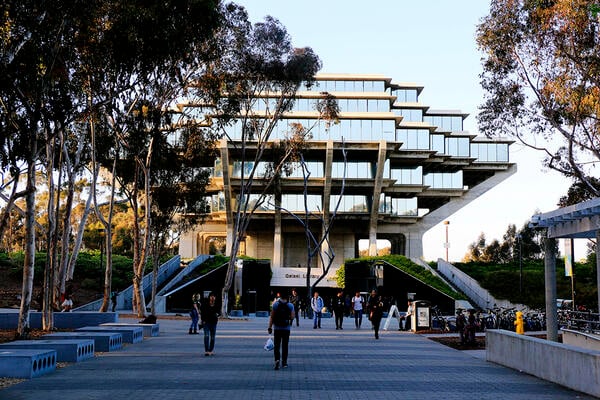
    The number of first-year students at the University of California, San Diego, whose math skills fall below a middle school level has increased nearly 30-fold over the past five years, according to a new report from the university’s Senate–Administration Working Group on Admissions. In the 2025 fall cohort, one in eight students placed into math below a middle school level, despite having a solid math GPA.

    The number of first-year students in remedial math courses at the university surged to 390 in fall 2022, up from 32 students in fall 2020. The remedial math course was designed in 2016 and only addressed missing high school math knowledge, but instructors quickly realized that many of their students had knowledge gaps that went back to middle or elementary school, the report states. For fall 2024, UC San Diego revamped its remedial math course to address middle school math gaps and introduced an additional remedial course to cover high school math. In fall 2025, 921 students enrolled in one of these two courses—11.8 percent of the incoming class.

    “This deterioration coincided with the COVID-19 pandemic and its effects on education, the elimination of standardized testing, grade inflation, and the expansion of admissions from under-resourced high schools,” the report states. “The combination of these factors has produced an incoming class increasingly unprepared for the quantitative and analytical rigor expected at UC San Diego.”

    Within the UC system, the San Diego campus isn’t alone, but its problem is “significantly worse,” the report states. This is partly because the university has, since 2022, admitted and enrolled more students from low-income schools that saw greater COVID-era learning loss than other UC campuses. Many other UC campuses are seeing similar, though smaller, declines in student preparation. About half of UC campus math chairs responded to a survey saying that the “number of first-year students that are unable to start in college-level precalculus” increased twofold between fall 2020 and fall 2025, and the other half said the number increased threefold. 

    High school grade inflation is not helping the university evaluate students’ math skills, the report states. In 2024, the average high school math GPA for students in Math 2, the middle school–level remedial math course, was 3.65—an A-minus.

    “At the same time our admit pool is slipping in math preparation, we see a slight improvement in their math grades from high school,” the report states. “The elimination of standardized testing together with COVID resulted in a mismatch between students’ course level/grades and their actual levels of preparation, with far-reaching implications for determining math readiness and course placement.”

    The working group put forward a number of recommendations for addressing these shortcomings, including using a “math index” based on historical placement data and transcript-based variables to “predict students’ likelihood of placement into remedial math.” The group also recommended establishing feedback mechanisms with high schools and requiring math placement testing by June 1 for incoming students, among other things.

    Source link

  • Trump Defends Enrolling International Students

    Trump Defends Enrolling International Students

    President Donald Trump stressed the value of international students in the U.S. during an interview aired on Fox News Monday.  

    Fox News host Laura Ingraham pressed Trump on why he wouldn’t curb international student enrollments, particularly from China. Trump told her doing so would “perhaps make people happy” but colleges and universities would “go out of business.”

    “You don’t want to cut half of the people, half of the students from all over the world that are coming into our country—destroy our entire university and college system—I don’t want to do that,” Trump said. He also claimed historically Black colleges and universities would “all be out of business.”

    “Look, I want to be able to get along with the world,” Trump added.

    Ingraham pushed back, raising concerns about Chinese spying and intellectual property theft. But Trump framed welcoming international students as an economic decision.

    “We take in trillions of dollars from students,” he said. “You know, the students pay more than double when they come in from most foreign countries. I want to see our school system thrive. And it’s not that I want them, but I view it as a business.”

    The annual Open Doors report from the Institute of International Education estimates the economic value of foreign students in the U.S. to be about $50 billion per year.

    In May, Secretary of State Marco Rubio threatened to “aggressively revoke” Chinese students’ visas and intensify vetting for Chinese visa applications. But Trump reversed course this summer and proposed the U.S. allow 600,000 Chinese students into the country, prompting backlash from some members of his base, the Associated Press reported.

    The move, and Trump’s reiterated support for it on Fox this week, seem to contradict other actions his administration has taken, such as revoking international students’ visas, arresting international students for First Amendment–protected protests and ramping up scrutiny of international student visa applicants. Some campuses have experienced steep declines in international student enrollments this semester.

    Source link

  • Pricing strategy: the missing lever in university sustainability

    Pricing strategy: the missing lever in university sustainability

    This blog was kindly authored by Vincenzo Raimo, an international higher education consultant, with analysis from CIL Management Consultants.

    UK universities face an increasingly constrained financial landscape. Across all four nations, domestic undergraduate tuition fees are regulated and have failed to keep pace with rising costs. In England, the cap is currently £9,535 and, following the UK Government’s recent announcement, will rise annually in line with inflation from 2026, with eligibility linked to standards. This modest change does little to reverse years of real-terms decline, leaving much of the UK’s undergraduate teaching provision structurally loss-making. In Wales, fees remain capped at £9,535; in Northern Ireland they are £4,855; and for Scottish-domiciled students studying in Scotland, there are no tuition fees at all.

    In this environment, attention naturally turns to those parts of university income that are unregulated, most notably fees for international students and postgraduate programmes. Master’s fees for home students are unregulated in all four nations, and universities are free to set their own international tuition rates.

    Much of the public debate has focused on the fee levels charged by some higher-ranked universities and the narrative that international students subsidise domestic education and research. While this is certainly true for many institutions, it is far from universal.

    Once scholarships, discounts, agent commissions and other costs of acquisition are deducted, the margins on international student recruitment can be modest, and sometimes non-existent. For a growing number of institutions, particularly those struggling to fill domestic places, international recruitment at low net revenue levels has become a way of keeping the lights on. Better, in some cases, to have some income to cover fixed costs than none at all.

    But this is not a sustainable strategy. If international recruitment is to continue underpinning the financial viability of UK universities, much greater attention needs to be paid to pricing strategy.

    The price–profit relationship

    CIL Management Consultants recently analysed how UK universities can use pricing more strategically to support growth and profitability. Their work highlights just how powerful pricing can be as a financial lever compared with more commonly pursued strategies such as chasing volume or cutting costs.

    Their analysis included an illustrative calculation based on a scenario where a university charges tuition fees of £25,000 per international student, enrols 50 students on the course, and incurs a cost of acquisition of £4,000 per student (including scholarships, discounts and agent commissions).

    Under this model, a 5% increase in tuition fees would generate around a 6% uplift in profit, outpacing the gains from a 5% rise in enrolments (around 5%) or a 5% reduction in acquisition costs (around 1%). In other words, price is the strongest profit lever available to universities.

    Despite this, most institutions have historically set their international and postgraduate fees through incremental adjustments or by reference to competitors’ published fees, often without examining what those institutions actually charge in practice, and with little systematic consideration of how those fees influence volume, cost, and overall margin.

    Understanding the margin challenge

    CIL’s work also reinforces what many sector leaders already know: margins are being squeezed from all directions.

    • Capped domestic fees leave undergraduate teaching structurally loss-making for many institutions.
    • Rising operational costs, particularly staff, energy, and estates, continue to erode surpluses.
    • High fixed cost bases limit flexibility, with cuts risking reductions in quality or capacity.

    In this context, the international market has become the pressure valve. But unless pricing is managed strategically, even international markets will fail to deliver the surpluses universities depend upon.

    Three levers for strategic pricing

    CIL identify three main levers universities can use to improve pricing power and strengthen their financial position:

    1. Premium to domestic tuition fees: establishing deliberate price differentials that reflect a university’s strategic positioning, course value, and market dynamics. Currently, most universities operate with only a few broad fee bands, typically with humanities and much of the social sciences in the lowest band, lab-based subjects higher, and business or MBA programmes at the top.

      A true pricing strategy would be far more nuanced. It would use evidence on student demand, graduate outcomes, and perceived market value to differentiate pricing across and within disciplines, rather than relying on legacy bands. Some programmes could justifiably command greater premiums; others might need lower pricing to maintain competitiveness or support diversity.

    2. Cost of acquisition: developing clear internal pricing rules to manage scholarships, discounts, and agent commissions. For many institutions, these often-hidden costs now absorb a significant share of international tuition income. Transparent frameworks for managing these levers are essential to protect margins.
    3. Responsive pricing: using dynamic adjustments during the application and enrolment cycle to optimise both numbers and yield. This approach, widely used in other sectors, allows universities to flex pricing and incentives in response to market performance, course capacity, and demand signals.

    When applied together, these levers can transform a reactive pricing approach into a proactive, strategic tool for sustainability.

    From volume to value

    The sector’s dominant mindset has too often been volume-driven: more international students, more income. Yet volume without margin is a dangerous illusion of success. CIL’s analysis reminds us that an overreliance on high-volume, low-margin recruitment can rapidly undermine financial resilience, particularly when acquisition costs are rising.

    Strategic pricing, by contrast, focuses on value, identifying where universities can sustain premiums, where scholarships genuinely drive conversion, and where cost reductions can be achieved without compromising quality or reputation.

    This is not simply a commercial exercise. It’s about ensuring that the financial model underpinning UK higher education remains viable enough to support teaching, research, and public value in the long term.

    Making pricing strategic

    For universities, developing a coherent pricing strategy means integrating finance, recruitment, marketing, and academic planning functions around shared objectives. It also means looking across all offerings to ensure fee levels reflect the real value, demand, and cost to deliver each programme.

    Above all, it requires cultural change. Pricing cannot be left to annual cycles of incremental uplifts or reactive discounts. It needs to become a core component of institutional strategy linked to brand, market position, and mission.

    Pricing for purpose and sustainability

    Price should not be treated as a purely commercial consideration or an uncomfortable topic best left to finance teams. It is a strategic tool that, when used intelligently, can help universities balance their academic mission with financial sustainability.

    A well-designed pricing strategy can sustain access by ensuring that scholarships and discounts are targeted where they make the greatest difference; it can maintain quality by protecting the resources needed to deliver excellent teaching and research; and it can enable innovation by generating the headroom for new programmes, partnerships and investment.

    Reframing price as part of a university’s purpose, rather than as an administrative exercise or a market reaction, allows institutions to align financial decisions with their educational and societal goals. It invites governing bodies and senior leaders to ask not just what can the market bear, but what price best reflects the value we deliver, the students we want to attract, and the impact we want to have?

    If the UK sector is to thrive amid constrained funding and rising costs, it must learn to price with both principle and precision. Getting price right is not about maximising income; it is about ensuring that universities remain able to deliver their mission sustainably for the long term.

    Source link

  • Beyond Breakout Rooms: Deepening Learning with Collaborative Whiteboards – Faculty Focus

    Beyond Breakout Rooms: Deepening Learning with Collaborative Whiteboards – Faculty Focus

    Source link

  • Making creative practice research visible

    Making creative practice research visible

    I still remember walking into my first Association of Media Practice Educators conference, sometime around the turn of the millennium.

    I was a very junior academic, wide-eyed and slightly overwhelmed. Until that point, I’d assumed research lived only in books and journals.

    My degree had trained me to write about creative work, not to make it.

    That event was a revelation. Here were filmmakers, designers, artists, and teachers talking about the doing as research – not as illustration or reflection, but as knowledge in its own right. There was a sense of solidarity, even mischief, in the air. We were building something together: a new language for what universities could call research.

    When AMPE eventually merged with MeCCSA – the Media, Communication and Cultural Studies Association – some of us worried that the fragile culture of practice would be swallowed by traditional academic habits. I remember standing in a crowded coffee queue at that first joint conference, wondering aloud whether practice would survive.

    It did. But it’s taken twenty-five years to get here.

    From justification to circulation

    In the early days, the fight was about legitimacy. We were learning to write short contextual statements that translated installations, performances, and films into assessable outputs. The real gatekeeper was always the Research Excellence Framework. Creative practice researchers learned to speak REF – to evidence, contextualise, and theorise the mess of creative making.

    Now that argument is largely won. REF 2021 explicitly recognised practice research. Most universities have templates, repositories, and internal mentors to support it. There are still a few sceptics muttering about rigour, but they’re the exception, not the rule.

    If creative practice makes knowledge, the challenge today is not justification. It’s circulation.

    Creative practice is inherently cross-disciplinary. It doesn’t sit neatly in the subject silos that shape our academic infrastructure. Each university has built its own version of a practice research framework – its own forms, repositories, and metadata – but the systems don’t talk to one another. Knowledge that begins in the studio too often ends up locked inside an institutional database, invisible to the rest of the world.

    A decade of blueprints

    Over the past few years, a string of national projects has tried to fix that.

    PRAG-UK, funded by Research England in 2021, mapped the field and called for a national repository, metadata standards, and a permanent advisory body. It was an ambitious vision that recognised practice research as mature and ready to stand alongside other forms of knowledge production.

    Next came Practice Research Voices and SPARKLE in 2023 – both AHRC-funded, both community-driven. PR Voices, led by the University of Westminster, tested a prototype repository built on the Cayuse platform. It introduced the idea of the practice research portfolio – a living collection that links artefacts, documentation, and narrative. SPARKLE, based at Leeds with the British Library and EDINA, developed a technical roadmap for a national infrastructure, outlining how such a system might actually work.

    And now we have ENACT – the Practice Research Data Service, funded through UKRI’s Digital Research Infrastructure programme and again led by Westminster. ENACT’s job is to turn all those reports into something real: a national, interoperable, open data service that makes creative research findable, accessible, and reusable. For the first time, practice research is being treated as part of the UK’s research infrastructure, not a quirky sideshow to it.

    A glimpse of community

    In June 2025, Manchester Metropolitan University hosted The Future of Practice Research. For once, everyone was in the same room – the PRAG-UK authors, the SPARKLE developers, the ENACT team, funders, librarians, and plenty of curious researchers. We swapped notes, compared schemas, and argued cheerfully about persistent identifiers.

    It felt significant – a moment of coherence after years of fragmentation. For a day, it felt like we might actually build a network that could connect all these efforts.

    A few weeks later, I found myself giving a talk for Loughborough University’s Capturing Creativity webinar series. Preparing for that presentation meant gathering up a decade of my own work on creative practice research – the workshops I’ve designed, the projects I’ve evaluated, the writing I’ve done to help colleagues articulate their practice as research. In pulling all that together, I realised how cyclical this story is.

    Back at that first AMPE conference, we were building a community from scratch. Today, we’re trying to build one again – only this time across digital platforms, data standards, and research infrastructure.

    The policy challenge

    If you work in research management, this is your problem too. Practice research now sits comfortably inside the REF, but not inside the systems that sustain the rest of academia. We have no shared metadata standards, no persistent identifiers for creative outputs, and no national repository.

    Every university has built its own mini-ecosystem. None of them connect.

    The sector needs collective leadership – from UKRI, the AHRC, Jisc, and Universities UK – to treat creative practice research as shared infrastructure. That means long-term funding, coordination across institutions, and skills investment for researchers, librarians, and digital curators.

    Without that, we’ll keep reinventing the same wheel in different corners of the country.

    Coming full circle

    Pulling together that presentation for Capturing Creativity reminded me how far we’ve come – and how much remains undone. We no longer need to justify creative practice as research. But we still need to build the systems, the culture, and the networks that let it circulate.

    Because practice research isn’t just another output type. It’s the imagination of the academy made visible.

    And if the academy can’t imagine an infrastructure worthy of its own imagination, then we really haven’t learned much from the last twenty-five years.

    Source link

  • The higher education “market” still doesn’t work

    The higher education “market” still doesn’t work

    When I was prepping up for Policy Radar in October, I gave some brief thought as to how students are positioned and imagined in the Post-16 Education and Skills White Paper.

    And if you’re not a fan of the student-as-consumer framing that has dominated policy for over a decade, I have bad news.

    “Good value for students” will be delivered through “quality” related conditional fee uplifts, and better information for course choice.

    Ministers promise to “improve the quality of information for individuals” so they can pick courses that lead to “positive outcomes” – classic consumer-style transparency, outcome signalling and value propositions.

    And UCAS is leaned on as the main choice architecture for applicants, promising work to improve the quality, prominence and timing of information that applicants see.

    I won’t repeat here why I don’t think that student-as-consumer is anything like as damaging as some do. It was the subject of the first thing I ever wrote for this site, and the arguments are well-rehearsed.

    What I am interested in here is the extent to which the protections that are supposed to exist for students as consumers are working. And to do that, I thought I’d take a little trip down memory lane.

    Consumers at the heart of the system

    Back in 2013, when reforms were being implemented in England to triple tuition fees to £9,000, there had been a very conscious effort in the White Paper that underpinned those changes to frame students as consumers.

    HEFCE was positioned as a “consumer champion for students” tasked with “promoting competition”, we learned that “putting financial power into the hands of learners makes student choice meaningful” and a partnership with Which? was to improve the presentation of course information to help students get “value for money”.

    The “forces of competition” were to replace the “burdens of bureaucracy” in driving up the quality”, the system was to be designed to be “more responsive to student choice” as a market demand signal, the National Student Survey was positioned as a tool for consumer comparison, and the liberation of number controls that had previously “limit[ed] student choice” was to enable students to “vote with their feet”.

    Students were at the heart of the system – as long as you imagined them as consumers.

    The Office for Fair Trading (OfS) wasn’t so sure. The Competition and Markets Authority’s predecessor body had been lobbied by NUS over terms in student contracts that allowed academic sanctions for non-academic debt – and once that was resolved, it took a wider look at the “market” (for undergraduate students in England) to see whether it was working.

    It was keen to assess whether the risks inherent in applying market mechanisms to public services – information asymmetries, lock-in effects, regulatory gaps, and race-to-the-bottom dynamics – were being adequately managed.

    So it launched a call for information, and just before it got dissolved into the CMA, published a report of its findings with recommendations both for the successor body and government.

    Now, given the white paper has done little to change the framing, the question for me when re-reading it was whether any of the problems it identified are still around, or worse.

    The inquiry was structured around four explicit questions – whether students were able to make well-informed choices that drive competition, whether students were treated fairly when they get to university, whether there was any evidence of anti-competitive behaviour between higher education institutions, and whether the regulatory environment was designed to protect students while facilitating entry, innovation, and managed exit by providers.

    On that third one, it found no evidence of anti-competitive behaviour, and in the White Paper, the CMA is now said to be working with the Department for Education (DfE) to clarify how collaboration between providers can happen within the existing legal framework. It’s the others I’ve looked at in detail below.

    Enabling students to make informed choices

    The OFT’s first investigation area was whether students could make the well-informed choices that the marketisation model relied upon.

    The theoretical benefits of competition – providers competing on quality, students voting with their feet, market forces driving standards – were only going to work if consumers could assess what they were buying. Given education is a “post-experience good” that can’t be judged until after consumption, this was always going to be the trickiest part of making a market work.

    As such, it identified information asymmetry as one of three meta-themes underlying market dysfunction. Students were making life-changing, debt-incurring decisions with incomplete, misleading, inaccessible or outdated information – potentially in breach of Consumer Protection from Unfair Trading Regulations and rendering the entire choice-and-competition model built on sand.

    On teaching quality indicators, students couldn’t find basic information about educational experience. Graham Gibbs’ research had identified key predictors – staff-to-student ratios, funding per student, who teaches, class sizes, contact hours – yet none were readily available. Someone reviewing physics courses couldn’t tell whether they’d get eleven or 25 hours weekly.

    By 2014, the National Student Survey (NSS) was prominent but only indirectly measured teaching quality. Without observable process variables, institutions faced weak incentives to invest in teaching and students couldn’t exert competitive pressure. For OfT, the choice mechanism was essentially decorative.

    On employment outcomes, career prospects were the major decision factor, yet DLHE tracked employment only six months post-graduation when many were in temporary roles. The 40-month longitudinal DLHE had sample sizes too small for course-level statistics – students couldn’t compare actual career trajectories. It was also worried about value-added – employment data didn’t control for intake characteristics. Universities taking privileged students looked advantageous regardless of what they actually contributed – for the OfT, that risked perverse incentives where institutions were rewarded for cream-skimming privileged students rather than adding educational value.

    It was also worried about prestige signals like entry requirements and research rankings crowding out quality signals. Presenting outcomes without contextualising intake breached a basic market principle – for the OFT, consumers should assess product quality independent of customer characteristics. And on hidden costs, an NUS survey had found 69 per cent of undergraduates incurred additional charges beyond tuition – equipment hire, studio fees, bench fees – many of which were unknown when applying, raising legal concerns and practical affordability questions.

    The OFT recommended that HEFCE’s ongoing information review address coverage gaps around the learning environment including contact hours, class sizes and teaching approaches; that HEFCE and the sector focus on improving quality and comparability of long-term employment and salary data; that employment data account for institutions taking students with different backgrounds and abilities, acknowledging significant methodological challenges around controlling for prior attainment, socioeconomic background and subject mix; and that material information about additional costs be disclosed to avoid misleading omissions.

    A decade later, things are much worse. DiscoverUni replaced Unistats but core Gibbs indicators remain absent. Contact hours became a political football – piloted as a TEF metric in 2017, abandoned as unworkable, then demanded by ministers in 2022 with sector resistance fearing “Mickey Mouse degrees” tabloid headlines. Staff ratios, class sizes and teaching qualifications still aren’t standardised. The TEF provides gold/silver/bronze ratings but doesn’t drill down to process variables or subject areas predicting actual experience.

    On employment outcomes, things are marginally better but inadequate. Graduate Outcomes tracks employment at 15 months rather than six, but there’s still no standardised long-term earnings trajectory data at course level. On value-added, the situation is virtually unchanged. OfS uses benchmarks in regulation but these aren’t prominently displayed for prospective students. IFS research periodically demonstrates dramatic differences between raw and adjusted outcomes, but this isn’t integrated into official student-facing information.

    The Russell Group benefits enormously from selecting privileged students whose career prospects would be strong regardless of institutional quality. Students can’t distinguish educational quality from privilege – arguably worse given increased marketing of graduate salary data without the context that would make it meaningful. And on hidden costs, the picture is mixed and hard to assess. There is no standardised disclosure format, no regulatory requirement for prominence at application, and a real mess over wider participation costs. The fundamental issue persists.

    Most importantly, well-informed choices pretty much rely on the idea that information is predictive – whether you’re talking about higher education’s experience outputs or its outcomes, what a student is told is supposed to signal what they’ll get. But rapid contraction of courses (and modules within courses), coupled with significant changes in the labour market, all mean that prediction is becoming increasingly futile. That’s a market that, on OfT terms, doesn’t work.

    The student experience at university

    Back in 2013, the OFT identified lock-in effects as the second of three meta-themes undermining the market model.

    Once enrolled, students were effectively trapped by high switching costs, weak credit transfer, financial complications and social costs. For the regulator, that fundamentally broke the competitive mechanism that the entire reform package relied upon. If students couldn’t credibly exit poor provision, institutions faced weak pressure to maintain quality after enrolment. The threat of exit – essential to making markets work – was largely hollow. That enabled institutions to change terms, raise fees and alter courses with relative impunity.

    It found only 1.9 per cent of students switched institutions nationally. While around 90 per cent of institutions awarded credits in theory, there was no guaranteed right to transfer them with assessment happening case by case. Information about credit transfer was technical and non-user friendly. Students faced multiple barriers including difficulty assessing credit equivalence, poor information, financial complications and high social costs of relocating. And students leaving mid-year had to wait until next academic year to access funding again, particularly trapping disadvantaged students in unsuitable courses.

    On fees and courses changing mid-stream, the OFT received reports of fees increasing mid-way through courses, particularly for international students – 58 per cent of institutions didn’t offer fixed tuition for international students on courses over one year. That contravened principles requiring students to know total costs upfront and potentially constituted aggressive commercial practices by exploiting students’ constrained positions.

    Course changes posed similar problems – locations changing, modules reduced, lectures moved to weekends, content changing, modules unavailable. Terms permitting key features to change without valid reason were potentially unfair.

    On misleading information, the OFT heard concerns about false or misleading information about graduate prospects, accreditation, qualification type, course content and facilities, breaching Consumer Protection from Unfair Trading Regulations. Institutions also failed to inform students of potential fee increases, course changes and mandatory additional charges – material omissions affecting informed decisions.

    On complaints and redress, while resolution times were improving from 20 per cent taking over a year in 2009 to 5 per cent, still 12 per cent took six-plus months. Students often graduated before complaints were resolved. A power imbalance between students and institutions required accessible, clear pathways – yet students reported difficulty finding complaint forms, fear of complaining and being put off by bureaucratic processes. Many were unaware of the OIA or how to access it. There was no public data on complaints handled internally by institutions, meaning systemic problems remained hidden and students couldn’t make informed choices between institutions.

    The OFT didn’t make formal recommendations on credit transfer, noting that difficulties arose partly from inevitable variations in how institutions structure degrees, but highlighted that institutions appeared to lack processes for assessing credit equivalence. It implied that fees and course terms needed greater transparency and stability, that misleading information must be eliminated, that academic sanctions should only apply to academic debt, that complaint processes needed to be faster and more accessible with transparency about complaint volumes, that OIA coverage should be comprehensive, and that the structural barriers to price competition needed addressing.

    A decade later, the picture is bleak. Credit transfer has worsened substantially – despite being crucial to the Lifelong Learning Entitlement, it remains one of those old chestnuts where the collective impulse is to explain why it cannot happen. Multiple government attempts have been unsuccessful, and recent OIA complaints show students still don’t realise until too late that transferring will significantly impact loan funding or bursaries.

    On fees and courses changing, the problem persists and legal standards have tightened considerably with both Ofcom and the CMA now viewing inflation-linked mid-contract price increases as causing consumer harm. The 2024 increase to £9,535 exposed widespread non-compliance with many institutions lacking legally sound terms.

    Unilateral course changes without proper consent remain endemic. The CMA secured undertakings from UEA in 2017, and recent OfS and Trading Standards interventions have identified unreasonably wide discretion in terms, and this summer when I looked, less than a third had deleted industrial action from force majeure clauses.

    On misleading information, the DMCC Act has tightened requirements but enforcement is patchy and two-tier with new providers facing enhanced scrutiny while registered providers don’t face the same requirements. Students still cannot bring direct legal claims for misleading omissions.

    On complaints, in 2021 the OIA closed 2,654 complaints but failed to meet its KPI of closing 75 per cent within six months, and the OIA’s influence seems to be waning – with providers implementing good practice recommendations on time dropping from 88 per cent in 2018 to just 60 per cent recently – significantly worse than 2014. Provider websites still include demotivating language about the OIA having no regulatory powers, and there’s still no public data on internal complaints.

    Almost every problem identified has persisted or worsened. Credit transfer remains a policy aspiration without practical implementation. Mid-course changes have intensified under financial pressure. Complaints resolution has deteriorated. Price competition remains absent. Students remain locked into courses with weak protections against opportunistic behaviour by institutions under financial strain.

    The regulatory environment

    The OFT identified regulatory-market misalignment as the third meta-theme. A framework designed for a government-funded sector was governing a student-funded market. As funding shifted, areas without direct public funding fell outside regulatory oversight, creating gaps in student protection and quality assurance. The regulatory architecture hadn’t caught up with the marketisation it was supposed to facilitate.

    It found a system that relied on ad hoc administrative arrangements on decades-old frameworks, lacking democratic legitimacy and a clear statutory basis. Multiple overlapping responsibilities created extreme complexity – the Regulatory Partnership Group produced an Operating Framework just to map arrangements.

    The OFT’s recommendations were implicit – comprehensive reform with primary legislation, simplified structures, reduced uncertainty, accommodation of innovation, competitive neutrality, independent quality assurance, clear exit regimes and quality safeguards.

    Later in the decade, HERA 2017 provided primary legislation establishing the Office for Students (OfS) with statutory frameworks, attempting to address the funding model misalignment. But complexity has arguably worsened dramatically – and beyond OfS, providers and their students are supposed to navigate DfE, UKVI, HESA, QAA, OIA, EHRC, employment law, charity law, Foreign Influence Registration, Prevent and more.

    Crucially, from a student perspective, enrolling is now riskier. Student Protection Plans exist but in sudden insolvency required funds are unlikely protected. OfS has limited teach-out quality monitoring. Plans are outdated and unrealistic – significantly worse than 2014. With financial pressures, there’s evidence of quality degradation – staff leaving, class sizes dwindling, any warm body delivering modules – yet OfS has no meaningful monitoring.

    Survival strategies involve cutting contact hours, study support, module choices and learning resources. Quality floor enforcement remains weak. OFT’s predicted race to the bottom may be materialising.

    What the OFT didn’t see coming

    The 2014 report identified market failures within domestic undergraduate provision but couldn’t anticipate how internationalisation would create entirely new categories of consumer harm. The report barely addressed international students – who by 2024 would represent over 30 per cent of the student body at many institutions.

    International student recruitment spawned multiple interlocking problems. International postgraduate taught students face hefty non-refundable deposits. When students discover agents pushed unsuitable courses or accommodation falls through they lose thousands, creating a regulatory dead-end where CMA refers complaints to OfS, OfS can’t update on progress and OIA says applicants aren’t yet students. UK universities pay agents 5-30 per cent of first-year tuition yet BUILA and UUKi guidelines advise against publishing commission fees. A BUILA survey found significant proportions of recruitment staff believe agents prioritise higher commission over best-fit programmes. A model where these “vulnerable consumers” are only around for a year and whose immigration status is managed by the university is not an ideal breeding ground for consumer confidence when something goes wrong.

    Fee transparency has also emerged as a distinct problem the OFT couldn’t anticipate. Universities’ fee increase policies fail to comply with DMCC drip pricing requirements, using vague language like “fees may rise with inflation” without specifying an index, amount or giving equal prominence. The DMCC Act Section 230 strengthens requirements around total cost presentation – yet widespread non-compliance exists with no enforcement.

    Time for a re-run

    David Behan’s 2024 review of OfS argued that regulating in the student interest required OfS to act as a consumer protection regulator, noting the unique characteristics of higher education as a market where students make one-off, life-changing choices that cannot easily be reversed.

    He recommended OfS be given new powers to address consumer protection issues systematically, including powers to investigate complaints, impose sanctions for unfair practices and require institutions to remedy harm.

    The Post-16 Education and Skills White Paper contains no sign of these powers. Instead, OfS has developed something called “treating students fairly” as part of its regulatory framework, which applies only to new providers joining the register, and exempts the 130-plus existing providers where the problems concentrate.

    The framework doesn’t address CAS allocation crises, agent commission opacity, accommodation affordability, the mess of participation costs information, mid-contract price increases, clauses that limit compensation for breach of contract to the total paid in fees, under and over-recruitment, restructures that render promises meaningless, a lack of awareness of rights over changes, weak regulation on disabled students’ access, protection that doesn’t work and regulator that hopes students have paid their fees by credit card. The issues the OfT identified in 2014 have not been resolved – they have intensified and multiplied alongside entirely new categories of harm that never appeared in the original review. And in any case, OfS only covers England.

    There are also so many issues I’ve not covered off in detail – not least the hinterland of ancillary markets that quietly shape the “purchase”. Accommodation tie-ins and exclusive nomination deals that funnel applicants into PBSA on university letterheads. Guarantor insurance and “admin fees by another name”. Pressure-selling tactics at Clearing. Drip pricing across compulsory materials, fieldwork and resits with no total cost of ownership up front.

    International applicants squeezed by CAS timing, opaque visa-refusal refunds and agent commission structures the sector still won’t publish. And in the franchising boom, students can’t tell who their legal counterparty is, Student Protection Plans don’t bite cleanly down the chain, and complaints ping-pong between delivery partner, validator and redress schemes.

    Then there’s invisible digital and welfare layers that a consumer lens keeps missing. VLE reliability and service levels that would trigger service credits in any other sector but here are just “IT issues”. Prospectuses that promise personalised disability or welfare support without disclosing capacity limits or waiting times. Placements and professional accreditation marketed as features, then quietly downgraded with “not guaranteed” microprint when markets tighten.

    And the quiet austerity of mid-course “variation” – fewer options, thinner contact, shorter opening hours, more asynchronous delivery – with no price adjustment, no consent and no meaningful exit. If this is a market, where are the market remedies?

    What’s needed ideally is a bespoke set of student rights that recognise the distinctive features of higher education as an experience – the information asymmetries, the post-experience good characteristics, the lock-in effects, the visa and immigration entanglements and the power imbalances between institutions and individuals.

    But if that’s not coming – and the White Paper suggests it isn’t – then the market architecture remains, and with it the need for functioning regulation.

    The CMA should do its job. It should re-run the 2014 review to assess how the market has evolved over the past decade, expand its coverage to include the issues that have emerged, and use the powers that the DMCC Act has given it. By its own definitions, the evidence of harm is overwhelming.


    Source link

  • New three-tier visa processing practice starts – Campus Review

    New three-tier visa processing practice starts – Campus Review

    The federal government will reward universities that enrol international students in line with allocated numbers under a new visa processing practice to begin in November.

    Please login below to view content or subscribe now.

    Membership Login

    Source link

  • Deakin University underpaid staff $3m – Campus Review

    Deakin University underpaid staff $3m – Campus Review

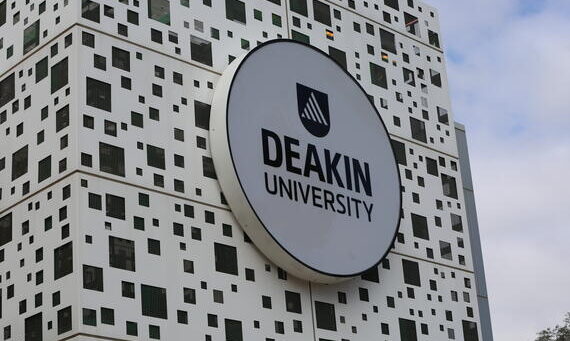
    Deakin University has found it underpaid casual staff $2.9 million over the last eight years, adding to the growing list of wage underpayments in the sector.

    Please login below to view content or subscribe now.

    Membership Login

    Source link

  • Helping students to make good choices isn’t about more faulty search filters

    Helping students to make good choices isn’t about more faulty search filters

    A YouTube video about Spotify popped into my feed this weekend, and it’s been rattling around my head ever since.

    Partly because it’s about music streaming, but mostly because it’s all about what’s wrong with how we think about student choice in higher education.

    The premise runs like this. A guy decides to do “No Stream November” – a month without Spotify, using only physical media instead.

    His argument, backed by Barry Schwartz’s paradox of choice research and a raft of behavioural economics, is that unlimited access to millions of songs has made us less satisfied, not more.

    We skip tracks every 20 to 30 seconds. We never reach the guitar solo. We’re treating music like a discount buffet – trying a bit of everything but never really savouring anything. And then going back to the playlists we created earlier.

    The video’s conclusion is that scarcity creates satisfaction. Ritual and effort (opening the album, dropping the needle, sitting down to actually listen) make music meaningful.

    Six carefully chosen options produce more satisfaction than 24, let alone millions. It’s the IKEA effect applied to music – we value what we labour over.

    I’m interested in choice. Notwithstanding the debate over what a “course” is, Unistats data shows that there were 36,421 of them on offer in 2015/16. This year that figure is 30,801.

    That still feels like a lot, given that the University of Helsinki only offers 34 bachelor’s degree programmes.

    Of course a lot of the entries on DiscoverUni separately list “with a foundation year” and there’s plenty of subject combinations.

    But nevertheless, the UK’s bewildering range of programmes must be quite a nightmare for applicants to pick through – it’s just that once they’re on them, job cuts and switches to block teaching are delivering increasingly less choice in elective pathways than they used to.

    We appear to have a system that combines overwhelming choice at the point of least knowledge (age 17, alongside A-levels, with imperfect information) with rigid narrowness at the point of most knowledge (once enrolled, when students actually understand what they want to study and why). It’s the worst of both worlds.

    What the white paper promises

    The government’s vision for improving student choice runs to a couple of paragraphs in the Skills White Paper, and it’s worth quoting in full:

    We will work with UCAS, the Office for Students and the sector to improve the quality of information for individuals, informed by the best evidence on the factors that influence the choices people make as they consider their higher education options. Providing applicants with high-quality, impartial, personalised and timely information is essential to ensuring they can make informed decisions when choosing what to study. Recent UCAS reforms aimed at increasing transparency and improving student choice include historic entry grades data, allowing students, along with their teachers and advisers, to see both offer rates and the historic grades of previous successful applicants admitted to a particular course, in addition to the entry requirements published by universities and colleges.

    As we see more students motivated by career prospects, we will work with UCAS and Universities UK to ensure that graduate outcomes information spanning employment rates, earnings and the design and nature of work (currently available on Discover Uni) are available on the UCAS website. We will also work with the Office for Students to ensure their new approach to assessing quality produces clear ratings which will help prospective students understand the quality of the courses on offer, including clear information on how many students successfully complete their courses.”

    The implicit theory of change is straightforward – if we just give students more data about each of the courses, they’ll make better choices, and everyone wins. It’s the same logic that says if Spotify added more metadata to every track (BPM, lyrical themes, engineer credits), you’d finally find the perfect song. I doubt it.

    Pump up the Jam

    If the Department for Education (DfE) was serious about deploying the best evidence on the factors that influence the choices people make, it would know about the research showing that more information doesn’t solve choice overload, because choice overload is a cognitive capacity problem, not an information quality problem.

    Sheena Iyengar and Mark Lepper’s foundational 2000 study in the Journal of Personality and Social Psychology found that when students faced 30 essay topic options versus six options, completion rates dropped from 74 per cent to 60 per cent, and essay quality declined significantly on both content and form measures. That’s a 14 percentage point completion drop from excessive choice alone, and objectively worse work from those who did complete.

    A study on Jam showed customers were ten times more likely to buy when presented with six flavours rather than 24, despite 60 per cent more people initially stopping at the extensive display. More choice is simultaneously more appealing and more demotivating. That’s the paradox.

    CFE Research’s 2018 study for the Office for Students (back when providing useful research for the sector was something it did) laid this all out explicitly for higher education contexts.

    Decision making about HE is challenging because the system is complex and there are lots of alternatives and attributes to consider. Those considering HE are making decisions in conditions of uncertainty, and in these circumstances, individuals tend to rely on convenient but flawed mental shortcuts rather than solely rational criteria. There’s no “one size fits all” information solution, nor is there a shortlist of criteria that those considering HE use.

    The study found that students rely heavily on family, friends, and university visits, and many choices ultimately come down to whether a decision “feels right” rather than rational analysis of data. When asked to explain their decisions retrospectively, students’ explanations differ from their actual decision-making processes – we’re not reliable informants about why we made certain choices.

    A 2015 meta-analysis by Chernev, Böckenholt, and Goodman in the Journal of Consumer Psychology identified the conditions under which choice overload occurs – it’s moderated by choice set complexity, decision task difficulty, and individual differences in decision-making style. Working memory capacity limits humans to processing approximately seven items simultaneously. When options exceed this cognitive threshold, students experience decision paralysis.

    Maximiser students (those seeking the absolute best option) make objectively better decisions but feel significantly worse about them. They selected jobs with 20 per cent higher salaries yet felt less satisfied, more stressed, frustrated, anxious, and regretful than satisficers (those accepting “good enough”). For UK applicants facing tens of thousands of courses, maximisers face a nearly impossible optimisation problem, leading to chronic second-guessing and regret.

    The equality dimension is especially stark. Bailey, Jaggars, and Jenkins’s research found that students in “cafeteria college” systems with abundant disconnected choices “often have difficulty navigating these choices and end up making poor decisions about what programme to enter, what courses to take, and when to seek help.” Only 30 per cent completed three-year degrees within three years.

    First-generation students, students from lower socioeconomic backgrounds, and students of colour are systematically disadvantaged by overwhelming choice because they lack the cultural capital and family knowledge to navigate it effectively.

    The problem once in

    But if unlimited choice at entry is a cognitive overload problem, what happens once students enrol should balance that with flexibility and breadth. Students gain expertise, develop clearer goals, and should have more autonomy to explore and specialise as they progress.

    Except that’s not what’s happening. Financial pressures across the sector are driving institutions to reduce module offerings – exactly when research suggests students need more flexibility, not less.

    The Benefits of Hindsight research on graduate regret says it all. A sizeable share of applicants later wish they’d chosen differently – not usually to avoid higher education, but to pick a different subject or provider. The regret grows once graduates hit the labour market.

    Many students who felt mismatched would have liked to change course or university once enrolled – about three in five undergraduates and nearly two in three graduates among those expressing regret – but didn’t, often because they didn’t know how, thought it was too late, or feared the cost and disruption.

    The report argues there’s “inherent rigidity” in UK provision – a presumption that the initial choice should stick despite evolving interests, new information, and labour-market realities. Students described courses being less practical or less aligned to work than expected, or modules being withdrawn as finances tightened. That dynamic narrows options precisely when students are learning what they do and don’t want.

    Career options become the dominant reason graduates cite for wishing they’d chosen differently. But that’s not because they lacked earnings data at 17. It’s because their interests evolved, they discovered new fields, labour market signals changed, and the rigid structure gave them no way to pivot without starting again.

    The Competition and Markets Authority now explicitly identifies as misleading actions “where an HE provider gives a misleading impression about the number of optional modules that will be available.” Students have contractual rights to the module catalogue promised during recruitment. Yet redundancy rounds repeatedly reduce the size and scope of optional module catalogues for students who remain.

    There’s also an emerging consensus from the research on what actually works for module choice. An LSE analysis found that adding core modules within the home department was associated with higher satisfaction, whereas mandatory modules outside the home department depressed it. Students want depth and coherence in their chosen subject. They also value autonomous choice over breadth options.

    Research repeatedly shows that elective modules are evaluated more positively than required ones (autonomy effects), and interdisciplinary breadth is associated with stronger cross-disciplinary skills and higher post-HE earnings when it’s purposeful and scaffolded.

    What would actually work

    So what does this all suggest?

    As I’ve discussed on the site before, at the University of Helsinki – Finland’s flagship institution with 40,000 students – there’s 32 undergraduate programmes. Within each programme, students must take 90 ECTS credits in their major subject, but the other 75 ECTS credits must come from other programmes’ modules. That’s 42 per cent of the degree as mandatory breadth, but students choose which modules from clear disciplinary categories.

    The structure is simple – six five-credit introductory courses in your subject, then 60 credits of intermediate study with substantial module choice, including proseminars, thesis work, and electives. Add 15 credits for general studies (study planning, digital skills, communication), and you’ve got a degree. The two “modules” (what we’d call stages) get a single grade each on a one-to-five scale, producing a simple, legible transcript.

    Helsinki runs this on a 22.2 to one staff-student ratio, significantly worse than the UK average, after Finland faced €500 million in higher education cuts. It’s not lavishly resourced – it’s structurally efficient.

    Maynooth University in Ireland reduced CAO (their UCAS) entry routes from about 50 to roughly 20 specifically to “ease choice and deflate points inflation.” Students can start with up to four subjects in year one, then move to single major, double major, or major with minor. Switching options are kept open through first year. It’s progressive specialisation – broad exploration early when students have least context, increasing focus as they develop expertise.

    Also elsewhere on the site, Técnico in Lisbon – the engineering and technology faculty of the University of Lisbon – rationalised to 18 undergraduate courses following a student-led reform process. Those 18 courses contain hundreds of what the UK system would call “courses” via module combinations, but without the administrative overhead. They require nine ECTS credits (of 180) in social sciences and humanities for all engineering programmes because “engineers need to be equipped not just to build systems, but to understand the societies they shape.”

    Crucially, students themselves pushed for this structure. They conducted structured interviews, staged debates, and developed reform positions. They wanted shared first years, fewer concurrent modules to reduce cognitive load, more active learning methods, and more curricular flexibility including free electives and minors.

    The University of Vilnius allows up to 25 per cent of the degree as “individual studies” – but it’s structured into clear categories – minors (30 to 60 credits in a secondary field, potentially leading to double diploma), languages (20-plus options with specific registration windows), interdisciplinary modules (curated themes), and cross-institution courses (formal cooperation with arts and music academies). Not unlimited chaos, just structured exploration within categorical choices.

    What all these models share is a recognition that you can have both depth and breadth, structure and flexibility, coherence and exploration – if you design programmes properly. You need roughly 60 to 70 per cent core pathway in the major for depth and satisfaction, 20 to 30 per cent guided electives organised into three to five clear categories per decision point, and maybe 10 to 15 per cent completely free electives.

    The UK’s subject benchmark statements, if properly refreshed (and consolidated down a bit) could provide the regulatory infrastructure for it all. Australia undertook a version of this in 2010 through their Learning and Teaching Academic Standards project, which defined threshold learning outcomes for major discipline groupings through extensive sector consultation (over 420 meetings with more than 6,100 attendees). Those TLOs now underpin TEQSA’s quality regime and enable programme-level approval while protecting autonomy.

    Bigger programmes, better choice

    The white paper’s information provision agenda isn’t wrong – it’s just addressing the wrong problem at the wrong end of the process. Publishing earnings data doesn’t solve cognitive overload from tens of thousands of courses, quality ratings don’t help students whose interests evolve and who need flexibility to pivot, and historic entry grades don’t fix the rigidity that manufactures regret.

    What would actually help is structural reform that the international evidence consistently supports – consolidation to roughly 20 to 40 programmes per institution (aligned with subject benchmark statement areas), with substantial protected module choice within those programmes, organised into clear categories like minors, languages, and interdisciplinary options.

    Some of those groups of individual modules might struggle to recruit if they were whole courses – think music and languages. They may well (and across Europe, do) sustain research-active academics if they could exist in broader structures. Fewer, clearer programmes at entry when students have least context, and more, structured flexibility during the degree when students have expertise to choose wisely.

    The efficiency argument is real – maintaining thousands of separate course codes, each with approval processes, quality assurance, marketing materials, and UCAS coordination is absurd overhead for what’s often just different permutations of the same modules. See also hundreds of “programme leaders” each having to be chased to fill a form in.

    Fewer programme directors with more module convenors beneath them is far more rational. And crucially, modules serve multiple student populations (what other systems would call majors and minors, and students taking breadth from elsewhere), making specialist provision viable even with smaller cohorts.

    The equality case is compelling – guided pathways with structured choice demonstrably improve outcomes for first-in-family students, students of colour, and low-income students, populations that regulators are charged with protecting. If current choice architecture systematically disadvantages exactly these students, that’s not pedagogical preference – it’s a regulatory failure.

    And the evidence on what students actually want once enrolled validates it all – they value depth in their chosen subject, they want autonomous choice over breadth options (not forced generic modules), they benefit from interdisciplinary exposure when it’s purposeful, and they need flexibility to correct course when their goals evolve.

    The white paper could have engaged with any of this. Instead, we get promises to publish more data on UCAS. It’s more Spotify features when what students need is a curated record collection and the freedom to build their own mixtape once they know what they actually like.

    What little reform is coming is informed by the assumption that if students just had better search filters, unlimited streaming would finally work. It won’t.

    Source link