“The
worst-case scenario is that colleges are involved on both sides of a
Second US Civil War between Christian Fundamentalists and neoliberals.
Working families will take the largest hit.”
It’s
a stark and provocative warning, but one grounded in decades of
neoliberal policy, predatory capitalism, and ideological warfare. From our perspective at the Higher Education Inquirer, the College Meltdown is not a future risk—it’s a
slow-moving catastrophe already unfolding.
Two Fronts in a Cultural and Economic War
On one side of this looming conflict are Christian fundamentalists
who seek to remake public education in their own image: purging
curricula of critical perspectives, defunding public universities, and
promoting ideological orthodoxy over inquiry.
On the other side are neoliberal technocrats,
who have transformed higher education into a marketplace of
credentials, debt, and precarious labor. Under their regime, colleges
prioritize growth, branding, and profit over education, equity, and
labor rights.
Both groups, while
ideologically different, are willing to use colleges as instruments of
power. In doing so, they turn institutions of higher learning into
ideological battlegrounds, undermining their civic purpose.
The Educated Underclass: Evidence of Collapse
One of the most visible outcomes of this dysfunction is the rise of the educated underclass.
These are people who did what they were told: they went to college,
took on debt, and earned degrees. Yet instead of opportunity, they found
instability.
“A large proportion of
those who have attended colleges have become part of a growing educated
underclass,” Shaulis noted in his interview with Stocker.
This includes:
Adjunct instructors working multiple jobs without benefits
Degree holders underemployed in gig work
Students lured into expensive, low-return programs at subprime colleges
These
individuals are too educated for social support but too broke for
economic stability. They are the byproduct of a system that treats
education as a private investment rather than a public good.
Colleges in Crisis: A Systemic Failure
At the Higher Education Inquirer, our concept of the College Meltdown
describes a long-term decline marked by falling enrollment, rising
costs, debt peonage, and declining academic labor conditions:
Enrollment has been falling since 2011, with sharp declines in community colleges and regional publics.
Student debt has exploded, with minimal returns for many graduates.
Academic labor is being deskilled, with “robocolleges” relying on underpaid, non-tenure-track staff or automated instruction.
State funding is shrinking, as aging populations drive up Medicaid costs and crowd out investment in public higher education.
Enter the Trump Administration (2025)
The
return of Donald Trump to the presidency in 2025 has further
accelerated the higher ed crisis. His administration is now actively
contributing to the system’s unraveling:
Deregulation and Predatory Practices
Trump’s
Department of Education is dismantling federal oversight of for-profit
colleges, weakening gainful employment protections and allowing
discredited institutions back into the federal aid system. This benefits
subprime colleges that trap students in cycles of debt.
Political Weaponization of Higher Ed
Trump-aligned
state governments and federal agencies are targeting DEI initiatives,
restricting academic freedom, and enforcing ideological conformity.
Public colleges are increasingly being used to wage cultural wars.
Funding Cuts and Favoritism
Funding
is being diverted from public institutions toward private religious
colleges and corporate-friendly training programs. Meanwhile, community
colleges and regional universities are being left to die on the vine.
Undermining Debt Relief
Efforts
to reform or forgive student loans have been stalled or reversed.
Borrowers are left stranded in opaque systems, while private loans surge
in popularity—often with worse terms and even less accountability.
A Best-Case vs. Worst-Case Future
When asked what the next few years could look like, I offered a fork in the road:
Best case:
Colleges become transparent, accountable, and aligned with the public
good, confronting crises like climate change, inequality, and
authoritarianism.
Worst case:
Colleges become entrenched ideological battlegrounds, deepening
inequality and social fragmentation. The educated underclass grows, and
higher education becomes an engine of despair rather than mobility.
Conclusion
The
College Meltdown is not a singular event—it is a long-term systemic
crisis. Under the combined forces of privatization, political
polarization, and demographic stress, U.S. higher education is being
hollowed out.
As colleges pick sides in a broader
culture war, the public mission of higher education is being sacrificed.
The working class and the educated underclass are the casualties of a
system that promised prosperity but delivered precarity.
In
this volatile moment, the future of American higher education may well
mirror the broader American crisis: one defined by deepening divides,
fraying institutions, and a desperate need for accountability, justice,
and reinvention.
by Robert Perich, Ladina Rageth, Danya He and Maryna Lakhno
Higher education is at a crossroads. Across Europe and beyond, higher education institutions (HEIs) face increasing financial constraints, shifting political landscapes, and the growing challenge of digital transformation. In this turbulent environment, leadership is not just about managing institutions – it is about navigating uncertainty and ensuring that HEIs remain resilient, innovative, and globally competitive.
Yet, are higher education leaders equipped for this challenge? A recent Swiss national study of senior leaders (detailed findings are available here) provides a reality check. Our study, the first of its kind in Switzerland, examined the career trajectories, competency sets, and strategic concerns of 312 leaders from 38 institutions. What it uncovered was both revealing and troubling: senior leaders felt largely unprepared for the mounting financial and structural pressures facing higher education.
HEIs are no longer just institutions of knowledge – they are complex organisations requiring financial stewardship, strategic foresight, and the ability to manage significant institutional change. And yet, many senior leaders step into their roles with little to no formal management training. In a period where every budget decision can mean the difference between institutional sustainability and decline, this skills gap is more than an inconvenience – it is a challenge.
Who runs Swiss HEIs today?
The study reveals a leadership demographic that is surprisingly homogeneous. Despite years of diversity initiatives, Swiss HEI leadership remains overwhelmingly male (68%) and Swiss (80%). The average senior leader is in their mid-50s, has spent nearly 14 years at their institution, and was more likely than not promoted from within. Internal hires outnumber external appointments (55% vs 45%), and critically, almost 40% of senior leaders entered their positions without prior general management experience.
This reliance on internal promotion, while preserving institutional knowledge, raises an uncomfortable question: Are HEIs prioritising academic credentials and institutional loyalty over strategic and managerial competence? As budget cuts tighten and HEIs are forced to make hard choices, is it enough for leaders to understand academic culture, or must they also master the art of institutional strategy and financial sustainability?
The gap: what competencies do leaders need – and what are they lacking?
Swiss HEIs, like their counterparts worldwide, are complex ecosystems requiring a balance of academic credibility and managerial acumen. Yet, when surveyed, senior leaders overwhelmingly ranked leadership and strategic design capabilities as the most essential competencies, both of which require years of cultivation. They also emphasised managing organisational change, a competency that will become even more critical as institutions face increasing financial pressures and demands for efficiency.
The study highlights a concerning discrepancy between the skills leaders find most important and those in which they feel prepared. Many respondents wished they had received more targeted training in financial management, change leadership, and navigating the political landscape of higher education. Given that nearly half of respondents had never participated in formal leadership training before assuming their roles, it is clear that HEIs have largely relied on a ‘learn on the job’ approach to leadership development.
The perils of academic self-governance
One of the study’s most compelling findings is the tension between traditional academic self-governance and the need for growing professionalisation of higher education leadership. Research universities, in particular, still operate on a model where deans and department heads rotate through leadership roles while maintaining their academic careers. While this system ensures academic legitimacy, it creates discontinuity and limits long-term strategic vision.
By contrast, universities of applied sciences, where leadership positions are more commonly filled through open application processes, exhibit a different pattern: leaders tend to have more professional experience and stronger management backgrounds. This divergence begs an essential question: Is the tradition of academic self-governance still fit for purpose in an era that demands more decisive, financially savvy and agile leadership?
Budget cuts and the leadership challenge ahead
Financial sustainability is now the defining challenge of higher education leadership. The study underscores that senior leaders see budget constraints as the most pressing issue their institutions face, followed closely by digital transformation and the rising demand for research excellence and collaboration. While leaders anticipate increasing demands in these areas over the next decade, many institutions lack systematic training programmes to equip their leaders for these challenges. The findings suggest that without structured leadership development – particularly in financial strategy, political negotiation, and crisis management – HEIs risk falling into reactive rather than proactive decision-making.
Rethinking leadership development in higher education
The data from Swiss HEIs mirror trends seen globally: while the challenges facing HEIs have evolved dramatically, leadership preparation has remained largely static. The fact that nearly 40% of leaders entered their roles with no formal management experience is a stark indicator that institutions must do more to develop leadership talent early in academic careers.
Structured executive education programmes, mentorship initiatives, and cross-institutional leadership networks are critical. The study also raises the question of whether Switzerland – and other countries – should consider national leadership training programmes, similar to those in the Netherlands and Sweden, to systematically equip future leaders with the skills they need.
Indeed, other countries have already taken significant steps in this direction. For instance, the UK has developed a comprehensive suite of leadership development programmes through Advance HE, targeting leaders at various career stages across the higher education sector. Such initiatives provide a valuable model for how leadership can be systematically cultivated, and they underscore the importance of moving beyond ad hoc, institution-specific training efforts.
The future of higher education leadership: a critical juncture
HEIs are facing a defining moment. Financial constraints, political pressures, and the complexities of global education demand leaders who are not just respected scholars but also strategic visionaries. The findings from our study highlight the urgent need for HEIs to rethink how they identify, train, and support their leaders. Will higher education rise to this challenge? Or will institutions continue to rely on traditional models of leadership selection, hoping that academic merits alone will make their leaders fit for the complexities ahead?
Prof Dr Robert Perich is Academic Director, Swiss School of Public Governance SSPG, D-MTEC, ETH Zurich. He was CFO of ETH Zurich for 20 years and, as Vice President for Finance and Controlling, was responsible for financial strategy, budget management, asset management, risk management and the digitalisation of central processes. After completing his studies and doctorate at the University of St. Gallen (HSG), he gained 12 years of experience in various management roles at a major Swiss bank. In addition to earlier teaching activities at the University of St. Gallen, he currently lectures at D-MTEC and the University of Zurich (CHESS). He is also Deputy Chairman of the University Council of the University of Cologne.
Dr Ladina Rageth is Executive Director, Swiss School of Public Governance SSPG, D-MTEC, ETH Zurich. She is a social scientist with extensive experience in research and project management in the academic, public and private sectors. She completed her Master’s degree in Sociology at the University of Zurich and her PhD at ETH Zurich at the Chair of Educational Systems. Her research focuses on the sociology of education, labour market outcomes and the institutionalisation of education systems, with a current emphasis on the functioning and management of HEIs.
Danya He is Research Assistant, Swiss School of Public Governance SSPG, D-MTEC, ETH Zurich. She completed her Masters in Media and Communication Governance at the London School of Economics and Political Science (LSE) and worked as a research and teaching associate at the University of Zurich specialising in media and internet governance before joining the SSPG. She brings a wealth of experience in public institutions, media relations and legal affairs and has been recognised for her achievements in educational simulations such as the National Model United Nations.
Dr Maryna Lakhno is the Programme Coordinator at the ETH Swiss School of Public Governance (SSPG), where she manages the school’s continuing education portfolio and oversees its communication. Maryna also contributes to the design of the curriculum and programme activities and is actively involved in research projects within the school. Her doctorate in Public Policy under the Yehuda Elkana Doctoral Fellowship at Central European University in Vienna focused on integrating the United Nations Sustainable Development Goals within higher education. She was awarded the Swiss Government Excellence Scholarship for Foreign Scholars in 2022/23. She co-authored a comprehensive report for the Global Observatory on Academic Freedom.
When girls participate in STEM learning, the future is more inclusive
5 practical ways to integrate AI into high school science
Linking STEM lessons to real-world applications
For more news on STEM learning, visit eSN’s STEM & STEAM hub
Encouraging girls to engage in STEM is vital for fostering diversity, innovation, and equal opportunities in these fields. Women remain underrepresented in STEM degrees and in careers, often due to societal stereotypes, lack of representation, and limited access to resources.
More News from eSchool News
HVAC projects to improve indoor air quality. Tutoring programs for struggling students. Tuition support for young people who want to become teachers in their home communities.
Almost 3 in 5 K-12 educators (55 percent) have positive perceptions about GenAI, despite concerns and perceived risks in its adoption, according to updated data from Cengage Group’s “AI in Education” research series.
Our school has built up its course offerings without having to add headcount. Along the way, we’ve also gained a reputation for having a wide selection of general and advanced courses for our growing student body.
When it comes to visual creativity, AI tools let students design posters, presentations, and digital artwork effortlessly. Students can turn their ideas into professional-quality visuals, sparking creativity and innovation.
In my work with middle school students, I’ve seen how critical that period of development is to students’ future success. One area of focus in a middle schooler’s development is vocabulary acquisition.
For students, the mid-year stretch is a chance to assess their learning, refine their decision-making skills, and build momentum for the opportunities ahead.
Middle school marks the transition from late childhood to early adolescence. Developmental psychologist Erik Erikson describes the transition as a shift from the Industry vs. Inferiority stage into the Identity vs. Role Confusion stage.
Art has a unique power in the ESL classroom–a magic that bridges cultures, ignites imagination, and breathes life into language. For English Language Learners (ELLs), it’s more than an expressive outlet.
In the year 2025, no one should have to be convinced that protecting data privacy matters. For education institutions, it’s really that simple of a priority–and that complicated.
Teachers are superheroes. Every day, they rise to the challenge, pouring their hearts into shaping the future. They stay late to grade papers and show up early to tutor struggling students.
This audio is auto-generated. Please let us know if you have feedback.
NASHVILLE – Entering college with prior learning credits can be a huge boon to students, cutting down on the time and money required to complete their degrees. But the pathways to earning these credits may favor traditional college students from well-resourced high schools.
Since 2020, leaders from Salt Lake Community College have worked to improve prior learning credit options for prospective and current students, they told attendees Monday at the American Association of Community Colleges‘ annual conference in Nashville. The college put a special emphasis on pathways for adult learners — those aged 25 and older — as the average student on its eight campuses is 25 years old.
Over the past five years, the resulting cross-campus collaboration has yielded Salt Lake Community College some promising results, including more students receiving credit for their work experience and lowered financial barriers for prior learning assessment exams.
Then
In 2019, the Utah Legislature passed a law requiring the state’s higher ed board to create a plan aimed at boosting public colleges’ issuance of credit for prior learning, work-based skills and competency-based assessments.
Salt Lake Community College — which enrolls just under 37,000 credit-bearing students across eight campuses — began an evaluation of its process for awarding prior learning credits the following year.
Rachel Lewis, Salt Lake Community College’s associate provost of academic systems, said the existing process turned out to be hardly a process at all.
“It used to be, if you knew the one advisor who knew the process and could talk to this person in the registrar’s office, we could get your prior learning,” she said. “Good for the students who found it — not good for all the others.”
The college’s leaders also uncovered a gap in what kind of credits were awarded.
In 2019-20, about 80% of the prior learning credits that Salt Lake Community College awarded were through pathways typically used by high school students, said Andrea Tipton, the institution’s director of credit for prior learning.
For instance, 807 of the 1,291 students who received prior learning credits earned them through Advanced Placement tests offered by the College Board.
In comparison, only 13 students that year received credit for their professional certifications or licenses, and just one student earned credit for their previous work experience and portfolio.
Now
To address this disconnect, Salt Lake Community College standardized its prior learning credit process. That included a new hire.
“We made a crucial decision to create a position at the college dedicated to prior learning — one person at the college who could be the point of contact to serve in that role,” Lewis said, nodding to Tipton, who was hired for the new role.
Salt Lake Community College now emphasizes credits for prior learning as an option through improved communications to students. The institution also works to inform students that it’s free to have their credits evaluated and added to their transcripts.
Once a prior learning credit is added to a student’s transcript, it is transferable as if they earned it at Salt Lake Community College, according to college policy.
“When that student goes to the University of Utah, it’s now considered transfer credit,” Lewis said. “They don’t reevaluate it. They don’t look at it.”
Roughly three-fourths of Salt Lake Community College graduates, 72%, go on to transfer to a four-year institution.
The college is also highlighting CLEP tests, an exam option offered by the College Board open to learners ages 13 and older.
The tests can provide a viable alternative to AP tests. But the registration fee — upwards of $95 in 2025 — proved to be a barrier for many students, Tipton said.
This year, Salt Lake Community College began directing students to the Modern States Education Alliance, anonprofit that will cover test costs for students who complete its free prep courses.
First-year results are still pending, Tipton said. But the college is processing more CLEP exams than before, suggesting more students are taking advantage now that the financial barrier to testing has been addressed, she said.
In 2023-24, the college awarded 248 credits to 33 students for their professional licenses and certifications. This represented nearly triple the prior learning credits students earned this way only a few years before.
It granted another 100 credits to 18 students for their work portfolios and experience. The number is still low, but the jump from just one or two students a year is statistically significant,Tipton said. And it’s a population the college wants to grow.
One prior learning pathway more commonly used by nontraditional students has seen a more complicated transformation — military credits.
Back in 2019-20, Salt Lake Community College appeared to do quite well in this regard, with 137 students receiving a whopping 2,184 prior learning credits for military experience that year.
“But it was a lot of electives,” Tipton said. “It wasn’t easily applicable to their degree or transferable in a meaningful way.”
Since then, military prior learning credits have declined significantly, down to 34 students receiving 46 credits in 2023-24.
That drop resulted from the college shifting from “awarding just whatever the credit you can get” to prioritizing military credits that go toward a student’s desired degree, Tipton said. She is now working with academic departments to continue establishing better course equivalencies for military experience.
The Trump administration is looking to cut the State Department’s budget by almost half, and educational and cultural exchange programs, like the Fulbright scholarship, could be fully eliminated as a result, The Washington Post reported Monday.
An internal memo, obtained by the Post, suggested that the department may only have $28.4 billion to spend next fiscal year to cover all of its staffing and operations and to share with the U.S. Agency for International Development, an independent agency that Trump has already tried to eliminate. That’s $27 billion, or 48 percent, less funding than the two groups received in fiscal year 2025.
The proposed budget cuts would terminate the Fulbright scholarship, a highly selective cultural exchange program established by Congress in 1946, along with the State Department’s other educational and cultural programs. The president has yet to propose his budget for fiscal year 2026 to Congress, though he’s expected to do so later this month, the Post reported. Congress, by law, has the final say about which programs get funding.
Fulbright funding and operations have already been in flux during the early days of the Trump administration as some participants have struggled to obtain their visas for next academic year and others are waiting on stipend funds that had been promised to get them through the current term, Inside Higher Ed has reported.
The State Department did not respond to the Post’s request for comment.
The Community College Research Center has lost access to funding from four federal grants collectively worth more than $12 million, the center’s director, Thomas Brock, said in a letter Tuesday. The cut was part of the Trump administration’s broader freeze on $400 million in federal funding at Columbia University over accusations that the institution didn’t do enough to response to antisemitism.
But Brock argued in the letter that “the terminations did nothing to address perceived problems at Columbia, nor did they challenge ‘woke’ ideology, as our projects were nonideological to begin with.”
CCRC is based at Teachers College, an education graduate school that became affiliated with the nearby Columbia University in 1898 but was founded independently in 1887 and remains “legally, administratively, and financially separate” from the Ivy League institution, Brock explained.
Still, when the federal antisemitism task force announced the funding cut, Teachers College, and therefore the CCRC, were affected. All four grants that were cut came from the Institute of Education Sciences. The now-terminated grants supported:
A study on whether work-study programs improve retention, degree completion and employment postgraduation.
An analysis of how effective Virginia’s Get a Skill, Get a Job, Get Ahead program has been in helping low-income students access short-term training programs.
An apprenticeship program that helps develop the next generation of state-level higher ed policy researchers.
A network of six research groups studying ways to reverse post-pandemic enrollment declines.
It added to the blow CCRC had already experienced in February when the Department of Education canceled 10 contracts with Regional Educational Laboratories, which are also overseen by the IES, saying they were examples of “woke” government spending. The REL Northwest had signed a contract with CCRC to pilot a professional development program for community college faculty members.
“It is hard to overstate the importance of IES grants and contracts to a research center like CCRC,” said Brock, who was commissioner of the National Center for Education Research at IES from 2013 to 2018.
CCRC has appealed the decision to terminate the grants.
“We do not know how long the process will take,” Brock wrote, “but are hopeful that fair minds will rule in our favor.”
This season of Voices of Student Success, “Preparing Gen Z for Unknown Futures,” addresses challenges in readying young people for the next chapter of their lives in the face of large-scale global changes. The latest episode addresses how digitization has made it easier for young people to engage in unhealthy habits, including substance abuse, pathological gambling or social media addiction, compared to past generations.
Host Ashley Mowreader speaks with Amaura Kemmerer, director of clinical affairs for Uwill, to discuss the role of preventive health measures and how existing research can provide a road map for addressing new challenges.
Dr Ismini Vasileiou is Associate Professor at De Montfort University, Director of the East Midlands Cyber Security Cluster and Director and Co-Chair of UKC3.
Higher education has always played a critical role in skills development, from professional fields like Medicine, Dentistry, and Engineering to more recent models such as degree apprenticeships. However, as the UK’s digital economy evolves at an unprecedented pace, there is a growing need to rebalance provision, ensuring that universities continue to equip graduates with both theoretical expertise and industry-ready capabilities in areas such as AI, cybersecurity, and automation.
The government’s strategic focus on workforce development underscores the importance of these changes, with higher education well-placed to lead the transformation. As industries adapt, the need for a highly skilled workforce has never been greater. The UK Government’s Plan for Jobs outlines a strategic vision for workforce development, placing skills at the heart of economic growth, national security, and regional resilience.
With the new higher education reform expected in Summer 2025, the sector faces a pivotal moment. The Department for Education has announced that the upcoming changes will focus on improving student outcomes, employment pathways, and financial sustainability in HE. While universities are autonomous institutions, government policy and funding mechanisms are key drivers influencing institutional priorities. The increasing emphasis on workforce development – particularly in cybersecurity, AI, and other high-demand sectors- suggests that universities will likely need to adapt, particularly as new regulatory and funding structures emerge under the forthcoming HE reform.
The National Skills Agenda: Why Higher Education Matters
The skills gap is no longer an abstract policy concern; it is a pressing challenge with economic and security implications. The introduction of Degree Apprenticeships in 2015 was a landmark shift towards integrating academic learning with industry needs. Subsequent initiatives, including MSc conversion courses in AI and Data Science,Level 6 apprenticeships, and the Lifelong Learning Entitlement (LLE) serve as policy levers designed to encourage and facilitate a more skills-oriented higher education landscape, rather than evidence of an inherent need for change. Through mechanisms such as Degree Apprenticeships, AI conversion courses, and the Lifelong Learning Entitlement, the government is actively shaping pathways that incentivise greater emphasis on employability and applied learning within universities.
The Plan for Change accelerates this momentum, funding over 30 regional projects designed to enhance cyber resilience and workforce readiness. One example is the CyberLocal programme, a government-backed initiative (Department for Science, Innovation and Technology) focused on upskilling local authorities, SMEs, and community organisations in cybersecurity. CyberLocal connects universities, businesses, and local governments to deliver tailored cyber resilience training, addressing the increasing threats to national digital security. More information can be found through CyberLocal’s page.
Financial Pressures and the Case for Skills-Based Education
At the same time, the financial landscape of HE is shifting. Declining student enrolments in traditional subjects, increasing operational costs, and a competitive global market have left many institutions reassessing their sustainability strategies. The upcoming higher education reform will shape policy from 2025 onwards, and universities must determine how best to adapt to new funding models and student expectations.
While skills-based education is often positioned as a solution, it is not an immediate financial fix. Many Degree Apprenticeships are run at a loss due to administrative complexities, employer engagement challenges, and high operational costs. Several articles, including those previously published at HEPI, highlight that while demand is growing, institutions face significant challenges in delivering these programmes at scale.
Government-backed funding in AI training and cybersecurity resilience offers targeted opportunities, but these remain limited in scope. Some universities have found success in co-designed upskilling and reskilling initiatives, particularly where regional economic growth strategies align with HE capabilities. The Institute of Coding, a national collaboration between universities and employers funded by the Office for Students, has developed industry-focused digital skills training, particularly in software development and cybersecurity. Additionally, the Office for Students Short Course trial has enabled universities to develop flexible, modular programmes that respond directly to employer demand in areas such as AI, digital transformation, and cybersecurity. Other examples include the National Centre for AI in Tertiary Education, which supports universities in embedding AI skills into their curricula to meet the growing demand for AI literacy across multiple sectors. However, a broader financial model that enables sustainable, scalable skills education is still required.
Regional Collaboration and Workforce Development
Since 2018, the Department for Education (DfE) has supported the creation of Institutes of Technology (IoTs), with 19 now operational across England and Wales. These institutions prioritise digital and cyber education, aligning with local skills needs and economic strategies. Strengthening collaboration between HE and IoTs could enable universities to support regionally tailored workforce development.
Examples such as the East Midlands Freeport, the Leicester and Leicestershire Local Skills Observatory, and CyberLocal illustrate the power of localised approaches. The Collective Skills Observatory, a joint initiative between De Montfort University and the East Midlands Chamber, is leveraging real-time workforce data to ensure that training provision matches employer demand. These initiatives could provide a blueprint for future HE collaboration with regional skills networks, particularly as the UK government reviews post-2025 skills policy.
Cyber Resilience, AI, and the Challenge of Adaptive Curricula
The government’s focus on cyber resilience and AI-driven industries underscores the urgent need for skills development in these areas. With AI poised to reshape global industries, universities must ensure graduates are prepared for rapidly evolving job roles. However, one of the biggest challenges is the slow pace of curriculum development in higher education.
Traditional course approval processes mean new degrees can take two to three years to develop. In fields like AI, where breakthroughs happen on a monthly rather than yearly basis, this presents a serious risk of curricula becoming outdated before they are even launched. Universities must explore faster, more flexible course design models, such as shorter accreditation cycles, modular learning pathways, and micro-credentials.
Government-backed initiatives, such as the Institute of Coding, have demonstrated alternative models for responsive skills training. As the HE reform unfolds, universities will need to consider how existing governance structures can adapt to the demands of an AI-driven economy.
A New Skills Ecosystem: HE’s Role in the Post-2025 Landscape
The forthcoming higher education reform is expected to introduce significant policy changes, including revised funding structures, greater emphasis on employability and skills-based education, and stronger incentives for industry partnerships, particularly in STEM and digital sectors.
Higher education must position itself as a leader in skills development. The recent Universities UK (UUK) blueprint, calls for deeper collaboration between the further and higher education sectors, recognising their complementary strengths. Further education offers agility and vocational expertise, while higher education provides advanced research and higher-level skills training – together, they can create a seamless learner journey.
At the same time, national initiatives such as Skills England, the Digital Skills Partnerships, and Degree Apprenticeships present opportunities for universities to engage in long-term skills planning. The integration of Lifelong Learning Entitlement (LLE) loans will further support continuous upskilling and career transitions, reinforcing the role of HE in lifelong workforce development.
Conclusion: Shaping the Future of HE Through Skills and Collaboration
With the HE reform announcement expected in Summer 2025, universities must act now to align with the government’s long-term skills agenda. The future of HE is being written now, and skills must be at the heart of it.
The shift to virtual learning, accelerated by the global pandemic, has fundamentally transformed the way education is delivered. As a result, the lasting impact of this transition, along with the necessary adaptations, continues to reshape how education is offered to its target market. With the growing demand for contemporary online education, it is crucial to analyze instructional design – a systematic process that applies psychological principles of human learning to develop effective instructional solutions. This involves evaluating the most effective methods and learning environments to engage students and enhance their achievement of desired learning outcomes.
In this light, designing and facilitating online discussions to increase student engagement, peer connection, and idea exchange, as well as creating a cohesive online learning community for knowledge creation, is far more important for the success of online education. However, delivering online education is crucial in this circumstance as it is really challenging to effectively engage students in the learning process. As students and educators adapt to digital platforms, student engagement has emerged as a key concern in online learning. Traditional classroom techniques often fall short in this new landscape, requiring educators to explore innovative instructional strategies. Two such approaches—microlearning and andragogy—offer promising solutions to enhance student engagement and knowledge retention.
In the traditional learning environment, student engagement levels varied, and educators could easily gauge participation where, in online platforms, the lack of physical presence and direct interaction makes it difficult to assess student engagement. The challenge is further compounded by students balancing their studies with household chores which can lead to decreased motivation if adequate support is not provided by the instructor. Therefore, it is evident that online learning presents a unique set of challenges. Thus, the students who study online must be self-motivated and disciplined enough to work alone as the lack of face-to-face accountability makes it easier for them to drop out without being noticed.
As a result, in today’s competitive lifelong learning landscape, an online course that simply gives information is no better than any other. Hence, instructors should differentiate themselves by offering innovative and interactive online courses that engage, connect, and transform students, enabling them to learn efficiently and effectively from anywhere, converting learning into an enjoyable experience. Consequently, the role of instructors becomes more crucial in designing effective online learning experiences that foster active student participation. Thus, in this turbulent environment, the social, economic, and technical developments elicit new learning concepts and practices, leading to transformations in the way education is delivered to meet the high expectations of the corporate sector. Therefore, the role played by microlearning and andragogy in enhancing online student engagement is crucial in the current context.
Microlearning: Small Bites, Big Impact
Microlearning delivers content in small, focused segments, allowing learners to absorb and retain information more effectively. Research has shown that this approach enables students to process and recall course materials in a more manageable way. Giurgiu (2017) describes that microlearning consists of “bite-sized” educational chunks, usually lasting only a few minutes and designed to cater to the learner’s individual needs. Moreover, microlearning’s approach to delivering short, fine-grained, interconnected and loosely coupled learning activities emphasizes individual learning needs (Singh, 2014). Thus, microlearning fits within the constraints of human cognitive capacity by aligning with how working memory functions. Research highlights that short, structured learning modules enhance engagement and reduce cognitive overload. Hence, in contrast to traditional lengthy lectures, microlearning helps move information from working memory to long-term memory more effectively. In this way, microlearning has become so demanding in current online education.
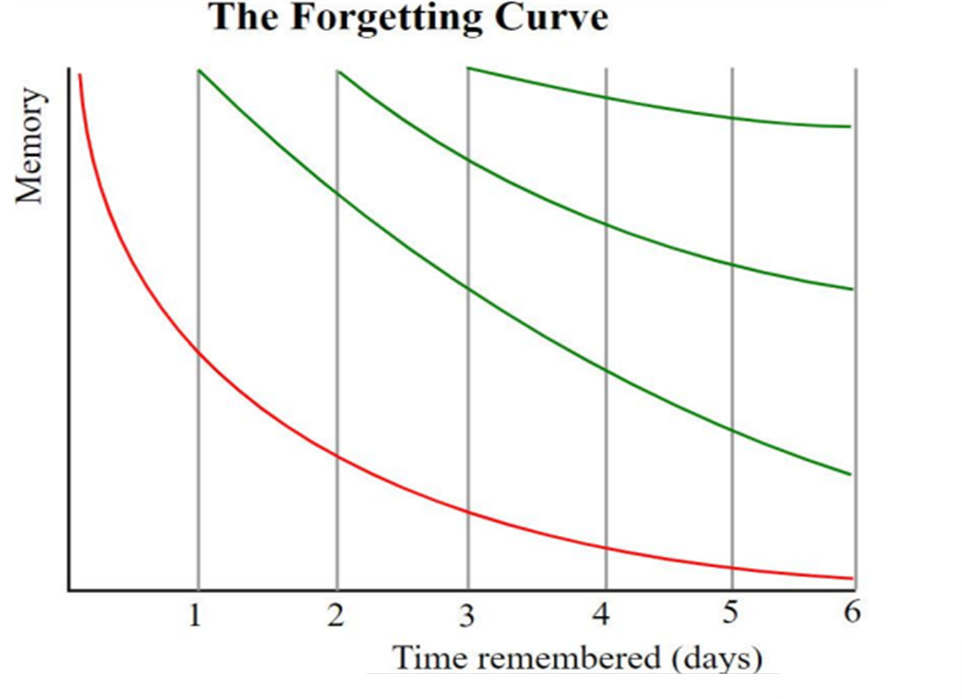
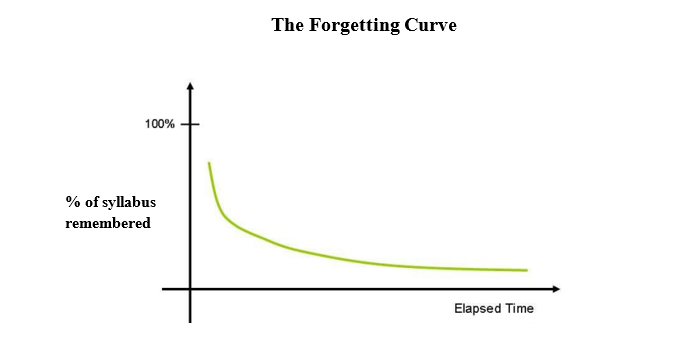
Another advantage of microlearning is that it addresses the forgetting curve, which predicts that memory retention will deteriorate over time if not reinforced. The forgetting curve illustrates how humans have a tendency to lose nearly half of newly learned information within days or weeks unless they consciously review the learned information. Further, the forgetting curve supports one of the seven types of memory failures: transience which refers to the natural process of forgetting as time passes.
Spaced repetition techniques used in microlearning counteract this decline by reinforcing knowledge retention at periodic intervals. This method involves recalling the same material multiple times over a period, helping to solidify the information in long-term memory with each recall.
Another point where microlearning enhances online student engagement is that it enables students to be entirely focused on and more engaged in learning by allowing them to complete lessons according to their own schedule rather than on someone else’s schedule. Further, in online education as learning takes place outside of the classroom, it has a greater potential for application than typical classroom learning by integrating learning with experience. In this arena, microlearning allows for location-based learning, which can be quite beneficial in increasing students’ engagement in online learning platforms.
Another method of incorporating microlearning to boost online student engagement is to simply include specific sorts of micro lessons within the course itself which can more-or-less run parallel to the course. Microlearning can be integrated into online education using digital tools like Kahoot, GoSoapBox, and Padlet, as well as interactive quizzes ensuring a more interactive and engaging learning experience. Furthermore, designing course materials in concise, digestible formats allows students to integrate learning into their daily schedules more effectively. In this way, microlearning not only brings education back to its original format in some sense but also enhances online student engagement in numerous ways.
Andragogy: Engaging Adult Learners
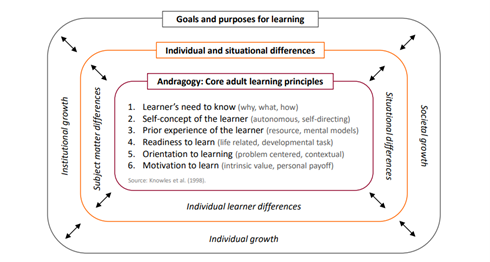
As the demographics of online learners shift toward older and more diverse groups, understanding how adults learn is essential. Knowles’ andragogical principles emphasize self-directed learning, real-world application, and experiential learning, which are particularly relevant in virtual educational settings. Unlike younger students, adult learners tend to be goal-oriented, seeking education that directly contributes to their career or personal development. They benefit from problem-centered learning and contextual applications, making real-world examples, discussion forums, and interactive activities essential components of online education. Thus, for effective engagement of adult learners in online education, educators must incorporate techniques such as:
encouraging self-paced learning with embedded resources for independent study
facilitating peer discussions and collaborative problem-solving exercises and
utilizing real-world case studies to link theoretical concepts with practical applications.
In practice, andragogy works best when it is tailored to the characteristics of the learners and the learning circumstance.
Combining Microlearning and Andragogy for Optimal Engagement
Recent changes in the macro environment, in the form of advancements in technology and natural transitions, shifted education from traditional platforms to virtual platforms where student engagement is crucial for the success of the learning process. Thus, blending microlearning with andragogical principles creates an effective learning framework that accommodates both cognitive and experiential learning styles. While microlearning breaks down complex topics into smaller units for better retention, andragogy ensures that these units are meaningful and applicable in real-life scenarios. Thus, educators can implement this blended approach by:
structuring courses into short, interactive modules aligned with real-world applications
incorporating multimedia elements, such as videos, infographics, and gamified content to enhance engagement
encouraging student-led discussions and collaborative learning environments
providing frequent, low-stakes assessments that reinforce learning without adding stress
Addressing Online Learning Challenges
Despite its advantages, online learning presents distinct challenges. Unlike face-to-face settings where instructors can monitor student behavior and adjust teaching methods accordingly, online educators must rely on different strategies to enhance student engagement. Many students struggle with motivation and time management, often due to external distractions. Additionally, the absence of direct supervision can lead to passive learning behaviors, where students disengage without accountability. Thus, to combat these issues, instructors must take a proactive approach in designing online courses. Therefore, ensuring frequent interaction between educators and students, integrating real-world problem-solving activities, and leveraging technological tools can enhance student engagement. Furthermore, the use of formative assessments and timely feedback creates an environment where students feel supported and encouraged.
Conclusion
As online education continues to evolve, educators must adopt innovative strategies to maintain student engagement and improve learning outcomes with microlearning and andragogy provide a structured approach in achieving this goal. Microlearning, as a natural extension of traditional learning, leverages the potential of mobile technology to deliver short, focused lessons that enhance retention while andragogical principles ensure that learning is relevant and applicable to real-life situations. By integrating both approaches, educators can create a dynamic, engaging, and effective online learning experience for learners of all ages. Moreover, the success of online education hinges on its ability to keep learners motivated and actively engaged. Thus, by utilizing a proper combination of traditional and modern instructional strategies, instructors can foster an environment where students not only absorb knowledge but also apply it effectively in their academic and professional journeys.
N.K.L. Silva
Ms. Nilanthige Kaushalya Lakmali Silva is a Lecturer at the Department of Accountancy, University of Kelaniya. She teaches Management, Economics, Human Resource Management, Marketing Management, Strategic Management and Information Management. Ms. Silva holds a B.B.Mgt. (Special) Degree in Accountancy with a First-Class Honours and an M.Sc. in Management with a Merit. Her research interests include major areas of Accounting and Finance, with a particular focus on Sri Lanka’s Capital Markets, Micro and Macro Economic Environment, Corporate Governance, and Corporate Fraud. She has published several research papers in academic journals and conference proceedings. She is a CMA Sri Lanka Passed Finalist and has completed the Diploma in Banking and Finance at the Institute of Bankers of Sri Lanka.
N. P. K. Ekanayake
Ms. Neranjana Priyangani Kumari Ekanayake, a senior lecturer at the University of Kelaniya, teaches Investment and Portfolio Management, Enterprise Resource Planning, Behavioural Finance, and Advanced Management Accounting. She holds a BBA in Accounting (Special) and an MSc in Management (Specialized in Finance) and is a CIMA passed finalist.
References
Bustillo-booth, M. (2019). Applying Andragogy to Online Course Design to Increase Student Engagement and Success. Magna Publications Inc., 1–26.
Dixson, M. D. (2010). Creating Effective Student Engagement in Online Courses: What Do Students Find Engaging? Journal of Scholarship of Teaching and Learning, 10(2), 1–13.
Knowles, M. S., Holton III, E. F. & Swanson, R. A. (1998). The Adult Learner: The Definitive Classic in Adult Education and Human Resource Development.
Orlando, J. (2021). Using Microlearning to Improve Student Understanding of Course Content. Magna Publications Inc., 1–18.
Palis, A. G., & Quiros, P. A. (2014). Adult Learning Principles and Presentation Pearls. Middle East African Journal of Ophthalmology, 21(2), 114–122.
Zheng, M. S. (2016). How to Design and Facilitate Online Discussions that Improve Student Learning and Engagement. Magna Publications Inc., 1–18.
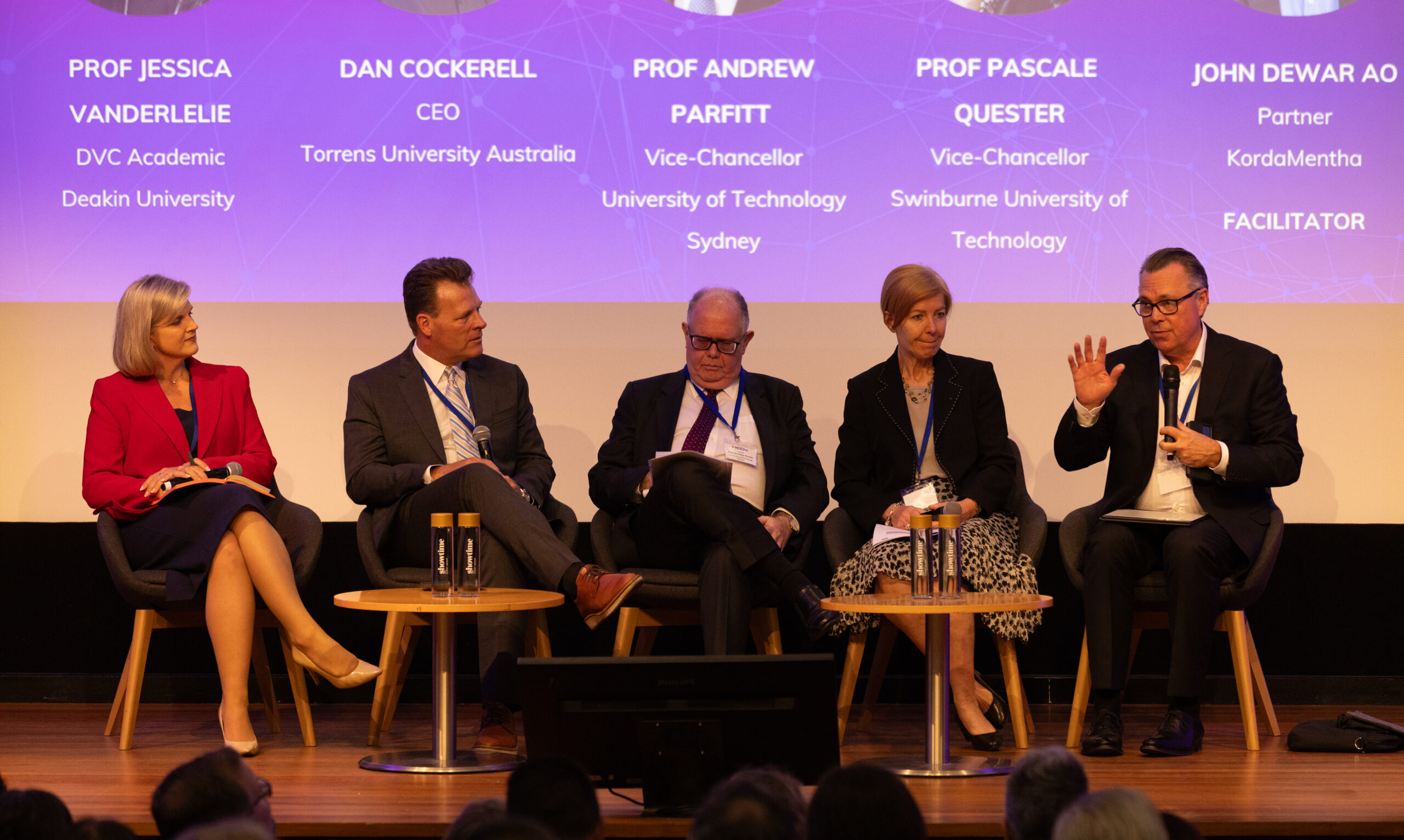
Partner at consultant KordaMentha John Dewar led a panel of public and private university leaders that re-examined the sector’s current artificial intelligence (AI) strategies and opportunities.
Please login below to view content or subscribe now.