Category: Featured

  • Adapting With Purpose | CUPA-HR

    Adapting With Purpose | CUPA-HR

    by CUPA-HR | April 14, 2025

    Editor’s Note: This is the second of a three-part series by Maureen De Armond, chief human resources officer at Des Moines University Medicine and Health Sciences, on adapting during changing times. The series begins with Adapting for Survival and continues in Adapting With Heart

    While each institution’s situation is unique, there are common challenges that unite HR teams across state lines and between private and public institutions.

    Many of us may now be called upon to reevaluate the words we use in job postings, on our websites, within position titles, in trainings, and more. Some of us may be called upon to eliminate offices or positions. We may face losses of state or federal funding. We may have employees who feel particularly vulnerable. In some areas, there may be heightened retention challenges if people move or leave higher education altogether.

    In short, it is unlikely that any HR office will fully escape implementing changes and grappling with difficult responsibilities. Even so, opportunities abound to make a positive impact, to be true helpers and show we care. To quote Arthur Ashe, “Start where you are, use what you have, do what you can.” Here are some ideas.

    Maintain Your Focus on People and Culture

    HR has an obligation to continue to be keepers of the work culture and cultivate an environment that is welcoming and respectful of all employees. It’s time to get creative.

    One area you can rethink creatively is language describing campus culture, both in your internal communications and in recruitment materials. One may draw some inspiration from these examples, both from Nintendo:

    Nintendo is proud to be an equal opportunity employer. We offer a welcoming and inclusive environment in service to one another, our products, the diverse consumers we represent, and the communities we call home. We do all of this with kindness, empathy and respect for each other.

    Nintendo is for everyone. We believe that our results are better when our teams represent our potential consumers and fans. We’re actively building a culture where employees contribute their knowledge, ideas and perspectives so innovation and creativity thrive. We’re welcoming, approachable and respectful — we’re Nintendo. All characters welcome.

    Kudos to Nintendo for investing time and creativity into statements painting a vivid picture of warmth and kindness. Could a college or university channel its values and institutional culture into similar language while avoiding today’s live wires? I think so.

    University X is a place anyone can call home. We are always looking for talented, innovative and kind individuals to join our team and help us build a better tomorrow [or other mission language]. We know our campus and students are best served by faculty and staff representing a wide range of experiences, backgrounds and talents. If you are interested in joining and contributing to a welcoming, respectful and thriving organization, please apply. Anyone can be a/an [insert mascot]. Why not you?

    The reader can feel a welcoming culture, right?

    Wherever you talk about culture — in your employee value proposition, recruitment resources, internal policies, and websites — review the language and consider how you can paint the same picture of a welcoming and inclusive environment, even if you need to bust out a thesaurus to do so.

    Vet Applicants for Alignment of Values 

    Another way to adapt creatively may be to revisit interview questions. Institutions should still strive to recruit people who share their values and priorities, whatever those may be.

    Some questions that may provide insight into an applicant’s character could include the following:

    • Tell us about one of your favorite experiences working with a team and the contributions you made.
    • When you have had new employees join your team, what did you do to make them feel welcome and help them be successful?
    • Can you describe how your career has been enhanced by working with people who are different from you?
    • Tell me about a time when you were communicating with someone, and you felt like you were not being understood. What did you do?
    • What do you like most and least about your current work culture?
    • How would your current co-workers describe your strengths and weaknesses as a colleague?
    • What attracts you most to this job and our institution?
    • Which of our core values do you identify with the most and the least and why?
    • Our institution has students, faculty and staff who come from all over. Do you feel equipped to serve all campus stakeholders on day one, or do you think you would benefit from additional training?
    • What’s the ideal working environment to best benefit your working and personality style?
    • What soft skills are you interested in developing in the next couple of years?
    • Tell us about a time when you were challenged by a situation where others were behaving in an inappropriate or uncivil way. Describe the situation, the actions you took and the outcome.
    • What are your workplace superpowers?
    • Describe the most difficult colleague you’ve ever had to deal with at work. Why were they challenging? What did you do?
    • Most people want to work in an environment that is respectful and kind. Can you tell us how you try to create such an environment for others?
    • Describe a time when you needed to work cooperatively with someone who did not share the same ideas as you. Describe the situation, the actions you took and the outcome.

    Asking applicants a variety of questions that get to their character is nothing new. It may be a good time to review recommended questions to help protect the hiring process while also spending more intentional time assessing alignment with institutional values. There is no sense in hiring people into an organization who do not already share the institution’s values.

    Related CUPA-HR Resources

    Recent Executive Orders and Higher Ed HR’s Role in Creating and Sustaining an Inclusive Campus Community — A message from CUPA-HR President and CEO Andy Brantley.

    Update on DEI-Related Executive Orders: How Recent Developments Impact Compliance Strategies for Higher Education — This CUPA-HR webinar offers insights into steps institutions can take to ensure they are in compliance.

    Next Steps: A Practical Guide for Ensuring Access and Opportunity for All Employees— A brief guide to creating a welcoming workplace now.



    Source link

  • Three Easy Tax Fixes That Would Help Students Succeed

    Three Easy Tax Fixes That Would Help Students Succeed

    As Congress works on a sweeping rewrite of the tax code, students and families across the country are watching—and hoping this moment leads to real change that will increase access to higher education. The conversation in Washington will likely center on what to keep, what to cut, and how to fit higher education into the massive, complex puzzle that is the U.S. tax code. But lawmakers have a chance to do something simple but powerful: pass three bipartisan tax fixes that would make a big difference for low- and middle-income students.

    These fixes may not grab national headlines, but for those trying to pay tuition, cover everyday expenses, return to school to finish a degree, or chip away at their student loan debt, they could make a meaningful difference. In a time of deep partisan divides, Congress should focus on policies with broad, bipartisan support—especially those that are low-cost and already proven to help students succeed.

    Here are three commonsense ideas that would do just that:

    1. End the Tax on Pell Grants—So Students Can Keep the Aid They Deserve

    For over 6 million low-income students, the Pell Grant is a lifeline—essential financial aid to help cover the cost of college. But under current tax law, Pell Grants used for some non-tuition expenses like housing or childcare can be taxed as income. That means students from families earning less than $60,000 a year could end up with a tax bill just for trying to make ends meet while earning their degrees.

    Even worse, a complicated interaction issue between Pell Grants and the American Opportunity Tax Credit (AOTC) means many students at lower-cost schools—especially community colleges—lose access to the up to $2,500 of aid available under the AOTC entirely. Under current law, students can’t apply both Pell Grants and the AOTC to the same tuition costs. If a Pell Grant covers most or all of a student’s tuition, as can be true for community college students, there may be nothing left to claim the credit on. The only workaround is to apply the Pell Grant to other expenses—like housing or childcare—which then makes it taxable. It’s a frustrating and unfair setup that affects an estimated 550,000 Pell-eligible students every year.

    Repealing the taxability of Pell Grants and fixing this interaction issue would allow students to keep more of the financial aid they’ve earned and simplify their tax filing process. Bipartisan legislation—the Tax-Free Pell Grant Act—would make this change, and it’s time for Congress to act.

    2. Modernize Section 127—So More Working Students and Families Can Access Education

    Today’s students aren’t just full-time undergraduates living in dorms. They’re parents, veterans, career changers, and working professionals going back to school to earn a degree or build new skills. One of the best tools to help them is employer-provided education assistance under Section 127 of the tax code, which lets employers provide up to $5,250 per year in tax-free educational assistance and student loan repayment.

    This benefit helps working students cover tuition, buy course materials, and even pay down student loans. But there’s a catch: the $5,250 cap hasn’t changed since 1986, and the provision allowing employers to use the benefit to help with student loan payments is set to expire this year.

    Several bipartisan bills—such as the Upskilling and Retraining Assistance Act and the Upward Mobility Enhancement Act—would raise the cap and allow benefits to cover education-related tools and technology. Another bill, the Employer Participation in Repayment Act, would make student loan repayment a permanent option.

    Modernizing Section 127 is a smart, low-cost way to expand opportunities for students who are balancing work, life, and learning—and give employers a powerful tool to invest in their workforce.

    3. Simplify Higher Ed Tax Credits—So Students Actually Receive Benefits for Which They’re Eligible

    In theory, the AOTC and Lifetime Learning Credit (LLC) are designed to make college more affordable. But in practice, the system is so confusing that many students don’t even know they’re eligible—let alone understand how to claim the credits.

    Only 60 percent of eligible students claim the AOTC, and take-up rates are even lower for low-income students. That means thousands of dollars in aid per student are going unclaimed, simply because the system is too complex.

    Students deserve better. A single, streamlined tax credit would help more people afford college, finish a degree, or return to school for career training. Past bipartisan proposals have called for combining the AOTC and LLC into one simplified, flexible credit. These plans would also expand what counts as eligible expenses—like computer equipment and childcare—so the benefit reflects the real costs students face today.

    By making the system simpler and more effective, Congress can ensure that intended benefits actually reach the students who need them most.

    A Better Deal for Students

    Comprehensive tax reform doesn’t come around often. This year, Congress has a chance to use that opportunity to advance policies that support the millions of students working hard to improve their lives through education.

    Fixing the tax treatment of Pell Grants. Modernizing employer-provided educational assistance. Simplifying higher education tax credits. These aren’t controversial ideas—they’re bipartisan, fiscally modest, and widely supported by educators, employers, and students alike.

    If Congress wants to demonstrate that tax reform can be fair, effective, and focused on the future, they should start by putting students first.

    Students, families, and advocates should urge their representatives to make higher education a priority in this year’s tax reform. They can easily do so using ACE’s Voter Voice feature. For more, visit our Tax Reform resource page.


    If you have any questions or comments about this blog post, please contact us.

    Source link

  • Adapting for Survival | CUPA-HR

    Adapting for Survival | CUPA-HR

    by CUPA-HR | April 14, 2025

    Editor’s Note: This is the first of a three-part series by Maureen De Armond, chief human resources officer at Des Moines University Medicine and Health Sciences, on adapting during changing times. The series continues in Adapting With Purpose and Adapting With Heart.  

    You have to change with the times.

    Roll with the punches.

    Go with the flow.

    This is just the new normal.

    These are not uncommon sentiments during times of change. They’re even reasonable bits of advice and encouragement. However, for many in higher education today, these words may feel inadequate.

    For many years, higher ed has been under pressure to adapt rapidly to change. From the COVID-19 pandemic to declining enrollment, technological advancements, and political and compliance demands, the pace of change seems unrelenting.

    How do we “adapt” when external pressures challenge our accustomed practices? How do we respond to the demands on our profession across the higher education landscape? How do we navigate the need to adjust without feeling like we’re compromising or settling? Where do we go from here?

    Adapt for Survival

    In 2022, as the worst of the pandemic seemed to pass, I wrote a piece about adaptability and referenced the Stockdale Paradox, as shared in Jim Collins’ management book “Good to Great.” Let us briefly return to that story to assess what additional insights it may provide during this new chapter of change.

    Admiral James Stockdale served in the military and was a prisoner of war in Vietnam for seven and a half years. During this time, he observed that there was a certain kind of soldier that did not tend to survive the ordeal. These were the soldiers who tried to muster up the strength to just make it to Thanksgiving, as, surely, they would be rescued by then. Thanksgiving would come and go, and they remained imprisoned. Then, they would convince themselves if they could just make it to the end of the year, surely they would be rescued by then. December would come and go, and they remained imprisoned.

    Admiral Stockdale referred to these soldiers as the optimists. Eventually, the optimists gave up.

    Admiral Stockdale, even if he did not use the terminology, recognized that resilience (a burst of energy or strength to help a person through a temporary crisis) was not the right tool for their predicament. Instead, to make it through captivity — with no end in sight and no idea what the next day may bring — what one needed to do was adapt.

    Make no mistake about it, Admiral Stockdale did not adapt with a smile on his face. He did not do it to settle, to compromise or to get used to being a POW. He did it with a mission in his heart — to endure. He adapted for survival. And he adapted not just for his own survival but also the survival of as many of his fellow soldiers as possible — men who looked to him for strength and guidance even while he, too, was powerless and wrought with despair.

    Admittedly, comparing higher education HR professionals to prisoners of war is a clear stretch. But the analogy reveals powerful insights into what tools may be most suitable to help us navigate these uncertain times. We should resist a mindset of trying to just make it through the summer term, through the fall semester, or to the end of the academic year. Wishing away time is a futile practice and with no guaranteed results.

    We should equally resist the temptation to pin our hopes on a miraculous rescue team to come and save the day. That is also wishful thinking.

    But we shouldn’t give up. Admiral Stockdale shared that he never lost hope — not even during the darkest days of captivity.

    Consider channeling the bigger picture, the one Admiral Stockdale never lost sight of: Survival is paramount. To survive, one must adapt. We have no way of knowing what lies ahead. We may feel powerless some days, like that poor animal in the experiment who gets shocked no matter what it touches. Other days, we may feel like we are busying ourselves with the deck chairs on the Titanic. But even in these moments, we cannot shut down.

    People count on us. They trust us to do our jobs to the best of our abilities. Our efforts matter and we still have work to do.

    Be the Helpers

    There is a Fred Rogers quote from his “Mister Rogers’ Neighborhood” days that resurfaces from time to time: “When I was a boy and I would see scary things in the news, my mother would say to me, ‘Look for the helpers. You will always find people who are helping.’”

    This is a reassuring view of humankind. No matter how dark or how frightening the world is, there will always be people wanting to help. But it is important to remember that Mister Rogers was talking to children when he shared this observation, not adults.

    When scary things happen, we are not supposed to just sit there and hope someone else comes around to help. Mister Rogers was talking about us. We are supposed to be the helpers.

    The good news is that the human resources field attracts helpers. The most dedicated among us are those who love to serve others. Whether we specialize in benefits, talent acquisition, training, leadership development, or any other facet of HR, we are drawn to this profession because we want our work to matter and because we enjoy helping people.

    Right now, there is a need for helpers — and we are the helpers.

    Related CUPA-HR Resources

    Resilience in the Workplace — This CUPA-HR webinar, recorded in 2021, was designed to serve as resilience training for attendees, as well as a model that could easily be replicated at your institution for HR teams and other employees.

    Why Psychological Safety Matters Now More Than Ever — This article offers practical advice for increasing psychological safety, specifically for the higher ed workplace.

    The Great Pivot from Resilience to Adaptability — This article explains how to move from resilience to adaptability and, ultimately, growth in challenging times for higher education.


    Source link

  • FIRE comment to FCC calls for review of regulations that may violate the First Amendment

    FIRE comment to FCC calls for review of regulations that may violate the First Amendment

    Last week, FIRE filed a comment in the FCC’s “In re: delete, delete, delete” docket, in which the agency said it “seeks comment on every rule, regulation, or guidance document that the FCC should eliminate.” As the agency observed, this review is necessary in light of their statutory mandate to uncover and remove regulations “no longer necessary in the public interest.” FIRE’s comments remind the FCC that the Commission itself has said, “The public interest is best served by permitting free expression of views.” Therefore, in its hunt for “unnecessary regulatory burdens,” the Commission should start with its regulations on content. Such policies include discretionary speech-based investigations and its news distortion policy, which run headlong into the First Amendment and Communications Act directives that deny the FCC the power of censorship. The FCC’s current chairman claims to base FCC decisions on “the law, the facts, and the First Amendment.” With this proceeding, it’s time to put up or shut up. 

    Source link

  • Women in Technology: Why Community is Essential for Progress

    Women in Technology: Why Community is Essential for Progress

    Women in Technology: Why Community is Essential for Progress

    Source link

  • webassign-boosts-student-pass-rates-in-developmental-math- The Cengage Blog

    webassign-boosts-student-pass-rates-in-developmental-math- The Cengage Blog

    Reading Time: minute

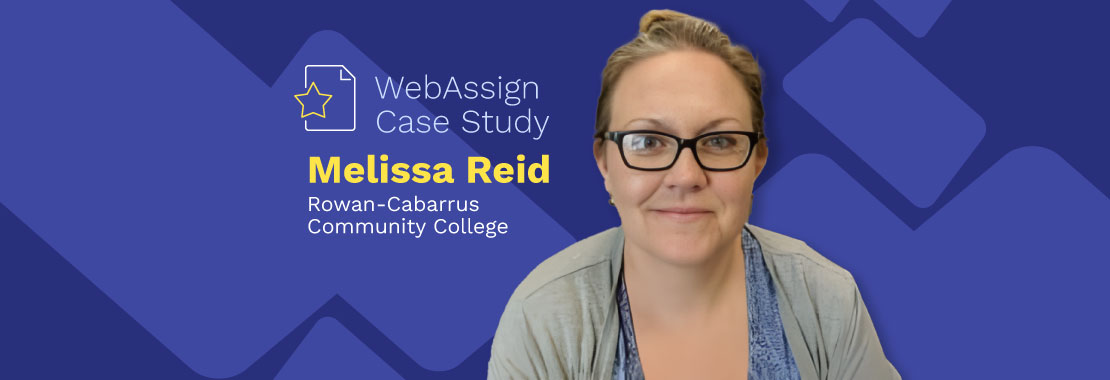
    Melissa Reid, Department Chair at Rowan-Cabarrus Community College, was concerned that students in her developmental math course were lacking critical support from her previous publisher and online learning platform, resulting in discouragingly low pass rate numbers. She was looking for more personalized support that would hopefully jumpstart her students on the pathway to success in future gateway-level math courses.

    “…we were blown away.”

    After switching to WebAssign in the Fall of 2022, Reid saw major improvements in the level of support both students and faculty members were receiving. She was impressed by how easy course setup was, and how efficiently she was able to coordinate with the WebAssign team to develop customized student content. Most importantly, she loved that students were able to enjoy a personalized learning experience and take advantage of various built-in study resources and features, like “Watch Its.”

    The results? Pass rates in Professor Reid’s developmental math course increased by 117% within the span of one semester. Her students are enthusiastic about what WebAssign offers and have been able to develop better concept building skills.

    “After we worked with Cengage to create a developmental design, our pass rates dramatically improved! Students often commented about how they enjoyed all of the resources within WebAssign, like the ‘Read Its’ and ‘Watch Its’.” – Melissa Reid

    Learn more about how WebAssign helped prepare Professor Reid’s developmental math students for gateway-level math courses, while providing critical support along the way.


    Source link

  • Tuskegee University – Edu Alliance Journal

    Tuskegee University – Edu Alliance Journal

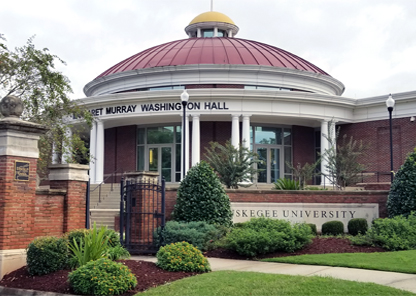
    April 14, 2025, by Dean Hoke: This profile of Tuskegee University is the ninth in a series presenting small colleges throughout the United States.

    Background

    Founded in 1881 by educator Booker T. Washington, Tuskegee University is a private historically black university (HBCU) located in Tuskegee, Alabama – about 40 miles east of Montgomery​ . Established initially as the Tuskegee Normal School for training Black teachers, it evolved into Tuskegee Institute and eventually a university known for blending liberal arts, technical, and professional education. The university’s campus, a designated National Historic Site, spans roughly 5,000 acres (including a 450-acre main campus and extensive forestry and research lands)​. Tuskegee is consistently ranked among the top HBCUs nationally (U.S. News #3 in 2023) and is noted for its academic rigor and legacy of producing African American leaders​.

    Curricula

    Tuskegee offers a broad curriculum encompassing over 50 degree programs​. Programs include Engineering, Architecture, Business, Education, and Nursing & Allied Health, as well as a renowned College of Veterinary Medicine​. The university balances a liberal arts foundation with strong STEM and professional programs. Students complete a liberal arts core while pursuing majors in fields like engineering, agriculture, the sciences, business, and the humanities. Tuskegee has introduced distinctive programs that leverage its heritage – for example, it hosts the nation’s only Aerospace Engineering program at an HBCU, and it houses a National Center for Bioethics in Research and Health Care focused on minority health ethics​.

    Experiential learning is integral: from engineering design projects to agricultural research and Cooperative Extension outreach in rural communities, students get hands-on training. Notably, Tuskegee’s veterinary medicine program, founded in 1945, provides crucial clinical experience and has become a top producer of minority veterinarians. Outcomes for graduates are strong in many programs – for example, nursing and allied health majors benefit from clinical partnerships, and engineering students often secure competitive internships. Tuskegee reports in 2022, the four-year graduation rate is 33%, and the six-year graduation rate is 67%​​.

    Strengths

    • Historic Legacy and Mission: Tuskegee’s history is a cornerstone of its identity. It was built on Booker T. Washington’s self-help philosophy and has played a pivotal role in African American education for over a century​.
    • Excellence in STEM, Agriculture, and Veterinary Medicine: The university is a powerhouse in STEM fields. It is the only independent HBCU with four ABET-accredited engineering programs​ and the only HBCU with an Aerospace Science Engineering program​. Its College of Veterinary Medicine has educated over 70% of African American veterinarians in the United States​​.
    • Strong Student Outcomes and Recognition: Tuskegee is recognized for improving social mobility and student success. U.S. News ranks Tuskegee #1 among Southern schools for social mobility and among the top 5 HBCUs nationwide. The university has produced generations of leaders and pioneers, which bolsters its reputation and provides current students with role models and mentors.
    • Community Engagement and Service: As a land-grant institution, Tuskegee is deeply committed to community service and outreach. Through its Cooperative Extension Program and initiatives like the new Center for Rural Health and Economic Equity, the university addresses needs in Alabama’s Black Belt region—from agricultural assistance for local farmers to health equity research for underserved rural populations​​.

    Weaknesses

    • Enrollment Decline: Tuskegee’s Full-Time Equivalent (FTE) enrollment has steadily decreased from 3,276 in 2019 to a low of 2,755 in 2023, with a modest rebound to 2,881 in 2024. This downward trend, though not unique among small institutions, negatively impacts tuition revenue, national rankings, and institutional perception.
    • Infrastructure and Facilities: Numerous campus buildings require modernization. Students and alumni on platforms like UNIGO have expressed concerns about aging dormitories and outdated lab and classroom technology. These issues pose challenges for student recruitment and retention, especially in STEM disciplines. The university acknowledged these concerns in 2024 and stated that actions are underway to address construction delays.
    • Return on Investment (ROI): According to Georgetown University’s Center on Education and the Workforce, Tuskegee’s 40-year ROI for bachelor’s degrees is $1,434,000—well below the national average of $1,744,000 for private institutions. This places Tuskegee in the lower 20th percentile nationally and may raise concerns among prospective students and families weighing the long-term value of a Tuskegee degree.

    Note: Tuskegee does an exceptional job with the students it serves, often outperforming peers in helping students succeed and move up economically. However, its graduates’ average earnings are lower than those of graduates from many other private institutions, which affects ROI rankings. This contrast is common among mission-driven institutions that serve high-need populations and public interest-oriented fields (e.g., education, social work, veterinary medicine), where average salaries tend to be lower despite high societal value.

    Economic Impact

    Tuskegee University is a major economic engine for its region. According to the United Negro College Fund’s (UNCF) 2024 Economic Impact Report, Tuskegee University contributes approximately $237.1 million annually to Alabama’s economy and supports 2,064 jobs statewide through its operations, payroll, student spending, and visitor expenditures. It is one of the largest employers in Macon County, with nearly 1,400 employees on payroll​, and its presence stimulates additional employment in the community (restaurants, shops, services that cater to students and employees).

    Beyond direct spending, as a land-grant institution, it operates Cooperative Extension programs that improve agricultural productivity and entrepreneurship in rural Alabama. The university actively pursues research grants that address local needs. For example, in 2023, Tuskegee received a $2.2 million federal grant to establish a Center for Rural Health and Economic Equity, which will not only improve healthcare outcomes in Black Belt counties but also create research jobs and community health worker positions​.

    Enrollment Trends

    As of Fall 2024, total enrollment (FTE) is 2881 students, including undergraduates, graduate students, and professional students in veterinary medicine​.

    The university has actively recruited beyond Alabama: currently, only 26% of undergraduates are Alabama residents, while 74% come from out-of-state​.

    Degrees Awarded by Major

    In the 2022–23 academic year, Tuskegee University conferred 547 degrees in total (410 bachelor’s, 69 master’s, and 68 doctorates, including professional degrees)​.

    Alumni

    Tuskegee University boasts a vibrant alumni network of tens of thousands of graduates spread across the U.S. and abroad. With nearly 140 years of history, Tuskegee has produced generations of African American professionals and leaders, creating an expansive community often referred to as the “Tuskegee Family.” Alumni remain closely connected to the university and each other.

    Notable Alumni and Figures: Tuskegee’s alumni and associated figures include some of the most influential names in U.S. education, science, military, and culture:

    • Amelia Boynton Robinson (Class of 1927): Pioneering civil rights activist and leader in the voting rights movement. She played a key role in the 1965 Selma to Montgomery marches, inviting Dr. Martin Luther King Jr. to Selma.
    • Gen. Daniel “Chappie” James (Class of 1942): The first African American four-star general in U.S. military history.
    • Lonnie Johnson (Class of 1973): Engineer and inventor, Johnson, a Tuskegee mechanical engineering graduate​, had a distinguished career at the Air Force and NASA before his entrepreneurial success. He holds over 100 patents.
    • Lionel Richie (Class of 1974): Grammy-winning singer, songwriter, and former lead vocalist of the Commodores. Richie, a Tuskegee native, graduated with an economics degree.
    • Keenen Ivory Wayans (Attended from 1977-1980): an American actor, comedian, director, and filmmaker who co-hosted and created the TV comedy Emmy award show In Living Color. An engineering student on scholarship, he left Tuskegee in his senior year to pursue acting.

    Endowment and Financial Standing

    Tuskegee University’s financial foundation is solid but underpins a careful stewardship to meet institutional needs. As of 2024, the university’s endowment is valued at around $161 million.​ It remains smaller than some peer HBCUs. The university still depends heavily on tuition and fees.​ A milestone came in 2020 when philanthropist MacKenzie Scott donated $20 million to Tuskegee – the largest gift in the university’s history​.

    The university’s financial management has earned positive marks. The 2023 Forbes Financial Grades gives Tuskegee a 3.82 GPA and a letter grade of A-.

    Why is Tuskegee Important?

    • Tuskegee University holds a singular place in American higher education and society, with a legacy and ongoing impact that extend far beyond its small-town Alabama campus. Founded in an era of segregation and limited opportunities for Black Americans, Tuskegee became a beacon of self-determination – educating Black teachers, farmers, and craftsmen in its early years and proving that excellence could flourish under the most challenging conditions.
    • Tuskegee’s importance also lies in its academic and professional contributions, particularly in increasing diversity in critical fields. It has been a prolific producer of African American professionals: for example, as noted, the vast majority of Black veterinarians are Tuskegee graduates​, and the university has trained countless Black engineers, nurses, and scientists.
    • Tuskegee University remains a cultural touchstone and symbol of excellence. Tuskegee has also influenced educational models worldwide; notably, its extension work and vocational training approaches were emulated in developing nations (especially in Africa) during the 20th century, spreading the ethos of education for empowerment globally.

    In summary, Tuskegee University is important because it represents the power of education as a force for equality and innovation. It has transformed lives and communities for generations, contributed richly to African American history and American progress, and continues to produce leaders and ideas that shape our world. In American higher education, Tuskegee’s thread is unique and invaluable – an embodiment of resilience, excellence, and the ongoing pursuit of knowledge for the betterment of society.


    Dean Hoke is Managing Partner of Edu Alliance Group, a higher education consultancy, and a Senior Fellow with the Sagamore Institute. He formerly served as President/CEO of the American Association of University Administrators (AAUA). With decades of experience in higher education leadership, consulting, and institutional strategy, he brings a wealth of knowledge on small colleges’ challenges and opportunities. Dean, along with Kent Barnds, is a co-host for the podcast series Small College America. 

    Source link

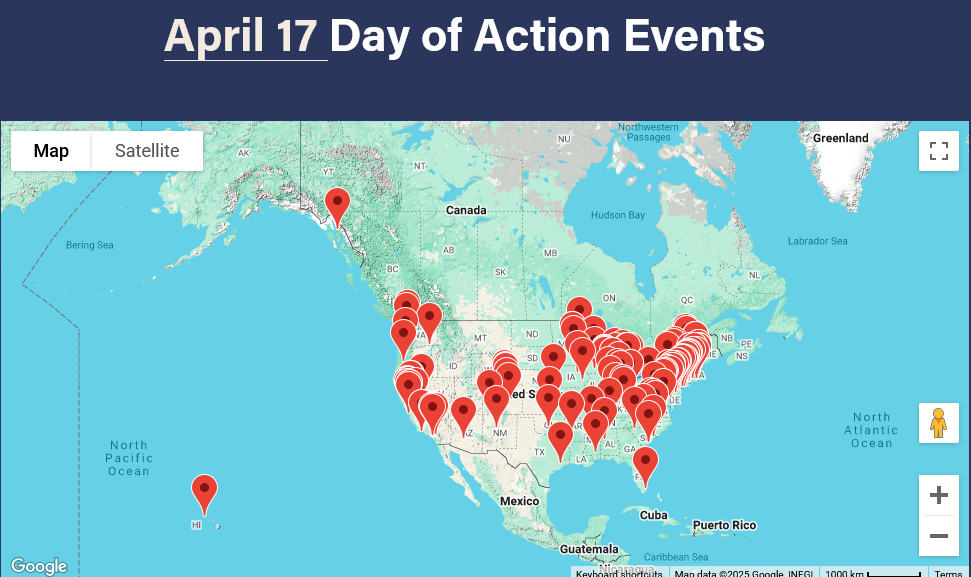
  • How to Participate in April 17 Day of Action for Higher Education

    How to Participate in April 17 Day of Action for Higher Education

    Higher Education Inquirer readers are encouraged to participate in Day of Action for Higher Education on Thursday, April 17.  For more information, visit the Day of Action page at the the Coalition for Action in Higher Education website. The website also includes resources. The coalition includes the Debt Collective, AAUP, and Higher Education Labor United.


    Source link

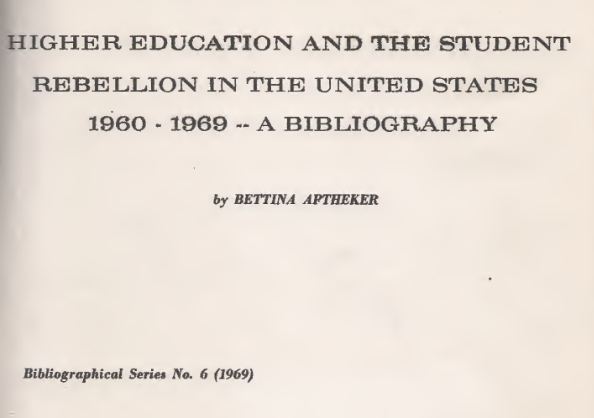
  • Bettina Apthekar’s Higher Education and Student Rebellion in the United States, 1960-1969–A Bibliography

    Bettina Apthekar’s Higher Education and Student Rebellion in the United States, 1960-1969–A Bibliography


    To gain a historical perspective of what is happening today on US campuses, it’s essential to have a knowledge of what has happened before. The uncensored history of US higher education is poorly understood even on US campuses. Thankfully, some of it has been documented and it’s even available online. A case in point is Bettina Apthekar’s Higher Education and Student Rebellion in the United States, 1960-1969–A Bibliography.  This document is a treasure trove of information from the period of civil disobedience that saw some successes, successes that helped expand democracy in higher education and in society. Something we are struggling for again. If you know of other historical documents that are available online, please inform us. We’ll also add it to our list of resources

    Source link

  • Are smart phones at schools all bad?

    Are smart phones at schools all bad?

    If Bill Schluter had his way, cellphones would be banned five days a week. Schluter is head of Tatnall Upper School, a private high school in the U.S. state of Delaware. He wants cellphones out of school. 

    As increasing numbers of young people seem tied to their phones, researchers have found correlations between cellphone use and cases of depression, anxiety, cyberbullying and decreasing attention span.

    A 2019 study by the nonprofit organization Common Sense found that 84% of teenagers in the United States already possess a cellphone.

    Psychologist Jean Twenge, in her 2017 book “iGen“, wrote that increased phone use by teenagers directly correlates to a recent increase in adolescent anxiety, depression and inability to focus.

    Teens themselves, though, think cellphones have a place in the classroom — if used responsibly and with permission. 

    “I noticed people use them a lot in math class when they forget their calculator,” said Tatnall student Camille Johnson. “If their math teacher allows them to pull out their phone just for the calculator portion, they use it for that as long as you know they’re not being silly and going on other apps. We had a physics lab the other day where we were needing to use it to record our lab.”

    Social media replaces human connections

    Research also suggests that a hybrid class model that integrates technology into classwork, such as Teach to One or Google Classroom, leads to successful test scores as it personalizes the learning journey. 

    Twenge found that phones hinder teenagers’ ability to socially engage with each other. Schulter agreed. “Your ability to talk to each other, hear each other and have productive conversations is lessened with cellphones,” he said. 

    Twenge also found that the recent rise of technological advancements of cellphones and the COVID-19 pandemic encouraged teenagers to shut themselves in and only engage with their devices, as social media has replaced other forms of entertainment such as magazines and books. This leads to a wired, smartphone-dominant society, causing a significant spike in teenage mental health problems.

    A June 2024 Pew Research Center survey shows that 72% of public school teachers report that phones are a major distraction in class and make learning less effective. And a March 2024 report from Thorn, a nonprofit organization that works to fight online sexual abuse of children and teens, emphasized a disturbing increase in the creation and distribution of AI-generated child pornography. 

    The report said that with its ease of use, almost anyone can generate intimate deepfake images of others, whether it be of someone they know or a stranger. Child predators or children interested in their peers can create these pictures with the click of a button. 

    These images are commonly used in “sextortion”, a form of extortion in which the creator or owner of the photos threatens to publicly release them if the victim refuses their demands. 

    Abuse of technology

    Schluter recalled a story about a local and reputable school in which a male student used AI to superimpose nude pictures of his female classmates from the shoulder up to distribute online, resulting in chaos among the school board. “Board members of the school have resigned and everybody’s at each other’s throats,” he said. 

    In recent years, schools have responded to the cell phone issue. In many states across the country, such as California, New York, Maine and Pennsylvania, school districts have been able to limit the usage of cell phones among students, whether that be a phone-free day or an outright ban. 

    My high school, The Tatnall School, has implemented phone-free Wednesdays into the school week, forbidding students from having a cellphone in sight anytime during the day. 

    Schluter said that another local high school has banned smartphones five days a week.  

    “They started right off the school year with having a couple days in the school year, and then within a month, they had gone to a cellphone free policy at the school in its entirety, and it’s working great from all sources,” he said. 

    Resistance to phone bans

    Many students, and parents, aren’t entirely on board with banning phones, even one day a week.  “It just so happens that every single Wednesday, I’m like, oh my gosh, I need to do something really quick, and I can’t have my phone,” Johnson said. 

    She admitted that without a phone people learn to be more present in the moment. “But I don’t believe in completely banning them,” she said.

    Other students noted that the cellphone policy has caused some problems. Some use their phones as keys to their cars, for example, and having their phones confiscated makes that difficult. Some students have have seen teachers collecting phones from students even when they were simply outdoors during lunch. 

    Many parents are concerned that smartphone bans limit communication between them and their children, fearing they cannot contact them during an emergency. With a disturbing number of recent school shootings, this fear is understandable. To dampen parents’ worries, school faculty assure them that communication between parent and child will most likely be unnecessary if school safety precautions are followed.

    “If we’re cellphone free, the school would, if we do a good job of maintaining our safety precautions for the school, we would be a safe environment,” Schluter said.

    Finding a happy medium

    Naturally, parents still worry for their child’s safety and desire to keep constant contact, even if it’s a simple text that tells them that their child is safe. 

    While many educators and some parents believe that phones only impair learning and have no place in a productive academic environment, others argue that the correct classroom model can allow cellphones to enhance education. 

    Consider online programs such as Duolingo or Google Classroom. These apps prove that technology can be effectively integrated into lesson plans to teach new skills while indulging the attachment young people have to phones and capturing their attention, a precious resource. If teachers worry about students using their cellphones for non-academic purposes, they can employ programs to restrict access to certain websites or apps. 

    So what is the best best course of action to solve this problem? While the issues related to cellphones prove problematic, many believe that phones aren’t necessarily the root cause. The spike in cellphone usage may merely be an effect of the issues often associated with them.

    “Cellphones may be a symptom and not the cause of the shift, but the two are very interrelated,” Schluter said.

    Bans are only as effective as their enforcement and only encourage some teens to find ways around the bans. And despite teachers’ efforts to hold students responsible for their actions, this is also not a guaranteed fix. 

    Perhaps the best solution is a happy medium. Schools can allow teachers to create their own classroom phone policies and punish as they see fit. Or they can limit cell phone use while establishing specific areas or periods when people can be on their phones. 

    No matter which solution is most effective, technology is improving, and social media and smartphones are on track to become increasingly prevalent in our lives.

    “High school education has changed in huge ways in the past 30 or 40 years, and cellphones have been have been part of that,” Schluter said. “But I’m curious to know, not how we get back to the way things were in the 1990s necessarily, but to an atmosphere where students are more engaged.”


    Three questions to consider:

    1. Why do many schools trying to ban students’ use of phones?

    2. In what ways can phones by used responsibly in a class?

    3. In what ways do you feel tied to your phone? 


    Source link