Category: Featured

  • UNC Chapel Hill Provost Stepping Down Amid Civic Life Strife

    UNC Chapel Hill Provost Stepping Down Amid Civic Life Strife

    The University of North Carolina at Chapel Hill’s provost is stepping down next month to return to the faculty there, a development that news articles last week suggested is tied to his disagreement with hiring practices at the School of Civic Life and Leadership, or SCiLL.

    In a statement Friday to Inside Higher Ed, Chris Clemens, the outgoing provost, said, “I made the decision to step down as provost. During my time as provost, I’ve been able to address challenges I care deeply about and make meaningful progress. However, the issues that have arisen in recent days are not ones I can solve, and I don’t feel the same passion for them.”

    His statement didn’t explain what these recent issues are, and Chapel Hill spokespeople didn’t provide further information beyond campus chancellor Lee Roberts’s April 3 announcement that Clemens had decided to step down.

    Clemens will return May 16 to being the Jaroslav Folda Distinguished Professor of Physics and Astronomy, Roberts said in that announcement. Clemens has been provost since early 2022, starting under former chancellor Kevin M. Guskiewicz, who’s now president of Michigan State University. Roberts credited Clemens with, among other things, helping establish the School of Data Science and Society, the Program for Public Discourse, and SCiLL.

    SCiLL was established after Chapel Hill’s Board of Trustees passed a resolution in January 2023 asking the campus administration to “accelerate its development” of this new school. The then–board chair called SCiLL an effort to “remedy” a shortage of “right-of-center views” on campus. Controversy quickly ensued. Faculty said they didn’t know a whole school was in development.

    The Republican-controlled State Legislature then passed a law requiring Chapel Hill to establish the school and hire 10 to 20 faculty from outside the university, plus make them eligible for tenure. It became one of many civics or civil discourse centers—critics have called them conservative centers—that Republican lawmakers and higher education leaders have established at public universities in recent years.

    In January 2025, Clemens canceled the latest SCiLL tenure-track faculty searches before reversing course days later. Articles in The Assembly and the conservative Real Clear Investigations have now implied that Clemens’s departure was connected to his involvement in the disagreements over hiring within SCiLL.

    Clemens, a self-described conservative, had been an advocate for SCiLL. The Real Clear Investigations article was titled, before the headline was changed, “In North Carolina, Academic Conservatives Have Met the Enemy and It Is … Them.”

    In his Friday statement, Clemens said, “I look forward to returning to the faculty to resume work on optical design technology, with a particular focus on applications for the SOAR telescope and astronomy. This will allow me to spend more time in the classroom—an aspect of academic life I have greatly missed.”

    Source link

  • Ideas for Relationship-Building as Resistance (opinion)

    Ideas for Relationship-Building as Resistance (opinion)

    As Subini Annamma and David Stovall write in their February piece, “Standing Up to the New Segregationists,” “When universities stay silent or indicate their willingness to comply with executive orders that seek to dehumanize anyone who is not white, male and cisgender, they are sending a message.”

    We would argue that all of us in the system of higher education, on individual and collective levels, are sending messages with our action or nonaction at this moment. The past few months have been a period of chaos marked by rapid-fire executive orders, threats to college and university funding, and presidential edicts that undermine higher education’s fundamental values. The whiplash of ongoing executive actions and their judicial reversals is overwhelming, and the ground keeps shaking under our feet.

    Consistent with a traumatic experience (when events occur faster than our ability to cope), some of us may be experiencing a kind of trauma response, an instinctive response to a perceived threat. Most of us have heard about fight-or-flight modes, but it seems to be fawn and freeze responses that are playing out at many institutions across the country. The fawning response in higher education manifested in the form of anticipatory compliance in the face of threats to colleges’ federal funding. Diversity, equity and inclusion offices were jettisoned within a blink of an eye.

    We also are seeing some of our colleagues struggling with the task of revising position descriptions and scrubbing institutional websites, all while trying to support their colleagues who are most at risk. And there are many of us who don’t know what to do; feeling unsettled and fearful, we are just trying to make it through each day.

    Despite what is happening around us, we have to continue to attend to our work—to do all of the things that keep the institution running, to be in relationship with our colleagues and to be in classroom spaces with our students. We may be asking ourselves how we can show up in a meaningful way when our world is on fire, or how we can move forward when we feel so powerless.

    But if we do nothing, what does that say about our commitment to the essential promises of education—to the free exchange of ideas and academic freedom, to a belief in science and innovation, and, most especially, to our commitment to access, diversity and equity, which we know enhances the learning experience for everyone? Are these not the things that drew us to education in the first place?

    This moment is calling us back to our essential purposes—the deep relationships with students, the excitement of new ideas bubbling up and the sense of freedom that comes from the creation of knowledge in the context of community. It is time for us to get to work, to reclaim our spaces, to take a stand. We cannot wait for someone else to save us: We must save ourselves. And we do so through deep relationships within the context of community. As we have learned from bell hooks, Audre Lorde, Paulo Freire and Kimberlé Crenshaw, relationships will be our resistance.

    Relationships are not just the touchy-feely outcome of safe learning spaces: They are the foundation. And what better action can we take to protect ourselves and our communities from harm than by strengthening our foundation for this moment and what lies ahead? Fortunately for us all, whether you are an educator or institutional leader who has always prioritized relationships or one who is looking to strengthen your community as the ground beneath higher education rumbles and shakes, relatively small efforts (which is perhaps all we can muster) can reap far-reaching benefits.

    There are a myriad of brilliant ways to foster belonging, structure brave dialogue spaces and listen deeply to others, indeed, many more than we could possibly incorporate here. What we offer are some practical ways to grow and maintain an ethic of care and relational accountability. We hope this inspires simple ways for you to gather with others or maybe gives you permission to explore your own ideas for slowing down to the speed of relationship-building. What we share here are not new ideas, but they may have been forgotten.

    The offerings below span many cultures and have been practiced in one form or another by communities over time in response to oppressive regimes across the globe. We just have to recall the wisdom of our ancestors and employ some of their communal resistance strategies. They made sense of the world, grieved, resisted and found joy. So, too, must we.

    Notice and Name It

    “I believe we have a responsibility to create ways of understanding political and historical realities that will create possibilities for change. I think that this is our role, to develop ways of working through which, little by little, the oppressed can unveil their reality.” —Paulo Freire

    We can’t pretend that what is happening in the world doesn’t impact us, our students or their learning. Perceived and real threats of harm impede learning and development. In noticing and naming what is happening, we give ourselves and our students a means of coming to terms with it. When we name the fears and acknowledge uncertainty, we release a bit of the tension and welcome participants in all their experiences. This could involve a facilitator-led nod to the political climate, musings from the group of what they are holding in their minds, a meditative moment or a two-minute journaling activity in which students reflect on what they need to let go of in order to be present for the work ahead in class. These techniques can be just as helpful in meetings and other convenings of staff and faculty.

    In location-diverse, online environments, where you can expect a wide range of pressing matters, feel free to use or adapt this Acknowledgment Statement developed by emareena danielles and Deborah Kronenberg for a PODlive series on facilitation.

    Play: A Shortcut to Joy and Laughter

    Play and laughter are part of our ancestral languages, of our somatic ways of being. They exist across every culture to fuel us, nourish us and allow us to be more fully human. When was the last time you used your body or voice or language in a new way? How can you make space for a moment of play at the start of any group work or class, faculty development workshop, or community meeting? As easy as making a sound and movement, drawing with your nondominant hand, appropriating a childhood game toward a collective goal, or engaging in gibberish conversations, the small, silly risk will lead to a room (virtual or otherwise) of laughter.

    The collective release of emotion through play creates a community poised to dig into the work with joy and openness and gives us a reference point of when we took a risk, went with the flow and practiced resilience. For a great resource, Moving Beyond Icebreakers by Stanley Pollack with Mary Fusoni not only has a plethora of games to try but teaches facilitators how to use the games as metaphors for the work ahead. You may also want to check out Professors at Play for a more in-depth discourse.

    Tell Stories

    “We tell stories because we are human. But we are also made more human because we tell stories. When we do this, we tap into an ancient power that makes us, and the world, more of who we are: a single race looking for reasons, searching for purpose, seeking to find ourselves.” —Amanda Gorman

    Storytelling is a tradition that transcends cultures and communities and helps us make meaning of experiences. Nothing creates a connection between two people quite like sharing real stories from their own experiences and making meaning of the ideas together. A brief pair storytelling activity or a full Story Circle process holistically engages us all, pulling more of ourselves into the room. Stories activate our deep listening capacity, build authentic connections and remind us of why we are here in this moment, doing this work.

    Gather Together

    “I have seen, over and over, the connection between tuning into what brings aliveness into our systems and being able to access personal, relational and communal power.” —adrienne maree brown, Pleasure Activism

    When we are exhausted and overwhelmed, it is easy to isolate. But as the news headlines continue to keep us in a state of constant upset and tension, we can choose to pull away from our individual screens as a means of resistance, as a conscious choice to be our full selves and band together with others. Whether through synchronized movie nights, local stitching circles or open mikes, coming together builds our relationships and positively impacts our communities’ efficacy. At College Unbound, students, faculty and staff kick off our in-person classes by breaking bread together to settle into our beautiful community before the academics begin. Gather however and whenever you can and know you are generating power by doing so.

    Self-Care

    As facilitators of relationships, of learning, of change-makers, we also have to care for ourselves. Here, we are not talking about indulging oneself with the luxury of a spa day. We are talking about the radical practice of taking care, slowing down and saying no to productivity as an indicator of self-worth. We can also care for ourselves through connection with peers both within and outside the field of education. We can prioritize our own joy, however that comes, and know that our rest is resistance, too (check out Tricia Hersey’s work).

    Resistance is needed now and mercifully comes in many forms. It might show up in marches and protests, but it can also be found in discovering what is within our locus of control and reclaiming our own agency. Our facilitation of spaces that build a sense of agency for students, staff and ourselves in solidarity can grow power.

    The antidote to oppression can be found in these glimpses of liberation, in spaces where we are unafraid and can imagine a more just world. In this context, we also build up our reserves for the journey toward the future we seek to manifest.

    If we can take a moment away from the chatter and from the bombardment of headlines meant to cause chaos, we can tap into our collective histories and remember: We know how to do this. Let’s recognize all the work we are already doing, the embedded relationship-building that has sustained us until now. And let’s continue to do the work that brought us to these educational spaces. The relational work we foster is the bedrock for the world we need to create together.

    Sylvia C. Spears is serving as provost and Distinguished Professor of Education, Equity and Social Justice at College Unbound, a small, private degree-completion college focused on adult learners.

    Deborah Kronenberg is an educator, consultant and public speaker who approaches communities of learning with creative, interdisciplinary, relationship-centric leadership in faculty and administrative roles in the greater Boston area.

    Source link

  • Some DEI Programs Are Vulnerable, Not Illegal (opinion)

    Some DEI Programs Are Vulnerable, Not Illegal (opinion)

    The Trump administration’s directives on diversity, equity and inclusion have wreaked havoc across the higher education landscape. Confusion persists about whether all DEI activities are forbidden or just ones that are officially illegal. To top it off, there’s much bewilderment about what exactly constitutes an “illegal DEI” activity.

    The ambiguity is a feature, not a bug. When people are confused about what’s legal or not, they’ll overcorrect out of fear. As a result, we see colleges and universities scrubbing DEI websites and cutting diversity-related programming. The outcome? A hasty, often over-the-top retreat from efforts that serve students and faculty alike.

    Critically, some of the programs deemed illegal by the Trump administration have not been ruled unlawful in the courts, such as scholarships and prizes that consider race or ethnicity in the selection process. The more accurate term to describe them is “vulnerable” rather than “illegal.” In Students for Fair Admissions v. Harvard, the Supreme Court specifically struck down a form of race-conscious admissions. While a court technically could apply SFFA in the future to render consideration of race in scholarships and recruitment efforts illegal, that day has yet to come, despite the current administration’s faulty interpretation of the ruling.

    Even Ed Blum, who organized the SFFA lawsuits, acknowledges this distinction, as reported in Inside Higher Ed: “Blum doesn’t actually believe the [SFFA] decision itself extends to those programs [e.g., race-conscious scholarships, internships or pre-college programs]. He does think they’re illegal—there just hasn’t been a successful case challenging them yet.”

    “I haven’t really made myself clear on this, which is my fault,” Blum told Inside Higher Ed in February, “but the SFFA opinion didn’t change the law for those policies.”

    So what does that mean for colleges and universities? The fuzziness over the legality of traditional race-conscious scholarships and recruitment programs will remain until the question is decided by the courts. While the majority ruling in SFFA led some to assume that all race-conscious programs will be deemed unconstitutional, the outcome is unknown. Courts could view the stakes or dynamics of nonadmissions programs (e.g., scholarships, outreach) as differing enough from the hypercompetitive context of selective college admissions to allow continued consideration of race. Institutions and organizations could also argue that race-conscious programs are needed to address specific, documented historic discrimination. This argument is different from defending race-conscious initiatives due to broad societal discrimination, as noted by the nonpartisan Congressional Research Service.

    Likely, many institutions and organizations will move away from using race/ethnicity in the selection process for scholarships and other nonadmissions programs, out of fear of litigation and threats of federal funding being withdrawn. However, they may retool selection processes to consider factors related to their missions and goals, such as prioritizing those who show a commitment to supporting historically underserved populations. Further, if the ruling in SFFA is going to be used to attack nonadmissions programs, we can’t forget that it also affirms the right of programs to consider individuals’ experiences related to race. As Chief Justice John Roberts wrote, “Nothing in this opinion should be construed as prohibiting universities from considering an applicant’s discussion of how race affected his or her life, be it through discrimination, inspiration, or otherwise.”

    The Ph.D. Project, the focus of Title VI investigations by the Department of Education, is an example of a program that was, in prior iterations, vulnerable but not necessarily illegal. The department announced last month that it had launched investigations of 45 universities over their partnerships with the Ph.D. Project, alleging that the nonprofit, which offers mentorship, networking and support for prospective Ph.D. candidates in business, “limits eligibility based on the race of participants.”

    The Ph.D. Project has already said that it changed its eligibility criteria earlier this year to be open to anyone who “is interested in helping to expand and broaden the pool of [business] talent”—so what will become of the investigations? Quite possibly, the Education Department will accuse institutions of breaking the law for partnering with an outreach program that in prior iterations considered race in its selection process—which is how the department likes to interpret SFFA, but that is still unsettled legal territory. Courts likely won’t hear a case on the Ph.D. Project because the program has already changed its selection criteria, so we still won’t know whether it’s legal or not to consider race in outreach programs. Until that question goes to court, we’ll probably have institutional decision-making driven more by the chilling effects of the Title VI investigations as opposed to actual law.

    While programs that consider race in selection criteria are vulnerable, there are plenty of diversity-related programs and initiatives that are not, or should not be as long as they are open to all students. Programs like speaker series, workshops, lunch and learns, training programs, cultural events, resource websites, racial/ethnic or culturally focused student organizations, administrative infrastructure, and task forces related to advancing a more supportive and inclusive environment—all of these can continue to play a critical part in advancing an institution’s mission and goals.

    In spite of this, the Trump administration recently proclaimed that DEI programs fuel “division and hatred” and ordered Harvard to “shutter such programs.” However, in previous communications, even the Trump administration has recognized that common DEI initiatives “do not inherently violate federal civil rights laws,” as noted by a group of leading law faculty. The directive to Harvard is serious overreach on multiple levels. We can only hope that Harvard will not capitulate to the administration’s demands and will defend its rights as an institution.

    Over all, institutions must resist panic-driven overcorrections. When vulnerable programs are threatened, institutions with the resources to do so should defend them in court. In other circumstances, retooling programs, rather than eliminating them, may be necessary. Institutions should not abandon diversity, equity and inclusion efforts out of fear; instead, they should seek to support diversity both lawfully and well.

    The Trump administration’s strategy is clear: sow doubt and encourage institutions to retreat. Instead of gutting diversity-related efforts wholesale, institutions need to take a more thoughtful approach. Our students depend on it, and so does the future of education.

    Julie J. Park is a professor of education at the University of Maryland, College Park, and served as a consulting expert on the side of Harvard College in SFFA v. Harvard. She is the author of the upcoming book Race, Class, and Affirmative Action: A New Era in College Admissions, as well as two other books on race-conscious admissions.

    Source link

  • Beyond the Margin: When might low net revenue in international student recruitment be justified?

    Beyond the Margin: When might low net revenue in international student recruitment be justified?

    • Vincenzo Raimo is an independent international higher education consultant and a Visiting Fellow at the University of Reading where he was previously Pro Vice-Chancellor for Global Engagement.

    In my recent article for The PIE News, I argued that the financial sustainability of international student recruitment deserves much closer scrutiny. With commissions, scholarships, marketing costs, and operational overheads taken into account, the margins on international enrolment are often far lower than they appear on paper – sometimes even negative.

    At a time when the financial health of UK higher education is under intense pressure, it is right that we ask whether international recruitment is really worth it. But this doesn’t mean that every low-margin intake is necessarily a poor strategic decision.

    In fact, there are good, sometimes essential, reasons why institutions might pursue or maintain international student recruitment with lower net financial return. But those decisions must be deliberate, transparent, and aligned with broader institutional aims. That’s not always the case.

    So how can we assess whether low-margin recruitment is justified?

    Here are five scenarios where low net revenue per student might make strategic sense:

    1. Filling Capacity or Managing Fixed Costs

    For many universities, fixed costs dominate the cost base. If recruiting a marginal cohort of international students helps fill underutilised teaching space or resources, and the marginal cost of teaching them is low, then even a small surplus can help improve the overall financial picture. This is particularly relevant in the context of declining domestic demand in some areas.

    2. Maintaining Subject Diversity or Cross-Subsidising Departments

    Low-margin international recruitment can sometimes help sustain strategically important but otherwise financially marginal subjects. This may include courses that support the university’s civic role or feed into regional skills needs. Used appropriately, it can help protect the breadth and integrity of an academic offer.

    3. Building a Pipeline for Higher-Value Activities

    In some cases, international student recruitment may have low margins, but it helps establish relationships that lead to high-value postgraduate, PhD, or alumni outcomes. It may also feed research collaborations, business engagement, or future TNE ventures. But such pipeline logic must be based on more than hope – institutions need to measure conversion, retention, and downstream value.

    4. Advancing Strategic Partnerships or Market Development

    An institution might accept lower margins to anchor a presence in a high-potential market or strengthen a bilateral partnership with a key international institution, government, or agency. These efforts can open the door to broader collaborations – but again, they require long-term planning and evidence of value beyond headcount.

    5. Delivering Mission-Aligned Social or Cultural Impact

    Some universities recruit from particular countries or communities not because it delivers high surplus, but because it aligns with their mission: widening access to UK education, supporting development goals, or enhancing campus diversity. These are valid choices – but they must be recognised as such, and the trade-offs clearly understood.

    A Checklist: Is Low-Margin Recruitment Worth It?

    To support institutions in making informed decisions, I’ve developed the following tool – a series of guiding questions to assess whether low-margin recruitment routes or cohorts align with institutional strategy.

    This is not a tick-box exercise. Rather, it’s a framework to prompt a more strategic, evidence-based approach to planning.

    The Danger of Denial

    The real issue isn’t low-margin recruitment as such – it’s unexamined recruitment. Too often, institutions recruit internationally based on historic patterns, copying what others are doing or perceived opportunity, without fully evaluating cost, risk, or alignment with institutional strengths.

    As pressures continue to mount, universities need to treat international recruitment with the same rigour they apply to research, teaching, and estates: as a strategic investment with benefits and risks. That starts with honest internal conversations about why we recruit, who we are recruiting, and what success looks like.

    Conclusion

    Low net revenue doesn’t automatically mean bad recruitment. But it should always prompt a question: Is this worth it – and why?

    By adopting a more mature and transparent approach to international student recruitment strategy, UK universities can balance growth with sustainability, manage risk, and ensure they are maximising both financial and non-financial returns from their global engagement.

    Catch up here on HEPI’s Weekend Reading on ‘Imperfect information in higher education’.

    Source link

  • 5 Strategies to Create Inclusive Learning Environments for International Students – Faculty Focus

    5 Strategies to Create Inclusive Learning Environments for International Students – Faculty Focus

    Source link

  • Banks to waive HECS-HELP loans in mortgage applications – Campus Review

    Banks to waive HECS-HELP loans in mortgage applications – Campus Review

    People with student debt can now borrow more for a house as new government guidance filters through to the banks.

    Please login below to view content or subscribe now.

    Membership Login

    Source link

  • Did union fights for better conditions unintentionally casualise the workforce? – Campus Review

    Did union fights for better conditions unintentionally casualise the workforce? – Campus Review

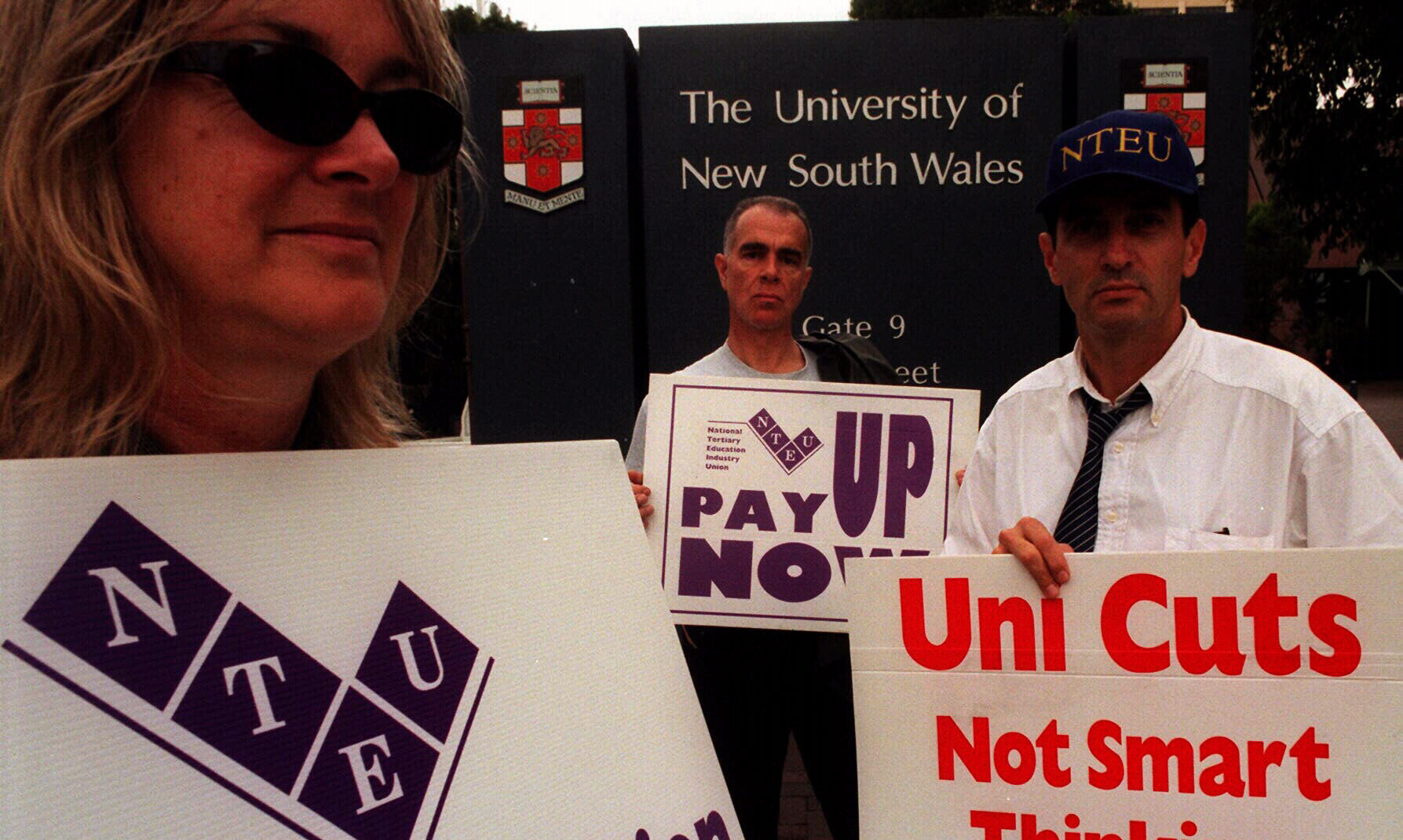
    A new research paper has investigated the factors that have “legitimised” the creation and acceptance of a casual academic workforce in Australia.

    Please login below to view content or subscribe now.

    Membership Login

    Source link

  • Data breach affects 10,000 Western Sydney University students – Campus Review

    Data breach affects 10,000 Western Sydney University students – Campus Review

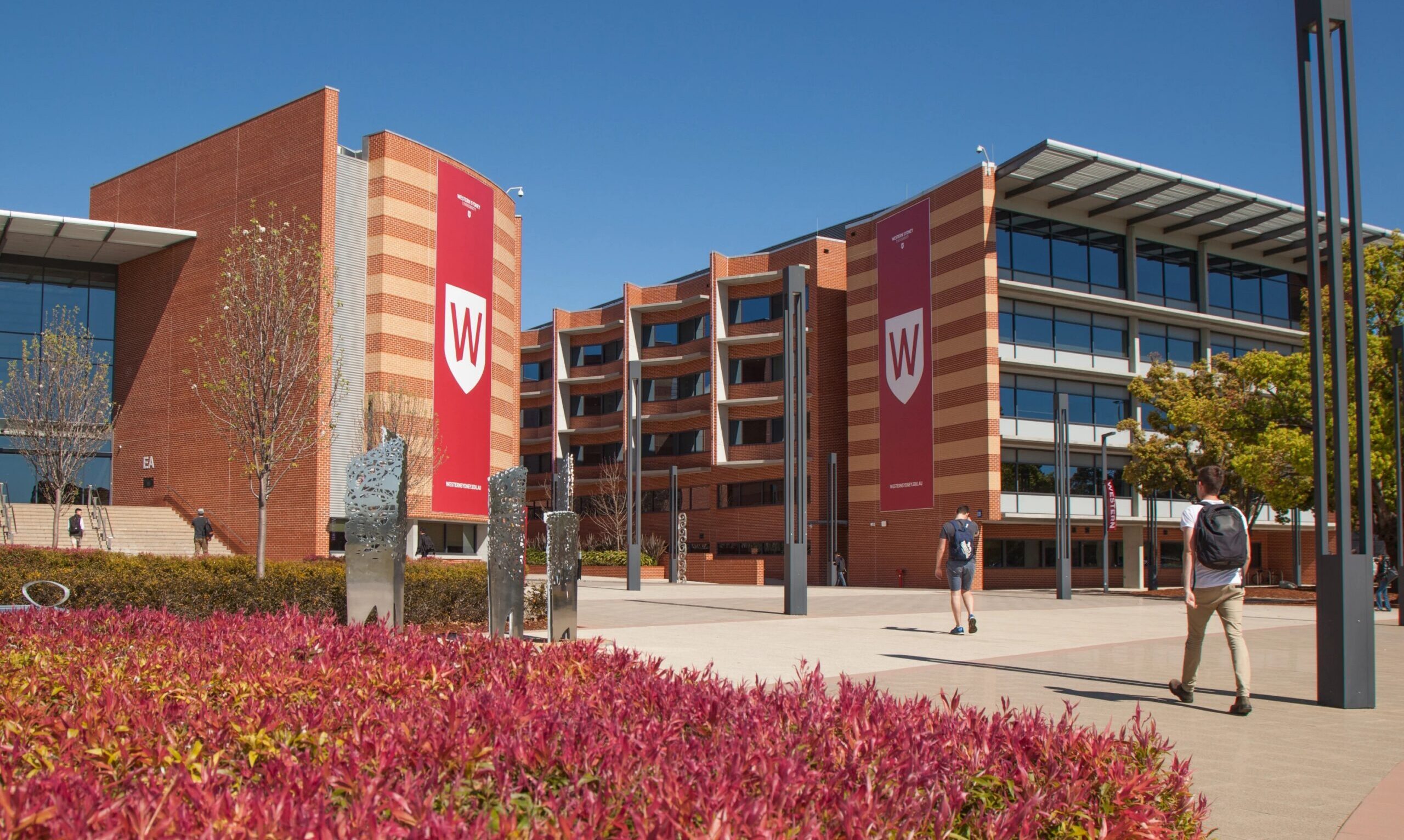
    Students from Western Sydney University (WSU) have had their data accessed and likely posted to the dark web in a data breach event.

    Please login below to view content or subscribe now.

    Membership Login

    Source link

  • Whose job is saving the planet anyway?

    Whose job is saving the planet anyway?

    The climate crisis is accelerating uncontrollably with consequences already being seen across the globe, and an increasingly worrying picture emerging for future generations.

    As the professionals of these generations emerge, shouldn’t we equip them with the knowledge and skills to be able to combat the worst of the impacts and steer the planet to a more sustainable future?

    Equipping and empowering these generations is crucial – and so embedding climate and sustainability education into higher education curricula is an urgent priority.

    But who should be taking the lead in this shift – government, PSRBs (Professional Standards and Regulatory Bodies), or providers?

    Each stakeholder has an obvious role to play, yet neither our government, nor regulatory bodies or institutions as collectives, are taking the lead.

    Is the question of responsibility far from straightforward, or simply being shied away from?

    The government?

    All four governments have a vested interest in ensuring that graduates are prepared to address the challenges of climate change. But with a legally binding commitment to Net Zero by 2050, government must diversify its methods in reaching a sustainable future.

    However, current strategies like the Department for Education’s Sustainability and Climate Change Strategy primarily target primary and secondary schools, leaving higher education institutions without clear, enforceable directives.

    A legal requirement for embedding climate and sustainability education would prevent reliance on individual universities’ goodwill. Instead, regardless of discipline or institution, all students would be empowered to face the effects of climate change.

    A mandate should not exist in isolation – it should come with a commitment to increase funding in this area. As universities become poorer, their reliance on tuition fees and high Research Excellence Framework ratings becomes ever more important.

    Through a rollout of funding-linked incentives, such as tying research grants to sustainability criteria, universities would be encouraged further to prioritise meaningful and effective integration.

    If the government is serious about its Net Zero commitments, it must recognise that climate education is not an optional add-on but a fundamental component of teaching and learning across all sectors.

    Without proactive intervention, be that through legislation or financial incentive, the next generation of professionals will be unprepared for the challenges ahead. In its pursuit of carbon neutrality, the government must recognise the requirement to give the UK workforce meaningful education and training. The likelihood of reaching an ambitious goal is dramatically increased if everyone knows just how they can contribute towards it.

    PSRBSs?

    Those that regulate disciplines and the education of professions are well-placed to ensure consistency in sustainability education within professional disciplines and have the knowledge to effectively mandate academics to integrate relevant, employable attributes into programmes.

    Positive examples of progress are already being observed – in February 2024, several key officials from PRSBs attended a consultation with St George’s House focusing on the integration of sustainability into professional education and standards.

    Amongst other points around the importance of youth voice, cocreation, and a need for wider systemic change, it was agreed amongst participants that sustainability and climate education must be integrated into internal policies, training programs, and professional standards.

    The PRSBs committed to engage further with the Professional Bodies Climate Action Charter and utilise review cycles to embed sustainability into benchmark standards.

    But without a legislative mandate the window for a lack of regulatory coherence swings wide open.

    The General Medical Council, for example, began integrating similar initiatives in 2019. They have been at the forefront for a while yet others continue to lag behind. It’s not only our doctors that require this crucial education – everyone has a part to play, and all students deserve parity of education and experience.

    Regardless of industry or interest, every PSRB needs to commit collectively to meaningful integration.

    For bodies whose purpose is to ensure programmes provide the knowledge, skills, and professional standards required for entry into a given profession, it is clear why climate and sustainability education should be a key part of their criteria.

    As industries transform in their response to the climate emergency, they are becoming evermore complex. Soon, environmental challenges, business practise, and regulatory adherence will be so embedded into industries that they will be unavoidable.

    If PSRBs aren’t ensuring programmes cater to this shift, then are they remaining truly fit for purpose?

    Universities?

    Higher education is at the forefront of innovation. Ranks of incredible academic staff give them capacity to integrate cutting-edge research across their curricula.

    These institutions also offer a unique flexibility in that, unlike broad guidelines, they are able to evolve and adapt programmes quickly to reflect the latest developments of sustainability practise and climate change.

    Falmouth University has developed an incredible approach through its Falmouth Curriculum Ladder (FCL). The FCL is an evidence-informed strategy that enables academics to reform their teaching, redesign course handbooks – educating academics; providing a clear and transparent framework; and continuously reviewing practise make the approach’s three key principles.

    Its consultative approach has been central to the initiative’s success and has ensured climate and sustainability education is not only academically rigorous, but also relevant and engaging.

    However, institutional autonomy means that universities can operate in a fragmented landscape whereby some embed climate and sustainability education meaningfully and others see the term as a tick in a box, even if they claim to do otherwise (see term “Greenwashing”).

    Lancaster University recently embarked on a “Curriculum Transformation Programme” whereby innovation and sustainability is one of four foundational principles. This is promising prima facie, but a simple skim through their education framework exposes a tokenistic nature whereby environmental sustainability has been shoehorned into a small corner within a smaller alcove.

    Without expert support, and robust processes for the effective scrutiny of provision, programme teams risk giving little meaningful thought to the evolving climate emergency.

    Without incentives from elsewhere, universities are allowed to do this scot-free. This is wholly unimpactful and further adds to a lack of parity across UK-wide student experience.

    The empowerment of whole generations cannot come from a handful of well-intentioned institutions. So, similar to the landscape for PSRBs, universities must work together to collectively commit to effective, meaningful embedment to ensure widely impactful change.

    A collaborative approach

    Unsurprisingly then, a collaborative approach is key. Government, regulators, and universities all have distinct yet interconnected roles to play in shaping humanity’s next move.

    The government should be moving the climate emergency up its agenda, and in doing so should mandate universities to integrate climate and sustainability education across all disciplines, ensuring at least a consistent standard of meaningful embedment across the sector.

    PRSBs should embed climate competencies into professional standards with the implementation of such measures being adaptable to the unique needs of different industries.

    Greater collaboration and knowledge sharing between regulators and universities would facilitate a more seamless integration of climate and sustainability education into teaching and professional development. This would also allow universities to retain their academic freedom of which often sprites fantastically innovative initiatives.

    Ultimately, it is only ever going to be through a wholly collaborative and coordinated approach that the next generations can be equipped to navigate and tackle climate change.

    Urgency demands action, and a joint commitment to systemic change is key to ensuring the professionals of tomorrow are ready to tackle the challenges that we are already facing today.

    Source link

  • Trusting students and reducing barriers by abolishing penalties for late work

    Trusting students and reducing barriers by abolishing penalties for late work

    Universities, wonderful as they are, can be very complicated.

    The way that we operate can often be confusing for students, not least because some of our expectations and traditions are hidden and unspoken – even more so for students who enter higher education from historically underrepresented backgrounds.

    Indeed, revealing the so-called hidden curriculum in higher education is a common means by which we try to eliminate gaps in access and outcome.

    But there are also times when, as a sector, we should be more critical of the way we do things, whether those practices are hidden or unhidden.

    Here we want to share an example of what happens when you challenge orthodoxy, and why we think we should do this more often.

    Assessment penalties

    If you spend some time reviewing UK university policies on assessment and examination, you will find that it is almost universally the case that there are penalties associated with late or non-submission.

    Typically, this involves a deduction of marks. Sometimes late submissions will be capped at a pass, other times the deduction is linked to the degree of lateness. Similarly, students who fail to submit an assessment or sit an exam will often find that their next attempt at resit will be capped.

    Of course, institutions do recognise that there may be lots of good reasons why students cannot meet deadlines, and so alongside these penalties, we also have Extenuating or Mitigating Circumstances processes. In short, if a student tells us the reason they were late or could not submit, then they may be exempted from those penalties if the reasons meet our established criteria.

    What is far harder to find is any robust explanation, in written form, of why these penalties exist in the first place. There is much received wisdom (as you would expect, for a sector so steeped in tradition) for why we have these penalties, which – in our experience – typically falls into two categories.

    The first justification is about using penalties to disincentivise lateness or non-submission. If students know they will lose marks, that will ensure that most submit on time. The second justification is about fairness. If you submit late, you are getting more time than other students, so you should not receive a higher mark as a result of this presumed advantage. Each of these justifications could be debated endlessly, but we don’t intend to do that here.

    Questioning the received wisdom

    The reason we began to question the wisdom of capping students who submitted their work late, or who needed to use their resit attempt, was prompted by insights which emerged from work led by our SU. Over the past few years, our SU has been supporting students who needed to complete resits by calling them to ensure that they understood what they needed to get done, and had access to the support they needed. In itself, this initiative has been very impactful, and we are seeing year-on-year improvements in student pass rates.

    However, this initiative also gave our students a chance to share their own insights into why they found themselves having to resit assessments. In plain terms, our students were telling us – we are overwhelmed.

    Students who did not submit assignments were not being tactical or lazy, or trying to gain an advantage over others. They were simply not able to get all of the work done that we required in the time given – despite substantial efforts we have already made over the last few years to ensure we are not over-assessing.

    At the same time, we had been aware for some time that our students were using our Extenuating Circumstances (ECs) process extensively. Thousands of valid claims were made by students each year, which we processed and – for the substantial majority – supported.

    This meant that our students who were submitting late or completing resits were not, for the most part, actually being subjected to marking caps. Perhaps we could have stopped there, reflecting that this reflects a system working as it was designed to work: students with valid reasons for late submission should not be capped; we had a system which allowed students to make such claims to avoid penalties; and it seemed the system was well-used.

    What we could not shake, however, was a sense that this all seemed quite unnecessary – layers of bureaucracy needing to exist to ensure that students who did not deserve to have an academic penalty applied to their mark, while the very existence of the possibility of this penalty was entirely our own decision. We asked ourselves what would happen if we simply removed marking penalties for late and non-submissions? If students were awarded a mark based solely on the content of their submission? If we created a late submission window for every deadline, and allowed students to manage their own time?

    We took this idea to a panel of our students, and were intrigued to hear their views. Overwhelmingly, they felt this would be a good idea. The stress of having to apply for extra time, often close to a deadline if some unexpected problem had arisen which threatened their ability to submit on time, was something students felt would be alleviated by this change. They also reflected that, for the most part, students are inherently motivated to try and meet their deadlines, and aren’t simply trying to game the system and find loopholes.

    Yes but

    Concerns about this change came from internal and external consultation with colleagues. While in principle wanting to support the idea, it was difficult to shake the concerns that 1) without a penalty for late submission, students would simply treat the last day of the late submission window as their new deadline, and 2) if resits were not penalised with a cap, many students would choose to not submit at the first attempt and defer their submission to a later date.

    We also had to consider, if these outcomes came to pass, the impact on staff workloads and marking turnaround times. With these concerns in mind, taking a careful approach to how we communicated changes to students and putting in place contingencies for managing impacts on workloads, we ultimately decided to take the plunge, and at the start of the 24/25 academic year we removed marking caps for late and non-submission. Then we kept a close eye on what happened next.

    What happened next is that our students did what we believed and hoped they would.

    Across the first semester this year, we have actually seen a small decline in the percentage of late submissions – with only 12.22% of work submitted being submitted within the 5 working day late submission window.

    All other work was submitted on or before the main deadline. By comparison, in 23/24 12.32% was submitted late, and 12.41% in 22/23, so it is perhaps more accurate to say that there has been no change in late submissions.

    But this was, of course, accompanied by a dramatic reduction in the number of times that students have had to request the option to submit late through our ECs process (and then worry about whether this request would be supported).

    These claims have reduced by 154 per cent, thereby also alleviating a huge administrative burden on our colleagues who have to process these claims. In short, students who in previous years needed extra time have been able to access it without having to ask, and removing the threat of a marking penalty has not increased the proportion of students submitting their work late.

    The concern that if students were not capped for non-submission then they might defer sitting exams has also proven unfounded. In fact, we have seen a 5 per cent increase in the number of students attempting their exam first time. In numerical terms, we had 370 fewer students failing to attend an exam during our January exam period.

    Student success

    While it is reassuring to have found that this change in policy has not led to any significant change in students’ engagement with deadlines and assessments, more importantly we also wanted to know whether our students were more likely to succeed.

    The data quoted above could have masked another issue, whereby students who did submit work were no more likely to submit past the deadline, but perhaps more students were not submitting at the first attempt and instead were deferring to their resit period.

    To explore this issue, we compared first time pass rates for first semester assessments to the previous academic year. This has revealed a 4.3 per cent improvement in pass rates at first attempt, with the biggest improvement of 6 per cent for our first-year undergraduates.

    When looked at by student characteristic, we have also seen the greatest degree of improvement for our ABMO students and our male students, who have historically been more likely to not pass assessments at their first attempt.

    Statistics aside, in human terms, this change in policy (which sits within a wider context of strategic initiatives we have in place to improve student outcomes for all of our students) is associated with us having 604 more students who have passed at their first attempt this year, than we would have had if pass rates had stayed the same as last year.

    With regard to concerns about the impact of this change on staff workloads, having more students passing first time also means a reduction in resit marking later in the academic year.

    Complex challenges

    For those interested in the practicalities of our new approach, we still have an Extenuating Circumstances procedure, but this is now intended as a mechanism for students to let us know about more complex challenges where a few days extra time would be inadequate to help them successfully engage with their assessments.

    We have also made clear to students that late submitted work is still recorded as being late (but with no marking penalty applied), and if students continually submit work late we will – in a supportive manner – reach out to find out if they need more or different support from us.

    We will continue to monitor the impact of these changes, in particular to understand whether there is any overall impact on student outcomes over the full year and beyond – particularly outcome gaps for different groups of students. But so far, our experience has been that making a change which initially seemed quite radical has simply served to make life easier for our students when they are already working so hard to access and participate in education.

    It is also important to recognise that extra time in itself is not a panacea for improving student outcomes, despite it being the most common form of adjustment offered to disabled students.

    By making this change in our approach, we were simply trying to make this very simple accommodation immediately available to any student who needs it, for whatever reason.

    This massively reduces a large administrative burden on the university, and frees us up to focus on more personalised forms of support, for students who need more than a few extra days to complete an assignment.

    The reason we are keen to share this with the sector is that we think it is a good example of how we can better support our students by challenging our own self-imposed orthodoxy. It is great to think that we have been able to reduce the anxiety associated with missing deadlines, without having to worry that our students will cynically use this change to game the system.

    We strongly believe that our students are inherently motivated to engage with their studies and do the best they can, and we think it is our job to make sure we are not getting in the way of them doing that.

    If, in the process, we can cut out unnecessary administration and bureaucracy for ourselves, then so much the better.


    Source link