Category: Featured

  • Finding a Rewarding, Remunerative Job in Creative Fields

    Finding a Rewarding, Remunerative Job in Creative Fields

    Daniel Grant, the go-to authority on the business of being an artist, recently published a fascinating essay, “The Art of Usefulness: Inside the Complicated World of Studio Assistants.” This piece is valuable not only for budding artists but for anyone who is interested in the role of internships and assistantships as stepping-stones into careers as creative professionals.

    Grant’s basic point is that these roles vary wildly in quality, compensation and outcomes. Not all assistantships offer mentorship or artistic growth. Many studio assistants do menial labor—cleaning, organizing, packing—without meaningful creative engagement. Some are subject to workplace abuse. It’s been claimed, for example, that the English artist Damien Hirst outsourced entire works to assistants.

    Grant contrasts today’s assistants with their historical counterparts, the apprentices, who were contractually trained and groomed into full-fledged artists. While echoes of mentorship persist, many contemporary assistants are hired more for manual labor or technical skills, with no promise of instruction or career development.

    According to Grant, some artists like Frank Stella, Susan Schwalb and Mark Tribe rely heavily on assistants, but their relationships tend to be professional rather than personal. Grant’s takeaway: Don’t romanticize assistantships. Yes, some provide opportunity, but others are exploitative and many are menial. While a few assistants benefit from proximity to power, most do invisible labor with little recognition.

    Grant also subtly critiques the blurred ethics of large-scale art production, where big-name artists rely on unseen labor to fabricate works they will claim as their own. This raises deeper questions about authorship, originality and fairness—issues not unique to visual art but present across creative industries. The art world, like many other fields, relies on invisible labor, and those who perform it are only rarely recognized.

    Professional success in creative fields is, in the end, a product of chance and connections. The romantic myth of the gifted assistant rising to stardom survives because it occasionally comes true—but for most, the reality is far more utilitarian.

    What the Heck Is a Creative Professional?

    Many college graduates—especially those with degrees in the humanities, arts, media studies or communications—aspire to enter the amorphous world of creative professionals.

    Unlike students in clearly delineated fields like engineering, nursing or accounting, these graduates face a job market where roles are loosely defined, pathways are nonlinear and success depends as much on networking, hustle and timing as on credentials.

    The category of creative professionals encompasses a vast and varied terrain: freelance writers, graphic designers, editors, content creators, social media managers, filmmakers, animators, musicians, photographers, arts administrators, game designers, copywriters, museum workers, marketing associates and more.

    Some roles are embedded in companies (in advertising, branding, media production), while others are entrepreneurial or gig-based.

    But what makes this group amorphous is not just the range of roles. It’s the fact that many of these jobs don’t have clear entry-level positions and rely heavily on connections and portfolios. Nor is it easy to locate job openings. Not only are these jobs precarious, with low pay, limited benefits and few clear growth trajectories, but they require self-branding, freelancing and juggling multiple part-time gigs.

    The Gigification of Creative Labor

    The romantic image of the creative professional—free-spirited, self-directed, thriving on inspiration—has long concealed the economic and structural realities of pursuing a career in the arts and media. For today’s college graduates who aspire to work in film, publishing, design, music, digital media or other creative sectors, the terrain is far less glamorous and far more uncertain.

    Their challenges are not unique but are emblematic of deeper transformations reshaping the 21st-century labor market. In an era marked by gigification, the erosion of stable entry points and the increasing importance of social capital, aspiring creatives are navigating a world of work defined less by ladders than by lattices, portfolios and side hustles.

    Long before Uber drivers and DoorDash couriers came to symbolize the gig economy, creative professionals had already been living in a world of short-term contracts, project-based work and multiple income streams.

    Freelance writing, illustration, video editing and even arts education often follow a feast-or-famine cycle, with creators constantly juggling gigs to make ends meet.

    Platforms like Upwork, Fiverr, Bandcamp and YouTube have made it easier to distribute and monetize creative work, but they’ve also intensified competition and pushed creators to prioritize content volume and algorithmic appeal over depth or development. These platforms demand constant content creation, personal branding and entrepreneurial hustle.

    The Collapse of Clear Entry Points

    In journalism, the collapse of local newsrooms and the shift to digital-first business models have decimated entry-level reporting jobs. Once-traditional pathways—working a beat, rising to editor—have given way to freelance blogging, newsletter writing or content marketing. Writers for outlets like BuzzFeed, Vice and Gawker faced mass layoffs in recent years despite audience growth, illustrating the volatility of media employment.

    In music, artists once relied on record deals for studio time and distribution. Today, they must often self-produce, self-promote and rely on streaming royalties that pay mere fractions of a cent per play. Even high-profile musicians like Taylor Swift have spoken out against exploitative contract terms and the difficulty of maintaining artistic control.

    In publishing, editorial assistantships once served as springboards into long careers. Now, many of those jobs are underpaid or outsourced. Entry into major publishing houses increasingly depends on unpaid internships, elite connections or the ability to work in expensive cities without support. Aspiring editors and writers often cobble together freelance gigs, adjunct teaching and grant-funded residencies.

    Similarly, graphic designers and illustrators face a flooded marketplace where clients can access low-cost design through Canva templates or $5 commissions on Fiverr. While a few designers rise through agencies or cultivate niche followings on Instagram or Behance, many struggle to find full-time employment with benefits.

    In the art world, as Daniel Grant describes in his article on studio assistants, recent graduates often take jobs hoping for mentorship or exposure. Some are fortunate to turn these opportunities into gallery representation. But many more are relegated to menial labor with little visibility, let alone advancement.

    The Power—and Limits—of Connections and Credentialing

    With few formal entry points, connections play an outsize role in the creative industries. Jobs in film, media and publishing are often filled through personal recommendations, referrals and informal networks.

    This favors those with pre-existing access to elite institutions or cultural capital. Graduates of Ivy League programs or specialized M.F.A. programs (e.g., Iowa Writers’ Workshop, RISD or USC School of Cinematic Arts) often find themselves in better positions to land opportunities than those from less connected backgrounds.

    The disparities are also geographic. Being in New York, Los Angeles or London matters. These hubs concentrate industry gatekeepers, networking events and cultural institutions. Aspiring creatives in smaller markets face many hurdles simply to get noticed.

    The Growing Dysfunction of Academic Credentialing

    In a recent Substack post titled “The Professional-Managerial Class Has No Future,” Peter Wei offers a sobering, sharply argued critique of how America’s professional class has become trapped in a self-consuming cycle of institutional dependency.

    Wei begins with the Varsity Blues scandal—the 2019 revelation that wealthy parents had bribed college officials and fabricated athletic credentials to secure their children’s admission to elite universities. The irony, Wei notes, is that these parents weren’t trying to buy businesses or invest in their children’s talent—they were paying enormous sums just for the opportunity to pay even more in tuition.

    Why? Because in the worldview of the professional-managerial class, education is not just a pathway to opportunity—it is the only viable path. Knowledge, credentials and institutional endorsement matter more than social capital, which is why a degree from USC is seen as preferable to one from Arizona State.

    Wei argues that this dependence on elite institutions for status and opportunity has made the professional class uniquely vulnerable. Unlike traditional elites, who can pass down businesses, land or networks, this class has no durable assets to transfer—only a highly contingent form of symbolic capital that must be re-earned with every generation through a costly and competitive credentialing system.

    Wei likens this class to giant pandas—unable to reproduce without intervention.

    From elite preschools to graduate degrees and unpaid internships, Wei sees a system of “institutional parasitism” that extracts time, money and energy from aspirants, with no guarantee of upward mobility. The result is a bloated, extractive pseudomeritocracy that privileges wealth over talent and inertia over innovation.

    Implications for Creative Professions

    Although Wei focuses primarily on conventional high-status fields—law, medicine, finance—his insights carry powerful implications for the creative economy, where credentialism is more ambiguous in its outcomes but no less pervasive.

    Wei critiques the growing trend of formalizing creative careers through graduate and certificate programs. M.F.A.s in writing or fine arts, film schools, design degrees and other academic programs promise legitimacy and access. But more often, they function as status symbols and revenue streams for universities, not as meaningful gateways into sustainable creative work.

    In practice, these programs frequently delay entry into the field, saddle students with debt and shift talent validation from peers and mentors to institutional branding. As Wei might argue, creative credentials offer prestige but little in the way of guaranteed opportunity.

    Mentorship and Networks Matter More Than the Actual Degree

    Creative careers have long depended more on networks and visibility than on diplomas. The most important variables often include whom you know, who advocates for you and how effectively you can showcase your work. Wei’s insight—that social and relational capital are more durable than formal credentials—is especially relevant here.

    Creative professionals frequently get their start through informal pathways: studios, internships, apprenticeships, artist assistantships or digital communities. What these avenues offer is not accreditation, but proximity to opportunity, mentorship and practice.

    Wei’s argument helps explain why so many talented graduates flounder despite having “done everything right.” They’ve invested in institutional validation in a field where validation rarely comes through formal channels.

    As Daniel Grant has documented, art school graduates can accumulate six-figure debt and still find themselves in low-paid assistantships or unpaid labor, hoping for a breakthrough. Many end up subsidizing the very systems that promised to launch their careers.

    Wei’s Call for Alternative Paths

    Wei’s broader point is that real security and sustainability come not from deeper immersion in fancy-pancy credential mills but from building independent capital—whether financial, creative or communal. For creative professionals, this means:

    • Leveraging digital platforms, such as Substack, TikTok, Patreon and Etsy.
    • Developing entrepreneurial skills.
    • Forming collectives or cooperatives with other aspiring creative professionals.
    • Building long-term relationships with peers, patrons and collaborators.

    These forms of capital—unlike credentials—can be scaled, adapted and passed down. They offer autonomy rather than institutional dependence.

    Wei challenges the foundational logic of credential-based class reproduction. He suggests that lasting success, especially in the creative fields, won’t come through elite validation but through independence, adaptability and networked collaboration.

    Toward New Models of Creative Work

    Wei’s essay is more than a critique—it’s a wake-up call. It suggests that many creative professionals have been sold a bill of goods—a narrow vision of success: climb the institutional ladder, get the right degrees, wait for permission. But this path is extractive and increasingly out of reach.

    Instead, creative workers—especially emerging artists, writers and designers—need to forge alternative models: ones rooted in craft, community, ownership and resilience. That doesn’t mean abandoning education, but it does mean resisting the illusion that credentials alone will ensure a viable creative life.

    In a world where institutions increasingly extract more than they offer, the most powerful move may be to step outside their orbit—and build something of your own.

    What Universities Ought to Do

    University programs for aspiring creative professionals—whether in writing, design, media, fine arts, filmmaking or performance—have a responsibility to ensure that their offerings are both educationally meaningful and practically valuable. Too often, these programs are exploitative or misleading, promising more than they can deliver. Here are several concrete steps institutions can take to fulfill their mission with integrity:

    1. Set clear, honest expectations. Avoid inflated rhetoric. Be transparent about what a creative degree can—and cannot—guarantee. These programs should not be marketed as guaranteed pathways to fame, prestige or financial security. Honesty builds credibility.
    2. Publish real outcomes. Share detailed, accurate data on employment rates, average debt, income trajectories and postgraduation paths. Transparency builds trust—and helps students make informed choices.
    3. Integrate career education into the curriculum. Creative students need more than artistic technique—they need tools to build sustainable careers. Programs should teach freelance business basics (contracts, invoicing, taxes) and grant writing, budgeting and pitching projects. They should also educate their students about copyright and intellectual property essentials and about branding, marketing and building an audience. Portfolio development starting early, not just at the end. The job is not just to teach skills—it’s to prepare students for a meaningful, rewarding career.
    4. Provide real-world experience. Bridge the gap between the classroom and the profession. This means partnering with professionals to create paid internships and mentorship opportunities and hosting public showcases, exhibitions and performances. Offer opportunities for leadership through student-run publications and collaborative studios. Assign project work that mimics client briefs and industry expectations. Follow the example of one of my cousins, who teaches in a leading film program: Have the students create pilots, then show the best to industry professionals.
    5. Foster industry connections while students are still in school. Help students begin building a creative network by creating alumni mentorship programs and hosting career fairs and industry mixers. Collaborate with local arts and media organizations. Also, encourage interdisciplinary collaborations—connecting writers with designers and musicians with filmmakers.
    6. Offer affordable and flexible credentials. Not every aspiring creative can afford a traditional two-year M.F.A. Institutions should offer more accessible alternatives, including stackable certificates, short-term residencies and continuing education for different stages of a creative career.
    7. Support the postgraduation transition. The first year out of school is often the hardest. Universities should offer “alumni launch” fellowships or microgrants and provide continued access to key campus resources—equipment, studios, software and advising—for recent graduates.
    8. Prioritize mentorship and community. Creative growth thrives on connection and feedback. To that end, programs should build intentional mentorship structures with faculty, alumni and visiting professionals. They should also support long-term creative communities—like writing circles, critique groups and production collectives—that outlast graduation.
    9. Redefine success. Success shouldn’t be measured solely by commercial visibility or gallery representation. Programs should honor diverse career paths in teaching, community arts, arts administration, arts and music therapy, and independent creative entrepreneurship. Help students see themselves not just as individual artists seeking recognition, but as contributors to a broader creative ecosystem.

    Universities must resist the temptation to sell prestige and focus instead on empowering students with the skills, networks and resilience to live creative lives—not just earn creative degrees. That means reimagining programs not as talent showcases but as launchpads: places where craft is developed, careers are seeded and communities are built.

    The Rise of Precarity and the Myth of Passion

    Creative work has long been framed as a labor of love. But this framing often masks a more exploitative reality. The expectation that young professionals should work for exposure, accept unpaid internships or endure grueling hours in the name of passion has become normalized.

    Hollywood offers one glaring example. Aspiring screenwriters and filmmakers face a labyrinth of assistant jobs, script reading gigs and “general meetings” with no guaranteed outcomes. The 2023 Writers Guild of America strike underscored how even seasoned professionals struggle to earn a living wage in an industry increasingly dominated by streaming algorithms and franchise formulas.

    In digital content creation, influencers and YouTubers appear to bypass traditional gatekeepers—but the reality is a grind of content calendars, brand deals, metric tracking and parasocial labor. Few creators make a sustainable income, and many burn out trying to keep up with algorithmic expectations.

    Toward a More Sustainable Creative Economy

    Creative professionals have always been dreamers, but dreams alone can’t sustain a livelihood. In an era of precarity and gigification, the creative class is emblematic of broader economic shifts that reward flexibility over stability, connections over merit and visibility over depth.

    But this is not a reason for resignation. It is a call to action: to create new structures that honor the value of creative work, to build ecosystems that support risk-taking and reflection, and to ensure that the future of art, storytelling, design and media is not left to those who can afford to wait for luck.

    To do that, we must see the creative economy not as a lottery, but as a system that can be shaped—and improved—by collective effort, institutional vision and public investment.
    Steven Mintz is professor of history at the University of Texas at Austin and recipient of the AAC&U’s 2025 President’s Award for Outstanding Contributions to Liberal Education.

    Source link

  • OfS free-speech absolutism allows abuse, harassment, and bullying

    OfS free-speech absolutism allows abuse, harassment, and bullying

    • By Professor Sasha Roseneil FAcSS PFHEA, Vice-Chancellor and President of the University of Sussex.

    On 26 March 2025, after a three-and-a-half-year long, deeply flawed, investigation into freedom of speech and academic freedom at the University of Sussex, the Office for Students issued the unprecedently high fine of £585,000, and decreed a form of free-speech absolutism as the new golden rule for universities.  Henceforth, it would appear that universities can only control a very narrowly defined version of unlawful speech that ignores our broader legal and ethical obligations to students and staff. It is an unworkable and highly detrimental decision for the whole higher education sector.

    The investigation was initiated in October 2021 in the context of protests against gender-critical philosopher Professor Kathleen Stock, around the time that she decided to resign from her position at Sussex. Much of the media and public reaction to the OfS’s decision has seen it as vindication of Kathleen Stock, and indeed the OfS itself gives as a reason for publishing the decision, that it would be ‘likely to make Professor Stock feel vindicated and may also vindicate her in public perception’. Indeed, the only person interviewed in the investigation was Kathleen Stock. This is despite the OfS acknowledging that it did not have the power to act on behalf of any individual, and that it has not investigated the circumstances relating to Kathleen Stock.

    Many commentators also regard the outcome as vindication of the gender-critical beliefs that Kathleen Stock professed during her time at Sussex and since. But again, the investigation was not a judgement in the toxic disputes about sex and gender, and the identities and rights associated with each. It is not the OfS’s role to make such judgements – in its own words it is ‘viewpoint neutral’ – just as it not the role of a university, or a Vice-Chancellor, to do so.

    Universities are arenas in which the most controversial ideas of the day are contested – and recent years have seen waves of protest and unrest on campuses across the world about a number of fiercely disputed issues. It is the job of university leaders to facilitate and contain that contestation so that it serves to advance the purpose of universities – the education and development of students and the advancement of knowledge and understanding. Continual efforts to promote and protect overlapping but not identical liberties – freedom of speech and academic freedom – are vital in this. So too are actions to ensure the absence of intimidation and bullying, and to create inclusive, supportive, and respectful learning and working environments, in which people of diverse backgrounds, beliefs and identities can succeed as individuals and come together in productive dialogue, however vehemently they might disagree. Indeed, the exercise of academic freedom and freedom of speech depends on this. Freedom of speech cannot mean the ability to shout the loudest or to abuse and frighten less powerful opponents into silence.

    The OfS’s has just made this work of universities infinitely harder, if not impossible. The single short offending document identified by the OfS, on which the weight of its findings rest, was designed to protect the welfare of trans and non-binary staff and students, a student group the OfS itself identifies as at particular risk in relation to access to and participation in higher education. When adopted at Sussex in 2018 – around the same time as at many other universities across the country – thinking about how best to support trans and non-binary people within universities was just beginning, and gender-critical beliefs had not yet been recognised as ‘protected philosophical beliefs’ under the 2010 Equality Act.   

    If the OfS is ‘viewpoint neutral’, its findings about a policy statement seeking to support trans and non-binary staff and students must be understood to apply to all staff and students – whatever their beliefs and identities. A thought experiment helps make the point: replace the trans and non-binary people with whose protection the offending document is concerned with members of other minoritised and marginalised groups – Jewish, Black, Muslim or Gypsy, Roma and Traveller people, disabled people, or lesbians and gay men, for instance.

    The implications of the OfS decision are wide ranging and highly corrosive of attempts to create diverse, inclusive, and equal working and learning environments, and threaten university autonomy. Under the OfS’s ruling, it would seem that universities cannot seek to prevent our curricula from relying on or reinforcing stereotypical assumptions about (for example) Jews or Black people, because to do otherwise could limit lawful speech. Universities cannot, from now on, remove antisemitic or racist propaganda from campus unless what it says is unlawful – again, extremely narrowly defined. And universities should not discipline anyone who engages in abuse, harassment or bullying unless that abuse, harassment or bullying meets the legal definition of harassment or hate speech – even if it breaches a range of other duties and obligations.

    In effect, the decision implies that universities cannot have policies that aim to reduce abuse, bullying and harassment – whether motivated by transphobia, antisemitism, homophobia, Islamophobia, racism, or sexism – beyond simply reproducing existing restrictions in law (which restrictions the OfS appears not to understand – for example, it does not appreciate that abuse, bullying and harassment are restricted by the Public Order Act 1986).

    It is, I fear, a charter that risks giving free rein to antisemitic, anti-Muslim, homophobic, racist, sexist, and anti-trans speech and expression in universities, as long as it stays just on the right side of the law.

    Moreover, the decision could be significantly at odds both with the wider legal obligations of universities in relation to equalities, and with the OfS’s own regulatory expectations regarding equality of opportunity for students, the quality and standards of the academic experience, and the soon to be introduced requirement to take steps to protect students from harassment and sexual misconduct.

    The OfS’s regressive and dangerous decision threatens the cohesion and governability of each of England’s diverse and vibrant universities, and it must be set aside. Today Sussex is publishing our pre-action protocol letter, which sets out the grounds of our legal challenge. I invite the OfS to respond positively, and to become a regulator that seeks collaboration and open dialogue with universities rather than punishment.

    Source link

  • Alabama high school requirements now allow students to trade chemistry for carpentry

    Alabama high school requirements now allow students to trade chemistry for carpentry

    BIRMINGHAM, Ala. — In a corner of Huffman High School, the sounds of popping nail guns and whirring table saws fill the architecture and construction classroom.

    Down the hall, culinary students chop and saute in the school’s commercial kitchen, and in another room, cosmetology students snip mannequin hair to prepare for the state’s natural hair stylist license.

    Starting this fall, Alabama high school students can choose to take these classes — or any other state-approved career and technical education courses — in place of upper level math and science, such as Algebra 2 or chemistry.

    Alabama state law previously required students to take at least four years each of English, math, science and social studies to graduate from high school. The state is now calling that track the “Option A” diploma. The new “Option B” workforce diploma allows students to replace two math and two science classes with a sequence of three CTE courses of their choosing. The CTE courses do not have to be related to math or science, but they do have to be in the same career cluster. Already, more than 70 percent of Alabama high school students take at least one CTE class, according to the state’s Office of Career and Technical Education/Workforce Development.

    The workforce diploma will give students more opportunities to get the kind of skills that can lead to jobs right after high school, legislators said. But there’s a cost: Many universities, including the state’s flagship University of Alabama, require at least three math credits for admission. The workforce diploma would make it more difficult for students on that track to get into those colleges.

    The law passed in 2024 alongside a spate of bills aimed at boosting the state’s labor participation rate, which at 58 percent as of January remained below the national rate of 63 percent. Simply put, Alabama wants to get more of its residents working.

    Alabama is giving high school students a new pathway to a high school diploma: fewer math and science classes in exchange for more career and technical education courses. Credit: Tamika Moore for The Hechinger Report

    The new diploma option also comes at a time when public perception of college is souring: Only 36 percent of U.S. adults have a lot of confidence in higher education, according to a 2024 Gallup poll. Just 43 percent of Alabama high schoolers who graduated in 2023 enrolled in one of the state’s public colleges the following fall.

    “The world of higher education is at a crossroads,” said Amy Lloyd, executive director of the education advocacy nonprofit All4Ed and former assistant secretary for the Office of Career, Technical, and Adult Education at the U.S. Department of Education. “Americans are questioning the value of the return on their investment: Is it worth my money? Is it worth my time?”

    Related: A lot goes on in classrooms from kindergarten to high school. Keep up with our free newsletter on K-12 education.

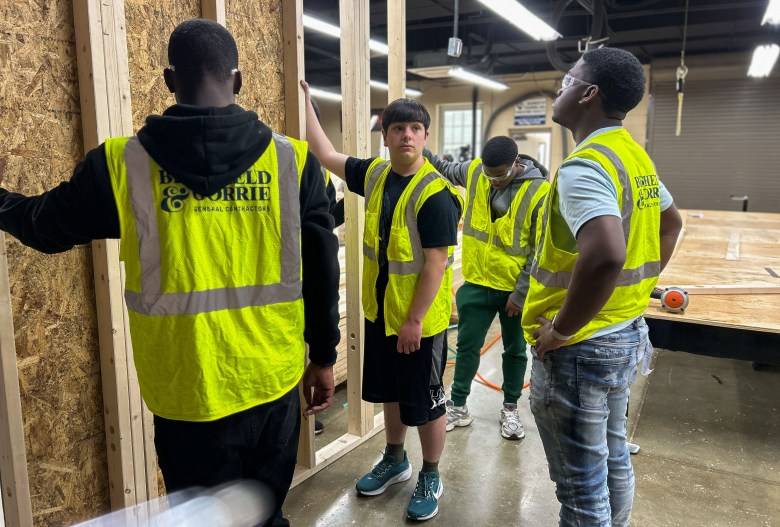
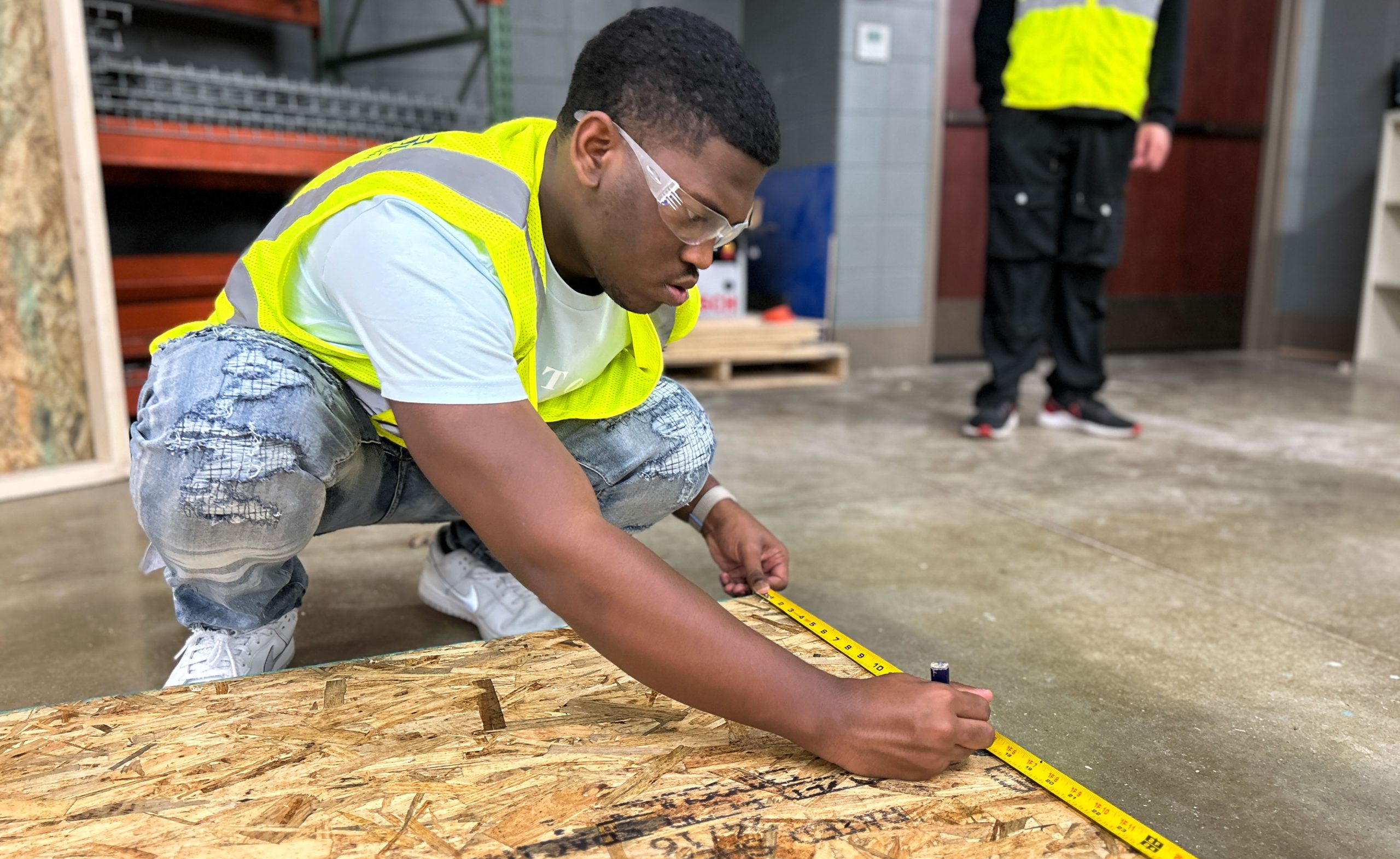
    One recent afternoon in Huffman High School’s architecture class, a few students in bright yellow safety vests were measuring a wall they had built. At the end of the semester, the project will culminate in a tiny home.

    Lucas Giles, a senior, started taking architecture his sophomore year as a way to “be able to fix things around the home without having to call other people,” he said. The new workforce diploma option won’t apply to him since he’s graduating this year, but he said he likely would have opted for it to fit more architecture classes into his schedule — that is, until he learned it would make it harder for him to attend college and study engineering.

    “I wouldn’t have the credits,” Giles realized.

    Students who earn a workforce diploma and end up wanting to go to college after all can enroll in community colleges, or aim for state colleges that have less stringent admissions requirements, said Alabama education chief Eric Mackey. The key to the new diploma will be ensuring school counselors are properly advising students, he added.

    “That’s where the counselor comes in and says, ‘If you want to be a nurse, then yes, you need the practical stuff at the career tech center — taking blood pressure and trauma support — but you also need to be taking biology, physiology, chemistry and all those things, too,’” Mackey said.

    Because the diploma only makes sense for a specific subset of students — those who do not plan to go to a four-year college that requires more math or science and who cannot otherwise fit CTE classes in their schedule — counselors have a huge role to play in guiding students. As of 2023, there were 405 students for every counselor in Alabama’s public schools, well over the recommended ratio of 250 to 1.

    Mackey said the state added career coaches in recent years to ease the counseling workload, but in many districts there is just a single coach, who rotates among schools.

    Samantha Williams, executive director of the nonprofit Birmingham Promise, fears the workforce diploma may shut off students’ options too early. Birmingham Promise helps students in Birmingham City Schools pay college tuition and connects them to internship opportunities while in high school.

    “Do you really think that all of our school districts are preparing students to know what they want to do” by the time they’re in high school, Williams asked.

    Williams also worries that lower-performing students might be steered to this diploma option in order to boost their schools’ rankings.

    Students who opt for the workforce diploma will not have their ACT test scores included in their schools’ public reports. Legislators decided that schools should not have to report standardized test scores for students who did not have to take the requisite math and science classes.

    “The concern a lot of people voiced was ‘Hey, isn’t everyone just going to place the kids who are underperforming in the workforce diploma so their ACT scores don’t bring down the whole?’” Williams said. “There’s a strong perverse incentive for people to do that.”

    Speaking to the state’s Board of Education last fall, Mackey warned the “furor of the state superintendent will come down on” anyone who tries to redirect students toward the workforce diploma because of low ACT scores.

    Related: What happened when a South Carolina city embraced career education for all its students

    At Headland High School in rural Henry County, Alabama, every student takes at least one CTE course, according to Principal Brent Maloy. The most popular classes, he said, are financial management and family consumer science.

    “We don’t force them in — everybody registers themselves, they pick their own classes,” Maloy said. “But there’s just about a zero percent chance that a kid’s not going to have a career tech class when they graduate.”

    The school has hosted information sessions for parents and students about the new diploma option ahead of next school year. In a poll of rising juniors and seniors, 20 percent said they would like to pursue a workforce diploma, and another 30 percent said they might be interested. Maloy is anticipating about 25 percent of students will actually opt in to the pathway.

    Most graduates of Headland enroll in a two-year school after graduation anyway, Maloy said, and the workforce diploma won’t hinder that. But the high school has only one counselor for its 450 students, and making sure students fully understand this diploma pathway — and its limitations — is likely to add pressure and extra responsibilities on counselors with heavy workloads.

    Students hold up the wall of a tiny home they’re building in a career and tech architecture class at Huffman High School in Birmingham, Alabama. Credit: Ariel Gilreath/The Hechinger Report

    “There’s so much pressure on our secondary counselors already just to make sure that all of the boxes are checked before graduation. It’s going to put an extra box for them to check,” Maloy said.

    Ultimately, state businesses and industries want this change, said Mackey, who started his career as a middle and high school science teacher.

    “They were saying, ‘We really need students with skills over, say, calculus,’” Mackey said. “That doesn’t mean some students don’t need calculus — we want to still offer those higher math courses and higher science courses.”

    But, reflecting on his own experience as a high school science teacher, “I can tell you that every student doesn’t need high school chemistry,” Mackey said.

    The chamber of commerce in Mobile, Alabama, is one group that advocated for the workforce diploma. Career tech classes are a good way for students to better learn what they want to do before graduating high school, and they are also an avenue for students to get skills in high wage industries prevalent in Alabama, said Kellie Snodgrass, vice president of workforce development at the Mobile Chamber.

    Less than half of high school graduates in the region end up enrolling in college after graduation, Snodgrass said, and only 20 percent of high-wage jobs in Mobile require a college degree. A large chunk of jobs in the state, and in Mobile in particular, are in manufacturing.

    “It’s terrible when a student goes away to college and comes back and can’t find a job, when we have thousands of open jobs here,” Snodgrass said.

    In an emailed statement, Trevor Sutton, the vice president of economic development at the Birmingham Business Alliance, said the diploma option was a “win for the state of Alabama” that would allow students a chance to learn both “hard and soft skills like communication and time management.”

    Related: States bet big on career education, but struggle to show it works

    At least 11 states have embraced policies that give students flexibility to use career tech courses for core academic credits, according to a review from the Education Commission of the States.

    Like Alabama, Indiana also made changes to its diploma requirements in 2024. After more than a year of public debate, the state created three graduation pathways that are meant to lead to college admissions, the workforce, or enlistment in the military. Those changes will be effective for students in the class of 2029, or current eighth graders.

    Having industry buy-in on career tech programs is important, said Lloyd with All4Ed, because most students will need either an industry or post-secondary credential to land a job with a comfortable wage.

    “The reality is a high school diploma is not enough in today’s labor market to have a guaranteed ticket to the middle class,” Lloyd said.

    The problem, Lloyd said, is most K-12 industry credentials have little use to employers. Only 18 percent of CTE credentials earned by K-12 students in the U.S. were in demand by employers, according to a 2020 report from the Burning Glass Institute.

    The key in Alabama will be ensuring students are going into career pathways that line up with job demand, Snodgrass said. Out of the more than 33,000 CTE credentials Alabama high school students earned in 2023, only 2 percent were in manufacturing, which is one of the state’s highest need areas.

    Still, attitudes toward high school CTE courses — once largely thought of as classes for students who struggled academically — have improved significantly over the years. And many schools offer CTE programs like aerospace, robotics or conservation that could help students get into high-demand undergraduate programs at universities.

    “We’re increasingly blurring the lines between what has been historically siloed in people’s minds in terms of career education versus academic education,” Lloyd said. “Those are very often one and the same.”

    Contact staff writer Ariel Gilreath at [email protected]

    This story about Alabama high school requirements was produced by The Hechinger Report, a nonprofit, independent news organization focused on inequality and innovation in education. Sign up for the Hechinger newsletter

    The Hechinger Report provides in-depth, fact-based, unbiased reporting on education that is free to all readers. But that doesn’t mean it’s free to produce. Our work keeps educators and the public informed about pressing issues at schools and on campuses throughout the country. We tell the whole story, even when the details are inconvenient. Help us keep doing that.

    Join us today.

    Source link

  • Promoting AI-Enhanced Performance in the Online Classroom – Faculty Focus

    Promoting AI-Enhanced Performance in the Online Classroom – Faculty Focus

    Source link

  • Portability within REF remains key to fairness

    Portability within REF remains key to fairness

    When a researcher produces an output and moves between HEIs, portability determines which institution can submit the output for assessment and receive the resulting long-term quality-related funding.

    However, a joint letter by the English Association, the Institute of English Studies, and University English, and subsequent interventions from other subject associations, demonstrate that unaddressed concerns over the portability of research outputs are coming to a head.

    In REF 2014, if a researcher moved HEI prior to a census date, then only the destination HEI submitted the output. In 2021, to mitigate the potential perceived inflationary transfer market of researchers, the rules were changed so that if researchers transferred, both the original and destination HEIs could return the output. This rightfully recognised the role of both HEIs, having supported the underpinning research and investing in the research of the future respectively.

    The initial decisions published in 2023 had research outputs decoupled from the authors with outputs needing to have a “substantive connection” to the submitting institution. Two years on we still don’t know the impact of this decision on portability. One of the unintended consequences of decoupling the outputs from the researchers who authored them and removing the notion of a staff list, is that only the address line of the author affiliation remains. This decoupling means that any notion of portability of outputs with a specific researcher is problematic.

    The portability of research outputs is a crucial element of the assessment process. It supports key values such as career security and development, equality, diversity, and inclusion, as well as the financial sustainability of HEIs. More importantly, linking outputs to individual researchers rather than institutions is necessary, particularly in the current Higher Education landscape, to ensure the integrity of both research and the assessment exercise itself. This approach ensures that researchers receive due credit for their work, prevents institutions from unfairly benefiting from outputs produced elsewhere or from structural changes such as departmental closures, and upholds a fairer, more transparent system that reflects actual research contributions.

    The sector is in a different place than it was even a few years ago. Many HEIs are financially challenged, with wide-spread redundancies an ongoing reality. Careers are now precarious at every career stage. Making new, or even maintaining, academic appointments is subject to strict financial scrutiny. Across all facets of research – from the medical and engineering sciences to the arts and humanities – the income derived from the REF is essential to the agility of the research landscape.

    Whether we like it or not, the decision to hire someone is in part financial. That an early career researcher could be recruited to improve a unit’s (subject) REF submission and hence income is a reality of a financially pressured system. At a different career stage, many distinguished researchers are facing financially imposed redundancy. The agility of the sector to respond is aided by the portability of the researcher’s outputs to allow them to continue their career and their contributions to the sector at a new HEI. The REF derived income is an important aspect of this agility.

    Setting aside financial considerations, separating research outputs from the researchers who created them sends a damaging message. It downplays the fundamental role of individuals in driving research and undermines the sense of agency that is crucial to its integrity and rigor.

    Auditing the future

    As researchers, we recognise the privilege of being supported in pursuing what is often both a passion and a vocation. Decoupling outputs from their creators disregards the individual researcher, their collaborations, and their stakeholders. It also oversimplifies the complex research ecosystem, where researchers work in partnership with their employing institutions, sector bodies, archives, charities, funders, and other key stakeholders.

    REF-derived income should not be seen just as a retrospective reward for an HEI’s past support of research, but rather as the nation’s forward-looking investment in the discoveries of tomorrow. To treat it merely as an audit is to overlook its transformative potential. Hence the outputs on which the assessment is based should be both the researchers who contributed to the unit while employed by the university and the researchers who are currently in the unit to contribute to the research that is ongoing, indelibly linking and interweaving past, present and future research.

    In addition to concerns over portability, decoupling outputs from the researchers that authored them risks undermining a central premise of the assessment that many of us working to improve our research culture want to see. Decoupling means there is no auditable limit to the number of outputs written by any one individual that can be submitted for assessment. Within the REF, we wish to see outputs authored by a diversity of staff within the unit, staff at different career stages and staff working in different sub areas. By decoupling the author from outputs, a future REF risks undermining the very fairness that the rule change was introduced to ensure.

    Not fair not right

    Sometimes the unintended consequences of an idea outweigh the benefits it was hoping to achieve. The decoupling of outputs from the researchers that made them possible and the knock-on consequences through restrictions to portability and reduced diversity is one of these occasions.

    There has never been a more critical time to uphold fairness in research policy.

    If the four funding bodies are to remain agile they must recognise that decoupling research outputs from the individuals who created them is not only harming those facing redundancy but also undermining HEIs’ ability to support the next generation of researchers upon whom our future depends. By the same count, ensuring the portability of outputs is essential for maintaining integrity, protecting careers, and sustaining a dynamic and equitable research environment. The need for change is both urgent and imperative.

    Source link

  • Fireside chat with Paul LeBlanc – Episode 163 – Campus Review

    Fireside chat with Paul LeBlanc – Episode 163 – Campus Review

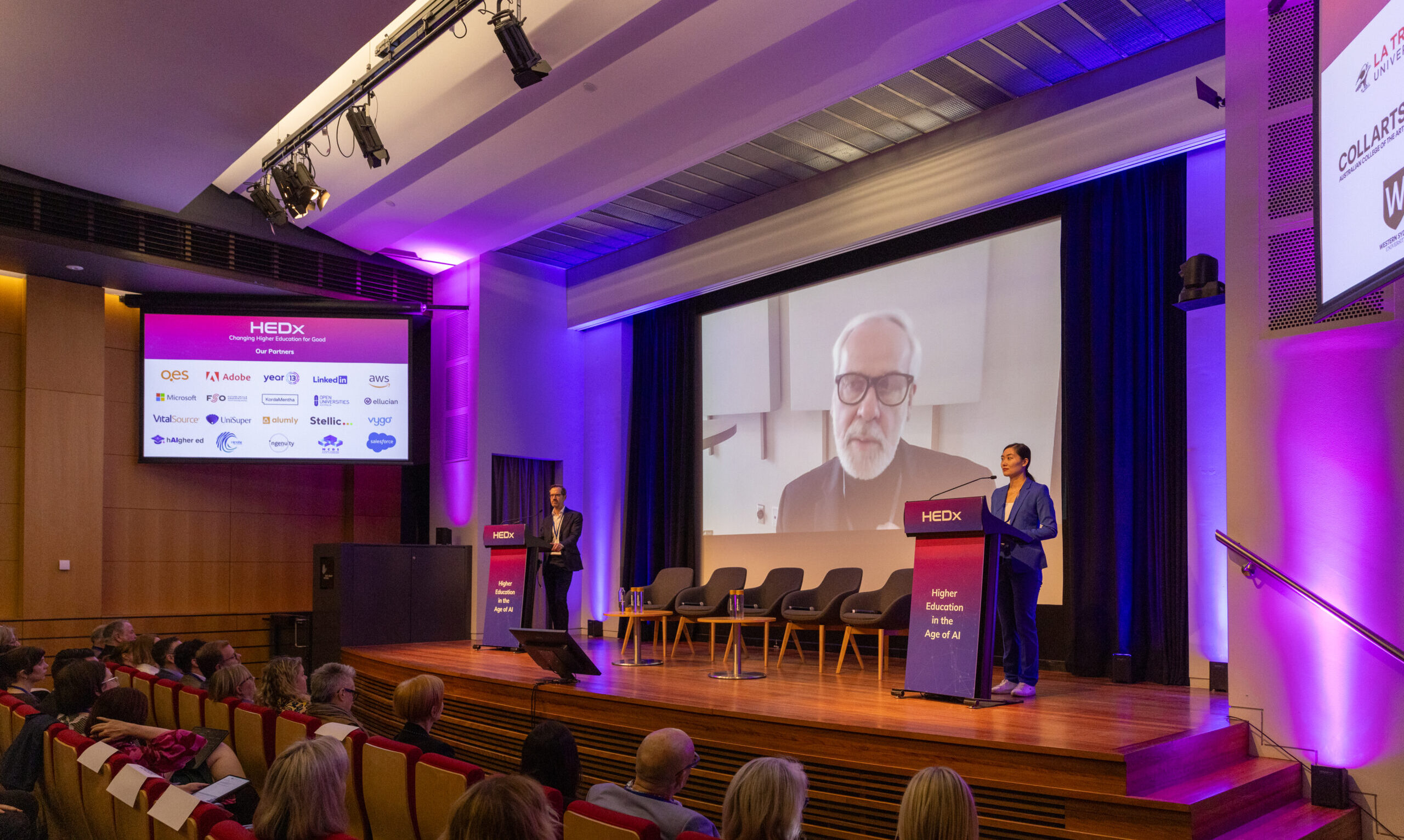
    La Trobe University vice-chancellor Theo Farrell and VC Fellow Susan Zhang quizzed Southern New Hampshire University president Paul LeBlanc about artificial intelligence (AI) at the latest HEDx conference in Melbourne.

    Please login below to view content or subscribe now.

    Membership Login

    Source link

  • UniSQ to cut 259 jobs after all other Qld, WA universities post surpluses – Campus Review

    UniSQ to cut 259 jobs after all other Qld, WA universities post surpluses – Campus Review

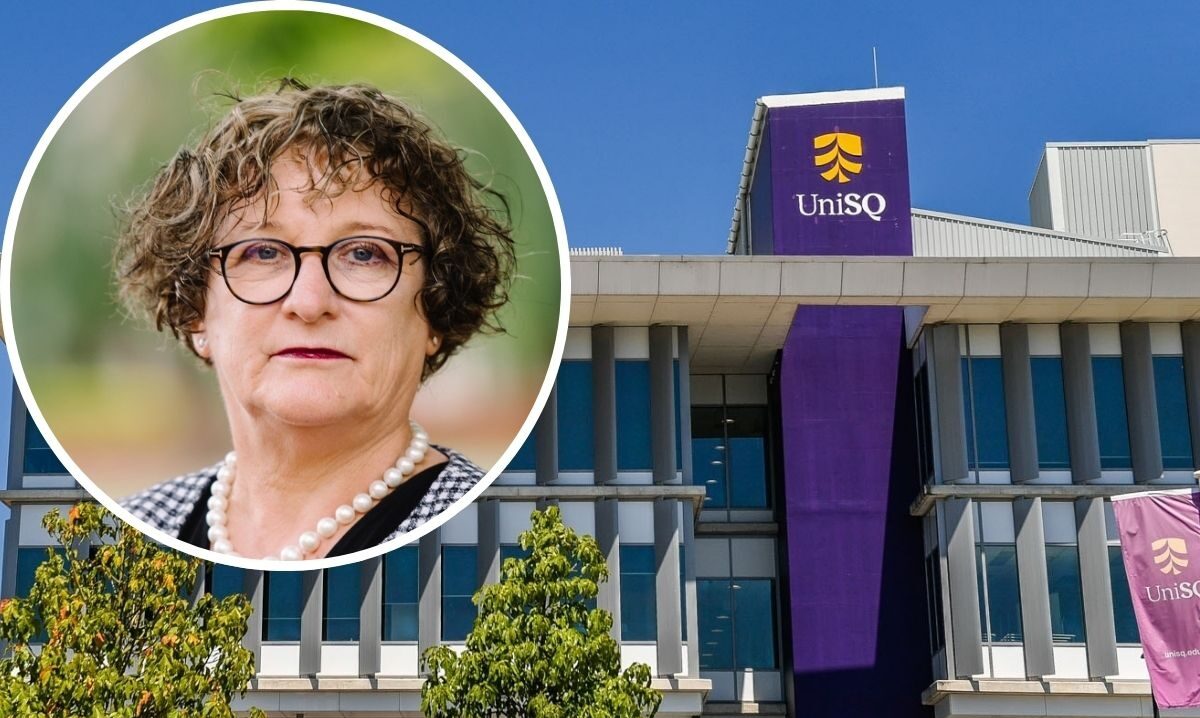
    The University of Southern Queensland (UniSQ) will shed 259 jobs to plug a multi-million dollar budget hole despite all other Queensland universities reporting a 2024 surplus.

    Please login below to view content or subscribe now.

    Membership Login

    Source link

  • UTS is showing how to achieve student equity now, not in 2050 – Campus Review

    UTS is showing how to achieve student equity now, not in 2050 – Campus Review

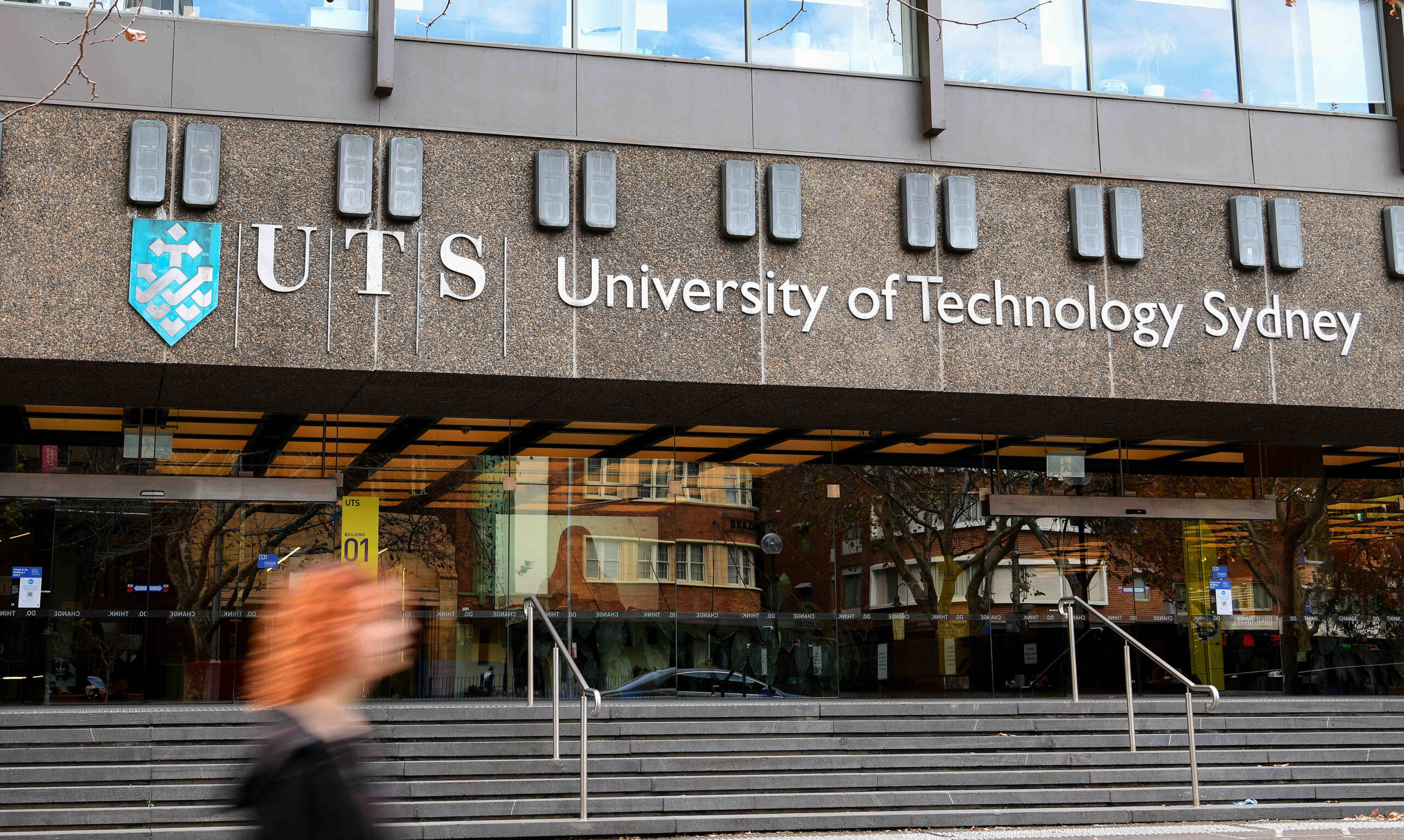
    The University of Technology Sydney (UTS) has taken bold steps to reach its own equity targets in a time when sector voices are calling on institutions to take action.

    Please login below to view content or subscribe now.

    Membership Login

    Source link

  • Northwestern, Cornell Face Federal Funding Freeze

    Northwestern, Cornell Face Federal Funding Freeze

    The Trump administration is freezing more than $1 billion in federal funds at Cornell University and $790 million at Northwestern University—the latest colleges to see their federal grants and contracts threatened, The New York Times reported Tuesday, citing anonymous officials.

    The affected funds will include money from the Agriculture, Defense, Education and Health and Human Services Departments. The Times didn’t say why those universities were losing the money aside from noting that both institutions are facing civil rights investigations related to alleged antisemitism on campus. In recent weeks, Northwestern has sought to highlight its efforts to combat antisemitism, which include policy changes and mandatory antisemitism training for students, faculty and staff.

    However, the administration can’t legally pull funding from colleges for civil rights violations until after a lengthy process that’s supposed to include notice to Congress and the opportunity for judicial review. Still, the Trump administration has used other avenues—which some experts say are illegal and are the subject of legal challenges—to cut off money. They include tapping a task force to investigate colleges and targeting their grants and contracts. The task force is currently reviewing Harvard University’s federal funding, which totals $9 billion, and has demanded several changes in order for the college to continue receiving money.

    “This was wrong last week, it is wrong this week, and it will be wrong next week,” said Ted Mitchell, president of the American Council on Education.

    Jon Yates, a Northwestern spokesman, said the university learned via the media about the freeze, which would affect “a significant portion of our federal funding.”

    “The University has not received any official notification from the federal government,” Yates wrote in an email to Inside Higher Ed. “Federal funds that Northwestern receives drive innovative and life-saving research, like the recent development by Northwestern researchers of the world’s smallest pacemaker, and research fueling the fight against Alzheimer’s disease. This type of research is now at jeopardy. The University has fully cooperated with investigations by both the Department of Education and Congress.”

    Cornell didn’t respond to an Inside Higher Ed request for comment.

    The American Jewish Committee on Tuesday warned the Trump administration against making dramatic cuts to universities’ funding, adding that such a step should be a last resort.

    Colleges That Have Lost Federal Funding So Far:

    Ryan Quinn contributed to this report.

    Source link

  • This is what greater collaboration between further and higher education in England should look like

    This is what greater collaboration between further and higher education in England should look like

    With the UK government’s focus on opportunity as part of its mission-led approach, ensuring equitable access to higher-level skills development and training must be prioritised across all education sectors.

    To address skills shortages and support social mobility, high-quality, place-based solutions must be embedded within a cohesive tertiary landscape. College-based higher education plays a pivotal role in this system, not as a second-tier option, but as an essential component of the HE ecosystem.

    For the many people who cannot (or choose not) to leave their local area due to financial constraints, work or family commitments, higher education must remain a viable and accessible option. This means providing alternative, innovative pathways that allow individuals to develop higher level skills within their communities.

    Many institutions are committed to social justice, but existing policy structures, funding mechanisms and an emphasis on market competition between higher education institutions and further education colleges weakens local partnerships and impedes the development of inclusive pathways into higher education. Further education and higher education share a civic mission to deliver skills and education which drives social mobility and economic growth. To fulfil this mission, institutions must shift from competing for students and funding, to collaborating meaningfully to widen participation and create an inclusive HE system.

    Sharing knowledge

    Collaboration must extend beyond student recruitment strategies to include shared resources, further co-developed curricula and the integration of expertise between institutions. An example of this is the partnership between Loughborough University and Loughborough College, where both institutions work together to enhance provision rather than compete. This collaboration includes the sharing of facilities and staff expertise, ensuring delivery of high-quality education with clear progression routes, while successfully addressing regional skills needs.

    However, to be sustainable and effective partnerships must be structured equitably. Each institution must be valued and respected for its unique strengths and share a clearly defined ambition for learners. True partnership requires trust, ensuring that both HE and FE partners collaborate as equals, aligned to their strengths.

    Government policies must actively incentivise collaboration rather than perpetuate competition. This requires:

    • Revised funding models; rewarding collaboration instead of duplication of provision
    • Integrated quality assurance frameworks; streamlining oversight to prevent excessive bureaucracy and misaligned standards
    • Regional skills planning; aligning provision with workforce needs through engagement with combined authorities, local enterprise partnerships and other education providers including schools and multi-academy trusts.

    Further education colleges and higher education institutions have different but complementary knowledge and expertise. The government’s recent announcement to invest £600 million into construction training underscores its recognition that FE colleges are well placed to deliver high-quality technical education at scale. The plan to establish ten new technical excellence colleges builds on the success of institutes of technology, where FE institutions take the lead in delivering skills training, supported by higher education institutions and employers.By reinforcing the central role of FE colleges, the government is acknowledging their deep-rooted connections to local economies and their ability to respond flexibly to employer needs.

    It is this strong employer engagement that is crucial to a responsive tertiary system. FECs excel in building industry connections and adapting swiftly to workforce demands. Integrating HE institutions into these partnerships expands progression routes, ensuring access to technical training and advanced/professional qualifications. This is particularly critical in sectors facing acute skills shortages, such as digital technology, green industries and STEM. Joint curriculum development between FE and HE, informed by employer needs, ensures that students acquire both theoretical knowledge and the practical skills required in their chosen fields.

    Flexible pathways

    Ensuring accessible education also requires more flexible, modular learning pathways, particularly for adult learners balancing study with work and family. Colleges and universities alike are seeing an increase in students struggling with mental health challenges, which can impact attendance and academic performance. More comprehensive wrap-around student support, together with flexible and locally delivered learning plus adaptable timetables, are already helping to improve student retention and achievement in many further education colleges.

    However, rigid funding structures often restrict more flexible modular approaches to delivery. Effective funding adjustments are needed to support lifelong learning, allowing students to build qualifications, including sub degree provision progressively rather than committing learners to long-term study upfront.

    While collaboration is the logical and necessary path forward, inequitable funding remains a real barrier. Universities receive significantly higher per-student funding than colleges, despite the crucial role colleges play in delivering higher-level skills. Addressing this financial imbalance is essential if colleges are to deliver, sustain and expand high-quality Level 4 and 5 provision, particularly in sectors critical to economic growth.

    A more integrated tertiary system is needed, one that values the contributions of colleges, universities and other providers without unnecessary division. If done right, this will result in win/win for all students, employers and providers. This is not about merging the sectors but making collaboration the norm, underpinned by policy that prioritises partnership over competition and facilitates local, equitable access to high level skills and development.

    Debbie McVitty’s recent article on evolution vs. transformation in higher education is highly relevant to thinking through the future for place-based partnerships. While some advocate radical change, others prefer an evolutionary approach that builds on existing strengths. In FE and HE collaboration, enhancing partnerships, refining policies and expanding successful local models is more practical. This would enable more cost-effective delivery of skills and knowledge, while ensuring resources are not wasted on competition for students. Given the financial strain so many providers are currently under, this would be hugely beneficial.

    With genuine collaboration and more equitable funding, we can build a better-integrated, place-based higher education system that widens access and drives economic growth – advancing social mobility and regional prosperity.

    Source link