Armstrong led Columbia for seven tumultuous months.
Photo illustration by Justin Morrison/Inside Higher Ed | Sirin Samman/Columbia University | Anna Moneymaker and Spencer Platt/Getty Images | mirza kadic/iStock/Getty Images | Ryan Quinn/Inside Higher Ed
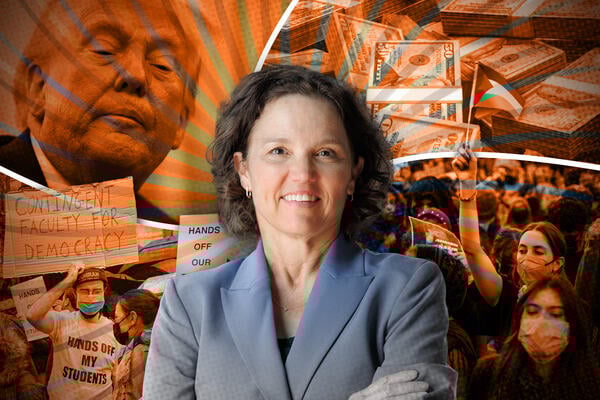
After stepping down as interim president of Columbia University late last month, Katrina Armstrong will take a sabbatical from Columbia’s Irving Medical Center, where she has served as chief executive officer since 2022, the institution announced Sunday in a brief statement.
Armstrong is taking a sabbatical to spend time with her family, the university noted.
Armstrong’s acquiescence to the Trump administration sparked concerns among many Columbia faculty members and others in higher education who wanted to see the university fight back. The Trump administration has not restored the frozen funds but has voiced approval of the changes.
Columbia announced the sabbatical the same day that the Washington Free Beacon, a conservative news outlet, published a transcript of a deposition Armstrong gave to the Department of Health and Human Services as part of the ongoing civil rights investigation into the university.
In the transcript from the April 1 deposition, Armstrong responded multiple times that she had “no memory” of various antisemitic events alleged to have occurred at Columbia.
Armstrong also seemed fuzzy on the changes she enacted in response to Trump’s demands.
“Did you do anything as the interim president to implement these recommendations?” asked Sean Keveney, acting general counsel at the Department of Health and Human Services.
Armstrong responded that she had “stood up against all forms of harassment and discrimination, including antisemitism. While the last year is very much a blur … the administration is deeply committed to addressing antisemitism,” she said, adding that she would “need to look at specifics.”
Armstrong also expressed uncertainty about whether or not she had reviewed a letter from the General Services Administration stating that Columbia’s funding was under review, responding that she had received what “feels like dozens of letters,” some of which had multiple signatories.
“Do you remember a point in the last month when the federal government stopped funding to the University of Columbia?” a government official asked, incorrectly stating the institution’s name.
“I think I would have to understand more specifically what you’re referring to,” she responded.
Armstrong’s lack of recollection seemed to prompt frustration.
“I guess I’m just trying to understand how you have such a terrible memory of specific incidents of antisemitism when you’re clearly an intelligent doctor?” Keveney asked Armstrong at one point.
That question and a related one drew objections from Columbia’s legal counsel.
In other parts of the deposition, Keveney pressed Armstrong on whether she walked back an agreement to clamp down on masks at protests. While Armstrong enacted certain changes that would require protesters to remove their masks when asked to do so by university officials, she reportedly downplayed the notion of a ban on face coverings in a meeting with faculty members last month.
“Isn’t it true that in private with the faculty, you backed away from what you said the university was going to do?” Keveney asked, referencing a faculty meeting held on Zoom in late March.
Armstrong denied doing so, citing a public statement after that meeting that reiterated her commitment to the agreement with the Trump administration. She told the HHS attorney, “I have been and remain and have always been fully committed to the steps in that statement.” She added that those steps “are the right thing to do for Columbia” and for its students.
The deposition also revealed the challenges she faced on the job in recent months.
“It’s obviously been an incredibly difficult period for me, for the university,” Armstrong said in one of multiple responses that showed the immense pressure she was under as interim president.
Columbia’s Board of Trustees responded to Inside Higher Ed’s request for comment on the latest news about Armstrong with a statement that read, “Columbia University is firmly committed to resolving the issues raised by our federal regulators, with respect to discrimination, harassment, and antisemitism, and implementing the policy changes and commitments outlined in our March 21st letter. This testimony does not reflect the hard work undertaken by the University to combat antisemitism, harassment, and discrimination and ensure the safety and wellbeing of our community.”
Columbia’s medical school will continue under interim leadership, which has been in place since Armstrong assumed the interim presidency. Columbia also has a new interim president in place: Last month the Board of Trustees elevated fellow member and co-chair Claire Shipman to the role.
The academy is facing a crisis of confidence. Where shared governance once nurtured robust debate and institutional progress, a climate of fear is taking hold, stifling dialogue and endangering the very mission of higher education. Decision-makers, ensnared in an atmosphere marked by uncertainty, are both terrified to act and paralyzed by inaction. They are troubled by a well-orchestrated effort that seeks to fundamentally alter higher education, forcing the sector into a state of existential terror for the foreseeable future. Consequently, we are witnessing a shift from shared governance to scared governance, and the consequences are profound.
At present, presidents seem to be thunderously quiet, boards approach critical issues with trepidation and faculty members feel suppressed in their teaching and research. The insidious costs of these constraints—the lost opportunities, the stifled innovation, the further erosion of trust—are staggering. These costs must be exposed to public scrutiny, as they are not confined to higher education. The repercussions of external intrusion will manifest in every facet of our society.
Governing boards—guardians of institutional mission and values—must recognize the gravity of this moment. This isn’t simply about diversity, equity and inclusion, though the attacks on DEI initiatives are a major part of the problem. This is about institutional independence, the freedom to pursue knowledge and the very DNA of our nation’s colleges and universities. Too often board members have permitted faculty or presidents to take the lead in governance and have used shared governance as an excuse, explanation or cover for their own lack of involvement. They have successfully hidden in plain sight.
Governance, however, is not a spectator sport. Boards have to champion the preservation of institutional independence and recognize that inaction under the guise of shared governance is still inaction. They cannot afford to be passive observers, expecting others to shoulder the burden of defending the institution’s core values while they remain detached. This is not a middle school group project; everyone has to participate or we will all fail the assignment.
The responsibility falls on governing boards to work with presidents to answer (clearly and immediately) some key questions:
What principles defined our institutions before the current political climate?
Do we still stand for these principles? If so, how can we hold fast to them now?
What price are we willing to pay to uphold those foundational values?
If we abandon our values now, what remains of our institutional identity?
Autonomy is not merely a privilege; it’s the bedrock of our academic mission. It is not only our institutional independence at stake, but our very integrity.
Many boards, understandably, are hesitant to address these challenges directly. But silence and inaction are not options. Board members are the ultimate arbiters of their institutions’ destinies. It is time to abandon the narrow focus on isolated initiatives and confront the broader, systemic assault on academic freedom and institutional autonomy. Board leadership will determine how we navigate this defining moment.
Boards of trustees are the protectors of institutional values. They carry the legacies of their institutions forward. If they fail in this duty, the consequences may be irreversible. While other higher education decision-makers respond to executive orders, policy shifts and legal rulings, the board’s role is clear and unchanging. The only uncertainty is whether members will fulfill their responsibilities in alignment with the institution’s mission.
The future of higher education depends on boards of higher education. The 1966 Statement on Government of Colleges and Universities makes it clear that “The governing board has a special obligation to ensure that the history of the college or university shall serve as a prelude and inspiration to the future … When ignorance or ill will threaten the institution or any part of it, the governing board must be available for support. In grave crises, it will be expected to serve as a champion.”
Board members: This is that moment. Your institutions—and the public they serve—are waiting for you to lead. The future of higher education depends on your courage, your convictions and your willingness to champion the values upon which your institutions were built. Will you rise to the occasion? We need you now more than ever.
We’ve recently made some suggestions for concrete actions trustees and senior leaders of institutions can take immediately to advance the great work higher education does while partnering with good-faith collaborators to address the field’s challenges. For those boards that want to be proactive and not just reactive, here are a few ideas.
One key action is to highlight the implications for resources. A public, transparent review of the university’s budget should explicitly showcase areas under threat—like research and DEI programs. To take this further, institutions could consider reallocating funds from traditionally “untouchable” areas, such as athletics, to fortify initiatives focused on inclusivity and academic freedom. Publicly challenging politicians to justify cuts in the face of these demonstrated priorities could push the conversation beyond rhetoric.
Fundraising strategies also need reimagining. Universities could launch targeted campaigns specifically designed to offset federal funding cuts and support programs under siege. A bolder approach might frame these efforts as “impact investments,” emphasizing the societal returns on supporting research and DEI. This reframing could inspire donors who care deeply about the university’s role in shaping a more equitable future.
Equally important is stressing the human cost. Universities should conduct and publish comprehensive reports that quantify the real-world consequences of funding cuts—measuring lives impacted, medical treatments delayed, rising attrition rates and mental health issues among students and staff. Presenting these findings to legislators and the public forces a direct reckoning with the human toll of these policy decisions. The facts, laid bare, can speak louder than fear.
Finally, institutions must build collective strength through research consortia. By forming inter-institutional partnerships to pool resources and expertise, universities can ensure the continuation of vital research projects at risk. A more assertive stance could position these consortia as a direct counter to political interference, underscoring the importance of academic inquiry free from external pressure.
The path forward is clear: Governing boards must lead with transparency, strategy and courage. Higher education’s survival—and its ability to serve the public good—depends on it.
Raquel M. Rall and Demetri L. Morgan are co-founders and co-directors of the Center for Strategic & Inclusive Governance. Rall is an associate professor and associate dean of strategic initiatives in the School of Education at the University of California, Riverside. Morgan is an associate professor of education at the University of Michigan’s Marsal Family School of Education, within the Center for the Study of Postsecondary and Higher Education.
James Clark is a Managing Director at Interpath Advisory, the UK’s largest independent Restructuring and professional advisory firm. James is co-lead of Interpath’s Education Team and has advised on over 20 mergers and potential mergers in the FE and HE sectors. In this blog, James explains 10 things universities can learn from mergers in the FE sector.
Few people connected with the sector would contest that higher education institutions are coming under increasing pressures: a reduction in overseas students due to visa changes, inflationary pressures caused by macroeconomic factors and government policy, increased competition via alternative routes for 18+ students and plain and simple population patterns.
Many of these headwinds were experienced by further education (FE) colleges not that long ago, and many would agree these have not vanished completely. The Area Review process, led by the FE Commissioner, sought to remove inefficiency across sixth forms and colleges – as this author would put it (admittedly in crudely simplistic terms) – by taking colleges that are half full, removing excess capacity and leaving fewer college groups which are full. Is it time for higher education (HE) to follow suit? Is it inevitable that HE will do so, though perhaps not on the scale seen in the Area Review process? Should we be seeing more mergers, more economies of scale, and more collaboration to navigate the gales?
I’m not suggesting FE and HE are directly comparable. But they are both in the business of education, both have people at the heart of their institutions (on a major scale), both manage big cost bases and both suffer from similar issues around competition and government policy. So are there things that higher education institutions can learn from a major upheaval started in FE in 2015?
10 things we can learn from FE mergers
Are the cultures of the merging institutions aligned? One of the major obstacles to mergers (which either create an upfront barrier or mean that post-merger difficulties arise) is that the institutions have very different values and cultures. Existing relationships may help parties understand whether they are a good fit for each other. Management teams contemplating mergers would help themselves by reaching out and starting a dialogue or by increasing the frequency of their catch-ups.
Understand the regulatory landscape. Navigating the regulatory landscape and remaining compliant with educational policy is complex and will be breaking new ground for many management teams. Knowledge of precedents and other case studies will be helpful. Advisor relationships are helpful here. A number of advisors, both in the financial space and legal space, emerged as market leaders during the Area Review process.
Understand your stakeholders and take them on a journey. Banks, governing boards, the Department for Education, the Office for Students, pension scheme trustees. Do not underestimate the different angles each will be coming from. Each will want to know ‘what’s in it for me?’ and care will be needed to ensure each stakeholder feels supported by the merger. Poor communication and a lack of engagement could lead to opposition and unwanted obstacles.
Agree a governance structure at an early stage. Effective and committed leadership is essential for a smooth transition. Conflicts in governance will create unnecessary barriers from the off. Successful mergers I have worked on have had Chairs who have worked together from the off – being like-minded, especially in the desire for success, to leave a legacy and preserve for the next generation has been key,
Grip & Control. Create a steering committee. Set milestones and deadlines and be held to account. Clearly identify what’s on the critical path. If planned well, mergers typically happen on 1 August. Delays to the process could see management teams having to manage critical parts of the merger in term time. Many of the mergers I have worked on have had turnaround directors managing the process.
Don’t assume the plan ends on day 1 of the merger. A 100-day post-integration plan will also be required, with dedicated resource to deliver operational control, as well as the expected benefits of the merger. Failure to plan for this could result in significant operational disruption, for example, if administrative, curriculum support, and IT systems need to be merged. The Area Review process made the 100-day plan part of its requirement for merger support.
Clearly understand the rationale for the merger. Educational improvement? Cost savings? Revenue protection? This may then determine your chosen merger partner.
Crunch the numbers and make sure it stacks up financially. Exploring and delivering a merger will not be cheap, with significant input from legal and financial advisors required, both before, during, and post-integration. Ensuring tangible benefits can be secured from a merger is crucial. Again, those successful mergers involved specialist financial personnel, often interims with expertise in education, to examine the potential benefits prior to the merger.
First mover advantage. Don’t leave it too late to determine that a merger is right, or even essential to your survival. Be front-footed – the more time given over to the proposed merger, the smoother the process will be, and the more optimal the decisions made.
A merger might not be right, but other structures may be available. Whilst a number of FE institutions decided to abandon merger plans, this gave the institutions time to properly examine their long-term strategy, their cost base, and other potential “alliance-type” shared services models.
Some would argue that the FE mergers have provided an opportunity for a reset, benefitting from a huge Government funding pot. Many (and not without great leadership) have successfully turned around the fortunes of financially and educationally stumbling colleges.
One beacon that shines for me, which I had the pleasure of supporting, is the merger of Telford College of Arts and Technology and New College Telford. Within a short period of time, its financial health was upgraded to Outstanding, and its Ofsted upgraded to Good. A remarkable turnaround and testament to a focused and forward-thinking management team and governing body that, when faced with the task, grabbed it with both hands and drove it hard.
On a Monday morning in late March, ninety strangers sit down together at the base of one of the towering pillars of glass and steel that pierce the spring blue skies of the City of London to talk about collaboration.
This was no ivory tower. At mixed tables across the room sat the emissaries of universities old and new, adult community colleges, specialist institutes and industry training centres – awarding providers, teaching providers, and sector bodies too.
Partners for the day, they heard from sector experts about the latest developments in the policy and practice of academic partnerships and then translated what they learned into their own institutional context through lively and productive small group discussions.
You might think that the previous day’s headlines would not have made for the most auspicious backdrop to proceedings, but if anything they instilled in the participants of IHE’s first annual Academic Partnerships Conference a clarity of purpose and an impassioned defence of the genuine importance and transformational value of high-quality collaborative provision.
Not all partnerships! The silent cry went up. And not all franchises either.
The value of partnership
Let’s be absolutely clear: academic partnerships are nothing new in higher education. England’s oldest universities – Oxford, Cambridge, London – are themselves nothing less than partnerships in motion, organisational structures evolved to facilitate collaboration across a number of independent self-governing institutions. Academic partnerships have remained the irresistible engine for the expansion of the UK’s higher education sector, driving wider access, greater diversity and more innovation in provision even while the specific models have continued to adapt to changing contexts and circumstances.
Today, fantastic examples of successful partnerships can be found everywhere you look and they can just as easily take the form of a validation agreement as a subcontractual relationship (aka franchise). While Degree Awarding Powers rightly remain a gold standard, many independent higher education providers would rather dedicate their precious time and focus towards the teaching, learning and industry knowledge exchange that forms the heart of their missions.
Partnerships should be prized and protected for their essential role in delivering higher education provision which responds to local, national and sector-specific needs. Let’s not forget that different groups of students with different backgrounds and different learning goals benefit enormously from higher education delivered through partnerships. We ignore their needs at our peril.
So everything is really fine? Move along, please, nothing to see here? Not quite. At IHE we are under no illusions that everyone in our sector has the same good intentions. It can be all too easy for those of us who work in higher education to believe that we are immune to some of the problems that rear their heads in other sectors. Sadly not. Education is a public good, a universal good, an elemental ingredient of civilisation, but this truth can make us naïve, obscuring the loopholes that still exist and the risks that operating in such an open system built on trust can create.
Regulating partners
IHE shares the Government’s ambition to strengthen oversight of subcontracted delivery that underpins DfE’s proposals but the proposals themselves miss the mark, as set out in our response to the consultation. If we are serious about doing this, then there are five areas of focus to which we must turn our collective attention – and fast:
due diligence on every provider’s suitability as a partner, and the fitness and propriety of their management and governance;
transparency on ownership and the terms of any contract for provision;
accountability which is clearly assigned between each partner for the critical aspects of provision;
qualityandstandards which are managed effectively by the relevant partner at the appropriate level; and
flexibility in any oversight process so that we continue to facilitate the full range of diverse providers with something different to offer the higher education sector.
The absolute and non-negotiable starting point for an effective regulatory system must be that the regulator knows who is really in charge of every provider it regulates, and to be able to hold them to account. Ambitions aside, the OfS needs to be far more effective at identifying and keeping out individuals who are simply not fit and proper persons to share in the honour and responsibility of stewarding an English higher education institution.
Thankfully, the OfS proposals under consultation to strengthen its conditions of registration in relation to governance and student protection signal a new seriousness in its approach to this challenge – and are long overdue. The regulator is on the right track with its plans to take a much closer look at ownership, and in trying to identify unfair and inappropriate practices in relation to student recruitment and admissions.
Any institution in the business of academic partnerships should be taking a close look at these reforms. These are issues that are important to everyone with a stake in the success of the higher education sector. It is in the entire sector’s interest, in the public interest – and nobody’s more than students’ – that the regulator carves out a constructive and collaborative role for itself in this space, helping to facilitate the positive impact of partnerships while minimising the risk of criminal elements exploiting vulnerabilities in the system.
Rethinking registration
But could the OfS go further? What if there was a new approach to registration? A category explicitly intended for providers operating in partnership, designed to fill the gaps in oversight that universities cannot on their own, while letting them lead on the academic quality assurance that is their forte. A process built from the ground up to secure the most essential assurances, that can be proportionately applied to different sizes of institution, and efficiently delivered against clear timetables and stretching service standards.
A paradigm shift towards expecting every would-be delivery partner to complete such a due diligence process could, at a stroke, drive up standards of transparency and ethical behaviours, and better protect genuine students and the public purse from the threat of academic predators. Only a statutory regulator can really achieve this, with its access to intelligence from other public authorities. There is no reason why an awarding institution would not require a potential delivery partner to undertake this process prior to approving their first course. Indeed a centralised due diligence process delivered efficiently at scale could be used to streamline and speed up a partner’s own institutional approval processes.
At the same time we in the sector’s leadership should be working at pace with all stakeholders on the development of a better shared understanding and greater mutual agreement over what constitutes the most effective policies and practices in partnership provision. The absence of sector-wide standards or accepted best practice in this area, combined with higher education’s generally held principles of transparency being too often trumped by commercial sensitivities, are what has allowed pockets of poor practice and a risk of exploitation by bad actors to grow unchecked by effective regulation.
Simply requiring providers of an arbitrary size to register with the OfS without any critical analysis of the proportionality or effectiveness of current regulation will not achieve our aims and could easily make matters worse. Even the failure of one significant delivery partner to pass the ill-fitting regulatory hurdles set under the current proposals – let alone, say, a dozen – would create extreme jeopardy for thousands of students and place the system as a whole under unbearable pressure. We will sleepwalk into this situation if we do not change course.
It would be far better to make awarding institutions properly accountable for the policies, practices and performance of their delivery partners now, while giving them the regulatory tools to help them achieve more effective oversight, than to create a new Whitehall bureaucracy with a single point of predictable failure as DfE’s proposed designation gateway does. Far better to create a dedicated process focused on a deeper due diligence which properly accounts for the actual strengths, vulnerabilities and diversity of partnership models.
Academic partnerships are here to stay. A flexible, proportionate and efficient process which applies regulatory scrutiny where it is most needed can offer a foundation for sector-led efforts to enhance the quality, transparency and consistency that students should expect.
We all have a part to play. And we need to get this right. It is essential for the reputation of the higher education sector that we do. As partners in this collective endeavour, it is time for us to shine a light on this invaluable work that has spent too long in the shadows.
Effective higher education fee management maximizes revenue, reduces losses, and builds confidence with students and parents. However, 65% of institutions lose money owing to obsolete, manual processes (EDUFinance 2024). This is where student fees collection software shines.
Let’s look at 10 data-driven strategies to improve student fee collection software for transparency and efficiency.
Why Modern Student Fees Collection Software Matters
Did you know 37% of college finance teams track fees using spreadsheets, which can lead to errors and miscalculations (Campus Finance Survey, 2024)? Student finance cloud technologies automate complex operations, reduce manual errors, and offer a transparent, real-time financial environment.
How colleges can improve financial transparency in fee payments? 10 proven ways.
1. One seamless student registration and data sync
Create comprehensive student profiles automatically matched with student information systems (SIS) including demographic data, course information, and financial details. Institutions running linked data systems report 23% faster fee processing.
2. Clearly structured fees
Fee breakdowns cause 48% of parents to argue (EdTech Insights, 2023). Flexible fees per department, course, or service offer upfront transparency and easier payments.
3. Channel-wide fee collection automation
Students prefer mobile payments 72% (Higher Ed Payment Trends, 2024). Make websites, mobile apps, and self-service portals accept rapid payments. Automated schools collected fees 27% faster and missed 15% fewer.
4. Fine automation, absenteeism tracking
Establish absenteeism and late payment penalties. Automation has reduced fee defaulters by 19% and ensures regular sanctions without manual follow-up.
5. Role-based security to protect finances
Role-based access control is non-negotiable even if 63% of higher education institutions report financial intrusions (EduCyberReport, 2024). Minimizing fraud and mistakes, only authorised staff should handle fee data.
6. Parent portals for real-time fee visibility
Parents demand more financial participation in their children’s education (82%, ParentPulse Survey, 2024). Parents receive transparent information regarding dues, invoices, and payment schedules via a portal, decreasing late payments.
7. Automatic fee calculations for billing free of errors
Errors in manual fee computation affect institutions’ annual income up to 4%. Calculate fees automatically using pre-defined criteria to guarantee correct, current billing for every student.
8. Waivers, fee concessions, and flexible payment options
Offer waivers, discounts, and flexible payment arrangements without any confusion on the back end. Supporting financially challenged students with structured payment plans resulted in 12% higher retention rates for colleges that have implemented this approach.
9. Automatic fee reminders for on-time payments
According to EduFinance Insights (2024), overlooked reminders account for 43% of late payments. Send automated fee reminders via email, SMS, and push notifications to significantly reduce the number of late payments.
10. Real time financial transparency reports
Access transaction history, income breakdowns, and outstanding amounts instantly. Real-time reporting improved financial forecasting and reconciliation for 89% of finance directors.
The Bottom Line: Future-Proof Your Fee Management with Creatrix Campus
Why let outdated processes drain your institution’s revenue? With Creatrix Campus Fee Management Software, higher education institutions can achieve:
Faster fee collection with automation and mobile payments
Enhanced financial transparency for students, parents, and administrators
Stronger security with role-based access and encrypted data
Real-time insights for smarter, data-driven financial decisions
Ready to transform your fee collection process? Let Creatrix Campus help you boost efficiency, ensure transparency, and future-proof your institution’s financial operations.
Great news: UConn School of Medicine administrators are going scalpels down on the school’s attempt to forcibly transplant politics and ideology into its incoming student body.
In 2022, UConn finalized its own version of the Hippocratic Oath, which includes a promise to “actively support policies that promote social justice and specifically work to dismantle policies that perpetuate inequities, exclusion, discrimination and racism.” Most recently, UConn required the incoming class of 2028 to pledge allegiance not simply to patient care, but to support diversity, equity, and inclusion.
In January, an admissions staff member at the medical school told FIRE that the oath is mandatory for students. That’s a problem because, as a public university, UConn is strictly bound by the First Amendment and cannot compel students to voice beliefs they do not hold.
Concerned about this and similar cases, FIRE wrote the UConn School of Medicine on Jan. 31, calling on the school to make clear that students have every right to refuse to pledge allegiance to DEI.
We got back radio silence.
After following up via email, we finally got some good news from UConn. The school’s communications director clarified, “UConn’s medical school does not mandate nor monitor a student’s reciting of all or part of our Hippocratic Oath, nor do we discipline any student for choosing to not recite the oath or any part of it.”
Public institutions have every right to try to address any bias that might impact medical education. But forcing med students to pledge themselves to DEI — or any other political ideology — is First Amendment malpractice. They have no more right to do so than they do to force students to pledge allegiance to a political figure, or to the American flag.
In the landmark 1943 case West Virginia State Board of Education v. Barnette, the Supreme Court held that students could not be forced to salute the American flag, saying, “If there is any fixed star in our constitutional constellation, it is that no official, high or petty, can prescribe what shall be orthodox in politics, nationalism, religion, or other matters of opinion or force citizens to confess by word or act their faith therein.”
In the medical context it gets even worse, as these nebulous commitments could become de facto professionalism standards, with students facing punishment for failing to uphold them. (After all, they took an oath!) What, exactly, must a medical student do to “support policies that promote social justice?” Presumably, that would be for UConn to determine. And if a student disagrees with UConn’s definition of “social justice” or chooses not to promote it in the prescribed way, could she be dismissed for violating her oath?
FIRE has repeatedly seen administrators of professional programs — including medicine, dentistry, law, and mortuary science — deploy ambiguous and arbitrarily defined “professionalism” standards to punish students for otherwise protected speech. It’s no stretch to imagine it happening here as well.
UConn isn’t alone in making changes to its version of the Hippocratic Oath. Other prestigious medical schools, including those at Harvard, Columbia, Washington University, Pitt Med, and the Icahn School of Medicine have adopted similarly updated oaths in recent years. However, not all schools compel students to recite such oaths.
When we raised concerns in 2022 about the University of Minnesota Medical School’s oath, which includes an affirmation that the school is on indigenous land and a vow to fight “white supremacy,” the university confirmed that students are not obligated to recite it.
We’re glad that UConn has now done the same. FIRE celebrates this surgical success, and we won’t stand by while schools try to graft ideology onto student minds.
Fifteen researchers across a range disciplines from the biomedical sciences and STEM to education and political science share their experiences of losing research grants and what impact the loss of billions of dollars in federal funding will have on science, public health and education in Inside Higher Ed today.
The Trump administration told researchers Rebecca Fielding-Miller, Nicholas Metheny and Sarah Peitzmeier that trainings connected to their National Institutes of Health grant focused on the prevention of intimate partner violence against pregnant and perinatal women were “antithetical to the scientific inquiry, do nothing to expand our knowledge of living systems, provide low returns on investment, and ultimately do not enhance health, lengthen life, or reduce illness.”
“We could not disagree more,” Fielding-Miller, Metheny and Peitzmeier write. “Anyone who has cared for a child or for the person who gave birth to them knows that preventing maternal and infant death and abuse should be a nonpartisan issue. The current administration is intent on making even this issue into ‘us’ versus ‘them.’ When it comes to public health, there is no such thing.”
Meanwhile, Judith Scott-Clayton writes that the decision to cancel a Department of Education grant funding a first-of-its-kind randomized evaluation of the Federal Work-Study program—four and a half years into a six-year project—will leave policymakers “flying blind.”
“Since 1964, the FWS program has disbursed more than $95 billion in awards,” Scott-Clayton wrote. “In comparison, our grant was less than three-thousandths of 1 percent of that amount, and the amount remaining to finish our work and share our findings with the public was just a fraction of that.”
Additionally, the Trump administration has variously moved to cancel or suspend research contracts and grants at Columbia University, the University of Pennsylvania and most recently Princeton University as part of punitive actions tied to investigations of campus antisemitism or, in Penn’s case, the decision to allow a trans woman to compete on the women’s swim team three years ago. The administration also briefly froze (and then unfroze) United States Department of Agriculture funds for the University of Maine system after the state’s governor engaged in a tense exchange with President Trump at the White House.
Below, 15 researchers across nine different research areas who have had their federal grants terminated since the start of the Trump administration share just a few of the thousands of stories behind these cuts.
—Elizabeth Redden, opinion editor
Preventing Intimate Partner Violence
Prostock-Studio/iStock/Getty Images Plus
By Rebecca Fielding-Miller, Nicholas Metheny and Sarah Peitzmeier
Each year, more than 3,000 American women are murdered by their partners. Pregnancy and the postpartum period are high-risk periods for intimate partner violence (IPV), which is linked to negative maternal outcomes such as miscarriage, hemorrhage and postpartum depression. Perinatal IPV is also linked to worse infant health outcomes, such as preterm birth and low birth weight, and to adverse childhood experiences. This makes prevention of perinatal IPV crucial not just for the survivor but for the entire family.
Perinatal IPV and its cascade of negative outcomes are preventable—but only if we study the epidemiology and prevention of IPV as rigorously as we study hypertension or any other perinatal complication. A grant rescinded last month by the NIH would have trained a cohort of 12 early-career clinicians and researchers to learn how to study IPV as part of their ongoing research on pregnancy, birth and the postpartum period. We proposed training investigators working in diverse communities across the spectrum of America, with a commitment to including communities disproportionately impacted by IPV and maternal mortality, including Black and LGBTQ+ communities. To solve a problem with constrained resources, it is efficient to focus efforts on where the problem is most severe. While the termination letter named this targeting of training resources an “amorphous equity objective,” we call it a data-driven approach to rigorous science.
Training grants like this one help shift an entire field by giving young investigators the skills and knowledge to add a focus on IPV to their research for the next several decades. In addition to training these 12 young researchers, the grant would have also supported turning the mentorship curriculum we developed into an open-access online training for clinicians and researchers to access in perpetuity, multiplying the impact of the work to train even more investigators in the field. As with the approximately 700 other terminated NIH grants, cutting this work before our aims are realized but after significant costs have been incurred to establish the mentorship team and design the curriculum is the definition of government inefficiency and waste.
With this grant rescinded, none of the promised training will occur. Pregnant people and their babies from every community across America will continue to suffer, without the benefit of advances in the science of how we prevent these violence exposures. Our termination notice claims that the proposed trainings are “antithetical to the scientific inquiry, do nothing to expand our knowledge of living systems, provide low returns on investment, and ultimately do not enhance health, lengthen life, or reduce illness.” We could not disagree more. Anyone who has cared for a child or for the person who gave birth to them knows that preventing maternal and infant death and abuse should be a nonpartisan issue. The current administration is intent on making even this issue into “us” versus “them.” When it comes to public health, there is no such thing. American families deserve better.
Rebecca Fielding Miller is an associate professor of public health at the University of California, San Diego. Her research focuses on health disparities in infectious disease and gender-based violence.
Nicholas Metheny is an Atlanta-area scientist and registered nurse with clinical and research experience in the post-violence care of women and sexual and gender minority communities.
Sarah Peitzmeier is an assistant professor at the University of Maryland School of Public Health who develops and tests interventions to prevent gender-based violence. She is also a practicing birth doula and victim advocate.
Is Work-Study Working?
Okrasyuk/iStock/Getty Images Plus
By Judith Scott-Clayton
On March 7, at 9:49 a.m., I received an email with “GRANT AWARD TERMINATION” in all caps in the subject line. Attached to the email was a letter, addressed to me as project director and referring to our Department of Education grant by its award number. The letter was generic, virtually identical to three other termination letters received that day at the Community College Research Center at Columbia University’s Teachers College, where I am affiliated. It did not mention our project title nor provide any project-specific details to explain why our project, as the email states, “is now inconsistent with, and no longer effectuates, the Department’s priorities.” A few hours later, I received a formal notification that the grant end date was that day: March 7, 2025.
The project—a collaboration with Adela Soliz of Vanderbilt University and Tom Brock of CCRC—was titled “Does Federal Work-Study Work for Students? Evidence From a Randomized Controlled Trial.” The Federal Work-Study (FWS) program was created in 1964 as part of the Economic Opportunity Act and covers up to 75 percent of the wages of college students working part-time in mostly on-campus jobs, with colleges paying the rest. In a typical year, the program provides more than $1 billion in support to more than 450,000 college students with financial need at more than 3,000 institutions all across the country. Several states also have their own similar programs.
Our study would be the first to rigorously evaluate the causal impact of the program on students’ enrollment, employment, persistence and degree completion. We were also conducting interviews, focus groups and surveys to understand how students find FWS jobs, what kinds of work they do, what resources institutions devote to running the program and how much it all costs to operate, all with the goal of ensuring the program is delivering the maximum impact for every single student that participates and for every dollar spent.
At the time of its cancellation, we were about four and a half years into a six-year project. We were right in the middle of randomizing what would be the final cohort of our study sample and fielding the final round of a student survey. This final year is especially important, because the early cohorts were heavily impacted by the pandemic. For the past three weeks, we have been scrambling to pull together any other resources we could find to preserve our options and avoid losing this final cohort of participants. We have also been scrambling to figure out how to continue to pay critical staff and doctoral students involved in the project until we can figure out the next steps.
As for the broader impact of the termination: The Federal Work-Study program itself will keep on going, at least for now; we just won’t know whether it works or not. We hypothesize that it may provide valuable work-based learning opportunities that keep students engaged and give them advantages in the labor market after college, but it’s possible that it distracts students from their studies and hurts their academic performance. We may think that it helps students to afford college, but perhaps the complexity of finding a specific job and navigating all the necessary paperwork reduces its value for the students that need help the most. The next time the program is up for debate, policymakers will be flying blind: Without actual evidence all we can do is speculate.
Since 1964, the FWS program has disbursed more than $95 billion in awards. In comparison, our grant was less than three-thousandths of 1 percent of that amount, and the amount remaining to finish our work and share our findings with the public was just a fraction of that. Our project was motivated by a desire to help policymakers ensure that every dollar invested in financial aid has the maximum possible impact for low-income students. So it is discouraging to learn, so close to the finish line, that this first-of-its-kind evaluation of a major federal program is “now inconsistent with, and no longer effectuates, the Department’s priorities.”
Judith Scott-Clayton is a professor of economics and education at Teachers College, Columbia University, in the Department of Education Policy and Social Analysis, where she directs the Economics and Education Program and teaches courses on the economics of education, labor economics and causal inference.
Democracy Research
AlexeyPushkin/iStock/Getty Images Plus
By Rob Blair, Jessica Gottlieb, Laura Paler and Julie Anne Weaver
We lost funding for the Democratic Erosion Consortium (DEC) as part of the federal government’s recent cancellation of foreign assistance grants. Directed by scholars at Brown University, the University of Houston and American University, DEC works to make academic research on democratic backsliding accessible to policymakers and practitioners seeking evidence-based strategies to defend democracy around the globe.
Originally launched in 2017 on a shoestring budget, DEC began as an effort to improve pedagogy on a troubling trend observable both abroad and at home: the strategic dismantling of democratic norms and institutions by elected leaders with autocratic ambitions. In 2022, in line with the U.S. government’s dual interests in democratic resilience and evidence-based policymaking, we received a grant from the State Department to expand DEC’s work.
The State Department’s investment enabled us to grow our reach beyond the classroom and into the policy arena. We drew on an expanding network of scholars to synthesize evidence on urgent questions—such as how to reduce the spread of misinformation and measure democratic decline. We also built out a novel event data set on democratic erosion and trained partners around the world to use it in their own work.
The immediate consequences are clear: several full- and part-time staff lost funding for their jobs. But the long-term damage is hard to quantify. It’s difficult to argue for the value of evidence-based policymaking in foreign aid when the entire category of foreign assistance has effectively been gutted. More than that, the partnerships we built between academics, practitioners and policymakers were yielding real-time insights and responses—a rare example of successful research-policy collaboration. That infrastructure is now gone.
And at a moment when democratic backsliding is accelerating in many parts of the world, the U.S. government is stepping away from efforts to understand and counter it. Ending this grant not only weakens the ability to monitor democratic erosion globally, it also reduces public awareness and understanding of a phenomenon that is increasingly visible in the U.S. itself.
With the federal policy audience for our work largely gone, we are refocusing our efforts on our other two core constituencies: students and academics. We continue to support instructors engaged in teaching our democratic erosion course and to improve the Democratic Erosion Event Dataset. And in response to growing concern about democratic backsliding in the U.S., we’re developing a more robust domestic data-collection effort, paired with public engagement.
Given intense partisan disagreement around what even constitutes democratic erosion, we are seeking to increase the credibility of new evidence by capturing partisan-diverse perspectives and applying our established comparative framework to U.S. events. We are hoping to continue this work, despite the loss of our federal grant, because the political reality in the U.S. and around the world tells us we need to be worried about democratic erosion now more than ever.
Rob Blair is the Arkadij Eisler Goldman Sachs Associate Professor of Political Science and International and Public Affairs at Brown University.
Jessica Gottlieb is an associate professor at the University of Houston’s Hobby School of Public Affairs.
Laura Paler is an associate professor in the Department of Government in the School of Public Affairs at American University.
Julie Anne Weaver is the research director of the Democratic Erosion Consortium and a lecturer on government at Harvard University.
COVID-19 and Related Immunology Research
peterschreiber.media/iStock/Getty Images Plus
By Matthew Woodruff
On March 24, 2020, I stood in a Biosafety Level 2+ facility at Emory University with six colleagues being taught best practices for working with the largely unknown pathogen, SARS-CoV-2. Other unknowns included where we would get masks (N95s were unavailable), risks of infection to our young kids at home and who would pay for the experiments needed to gain insight into the deadly new virus sweeping across the nation.
That last question was answered relatively quickly. Rapid investment by the first Trump administration’s NIH launched SeroNet, a five-year effort across 25 institutions to “expand the nation’s capacity for SARS-CoV-2 serologic testing on a population-level and advance research on the immune response to SARS-CoV-2 infection and COVID-19 vaccination among diverse and vulnerable populations.” We did just that. Over the coming years, taxpayer dollars funded more than 600 peer-reviewed publications, reflecting significant advances in disease pathology, treatment strategies, disease impact in immunocompromised patients, vaccine testing and more.
Our team at Emory led projects dedicated to understanding the balance between productive and pathogenic immunity in hopes of alleviating disease. We discovered why your immune system sometimes turns on itself in the throes of severe infection, uncovered similarities between the immune responses of chronically autoimmune patients and those who were seriously ill with COVID-19, and documented continued disturbances in patients with long COVID. Importantly, we learned that these responses weren’t unique to COVID-19 and were broadly relevant to human health.
In 2022, I started my own lab founded on those concepts. We have been optimistic that the work we are doing will ultimately serve the American people in our shared desire to live longer, healthier lives.
But over the past months, that optimism has dissipated. Ham-handed targeting of “DEI” awards leaves us unable to understand how diverse human populations might respond differently to infection or develop different kinds of chronic diseases. Mistrust of the same vaccine programs that have halted the spread of measles globally has left us unable to test next-generation vaccines that might provide broad protection against emerging viral strains. And then, on March 24, it was announced that the five-year commitment that the first Trump administration made to our work would no longer be honored. Our COVID-related funding through SeroNet would be halted, effective immediately.
Our fledgling program, a few months ago extremely promising, is now on life support. My lab has invested heavily with our time and limited resources, which are now running thin, into promising new areas of clinically relevant immunology that suddenly look like financial dead ends. The decision to halt entire fields of study in what was previously highly fertile scientific space is as damaging as it is unprecedented, and our lab is left with a business model that is now fundamentally broken.
Matthew Woodruff is an assistant professor of immunology at the Emory University Lowance Center for Human Immunology. His lab studies antibody responses in the context of infection, vaccination and autoimmune disease.
Training Tomorrow’s Biomedical Workforce
Unaihuiziphotography/iStock/Getty Images Plus
By Samantha Meenachand Ryan Poling-Skutvik
On March 21, the NIH terminated our training grant award, which supported the Enhancing Science, Technology, Engineering, and Math Education Diversity (ESTEEMED) program at the University of Rhode Island. The mission of URI ESTEEMED was to increase the preparation of undergraduate students—freshmen and sophomores—to conduct biomedical research, enabling them to succeed in advanced research in preparation to pursue a Ph.D. in STEM. Our ultimate goals were to provide students who were from groups underrepresented in STEM or from disadvantaged economic backgrounds with academic enrichment, research and soft skills development, and a sense of community. NIH claims that our award “no longer effectuates agency priorities” and that it involves “amorphous equity objectives, [that] are antithetical to the scientific inquiry.”
While the language in the termination email itself was derisive and political, the fallout from the loss of this award will be felt for years to come. The state of Rhode Island immediately lost $1.2 million in direct economic activity, and an important workforce development initiative will end, significantly reducing state and regional competitiveness in a growing technological field. Like many other states, Rhode Island has a pressing need for professionals trained in biotechnology, and recruiting people to Rhode Island has often proven to be challenging. This challenge is exemplified by the recent establishment of the Rhode Island Life Sciences Hub with a specific mandate to grow the biotechnology sector in the state.
By contrast, there is a large untapped pool of talent within Rhode Island, who are limited by access to education and training in large part due to the financial pressures families face. Our URI ESTEEMED program recruited talented students who likely would not have had the resources necessary to enter these careers. While NIH would like to argue that ESTEEMED was used to “support unlawful discrimination on the basis of race and other protected characteristics,” ESTEEMED trainees were selected through a rigorous and competitive application process, making these awards merit-based. Without the financial support of this program, many of our trainees would not have been able to attend URI or would not have had the opportunity to focus on research.
URI ESTEEMED in its current form will cease to exist at the end of this semester. We are still figuring out to what capacity we can continue to recruit and train students, but without NIH funds, training programs such as ESTEEMED will not be able to alleviate the many pressures these students face. The political decision to terminate this grant inflicts direct financial pain on some of the most promising students, and these effects will reverberate for years to come.
Samantha Meenach is a professor in the Department of Chemical, Biomolecular, and Materials Engineering at the University of Rhode Island.
Ryan Poling-Skutvik is an assistant professor in the Department of Chemical, Biomolecular, and Materials Engineering and the Department of Physics at the University of Rhode Island.
Alzheimer’s and Dementia Research for Diverse Populations
By Jason D. Flatt
Research funding for diverse populations impacted by Alzheimer’s disease and related dementias (ADRD) is currently being terminated by the U.S. federal government. These terminations are attributed to the premise that the research is incompatible with agency priorities. For instance, funding for studies including older transgender individuals, as well as lesbian, gay, bisexual, queer, intersex and other LGBTQIA+ identities, has been terminated. In addition, funding decisions have been rescinded, and grants have been pulled from scientific review. The National Institutes of Health has stated, “Research programs based on gender identity are often unscientific, have little identifiable return on investment, and do nothing to enhance the health of many Americans. Many such studies ignore, rather than seriously examine, biological realities. It is the policy of NIH not to prioritize these research programs.”
To date, around 700 NIH grants have been terminated, including many important studies on HIV/AIDS, cancer, COVID-19 and ADRD. Of these, about 25 have focused on ADRD. Personally, I have lost nearly $5 million in research funding from the NIH and the Department of Defense because my ADRD research includes transgender people. My research focuses on the needs of LGBTQIA+ and non-LGBTQIA+ older adults, particularly those affected by ADRD and Parkinson’s disease, as well as their caregivers and health-care providers. Some have suggested that we remove or rephrase “forbidden” language in future grants and/or exclude transgender people from our studies, but I will not do that. It is not pro-science and will not ensure that all people benefit from our research. The current and future termination of grants and contracts will have a significant impact on the health of older Americans, slow our innovation, limit our ability to provide care and impede progress in finding a cure.
I am working to raise awareness about these terminations and find ways to either reverse the decisions or secure alternative funding for this vital research. This includes speaking with the press, informing policymakers, generating visibility on social media alongside colleagues and peers, consulting with legal experts, and engaging with community members. I am also deeply concerned about the future of early-career scientists, who are essential in leading efforts to find cures for diseases affecting our communities, especially as the baby boomer generation ages. Many of the grants that have been terminated were early-career awards for newly minted doctoral researchers and faculty, diversity supplements for doctoral students, and competitive NIH predoctoral and postdoctoral fellowships.
In light of today’s sociopolitical climate, it is more important than ever for our civic, academic and research communities to unite in advocating for inclusion, standing up for diverse groups, including LGBTQIA+ communities, and ensuring that early-career scholars and the broader aging population have opportunities for potential cures, treatments and health care.
Jason D. Flatt is an associate professor at the University of Nevada, Las Vegas, School of Public Health, in the Department of Social and Behavioral Health.
I have spent the past year and a half as a postdoc researching the effects of Virginia’s Get a Skill, Get a Job, Get Ahead (G3) initiative, a tuition-free community college program implemented in 2021. Similar to most statewide free college programs, G3 is a last-dollar scholarship program for state residents attending one of Virginia’s 23 community colleges, though students who already receive the maximum Pell Grant and enroll full-time are eligible for an additional living stipend to support the costs of books, transit and other expenses frequently incurred while enrolled. Virginia implemented the program as a bipartisan pandemic-recovery strategy to reverse steep enrollment declines in community colleges and boost credential completion in five high-demand workforce areas: early childhood education, health care, information technology, manufacturing and skilled trades, and public safety.
Like so many other critical research projects in education, our Institute of Education Sciences funding was terminated by the Trump administration’s ongoing efforts to gut the Department of Education and publicly funded research at large. The abrupt termination of the grant, which supports researchers at both the University of Pennsylvania and the Community College Research Center at Columbia University’s Teachers College, is a depressing way to finish out my postdoc. The project is part of a larger IES grant that established the Accelerating Recovery in Community Colleges network, a group of research teams focused on strategies to improve community college enrollment and student success. The loss of funding means canceled conference presentations and convenings; it means planned collaborations with other research teams in the network will not happen. We simply cannot accomplish all the things we set out to do without the resources provided by the grant.
The grant termination is demoralizing on multiple levels. It funded my postdoc, which has been an invaluable experience in developing my skills as an education policy researcher. While my position was nearing its end regardless, the ongoing forced austerity on public-facing research portends a future where these types of opportunities are not available to later generations of scholars. And on a less personal note, canceling education research, especially toward the end of its life cycle, is extremely wasteful and inefficient. It hinders the completion of projects that public money has already been invested in and limits dissemination efforts that help to drive the overwhelmingly positive return on investment from these types of research projects.
This is a real shame in the case of our work on G3. Our findings and planned future research on the policy hold critical implications for policymakers and institutions in Virginia and across the US. States like Arkansas, Indiana and Kentucky have similarly implemented workforce-targeted free college initiatives. And given the heightened attention from policymakers on career and technical education in recent years, it is reasonable to think more states will follow suit. Our work on G3 is in service of improving community college student outcomes so that more students have the resources and opportunities to pursue meaningful careers and life trajectories. Without any federal funding, it will only be more difficult to uncover the best ways to go about achieving these ends.
Daniel Sparks is a postdoctoral researcher in economics and education at the University of Pennsylvania’s Graduate School of Education.
Training Pediatric Physician-Scientists
FluxFactory/e+/Getty Images
By Sallie Permar
The NIH made the abrupt decision last month to terminate the Pediatric Scientist Development Program (PSDP), a long-standing initiative that has trained generations of physician-scientists dedicated to advancing child health. This decision was made without an opportunity for resubmission or revision, and it appears to be linked to diversity, equity and inclusion requirements in our renewal application, components we were previously required to include and encouraged to expand by our reviewers, and that were later weaponized as justification for defunding.
For more than 40 years, the PSDP has served as a critical pipeline for training pediatric physician-scientists. Through rigorous mentorship, research training and career development, the PSDP has trained more than 270 pediatric physician-scientists, helping launch the careers of child health researchers who have made groundbreaking discoveries in areas such as childhood cancer, genetic disorders, autoimmunity and infectious diseases. At a time when pediatric research faces increasing challenges, this decision further weakens an already fragile infrastructure. It is not merely an administrative setback; it has immediate and far-reaching consequences that will be felt across academic institutions and the future of the health of children and the adults they become. Pediatric research is the highest yield of all medical research, providing lifetimes of health.
Without federal funding, our health as Americans faces several dire immediate and long-term impacts:
Loss of training opportunities and career uncertainty for pediatric researchers: The PSDP was on track to expand through deepening of our public-private institutional partnership funding model, due to increasing interest across states and pediatric specialties. We received a record high number of talented applicants this year. Now we are now forced to determine how many, if any, new trainees can be supported. Additionally, the program serves as the critical bridge between physician-scientists’ clinical training and their ability to secure independent research grants. With NIH funding cut, current trainees will face financial instability, and prospective trainees might be forced to abandon their research, and their career aspirations, altogether.
Weakening of the pediatric research pipeline: The PSDP has been a key factor in addressing the national shortage of pediatric physician-scientists. Without it, fewer pediatricians will enter research careers, exacerbating an already urgent pediatric workforce crisis at a time when children are presenting with more complex health needs.
Children’s health in jeopardy: Cutting PSDP funding halts critical research on chronic childhood diseases like genetic conditions, asthma and obesity, leaving millions of children without hope for better treatments or cures, directly reducing their chance for health and quality of life.
The PSDP’s termination is not just a loss for academic medicine, it is a direct threat to the future of pediatric research and children’s health. Pediatricians pursuing research careers already face significant challenges, including limited funding opportunities and lower salaries compared to other medical specialties. By eliminating the PSDP, the NIH has removed one of the most effective mechanisms for supporting these researchers at a critical stage in their careers.
We call on academic leaders, policymakers and child health advocates to take immediate action. The future of children’s health research depends on our ability to reverse this decision and ensure that pediatric physician-scientists continue to receive the training and support they need to advance medical discoveries for the next generation.
Sallie Permar is the Nancy C. Paduano Professor and Chair at Weill Cornell Medicine and pediatrician in chief at New York–Presbyterian/Weill Cornell Medical Center.
Global Development and Women’s Empowerment
By Denise L. Baer
On Monday, Jan. 27, I received an email from local project staff in Guatemala canceling that day’s key informant interview due to the “review of cooperation projects by the United States government” and the request to “suspend activities” until further notice. This was the first notice that the evaluation of the Legal Reform Fund (LRF) project that I was conducting had been paused—and, in effect, permanently canceled. After checking in with the project implementer, the American Bar Association’s Rule of Law Initiative (ABA-ROLI), I received formal notification of the pause later that same day.
LRF provided contextualized expert legal technical assistance and training to partnering government agencies, parliamentarians, judges, court staff and women entrepreneurs to improve women’s access to land, property rights and credit in Guatemala, Indonesia, Mexico and Timor-Leste. I had been working on the evaluation for about two months, with the intent to complete all initial staff interviews before the end of January and then move on to field data collection. The evaluation had been approved last December by the Department of State, with approval of the inception report coming from the department’s Office of Global Women’s Issues just a week earlier. While I’d been tracking the flurry of executive orders, I doubted that this project would violate the new “two-gender” policy—after all, it was funded through the Women’s Global Development and Prosperity (W-GDP) Initiative created by President Trump himself during his first administration in 2019 and championed by his daughter Ivanka with great fanfare. The initiative aimed to help 50 million women in developing countries realize their economic potential by 2025; the LRF project was only one of many funded by W-GDP initially and later continued by the Biden administration.
The LRF project ended December 2024. Was it effective and efficient? Were the planned outcomes achieved? We will never know. Since I was paid by ABA-ROLI for the work conducted to date before the pause, the primary cost of this discontinuance is not to me personally, but to the American people, who funded this project. The call for this evaluation and the approval of my proposal was born of the government’s desire for efficiency and to ensure funded initiatives were going according to plan. Indeed, the Government Accountability Office had identified a less-than-robust implementation framework in many early W-GDP projects, and this evaluation was intended to provide critical evidence of whether processes had improved.
Now we will never know how strong the evidence base is for supporting women entrepreneurs through this initiative. It is profoundly stunning that not only would the Trump administration stop work midstream for so many projects, but they would also stop evaluations of project work already completed—even for programs they themselves created and supported. How does funding a project and then shutting down the work of determining how effective that project was fight waste, fraud and abuse?
Denise L. Baer is a scholar-practitioner fellow at the Graduate School of Political Management at George Washington University.
The First Amendment is far more than what lawyers and judges do.
It is what We the People do with our freedom.
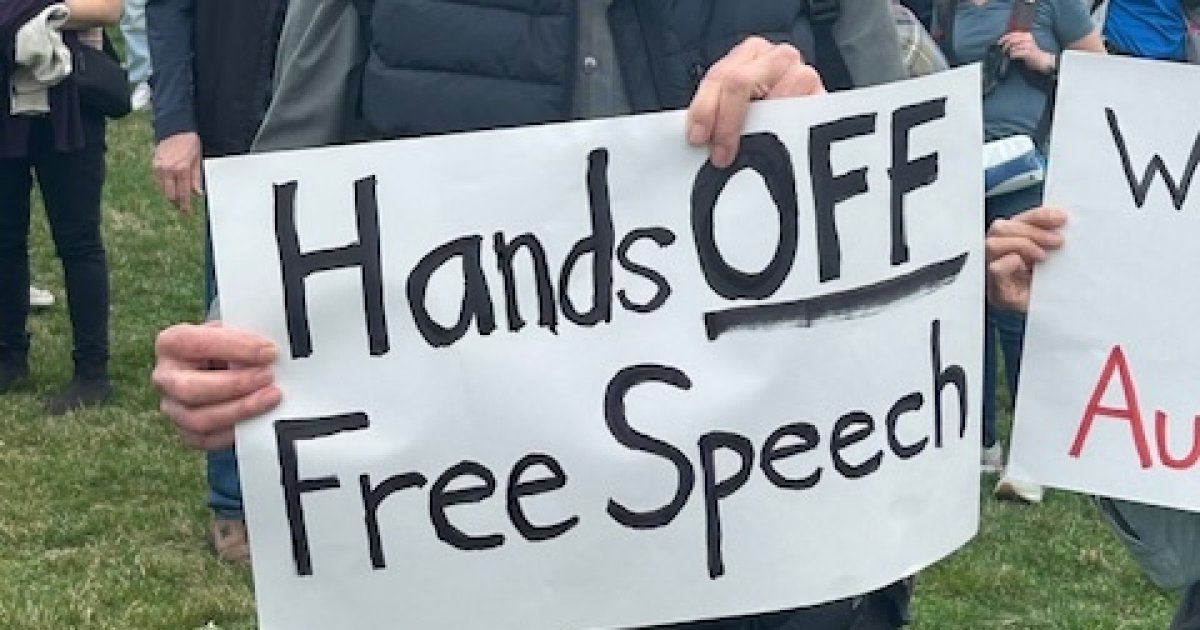
Whatever the peaceful cause, whenever people speak and assemble to exercise their rights, it is always a healthy sign in a constitutional democracy. To that end, and to underscore yet again the value of dissent, the photos below were taken in Washington, D.C. on Saturday, April 5 in the areas surrounding the Washington Monument, as part of the “Hands Off” campaign.
Whether today’s educators are teaching in-person, online or somewhere in between, their dedication to students has remained stronger than ever, despite rapid changes within the space. And in recent years, we’ve seen advances in technology and an increased emphasis on flexible learning environments reshape the higher ed classroom, resulting in both blended and hybrid learning models becoming more common.
Let’s explore a few common models of blended and hybrid instruction and some course materials that tailor well to this type of learning experience.
Blended and hybrid learning: a breakdown
The definitions of both terms may vary. Typically blended instructionincludes teaching with a variety of technology tools, whilehybrid instruction includes both in-person and online course sessions. These terms can apply at many levels, from specific course components (for example, a blended activity) to the broadest program or institution level, where an institution has a program with both in-person and online components.
Common models
Some of the more common models of hybrid and blended instruction include:
Flipped: Students learn new content before class and practice it in the classroom. This approach allows for multimodal content presentation online, and gives students greater control of when, where and how they access course content.
Enriched virtual: Students set the pace of their own learning and complete most of their coursework online.
Rotation: Students rotate between multiple learning modalities, one of which is online. Other modalities may include in-person instruction, group projects, individual guidance and assignments. This approach allows for students to interact with content in a variety of ways, promoting engagement.
Flex: Students direct their learning according to what works best for them among different learning modalities with an emphasis on online learning. The instructor is available for face-to-face support as needed.
A la carte/Self blend: Students choose a supplementary online course to accompany other, in-person experiences.
Depending on the model and modality, students can receive immediate feedback through computer graded activities. They can also interact with classmates in a variety of ways, such as discussion forums, online (or in-person) class sessions, group projects and multi-person online recordings, such as those available through Bongo with MindTap.
Here are a few examples of titles across disciplines like world languages, marketing, art & humanities and health care, paired with our online learning platform, MindTap, that readily translate to blended or hybrid formats.
From its inception, “Atelier: An Introductory French Program,” 2e by Kim Jansma, Margaret Ann Kassen, and Laurence Denié-Higney was designed for hybrid or flipped courses. This program includes a course manual with grammar and vocabulary presentations, readings and many interactive activities that can be assigned in class. Before coming to class, instructors can assign Learn It activities (readings and new content presentations) and Practice It activities (low-stakes, auto graded comprehension and application) in MindTap. Students and instructors then have an opportunity to discuss new content and practice applying it in open-ended and creative ways within a synchronous, in-person or virtual class.
Apply It activities (open-ended expansion) can be assigned for follow-up homework, while Got It activities close out the MindTap Learning Path sequence at the end of each chapter section, so students can verify their understanding. Alternatively, these Got It activities can be assigned as review activities at the end of the module prior to formal assessments. Evaluation can be completed during course time or virtually via online tests that accompany the program and are available through Cognero.
Blended and hybrid approaches can also work in courses that were not initially designed for hybrid instruction. For example, with “Marketing,” 21e by William M. Pride and O. C. Ferrell, students can complete the reading and subsequent Learn It comprehension activities before class. They can complete Apply It activities either before class to prepare for an upcoming discussion or after class as extension activities. Students can also use Study It materials such as flashcards and practice quizzes for review and to identify areas for improvement before a test.
In addition, this title’s MindTap contains activities that allow students to personalize their learning online, promoting self-reflection and real-world application of course concepts. For example, Why Does It Matter to Me? is a chapter-opening question that situates upcoming concepts in context and prompts students to reflect on their own knowledge and experiences. Case Activities in each chapter has students apply key concepts from the chapter to a real-world scenario, including media and reflection questions. You Make the Decision are branching-style questions where students walk through a scenario and make important, but difficult decisions. At the end of the Learning Path are comprehensive assessments of marketing analytics and Excel activities. Students review and manipulate data in Microsoft Excel to see how resulting calculations affect business decisions. The robust content in MindTap for “Marketing,” 21e facilitates a variety of blended and hybrid learning approaches by providing students with unique, personalized and authentic materials at all stages of the learning process.
With a media-rich MindTap, “Cultures and Values: A Global View of the Humanities,” 10e by Lois Fichner-Rathus provides students with the authentic primary materials they are learning about in the readings. In their eBooks, students can zoom in on images to see details such as brush strokes and lighting. They can also access authentic texts of selected literary works, listen to chapter-specific curated playlists on Spotify and watch videos through edited YouTube chapter playlists. By allowing students to view and interact with primary course content directly, hybrid and blended learning brings the materials to life while supporting flexibility and learning on the go.
While the previous examples have featured humanities and business courses, online learning is also common in workplace skills course such as medical coding and billing. Programs like “Understanding ICD-10-CM and ICD-10-PCS: A Worktext – 2025” 10eby Mary Jo Bowie provide a variety of comprehension and application-based activities, real-life case studies and review materials. Plus, it includes the Official Guidelines for Coding and Reporting for both ICD-10-CM and ICD-10-PCS. As a result, students can complete readings, study using PowerPoints and flashcards and gain vital practice with coding in preparation for the certification exam. Students appreciate the flexibility and independence that blended and hybrid learning offers, while gaining valuable preparation for certification.
The takeaways
Many forms of blended and hybrid learning – from flipped classrooms to fully-online, self-led courses – are common in higher education today. By providing a variety of robust online content, courses can offer students flexibility, authenticity and personalized learning to boost engagement and prepare them for their studies and future careers.
Check out these resources that support different types of learning models: