This audio is auto-generated. Please let us know if you have feedback.
Early childhood education advocates predict devastating impacts on young children from a series of federal staff reductions and proposed budget cuts to programs supporting low-income families.
Mass layoffs in the U.S. Department of Health and Human Services on April 1 led to the shuttering of five Office of Head Start regional offices: Boston, New York, Chicago, San Francisco and Seattle. The closed offices will be consolidated into the five remaining offices.
The regional offices provide federal policy direction, training and technical assistance to Head Start providers.
“This restructuring will not impact the critical services you rely on, and we are here to ensure a seamless experience as we move forward together,” wrote Laurie Todd-Smith, HHS deputy assistant secretary for early childhood development, in an April 3 announcement to Head Start grant recipients.
The move is part of a broader restructuring in HHS that is to save $1.8 billion, according to an agency press release on March 27.
The National Head Start Association, a nonprofit that represents children, families and educators, has urged the Trump administration to reconsider the office closures until a plan can be created and disseminated. “Closing these regional Head Start offices could create delays in essential program support and weaken the system that has successfully served millions of children for decades,” said NHSA in an April 1 statement.
The Trump administration says spending cuts at HHS and across the federal government are needed to reduce the country’s deficit and eliminate fiscal bloat and waste in federal agencies.
The Head Start move comes just a few months after HHS agreed to improve monitoring and reporting activities based on a U.S. Government Accountability Office report. The report found a small portion of Head Start programs that were operating under interim management in recent years had faced challenges from low student enrollment, unqualified staff and unsafe facilities.
Head Start, which celebrates its 60th anniversary this year, is a federally funded early childhood and pre-K program that serves infants, toddlers and preschool children from families with low incomes. It also provides prenatal services through Early Head Start.
In fiscal year 2023, the program was funded at $11.5 billion to serve 778,420 children and pregnant people in centers and through home-based programs, according to the Office of Head Start.
Closure of the regional offices could put young children at risk of abuse and other safety threats, early childhood advocates said during a Thursday press call hosted by The Child Care for Every Family Network.
“You can’t say you’re a champ of kids and then put kids at risk for abuse by gutting the very agency responsible for protecting America’s most vulnerable kids,” said Sen. Ron Wyden, D-Ore., during the press call.
The Head Start system was already in a precarious position earlier this year when the Trump administration froze federal funding in many agencies, asking that agency leaders assess how their fiscal programs conflict with President Donald Trump’s executive orders.
Even though the funding freeze was lifted just days later, NHSA said that even more than a week later, 52 Head Start grant recipients serving just under 20,000 children and families in 22 states, D.C. and Puerto Rico were still unable to access their already approved grant funding.
Stability of the child care system
Advocates are also concerned about stability of the broader child care and early childhood education infrastructure.
The Republican-led Congress is considering budget cuts that could significantly reduce programs that low-income families rely on, including Temporary Assistance for Needy Families and Social Services Block Grant.
Rep. Danny Davis, D-Ill, who was also on the press call, said all TANF and SSBG staff at HHS were laid off this week. “The mass layoffs for child care and Head Start programs are threatening the safety and care of children,” Davis said.
A recent report by the Center for Law and Social Policy found 40,000 children nationwide could lose access to child care if TANF and SSGB funding is cut. Children in California, Massachusetts and North Carolina would be hardest hit, according to the research.
The April 1 firings at HHS included all the staff in the Low Income Home Energy Assistance Program, a federally-funded initiative which helps vulnerable families afford their electricity and gas bills.
On Thursday, Wyden and Sen. Elizabeth Warren, D-Mass., introduced The Building Child Care for a Better Future Act, which proposes new, permanent funding of $20 billion per year for Child Care Entitlement to States allocations.
According to a statement about the legislation, individual child care costs range from $5,357 to $17,171 per year depending on location and type of care. The cost of center-based care for two children exceeds the average mortgage in 45 states and more than the average annual rent in all 50 states and the District of Columbia.
Nationally, 56% of early childhood educators surveyed said at least one child care center in their community closed over the past year, while 40% said centers opened, according to polling of nearly 10,000 workers by the National Association for the Education of Young Children. The survey data includes national and state-level responses.
Federal fiscal and workforce cuts “will ultimately mean child care will become less safe for children, more expensive for families, and even harder to find across all 50 states,” said Ruth Friedman, a senior fellow at The Century Foundation and director of the Office of Child Care at HHS under President Joe Biden.
“The first thing we do, let’s chill all the lawyers.”
The original line from Shakespeare’s “Henry VI, Part 2” is often wheeled out to take a swipe at the legal profession. But in the play, it’s uttered by a violent rebel intent on dismantling civil society. Supreme Court Justice John Paul Stevens interpreted it as a warning: “Shakespeare insightfully realized that disposing of lawyers is a step in the direction of a totalitarian form of government.”
Lawyers make easy targets. But freedom and protection of individual rights depend on their efforts to uphold the rule of law, check government overreach, and defend the unpopular. If you’re being prosecuted, suing the government for violating your rights, or challenging an unconstitutional law, you need a lawyer. And you shouldn’t have to worry about whether intimidation from the federal government will prevent you from getting one.
That’s why President Trump’s ongoing retaliation against law firms for representing clients or causes he opposes should concern all Americans, regardless of their political beliefs. It not only violates the First Amendment but also undermines access to vigorous legal representation, especially for anyone up against those in power.
This moment is bigger than one firm or one case. It’s about preserving the integrity of our legal system and the fundamental principles it upholds.
What did these firms do to draw the president’s ire? Here’s a sample from his executive orders targeting them:
Perkins Coie represented “failed Presidential candidate Hillary Clinton,” hired a company that produced “false” opposition research on Trump’s campaign, and “worked with activist donors” to challenge voter ID laws in court.
A Paul, Weiss partner brought a lawsuit against protesters at the Capitol on January 6.
Jenner & Block conducted pro bono work challenging Trump’s executive orders restricting immigration and withholding federal funding for medical institutions that perform gender transition procedures for minors.
WilmerHale pursued pro bono litigation related to immigration, voting, and race-based college admissions policies.
The executive orders Trump issued in response to these actions are transparent about his intention to crack down on the firms as a result of their First Amendment-protected activities.
The orders slap the firms with a range of sanctions — revoking security clearances, canceling government contracts, and denying access to federal buildings and employees when such access would, among other things, “be inconsistent with the interests of the United States” (whatever that means).
For firms representing clients who advocate before, contract with, or are in disputes with the federal government, these sanctions are a gut punch, cutting off access and/or critical information they need to effectively do their jobs.
Not only that, the orders direct federal agencies to require federal contractors to disclose any business they have with the blacklisted firms, pressuring anyone who has (or might in the future have) business with the government to dissociate from those firms.
You don’t need to feel sympathy for large law firms — or support the clients or causes they represent — to see the danger in a president abusing his authority to bend the legal system to his will. Trump isn’t just punishing these firms — he’s chilling legitimate advocacy and eroding the core principle that everyone has a right to legal representation. That’s bad news for the rule of law and protection of individual rights.
Lawyers are not their clients, and they don’t have to adopt their clients’ views to zealously advocate for them. But Trump’s reprisals are making lawyers think twice about representing anyone who challenges him or the policies he supports.
It’s also far from clear this crackdown will stop with big firms. Could small and/or public interest firms be next?
Some may note the administration has also accused the targeted firms of violating employment discrimination laws. But there are established legal processes for fairly and transparently investigating and adjudicating those allegations. The president doesn’t get to decide by fiat that a company or person broke the law and impose whatever penalties he wants. That’s a flagrant violation of due process. And the administration’s concerns about civil rights violations don’t erase its primary stated reason for punishing the firms — their advocacy and potential viewpoints.
FIRE and coalition partners file brief rebuking the U.S. government for attempting to deport Mahmoud Khalil for his protected speech
Press Release
Khalil’s arrest is an affront to the First Amendment and the cherished American principle that the government may not punish people based on their opinions.
Even if you share the president’s dim view of Big Law, consider that his actions set a dangerous precedent that will outlast his administration. A future president might not share Trump’s view of what constitutes “destructive causes” or what activities “limit constitutional freedoms, degrade the quality of American elections, or undermine bedrock American principles.” In the future, perhaps lawyers who represented Republican politicians, challenged mail-in voting procedures, or defended abortion restrictions will face retribution instead.
Trump’s plan to cow firms into submission is paying off — in part. Multiple firms have made deals with the administration to avoid sanctions. Paul, Weiss was the first to cave, making commitments that included $40 million in pro bono legal services for causes the president supports. Other firms are preemptively falling in line. Skadden and Willkie Farr each pledged $100 million for the same.
Two days ago, Milbank followed suit. In response, Trump posted on Truth Social, “The President continues to build an unrivaled network of Lawyers, who will put a stop to Partisan Lawfare in America, and restore Liberty and Justice FOR ALL.” He’s not just trying to stop firms from doing work he doesn’t like — he’s pressuring them to do work that advances his political agenda.
Fortunately, not every firm is willing to be shaken down. Perkins Coie, Jenner & Block, and WilmerHale are challenging Trump’s unconstitutional executive orders in court, and have all secured temporaryrestrainingorders blocking enforcement of the executive orders.
Yesterday, FIRE joined a broad coalition led by the ACLU to file an amicus curiae — “friend of the court” — brief supporting Perkins Coie’s lawsuit.
Our brief explains that the First Amendment prohibits the government from retaliating against lawyers for the clients they represent or the arguments they make. What’s more, the administration’s actions strike directly at the independence of the legal profession and threaten to unravel America’s deeply rooted commitment to individual rights.
As we said in our brief, “If allowed to stand, these pressure tactics will have broad and lasting impacts on Americans’ ability to retain legal counsel in important matters, to arrange their business and personal affairs as they like, and to speak their minds.”
Today, the chorus grew louder as more than 500 law firms signed onto a separate amicus brief in support of Perkins Coie’s legal battle. That type of collective defense of America’s core values is exactly what’s needed.
This moment is bigger than one firm or one case. It’s about preserving the integrity of our legal system and the fundamental principles it upholds.
Title: College Prices Are Falling for Everyone (Almost)
Source: Brookings Institution
Author: Phillip Levine
New research from the Brookings Institution reveals a surprising truth: inflation-adjusted college prices have fallen for most students over the past five years. Phillip Levine’s analysis examines what students actually pay—the net price after financial aid—rather than the sticker prices that dominate media coverage.
Using data from net price calculators at 200 institutions and proprietary financial aid records from 14 highly endowed colleges, his findings challenge the common narrative:
Widespread price decreases: Between 2019-20 and 2024-25, inflation-adjusted net prices declined across institution types. Public flagship universities saw reductions of 7.1-17.3 percent, depending on family income level, while other public institutions experienced decreases of 8.5-13.2 percent. Private colleges with very large endowments had substantial declines, ranging from 7.0-43.4 percent, and tuition-dependent private colleges saw net prices drop by 16.8-23.3 percent.
Lower-income students benefit most: Families earning $40,000 annually, representing the 25th percentile of the income distribution, experienced the largest reductions, with net prices dropping by 13.2-40.9 percent depending on institution type.
Wide price variation by income: At private institutions with very large endowments, students from families earning $40,000 pay approximately $4,400 annually, while those from families earning $240,000 pay $82,800 annually.
At many institutions, families earning $40,000 are still expected to contribute $15,000-$20,000 annually. Only the most heavily endowed institutions typically offer aid packages that lower-income families can reasonably manage. This raises important policy implications: proposed increases to endowment taxes may undermine institutions’ ability to provide generous financial aid, potentially harming the very students who benefit most from their pricing models. Private colleges and universities rely heavily on endowments to fund scholarships, research, and education—often more than they rely on tuition revenue. Treating endowments like business profits could shift the financial burden onto students and weaken U.S. innovation.
The complexity of college pricing creates uncertainty for families, policymakers, and media. Greater transparency about the true cost of attendance is essential. By focusing on actual prices rather than headline-grabbing sticker prices, we can help reshape the national conversation on college affordability and ensure that misconceptions don’t deter qualified students from pursuing higher education.
To read the full Brookings research analysis, click here.
—Alex Zhao
If you have any questions or comments about this blog post, please contact us.
This audio is auto-generated. Please let us know if you have feedback.
The Trump administration on Friday announced a major change in Title IX enforcement at schools and colleges, tapping the U.S. Department of Justice to help investigate and ultimately enforce the separation of transgender students from girls’ and women’s athletics teams and spaces in schools and colleges.
The Title IX Special Investigations Team shifts some civil rights investigations and enforcement from the U.S. Department of Education to the Department of Justice — both of which are a part of the newly minted unit.
The move is part of a Trump administration effort to push through a backlog of complaints at the Education Department’s Office for Civil Rights. These investigations usually take months — sometimes years — to complete. The process typically includes interviews and other tools and ultimately ends in resolution agreements to bring schools into compliance.
Instead, the department will rely on a rapid resolution process to address sex discrimination complaints, framing the move as a way to protect cisgender girls and women, according to a Friday announcement. Rapid resolution is “an expedited case processing approach,” according to the Trump administration’s case processing manual, which was updated in January.
There are certain requirements before rapid resolution is an option, including having the complainant initiate the expedited process and having schools on board with that plan of action to resolve a complaint. The tool can be tapped when schools have already taken action to resolve the complaint on their own accord. It was used under the previous administration as well to address the increasing volume of complaints.
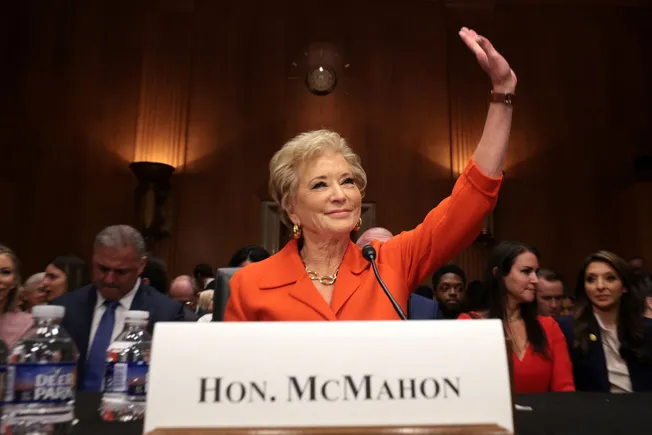
“OCR under this Administration has moved faster than it ever has, and the Title IX SIT will ensure even more rapid and consistent investigations,” U.S. Secretary of Education Linda McMahon said in Friday’s announcement. “To all the entities that continue to allow men to compete in women’s sports and use women’s intimate facilities: there’s a new sheriff in town. We will not allow you to get away with denying women’s civil rights any longer.”
Attorney General Pamela Bondi said in an accompanying statement that “protecting women and women’s sports is a key priority” for the Department of Justice. The agency will “ take comprehensive action when women’s sports or spaces are threatened,” she continued. The administration has often used that language to separate transgender students from programs spaces aligning with their gender identities with blanket bans.
The department’s formal announcement that it is handing off Title IX enforcement to the Justice Department and joining forces on investigations comes after weeks of collaboration between the two agencies, confirming suspicions from education civil rights attorneys that DOJ involvement will be the new normal.
It was also expected, considering that Education Department layoffs gutted half of OCR enforcement offices nationwide, and the department was already relying on the DOJ in the layoffs’ wake.
The Education Department already tapped the Justice Department in an investigation the Trump administration launched into the Maine Department of Education over the state’s transgender athlete policy.
“Why would they continue to administratively enforce when they’re trying to put themselves out of jobs?” Kayleigh Baker, a Title IX attorney for TNG Consulting, an education civil rights consultant group, surmised late last month in wake of the Maine case. “And so I think leaning on DOJ makes sense.”
Prior to this administration, the DOJ was rarely called off the bench to enforce civil rights protections in schools, and its involvement was usually only reserved for complex and high-profile cases.
The move to more heavily involve the Justice Department in education civil rights enforcement also comes as the administration aims to shift other Education Department responsibilities to outside agencies. In March, for example, the administration announced that it intends to move special education oversight to the U.S. Department of Health and Human Services.
Lawsuits challenging the Education Department’s mass layoffs claim they have compromised the agency’s ability to continue statutory responsibilities such as civil rights enforcement. But the department told K-12 Dive in a March email that would not be the case.
“We are confident that the dedicated staff of OCR will deliver on its statutory responsibilities,” said department spokesperson Madi Biedermann at the time.
This audio is auto-generated. Please let us know if you have feedback.
The Trump administration on Friday announced a major change in Title IX enforcement at schools and colleges, tapping the U.S. Department of Justice to help investigate and ultimately enforce the separation of transgender students from girls’ and women’s athletics teams and spaces in schools and colleges.
The Title IX Special Investigations Team shifts some civil rights investigations and enforcement from the U.S. Department of Education to the Department of Justice — both of which are a part of the newly minted unit.
The move is part of a Trump administration effort to push through a backlog of complaints at the Education Department’s Office for Civil Rights. These investigations usually take months — sometimes years — to complete. The process typically includes interviews and other tools and ultimately ends in resolution agreements to bring schools into compliance.
Instead, the department will rely on a rapid resolution process to address sex discrimination complaints, framing the move as a way to protect cisgender girls and women, according to a Friday announcement. Rapid resolution is “an expedited case processing approach,” according to the Trump administration’s case processing manual, which was updated in January.
There are certain requirements before rapid resolution is an option, including having the complainant initiate the expedited process and having schools on board with that plan of action to resolve a complaint. The tool can be tapped when schools have already taken action to resolve the complaint on their own accord. It was used under the previous administration as well to address the increasing volume of complaints.
“OCR under this Administration has moved faster than it ever has, and the Title IX SIT will ensure even more rapid and consistent investigations,” U.S. Secretary of Education Linda McMahon said in Friday’s announcement. “To all the entities that continue to allow men to compete in women’s sports and use women’s intimate facilities: there’s a new sheriff in town. We will not allow you to get away with denying women’s civil rights any longer.”
Attorney General Pamela Bondi said in an accompanying statement that “protecting women and women’s sports is a key priority” for the Department of Justice. The agency will “ take comprehensive action when women’s sports or spaces are threatened,” she continued. The administration has often used that language to separate transgender students from programs spaces aligning with their gender identities with blanket bans.
The department’s formal announcement that it is handing off Title IX enforcement to the Justice Department and joining forces on investigations comes after weeks of collaboration between the two agencies, confirming suspicions from education civil rights attorneys that DOJ involvement will be the new normal.
It was also expected, considering that Education Department layoffs gutted half of OCR enforcement offices nationwide, and the department was already relying on the DOJ in the layoffs’ wake.
The Education Department already tapped the Justice Department in an investigation the Trump administration launched into the Maine Department of Education over the state’s transgender athlete policy.
“Why would they continue to administratively enforce when they’re trying to put themselves out of jobs?” Kayleigh Baker, a Title IX attorney for TNG Consulting, an education civil rights consultant group, surmised late last month in wake of the Maine case. “And so I think leaning on DOJ makes sense.”
Prior to this administration, the DOJ was rarely called off the bench to enforce civil rights protections in schools, and its involvement was usually only reserved for complex and high-profile cases.
The move to more heavily involve the Justice Department in education civil rights enforcement also comes as the administration aims to shift other Education Department responsibilities to outside agencies. In March, for example, the administration announced that it intends to move special education oversight to the U.S. Department of Health and Human Services.
Lawsuits challenging the Education Department’s mass layoffs claim they have compromised the agency’s ability to continue statutory responsibilities such as civil rights enforcement. But the department told K-12 Dive in a March email that would not be the case.
“We are confident that the dedicated staff of OCR will deliver on its statutory responsibilities,” said department spokesperson Madi Biedermann at the time.
This audio is auto-generated. Please let us know if you have feedback.
Dive Brief:
University of California San Diego is bracing for budget cuts of up to 12.5%as it faces a potentially massive dropoff in federal funding, according to the university.
Officials predict government changes could lead to annual funding shortfalls of between $75 million and $500 million, Chancellor Pradeep Khosla said in a Wednesday community message. Researchers at the university have so far reported 50 notices of federal grant disruptions.
Citing “unprecedented conditions,” Khosla said UC San Diego is freezing all hiring and delaying capital projects.The latter includes an “indefinite” delay on construction of a new life sciences building and clinical research building.
Dive Insight:
UC San Diegois already feeling the brunt of the Trump administration’s efforts to pull the plug on wide swaths of federal funding to the higher education sector, including billions in grants commitments from multiple agencies.
In his message, Khosla noted “a concerning rise in payment delays on expected grant revenues from most federal agencies.”
As the chancellor explained, that impacts the university’s cash flows, withUC San Diego facing both short-term and long-term cash challenges from the government’s actions.
“Abrupt termination of research funding has far-reaching and damaging consequences not just for the research, but for individuals, teams, our university and society as a whole,” Khosla said.
More, and deeper, funding cuts could be on the way as President Donald Trump and Republicans seek to restructure the federal government’s role in the U.S. and potentially make dramatic reductions to existing education and research programs.
A new 15% cap on reimbursement for indirect research costs at theNational Institutes of Health— which for now have been blocked by a federal judge —would cost UC San Diego $150 million annually, the university has said.
Additionally, potential reductions to research funding and grants,as well as to reimbursement rates for Medicare and Medicaid,could all hurt UC San Diego and its medical center, Khosla said.
The university was under some financial strain even before Trump took office. For fiscal 2024, the institution logged a $2.5 million total operating deficit as its expenses grew faster than revenues, according to its latest financials.
The good news is that the university is growing, unlike many of its peers. In fall 2024, its headcount reached 43,533, a record for the university and up about a third from a decade ago, according to institutional data.
The university’s hiring freeze is part of a broader initiative across the University of California system as it grapples with funding cuts at both the federal and state levels.
This audio is auto-generated. Please let us know if you have feedback.
Dive Brief:
Harvard University on Thursday received a list of wide-ranging demands from the Trump administration tying the Ivy League institution’s federal funding to its complete compliance.
Among the requirements are that Harvard review and change programs and departments that the Trump administration described as “biased” and that “fuel antisemitism,” according to a copy of the letter obtained by Higher Ed Dive. It also calls for the university to make “meaningful governance reforms” that will selectively empower employees “committed to implementing the changes” demanded in the letter.
The demands came the same week the Trump administration put $9 billion of Harvard’s federal grants and contracts under review. The government alleged the probe stemmed from reports that the university failed to protect Jewish students from antisemitism.
Dive Insight:
The three federal agencies behind the letter— the U.S. Department of Education,U.S. Department of Health and Human Services, and U.S. General Services Administration — said the list of nine demands represent “broad, non-exhaustive areas of reform” that Harvard must enact “to remain a responsible recipient of federal taxpayer dollars.”
Their letter called on Harvard to eliminate all diversity, equity and inclusion efforts and prove it does not offer preferential treatment based on race, color or national origin in admissions or hiring “through structural and personnel action.”It also called for increased scrutiny of student groups and a comprehensive mask ban, with exemptions for religious and medical reasons.
But the agencies, operating as members of President Donald Trump’s Joint Task Force to Combat Anti-Semitism, offered few details on how Harvard could meet the demands.
For example, the letter did not outline which programs or departments it considered biased, nor did it say whether Harvard or the task force would determine which ones needed reform.It also didn’t describe how Harvard officials could determine why someone is wearing a mask.
The Education Department declined to answer questions on Friday. HHS and GSA did not respond to requests for comment.
Thursday’s letter marked the first time Harvard officials saw the demands, according to a university spokesperson, who did not respond to further questions. The letter did not set a hard deadline for the ultimatums, instead calling for Harvard’s “immediate cooperation.”
Before the Trump administration issued its demands, Harvard President Alan Garber acknowledged antisemitism exists on campus and said he had experienced it directly “even while serving as president.”
“We will engage with members of the federal government’s task force to combat antisemitism to ensure that they have a full account of the work we have done and the actions we will take going forward to combat antisemitism,” he wrote in a Monday message to campus. “We resolve to take the measures that will move Harvard and its vital mission forward while protecting our community and its academic freedom.”
Many members of the Harvard community, however, had a stronger response.
As of Friday afternoon, over 800 Harvard faculty members had signed a letter dated March 24 calling on the university’s governing boardsto publicly condemn attacks on universities and “legally contest and refuse to comply with unlawful demands that threaten academic freedom and university self-governance.” More than 400 alumni of the university have so far signed their own version of the same letter.
The demands made of Harvard echo the situation faced by one its Ivy League peers, Columbia University, last month.
The federal task force is threatening billions in federal funds and grants at Columbia, and it has canceled $400 million worth thus far. When the Trump administration sent Columbia a then-unprecedented list of demands, the university quickly capitulated— to the consternation of faculty and academic freedom advocates alike.
The Trump administration lauded Columbia’s compliance as a “positive first step” for maintaining federal funding but has not publicly announced that it has restored the $400 million in canceled grants and contracts.
“Columbia’s compliance with the Task Force’s preconditions is only the first step in rehabilitating its relationship with the government, and more importantly, its students and faculty,” the task force said in a statement at the time.
How can we help new readers find your words? How can you help your book have a legacy? Website designer / book designer HR Hegnauer joins me for this featured interview. HR has designed over 350 books, creating award-winning covers and interiors for both print and ebook editions. She’s also an expert website designer who helps authors create a lasting presence for their writing online.
We attended the Jack Kerouac School for MFAs in Writing & Poetics at Naropa University (though at different times). HR has also taught in the Summer Writing Program which happens each year in Boulder, Colorado. I had the pleasure of collaborating with HR back in 2014-2016 on Something On Paper, a journal of poetics. I’m so happy she could join me for this featured interview.
Before we get started, don’t miss my live workshop on April 12 on Promoting Your Book Online for Academics. Sign up today.
Are you an academic author who needs a website? I’m partnering up with HR Hegnauer for Team Website VIP Days. If you’d like my team of experts to put our creative brains together for your online presence as an academic, don’t hesitate to reach out. I’m happy to chat with you. Schedule your no pressure Zoom call about working together.
Jennifer Van Alstyne: Hello and welcome to The Social Academic! I am Jennifer Van Alstyne, your host, and my guest today is all about books and book design, and book websites. So I’m so excited to have HR Hegnauer here. HR, would you please introduce yourself?
HR Hegnauer: Sure, yeah, thanks so much for having me, Jennifer. My name is HR. I work as a book designer and also a website designer and run my own design studio. And yeah, I love getting to do the work that I do.
Jennifer: So I think my first question for you is kind of about the book design process. So many people are like, they’re focused on writing their book, they’re so excited, they are getting it published. And then they’re like, “Well, what comes next?” I know it’s different with different presses, but do you think you could walk us through a little bit of the kind of book design process and what that’s like for people?
HR: Yeah, absolutely. And you’re totally right. It really does vary on kind of who that publisher is or maybe they’re self-publishing. There’s a huge spectrum. And I’ve been making books for about 18 years now. I’ve designed over 350 books. And so I’ve really seen that spectrum about every single type of publisher: corporate, institutional, universities, tiny micro nonprofit, self-publishing, the whole thing. When the person’s done writing that book, it’s going to of course go through the editing process and all of that. And then by the time I come on board, what we want to do is take that manuscript and make it into a really good book that someone wants to sit with and read and engage with, right? And it’s my job to make sure, right, that it can do that for the person. It’s legible, it works well. The design works for the book. The cover is like a visual articulation of what’s happening in the content.
Book design and book cover design
Jennifer: Hmm. What’s your process like for cover design? I know cover design and book design, the interior of it are a little bit different. I’d love to hear about covers because that’s honestly what I think people might have the most flexibility with when it comes to academic books. So what are your thoughts about cover design?
HR: That’s such a fun thing to dive into and it can be really hard for the writer to kind of imagine it too because they’re working in words, right? They’re the writer, they’re not working in visuals. And so in my process, I’ve developed this questionnaire over the last, you know, 18 years. And that helps us kind of set the visual tone, right? So is this, is it an academic book talking about something from the 19th century? Is it a hyper-modern poetry book? Is it something from the tech industry or a memoir? There’s all kinds of sort of, I guess, genres, right? That kind of help orient a little bit in ways. But then there’s all these other things to consider. Like maybe the person has a piece of art or photography they really wanna see on the cover, or maybe they wanna just go text only on the cover, which can be super fun. And then that text can be a graphic element itself, right?
Jennifer: So I’m curious, like I know that you partner with presses to sometimes do the cover design. Like what is the, almost like the technical process of like, let’s say an author gets their book accepted and their press is like, “Well, what do you want for the cover design?” Can they ask for a specific cover artist to work with them? What kind of input can they give if maybe they haven’t been offered someone like you to partner with?
HR: Yeah, you can definitely ask. Not sure always what the response is, but definitely ask for sure. I mean, to be an advocate for your own book because sometimes nobody else is. And so, you know and presses, some have their own in-house designers who are amazing. Some presses have certain style guides they’re trying to follow themselves or some series that they’re trying to work within. Oh, one of my friends, Dr. Echo Rivera, she was like really thinking about putting like a presentations book out in the world. And a press was very interested in working with her, but when she heard that she would have no control over the cover, that they were really stuck in this very set cover for the series that it was gonna be published under. She actually decided to not move forward with that project, with that press, just cause the cover is so important for something like presentations and design. Like that’s what she’s talking about. It can’t be a huge mismatch. So I love that you help people really get visual when it comes to their thinking, being introspective about their cover. Now, how does that differ from like the interior of the book? I mean, there’s so many academics that also are interested in self-publishing or wanna create resources that are more like book format. I’m curious about the interior. What’s that process like?
HR: Yeah, well, ideally they’re in conversation with each other, the cover and the interior. They’re not always, but I think when they are, that is when you have the best fully integrated one.
Jennifer: Yeah. (Laughing)
HR: And so what that means, technically speaking, is sometimes elements from the cover are coming into the interior. Maybe that’s in the title font choices or maybe some little graphical, graphic element or embellishment somewhere. But the main thing for the interior is that, sometimes I like to think, you know, if the reader is noticing something about the interior, it’s usually because maybe they’re struggling through it because it’s not well done or not well designed. And I don’t mean that in any kind of like design slight, I just mean it in like, if someone spends sometimes years writing a book, you want your reader to be able to really read it and engage with it and not have to like physically struggle. And so that’s a big part of it. Can your reader really engage with it? And so sometimes an author will come to me or a publisher or somebody and say, “I really love Helvetica. Can you lay out my 400 pages in it, in Helvetica?” Sure, technically speaking, I could. But you know what, that’s my job as a design professional to help the person understand why that’s really not a good design choice because your reader is not gonna be able to work with that themselves.
And then that means like, well number one, they’re not gonna read it. But then, maybe then they’re a professor and they’re not going to teach it either or no one’s going to write a review about it. You know, all these kinds of things that unfold in these multiple ways.
Jennifer: Hm. So it’s almost like when you are being more intentional about the experience that people will have while reading your book and how that plays out in terms of design, that it limits all of those potentials for almost like a breakdown in connection that could happen afterwards. Once people do have a good reading experience with your book, we want them to be able to take the next step, whether that’s in their own life or to help you share your book and so that’s really interesting. Oh, HR, one of the things that you brought up was about some of the things that authors have struggled with. I’m curious. What are some of those, some maybe mindset things, some maybe like just not knowing what their next steps are, what are some struggles authors have when it comes to book covers, book design, sharing their book?
HR: Sure, yeah, especially because, and it’s no fault of an author, it’s not them to have to know everything. The industry is constantly changing all of the time, even in terms of like what are options for self-publishing or then if you’re self-publishing, what does that mean in terms of distribution? How are you supposed to just know that? It’s not like an innate thing. And so those are real struggles. Or how do you promote your book? Maybe you have a really awesome publisher who has that support and foundation behind you, and that is so ideal, honestly, and that’s great. And then if you don’t, maybe you need to kind of build that team yourself. And so like one of the things, like for example, I don’t do marketing myself. I can make some materials to help do that marketing, but I don’t run like social media or something.
Jennifer: Yeah, yeah, you’re not like managing the marketing process.
HR: Yea, I can help that writer understand how to build a really successful team for themselves.
Jennifer: Hmm. I like that. Now you don’t just do like book design and book covers. You do websites for authors too which is, I mean, that is like a marketing deliverable in the sense that it’s long-term. So why should authors have websites for their books?
HR: Yeah, I know that is such a great question. And it’s really changed over a few years even, right? It didn’t always have to be necessary, or maybe someone has a LinkedIn page or something, some kind of digital version of their CV. Or maybe they’re a professor and they have a page on the university website or something. So why need their own website? And it’s such a great place to get to be in control of all your content for one, obviously, but then to get to really interact in different ways. So it can be this like digital up-to-date version of your CV and it can hold all kinds of things, including media and events and whatever you need. But one thing that has been so exciting to me the last couple of years, honestly, is I’ve gotten to work on some projects where it’s not just like a digital sales sheet to promote the book, but it gets to be this real extension of the book itself. So like, for example, you read a book and maybe there’s some images in it or something, or maybe you go to an event to support the book, but there’s some real limitations in how far that can go sometimes. And so, especially if a book really, and not all books need this, but some books really, really benefit from something a little more interactive or media-based or maybe someone is working with a lot of archives too, and they want to bring in different images. And that can get so exciting, I think. I’d love to, can I share just one project about that?
Jennifer: Yeah, yeah.
HR: Like I’ve been working with this woman, maybe you know of her, Sasha Steensen. She’s a professor at Colorado State University.
Jennifer: Cool.
HR: And I’ve loved her writing for many years, but some authors I get to work with for, you know, well over a decade or more. I just love following their work personally, but she was working on this project and had institutional support and funding for it, which was so great. But looking at the past couple hundred plus years of her five acre property, and what happened on this exact plot of land in Colorado where she lives with her family.
Jennifer: Wow, that’s cool.
HR: Yeah, and like the archives, the federal transactional history there, a lot of devastation, all kinds of history on that exact spot where she spends her time with her family, right? And so at first we started making this website to help support that sort of already existing project she was doing. And then like once we’ve started building, there’s a number of pages on it, probably, I don’t know, 15 or so at this point.
And then it’s like we started to understand like, “Oh, this website, maybe what it can do is really actually now helping drive some of the creative work of the project. It’s really exciting, it’s still ongoing, you can go check it out. Stuff like that, it gets so fun.
Jennifer: Yeah, websites are so adaptable and like they can grow to fit your needs, but also they can inspire creativity and give you more flexibility with how you wanna reach people. So it’s fascinating that it sounds like once you started on the website together, it really grew and expanded based on what you were inspired to create long-term. I mean, all these things are so lasting, that’s why I love it. It’s like a book can get out there in the world, but honestly, it has potential to go out of print eventually or not get a second print run.
HR: Exactly, there’s that.
Jennifer: And the website, the resources that you create, the conversations that you have about your book, those things can stay. Oh, fun!
HR: Which means you’re seeing that website at presentations and class visits. And it’s not just for like the general public randomly who comes to it. It’s like, it’s also a teaching tool. It’s also a research archive. It’s also all these things, you know. And it’s a book, by the way.
Jennifer: Yeah, and the book, and the book. (Laughing)
When to start designing your book
Jennifer: Now, I’m curious, like, at what point did that professor reach out to you to maybe start working together? Like, at what point in your manuscript creation process should you start thinking about these things?
HR: Yeah, that’s such a great question. I mean, in that particular instance, I’ve worked with her on a many number of projects. Book cover, her author website to begin with. You know, so many authors I get to work with on multiple projects-
Jennifer: I love that.
HR: For years and really do know their work quite well. But yeah, so it really varies. I mean, sometimes a project like this, the book is not published, it’s not done. It’s an ongoing, real place of discovery in this way. It’s kind of become this collaboration almost.
Jennifer: Wow. That’s so cool!
HR: Yeah, I mean, and that’s fairly unique, I would say certainly. Others like, I’m really not involved in the editorial process in most instances, right? You know, I’m there to help bring that book into that publishing process, whatever that looks like physically or digitally or however. And it’s generally speaking after editorial is done, after editing is done, and that kind of thing.
Jennifer: What kind of transformation do you typically see with authors from before they have a website to after they have a website? Do their feelings change about it?
HR: Yeah, that’s a great question right, definitely. Because before they have a website . . . Okay, for example I made this website a year ago or so for this author, Maureen Owen. She’s a poet, has, I don’t know, 30 or more books, something like this, dozens of works.
Jennifer: She’s prolific.
HR: Beloved poet, right? I’ve loved her work for decades. She’s never had her own personal website, but of course with her books, they’re on publisher sites, on Amazon, on random places. Goodreads of course. There’s all kinds of disparate places where she exists on the web, right? And she has university archives you know in multiple universities, these kind of official places even, but there was not one hub of her place, of her work. And, you know number one, that’s a bummer for the reader trying to just find out more about her or access maybe her work as a student or a grad student learning about her, any of those things. And so to bring all of that together was so great. I mean, and then, exactly, and then for her, that transformation is like people see her in a different way because now they’re seeing, you know, people who don’t necessarily know her personally say are learning about her and they’re able to learn about her in a more comprehensive way in one place from her own voice that she’s in control of because it’s her own website, right?
Jennifer: Yeah, well, it makes such a difference. Some of the professors that I’ve worked with, I mean, many of them are authors. The focus of the website is less book than I think the websites that you typically design. But one of the things that they tell me afterwards is like their friends and their family, like people who they weren’t even expecting as like an initial audience for their website, people they know actually feel like they can understand them a little bit better, they can connect with the book or help share it more effectively. So I really like that there are kind of like unexpected sparks that can happen once you are more open to creating that kind of online presence for yourself.
HR: Definitely, yeah, for sure. And being able to articulate your research about things or your interests, excitement, whatever that might be.
Work with an awesome team
Jennifer: Yeah. Now this year, HR and I are going to be teaming up on some website VIP days. While of course you can work with just HR or just me, if you’re someone that is like, wow, how amazing would it be to have two professionals really thinking deeply with me about what is going to work for my website and actually creating it for you in a day?
I also want you to know HR is an amazing resource. If you need a book cover, if you need the interior of your book design, if you need that book website or author website, you should definitely reach out to her. She’s so nice. And someone that I really trust, someone that I trust to sit there with you and to think in ways that’s going to make sense for you. Not just the way that your publisher wants your book to be, but have you be more of a part of that conversation than sometimes happens in the editorial world. Yeah, I just wanted to be sure to share you with people.
HR: Thank you so much Jennifer. I’m really super excited, honestly, to be collaborating with you. it’s such a great thing. And I think one thing you said a second ago. You know, to get to work with someone who you actually know who they are as a human being and trust them, that means like the world, right? I mean, how do you, it’s such an abstract thing to just be like, “Okay, now I need a website. What does that even mean, right? Like, how do I do that?” Like, how is anybody supposed to know and what do they trust to do that? And I’ve worked with so many people, honestly, who have been like, tried to do some DIY approach over the years or maybe they did something with a student 15 years ago or something. And it’s just like, they’re still paying some ridiculous thing to some web host that, and I look at their stuff. I’m like, “What is going on here? This is so unnecessary. You’ve been, this is ridiculous.”
Jennifer: And you know it’s like, it’s unreasonable to think that anybody who’s not in that kind of field would just know what to do, right? I mean, like, I have professors who are like, information, technology, AI, like, really like experts in different tech areas that are like, “I’m not gonna learn how to make a website. Like, can I learn? Yes. But is it a good use of my time? Honestly, no.” And that’s okay.
HR: Absolutely, yea.
Jennifer: Like, you don’t have to do your website yourself, but also if you’ve done your website yourself and you don’t like it, don’t feel embarrassed. Like, come to us and we’ll help you.
HR: Really, no. Get it to a better place, for sure. And, you know, it’s not magic and it’s not rocket science. It’s just like, it’s something that is just valuable to bring up to speed, really.
Creativity for your author website
Jennifer: HR, is there anything else you feel authors should know either about the book design process or about author websites before we wrap up today?
HR: I just think, especially in say a website when someone, it is really their project and they get to be in control of it, to just really kind of, to really take that, you know, get in control of it. And either if you’re building it by yourself or working with someone, to just know that it is your website and it is, you know the reflection of who you are as a creative person or an academic or whatever that is for you, researcher. And to just think, you know, it doesn’t have to look like one thing or another, it doesn’t have to be some template that someone is telling you to go with because it’s the easiest option or whatever. You know, there’s such a huge spectrum of how things can kind of come together. And a lot of people don’t even know what those kind of possibilities are. So it’s like, it’s that the person who wants that website or needs that website, you know, they get to be in this creative place and then the person who can help bring that to them can like show up with some really fresh ideas for them. And sometimes that like synergy is what’s so exciting to really make something happen.
Jennifer: I love that. This was such a good conversation and perfect timing because I am having a How to Promote your Book for Academic Authors event next month. And so I think that having this interview is a resource that can help people. I mean, there’s so many different stages at which you’re like, “Oh my gosh, I think I need a book cover or I think I need this author website and I didn’t know I needed it before, but I need it now.” And if that’s you, I really, I hope you’ll reach out to HR, schedule a call to see if you’re a good fit to work together-
HR: Absolutely.
Jennifer: Because it really is, it’s like a no pressure call. It’s very warm. And I think that you’ll find that it’s a good space for you to actually have someone who knows who can talk with you about these things, not just your editor or, you know, your publisher. You have options.
HR: For sure. And I love chatting with anybody and about what those options can look like too. It doesn’t have to be with me, but I’m absolutely happy to talk with anybody.
Jennifer: Oh, that’s perfect. All right, thank you so much for joining me on this episode of The Social Academic. HR, how can people find you or get in touch with you afterwards?
My LinkedIn, if that’s a way that’s good to connect. Any of those ways. And on my website, there’s a little button that says like, you know, come and book a consult. Like, I really mean it, like just do it. I talk with people all the time, every week, you know, and love hearing what is going on for them. It’s not like a sales call. You don’t have to be like that, you know. Would love to though connect with anybody or help out with a question if somebody had a question.
Jennifer: I so appreciate your openness, HR. Thank you so much for coming on the show.
HR Hegnauer is a designer, writer, and creative professional specializing in book and web design for authors, independent publishers, and artists. As the owner of a design studio, HR has designed over 350 books, creating award-winning covers and interiors for both print and ebook editions. She is recognized for her website design as a Squarespace Circle Gold Level Member, ranking in the top 8% of over 100,000 professional Squarespace designers worldwide. With over a decade of web design experience, she builds engaging, intuitive websites that help authors not only establish but also grow their digital presence.
She is the author of When the Bird is Not a Human (Subito Press) and Sir (Portable Press at Yo-Yo Labs) and holds an MFA in Writing & Poetics from Naropa University, where she has also taught in the Summer Writing Program. With an MBA from the University of Denver, HR brings a unique blend of artistic sensibility and strategic expertise to her work. Her approach is highly collaborative, ensuring that every project—whether a book or website—amplifies the unique voice of its creator.
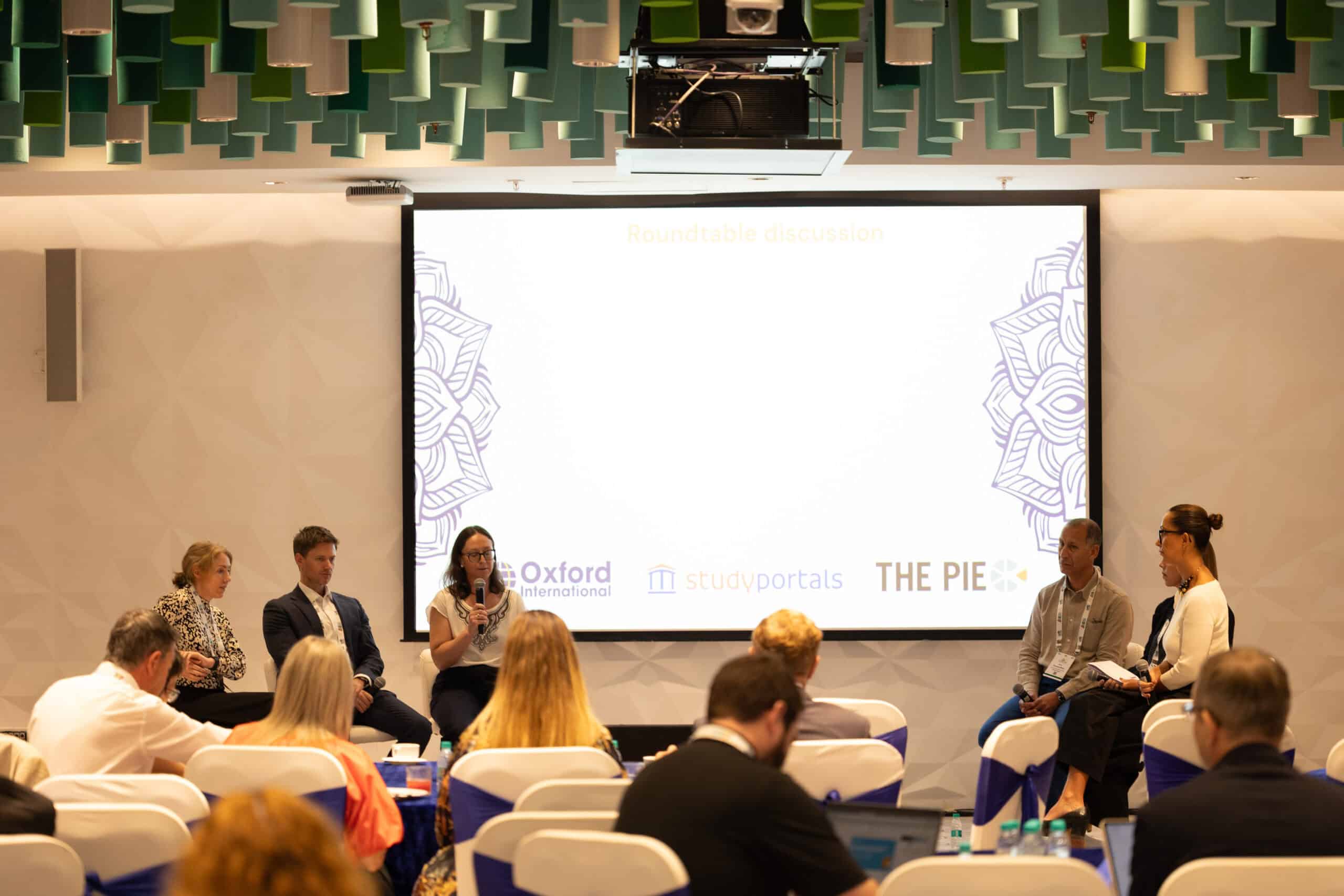
The PIE News, in partnership with Oxford International Education Group (OIEG) and Studyportals, hosted a briefing where panelists explored university strategies, government collaboration, and financial sustainability for a successful TNE model.
As international universities compete to establish TNE partnerships in India, the University of Southampton stands out, with its Delhi branch campus set to open in August 2025.
Kasia Cakala, director of education pathways development at OIEG, which is collaborating with Southampton on the project, noted how education providers must continuously adapt to evolving expectations of the TNE model.
“Not only do universities have to be mindful of the models they take in this very challenging market, but private providers like us also need to pivot, change, and adapt to support universities in their urgent needs,” stated Cakala at the briefing.
“With Southampton, the key was defining a proposition that was not only sustainable but also aligned with government priorities and the domestic student ecosystem.”
Cakala emphasised that as students from countries like India become more savvy, knowing what they need and expecting more from institutions, universities must adopt a “sophisticated market research strategy” to define their proposition, particularly when presenting expansion plans to government bodies.
Private providers like us need to pivot, change, and adapt to support universities in their urgent needs Kasia Cakala, OIEG
In light of the changing expectations, Carlie Sage, associate director, partnerships, APAC, Studyportals, underscored the importance of understanding student behaviour and market trends in shaping international education strategies.
“A lot of universities still make decisions without really understanding the environment they’re operating in,” stated Sage.
“There’s amazing data out there that can help institutions navigate shifts, understand demand, identify gaps, and see what’s happening in real time.”
According to Aziz Boussofiane, director, Cormack Consultancy Group, while TNE models need to be financially sustainable, they also need to be beneficial for both the university and the host country in the long run.
“For host countries, success (in TNE) means increasing capacity with quality provision – and for universities, it must align with their mission and strategic objectives,” stated Boussofiane, while addressing the audience.
“There are different drivers and processes depending on the market, whether it’s India or Nigeria, [and] it’s often about increasing in-country capacity and improving the quality of local providers.”
While TNE is widely embraced by leading universities in major study destinations, challenges persist in building scalable models due to varying international perceptions of quality and value, which impact recognition, as previously reported by The PIE.
According to Daniel Cragg, director of Nous, while TNE is just another challenge for institutions, which are already dealing with academic workforce stress, new pressures from AI, and evolving student needs, the appetite for partnerships has only been rising.
“The appetite for collaboration is growing – universities want to share risk, balance success, and be more in-market experts,” said Cragg.
“In international education, it feels like there’s a black swan event every three to four years. But universities constantly adapt, innovate, and thrive.”
While universities in the UK and Australia have pushed through major TNE expansions in recent years, institutions in countries like New Zealand, though interested, prioritise strengthening their reputation and research over physical expansion.
“New Zealand is a small player in TNE, but our partnerships focus on reputation and research rather than bricks-and-mortar expansion overseas,” stated Meredith Smart, international director, Auckland University of Technology.
“There’s a strong connection between our ranking strategy and our partnership strategy – reputation matters.”
As the New Zealand government aims to boost international recruitment from emerging markets while strengthening educational partnerships in countries like India and Vietnam, institutions like AUT see an opportunity, while also learning from the missteps of their peers.
“We are in a strong growth focus. The government wants us to grow. They’re desperate to win the next election, and I think they feel that international education can boost the economy,” stated Smart.
“New Zealanders love international students, but that could change as numbers rise. We must actively demonstrate the value of internationalisation to our economy, industries, and diplomatic relations.”
This point was further reiterated by Cragg, who highlighted how working with governments in policymaking is essential.
“Working with governments to shape future visa policies is essential to ensuring sustainable international student growth,” he said.
“The value of international education extends across different areas of government, not just within universities.”
There it was. A seemingly well-sourced, carefully crafted and copy-edited article about a new brand of young, vibrant, national leader, with astonishing levels of commitment, courage, creativity and compassion. All ready to be self-published online.
The only trouble was that my draft article was based on wrong information and it needed to be spiked. That’s a journalism term for sending it to the trash.
Now, I could moan and blame social media and disinformation for this near mistake. Or I could reflect on how close I came to disseminating gross misinformation and share the concrete learnings that I am taking from this quasi-failure.
Be open to new story ideas.
I recently read a WhatsApp post from a trusted Southeast Asian colleague of mine in the United States. He shared an opinion piece from his home country about a relatively new leader in another country in the Global South.
The opinion writer said that this leader recently told public officials: “I don’t want my photographs in your offices because I am not a god or an icon, but a servant of the nation.” He urged them to hang pictures of their children instead.
The writer added that this leader then delivered a ‘devastating moral punch’. “Whenever the spirit of theft visits you,” he said, “take a good look at your family’s picture and ask yourself if they deserve to be the family of a thief who has destroyed the nation.”
It seemed like a great story and when I researched this new leader online, I found posts and articles that corroborated this particularly striking example of a new leader’s bold move against corruption.
And I found other praiseworthy stories about his economic pragmatism and post-colonial idealism.
Trust your gut and triple-check the facts.
As a conscientious former reporter for the Reuters international news service, something troubled me. I thought about something my dearly departed father would say: “If something seems too good to be true, it probably is.”
So right before publication, I decided to verify some of the facts one last time with two in-country sources I knew in Kigali, Rwanda.
In no uncertain terms, one of them challenged most of the core aspects of my article and firmly declared that the particularly praiseworthy, anti-corruption initiative that was the centerpiece of my article was actually not true at all.
She was right. On further investigation, the other stories of this leader’s supposed initiative and success all turned out to be skewed or exaggerated.
And so the article was sadly consigned to the dustbin of fake news.
Find the original sources and quote them directly.
But I was not done. On further investigation, I managed to find a slightly different quotation that the opinion piece was probably based on:
“We will build the country of other opportunities — the one where all are equal before the law and where all the rules are honest and transparent, the same for everyone. And for that, we need people in power who will serve the people. This is why I really do not want my pictures in your offices, for the president is not an icon, an idol or a portrait. Hang your kids’ photos instead and look at them each time you are making a decision.”
And I discovered that the person who said this was none other than Ukrainian President Volodymyr Zelenskyy during his inaugural address on 20 May 2019.
His statement does not talk about a “thief who has destroyed the nation” but it is still deeply impactful, particularly in light of his country’s devastating challenges over the last three years.
Be willing to do things differently in future.
I have been a journalist for a long time but here are some key reminders for me of what I need to do going forward:
→ Balance enthusiasm and engagement with integrity and plain hard work;
→ Recognize that in these difficult times, we all yearn for an inspirational story but even with the best of intentions, emotions can get in the way of good judgment;
→ Always take the extra time necessary to track down original and reliable sources;
→ Do this extra work whether you are sharing something with thousands of people on News Decoder or with only one other person in private;
→ If in doubt, cut it out or don’t share it and start again;
→ Have the courage to admit when you are wrong, apologize and make amends as appropriate and learn from that humbling experience.
And just in case you are wondering, my father never claimed that his beloved saying was his.
The original source is unknown but Dictionary.com points out that the term was part of the title of Thomas Lupton’s Sivquila; Too Good to be True, which dates back to the 1580s.
The search for the original source continues as I recall the cynical words of a former official with the title “Minister for the Quality of Life” who counseled journalists to always write “lively and interesting” stories that correspond “where possible” with the truth.
In future, I promise to always try to write truthful stories that are, where possible, lively and interesting.
Questions to consider:
1. Have you ever written or said something that you thought that was true but turned out to be false? If so, what did you do?
2. If not, what would you do if this happens in future?
3. And what will you do from now on to make sure this doesn’t happen?