Category: Featured

  • What the End of DoED Means for the EdTech Industry

    What the End of DoED Means for the EdTech Industry

    The Fed’s influence over school districts had implications beyond just funding and data. Eliminating The Office of Education Technology (OET) will create significant gaps in educational technology research, validation, and equity assurance. Kris Astle, Education Strategist for SMART Technologies, discusses how industry self-governance, third-party organizations, and increased vendor responsibility might fill these gaps, while emphasizing the importance of research-backed design and implementation to ensure effective technology deployment in classrooms nationwide. Have a listen:

    Key Takeaways

    More News from eSchool News

    In recent years, the rise of AI technologies and the increasing pressures placed on students have made academic dishonesty a growing concern. Students, especially in the middle and high school years, have more opportunities than ever to cheat using AI tools.

    As technology trainers, we support teachers’ and administrators’ technology platform needs, training, and support in our district. We do in-class demos and share as much as we can with them, and we also send out a weekly newsletter.

    Math is a fundamental part of K-12 education, but students often face significant challenges in mastering increasingly challenging math concepts.

    Throughout my education, I have always been frustrated by busy work–the kind of homework that felt like an obligatory exercise rather than a meaningful learning experience.

    During the pandemic, thousands of school systems used emergency relief aid to buy laptops, Chromebooks, and other digital devices for students to use in remote learning.

    Education today looks dramatically different from classrooms of just a decade ago. Interactive technologies and multimedia tools now replace traditional textbooks and lectures, creating more dynamic and engaging learning environments.

    There is significant evidence of the connection between physical movement and learning.  Some colleges and universities encourage using standing or treadmill desks while studying, as well as taking breaks to exercise.

    This story was originally published by Chalkbeat. Sign up for their newsletters at ckbe.at/newsletters. In recent weeks, we’ve seen federal and state governments issue stop-work orders, withdraw contracts, and terminate…

    English/language arts and science teachers were almost twice as likely to say they use AI tools compared to math teachers or elementary teachers of all subjects, according to a February 2025 survey from the RAND Corporation.

    During the seven years I served on the Derry School Board in New Hampshire, the board often came first. During those last two years during COVID, when I was chair, that meant choosing many late-night meetings over dinner with my family.

    Want to share a great resource? Let us know at [email protected].

    Source link

  • The Tools Helping University Students Succeed After Graduation (Post College Journey)

    The Tools Helping University Students Succeed After Graduation (Post College Journey)

    Seattle, Wash.– As thousands of university students graduate each year, many find themselves
    facing an unexpected challenge: career uncertainty. Despite earning degrees, a large portion of
    graduates report feeling unprepared to enter the workforce. Post-college career expert Laurie
    Nilo-Klug
    is tackling this issue head-on, providing students with the tools they need to build
    confidence and thrive in their careers.

    Ms. Nilo-Klug, an Adjunct Professor at Seattle University and the founder of Post College
    Journey
    , has dedicated her work to helping students transition from college to the professional
    world. Through her programs, Laurie has empowered students to take control of their career
    paths, addressing common issues such as imposter syndrome, skill uncertainty, and job market
    navigation.


    After implementing her career confidence-building tools in the classroom, Laurie observed a
    remarkable 60% increase in student confidence levels. “Many students leave college with
    impressive degrees but lack the self-assurance to effectively launch their careers. 

    My goal is to bridge that gap with actionable strategies that instill confidence and competence,” says Laurie. Laurie explains, “In a recent assignment, I had students choose two career exploration activities, and their selections revealed a strong drive to connect classroom learning with their post-college goals. 

    Their enthusiasm for hands-on experiences, such as job applications and simulations, highlighted the critical need for practical, real-world learning opportunities. After gathering student feedback and analyzing the data, I found a 60% increase in their career confidence levels. This reinforced my belief that early and direct exposure to career exploration is essential for student success.”

    In this activity, students were tasked with selecting two career exploration activities from the
    following options:

    ● Attending a career development event;
    ● Having an appointment with the career center;
    ● Joining a student club;
    ● Doing a career self-assessment
    ● Applying to a job;
    ● Or completing a job simulation and then reflecting on what they have learned.

    This assignment aimed to show that career development offers many paths, so it’s crucial to
    understand why you choose an activity, what you hope to gain, and reflect on what you learn.
    Laurie expected students to pick low-effort options like self-assessments or joining a club, given
    their frequent concerns about time constraints. Instead, nearly all chose job simulations or
    applied for a job, showing a strong preference for hands-on experience.

    For media inquiries or to schedule an interview with Laurie Nilo-Klug, please contact:
    Marisa Spano
    [email protected]

    Source link

  • Title IX Case Against Maine Schools Headed to U.S. Department of Justice – The 74

    Title IX Case Against Maine Schools Headed to U.S. Department of Justice – The 74


    Get stories like this delivered straight to your inbox. Sign up for The 74 Newsletter

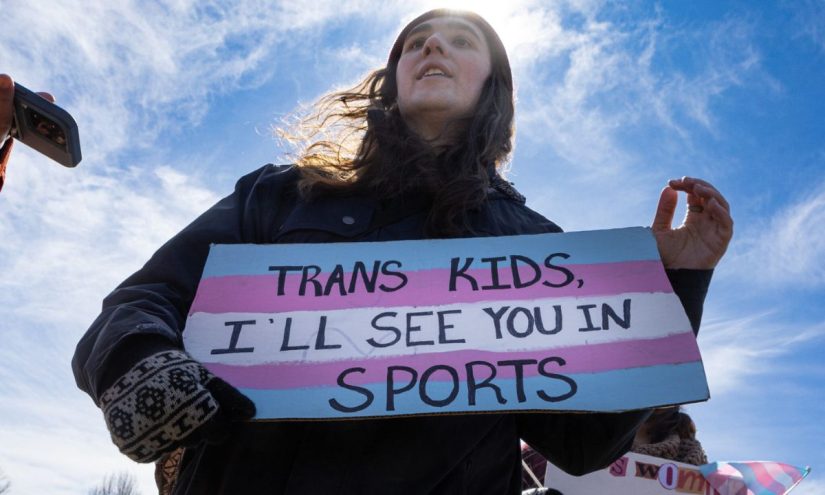
    The conflict between the state of Maine and the Trump administration over transgender student athletes reached a new pivot point on Monday. As the first of several deadlines set by the federal government has now expired, whether Maine can continue to allow trans athletes to participate in school sports appears likely to be decided by the courts.

    Two separate federal agencies determined that Maine is in violation of Title IX based on the Trump administration’s interpretation of the anti-sex discrimination protection.

    The U.S. Department of Education’s Office for Civil Rights issued a final warning Monday to the Maine Department of Education regarding its noncompliance with a federal directive for allowing trans girls to participate in girls’ sports.

    If the state does not propose an agreement that’s acceptable to the office by April 11, the case will be referred to the Department of Justice, the letter said.

    Meanwhile, a separate investigation by the U.S. Department of Health and Human Services’ civil rights office that found Maine in violation of Title IX for “continuing to unlawfully allow” trans girls to compete in girl’s sports has been referred to the U.S. Department of Justice, according to a Monday social media post from the agency.

    In a letter dated March 17, HHS had given Maine a deadline of 10 days to comply with federal guidance. Monday marked ten business days from that warning.

    Both agencies determined that Maine had violated federal law after dayslong investigations that included no interviews, while typical investigations take months and are eventually settled with resolution agreements. The probes were launched after Gov. Janet Mills and President Donald Trump had a heated exchange over the state’s trans athlete policy. Millions of dollars in federal funding might be at risk, depending on how the cases proceed.

    “We just need an answer at this point as to, ‘Does the Trump administration have the authority to do what it’s doing when it comes to fast tracking the removal of federal funds?’” said Jackie Wernz, a former OCR lawyer for the Education Department who now represents school districts nationwide in these types of cases.

    “This is just unprecedented, and we’re not following the process that we’re used to. So I think it’s going to be really helpful for courts to start weighing in on whether or not they have the authority to do this.”

    Meanwhile, Republican state lawmakers said in a news conference on Tuesday that they want the state to repeal trans students’ rights to athletics, locker rooms and bathrooms, and to roll back inclusion of gender as a protected class in the Maine Human Rights Act.

    “The problem is that the term gender identity and the Human Rights Act is being interpreted way too broadly by the left,” said Senate Minority Leader Trey Stewart (R-Aroostook). “And what it’s saying is there’s no boundary between men’s and women’s spaces.”

    Rep. Michael Soboleski (R- Phillips) said he is introducing a bill to remove consideration of gender identity from the act, and asked Democrats and Mills to support the legislation in order to avoid the risk of losing federal funding.

    Earlier this year, Iowa became the first state in the nation to remove civil rights from a state law when its Legislature voted to remove gender identity from its civil rights act.

    “This is not sustainable,” Stewart said. “We’re a poor state. We are heavily reliant on federal money. The governor needs to move on this.”

    On March 19, the Department of Education’s civil rights office notified Maine of its noncompliance and proposed a resolution agreement that would require the state to rescind its support of trans athletes, which is currently required by the Maine Human Rights Act. A Cumberland-area school district and the Maine Principals Association, which runs student athletics, that were also found in violation have already refused to sign the agreement.

    This development is part of a broader effort by the Trump administration to enforce Title IX provisions concerning gender and athletics. Earlier this year, the administration launched investigations in several other states for similar policies allowing trans athletes to compete in alignment with their gender identity.

    Title IX, the federal law banning sex-based discrimination, does not reference trans people directly, but the Trump administration has interpreted Maine’s policy as discrimination against cisgender girls.

    Rachel Perera, a fellow in the governance studies program for the Brown Center on Education Policy at national think tank The Brookings Institution, said the Trump administration’s interpretation of Title IX leaves room for questioning. If the policy goes to trial, she said federal courts may come up with a clearer interpretation.

    “It’s going to be really important to see how Maine proceeds, because they’re sort of setting the tone in terms of these other states and other localities who are going to be trying to navigate these very same dynamics,” she said.

    Maine Morning Star is part of States Newsroom, a nonprofit news network supported by grants and a coalition of donors as a 501c(3) public charity. Maine Morning Star maintains editorial independence. Contact Editor Lauren McCauley for questions: [email protected].


    Get stories like these delivered straight to your inbox. Sign up for The 74 Newsletter

    Source link

  • Princeton Grants Suspended as Federal Pressure on Universities Grows

    Princeton Grants Suspended as Federal Pressure on Universities Grows

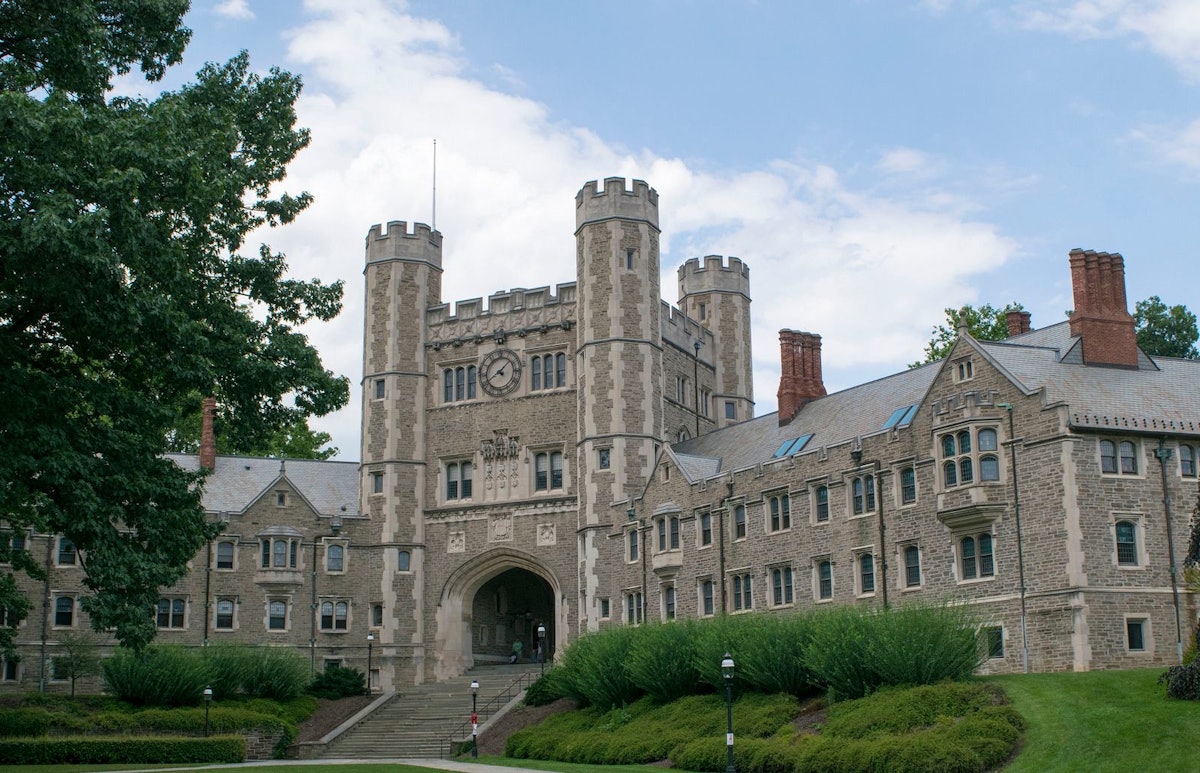
    Princeton University
    In a concerning development for research institutions nationwide, Princeton University has become the most recent Ivy League school to have federal funding suspended amid what many academic leaders are describing as an unprecedented federal pressure campaign targeting elite universities.

    Princeton President Dr. Christopher Eisgruber announced earlier this week that “several dozen” federal research grants from agencies including the Department of Energy, NASA, and the Department of Defense have been halted. While the administration’s complete rationale remains unclear, the university is among dozens facing federal investigations into campus antisemitism following pro-Palestinian demonstrations last year.

    “We are committed to fighting antisemitism and all forms of discrimination, and we will cooperate with the government in combating antisemitism,” Eisgruber wrote in a campus-wide message. “Princeton will also vigorously defend academic freedom and the due process rights of this University.”

    The Department of Energy confirmed it had paused Princeton’s funding pending a Department of Education investigation into alleged antisemitic harassment on campus.

    This action follows similar funding suspensions at other prominent institutions:

    • Columbia University lost $400 million in federal grants and agreed to several government demands, including revising student discipline policies and reviewing its Middle East studies department
    • The University of Pennsylvania faced approximately $175 million in suspended funding related to a transgender athlete who previously competed for the school
    • Harvard University is under review for nearly $9 billion in federal grants and contracts amid an antisemitism investigation

    The funding suspensions create significant challenges for research universities, which depend heavily on federal grants. Princeton’s president had previously criticized the Columbia funding cuts as “a radical threat to scholarly excellence and to America’s leadership in research” in a March essay published in The Atlantic.

    Princeton was among 60 universities that received warning letters from the Education Department in March regarding accusations of antisemitism. The department indicated schools could face enforcement actions if they failed to address anti-Jewish bias on campus. Six of the eight Ivy League institutions were included in these warnings.

    The Education Department’s investigation at Princeton began in April 2024 under the previous administration, responding to a complaint that cited pro-Palestinian protests allegedly including antisemitic chants. Similar complaints have been filed against dozens of other institutions.

    The current administration has promised more aggressive measures against campus antisemitism, opening new investigations and taking action against foreign students connected to pro-Palestinian demonstrations. University officials face the challenge of balancing compliance with federal demands while preserving academic freedom and campus autonomy.

    These developments follow congressional hearings on campus antisemitism that contributed to the resignations of presidents at Harvard, Penn, and Columbia. Most recently, Columbia’s interim president Dr. Katrina Armstrong resigned after the university agreed to the government’s demands.

    The situation raises critical questions about federal oversight of higher education, the boundaries of campus free speech, and the future of institutional autonomy at American universities.

    Source link

  • A turning point for UK international higher education

    A turning point for UK international higher education

    In 2019, the UK launched its first international education strategy – a landmark effort that set ambitious, cross-government targets for growing our international education footprint. The years since have exposed the fragility of a strategy without a built-in mechanism for review or refresh when buffeted by events. Changing geopolitics, tightening migration strategies and Covid might not individually have been expected, but exposure to global markets will always bring challenges.

    The 2019 roadmap lacked clarity on whether those targets were a floor or a ceiling and what we were to do when they were reached. In their absence, policy drifted. Reactive decisions replaced proactive planning. Universities, caught in the crosswinds of shifting geopolitics and domestic migration debates, have too often been left guessing what the government’s long-term vision really is.

    That’s why the International Higher Education Commission (IHEC) was formed; to fill this strategic vacuum with a coherent, forward-looking, and inclusive vision. Working across sectors – engaging university leaders, student bodies, recruiters, and policymakers – it’s been working on framework for a new UK international higher education strategy rooted in data, tempered by experience, and open to evolution.

    Our personal view is that we need nothing less than a reinvention of how we plan, manage, and grow international higher education; that we must hack a way through the many things we could do, or would like to do, to get to the essential priorities – what we must do – and be brave enough to make difficult decisions. 

    It is clear that the government wishes the sector well, but is not going to put its hand in its pocket any time soon. Our only way forward in the short term, then, is to ask for modest help, which will provide a short-term, concrete return on investment to trade our way out of the immediate difficulties.

    Our personal view is that we need nothing less than a reinvention of how we plan, manage, and grow international higher education

    If we steady the ship, we can in parallel put in place a framework, acknowledging the likely ongoing volatility in geopolitics and global markets, that moves us to a more strategic and sustainable approach in the medium and longer term. This may not be elegant policy making, but it is rooted in the pragmatic reality of the changes necessary to stabilise a system so economically, socially and culturally significant.

    We have shared our personal views in a number of fora over the past two years as IHEC has unfolded and reiterate them here as we anticipate the imminent publication of our final report. It is very timely now, having been delayed initially by the UK general election, in which higher education as a topic failed to appear. Then the focus of almost everyone was on the US election, and that was followed by the significant challenges in the sector that meant that policy suggestions would not have been appropriate. 

    Now, there is a more proactive, forward-looking context to which we hope we can contribute.

    • A living strategy with built-in review and flexibility

      The UK needs a dynamic framework, not a static document.

      Strategies must adapt to shifting global conditions, student preferences, and national needs. A ‘living’ strategy, reviewed regularly, updated transparently, and framed around multiple scenarios, not a single trajectory. Growth must be deliberate, not accidental.

      • Policy certainty and sustainable structures

          Confidence in the UK’s offer depends in part on consistency. The Graduate Route – allowing students to work post-study – has been a cornerstone of our recent successes, but its future must be secured through clearer legal and policy underpinning in the face of continuing threats from a still-changing migration policy context.

          We also need a more sustainable system that doesn’t rely solely on growth from a few key markets, but diversifies and balances recruitment in line with national capacity and ambition.

          • A competitive, student-centred offer

          International students are not just numbers; they’re individuals with aspirations and needs. Better engagement with the ‘student voice’ is critical, as is a re-examination of how we ensure student success as they enter the workforce.

          • Whole-government coherence and accountability

          Too often, policy is siloed across Whitehall. Education may do better than other areas, but there are key departments missing from discourse – the Home Office, the Department for Science, Innovation and Technology, among others – and they are necessary to provide coordinated oversight.

          It’s also vital to reflect regional priorities and the role of devolved nations, Metro Mayors, and local authorities in shaping recruitment and integration strategies.

          • Strategic marketing and market diversification

          The UK concentrates too heavily on a small number of international markets. We must be smarter.

          Study UK does the best it can with the woefully poor levels of investment, but we must invest in data-driven, market-specific campaigns and learn from countries like Australia that tie marketing to outcomes.  

          • Public-private partnership and institutional innovation

          Strategic delivery needs strategic partners. We must deepen collaboration with sector bodies like UKCISA, NISAU and BUILA to create a more integrated system that shares responsibility across institutions, government, and industry. 

          We also need to support the new found enthusiasm for TNE at scale to ensure that the new initiatives are robustly founded, and better data to inform national and institutional decision making.

          • Reframing migration and public narrative

          International students bring huge value to local economies, research, and the cultural fabric of our campuses. Yet in public discourse they too often become collateral in broader immigration debates.

          We must be able to show, and more effectively communicate, that almost all students return home. A confident, positive narrative is essential, based on evidence – not emotion.

          The road ahead

          This is a moment for boldness and clarity. The sector stands at a crossroads. It is under unprecedented threat, but it is also brimming with opportunity. If we get it right, the UK will not only remain a top destination for international students: we will lead globally on how it integrates education with diplomacy, soft power, and innovation.

    Source link

  • Free speech in an age of fear: The new system loyalty oaths – First Amendment News 464

    Free speech in an age of fear: The new system loyalty oaths – First Amendment News 464

    “Whoever would overthrow the liberty of a nation must begin by subduing the freeness of speech.” — Benjamin Franklin

    If you look beneath the veneer of it all, what surfaces from the chaos of the last eight weeks is a demand for unyielding loyalty to a man and his personal and political whims. 

    His demands, followed in fear, are cravenly honored by political figures, media corporations, university presidents, law firms, Justice Department lawyers, and all others who surrender on bended knee to an authoritarian figure who holds the title of the 47th president of the United States. 

    Few stand up to him; many kowtow to him. Silence and sycophancy surround him. Meanwhile, his agency hitman exercises power with unconstitutional zeal. 

    When persuasion fails, when logic departs, when toleration ceases to be tolerated, and when the very pillars of freedom of expression are battered with ruinous consistency, then the promise of the First Amendment is breached with abandon — this while so many fiddle. 

    Given what has gone on in the first quarter of 2025 alone, this much is true: We are witnessing frontal attacks on freedom, especially our First Amendment freedoms (e.g., FANs 463462461, and 460). 

    Government by executive order is his calling card — his “trump” card. Shakedowns are his tactic. “Administrative error” is the justification given by his confederates for egregious due process violations. 

    No matter how personal, punitive, or partisan, this power (often unconstitutional in principle and authoritarian in practice) has become this administration’s default position. His will is effected by his lieutenants, implemented by his attorney general, executed by his DOGE goons, fulfilled by his FBI director and other cabinet officials, orchestrated by his deputy of policy, and defended by his press secretary. 

    In such ways, as professor Timothy Zick’s “Executive Watch” posts have revealed and will continue to reveal, the First Amendment is also under siege.

    Fear is the engine that drives so much of this aggrandizement of power, and the submission to it. As in the McCarthy era, robotic loyalty fuels that engine. What we are seeing in Washington is a new era in compelled allegiance. Executive order “negotiations” are premised on mandatory loyalty.

    To get a sense of the nature of this problem, simply consider some of what Thomas I. Emerson (a revered civil liberties and free speech scholar) wrote 55 years ago in his seminal “The System of Freedom of Expression.” When liberty is contingent on one’s “beliefs, opinions, or associations,” there is a “grossly inhibiting effect upon the free exercise of expression.” 

    The inevitable result, Emerson added, is to silence “the more conscientious and invite the less scrupulous to pass. ‘Self-executing’ by its nature, it places the burden upon the person…to interpret [the loyalty oaths’] purpose, recall all past events in his life, and decide what current or future [orders might affect him] at his peril.” The net effect is to leave citizens “at the continuing mercy” of the government. 

    Put bluntly: “It is inherently demeaning to a free people.” (emphasis added) 

    It is that fear, born of direct or veiled demands for loyalty, that has seized power in the control rooms of our government. Time and again, day in and day out, yet another executive order, followed by servile enforcement, abridges our First Amendment freedoms. When will it end? When will enough men and women of courage join together and say “enough”? One answer was tendered in 1776 in a work titled “The American Crisis.” To quote its author, Thomas Paine:

    These are the times that try men’s souls. The summer soldier and the sunshine patriot will, in this crisis, shrink from the service of their country; but he that stands by it now, deserves the love and thanks of man and woman.

    Related 

    To preserve America’s tradition as a home for fearless writing, the Foundation for Individual Rights and Expression and Substack are partnering to support writers residing lawfully in this country targeted by the government for the content of their writing — those who, as Hitchens once put it, “committed no crime except that of thought in writing.”

    If you fit this category, whether or not you publish on Substack, we urge you to get in touch immediately at thefire.org/alarm or pages.substack.com/defender.


    Coming Soon

    A Question and Answer interview with Janie Nitze, co-author with Justice Neil Gorsuch of “Over Ruled: The Human Toll of Too Much Law.”

    See “An open invitation to Justice Neil Gorsuch and Janie Nitze to reply to their new book’s critics,” FAN 444 (Oct. 23)


    Voice of America court victory in journalists’ firing case

    The Voice of America can’t be silenced just yet. A federal judge on March 28 halted the Trump administration’s efforts to dismantle the eight-decade-old U.S. government-funded international news service, calling the move a “classic case of arbitrary and capricious decision making.”

    Judge James Paul Oetken blocked the U.S. Agency for Global Media, which runs Voice of America, from firing more than 1,200 journalists, engineers and other staff that it sidelined two weeks ago in the wake of President Donald Trump’s ordering its funding slashed.

    Seth Stern on DOGE and related free speech issues

    First Amendment Watch spoke with director of advocacy at Freedom of the Press Foundation, Seth Stern, about the First Amendment issues baked into the online exchange. Stern described Martin’s letter as intentionally ambiguous, argued that confusion over DOGE as a quasi-government agency brings its transparency responsibilities into question, and described the free speech issues that may arise from Musk’s roles as a social media platform owner and advisor to the president.

    Yale Law School ‘Free Speech in Crisis’ conference

    Agenda

    Friday, March 28

    9:15 a.m. | Welcome/Opening Remarks 

    • Organizers: Jack Balkin, Genevieve Lakier, Mikey McGovern

    9:30 a.m. | Panel 1: Media Environment 

    • Chair: Paul Starr, Princeton University
    • Yochai Benkler, Harvard Law School
    • Mary Anne Franks, George Washington University School of Law
    • Eugene Volokh, Hoover Institution

    11:15 a.m. | Panel 2: Polarization 

    • Chair: Robert Post, Yale Law School
    • Nicole Hemmer, Vanderbilt University
    • Liliana Mason, SNF Agora Institute, Johns Hopkins University
    • Ganesh Sitaraman, Vanderbilt Law School

    2:15 p.m. | Panel 3: Political Marketplace 

    • Chair: Rick Hasen, University of California, Los Angeles School of Law
    • Rick Pildes, NYU Law School
    • Bradley A. Smith, Capital University Law School
    • Ann Southworth, University of California, Irvine School of Law

    4:00 p.m. | Panel 4: Workplace 

    • Chair: Amanda Shanor, University of Pennsylvania
    • Helen Norton, University of Colorado School of Law
    • Benjamin Sachs, Harvard Law School
    • Liz Sepper, University of Texas Law School

    Saturday, March 29

    9:30 a.m. | Panel 5: Knowledge Production 

    • Chair: Amy Kapczynski, Yale Law School
    • E.J. Fagan, University of Illinois Chicago
    • Vicki Jackson, Harvard Law School
    • Naomi Oreskes, Harvard

    11:15 a.m. | Panel 6: Campus Politics 

    Chair: Genevieve Lakier, University of Chicago Law School

    • Judith Butler, University of California, Berkeley
    • Athena Mutua, University at Buffalo School of Law
    • Keith Whittington, Yale Law School

    1:00 p.m. | Wrap-Up Conversation 

    • Organizers: Jack Balkin, Genevieve Lakier, Mikey McGover

    Forthcoming book on free speech and incitement 

    Cover of the book "Free Speech and Incitement in the Twenty-First Century" by Eric Kasper and JoAnne Sweeny

    Free Speech and Incitement in the Twenty-First Century explores the line between free speech and incitement, which is a form of expression not protected by the First Amendment. Incitement occurs when a person intentionally provokes their audience to engage in illegal or violent action that is likely to, or will, occur imminently. 

    This doctrine evolved from World War I through the Cold War and the civil rights movement era, culminating in a test announced by the U.S. Supreme Court in Brandenburg v. Ohio (1969). Since the 1970s, this doctrine has remained largely unchanged by the Supreme Court and, as such, has received relatively little academic or media attention. 

    Since the late 2010s, however, violence at political rallies, armed protests around Confederate statues, social unrest associated with demonstrations against police, and an attack on the U.S. Capitol have led to new incitement cases in the lower courts and an opportunity to examine how incitement is defined and applied. Authors from different perspectives in Free Speech and Incitement in the Twenty-First Century help the reader understand the difference between free speech and incitement.

    ‘So to Speak’ podcast on Columbia University, DEI, and law firms

    We explore how censorship is impacting institutions — from universities to law firms to the Maine House of Representatives.


    More in the news

    2024-2025 SCOTUS term: Free expression and related cases

    Cases decided 

    • Villarreal v. Alaniz (Petition granted. Judgment vacated and case remanded for further consideration in light of Gonzalez v. Trevino, 602 U. S. ___ (2024) (per curiam))
    • Murphy v. Schmitt (“The petition for a writ of certiorari is granted. The judgment is vacated, and the case is remanded to the United States Court of Appeals for the Eighth Circuit for further consideration in light of Gonzalez v. Trevino, 602 U. S. ___ (2024) (per curiam).”)
    • TikTok Inc. and ByteDance Ltd v. Garland (The challenged provisions of the Protecting Americans from Foreign Adversary Controlled Applications Act do not violate petitioners’ First Amendment rights.)

    Review granted

    Pending petitions 

    Petitions denied

    Free speech related

    Thompson v. United States (Decided: 3-21-25/ 9-0 with special concurrences by Alito and Jackson) (Interpretation of 18 U. S. C. §1014 re “false statements”)

    Last scheduled FAN

    FAN 463: ‘We simply could not practice law . . . if we were still subject to the executive order’

    This article is part of First Amendment News, an editorially independent publication edited by Ronald K. L. Collins and hosted by FIRE as part of our mission to educate the public about First Amendment issues. The opinions expressed are those of the article’s author(s) and may not reflect the opinions of FIRE or Mr. Collins.

    Source link

  • “Anything Can Be Done With Anything”: Innovative Universities with Dara Melnyk

    “Anything Can Be Done With Anything”: Innovative Universities with Dara Melnyk

    There’s an old joke about innovation in higher education.  It goes like this:  How many universities does it take to screw in a lightbulb.  Change

    Maybe that’s a bit unfair, but it’s unquestionable that the sector isn’t famed for welcoming change, in particular radical change.  One particular aspect is what is called isomorphism – the tendency of all institutions to look the same because they are copying some “ideal” model university (think Harvard or Oxford); indeed, that institutions which don’t copy the model followed by “prestige” universities must ipso facto lack “quality”. 

    But innovation does happen.  It’s just not always widely noticed or celebrated.  But there is one regular webinar that is trying to change that, and that’s the Innovative Universities Global Webinar Series.  Based at Constructor University in Germany, it’s co-hosted by two fantastic higher education researchers.  One is Isak Frumin, who joined our podcast last year to talk about post-Soviet universities, and the other is today’s guest, Dara Melnyk.

    We invited Dara onto the show today to discuss what she and Isak have discovered about innovative universities over the course of their webinar series.  What are the catalysts for innovation in higher education?  What kinds of structures or leadership are required to sustain innovation?  Does the innovation process look different in different parts of the world?  I found this an absolutely delightful conversation, mainly because Dana’s job allows her to delve deeply int topics that I wish I could spend more time on myself, and this was a chance for me to live that life vicariously.  I hope you find her as insightful as I did.  And so without futher ado: over to Dara.


    The World of Higher Education Podcast
    Episode 3.26 | “Anything Can Be Done With Anything”: Innovative Universities with Dara Melnyk 

    Transcript

    Alex Usher (AU): Dara, how did the Innovative Universities Global Webinar come about? What was the motivation to create a platform specifically focused on institutional innovation in higher education?

    Dara Melnyk (DM): So, there were practical reasons—I’d say three of them—and one completely impractical reason.

    The first practical reason is that we truly believe innovative universities are important. They’re useful because they test new approaches, and when those approaches are successful, other universities adopt them. That’s how you upgrade higher education systems. It’s, I think, one of the most powerful—and also most ethical—mechanisms for institutional change, as compared to implementing strict policies.

    The second practical reason is tied to my work. I’ve been consulting and advising universities for the past decade, and it’s simply easier to talk about universities when you can use extreme cases. These cases make for good examples, and innovative universities really have to get that one thing at the core of their distinction exactly right. They can typically articulate what they do very clearly, which makes it efficient to learn from them. For example, a lot of universities practice PBL, but if you want to really understand how it works, it makes sense to go to the core—to McMaster University, Maastricht University, whichever you prefer.

    The last practical reason is that innovative universities often have to fight private battles with regulators. They’re constantly trying to bridge the gap between their vision and the realities of everyday practice, and that can get pretty isolating. So we thought it would be helpful to create a gallery of cases, where university leaders could speak about their ideas and challenges—and where others could learn from those stories and feel a bit better about their own practice.

    And finally, the impractical reason—I promised you one of those! Isak, my co-host, and I have this acute curiosity about higher education. Innovative universities intrigue us. They surprise us. They’re hopeful. And most importantly, they make us question what we believe about higher education.

    AU: How do you go about selecting cases? What is it that makes a university truly innovative? Is it technology, governance, pedagogy? And how long do you have to wait to know if it’s an innovation worth copying?

    DM: Okay, so there are two questions here. First, about selecting cases—I’d love to tell you that we have a long, strict list of criteria, that we run them through models or maybe Excel files or something like that. But truly, we just follow our gut feeling. If something gives us pause, it might do the same for the audience. That’s how we choose. Someone tells us about an institution, and we think, “Okay, this is interesting—how do they do it?” And that’s when we decide to feature it.

    Now, in terms of what makes a university innovative, we mostly focus on innovations that are constitutive, not auxiliary—meaning they’re absolutely necessary for that specific university model to function. We do also like looking into innovations in the operational model. But typically, we concentrate on innovations in the core—so, in teaching and learning—because that seems to be the very essence of the idea of the university.

    AU: In your experience, I’m wondering to what extent institutions innovate for—how can I put this—internal reasons, as opposed to external challenges. What kinds of external challenges or changes in the environment, I guess, force institutions to rethink their model? And how often is it those external forces that are decisive in making institutions take that turn toward innovation?

    DM: I feel it’s not that cut and dried. While universities do sometimes respond to external forces or challenges, they also just as often stand idly by—disallowing what’s happening. Not in the sense of ignoring it, but rather acknowledging it, addressing it, and then denying any responsibility for taking action. That happens just as frequently.

    What I think triggers innovation more reliably is what I would call inflection points—periods in history when norms start shifting, and people begin to question what they believe in and what is right. And while that’s happening, you can sneak in something truly unusual.

    The largest and longest inflection period we’ve seen was probably in the 1960s and 1970s, when a lot of things were changing. Gender norms and generational roles were being questioned, there was widespread discontent with U.S. foreign policy and levels of inequality, and in Europe there was a kind of religious rebellion. That’s how we ended up with, I think, almost half of the cases in our collection.

    And possibly, we are living through an inflection period now as well. We’re seeing technological shifts, a new political order—or, as The Economist recently and aptly put it, “disorder”—emerging, as well as climate wars. Institutions are responding to all of that, but they’re also enabled to respond, because no one is quite sure what the correct university model is right now. For a time, that uncertainty creates room to innovate. I think at some point, it will settle again—and innovating will become difficult.

    AU: It seems to me that innovations require a pretty careful mix of institutional structures, leadership styles, funding mechanisms—these could be internal or external. Is there any configuration that you think is more likely to support long-term change?

    DM: First of all, anything can be done with anything. We’ve seen the most fascinating cases of innovation happen under really severe constraints. But at the same time, there are factors that significantly contribute to innovation. I’d classify them as stories, leaders, and policy.

    Starting with stories: if a university community believes it must innovate—for whatever reason, whether to be a pathfinder, to show other universities the way, or to solve problems because it has a vision it’s trying to implement—then it keeps solving issues in order to make that vision real.

    When it comes to leaders, personal drive matters. And you actually need several people with that drive, because they’ll argue, they’ll compete, they’ll collaborate—and ultimately, they’ll move the university forward. No university leader is an island, to paraphrase John Donne. No team, no vision, no innovation, ultimately.

    And finally, policy. I think you’d agree there needs to be sufficient autonomy to experiment. It sounds like a basic statement—like something you hear in every second university president’s speech—but universities are often quite limited by licensing and accreditation regulations. And also by something I’d call self-arrest, borrowing from Antony Giddens: playing it safe just in case, keeping still, not rocking the boat.

    So autonomy is really important. I love the title of the book by Bartlett Giamatti about universities—The Free and Ordered Space. I’ve been obsessed with that phrase. It seems incredibly relevant to universities, because, well—there is no order if you don’t have freedom. Freedom is the basis of order for universities.

    AU: Dara, your series features universities from all over the world. I’ve been so impressed by the way you’ve been able to go to various corners of the globe. What’s your impression about how the approach to innovation differs regionally? So, is there a North American path to institutional innovation that’s different from what you see in Europe or Asia? Is it about philosophy? Is it about traditions? I mean, what are the differences you see globally?

    DM: I think it’s about problem fields. A problem field is a cluster of issues you have to navigate and somehow address—quote in your design—for sponsors to even consider investing, for students to consider coming, and so on.

    If I were to walk you through the regions—this is a really rough typology at the moment, but still—
    For Africa, the problem field is the trifecta of affordability, quality, and regional relevance. That last part is sometimes interpreted as decolonization, but I think it’s more than that.

    Asia is incredibly diverse, both economically and culturally. I’d say China seems especially concerned with identifying its own way and positioning universities as economic drivers—meaning actual partnerships between higher education institutions and industry. And in developing countries, I think it’s mostly about securing social mobility for students.

    Now, traveling to North America—we’ve only looked at the U.S. so far; Canada is pending—it’s also very much centered on affordability. But with the University of Austin—not to be confused with the University of Texas at Austin—we’re seeing a return to thinking about and experimenting with what a university should be in the first place. That sounds a bit like the 1960s to me. So, we’ll see what happens there.

    And finally, Europe is all about Europe—Europeanness. Its largest innovation, the European University Networks, is centered on that. And apart from this sense of Europeanness, there’s a lot of attention to innovative and experimental pedagogies, partly in response to demographic changes.

    AU: About a year ago, we had a guest on the show, Brian Rosenberg—you’ve probably read his book, Whatever It Is, I’m Against It. He painted a picture of American institutions as being very resistant to innovation, basically because there are too many points of veto within the institution. What are the biggest obstacles you see preventing universities from adopting innovative practices? Are you as pessimistic as Brian? How do you get around that tendency toward inertia?

    DM: I am definitely not as pessimistic as Brian—maybe because I don’t live in the U.S. I hope the land down below Canada won’t be offended by that!

    Now, talking about obstacles, there are both external and internal ones. Externally, they’re quite plentiful, but I think it boils down to a conflict between open and closed systems. A higher education system is either welcoming—in narrative and policy—to innovation, or it’s not. And the way to overcome that barrier usually involves promotion, and often lobbying, for the importance of innovative universities.

    According to our observations, successful, innovative universities are typically led by talented lobbyists. You have to be able to fight back—to be an actor, not just an agent, in the national conversation.

    Now, for internal obstacles, the biggest one is a lack of critical discussion about the organization. If people can’t voice issues or share ideas—because, for example, they’re afraid to—then nothing changes, and nothing will change. So, step one is to create a platform for that discussion. And step two is not just to invite people to share their opinions—or embolden them, if you can—but to actually carry the conversation through to real projects. Try something out. It may or may not work, but at least you’ve tried. And then you can try again. That’s how you become an innovative institution.

    AU: What’s the most innovative institution you’ve seen? I know you’ve done dozens of these around the world. What’s the one that really affected you the most—one that you thought was the most interesting to think about or to look at?

    DM: It doesn’t really work like that. We tend to get excited about every single institution we look at. The more attention you pay to one, the more fascinated you get. For me, it’s typically the last case—either the one we just covered or the one we’re about to cover.

    So, the case we just covered is Roskilde University in Denmark, which is a cousin of McMaster University. They’re just wonderful. They have their own proprietary methodology—problem-oriented project learning—and they keep introducing new innovations. If you look at the news page on their website, it’s not just updates about research outcomes and student results. It’s also things like, “We’re going to introduce this,” or “We’re thinking about that.”

    And the case we’re going to cover very soon, in a couple of days, is Tidelines Institute. It’s a micro-college. There’s a proper definition for that, but I like to define micro-colleges as institutions where everybody knows everybody.

    Tidelines is located in the Alaskan wilderness and sees itself almost as complementary to traditional higher education institutions. It’s not a disruptive institution—it’s a complement. It’s an addition. It offers experiential learning through short-term projects for students. They can come for six months or even just a couple of weeks and learn something amazing by doing.

    AU: So, based on all these conversations you’ve had, what are the big themes that you think might affect—for lack of a better word—the university of the future? Obviously, there’s not one university of the future; there are lots of different possibilities and roles for individual institutions to play. But are there specific themes emerging from your research that you think might become a more hegemonic—or dominant—blueprint for higher education in the coming decades?

    DM: Some things are clear. First, affordable university models will keep appearing—because everyone wants them to. For that, you might look at NewU University in Washington, DC. It’s a really brave and persistent case that I admire deeply. Or the African Leadership University, which Brian Rosenberg—whom you mentioned—is an advisor to.

    Second, universities will implement more technology. We all know it; everybody talks about it. I’d recommend looking at MEF, a Turkish university, to see what they’re doing. They’re quite systematic in implementing new technological solutions.

    Third—and almost as a mirror to that technological implementation—universities will also have to compete with online platforms. They have to offer something no one else does. I really like the idea of Forward College, which is an itinerant college in Europe. Students study in Lisbon for their first year, Paris for their second, and Berlin for their third. Forward College believes that relational pedagogy should lie at the core of education—the relationship between teacher and student as the driver for learning. I think that has its place, maybe even a central place, in universities. These are the spaces where generations meet, and that should be used and leveraged.

    That said, I want to make a slightly extended comment about innovation. I’m not sure if Isak would agree, but even though I research innovative universities, talk about them, and write about them, I don’t truly believe in innovations in higher education. I don’t think they’re possible.

    Lately, I’ve been reading and listening to things about ancient Greece and ancient Greek education—and also listening to Bastille, because for me, that’s connected. There’s a line in their song Pompeii: “But if you close your eyes, does it almost feel like nothing changed at all?” The more I learn about innovative higher education, the more I believe in two things: first, nothing will fundamentally change; and second, nothing should.

    On that first point—about the lack of fundamental change—most innovations are reimaginings. We keep reimagining ideas that have already been discussed, that have already been tried, throughout the couple of thousand years of higher education history.

    And on the second point—maybe that’s not such a bad thing. Maybe it’s something universities should retain. They are organizations that manage knowledge. They gain knowledge through research, they transmit it through education, and they apply it through technology transfer. The formats might change, but at their core, universities should remain the one type of organization responsible for the complete knowledge cycle. Everything else seems secondary to me.

    AU: Dara Melnyk , thanks so much for joining us today. And it just remains for me to thank our excellent producers, Tiffany MacLennan and Sam Pufek—and you, our viewers, listeners, and readers—for joining us today. If you have any questions or concerns about today’s episode, or suggestions for future ones, please don’t hesitate to get in touch with us at [email protected]. Run—don’t walk—to our YouTube channel. Subscribe to it so you never miss an episode of The World of Higher Education. Join us next week when I’ll be joined by Nicolas Badré, the Chief Operating Officer of the Galileo Global Education Group. We’ll be talking about the rise of private higher education in Europe and the Galileo Group’s fascinating experiments with artificial intelligence in teaching and learning. Bye for now.

    *This podcast transcript was generated using an AI transcription service with limited editing. Please forgive any errors made through this service. Please note, the views and opinions expressed in each episode are those of the individual contributors, and do not necessarily reflect those of the podcast host and team, or our sponsors.

    This episode is sponsored by Studiosity. Student success, at scale – with an evidence-based ROI of 4.4x return for universities and colleges. Because Studiosity is AI for Learning — not corrections – to develop critical thinking, agency, and retention — empowering educators with learning insight. For future-ready graduates — and for future-ready institutions. Learn more at studiosity.com.

    Source link

  • Understanding why students cheat and use AI: Insights for meaningful assessments

    Understanding why students cheat and use AI: Insights for meaningful assessments

    Key points:

    • Educators should build a classroom culture that values learning over compliance
    • 5 practical ways to integrate AI into high school science
    • A new era for teachers as AI disrupts instruction
    • For more news on AI and assessments, visit eSN’s Digital Learning hub

    In recent years, the rise of AI technologies and the increasing pressures placed on students have made academic dishonesty a growing concern. Students, especially in the middle and high school years, have more opportunities than ever to cheat using AI tools, such as writing assistants or even text generators. While AI itself isn’t inherently problematic, its use in cheating can hinder students’ learning and development.

    More News from eSchool News

    Many math tasks involve reading, writing, speaking, and listening. These language demands can be particularly challenging for students whose primary language is not English.

    As a career and technical education (CTE) instructor, I see firsthand how career-focused education provides students with the tools to transition smoothly from high school to college and careers.

    As technology trainers, we support teachers’ and administrators’ technology platform needs, training, and support in our district. We do in-class demos and share as much as we can with them, and we also send out a weekly newsletter.

    Math is a fundamental part of K-12 education, but students often face significant challenges in mastering increasingly challenging math concepts.

    Throughout my education, I have always been frustrated by busy work–the kind of homework that felt like an obligatory exercise rather than a meaningful learning experience.

    During the pandemic, thousands of school systems used emergency relief aid to buy laptops, Chromebooks, and other digital devices for students to use in remote learning.

    Education today looks dramatically different from classrooms of just a decade ago. Interactive technologies and multimedia tools now replace traditional textbooks and lectures, creating more dynamic and engaging learning environments.

    There is significant evidence of the connection between physical movement and learning.  Some colleges and universities encourage using standing or treadmill desks while studying, as well as taking breaks to exercise.

    This story was originally published by Chalkbeat. Sign up for their newsletters at ckbe.at/newsletters. In recent weeks, we’ve seen federal and state governments issue stop-work orders, withdraw contracts, and terminate…

    English/language arts and science teachers were almost twice as likely to say they use AI tools compared to math teachers or elementary teachers of all subjects, according to a February 2025 survey from the RAND Corporation.

    Want to share a great resource? Let us know at [email protected].

    Source link

  • 6 ways tech simplifies school communication and engagement

    6 ways tech simplifies school communication and engagement

    Key points:

    • Streamlining school communication empowers all district stakeholders
    • The dos and don’ts of parent-educator communication
    • Female district leaders target back-to-school priorities
    • For more on school communication, visit eSN’s Educational Leadership hub

    As technology trainers, we support teachers’ and administrators’ technology platform needs, training, and support in our district. We do in-class demos and share as much as we can with them, and we also send out a weekly newsletter. We coordinate a lot of different training sessions across our many different platforms, and support principals during staff meetings and on professional development days.  

    More News from eSchool News

    Many math tasks involve reading, writing, speaking, and listening. These language demands can be particularly challenging for students whose primary language is not English.

    As a career and technical education (CTE) instructor, I see firsthand how career-focused education provides students with the tools to transition smoothly from high school to college and careers.

    In recent years, the rise of AI technologies and the increasing pressures placed on students have made academic dishonesty a growing concern. Students, especially in the middle and high school years, have more opportunities than ever to cheat using AI tools.

    Math is a fundamental part of K-12 education, but students often face significant challenges in mastering increasingly challenging math concepts.

    Throughout my education, I have always been frustrated by busy work–the kind of homework that felt like an obligatory exercise rather than a meaningful learning experience.

    During the pandemic, thousands of school systems used emergency relief aid to buy laptops, Chromebooks, and other digital devices for students to use in remote learning.

    Education today looks dramatically different from classrooms of just a decade ago. Interactive technologies and multimedia tools now replace traditional textbooks and lectures, creating more dynamic and engaging learning environments.

    There is significant evidence of the connection between physical movement and learning.  Some colleges and universities encourage using standing or treadmill desks while studying, as well as taking breaks to exercise.

    This story was originally published by Chalkbeat. Sign up for their newsletters at ckbe.at/newsletters. In recent weeks, we’ve seen federal and state governments issue stop-work orders, withdraw contracts, and terminate…

    English/language arts and science teachers were almost twice as likely to say they use AI tools compared to math teachers or elementary teachers of all subjects, according to a February 2025 survey from the RAND Corporation.

    Want to share a great resource? Let us know at [email protected].

    Source link

  • The one thing that unites French voters

    The one thing that unites French voters

    French President Emmanuel Macron’s grip on stability, progress and voter approval seems to be slipping.

    His party lost its absolute majority in the National Assembly and, following snap elections in the summer of 2024, its relative majority as well. Now, he faces a budget crisis, voter pushback and a geopolitical crisis involving Europe, the United States and Russia.

    Macron had once hoped to bridge France’s political divides and reinvigorate its economy but is now mired in political quicksand and many French voters feel helpless. That’s what I discovered while interviewing people on the street in Rennes, France, where I’m spending a year studying abroad and trying to make sense of French politics.

    One elderly woman I spoke to described what was happening as a catastrophe. “It’s embarrassing,” she said. “All we can do is wait for the next presidential election.”

    My interviews aligned with a November 2024 IPSOS survey, which found that 74% of respondents lack confidence in the presidency, while an overwhelming 86% distrust political parties. Trust in the National Assembly has plummeted as well, with 74% of respondents expressing no faith in the institution.

    What voters say

    People are frustrated. A middle-aged man told me: “Macron has lost his authority. France is unstable, gridlocked and hostile.”

    Back in September, Macron appointed Michel Barnier as prime minister in an attempt to stabilize his government but it backfired. By December, Barnier’s government had collapsed after losing a no-confidence vote, ousting him and his ministers and triggering yet another governmental reset.

    The vote came in response to Barnier’s use of Article 49.3 of the French Constitution, which allows the executive to pass a budget without parliamentary approval.

    It wasn’t until February 2025 that lawmakers finally agreed on a budget — one met with widespread discontent over spending cuts and reallocations. Now, many French citizens are asking: What’s next for the Republic?

    A law student I spoke with who goes to the University of Rennes expressed uncertainty about the country’s future. “I’m scared because we’re walking back on progress,” he said.

    A nation disunited

    Political divisions seem to be deepening, amplified by social media.

    A political science student at Rennes 2 University noted that people seem unable to talk to each other. “It’s harder than ever to have conversations with people who disagree with us,” the student said. “We don’t just see differing opinions, we see them as attacks on who we are.”

    Another student said that at university, now, you find yourself attacked or excluded if you don’t agree.

    This polarization was evident in the most recent European elections. The far-right Rassemblement National secured 31.5% of the vote — a 40-year record for any French party in a European election. Their campaign focused on hard-line immigration policies, crime reduction and tax cuts on fossil fuels.

    Despite shared dissatisfaction, French citizens are divided on the changes they seek. One university student emphasized the need for a more equitable education system.

    “We’ve made strides in accessibility, but students are locked into career paths too early,” she said. “My younger brother, for example, always dreamed of becoming a pilot. But because his undiagnosed ADHD hurt his test scores, he was placed in a vocational high school instead of a general one. Now he’s studying to be an air steward.”

    Some want a strong government.

    A retired woman expressed concern over global instability. “Russia’s invasion of Ukraine is terrifying,” she said. “And with Trump distancing the U.S. from the EU, I worry our military isn’t strong enough. France and the EU need to invest in defense.”

    To put what I found on the streets into perspective, I spoke with Alistair Lyon, a News Decoder correspondent and former reporter with the Reuters international news service who lives in France.

    He highlighted the long-term consequences of the gridlock in French politics. “In a time when France faces huge challenges like a budget deficit and a major geopolitical crisis involving the U.S., Europe and Russia, now is not a great time to have a political stalemate,” Lyon said.

    He expects the stalemate to continue until the 2027 presidential election, given Macron’s loss of both absolute and relative majorities in the National Assembly.

    He pointed to two major sources of division: growing disillusionment with politicians and resistance to reform. Many French voters feel politically homeless, fueling a cycle where reforms are met with fierce backlash, ultimately deterring further change.

    Disinformation breeds distrust.

    Compounding the problem is the erosion of independent journalism.

    “You have to be very careful reading the news,” Lyon said. “Journalists that remain anchored to traditional values of accuracy and impartiality are becoming few and far between.”

    In France, billionaire and right-wing proponent Vincent Bolloré has bought up news and media outlets, raising concerns about bias and misinformation. In a way, Lyon said, the media is fueling the fires of divisions in new ways because now the press is controlled and owned by people with vested political interests.

    France finds itself at a crossroads. Uncertainty, frustration and political polarization are creating more gloom than ever.

    Whether stability can be restored depends on Macron, the parliament and their willingness to compromise. If cooperation remains minimal, France may continue down a path of deepening division, one with consequences far beyond its borders.


    Three questions to consider:

    1. Why has French President Emmanuel Macron lost significant support from voters?

    2. What is one thing voters are in France want from their government?

    3. As a citizen of your country, what do you expect your government to do for you?


    Source link