Category: Featured

  • Big university endowments grew 11.5% in FY25, TIFF says

    Big university endowments grew 11.5% in FY25, TIFF says

    This audio is auto-generated. Please let us know if you have feedback.

    Dive Brief:

    • Amid volatile markets and shifting investment strategies, big U.S. university endowments posted their second straight year of double-digit gains, according to an analysis from TIFF Investment Management. 
    •  Endowments worth over $1 billion that have reported earnings so far made average returns of 11.5% in fiscal 2025, TIFF found. That’s on top of 11.2% average annual returns experienced sectorwide the previous year, according to the National Association of College and Business Officers-Commonfund endowment study. 
    • The strong earnings from college endowments come as Republicans aim to convert more of those funds into government revenue. “The Endowment Tax is coming,” the TIFF report noted.

    Dive Insight:

    Of the colleges that have reported their endowment earnings, the University of Wisconsin-Madison posted the highest return rate at 16.2%, followed by one of the University of California’s fund pools (15.8%) and the University of Michigan (15.5%).  

    For now, endowments have enjoyed strong returns and minimal, if any, federal taxes. The TIFF report attributed strong growth in fiscal 2025 — which ended in the summer for universities that recently reported — to outperforming private investments, such as in private equity and venture capital. Within private equity, investments in growth and pre-IPO companies in particular helped boost earnings. 

    For example, the Massachusetts Institute of Technology’s endowment — the top-performing among a group of elite colleges that also includes the Ivy League and Stanford University, with a return rate of 14.8% — had a little over a third of its assets in private equity, according to TIFF. University of Michigan had 9% in private equity and 28% in venture capital. 

    Endowment returns were also helped along by strong performances in both equities and bonds in what TIFF described as “an unusual year,” with both safer and higher-risk securities yielding returns amid broad economic concerns. International equities, artificial intelligence-related stocks, like Nvidia, and other diversifying investments such as gold also gave endowments a lift, TIFF said. 

    Endowment returns will face new pressure in 2026. The massive spending bill signed by President Donald Trump this summer is set to raise taxes next year on the richest private university endowments by multiple percentage points. 

    The current endowment tax — a flat rate of 1.4% enacted in 2017 — only applies to the wealthiest few dozen endowments in the country. 

    The spending bill creates a tiered tax system for colleges with 3,000 or more tuition-paying students that starts at 1.4% on returns for endowments valued at $500,000 to $749,999 per student. It then jumps to 4% and 8% based on endowment assets per student. 

    For the largest endowments, that translates into a tax bill of many millions of dollars per year. Harvard University, for example, anticipates it will pay $300 million a year to the government, CFO Ritu Kalra said in October. That compares to $44 million in taxes and other fees in fiscal 2024.

    “That means hundreds of millions of dollars that will not be available to support financial aid, research, and teaching,” Kalra said in an official Q&A following the release of the university’s annual financials. 

    Yale University President Maurie McInnis said in July the tax will cost the institution around $280 million in its first year and likely more after that. 

    Even universities with smaller tax bills are also anticipating financial pain. 

    In July, Washington University in St. Louis’ leader cited in part an estimated $37 million in additional costs from the new taxes in explaining the need for budget measures. WashU has laid off 316 staffers and eliminated another 198 unfilled positions since March.


    Source link

  • How school IT teams lock down QR-based SSO without hurting usability

    How school IT teams lock down QR-based SSO without hurting usability

    Key points:

    Schools can keep QR logins safe and seamless by blending clear visual cues, ongoing user education, and risk-based checks behind the scenes

    QR-based single sign-on (SSO) is fast becoming a favorite in schools seeking frictionless access, especially for bring-your-own-device (BYOD) environments.

    The BYOD in education market hit $15.2 billion in 2024 and is projected to grow at a 17.4 percent CAGR from 2025 to 2033, driven by the proliferation of digital learning and personal smart devices in schools.

    However, when attackers wrap malicious links into QR codes, school IT leaders must find guardrails that preserve usability without turning every login into a fortress.

    Phishing via QR codes, a tactic now known as “quishing,” is where attackers embed malicious QR codes in emails or posters, directing pupils, faculty, and staff to fake login pages. Over four out of five K-12 schools experienced cyber threat impacts with human-targeted threats like phishing or quishing, exceeding other techniques by 45 percent.

    Because QR codes hide or obscure the URL until after scanning, they evade many traditional email spam filters and link scanners.

    Below are three strategies to get that balance between seamless logins and safe digital environments right.

    How to look out for visual signals

    Approximately 60 percent of emails containing QR codes are classified as spam. Branded content, such as the school or district logo, consistent with the look and feel of other web portals and student apps, will help students identify a legitimate QR over a malicious one.

    Frontier research shows that bold colors and clear iconography can increase recognition speed by up to 40 percent. This is the kind of split-second reassurance a student or teacher needs before entering credentials on a QR-based login screen.

    Training your users to look for the full domain or service name, such as “sso.schooldistrict.edu” under the QR, is good practice to avoid quishing attacks, school-related or not. However, this will be trickier for younger students.

    The Frontier report demonstrates how younger children rely more heavily on color and icon cues than on text or abstract symbols. For K-12 students, visual trust cues such as school crests, mascots, or familiar color schemes offer a cognitive shortcut to legitimacy.

    Still, while logos and “Secured by…” badges are there to reassure users, attackers know this. Microsoft, Cisco Talos, and Palo Alto Unit42 have documented large-scale phishing campaigns where cybercriminals cloned Microsoft 365 and Okta login pages, complete with fake security seals, to harvest credentials.

    For schools rolling out QR-based SSO, pairing visible trust cues with dynamic watermarks unique to the institution makes it harder for attackers to replicate.

    User education on quishing risk

    Human error drives most breaches, particularly in K-12 schools. These environments handle a mix of pupils who are inexperienced with security risks and, therefore, are less likely to scrutinize QR codes, links, or credentials.

    Students and teachers must be taught the meaning of signs and the level of detail to consider in order to respond more quickly and correctly. A short digital literacy module about QR logins can dramatically cut phishing and quishing risk, reinforcing what legitimate login screens should look like. These should be repeated regularly for updates and to strengthen the retrieval and recognition of key visual cues.

    Research in cognitive psychology shows that repeated exposure can boost the strength of a memory by more than 30 percent, making cues harder to ignore and easier to recall. When teaching secure login habits, short, repeated micro-lessons–for example, 3-5 min videos with infographics–can boost test scores 10-20 percent. Researcher Piotr Wozniak suggests spacing reviews after 1 day, then 7 days, 16 days, 35 days, and later every 2-3 months.

    With proper education, students should instinctively not trust QRs received via text message or social media through unverified numbers or accounts. Encouraging the use of a Secure QR Code Scanner app, at least for staff and perhaps older students, can be helpful, because it will verify the embedded URL before a user opens it.

    When to step up authentication after a scan

    QR codes make logging in fast, but after a scan, you don’t have to give full access right away. Instead, schools can use these scans as the first factor and decide whether to require more proof before granting access, depending on risk signals.

    For example, if a student or teacher scans the QR code with a phone or tablet that’s not on the school’s “known device” list, the system should prompt for a PIN, passphrase, or MFA push before completing login. The same applies to sensitive systems that include student data or financial information.

    Microsoft’s 2024 Digital Defense Report shows that adding MFA blocks 99.2 percent of credential attacks. That means a simple SMS or push-based MFA can drastically slash phishing and quishing success rates. By adding a quick MFA prompt only when risk signals spike, school IT teams preserve the speed of QR logins without giving up security.

    Schools can also apply cloud-security platforms to strengthen QR-based SSO without sacrificing ease of use. These tools sit behind the scenes, continuously monitoring Google Workspace, Microsoft 365, and other education apps for unusual logins, risky devices, or policy violations.

    By automatically logging every QR login event, including device, time, and location, and triggering alerts when something looks off, IT teams gain visibility and early warning without adding extra friction for staff or students. This approach lets schools keep QR sign-ins fast and familiar with risk-based controls and data protection running in the background.

    Schools can keep QR logins safe and seamless by blending clear visual cues, ongoing user education, and risk-based checks behind the scenes. Students and staff learn to recognize authentic screens, while IT teams add extra verification only when behavior looks risky. Simultaneously, continuous monitoring tracks every scan to catch problems early and improve education resources, all without slowing anyone down.

    Latest posts by eSchool Media Contributors (see all)

    Source link

  • Week In Review: Special education debates ramp up

    Week In Review: Special education debates ramp up

    This audio is auto-generated. Please let us know if you have feedback.

    Most clicked story of the week:

    The U.S. Department of Education’s downsizing under the Trump administration has intensified debate among parents, special education advocates and policy experts about the federal government’s role in serving students with disabilities. Some critics of the Education Department’s Office of Special Education Programs say an overhaul is needed to improve responsiveness to parents’ concerns and school districts’ needs, while others have called for the office, which oversees implementation of the Individuals with Disabilities Education Act, to be eliminated altogether. 

    Advocates, however, have warned that shrinking the department would “decimate implementation of key education and disability laws.”

    Number of the week:


    6%

    The size of enrollment declines in Wisconsin for the 2025-26 school year, based on preliminary unaudited state data recorded in September and compared to the same time the previous school year. That amounts to about 46,180 students. Numerous states and districts nationwide are seeing enrollment trend downward due to factors such as declining birthrates and competition from school choice initiatives.

    Policies in the spotlight

    • California’s McKinleyville Union School District was making progress on a key mental health initiative, having won a $7.2 million grant in October 2024 from the U.S. Department of Education that would help it hire the equivalent of six full-time credentialed school social workers, psychologists or counselors over the next five years. The funds were also expected to help the district hire three full-time instructional coaches to implement a multi-tiered system of supports. However, almost five months into its mental healthcare system overhaul, the rug was pulled out from under the district’s plans when the Trump administration canceled those school mental health grants. 
    • There’s still no official plan from the Trump administration to move special education oversight from the U.S. Department of Education to another federal agency such as the U.S. Department of Health and Human Services. Over the past several weeks, however, advocates have sent multiple letters and hosted online forums to stave off such a transition. 
    • All Colorado public school students will continue to have access to free school meals after voters on Tuesday approved two state referendums, one of which — Proposition MM — will raise state income taxes for those earning an annual income of $300,000 or more. Backed by 58% of voters, Proposition MM will increase the average income tax by $486 for Colorado residents at that income threshold, providing an expected additional $95 million in annual revenue for the state to continue funding its universal school meals program approved by voters in 2022.

    What’s working in classrooms?

    • Some upsides of using artificial intelligence chatbots to help students improve writing and studying skills are that these tools can act as coaches or mentors when humans aren’t available, offering generic but reasonably good and “relatively creative” feedback to middle and high school students during brainstorming, says Sarah Levine, assistant professor at the Stanford University Graduate School of Education. On the other hand, she says, students sometimes “hand over the thinking work” of writing to bots, which create the end product quickly — and “they can do B-plus work all the time.”
    • Teachers and school leaders can take certain approaches to ensure students with autism thrive in the classroom. Among the best practices are direct and multisensory instruction, role-playing and modeling behaviors, employing a variety of communication strategies, and being sensitive to overstimulating situations.
    • Despite state and district leaders making significant progress in closing student access gaps to devices, internet and other technology, these gains haven’t led to “meaningful improvements in teaching and learning,” according to a report from the State Educational Technology Directors Association and other education organizations. The report said a “digital use divide” is persisting, at least partially due to a lack of sustained teacher professional development to help students engage in deeper learning experiences through technology — especially as AI becomes more prevalent.

    Source link

  • U.S. Universities Are National Security Assets (opinion)

    U.S. Universities Are National Security Assets (opinion)

    For too long, Americans have underestimated the strategic value of our universities. The popular belief is that higher education’s chief contribution to national security is soft power—the goodwill generated by cultural exchange, academic diplomacy and global networking. That’s accurate, but it’s only a small part of the security story.

    The vast majority of our 4,000-odd colleges and universities (including the elite ones) are hardly the ivory towers so associated with so-called woke movements and high-profile culture wars. Many, in fact, are the R&D labs of our national security infrastructure. They are the training grounds for the nation’s cyber warriors, military leaders, intelligence officers and diplomats. To be sure, they are one of America’s most potent weapons in an era of fierce geopolitical competition.

    The Reserve Officers’ Training Corps is the military’s largest commissioning source, with a footprint that spans the nation. Army ROTC alone operates at about 1,000 college campuses and provides merit-based benefits to roughly 15,000 students each year. It produces approximately 70 percent of the officers entering the Army annually, commissioning around 5,000 second lieutenants in a typical year.

    The scale is cross-service: Air Force ROTC maintains 145 host detachments with more than 1,100 partner universities and commissioned 2,109 Air Force and 141 Space Force officers in 2022. Navy/Marine Corps ROTC fields 63 units hosted at 77 colleges and extends to 160-plus colleges via cross-town agreements. Between 2011 and 2021, about 1,441 U.S. colleges and universities had at least one ROTC host, cross-town or extension unit—and every state has at least one host. Over its first century, ROTC has produced more than one million officers.

    The Department of Defense, as key partner with higher education, invests billions annually in university research. In fiscal year 2022 alone, the DOD’s research, development, test and evaluation budget authority reached $118.7 billion. For example, the Defense University Research Instrumentation Program awarded $43 million in equipment grants to 112 university researchers for the 2025 fiscal year. Entities like DARPA (the Defense Advanced Research Projects Agency), the Army Research Laboratory, and the Office of Naval Research fund breakthroughs in AI, quantum computing, hypersonics and cyber resilience. Universities partner with the Defense Department and other government agencies to conduct research in areas like drone technology, stealth aircraft and, historically, the development of the Internet and GPS.

    Cybersecurity is another front where U.S. universities lead with global distinction. The National Security Agency has designated nearly 500 campuses as national Centers of Academic Excellence in Cybersecurity. Universities like Carnegie Mellon, Purdue and the University of Texas at San Antonio run advanced programs focused on cryptography, digital forensics and cyber policy, partnering with both government and industry to build systems that repel state-sponsored hackers.

    Biosecurity is equally critical. The COVID-19 pandemic proved that viruses can fundamentally destabilize economies and national morale as quickly as warfare can. Johns Hopkins, Emory, Harvard and Vanderbilt Universities all were at the forefront of research on the coronavirus and vaccines. Land-grant universities like Texas A&M and Iowa State have long been securing our food supply against agroterrorism and climate threats. As just one example of this partnership, in 2024, the U.S. Department of Agriculture’s National Institute of Food and Agriculture announced $7.6 million in grants to 12 different universities focused on agricultural biosecurity.

    Then there’s the talent pipeline. American universities train the linguists, engineers, analysts and scientists who feed the Federal Bureau of Investigation, the Central Intelligence Agency, the Department of Homeland Security and the armed forces. Through partnerships with universities, the National Security Education Program, the Critical Language Scholarship and the National Security Language Initiative for Youth help produce graduates fluent in Arabic, Mandarin and Farsi—utterly essential skills for both diplomacy and national intelligence.

    Boren Scholars and Fellows are dedicated to harnessing their advanced linguistic and cultural skills within the federal government by securing a minimum of one year of employment in national security, actively strengthening the federal workforce and significantly elevating U.S. capabilities, deterrence and readiness.

    Meanwhile, China has built a centralized academic–military complex under its Military–Civil Fusion strategy. Top universities like Tsinghua and Beihang Universities are deeply integrated with the People’s Liberation Army, producing dual-use research in AI, quantum and hypersonics—technologies intended to challenge U.S. dominance. The National University of Defense Technology is a flagship institution in this network, known for dual-use supercomputing and aerospace research. This model is potent but currently lacks the kind of innovative potential of U.S. institutions.

    The U.S. system, by contrast, is decentralized, competitive and open. We often refer to this as “loose coupling”; the accompanying organizational dynamic is what enables so much of the innovative, interdisciplinary and cross-institutional work that U.S. higher education produces. But adequately funding this system is quickly becoming unsustainable and unpopular. The Trump administration is cutting funding for politically inconvenient fields—such as climate science, public health and international cooperation—and subjecting grant applications to political review. Many of these cuts target areas of academic inquiry that may appear obscure to the public but are fundamental to the foundational domains of national security. It is also worth noting that recent research suggests that the already high public and private returns to federally funded research are likely much higher than those reflected in current estimates.

    Focusing solely on weapons labs while neglecting other strategic fields is short-sighted and dangerous. Security is not merely about firepower—it’s about the stability of the knowledge-based society. Public health, basic sciences, environmental resilience, diplomacy and social cohesion are just as critical to preventing conflict as advanced missiles and cyber weapons. To be sure, our colleges and universities contribute, almost beyond measure, to the stability of U.S. civil society through each of these domains.

    Universities are not optional in the defense of this republic—they are indispensable. Undermine them and we hand our international competitors the high ground in both technology and ideas. In the contest for global leadership, the fight won’t just be won on battlefields. It will be won in classrooms, labs and libraries.

    Brian Heuser is an associate professor of the practice of international education policy at Peabody College of Vanderbilt University. For much of his career, he has worked on numerous projects related to national security education, including with the Boren Scholars Program, the former Edmund S. Muskie Graduate Fellowship Program and as a U.S. Embassy policy specialist to the Republic of Georgia.

    Source link

  • Fla. Board Says Syllabi, Reading Lists Must Be Posted Publicly

    Fla. Board Says Syllabi, Reading Lists Must Be Posted Publicly

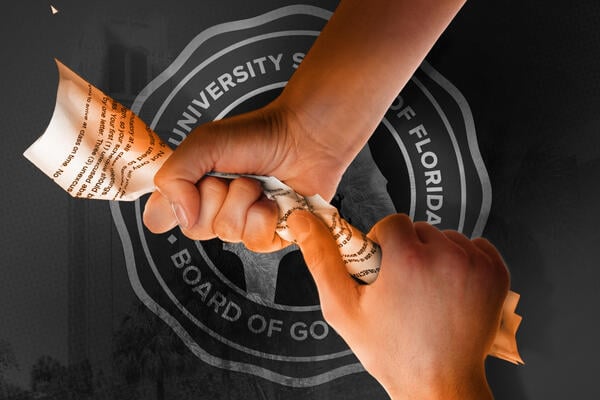
    Photo illustration by Justin Morrison/Inside Higher Ed | Liudmila Chernetska, Davizro and DenisTangneyJr/iStock/Getty Images

    Faculty at all Florida public universities must now make syllabi, as well as a list of required or recommended textbooks and instructional materials for each class, available online and searchable for students and the general public for five years.

    The new policy is part of an amendment to the Florida Board of Governors’ regulation on “Textbook and Instructional Materials Affordability and Transparency,” and it passed unanimously without discussion at a board meeting Thursday. On the agenda item description, board officials cited improved transparency as the impetus for the rule, which is meant to help students “make informed decisions as they select courses.” But some faculty members say it’s designed to chill academic freedom and allow the public to police what professors teach in the classroom.

    “Many of my colleagues and I believe that this is yet another overreach by political appointees to let Florida’s faculty know that they are being watched for potentially teaching any content that the far right finds problematic,” said John White, a professor of English education and literacy at the University of North Florida. He said officials at his institution told faculty members they must upload their syllabi for 2026 spring semester classes to Simple Syllabus, an online syllabi hosting platform, by December.

    “Florida’s universities are being run in an Orwellian manner, and working as a faculty member in Florida is increasingly like living in the world of Fahrenheit 451,” he said.

    According to the approved amendment, professors must post the syllabi “as early as is feasible” but no fewer than 45 days prior to the start of class. Public syllabi must include “course curriculum, required and recommended textbooks and instructional materials, goals and student expectations of the course, and how student performance will be measured and evaluated, including the grading scale.” Individualized courses like independent study and theses are exempt from the rule.

    The Florida Board of Governors did not respond to Inside Higher Ed’s questions about the amended policy, including a question about when it will start being enforced.

    Concerns About Faculty Safety

    It’s not a unique policy, even in Florida. Since 2013, the University of Florida has required professors to post their syllabi online—but only three days prior to the start of class, and they have to remain publicly available for just three semesters. Now, all Florida public universities, including the University of Florida, must follow the new rules. A UF spokesperson told Inside Higher Ed the university is waiting for the Board of Governors to share guidance about when the new policy will be enforced.

    “Even before the rule, most faculty members have been posting anyway to advertise their course. Faculty members in fact prefer to post in advance and certainly have nothing against posting,” said Meera Sitharam, a professor in the department of computer and information science and engineering, and president of the University of Florida’s 2,150-member United Faculty of Florida union. The faculty she spoke with primarily took issue with the new 45-day deadline, which is “quite early for a posting containing all the details” of a syllabus, she said. They are also concerned that they will no longer be able to make changes to reading lists midsemester.

    “A good-quality discussion class would permit the instructor to assign new reading as the course proceeds. This would now be disallowed,” Sitharam said. “The effect of this is likely to be that an overlong reading list is posted by the faculty member just to make sure that they don’t miss anything they might want to assign. And much of the reading list may never be assigned.”

    Texas similarly requires all faculty at public institutions to make a version of their syllabus public. Indiana implemented a law in July requiring public institutions to publish all course syllabi on their websites, and this fall, the University System of Georgia introduced a new policy requiring faculty to post syllabi and curriculum vitae on institution websites.

    Some faculty members in those states have seen firsthand the risks of posting syllabi online; several professors have been harassed and doxed over course content in their online syllabi. Florida faculty are concerned the same thing could happen to them; several faculty members believe that the board passed the rule with the intent of siccing the general public on professors who teach about topics that conservative politicians don’t like.

    “The sole purpose is to subcontract out the oversight of all of our courses, so that if there’s some independent entity or individual that wants to look at the College of Education at Florida State, and they spend two months doing a deep dive into all of the classes, then they’ll come up with: ‘Here at Florida State we found these five classes that don’t meet [our standards],’” said William Trapani, communications and multimedia studies professor at Florida Atlantic University. “Why else would you have that capacity to make this data bank and make it publicly accessible for five years?”

    Stan Kaye, a professor emeritus of design and technology at the University of Florida, sees concerns about the policy as overblown. “I cannot see why making syllabi public at a public institution is a problem for anyone—I would think that promoting your work and subject is generally a good thing,” he said. “If you are afraid you are teaching something illegal or that lacks academic integrity and you want to keep it secret, that should be a problem.”

    Faculty safety is the primary concern for James Beasley, an associate professor of English and president of the faculty association at North Florida.

    “The most important issue related to this requirement is the safety of our faculty, both online and in person. The concern is that faculty will be exposed to external trolls of course content and that the publication of course locations will expose faculty to location disclosures,” Beasley said in an email. While it is typical for syllabi to include course meeting times and locations, the new board policy does not require that information to be posted online.

    Trapani also said that because of the five-year syllabus retention period, faculty are worried they could be retroactively harassed for teaching about something the public finds unfavorable from a class several years ago. White has similar concerns.

    “I’m teaching a course that utilizes neo-Marxist theory to critique the idea of meritocracy—will the Board of Governors or members of the public falsely claim I’m teaching communism or that I’m teaching students to hate their country? If a history professor or a social studies education professor is discussing redlining or Jim Crow laws, will they later be critiqued for teaching students about institutionalized racism or sexism?” White said.

    Ultimately, Trapani believes the amended syllabi policy is an attempt to insulate the Board of Governors from public criticism.

    “Florida will make a lot more sense to outsiders if its policymaking is viewed through a lens of fear,” he said. “They’ve deputized an army of outsiders to pore through records older than most students’ time at the university—all so that they cannot be accused of missing something … It’s just another way in which faculty employment conditions and physical safety are made more precarious by the endless barrage of false claims about our teaching practices.”

    Josh Moody contributed to this report.

    Source link

  • Support Career Agency for International Scientists (opinion)

    Support Career Agency for International Scientists (opinion)

    International Ph.D. students and postdoctoral scholars drive a large share of the United States’ scientific research, innovation and global competitiveness. Yet these visa holders often face systemic barriers that limit their ability to build independent, fulfilling careers. Restricted access to fellowships and immigration constraints can stifle career agency, forcing the nation’s institutions to lose out on the very global talent they train to fuel discovery and progress.

    Drawing from insights in our recently released book, Thriving as an International Scientist (University of California Press), this essay outlines key challenges that international scientists face and concrete steps universities, employers and scientific societies can take to enable their dynamic career success.

    Systemic Barriers to Career Independence

    The U.S. depends on international talent to sustain its scientific enterprise. In 2023, nearly 41 percent of Ph.D. students and 58 percent of postdocs in U.S. universities were visa holders, and international scholars made up 34 percent of Ph.D. graduates in 2022, an increase from just 11 percent in1977.

    While U.S. universities still lead globally in training and employing a robust international scientific workforce, the recent anti-immigrant climate in the U.S. and growing global competition for STEM talent threatens this long-standing advantage. Two issues impacting international scientists stand out as particularly urgent: limited access to independent research fellowships and visa policies that restrict career flexibility.

    • Fewer fellowships lead to reduced agency. International scientists have access to fewer fellowships for supporting their independent research ideas. Data on primary sources of STEM doctoral student funding indicates 17 percent of international Ph.D. students relied primarily on fellowships, scholarships or dissertation grants in 2022, compared to 29 percent of their U.S. citizen and permanent resident peers. More than half of international Ph.D. students in science and engineering across U.S. universities relied on faculty-directed funding, through research assistantships, compared with just a third of domestic students (citizens and permanent residents).

    This reliance limits their autonomy to define research directions or confidently pursue professional development and internship opportunities. As a result, only 22 percent of international Ph.D. graduates from U.S. universities committed to academic careers (excluding postdocs) in 2022, in part due to a significant lack in independent funding experience—a key qualification for faculty roles.

    • Visa constraints on career mobility. Visa regulations often confine international scientists to narrowly defined “research-related” roles in academia or industry. This restriction effectively locks them out of emerging career paths in the business of science, science policy, science communication, entrepreneurship, university administration and nonprofit leadership until they obtain permanent residency.

    They are also disproportionately vulnerable to economic downturns or layoffs. Work visas typically allow a 60-day grace period to secure new employment and maintain legal immigration status, putting tremendous pressure on individuals and families. With rising costs and uncertainty surrounding H-1B work visas, employers may also hesitate to hire international scientists, compounding career instability for this essential segment of the STEM workforce.

    What Universities Can Do

    We expand on recommendations offered to universities in the International Talent Programs in the Changing Global Environment consensus report from the National Academies of Sciences, Engineering and Medicine and by the Association of American Universities’ Ph.D. Education Initiative. Universities can take the following actions to better support international Ph.D. students and postdocs:

    • Expand access to independent funding. Increase visibility of funding through databases such as Pivot and create matching fellowship opportunities from institutional, corporate and philanthropic sources that are open to noncitizens.
    • Track and leverage alumni outcomes. Analyze Ph.D. and postdoctoral career outcomes by citizenship and location in order to strengthen alumni mentorship and global networks for trainees.
    • Specialized professional development for Ph.Ds. Provide training in in-demand and holistic skills to address wicked problems, advance emerging technologies and foster knowledge of a range of careers for STEM Ph.D. holders.
    • Integrate career development into curricula. Embed professional development and career preparation within graduate and postdoctoral programs, rather than limiting them to extracurricular workshops, in order to encourage international scientists to participate.
    • Foster equitable access to internships. Simplify and expand opportunities for experiential learning by using the Curricular Practical Training path. Departments can offer internship courses through which students can use CPT or encourage them to incorporate insights from their internships into the dissertation. Creating more practical opportunities for students to broadly apply their research skills enables their success in getting work visas for diverse careers.

    At Princeton University, one of us developed a specialized professional development series for international graduate students integrating creative design, intentional career planning, immigration literacy and strategies for global careers. This approach helps international scholars build resilience, community and agency in navigating complex systems and uncertain futures.

    The Role of Scientific and Professional Societies

    Scientific and professional societies hold powerful levers for nationwide systemic change. Through initiatives that foster advocacy, partnerships and innovation, they can amplify the impact of international scientists and shape more inclusive policies.

    • Diversify funding models. As scientific leaders reconsider how to continue funding STEM research including for graduate and postdoctoral programs at scale in the U.S. through convenings (e.g., by NASEM and UIDP), public-private-philanthropic partnerships must intentionally include considerations by and for international graduate students and postdocs in their planning and implementation.
    • Require professional development. Foundations and philanthropic funders can make career and professional development a standard component of fellowships and sponsored research grants, following the precedents set by the National Science Foundation and the National Institutes of Health.
    • Mobilize advocacy through data. Public-facing dashboards such as the NAFSA International Student Economic Value Tool and OPT Observatory from the Institute for Progress, demonstrate the economic and intellectual value of international scientists. These are powerful tools for storytelling, advocacy and policy change.
    • Encourage immigration innovation. Beyond ongoing legislative efforts like the bipartisan Keep STEM Talent Act aiming to support the U.S. STEM workforce, the philanthropic sector can also pilot creative solutions. For instance, Renaissance Philanthropy’s Talent Mobility Fund raises awareness of underutilized immigration pathways such as O-1 and J-1 visas, diversifying routes available for STEM researchers.

    Employer Responsibility

    Employers across all sectors—universities, for-profit industries and nonprofit organizations—have a shared responsibility to create transparent, informed hiring practices for visa holders. Too often, candidates are left to initiate uncomfortable sponsorship discussions during job interviews. Instead, hiring managers should proactively coordinate with human resources and legal teams before posting positions to determine sponsorship possibilities, costs and timelines. Even small changes, such as explicitly noting “visa sponsorship available” (or not available) in job descriptions, can make a significant difference in promoting fairness and equity in hiring.

    Moving Forward: Shared Responsibility for Systemic Change

    The ability of international scientists to thrive is not just a matter of ethics and fairness—it is a strategic imperative for the future of American science and innovation. Universities, scientific societies, funders and employers have a shared responsibility to participate in removing systemic barriers and expanding opportunities for international scientists in a variety of careers.

    While large-scale policy change may take time, meaningful progress is possible through small, immediate steps:

    • Expanding access to independent funding and internships,
    • Increasing transparency through data, and
    • Fostering mentorship and advocacy networks.

    By enabling international scientists to build dynamic, independent careers, we strengthen not only their futures but also the vitality and global leadership of the U.S. research enterprise.

    Sonali Majumdar (she/her) is assistant dean for professional development in Princeton University’s Graduate School and author of Thriving as an International Scientist: Professional Development for Global STEM Citizens (October 2025, University of California Press). She is a member of the Graduate Career Consortium—an organization providing an international voice for graduate-level career and professional development leaders.

    Adriana Bankston (she/her) is a strong advocate for the research enterprise and supporting the next-generation STEM workforce and a former AAAS/ASGCT Congressional Policy Fellow in the U.S. House of Representatives. She contributed to a chapter in Thriving as an International Scientist on systemic reforms and policy change in academia.

    Source link

  • How to reform university governance in the UK – The Post-18 Project

    How to reform university governance in the UK – The Post-18 Project

    Advance HE (2025) Shaping the future of higher education governance: Ten priorities to enhance higher education governance. News & Views. London: Advance HE.

    Berenschot (2017) Van toezicht naar verantwoording: rapportage hoger onderwijs [From Supervision to Accountability: Higher Education Report]. Utrecht: Berenschot.

    Commissie Behoorlijk Bestuur (2013) Een lastig gesprek: rapport van de Commissie Behoorlijk Bestuur [A Difficult Conversation: Report of the Committee on Proper Governance]. The Hague: Commissie Behoorlijk Bestuur.

    Commissie Behoorlijk Bestuur (2013) Een lastig gesprek. Over de (interne) dialoog in semipublieke instellingen [A Difficult Conversation: On the (Internal) Dialogue in Semi-Public Institutions]. Den Haag: Ministerie van Binnenlandse Zaken en Koninkrijksrelaties.

    Commissie onderzoek financiële problematiek Amarantis (2012) Autonomie verplicht: Rapport onderzoek financiële problematiek Amarantis [Autonomy required: Report on the financial problems at Amarantis]. Den Haag: Commissie onderzoek financiële problematiek Amarantis.

    Department for Education, Department for Work and Pensions and Department for Science, Innovation and Technology (2025) Post-16 Education and Skills. White Paper CP 1412. London: HM Government.

    Dickinson, J. (2024) ‘We could change the governors, we could change the governance’, Wonkhe blog, 24 January.

    Dickinson, J. (2025) ‘From where student governors sit, Dundee isn’t the only institution with governance challenges’, Wonkhe blog, 24 July.

    Education, Children and Young People Committee (2025) Stage 1 Report on the Tertiary Education and Training (Funding and Governance) (Scotland) Bill. Edinburgh: Scottish Parliament.

    Gillies, D. (2023) Governance and the public good: the future of higher education governance in Scotland. Edinburgh: Scottish Government.

    Gillen, S. (2023) Building better boards: How to govern for sustainable success. London: Bloomsbury Publishing.

    Goodijk, R. (2012) What’s wrong with supervision in semi-public organisations? Failing supervisors, abuses and suggestions for improvement.

    Jones, S. & Harris, D. (2024) University governance: views from the inside. Council for the Defence of British Universities.

    Ministerie van Binnenlandse Zaken en Koninkrijksrelaties (n.d.) Wet normering topinkomens (WNT).

    Ministerie van Onderwijs, Cultuur en Wetenschap (2021) Evaluatie wet versterking bestuurskracht [Evaluation of the Law to Strengthen Governance]. Brief regering, Kamerstuk 34 251, Nr. 95. Den Haag: Ministerie van Onderwijs, Cultuur en Wetenschap.

    Office for Students (2019) “Statement on De Montfort University investigation

    Office for Students (2024) Draft strategy 2025 to 2030. Consultation document. London: Office for Students.

    Office for Students (2024) Subcontractual arrangements in higher education. Insight brief. London: Office for Students.

    Office for Students (2025) Annual financial sustainability analysis: Financial performance and resilience of English higher education providers 2025-26. London: Office for Students.

    Rijksoverheid (2013) Toezien op publieke belangen: Naar een verantwoorde invulling van rijksinspecties [Safeguarding Public Interests: Towards a Responsible Role for National Inspectorates]. Den Haag: Rijksoverheid.

    Savage, N. (2025) ‘Weekend Reading: Provoking changes in higher education, some reflections on governance’, HEPI blog. London: Higher Education Policy Institute.

    Scottish Funding Council (2025) SFC’s Expectations of Good Governance. SFC Announcement SFC/AN/19/2025. Edinburgh: Scottish Funding Council.

    Steering Committee for Efficiency Studies in Universities (Chair: Sir Alex Jarratt) (1985) Report of the Steering Committee for Efficiency Studies in Universities [Jarratt Report 1985]. London: Committee of Vice-Chancellors and Principals.

    Universities UK, GuildHE, Committee of University Chairs (2024) Franchise governance framework.

    Versterking van de bestuurskracht van onderwijsinstellingen (2015). Eerste Kamer der Staten-Generaal.

    Westerling, J., Hien, L. and Plumb, N. (2025) Closing the void: Can we reconnect politics with associational life? London: Power to Change.

    Wetenschappelijke Raad voor het Regeringsbeleid (WRR) (2013) Toezien op publieke belangen: Naar een verantwoorde invulling van rijksinspecties [Safeguarding Public Interests: Towards a Responsible Role for National Inspectorates]. The Hague: WRR.

    Wetenschappelijke Raad voor het Regeringsbeleid (WRR) (2013) Toezien op publieke belangen: Naar een verruimd perspectief op rijkstoezicht [Safeguarding Public Interests: Towards a Broadened Perspective on National Oversight]. Den Haag: Amsterdam University Press.

    Wetenschappelijke Raad voor het Regeringsbeleid (WRR) (2014) Van tweeluik naar driehoeken: Versterking van interne checks and balances bij semipublieke organisaties [From Diptychs to Triangles: Strengthening Internal Checks and Balances in Semi-Public Organisations]. Amsterdam: Amsterdam University Press.

    Wetenschappelijke Raad voor het Regeringsbeleid (WRR) (2015) Improving internal checks and balances in semi-public organisations: synopsis of WRR report no. 91 [Van tweeluik naar driehoeken]. The Hague: WRR.

    Source link

  • Skills-based higher education driving student financial support

    Skills-based higher education driving student financial support

    Author:
    Peter Gray

    Published:

    Over the weekend, HEPI published a blog on reclaiming education through localisation for Afghan women and a blog on the future of languages in multilingual Britain.

    Today’s blog was kindly authored by Peter Gray, CEO and Chairman of the JS Group.

    If universities are to adapt to the latest skills-led demands of the Government (and to match the stated national future industry priorities), they will need to look well beyond their course and employability provision at many other aspects of the student experience.

    One such key area is in the connection between student financial support and employability opportunities. It is important that those students from lower-income or more restricted backgrounds are financially equipped and able to take advantage of, for example, off-campus experiences with employers to ensure they aren’t denied these frontline opportunities for skills development and for making connections. While there are many charities working to structure and access these opportunities, it is the funding itself to enable this full participation that needs particular attention.

    That’s why I can foresee a new demand for universities to steer more and more bursaries, scholarships, and special-case funding streams towards helping students with skills-based experiences. It is a trend that is already growing – as JS Group’s latest annual analysis of patterns in student financial support demonstrates. In recent years, we’ve assessed the overall use of £296 million of such support provided to 584,000 students.

    In the last 12 months (the 2024/25 academic year), we have looked at the use of this funding by students, the formats of payments and the timelines of when funding is being used and applied. This data (from our Aspire platform) is immensely important as it can draw on real-time and (student) user-based experiences to ensure universities have the evidence to make future decisions about their student support investments.

    A notable trend this year – which is in part explained by an expansion of participating universities providing data and the use of funding from Turing and Taith public funding schemes – is in how more and more students are using cash-based support from their institution to address the costs of work placements or associated travel, or to recover such expenses.

    Expenses claims are up by more than six per cent, use of placement funds is up three per cent and travel is up by more than one per cent. Our indicators show more action in these areas alongside continued support for accommodation, household bills, groceries and course-based resources.

    Our feedback survey of students as funding beneficiaries also shows the value that they place on funding for levelling-up (in terms of their ability to participate in opportunities) and for strengthening their perception of value and belonging with their university.

    If, as we expect, there will now be a national policy drive to steer more embedded work-related and skills-driven activities as part of the higher education experience, then it makes sense for universities to reassess how they are using their financial support beyond cost-of-living and cost-of-learning applications.

    Source link

  • Higher education must include valuable workforce experience and training that helps students secure meaningful jobs

    Higher education must include valuable workforce experience and training that helps students secure meaningful jobs

    by Bruno V. Manno, The Hechinger Report
    November 10, 2025

    This fall, some 19 million undergraduates returned to U.S. campuses with a long-held expectation: Graduate, land an entry-level job, climb the career ladder. That formula is breaking down.  

    Once reliable gateway jobs for college graduates in industries like finance, consulting and journalism have tightened requirements. Many entry-level job postings that previously provided initial working experience for college graduates now require two to three years of prior experience, while AI, a recent analysis concluded, “snaps up good entry-level tasks,” especially routine work like drafting memos, preparing spreadsheets and summarizing research.  

    Without these proving grounds, new hires lose chances to build skills by doing. And the demand for work experience that potential workers don’t have creates an experience gap for new job seekers. Once stepping-stones, entry-level positions increasingly resemble mid-career jobs. 

    No doubt AI is and will continue to reshape work in general and entry-level jobs in particular in expected and unexpected ways. But we are not doomed to what some call an “AI job apocalypse” or a “white-collar bloodbath” that leads to mass unemployment. There are practical solutions to the experience gap problem when it comes to education and training programs. These include earn-and-learn models and other innovative public and private employer partnerships that build into their approaches opportunities for young people to gain valuable work experience.  

    Related: Interested in innovations in higher education? Subscribe to our free biweekly higher education newsletter. 

    Before I describe these potential solutions, here is more information on how I see the problem.  

    The Federal Reserve Bank of New York reported that in March 2025, the unemployment rate for college graduates ages 22 to 27 was 5.7 percent, compared to an overall unemployment rate of 4.0 percent. Other than the temporary pandemic-related spike in 2021, that was the highest unemployment rate for new grads since 2014. More recently, the Fed’s August 2025 unemployment rate for recent college graduates was 1 percentage point higher than its overall unemployment rate of 4.3 percent.  

    The experience gap phenomenon is not limited to the tech sector. In 2019, 61 percent of AI-related job postings were in the information technology and computer science sector, with 39 percent in non-tech sectors, labor analytics from Lightcast show. By 2024, the majority (51 percent versus 49 percent) of AI-related job postings were outside the tech sector. 

    The cumulative effect of all this is apparent. The hollowing out of entry-level work stalls mobility across the labor market, leaving many college graduates stranded before their careers can even begin. Moreover, these changes cut to the core of higher education’s promise.  

    If graduates can’t secure meaningful jobs, confidence in higher ed falters — one reason why it should come as no surprise that 56 percent of Americans think earning a four-year degree is not worth the cost, a March 2023 Wall Street Journal-NORC poll found, compared with 42 percent who think it is, a new low in a poll first administered in 2013. Skepticism was predominant among those ages 18 to 34, and college degree holders were among those most skeptical.  

    Related: As more question the value of a degree, colleges fight to prove their return on investment 

    The collapse of entry-level jobs isn’t just a cyclical downturn. It’s a structural shift. Left unchecked, this dynamic will deepen inequality, slow social mobility and further undermine faith in higher education. 

    As I’ve said, solutions exist. Here are five that I believe in: 

    Apprenticeships and other earn-and-learn models: Earn-and-learn apprenticeships are a promising, direct solution to the experience gap. They combine paid work with structured training and provide years of experience to college students in those jobs. Sectors from tech to health care are experimenting with this model, examples of which include registered apprenticeships, youth apprenticeships, pre-apprenticeships and apprenticeship degrees that allow individuals to pursue a degree while they work in an apprenticeship. 

    Skills-based hiring and alternative credentials: Initiatives such as skills-first hiring by major employers like IBM, Google and Apple aim to evaluate candidates based on their competencies rather than their degrees. Microcredentials, industry certificates and portfolios can serve as verifiable signals of skills gained through alternative training routes. 

    Stronger college and employer partnerships: Colleges can (and should) embed work-based learning into curricula through co-op programs, project-based courses and partnerships with local industries. Northeastern University and Drexel have long pioneered this model. And others, such as Western Governors University and Southern New Hampshire University, are using online learning to advance this approach. Scaling this solution could help close the experience gap. 

    Policy innovations: Governments can play a role by giving incentives to companies to create early career opportunities. Workforce Pell, recently enacted in President Trump’s One Big Beautiful Bill Act, expands financial aid to use for short-term training programs, opening new pathways for students who may not be pursuing traditional degrees. Tax credits for apprenticeship sponsors and funding for regional workforce hubs could further expand opportunities. 

    Reimagining internships: Expanding access to paid internships — especially for first-generation and low-income students — could democratize the attainment of experience. Philanthropies and local governments could underwrite stipends to ensure that opportunity isn’t reserved for the affluent who can afford unpaid internships or have social networks that connect them to these opportunities. 

    The challenge presented by this troubling experience gap is urgent. Today’s students deserve a college experience and a labor market in which education and effort still translate into opportunity. 

    Bruno V. Manno is a senior advisor at the Progressive Policy Institute, leading its What Works Lab, and is a former U.S. assistant secretary of education for policy.  

    Contact the opinion editor at [email protected]. 

    This story about workforce experience was produced by The Hechinger Report, a nonprofit, independent news organization focused on inequality and innovation in education. Sign up for Hechinger’s weekly newsletter. 

    This <a target=”_blank” href=”https://hechingerreport.org/opinion-too-many-college-graduates-are-stranded-before-their-careers-can-even-begin-we-cant-let-that-happen/”>article</a> first appeared on <a target=”_blank” href=”https://hechingerreport.org”>The Hechinger Report</a> and is republished here under a <a target=”_blank” href=”https://creativecommons.org/licenses/by-nc-nd/4.0/”>Creative Commons Attribution-NonCommercial-NoDerivatives 4.0 International License</a>.<img src=”https://i0.wp.com/hechingerreport.org/wp-content/uploads/2018/06/cropped-favicon.jpg?fit=150%2C150&amp;ssl=1″ style=”width:1em;height:1em;margin-left:10px;”>

    <img id=”republication-tracker-tool-source” src=”https://hechingerreport.org/?republication-pixel=true&post=113298&amp;ga4=G-03KPHXDF3H” style=”width:1px;height:1px;”><script> PARSELY = { autotrack: false, onload: function() { PARSELY.beacon.trackPageView({ url: “https://hechingerreport.org/opinion-too-many-college-graduates-are-stranded-before-their-careers-can-even-begin-we-cant-let-that-happen/”, urlref: window.location.href }); } } </script> <script id=”parsely-cfg” src=”//cdn.parsely.com/keys/hechingerreport.org/p.js”></script>

    Source link

  • Trump administration cuts canceled this college student’s career start in politics

    Trump administration cuts canceled this college student’s career start in politics

    This story was produced in partnership with Teen Vogue and reprinted with permission. 

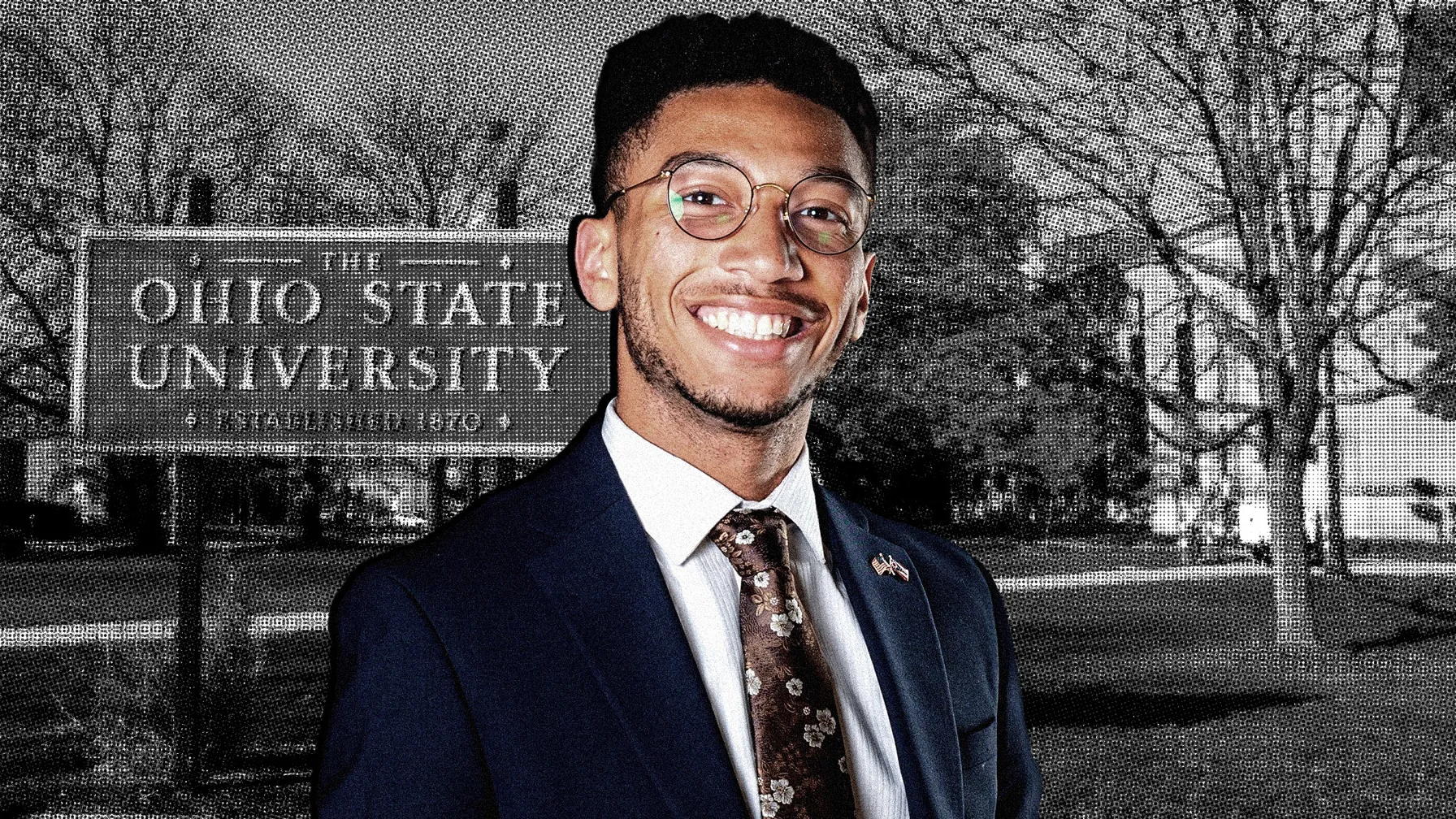
    Christopher Cade wants to be president someday. His inspiration largely comes from family members, who have been involved in local politics and activism since long before he was born. But policies from the Trump administration and the Ohio Legislature are complicating his college experience — and his plans to become a politician.

    Cade is a student at Ohio State University double-majoring in public policy analysis and political science with a focus on American political theory. He recalls his maternal grandmother, Maude Hill — who had a large hand in raising him — talking to him about her involvement in the Civil Rights Movement. She also worked at Columbus, Ohio-based affordable housing development nonprofit, Homeport, and has gone to Capitol Hill to speak with the state delegation multiple times. His dad is the senior vice president of the housing choice voucher program at the Columbus Metropolitan Housing Authority, and his older brother has a degree in political science and is interested in social justice advocacy work, Cade said. Last fall, his first on campus, Cade began applying to opportunities to bolster his resume for a future career in politics.

    The now 19-year-old secured an internship with the U.S. Department of Transportation and a work-study job on campus in the university’s Office of Diversity and Inclusion. But the federal opportunity was scrapped when the Trump administration imposed a hiring freeze and budget cuts. His campus job ended when the university announced it would “sunset” the diversity office in response to federal and state anti-diversity, equity and inclusion orders and actions, according to Cade.

    Related: Become a lifelong learner. Subscribe to our free weekly newsletter featuring the most important stories in education. 

    The work-study position was with the university’s Bell National Resource Center on the African American Male, which was founded to support Black men to stay in college. It’s a cause he was excited about. 

    “I would help order food or speak with students or do interviews,” said Cade. “I developed a good 20 different programs for the next year.” 

    In February, when the university announced it was closing the office, “I was like, ‘Well, so six months of work just for no reason,’” he said.

    OSU President Ted Carter released a statement on Feb. 27 saying the closure of the Office of Diversity and Inclusion was a response to both state and federal actions regarding DEI in public education. The move eliminated 17 staff positions, not including student roles, the university said. Programming and services provided by the Office of Student Life’s Center for Belonging and Social Change were also scrapped. 

    The change came before the Trump administration’s initial deadline for complying with a memo that threatened to cut funding for public colleges and universities, as well as K-12 schools, that offer DEI programs and initiatives. In March, the administration announced that OSU was one of roughly 50 universities under federal investigation for allegedly discriminating against white and Asian students in graduate admissions. Additionally, Ohio Gov. Mike DeWine signed legislation in March banning DEI programs in the state’s public colleges and universities. The legislation went into effect in June.

    Before the DEI office closed, Cade said, “I felt so heard and seen.” He’d attended a private, predominantly white, Catholic high school, he said. “It was not a place that supported me culturally and helped me understand more about who I am and my Blackness,” he recalled. At the university, though, “the programming we had throughout the year [was] about how to change the narrative on who a Black man is and what it means when you go out here and interact with people.

    “And then for them to close down all these programs, that essentially told me that I wasn’t cared about.”

    After the February announcement, students pushed back, organizing protests and a sit-in at the student union. But eventually, those efforts quieted.

    Cade says students felt like there was a “cloud of darkness” hanging over them. But he also thought of his Office of Diversity and Inclusion coworkers, some of whom had spent decades working there, helping students. In particular he thought of his former colleague Chila Thomas, who celebrated her fifth anniversary last year as the executive director of the Young Scholars Program. That program, which helps low-income aspiring first-generation college students get to and through college, was one of several of the office’s programs that will continue. The day after Carter’s announcement, she and others in the office spent time giving students space to talk through their feelings, despite the uncertainties surrounding their own employment, Cade said. 

    Related: A case study of what’s ahead with Trump DEI crackdowns: Utah has already cut public college DEI initiatives 

    Since the university crackdown on DEI, Cade said he’s experienced more discomfort on campus, even outright racism. He says he was approached by a white person who said, “I’m so glad they’re getting rid of DEI” and spit on his shoe and used a racial slur.  

    “I don’t know how that could ever be acceptable to anyone, but that was [when] a flip switched in my head,” Cade said. “I couldn’t sit down and be sad and silent. I had to stand up and make change.”

    In March, he traveled with other students to Washington, D.C., as part of the Undergraduate Student Government’s Governmental Relations Committee. They met with Ohio Rep. Troy Balderson and an aide, along with staffers from the offices of fellow Ohio lawmakers Sen. Bernie Moreno and Rep. Joyce Beatty, to discuss college affordability, DEI policies and the federal hiring freeze. Cade says he described how he was affected by the U.S. Department of Transportation canceling his internship.

    In Carter’s announcement, he stated that all student employees would be “offered alternative jobs at the university,” but Cade said during a meeting with Office of Diversity and Inclusion student employees, an OSU dean clarified that they would have to apply for new opportunities. With the policy changes meaning there were fewer work-study roles and more students in need of jobs, Cade saw the market as increasingly competitive, and he began to job hunt elsewhere. This summer he secured work with the Ohio Department of Transportation as a communications and policy intern. In October he began an intake assistant role in the Office of Civil Rights Compliance at the university. (Ohio State Director of Media and PR Chris Booker told Teen Vogue that the school could not comment on the experiences of individual students but that “all student employees and graduate associates impacted by these program changes were offered the opportunity to pursue transitioning into alternative positions at the university, as well as support in navigating that change.”)

    Although he was drawn to OSU for the John Glenn College of Public Affairs’ master’s program, Cade says he might have reconsidered schools had he known that the university would bend to lawmakers’ anti-DEI efforts. While he’s concerned about how education-related legislation and policies may continue to affect his college experience, he worries most about some of his peers. College is already so hard to navigate for so many young people, said Cade. “And this is just another thing that says, ‘Oh yeah, this isn’t for me.’”

    This story was published in partnership with Teen Vogue.

    The Hechinger Report provides in-depth, fact-based, unbiased reporting on education that is free to all readers. But that doesn’t mean it’s free to produce. Our work keeps educators and the public informed about pressing issues at schools and on campuses throughout the country. We tell the whole story, even when the details are inconvenient. Help us keep doing that.

    Join us today.

    Source link