University of Sydney’s (USyd) Danny Liu built the award-winning artificial intelligence (AI) agent tool Cogniti.ai to enhance student learning in higher education.
Please login below to view content or subscribe now.


University of Sydney’s (USyd) Danny Liu built the award-winning artificial intelligence (AI) agent tool Cogniti.ai to enhance student learning in higher education.
Please login below to view content or subscribe now.

Nearly all Australian National University (ANU) union members on Thursday supported a vote of no confidence in vice-chancellor Genevieve Bell and chancellor Julie Bishop.
Please login below to view content or subscribe now.

Planned job cuts at the University of Wollongong (UOW) could hit 270 after the university announced it will extend its cost-cutting measures to non-academic staff.
Please login below to view content or subscribe now.
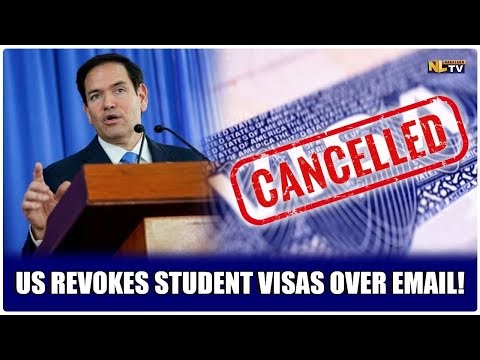
Hundreds of international students in the US have received emails from the Department of State (DOS) instructing them to self-deport after their F-1 visas were revoked due to campus activism or social media posts. This crackdown targets not just those who physically participated in activism, but also those who shared or liked ‘anti-national’ posts. Some Indian students may also be affected.
The US Secretary of State, Marco Rubio, confirmed the visa revocations, stating that over 300 visas had been revoked for “anti-national activities.” He also launched an AI-powered app, “Catch and Revoke,” to identify and cancel visas of students supporting designated terrorist groups like Hamas. New student visa applications are also under scrutiny, with applicants potentially being denied entry.
The email sent to affected students warns them to self-deport, stating their visas were revoked under Section 221(i) of the Immigration and Nationality Act. It also informs students that staying in the US without lawful status could lead to fines, detention, or deportation, and they would need to apply for a new visa to return in the future.

Do you need an online presence yesterday? You may be wondering how can I improve my online presence as a professor, researcher, or scientist quick.
“I have a big talk coming up, it would be great to have my website up by then.”
“My tenure review packet is due next month. Any chance we could have the website up?”
“The book comes out in X month, my publisher needs my bio soon.”
“It would be great to have this done before our grant proposal is submitted.”
You may want to be intentional about your online presence if you need it for a
I’m not always able to help academics who come to me with a short turnaround. But that doesn’t mean there aren’t ways for you to have a stronger online presence now. You have agency in how you show up online.
Google yourself. What’s can people find about you and your research now? What makes up your digital footprint?
Gather what they need from you. We’re you asked for specific materials such as your bio, headshot, or social media handle? If yes, these may be items to consider improving. This is more for an event, media appearance, or announcement.
Update your bio, it’s a living document, adaptable to your needs. If you’re unsure where to start with your online presence, I always recommend your bio. In this video, I share top tips for writing and revising your academic bio with my friend, presentation expert, Dr. Echo Rivera.
Here’s advice for writing your LinkedIn headline specifically.
Need new photos of you? It’s okay to ask for support. For instance, can your university provide a professional photographer for the event? If not, can they recommend someone local? You can seek approval for use of funds towards that or other things for your online presence. If you’re doing a media appearance or event, it’s okay to ask your host if there will be photos or video.
You can also ask a friend or family member to take photos of you. While selfie are a good option, a phone-camera savvy friend is ideal.
I did my 1st professional photo shoot this year. It was much more comfortable than I expected because I had a great team there to help me. You can hear all about it in an upcoming interview for The Social Academic with the photographer and makeup artist I’ll be recommending to my clients. I can’t wait to share our conversation with you. I’ll update this article when that interview goes live, so bookmark it if you’d find it useful.
Update your social media profile(s). Any small change makes a difference for how you communicate with people. While there’s a few tips in this article, here’s your how to guide for updating your social media profiles.
Try pinning an introduction post (or post about what you most want to share with people) to the top of your profile.
LinkedIn is great for academics. Here’s 32 reasons why. Updating your LinkedIn profile instantly improves what people can find about you online. These LinkedIn resources are here to help you.
Want section-by-section support? Sign up for my LinkedIn Profile for Professors and Researchers course.
If you have access to make updates yourself, your faculty profile is a great way to improve your online presence. For most academics, it can be a slow process to request an update be made. If you’re unsure how to make changes to your faculty profile, now is a great time to ask.
You could make a 1-page personal faculty website. Here’s what to include on yours.
As part of the Best Personal Academic Websites Contest, Brittany Trinh, Ian Li, and I put together this Setting Up Your Personal Academic Website event. The replay will help you set up your website today with Owlstown, a free website builder for academics. Plus, what to expect with other website hosts (like my favorite, WordPress.com).
If you need your website today, Owlstown is a great option for you.
If you don’t want a website, but you still want something for people to view online, consider a Google Doc, Word Doc view only, PDF or other media with a public share link. If you need something more visual, consider a Canva presentation.
Need a social media graphic? Canva is my favorite option. I’ve helps professors around the world feel comfortable using Canva for their social media. I even went to Cava Create last year in Los Angeles. This year’s event is coming up on April 10.

Social media graphic ideas:
You don’t need to work with me to have a stronger online presence now. Find resources on The Social Academic blog (try searching by category). There are interviews you may find helpful on the podcast and on YouTube. You’ve got this! ✨
You don’t have to do it alone. I’m Jennifer van Alstyne. I help individual professors, research labs and groups communicate who you are and what you care about online. You can have your website designed for you. You can have set-up of their LinkedIn profile done for you. You don’t have to write your own bio (unless you want to). It’s okay to get support for your digital presence as a faculty or researcher.
Professors with a tight turnaround typically book a private 1-on-1 consultation with me on Zoom. That way we can work together in real time to make a difference for your online presence. Academics like having an expert to ask their questions. Most save significant time with ideas that just won’t work for their goals and needs. I’m happy to help you on a private consultation too.
Sure, there’s other ways we can work together on your website project, but sometimes you need a website “like yesterday.” Is that you? A quick website may be a good fit for you.
But if your schedule is a bit more flexible, let’s meet on a no pressure Zoom call about working together so we can customize a service that fit your lifestyle, needs, and goals. Find a time on this online calendar.
While I can’t promise I’m able to work with you when it comes to a quick turnaround, I promise to help you in the right direction (even when it isn’t working with me).
At one point in my career, I was the CEO of a students’ union who’d been charged with attempting to tackle a culture of initiation ceremonies in sports clubs.
One day a legal letter appeared on my desk – the jist of which was “you can’t punish these people if they didn’t know the rules”.
We trawled back through the training and policy statements – and found moments where we’d made clear that not only did we not permit initiation ceremonies, we’d defined them as follows:
An initiation ceremony is any event at which members of a group are expected to perform an activity as a means of gaining credibility, status or entry into that group. This peer pressure is normally (though not explicitly) exerted on first-year students or new members and may involve the consumption of alcohol, eating various foodstuffs, nudity and other behaviour that may be deemed humiliating or degrading.
The arguments being advanced were fourfold. The first was that where we had drawn the line between freedom to have fun and harmful behaviour, both in theory and in practice, was wrong.
The second was that we’d not really enforced anything like this before, and appeared to be wanting to make an example out of a group of students over which a complaint had been raised.
They said that we’d failed to both engender understanding of where the line was that we were setting for those running sports clubs, and failed to make clear expectations over enforcing that line.
And given there been no intent to cause harm, it was put to us that the focus on investigations and publishments, rather than support to clubs to organise safe(er) social activity, was both disproportionate and counter-productive.
I’ve been thinking quite a bit about that affair in the context of the Office for Students (OfS) decision to fine the University of Sussex some £585k over both policy and governance failings identified during its three-year investigation into free speech at Sussex.
One of the things that you can debate endlessly – and there’s been plenty of it on the site – is where you draw the line between freedom to speak and freedom from harm.
That’s partly because even if you have an objective of securing an environment characterised by academic freedom and freedom of speech, if you don’t take steps to cause students to feel safe, there can be a silencing effect – which at least in theory there’s quite a bit of evidence on (including inside the Office for Students).
You can also argue that the “make an example of them” thing is unfair – but ever since a copper stopped me on the M4 doing 85mph one afternoon, I’ve been reminded of the old “you can’t prove your innocence by proving others’ guilt” line.
Four days after OfS says it “identified reports” about an “incident” at the University of Sussex, then Director of Compliance and Student Protection Susan Lapworth took to the stage at Independent HE’s conference to signal a pivot from registration to enforcement.
She noted that the statutory framework gave OfS powers to investigate cases where it was concerned about compliance, and to enforce compliance with conditions where it found a breach.
She signalled that that could include requiring a provider to do something, or not do something, to fix a breach; the imposition of a monetary penalty; the suspension of registration; and the deregistration of a provider if that proved necessary.
“That all sounds quite fierce”, she said. “But we need to understand which of these enforcement tools work best in which circumstances.” And, perhaps more importantly “what we want to achieve in using them – what’s the purpose of being fierce?”
The answer was that OfS wanted to create incentives for all providers to comply with their conditions of registration:
For example, regulators assume that imposing a monetary penalty on one provider will result in all the others taking steps to comply without the regulator needing to get involved.
That was an “efficient way” to secure compliance across a whole sector, particularly for a regulator like OfS that “deliberately doesn’t re-check compliance for every provider periodically”.
Even if you agree with the principle, you can argue that it’s pretty much failed at that over the intervening years – which is arguably why the £585k fine has come as so much of a shock.
But it’s the other two aspects of that initiation thing – the understanding one and the character of interventions one – that I’ve also been thinking about this week in the context of the Sussex fine.
On The Wonkhe Show, Public First’s Jonathon Simons worries about OfS’ multiple roles:
If the Office for Students is acting in essentially a quasi-judicial capacity, they can’t, under that role, help one of the parties in a case try to resolve things. You can’t employ a judge to try and help you. But if they are also trying to regulate in the student interest, then they absolutely can and should be working with universities to try and help them navigate this – rather than saying, no, we think we know what the answer is, but you just have to keep on revising your policy, and at some point we may or may not tell you got it right.
It’s a fair point. Too much intervention, and OfS appears compromised when enforcing penalties. Too little, and universities struggle to meet shifting expectations – ultimately to the detriment of students.
As such, you might argue that OfS ought to draw firmer lines between its advisory and enforcement functions – ensuring institutions receive the necessary support to comply while safeguarding the integrity of its regulatory oversight. At the very least, maybe it should choose who fronts out which bits – rather than its topic style “here’s our Director for X that will both advise and crack down. ”
But it’s not as if OfS doesn’t routinely combine advice and crack down – its access and participation function does just that. There’s a whole research spin-off dedicated to what works, extensive advice on risks to access and participation and what ought to be in its APPs, and most seem to agree that the character of that team is appropriately balanced in its plan approval and monitoring processes – even if I sometimes worry that poor performance in those plans is routinely going unpunished.
And that’s not exactly rare. The Regulator’s Code seeks to promote “proportionate, consistent and targeted regulatory activity” through the development of “transparent and effective dialogue and understanding” between regulators and those they regulate. Sussex says that throughout the long investigation, OfS refused to meet in person – confirmed by Arif Ahmed in the press briefing.
The Code also says that regulators should carry out their activities in a way that “supports those they regulate to comply” – and there’s good reasons for that. The original Code actually came from something called the Hampton Report – in 2004’s Budget, Gordon Brown tasked businessman Philip Hampton with reviewing regulatory inspection and enforcement, and it makes the point about example-setting:
The penalty regime should aim to have an effective deterrent effect on those contemplating illegal activity. Lower penalties result in weak deterrents, and can even leave businesses with a commercial benefit from illegal activity. Lower penalties also require regulators to carry out more inspection, because there are greater incentives for companies to break the law if they think they can escape the regulator’s attention. Higher penalties can, to some extent, improve compliance and reduce the number of inspections required.”
But the review also noted that regulators were often slow, could be ineffective in targeting persistent offenders, and that the structure of some regulators, particularly local authorities, made effective action difficult. And some of that was about a failure to use risk-based regulation:
The 1992 book Responsive Regulation, by Ian Ayres and John Braithwaite, was influential in defining an ‘enforcement pyramid’, up which regulators would progress depending on the seriousness of the regulatory risk, and the non-compliance of the regulated business. Ayres and Braithwaite believed that regulatory compliance was best secured by persuasion in the first instance, with inspection, enforcement notices and penalties being used for more risky businesses further up the pyramid.
Responsive Regulation is a cracking book if you’re into that sort of thing. Its pyramid illustrates how regulators can escalate their responses from persuasion to punitive measures based on the behaviour of the regulated entities:
In one version of the compliance pyramid, four broad categories of client (called archetypes) are defined by their underlying motivational postures:
Sussex has been saying all week that it’s been either 3 or 4, but does seem to have been treated like it’s 1 or 2.
As such, Responsive Regulation argues that regulators should aim to balance the encouragement of voluntary compliance with the necessity of enforcement – and of course that balance is one of the central themes emerging in the Sussex case, with VC Sacha Roseneil taking to PoliticsHome to argue that:
…Our experience reflects closely the [Lords’ Industry and Regulators] committee’s observations that it “gives the impression that it is seeking to punish rather than support providers towards compliance, while taking little note of their views.” The OfS has indeed shown itself to be “arbitrary, overly controlling and unnecessarily combative”, to be failing to deliver value for money and is not focusing on the urgent problem of the financial sustainability of the sector.
At roughly the same time as the Hampton Report, Richard Macrory – one of the leading environmental lawyers of his generation – was tasked by the Cabinet Office to lead a review on regulatory sanctions covering 60 national regulators, as well as local authorities.
His key principle was that sanctions should aim to change offender behaviour by ensuring future compliance and potentially altering organisational culture. He also argued they should be responsive and appropriate to the offender and issue, ensure proportionality to the offence and harm caused, and act as a deterrent to discourage future non-compliance.
To get there, he called for regulators to have a published policy for transparency and consistency, to justify their actions annually, and that the calculation of administrative penalties should be clear.
These are also emerging as key issues in the Sussex case – Roseneil argues that the fine is “wholly disproportionate” and that OfS abandoned, without any explanation, most of its provisional findings originally communicated in 2014.
The Macory and Hampton reviews went on to influence the UK Regulatory Enforcement and Sanctions Act 2008, codifying the Ayres and Braithwaite Compliance Pyramid into law via the Regulator’s Code. The current version also includes a duty to ensure clear information, guidance and advice is available to help those they regulate meet their responsibilities to comply – and that’s been on my mind too.
The Code says that regulators should provide clear, accessible, and concise guidance using appropriate media and plain language for their audience. It says they should consult those they regulate to ensure guidance meets their needs, and create an environment where regulated entities can seek advice without fear of enforcement.
It also says that advice should be reliable and aimed at supporting compliance, with mechanisms in place for collaboration between regulators. And where multiple regulators are involved, they should consider each other’s advice and resolve disagreements through discussion.
That’s partly because Hampton had argued that advice should be a central part of a regulators’ function:
Advice reduces the risk of non-compliance, and the easier the advice is to access, and the more specific the advice is to the business, the more the risk of non-compliance is reduced.
Hampton argued that regulatory complexity creates an unmet need for advice:
Advice is needed because the regulatory environment is so complex, but the very complexity of the regulatory environment can cause business owners to give up on regulations and ‘just do their best’.
He said that regulators should prioritise advice over inspections:
The review has some concerns that regulators prioritise inspection over advice. Many of the regulators that spoke to the review saw advice as important, but not as a priority area for funding.”
And he argued that advice builds trust and compliance without excessive enforcement:
Staff tend to see their role as securing business compliance in the most effective way possible – an approach the review endorses – and in most cases, this means helping business rather than punishing non-compliance.
If we cast our minds back to 2011, despite the obvious emerging complexities in freedom from speech, OfS had in fact done very little to offer anything resembling advice – either on the Public Interest Governance Principles at stake in the Sussex case, or on the interrelationship between them and issues of EDI and harassment.
Back in 2018, a board paper had promised, in partnership with the government and other regulators, an interactive event to encourage better understanding of the regulatory landscape – that would bring leaders in the sector together to “showcase projects and initiatives that are tackling these challenges”, experience “knowledge sharing sessions”, and the opportunity for attendees to “raise and discuss pressing issues with peers from across the sector”.
The event was eventually held – in not very interactive form – in December 2022.
Reflecting on a previous Joint Committee on Human Rights report, the board paper said that it was “clear that the complexity created by various forms of guidance and regulation is not serving the student interest”, and that OfS could “facilitate better sharing of best practice whilst keeping itself apprised of emerging issues.”
I’m not aware of any activity to that end by October 2021 – and even though OfS consulted on draft guidance surrounding the “protect” duty last year, it’s been blocking our FOI attempts to see the guidance it was set to issue when implementation was paused ever since, despite us arguing that it would have been helpful for providers to see how it was interpreting the balancing acts we know are often required when looking at all the legislation and case law.
The board paper also included a response to the JCHR that said it would be helpful to report on free speech prompted by a change in the risk profile in how free speech is upheld. Nothing to that end appeared by 2021 and still hasn’t unless we count a couple of Arif Ahmed speeches.
Finally, the paper said that it was “not planning to name and shame providers” where free speech had been suppressed, but would publish regulatory action and the reasons for it where there had been a breach of registration condition E2.
Either there’s been plenty of less serious interventions without any promised signals to the sector, or for all of the sound and fury about the issue in the media, there really haven’t been any cases to write home about other than Sussex since.
The point about all of that – at least in this piece – is that it’s actually perfectly OK for a regulator to both advise and judge.
It isn’t so much to evaluate whether the fine or the process has been fair, and it’s not to suggest that the regulator shouldn’t be deploying the “send an example to promote compliance” tactic.
But it is to say that it’s obvious that those should be used in a properly risk-based context – and where there’s recognised complexity, the very least it should do is offer clear advice. It’s very hard to see how that function has been fulfilled thus far.
In the OECD paper Reducing the Risk to Policy Failure: Challenges for Regulatory Compliance, regulation is supposed to be about ensuring that those regulated are ready, willing and able to comply:
It’s hard to see how “engage” or “encourage” have been done – either by October 2021 or to date.
And so it does look like an assumption on the part of the regulator – that providers and SUs arguing complexity have been being disingenuous, and so aren’t willing to secure free speech – is what has led to the record fine in the Sussex case.
If that’s true, evidence-free assumptions of that sort are what will destroy the sort of trust that underpins effective regulation in the student interest.

On The Wonkhe Show, Public First’s Jonathan Simons offers up a critique of the way the higher education sector has been organised in recent years.
He says that despite being more pro-market than most, he’s increasingly come to the view that the sector needs greater stewardship.
He says that the theory of change embedded in the Higher Education and Research Act 2017 – that we should have more providers, and that greater choice and contestability and composition will raise standards – has worked in some instances.
But he adds that it is now “reasonably clear” that the deleterious side effects of it, particularly at a time of fiscal stringency, are “now not worth a candle”:
If we as a sector don’t start to take action on this, then the risk is that somebody who is less informed, just makes a judgment? And at the stroke of a ministerial pen, we have no franchising, or we have a profit cap, or we have student number controls. Like that is a really, really bad outcome here, but that is also the outcome we are hurtling towards, because at some point government is going to say we don’t like this and we’re just going to stop it overnight.
Some critiques of marketisation are really just critiques of massification – and some assume that we don’t have to worry about whether students actually want to study something at all. I don’t think those are helpful.
But it does seem to be true that the dominant civil service mindset defaults to regulated markets with light stewardship as the only way to organise things.
Civil servants often assume that new regulatory mechanisms and contractual models can be fine-tuned to deliver better outcomes over time. But the constant tweaking of market structures leads to instability and policy churn – and bad actors nip around the complexity.
Much of Simons’ critique was about the Sunday Times and the franchising scandal. But meanwhile, across the sector, something else is happening.
Underneath daily announcements on redundancies, senior managers and governing bodies are increasingly turning to data analytics firms to inform their academic portfolios.
The advice is relatively consistent – close courses with low market share and poor demand projections, maintain and grow those showing high share or significant growth potential.
But when every university independently follows that supposedly rational strategy, there’s a risk of stumbling into a classic economic trap – a prisoner’s dilemma where individual optimisation leads to collective failure.
The prisoner’s dilemma, a staple of economic game theory, runs like this. Two prisoners, unable to communicate, have to decide whether to cooperate with each other or defect. Each makes the decision that seems best for their individual circumstance – but the outcome is worse for both than if they had cooperated.
I witnessed it unfold a couple of weeks ago. On a Zoom call, I watched four SU officers (under the Chatham House rule, obvs) from the same region simultaneously share that their university was planning to expand their computer science provision while quietly admitting they were “reviewing the viability” of their modern languages departments.
It did sound like, on probing, that their universities were all responding to the same market intelligence, provided by the same consultancies, using the same metrics.
Each university, acting independently and rationally to maximise its own market position, makes decisions that seem optimal when viewed in isolation. Close the underperforming philosophy department. Expand the business school. Withdraw from modern languages. Double down on computer science.
But when every university follows the same market-share playbook, the collective result risks the sector becoming a monoculture, with some subjects vanishing from entire regions or parts of the tariff tables – despite their broader societal value.
The implications of coordination failure aren’t just theoretical – they are reshaping the physical and intellectual geography of education in real time.
Let’s imagine three post-92 universities in the North East and Yorkshire each offered degrees in East Asian languages, all with modest enrolment. Each institution, following market share analysis, determines that the subject falls below their viability threshold of 40 students per cohort. Acting independently, all three close their departments, creating a subject desert that now forces students in the region to relocate hundreds of miles to pursue their interest.
The spatial mismatch of Hotelling’s Location Model means students having to travel further or relocate entirely – disproportionately affecting those from lower-income backgrounds.
And once a subject disappears from a region, bringing it back becomes extraordinarily difficult. Unlike a coffee shop that can quickly return to a high street when demand reappears, universities face significant barriers to re-entry. The sunk costs of hiring specialist staff, establishing facilities, securing accreditation, and rebuilding reputation create path dependencies that lock in those decisions for generations.
Market-driven restructuring doesn’t affect all providers equally. Higher education in the UK operates as a form of monopolistic competition, with stratified tiers of universities differentiated by reputation, research intensity, and selectivity.
The Matthew effect – where advantages accumulate to those already advantaged – means that elite universities with strong brands and secure finances can maintain niche subjects even with smaller cohorts.
Meanwhile universities lower in the prestige hierarchy – often serving more diverse and less privileged student populations – find themselves disproportionately pressured to cut anything deemed financially marginal.
Elite concentration means higher-ranking universities are likely to become regional monopolists in certain subjects – reducing accessibility for students who can’t meet their entry requirements.
Are we really comfortable with a system where studying philosophy becomes the preserve of those with the highest A-level results, while those with more modest prior attainment are funnelled exclusively toward subjects deemed to have immediate market value?
Markets are remarkable mechanisms for allocating resources efficiently in many contexts. But higher education generates significant positive externalities – benefits that extend beyond the individual student to society at large. Knowledge spillovers, regional economic development, civic engagement, and cultural enrichment represent value that market signals alone fail to capture.
Market failure is especially acute for subjects with high social utility but lower immediate market demand. Philosophy develops critical thinking capabilities essential for a functioning democracy. Modern languages facilitate international cooperation. Area studies provide crucial cultural competence for diplomacy and global business. And so on.
When market share becomes a dominant decision criterion, broader societal benefits remain invisible on the balance sheet. The market doesn’t price in what we collectively lose when the last medieval history department in a region closes, or when the study of non-European languages becomes accessible only to those in London and Oxbridge.
And market analysis often assumes static demand curves – failing to account for latent demand – students who might have applied had a subject remained available in their region.
Demand for higher education isn’t exogenous – it’s endogenously shaped by availability itself. You can’t desire what you don’t know exists. Hence the huge growth in franchised Business Degrees pushed by domestic agents.
What’s rational for an individual university becomes irrational for the system as a whole. Demand and share advice makes perfect sense for a single institution seeking to optimise its portfolio. But when universally applied, it creates what economists call aggregate coordination failure – local optimisations generating system-wide inefficiencies.
The long-term consequences extend beyond subject availability. Regional labour markets may face skill shortages in key areas. Cultural and intellectual diversity diminishes. Social mobility narrows as subject access becomes increasingly determined by prior academic advantage. The public good function of universities – to serve society broadly, not just commercially viable market segments – erodes.
But the consequences of market-driven strategies extend beyond immediate subject availability. If we look at long-term societal impacts, we end up with a diminished talent pool in crucial but less popular fields – from rare languages to theoretical physics – creating intellectual gaps that can take generations to refill.
An innovative economy – which thrives on unexpected connections between diverse knowledge domains – suffers when some disciplines disappear from regions or become accessible only to the most privileged students.
Imagine your small but vibrant Slavic studies department closes following the kind of market share analysis I’ve explained – you lose not just courses but cross-disciplinary collaborations that generate innovative research projects. Your political science colleagues suddenly lacked crucial language expertise during the Ukraine crisis. Your business school’s Eastern European initiatives withered. A national “Languages and Security” project will boot you out as a partner.
Universities don’t compete on price but on quality, reputation, and differentiation. It creates a market structure where elite institutions can maintain prestige by offering subjects regardless of immediate profitability, while less prestigious universities face intense pressure to focus only on high-demand areas.
In the past decade, some cross-subsidy and assumptions that the Russell Group wouldn’t expand disproportionately helped. But efficiency has done what efficiency always does.
Both of the assumptions are now gone – the RG returning to the sort of home student numbers it was forced to take when the mutant algorithm inflated A-Levels in 2020.
Efficiency in market terms – optimising resources to meet measurable demand – conflicts directly with EDI and A&P goals like fair access and diverse provision. A system that efficiently “produces” large numbers of business graduates in large urban areas while eliminating classics, philosophy, and modern languages might satisfy immediate market metrics while failing dramatically at broader social missions.
And that’s all made harder when, to save money, providers are reducing elective and pathway choice rather than enhancing it.
When we visited Maynooth University last year we found structures that allow students to “combine subjects across arts and sciences to meet the challenges of tomorrow.” It responds to what we know about Gen Z demands for interdisciplinary opportunities and application – and allows research-active academics to exist where demands for full, “headline” degrees in their field are low.
In Latvia recently, the minister demanded, and will now create the conditions to require, that all students be able to accrue some credit in different subjects in different institutions – partly facilitated by a kind of domestic Erasmus (responding in part to a concern about the emigration caused by actual Erasmus).
Over in Denmark, one university structures its degrees around broad disciplinary areas rather than narrowly defined subjects. Roskilde maintains intellectual diversity while achieving operational efficiency – interdisciplinary foundation years, project-based learning that integrates multiple disciplines, and a streamlined portfolio of just five undergraduate degrees.
As one student said when we were there:
The professors teaching the classes at other universities feel a need to make their little modules this or that, practical or applied as well as grounded in theory. Here they don’t have that pressure.
And if it’s true that we’re trapped in a reductive binary between lumbering, statist public services on the one hand, and lean, mean private innovative operators on the other, the false dichotomy paralyses our ability to imagine alternative approaches.
As I note here, in the Netherlands there’s an alternative via its “(semi)public sector” framework, which integrates public interest accountability with institutional autonomy. Dutch universities operate with clear governance standards that empower stakeholders, mandate transparency, enforce quality improvement, and cap senior staff pay – all while receiving substantial public investment. It recognises that universities are neither purely market actors nor government departments, but entities with distinct public service obligations.
When Belgian student services operate through distinct governance routes with direct student engagement, or when Norwegian student welfare is delivered through regional cooperative organisations, we see alternatives to both market competition and centralised planning.
They suggest that universities could maintain subject diversity and geographical access not through either unfettered market choice or central planning mandates, but through governance structures that systematically integrate the voices of students, staff, and regional stakeholders into portfolio decisions. The prisoner’s dilemma is solved not by altering individual incentives alone, but by fundamentally reimagining how decisions are made.
Other alternatives include better-targeted funding initiatives for strategically important subjects regardless of market demand, proper cross-institutional collaboration where universities collectively maintain subject breadth, regulatory frameworks that actually incentivise (rather than just warn against extremes in removing) geographical distribution of specialist provision, new metrics for university performance beyond enrolment and immediate graduate employment and better information for prospective students about long-term career pathways and societal value when multiple subject areas are on the degree transcript.
Game theory suggests that communication, coordination, and changing the incentive structure can transform the outcome.
First, we need policy interventions that incentivise the public good nature of higher education, rather than just demand minimums in it. Strategic funding for subjects – and crucially, minor pathways or modules – that are deemed nationally important, regardless of their current market demand, can maintain intellectual infrastructure. Incentives for regional subject provision might ensure geographical diversity.
Universities will need to stop using CMA as an excuse, and develop cooperative rather than competitive strategies. Regional consortia planning, subject-sharing agreements, and collaborative provision models are in the public interest, and will maintain breadth while allowing individual institutions to develop distinctive strengths.
Flexible pathways, shared core skills, interdisciplinary integration – all may prove more resilient against market pressures than narrowly defined single-subject degrees. They allow universities to maintain intellectual diversity while achieving operational efficiency. And they’re what Gen Z say they want. Some countries’ equivalents of QAA subject benchmarking statements have 10, or 15, with no less choice of pathways across and within them. In the UK we somehow maintain 59.
At the sector level, collaborative governance structures that overcome the coordination failure means resource-sharing for smaller subjects, and student mobility within and between regions even for those we might consider as “commuter students”.
OfS’ regulatory framework could be reformed to incentivise and reward collaboration rather than focusing primarily on institutional competition and financial sustainability. Funding could reintroduce targeted support for strategically important subjects, informed by decent mapping of subject (at module level) deserts and cold spots.
Most importantly, universities’ governing instruments should be reformed to explicitly recognise their status as “(semi)public sector bodies” with obligations beyond institutional self-interest – redefining success not as market share growth but as contributing to an accessible, diverse, and high-quality higher education system that serves both individual aspirations and collective needs.
Almost every scandal other than free speech – from VC pay to gifts inducements, from franchising fraud to campus closures, from grade inflation to international agents – is arguably one of the Simons’ deleterious side effects, which are collectively rapidly starting to look overwhelming. Even free speech is said by those who think there’s a problem to be caused by “pandering” to student consumers.
Universities survive because they serve purposes beyond market demands. They preserve and transmit knowledge across generations, challenge orthodoxies, generate unanticipated innovations, and prepare citizens for futures we can’t yet imagine.
If they respond solely to market signals, the is risk losing what makes them distinctive and valuable. That requires bravery – seeing beyond the apparent rationality of individual market optimisation to recognise the collective value of a diverse, accessible, and geographically distributed higher education sector.
It doesn’t mean running provision that students don’t want to study – but it does mean actively promoting valuable subjects to them if they matter, the government intervening to signal that quality can (and does) exist outside of the Russell Group, and it means structuring degrees such that some subjects and specialisms can be studied as components if not the title on the transcript.
It also very much requires civil servants and their ministers to wean themselves off the dominant orthodoxy of regulated markets as being the best or only way to do stuff.
Get stories like this delivered straight to your inbox. Sign up for The 74 Newsletter
More than 17,400 high school seniors last fall got the sweetest news any anxious student can get: Congratulations, because of your high school GPA, you’re automatically admitted to one of 10 California State University campuses of your choice — and they’re all relatively affordable.
Even with less than a week to go before the campuses wrap their final decisions about whom to admit, a pilot program focusing on Riverside County is already showing that more students have been admitted from the county than last year, about 10,600 so far in 2025 compared to last year’s roughly 9,800.
The pilot builds on Cal State’s efforts to enroll more students and works like this: High school seniors receive a notice in the mail that they’re automatically admitted as long as they maintain their grades, finish the 15 mandatory courses necessary for admission to a Cal State, and complete an admissions form to claim their spot at a campus. Cal State was able to mail the notices because it signed an agreement with the Riverside County Office of Education that gave the university eligible students’ addresses.
Now in the program’s first year, Cal State joins other public universities across the country in a growing national movement to automatically admit eligible students. From November through January, Cal State informed students they were accepted to the 10 campuses. To claim a spot, students needed to go online and pick at least one campus.
If past admissions and enrollment trends hold, Cal State as a system will educate hundreds of more students, all from Riverside, than they would have without the pilot. That’d be a boon for a system that prides itself on its affordability and motto that it’s the people’s university; Cal State admits a far higher percentage of students than the University of California. It also could serve as a much-needed budget boost from the extra tuition revenue those students bring, especially at campuses with sinking enrollment.
Eight campuses — Channel Islands, Chico, East Bay, Humboldt, Maritime Academy, Monterey Bay, San Francisco, and Sonoma — are so under-enrolled that Cal State is pulling some of their state revenues to send to campuses that are still growing. Cal Maritime is soon merging with another campus because of its perilous finances. The pilot also includes the two closest campuses to the county, San Bernardino and San Marcos.
The system chose Riverside County because all of its public high school students were already loaded onto a state data platform that can directly transmit student grades to Cal State — a key step in creating automatic admissions. Riverside is also “ethnically and economically representative of the diversity of California — many of the students the CSU is so proud to serve,” a spokesperson for the system, Amy Bentley Smith, wrote in an email.
At Heritage High School, a public school in Riverside County, the pilot encouraged students who previously didn’t even consider attending a public four-year university to submit the automatic admission forms to a Cal State.
Silvia Morales, a 17-year-old senior at Heritage, got an automatic admissions letter. “I was pretty set on going to community college and then transferring, because I felt like I wasn’t ready for the four-year commitment to a college,” she said.
Even with a 3.0 GPA, higher than the 2.5 GPA Cal State requires for admission, she nearly didn’t submit the forms to secure her admission until early January. That’s well past the standard Nov. 30 admissions deadline.
It wasn’t until her counselor, Chris Tinajero, pulled her into a meeting that she decided to opt into the pilot. “I went through the sales pitch like, ‘Hey, you get this guaranteed admission, you’re an amazing student,’” he recounted.
The pitch worked. Though Cal State sent a physical pamphlet and her high school also emailed her about the pilot, “I wasn’t really paying attention,” Morales said. She needed an adult she trusted at the school to persuade her that the applications were worth the effort, she said.
Morales applied to three Cal State campuses in the pilot plus two outside the program that were still accepting late applications — Chico, Humboldt, Los Angeles, Northridge and San Bernardino. She got into each one, she said.
Her parents are “proud of me because I want to go to college,” Morales said. Neither went to college, she added.
Final enrollment figures won’t be tallied until August, including how many of the students admitted through the pilot attended one of the 10 campuses. But the system’s chancellor’s office is already planning to replicate the pilot program in a Northern California county, which will be named sometime in April, Cal State officials said.
A bill by Christopher Cabaldon, a state senator and Democrat from Napa, would make automatic enrollment to Cal State for eligible students a state law. The bill hasn’t been heard in a committee yet.
Of the 17,000 students who received an invitation to secure their automatic admissions, about 13,200 submitted the necessary forms. That’s about 3,000 more students who applied from the county than last year.
Those who otherwise wouldn’t have applied to a Cal State include students who were eyeing private colleges, said Melina Gonzalez, a counselor at Heritage who typically advises students who are already college-bound.
Nearby private colleges offer all students application fee waivers; at Cal State, typically only low-income students receive fee waivers. But the pilot provided each Cal State student one fee waiver worth $70, which was a draw to students and their parents who don’t qualify for the fee waiver but might struggle to pay.
Last year, 10 of the 100 senior students Gonzalez counseled didn’t apply to a Cal State. This application season, all her students submitted at least one Cal State application, she said.
“It was big, it was really cool, their eyes, they were so excited,” she said of the automatically admitted students. “They would come in and show me their letters.”
Parents called her asking if the pamphlet from Cal State was authentic. With guaranteed admission, some parents ultimately decided to pay for additional applications to campuses in the pilot, knowing it wasn’t in vain.
At Heritage, high school counselors reviewed Cal State’s provisional list of students eligible for the pilot to add more seniors, such as those who hadn’t yet completed the mandatory courses but were on track to do so.
Tinajero was also able to persuade some students who hadn’t completed all the required courses for Cal State entry to take those, including online classes. Still, others with qualifying grades didn’t apply because they weren’t persuaded that a four-year university was for them. Tinajero sees program growth in the coming years, assuming Cal State continues with the pilot. Younger high school students who witnessed the fanfare of automatic admissions may take more seriously the need to pass the 15 required courses to be eligible for a Cal State or University of California campus, he said.
That’s part of Cal State’s vision for this pilot, said April Grommo, the system’s assistant vice chancellor of strategic enrollment management: Begin encouraging students to take the required courses in ninth grade so that by 11th and 12th grade they’re more receptive to applying to Cal State.
The automatic admissions pilot is likely what explains the jump in overall applicants, said Grommo. “If you look at the historical numbers of Riverside County students that have applied to the CSU, it’s very consistent at 10,000, so there’s no other accelerator or explanation for the significant increase in the applications,” she said.
Some campuses in the pilot are probably going to see more students from Riverside County than others. The eight under-enrolled Cal State campuses each enrolled fewer than than 100 Riverside students as freshmen, a CalMatters review of 2024 admissions data show. Two enrolled fewer than 10 Riverside students as freshmen.
Cal State isn’t solely relying on past trends to enroll more students. Grommo cited research that suggests direct admissions programs are associated with increases in student enrollment, but not among low-income students, who are less familiar with the college-going process or have additional economic and family demands, like work and child care.
Even after students are admitted, some don’t complete key steps in the enrollment process, such as maintaining their grades in the second semester, completing registration forms to enroll, and paying deposits. Others, especially low-income students, have a change of heart over summer about attending college, which scholars call “summer melt.” Then there are the students who got into typically more selective campuses, such as at elite private schools and the University of California, and choose instead to go to those.
To prompt more students to actually enroll, Cal State officials in early March hosted two college fairs in Riverside County for students admitted through the pilot. About 2,600 students signed up to be bussed from their high schools to large venues, including the Riverside Convention Center, where they met with staff, alumni and current students from all 10 Cal State campuses participating in the program. Those were followed by receptions with students and parents.
Grommo said they maxed out capacity at both venues for the student events. While it’s common for individual campuses to host events for admitted students, it was a first for Cal State’s central office.
The event costs, physical mailers to students about their admissions guarantee, invitation to the college fairs and another flyer about the relative affordability of a Cal State cost the system’s central office around $300,000, Grommo estimates. But if the event moves the needle on students agreeing to attend a Cal State, the tuition revenue at the largely under-enrolled campuses alone would be a huge return on investment.
The effort is a far more targeted approach than another admissions outreach effort Cal State rolled out last fall to inform students who started but didn’t finish their college applications that they’re provisionally accepted, as long as they complete and send their forms. The notification went to 106,000 students and was the result of a $750,000 grant Cal State won from the Lumina Foundation, a major higher education philanthropy. The system will know by fall if this notification resulted in more students attending a Cal State.
But that was aimed at students who already applied. The Riverside pilot brings in students, like Morales, who wouldn’t have applied without the mailers and entreaties from counselors. She’s leaning toward picking Cal State San Bernardino for next fall. It’s close to home and an older cousin recently graduated who had a good experience there, she said.
Her next task? Working with her parents to complete the federal application for financial aid by April 2, the deadline for guaranteed tuition waivers for low- and middle-income students.
It’s possible that Cal State may take the direct admissions pilot statewide. All counties are required by state law to join the state-funded data system that Riverside is already a part of to electronically transmit students’ high school grades to Cal States and UCs. Doing so removes the need for schools to send campuses paper transcripts. The deadline for all counties to join the state data system is summer of 2026.
This article was originally published on CalMatters and was republished under the Creative Commons Attribution-NonCommercial-NoDerivatives license.
Get stories like these delivered straight to your inbox. Sign up for The 74 Newsletter

Small colleges have long played a significant role in shaping American higher education. They may not make national headlines every day, but their impact on students, communities, and the broader landscape of learning is undeniable. That’s why Kent Barnds and I, Dean Hoke, created Small College America. Its mission is to present critical discussions at the forefront by interviewing small college higher education leaders, policy experts, and innovators. The podcast delves into the evolving role of small colleges, their economic impact, innovative strategies for sustainability, and how they can continue to provide a highly personalized educational experience.
Each episode explores the distinctiveness of small colleges—through conversations with presidents, provosts, foundation leaders, and changemakers who are deeply engaged in the work of shaping the future. We focus on the real issues small colleges face—from enrollment shifts and financial pressures to mission clarity, leadership, and collaborative innovation.
Why is now the perfect time for this podcast? Higher education faces unprecedented challenges, and small colleges, with their adaptability and personalized approaches, offer valuable lessons and innovative solutions critical to the broader education landscape.
Our most recent episodes include:
Upcoming Guests:
We’re excited to welcome several new voices to the podcast in upcoming episodes:
Whether you’re a small college president, a prospective student, an alum, or simply someone passionate about the future of higher education, we invite you to join us. Each episode of Small College America is a chance to learn, reflect, and engage with the people who are shaping this vital sector.
Subscribe on your favorite podcast platform or listen directly at https://www.podpage.com/small-college-america/. We hope you’ll tune in. If there’s a story or college you think we should feature, let us know.
Small colleges are changing higher education—be part of the conversation.
Dean Hoke is Managing Partner of Edu Alliance Group, a higher education consultancy, and a Senior Fellow with the Sagamore Institute. He formerly served as President/CEO of the American Association of University Administrators (AAUA). With decades of experience in higher education leadership, consulting, and institutional strategy, he brings a wealth of knowledge on small colleges’ challenges and opportunities. Dean, along with Kent Barnds, is a co-host for the podcast series Small College America.