Category: Featured

  • How Building Rapport Helped My Students Take Risks – Faculty Focus

    How Building Rapport Helped My Students Take Risks – Faculty Focus

    Source link

  • How Building Rapport Helped My Students Take Risks – Faculty Focus

    How Building Rapport Helped My Students Take Risks – Faculty Focus

    Source link

  • Adopting AI across an institution is a pressing leadership challenge

    Adopting AI across an institution is a pressing leadership challenge

    Artificial intelligence is already reshaping higher education fast. For universities aiming to be AI-first institutions, leadership, governance, staff development, and institutional culture are critical.

    How institutions respond now will determine whether AI enhances learning or simply reinforces existing inequalities, inefficiencies and, frankly, bad practices. This is not only an institutional or sector question but a matter of national policy: government has committed to supporting AI-skills at scale, and the UK has pledged an early ambition that a “fifth of the workforce will be supported with the AI skills they need to thrive in their jobs.” Strategic deployment of AI is therefore a pressing HE leadership question.

    Whole institution AI leadership and governance

    Universities will benefit from articulating a clear AI-first vision that aligns with their educational, research and civic missions. Leadership plays a central role in ensuring AI adoption supports educational quality, innovation and equity rather than focusing purely on operational efficiency or competitiveness. Cultivating a culture where AI is viewed as a collaborative partner helps staff become innovators shaping AI integration rather than passive users (as the jargon frames it, “makers” not “takers”). Strategic plans and performance indicators should reflect commitments to ethical, responsible, and impactful AI deployment, signalling to staff and students that innovation and integrity go hand in hand.

    Ethical and transparent leadership in AI-first institutions is vital. Decision-making, whether informed by student analytics like Kortext StREAM, enrolment forecasts, budgeting, or workforce planning, should model responsible AI use. The right governance structures need to be created. Far be it from us to suggest more committees, but there needs to be governance oversight through ethics and academic quality boards to oversee AI deployment across the education function.

    Clear frameworks for managing data privacy, intellectual property, and algorithmic bias are essential, particularly when working with third-party providers. Maintaining dialogue with accreditation and quality assurance bodies including PSRBs and OfS ensures innovation aligns with regulatory expectations, avoiding clashes between ambition and oversight. This needs to be at individual institution, but also at sector and regulator level.

    Capability and infrastructure development

    Staff capability underpins any AI-first strategy. This needs to be understood through taking a whole institution approach rather than just education-facing staff. Defining a framework of AI competencies will help to clarify the skills needed to use AI responsibly and effectively, and there are already institutional frameworks, including from Jisc, QAA, and Skills England, that do this. Embedding these competencies into recruitment, induction, appraisal, promotion and workload frameworks can ensure that innovation is rewarded, not sidelined.

    Demonstrating AI literacy and ethical awareness could become a requirement for course leadership, or senior appointments. Adjusting workload models to account for experimentation, retraining, and curriculum redesign gives staff the space to explore AI responsibly. Continuous professional development – including AI learning pathways, ethics training, and peer learning communities – reinforces a culture of innovation while protecting academic quality.

    Investment in AI-enabled infrastructure underpins an AI-first institution. We recognise the severe financial challenges faced by many institutions and this means that investments must be well targeted and implemented effectively. Secure data environments, analytics platforms, and licensed AI tools accessible to staff and students are essential to provide the foundation for innovation. Ethical procurement practices when partnering with edtech providers promote transparency, accessibility, and academic independence. Universities should also consider the benefits and risks of developing their own large language models alongside relying on external platforms, weighing in factors such as cost, privacy, and institutional control. See this partnership between Kortext, Said Business School, Microsoft and Instructure for an example of an innovative new education partnership.

    Culture and change management

    Implementing AI responsibly requires trust. Leaders need to communicate openly about AI’s opportunities and limitations, critically addressing staff anxieties about displacement or loss of autonomy. Leadership development programmes for PVCs, deans, heads of school, and professional service directors can help manage AI-driven transformation effectively.

    One of the most important things to get right is to ensure that cross-functional collaboration between IT, academic development, HR, and academic quality units supports coherent progress toward an AI-first culture. Adopting iterative change management – using pilot programs, consultation processes, and rapid feedback loops well – allows institutions to refine AI strategies continuously, balancing innovation with oversight.

    AI interventions benefit from rigorous quantitative and qualitative evaluation. Indicators such as efficiency, student outcomes, creativity, engagement, and inclusion can offer a balanced picture of impact. Regular review cycles ensure responsiveness to emerging AI capabilities and evolving educational priorities. Publishing internal (and external) reports on AI impacts on education will be essential to promote transparency, sharing lessons learned and guiding future development. It almost goes without saying that institutions should share practice (what has worked and what hasn’t) not only within their organisations, but also across the sector and with accrediting bodies and regulators.

    An AI-first university places human judgment, ethics, and pedagogy at the centre of all technological innovation. AI should augment rather than replace intellectual and creative capacities of educators and students. Every intervention must benefit from assessment against these principles, ensuring technology serves learning, rather than it becoming the master of human agency or ethical standards.

    Being an AI-first institution is certainly not about chasing the latest tools or superficially focusing on staff and student “AI literacy.” It is about embedding AI thoughtfully in every part of the university. Leaders need to articulate vision, model ethical behaviour, build staff capacity and student ability to become next generation AI leaders. Staff and students need time, support and trust to experiment responsibly. Infrastructure and external partnerships must be strategic and principled. There must also be continuous evaluation to ensure that innovation aligns with strategy and values.

    When implemented carefully, AI can become a collaborative partner in enhancing learning, facilitating creativity and reinforcing the academic mission rather than undermining it.

    This article is published in association with Kortext. Join Janice and Rachel for Kortext LIVE on 11 February in London, on the theme of “Leading the next chapter of digital innovation” to continue the conversation on AI and data. Keynote speakers include Mark Bramwell, CDIO at Said Business School. Find out more and secure your spot here

    Source link

  • Appointed council members defended at inquiry – Campus Review

    Appointed council members defended at inquiry – Campus Review

    Academics and businesspeople have given evidence to a NSW inquiry into university governance about the role appointed council members play in the management of institutions.

    Please login below to view content or subscribe now.

    Membership Login

    Source link

  • UTS academics pitch alternative to job cuts – Campus Review

    UTS academics pitch alternative to job cuts – Campus Review

    The University of Technology Sydney (UTS) vice-chancellor has been asked whether he would consider an alternative restructure plan written by his own academics, at a NSW government hearing on Friday.

    Please login below to view content or subscribe now.

    Membership Login

    Source link

  • First neurodiversity uni program teaches inclusivity – Campus Review

    First neurodiversity uni program teaches inclusivity – Campus Review

    Southern Cross University has launched the first specialised university programs in neurodiversity and the circular economy in Australia to attract new students.

    Please login below to view content or subscribe now.

    Membership Login

    Source link

  • In learning, AI must become a co-creator, not a shortcut

    In learning, AI must become a co-creator, not a shortcut

    AI in all its multitudinous forms is here, it is here to stay, and its impacts are accelerating.

    At a basic level, we see shifts in personal office practices with the tentative, steady adoption of large language models. We see AI being used alongside MS Teams or its equivalents to quickly produce summary transcripts of meetings or to generate starting places for documents which are then reworked.

    As university educators and researchers, we also see debates regarding the ethics of AI adoption and a splintering ability of the collective and the individual to be able to discern fact from fiction. We are at the start of a long and unpredictable trajectory of impacts.

    But, as we shape the skills, knowledge and abilities in our students that will see them thrive in an increasingly disrupted future world of work, where that track takes us is a subject of debate. What is consistently clear across various predictions is that the adoption of AI and increasing automation will deliver seismic changes to the world (of work).

    Machine meets human

    86 per cent of employers surveyed for the World Economic Forum’s 2025 Future of Jobs Survey saw AI and information processing technologies as being the dominant technology driver for workplace change through to 2030, affecting workplaces across all sectors, not just those welcoming students from STEM disciplines. Similarly, the same survey indicates the greatest rise in demand in the workplace through to 2030 is for the ability to work with AI and big data.

    Noting the dominance of AI in the WEF survey findings, we are reminded of the 1998 interview between Jeremy Paxman and David Bowie, happening just as the internet was forming. Paxman queries the internet as being anything more than a “different delivery system,” while Bowie asserts that it is an alien life form:

    I don’t think we’ve even seen the tip of the iceberg – the things it will do, both good and bad are unimaginable right now. I actually think we’re on the cusp of something exhilarating and terrifying…

    Looking back at what has happened to society in the quarter of a century since that interview, Bowie is unnervingly accurate in his foresight.

    It seems that right now we are navigating similarly uncharted territories of an epoch-defining transition as the world starts to play in earnest with the next gen version of Bowie’s “alien lifeform.” Higher education is not immune – it is grappling with the challenges across its core activities.

    However, what is of particular interest beyond the specific AI skills is the other in-demand skills that occupy the places immediately following the top three noted above. Fourth is creative thinking, followed by resilience, flexibility and agility, curiosity and lifelong learning and leadership and social influence. These skills are high value cognitive competencies inherently human in their nature – an equalising “soft” counterbalance to the “hard” technological literacies of the top three.

    Reflecting on the duality between technological literacy and social, emotional and cognitive skills in this overall picture, it is clear that AI is not a replacement for the work of thought, deduction, critical reasoning and curiosity. Instead, it is a powerful augmentation to the already formidable arsenal of technological capability at our fingertips.

    From efficiency to co-creation

    With education and the student experience in mind, we see two AI “swim lanes” forming out of the early stages of ubiquity ushered in by the popularisation of ChatGPT and other LLMs. These swim lanes should also acknowledge the broader mix of new and emergent technologies at play in tandem with AI – for instance AR/VR and data visualisation.

    The first swim lane speaks to the need to optimise the complex wiring behind the institutional operations of higher education which provide our students with a world class experience. With efficiency, effectiveness and scale in mind, adoption of AI to underpin the crucial in-person experience with wider algorithmic personalisation becomes a highly desirable direction of travel. For instance, we can easily envisage a world in which AI is used to aid student navigation of module choice, tailoring the availability of elective courses and complementary extra-curricular and developmental activities.

    The second swim lane is one of invention and co-creation, arguably pushing AI and the wider ecosystem of technological innovation to be the best it can be – far beyond the deployment of convenience or efficiency. At its best, AI can become a partner in creativity: an inspirer and a critical collaborator offering new perspectives. We are seeing promising points of innovation and departure in the early work at Loughborough as the range of technological capabilities within our DigiLabs continues to be adopted at pace.

    However, to swim confidently in this lane we must dispel myths and fears with rigour and a critical navigation of AI as a co-creator. Scaffolding and skills development for staff and students are essential in order that we all might partner effectively with our new playmate.

    Thinking together

    Two points of skills development show themselves as a useful starting place towards consistency, innovation and collaboration in AI partnership. First, a good place to start would be recognition and development of prompt engineering as a fundamental digital skill and a shared structured practice. Second, it would be useful to focus on development of a consistent and structured means to better understand, interrogate and critically evaluate what the AI has generated in response to our prompting.

    With frameworks for these two essentials of effective AI partnership in place, we can move beyond the cut-and-paste AI-as-shortcut, and beyond the simple fact checking of generated material. These two skills move us towards conversing and exchanging perspectives with AI, making content better together. The vantage point of having embedded these two AI partnership skills helps us then systematically inculcate the true value of AI by recognising the human skillset with which to strategically cocreate with it, rather than shortcut with it.

    As our use of AI evolves, we should continually remind ourselves that understanding is not gained in the endpoint, but in travelling to that place (no student learns that much in the moment of a final assessment). AI becomes a meaningful companion on that journey, not a replacement for the experience of travelling. To shortcut the pleasure and frustration of our own creative and critical journeys by virtue of AI laziness is to deny ourselves the experience of our own essence – the struggle and the unknowing of what it means to question, to be alive and to be human.

    Source link

  • A Teacher’s Take on Game-Based Learning – The 74

    A Teacher’s Take on Game-Based Learning – The 74


    Get stories like this delivered straight to your inbox. Sign up for The 74 Newsletter

    I see it every fall: A student suddenly needs to go to the bathroom mid-lesson. Another zones out completely, distracting nearby classmates during a lesson. Tears well up as a child struggles with a problem they just can’t get through.

    These are the telltale signs of math anxiety creeping back into my classroom, and it’s heartbreakingly common. Between 70% and 78% of students experience a decline in math skills over the summer across elementary grades. By the time they reach fifth grade, students can lag behind their peers by two to three years.

    That means students are missing out on crucial math skills that form the foundation for everything that comes later. As many teachers can attest, math remains one of the hardest subjects to teach because the basics aren’t always as black and white as they seem.

    I’ve had to look for new ways to break down those barriers and ease the pressure. That’s why I’ve leaned into game-based learning. It takes something stressful and makes it approachable. In teaching math, that makes all the difference.

    I first brought games into my math block because I wanted to try something different. A student suggested we review a concept with a math game he had used, and I decided to give it a shot.

    There are plenty of games: Math Reveal, Quizizz and Coolmath among them. In my class we use Prodigy, which allows students to play as wizards exploring different fantasy worlds. They progress through the game by engaging in math-based quests and battles, answering a series of math questions to power spells, cast attacks or heal their wizard. Behind the scenes, the platform analyzes each student’s strengths and gaps, then adjusts and tailors content to the appropriate learning level.

    The benefits were clear almost immediately, and the atmosphere in my classroom shifted. Kids who normally avoided eye contact were leaning in, laughing and actually asking to do math. It was a small change at first, but it began breaking down the anxiety that had been holding students back.

    Their anxiety turns into curiosity, and their avoidance shifts into active participation. Students knew they could make mistakes, try again and keep moving without the fear of failure they often carried into traditional lessons.

    Over time, I’ve learned that these games weren’t just fun. They were powerful teaching tools. Game-based learning platforms helped students review after new lessons and revisit older concepts to keep their skills sharp. As a result, when we moved on to fractions or multi-step problems, they weren’t burdened by forgotten fundamentals.

    Now, I incorporate game-based learning throughout my curriculum. I may introduce a new lesson with a quick round or have students partner up to practice and reinforce a concept. Before a test, I can assign relevant game modules that give students a low-stakes way to practice and prepare.

    I noticed students catching up quicker than in previous years. At the start of one school year, I had eight students who were pulled out of my class for extra math help. By the end of the year, only two needed the extra support.

    And let’s be honest: These tools have helped me, too. Teaching math can be overwhelming, especially with constant pressure to get every student up to speed and prepared for benchmark tests.

    Game-based learning became a comforting resource for me because it offers new ways to personalize lessons and celebrate small wins. As students play, I can track their learning in real time to see which skills they’ve mastered, where they’re struggling and how their performance is shifting over time. Students can move at their own pace now, and I can step into the role of guide rather than taskmaster.

    Like any classroom tool, game-based learning works best when you use it with intention. Over the years, I’ve learned some strategies that make it more than just “play time.”

    • Play along: When I first started using game-based learning platforms, I didn’t fully understand how each game worked or the way they built in rewards, challenges, and storylines that keep kids engaged.

      That changed when I created my own character and began playing alongside my students. Suddenly, when a student shouted, “I just beat the Puppet Master!” I knew exactly what that meant, and I could celebrate and learn with them.

      By experiencing the games myself, I learned how to implement them in the classroom. I could see firsthand how to weave them into lessons, when to use them for review versus pre-teaching, and how to keep the fun from becoming a distraction.

    • Assign with purpose: I don’t just let students log in and click around. I strategically tie games to the key concepts we’re learning that week or use them to revisit skills. For example, I might assign a short warm-up where they tackle problems from earlier in the year so they’re never losing touch with old material. Cyclical practice helps build long-term retention while lowering the stress of new concepts.
    • Differentiate lessons: One of the biggest wins with game-based learning is how easy it is to differentiate and personalize learning. In any classroom, I have students at wildly different levels: Some need extra review, others are ready to race ahead. With games, I can assign work that meets each child where they are.

      That flexibility saves me time, but more importantly, it saves students from unnecessary stress. They can master concepts step by step, and I can gently move them up without overwhelming them.

    When I first introduced game-based learning, I didn’t know what to expect. It felt like one more thing to manage. But I let students guide me, and the results spoke for themselves. They were more engaged, less anxious and more willing to try.

    For teachers who are unsure, my advice is simple: Give it a chance. Watch your students light up when math feels less like a hurdle and more like a game. For me, the greatest reward has been seeing kids who once dreaded math start to relax, build confidence and move from “I can’t do this” to “Can we play again?”

    Game-based learning isn’t about replacing rigor. It’s about sparking curiosity, reducing fear and creating the kind of engagement that fosters a genuine love of learning. Most of all, it reminds us — and our students — that math can, and should, be fun.


    Did you use this article in your work?

    We’d love to hear how The 74’s reporting is helping educators, researchers, and policymakers. Tell us how

    Source link

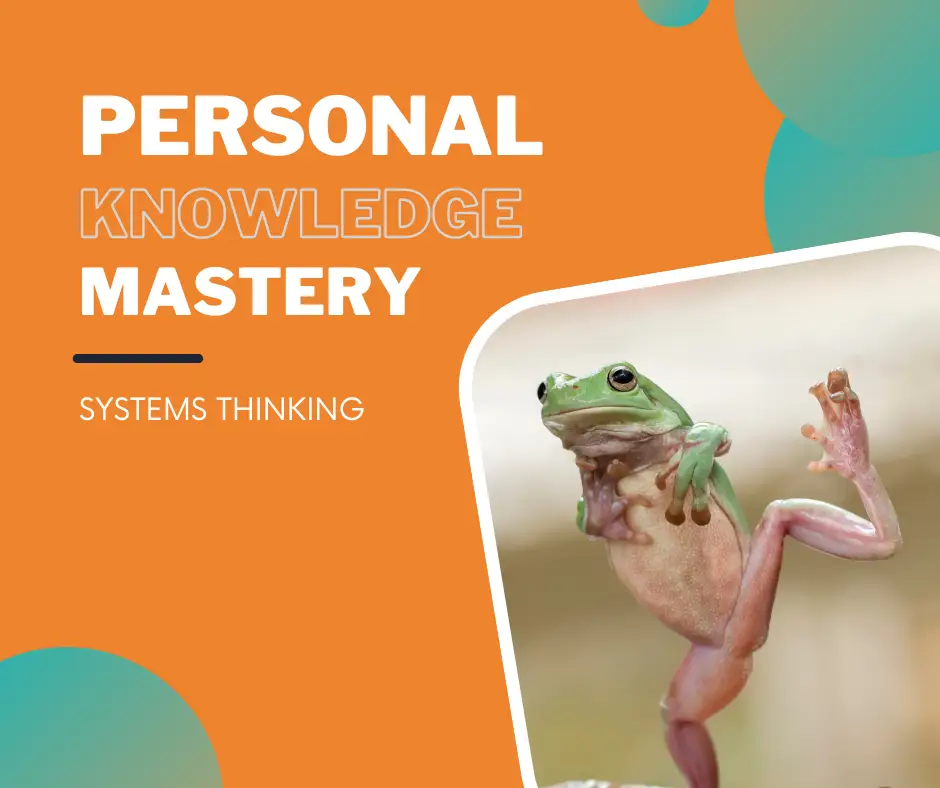
  • No Frogs Were Actually Harmed in Describing Systems Thinking – Teaching in Higher Ed

    No Frogs Were Actually Harmed in Describing Systems Thinking – Teaching in Higher Ed

    This post is one of many, related to my participation in  Harold Jarche’s Personal Knowledge Mastery workshop.

    As we round down our time in the PKMastery workshop, I’m now presented with a topic that is both familiar, yet still incredibly challenging for me: systems thinking. One of the best books I read in my MA was The Fifth Discipline: The Art & Practice of the Learning Organization. I discovered that I didn’t have a digital copy (where I like to keep highlights) and was fortunate to find it on sale for $1.99, plus a digital credit that made it “free”.

    The key dimensions of the disciplines of the learning organization are listed by Senge in the introduction:

    • Systems thinking: He describes here how rain happens, with a bunch of different events that happen across distance, time, and space, yet: “… they are all connected within the same pattern. Each has an influence on the rest, an influence that is usually hidden from view. You can only understand the system of a rainstorm by contemplating the whole, not any individual part of the pattern.” We use systems thinking to be more effective at seeing the full picture and associated patterns, as well as to find ways to facilitate change.
    • Personal mastery: Senge distinguishes the multiple meanings of the word mastery. Yes, it can mean dominance over another, yet can also have to do with proficiency. He defines personal mastery as, “…the discipline of continually clarifying and deepening our personal vision, of focusing our energies, of developing patience, and of seeing reality objectively.”
    • Mental models: These baked in assumptions, over-generalized beliefs impact how we understand and explain what happens and the actions we take as a result of those paradigms.
    • Building shared vision: Organizations that achieve great things do so through leadership capacity at developing a shared perspective on where the organization is headed. Senge describes: “When there is a genuine vision (as opposed to the all-too-familiar “vision statement”), people excel and learn, not because they are told to, but because they want to.”
    • Team learning: Senge encourages us to look to the Greeks’ practice of dialog vs discussion. When we are in dialog, our ideas are free-flowing and we can build a capacity to suspend our assumptions and actually think together. In contrast, the word discussion has ties with word like “percussion” and “concussion” and the idea of competitive ideation can take place.

    Senge describes how the fifth discipline is systems thinking, because it weaves together the other disciplines toward intentional transformation. When we can visualize something better, we can understand it more effectively, as Jarche illustrates in a story about when NASA first released a picture of the earth, taken from space. He writes how:

    There are many ways to use visualization to understand data better. The real value of big data is using it to ask better questions. Visualization can be a conversation accelerator.

    Taking existing systems and using visualization to surface the ways the various parts of the system shape the other parts is vital in increasing our individual and collective abilities to learn.

    What Holds Us Back From Being a Learning Organization

    In chapter two, Senge writes about what he calls organizational learning disabilities. I’m not sure he communicates in such a way to support more of an asset-based framework for disability that many of us have become familiar with today. But I still want to list and describe them here, as this was my biggest takeaway from the book, reading it more than twenty years ago.

    1. “I am my position”

    “When asked what they do for a living, most people describe the tasks they perform every day, not the purpose of the greater enterprise in which they take part. Most see themselves within a system over which they have little or no influence. They do their job, put in their time, and try to cope with the forces outside of their control. Consequently, they tend to see their responsibilities as limited to the boundaries of their position.”

    1. “The enemy is out there”

    “When we focus only on our position, we do not see how our own actions extend beyond the boundary of that position. When those actions have consequences that come back to hurt us, we misperceive these new problems as externally caused. Like the person being chased by his own shadow, we cannot seem to shake them.”

    1. The illusion of taking charge

    “All too often, proactiveness is reactiveness in disguise… True proactiveness comes from seeing how we contribute to our own problems. It is a. product of our way of thinking, not our emotional state.”

    1. The fixation on events

    Senge describes how we evolved out of societies where people had to be focused on events to survive, like watching for the saber-toothed tiger to show up and be able to respond immediately.

    “Generative learning cannot be sustained in an organization if people’s thinking is dominated by short-term events. If we focus on events, the best we can ever do is predict an event before it happens so that we can react optimally. But we cannot learn to create.”

    1. The parable of the boiled frog

    “Learning to see slow, gradual processes requires slowing down our frenetic pace and paying attention to the subtle as well as the dramatic… The problem is our minds are so locked in one frequency, it’s as if we can only see at 78 rpm; we can’t see anything at 33-1/3. We will not avoid the fate of the frog until we learn to slow down and see the gradual processes that often pose the greatest threats.”

    Remember that this is meant to be a metaphor to help us explain this phenomenon. No frogs were harmed in sharing this boiling frog apologue.

    1. The delusion of learning from experience

    “Herein lies the core learning dilemma that confronts organizations: we learn best from experience but we never directly experience the consequences of many of our most important decisions. The most critical decisions made in organizations have systemwide consequences that stretch over years or decades.”

    1. The myth of the management team

    “All too often, teams in business tend to spend their time fighting for turf, avoiding anything that will make them look bad personally, and pretending that everyone is behind the team’s collective strategy—maintaining the appearance of a cohesive team. To keep up the image, they seek to squelch disagreement; people with serious reservations avoid stating them publicly, and joint decisions are watered-down compromises reflecting what everyone can live with, or else reflecting one person’s view foisted on the group. If there is disagreement, it’s usually expressed in a manner that lays blame, polarizes opinion, and fails to reveal the underlying differences in assumptions and experience in a way that the team as a whole could learn from.”

    Senge goes on to describe what Chris Argyris from Harvard calls “skilled incompetence” (gift, non-paywalled article from HBR)- groups of individuals who get super good at making sure to prevent themselves from actually learning. Since we’re talking frogs a lot in this series of PKM posts, I can’t help but bring up another illustrative story having to do with skilled incompetence.

    The cartoon character Michigan J Frog would only dance and sing when the man who found him was alone. Any time that someone else entered the picture, the frog just sat there, making normal frog noises. Here’s a look at his antics:

    Looks to me like skilled incompetence and also some seriously skilled frog theatrics (but only when no one is looking).

    What Comes Next

    The next part of The Fifth Discipline is something Senge calls “the beer game.” It is a memorable look at what happens when we are unable to see the entire system, but only one part of it. Let’s just say there’s a supposed shortage of beer, and then lots and lots of beer. But you should read it, as I’m nowhere capturing the marvelous metaphor that is the beer game.

    Readers are also instructed how to map systems in this book, though it is a practice that I never mastered. Jarche links to Tools for Systems Thinkers: Systems Mapping, by Leyia Acaroglu. which gives a great introduction and series of maps to use to explore complex ideas. Acaroglu illustrates their value by describing:

    As a practicing creative change-maker, I use systems mapping tools like this all the time when I want to identify the divergent parts of the problem set and find unique areas in which to develop interventions. I also use them to gain clarity in complexity, and find it especially useful when working in teams or collaborating because it puts everyone on the same page.

    I pretty much want to take every class that Levia and her team have available on the Unschool of Disruptive Design site. I’m also thinking I had better settle myself down a bit and wrap up this PKMastery course before biting off anything more. That, plus a couple of big conferences coming up I still need to prepare for…

    Source link

  • More South Carolina Students Are Graduating, But Many Aren’t Ready for Life After High School – The 74

    More South Carolina Students Are Graduating, But Many Aren’t Ready for Life After High School – The 74


    Get stories like this delivered straight to your inbox. Sign up for The 74 Newsletter

    COLUMBIA — South Carolina high schools posted their highest graduation rate in a decade, but a quarter of students still aren’t ready for college or the workforce, according to state report card data released Monday.

    Generally, South Carolina’s schools improved compared to last year, according to the statewide data that gauges how well schools perform based on test scores, classroom surveys and student growth, among other metrics. Education officials applauded a 10-year high in the number of students graduating on time — meaning they graduated four years after entering ninth grade — while saying they would continue pushing for programs to improve how well those students were prepared for life after high school.

    “We have to make sure that our diplomas are worth more than the piece of paper that they are written on,” said state Superintendent Ellen Weaver.

    Overall, 270 schools rated “excellent” this year, an increase from 232 last year. The bottom tier of “unsatisfactory” decreased from 49 to 31, and “below average” schools dropped from 186 to 145.

    Any time the number of schools in the lowest tier shrinks, that’s good news, since it means children across the state are getting a better education, said Patrick Kelly, a lobbyist with the Palmetto State Teachers Association.

    “There’s encouraging information here,” Kelly said of the report cards.

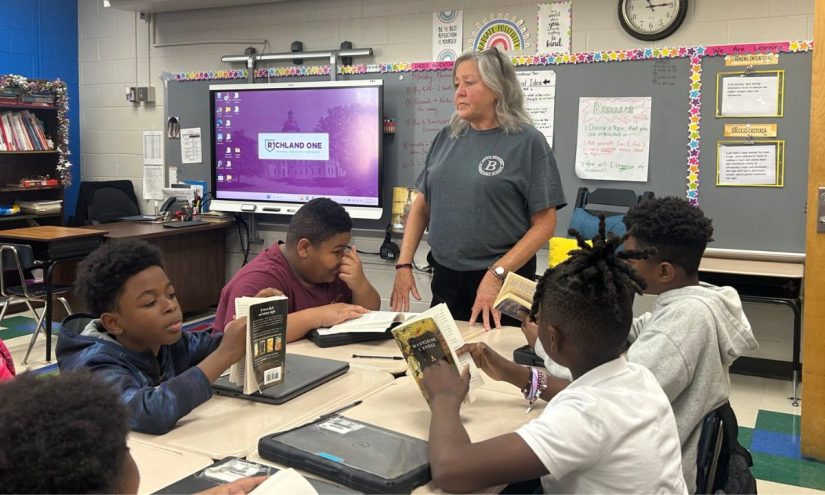
    Officials from the state Department of Education and the independent Education Oversight Committee, which is tasked by state law with grading schools, announced the results at Annie Burnside Elementary School in Columbia, which jumped two tiers this year, from “average” to “excellent.”

    At the Richland District One school, 83% of the 306 students live in poverty. The school’s big rating boost was due to significant student improvement, as shown by their test scores, and results on a survey about the school’s general environment, according to its report card.

    “Our academic gains are no coincidence,” said Principal Janet Campbell. “They are the result of setting measurable goals, challenging our students to reach them and supporting them along the way.”

    Graduation rates and readiness

    This year, 87% of high schoolers graduated on time, up from 85% last year. That’s worth celebrating, Kelly said.

    “Our goal should be for every student in South Carolina who has the ability to earn a high school diploma,” he said.

    Three-quarters of students were ready for either college or a career after graduation, a gain of 3 percentage points, according to the state data. Less than a third were ready for both.

    Although the gap between students who are graduating and those who are prepared for what comes next continues to shrink slightly, state officials remain concerned about it, Weaver said.

    “At the end of the day, we want our students, when they leave a South Carolina high school, to know that that diploma that they carry is a diploma of value,” Weaver said. “This is a diploma that is going to ensure that they are ready to go onto whatever post-secondary success looks like for them.”

    All 11th graders in the state take a test assessing skills commonly needed for jobs, divided into four areas: math, reading, understanding data and “soft skills,” which include aspects of a job such as dressing professionally and working well with others. Results are graded from 1 to 5, with higher scores suggesting students are ready to pursue more careers.

    Students are considered career-ready if they receive a score of 3 or higher on that test, earn a technical education certificate, complete a state-approved internship or receive a high enough score on the Armed Services Vocational Aptitude Battery to enlist in the military. This year, 73% of students met that benchmark, compared to 70% last year, according to report card data.

    College readiness is based on a student’s score on the ACT or SAT college entrance exam, college credit earned through a dual-enrollment course and/or scores on end-of-course Advanced Placement tests.

    One-third of graduating students were college-ready, which is on par with at least the past five years, according to state data. The rate of high school students applying for college also continued to decrease, with 59% reporting filling out applications this year, compared with 61% last year.

    A gap between graduation rate and readiness for the next step suggests schools are sometimes passing students without actually imparting the skills they need to succeed in life, Kelly said.

    For instance, district policies setting minimum grades teachers can give makes it easier for students to pass their classes, even if they haven’t actually done the work, Kelly said. Alternatives for students who fail tests or classes are sometimes easier, meaning a student can catch up without actually learning the same skills as their peers, he said.

    “We’ve put some policies in place that make it harder to evaluate what a student knows and can do,” Kelly said.

    Beginning this school year, students can follow a so-called pathway to earn credentials that build on each other every year, allowing students to learn more advanced skills meant to make it easier to find a job in the field they want to pursue, said April Allen, chair of the Education Oversight Committee’s governing board.

    “At the same time, we recognize that strengthening the system must go hand-in-hand with addressing the barriers that keep students from wholly engaging in school,” said Allen, who’s also a government relations director for Continental Tire.

    Chronic absenteeism and test scores

    For example, the number of students who missed at least 10 days of school this year remained a concern, Allen said.

    Around 23% of students were chronically absent, essentially the same number as last year. The more days of school a student misses, the less likely they are to perform as expected for their grade level on end-of-year tests, according to a report the committee put out last year.

    Those tests, in turn, play a role in determining how well a school or a district is performing. Officials and teachers’ advocates credited the Palmetto Literacy Project and a change in how early educators teach reading for improving English scores, but math scores remain low, with less than half of third- through eighth-graders able to perform on grade level, according to state testing data.

    Just over half the state’s high school students scored at least a C, which is a 70%, on their end-of-course Algebra I exams, often taken freshman year, according to report card data. Nearly 69% passed their English 2 exams, typically taken sophomore year.

    While rooting for improvement, teachers’ advocates also warned against depending too heavily on a single exam score in deciding how well teachers and students are performing. A single, high-pressure exam at the end of the year is not necessarily the best indicator of school performance, said Dena Crews, president of the South Carolina Education Association.

    “If people are making judgments based on that, they’re missing a whole lot about schools and districts,” Crews said.

    Teacher support

    The Department of Education plans to focus on teachers in 2026, Weaver said.

    “The No. 1 thing that we have to do to support student learning is take care of our teachers,” Weaver said.

    She is asking legislators to raise the minimum pay for a first-year teacher to $50,000, up from $48,500. Legislators have increased the pay floor in increments for years, with the stated goal of reaching $50,000.

    Weaver is also asking for $5 million to continue a pilot program that awards teachers bonuses based on how well their students perform on tests. She also wants to start a program that offers extra pay to exceptional teachers who mentor others. The additional responsibility would be another way to earn more money without leaving the classroom to go into school administration, she said.

    Supporting teachers is key in improving how well schools are performing, Kelly said. The promising results in this year’s report cards came after the first dip in teacher vacancies since 2019, he added.

    “It should not be a surprise to see school performance improve as teacher vacancies go down,” Kelly said.

    SC Daily Gazette is part of States Newsroom, a nonprofit news network supported by grants and a coalition of donors as a 501c(3) public charity. SC Daily Gazette maintains editorial independence. Contact Editor Seanna Adcox for questions: [email protected].


    Did you use this article in your work?

    We’d love to hear how The 74’s reporting is helping educators, researchers, and policymakers. Tell us how

    Source link