Category: Featured

  • Victory in Virginia! Gov. Youngkin defends free speech by vetoing bill on ‘altered’ political media

    Victory in Virginia! Gov. Youngkin defends free speech by vetoing bill on ‘altered’ political media

    If you were planning to post an edited photo online of a Virginia political candidate during the next election, you might’ve been in trouble. 

    After FIRE’s opposition and outreach on this bill, Gov. Glenn Youngkin just prevented that from happening by vetoing HB 2479. 

    The Virginia General Assembly passed HB 2479 to suppress “altered” and AI-generated depictions of candidates — enforced with threats of fines and even jail time — unless a conspicuous disclaimer was added. Instead of trusting the public to decide what’s true, false, or credible, HB 2479 would have violated the free speech rights of Virginians to make the government into the arbiter of truth. 

    This bill would’ve made it illegal for virtually any Virginian to sponsor an “electioneering communication” that contains “altered” or AI-generated images or audio recordings of identifiable candidates running for elected office. This included messages appearing in print, TV, radio, or online platforms within 60 days of an election. 

    Not only would it have included traditional paid campaign ads, but anyone’s speech expressing support for or against a candidate that involves the exchange of something of value and appears in a paper, a broadcast, or is promoted online for a fee. This could include using an AI tool that requires a paid license or even posting on a social media platform using a paid premium account that many platforms offer to extend the content’s visibility and reach.

    What “altered” means is anyone’s guess — but the government would be the decider.  Any edit that created a “fundamentally different impression” of the photo or video could count, meaning it could have covered even simple edits like cropping a photo. If an image of a candidate was cropped to fit onto a page, an aggrieved candidate could sue and argue that the crop created a “fundamentally different impression” from the original if the portion cropped out removed some kind of context — such as part of the background or another person.

    And every speaker was covered, not just mud-slinging political opponents. Suppose a small business owner buys space in a newspaper to highlight how a mayor running for reelection failed to address public safety concerns outside her shop. If she includes a slightly edited and unflattering image of the mayor, she could have been sued — even if the content is not misleading (or even relevant).

    The disclaimer requirement wouldn’t have solved the bill’s problems, and in fact created new ones. The First Amendment protects both your right to speak your mind and to hold your tongue, but disclaimers force you to utter government-mandated speech.   Even worse, the disclaimer here could have actually misled voters into thinking that someone is spreading falsehoods — even if the ad was factually accurate — simply because edited or AI-generated material was included. 

    Lawmakers certainly need to protect the electoral process, but this bill would have done the opposite, and it restricted far more speech than necessary to prevent true voter deception. It therefore was unlikely to withstand judicial scrutiny. 

    The better, constitutional way to fight falsehoods that arise during campaigns is to let candidates fight speech with more speech. If an ad is misleading or outright wrong, candidates can and should point it out. Should any depictions of candidates rise to the level of being actually defamatory, Virginia already has laws to address it. Otherwise, the First Amendment protects our right to use expressive tools like AI to enhance political communication.

    Our system of government hinges on the freedom to freely express our opinions about candidates for public office. We commend Youngkin for his veto, which will help preserve the First Amendment rights of Virginians and ensure a vibrant, open political discourse.

    Source link

  • DEI statements could function as ideological firewalls, new study finds

    DEI statements could function as ideological firewalls, new study finds

    Findings from my study — released as an issue brief by Manhattan Institute — provide the first available empirical evidence that DEI statements in faculty hiring and promotion could be used as political firewalls to enforce ideological conformity and screen out candidates who hold dissenting views.

    In the study, applicants who discussed having engaged in specific DEI-related efforts — such as building outreach programs targeting students and faculty of color or chairing a committee on race relations — received higher scores from faculty evaluators.

    All told, data from seven experimental studies involving 4,953 tenured/tenure-track university faculty together show that faculty exhibit a clear preference for DEI statements that discuss race/ethnicity and gender, while down-rating those that do not.

    Even if applicants began their statements by explicitly saying, “I have long been committed to equity, diversity, and inclusion,” and then detailed work on mentoring and outreach to students in rural communities — but not race-based or feminist efforts — they were far less likely to be recommended for further review.

    In fact, one of the studies found that only 45% of faculty who evaluated a viewpoint diversity DEI statement recommended advancing the candidate for further review, compared to 88% of faculty who recommended advancing the candidate who discussed race or gender-based efforts.

    FIRE has long argued that requiring DEI statements can too easily function as a political litmus test in hiring and promotion, forcing faculty to express prevailing ideological positions on DEI — or face the consequences. 

    Moreover, even among college and university faculty, opinions on DEI statements are mixed. In two different large national surveys, FIRE found that faculty were split on whether colleges should require DEI statements in job applications. 

    There are still many unexplored questions about DEI statements, and their future remains uncertain. That said, it remains to be seen whether DEI statements are being eliminated entirely by some institutions, or whether they are simply being rebranded

    But insofar as DEI statements function as a form of viewpoint discrimination disguised as an anti-discrimination initiative, colleges and universities should reconsider their continued use.

    FIRE has model legislation to prohibit the use of political litmus tests in faculty hiring, promotion, and tenure awards, and in student admissions at public institutions of higher education. 


    For more information about this work, please see the now available issue brief or the underlying academic pre-print.

    Source link

  • Tailored for Student Success and Built to Drive Results

    Tailored for Student Success and Built to Drive Results

    Why would you settle for a generic LMS when your university deserves one based on its own learning path? Custom LMS development creates a customized experience that drives student achievement from day one, not only provides tools.


    Why Universities Need a Custom LMS

    Custom LMS systems are much needed in modern institutions since off-the-shevel LMS solutions usually fail to satisfy their various needs. Custom LMS development is hence quite relevant. Customized solutions can fit the processes, academic framework, and student needs of your university, therefore promoting improved institutional effectiveness and learning results.

    Did you realize?

    • A 2023 EDUCAUSE study shows that 78% of leaders in higher education feel that tailored learning environments directly help to ensure student success.
    • Using custom LMS solutions, universities noted a 25% increase in student involvement and a 19% increase in course completion rates.


    Key Benefits of a Custom LMS Development for Student Success


    • Students advance at their own speed under customized content delivery depending on performance.
    • Interactive materials, multimedia integration, and group projects all help to keep students engaged.
    • Modern analytics—real-time student performance—allows teachers to modify their plans to raise results.
    • Linkages with current SIS, CRM, and outside tools help to simplify procedures.
    • Flexibility and scalability help you to ensure long-term viability as your university develops. 


    How to Develop a Custom LMS for Universities

    Customizing the best LMS for student success is about matching the platform with the mission of your university, not only about technology. Here’s a breakdown:

    • Name the main goals: Describe for your university what student success means.
    • Plot the course of the student. Recognize several student kinds, from those needing more help to fast learners.
    • Design for User Experience: Make sure teachers and students alike have a simple, mobile-friendly interface.
    • Leverage data: To create reporting and analytics tools to monitor performance and interaction.
    • Test, refine, and scale: Beginning with a pilot program, get comments, and always improve. 


    The Future of Learning with Creatrix Campus

    Creatrix Campus provides a best-in-class LMS for student success, therefore enabling universities to design individualized, data-driven learning environments. Features like automatic reporting, assignment administration, and engagement tracking enable our platform to help colleges uncover new academic successes without sacrificing cost-effectiveness.

    Ready to change the educational process at your university? Your way, let us create an best LMS for student success that propels student success.

    Source link

  • Is it ‘hate speech’ to say Jesus needs a haircut?

    Is it ‘hate speech’ to say Jesus needs a haircut?

    Last year, FIRE launched the Free Speech Dispatch, a regular series covering new and continuing censorship trends and challenges around the world. Our goal is to help readers better understand the global context of free expression. 

    Want to make sure you don’t miss an update? Sign up for our newsletter.


    Hate speech sentence for TikToker’s joke about Jesus’ hair

    Is it a crime to joke that Jesus needs a haircut? In Indonesia, the answer is apparently yes. Ratu Thalisa, a popular TikToker in the country, was just sentenced to two years and 10 months in prison after holding up a picture of Jesus in a video and saying, “You should not look like a woman,” adding that he should cut his hair. 

    Thalisa, a trans woman, was responding to a commenter telling her to cut her hair like a man’s. Two days after she posted the video, Christian groups reported her to the police for blasphemy violations and she was soon arrested. She was ultimately found guilty of hate speech against Christianity under Indonesia’s Electronic Information and Transactions law for comments that could affect “public order” and “religious harmony.” 

    Thalisa is one of hundreds found guilty for speech-related offenses under this law in recent years. Similarly, opponents of a demolition project linked to a Roman Catholic diocese in Indonesia now have reason to fear they’ll be targeted under the country’s blasphemy law. The United Catholic Youth Forum, a Catholic group in Indonesia, is pressuring police to arrest a critic who posted a cartoon “depicting a Catholic priest with an excavator,” claiming it “insults the symbol of the Catholic religion.”

    Blasphemous speech remains a target globally

    Rasmus Paludan burning a Quran outside the Turkish embassy in Stockholm in January 2023

    • Greek politician Nikolaos Papadopoulos took his feud against artwork he once criticized as offensive to Orthodox Christianity to a new level this month. The country’s National Gallery had to temporarily close after Papadopoulos partially destroyed four works, caricatures of religious icons from artist Christoforos Katsadiotis, by throwing them on the ground.
    • Pakistan’s Lahore High Court issued a ruling intensifying the country’s attack on VPN use and blasphemous speech online. The ruling “ordered the immediate termination of all types of VPNs, the registration of all social media websites, and the establishment of special courts nationwide” to combat online blasphemy.
    • A Pakistani court sentenced a man to death for “disrespectful remarks against the Holy Prophet.”
    • Last month, I wrote about a man who was arrested “on suspicion of a racially aggravated public order offence” for publicly burning a Quran in Manchester, UK. Another man was arrested on similar charges after burning a Quran outside the Turkish consulate in London. And that’s not all — his expression was also met with violence. An attacker was charged after slashing at the Quran burner with a knife. 

    Online Safety Act, threats to China’s critics, and more out of the UK

    Digital graphic world map hologram on flag of China and blue sky background

    Another charged Quran-burner isn’t the only speech news coming out of the UK. Here’s the latest:

    • The UK’s Online Safety Act has now gone into effect. The law is wide-ranging and, among other things, requires platforms to take measures against and have in place systems for removing content including extreme pornography, racially or religiously aggravated public order offences, controlling or coercive behaviour, and terrorism. Hundreds of small websites — like The Hamster Forum, “the home of all things hamstery” — have already announced they are shutting down out of fear that they will be unable to meet compliance requirements under the law.
    • Earlier this year, the UK shocked privacy advocates when leaks reported that the country’s Home Office demanded Apple offer a backdoor in its encrypted cloud service for users around the world. Apple refused, withdrawing its advanced data protection tool for UK users rather than comply, and responded with an appeal to the country’s Investigatory Powers Tribunal. A hearing was held this month — but it was closed, and media outlets were denied access.
    • Neighbors of Hong Kong activists Tony Chung and Carmen Lau, now living in the UK, received disturbing letters offering £100,000 for “information” on their alleged national security crimes against Hong Kong or, even more shocking, for taking them directly to the Chinese embassy in London. An embassy spokesperson claimed the letters were staged but said that “I also want to stress that it is legitimate and reasonable to pursue wanted fugitives.” Similar letters were sent in Melbourne to the neighbors of Kevin Yam, an Australian citizen also wanted in Hong Kong.

    Facial recognition’s role in censorship 

    Last week, Hungarian MPs passed a law making it “forbidden to hold an assembly in violation” of the country’s 2021 law banning the depiction of homosexuality to minors, making Pride marches illegal in the country. Those who hold or attend Pride parades may now face fines — and police “are also allowed to use facial recognition technology to identify possible offenders.”

    Facial recognition is playing a role in Iran’s censorship and suppression of women, too. To enforce its oppressive forced veiling policies, Iranian authorities use a slew of tools to target women failing to wear hijab. Those tools include drones, a phone app to report unveiled women, and facial recognition tech. 

    Speech about Israel and Gaza continues to be a target for law enforcement and legislators

    Protester is holding a placard that reads ''Freedom of Speech'' while nearly a hundred people are participating in a demonstration to commemorate Palestinian Prisoners Day in Bonn, Germany copy

    • Germany’s State Security Police are investigating an incident during the Berlin International Film Festival, where Hong Kong director Jun Li read out a speech from Iranian actor Erfan Shekarriz, who accused German institutions of supporting “the brutal extermination of the Palestinian people.” The investigation likely rests on the director’s use of “From the river to the sea, Palestine will be free,” a phrase that has sometimes been criminalized in Germany.
    • In an effort to combat anti-Semitism, New South Wales in Australia has passed new protest and hate speech laws despite some concerns about their breadth. The laws, among other things, restrict protests “near” places of worship and criminalize “intentionally and publicly incit[ing] hatred towards another person, or group of people, on the grounds of race.”
    • Canadian writer and activist Yves Engler was hit with harassment and indecent communication charges late last month over comments he made in reply to media figure Dahlia Kurtz on X last summer. Engler said “Racist Dahlia supports killing Palestinian children. 20,000 is not enough she wants even more Palestinian blood spilled.” Engler then alleged he was hit with a new set of charges for writing about the initial ones. Engler spent five days in jail before being released.
    • Universities Australia, the representative body for Australia’s higher education institutions, agreed upon a new definition of anti-Semitism to be adopted across its 39 universities after urging from the Australian Senate to create one that “closely aligns” with the International Holocaust Remembrance Alliance definition. (FIRE has expressed concerns about enforcement of the IHRA definition on U.S. campuses and its potential to chill or censor protected speech about Israel.)
    • Saying “freedom of expression underpins everything we do at LSE,” the London School of Economics rejected a campaign to cancel a talk for the book “Understanding Hamas and Why That Matters.” Israeli ambassador Tzipi Hotovely had sent a letter to LSE calling for the event cancellation, writing that she was “deeply concerned that the event is providing a platform for Hamas propaganda — a terror organisation proscribed under United Kingdom law.”

    Record high internet shutdowns in 2024

    As Dispatch readers know, many of the most pressing free speech fights today take place over how, and whether, we can speak freely online. A new report from Access Now revealed that 2024 was the worst year yet for internet shutdowns, finding 296 shutdowns in 54 countries, with seven new countries using the tactic for the first time compared to 2023. The most shutdowns occurred in Myanmar, India, Pakistan, Russia, and Ukraine, with some of those shutdowns imposed by other nations and actors.

    Prison for a ‘false post,’ satirical cartoon blocked in India, and more speech news out of the Middle East and Asia 

    • An elderly Malaysian man was sentenced to six months in prison after failing to pay a fine punishing him for posting “false content” about the king of Malaysia.
    • Kyrgyzstan recriminalized libel and insult on the internet and in the media. Now, “complaints will be handled by police and adjudicated by so-called administrative courts in an expedited format” and new fines will be assessed for violations.
    • Police handling online crime in India’s Maharashtra state sent a notice to the Wikimedia Foundation to remove “objectionable” content from the Wikipedia page for Chhatrapati Sambhaji Maharaj, a king in 17th century India.
    • There’s more Wikipedia news out of India. The Wikimedia Foundation is asking India’s Supreme Court to reverse an order directing Wikipedia to take down a page about its legal dispute with an Indian news agency. The underlying dispute centers on a Wiki entry describing the outlet as a government “propaganda tool.”
    • And India’s Ministry of Electronics and Information Technology reportedly blocked the website of Tamil-language weekly magazine Ananda Vikatan over a satirical cartoon depicting Indian Prime Minister Narendra Modi in chains behind President Donald Trump.
    • Vietnamese scholar and journalist Truong Huy San, who goes by the pen name Huy Duc, was sentenced to 30 months in prison for Facebook posts “abusing democratic freedoms to infringe upon the interests of the state.”
    • An escalation in President Recep Tayyip Erdogan’s campaign against his opponents and critics, Turkish police just arrested Istanbul’s mayor and popular Erdogan rival Ekrem Imamoglu and banned protests for four days in Istanbul.
    • Two of Singapore’s government ministers have filed a libel suit against Bloomberg over the outlet’s reporting about real estate in Singapore. Under the Protection from Online Falsehoods and Manipulation Act, Singapore previously ordered Bloomberg to issue a “correction direction” on its reporting, which the outlet did with a note that it was done “under threat of sanction.”

    Guilty finding in egregious case of transnational repression in the U.S.

    Iranian journalist and womens rights activist Masih Alinejad at the Time Women of the Year Gala in 2023

    Last week, two men were found guilty of a plot to murder Iranian-American journalist and activist Masih Alinejad in New York City. Alleged Russian mob members Rafat Amirov and Polad Omarov were found guilty of charges including murder for hire, firearms possession and conspiracy to commit money laundering. 

    Prosecutors accused the Iranian government of putting a $500,000 bounty on Alinejad and of other plots to harm her. The case is yet another disturbing reminder that oppressive regimes overseas are attempting to silence speech — and critics — within U.S. borders.

    Source link

  • Short-term service learning experiences help college students

    Short-term service learning experiences help college students

    College students are known to be strapped for time. A May 2024 Student Voice survey by Inside Higher Ed found the No. 1 stressor in students’ lives is balancing academics with personal, family or financial responsibilities such as work.

    Research shows campus involvement is tied to students’ retention, career development and sense of belonging while in college, but helping time-strapped students access these experiences can be a challenge for institutions.

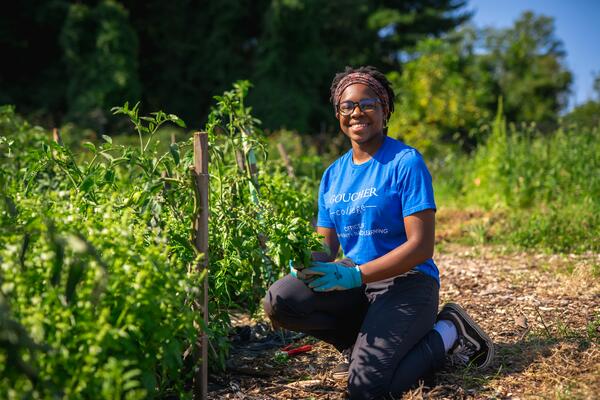
    This year, Goucher College in Maryland created a new forum through the office of Community-Based Learning. The short-term micro-experiences allow students to dip their toes into service without committing to a semester or longer. The college first piloted the unpaid opportunities in spring 2024, and student participation in service learning has increased as a result.

    The background: The Office of Community-Based Learning offers seven focus areas for community engagement: animal welfare, empowering ability, environmental sustainability, food and housing security, K-12 education and youth development, immigrant and refugee programs, and health and wellness.

    Participation could include off-campus Federal Work-Study roles, volunteering with a social justice student club or through a campus organization, taking a Community-Based Learning course, engaging in an internship, or serving as a student director. The office also partners with faculty members to provide experiences in the classroom, such as a semester-long project for a nonprofit partner or a field trip to a partner site.

    One of the reasons CBL has previously not offered short-term or one-day service opportunities is because of ethical concerns of how impactful these experiences are for the organizations or individuals being served.

    The change is reflective of the needs of today’s students, who are more likely to be working for pay or on a compressed timeline to complete their undergraduate program as quickly as possible, CBL director Lindsay Johnson Walton said.

    To ask students to invest in a long-term program that requires three, four or five semesters’ worth of time, “it’s not practical,” she said.

    On the other side, nonprofit and community partners can be so desperately in need of support that they hold fewer concerns about the model of service. “It doesn’t matter if it’s the same students as long as it’s engaged students,” Johnson Walton explained.

    Offering short-term participation opportunities requires more work from the college to generate the experience and fill out paperwork because it only happens once, but Johnson Walton hopes with future iterations the process will become more streamlined.

    How it works: CBL offers around one micro-experience per week, many taking place on a Saturday morning or afternoon. Each experience has a cap of 10 to 12 students.

    Students sign up in advance and commit to volunteering for a few hours. College staff handle logistics, including transportation, covering background checks and coordinating with the site, so students just have to show up and serve. Student coordinators, who are part-time staff working for CBL, also contribute to the organization and execution of events.

    Some experiences that work well as short-term offerings include volunteering at the food bank or assisting at an animal shelter, while other partners, such as public schools, still operate best with more sustained interactions.

    On the trip back, staff lead a short debrief and guided reflection to help students connect their experiences to larger learning objectives and provide additional opportunities to learn or serve, if needed. Students are also sent a short questionnaire that asks them to reflect on their work.

    Short-Term Experiential Learning Grows

    Community-based learning isn’t the only area where Goucher College has shortened the duration of experiential learning opportunities.

    In 2020, Goucher launched micro-internships for students, primarily to address a lack of offerings available to students due to the COVID-19 pandemic. The remote offerings help connect students with alumni and other college partners and give students a project to assist in their career development and growth.

    Similarly, the global education office has seen a growth in student interest for three- to five-week study abroad offerings rather than semester-long programs.

    Who’s doing it: The micro-experiences have attracted a wide variety of students, some who are curious about service learning and just want to dip their toes in. International students often fall into this category because volunteering can be a uniquely American experience, and the projects give them insight into different organizations and spaces they may not otherwise engage in, such as schools, Johnson Walton said.

    Others have a passion for service but are unable to devote much time to it, so micro-experiences provide a flexible opportunity.

    Many students had a service requirement while in high school or were told that volunteering is a good feature for their college application, which makes service more of a reflex, Johnson Walton said. “They think they should be doing it, because culturally it’s been built into the list of things you’re supposed to do.”

    Each of these students reflects an opportunity to further engage them in longer-term community-based learning in a curricular or co-curricular setting.

    Feedback from participants shows that even small or short projects can have an impact on the student. At a volunteer appreciation event, one student wrote they learned how to plant a tree, which is a simple action, but one that can help a lot of people and a skill they can take and use again and again, Johnson Walton said.

    Similarly, sorting food at the food bank can seem insignificant, but recognizing how many people that food will feed can help students gain perspective on their service impact.

    For organizers of community-based learning experiences, it can be hard to grapple with the potential harm done by short-term community service because of the power dynamics involved, but Johnson Walton has learned that allowing students to get out and do can be a great first start to thoughtful and intentional service.

    Seeking stories from campus leaders, faculty members and staff for our Student Success focus. Share here.

    Source link

  • How Leaders Can Chart a Path Through the Chaos (opinion)

    How Leaders Can Chart a Path Through the Chaos (opinion)

    The pressures on higher education leaders and their institutions have intensified with the new U.S. presidential administration’s agenda. We all became familiar with uncertainty as a result of the pandemic, but this new series of policy mandates and legal challenges creates an even more ambiguous environment. Higher education’s basic foundations, operating systems, cultures, values and structures are being challenged, which implies systemic change may be required.

    Leading systemic change is difficult enough in a less demanding environment. In this one, higher ed leaders will need tools and resources that can help them strategically chart a path through the chaos. They will need advice about how to adapt and continue important work that may be challenged by current executive orders, as well as advice about how to navigate the sheer volume of those orders.

    Leaders can be more successful adapting and strategizing if they do so in ways that honor their unique contexts. Context variously creates opportunities or presents barriers that influence the actions leaders may take. Therefore, it is important for leaders to step back for a few moments and “get on the balcony,” as Ronald A. Heifetz, Marty Linsky and Alexander Grashow put it.

    While many leaders may not think they have the time to do this, it is critically important they take the time to understand the complexities of the current situation so as not to overreact, react too quickly or react incorrectly. For example, a leader responding to a recent executive order may move quickly to announce program and office closures, but without time to consider options and understand context, this quick action may have a greater negative impact than some other, more strategic approach, one that does not compromise institutional integrity.

    Leaders may also find they have levers available to them that are important to identify and use strategically. For example, partnerships with donors or grant opportunities are great levers to not only achieve strategic priorities but also provide relief for shortfalls that may result from the current political climate.

    One way leaders can “get on the balcony” is to dive into their context and ask key questions with their leadership teams. This analysis will illuminate aspects of the leadership landscape that perhaps weren’t fully realized, highlight opportunities and fill in the details of challenges they are facing. Important categories of context to analyze are institutional mission; campus culture; politics, leadership and governance; human capital and capacity; physical, financial and technological resources; and externalities.

    The final category of externalities may be of particular relevance right now. This category refers to anything happening outside the university, from local community issues to state and federal policies. It goes beyond state appropriations and budgets to include social, political and economic factors. As leaders consider their external environment, here are some questions they can use to help them identify opportunities for and barriers to change, as well as levers they can use to inform the actions they can take:

    1. Are there state or federal policies or programs that are related to the change you are trying to achieve?
    2. What initiatives, organizations or businesses in your community might have a stake in this change?
    3. If your campus is public or part of a state system, are there messages, policies and priorities that can be drawn on to support changes?
    4. Is your campus a member of a national association that has initiatives you might participate in that will help you advance your change or gain momentum and support?
    5. Are there state, federal or philanthropic organizations that have grant programs aligned with your change goals? Do you have any major donors that can be engaged in your change project to support your goals?

    Let’s see how this exploration might help leaders chart a strategic path forward through the current climate of chaos and uncertainty. Leaders might identify some challenges with respect to their state or federal policy environment that present barriers. For example, in states that have defunded diversity efforts, universities have less funding to accomplish their goals of creating more inclusive environments to serve all students. However, they may find an opportunity to participate in a national project sponsored by an association that provides them the time and space to reconfigure their structures and programs in ways that would still allow them to reach their goals.

    By thinking through the philanthropic landscape, institutional leaders might find that there are donors who share a passion for inclusivity and thus can be cultivated as supporters of programmatic initiatives. Leaders might also undergo a search to identify possible grants or foundation funders that align with campus goals. These types of funding mechanisms are useful levers for creating a change agenda that allows for continuation of the mission despite the initial challenges.

    Identifying the opportunities and barriers is the first step towards strategic action. Let’s dive into the next step by looking closely at leader “moves.” If we focus on the opportunity of participation in a national project aimed at inclusion, that will involve several moves to ensure success.

    For example, the selection of a team charged with taking on this task is critically important, and getting the right set of individuals may involve thinking differently than usual. Given the current environment, it might make sense to ensure there is legal expertise on the team. It may also be especially important to assure those who are asked to lead that they will have the support of institutional leaders. Sense making and learning is another important area for action: giving people information and helping them know what is possible in the current environment is an essential leadership move at the moment.

    There are likely advocacy and political moves that also need to be made to set the stage on campus or within the state to garner additional support or prepare for potential backlash. Finally, for the team’s work to be sustained in the long term, leaders might think ahead to how they can sustain or scale the programmatic, cultural and/or structural outcomes that are achieved during the initiative at a time when national leaders question the nature of the work. In the current environment, staff and faculty may also have fears that need to be addressed before they commit to this work over the long term.

    More information and examples can be found in our recently published “The Change Leadership Toolkit for Advancing Systemic Change.” Whatever leaders do, they must keep moving forward even though the headwinds might be strong. Delaying action may only create larger problems that are even more intractable or insolvable. Responding too quickly may also result in irreparable and unnecessary damage that may be difficult to recover from down the road. Systemic change takes time and process and most of all requires a thoughtful, strategic and focused approach tailored to the goals and environment in which leaders are operating.

    The process and example provided above just skim the surface of the deliberate kind of work higher education leaders have to do in today’s climate as they assess their contexts, take advantage of levers and opportunities, and identify key moves they will need to make to ensure successful adaptation. We hope that this essay introduces leaders to a process they can use to inform their actions so they can keep calm and carry on.

    Susan Elrod is the former chancellor and professor emeritus of Indiana University South Bend. She studies higher education systemic change and is actively engaged in helping campus leaders build capacity to create more strategic, scalable and sustainable change.

    Adrianna Kezar is the Dean’s Professor of Leadership, Wilbur-Kieffer Professor of Higher Education and director of the Pullias Center for Higher Education at the University of Southern California.

    Source link

  • Louisiana Sees Improved Pass Rates With Corequisite Model

    Louisiana Sees Improved Pass Rates With Corequisite Model

    During the 2020–21 academic year, only 12 percent of students attending a public institution in Louisiana who attempted to complete a credit-bearing English class passed. This past fall, success rates among learners jumped to 60 percent.

    The change reflects an overhaul of remedial education courses at the state level, led by the Louisiana Board of Regents, to improve completion rates across the system’s 28 colleges and universities.

    The initial numbers, coupled with high passing rates among mathematics courses, are a step in the right direction to support credential attainment for adults in Louisiana, said Tristan Denley, deputy commissioner of academic affairs and innovation for the Board of Regents.

    What’s the need: The overhaul of remedial education is tied to the state’s strategic initiative, Louisiana Prospers, which sets a goal for 60 percent of the state’s adult population to have at least a credential of value. At present, the state is at 51 percent attainment, up six percentage points from 2021.

    “One of the fundamental changes that had to be made to be able to increase that attainment in that way is really the barrier of early math and English success,” Denley explained.

    Compared to remediation, corequisite courses reflect an asset-based approach to student success that indicates institutional readiness for student achievement. Research shows students who are placed in corequisite courses are more likely to retain, save money and graduate earlier, compared to their peers.

    “A traditional approach to remediation sort of says, ‘Well, I know you think you’re in college, but maybe not quite yet,’” Denley said.

    Other states, including California, Georgia, Illinois and Tennessee have also prioritized corequisite courses over remedial education offerings to boost student success.

    Building better: The process of rolling out corequisite education began in spring 2022, providing each of the state’s 28 institutions 18 months to launch the math program and then another 18 months for English courses.

    Louisiana launched its corequisite course structure for math courses in starting in fall 2023, and during that academic year, 52 percent of students in a corequisite class completed a college-level math course, up 41 percentage points from 2020–21, when only 11 percent of remedial math students completed a credit-bearing course.

    Implementing corequisite education at scale is a large undertaking, requiring work from math and English faculty as well as the registrar’s office and others, and each rollout looked a little different depending on the college and its needs.

    The system office hosted technical assistance and professional development events to support campuses, including semesterly corequisite academies, which brought together 150 faculty who teach corequisite math and English to share best practices, identify common challenges and establish a community of practice.

    “Interestingly, there are lessons to be learned from the math folk for the English folk, and vice versa, as well as among themselves in those different disciplines,” Denley said.

    One important facet of the corequisite model is addressing students’ self-perceptions of themselves as learners—particularly in math courses where students experience math anxiety—so the board established “Mindset Meauxtivators,” a faculty development course that emphasizes a growth mindset. Two hundred–plus corequisite faculty have completed the course, and a dozen or so serve as faculty champions for this work within their own campuses or regions.

    What’s next: The state will continue to collect data and parse through to identify trends in completion of credit-bearing English and math courses across student groups and institutions.

    Identifying opportunities to support faculty with modern pedagogy that assist with corequisite education is another focus for the board, because the teaching style is much different from remedial.

    Attainment is the goal of this current strategic plan, but future student success work in Louisiana will address socioeconomic mobility and ensuring students “make good on the credential they earn,” Denley said. “After they’ve earned that, what are ways in which we can make sure that that credential is life-changing, both to themselves and to their families and their communities?”

    We bet your colleague would like this article, too. Send them this link to subscribe to our newsletter on Student Success.

    Source link

  • Bowdoin to Devote $50M Gift to AI Learning, Teaching

    Bowdoin to Devote $50M Gift to AI Learning, Teaching

    Bowdoin College has received a $50 million gift from Reed Hastings, 1983 alumnus, Netflix cofounder and Powder Mountain CEO, to create the Hastings Initiative for AI and Humanity.

    The gift, the largest in the college’s 231-year history, will be used largely to support teaching and research related to artificial intelligence. It will pay for 10 new faculty members, expand faculty-led research and curriculum offerings, and drive campuswide conversations about the benefits and challenges of AI.

    “This donation seeks to advance Bowdoin’s mission of cultivating wisdom for the common good by deepening the College’s engagement with one of humanity’s most transformative developments: artificial intelligence,” Hastings said in a press release. “As AI becomes smarter than humans, we are going to need some deep thinking to keep us flourishing.”

    Hastings credited a late Bowdoin mathematics professor, Steve Fisk, for first encouraging him to study AI. “Steve was about forty years too early, but his perspective was life-changing for me,” Hastings said.

    “We are thrilled and so grateful to receive this remarkable support from Reed, who shares our conviction that the AI revolution makes the liberal arts and a Bowdoin education more essential to society,” Bowdoin president Safa Zaki said in a statement.

    Source link

  • What Happens if Libraries Can’t Buy Ebooks? (opinion)

    What Happens if Libraries Can’t Buy Ebooks? (opinion)

    Clarivate, the company behind ProQuest, dropped a bombshell in the academic publishing world last month when it announced that it will “phase out one-time perpetual purchases of digital collections, print and digital books for libraries.” Instead, institutions will pivot to subscription-based access models. Clarivate justifies this seismic shift by pointing to the need for regular content updates, particularly as AI-enhanced research tools reshape scholarly publishing.

    While perpetual-access options for ebooks won’t vanish entirely—they’ll remain available through certain marketplaces like Clarivate’s Rialto platform—this decision drastically curtails traditional purchasing options. More troubling, it signals an acceleration of a broader industry trend toward subscription-only models, raising profound questions about the future of academic scholarship and underscoring libraries’ critical role in ensuring equitable, continuous access to scholarly resources.

    The Critical Difference Between Books and Journals

    In recent years, some major commercial publishers like Hachette and Penguin Random House have moved from perpetual access to subscription-based access models for ebooks, a shift that to date has primarily impacted public libraries.

    This subscription push mirrors the established practice for scholarly journals but presents unique challenges for academic ebooks. Unlike journals, which primarily deliver new findings, academic books represent enduring intellectual investments. A monograph acquired today often remains essential to scholarship decades later, particularly in humanities disciplines like history, literature, philosophy and sociology, where foundational texts retain their relevance across generations.

    Financial and Academic Risks

    Given academic books’ distinctive value, subscription-only access threatens to undermine teaching and research continuity. Faculty who design courses around specific texts may suddenly find essential works unavailable due to licensing changes. Researchers engaged in long-term projects risk losing access to crucial resources if subscriptions lapse. Though subscription models initially offer lower up-front costs and greater flexibility, the cumulative expenses can become substantial over time, introducing budgetary uncertainty.

    Yet subscription models also offer distinct advantages for certain institutions. Programs with rapidly evolving content, especially in STEM fields requiring frequent updates, may benefit from subscription flexibility. Smaller colleges and institutions experiencing enrollment fluctuations or curricular shifts might find subscriptions economically viable due to lower immediate costs. Subscriptions can help institutions avoid large up-front expenditures, manage predictable annual budgets more effectively and ensure continuous access to current scholarly content.

    Understanding these potential financial implications becomes crucial, especially as other industries have navigated similar challenges when transitioning to subscription-based models.

    Lessons From Other Industries

    Higher education can extract valuable insights from similar transitions in software and media streaming sectors. Traditionally, software represented a one-time transaction granting perpetual access, allowing customers indefinite use after an initial investment. The shift to software as a service (SaaS) fundamentally altered this paradigm, providing continuous access through recurring subscriptions. SaaS models initially attracted organizations due to lower up-front costs and greater flexibility to scale services as needed. However, this transition introduced budgetary uncertainty, as ongoing subscription fees can be unpredictable over time.

    The media industry’s experience with subscription models offers another cautionary tale. Platforms like Netflix and Spotify initially captivated consumers with affordable, convenient access to vast content libraries. Yet over time, numerous competing services entered the market, fragmenting content distribution. Consumers found themselves juggling multiple subscriptions to maintain comprehensive access, resulting in “subscription fatigue” and significantly increased total costs. This fragmentation not only impacted household budgets but also created complexity in managing multiple services, ultimately diminishing the convenience these platforms initially promised.

    Drawing parallels to higher education, subscription-only models could similarly fragment access to academic resources, forcing institutions to maintain multiple subscriptions for comprehensive collections. Over time, this fragmentation could increase administrative complexity and total costs, complicating resource management. Institutions must therefore approach subscription-only models with caution and deliberation.

    Open Access as a Strategic Solution

    One proactive strategy for addressing subscription challenges involves embracing open access (OA), a model providing free, unrestricted online access to scholarly research. Unlike traditional commercial models dependent on paywalls, OA enables anyone to read, download and distribute content without cost barriers. This dramatically increases research visibility and democratizes knowledge by making it accessible regardless of institutional affiliation or financial capacity.

    Institutions can strategically support OA by investing in university presses, institutional repositories and collaborative publishing platforms. Successful examples include the Directory of Open Access Books, Open Book Publishers and the Open Library of Humanities, which have demonstrated sustainable, rigorous academic publishing methods. Redirecting a portion of subscription budgets to these initiatives can build permanent collections while fostering transformative scholarly communication practices.

    However, OA models face their own challenges. Financial sustainability concerns emerge because publication costs often fall on authors or institutions, potentially disadvantaging researchers without institutional backing. Moreover, robust infrastructure, consistent funding and effective policy frameworks remain essential to maintaining quality and longevity of OA content.

    Moving Forward: A Call to Action

    As academic scholarship navigates these transformative currents, institutional leaders must proactively engage with their libraries, publishers and vendors. Delaying action risks fragmented access, escalating costs and compromised academic integrity.

    Leaders should urgently prioritize collaborative actions to:

    • Develop balanced subscription and perpetual-access models in partnership with publishers and vendors.
    • Invest strategically in open-access initiatives while acknowledging and addressing their implementation challenges.
    • Strengthen consortia and partnerships to enhance negotiating power, reduce fragmentation and streamline resource management.
    • Foster structured communication among faculty, libraries, publishers and vendors to align acquisitions with academic priorities.

    The proactive decisions we make today will shape academic scholarship for decades to come, ensuring that vital resources remain accessible, sustainable and equitable for all.

    Leo S. Lo is dean and a professor in the College of University Libraries and Learning Sciences at the University of New Mexico and president of the Association of College and Research Libraries.

    The author serves as a volunteer member of the Clarivate Academic AI Advisory Council. The views expressed in this article are his own and do not necessarily reflect those of Clarivate.

    Source link

  • Bridging Further and Higher Education: Building a Truly Tertiary Education System

    Bridging Further and Higher Education: Building a Truly Tertiary Education System

    • Professor David Phoenix OBE is Vice-Chancellor of London South Bank University and Chief Executive of LSBU Group.
    • Dr Katerina Kolyva is Chief Executive Officer of The Education and Training Foundation.

    Post-16 education in England is at a pivotal moment, with increasing efforts to create a more integrated and collaborative system. While elements of competition remain, the reintegration of the sector into the Department for Education presents new opportunities for colleges and universities to enhance their contributions to local communities. Both further and higher education providers play distinct yet complementary roles in supporting diverse learners, but significant challenges remain in achieving a fully joined-up system. The establishment of Skills England, along with the skills and industrial strategies, signals a growing recognition of these complexities, highlighting the need for a cross-government approach. Achieving greater alignment across the post-16 landscape could provide an opportunity to shape a system that empowers learners, strengthens local economies, and supports national prosperity.

    In February, the Education and Training Foundation and London South Bank University therefore brought together a range of relevant stakeholders to discuss existing models of best practice and the workforce characteristics needed to help develop an effective tertiary education system.

    University and college mergers, franchise agreements, Institutes of Technology and Group models are all examples of imaginative approaches to post-16 collaboration. Workforce characteristics found within these models include a leadership team with a clear vision, strong awareness of institutional values, and resilience against the prevailing winds of policy. Having the correct personnel with a positive and creative mindset can foster strategic risk-taking and allow for continuous learning with the avoidance of blame, though people and culture initiatives alone cannot be relied upon to deliver a coherent system.

    Our marketised higher education system and a focus on further-higher education transitions around level 4 could risk missing the bigger picture. We need government to develop a national framework within which local skills and innovation strategies can be developed. Such strategies would seek to consider issues related to the skills pipeline (including key areas such as adult education and gateway qualifications) but would also look at job creation by leveraging universities to drive innovation with business. Such a system-based approach needs to also consider what post-16 provision in the schools sector looks like and how this interfaces with further education, as well as the interface between further and higher education. This is essential if we are to provide alternative study pathways that meet the needs of the majority whilst also preventing duplication and redundancy at all levels.

    Published in December 2024, the government’s Devolution White Paper could be a first step towards establishing a framework for regional collaboration and addressing these missing elements. Strategic Authorities could take an important role in working alongside further and higher education providers and employers to identify skills shortages and promote clear pathways from education and training into employment through a combination of specialist institutions. The government, through a coordinated approach across departments, could use various regulatory and financial levers to encourage genuine collaboration between providers where there is a mismatch between skill demands and provision, while also simplifying the complex regulatory landscape.

    A greater level of specialisation and the recognition of the importance of different institutional missions has the potential to support a greater diversity of missions and a shift to a more collaborative framework. When combined with designing a corresponding careers, information, advice and guidance service, this will allow institutions to build more pathways for learners, meaning a more inclusive system. Those who are educationally disenfranchised would have more options to re-enter education and work, breaking down a key barrier to opportunity and, in the long term, boosting economic growth.

    Regulation, market forces, and financial constraints can both foster and hinder collaboration. If government can find the correct balance, post-16 education will better serve learners and employers, boosting equality of opportunity and economic growth. Government commitments to boost devolution, publish an industrial strategy and reduce intra-governmental bureaucracy tacitly acknowledge the problem, but an overarching framework for addressing this is lacking. Once the IFATE Bill, which will formally establish Skills England, achieves Royal Assent, government must establish a mechanism to ensure cross-departmental coordination, bringing together Skills England, regional authorities, education providers, and employers to drive structural change.

    Source link