Category: Featured

  • Search for Higher Ed Legislation Proposed in Congress

    Search for Higher Ed Legislation Proposed in Congress

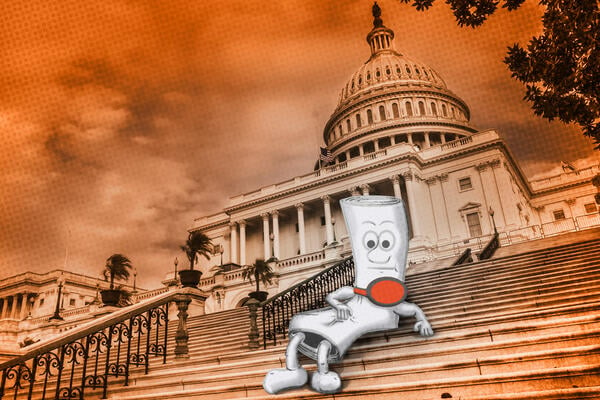
    Welcome Inside Higher Ed‘s legislation tracker, a database of the key higher-ed related bills lawmakers have proposed in Congress. Few will likely become law, but the proposals offer insights into how Republicans and Democrats want to reshape the sector.

    So far, lawmakers have proposed 31 bills that would directly impact colleges and universities.

    You can search the database below to learn more about each proposal. The current session of Congress runs through the end of 2026 which means this list will grow. We’ll update the database regularly, so please check back for updates.

    Questions, comments or think we’re missing a bill? Email [email protected].

    The database was last updated March 20.

    More Coverage of Higher Ed and Congress:

    Source link

  • A way to honor the teach-in movement at 60 (opinion)

    A way to honor the teach-in movement at 60 (opinion)

    This month marks the 60th anniversary of the teach-in movement against the U.S. war in Vietnam. The first teach-in was held at the University of Michigan, March 24–25, 1965; by the end of the spring semester, teach-ins had spread to college and university campuses across the nation, educating tens of thousands of students, faculty and community members about the moral, political and strategic reasons why the escalating Vietnam War was doomed to failure.

    The teach-ins were sparked by the Johnson administration’s launch of the Rolling Thunder bombing campaign against North Vietnam in late February 1965. But it is less its antiwar ideas than its strategic and tactical brilliance that makes the teach-in movement so relevant today, offering a valuable model for resisting the threat that the Trump administration’s authoritarianism and hatred of the liberal university poses to academic freedom and free speech on campus, the university’s funding of scientific research, the college and university’s role in battling racial and sexual discrimination, and higher education’s cosmopolitanism and international character.

    Though we tend to think of the campus antiwar movement as led by radical students who used militant tactics, breaking university regulations and the law in their protests, the teach-in movement was initiated by faculty, not students, and it did not break any such regulations or the law. Its only tools were education—offered by knowledgeable speakers—and effective publicity and outreach. In fact, the very idea of a teach-in was the result of a tactical retreat.

    Initially, Michigan’s Faculty Committee to Stop the War in Vietnam had envisioned a work moratorium, a day when faculty did not teach their regular academic classes so that the whole university could focus on the Vietnam War. But this moratorium idea proved immensely controversial, drawing all kinds of denunciations, especially from the state’s war-hawk politicians, who labeled it an anarchist hijacking of the university that denied students access to their classes. Seeing that this controversy was distracting people from the war itself, the faculty shrewdly changed course. Instead of a work moratorium, they came up with the idea of an antiwar teach-in that would begin after classes ended and go on through the night (from 8 p.m. to 8 a.m.).

    Some on the left saw this tactical shift as unfortunate, even cowardly, and feared that few students would attend such an evening event. But they were wrong. This first teach-in drew some 3,000 students, faculty and community members. It was, in the words of one its speakers, Carl Oglesby, “like a transfigured night. It was amazing: classroom after classroom bulging with people hanging on every word of those who had something to say about Vietnam.” Michigan’s antiwar faculty then helped raise funds for more teach-ins in May, which connected with faculty and student activists on more than 100 campuses, with the movement reaching its peak at a University of California, Berkeley, weekend teach-in that drew some 30,000 participants. All this provided a major boost to the peace movement and helped make the campuses a center of antiwar activism.

    In our own era, college and university administrations have tightened campus regulations to restrict mass protest and have been quick to have even nonviolent anti-Gaza war student protesters arrested for the most minor campus rule violations. In fact, last spring there were more than 3,000 arrests nationally, for campus antiwar encampments that were quite tame compared to the disruptive student protests that erupted in the Vietnam era’s most turbulent years.

    The decline of free speech on campus since the 1960s is also evident when one reflects back on the famous case of Marxist historian Eugene Genovese. At a Rutgers University teach-in, Genovese, in 1965, provoked a huge right-wing backlash by saying that he did “not fear or regret the impending Vietcong victory in Vietnam. I welcome it.” Despite calls for Genovese’s firing from many supporters of the war, including then-former Vice President Richard Nixon, Rutgers’ administration, while disdaining Genovese’s pro-Vietcong views, defended his right to free speech and refused to fire him—though two years later Genovese, tired of the death threats and political pressure, opted to leave Rutgers. One hears no such campus administration defense of free speech today as Trump, who pardoned his J6 rioters, pursues arrests and deportations of anti-war student protestors, including the arrest and detention of recent Columbia University graduate and Green Card holder Mahmoud Khalil.

    All this repression has struck fear into the hearts of student activists. So, while direct action and civil disobedience have their place in campus protest, they are, understandably, not in vogue at this authoritarian moment. This is a time when important news outlets, such as The Washington Post and The Los Angeles Times, the business community, the U.S. Senate minority leader, and campus administrators cower in fear of the Trump administration. This seems like a good time for faculty to act boldly yet strategically, taking the lead, showing that their campuses can, without rule-breaking or civil disobedience, become major centers of education about Trump’s authoritarianism, his embarrassingly illiberal and predatory foreign policy, and his crude attacks on education, the courts, the press, the First Amendment and federal agencies. Faculty should use their skills as teachers and scholars, as their predecessors did in 1965, but this time help teach America about the threat Trumpism poses to democracy and education, in a new national wave of teach-ins that would honor our past and offer hope for the future.

    Robert Cohen is a professor of history and social studies at New York University. His research focuses on student protest, free speech and the Black Freedom Movement in 1960s America. His most recent book is Confronting Jim Crow: Race, Memory and the University of Georgia in the 20th Century (University of North Carolina Press, 2024).

    Source link

  • Bret Stephens Don’t Know Higher Education

    Bret Stephens Don’t Know Higher Education

    What I want to know is why The New York Times lets opinion columnist Bret Stephens lie about higher education institutions.

    I understand this is a strong charge, and perhaps it’s unfair. Maybe Stephens is merely uninformed and parroting bad information.

    I’m thinking these things because we recently had the rare occasion of a pundit (Stephens) being challenged in real time by two experts (Tressie McMillan Cottom and M. Gessen) in the form of a three-way conversation printed under the headline “‘It Is Facing a Campaign of Annihilation’: Three Columnists on Trump’s War Against Academia.”

    The conversation is moderated by Patrick Healey, another Times journalist, who gives Stephens the first word on the question “What went wrong with higher ed? How did colleges become such easy pickings?”

    Stephens hearkens to the infamous Yale Halloween incident from 2015, when students committed the grave error of speaking intemperately to university administrators about a communication that seemed to authorize racially insensitive Halloween costumes over the objections of students.

    Stephens wonders why these students weren’t expelled or at least suspended, justifying a crackdown for what may have been a break in decorum but was undeniably the exercise of free speech. Stephens ostensibly is against the threats of the Trump administration against Columbia University and others, and yet here he is essentially authorizing the administration rationale of punishing institutions that are not sufficiently punitive toward protesting students.

    The voice of reason appears in the form of Cottom, both an active professor at the University of North Carolina and a sociologist who studies higher education. In the words of Kevin Carey, “Reading Tressie McMillan Cottom debate Bret Stephens on higher education is like watching Steph Curry play H.O.R.S.E. against a barely-sentient lump of gravel.”

    Cottom counters with lived experience over Stephens’s fever dream: “I have taught the most quintessentially tense courses my entire academic career. My course names often have the words race, class and gender in them. I do this as a Black woman. I have never had a problem with students refusing to have debates. It could be that I am a uniquely gifted pedagogue but I reject that idea.”

    This becomes a pattern throughout the exchanges, where Stephens makes something up and then Cottom and/or Gessen knock it down. Later on, Stephens goes on an uninformed rant about the lack of value of degrees with the word “studies” in them before going on to extol the virtues of humanistic study in the spirit of Matthew Arnold: “It means academic rigor, it means the contestation of ideas, it means a spirit of inquiry, curiosity, questioning and skepticism. Outside of a few colleges and universities, I’m not sure that kind of education is being offered very widely.”

    That Stephens is extolling the virtues of rigorous thought and questioning while parroting ill-informed tropes about higher education does not occur to him. Cottom again corrects his misapprehension with verifiable data: “It is worth pointing out that data on labor market returns really challenge the well-worn idea that such degrees are worthless. We love the joke about your barista having a liberal arts degree, but most of the softness among those degree-holders disappears when you look at state-level data and not just starting salaries after graduation.”

    Cottom goes on to acknowledge that there are some problems with the kinds of institutions she wrote about in Lower Ed: The Troubling Rise of the For-Profit College in the New Economy, after which Stephens jumps in with my favorite nonsense of the entire deal before being again, corrected—more gently than he deserves—by Cottom:

    Stephens: I’d say the lowest-quality institutions created since the 1990s have names like Columbia and Berkeley—these are essentially factories of Maoist cadres taught by professors whose political views ranged almost exclusively from the left to the far left.

    Cottom: I would counter, Bret, that the lowest-quality institutions are the for-profit colleges created as paradigmatic economic theories of exchange value that churned out millions of students in “career ready” fields who found it hard to get a job worth the debt—colleges not unlike the one that our current dear leader once ran as a purely economic enterprise.

    It is worth pausing here to consider how untethered Stephens is from the truth with saying the Columbia and Berkeley are “essentially factories of Maoist cadres.” One would think that if this were the case, they would be overwhelmingly churning out graduates in those dubious “studies” majors.

    Let’s go to the data.

    Top majors at Columbia: political science, economics, computer science, financial economics

    Top majors at Cal: computer science, economics, cellular biology, computer and information sciences, engineering

    The wokeness … it burns! Actually … it’s nonexistent.

    I don’t know if Stephens has convinced himself of a fantasy based on a selective accounting of what’s happening on campus, promulgated by his center-right anti-woke fellow travelers, or if he is simply a liar, but either way, he is demonstrably out of touch with reality.

    Stephens consistently authorizes the “logic” of the authoritarian, even if he disagrees with the specifics of the punishment. The idea that he would claim the mantle of the protector of rights is an irony beyond understanding.

    Stephens concludes, “When diffident liberal administrators fail to confront the far left, the winners ultimately tend to be on the far right.”

    I take a different lesson from all of this, namely that diffident administrators found some utility in the scolding of figures like Stephens as a rationale to crack down on student dissent and protect a status quo of administrative authority. If student demands are inherently unreasonable, they don’t need to be dealt with. I seem to recall a very popular book that invented an entire psychological pathology on the basis of a handful of campus incidents in order to delegitimize student speech people like Stephens didn’t like because it threatened authority.

    This was the core weakness, and it is coming home to roost, because the most important asset institutions have in defending themselves against the attacks of the Trump administration would be the students—provided there was a reservoir of trust between students and administrations, which, in many cases, there isn’t.

    The whole thing is a mess, and an existential one for universities. Stephens seems to think it’s possible that the current actions by Trump are “a loud shot across the bow of academia to get it to clean up its act.” This is, I fear, only additional delusion.

    I’d ask leaders of institutions who they think is going to be a bigger help in this situation, people like Stephens, who seem to believe that at least some measure of the arbitrary punishment is deserved, or the people who live and work in their communities, who understand the mission and importance of what these institutions try to do.

    Listen to the experts, particularly those on your own faculty, not the pundits.

    Source link

  • Financial sustainability in UK higher education: the limits of self-help?

    Financial sustainability in UK higher education: the limits of self-help?

    • Matthew Howling, Principal Associate at Mills & Reeve LLP, and Poppy Short, Partner at Mills & Reeve, reflect on a February round table discussion amongst university leaders chaired by Nick Hillman of HEPI.

    On 26 February 2025, a group of 18 university leaders, advisors and stakeholders met to reflect on how universities can best position themselves in the current financial climate. The meeting was a follow-up to our joint dinner with HEPI on 10 October 2024 at the Royal Society in London. As we remarked at the time, there was a clear desire to continue the conversation, and the fast-paced and content-rich discussion here was a testament to that desire.

    Our theme was the limits of self-help. Given the current financial headwinds, institutions have been restructuring their activities on an unprecedented scale. However, once the severance schemes, asset sales and course closures have come to pass, will these remedies be sufficient to put institutions back on a sound enough financial footing to continue to serve their students and communities for the longer term? The unspoken and yet resounding understanding across the group was that further and more radical changes are needed across the sector to stabilise the situation.

    What is the role of the private providers in helping to improve the financial health of the sector? Several voices suggested that foreign investment could help to save certain British universities and that the sector needs to be less reticent about such investment. Other participants thought that, while foreign investment might work in the context of smaller providers, it was less likely to be successful when dealing with larger, more complex institutions, particularly those that have a legacy of contracts with trade unions and other stakeholders. It is well known that a number of private providers and foreign investors are waiting in the wings to acquire UK degree-awarding powers from distressed higher education providers if the opportunity presents itself. The sector should be prepared to consider its response to this.

    In a recent HEPI poll, when students were presented with a list of 10 options for what could happen if their own higher education institution were to fall over financially, a takeover by a foreign company was the joint least popular option. Foreign investors would have to work hard to tackle these negative perceptions.

    In some ways, the antithesis of self-help is a forced merger. It was noted that, in other jurisdictions, forced mergers are not as uncommon as might be thought. Estonia, France, Germany and Denmark had all experienced forced university mergers. Is this the direction of travel for the United Kingdom? There was a feeling that, in Wales and Scotland, there was a willingness to consider higher education provision on a more holistic basis than in England.

    In terms of state support, it was felt that the sector had to acknowledge government spending pressures. The evidence of cuts to budgets elsewhere (such as foreign aid) strongly suggests that there will be no chance of further increases to the home undergraduate tuition fee in the foreseeable future and despite the need, other forms of financial help are not expected.

    If government funding will not be forthcoming, the other obvious source of funds is existing lenders. Participants observed that, while sector borrowing was high, much of the recent debt taken on by providers was in the form of revolving credit facilities (which provide short-term funds up to a specified limit for a stipulated period of time, all or part of which can be repaid and re-borrowed as required), rather than the term loans that universities have traditionally found more attractive (which provide long-term funds for a specified period of time). There was concern that, in some cases, banks might be considering withdrawing those lines of credit when they come up for renewal. There was also a concern about how many institutions might be relying on revolving credit facilities to satisfy the OfS’s minimum liquidity requirements. There was anecdotal evidence that certain banks were focussing their new lending on higher tariff institutions, partly because of credit risk but also because of the ancillary opportunities to make money from larger institutions. This risks a self-fulfilling cycle of winners and losers.

    It was generally felt that a new Special Administration Regime would make life easier as opposed to harder in terms of access to funds. It is not necessarily about encouraging enforcement by banks. It is highly unlikely that a UK clearing bank would want the adverse publicity associated with enforcing against a UK university (although foreign lenders may be less PR squeamish). However, giving lenders a clear line of sight as to a recovery process, even if not used in practice, may further encourage commercial lending to the sector. 

    Beyond the question of more money, there was a feeling that certain sector skills were lacking to navigate these troubled waters. As one participant put it, transformation expertise was what was needed, not just transformation funds. And how does all this transformation happen at pace?

    Above all, there was a sense that the sector needed to move as one on certain key issues. One example was the increased costs for post-92 institutions associated with the Teachers’ Pension Scheme. Another key area where the sector needs to work together is soliciting the opinion of the Competition and Markets Authority (CMA) on how universities can collaborate without breaching competition law. There were grounds for optimism: the CMA guidance on applying the competition rules to sustainability agreements and collaborations is an example of the CMA taking a proactive approach to assuage concerns that competition law should not hinder legitimate collaboration where this was in the public good. In other areas, such as procurement and shared services, it was felt that there was much that the sector could be doing together to be more efficient and reduce the cost of delivery.

    As an hour of rapid and informed discussion drew to a close, perhaps the overall conclusion was that it is only by acting collectively that the sector can arrive at solutions to allow institutions to truly put their houses in order at an individual level. Universities need to start planning how they will support themselves through this next phase. To survive they will need to mobilise themselves to work at pace to foster local and regional connections to drive forward the priorities for their regions.


    Source link

  • Dr. Marlene Tromp Named University of Vermont’s 28th President

    Dr. Marlene Tromp Named University of Vermont’s 28th President

    Dr. Marlene TrompThe University of Vermont (UVM) Board of Trustees has selected Dr. Marlene Tromp as the institution’s 28th president.

    Tromp, who is currently serving as president of Boise State University, will assume her new role later this summer.

    “Dr. Tromp brings with her the experience and ability for great success that will benefit the university, community, and state,” said Cynthia Barnhart, Board of Trustees chair and co-chair of the Presidential Search Advisory Committee.

    A first-generation college student raised in rural Wyoming,Tromp brings nearly 30 years of experience in higher education. During her six-year tenure at Boise State, she successfully navigated the challenges of the COVID-19 pandemic while increasing student enrollment and improving affordability. Under her leadership, the university achieved record graduation rates and philanthropic funding while expanding its research footprint.

    “This is a university that has the power to truly lead the nation and even the world on several fronts,” Tromp said of UVM. “I’m so excited to work with my colleagues, the students, alumni, and friends to improve individual lives and the life of the community.”

    Tromp’s rural background appears to have been a significant factor in her selection.

    “She grew up with the experience of being in a rural state and understanding the importance of the flagship institution to that state, both urban and rural parts of the state. She really demonstrated an ability to connect well with Vermont culture, given that upbringing,” said Ron Lumbra, immediate past chair of the Board of Trustees and co-chair of the search committee. 

    A humanities scholar with a concentration in Victorian literature and culture, Tromp has published nine books and dozens of peer-reviewed papers. Her administrative experience includes serving as campus provost and executive vice chancellor at the University of California at Santa Cruz and vice provost and dean at Arizona State University.

    Senator Patrick Leahy, who met with Tromp during her campus visit, expressed confidence in her leadership abilities.

    “Dr. Tromp seems poised and ready to lead UVM. She clearly understands the impact and responsibilities UVM has in our state,” Leahy said.

    Campus leaders have also voiced strong support for the appointment. Athletic Director Jeff Schulman praised Tromp’s “experience, commitment to excellence and passion for UVM,” while Bill Falls, dean of the College of Arts and Sciences, described her as “an empathetic and collaborative leader.”

    Tromp holds a Bachelor of Arts from Creighton University, a Master of Arts in English from the University of Wyoming, and a Ph.D. from the University of Florida. She currently serves on the NCAA Division I Board of Directors and consults on higher education with the Federal Reserve Board of San Francisco.

    She will succeed Dr. Suresh Garimella, who led UVM from 2019 until October 2024 when he became president of the University of Arizona. Provost Dr. Patricia Prelock has been serving as interim president since Garimella’s departure.

    Source link

  • Maximizing Student Engagement During Live Online Seminars – Faculty Focus

    Maximizing Student Engagement During Live Online Seminars – Faculty Focus

    Source link

  • Product Enhancements from Discovery Education Foster Improved Engagement and Personalization

    Product Enhancements from Discovery Education Foster Improved Engagement and Personalization

    Charlotte, NC — Discovery Education, the creators of essential K-12 learning solutions used in classrooms around the world, today announced a host of exciting product updates during a special virtual event led by the company’s Chief Product Officer Pete Weir. Based on feedback from the company’s school-based partners, these updates make teaching and learning even more relevant, engaging, and personalized for users of Discovery Education products.

    Among the enhancements made to Discovery Education Experience, the essential companion for engaged K-12 classrooms that inspires teachers and motivates students, are:  teachers and motivates students, are:

    • Improved Personalized Recommendations for Teachers: With thousands of resources in Experience, there is something for every classroom. The new Core Curriculum Complements feature in Experience automatically surfaces engaging resources handpicked to enhance school systems’ core curriculum, simplifying lesson planning and ensuring tight alignment with district priorities. Additionally, Experience now offers educators Personalized Content Recommendations. These content suggestions made to individual teachers are based on their unique profiles and preferences, or what is frequently used by other educators like them.
    • An Enhanced AI-Powered Assessment Tool: Originally launched in 2024, this tool is the first in a new suite of AI-powered teaching tools currently under development, and it empowers educators to create high-quality assessments using vetted resources right from within Experience. Educators can now more easily customize assessments according to reading level, question type, Bloom’s Taxonomy, and more – ensuring optimal learning experiences for students. Educators can also review and tailor the questions and, once ready, export those questions into a variety of formats.
    • A New Career Exploration Tool for All Discovery Education Experience Users: Career Connect – the award-winning tool that connects K-12 classrooms with real industry professionals – is now accessible to all Discovery Education Experience users. With this new feature, classrooms using Experience can directly connect to the professionals, innovations, and skills of today’s workforce. Furthermore, Experience is now delivering a variety of new career pathway resources, virtual field trips, and career profiles – building career awareness, inviting exploration, and helping students prepare for their future.
    • A newly enhanced Instructional Strategy Library: To elevate instruction and better support teachers, Discovery Education has enhanced its one-stop-spot for strategies supporting more engaging, efficient, and effective teaching. The improved Instructional Strategy Library streamlines the way educators find and use popular, research-backed instructional strategies and professional learning supports and provides connected model lessons and activities.

    Also announced today were a host of improvements to DreamBox Math by Discovery Education. DreamBox Math offers adaptive, engaging, and scaffolded lessons that adjust in real time to personalize learning so that students can build confidence and skills at their own pace. Among the new improvements to DreamBox Math are:

    • Major Lesson Updates: Based on teacher feedback, Discovery Education’s expert curriculum team has updated DreamBox Math’s most popular lessons to make them easier for students to start, play, and complete successfully. Students will now encounter lessons with updated scaffolding, enhanced visuals, greater interactivity, and added context to ground mathematical concepts in the curriculum and the world they live in.
    • A New Look for Middle School: Middle school students will encounter a more vibrantly colored and upgraded user interface featuring a reorganized Lesson Chooser whose intuitive design makes it easy to identify teacher-assigned lessons from their personalized lesson options. Additional updates will follow throughout the year.
    • New Interactive Curriculum Guide: Discovery Education has strengthened the link between DreamBox Math and school systems’ core instruction with an Interactive Curriculum Guide. Educators can now explore the breadth and scope of DreamBox content by grade and standard to locate, preview, and play lessons, increasing familiarity with lessons, and enhancing targeted instruction. The DreamBox Math team will continue to make updates to standards and curriculum alignments throughout the year.

    To watch a replay of today’s special event in its entirety, and to learn about additional updates to Discovery Education’s suite of K-12 solutions, visit this link.

    “Discovery Education understands teachers’ sense of urgency about closing the achievement gaps highlighted by recent NAEP scores,” said Pete Weir, Discovery Education’s Chief Product Officer. “In response, we accelerated the development and deployment of what has traditionally been our ‘Back-to-School’ product enhancements. The stakes for our students have never been higher, and Discovery Education is dedicated to putting the highest-quality, most effective resources into teachers and students’ hands as soon as possible.”

    For more information about Discovery Education’s award-winning digital resources and professional learning solutions, visit www.discoveryeducation.com, and stay connected with Discovery Education on social media through X, LinkedIn, Instagram, TikTok, and Facebook.    

    eSchool News Staff
    Latest posts by eSchool News Staff (see all)


    Source link

  • What’s driving low levels of full economic cost recovery in research?

    What’s driving low levels of full economic cost recovery in research?

    Media attention has emphasised that the financial issues facing universities continue to worsen. While research is a cornerstone and strength of the sector, it is often regarded as a cost, which leads to scrutiny as part of institutional savings targets. Despite calls to acknowledge the value of research, the focus understandably remains on research costs.

    The focus of universities on the volume and cost of unfunded research, or more accurately, internally funded research, is a question that must be addressed. Institutions are reflecting on and revising internal research allowances as part of their efforts to achieve a more sustainable financial position, as the cross-subsidy from international student fees is no longer as viable as it once was.

    The question of funded research, however, is a different matter. For quite some time, there have been questions about what constitutes the full economic cost (FEC) and how these costs are recovered when projects are funded. Both issues have once again come to the forefront in the current climate, especially as institutions are failing to recover the eligible costs of funded projects.

    As part of the Innovation & Research Caucus, an investment funded by UKRI, we have been investigating why the recovery of UKRI-funded research is often below the stated rates. To put it simply, if the official recovery rate is 80 per cent FEC, why is 80 per cent not being recovered on UKRI-funded projects?

    Understanding under-recovery

    We conducted a series of interviews with chief financial officers, pro vice chancellors for research, and directors of research services across mission groups, the Transparent Approach to Costing (TRAC) group, and various geographic regions. They identified several key reasons why universities are not recovering the funding to which they are entitled.

    Before exploring the causes of under-recovery on UKRI-funded projects, the project aimed to establish the extent to which TRAC data was curated and utilised. Notably, the study found that the data collected for TRAC does not exist within research organisations and would not otherwise be collected in this form if it were not for the TRAC reporting requirement.

    While scrutinising TRAC data was less of a priority when the financial situation was more stable, in many institutions, it is now of interest to the top table and serves as the basis for modelling, projections, and scenario planning. That said, such analysis did not always recognise TRAC’s limitations in terms of how it was compiled and, therefore, its comparability.

    In many of the research organisations consulted, the responsibilities for TRAC, project costing, and project delivery are distinct. Given the growing significance of TRAC data in influencing resource allocation and strategic decision-making, it is essential for research organisations to adopt a more integrated approach to compiling and utilising TRAC data to achieve improved outcomes.

    Drivers of under-recovery

    A wide range of factors explains why the cost recovered at the end of a funding grant is less than anticipated at the point of submission and award. Almost all respondents highlighted three factors as significant in low cost recovery:

    1. Equipment and facilities costs were consistently cited as a factor, including issues associated with allocating and costing overheads and estates. Several institutions highlighted the difficulty in realistically costing equipment and facilities shared between research projects or between research projects and teaching.
    1. Staff under-costing was frequently mentioned, as principal investigators (PIs) underestimated their own and their colleagues’ time commitment to projects. This ineffective practice was driven by a (mis)perception that lower costs will likely improve success rates – despite the emphasis being on value rather than cost within a specific funding envelope.
    2. Inflation has been identified as a factor affecting all cost elements – from staff costs related to pay settlements and promotions to the rising expenses associated with consumables, equipment, and energy. This reveals a growing gap in applications, delivery, and reporting.

    Beyond these top three, the report highlights the implications of the often “hidden” costs associated with supporting and administering UKRI grants, the perennial issues of match funding, and the often inevitable delays in starting and delivering projects – all of which add to the cost and increase the prospect of under-recovery.

    In addition, an array of other contributing factors were also raised. These included the impact of exchange rates, eligibility criteria, the capital intensity of projects, cost recovery for partners, recruitment challenges, lack of contingency, and no cost extensions. While not pinpointing the importance of a single factor, the interplay and cumulative effect were considered to result in under-recovery.

    Addressing under-recovery

    Universities bear the cost of under-recovery, but funders and universities can take several actions to improve under-recovery – some of which are low- or no-cost, could be implemented in the short term, and would make a real difference.

    Funders, such as UKRI, should provide clearer guidance for research organisations on how to cost facilities and equipment, as well as how to include these costs in research bids. Similarly, applicants and reviewers should receive clearer guidance regarding realistic expectations from PIs in leading projects, emphasising that value should be prioritised over cost. Another area that warrants clearer guidance is match funding, specifically for institutions regarding expectations and for reviewers on how match funding should be assessed. We are pleased to see that UKRI is already taking steps to address these points in its funding policies [editor’s note: this link will be live around 9am on Friday morning].

    In the medium term, research funders could also review their approaches to indexation, which could help mitigate the impact of inflation in driving under-recovery, although this is, of course, not without cost. Another area worth exploring by both research organisations and funders is the provision of shared infrastructures and assets, both within and across institutions – again, a longer-term project.

    We are already seeing institutions taking steps to manage and mitigate under-recovery, and there is scope to extend good practice. Perhaps the main challenge to improving cost recovery is better managing the link between project budgets – based on proposal costs – and project delivery costs. Ensuring a joined-up approach from project costing to reporting is important, but more important is developing a deeper understanding across these areas.

    A final point is the need to ensure that academics vying for funding really understand the new realities of cost and recovery. This has not always been the case, and arguably still is not the case. These skills – from clarifying the importance of realistic staff costs to accurately costing the use of facilities to effectively managing project budgets – will help close the cost recovery gap.

    The real FEC of research funding

    The current project has focused on under-recovery in project delivery. The next step is to understand the real cost to research organisations of UKRI grant funding.

    This means understanding the cost of developing, preparing and submitting a UKRI grant application – whether successful or not. It means understanding the costs associated with administering and reporting on a UKRI grant during and beyond the life of a project (think ResearchFish!).

    For more information, please get in touch – or watch this space for further findings.

    The Innovation & Research Caucus report, Understanding low levels of FEC cost recovery on UKRI grants, will be published on the UKRI site later today.

    Source link

  • Higher education postcard: Purdue University

    Higher education postcard: Purdue University

    Greetings from Indiana!

    In 1862 the United States passed the first of a series of laws – known as the Morrill Land-Grant Acts – which allowed states to sell federally owned land to fund the creation of colleges. These colleges – known now as land-grant universities – form a large chunk of the US higher education system. And its important to note – as America tries to forget its history – that the land sold to fund them was often bought, granted by or stolen from Native American tribes.

    The state of Indiana decided in 1865 to take advantage of the act, and a process to decide where and how to spend the money began. The state could have chosen a couple of existing institutions, but in 1869 was swayed by proposals from Tippecanoe County which included pledges of $200,000 (about worth $4.6 million today) and 100 acres of land. And so Purdue University, named after the benefactor who had pledged the lion’s share of the $200,000, was established in West Lafayette, on the Wabash River.

    Purdue developed into a university focusing on engineering and agricultural subjects. This was under the guidance of Emerson E White, president of Purdue from 1876 to 1883. He sought to differentiate Purdue from the “classical” American universities, and the syllabus reflected this. Humanities and social sciences were not prohibited, but were not prioritised. He sought also to ban fraternities from campus, and when the Indiana state legislature required the university to allow fraternities, he resigned. But it was too late, and that year Purdue received no state grant.

    Purdue became a leading institution for research into steam traction on the railways. By the 1890s it owned several locomotives, and a railway dynamometer which enabled research. There was a local railroad – the Monon railroad – which operated works near Purdue. In 1891 the Purdue football team (gridiron, not association or union or league) beat neighbours Wabash College 44–0; there were suggestions that the team had included some ringers – boilermakers from the Monon works. Which led to the nickname Boilermakers, given to the university’s sports teams.

    (Its a bit of a tradition in American universities for their teams to have nicknames; a little like the now sometimes quaint nicknames used for football teams in Britain. A few still have local meaning, but other than journalists looking for copy, do many people still call their team by its nickname? Answers in the chat, please. But in America they are still used, it seems.)

    Purdue became the first US university to have its own airport, in 1934, and introduce credit bearing courses in learning to fly. Amelia Earhart was an instructor for those courses, and a career counsellor for women students. Her round-the-world flight attempt in 1937, in which she disappeared, used an aeroplane funded by Purdue’s research foundation.

    Purdue scientists discovered properties of the element germanium which enabled the invention of transistors. Transistors were fundamental to the development of electronics and computing. Transistors themselves were invented at Bell Laboratories but without germanium semiconducting crystals, which the Purdue team produced, transistors would not have operated quickly enough.

    In 2017 Purdue University bought Kaplan, the early online university, and transformed it into Purdue University Global.

    The card – here’s a jigsaw – shows the Boilermaker Special, Purdue’s official mascot. The Boilermaker was introduced in 1940, paid for by alumni and members of the Purdue Reamer Club, a student club formed as an alternative to the fraternity societies. The first vehicle comprised a body made by the Baldwin Locomotive Works, mounted on a Studebaker chassis. The card shows the third Boilermaker Special, which was in service from 1960 to 1993. It was made by General Motors, on a bus chassis. The current Boilermaker Special is the eighth; a ninth is expected to be in service from this summer.

    The card was posted in February 1973 to a couple in Washington DC:

    Came out here yesterday to let M.G. take a look at Purdue…

    Source link

  • Trump Signs Executive Order Directing Closure of the Department of Education

    Trump Signs Executive Order Directing Closure of the Department of Education

    by CUPA-HR | March 20, 2025

    On March 20, President Trump signed an executive order titled “Improving Education Outcomes by Empowering Parents, States, and Communities.” The order directs the secretary of education to “take all necessary steps to facilitate the closure of the Department of Education and return authority over education to the States and local communities while ensuring the effective and uninterrupted delivery of services, programs, and benefits on which Americans rely.”

    The order additionally states that the secretary of education “shall ensure that the allocation of any Federal Department of Education funds is subject to rigorous compliance with Federal law and Administration policy.” According to the order, this includes compliance with federal requirements to terminate “illegal discrimination obscured under the label ‘diversity, equity, and inclusion’” and to terminate programs that promote gender ideology.

    With respect to higher education, the executive order asserts that closure of the ED “would drastically improve program implementation.” It specifically discusses ED’s role in managing the federal student loan debt portfolio, and it claims that ED “is not a bank, and it must return bank functions to an entity equipped to serve America’s students.”

    It is still unknown how Secretary McMahon will execute this order. Despite Trump’s clear intentions to close ED, Congress would still need to pass legislation to officially dissolve the department. It remains to be seen whether McMahon and the Trump administration will move ED’s subagencies and their functions to other federal agencies as speculated.

    More information is needed from ED to understand how this order will be implemented. CUPA-HR will continue to monitor for additional news and guidance from ED as it relates to the order.


    Source link