Category: Featured

  • Colleges Flag Words Like “Women” to Comply With DEI Bans

    Colleges Flag Words Like “Women” to Comply With DEI Bans

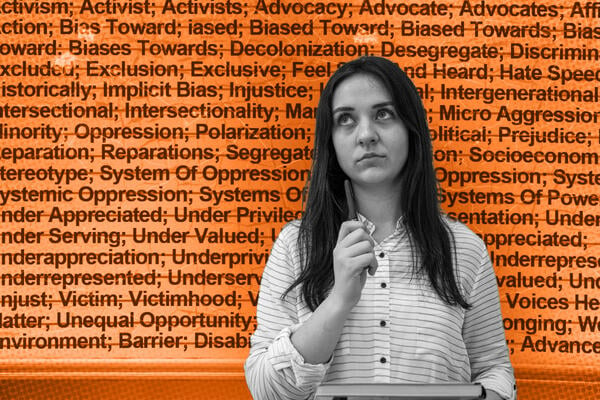
    “Biases.” “Racism.” “Gender.” “Women.”

    Those are just some of the terms colleges and universities are searching for in their databases to ensure compliance with federal DEI bans and similar directives from states and university systems.

    Robin Goodman, distinguished research professor of English at Florida State University and president of the university’s chapter of United Faculty of Florida, said her institution is using a list of keywords to review webpages for DEI language in response to federal and state directives. While not all those terms were scrubbed, the list, which has circulated among faculty, disturbed her.

    “From my point of view, those words are now dangerous words” that exacerbate a “culture of fear” on campus, she said.

    She’s also mystified by which terms did and didn’t make it onto her university’s list, noting that the word “woman” is flagged, but not “man” or “sex.”

    Campuses using keyword lists isn’t entirely new. Some state laws have pressured colleges to avoid using certain terms in the past, said Jon Fansmith, senior vice president of government relations and national engagement at the American Council on Education. But for most campuses, this is a “new space,” as some institutions scramble to comply with federal anti-DEI orders, like the Office for Civil Rights’ Dear Colleague letter, and try to mirror the ways grant-making federal agencies, like the National Science Foundation, have responded.

    Colleges and universities are using the same tactics as many federal agencies parsing their grant projects and webpages to comply with federal anti-DEI directives. The National Science Foundation, which temporarily shut down grant reviews, searched for terms like “female” and “male-dominated” in its research grants. The Centers for Disease Control used a list of roughly 20 terms to guide choices about removing DEI-related language from its website. And the Defense Department reportedly flagged tens of thousands of images and web posts for removal because of alleged connections to DEI, including references to service members with the last name Gay and an image of the Enola Gay aircraft, which dropped the atomic bomb on Hiroshima during World War II.

    Campus administrators taking this approach argue that, when tasked with reviewing massive numbers of webpages and programs, keywords make it easier to arrive at a smaller, more manageable pool to review. Faculty members, on the other hand, are baffled and outraged by the strategy. Some sympathize with campus leaders’ plight but argue it’s alarming to watch universities treat terms like “female” as red flags.

    Fansmith doesn’t believe such lists are an ideal strategy.

    Flagged word lists are “a very, very, very blunt tool” for “trying to understand academic content or the merits of research grants or projects,” he said.

    ‘Not a Perfect Approach’

    University leaders recognize that devising keyword lists puts campuses on edge, but some argue it’s the most efficient way to respond to an onslaught of anti-DEI directives.

    East Carolina University’s interim provost, Chris Buddo, explained at a recent Faculty Senate meeting that the Office of University Counsel crafted a list of terms over several months, initially used to review the university’s web presence to comply with the University of North Carolina system’s Equality Policy, which pared back DEI. (The North Carolina General Assembly also demanded an inventory of DEI trainings from the system in 2023, offering up a list of concepts and terms to guide the audit, including “accessibility,” “bias,” “racism” and “social justice.”)

    Then, in February, a UNC system attorney issued a memo prohibiting campuses from mandating courses focused on DEI, referencing Trump’s January anti-DEI executive order. University officials again used a keywords list to search through the course catalog and ensure no general education or major requirements were focused on DEI.

    Faculty at the meeting guffawed at some of the words flagged, including “cultural.”

    “I know it’s been controversial, and I understand it is not a perfect approach,” Buddo told faculty. “But given the significant amount of content we are being asked to review, we started by using this blunt tool—and I recognize it is a blunt tool.”

    He stressed that none of the words on the list are “inherently problematic.”

    But “the list was developed as a way to cast the widest possible net, to make sure we could be aware of all the places that we might be viewed as being noncompliant,” he said.

    Anne Ticknor, chair of the faculty and a professor in the College of Education at East Carolina University, said her institution has no choice but to comply with the system’s directives, though she tried to ensure that faculty had a say in any changes to course requirements.

    “People were fearful that their academic freedom was being infringed upon, since faculty traditionally oversee curriculum, and that includes course titles, syllabus information, course descriptions, content—all of that is typically a faculty’s domain,” she said.

    East Carolina officials told Inside Higher Ed in a statement that most courses flagged using the list were “false positives,” meaning that upon review, they weren’t required or didn’t relate to DEI.

    Florida State University also emphasized in a statement to Inside Higher Ed that just because the university is using a list of key terms to review webpages and communications doesn’t mean those words or pages are necessarily being removed.

    “For example, contrary to media reports, the words ‘woman’ and ‘women’ are easily found throughout the FSU website and have not been removed, nor are they being removed,” the statement read. “Florida State University, like all universities, routinely reviews its messaging to ensure information is up to date and compliant.”

    Florida State president Richard McCullough recognized in a March 4 message to faculty and staff that they may have “feelings of uncertainty and concern.”

    “While we are confident that our institution currently complies with the law, it is important that our messaging reflects new interpretations and priorities,” he told employees.

    Some campus leaders said they crafted flagged-terms lists out of panic.

    Officials at High Point University, a private institution in North Carolina, for example, told Inside Higher Ed in a statement that they created a keyword list in a moment of heightened worry last month after the U.S. Department of Education canceled three grants that supported graduate education programs, totaling $17.8 million. The Feb. 14 Dear Colleague letter, which gave institutions two weeks to rid themselves of race-conscious programming, exacerbated their concerns about losing federal funding for other programs.

    According to The News & Observer, the university circulated a list of 49 terms, including “equality” and “gender,” and called for an audit of course descriptions and syllabi, student handbooks and webpages.

    But officials quickly rescinded the move.

    “Facing a 14-day deadline, we acted quickly based on our care and concern for students and faculty,” the statement from High Point read, “but clearly we overcorrected.”

    Provost Daniel Erb sent an apology to academic leaders on March 2, saying he consulted with legal counsel and “there are no terms or words that you are required to change.”

    “While many institutions were working towards removing certain terms and words from websites … our legal counsel has helped clarify that our priority should be on ensuring all our program qualifications and requirements do not discriminate on the basis of race, ethnicity, gender, religious beliefs, etc.,” Erb wrote. “Therefore, the concern about the language that is used is no longer a focus.”

    ACE generally doesn’t recommend universities undertake such language reviews in response to the Office for Civil Rights’ anti-DEI directive, Fansmith said. He believes campuses’ usual processes for reviewing university communications and curricula should suffice.

    “The administration has a view of what compliance with civil rights laws means,” which “I don’t think we necessarily believe the law itself supports,” he said.

    The Ripple Effects

    While harried administrators say the flagged terms are just a guidance tool, faculty members find the reviews burdensome and say they have a chilling effect in the classroom.

    Margaret Bauer, professor of English, distinguished professor of arts and sciences and Rives Chair of Southern Literature at East Carolina University, said her department has a Multicultural and Transnational Literatures concentration. She hasn’t done a count, but she expects the word “cultural”—one of the words on the list—comes up in every course description in that concentration. She feels for her colleagues who’ve had to justify courses or explain why they’re false positives. (Bauer is also in the Faculty Senate but stressed that she’s speaking on her own behalf.)

    “We’re already all overtaxed with so much bureaucracy,” she said. “Just to add something that’s so ridiculous—it’s really frustrating … We should have been grading or planning class, things that are productive. This was not productive.”

    Bauer believes administrators are well intentioned and “want to protect us.”

    But “I want them instead to push back … and say, ‘Curriculum is under faculty. And we don’t teach discrimination. We teach the history of it. We’re not doing anything wrong … These words are things our university believes in,’” she said.

    Knowing the word list is out there makes concepts feel taboo in the classroom, she said.

    “When I’m teaching Southern literature, I’m going to end up talking about the history of oppression, the history of discrimination … I can’t not talk about it,” she said, but she finds herself feeling “more self-conscious” about it. She worries faculty members without tenure might fear for their jobs if they “teach honestly.”

    Goodman, of Florida State University, said she also can’t avoid the topics on her university’s flagged-term list.

    “I’m a feminist theorist. I’ve written a lot of books, and they all have ‘feminism’ in the title,” she said. “So, I can’t backtrack it now. It’s all out there in the public.”

    The flagged-words list—especially combined with recent Florida state laws allowing students to record professors in class and requiring professors to undergo post-tenure review—creates an environment where “faculty feel like they are being gagged in class, and they’re fearful,” she added.

    Fansmith isn’t surprised faculty are worried.

    Professors are used to “really complicated, detailed and multi-faceted levels of curriculum construction,” he said. “These are professionals who have spent their lives understanding those nuances, those details and why they matter,” so they’re concerned to see coursework in particular “reduced seemingly to a simplistic list of terms.”

    He believes word lists are an acceptable, albeit not ideal, tool to use if they’re part of an internal review process “done with the care and attention that universities generally do with matters of curricular review and with respect for academic freedom.”

    But “when it’s being mandated from the outside, by the federal government or a state and it’s getting into really perilous ideas of academic freedom and what can be taught, that’s when we start to really worry about what these lists mean and what they represent,” he said.

    Source link

  • Federal Cuts Deepen Tennessee State U’s Budget Woes

    Federal Cuts Deepen Tennessee State U’s Budget Woes

    President Trump’s assault on federal grants is making Tennessee State University’s ongoing financial troubles even worse.

    The Tennessean reported last week that the chronically underfunded historically Black university in Nashville is preparing to lose $14.4 million, the remainder of an $18 million grant it received from the National Institute of Food and Agriculture. It’s one of hundreds of colleges and universities across the country facing financial uncertainty as the Trump administration moves to cut trillions of dollars from the federal budget.

    “This is going to impact our people,” Jim Grady, TSU’s chief financial officer, said at a finance committee meeting Wednesday evening. “We’ll continue to evaluate the volatility … and the potential impact to employees, students and university operations.”

    Grady said nothing would change for at least 90 days after receiving notice of the grant cancellation, and it’s not yet clear how many jobs will be eliminated as a result. And that’s not the only federal grant in question, according to The Tennessean.

    In February, the U.S. Department of Agriculture—which includes the National Institute of Food and Agriculture—canceled $45 million in federal grants to the cash-strapped university, which eliminated 114 positions last fall amid a looming budget shortfall.

    Earlier this month, the USDA restored about $23 million of those grants, though another $115 million could be suspended or frozen. TSU’s federal grants fully fund 62 employees and partially fund another 112.

    In the midst of the financial uncertainty, TSU has suspended its search for a permanent president, WKRN reported.

    Source link

  • Three States Weigh Changes to Presidential Search Processes

    Three States Weigh Changes to Presidential Search Processes

    Three states are considering changes to how public universities hire presidents via legislation to provide more, and in the case of Utah, less transparency in executive searches.

    Florida, Utah and Washington are all weighing changes, driven by state legislators in response to recent presidential searches. In the case of Florida, the move comes after the state, known for broad open records laws, revised presidential search processes in recent years in ways that narrowed transparency, which was followed by an influx of hires connected to conservative politics.

    Evergreen State legislators have proposed the changes following closed-door presidential searches at both the University of Washington and Washington State University, which they argue lacked adequate transparency because finalists were not named during the process. (However, they’ve backed off an initial bill to require universities to name finalists.)

    In Utah, lawmakers have crafted legislation to limit information on presidential searches. Current state law requires public universities to release the name of three to five finalists for presidential positions, but that could change with only a single finalist unveiled at the end of the search.

    The legislative proposals reflect a broader debate over how much transparency should be built into presidential searches and the politics of hiring processes.

    Florida’s Proposed Reversal

    The Florida Legislature passed a bill in 2022 that allowed institutions to keep the identity of applicants secret until a university identified three finalists. The change marked an about-face from prior practices, in which lists of applicants were released as part of presidential searches.

    Although the law passed in 2022 charged universities with naming three finalists, in practice it has often meant that institutions only release the name of one applicant at the end of the process. And since the passage of that legislation, Florida has tapped numerous Republican lawmakers to lead public universities, including former Nebraska U.S. senator Ben Sasse at the University of Florida, who stepped down after less than 18 months amid questions about his spending.

    Since Sasse’s exit, critics have alleged UF’s board missed or ignored multiple red flags.

    Governing boards have hired numerous other Republican former lawmakers to lead institutions since 2022. Recent hires include Adam Hasner at Florida Atlantic University, Jeanette Nuñez at Florida International University (who stepped down as lieutenant governor to take the job), Richard Corcoran at New College of Florida, Fred Hawkins at South Florida State College, Mel Ponder at Northwest Florida State College and Torey Alston at Broward College.

    In a statement on why she filed the bill to open search processes, Florida representative Michelle Salzman, a Republican, wrote that the legislation would ensure “our higher education institutions are governed in a transparent and ethical manner, with the best interests of our students and taxpayers as the guiding principle.”

    To Judith Wilde, a research professor at George Mason University who studies presidential searches and contracts, the bill seems like backlash to Republican governor Ron DeSantis, who many critics allege has used a heavy hand in installing GOP officials as college presidents.

    “They are definitely moving away from the more secretive and controlled processes that they’ve been under for the last few years. I’d say that is because so many people now are tired and upset with DeSantis putting in place his personal choices and how badly that has worked out,” Wilde said.

    Last year, the Florida Board of Governors also gave itself more authority over presidential searches, adopting a policy that requires its chair to approve a list of finalists before candidates are submitted to individual governing boards. That would go away under proposed legislation.

    The Florida Board of Governors did not respond to an inquiry about its position on the bill.

    Washington Backtracks

    Washington lawmakers initially proposed changes to how presidential searches are conducted with a bill that would require public universities to name “up to four priority candidates” for the job. But lawmakers backed off that idea, submitting a substitute bill that would expand voting rights for students and faculty on presidential searches, but not require finalists to be named.

    University of Washington officials had expressed concern about the initial proposed legislation, arguing that UW could lose highly qualified candidates if they can’t keep names confidential.

    “It’s important to understand that sitting presidents or chancellors participate in these processes at considerable professional risk. There may be reputational damage up to termination, even if their candidacy is unsuccessful, should their present employers learn that they are pursuing other employment,” Blaine Tamaki, chair of UW’s Board of Regents, wrote in a statement.

    A UW spokesperson also pointed to fallout in 2020 in the University of Alaska system when then-president Jim Johnsen stepped down after he emerged as the sole finalist to lead the University of Wisconsin system. Johnsen withdrew from the Wisconsin search after criticism that the process lacked transparency. He then resigned from the Alaska presidency mere weeks later.

    (Johnsen’s tenure at Alaska was heavily scrutinized while he was there, however, and many students and faculty members expressed relief that he planned to leave for another job, which Wilde suggested was more of a factor in his abrupt exit than his candidacy for the Wisconsin position.)

    Washington State University had also expressed concerns about the initial bill.

    “Specifically, we were apprehensive about losing strong candidates who would be unwilling to make their names public before a selection was announced,” a Washington State spokesperson wrote to Inside Higher Ed by email. “There is a very real concern for some candidates that they would lose their effectiveness at their home institutions if it became public that they were exploring employment opportunities elsewhere. This is particularly true for sitting presidents.”

    Washington State has expressed support for the new bill.

    Opacity in Utah?

    State Senator Chris Wilson, the Utah Republican who sponsored the bill to overhaul presidential searches, has argued the law needs to be changed so public universities don’t lose quality candidates who are unwilling to go through a process that exposes their identity.

    The Utah legislation seems at least partly inspired by Elizabeth Cantwell exiting the presidency at Utah State University last month to take the top job at Washington State.

    Wilson has pointed to Cantwell departing for Washington State as an example of why the bill is needed. Last month, in a House Education Committee meeting, Wilson stressed the need for confidentiality in searches and argued, “There’s no way the president of Utah State University would have applied for the presidency of Washington State if it wasn’t a private process.”

    Utah commissioner of higher education Geoff Landward has cast doubt on the notion that public universities in the state have lost applicants due to current processes.

    “I can confidently say that we have not had a single search wherein we were talking to very high-quality candidates who essentially said that they would be interested and willing to apply, were it not for the fact that the final three candidates would have to be public because that would put their current employment in peril unnecessarily,” Landward told lawmakers in February.

    But, he added, “This is a question of who did we not get to consider?”

    Wilde is skeptical of Utah’s proposal. She points to an example at Montana State University in 2019 when President Waded Cruzado informed the board that she was being recruited for another job. In response, the board gave Cruzado a $150,000 pay raise to entice her to stay—and it worked.

    “Just because they’re in the job market doesn’t necessarily mean that they want to leave the university,” Wilde said. “And if they’re doing a good job, make the effort to keep them.”

    Source link

  • Starting Salaries for Comm, Social Science College Grads Drop

    Starting Salaries for Comm, Social Science College Grads Drop

    Graduating college is a stressful process for many, with a May 2024 Student Voice survey by Inside Higher Ed and Generation Lab finding seven in 10 current students feel at least somewhat stressed thinking and preparing for life postgraduation. The Class of 2025, on average, is pessimistic about starting their careers, due in part to competition for jobs and student loans, according to research from Handshake.

    Recent survey data from the National Association of College and Employers points to uneven starting salary projections for the Class of 2025, with year-over-year movement on the decline for some bachelor’s degree majors, but all starting salaries have increased somewhat since 2022.

    “These salary projections come on the heels of employers indicating plans to hire 7.3 percent more graduates from the college Class of 2025 than they did from the Class of 2024, which hints at the overall health of the current job market for college graduates,” Shawn VanDerziel, NACE’s president and chief executive officer, said in a press release.

    The report draws on survey data from 158 employers and finds STEM students continue to have the highest starting salaries, compared to their communications, business and agriculture, and natural resources peers.

    The results: NACE’s survey focuses on base salaries, not including bonuses, commissions or other benefits. Projected movement in salaries over all ranges, with agriculture and natural resources climbing 2.8 percent but social sciences declining 3.6 percent, compared to the year prior.

    An Inside Higher Ed analysis of NACE’s winter surveys since 2022 finds that, while all degree programs have seen starting salary projections grow over the years, the growth has not been uniform. Communications and social sciences, in particular, saw growth in 2024 projections, which then fell in 2025.

    The highest-paid individual majors were in the engineering field: computer ($82,565) and software engineering ($82,536). Math and sciences graduates remain the third-highest-paid majors but saw a 2 percent decrease in salary projections.

    Employer respondents indicated the most in-demand majors are finance and computer science, with two-thirds of respondents indicating they will hire students in these majors. Similarly, accounting (65 percent), business administration (55 percent) and information sciences and systems (53 percent) are majors employers indicated that they will hire.

    Students’ predictions: A November 2024 student survey by ScholarshipOwl found, on average, respondents expect to earn $60,000 to $80,000 per year for their first full-time job after they graduate. Around one-quarter of respondents indicated that they expect to earn $90,000 or more for their first job out of college, which is not reflected in employer responses.

    In addition to having a competitive salary, students are most interested in jobs that provide tuition reimbursement or support for student loan repayment (61 percent), retirement savings benefits (59 percent), medical and dental benefits (58 percent), and paid vacation and holidays (49 percent). The results reflect the economic pressures college students face paying for college and high costs of living that disproportionately affect students.

    Do you have a career-focused intervention that might help others promote student success? Tell us about it.

    Source link

  • #ShoutOutForGerman – A case for language learning and German at British Universities

    #ShoutOutForGerman – A case for language learning and German at British Universities

    This HEPI blog was kindly authored by colleagues at the German Embassy in London and the German Academic Exchange Service (DAAD).

     #ShoutOutForGerman this is the title of a week-long campaign from 17 to 21 March to showcase all things German across the entire UK and inspire learning German. The German Embassy London and the German Academic Exchange Service are only two of the organisations behind this campaign. Why are we shouting out for German? Because the steady decline of German learners in the UK, of students pursuing German at the university level, the closure of language departments and the ongoing threat of further closures is a cause for concern.

    The benefits of learning German are clear: it provides students with communication skills and enhances career opportunities, but it also fosters closer economic and cultural ties between the UK and Germany. The German Embassy in London and the German Academic Exchange Service both work to strengthen language learning in general and German in particular at British universities.

    To raise awareness of German as a foreign language and to give credit to all those who learn, speak or like it, we are launching the #ShoutOutForGerman campaign from 17 to 21 March, to showcase all things German across the entire country and inspire learning German.

    Why German Matters

    There are countless reasons for studying German. Just like learning any foreign language, it equips people with critical communication and transferable skills, opens the door to other ways of thinking, and strengthens personal connections across borders. The case for German is even stronger, as it is the most sought-after foreign language among UK employers and a key language in fields such as science, engineering, finance, and international relations. Germany remains the UK’s second-largest goods trading partner, and a strong command of the language provides a competitive advantage in the job market. German is the language of influential philosophers, writers, and scientists, offering access to a rich intellectual and cultural heritage.

    Beyond the economic advantages, language learning plays a crucial role in diplomacy and international relations. The ability to speak each other’s language fosters trust, facilitates collaboration, and strengthens bilateral ties. As John le Carré once said, “The decision to learn a foreign language is an act of friendship.” Looking at the events unfolding in today’s world, it would be a gross understatement to say that the European continent is facing a multitude of challenges. To navigate the new realities, to preserve our safety, our hard-fought liberties, our prosperity and place in the world, the links between the UK and its European neighbours will be of pivotal importance – and key among them is the German-British partnership. Learning each other’s language can be understood as a commitment to strengthen and future-proof this partnership from the ground up.

    A Declining Trend in German Studies

    And yet, demand for studying languages at universities has been in a downtrend, and courses offered have been declining in parallel. According to HESA, the numbers of full-time students enrolled in German or German studies at British universities decreased from 1,780 in 2019 to 1,330 in 2023, marking a 25% decrease in just four years. This highlights an alarming trend that could lead to further erosion of German language education in higher education institutions. In lockstep, several universities have closed their language departments entirely in recent years in response to budget constraints. Language centres can only, in part, make up for the loss that is generated by the lack of language degree courses – even though their existence is proof of the value and necessity universities attribute to language skills.

    This development is, among others, a consequence of various decisions which have shaped the nature of educational politics in the UK as we know them today. It is thus more important than ever, that languages are given their due place in England’s Curriculum and Assessment Review – where the German Ambassador has made the plea for consistent language instruction over the entire educational journey. The assessment represents an important fork in the road and opportunity for a firm push towards stopping and gradually reversing the downtrend in language learning, lest it have long-term consequences for Britain’s position in global academia, diplomacy, and business.

    The German Embassy and DAAD’s Commitment to German in the UK

    The DAAD London has been around for over 70 years, as the DAAD’s oldest branch in the world. The German Embassy, the DAAD, and the Goethe-Institut London have been actively engaged in promoting German across all sectors in the UK for years. From providing scholarships and funding for students to supporting language teaching and teacher training at universities, we have consistently worked to strengthen German language education.

    Each year, the DAAD funds many UK students to spend part of their summer at German universities, where they have the chance to learn German alongside young people from around the world. The annual German Language Competition, in collaboration with the Institute for Languages, Cultures, and Societies and other partners, encourages German learners to explore creative themes such as But Don’t Mention the War, Roads Not Taken and Love Letters between Victoria and Albert. The DAAD’s mission to promote the German language dates back to 1952, when the first DAAD Lecturer was placed at Aberystwyth University. At the time, no one could have predicted that this would lead to thousands more coming to the UK, teaching German language, literature, and culture to young Britons across UK universities. Our latest push comes in the form of our “Making the Case for German” initiative, which the German Ambassador Miguel Berger launched in late 2023 in partnership with the DAAD and the Goethe-Institut London. It serves as a comprehensive platform open to all who promote German in every sector, including schools, universities, and cultural organisations. Launched as a nationwide alliance, the initiative fosters collaboration through events, forums, and partnerships.

    Such an alliance is necessary as this is a challenge we must address collectively. The Embassy, the DAAD, the Goethe-Institut and our partners will continue to support German in the UK through strategic initiatives, funding opportunities, and advocacy, but in order to reverse the trend, a national effort is needed. Universities, educators, policymakers, and businesses must work together to ensure that future generations have access to quality language education, and a communicative effort is necessary for people to recognize its immense value.

    Giving a Collective #ShoutOutForGerman from 17 to 21 March

    This is the reason why we came up with the idea for a #shoutoutforGerman campaign. In the week of 17 to 21 March dubbed German Week, we will celebrate all teachers and schools, university lecturers and German or Modern Languages departments, parents and pupils, students and civil society organisations such as town twinning associations as well as any individuals out there in the UK who are working very hard to keep German alive. Each and every one can take part, sharing what they like about German language, literature or culture. By sharing positive stories under the hashtag #ShoutOutForGerman, we will collectively give a huge shout out for all things German in the UK and hopefully convince some to dip their toes into the language of Klopp and Tuchel. The DAAD and the Goethe-Institut have further strengthened this campaign by offering a range of offerings to universities and schools alike.

    Looking ahead

    We firmly believe that multilingualism is not a luxury but a necessity in today’s world and that quality language education should be available to everybody. The Embassy, together with the Goethe-Institut, the DAAD and its partners will continue to make the case for German all across the country, by building alliances and supporting individual efforts to the best of our abilities. In this vein, the Embassy will soon start to officially recognise individuals and organisations who have shown particular dedication in promoting German in the UK. If Britain is to remain globally competitive, culturally enriched, and diplomatically agile, the decline in language learning has to be reversed. And German, as one of the most widely spoken languages in Europe and a key language of business and diplomacy, should be at the heart of that effort.

    Source link

  • OPINION: The demographic cliff in higher education should be seen as an opportunity, not a crisis

    OPINION: The demographic cliff in higher education should be seen as an opportunity, not a crisis

    This spring, the number of high school graduates in the United States is expected to hit its peak. Starting in the fall, enrollment will likely enter a period of decline that could last a decade or more.

    This looming “demographic cliff” has been on the minds of education leaders for nearly two decades, dating back to the start of the Great Recession. A raft of college closures over the past five years, exacerbated by the pandemic, has for many observers been the canary in the coal mine.

    In the years to come, schools at all levels — reliant on per-pupil funding for K-12 and on tuition dollars for colleges and universities — will begin feeling the squeeze.

    The question now is whether to treat the cliff as a crisis or an opportunity.

    Related: Interested in innovations in the field of higher education? Subscribe to our free biweekly Higher Education newsletter.

    As they prepare for enrollment shortfalls, superintendents and college presidents are primarily focused on crisis management. With good reason, they’re spending the bulk of their time on the hard short-term decisions of cutting programs and personnel to meet looming budget shortfalls.

    In the precious few years before the situation becomes even more dire, the question is whether schools should just continue bracing for impact — or if they can think bigger in ways that could be transformative not just for the landscape of education, but for the economy more broadly. In my view, they should think about what it would look like to make a moment of crisis a real opportunity.

    Here are some ideas about how that could happen. The first involves blurring the lines between high school and college.

    Colleges today feel immense pressure because there aren’t enough high school graduates. High schools feel similar pressure because there are fewer young people around to enroll each year — not to mention the chronic absenteeism and disengagement that has persisted since the pandemic.

    What if the two worked more closely together — in ways that helped high schools keep students engaged while enabling colleges to reach a broader range of students?

    In many states, this is already happening. At last count, 2.5 million high schoolers took at least one dual-enrollment course from a college or university. But it’s not enough to just create tighter connections between one educational experience and another. Today’s students — and today’s economy — also demand clearer pathways from education to careers. It makes sense to blur the lines between high schools, colleges and work.

    So imagine taking these changes even further — to a world in which instead of jumping from high school to college, students in their late teens entered entirely new institutions that paid them for work-based learning experiences that would lead them to a degree and eventually a career.

    That’s a lofty goal. But it’s the kind of big thinking that both high schools and colleges may need to reinvent themselves for the country’s shifting demographics.

    Colleges have an opportunity right now to double down on creating and expanding job-relevant programs — and to think even bigger about who they serve. That could include expanding opportunities for adult learners who have gained skills outside the classroom through credit for prior learning and competency-based learning. It could also mean speeding up the development of industry-relevant coursework to better align with the needs of the labor market and leaning into short-form training programs to upskill incumbent workers.

    Related: The number of 18-year-olds is about to drop sharply, packing a wallop for colleges — and the economy

    Not every student is ready to invest four years of time and money to earn a bachelor’s degree. But they shouldn’t have to be — and colleges have a chance to expand their offerings in ways that give students more pathways into today’s fast-changing economy and further education if they so choose.

    Part of the problem with the current trajectory from high school to college is that the wrong things get incentivized. Both K-12 schools and colleges get money and support based on the number of students they enroll and (sometimes) the number of people who graduate — not on how well they do at helping people gain the skills to effectively participate in the economy.

    That’s not anyone’s fault. But it often boils down to a matter of policy. Which means that changing policy can create new incentives to tighten the connections between high school, college and work.

    States like Colorado are already taking the lead on this shift. Colorado’s “Big Blur” task force put out a report with recommendations on how to integrate learning and work, including by creating a statewide data system to track the outcomes of educational programs and updating the state’s accountability systems to better reflect “the importance of learners graduating ready for jobs and additional training.”

    If schools and policymakers stay the course in the decade to come, they already know what’s ahead: declining enrollment, decreased funding and the exacerbation of all the challenges that they’ve already begun to face in recent years.

    It’s not the job of the education system to turn the tide of demographic change. But the system does have a unique, and urgent, opportunity to respond to this changing landscape in ways that benefit not only students but the economy as a whole. The question now is whether education leaders and policymakers can seize that opportunity before it’s too late.

    Joel Vargas is vice-president of education practice at Jobs for the Future.

    Contact the opinion editor at [email protected].

    This story about demographic cliff in higher education was produced by The Hechinger Report, a nonprofit, independent news organization focused on inequality and innovation in education. Sign up for Hechinger’s weekly newsletter.

    The Hechinger Report provides in-depth, fact-based, unbiased reporting on education that is free to all readers. But that doesn’t mean it’s free to produce. Our work keeps educators and the public informed about pressing issues at schools and on campuses throughout the country. We tell the whole story, even when the details are inconvenient. Help us keep doing that.

    Join us today.

    Source link

  • Searching for the Optimal Class Design to Maximize Learning – Faculty Focus

    Searching for the Optimal Class Design to Maximize Learning – Faculty Focus

    Source link

  • Searching for the Optimal Class Design to Maximize Learning – Faculty Focus

    Searching for the Optimal Class Design to Maximize Learning – Faculty Focus

    Source link

  • TEQSA can’t fix wage underpayment, VC pay issues: Governance inquiry

    TEQSA can’t fix wage underpayment, VC pay issues: Governance inquiry

    The National Tertiary Education Union (NTEU) has told the Education and Employment Senate Committee that the sector regulator doesn’t have the correct functions to address staff underpayments, amid calls it needs more power.

    Union policy and research officer Kieran McCarron said there are two general issues with Tertiary Education Quality and Standards Agency (TEQSA) that impact staff.

    “The threshold standards are too high-level and vague, especially when it comes to governance and staffing,” he told the Committee.

    “The second issue is that either the enforcement powers are too weak, it’s too complicated for TEQSA to access them, or they’re just simply inappropriate. For example, deregistration is just inappropriate overkill to deal with the issues that our members face.

    “Having everyone lose their jobs and the universities shut down doesn’t solve wage theft and it doesn’t help the community, so it’s not an appropriate power.”

    He said there needs to be changes to TEQSA so it can “ensure compliance with appropriate penalties,” and better reflect current staff conditions.

    TEQSA chief executive Mary Russell told the same Committee her body needs more powers to wrangle universities and help it to deal with staff-related issues, giving an example of a teaching issue that can’t currently be resolved by TEQSA under its existing powers.

    “There’s actually already a legislative requirement that any person teaching in higher education needs to be engaged in continuing scholarship and research. That’s your traditional “40:40:20 academic.”

    “How is it that at least half of the teaching performed in our universities is performed by casual staff who are hired on an hourly basis and who are only paid for the hours in which they are directly engaged with students?

    “How is it being ensured that they’re performing scholarship and research – because they’re not paid to do that. There’s an assumption made that they’ll just do that in their own time, and that’s unpaid work. This is an example of an issue that TEQSA is aware of but doesn’t have any appropriate tools to deal with.”

    Wage underpayment and financial management

    Wage underpayments and high vice-chancellor pay are the two biggest money-related issues universities have.

    The Fair Work Ombudsman Anna Booth later told the Committee her office has recovered $180.9m for 99,000 university employees as of February 28, 2025. The NTEU has estimated wage underpayments, paid or unpaid, are set to exceed $400m.

    Fair Work Ombudsman Anna Booth said there are repeating factors as to why universities keep discovering underpaid staff. Picture: Martin Ollman

    Ms Booth said the most common “trends” Fair Work sees when dealing with underpayments include: high numbers of casual staff; poor governance and management oversight practices; a lack of centralised human resources functions; pay related issues commonly dealt with by academic managers who lack appropriate expertise; and lack of investment in payroll and time-recording systems.

    “Our investigations have largely concerned casual professional and academic staff and have largely included unpaid work – unpaid marking activities, lecture and tutorial attendance, and other student interactions – as well as the application of incorrect classifications, unpaid entitlements and the improper use of piece rates,” she told the Committee.

    Universities Australia, which is the vice-chancellor’s membership group, in its submission said debate about VC salaries, which average $1m, are solely political and distract from issues of underfunding degrees and research.

    “Debate over vice-chancellor salaries, for example, distracts from the conversation we need to have about funding our universities properly,” chief executive Luke Sheehy wrote.

    “Their salaries are set by university councils. I don’t believe they should be the sole focus of parliamentarians, certainly not at the expense of the policies and funding needed to keep our universities strong.”

    Related stories: La Trobe most recent uni to reveal it underpaid staff | Monash underpays $7.6m as ‘expert council’ on uni governance members announced

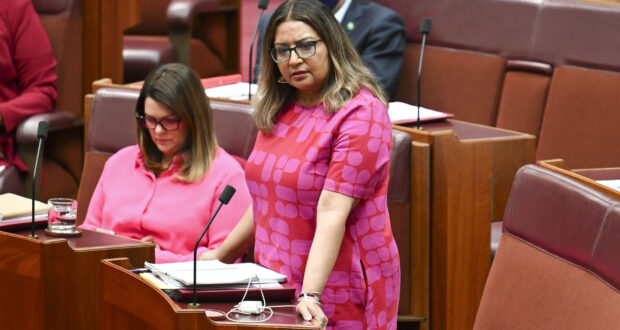
    Greens senator Mehreen Faruqi, who disclosed she is an NTEU member, said she was “pretty outraged” when she read the UA submission.

    “I think this debate is fundamental to how universities operate, especially given the exorbitant pay packets of executive staff and VCs on the one hand and the systemic wage theft, rampant casualisation and insecure work on the other,” she said.

    Fear and secrecy

    NTEU branch president at Federation University Dr Mathew Abbott said constant cuts and restructures throughout the sector has created a workplace culture that fears retribution.

    “University staff fear for their livelihoods, and that creates a culture in which staff become more compliant and less likely to speak out,” he said.

    “This is something I’ve tried to raise – the psychological toll it takes, the professional toll, and, of course, the impact of this on students.

    “When staff are placed under this kind of pressure, along with other issues like workloads and so on, it has a flow-on effect to the quality of the education that we provide to our students.”

    He said there is a “culture of secrecy” in university councils and senates, something NTEU member Professor Fiona Probyn-Rapsey from University of Wollongong also said is exacerbated by largely non-staff elected boards.

    There were multiple calls made for university council meeting minutes to be available to all university staff.

    “We have very little access to what university councils are discussing and how decisions are made. We don’t see minutes, and we barely get any interaction with university council members,” Professor Probyn-Rapsey said.

    “They don’t operate in the same way that the rest of the university does – in a collegial manner – or in the way a university should be behaving.”

    Management should also let staff have more say in teaching decisions, Professor Andrea Lamont-Mills, University of Southern Queensland NTEU branch president, added.

    Professor Andrea Lamont-Mills is associate dean of research at UniSQ. Picture: Newswire

    “Staff feel disempowered because they’re not using their expertise – it’s not valued, and their professionalism is not valued,” she said.

    “It’s disempowering when you get excluded from decisions that actually impact you, or you have limited input into decisions that directly impact you.

    “Our staff are highly skilled and highly knowledgeable, and they want to be part of developing decisions and coming up with solutions, yet they’re disempowered – they’re not able to do that.”

    Source link

  • Four universities being investigated over protests: Governance inquiry

    Four universities being investigated over protests: Governance inquiry

    Committee chair and Labor Senator Tony Sheldon called for the inquiry in January. Picture: Martin Ollman

    The Tertiary Education Quality and Standards Authority (TEQSA) revealed four universities are being investigated for their handling of protests and encampments at the first Quality of governance public hearing.

    Please login below to view content or subscribe now.

    Membership Login

    Source link