Category: Featured

  • Columbia University faces ultimatum from Trump administration to keep federal funding

    Columbia University faces ultimatum from Trump administration to keep federal funding

    This audio is auto-generated. Please let us know if you have feedback.

    Columbia University received a daunting laundry list of tasks Thursday from the Trump administration: Suspend or expel protesters. Enact a mask ban. Give university security “full law enforcement authority.”

    The Ivy League institution must comply with these and other demands by March 20 or further endanger its “continued financial relationship with the United States government,” according to a copy of the letter obtained by multiple news sources. 

    Last week, the Trump administration’s newly created Joint Task Force to Combat Anti-Semitism canceled $400 million of Columbia’s federal grants and contracts, alleging the university had failed to take action “in the face of persistent harassment of Jewish students.” It also noted that Columbia has $5 billion in federal grant commitments at stake.

    The stunning move came only four days after the task force opened an antisemitism investigation into the university.

    On Monday, the U.S. Department of Education also sent warnings to 60 colleges — including Columbia — that it could take punitive action if it determines they aren’t sufficiently protecting Jewish students from discrimination or harassment.

    In Thursday’s letter, Trump administration officials said they expected Columbia’s “immediate compliance” after which they hope to “open a conversation about immediate and long-term structural reforms that will return Columbia to its original mission of innovative research and academic excellence.” 

    The letter’s edicts are just the latest in a series of decisions made by the Trump administration and Columbia officials that have put the well-known New York institution into a tailspin.

    Strong language, few details

    Officials at the Education Department, U.S. Department of Health and Human Services, and U.S. General Services Administration sent Columbia Interim President Dr. Katrina Armstrong nine policy changes the Trump administration expects the university to make to retain federal funding.

    The agencies — all of which are part of the Trump administration’s antisemitism task force — accused Columbia of failing “to protect American students and faculty from antisemitic violence and harassment,” along with other alleged violations of civil rights laws. 

    But despite the high stakes, the task force’s demands are ambiguous. 

    For example, its letter orders the university to deliver a plan on “comprehensive admissions reform.”

    “The plan must include a strategy to reform undergraduate admissions, international recruiting, and graduate admissions practices to conform with federal law and policy,” it said.

    The task force’s letter offers no further insight into what it expects Columbia to change or how it believes the university is out of line with federal standards.


    The letter goes far beyond what is appropriate for the government to mandate and will chill campus discourse.

    The Foundation for Individual Rights and Expression


    The GSA directed an emailed request for comment to the Education Department. Neither the Education Department nor HHS responded to inquiries Friday.

    The task force also ordered the university to ban masks that “are intended to conceal identity or intimidate others,” while offering exceptions for religious and health reasons. But it did not give criteria to determine why someone is wearing a mask.

    “We are reviewing the letter from the Department of Education, Department of Health and Human Services, and General Services Administration,” a spokesperson for Columbia said Friday. “We are committed at all times to advancing our mission, supporting our students, and addressing all forms of discrimination and hatred on our campus.”

    The Foundation for Individual Rights and Expression, a civil rights watchdog, criticized the federal officials’ demands Friday. 

    While the group has been critical of Columbia’s handling of student protesters, it said the letter does not follow “the normal procedure for revocation of federal financial assistance for violations of Title VI.” Title VI refers to the law barring discrimination on race, color and national origin at federally funded educational institutions. 

    “While these include some policy steps that Columbia should already have taken, the letter goes far beyond what is appropriate for the government to mandate and will chill campus discourse,” FIRE said in a statement.

    A change in due process

    The Trump administration’s task force is demanding Columbia complete ongoing disciplinary proceedings against pro-Palestinian protesters who occupied campus buildings and organized encampments last year. The university must dole out meaningful discipline — meaning expulsions or multi-year suspensions — the letter said.

    The same day the task force’s letter is dated, Columbia announced it had issued “multi-year suspensions, temporary degree revocations, and expulsions” related to the occupation of Hamilton Hall.

    In April 2024, pro-Palestinian protesters occupied the university’s Hamilton Hall after then-President Minouche Shafik announced Columbia would not divest from companies with ties to Israel. 

    Source link

  • How challenges, experiences shape superintendents of color

    How challenges, experiences shape superintendents of color

    This audio is auto-generated. Please let us know if you have feedback.

    NEW ORLEANS — “It doesn’t matter what I brought to the table in terms of preparation. In the eyes of some, I’m just gonna be ill-equipped.”

    That sentiment, expressed by Denver Public Schools Superintendent Alex Marrero, sums up the double standards he says education leaders of color face regularly.

    “Double standards are so, so, so real, and you all need to accept that,” Marrero told a packed session this month at the annual conference of AASA, The School Superintendents Association. 

    “Hopefully during our time, that shifts. But once you realize that’s the reality, you’ll be well-equipped to navigate the turbulent waters that, again, were not designed for us to succeed as scholars, much less leading organizations like ours,” said Marrero, who has led DPS since 2021 and is the district’s third superintendent since 2018.

    Just 200 — or roughly 40% — of the nation’s 500 largest school districts, the superintendencies are held by leaders of color, according to 2024 data from ILO Group’s Superintendent Research Project. Furthermore, only 72 — or 14% — of those school superintendents are women of color.

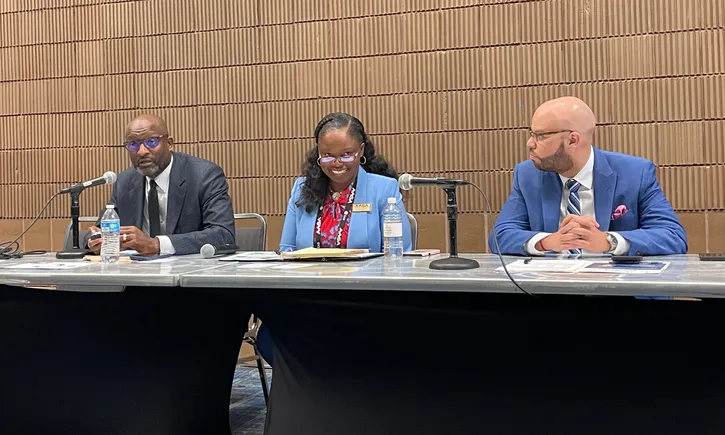
    During two March 7 AASA conference sessions, Black and Latino leaders from eight districts nationwide shared their challenges and experiences, as well as insights on what helped them reach their position — and what keeps them going. Here are three takeaways.

    Identity matters

    Martha Salazar-Zamora, superintendent of Texas’ Tomball Independent School District, demonstrated how she sometimes changes her speech depending on who she’s speaking with.

    “I learned that, at times, I am Martha Salazar-Zamora, and there are times where I’m Martha Salazar-Zamora,” she said, dropping her accent the second time she spoke her name. “If you understand that, you understand that. And if you don’t, you maybe never will.”

    Known as code-switching, this is the practice of adjusting one’s language, mannerisms or appearance to fit a social context or environment for the comfort of others or to achieve a desired outcome. And it’s something leaders of color might navigate, particularly if they’re the first non-White person to hold a role.

    “I knew when I had to be who I had to be. I knew why I had to be, whether it was an interview, whether it was whatever it might be, an introduction,” said Salazar-Zamora.

    That doesn’t mean, however, that a superintendent’s identity has to be left at the door. Avis Williams, who resigned as superintendent of Louisiana’s NOLA Public Schools in November, shared the benefit that comes with embracing the idea of having students of color see someone who looks like them.

    “When I go to schools, I love it when little girls are like, ‘My hair is like yours.’ Yes, baby, it is,” said Williams. “Some of them will google me, and it’s like, ‘She wore Afro puffs!’”

    These can seem like small details, but seeing a leader who looks like them conveys to students, “Anything you see that I have done, you can do that and more,” said Williams. “We have to make sure that we can bring our whole selves into the role in order to really live out that truth.”

    As a superintendent in Oregon’s Gresham-Barlow School District from 2017 to 2021 , Katrise Perera was the only Black woman district leader in the state, she said. “In my second year, we had another Black superintendent, a male.” 

    One specific memory from that superintendency still resonates for her. Once a week, she would read to elementary school classes, and children could sit where they wanted. Eventually, her communications team pointed out to her that in most photos, students of color were sitting close to her in the front.

    “They were gathering around me. I still get chills to this day,” said Perera, now superintendent of Texas’ Lancaster Independent School District.

    “When it comes to kids, you’re gonna get all of me,” she concluded.

    Relationships — and allies — are key

    Who you know and the relationships you build can make the difference in climbing professional ladders. LaTonya Goffney, superintendent of Texas’ Aldine Independent School District, told another AASA session how support from White and male allies helped her rise to district leadership.

    “It’s about time for men to pave the way for women to be able to do this job,” Goffney said.  

    Among the nation’s 500 largest school districts, just 30% were led by women, and only 14% are women of color, according to data released by ILO last year.

    Goffney attained her first superintendency in 2008 in rural Coldspring, Texas. A middle school principal at the time, Goffney was about nine years into her career as an educator. 

    Source link

  • Johns Hopkins to lay off 2,200 workers as it reels from Trump’s USAID cuts

    Johns Hopkins to lay off 2,200 workers as it reels from Trump’s USAID cuts

    This audio is auto-generated. Please let us know if you have feedback.

    Dive Brief:

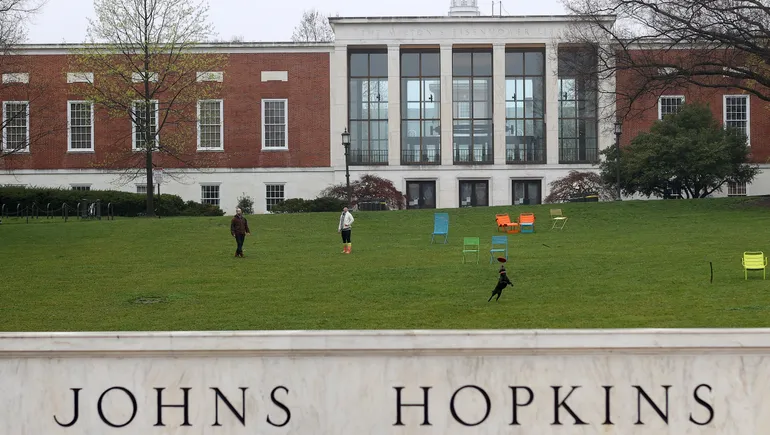
    • Johns Hopkins University is moving to cut over 2,200 jobs, the largest layoffs in its history, according to a university spokesperson.
    • The layoffs are tied directly to the Trump administration’s unilateral cuts to the U.S. Agency for International Development, which brought an $800 million funding hit to Johns Hopkins.
    • The job cuts include 1,975 international positions across 44 countries as well as 247 in the U.S, the spokesperson said. Another 29 international and 78 domestic employees will be furloughed with a reduced schedule. 

    Dive Insight:

    Earlier in March, Johns Hopkins President Ron Daniels revealed the depth of the funding gap wrought by the Trump administration’s suspension of foreign aid via executive order and efforts to gut USAID without congressional approval. Daniels said then that the university would have to wind down its projects funded by USAID grants.

    Employees in USAID-funded positions at Johns Hopkins have worked to “care for mothers and infants, fight disease, provide clean drinking water, and advance countless other critical, life-saving efforts around the world,” a university spokesperson said in an emailed statement.

    The affected jobs set for elimination are in its medical school; the Bloomberg School of Public Health, which includes the Center for Communication Programs; and Jhpiego, a nonprofit affiliate that provides medical care abroad. 

    The decimation of USAID has been challenged in court. On March 10, a federal judge issued a partial preliminary injunction in the case, saying the cuts likely violated the Constitution

    “The Executive not only claims his constitutional authority to determine how to spend appropriated funds, but usurps Congress’s exclusive authority to dictate whether the funds should be spent in the first place,” according to the decision from the U.S. District Court for the District of Columbia.

    Daniels previously told the campus community that federal funding cuts and the resulting chaos would likely bring reductions to the university’s personnel and budgets

    “Over the past six weeks, we have experienced a fast and far-reaching cascade of executive orders and agency actions affecting higher education and federally sponsored research,” Daniels said in early March. “What began as stop work orders or pauses in grant funding allocations has morphed into cancellations and terminations.”

    In addition to the USAID fallout, Johns Hopkins faces many millions in shortfalls from the National Institutes of Health’s move to cap funding for institutions’ indirect research costs at 15%. 

    The university is among those suing NIH to block the cap, which plaintiffs say violates federal law, regulation and agency authority. In court papers, Laurent Heller, Johns Hopkins’ executive vice president for finance and administration, said the institution received over $1 billion in funding from NIH in fiscal 2024. Of that, $281.4 million covers indirect costs, one of the largest of which is physical space. 

    The funding helps support clinical trials for treatments related to cancer, pediatrics, heart, lungs, brain, liver and other areas, as well as other research and services. 

    “The proposal to cap indirect cost rates at 15% could end, seriously jeopardize, or require significant scaling back of the projects and infrastructure described above, as well as hundreds more projects of importance for life-saving medical discoveries, treatments, cares, and cures,” Heller said.

    There again, a court has ruled that the administration likely overstepped its authority. A judge overseeing several cases against NIH issued an injunction in March compelling the agency to keep paying negotiated rates for indirect costs as the case continues. 

    The funding cuts represent a risk of “halting life-saving clinical trials, disrupting the development of innovative medical research and treatment, and shuttering of research facilities, without regard for current patient care,” the judge wrote.

    Harvard University, Columbia University, Northwestern University and many other higher ed institutions have announced hiring freezes and cutbacks amid uncertainty over NIH and other federal funding sources.

    Source link

  • How a Republican Plan to Cut Universal Free School Meals Could Affect 12 Million Students – The 74

    How a Republican Plan to Cut Universal Free School Meals Could Affect 12 Million Students – The 74


    Get stories like this delivered straight to your inbox. Sign up for The 74 Newsletter

    Every school in Kentucky’s LaRue County provides free breakfast and lunch to any student who wants it.

    It’s been that way for a decade, ever since the federal government launched a program allowing LaRue County Schools, and thousands of other districts nationwide, to skip the paperwork asking how much families earn.

    In these communities, lots of kids already receive other kinds of assistance for low-income families. Federal officials saw a way to make the subsidized meals program more efficient: Cover meal costs based on how many children are in similar assistance programs, rather than verify every family’s income.

    But LaRue County Schools won’t be able to do that anymore if sweeping changes to social programs proposed by congressional Republicans become law. GOP lawmakers say they want to ensure only eligible families get help and that taxpayer dollars are reserved for the neediest students, so that federal subsidies for school meals remain sustainable. But by one estimate, the Republicans’ plan would affect nearly a quarter of the students in the nation’s public schools.

    Research has found that universal free school meals can boost school attendance, increase test scores, and decrease suspensions, likely because it eliminates the stigma students often associate with the free meals. Taking them away from students on a large scale could also have downstream effects on everything from families’ household budgets to local unemployment.

    Stephanie Utley, the LaRue County district’s director of child nutrition, said that inevitably, fewer kids would eat school meals, either because their families no longer qualify for free breakfast and lunch or because they cannot produce documents to verify their income.

    When fewer kids eat school meals, it’s harder for districts to cover their costs. To save money, Utley would likely swap higher-quality foods for cheaper ones, she said.

    Apples and beef from local farms would go. The high school would serve fewer salads — they’d be too labor-intensive to prep. And a popular chicken breast sandwich would become a ground chicken patty.

    Utley may have to lay off staff, too, she said, which would hurt the rural community’s economy.

    “We’re the biggest restaurant in town,” she said. “It would be a nightmare.”

    GOP school meals proposals would impact states

    Republican lawmakers are considering a trio of proposals to help offset tax cuts sought by President Donald Trump that would be “devastating” to children and schools, said Erin Hysom, the senior child nutrition policy analyst for the nonprofit Food Research & Action Center.

    One proposal would dramatically increase the share of students who need to be enrolled in aid programs — such as the Supplemental Nutrition Assistance Program and Temporary Assistance for Needy Families — for schools to be eligible to serve free meals to all kids through the Community Eligibility Provision.

    Right now, schools need to show 25% of students are enrolled in those kinds of assistance programs to participate in community eligibility. The House Republican proposal would raise the share to 60% — higher than the threshold has ever been. That would kick more than 24,000 schools off of community eligibility, and some 12 million students would no longer automatically qualify for free meals, Hysom’s organization estimated.

    Essentially, only communities where nearly every child qualifies for free or reduced-price lunch could serve free meals to all kids.

    “They’ve really moved the needle to the upper echelon of poverty,” Hysom said. “You couldn’t get any higher than that.”

    Another proposal would require all families who don’t automatically qualify for free school meals through programs like SNAP to submit documents to verify their income with their application. That would burden families and schools with time-consuming added paperwork. Schools could end up cutting staff who serve food and work on school menus to hire more people to process applications.

    Together, those changes would save $12 billion over 10 years, according to the list of proposals circulated by U.S. Rep. Jodey Arrington, the Republican chair of the House budget committee.

    A third proposal would change how families qualify for SNAP and likely make over 1 million students no longer automatically eligible for free school meals. That would increase the paperwork burden even more.

    All of that would make it more costly for states with universal free school meals to run their programs, because they rely heavily on federal reimbursement. Some states were already weighing whether they could afford to keep up free meals for all.

    These three proposals are part of a process known as budget reconciliation that GOP lawmakers are using to make long-term changes to federal spending and revenue. As of Wednesday, Congress was considering a separate, stopgap budget that would keep funding essentially flat for the Agriculture Department, which pays for the school meal program, through the end of September.

    School staff and child nutrition advocates are taking the House’s budget reconciliation proposals seriously. The Trump administration has already cut a $1 billion Agriculture Department program that helped schools buy food from local producers.

    Free school meal cutbacks would have ripple effects

    If fewer kids have access to free meals at school, more families would likely struggle to afford groceries at home. Many families who don’t qualify for free meals struggle to pay for food. This school year, a family of four qualified for free school meals if they made under $40,560 a year.

    When schools eliminated free school meals for all following the pandemic, there was a surge in unpaid school meal debt, an issue school staff say will only intensify if these proposals go through.

    Right now, schools typically have to verify the family’s income for 3% of their applications. If schools had to check income for every application, the burden would be enormous, school staff and child nutrition advocates said.

    Many families who eke out a living working multiple jobs would have a hard time gathering up all the required documents to show how much they earn. Though children can participate in the school meals program regardless of their immigration status, undocumented parents may be afraid to hand over personal documents when Trump is threatening mass deportations.

    “Eligible children are going to fall through the cracks,” Hysom said.

    Many schools are already facing financial pressures from higher-than-usual food and labor costs, a 2024 survey of nearly 1,400 school nutrition directors showed. On top of that, schools are navigating new and stricter requirements for how much salt and sugar can be in food served by schools.

    Schools have to buy most of their food from American sources, but if Trump puts certain tariffs in place for the long term, that could create new financial constraints.

    “Cost is absolutely a concern,” said Diane Pratt-Heavner, a spokesperson for the School Nutrition Association, which represents school nutrition directors and conducted the survey. “When avocados or tomatoes from Mexico become much more expensive, that will cause an increase in demand for domestic produce, and an increase in price, as well.”

    Shannon Gleave, the president of the School Nutrition Association, understands the need to make sure the school meal program runs as it should.

    In Arizona’s Glendale Elementary School District, where Gleave is the director of food and nutrition, kids can speed through the lunch line because everyone qualifies for free meals. But staff scan student ID badges to make sure each kid only takes one meal, and that children with dietary restrictions get the right food.

    Upping the verification requirements a little could work, she said. But verifying 100% of applications “is not an efficient use of time.”

    “There is no way my existing staff could do that now,” she said. “You have to figure out a way to be good stewards of resources, but also look at the amount of administrative burden that it’s going to entail.”

    This story was originally published by Chalkbeat. Chalkbeat is a nonprofit news site covering educational change in public schools. Sign up for their newsletters at ckbe.at/newsletters.


    Get stories like these delivered straight to your inbox. Sign up for The 74 Newsletter

    Source link

  • How to help students overcome ‘learned helplessness’

    How to help students overcome ‘learned helplessness’

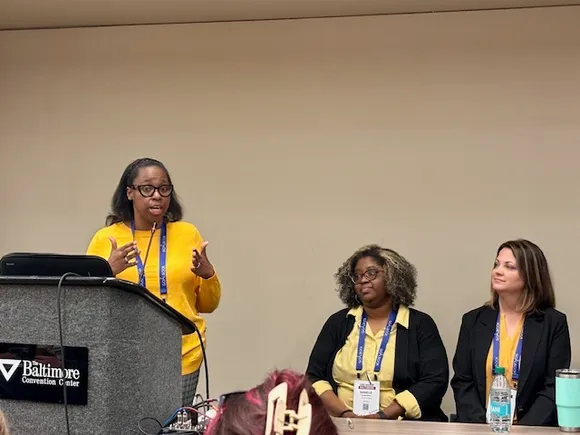
    BALTIMORE — Students who experience “learned helplessness” — the belief that even with effort, they will not progress — can resist help, be quick to surrender academically and exhibit passive behaviors, said speakers at the Council for Exceptional Children’s annual convention on Thursday.

    To educators and families, these students — whether with or without disabilities — may seem lazy, defiant and resigned to failure, speakers including special education teachers from Alabama told a conference session.

    However, students’ lack of self-confidence and sense of powerlessness can actually stem from early childhood traumas and from past negative school experiences. But all is not lost, the speakers said: Learned helplessness can be unlearned through academic interventions and by celebrating successes — even small accomplishments.

    “When we get these babies and they come to us at 3, 4, preschool age, we have got to start pumping them up to think that they can conquer the world,” said Michelle Griffin, a learning specialist at Tarrant City Schools in Tarrant, Alabama. 

    Here are the speakers’ recommendations for increasing students’ resilience and control over their learning:

    Encourage a growth mindset

    For students with learned helplessness, success can feel out of reach, leading them to believe that no matter how hard they try, they’ll miss the mark, said Danielle Edison, a special education teacher in Tuscaloosa City Schools in Alabama.

    Over time, this pattern can contribute to a significant learning gap and lower academic achievement. “By recognizing these signs early and implementing strategies to counteract them, we can help students regain confidence in their ability to take ownership of their learning,” Edison said.

    Teaching students to have a growth mindset — a belief that one’s abilities can improve through strategies and dedication — can help combat learned helplessness, the speakers said.

    To help students recognize their potential to improve, educators can encourage them to ask for help when needed. Teachers should also avoid doing the work for the students, setting unrealistic goals, or preventing them from making mistakes, the speakers said.

    “We can encourage a growth mindset by helping students use setbacks as learning opportunities rather than insurmountable barriers,” said Lena Cantrell, a 10-year Alabama educator who is pursuing an education specialist degree in special education at the University of Alabama. “Students become more willing to persevere when they see that failure is a step, not a stop.”

    Have a supportive learning environment

    Equity-focused interventions are another important tool. According to Cantrell, these can help students feel valued and capable of success. 

    “Cultivating a supportive environment plays a pivotal role,” Cantrell added. “When students know they are in a safe, understanding and encouraging space, they’re more likely to engage actively and take risks in their work.”

    Giving students autonomy in their learning and encouraging them to advocate for themselves can strengthen their problem-solving skills and confidence, Cantrell said.

    This doesn’t mean teachers are on the sidelines, said Amy Yarbrough, a special education teacher in Alabama’s Jefferson County Schools. Teachers can support students’ sense of control in their learning through physical and verbal prompts or by modeling a desired task.

    For example, by showing students how to close a plastic sandwich bag and then encouraging the student to do it on their own, a student can become more independent in that activity, Yarbrough said.

    Celebrate wins

    To help students overcome negative thoughts about their potential, teachers need to show positivity and encourage their students to be realistically optimistic. That means celebrating even the small steps toward success.

    Having positive affirmations can increase students’ motivation and resilience, the speakers said.

    “Help them experience success over and over again so that they’ll want to experience it more,” Griffin said.

    Source link

  • UPDATE: Another federal appeals court backs academic free speech for public employees

    UPDATE: Another federal appeals court backs academic free speech for public employees

    The U.S. Court of Appeals for the Seventh Circuit just sided with free speech, joining five of its sister circuits in holding the First Amendment protects academic research, writing, and teaching at public colleges and universities. This carves out an important exception to the Supreme Court’s 2006 decision in Garcetti v. Ceballos holding that public employees’ speech pursuant to their official duties is not protected.

    This is a big deal. Just ask Jason Kilborn, a law professor at the University of Illinois Chicago suspended in late 2021 for using a redacted racial slur “n___” on a final exam question about employment discrimination. He also used the redacted term “b___” in the same question.

    UIC suspended Kilborn and launched an investigation into his (non-)use of the terms. That’s when FIRE stepped in — defending Kilborn, writing to UIC administrators, and securing him a lawyer through our Faculty Legal Defense Fund. With help from that lawyer, UIC briefly reached a resolution with Kilborn but it later reneged on that agreement and forced him to write reflection papers and participate in months-long training sessions before he could return to teaching.

    Kilborn sued, alleging administrators violated his constitutional right to academic freedom — and while the district court had dismissed the case, on Wednesday, the Chicago-based Seventh Circuit agreed the First Amendment protected Kilborn’s speech. That court rejected UIC’s “invitation to extend Garcetti to speech involving university teaching and scholarship when the Supreme Court was unwilling to do so,” and sent the case back to the district court. 

    With the rejection of that application of Garcetti, the district court will analyze this case using the balancing test from Pickering v. Board of Education, which directs courts to weigh “the interests of the [employee] in commenting upon matters of public concern” against “the interest of the state, as an employer, in promoting the efficiency of the public services it performs through its employees.” 

    This is now the sixth federal appeals court to establish this exception to Garcetti, extending academic freedom protections to public university faculty throughout Illinois, Indiana, and Wisconsin. FIRE is currently awaiting a decision from the Atlanta-based Eleventh Circuit, where we’ve asked that court to do the same with respect to the Garcetti exception. Stay tuned for more as we continue to press and follow this issue closely. 

    Source link

  • IES, the Institute of Education Sciences, is in disarray after layoffs

    IES, the Institute of Education Sciences, is in disarray after layoffs

    President Donald Trump promises he’ll make American schools great again. He has fired nearly everyone who might objectively measure whether he succeeds.

    This week’s mass layoffs by his secretary of Education, Linda McMahon, of more than 1,300 Department of Education employees delivered a crippling blow to the agency’s ability to tell the public how schools and federal programs are doing through its statistics and research branch. The Institute of Education Sciences (IES) is now left with fewer than 20 federal employees, down from more than 175 at the start of the second Trump administration, according to my reporting. It’s not clear how the institute can operate or even fulfill its statutory obligations set by Congress. 

    IES is modeled after the National Institutes of Health and was established in 2002 during the administration of former President George W. Bush to fund innovations and identify effective teaching practices. Its largest division is a statistical agency that dates back to 1867 and is called the National Center for Education Statistics (NCES), which collects basic statistics on the number of students and teachers. NCES is perhaps best known for administering the National Assessment of Educational Progress, which tracks student achievement across the country. The layoffs  “demolished” the statistics agency, as one former official characterized it, from roughly 100 employees to a skeletal staff of just three. 

    “The idea of having three individuals manage the work that was done by a hundred federal employees supported by thousands of contractors is ludicrous and not humanly possible,” said Stephen Provasnik, a former deputy commissioner of NCES who retired early in January. “There is no way without a significant staff that NCES could keep up even a fraction of its previous workload.”

    Related: Our free weekly newsletter alerts you to what research says about schools and classrooms.

    Even the new acting commissioner of education statistics, a congressionally mandated position, was terminated with everyone else on March 11 after just 15 days on the job, according to five former employees. Chris Chapman replaced Biden-appointee Peggy Carr, who was suddenly removed on Feb. 24 without explanation before her congressionally designated six-year term was to end in 2027. It was unclear who, if anyone, will serve as the commissioner after Chapman’s last day on March 21. (Chapman did not respond to an email for comment.) Meanwhile, the chief statistician, Gail Mulligan, was put on administrative leave until her early retirement on April 1.* There is apparently no replacement to review the accuracy of figures reported to the public.  

    Two offices spared

    Only two IES offices were untouched by this week’s layoffs: the National Center for Special Education Research, an eight-person office that awards grants to study effective ways to teach children with disabilities, and the Office of Science, a six-person office that reviews research for quality, accuracy and validity. It was unclear why they were spared. Other areas of the Education Department that fund and oversee education for children with disabilities also had relatively lighter layoffs.

    A draft of an executive order to eliminate the Education Department was prepared in early March, but Trump hadn’t signed it as of this week. Instead, McMahon said on Fox News that she began firing employees as a “first step” toward that elimination. Former department employees believe that McMahon and her team decided which offices to cut. Weeks before her confirmation, about a half dozen people from McMahon’s former think tank, the right-wing America First Policy Institute, were inside the department and looking at the bureaucracy, according to a former official at the Education Department. The Education Department did not respond to my email queries.

    The mass firings this month were preceded by a Feb. 10 onslaught, when Elon Musk’s Department of Government Efficiency terminated much of the work that is overseen by these education research and statistics units. Most of the department’s research and data collections are carried out by outside contractors, and nearly 90 of these contracts were canceled, including vital data collections on students and teachers. The distribution of roughly $16 billion in federal Title I aid to low-income schools cannot be calculated properly without this data. Now, the statisticians who know how to run the complicated formula are also gone. 

    ‘Five-alarm fire’

    The mass firings and contract cancellations stunned many. “This is a five-alarm fire, burning statistics that we need to understand and improve education,” said Andrew Ho, a psychometrician at Harvard University and president of the National Council on Measurement in Education, on social media.  

    Former NCES Commissioner Jack Buckley, who ran the education statistics unit from 2010 to 2015, described the destruction as “surreal.” “I’m just sad,” said Buckley. “Everyone’s entitled to their own policy ideas, but no one’s entitled to their own facts. You have to share the truth in order to make any kind of improvement, no matter what direction you want to go. It does not feel like that is the world we live in now.”

    The deepest cuts

    While other units inside the Education Department lost more employees in absolute numbers, IES lost the highest percentage of employees — roughly 90 percent of its workforce. Education researchers questioned why the Trump administration targeted research and statistics. “All of this feels like part of an attack on universities and science,” said an education professor at a major research university, who asked not to be identified for fear of retaliation. 

    That fear is well-founded. Earlier this month the Trump administration canceled $400 million in federal contracts and grants with Columbia University, blaming the university’s failure to protect Jewish students from antisemitism during campus protests last year over Israeli attacks on Gaza. Among them were four research grants that had been issued by IES, including an evaluation of the effectiveness of the Federal Work-Study program, which costs the government $1 billion a year. That five-year study was near completion and now the public will not learn the results. (The Hechinger Report is an independent news organization at Teachers College, Columbia University.

    Related: Tracking Trump: His actions on education

    Tom Brock, executive director of the Community College Research Center at Teachers College, Columbia University, said he had been cautiously optimistic that he could successfully appeal the cancellation of his $2.8 million in education research grants. (He planned to argue that Teachers College is a separate entity from the rest of Columbia with its own president and board of trustees and it was not affected by student protests to the same degree.) But now the IES office that issued the grants, the National Center for Education Research, has lost its staff. “I’m very discouraged,” said Brock. “Even if we win on appeal, all the staff have been laid off. Who would reinstate the grant? Who would we report to? Who would monitor it? They have completely eliminated the infrastructure. I could imagine a scenario where we would win on appeal and it can’t be put into effect.”

    Active contracts

    Many contracts with outside organizations for data collection and research grants with university professors remain active. That includes the National Assessment of Educational Progress, which tracks student achievement, and the Integrated Postsecondary Education Data System (IPEDS), which collects data on colleges and universities. But now there are almost no employees left to oversee these efforts, review them for accuracy or sign future contracts for new data collections and studies. 

    “My job was to make sure that the limited public dollars for education research were spent as best as they could be,” said one former education official who issued grants for the development of new innovations. “We make sure there’s no fraud, waste and abuse. Now there’s no watchdog to oversee it.” 

    The former official asked to remain anonymous as did more than a dozen other former employees whom I talked to while reporting this story. Some explained that the conditions of their termination, called a “reduction in force” or “RIF,” could mean losing their severance if they talked to the press. The terminated employees are supposed to work from home until their last day on March 21, and they described having limited access to their work computer systems. That is stymying efforts to wind down their work with their colleagues and outside contractors in an orderly way. One described how she had to take a cellphone picture of her termination notice on her laptop because she could no longer save or send documents on it. 

    Related: DOGE’s death blow to education studies

    So far, there has been no sign of protest among congressional Republicans, even though some of the cuts affect data and research they have mandated. A spokesman for Sen. Bill Cassidy, Republican of Louisiana and chairman of the Senate committee on Health, Education, Labor and Pensions, directed me to Cassidy’s statement on X. “I spoke to @EDSecMcMahon and she made it clear this will not have an impact on @usedgov ability to carry out its statutory obligations. This action is aimed at fulfilling the admin’s goal of addressing redundancy and inefficiency in the federal government.”

    Following the law

    In theory, a skeletal staff might be able to fulfill the law, which is often “ambiguous,” said former NCES commissioner Buckley. For example, the annual report to Congress on the condition of education could be as short as one page. Laws mention several data collections, such as ones on financial aid to college students and on the experiences of teachers, but often don’t specify how often they must be produced. Technically, they could be paused for many years without running afoul of statutes.

    The remaining skeleton crew could award contracts to outside organizations to do all the work and have them “supervise themselves,” said Buckley. “I’m not advocating that oversight be pushed out to contractors, but you could do it in theory. It depends on your tolerance for contracting out work.”

    NAEP anxiety

    Many are anxious about the future of NAEP, also known as the Nation’s Report Card. Even before the firings, William Bennett, Education Secretary under President Ronald Reagan, penned an open letter along with conservative commentator Chester Finn in The 74, urging McMahon to preserve NAEP, calling it “the single most important activity of the department.” 

    Colorado Gov. Jared Polis, a Democrat who chairs the National Governors Association, is especially concerned. In an email, Polis’ spokesman emphasized that Polis believes that “NAEP is critical.” He warned that “undercutting data collection and removing this objective measuring stick that helps states understand and improve performance will only make our efforts more difficult.” 

    Though much of the test development and administration is contracted out to private organizations and firms, it is unclear how these contracts could be signed and overseen by the Education Department with such a diminished staff. Some officials suggested that the National Assessment Governing Board (NAGB), which sets NAEP policy, could take over the test’s administration. But the board’s current staff doesn’t have the testing or psychometrics expertise to do this. 

    Related: Former Trump commissioner blasts DOGE education data cuts

    In response to questions, board members declined to comment on the future of NAEP and whether anyone in the Trump administration had asked them to take it over. One former education official believes there is “apparently some confusion” in the Trump administration about the division of labor between NAGB and NCES and a “misunderstanding of how work gets done in implementing” the assessment.

    Mark Schneider, a former IES director who is now a senior fellow at the American Enterprise Institute, said he hoped that McMahon would rebuild NCES into a modern, more efficient statistical agency that could collect data more cheaply and quickly, and redirect IES’s research division to drive breakthrough innovations like the Defense Department has. But he conceded that McMahon also cut some of the offices that would be needed to modernize the bureaucracy, such as the centralized procurement office. 

    So far, there’s no sign of Trump’s or McMahon’s intent to rebuild. 

    * Clarification: An earlier version of this story said that Mulligan had been terminated, but she revised a social media post about her status after publication of this story to clarify that she was not subject to the “reduction in force” notice. 

    Contact staff writer Jill Barshay at 212-678-3595, jillbarshay.35 on Signal, or [email protected].

    This story about the Institute of Education Sciences was written by Jill Barshay and produced by The Hechinger Report, a nonprofit, independent news organization focused on inequality and innovation in education. Sign up for Proof Points and other Hechinger newsletters.

    The Hechinger Report provides in-depth, fact-based, unbiased reporting on education that is free to all readers. But that doesn’t mean it’s free to produce. Our work keeps educators and the public informed about pressing issues at schools and on campuses throughout the country. We tell the whole story, even when the details are inconvenient. Help us keep doing that.

    Join us today.

    Source link

  • Feds to Columbia: ‘You want $400 million in contracts back? Do this (or else)’

    Feds to Columbia: ‘You want $400 million in contracts back? Do this (or else)’

    Last week, the Department of Health and Human Services, the Department of Education, and the U.S. General Services Administration announced the immediate cancellation of $400 million in federal contracts with Columbia University. 

    The announcement corresponded with ongoing Title VI investigations alleging an anti-Semitic hostile environment at Columbia. Last night, the agencies sent a follow-up letter sidestepping important procedures and including demands that will seriously erode free speech and academic freedom on campus. 

    There is significant evidence to suggest that Columbia failed to respond effectively to unlawful conduct directed against Jewish students based on their Jewish identity and that this has resulted in Title VI violations. Indeed, Columbia responded to the agencies’ March 7 announcement about canceling contracts by stating it is “committed to working with the federal government to address their legitimate concerns.” [Emphasis added].

    However, the departments’ demands in last night’s letter to Columbia go too far. The letter announces steps the school must take “that we regard as a precondition for formal negotiations regarding Columbia University’s continued financial relationship with the United States Government.” While these include some policy steps that Columbia should already have taken, the letter goes far beyond what is appropriate for the government to mandate and will chill campus discourse.

    Our nation’s colleges need to protect free expression and comply with anti-discrimination laws, but too often … they enact overbroad or vague policies that do not track the Supreme Court’s definition for discriminatory peer harassment.

    For instance, the letter demands that Columbia “Formalize, adopt and promulgate a definition of anti-Semitism.” It cites President Trump’s 2019 executive order on anti-Semitism — which orders the government to consider the International Holocaust Remembrance Alliance’s definition and examples of anti-Semitism for civil rights enforcement — hinting strongly that Columbia should adopt that definition. 

    While the IHRA definition was originally crafted to study incidents of anti-Semitism in Europe, its primary author has repeatedly stated that it was never intended to be used for anti-discrimination enforcement because it risks chilling speech on the Israeli-Palestinian conflict on campus. The examples of anti-Semitism cited by IHRA include criticisms of Israeli policy that can, depending on the situation, be political speech protected by our First Amendment. 

    Other demands may be of even greater concern. The government’s demand that an academic department be put under “academic receivership” is a clear intrusion on academic freedom, and its deadline of March 20 for a “full plan” to do so is likely impossible to meet. And there is no basis to believe that the federal government has the power to demand that Columbia eliminate its University Judicial Board or to mandate specific punishments (“expulsion or multi-year suspension”) be given to student demonstrators.

    The demands in the letter pose a problem, but so is the process the government is using to issue those demands. This is not the normal procedure for revocation of federal financial assistance for violations of Title VI. Instead, the government appears to rely on authority under Federal Acquisition Regulations (FAR) to cancel contracts based on “termination for convenience of the government” clauses that exist in most federal contracts. As a Biden-era document states: “the Government has a lot of latitude to terminate contracts for convenience and the Federal Acquisition Regulations do not require a lot from the Government when terminating contracts for convenience.” 

    Federal anti-discrimination law has been one of the most frequently cited justifications for campus censorship throughout FIRE’s history. Our nation’s colleges need to protect free expression and comply with anti-discrimination laws, but too often — and sometimes at the federal government’s behest — they enact overbroad or vague policies that do not track the Supreme Court’s definition for discriminatory peer harassment. As a result, their policies and actions end up targeting speech protected by the First Amendment. This has long been a problem in the Title IX context relating to sex discrimination, and has more recently become a problem in the Title VI context as well.

    One important protection that colleges have against improper pressure from the federal government to censor students and faculty is the process federal civil rights law provides for colleges accused of failing to address unlawful discrimination. Civil rights investigations should not be handled through ad hoc directives from the government. Existing procedures, which include an attempt at a voluntary resolution followed by either an administrative hearing with the opportunity for the institution to defend itself or a trial in federal court, are intended to reduce the risk of error, individual biases, and overreach. 

    None of those safeguards are in evidence in the Columbia process, which increases the likelihood of abuse. Title VI processes are in place for a reason, and those procedures, when followed in good faith, are more likely to generate just outcomes for colleges, students, and faculty. 

    Earlier this week, the Department of Education announced it was launching Title VI anti-Semitism investigations into 60 colleges and universities across the country. Any of those institutions that have contracts with the federal government would reasonably expect to be treated similarly to Columbia and risk losing federal government contracts unless they enact policies similar to those outlined in last night’s letter. 

    The threat to both free speech and academic freedom are clear, and last night’s letter is a blueprint to supercharge campus censorship.

    Source link

  • Watch DOGE layoffs in real-time with Layoffs.fyi

    Watch DOGE layoffs in real-time with Layoffs.fyi

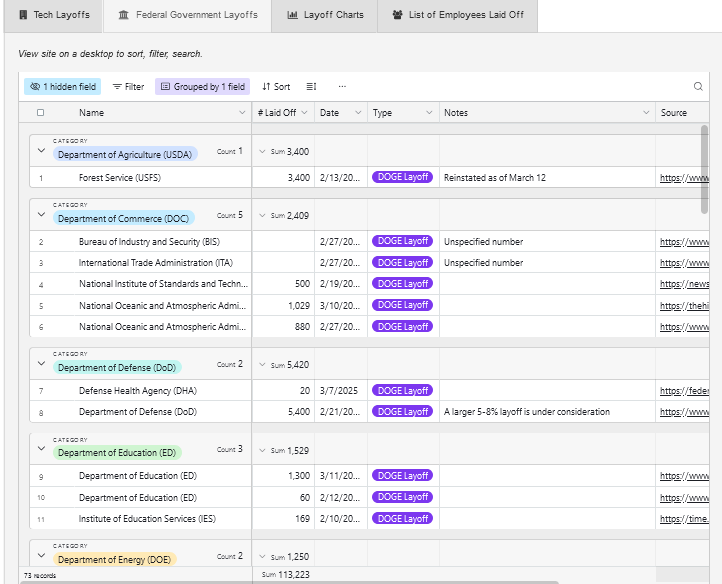
    Layoffs.fyi is keeping track of US federal government layoffs. The website was originally created to track tech layoffs and has been featured in the Wall Street Journal, Bloomberg, and NY Times. 

    Source link

  • Marc Miller removed as Canadian immigration minister

    Marc Miller removed as Canadian immigration minister

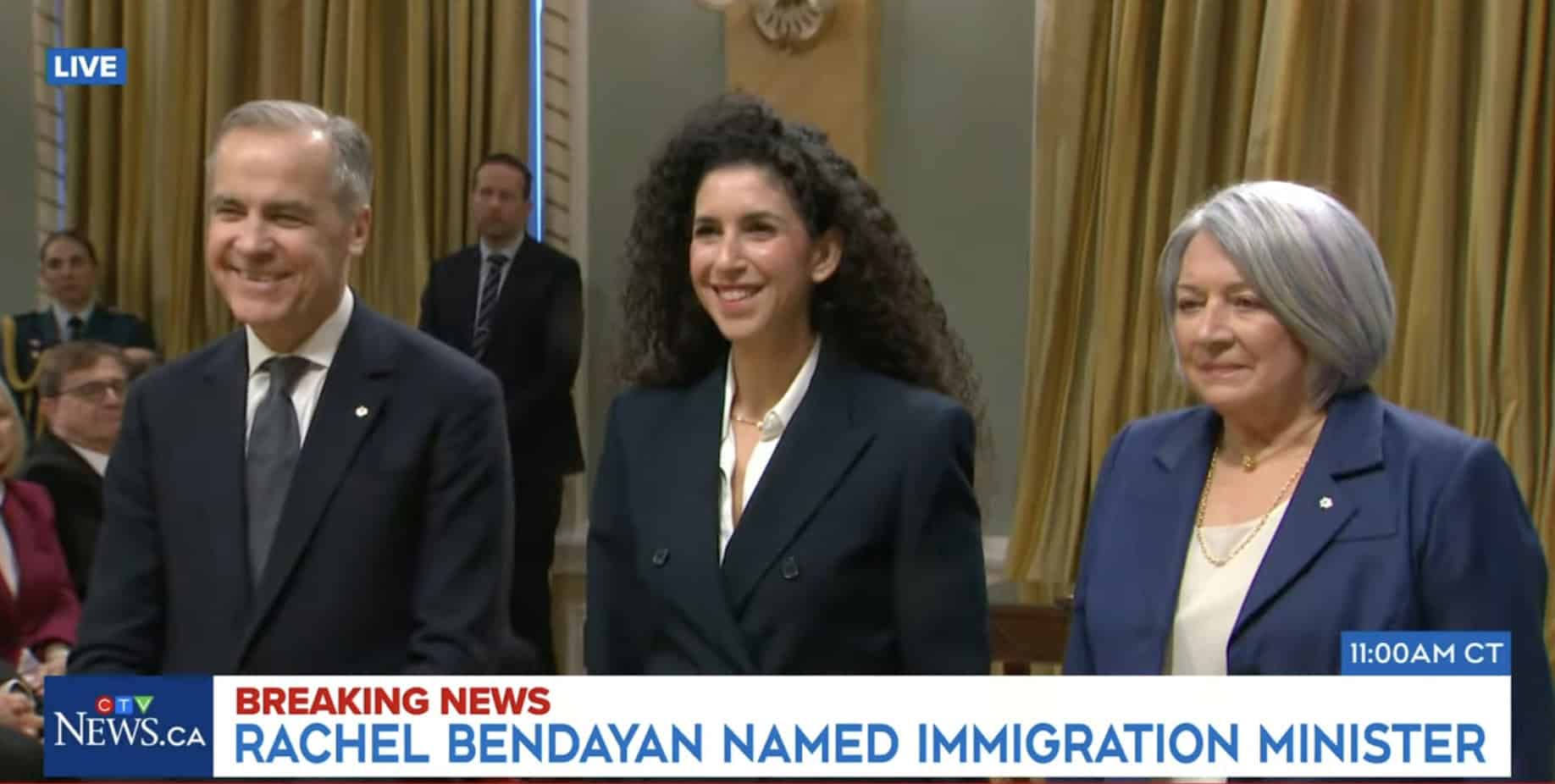
    The cabinet reshuffle came upon Carney’s swearing-in ceremony as Canada’s new Prime Minister on Friday 14 March, following his landslide victory in the Liberal leadership race announced on March 10.  

    Miller has been replaced by Rachel Bendayan, formerly the minister of official languages and associate minister of public safety under Trudeau. Bendayan is one of 11 female ministers in Carney’s 24-member cabinet.  

    Holding various government positions since being elected to parliament in 2019, Bendayan was the first Canadian of Moroccan descent to join the federal government.  

    While a change of tack regarding immigration is unlikely until after the federal election, international education stakeholders are hopeful about Miller’s successor who will head up Immigration, Refugees and Citizenship Canada (IRCC).

    “Canada is due for a reset on the immigration file. The former minister rode a wave of negative sentiment to make Canada feel increasingly unwelcoming to international students and their family members,” Canadian immigration lawyer Matthew McDonald told The PIE News.

    “My hope is that Minister Rachel Bendayan will bring a more positive spirit to the country’s immigration conversation,” he added.

    Based on Bendayan’s role as minister for official languages, McDonald said he expected she would continue IRCC’s commitment to the prominence of the French language in permanent residence programs.

    Bendayan’s legal background also suggests that she may continue the “technocratic approach” to policy seen of her predecessor, he added.

    The former minister rode a wave of negative sentiment to make Canada feel increasingly unwelcoming to international students

    Matthew McDonald, Canadian Immigration Services

    “We are changing how things work, so our government can deliver to Canadians faster – and we have an experienced team that is made to meet the moment we are in. Our government is united and strong, and we are getting right to work,” said Prime Minister Carney.  

    Carney, formerly head of the Bank of Canada and Bank of England, and a relative political newcomer, will succeed Justin Trudeau as relations hot up between the US and Canada over Donald Trump’s trade war against its northern neighbour.  

    Trudeau’s large cabinet was made up of 37 ministers, including his longtime personal friend and the best man at his wedding, immigration minister Marc Miller.  

    Carney himself never sat on Trudeau’s cabinet, which was part of his appeal to some Liberal voters.  

    While several Trudeau stalwarts have been dropped from Carney’s cabinet, there is still considerable overlap and only three new faces, which Carney’s team said would ensure “continuity”.

    We are changing how things work, so our government can deliver to Canadians faster

    Mark Carney, Canadian Prime Minister

    In the absence of an education minister at the federal level, Miller has delivered many of the turbulent policy changes in international higher education over the past 14 months. He has become notorious in the sector for repeatedly doing so on a Friday afternoon.  

    During this time, Canadian institutions have been delivered study permit caps, twice, restrictions on post-graduate work opportunities and procedural changes around recruiting and enrolling international students, among myriad further disruptions.  

    Against the backdrop of a recent increase in anti-immigration sentiment across Canada, McDonald said that Bendayan had “the opportunity to seize this existential moment for Canada and reinforce that we are a country whose past, present, and future is an immigration story”.

    Previous statements made by Carney about tackling Canada’s housing crisis, prioritising those already in Canada for permanent residency and reducing temporary foreign worker levels suggest the government’s ongoing immigration policy will largely align with Miller’s going forward.  

    While Carney has not explicitly said anything about limiting international students, he has previously voiced concerns about institutions’ reliance on international students and has advocated for increased funding for postsecondary education.  

    Under Canada’s current immigration levels plan, the government is aiming to reduce temporary residents including international students and temporary workers to 5% of the total population by 2027.  

    Canada’s next federal election is currently scheduled for October, though there is speculation that Carney could call an election before parliament is expected to return on March 24.  

    Source link