
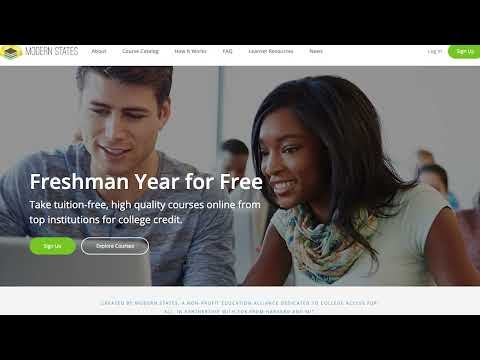
A new, high-quality path to free college credit was launched in 2017.
The goal of the program, dubbed “Freshman Year for Free,” is to make
college more accessible and affordable for high school students, college
students and adult learners, including active duty military personnel,
their families, and veterans.
Modern States, the New York-based charitable organization behind the
effort, has funded production of online courses taught by college
professors. The courses prepare students for introductory College Level
Examination Program (CLEP) exams in Economics, Sociology, Algebra, and
other areas.
The CLEP exams, administered by the College Board, are accepted for
credit by more than 2,900 colleges and universities. Modern States is
partnering with high schools and colleges that are making students aware
of the opportunity.
This is the first time there have been courses (see list below)
taught by top quality college professors for CLEP subjects. Also, Modern
States is paying the CLEP exam fee and scheduling fee for students who
enroll in the courses and take the exams. The benefit for participating
institutions is that this creates a free on-ramp to college that
facilitates learning and earning credits.
Modern States will pay for you to take the CLEP exam. After you complete the coursework and practice questions, request a CLEP voucher
code from the Modern States website. There are no prerequisites for the
32 courses that are available, and all of them are self-paced. Some of
the courses stem from a partnership between Modern States and edX, the
online education platform created by Harvard and MIT.
Modern States Education Alliance™ offers free, high-quality online
courses taught by college professors that prepare you for the CLEP
exams, which are well-established and widely-accepted. Solid performance
on the exams (each participating college decides what scores you need
for credit) can earn you college credits and enable you to save tuition
dollars. You can take one course or many; if you do well on eight exams,
you can potentially earn Freshman Year for Free™.
Sign up today by clicking here – it’s free!

Higher education is experiencing transformative shifts as institutions respond to societal, economic, and technological changes. This year is set to bring new opportunities and challenges. We’re always keeping a pulse on the industry and where it’s headed so we can stay proactive and prepared –– ready to support our partners through whatever conditions they’re facing.
The pace of mergers and consolidations among smaller colleges is expected to accelerate in 2025, according to Collegis Education CEO Kim Fahey. With financial pressures and declining enrollment, many institutions will view mergers as a strategic alternative to closure. But these transitions are anything but simple.
“Mergers involve unique technology requirements and complex data management challenges,” Fahey explains. Successfully integrating applications, systems, and hardware requires expert guidance. Higher ed leaders will look to partner with experienced organizations to help navigate these intricacies.
The information security landscape is becoming increasingly intricate. With 21 comprehensive state privacy laws, alongside European Union (EU) regulations, federal rules, and Title IV requirements, compliance challenges are mounting.
“Smaller schools often lack the experience and qualifications to manage these threats,” notes Dr. Jason Nairn, CISSP, Collegis VP of Information Technology. Cyberattacks, like phishing and social engineering, are relentless. In 2025, institutions must prioritize more robust cybersecurity measures, leveraging external partnerships and security tools to protect sensitive data.
Cloud migration will take center stage as institutions transition away from outdated, on-campus systems. While many schools still rely on highly customized platforms, which limits their ability to adopt or migrate to more modern technology, the adaptability and scalability of cloud platforms are simply too compelling to ignore.
Furthermore, technology infrastructures must be sufficiently modernized in order to capitalize on emerging tech innovations in AI and predictive analysis. This process can’t happen overnight –– it’s an evolution, according to Fahey.
“Cloud migrations take 18+ months, so schools need to act now,” she emphasizes. An institution-wide commitment to digital transformation will not only modernize operations but also position institutions to stay competitive in an increasingly tech-driven environment.
Financial constraints will push smaller schools toward shared services and consortium models to access the technology and expertise they need at a manageable scale. These models allow institutions to pool resources and reduce costs but require significant change management, according to Jeff Certain, VP of Solution Development at Collegis.
“This will require schools to standardize and make some concessions,” Certain explains. “This could pose a challenge, but they may not have an option.” Institutions must embrace these shifts to remain sustainable while navigating limited budgets.
Programs aligning with workforce needs will gain momentum in 2025. Alternative credentials like microcredentials and certificates will become more prominent, offering shorter, career-oriented pathways for learners.
“Institutions will increasingly recognize and credit learning outside the classroom, exploring more direct pathways into the workforce,” predicts Dr. Tracy Chapman, Chief Academic Officer for Collegis. This reflects growing demand for flexible, career-focused education that meets student and employer expectations.
It is not just colleges and universities facing consolidation. Ed tech companies and services providers are also reshaping the landscape with their own mergers and acquisitions. While these changes may offer schools more comprehensive solutions, they may not necessarily align with institutional objectives.
“Some recent acquisitions have led to poorer customer experiences,” Fahey observes. Institutions must carefully evaluate new partnerships to ensure they will deliver meaningful improvements.
With the “enrollment cliff” looming, institutions must double down on maintaining their existing student base as a key to sustainability. Purposeful and cost-effective retention strategies will play a pivotal role in maintaining financial health, as retaining current students is often more cost-effective than recruiting new ones.
“Retention strategies build stronger, more loyal communities,” says Patrick Green, VP of Enrollment Strategy. Forward-looking schools have perceived the importance of fostering a sense of belonging across the student lifecycle and are providing robust support networks that improve student persistence and satisfaction.
Students and families are increasingly demanding clear ROI from their education. As a result, institutions will need to demonstrate how their programs lead directly to employment and career advancement.
“Building relationships with regional industries and showcasing job placement rates will be essential,” advises Tanya Pankratz, AVP of Marketing at Collegis. Marketing efforts will need to start highlighting tangible outcomes (e.g., alumni success stories, job placement rates, and employer partnerships) to win over prospective students.
AI and other emerging technologies will revolutionize higher education operations. From enrollment management and personalized marketing to virtual campus tours using augmented reality (AR) and virtual reality (VR), technology has the means to dramatically enhance the student experience –– or wreak technical havoc if data, platforms and tools are misaligned.
“AI-driven tools make personalization more accessible, but the strategy remains critical,” notes Dan Antonson, AVP of Data and Analytics. Institutions must invest in data infrastructure to fully harness these advancements in order to build and maintain a competitive edge.
Higher ed institutions are increasingly recognizing that they don’t need to own the entire value chain. In 2025, strategic partnerships will play a more prominent role.
“Institutions will double down on their core mission of education and seek out partners to support other critical functions,” Dr. Chapman explains. These partnerships provide access to technology, expertise, and resources, allowing schools to focus on what they do best — educating students.
As evident in this compilation of higher ed trends, the landscape is set for significant change in 2025 and beyond. Institutions that proactively address these trends will be well-positioned to navigate challenges and seize opportunities. By embracing digital transformation, fostering strategic partnerships, and adopting value-driven approaches, schools can ensure long-term success in an evolving marketplace.
Excited about the opportunities that lie ahead? Collegis Education has the experience and expertise to guide you through any twists and turns you may face. We’ll help you stay on the leading edge instead of chasing trends. Connect with us and let’s start creating solutions together.
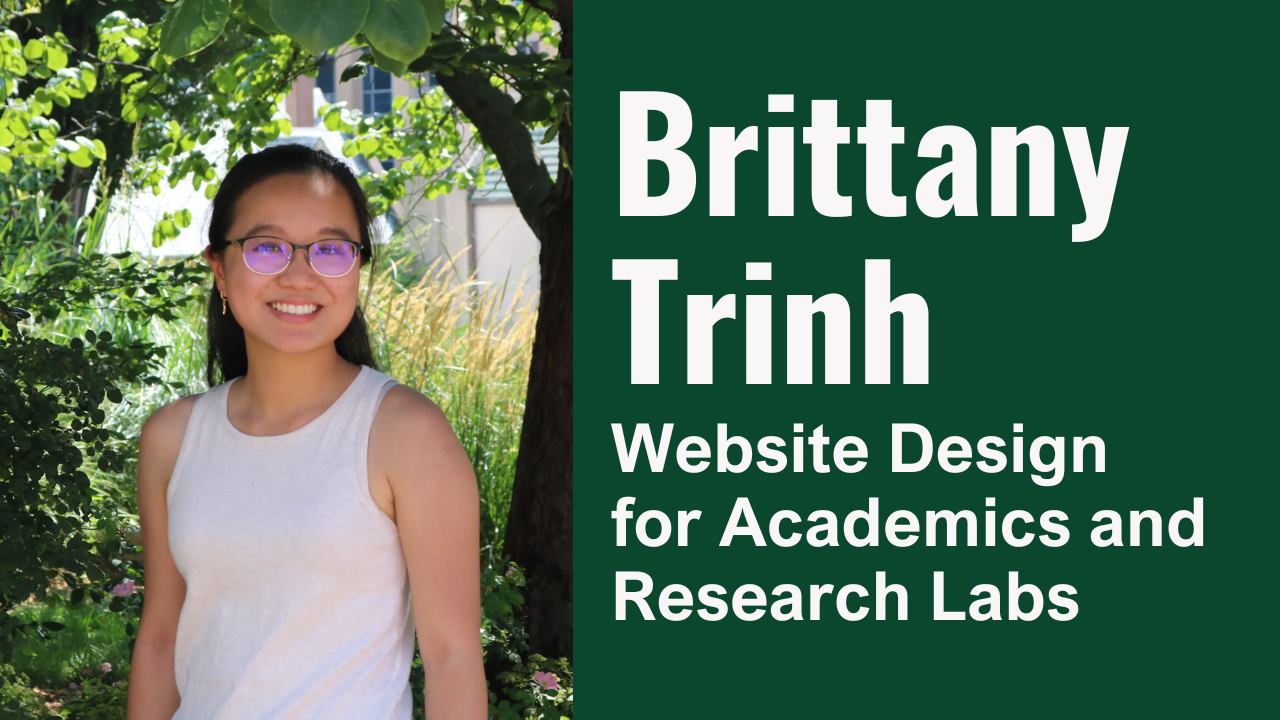
Brittany Trinh returns to The Social Academic featured interview series. We talk about how her thinking on websites for professors, scientists, and researchers has changed. We also talk about how her life has changed now that she’s back in grad school (and what that means for her online presence). Plus, hear about our Team VIP Day service for research lab websites. Read Brittany’s bio.
Jennifer: Hi everyone. It is Jennifer van Alstyne. Welcome to The Social Academic. I’m here today with my friend and one of my business partners, Brittany Trinh. We’re talking about personal academic websites, research lab websites, websites for academics. Brittany, would you say hi and introduce yourself? Or, reintroduce yourself since you’ve already been a guest on our show?
Brittany: Hi everyone. My name is Brittany Trinh. Yeah, I feel like the last time I was on your show was maybe in like 2020 or something like that. It was a while ago.
Jennifer: Oh my goodness. It’s been that long and we’ve been friends ever since. I mean, Brittany, you were at my wedding this summer. I can’t believe how time has flown by and your life has changed. You’re back in grad school. Tell me about that.
Brittany: Yeah, so I was working and running my side business as a website designer at the time when we’ve met. Since then, I had started grad school in 2021. I am now a PhD candidate in Chemistry at the University of Wisconsin Madison.
Jennifer: Amazing. I really like how you reached out and introduced yourself to me in the very beginning. I felt like there wasn’t a need to be in competition with each other. It was so nice to be able to have someone to talk with about something that we both care about, which is having an online presence when you’re a scientist or someone who’s in academia. And also, we’ve been able to work together and partner together on some fun projects.
Brittany: When I first started getting in the online space and I heard about you. When I saw you at first, I was kind of thinking like, “Oh, we are kind of competitors in a sense that we have similar services” and things like that. But after I thought about it and kind of learned more about the space, I figured at that time we had slightly different audiences. You were still more targeting professors and people who were further along, whereas I was trying to target with graduate students and earlier career. But obviously since starting grad school, a lot of my side business web design stuff has kind of been put on the back burner. I’m still kind of working on it here and there, and I love collaborating with you as of late. So that has been a really good kind of easing back into the web design business.
Subscribe to The Social Academic blog.
The form above subscribes you to new posts published on The Social Academic blog.
Want emails from Jennifer about building your online presence? Subscribe to her email list.
Looking for the podcast? Subscribe on Spotify.
Prefer to watch videos? Subscribe on YouTube.
Jennifer: That’s really fun. And I love hearing about your grad school experiences on social media. What was it like to start sharing that part of your new lifestyle in your online space that was kind of different from how you were showing up before?
Brittany: When I was showing up before, I was mostly just sharing a lot of tips and information on Twitter at the time. That worked for some time. But once I got to grad school, I thought, first of all, I don’t want to just be known for websites anymore. But I also had to take a break because I wasn’t really sure about my scientific identity yet because I just started grad school, and even though I had worked in industry for some time, starting grad school made me feel like a beginner again. And actually it took me probably the last three-ish years or so to finally feel a little bit more confident about posting things on social media regarding grad school.
Because for me personally, I just didn’t really want to be just a PhD influencer. There’s a lot of PhD influencers. I follow them too because I like their contents motivating and things like that, of course. But there’s just certain aspects of it that I didn’t really align with. And, I didn’t want to create that type of content. It took me a really long time up until maybe last year to finally figure out, “Oh, actually I still do want to talk about some things about grad school and about being a scientist, being in STEM and all that. But it just looks a little bit different than how a lot of people are currently doing it.” That’s because a lot of people are also science communicators, so they’re communicating their research, which is great. But for me personally, that wasn’t exactly something that I wanted to do.
Jennifer: Oh, that’s so interesting because the way that I see websites is part of science communication. At least for scientists, it’s a way to communicate who they are and what they’re doing. And that’s something you’re so great at. It’s totally okay that it’s not an interest of yours when it comes to the other areas of your life. That’s so interesting to me. I’m curious if you’re open to it, would you share with me what aspect of influencer life maybe didn’t appeal to you? Because there may be people who are listening to this who are considering the same thing and hearing your thoughts might be really helpful for them.
Brittany: Yeah, I guess for me, a lot of it was just hearing the over romanticizing the lifestyle was one thing that I wasn’t really a fan of, especially without context. I love the aesthetic. When I was in high school, I was obsessed with study aesthetic and everything. So, I get it. It’s very appealing to see that type of content. But I think that when you create that type of content and you share that without sharing the context in which a PhD program happens. I guess what goes on in a PhD program, it can be a bit deceiving to say the least, or just a little bit. I don’t know what the right word is, but I just didn’t feel like that’s something I wanted to do. I think that it’s a good thing that they’re inspiring younger people or anybody who wants to pursue a PhD. I think that’s good to be a source of inspiration. But I think that for me, I didn’t want it to just be an aesthetic look like a lifestyle.
Jennifer: Yeah, I absolutely understand that. And what’s interesting to me is that if I came across your channel and didn’t know that you didn’t want to be an influencer, I would think that you’re quite realist in what you share about your PhD life. And, you even have a podcast about what it’s like to be in grad school. I think that there’s a difference between influencer in terms of the intention of creating partnerships and brand deals and maybe even gaining a certain type of following for being an influencer in that space. And then also just having influence over a space because you are more open about sharing your story. And I think that your openness is really refreshing because you do share maybe some of the negative experiences too, some of the struggles and some of the highlights. It feels very real every time I check out your social media stories. Yeah, I don’t know. That’s so refreshing for me. What was that like for you to decide to actually start posting about these things?
Brittany: That was kind of hard, actually. For the first two years, I think the way I described it to people was that I felt like I was kind of ‘in a shell.’ I was very withdrawn because a lot of my PhD struggles took up a lot of my mental capacity. I just really didn’t have the desire at all to show up and to be seen, and honestly, to be that vulnerable to so many people online and to show them I’m struggling. Because a lot of people, again, like I mentioned, were set up the aesthetic. Everyone looks like, “Oh, they’re having such a good time in their PhD, they’re accomplishing so much. Why don’t I feel that way? Why am I not doing X, Y, Z?”
What I realized recently was that I guess I could go through those times, but I didn’t have to share it in real time. I can still share it now, which is what I’m learning to do right now, which is part of this project I’m working on for my podcast. I’m trying to write a series or make it episode, whatever series of episodes of all the different struggles I’ve kind of gone through. And sharing my thought process through that and what I did, what I wish I did differently, so that hopefully people who listen to the podcast or future people who encounter the podcast can learn from it. And can see, I wouldn’t say the bad side of things, but just these are things that people don’t want to openly talk about. And I think that it does take time to get over it so that you have fully processed it in a way that you can talk about it in a more meaningful way than just, I guess venting about it. Because I never really want to come off that way, even though in real life in the moment, I’m just like, “Oh my God, this was so stressful. Why are things like this?”
But when I talk to other people, younger students and things like that, I have to actively reframe it in my mind. How do I make this useful or helpful to them? Or what can I take away from it? How can I improve through this experience? Which has been happening a lot recently.
Jennifer: You’ve been doing more mentoring yourself, haven’t you?
Brittany: Yeah, a lot of mentoring in terms of in the lab. I’ve had four undergrads so far, and I have two right now. And then I also do some mentoring for first year students. So when they come in, they have a lot of questions about how do I join a group? How do I talk to a professor? Which group should I join and what are things I should look out for and stuff like that. Whenever I give advice, I always preface it with, this was my experience, because I never want to come off as I know everything. I’m just being like, I’m just sharing my experience, and you can take away what you want to take away from it. Honestly, I feel like that’s the same approach I have for my podcast as well.
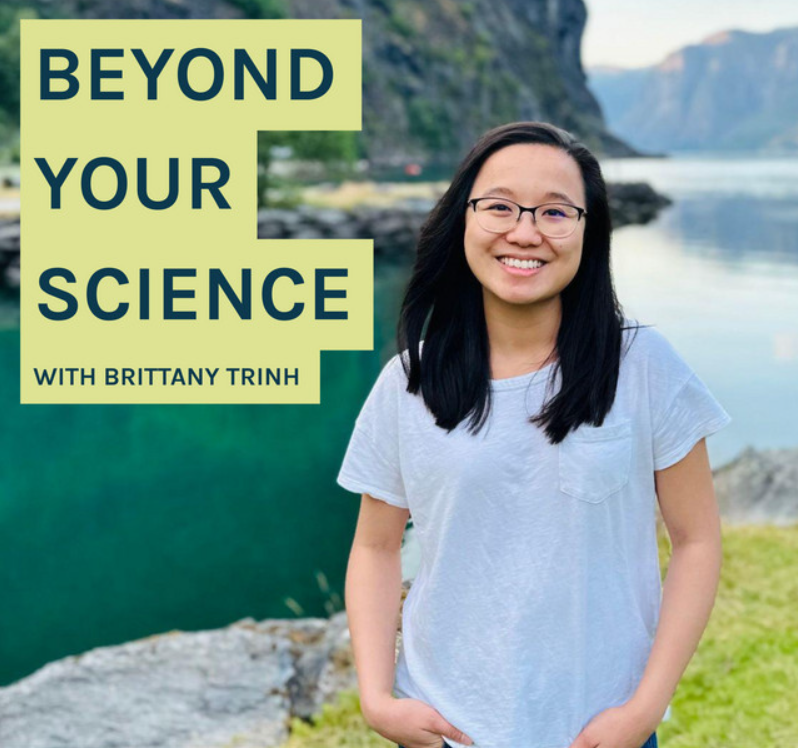
Jennifer: So who should subscribe to your podcast? What’s it called, and where can people find it?
Brittany: My podcast is called Beyond Your Science. It’s available on Apple Podcast and Spotify. It’s really for any graduate student or early career scientist who wants to explore the intersection between science, creativity, and entrepreneurship. And so those are some of the core pillars I talk about on my podcast. Grad school is just a part of it for now just because I’m in it, but that’s not giving advice on how to get into grad school or anything. One thing I really would love to focus on more in the future is kind of small businesses in STEM, just because I think that’s a really niche area that we don’t really hear a lot about when we’re in grad school. In grad school, we hear about becoming a professor or going to industry, and we also actually hear a lot about people going into startups and entrepreneurship and stuff.
But at least on the grad school level, I haven’t really heard a lot about people choosing a small business route after grad school. But because of getting to know so many academics on online over the years and seeing where they’ve gone, a lot of them have started their own businesses and things like that because of the flexibility, the freedom to do what they would like to pursue their own ideas. I think those are all things that we as graduate students, we really value. And so I kind of want to show more people that this is a possibility for you if you could consider it. Yeah.
Subscribe to The Social Academic blog.
The form above subscribes you to new posts published on The Social Academic blog.
Want emails from Jennifer about building your online presence? Subscribe to her email list.
Looking for the podcast? Subscribe on Spotify.
Prefer to watch videos? Subscribe on YouTube.
Jennifer: Oh, that’s so cool. That’s really exciting for me to hear. And that’s kind of the first time I’m hearing about this too. So I love that you shared that. Now, I’m curious, how has your thinking about websites changed since our last interview? It’s been a while. I know we’ve worked on websites together. Overall, how has maybe your thinking changed over time?
Brittany: Oh my God, that’s such a good question because let me tell you, when I first started, I had just gotten out of undergrad and I was starting my job. I was trying to convince grad students to create websites for their work. And at the time when I started four years ago before coming to grad school, I was just really baffled. I was like, why don’t you want to create websites for your work? Why aren’t you proud of your work? Because you’re doing cool stuff and you’re super qualified. But no amount of me encouraging them could really get them to change anything. So I would just be like, “Oh, well, whenever you’re ready, this information is here for you.” But now that I became a grad student, I understand why.
Jennifer: Oh, wait, wait. Tell me a couple of reasons why. Because there’s definitely grad students listening to this that are like, ‘I think that might be me.’
Brittany: Yeah. Okay. Because I have my website and my website has all my website design stuff, my podcast stuff. But for the longest time, I didn’t really want to talk about my research at all. I didn’t want to share it with people.
Jennifer: What’s your research on?
Brittany: My research is focused on polymer chemistry specifically. Right now, I’m learning or developing a method to make more make up this polymerization more environmentally friendly. Before that, I was learning about how polymers can be made stronger and tougher for high impact materials, aerospace equipment, military equipment, things like that. So I’m just really interested in polymers and how their mechanical properties are useful. But now, right now I’m mostly focusing on how to synthesize polymers in a more eco-friendly way.
Jennifer:
I love that! And I love the environment, so that’s my favorite. What about that felt like you wanted to hold it back or hold that part of yourself back from sharing on your website, and have you shared it?
Brittany: I think it was because I just didn’t really have the tangible result to show: because I didn’t have a paper. I still don’t have a paper. I’m a fourth year student PhD candidate. I have no papers. It just reminded me of that Pride and Prejudice quote, “I’m 27 years old and I have no prospects.”
Jennifer: I love it. We’re both readers. We both love classical music. Brittany and I are good friends, and there’s so many reasons why.
Brittany: But seriously, that’s the reason why I feel so, I don’t want to say ashamed, but just a little bit hesitant to be like, ‘This is my research.” I haven’t published anywhere. I maybe presented at a conference, but that work is unpublished and I don’t know if that will be published anytime soon. All those reasons combined. Plus, just the way that just by the nature of the PhD experience. I just naturally feel more inadequate than before. Imposter syndrome, right? All those reasons combined makes me not want to own up to it. I guess at least professionally, it’s easy for me to just say, “I’m a Graduate Research Assistant, because that’s what I am on paper. But to be like, “I’m a scientist.” I don’t really know about that.
Jennifer: It feels like a stretch, even though that’s not true. You’re mentoring future scientists already [laughing].
Brittany: I’m doing science, more science than a normal person does. Even if I don’t feel that that way, I am already doing it. That’s kind of what I had to tell myself. Yeah.
Jennifer: So did you put it on your website?
Brittany: I finally did put it on my website.
Jennifer: Oh my goodness.
Brittany: Yeah, because I was like, oh, my bio has nothing about chemistry. So it’s just in my bio, it’s like a little blurb. It says, Brittany is a PhD candidate in chemistry. Her research focuses on synthesizing high impact polymers in a more eco-friendly way and leveraging their tough mechanical properties into industrial applications.
It was really hard to condense what I do into a couple of words that are easy to understand. On one hand, it felt like I was oversimplifying, but on the other hand, I was like, I’m not going to go into the details. If someone was really interested, they could ask. But that was also really hard because I was like, it makes it sound like what I do sounds really, I don’t know, noble and great? But I don’t feel that way on the day to day. You know what I mean? At least I assume a lot of graduate students probably feel some type of way about their research.
Jennifer: Oh my goodness. Professors feel that kind of way about their research. Let me tell you, that feeling of being unsure about how you’re talking about your research and the things you care about most? That doesn’t go away when you become a mid-career researcher or a senior researcher, and you might even struggle to talk about it the way that you feel when you’re retired. So I think that it’s something many people struggle with it. And I love that you shared what you wrote with us because it sounded great.
Brittany: Yeah. I used your tips from a previous podcast interview, I think with Dr. Echo Rivera.
Jennifer: Ooh. For anyone who is listening, we do talk about how to write an amazing conference speaker bio. That’s great for academics writing any kind of bio. So I hope you’ll check that out.
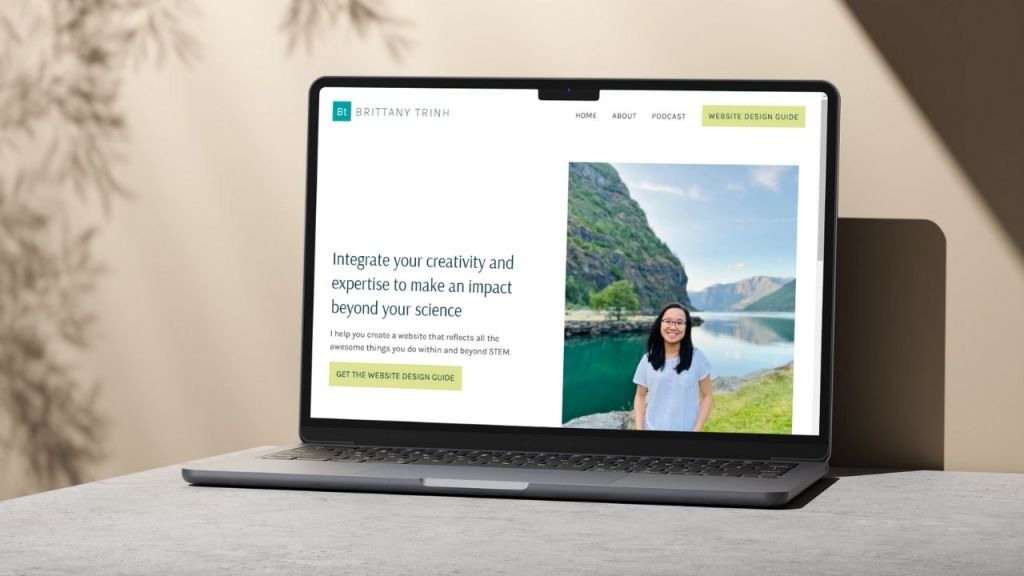
Jennifer: Now, your online presence has changed as your new life experiences and goals have popped up. One of the things that you did was redoing your website, and you just talked about adding in that bio. What prompted you to want to redo your website? I know as a website designer myself, that’s a project I’ve been putting off for so long. I need to do it. So what prompted you to do it?
Brittany: Yeah. For the longest time, I had started with all my services about website design or workshops about website design. And then as I was realizing I don’t really have the capacity to do this anymore, I started making those pages hidden. I didn’t want to highlight that anymore. And then just throughout grad school, I realized I don’t really know if I want to just leave it open for website design right now. So I kind of want to just make it very clear that I’m trying to build my personal brand instead. That my personal brand still includes website design tips, but that I’m not actively soliciting new clients.
And I think that has really helped because now on my website, it’s just me featuring my podcast, which is my main mode of sharing and building my personal brand through the podcast and also LinkedIn newsletter. Then also kind of just repackaging some of the things I already had, some of the resources I had so that it’s still useful to people, but it’s more organized. I finally did that a couple months ago. And I also did a podcast episode where I talked about the process of me deciding to do that. But again, it was also something that I had put off for the longest time too. Because school, life, all the other things that come first.
Jennifer: Exactly. Sometimes we have to prioritize all the other things, and it’s okay to put off the thing with your online presence as long as you need to. I love that Brittany made that list because what she was ready, she knew what she wanted to do.
Check out my guide to how to update your personal academic website.
Subscribe to The Social Academic blog.
The form above subscribes you to new posts published on The Social Academic blog.
Want emails from Jennifer about building your online presence? Subscribe to her email list.
Looking for the podcast? Subscribe on Spotify.
Prefer to watch videos? Subscribe on YouTube.
Jennifer: Now we have done, since we last did our interview, two annual Best Personal Academic Website Contests. It was so fun to be able to share some amazing websites from grad students, postdocs, early career researchers, people who were in research labs. Oh my goodness. There were just so many people who were curious to submit to this contest. Would you be open to doing another one with me next year? What do you think?
Brittany: Yeah, I love doing it. I love seeing how people show their research, show themselves through their websites. It’s very interesting to see how people interpret also website tips and then implement it on their website too. And I think also because we do it with Owlstown. Owlstown is [a website builder] made for academics. I think it’s really fun to see how people still are able to customize it to their own needs.
Jennifer: Brittany and I are both designers, and so we’re thinking about every little detail, but for so many people, all you need is a website. And it is totally amazing that Dr. Ian Li has created Owlstown, a free academic website builder that you can easily make your website in. What is it? Like 15 minutes? I mean, it’s really fast. We did it on that call.
Brittany: Yeah, it’s very fill in the blank type of [website design]. That’s what I told this to the grad students in my department too. I was like, if you guys need a website, just use this. It’s so fast and easy. You don’t need to think about the design.
Jennifer: Even if you do eventually want that fully designed website in the future, if you know it’s not on your list this year or next, I mean make an Owlstown website, it will create a stronger online presence for you like today.
Brittany: Yeah. And I also met Ian, around the same time I met you or reached out to him around the same time. I also had to test it out for myself before I recommended it to people. When I tested it out, it was in its early stages, and even in its early stages, I was like, wow, this is really good. And then over time, he started developing more features and things and I was like, sold. This is so good now.
Jennifer: Right? I love how responsive he is. If you have a question about it or a suggestion, some kind of feature that you want to see, if he thinks it’ll help people, he’ll try and make that feature happen. It’s so cool.
Subscribe to The Social Academic blog.
The form above subscribes you to new posts published on The Social Academic blog.
Want emails from Jennifer about building your online presence? Subscribe to her email list.
Looking for the podcast? Subscribe on Spotify.
Prefer to watch videos? Subscribe on YouTube.
Jennifer: Now, research lab and group websites, that is something we’ve been teaming up on for VIP days where professors get a done-for-you website in one day. I mean, seriously, we gather the materials in advance. We have a Planning Meeting. We talk about things like website aesthetics and colors and stuff and what you want. But then Brittany and I, and my husband, Matthew, we team up, we create the website for you in just one day. Oh my goodness. Brittany teaming up with you on this has been amazing. It’s been so transformative. I’m honestly shocked by how much we’ve been able to get done in one day.
Brittany: Yeah, me too. I think it’s really nice to work in a team like this because before I had just been working on my own. I think the workflow of gathering all the content beforehand helps so much. Because then you know what needs to go on the page, and it just makes everything go by so much faster.
Jennifer: Exactly. Now we can totally work together. If you’re looking for that bigger done-for-you research lab website [Strategic Website Design service]. Brittany, and I may still be able to help with that, but Team Website VIP days is what I recommend for most research labs, especially if this is going to be your first website. It’s not like a redesign. So we only have a couple days left in 2024, but please reach out about the new year. We would love to work with you and help your research lab or group. Brittany, what should people know about their research lab website or group website? Do they need one? Who should consider this kind of service?
Brittany: If you are a professor who’s actively recruiting students, you definitely need a website. I remember even when I was looking for groups and such, or even students now when they’re coming in and they’re looking at professors, they check the website. They go and see when was it last updated? Are students graduating? Is your group still active? Because the student is trying to prepare as much as they can to know about the professor so that when they meet the professor, they can talk about the research or ask about active projects and how they can get involved. Or, talk about what skills they bring to the table and things like that. But it’s going to be kind of hard for them to do that if there’s no website. Or, if you just have a very broad research statement on your faculty page or something.
The other thing is that students may be interested in the general area of research, but they may not know exactly what the research work entails. Maybe some people will be like, “Oh, just read the papers.” But in all honesty, a lot of students when they’re coming in, they’re very overwhelmed with enrolling in classes, teaching classes, looking for a group, acclimating to their new city. Trying to also parse out which papers are relevant to current projects at the moment is also very difficult. I really advocate for professors to have this on their website: a very clear or recently updated Projects page with publications that are most relevant or recent so that the student can easily pick out. “Okay, let me read the update on this and see where, what they’re doing right now, where could I fit in,” and things like that. So definitely professors of any age that wants to get students interested in their work. And, especially younger professors. I think now a lot of younger professors are, they’re trying to build a personal brand and everything in addition to the research.
Jennifer: This is a great use of startup funds. You can pay with your university monies. So please don’t hesitate to reach out if you are interested in having a VIP Day website for your research group or lab.
Jennifer: Brittany has been so much fun to have you back on The Social Academic podcast. Is there anything you’d like to chat about or add before we wrap up?
Brittany: No, thanks for having me. I really enjoyed working on the VIP days with you because it lets me still be a part of the helping academics with their websites, but kind of more on the back end of things. That just helps me as a graduate student right now because I’m just not able to do the front facing stuff at the moment.
Jennifer: Yeah, we’re perfect partners on this. And Dr. Makella Coudray, whose research lab website we did recently. We just had a workshop with her research group and she said that she now feels like her online presence is a 10 on a scale of 1 to 10. It’s a 10, and her website is a huge part of that. It makes her feel really good about her research and it makes her lab really excited to help share it. So I’m just so proud of the work that we’ve been able to do together so far, and excited for all the work to come.
Brittany: Yeah, me too.
Jennifer: Brittany, thank you so much for coming on today’s show.
Brittany: Thanks for having me, Jennifer.
Check out this throwback to our interview together back in 2020.
Subscribe to The Social Academic blog.
The form above subscribes you to new posts published on The Social Academic blog.
Want emails from Jennifer about building your online presence? Subscribe to her email list.
Looking for the podcast? Subscribe on Spotify.
Prefer to watch videos? Subscribe on YouTube.
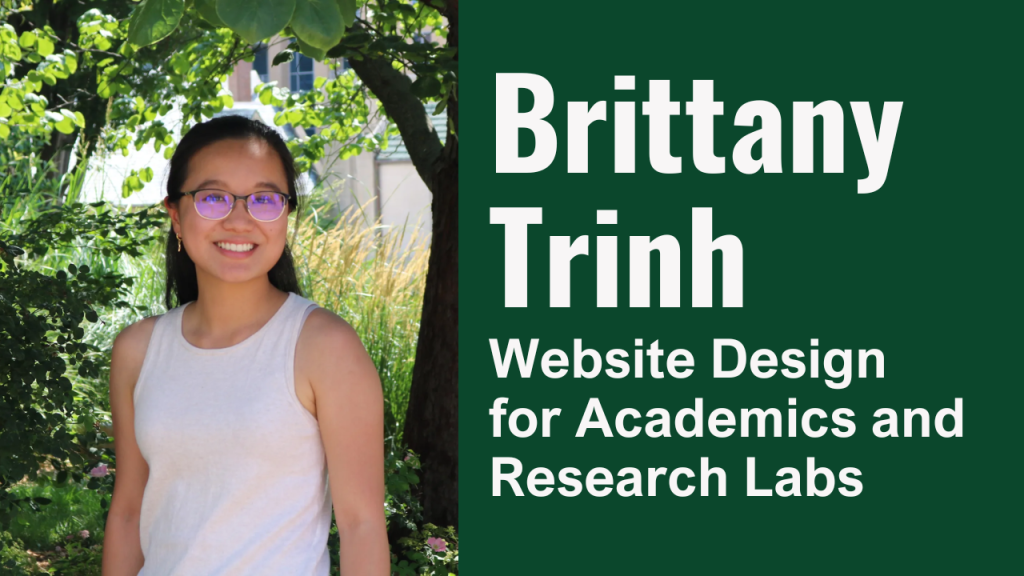
Brittany Trinh is a Vietnamese-American website designer and chemist. She helps enterprising scientists, science communicators, and academic entrepreneurs create a website that integrates your creativity and expertise. Brittany knows when your website reflects the awesome things you do within and beyond STEM, it helps you forge your own path.
She hosts the Beyond Your Science Podcast, where she talks about integrating science, entrepreneurship, and creativity within and beyond STEM, from her own experiences and interviews with other scientists and small-business owners. Listen to the Beyond Your Science Podcast.
Brittany is a PhD candidate in Chemistry at the University of Wisconsin-Madison. Her research focuses on synthesizing high-impact polymers in a more eco-friendly way and leveraging their tough mechanical properties into industrial applications. She received her BS in Chemistry with a minor in Psychology from the University of Houston. Follow her research on Google Scholar.
When she’s not in the lab, she’s probably playing piano or violin, watching slice-of-life anime, or cooking some kind of noodle.
Read testimonials about working together on your academic website project.
Graduate Students Interviews Resources for Grad Students Share Your Research The Social Academic Women in Academia
As the 2025 legislative calendar begins, FIRE is preparing for lawmakers at both the state and federal levels to introduce a deluge of bills targeting artificial intelligence.
The First Amendment applies to artificial intelligence just as it does to other expressive technologies. Like the printing press, the camera, and the internet, AI can be used as an expressive tool — a technological advance that helps us communicate with one another and generate knowledge. As FIRE Executive Vice President Nico Perrino argued in The Los Angeles Times last month: “The Constitution shouldn’t be rewritten for every new communications technology.”
We again remind legislators that existing laws — cabined by the narrow, well-defined exceptions to the First Amendment’s broad protection — already address the vast majority of harms legislatures may seek to counter in the coming year. Laws prohibiting fraud, forgery, discrimination, and defamation, for example, apply regardless of how the unlawful activity is ultimately carried out. Liability for unlawful acts properly falls on the perpetrator of those acts, not the informational or communicative tools they use.
Some legislative initiatives seeking to govern the use of AI raise familiar First Amendment problems. For example, regulatory proposals that would require “watermarks” on artwork created by AI or mandate disclaimers on content generated by AI violate the First Amendment by compelling speech. FIRE has argued against these kinds of efforts to regulate the use of AI, and we will continue to do so — just as we have fought against government attempts to compel speech in school, on campus, or online.
Rather than compelling disclaimers or imposing content-based restrictions on AI-generated expression, legislators should remember the law already protects against defamation, fraud, and other illegal conduct.
Lawmakers have also sought to regulate or even criminalize the use of AI-generated content in election-related communications. But courts have been wary of legislative attempts to control AI’s output when political speech is implicated. Following a First Amendment challenge from a satirist who uses AI to generate parodies of political figures, for example, a federal district court recently enjoined a California statute aimed at “deepfakes” that regulated “materially deceptive” election-related content.
Content-based restrictions like California’s law require strict judicial scrutiny, no matter how the expression is created. As the federal court noted, the constitutional protections “safeguarding the people’s right to criticize government and government officials apply even in the new technological age when media may be digitally altered.” So while lawmakers might harbor “a well-founded fear of a digitally manipulated media landscape,” the court explained, “this fear does not give legislators unbridled license to bulldoze over the longstanding tradition of critique, parody, and satire protected by the First Amendment.”
FIRE offers an analysis of frequently asked questions about artificial intelligence and its possible implications for free speech and the First Amendment.
Other legislative proposals threaten the First Amendment by imposing burdens directly on the developers of AI models. In the coming months, for example, Texas lawmakers will consider the Texas Responsible Artificial Intelligence Governance Act, or TRAIGA, a sweeping bill that would impose liability on developers, distributors, and deployers of AI systems that may introduce a risk of “algorithmic discrimination,” including by private actors. The bill vests broad regulatory authority in a newly created state “Artificial Intelligence Council” and imposes steep compliance costs. TRAIGA compels developers to publish regular risk reports, a requirement that will raise First Amendment concerns when applied to an AI model’s expressive output or the use of AI as a tool to facilitate protected expression. Last year, a federal court held a similar reporting requirement imposed on social media platforms was likely unconstitutional.
TRAIGA’s provisions incentivize AI developers to handicap their models to avoid any possibility of offering recommendations that some might deem discriminatory or simply offensive — even if doing so curtails the models’ usefulness or capabilities. Addressing unlawful discrimination is an important legislative aim, and lawmakers are obligated to ensure we all benefit from the equal protection of the law. At the same time, our decades of work defending student and faculty rights has left FIRE all too familiar with the chilling effect on speech that results from expansive or arbitrary interpretations of anti-discrimination law on campus. We will oppose poorly crafted legislative efforts that would functionally build the same chill into artificial intelligence systems.
The sprawling reach of legislative proposals like TRAIGA run headlong into the expressive rights of the people building and using AI models. Rather than compelling disclaimers or imposing content-based restrictions on AI-generated expression, legislators should remember the law already protects against defamation, fraud, and other illegal conduct. And rather than preemptively saddling developers with broad liability for an AI model’s possible output, lawmakers must instead examine the recourse existing laws already provide victims of discrimination against those who would use AI — or any other communicative tool — to unlawful ends.
FIRE will have more to say on the First Amendment threats presented by legislative proposals regarding AI in the weeks and months to come.

Higher education is experiencing transformative shifts as institutions respond to societal, economic, and technological changes. This year is set to bring new opportunities and challenges. We’re always keeping a pulse on the industry and where it’s headed so we can stay proactive and prepared –– ready to support our partners through whatever conditions they’re facing.
To help institutions stay ahead, we asked our team of experts to share their predictions for this year’s most impactful trends in higher education. From AI and digital transformation to new enrollment strategies, these insights highlight what’s shaping the future of higher ed— and how institutions can adapt.
The pace of mergers and consolidations among smaller colleges is expected to accelerate in 2025, according to Collegis Education CEO Kim Fahey. With financial pressures and declining enrollment, many institutions will view mergers as a strategic alternative to closure. But these transitions are anything but simple.
“Mergers involve unique technology requirements and complex data management challenges,” Fahey explains. Successfully integrating applications, systems, and hardware requires expert guidance. Higher ed leaders will look to partner with experienced organizations to help navigate these intricacies.
The information security landscape is becoming increasingly intricate. With 21 comprehensive state privacy laws, alongside European Union (EU) regulations, federal rules, and Title IV requirements, compliance challenges are mounting.
“Smaller schools often lack the experience and qualifications to manage these threats,” notes Dr. Jason Nairn, CISSP, Collegis VP of Information Technology. Cyberattacks, like phishing and social engineering, are relentless. In 2025, institutions must prioritize more robust cybersecurity measures, leveraging external partnerships and security tools to protect sensitive data.
Cloud migration will take center stage as institutions transition away from outdated, on-campus systems. While many schools still rely on highly customized platforms, which limits their ability to adopt or migrate to more modern technology, the adaptability and scalability of cloud platforms are simply too compelling to ignore.
Furthermore, technology infrastructures must be sufficiently modernized in order to capitalize on emerging tech innovations in AI and predictive analysis. This process can’t happen overnight –– it’s an evolution, according to Fahey.
“Cloud migrations take 18+ months, so schools need to act now,” she emphasizes. An institution-wide commitment to digital transformation will not only modernize operations but also position institutions to stay competitive in an increasingly tech-driven environment.
Financial constraints will push smaller schools toward shared services and consortium models to access the technology and expertise they need at a manageable scale. These models allow institutions to pool resources and reduce costs but require significant change management, according to Jeff Certain, VP of Solution Development at Collegis.
“This will require schools to standardize and make some concessions,” Certain explains. “This could pose a challenge, but they may not have an option.” Institutions must embrace these shifts to remain sustainable while navigating limited budgets.
Programs aligning with workforce needs will gain momentum in 2025. Alternative credentials like microcredentials and certificates will become more prominent, offering shorter, career-oriented pathways for learners.
“Institutions will increasingly recognize and credit learning outside the classroom, exploring more direct pathways into the workforce,” predicts Dr. Tracy Chapman, Chief Academic Officer for Collegis. This reflects growing demand for flexible, career-focused education that meets student and employer expectations.
It is not just colleges and universities facing consolidation. Ed tech companies and services providers are also reshaping the landscape with their own mergers and acquisitions. While these changes may offer schools more comprehensive solutions, they may not necessarily align with institutional objectives.
“Some recent acquisitions have led to poorer customer experiences,” Fahey observes. Institutions must carefully evaluate new partnerships to ensure they will deliver meaningful improvements.
With the “enrollment cliff” looming, institutions must double down on maintaining their existing student base as a key to sustainability. Purposeful and cost-effective retention strategies will play a pivotal role in maintaining financial health, as retaining current students is often more cost-effective than recruiting new ones.
“Retention strategies build stronger, more loyal communities,” says Patrick Green, VP of Enrollment Strategy. Forward-looking schools have perceived the importance of fostering a sense of belonging across the student lifecycle and are providing robust support networks that improve student persistence and satisfaction.
Students and families are increasingly demanding clear ROI from their education. As a result, institutions will need to demonstrate how their programs lead directly to employment and career advancement.
“Building relationships with regional industries and showcasing job placement rates will be essential,” advises Tanya Pankratz, AVP of Marketing at Collegis. Marketing efforts will need to start highlighting tangible outcomes (e.g., alumni success stories, job placement rates, and employer partnerships) to win over prospective students.
AI and other emerging technologies will revolutionize higher education operations. From enrollment management and personalized marketing to virtual campus tours using augmented reality (AR) and virtual reality (VR), technology has the means to dramatically enhance the student experience –– or wreak technical havoc if data, platforms and tools are misaligned.
“AI-driven tools make personalization more accessible, but the strategy remains critical,” notes Dan Antonson, AVP of Data and Analytics. Institutions must invest in data infrastructure to fully harness these advancements in order to build and maintain a competitive edge.
Higher ed institutions are increasingly recognizing that they don’t need to own the entire value chain. In 2025, strategic partnerships will play a more prominent role.
“Institutions will double down on their core mission of education and seek out partners to support other critical functions,” Dr. Chapman explains. These partnerships provide access to technology, expertise, and resources, allowing schools to focus on what they do best — educating students.
As evident in this compilation of higher ed trends, the landscape is set for significant change in 2025 and beyond. Institutions that proactively address these trends will be well-positioned to navigate challenges and seize opportunities. By embracing digital transformation, fostering strategic partnerships, and adopting value-driven approaches, schools can ensure long-term success in an evolving marketplace.
Excited about the opportunities that lie ahead? Collegis Education has the experience and expertise to guide you through any twists and turns you may face. We’ll help you stay on the leading edge instead of chasing trends. Connect with us and let’s start creating solutions together.
Higher ed is evolving — don’t get left behind. Explore how Collegis can help your institution thrive.
Cornell got a jump on its New Year’s resolutions this winter, unveiling an updated version of its proposed Expressive Activity Policy just before the holiday season. On Dec. 18, the Cornell Committee on Expressive Activity released a much-improved revision of the proposed policy. This comes after FIRE and nearly 500 other organizations and individuals weighed in on an earlier draft from Oct. 30. The final say belongs to university leadership, but this update marks a significant step in the right direction.
One of the most notable changes from the Oct. 30 version is that the policy no longer requires students to schedule expressive activities through the 25Live reservation system. The October draft also limited spontaneous protests to Ho Plaza — a tiny patch of campus measuring merely one acre out of the sprawling 745-acre Ithaca campus. We criticized this provision as well as the scheduling requirement, and thankfully, the new proposal contains neither.
That’s not the only laudable change. The new policy also preserves the right to put up flyers, posters, and other expressive materials without having to identify oneself on the material. That is a critical win for students who may only feel comfortable expressing their views anonymously.
Cornell deserves praise for demonstrating its willingness to engage critics, make changes, and to honor the principle of free expression as enshrined in our Constitution.
Nor is outreach to the university required to put up material in designated posting areas. While the initial March 11 interim policy stated that approval was not required to post in designated areas, it instructed community members to “[c]ontact the applicable building coordinator or campus facilities director to find out the locations of” said areas. This effectively created a prior restraint that required students, faculty, and staff to reach out to administrators before expressing themselves. In contrast, the latest proposed policy puts the onus on personnel to “communicat[e] transparently” on where they place posting areas.
The committee rejected suggestions from several commenters to require pre-approval or notification before posting, choosing instead to uphold the principle of free speech and honor the school’s own noble legacy of political activism and public debate.
Unfortunately, the new proposal is not without its flaws. It maintains a broad definition of hostile environment harassment, reflecting and even exceeding the overbroad definition set forth by the controversial Title IX regulations enacted in 2024. These federal rules require colleges to adopt a standard for harassment that includes protected speech, and as a result of deep-seated constitutional concerns, courts have blocked their implementation in 26 states. Any further federal changes to Title IX regulations would necessitate another round of changes at Cornell.
Despite this, Cornell deserves praise for demonstrating its willingness to engage critics, make changes, and to honor the principle of free expression as enshrined in our Constitution.
FIRE will continue to call for the reform of Title IX regulations and for universities to adopt a definition of hostile environment harassment that better reflects First Amendment principles. We’ve been writing to the Cornell Committee on Expressive Activity every step of the way during the revision process, and we will continue to nudge Cornell toward making further progress. But for now, good on Big Red for locking in some solid gains before the new year even started.
If you have questions about your school’s new or existing policies, reach out to FIRE’s Policy Reform team at [email protected], and we’ll make sure you get answers. And if your school adopted policies you’re concerned about, we’re here to help you push back. You can also check out our FAQ on protests and our political speech FAQ if you’re interested in activism this spring.

Education marketing is poised for a transformative shift in 2025. As technological innovations accelerate and global competition intensifies, schools, colleges, and universities must adopt strategies that meet the evolving expectations of prospective students.
If you’re new to educational marketing or administration, you may benefit from a working definition of the topic we’re exploring. What is education marketing? Education marketing promotes educational institutions, programs, and services to prospective students, their families, and other stakeholders.
It involves creating targeted campaigns that address the unique needs, aspirations, and challenges of prospective learners. At its core, education marketing is about building trust, showcasing value, and creating meaningful connections that align an institution’s offerings with the goals of its audience.
This blog, inspired by insights from the webinar Staying Ahead in 2025: Top Education Marketing Strategies for Success, explores the key trends and actionable strategies to help educational institutions thrive in this dynamic environment. Let’s explore!
Our expert digital marketing services can help you attract and enroll more students!

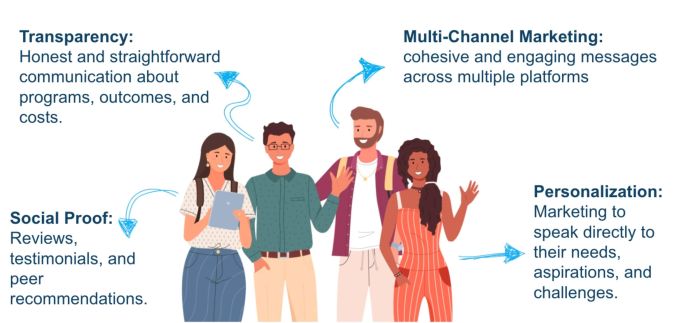
Prospective students in 2025 demand education marketing efforts that resonate with their individual aspirations, challenges, and goals. Personalization has become a non-negotiable element of successful marketing, requiring institutions to deliver tailored messages across diverse platforms. Students value authenticity and transparency, seeking honest communication about program costs, outcomes, and career prospects.
Social proof is more influential than ever. Reviews, testimonials, and user-generated content (UGC) have become vital tools in building trust and credibility. Institutions that effectively showcase authentic student experiences on platforms like TikTok, Instagram, and YouTube can connect with audiences on a deeper level, cutting through generic promotional noise.
With over 70% of initial student engagement occurring online, a robust digital presence is critical. Schools with interactive websites, active accounts, and engaging virtual events stand out in an increasingly competitive global market. The ease of accessing information about institutions worldwide has raised the stakes, emphasizing the need for innovative and standout marketing strategies.
Source: HEM
Are you seeking strategies for a future-oriented education marketing plan? Reach out to learn about our specialized digital marketing services!
Artificial intelligence (AI) is revolutionizing education marketing by enabling personalized and efficient communication. In 2025, institutions will be using AI-driven tools to deliver highly targeted content and streamline engagement processes.
AI-powered email marketing has proven to boost open rates and increase revenue per email by analyzing prospective student data. Dynamic segmentation, which groups students based on behaviours like website visits and social interactions, allows institutions to craft campaigns aligned with individual journeys.
Example: Putting prospects into groups based on their site usage as pictured below is the first step in dynamic segmentation. What comes next? Program your CRM system to update segments as prospects progress through the enrollment process, and finally, use automation tools (ideally integrated into your CRM program) to send follow-up messages after interactions like webinar attendances or program page visits. Amidst many competitors, you must stay fresh in the minds of your prospective students.
Source: HEM
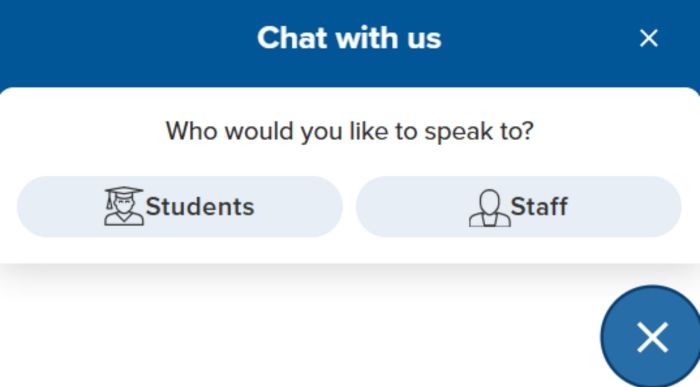
Chatbots are emerging as indispensable tools for managing routine inquiries. Capable of handling up to 80% of these interactions, chatbots provide instant, tailored responses that improve lead-to-application conversion rates. From guiding students to specific program pages to assisting with application processes, chatbots reduce administrative strain while enhancing user experience. For international students, multi-language support ensures inclusivity and accessibility.
Example: Use Chatbots intentionally like the University of Windsor did below. Site visitors are asked with whom they would like to connect and are sent to a page where they can select the right person to meet their needs. This allows for a customized, self-directed experience.
Source: University of Windsor
Predictive analytics, another AI-driven innovation, enables institutions to anticipate prospective student needs. By analyzing past behaviors, institutions can proactively craft campaigns that address concerns and guide students toward enrollment.
By analyzing historical data such as website interactions, email engagement, and application trends, predictive analytics identifies patterns that signal a prospective student’s likelihood to take specific actions, such as submitting an application or attending an open house.
This technology allows institutions to craft highly targeted campaigns that address common concerns, deliver timely follow-ups, and provide personalized recommendations. Predictive analytics can be applied across various channels, including email marketing, chatbot interactions, and digital advertising platforms, making it a versatile tool for improving enrollment outcomes and optimizing the student journey.
Digital advertising is an essential component of education marketing, and in 2025, precision and creativity will define success. Institutions are refining their pay-per-click (PPC) campaigns and leveraging video ads to capture attention and drive conversions.
Precision targeting through platforms like Google Ads and Meta Ads ensures relevance. Long-tail keywords and geo-specific targeting help align campaigns with user intent, making them more effective. For example, phrases like “best nursing programs in Toronto” resonate more with prospective students than generic terms such as ‘nursing programs’ or ‘nursing school’.
Video content continues to dominate as the preferred format for engagement. Authentic, short-form videos featuring user-generated content are especially effective. These videos highlight program features, campus life, and success stories, building trust and fostering emotional connections.
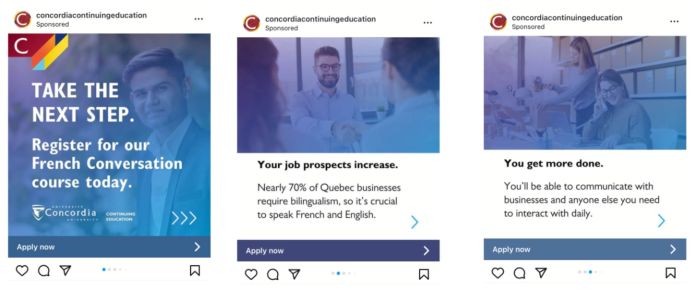
Engaging carousel ad formats are also gaining traction, offering a visually dynamic way to present multiple aspects of an institution in a single advertisement. By showcasing different programs, campus highlights, or student testimonials in a swipeable format, carousel ads keep prospective students engaged longer. These ads are particularly effective on platforms like Instagram and Facebook, where interactive content drives higher click-through rates and engagement.
Example: Static ad images are more likely to be skipped. Carousel ads are an attention-grabbing format that incites curiosity. Valuable, relevant, and short-form copy as pictured below works well as it keeps attention while imparting information your audience cares about.
Source: Concordia University
Remarketing strategies are proving invaluable for re-engaging prospective students. Dynamic ads tailored to past interactions, such as revisiting previously explored programs, help institutions stay top-of-mind and boost conversion rates. Platforms like TikTok provide creative opportunities to connect with younger audiences, further enhancing reach and engagement.
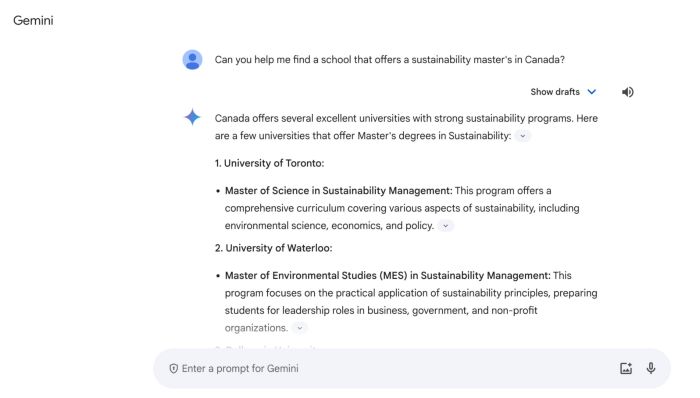
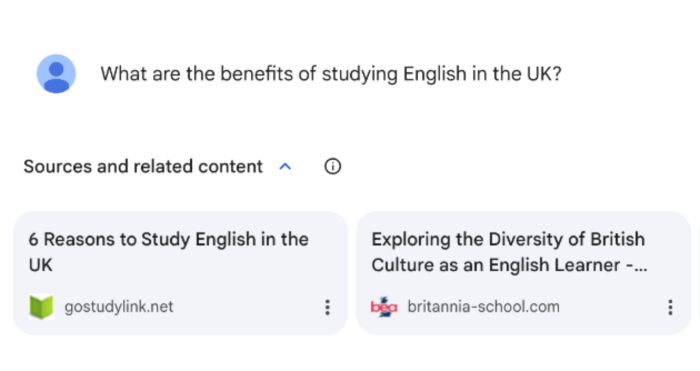
The rise of AI-powered search engines like Google Gemini and ChatGPT is reshaping how users seek information. These tools prioritize conversational content and direct answers, requiring institutions to adapt their SEO strategies to maintain visibility.
Example: Incorporating conversational, question-based phrases as pictured below helps your site show up in search results. This is particularly relevant as AI, which favors concise answers, emerges as one of the most transformative education marketing trends. Try to add relevant, on-topic questions that your prospects are likely pondering into site content seamlessly. Then add the answer to that question. This boosts your chances of being featured in “People Also Ask” and other types of rich results.
Source: Gemini
High-quality, question-based content is essential for meeting the needs of AI-driven search engines and enhancing user experience. Institutions are optimizing FAQ pages to provide comprehensive, conversational answers to prospective students’ most common questions.
For example, detailed FAQ sections that include interactive components, such as collapsible menus or embedded videos, help address a wide range of inquiries efficiently. This approach not only supports AI-driven search tools like Google Gemini (Formerly Bard) and ChatGPT but also caters to user expectations for clear, straightforward information.
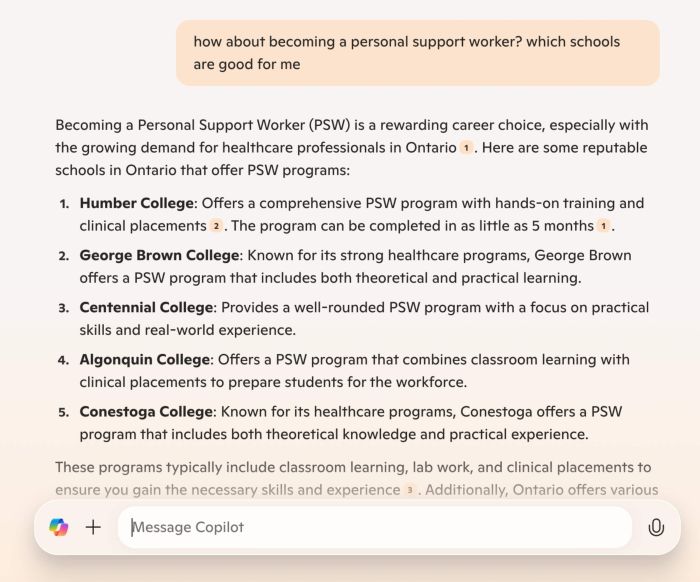
Voice search optimization further complements this strategy. With 58% of users relying on voice search daily, content must include natural, long-tail keywords that align with how people speak. For instance, crafting answers to questions like “What’s the cost of a nursing program in Toronto?” ensures visibility in voice and conversational search queries. Together, these strategies create a seamless path for students to access the information they need, whether browsing through AI-enhanced search results or engaging directly with an institution’s website.
Example: AI tools like Copilot pictured below offer user-friendly, well-structured answers to education-related questions, guiding prospective students effectively to your institution.
Source: Copilot
Local SEO remains a powerful driver of inquiries. Enhancing Google Business Profiles, incorporating location-specific keywords, and encouraging positive reviews are key strategies. Schema markup further boosts visibility by creating rich search results, such as event listings and review stars, that attract clicks and engagement.
Content remains central to education marketing success, but its format and delivery are evolving. High-quality, SEO-optimized content that directly addresses student questions is crucial. Institutions are increasingly adopting visual and interactive formats, such as infographics, videos, and quizzes, to create engaging and shareable content.
Marketing technology plays a pivotal role in streamlining operations. CRM systems and automated email tools enable institutions to automate routine communications, such as application reminders and follow-ups. This ensures timely interactions while freeing up resources for strategic initiatives.
Mautic is a cutting-edge CRM and marketing automation solution tailored specifically for the education sector. Built on the robust Mautic platform, HEM has enhanced this system to address the unique challenges and opportunities faced by educational institutions.
By enabling streamlined lead management, Mautic by HEM allows schools to segment, manage, and follow up with prospects efficiently, enhancing both cost-effectiveness and operational efficiency.
With Mautic, your school can supercharge your marketing efforts through automated email campaigns, customizable forms, and seamless workflows. The platform’s out-of-the-box custom reports provide deep insights into admissions efforts, helping schools track team productivity and the progress of leads through the enrollment funnel.
Tools for automated SMS and email follow-ups, meeting bookings, and calls empower teams to nurture leads effectively, turning prospects into enrolled students. Designed to simplify complex tasks and enhance collaboration, Mautic is the ideal solution for schools looking to elevate their student recruitment strategies.
In an era of rapid technological advancements, agility is essential. Institutions must regularly monitor campaign performance, experiment with new platforms, and stay informed about industry innovations. Being prepared to pivot strategies allows institutions to adapt to changing audience preferences and platform updates.
In summary, What will education marketing look like in 2025? In 2025, education marketing will focus on data-driven, personalized, transparent, and multi-channel strategies to engage students effectively. When you embrace AI-driven tools, optimize digital advertising, and adapt to evolving search landscapes, your school can navigate the complexities of a highly competitive market.
As the digital-first generation redefines expectations, educational institutions have a unique opportunity to deliver value and build trust at every stage of the student journey. The strategies outlined here provide a comprehensive roadmap for success, ensuring your school sees results in 2025 and beyond.
Our expert digital marketing services can help you attract and enroll more students!
Question: What is education marketing?
Answer: Education marketing promotes educational institutions, programs, and services to prospective students, their families, and other stakeholders.
Question: What will education marketing look like in 2025?
Answer: In 2025, education marketing will focus on data-driven, personalized, transparent, and multi-channel strategies to engage students effectively.

by Julie Burrell | January 8, 2025
In a year marked by rapid technological advancement and evolving demands on higher ed, CUPA-HR members prioritized the human in HR. Our most-read articles of 2024 reflect this, with a focus on employee retention, the responsible use of artificial intelligence, and data-informed approaches to fostering an equitable and effective talent pipeline.
Here we’ve listed the CUPA-HR articles, resources and research that resonated most with our readers in 2024.
Last year, the use of AI became widespread on college and university campuses, transforming how HR performs many of its core functions. Higher Ed HR in the Age of Artificial Intelligence: A Human-Centered Approach introduces best practices, suggests common-sense guardrails for security, and shares advice from HR pros on how to use AI to maximize efficiency while prioritizing the human element.
For practical advice on using AI to create training scripts, learn how Colorado Community College System’s Jennifer Parker used ChatGPT to create a civility training program.
From Zero to Dashboard – Getting Your Metrics Game Up to Speed shows the continued importance of metrics in creating effective partnerships with campus constituents. In this article, the HR team at the University of Tennessee, Knoxville details their process of creating a data dashboard — without spending tens of thousands of dollars on a consultant. They’re now able to quickly and easily share insights on turnover, retirement eligibility, employee demographics, and more with campus partners, who use the information to inform strategic decisions.
Readers also expressed an interest in data about specific segments of the higher ed workforce. The Higher Education Financial Aid Workforce report — one of the most-read CUPA-HR research reports of 2024 — finds that more than half of financial aid employees are at least somewhat likely to look for other employment soon and offers recommendations for retaining these key employees. Also popular was The Higher Ed Professional Workforce report, which tracks broad trends from 2016-2024. While women and people of color have made strides during that time, most women are still paid less than White men, which can be improved by devoting resources to pay equity and succession planning.
Interested in learning more about how to make the most of data? CUPA-HR’s Data and HR webinar series offers insights designed to help you find and convey data to inform your institution’s workforce and policy planning.
The CUPA-HR 2023 Higher Education Employee Retention Survey remains a critical resource for understanding why employees stay and why they leave. Even as turnover started to trend downward last year, higher ed still faces the challenge of filling positions and maintaining morale, while employees seek jobs where their satisfaction and well-being are prioritized.
This spring, we will launch the 2025 Employee Retention Survey to help institutions understand retention trends. Learn how to participate.
Investing in People: How to Create a Coaching Culture on Your Campus builds on the insights of the Employee Retention Survey, which shows that 44% of higher ed employees are not satisfied with opportunities for advancement at their institutions and 34% are not satisfied with support for career development. This article explores how three institutions — the University of Tennessee, Knoxville; Vanderbilt University; and the University of California, Berkeley — created opportunities for coaching and career development, which is associated with increased employee engagement, job satisfaction, retention, and overall organizational performance.
Another reader favorite from last year struck a similar theme. In Employee Engagement: Six Strategies to Help You Keep Your Talent, HR leaders at Worcester Polytechnic Institute share their six-point employee engagement strategy, which includes an honest focus on inclusion and a commitment to employee well-being.
The article What Does a Leader Look Like? Debunking Myths About Women in Leadership Roles highlights a concerning trend in the higher ed workplace: women are not being promoted at the same rate as men. For example, data show that fewer than half (46%) of senior administrative officers are women, and only one-third (33%) of presidents are women. At the root of this disparity are long-standing myths about the promotion process, as well as biases about what a leader looks or acts like. Jackie Bichsel, CUPA-HR’s associate vice president of research, dispels these myths and offers suggestions for how to combat them. Check out our summary on LinkedIn, too.
For more data on pay equity and composition of the workforce, see CUPA-HR data on administrators, faculty, professionals and staff.

There are a lot of things to be furious about these days but let me tell you, one of the things to be upset about is the CBC taking crapulous pot-shots at the college sector for no reason whatsoever. I refer to the story posted between Christmas and New Year’s entitled India’s trafficking claims against Canadian colleges reveal ‘exploited’ immigration, experts say, which was a continuation of an earlier story entitled India alleges Canadian colleges linked to trafficking foreign students over the Canada-U.S. border.
In a word: no, India’s claims do nothing of the sort. And the stories that CBC has been running on the issue border on journalistic malpractice.
All of this coverage is an outgrowth of the so-called “Dingucha” case in which a family of four from the village of Dingucha in Gujarat died while trying to cross the Canada-US Border illegally near Emerson Manitoba in 2022. One member of the family was in Canda on a student visa and was able to bring his spouse (and thus his children) on open work permits.
The hook for the stories that ran over Christmas was a spate of pieces that ran in the Indian press about the case, like this one from NDTV and this one from The Indian Express. They all say basically the same thing, and CBC parroted them word-for-word (there does not appear to have been any attempt by the CBC to report the story from India). Here’s the heart of what CBC said:
India’s Enforcement Directorate said in a news release on Tuesday it had uncovered evidence of human trafficking involving two “entities” in Mumbai after probing the Indian connection to the Patel family, who froze to death in January 2022 while trying to cross the border from Manitoba into Minnesota during frigid weather conditions.
The Enforcement Directorate said its investigation found that about 25,000 students were referred by one entity, with over 10,000 students referred by another entity to various colleges outside India every year.
Arrangements would be made for the Indian nationals to be admitted to Canadian colleges and universities and apply for student visas, according to the Enforcement Directorate.
But once the Indian nationals reached Canada, instead of joining the college, they illegally crossed the border from Canada into the U.S. and the fee received by the Canadian schools was remitted back to the individuals’ account, the Enforcement Directorate said.
Based on this, CBC got a bunch of “experts” to say a variety of things which put colleges and student visas generally in a bad light. I’ll get to those in a moment, but before we do that, let’s just point out a few things wrong with the story’s framing here.
First, and most importantly, this is all reporting on a press release from the Indian Enforcement Directorate (ED). The ED is not the police; it’s part of the Revenue Ministry. To quote its website, “it is a multi-disciplinary organization mandated with investigation of offence of money laundering and violations of foreign exchange laws.” It is unclear what its connection to a murder investigation might be, and curiously, this is a question CBC never appears to have asked.
(In this same vein, while the ED is in theory non-partisan, it has been accused in India of being used as a tool of the ruling BJP. Could the CBC not think of any reason why a Modi-aligned agency might have a reason to make false and defamatory claims about Canada? Really?)
Second, this press release provides no actual evidence provided here about, well, anything. There are “entities” that refer people abroad for study? No shit, Sherlock. They are called agents. They do it all the time. And while there is no question that the Patels (and presumably others who have crossed the border in the past) got to Canada on a student visa, no evidence has been provided showing that any of these agents are in league with human smugglers based in North America. (Note: the press release is very badly drafted, but I think a fair read of it is that it implies that Canadian institutions were aware of the scheme and were implicitly part of it. Needless to say, there is less than zero evidence of this).
Basically: We’ve known for a couple of years now Indian citizens come to Canada on a student visa and then broke the law by trying to enter the US illegally. Exactly no new evidence was provided by the ED in its press release. It is not impossible that such evidence exists, of course, but for the moment no such evidence has been produced.
So why did the CBC react as if it did?
This was the question I asked them when a CBC producer tried to get me to comment on the story on December 27th. Why would you do a story on so little evidence? I said I didn’t think the evidence merited a story but agreed to speak to them if they wanted someone to explain exactly why the evidence was so thin. You will no doubt be shocked to learn that CBC then declined to interview me.
Upon reading the story, it’s not hard to understand why. With zero evidence, they got a bunch of experts to repeat talking points about the awfulness of student visas that they’ve been repeating for months now.
(The “if” in that sentence is doing a hell of a lot of work – AU)
Ok, so, these comments about fraud and oversight are worth examining. I’m trying to imagine how either the government of Canada or an educational institution could legitimately “prevent fraud” or “exercise oversight” in a case like this one. Are colleges and universities supposed to be like the pre-cogs in the movie Minority Report,able to spot criminals before they commit a crime? I mean, there is a case to be made that in the past Canada made such cross-border runs more tempting by allowing students’ entire families to join them in Canada while studying (as was the case in the Dingucha affair), but that loophole was largely closed ten months ago when the feds basically stopped giving open work permits to partners of students unless they were enrolled in a graduate degree.
Anyways, this is where we are now: our national broadcaster sees no problem running evidence-free stories simply as a platform to beat up on public colleges because that’s a great way to get clicks. Crappy journalism? Sure. But it’s also evidence of the disdain with which Canadian PSE institutions are now viewed by the broader public: CBC wouldn’t run such a thin story unless it thought the target was “soft.” And there’s no solution to our funding woes until this gets sorted out.
