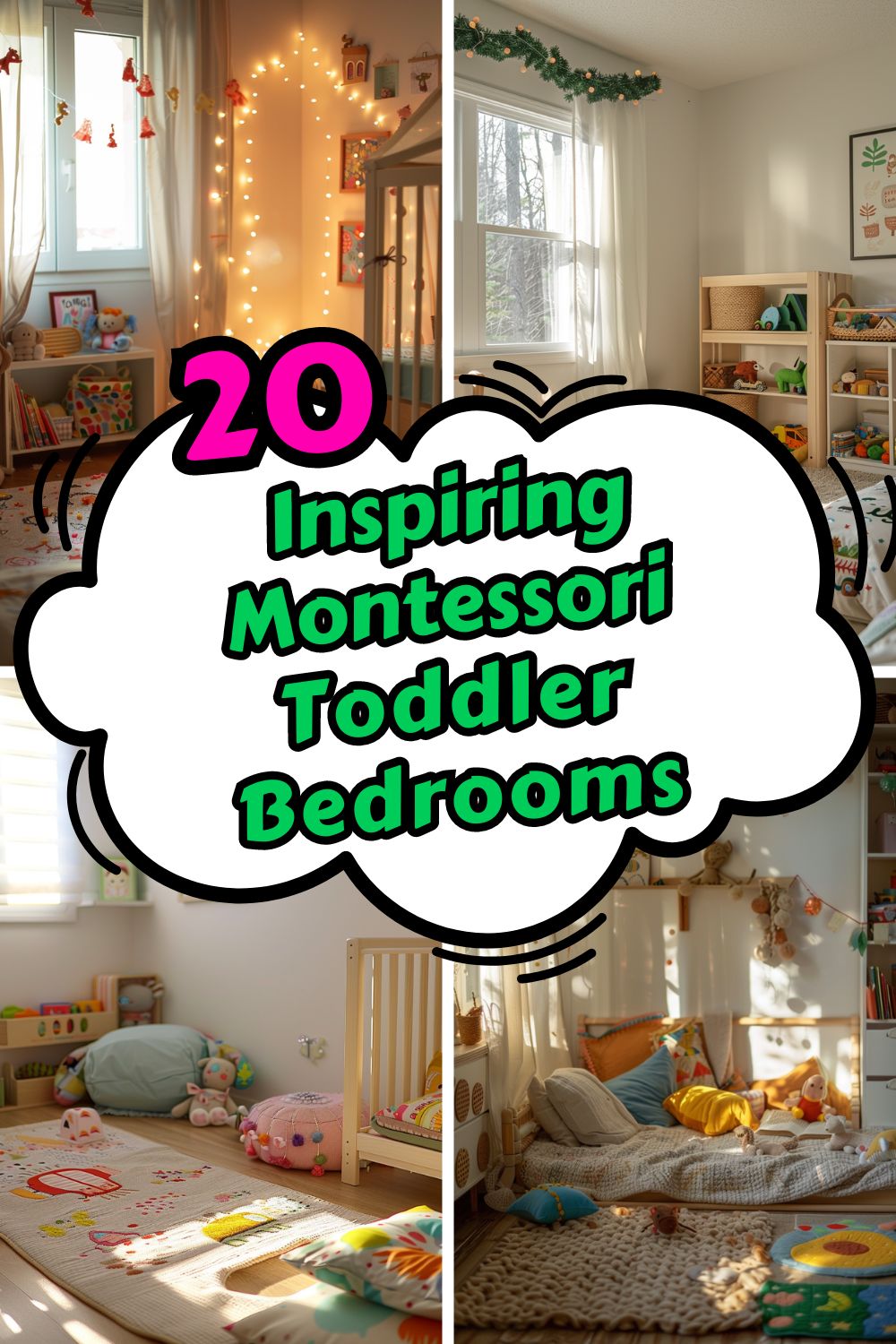
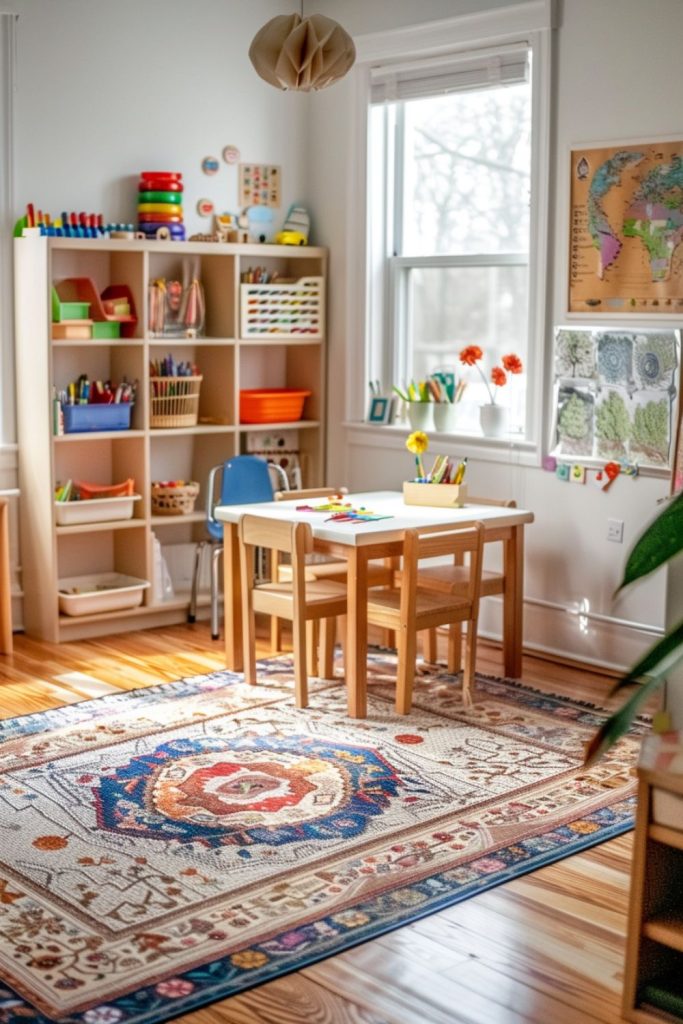
Montessori spaces are designed for independent, hands-on learning in a child-friendly environment. They encourage exploration and development across multiple areas of learning. Common features you might find in a Montessori learning environment include:
Child-sized furniture: Easy for kids to use.
Open shelves: Accessible learning materials on display.
Montessori Fact: Montessori spaces are designed to foster independence and self-directed learning.
#2.
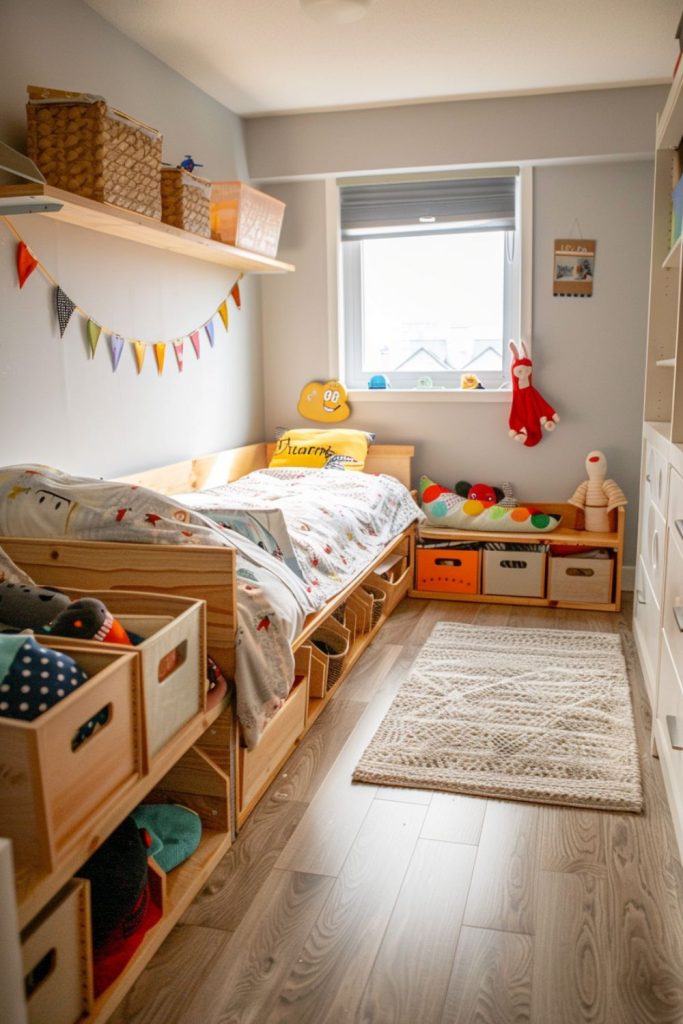
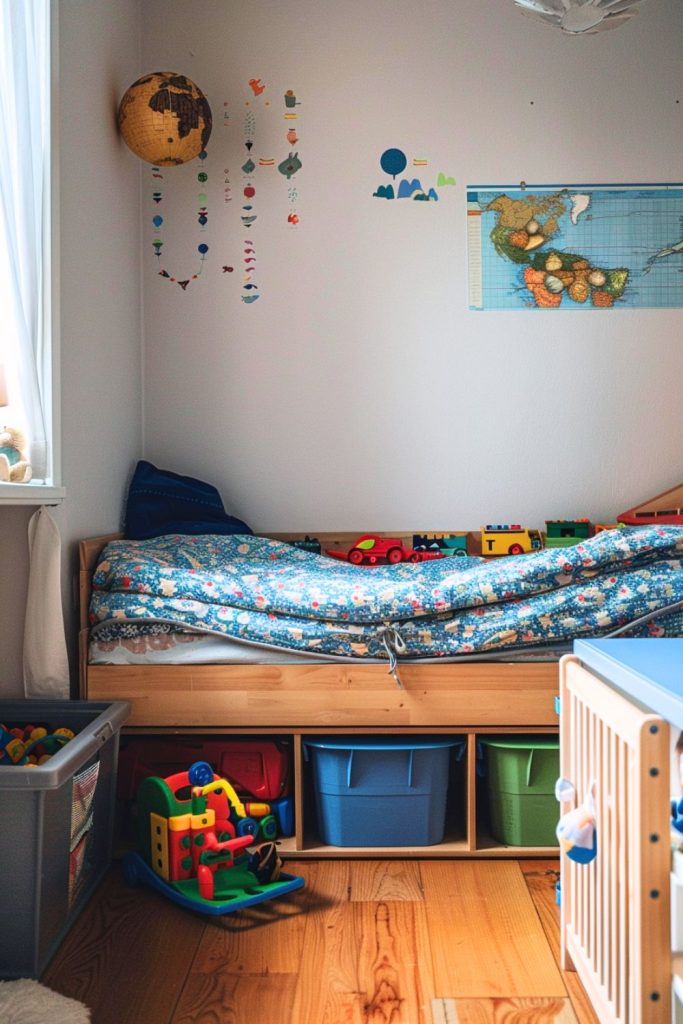
Montessori Fact: Montessori bedrooms are designed to be aesthetically pleasing, natural, and educational.
#3
Montessori Fact: Montessori spaces use hands-on learning materials to teach concepts.
#4
Montessori Fact: The environment in a Montessori bedroom is carefully prepared to be orderly and inviting.
#5
Montessori Fact: The Montessori philosophy emphasizes practical life skills alongside academic learning.
#6
Montessori Fact: Montessori-inspired parents act as guides to support curiosity and holistic development.
#7
Montessori Fact: Montessori spaces allow children to choose their activities from a range of options.
#8
Montessori Fact: Montessori materials are designed to be self-correcting to encourage independent problem-solving.
#9
Montessori Fact: Montessori spaces in your home can include areas for reading, math, science, and art.
#10
Montessori Fact: The Montessori philosophy aims to develop a child’s natural curiosity and love of learning.
#11
Montessori Fact: Montessori spaces encourage collaborative learning between siblings and friends, and with parents.
#12
Montessori Fact: Maria Montessori suggests we should give children uninterrupted blocks of play time.
#13
Montessori Fact: The Montessori philosophy places a strong emphasis on respect for others and the environment.
#14
Montessori Fact: The Montessori philosophy often includes ample outdoor learning.
#15
Montessori Fact: The Montessori philosophy is based on the ideas of Italian doctor and educator Dr. Maria Montessori.
#16
Montessori Fact: The Montessori philosophy uses real-life activities to teach practical skills.
#17
Montessori Fact: The Montessori method promotes the development of fine motor skills through activities like pouring and threading.
#18
Montessori Fact: Montessori spaces are designed to be aesthetically pleasing and comfortable.
#19
Montessori Fact: Montessori education focuses on developing the whole child, including emotional and social development.
#20
Montessori Fact: Montessori spaces use low shelves and child-sized furniture to make materials accessible to children.
Dr. Chris Drew is the founder of the Helpful Professor. He holds a PhD in education and has published over 20 articles in scholarly journals. He is the former editor of the Journal of Learning Development in Higher Education. [Image Descriptor: Photo of Chris]
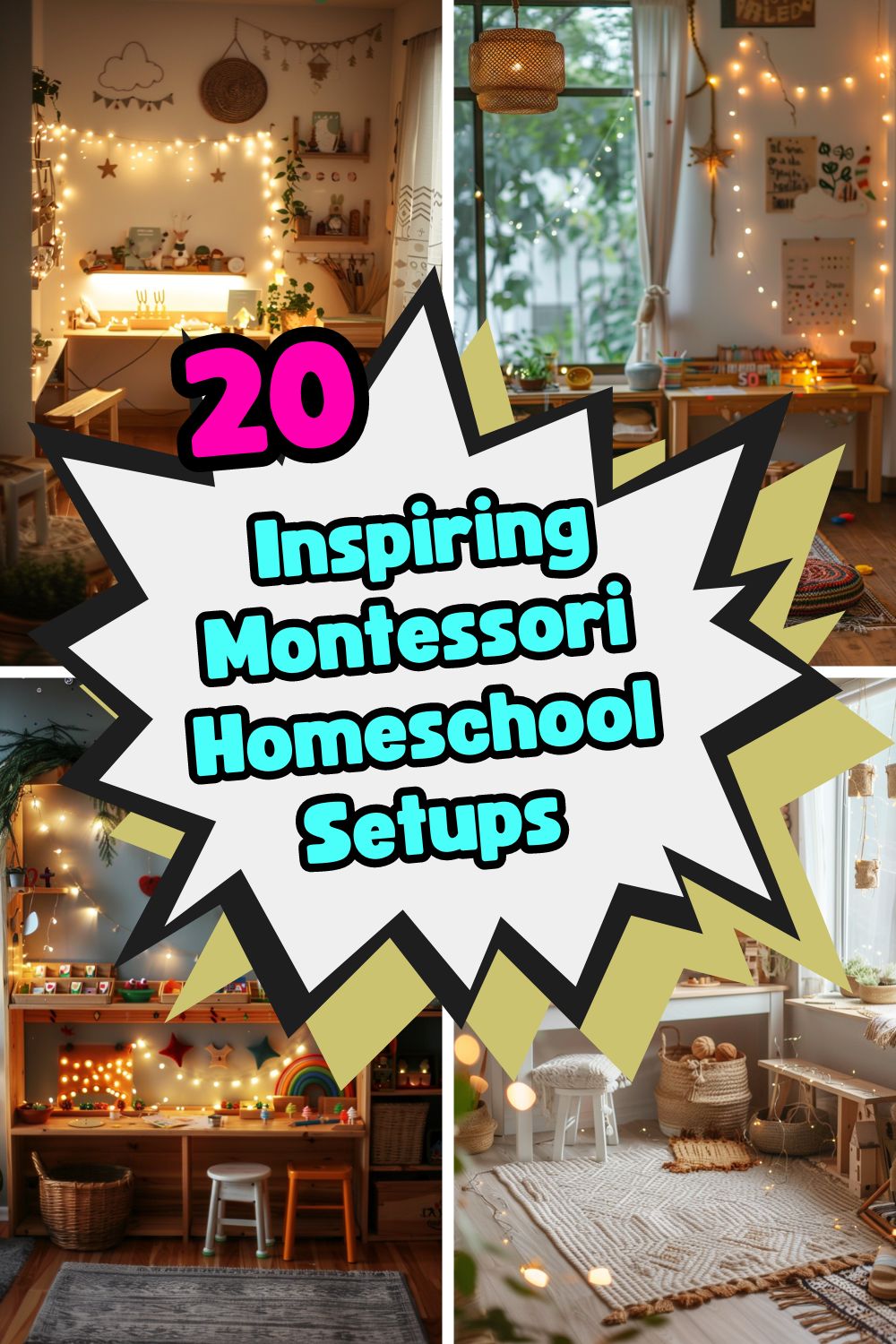
Montessori spaces are designed for independent, hands-on learning in a child-friendly environment. They encourage exploration and development across multiple areas of learning. Common features you might find in a Montessori learning environment include:
Child-sized furniture: Easy for kids to use.
Open shelves: Accessible learning materials on display.
Montessori Fact: Teachers in Montessori classrooms act as guides rather than traditional instructors.
#7
Montessori Fact: Montessori classrooms allow children to choose their activities from a range of options.
#8
Montessori Fact: Montessori materials are designed to be self-correcting to encourage independent problem-solving.
#9
Montessori Fact: Montessori classrooms often include areas for reading, math, science, and art.
#10
Montessori Fact: Montessori education aims to develop a child’s natural curiosity and love of learning.
#11
Montessori Fact: Montessori classrooms encourage collaborative learning and peer teaching.
#12
Montessori Fact: Students in Montessori classrooms are given uninterrupted blocks of work time.
#13
Montessori Fact: Montessori education places a strong emphasis on respect for others and the environment.
#14
Montessori Fact: Montessori classrooms often include outdoor learning environments.
Cozy Montessori Spaces
#15
Montessori Fact: Montessori education is based on the philosophy of Dr. Maria Montessori.
#16
Montessori Fact: Montessori classrooms use real-life activities to teach practical skills.
#17
Montessori Fact: The Montessori method promotes the development of fine motor skills through activities like pouring and threading.
#18
Montessori Fact: Montessori classrooms are designed to be aesthetically pleasing and comfortable.
#19
Montessori Fact: Montessori education focuses on developing the whole child, including emotional and social development.
#20
Montessori Fact: Montessori classrooms use low shelves and child-sized furniture to make materials accessible to children.
Dr. Chris Drew is the founder of the Helpful Professor. He holds a PhD in education and has published over 20 articles in scholarly journals. He is the former editor of the Journal of Learning Development in Higher Education. [Image Descriptor: Photo of Chris]
Graduation rates are always a hot topic in higher education, but often for the wrong reason. To demonstrate, I offer my parents. Here is a portrait of Agnes and Mark, married May 4, 1946.
One night while I was talking to my brother, he asked, “Do you think mom was the way she was because dad was the way he was, or do you think dad was the way he was because mom was the way she was?” To which I replied, “yes.” My point, of course, is that in complex relationships, it’s always difficult–impossible, actually–to detangle cause and effect.
And, despite the Student Affairs perspective that graduation rates are a treatment effect, I maintain that they are actually a selection effect. As I’ve written about before, it’s pretty easy to predict a college’s six-year graduation rate if you know one data point: The mean SAT score of the incoming class. That’s because the SAT rolls a lot of predictive factors into one index number. These include academic preparation, parental attainment, ethnicity, and wealth, on the student side, and selectivity, on the college side.
When a college doesn’t have to–or chooses not to–take many risks in the admissions process, they tend to select those students who are more likely to graduate. That skews the incoming class wealthier (Asian and Caucasian populations have the highest income levels in America), higher ability (the SAT is a good proxy for some measure of academic achievement, and often measures academic opportunity), and second generation. And when you combine all those things–or you select so few poor students you can afford to fund them fully–guess what? Graduation rates go up.
If this doesn’t make any sense, read the Blueberry Speech. Or ask yourself this question: If 100 MIT students enrolled at your local community college, what percentage would graduate?
But graduation rates are still interesting to look at, once you have that context. The visualization below contains three views, using the tabs across the top. You’ll have to make a few clicks to get the information you need.
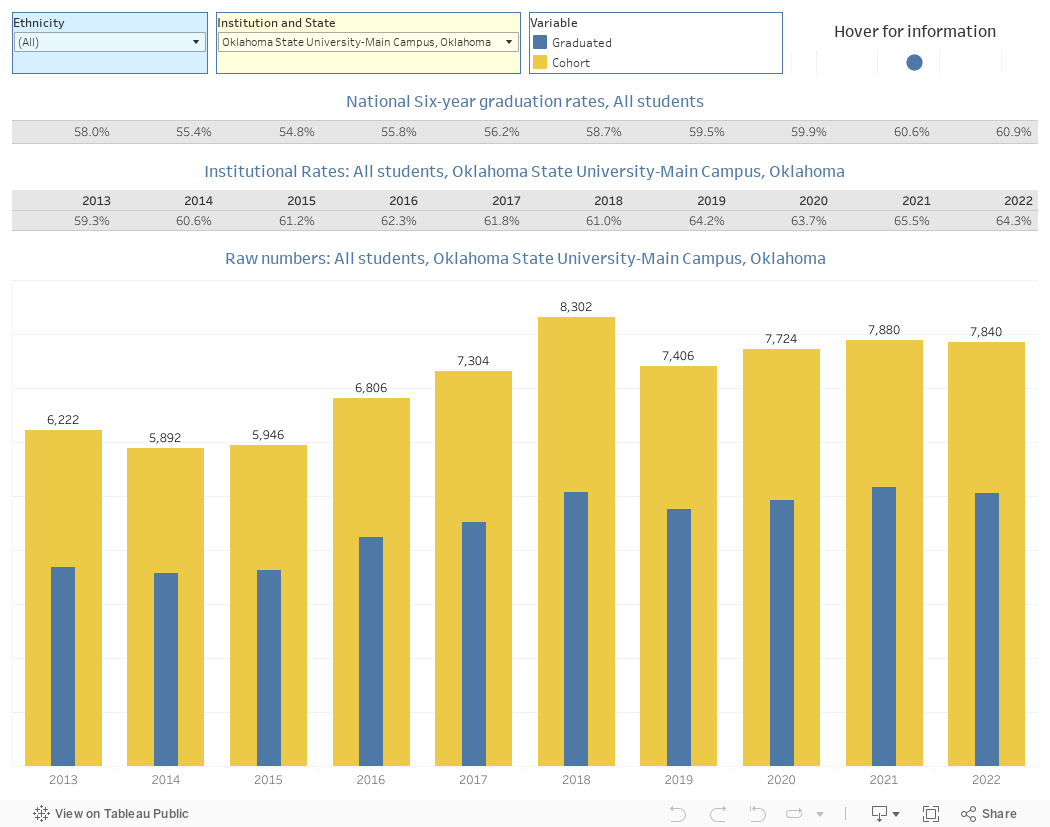
The first view (Single Group) starts with a randomly selected institution, Oklahoma State. Choose your institution of choice by clicking on the box and typing any part of the name, and selecting the institution.
On the yellow bars, you see the entering cohorts in yellow, and the number of graduating students on the blue bars. Note: The blue bars show graduates in the year shown (so, 4,755, which you can see by hovering over the bar) while the yellow bar shows the entering class from six years prior (7,406 in 2019, who entered in 2013).
The top row shows graduation rates at all institutions nationally, and the second row shows percentages for the selected institution. You can choose any single ethnicity at the top left, using the filter.
The second view (Single Institution) shows all ethnicities at a single institution. The randomly selected demonstration institution is Gustavus Adolphus College in Minnesota, but of course you can choose any institution in the data set. Highlight a single ethnic group using the highlight function (I know some people are frightened of interacting with these visualizations….you can’t break anything).
Note: I start with a minimum of 10 students in each year’s cohorts for the sake of clarity. Small schools in the Northeast, for instance, might enroll one Asian/Pacific Islander in their incoming class, each year, so the graduation rate could swing wildly from 0% to 100%. You can change this if you want to live dangerously, by pulling the slider downward.
The final view (Sectors) shows aggregates of institutional types. It starts with graduation rates for Hispanic/Latino students, but you can change it to any group you want.
Have fun learning about graduation rates. Just don’t assume they are mostly driven by what happens at the institution once the admissions office has its say.
Editor’s Note: This is the second of two posts that explore the loneliness epidemic and practical ways HR can help combat it in the workplace.
Social bonds are as necessary to our well-being as a healthy diet, exercise and sleep, according to the Surgeon General’s 2023 report on the loneliness epidemic. The report recommends that workplaces make decreasing loneliness a strategic priority at all levels. Here is how higher ed HR can help prioritize social connection as a vital tool in supporting employee happiness and well-being.
Increase Inclusion to Fight Loneliness
Groups most at-risk for social isolation include “people with poor physical or mental health, disabilities, financial insecurity, those who live alone, single parents, as well as younger and older populations,” according to the report. Additionally, marginalized groups like the LGBTQ+ community may feel increased isolation.
Your inclusion and belonging initiatives might be the natural place to begin strengthening social connection on campus. Foreground accessibility in these initiatives by asking:
Is social programming accessible for people with disabilities and people with mental health challenges?
Is your programming inclusive of people who are neurodivergent?
Are working parents, caregivers and remote employees unable to participate in on-site or off-hours socialization?
Is cost a prohibitive factor for socializing?
Are Employee Resource Groups or affinity groups supported in terms of budget and time within the workday?
Making Connections
Intergenerational Connections. Research suggests that making connections outside of our own age or social group may reduce the risks associated with loneliness. One inclusion strategy is to help bridge generational gaps by bringing younger and older people together, which also targets two of the most at-risk populations.
Volunteering with community groups that serve young and older people can also be effective in helping employees forge intergenerational connections (bonus: volunteering enhances employee satisfaction and engagement).
Campus and Community. Connecting with people of different social statuses has also been shown to improve well-being. How are leaders connecting with employees across campus in low-stakes ways?
Also consider how partnerships with your leadership, health centers, research faculty and student groups can make the dangers of loneliness a campus-wide concern.
How is your campus connecting with and enriching the larger community? According to the Surgeon General’s report, upward mobility is improved through relationship-building among people of differing socioeconomic status. (Register for our upcoming webinar to learn more about Duquesne University’s Minority Professional Development Internship Program, which was awarded CUPA-HR’s 2024 Inclusion Cultivates Excellence Award.)
Hybrid and Remote Employees
According to Gallup, fully remote employees report a higher level of loneliness (25%) than fully on-site employees (16%). At the same time, hybrid, remote and flexible work is an important strategy to retain top talent. And flexible work can be a boon to people with disabilities and neurodivergent employees.
This means that special considerations should be made for those workers who may not be on site every day.
Encourage online connections. Water cooler conversations are more difficult virtually. Consider establishing a rotating committee who can schedule casual chats online. Your internal communication tools, such as Teams and Slack, should have social spaces as well.
Model setting boundaries between work and home. Hybrid and remote opportunities are important in maintaining work-life balance, but remote employees may feel like they’re always “on.” The Surgeon General’s report recommends that workplaces “put in place policies that protect workers’ ability to nurture their relationships outside work.”
Let’s face it: HR can sometimes feel like a lonely place. Whether you’re a CHRO, a department of one, or a member of a team navigating the increased scrutiny of a role in HR, you might feel like few people understand your own daily challenges beyond the CUPA-HR community. HR is so often tasked with helping others, but HR pros need support too.
Raising awareness about the basic need for social connection might help you and your team reframe social connections at work from a luxury to a basic tool for retention and employee happiness. Socializing replenishes our emotional stores and our physical resilience. Leaders can model setting healthy boundaries at work and convey that self-care is not selfish, but rather a critical tool in the HR toolbelt. (Learn how to use “no” as a complete sentence in this on-demand webinar.)
We will do the entire online survey, data analysis and interpretation using excel, spss tools. We will also help you with drafting mba or bba project report from literature review, finding latest research papers for referencing purpose that saves your research time and effort. Providing timely, high-quality support is our top priority for plagiarism free, original work, grammatical error free and non AI dissertation report.
Good news: We have new IPEDS data on average net cost. Bad news: Because IPEDS is IPEDS, it’s data from the 2021-22 Academic Year.
This is pretty straightforward: Each dot represents a public institution, colored by region, showing the average net price for first-year students entering in that year. IPEDS breaks out average net price by income bands, so you can see what a family with income of $30,000 to $48,000 pays, for instance, by using the filters at right.
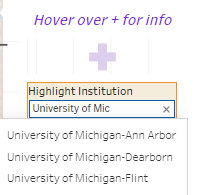
You can also limit the institutions displayed by using the top three filters: Doctoral institutions in the Far West, or in Illinois, for instance. If you want to see a specific institution highlighted, use that control. Just type part of the name of the institution, like this example, and make your selection:
Average net price shows The Total Cost of Attendance (COA), which includes tuition, room, board, books, transportation, and personal expenses, minus all grant aid. It does not include loans, but of course, loans can be used to cover part of the net price, along with other family resources.
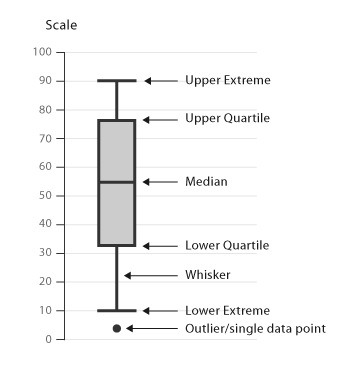
This display is a box and whisker chart, and if you’re not familiar with the format, here is a quick primer:
For the sticklers, the median shown is unweighted.
As always, let me know what you see here that you find interesting or surprising.
I reached out to Daniel Spreadbury, the Product Marketing Manager for Dorico, and asked about the process of moving from Finale to MusicXML. Daniel had some advice, which is listed below (and had already been shared on a Finale user’s group).
I also noticed that Dorico has already placed some Finale to Dorico videos on their YouTube Channel. Logically, they knew this was happening as MakeMusic Cloud suggested that Finale users migrate to Dorico.
I may be oversimplifying Daniel’s response, but Dorico cannot read Finale MUS or MUSX files because those files simply contain the information they need to make a score work in Finale, not all the aspects that would be needed for another program to decode them.
However, Dorico can read MusicXML files relatively well, though there may be some editing required (see the linked video below).
Daniel did suggest one method of bulk conversion—which Finale users with a large library of MUS or MUSX files will need to do before their current version of Finale stops working—straight from Finale.
You go to File > Export > Translate Folder to MusicXML. The batch process embedded in Finale can handle subfolders, so you set it to a master folder, and let it work its way through.
Nonetheless, as you are likely making a move and never opening a Finale file again, I would suggest moving all your MUS and MUSX files to one folder before starting the process, letting your computer do the work, and then back up your new MusicXML files somewhere.
It is nice that this is an option, and wonderful that Dorico is being incredibly supportive of new users to their application.
I will enter three short additions to this post.
First, I have found out that the method above does not work for sub folders, and that’s okay. I just converted more than 1800 of my Finale Files (ones that I created) to MusicXML files.
Second, I found my oldest living score, which is a partial draft of the “Yo Yo March,” which I would have been working on for my junior year in college in 1994. It isn’t very good, and it isn’t complete, and it is one of the few works that I saved from that time. But that’s 30 years ago (yikes). So, Finale has been in my life, albeit distantly, for the past 30 plus years…more than 1/2 my life. So the discontinuance of Finale is a bit like losing an old friend.
Third, I did decide to buy Dorico at the cross grade price. It is odd that you pay MakeMusic (about $158 with taxes) to get Dorico, instead of paying Dorico directly, but considering that you cannot purchase Dorico that inexpensively even as an educator—its one of those things that you just go and do. As the future continues, I’ll definitely continue to use Notion and keep dabbling with MuseScore (it does colored notes, like Boomwhackers, which is important for my current position)…but I’m also going to move ahead with Dorico, which I have loosely played with—but now this is proof that it’s time to really get going with it.
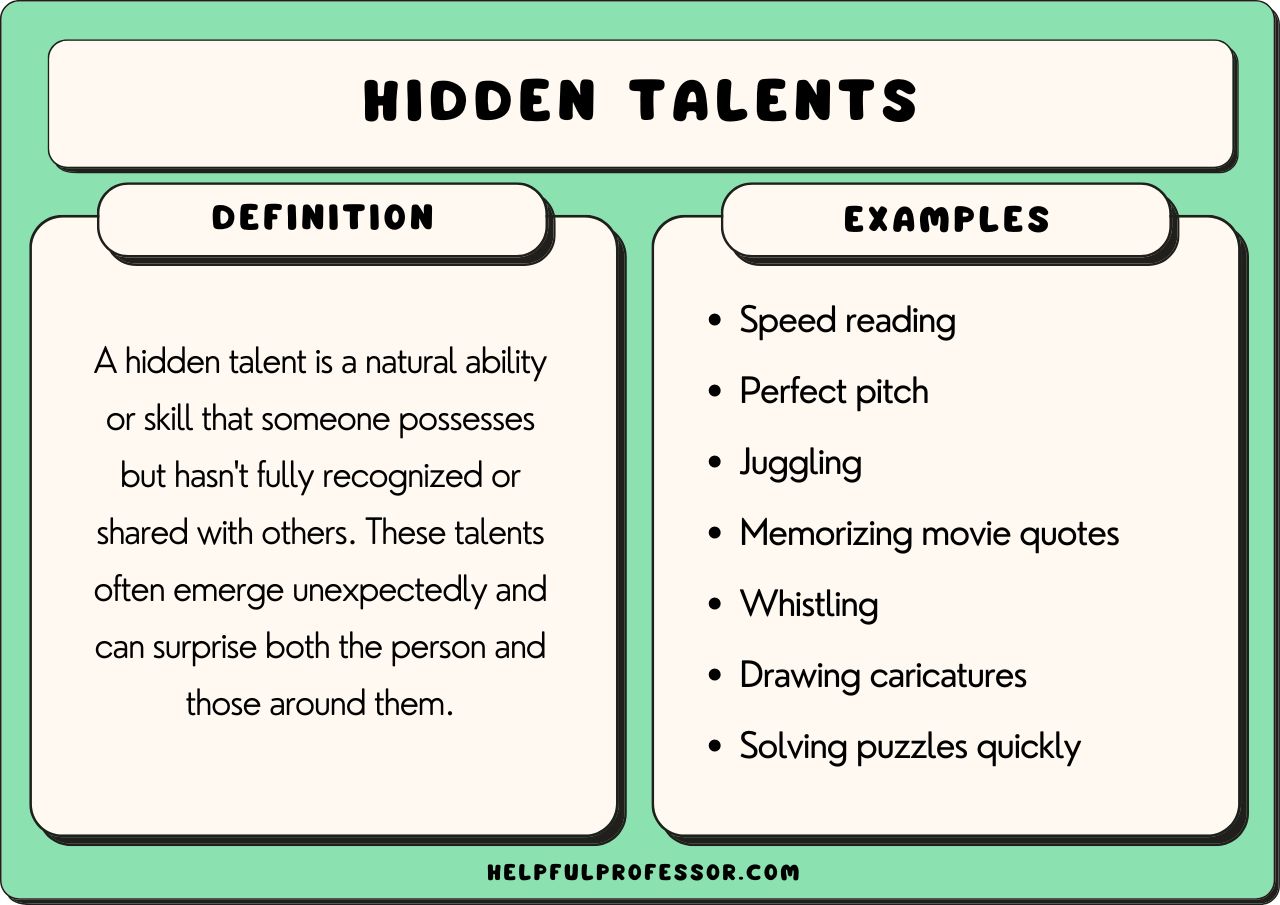
A hidden talent is a skill or ability that you might have that isn’t known to many people, perhaps not even family or friends.
It’s often something people don’t expect from you because you haven’t had the opportunity to reveal it. As a result, your hidden talent might surprise people around you!
Hidden talents can range from artistic abilities to technical skills, or even unique problem-solving approaches that haven’t been shared with others. Don’t underestimate yourself – think about the things you’re good at, which you might not get credit for yet! Let’s explore some examples.
Hidden Talents Examples
1. Pattern Recognition
Many people have a knack for spotting patterns in data, behaviors, or their surroundings without realizing it. This talent allows individuals to quickly identify trends, solve problems, or predict outcomes. People with this ability often excel in fields like data analysis, art, or even storytelling, where seeing connections is key.
2. Empathic Listening
Some individuals are naturally good at understanding not just what someone is saying but also the emotions behind it. This goes beyond active listening—it’s about picking up on subtle cues like tone, body language, and unspoken emotions. Empathic listeners make others feel heard and validated, often becoming the go-to person for advice.
3. Intuitive Problem-Solving
Some people solve problems instinctively without knowing the formal processes behind it. They can think on their feet, using creativity and common sense to fix issues quickly. This talent often emerges in situations where there’s no clear solution, and their gut feeling leads them to the right answer.
4. Spatial Awareness
The ability to visualize how objects or shapes will fit into a space is a rare but valuable skill. It can be applied to fields like interior design, architecture, or even packing a car. People with strong spatial awareness can mentally manipulate objects and foresee how they’ll function in a given area.
5. Storytelling
Not everyone realizes they have the ability to capture an audience’s attention with a story, but this hidden talent is more common than we think. It’s not just about telling a tale; it’s about structuring information in a way that’s engaging, whether in writing, speech, or visuals.
6. Emotional Regulation
Some people have a natural ability to remain calm in stressful situations, managing their emotions effectively without suppressing them. This talent allows them to navigate difficult circumstances without becoming overwhelmed, making them great leaders, mediators, or caregivers.
7. Networking Without Effort
While many struggle with networking, some people effortlessly build connections wherever they go. This talent isn’t just about being extroverted—it’s about creating meaningful interactions and making people feel comfortable. These individuals excel in collaborative environments, even if they don’t realize the strength of their interpersonal skills.
Hidden Talents of Women
1. Multitasking
Many women are naturally adept at juggling multiple responsibilities simultaneously, from work tasks to managing household duties, social commitments, and family care. This ability to balance various roles often goes unnoticed because it’s seen as part of the routine, but it’s a significant hidden talent that requires focus and organization.
Women often possess strong emotional intelligence, being highly attuned to the emotions of others and navigating social interactions with empathy. This ability allows them to manage relationships effectively, diffuse conflicts, and offer emotional support, making them excellent friends, partners, and leaders.
3. Community Building
Women frequently excel in fostering community and bringing people together. Whether it’s organizing social groups, advocating for local causes, or building strong support networks, women have a hidden talent for connecting individuals and cultivating a sense of belonging and solidarity.
4. Adaptability
Women often demonstrate a remarkable ability to adapt to changing circumstances, whether it’s shifting between personal and professional roles or responding to unexpected life challenges. This hidden talent allows them to remain resilient and flexible, making them effective problem-solvers in dynamic environments.
5. Non-Verbal Communication
Many women have a keen sense of non-verbal communication, such as reading body language, facial expressions, and tone. This skill often gives them an intuitive understanding of what others are feeling or thinking without explicit communication, which can be particularly useful in navigating social and professional situations.
Women often have an eye for detail, whether in managing tasks, organizing events, or handling complex projects. This hidden talent ensures that things run smoothly, even when juggling a lot of moving parts. Their attention to detail ensures nothing is overlooked, which can be vital in both personal and professional life.
7. Conflict Mediation
Women often excel at mediating conflicts, whether between friends, family members, or colleagues. Their talent for empathizing with multiple perspectives and finding common ground allows them to diffuse tense situations and encourage constructive dialogue, often without drawing attention to their role in resolving issues.
Hidden Talents for Students
1. Time Management
Many students develop a hidden talent for managing their time effectively, balancing school, extracurricular activities, part-time jobs, and social life. Even if they feel overwhelmed, their ability to prioritize tasks and meet deadlines is a valuable skill that often goes unnoticed.
2. Adaptability to New Technologies
Students today have a natural talent for quickly adapting to new technologies and digital platforms. Whether it’s learning new software, utilizing online tools for schoolwork, or staying connected through social media, their tech-savviness allows them to navigate digital environments effortlessly.
3. Peer Support
Many students have a hidden talent for providing emotional and academic support to their peers. Whether it’s tutoring a friend, offering advice, or simply being a good listener, students often build strong support networks without realizing the importance of their role in others’ success.
4. Creative Problem-Solving
Students frequently use creative problem-solving skills in projects, group work, or personal challenges. Whether it’s figuring out how to study more efficiently or finding innovative ways to complete assignments, their ability to think outside the box often goes unnoticed.
5. Self-Motivation
Many students develop the ability to self-motivate, pushing themselves to achieve goals without external pressure. This hidden talent comes into play when studying for exams, completing assignments, or pursuing personal projects, even when faced with distractions or fatigue.
6. Collaboration
Working in group projects, sports teams, or clubs, students often hone their ability to collaborate with others. This hidden talent helps them navigate different personalities and work styles, improving their communication and teamwork skills without being explicitly recognized.
7. Resilience
The ability to bounce back from failures or setbacks is a hidden talent that many students possess. Whether it’s dealing with a tough exam, rejection from a club, or personal challenges, their resilience helps them keep going and adapt to difficult situations. This quality is often overlooked but is crucial for long-term success.
Famous People’s Unusual Talents
1. Steve Jobs – Calligraphy
Before he became a tech icon, Steve Jobs took a calligraphy course in college, which he credited for influencing the aesthetic sense behind Apple’s typography and design. His hidden talent in understanding typefaces and design helped Apple stand out with sleek and user-friendly interfaces, from the early Mac computers to the iPhone.
2. Angelina Jolie – Knife Throwing
Angelina Jolie, known for her acting and humanitarian work, has a hidden talent for knife throwing. She developed this skill while training for action roles and has mentioned it in interviews, even showcasing it in some of her films. This surprising ability adds to her persona as someone who can embody fierce, action-packed roles effortlessly.
3. Neil deGrasse Tyson – Ballroom Dancing
Astrophysicist Neil deGrasse Tyson is well-known for making science accessible to the public, but his hidden talent is ballroom dancing. In college, he was a competitive dancer, excelling in multiple styles, including Latin and standard ballroom. His agility and rhythm on the dance floor contrast with his intellectual image.
4. Margaret Thatcher – Chemistry
The “Iron Lady” of British politics, Margaret Thatcher, had a background in chemistry. Before becoming the UK’s Prime Minister, she worked as a research chemist, contributing to the development of soft-serve ice cream. Her hidden talent in science was largely overshadowed by her political career, but it reveals a sharp analytical mind.
5. Harrison Ford – Carpentry
Before landing his role as Han Solo in Star Wars, Harrison Ford was a skilled carpenter. His hidden talent for woodworking led him to build furniture for famous directors and actors, which indirectly helped him network in Hollywood. His craftsmanship reflects his practical and hands-on nature outside of acting.
6. Bob Dylan – Iron Sculpting
Aside from his iconic music career, Bob Dylan has a hidden talent for sculpting with iron. He’s an accomplished metalworker and has showcased his sculptures in exhibitions. This talent allows him to express his creativity in a different medium, showing another side of his artistic persona.
7. Serena Williams – Nail Art
Tennis star Serena Williams has a lesser-known passion for nail art. She is a certified nail technician and has expressed her love for doing nails as a way to unwind. Her hidden talent showcases her meticulous attention to detail, which likely mirrors the focus and precision she brings to the tennis court.
The Full List of 101 Hidden Talents
Conclusion
Your hidden skill is yours and yours alone! It can be anything at all, but remember, be proud of your unique and deep down hidden abilities that others might not know about. Pick your moment to reveal it in a way that might surprise and delight your friends! For more about talents, read my full guide on what is a talent?
Dr. Chris Drew is the founder of the Helpful Professor. He holds a PhD in education and has published over 20 articles in scholarly journals. He is the former editor of the Journal of Learning Development in Higher Education. [Image Descriptor: Photo of Chris]
Elevate your marketing team with strategic expertise
Does your higher education marketing team have what it takes to capture the attention of right-fit students in a competitive landscape? Marketing budgets can be tight, but without the right mix of talent, increasing your ability to reach and convert key audiences, clearly connect upstream efforts to enrollment outcomes, and producing actionable marketing intelligence will be a constant challenge.
Dive into our latest infographic to uncover the key roles essential for enhancing the student journey and driving a robust return on investment.
If you hired them all, you could spend $1M+ in annual salaries alone. But you don’t need all the roles all the time. Hire the ones you do and outsource the part-time or specialized roles where you can.
Partner with Collegis to expand your marketing approach
Ready to assemble a marketing super team that engages students with personalized, AI-driven experiences at scale? Join forces with Collegis Education to access tailored marketing services that maximize the data, tech, and talent you already have.
Editor’s Note: This is the first of two posts that will explore the loneliness epidemic and practical ways HR can help combat it in the workplace.
Loneliness can be as bad for you as smoking 15 cigarettes a day, according to a Surgeon General’s report from last year.
The report identifies loneliness as a national epidemic experienced by about one in two adults. Loneliness is “associated with a greater risk of cardiovascular disease, dementia, stroke, depression, anxiety, and premature death.” That means human connection is as necessary for your long-term survival as food and water.
Feeling isolated can also decrease general well-being. People who say they’re lonely are more likely to experience sadness, worry, stress, anger and physical pain, according to a recent Gallup poll. Their research shows that over one in five people globally feel lonely “a lot.”
When Loneliness Is Worrisome
Of course, we have all felt lonely sometimes, when changing jobs, getting a divorce, moving to a new city, or recovering from an illness. But when does a temporary feeling of loneliness become chronic?
Chronic loneliness occurs when the feeling of isolation goes on for a long time and the inability to connect to other people is constant or prolonged. Chronic loneliness can occur even among very social people — you can still feel lonely in a crowd — and is often connected to self-doubt or low self-esteem.
Taking Away the Stigma
Feeling lonely can come with a sense of shame. However, it’s important to understand that loneliness isn’t about who you are, but about a lack of deep social connection driven by factors in our sociocultural environment.
Even though loneliness has been on rise since before COVID-19, the pandemic and recent political divisiveness have contributed to the epidemic. Social media is likely exacerbating the problem. People who report more than two hours of social media use a day are twice as likely to report feelings of isolation (versus people who use social media less than a half hour).
The good news is that loneliness can be addressed in part by deliberately strengthening engagement in our workplaces, communities and other social networks.
While workplace changes alone won’t combat political and social divisions, it’s still a key starting point for helping to decrease loneliness — especially considering how much time we spend at work. When implementing programs targeted at the loneliness epidemic, it can be best to frame your efforts as a positive: increasing social connection.
One Small First Step
Efforts to boost connection may help increase employees’ job satisfaction. The Surgeon General’s report stresses that “supportive and inclusive relationships at work are associated with employee job satisfaction, creativity, competence, and better job performance.” Connection at work prevents stress and burnout and can even be linked to fewer missed days of work after injury or illness.
In the next post in this two-part series, we’ll focus on concrete steps that higher ed HR can take to combat loneliness at work, including for hybrid and remote employees.
But you can take a meaningful first step by making a small personal change, such as tracking how much time you spend on social media, practicing short mindfulness sessions, or scheduling one phone-free lunch per month with a work friend. Even a positive interaction with a colleague you don’t know well, a barista or cashier, or someone in line with you at the coffee shop can have lasting mental health benefits by expanding your “relational diversity” — the variety of relationship categories you have daily.