Category: Featured

  • Feds launch site for employers to pay controversial H-1B fee, clarify exemptions

    Feds launch site for employers to pay controversial H-1B fee, clarify exemptions

    Dive Brief:

    • The U.S. Treasury Department launched an online payment website for employers to pay President Donald Trump’s $100,000 fee on new H-1B visa petitions, according to an update last week from the U.S. Citizenship and Immigration Services.
    • USCIS said the fee applies to new H-1B petitions filed on or after Sept. 21 on behalf of beneficiaries who are outside the U.S. and do not have a valid H-1B visa, or whose petitions request consular notification, port of entry notification or pre-flight inspection. Payment must be made prior to filing a petition with USCIS, per the agency.
    • Separately, USCIS’ update clarified that the fee requirement does not apply to petitions requesting an amendment, change of status or extension of stay for noncitizens who are inside the U.S., if that request is granted by USCIS. If it is not granted, then the fee applies.

    Dive Insight:

    Trump’s proclamation announcing the H-1B fee left employers with plenty of unanswered questions. While Monday’s update provides some clarity, the policy’s future is still uncertain in part because business groups, employers, unions, lawmakers and other stakeholders oppose it.

    At least two lawsuits have been filed seeking to enjoin the fee proclamation — one by the U.S. Chamber of Commerce in Washington, D.C., and another by a group of plaintiffs in California. Both similarly alleged that the H-1B fee violates the constitutional separation of powers as well as the Administrative Procedure Act. The complaints also warned of negative effects on U.S. employers that depend on the H-1B program to attract skilled foreign workers.

    In a letter to Trump and Secretary of Commerce Howard Lutnick, a bipartisan group of congressional lawmakers agreed to the need for reform of the H-1B program while expressing concerns about the potential effects of the fee on U.S. employers’ ability to compete with their global counterparts for talent.

    “The recently announced H-1B visa changes will undermine the efforts of the very catalysts of our innovation economy — startups and small technology firms — that cannot absorb costs at the same level as larger firms,” the lawmakers wrote.

    Trump and the White House have said the fee is necessary to combat “systemic abuse” of the H-1B program by employers that seek to artificially suppress wages at the cost of reduced job opportunities for U.S. citizens. In addition to the fee imposed on new visa petitions, the administration issued a proposed rule to change its selection process for H-1B visas to be weighted in favor of higher-paying offers.

    USCIS’ guidance noted that the Secretary of Homeland Security may grant other exceptions to the H-1B fee in “extraordinarily rare” circumstances where:

    • A beneficiary’s presence is in the national interest.
    • No American worker is available to fill the role.
    • The beneficiary does not pose a threat to U.S. security or welfare.
    • Requiring payment from the employer would significantly undermine U.S. interests.

    The agency provided an email address to which employers could send requests for fee exemption along with supporting evidence.

    Employers planning to file for new H-1B visas should plan to pay the fee unless litigation results in some kind of change, Akshat Divatia, attorney at law firm Harris Sliwoski, wrote in an article Tuesday. Divatia noted that some of the criteria for exemptions outlined by USCIS may conflict with congressional design of the H-1B program, and that employers “should watch closely how the courts respond” to such arguments.


    Source link

  • Misogyny and “Hoeflation” at the Nat’l Assoc. of Scholars

    Misogyny and “Hoeflation” at the Nat’l Assoc. of Scholars

    In an essay for Minding the Campus titled, “College Students in a Romance Recession, Boys Blame ‘Hoeflation,’” Jared Gould blames women for these imagined problems on campus, part of “a broad feminization of our institutions, which, to say the least, is not a good thing.”

    Gould uses the term “hoeflation” in his title to explain the problem of women being more selective than men on dating apps: “This imbalance has led young men to coin the term ‘hoeflation,’ the grind of chasing women they might barely fancy, but will date just to escape loneliness.” Oh, the poor lonely men, forced to work so hard to get laid by women they don’t like and call a “ho.” Why do all of these women—sorry, “hoes”—reject these obviously wonderful and respectful men?

    But ultimately the real problem, Gould says, is “leftist professors, who, bent on fueling radicalization, are largely to blame for the chasm between the sexes.” Those feminist faculty, Gould says, must be eliminated from universities to allow beautiful romances to blossom between the real men and their “hoes.”

    Why is Minding the Campus publishing this misogynist nonsense? Minding the Campus is a leading conservative voice about academia, owned by the National Association of Scholars, with Peter Wood as its executive editor.

    For a moment, I wondered if perhaps the NAS had been fooled by a left-wing hoax, publishing a work of such gross misogyny that had been planted to humiliate them. But no, Gould is not some random idiot. This idiot is the managing editor of Minding the Campus, following positions as a research fellow at Speech First and a senior editor at Campus Reform. He’s an influential voice and editor within the conservative movement.

    Beyond his open embrace of misogyny, Gould suffers from a lack of fact-checking skills.

    Gould wrote, “This August, a University of Tennessee professor canceled class to celebrate Taylor Swift’s engagement. Rather than using the moment to critique Swift’s portrayal of marriage as the ultimate career capstone, his canceling class quietly reinforced the idea that dating and partnership are secondary to education, career, and financial goals.”

    In reality, Tennessee communications professor Matthew Pittman was teaching his social media class and recorded a skit with his students pretending to cancel class despite the “biochem midterm” (in August!) he claimed was planned that day. It was a test of how misinformation spreads online and persists even after the truth is revealed, and Gould failed the test miserably.

    Gould got fooled multiple times by the hoax after being informed that it was a hoax, initially writing in August that the cancellation of class was “staged” but still somehow thinking it was real, both in his own article and another essay by Samuel Abrams at Minding the Campus. Just two months later, Gould is still repeating the fake story.

    Of course, even if a professor had canceled class to celebrate Swift’s upcoming marriage, that would be precisely the opposite of showing how “dating and partnership are secondary” to other goals. Gould managed to repeatedly fall for a hoax and still draw all the wrong conclusions from the fake news.

    But let’s not allow Gould’s misogyny and incompetence to distract us from how incredibly stupid his essay truly is. Gould began his article with a remarkably broad generalization based on one strange anecdote: “Love seems to be over for college students. That’s at least what I gathered from a recent conversation with a student in Texas.” Gould reported that this man is “not scoring dates” even though he took a dance class, which, it turned out was “a giant sausage fest” full of men seeking to find that most elusive creature, the single woman on a college campus. Assuming that this student is real, it’s still difficult to connect Gould’s bizarre conclusions from this pointless story with a data set of precisely one dude.

    According to Gould, “College girls have stopped looking for dates, and the men—well, they’ve learned to keep their eyes glued to the ground, lest they star in a viral TikTok captioned, ‘Guy looked at me—send help.’” Ah, yes, the poor men, unable to even look at anyone on campus because the feminazis will call 911 if they can see a man’s eyes. No wonder men are so rare on college campuses, when even their eyes are oppressed and they must pay the terrible price of “hoeflation.”

    Although it may be tempting to laugh at Gould’s embarrassing attempt at cultural analysis, his solution is ominous: “reforming higher education. We should dismantle the careerist catechism that emanates from it and shutter its sex fairs that peddle pleasure as a proxy for partnership.”

    Beyond banning “sex fairs,” Gould wants massive repression to “de-trench institutions of leftist professors.” We’ve seen a lot of awful excuses on the right for silencing speech on campus, from pretending to care about antisemitism to defending white people from the crime of diversity. But helping men get dates and sparing them the costs of “hoeflation” may be the worst reasons yet offered by conservatives for their campaign of campus censorship.

    John K. Wilson was a 2019–20 fellow with the University of California National Center for Free Speech and Civic Engagement and is the author of eight books, including Patriotic Correctness: Academic Freedom and Its Enemies (Routledge, 2008), and his forthcoming book The Attack on Academia. He can be reached at [email protected], or letters to the editor can be sent to [email protected].

    Source link

  • The Case Against AI Disclosure Statements (opinion)

    The Case Against AI Disclosure Statements (opinion)

    I used to require my students submit AI disclosure statements any time they used generative AI on an assignment. I won’t be doing that anymore.

    From the beginning of our current AI-saturated moment, I leaned into ChatGPT, not away, and was an early adopter of AI in my college composition classes. My early adoption of AI hinged on the need for transparency and openness. Students had to disclose to me when and how they were using AI. I still fervently believe in those values, but I no longer believe that required disclosure statements help us achieve them.

    Look. I get it. Moving away from AI disclosure statements is antithetical to many of higher ed’s current best practices for responsible AI usage. But I started questioning the wisdom of the disclosure statement in spring 2024, when I noticed a problem. Students in my composition courses were turning in work that was obviously created with the assistance of AI, but they failed to proffer the required disclosure statements. I was puzzled and frustrated. I thought to myself, “I allow them to use AI; I encourage them to experiment with it; all I ask is that they tell me they’re using AI. So, why the silence?” Chatting with colleagues in my department who have similar AI-permissive attitudes and disclosure requirements, I found they were experiencing similar problems. Even when we were telling our students that AI usage was OK, students still didn’t want to fess up.

    Fess up. Confess. That’s the problem.

    Mandatory disclosure statements feel an awful lot like a confession or admission of guilt right now. And given the culture of suspicion and shame that dominates so much of the AI discourse in higher ed at the moment, I can’t blame students for being reluctant to disclose their usage. Even in a class with a professor who allows and encourages AI use, students can’t escape the broader messaging that AI use should be illicit and clandestine.

    AI disclosure statements have become a weird kind of performative confession: an apology performed for the professor, marking the honest students with a “scarlet AI,” while the less scrupulous students escape undetected (or maybe suspected, but not found guilty).

    As well intentioned as mandatory AI disclosure statements are, they have backfired on us. Instead of promoting transparency and honesty, they further stigmatize the exploration of ethical, responsible and creative AI usage and shift our pedagogy toward more surveillance and suspicion. I suggest that it is more productive to assume some level of AI usage as a matter of course, and, in response, adjust our methods of assessment and evaluation while simultaneously working toward normalizing the usage of AI tools in our own work.

    Studies show that AI disclosure carries risks both in and out of the classroom. One study published in May reports that any kind of disclosure (both voluntary and mandatory) in a wide variety of contexts resulted in decreased trust in the person using AI (this remained true even when study participants had prior knowledge of an individual’s AI usage, meaning, the authors write, “The observed effect can be attributed primarily to the act of disclosure rather than to the mere fact of AI usage.”)

    Another recent article points to the gap present between the values of honesty and equity when it comes to mandatory AI disclosure: People won’t feel safe to disclose AI usage if there’s an underlying or perceived lack of trust and respect.

    Some who hold unfavorable attitudes toward AI will point to these findings as proof that students should just avoid AI usage altogether. But that doesn’t strike me as realistic. Anti-AI bias will only drive student AI usage further underground and lead to fewer opportunities for honest dialogue. It also discourages the kind of AI literacy employers are starting to expect and require.

    Mandatory AI disclosure for students isn’t conducive to authentic reflection but is instead a kind of virtue signaling that chills the honest conversation we should want to have with our students. Coercion only breeds silence and secrecy.

    Mandatory AI disclosure also does nothing to curb or reduce the worst features of badly written AI papers, including the vague, robotic tone; the excess of filler language; and, their most egregious hallmark, the fabricated sources and quotes.

    Rather than demanding students confess their AI crimes to us through mandatory disclosure statements, I advocate both a shift in perspective and a shift of assignments. We need to move from viewing students’ AI assistance as a special exception warranting reactionary surveillance to accepting and normalizing AI usage as a now commonplace feature of our students’ education.

    That shift does not mean we should allow and accept any and all student AI usage. We shouldn’t resign ourselves to reading AI slop that a student generates in an attempt to avoid learning. When confronted with a badly written AI paper that sounds nothing like the student who submitted it, the focus shouldn’t be on whether the student used AI but on why it’s not good writing and why it fails to satisfy the assignment requirements. It should also go without saying that fake sources and quotes, regardless of whether they are of human or AI origin, should be called out as fabrications that won’t be tolerated.

    We have to build assignments and evaluation criteria that disincentivize the kinds of unskilled AI usage that circumvent learning. We have to teach students basic AI literacy and ethics. We have to build and foster learning environments that value transparency and honesty. But real transparency and honesty require safety and trust before they can flourish.

    We can start to build such a learning environment by working to normalize AI usage with our students. Some ideas that spring to mind include:

    • Telling students when and how you use AI in your own work, including both successes and failures in AI usage.
    • Offering clear explanations to students about how they could use AI productively at different points in your class and why they might not want to use AI at other points. (Danny Liu’s Menus model is an excellent example of this strategy.)
    • Adding an assignment such as an AI usage and reflection journal, which offers students a low-stakes opportunity to experiment with AI and reflect upon the experience.
    • Adding an opportunity for students to present to the class on at least one cool, weird or useful thing that they did with AI (maybe even encouraging them to share their AI failures, as well).

    The point with these examples is that we are inviting students into the messy, exciting and scary moment we all find ourselves in. They shift the focus away from coerced confessions to a welcoming invitation to join in and share their own wisdom, experience and expertise that they accumulate as we all adjust to the age of AI.

    Julie McCown is an associate professor of English at Southern Utah University. She is working on a book about how embracing AI disruption leads to more engaging and meaningful learning for students and faculty.

    Source link

  • Improving Community College Transfer in California

    Improving Community College Transfer in California

    California has established significant goals for postsecondary attainment, with the stated aim of having 70 percent of working-age adults hold a credential of value by 2035. To meet this goal, the state has invested time and resources into the community college system and upward transfer processes, seeking to create affordable and accessible pathways in and through higher education.

    A recently published report by the Public Policy Institute of California Higher Education Center found that a large share of community college students are applying to and enrolling in state universities to complete a bachelor’s degree, but equity gaps persist among certain demographic groups.

    The data highlights the importance of focusing on early benchmarks of academic progress—including credit completion rates, GPA and the stated goal of transfer—to help students succeed in making the transition to a four-year university. The report also underscores that some transfer students are willing to pay more and travel farther to attend a more selective institution.

    The background: California’s public higher education system is the largest and most diverse in the country, the report authors note. The California Community College system includes 116 institutions enrolling over 2.1 million students, and the California State University system consists of 22 institutions educating nearly half a million students. Within the state, the system is the top destination for upward transfer, with 58 percent of community college students going on to enroll at a CSU campus.

    Over the past decade, the two college systems have partnered to streamline transfer opportunities. One innovation is the associate degree for transfer (A.D.T.), a group of 40 academic pathways that guarantee admission to students who complete 60 credits toward a bachelor’s degree in a specific major. Another is the CSU Transfer Planner, which provides insights for students to navigate transferable credits, degree programs and campus requirements for transfer.

    The report looks at student demographic information, academic progress and participation in transfer pathways such as A.D.T. to identify success indicators in the transfer pipeline.

    Methodology

    Researchers analyzed data from the CSU Application and Admission Dashboard and longitudinal student-level data from fall 2018 and fall 2023.

    In the sample, 48 percent of transfer applicants were Latino, 26 percent white, 15 percent Asian and 4.5 percent Black. A majority were 24 years old or younger, and 75 percent received a California Promise Grant or a Pell Grant while in community college.

    The data: The average student spends nine semesters at a community college before applying to a CSU institution, researchers found.

    Students are required to complete 60 credits to transfer with junior-level standing, but the median student completed 71.5 credits. Only half of applicants had earned an A.D.T. before applying, and 22 percent earned a local associate degree, meaning about 30 percent of students applied for transfer without a credential.

    Researchers noted that students who made significant progress in their first year of community college were more likely to transfer. Those who successfully completed transfer-level math in their first year applied to CSU after seven terms on average, whereas student who didn’t applied after 10 community college terms.

    Students who were 25 or older, Black or financial aid recipients were less likely to meet early milestones and therefore less likely to transfer. Conversely, students with high GPAs were more likely to transfer.

    The data also indicated a gap between students eligible for admission at a CSU and those who actually applied. One in five students who completed an A.D.T. never applied to CSU despite having guaranteed admission. Of those, 43 percent enrolled at a different university, many in the University of California system.

    In total, 87 percent of A.D.T. recipients declared a transfer goal while at community college, but approximately 20 percent of them didn’t continue on to a bachelor’s degree program.

    A majority (92 percent) of all transfers were eventually admitted to at least one CSU, and 63 percent of all transfers enrolled. Three in 10 applied more than once, and almost half of them (47 percent) had their application denied the first time.

    “It is possible that these students were initially rejected from the campus of their choice (or to all campuses), took more community college classes, and then gained admission,” researchers wrote. On the flip side, a large share of those whose transfer applications were rejected applied only once (88 percent), and to only one campus (61 percent).

    Admissions data also revealed the importance of academic benchmarks early in the student’s community college career. Admission rates for students who took transfer-level math or English in their first year were higher compared to their peers who did not; similarly, students who earned 24 transferable credits were more likely to gain admission to a CSU. Unsurprisingly, students who stated a transfer goal, completed the A.D.T. or had a GPA of 3.25 or higher also had high admittance rates.

    One trend researchers noted is that students who were admitted to a CSU but chose to enroll at a different institution were more likely to select a college that was farther away or more expensive, indicating that cost and proximity are not deciding factors. Transfers also enrolled at more selective colleges compared to their peers who opted to enroll at CSU, though some students selected universities with lower graduation rates than CSU.

    Over all, transfer students had high graduation rates. Among the incoming fall 2020 cohort, 76 percent graduated with their bachelor’s degree in four years, and 69 percent completed it in three years. About 19 percent of students left the CSU system without graduating three years after enrolling, and these students were more likely to be Black, Latino, male or older or have financial need.

    Recommendations: Based on their findings, researchers identified three opportunities for improvement:

    1. Invest in the student’s first year. Interventions including dual enrollment, corequisite English and math courses, proactive advising, and flexible scheduling can promote early momentum and academic success for community college students.
    2. Collect additional data on enrollment decisions. While system data showed that some students opt out of a four-year degree program, researchers emphasized the need for student voices to understand why those admitted would not enroll at CSU. Researchers also noted a need for campus-specific data, “because there is high variation across individual CSUs in both acceptance and enrollment rates.”
    3. Create space at selective campuses and in high-demand majors. “Some of the students who were never admitted to CSU were competitive applicants, but they applied to the most in-demand campuses,” the authors wrote. To increase capacity for these students, researchers suggest flexible course scheduling options, co-locating campuses or expanding online degree programs.

    Source link

  • Director of Online Program Development at UVA

    Director of Online Program Development at UVA

    The origins of “Featured Gigs” trace back to the first post in the series with Kemi Jona, vice provost for online education and digital innovation at UVA. While I had the idea for the series, it was Kemi who ultimately came up with most of the language for the four questions we use to explore opportunities at the intersection of learning, technology and organizational change. Today, Kemi answers questions about the role of director of online program development.

    Q: What is the university’s mandate behind this role? How does it help align with and advance the university’s strategic priorities?

    A: The 2030 Plan calls on the university to expand the reach of its educational programs—both in person and online—and to make UVA more accessible, including to learners across and beyond the Commonwealth. The University of Virginia’s Office of the Vice Provost for Online Education and Digital Innovation is a key part of advancing this charge on behalf of the university, helping our schools and institutes design, deliver and scale high-quality online and hybrid programs that extend UVA’s reach and impact.

    The director of online program development plays a central role in advancing UVA’s online education goals. The role is ideal for someone who thrives at the intersection of strategy, innovation and execution. The director will not only guide program development but also help UVA build the internal capacity and frameworks needed to sustain this growth long-term. This is a high-impact, high-visibility position that will help shape the next chapter of online and hybrid learning at UVA and potentially serve as a model for the sector.

    Q: Where does the role sit within the university structure? How will the person in this role engage with other units and leaders across campus?

    A: This role sits within the provost’s office and reports directly to the vice provost for online education and digital innovation. The director will guide UVA schools and institutes through the planning, launch and evaluation of new online and hybrid programs, serving as a trusted partner to deans, associate deans, program directors and faculty.

    This individual will bring structure and strategy to UVA’s online growth, helping schools scope opportunities, assess market demand, support business case development and build the readiness needed for sustained success. The role requires exceptional communication, diplomacy and systems-level thinking to align multiple stakeholders around a shared vision.

    Q: What would success look like in one year? Three years? Beyond?

    A: In service of the vision articulated in the 2030 Plan and aligned to the strategic goals of our partner schools and institutes, UVA is undertaking ambitious growth in its online and hybrid portfolio. In the first year, success means ensuring active projects move from planning to launch with clarity and momentum, establishing shared frameworks, timelines and accountability across partners.

    Within three years, success will be measured not only in the number of successful program launches but also in the maturity of UVA’s internal systems, talent and decision-making processes that enable continued agility and innovation.

    Longer term, the director will help institutionalize a robust, repeatable, data-informed model for program development so UVA’s schools can innovate faster and with greater confidence, while ensuring that all programs uphold UVA’s reputation for academic excellence.

    Q: What kinds of future roles would someone who took this position be prepared for?

    A: Because this individual will be deeply engaged in all aspects of online program design, development and launch, he or she will gain substantial experience working with deans, faculty and other senior leaders. This experience would help set up future leadership roles in online education and digital innovation or in the private sector.

    This role offers a rare opportunity to operate at the heart of institutional transformation—building systems and partnerships that inform how UVA advances its mission as we begin our third century as a leading public institution. The experience will prepare the director for senior university leadership roles in strategy, academic innovation or digital transformation. It will equip them with the cross-sector perspective and executive acumen valued by both higher education and mission-driven organizations beyond academia.

    Please get in touch if you are conducting a job search at the intersection of learning, technology, and organizational change. If your gig is a good fit, featuring your gig on Featured Gigs is free.

    Source link

  • How Colleges Use Anti-Elitist and Elite-Adjacent Campaigns

    How Colleges Use Anti-Elitist and Elite-Adjacent Campaigns

    Wikipedia

    Two university campaigns hit the national spotlight in recent weeks. Each tells a very different story about how colleges market themselves.

    Colorado Mesa University’s new Featherstone University spoof takes aim at elite school stereotypes, ending with the line “We care about who you are, not who you know.”

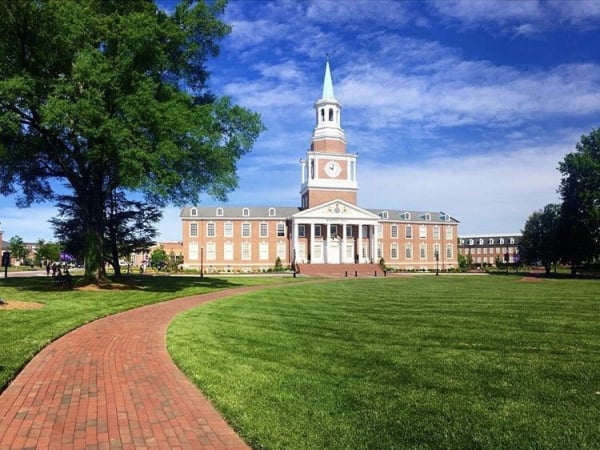
    Days later, The Wall Street Journal profiled High Point University in a turnaround story built on private wealth and exclusivity. Its campus features etiquette lessons, manicured gardens and an airplane cabin for networking drills. HPU prepares students for a world where who you know still matters.

    In an industry criticized for sameness, both CMU and HPU stand out as strategic outliers.

    Trust, Value and the Split in Demand

    Public trust in higher education is fragile. Concerns over cost, access and free speech have left families asking if it is worth it. Against this backdrop, two playbooks are emerging: anti-elitist authenticity and elite-adjacent experience.

    Playbook A: CMU’s Skepticism as Fuel

    Colorado Mesa University’s “Welcome to Featherstone” flips elite-school marketing on its head. The parody ends with a challenge: “We don’t care about who you know. We care about you.”

    For a public university serving rural, first-generation, working-class students, the message fits. CMU has built its brand on affordability, access and trust by cutting tuition, growing CMU Tech and guaranteeing free tuition for Colorado families earning $70,000 or less.

    This isn’t simply mocking the elite; it’s segmentation. CMU speaks to families who see higher education as a bridge, not a birthright. In a sea of interchangeable ads, it uses satire to say, “We hear your skepticism—and we’re still here for you.”

    A Take From Rural America

    CMU’s approach hit a nerve, but it also hit a truth.

    I was born in East Detroit, then raised in Richmond, Mich., a farming town of 4,000. When my parents learned our local high school wasn’t accredited, they sent my brothers and me to school an hour away. At that time, only 32 percent of the local high school graduates pursued college. I still remember junior high classmates missing school to plant and harvest corn and soybeans.

    For rural communities like these, college can feel distant—financially and culturally. CMU’s campaign speaks to them with rare honesty.

    Playbook B: High Point’s Experience as Advantage

    If CMU sells authenticity, High Point sells aspiration. Its campus hums with classical music and fountains, lined with rocking chairs and gardens designed for conversation. Students dine in on-campus restaurants that double as lessons in professional etiquette, and housing options range from traditional dorms to $40,000 tiny homes.

    President Nido Qubein calls it preparation, not pampering: “Half of Wall Street sends their kids here.” The model caters to families who can pay full price and want an environment that mirrors the careers their children expect to enter.

    It’s not subtle, but it shows the university understands its target audience. In an uncertain marketing environment, HPU is selling a vision of success that feels polished, predictable and safe.

    What the Models Reveal

    CMU and HPU reveal opposite, equally intentional strategies. CMU doubled down on affordability with its 2024 CMU Promise Tour, which reached 22 rural and urban communities, boosting first-year enrollment by 25 percent. HPU, meanwhile, courts families buying access and advantage through concierge-level amenities.

    CMU uses satire to mock exclusivity; HPU leans into luxury to promise it. Both know exactly whom they’re speaking to.

    Leadership Takeaways

    In a landscape of sameness and skepticism, higher ed leaders should ask, “What do we stand for—and how do we prove it?”

    Is it belonging and mobility like CMU, or exclusivity and polish like HPU? Either can work if it’s backed by programs, outcomes and transparency. Whatever your promise, ensure the experience delivers it.

    Both institutions have likely alienated some audiences, but they’ve connected deeply with their own. That’s the point of strategic marketing. Their playbooks, while different, seem to be working for Colorado Mesa and High Point, which both had record enrollments in fall 2025 amid national headlines warning of a demographic cliff.

    Beyond the Marketing

    Beyond the spotlight, both universities must prove results. Time and measurement will tell if they are delivering on access and affordability, or on postgraduate success and networks.

    Authenticity carries risk, as organizational psychologist Adam Grant recently noted in a New York Times op-ed, but when outcomes match promises, both models can be legitimate. Hide results or exaggerate benefits and either fails the test of ethics and equity.

    In a nation this diverse, there is no single market for higher ed—there are many markets. And in a landscape this stratified, the unforgivable sin isn’t satire or spectacle; it’s sameness without substance.

    Maria Kuntz is director of content marketing strategy and communications at the University of Colorado–Boulder. She leads content strategy for advancement, oversees the award-winning Coloradan alumni magazine and writes about storytelling, leadership and trust in higher education.

    Source link

  • AAUP President Exacerbated “Organizational Antisemitism”

    AAUP President Exacerbated “Organizational Antisemitism”

    U.S. Senate Committee on Health, Education Labor and Pensions

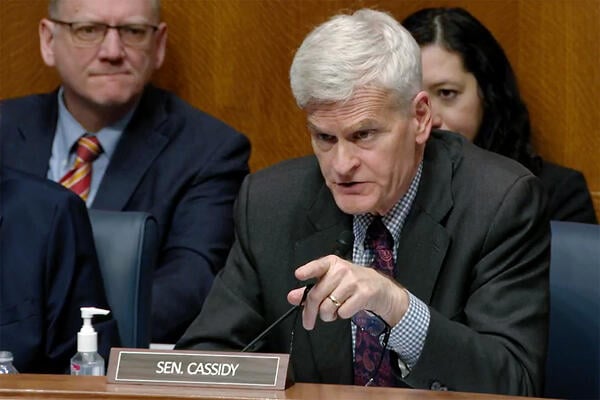
    In a letter to American Federation of Teachers president Randi Weingarten, Sen. Bill Cassidy, the Louisiana Republican who chairs the education committee, accused American Association of University Professors president and AFT vice president Todd Wolfson of promoting “organizational antisemitism” within the AAUP. 

    Cassidy cited an August Inside Higher Ed interview with Wolfson in which the union leader stood against sending weapons to Israel, accused the Trump administration of weaponizing antisemitism for political gains and advocated for the Jerusalem Declaration on Antisemitism, a definition of antisemitism that does not include anti-Zionism.

    Cassidy also referenced a statement from Wolfson calling Vice President JD Vance a fascist as well as a March letter to the AAUP from the Anti-Defamation League and Academic Engagement Network that said “the AAUP [is] being perceived as increasingly moving in a virulently anti-Israel direction, and as a result, growing insensitive and even hostile to the concerns of its Jewish and Zionist members.”

    “In the six months since he received this warning from one of the nation’s leading organizations dedicated to fighting antisemitism [ADL], Dr. Wolfson has not only failed to address these concerns but has exacerbated them,” Cassidy wrote. “Jewish faculty members deserve to carry out their work free from discrimination. As an association with a national presence, it is concerning that AFT has not only failed to help solve this problem but has made it worse by allowing Dr. Wolfson to continue to serve in a leadership role.”

    The AAUP is an affiliate of the AFT, one of the largest unions nationwide for K–12 and higher education professionals. The two became formally affiliated in 2022 and share some leadership, including Wolfson.

    Wolfson replied to Cassidy’s letter in a statement to Inside Higher Ed Monday.

    “It appears Senator Cassidy and his GOP colleagues are furious that seven universities have rejected Trump’s absurd Higher Ed Loyalty Oath. Rather than reckon with their failed attempt to strong-arm higher education, they’ve chosen to complain to our national affiliate, AFT, because AAUP dared to hold a webinar,” Wolfson wrote, referring to an AAUP webinar called “Scholasticide in Palestine” that Cassidy referenced in the letter. “I would respectfully suggest they spend less time trying to undermine my constitutional rights and more time focusing on what Americans actually care about—like reopening the government, lowering healthcare costs, and addressing the cost-of-living crisis.”

    Cassidy wants Weingarten to tell him by Nov. 6 how AFT is addressing the concerns raised by the ADL and to share more details about how she’s working with the AAUP to ensure Jewish members aren’t experiencing antisemitism. He also asked Weingarten whether AFT publicly condemns Wolfson’s remarks.

    Source link

  • Miami Dade Fights Hearing on Trump Library Land Deal

    Miami Dade Fights Hearing on Trump Library Land Deal

    Ever since Miami Dade College announced last month that it was donating land for the construction of Donald J. Trump’s presidential library, the community college has faced criticism. Now it is fighting in court to prevent a public hearing on the deal, which would resolve a lawsuit brought by a citizen who has argued the move is illegal.

    At a Sept. 23 board meeting, Miami Dade College transferred land to the state of Florida to be used for Trump’s presidential library. Critics alleged that the meeting was rushed, failed to offer adequate public notice on the specifics of the deal and lacked any discussion or debate; a public notice referenced only a “potential real estate transaction” as the reason for the meeting.

    Some estimates have put the value of the 2.6-acre site in downtown Miami at $250 million to $300 million, though others say it is worth $67 million. But regardless of the dollar amount, Miami Dade College is giving the land away for free.

    Marvin Dunn, a local historian, sued to block the transfer, alleging in his lawsuit that the Board of Trustees “unquestionably violated” state anticorruption laws. Dunn argued in a court filing that “depriving the public of reasonable notice of this proposed decision was a plain violation of the Sunshine Act and of the Florida Constitution” and asked for an injunction to block the transfer.

    Judge Mavel Ruiz of Florida’s 11th Judicial Circuit granted Dunn a temporary injunction earlier this month, noting that he is likely to prove his claims about sunshine law violations, but she did not altogether block the land transfer. She also left the door open for the Board of Trustees to redo the deal.

    “It is understood that the board can provide the reasonable disclosure and convey this property as they see fit,” Ruiz said. “That’s why this is not a case, at least for this court, rooted in politics.”

    Jesus Suarez, an attorney for Continental Strategy (founded in 2022 by former Republican lawmaker Richard Corcoran, who was later tapped to lead New College of Florida), which is representing Miami Dade College, has contended that the deal is completely aboveboard.

    “The law doesn’t require that there be any specificity in the notice,” Suarez has argued. College lawyers also said they would appeal the ruling to temporarily block the transfer.

    State officials have bristled at Ruiz’s temporary injunction. Florida attorney general James Uthmeier, who has assigned members of his staff to assist the college in its legal battle, told The Miami Herald the temporary injunction is not technically in place because it was not issued as a written order.

    Dunn, meanwhile, is seeking to expedite legal proceedings, aiming for a trial to begin by January.

    While Ruiz emphasized that the case is not about politics, the MDC board, which is appointed by Republican governor Ron DeSantis, is overwhelmingly comprised of Republican donors. Board chair Michael Bileca and trustee Jose Felix Diaz are also former GOP lawmakers.

    Of the seven trustees, six have donated to Republican candidates and causes. Miami Dade College president Madeline Pumariega, who has defended the way the board handled the transfer, has also donated to GOP candidates, though she has given to Democrats in the past as well. (Most of the presidents at Florida’s 40 public institutions have either Republican ties or past donations.)

    Miami Dade College officials did not respond to a request for comment from Inside Higher Ed.

    Source link

  • IU Alumni Pull Donations Over Student Newspaper Censorship

    IU Alumni Pull Donations Over Student Newspaper Censorship

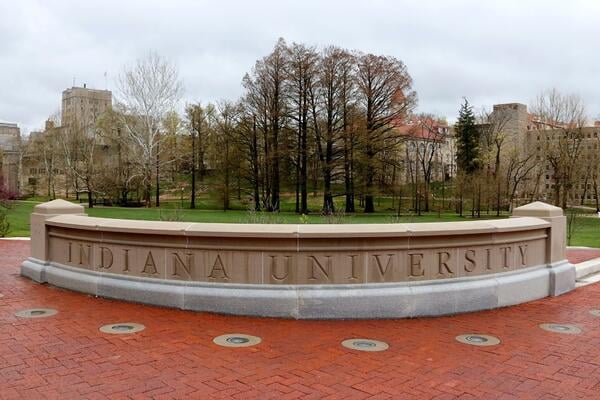
    Indiana University’s decision to suspend the print publication of its student newspaper is costing the institution: Alumni are pulling donations in protest. The university ended the Indiana Daily Student’s print edition after firing the paper’s adviser, who refused to comply with administrators’ request to remove news coverage from a homecoming edition of the paper.

    University leaders insist they’re not censoring the student paper but moving it to a digital platform in line with a business plan adopted last year to address the paper’s deficits. But alumni aren’t buying it, IndyStar reported. Some are asking what came of donations they made to a fund dedicated to the student publication after the newspaper reported students faced hurdles to spending the money. Other alumni are pulling their donations altogether.

    Former journalism student Patricia Esgate canceled $1.5 million in bequests she planned to leave to the university. Alum Ryan Gunterman, executive director of the Indiana High School Press Association and the faculty adviser of Franklin College’s student newspaper, posted on Facebook that he and his wife were ceasing all future donations after giving money to the university and newsroom for over two decades. Toby Cole, a fourth-generation alum of the institution, told IndyStar in an email that his family was ending its monthly contributions and a $300,000 planned gift for scholarships.

    “If IU can pay our [football] coach almost $100mm we can fund our IDS,” Cole said in the email. “Problem is ‘they’ don’t want an independent free speaking print newspaper because students actually wield power with it.”

    Source link

  • What does the post-16 education and skills white paper say about access and participation?

    What does the post-16 education and skills white paper say about access and participation?

    Author:
    Charlotte Armstrong

    Published:

    This blog was authored by Charlotte Armstrong, Policy Manager at HEPI.

    It is the second blog in HEPI’s series responding to the post-16 education and skills white paper. You can find the first blog here.

    Despite the post-16 education and skills white paper devoting an entire sub-section to ‘Improving Access and Participation’, the genuine challenges facing students receive minimal attention. The skills agenda within the Government is so strong that the paper frames students, and the student experience, in terms of their potential future contribution to the economy and regional growth. This results in little attempt to understand and address the student experience and the very real challenges that students are currently facing.

    A shift to the skills agenda

    The Lifelong Learning Entitlement (LLE) takes up several bullet points within this section of the paper. In fact, the decision to categorise the LLE under the heading of access provides an interesting insight into the Government’s broader approach to access and participation. Considering the LLE as a subsection of this initiative reframes the focus of access from entrance to higher education to employment outcomes and progression throughout a person’s life. This shift is an idea repeated throughout the white paper that dovetails with the Government’s skills agenda. It indicates that the Government views higher education as a means to add future value to the economy and a tool through which its Industrial Strategy can be furthered. This approach leaves little room for those subjects and disciplines that fall outside the strategy, let alone for learning for its own sake.

    Both modular LLE courses and the newly announced maintenance grants (as announced within the white paper, and previously at the Labour Party Conference) are available only to those studying courses that link to the Government’s wider Industrial Strategy. As may be easily guessed, this results in a list of subjects that largely dovetail with the science and technology sectors – arts and humanities subjects don’t get a look in. Tying maintenance grants to the study of pre-approved science subjects risks disincentivising students from low-income backgrounds from pursuing arts and humanities subjects – potentially entrenching bias and elitism within this sector, as well as furthering the narrative of ‘Mickey Mouse degrees’. As the costs of studying at university continue to rise, some prospective students will struggle to justify studying the subject of their choice if it means losing out on access to maintenance grants. Many of these excluded subjects are already in crisis – as the HEPI / Duolingo report The Language Crisis: Arresting Decline demonstrates, undergraduate enrolments in ‘Language & Area Studies’ have decreased by 20% in five years. Disincentivising students from taking these courses will surely only deepen this crisis further.

    These criticisms do not mean the LLE and the reintroduction of maintenance grants are bad policies. The latter is a particularly welcome development that has long been campaigned for by HEPI and the National Union of Students. However, the limited nature of their current form limits the positive impact they could otherwise have. While there is no current clarification on the precise threshold that will be placed on access to maintenance grants, the Government’s lack of movement on the parental income thresholds within the student finance system likely means only a very small number of students will be eligible.

    When first announcing this policy at the Labour Party conference, Education Secretary Bridget Phillipson claimed that the reintroduction of maintenance grants would ensure students spent their time at university ‘learning or training, not working every hour God sends’. This perhaps suggests that maintenance grants will be available in addition to, not instead of, the maintenance loan for those eligible students, although we keenly await the detail which will be outlined by the Chancellor in the upcoming Budget. However, this doesn’t solve the deepening financial crisis facing a large number of students in higher education – many of whom simply will not be eligible for the new maintenance grants.

    HEPI’s research into the Minimum Income Standard for Students highlights how the current maximum maintenance loan covers just half of the costs faced by freshers. Furthermore, the parental income threshold for eligibility for the maximum loan is currently so out of touch that a student from a household with a single parent earning just above the minimum wage will not be eligible for the maximum loan. The Government has sought to highlight that maintenance loans will increase in line with forecast inflation for every academic year, but this is merely a continuation of the current policy and will not address the financial crisis that many students face. Plus, forecast inflation tends to be lower than actual inflation. Similarly, the promise that care leavers will automatically become eligible to receive the maximum rate of loan is also a reiteration of a policy already in place. Care leavers (and estranged students) are classified as independent and therefore are eligible for the maximum loan. To reiterate, this maximum loan covers only half of the costs these students will face while at university.

    Postgraduate access

    The inclusion of postgraduate access in the white paper is a welcome addition – and an unsurprising one when considering how this white paper has framed access in terms of career progression and skills. However, once more, the inclusion of postgraduate students within access goals falls short due to a failure to address the root causes of the widening crises for home postgraduate students in England. Postgraduate taught tuition fees now exceed the maximum postgraduate loan – meaning that a student has used up their entire loan before even considering their cost of living.

    Instead of engaging with this, the paper encourages providers to include postgraduate study in their Access and Participation Plans (APP). This is, in itself, a positive development; however, without addressing the financial barriers faced by many prospective postgraduate students, this inclusion will have very limited impact.

    The access and participation section of the post-16 education and skills white paper provides an insight into how this Government conceives of these issues. However, the focus on students as future employees paints a worrying picture of a Government that is more concerned with next steps than with higher education itself.

    Source link