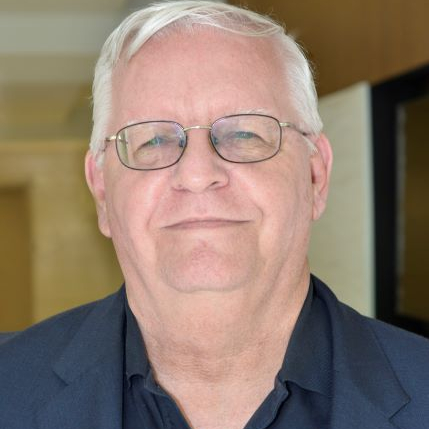
April 11, 2020 by Dean Hoke– When I came back to the United States in 2017-18 I wanted to re-engage with the US university community. I joined NAFSA primarily due to my work in International Higher Education but I also wanted to be a part of a smaller organization where I could get to know the people better and attend conferences that would continue my professional development. I decided to join in 2018 The American Association of University Administrators (AAUA).
Who is AAUA
AAUA is a non-profit professional organization founded in 1970 for higher education leaders and administrative personnel. It is the only professional association for individuals who are interested in the entire range of higher education management (from department chair/unit director through president) in the entire diverse set of American colleges and universities (two- and four-year; public, private non-profit, private for-profit; comprehensive, research-focused, special mission).
Membership in AAUA helps support the association’s mission. In addition, membership provides—for those members who have an interest—opportunities for professional networking and leadership. In addition to enrolling and serving a significant complement of administrators at the most senior levels, the association is also interested in assisting early-career practitioner administrators build/enhance their leadership portfolios by providing leadership opportunities through service on association committees, boards, and taskforces. Opportunities to collaborate on offering professional development services are available as well.
Professional Development Opportunities
Annual Leadership Seminar: In particular this is my favorite because of the networking and the presentations. The 50th Leadership Seminar of the American Association of University Administrators is scheduled for June 9-10, 2022. It will be held as a hybrid event, with in-person sessions meeting at the Marriott Stanton South Beach Hotel (Miami, Florida). In-person sessions are planned for June 9 (morning and evening) and June 10 (morning). On-line sessions will be held on the afternoon of June 9th. I will be attending in person.
AAUA Professional Development Fellows Program : The Fellows Program is an individually designed, year-long, mentored professional development experience during which the candidate uses his/her day to-day responsibilities as the spring board for improving a set of self-identified professional skills to enhance his/her administrative competence.
Cross-Institution Visits : Recognizing the value of learning from administrative peers at other institutions (both similar in nature and of radically different structure or purpose), AAUA facilitates short-term (one to three week) cross institution visits between like-role administrators. The association also occasionally organizes and conducts small group (6-10 people) two- and three-day visits to clusters of institutions for the purpose of learning about notable or unique programs.
So What is the Cost of Membership?
There are two types of memberships. One is Individual and the other is Institutional
Individual: An active Membership (Open to any person interested in the administration of higher education) is $100. The Student (Open to any graduate student enrolled in an institution of higher education who is interested in the field of higher education administration. is $35.
Institutional: Any college/university or any other organization/firm may sponsor the membership of individuals on the following basis:
1-6 Supported Members – Total membership dues rate: $500
7-15 Supported Memberships – Total membership dues rate: $1,000
16-24 Supported Memberships – Total membership dues rate: $1,500
25 or more Supported Memberships: $2,000
I would encourage you to consider becoming a member of the AAUA. I have found the people you get to know are outstanding, the conferences educational and enjoyable and the cost of membership is well worth the value.
If you have questions or wish to join feel free to contact me or better yet contact:
Dan L. King, Ed.D., President, and Chief Executive Officer American Association of University Administrators 1 Ralph Marsh Drive, Glen Mills, Pennsylvania 19342 (USA)Phone: 814-460-6498 Email: [email protected]
Dean Hoke is a Managing Partner of Edu Alliance Group in the United States and Co-Founder of Edu Alliance Ltd. in the United Arab Emirates. Dean has decades of progressively responsible and visionary leadership roles in higher education, communications & online learning. He has led numerous initiatives that have created innovation & positive change in the higher education & non-profit sector.
Dean began his career in 1975 with Bellarmine University working in various roles, including admissions and external relations. In 1983 he entered the broadcasting field, serving as a senior executive for Public Broadcasting System stations and a cable network. In 1998 he co-founded The Connected Learning Network, a full-service online learning company. In 2009 accepted an invitation to move to the United Arab Emirates serving in senior positions at Higher Colleges of Technology & Khalifa University.
He participates in numerous advisory & consulting projects in the fields of international education, branding, business intelligence, and online learning. He is an active speaker and writer in the field of global higher education and distance learning. Dean has presented and written worldwide on leadership, higher education, and distance learning. Dean is a member of the Board of the American Association of University Administrators, the Franklin University School of Education Advisory Board, and a member of NAFSA. Mr. Hoke has a B. A from Urbana University, an M.S from the University of Louisville, and a Certificate in Executive Management from the University of Pennsylvania Wharton School.
In the Biden administration’s fall 2021 regulatory agenda, the Department of Labor (DOL)’s Wage and Hour Division (WHD) announced that it planned to release in April 2022 a Notice of Proposed Rulemaking (NPRM) changing criteria for the “executive, administrative and professional” exemptions from the overtime pay requirements under the Fair Labor Standards Act (FLSA). In May and June, the DOL will host five regional listening sessions allowing stakeholders to discuss the anticipated proposed rule aimed at changing the exemptions to the federal overtime pay requirements.
With listening sessions extending into May, the WHD will not be able to meet the April target date, but we do expect the agency will release a proposed rule in 2022 with compliance likely required in 2023. While the DOL has not shared how it may change the exemptions, it is holding listening sessions to elicit stakeholder input as to whether changes are appropriate and what changes would be appropriate at this time.
Background
According to the regulatory agenda, one of the goals of the NPRM would be “to update the salary level requirement of the section 13(a)(1) exemption [under the FLSA].” Changes to the overtime exemption minimum salary threshold have been proposed recently under both the Obama and Trump administrations. In 2016, President Obama’s DOL issued a final rule to increase the salary threshold from $23,660 to $47,476 per year and impose automatic updates to the threshold every three years, but the rule was subsequently struck down by federal court before taking effect in 2017. In 2019, the Trump administration issued a new final rule that raised the minimum salary threshold from $23,660 to $35,568 annually, which went into effect on January 1, 2020. The $35,568 threshold remains in effect today.
On March 29, in anticipation of the upcoming Biden administration rule, the DOL held a virtual higher education-specific listening session for D.C.-based higher education associations, including CUPA-HR. The listening session was scheduled after CUPA-HR and 14 other higher education associations submitted a request that the DOL hold such meetings prior to releasing the anticipated NPRM. CUPA-HR and several other higher education associations joined the session to discuss potential concerns institutions may have with an increase to the minimum salary threshold at this time.
Regional Sessions
In addition to the D.C. meeting held in March, the DOL is planning to host five additional regional listening sessions for employers. The sessions include the following:
Northeast Employers: May 13 at 3:30 p.m. EDT
Southeast Employers: May 17 at 2:00 p.m. EDT
Midwest Employers: May 20 at 3:30 p.m. EDT
Southwest Employers: May 27 at 3:00 p.m. EDT
West Employers: June 3 at 3:30 p.m. EDT
If your institution is interested in participating in any of the regional meetings, please reach out to CUPA-HR’s Chief Government Relation Officer Josh Ulman at [email protected]. Additional information about the D.C. listening session and CUPA-HR’s talking points will be provided upon inquiry.
On March 29, the U.S. House of Representatives passed H.R. 2954, the Securing a Strong Retirement Act of 2021, by an overwhelmingly bipartisan vote of 414-5. The bill includes many provisions to boost individual retirement savings and expand coverage to better access retirement savings programs.
The bill includes several provisions that would impact employer-sponsored retirement programs. Notably, the bill would make enrollment in newly created 401(k) and 403(b) plans mandatory for eligible employees beginning in 2024. Employers with 10 or fewer employees or those that have been in business for fewer than three years would be exempt from this requirement, and employees would be able to opt out of the program. Additionally, the bill requires employers to allow part-time employees to participate in 401(k) plans if they work at least 500 hours per year after two years working for the employer — a decrease from the previously required three years.
The bill will also allow employers to make matching contributions to the 401(k), 403(b) or SIMPLE IRA account of employees who are paying off student loans and do not contribute enough to their accounts to receive a full employer match.
In addition to the provisions related to employer plans, the bill also has provisions for individual workers. The bill allows older workers to make bigger contributions to their retirement accounts than is currently allowed. Specifically, individuals aged 62-64 would be able to contribute an extra $10,000 for 401(k) plans and other programs and $3,000 for SIMPLE plans per year to such accounts beginning in 2024. These “catch-up” contributions would be required to be made after taxes.
The bill now heads to the Senate where it will need to pass with 60 votes to overcome the filibuster. Given the bipartisan support in the House, the bill could receive similar support from both parties, but it is unclear when and how the Senate will vote.
CUPA-HR will keep members apprised as this bill moves through the Senate.
Sexual violence is a multi-faceted and difficult topic. Higher ed institutions either enter the conversation before an event of sexual violence has occurred or after it has occurred, leaving the institution scrambling for answers to the campus community as to why it happened in the first place.
As part of upcoming Sexual Assault Awareness Month (April), we’re highlighting some CUPA-HR resources that share first-hand experiences from some higher ed institutions and the strategies and trainings they’ve used to respond to and approach the topic of sexual violence on campus.
Strategies to Create a Harassment-Free Workplace
In an article in the spring 2020 issue of Higher Ed HR Magazine, UMass Lowell detailed how they addressed concerns about a sexual harassment complaint the university received several years prior that spurred anger among students, faculty and staff. Questions were raised as to how decisions were made following the violation, whether the sanctions were sufficiently severe and what steps were taken to mitigate risk of recurrence.
In response, the chancellor convened a task force to review the university’s Title IX policies and procedures, educational efforts, culture and climate, and communications on these issues, and to make a set of recommendations to the executive cabinet for future improvements. Read the full article to learn about how the task force practiced transparency, built trust among the community and key themes that emerged in the recommendations from the task force: A Matter of Trust: Strategies for Creating a Harassment-Free Workplace
Impactful, Engaging In-Person Sexual Harassment Training
While training alone isn’t the answer to creating a harassment-free environment, it certainly should be part of an institution’s broader strategy. However, in order to make an impact, the training must be engaging, insightful, interactive and relatable — and sitting at a desk clicking through an online training module or watching a video about workplace harassment is anything but engaging. With an in-person training approach, participants can ask questions, engage one another in dialogue, and connect to the content, making the messaging more likely to stick.
CUPA-HR’s Title IX and Sexual Harassment Toolkit is a great place to check out what other institutions are doing to mitigate sexual harassment and misconduct. The toolkit highlights sexual harassment and reporting policies, trainings and other tools for HR pros.
By tapping into these resources, higher ed institutions can positions themselves as those that prioritize prevention over reaction when it comes to sexual violence on campus.
Whether it was logging overtime behind laptops before work-from-home boundaries were put in place or turning to mobile phones and tablets for entertainment during lockdowns, many of us recognized the uptick in screen time during the height of the pandemic. Our eyes likely noticed the uptick too by feeling increasingly strained.
March is Workplace Eye Wellness month, so we’re highlighting some tips from Prevent Blindness to help keep screen time in check and lessen eye strain at work and at home.
Screen time: Try to decrease the amount of time spent in front of screens and/or take frequent breaks to give your eyes a rest.
Use the 20-20-20 rule: Every 20 minutes, take a 20-second break and look at something 20 feet away.
Filters: Screen filters are available for smart phones, tablets and computer screens. They decrease the amount of blue light given off from these devices that could reach the retina in the eyes.
Anti-reflective lenses: Anti-reflective lenses reduce glare and increase contrast and also block blue light from the sun and digital devices.
Intraocular lens (IOL): After cataract surgery, the cloudy lens will be replaced with an intraocular lens (IOL). The lens naturally protects the eye from almost all ultraviolet light and some blue light. There are types of IOLs that can protect the eye and retina from blue light.
Visit Prevent Blindness for more information and resources on eye and vision health.
HR Perspective
From the human resources perspective, HR practitioners can help employees who are experiencing vision loss or low vision. Employees experiencing a decrease in vision may have difficulty completing paperwork, reading standard-size print, discerning regular or colored font on computer screens, or locating the cursor, all of which impact productivity at work.
In the Disability in the Workplace toolkit in CUPA-HR’s Knowledge Center, Mississippi State University’s HR guide offers plenty of creative low-tech and high-tech accommodations for employees with low vision:
Low-tech accommodations:
Place tactile dots on controls on equipment, such as the telephone, a copier, the microwave in the breakroom, etc. so that an individual who is blind or visually impaired can determine which buttons perform different functions.
Place a braille sticker on an employee’s mail slot to identify it.
Increase or decrease lighting in an office or cubicle to increase visibility or reduce glare.
Cover a window to reduce glare.
Provide extra floor space in a cubicle to accommodate a guide dog.
High-tech accommodations:
Implement screen reading or screen magnification software to allow an employee who is blind or has low vision to complete computer tasks.
Provide a larger monitor or dual monitors to allow an individual with low vision greater access to visual information.
Implement a braille display paired with the computer or an iPad or used independently to allow vision-impaired employees to take notes and recall information.
Provide a video magnifier to increase the size of print and enhance the contrast of printed materials.
Provide optical character recognition hardware or software to capture print information and translate it to audio output.
To read the full guide and explore other disability inclusion examples from higher ed, visit the Disability in the Workplace toolkit (CUPA-HR members only resource).
Tullio Rossi, PhD helps scientists share their research with visuals
Dr. Tullio Rossi is a marine biologist turned entrepreneur helping scientists around the world share their research. Tullio found that video animations and graphical abstracts increase the impact of your science.
And, they’re great for sharing your research with the media. Now as Director of Animate Your Science, Tullio and his team are changing the way scientists communicate with visuals.
I’m Jennifer van Alstyne. Welcome to my blog, The Social Academic. It’s all about your online presence in Higher Education. Whether you’re a graduate student, professor, scientist, researcher, or independent scholar, The Social Academic is here to help you communicate online.
In this featured interview, Tullio and I talk about
Jennifer: Hi everyone, it’s Jennifer van Alstyne here on The Social Academic blog, YouTube channel, and podcast. We’re here talking with Dr. Tullio Rossi, Director of Animate Your Science.
I’m so excited to have this conversation today because having some kind of
can make a really big difference for sharing your research.
Tullio, welcome to The Social Academic. Would you mind starting us off by introducing yourself?
Tullio: Hi, Jennifer.Thank you for having me. It’s great to be here. So I’ll give you a bit of a background about myself.
Everything’s started when I was still a teenager and I started playing around with graphic design. For years I made flyers and posters for events because my best friend organized events. So one day we thought, why don’t we make a flyer for the next event? It was a lot of fun.
I always considered [graphic design] as a bit of a plan B career, if you like. Because then I went on and pursued a career in marine biology. That was back in Italy, in my home country I did undergrad, master’s degree and then a PhD, which brought me here in Australia, where I currently live.
I was doing that PhD when I realized that actually science really needs some help from the world of graphic design and communication in general.
Because there’s so much great research published in these peer-reviewed articles, which nobody gets to hear about. Often not even the researchers themselves. So that pushed me to try things that not many others were even considering to figure out a way on how we can make sure that this research we publish is noticed. That it’s not just lost in this giant online repository of papers.
The question is how do we make sure that our research stands out?
Jennifer: That’s amazing. And I actually watched one of your early videos about your own research. Can you tell us a little bit about that?
Tullio: Sure. My research was about the effect of climate change on fish and the ocean in general. It’s a kind of research that has absolutely no commercial application whatsoever.
The only point of that research is to let the public know what we risk if we don’t address our climate change problem.
I concluded that I really needed to get these results out in some way. So I read a lot about storytelling.
I found that whiteboard animations are actually within reach to everyone. I’m not trained as an animator. I used to be a graphic designer. Yes, but I’m not an animator. But anybody can actually make a whiteboard animation. Because there are a number of fairly user-friendly software out there that have very extensive libraries of drawings and assets that you can just use.
I figured out, okay, I actually can put together an animation myself with…my budget was what? $30 [laughs], which was like a one month license to this software I used. And so I decided to try it.
What really made the difference is that I told about the research in a way that didn’t feel like lecture, but in a way that felt like the story. And that makes all the difference, really.
So I started the video, “Imagine to be a baby fish,” you know, and that really drew people in.
I had the opportunity to observe people watch my video. I could see emotions on their faces. And I was like, yes, that’s the holy grail of communication is when you make people feel something.
That video worked really well. It was seen by thousands of people around the world. It won prizes in science communication. And even got me an email from a stranger saying, “Oh, I finally understand what the problem is with this thing called ocean acidification. Thank you for making the video.”
I was like, all right, I think nobody has ever told me thank you before for doing the work I was doing. That feels good.
The world is not just made of angry planet climate change deniers. Now, also nice people out there will show signs of gratitude if us researchers do the little extra effort to break it down in a simple and accessible way for everyone. That was really a great experience.
Then, I presented this work at a scientific conference and the feedback from other researchers was really good. A lot of them came after my talk and said, “Oh, I love what you did. I wish I could do the same. I just don’t know how to do it.” Or, “I don’t have the time.” And so that turned on a light bulb in my head thinking, I should take these more seriously and perhaps I can even make a career out of this.
And so that’s started a new part of my life of my career into science communication and led to where I am today, leading Animate Your Science, a science communication agency that is privileged to help researchers and institutions from all around the world, literally all continents to communicate science using tools like
Animation videos
Graphical abstracts
Posters
Infographics
Training
So either we do it for you if you’re busy, but if you have the time we can also teach you some skills.
Jennifer: I think that’s amazing. And that really helps anyone who needs this kind of skill in their life, whether it’s having it done for you or getting help to learn how to do it yourself.
What you were talking about in terms of being able to see the emotions of people who watched your video, the very first video you created about this. I wish you would see me watching it. I was like crying by the end. And I remember going to my fiancé and being like, you know, how much we care about sustainable fishing? Let me tell you about this video that I just watched and how important it is for us to understand our oceans, understand what climate change is affecting, and what we can start to share about it.
This video affected me so much that I was already telling people about it within just a few minutes of having watched it myself. And I just think that that kind of excitement, that kind of emotional impact that that video had on me, just goes to show how important a company like yours is, how important the work that you’re doing to help other researchers and scientists communicate their work to the general public, but also to other researchers who can benefit from it. It’s amazing.
Tullio: Thank you, Jennifer, I’m very happy to hear that it touched you. That’s always the deck part of communication is reaching people not just at the brain level, but way deeper down here in the heart.
Jennifer: Yeah.
Tullio: And when that happens, which is not easy, you really hit the jackpot in communication.
Jennifer: For sure.
Free online presence workshop
Get started for in this virtual choose your own adventure workshop for professors, researchers, and graduate students.
What is a graphical abstract to share your research?
Jennifer: We’ve been talking about a little bit about video, but they’re also amazing at graphical abstracts and that’s something that you’ve helped scientists with. What is a graphical abstract?
Tullio: Sure.
When I started this new part of my career in business, I looked around or what was out there in terms of graphical abstracts. And I realized that pretty much none of what was out there was actually suitable if you wanted to communicate your research to a non-expert audience. So if you want to reach the general public with your graphical abstract, none of what was out there would work.
All the graphical abstracts we used to see are very technical. They are straight to the key process, let’s say molecule A meets molecule B, they have a reaction to create this new molecule. That’s pretty much what they look like. Some in the medical field even go as far as having p-values, which definitely will mean nothing to a non-expert.
My interests and vision was really to bring science to society, not just to other experts. I wanted to create something that will go beyond the expert sphere.
I created the new format, the graphical abstract, which is a little bit more wordy, I limit it to 80 words. But it has the advantage that it gives some context. It tells the story of that research.
In 80 words, I figured it was enough to just touch on
A little bit of background highlighting what the knowledge gap or the question that the research is asking.
Providing the key results and why that matters. Can it be done in 80 words? I’m not saying it’s easy, but it can be done.
And the rest are visuals relevant to the research.
The reality is that people process images way, way faster than the process text. That’s why we have street signs that are not worthy. Yeah, they don’t explain things with words. They explain with iconography.
Same applies to your graphical abstract. The more visual it is, the more rapidly the viewer will be able to understand it.
Jennifer: So by limiting the words you’re really able to communicate through both words and visuals, what the story is in that graphical abstract it sounds like.
Tullio: Yeah. With this balance between words and visuals, you can really reach anybody. Then you’ve got a much wider audience. Then at the end of reading [the graphical abstract], they’ll be able to decide whether they want to go and read the actual paper. Great. That might be your goal.
Or, just to understand what the key message is, and then move on.
But they can still then share it on social media with friends, which is still a very important thing. It really extends the potential impact of the research passively.
Jennifer: That’s great. So it sounds like once you have this graphical abstract, it’s something that you can share on social media. That must really help scientists to reach more people.
Tullio: Absolutely. So we’re seeing a great use case for graphical abstracts is social media. I will say Twitter above all.
The wrong approach, which I still see very often is to say, “Hey, I published a new paper.” And you pop the link to the paper and that’s it. Well, that’s a tweet that goes unnoticed because it’s not visual. It’s just a string of text.
Some researchers then screenshot one of the figures, maybe the previous figure and they pop it in there. That’s a little bit better, but still people don’t want to see charts on Twitter.
Jennifer: That’s kind of a figure out of context too. You don’t necessarily have access to that paper right away.
Tullio: Yes, it’s often out of context, so people will struggle to make sense of it.
Here is where the graphical abstract really helps. In one panel where you can flesh out that key story and attract people with visuals.
Jennifer: That’s amazing. A thing I really like about it is that it can be shared on its own and in conjunction with the paper.
It’s okay if people are only connecting with the graphical part of it, they don’t necessarily need to read the paper to be able to share it.
They compare how effective it is to tweet about your research with, or without a graphical abstracts. Still consider that these are fairly technical graphical abstracts. So not those I was describing. Even with the technical [graphical abstract], here’s what they found:
The reach (how many people will see it on Twitter) is almost 8x as high.
The number of retweets (how many times people will share it) is more than 8x as high.
Article visits (how many people click and actually read your paper) is almost 3x as high.
Jennifer: Wow.
Tullio: This is pretty amazing. Isn’t it like day and night?
Jennifer: Yeah.
Tullio: I think it should become the standard that when you publish your paper and you want to share it on Twitter or any other social media it needs to have a graphical abstract.
It will be a massive lost opportunity if you don’t. It might be.
Jennifer: Yeah, it sounds like if we’re seeing those kinds of numbers with the kind of really technical graphical abstract, having something from you or something that really just communicates more effectively to the general public can even increase that potential reach even more.
That potential for retreating, if you don’t understand what is going on in the abstract, it’s going to go down. Once you have that connection, that connection that helps you not only understand, but know why it might be helpful for other people to see it too. That’s what increases that potential for sharing. So I just love that.
Jennifer: Now what’s the difference between a graphical abstract and a scientific poster? In the humanities. I think I’ve done one poster about my research and it wasn’t very good.
What is a scientific poster versus a graphical abstract?
Tullio: Sure. In my view, they are actually very similar. The key difference is the size.
Jennifer: Okay.
Tullio: Graphical abstract is typically something that needs to fit in a tweet on social media.
As I said, I would not write more than 80 words and have one or two key visuals.
On a poster, you have much more real estate. Typically it’s printed on an eight zero format, which is very large. Yeah, plenty more real estate.
But having all that real estate often leads these researchers to make the most common mistake, which is to dump everything they’ve got on it. So they dump a couple thousand words. They dump not one chart, maybe eight. And then a couple of tables too.
Then the whole thing becomes this wall of text and chart that is just overwhelming for the audience. That’s the key problem of posters.
One of my battles is to change that. Because if we designed posters this way, we’re creating a disservice to ourselves and our audience.
These posters are ineffective because they put people off. Literally. If something looks overwhelming, you don’t want to look at it.
Think about the typical poster session, pre-corona. You know, it’s the end of the day, you get your first glass of wine. You’re starting to relax. And you go around and look at posters.
Do you really want to read for half an hour 2,000 words and processes, and eight complicated charts? I don’t think so.
What you want is to have a conversation with the person presenting that poster. Right?
The poster should, first thing, attract attention. Because, you know, it’s a room full of posters. There’s probably maybe some conferences, hundreds of posters.
Jennifer: Right.
Tullio: The first thing is that you need to stand out. The way you achieve that is by having one key large visual that is related to your research. Let’s say if your research is on let’s say the bone structure chemistry, have a large bone. Something that is recognizable from that other side of the room.
Jennifer: Ahh, so a big visual.
Tullio: One key, big visual that will make your poster stand out from the other side of the room. People will notice it, get curious, walk towards you and then start the conversation.
The goal is not to watch people read your poster. The goal is to quickly walk them through the story in a one minute spiel. And then ask a question and start conversation which is supposed to go two ways. Right? And that’s how good networking is supposed to be.
Bottom line is that a poster is an eye-catcher first, and a conversation-starter second. That’s what it’s supposed to be.
To achieve that we need to slash the amount of content we put on our posters. That’s the key thing that will dramatically improve. Even without getting into graphic design principles. If you just cut the content in half, you improve your poster massively.
Because everyone is making the same mistake, having way too much on it.
Jennifer: I definitely made that mistake. Yeah.
Tullio: Yeah, look, we are all guilty, but in a way, we’re not because we don’t know any better. Researchers don’t get any training on this. And that’s why I want to change this.
Jennifer: That’s great!
Tullio: That’s why I am providing training on scientific posters in the form of workshops and online courses. Because literally I couldn’t find any training on this. I was lucky to have this background in graphic design. But 99.9% of researchers, don’t.
Jennifer: Right.
Tullio: We need to at least spend a couple of hours learning how we should design an effective poster before we go to the first conference and then get disappointed because,
Oh, nobody came to talk to me.
People were not really interested in my poster.
Nobody really noticed it.
I don’t have any contacts from this conference.
I think it was a waste of time and money.
That’s not the kind of experience you want. It should be the opposite!
You should be full of people that want to talk to you, having lots of new contacts. To thrive in your career. That’s the whole goal of a poster session.
Jennifer: I guess that’s why your course is called How To Design An Award Winning Poster. So this isn’t just a poster that’s going to do well for your research. It’s a poster. That’s going to capture that attention so you can really meet people who are interested in it, interested in what you’re doing. I just love that.
Tullio: Yes. And ideally your poster should work for a broad audience, not just technical audience, you know? It depends on where you set the bar, but let’s say for most scientific conferences, it’s a technical audience and that’s fine.
When designing a research poster for a general audience
Jennifer: We were talking about different uses for posters. What is a good poster that you could make for a general audience?
Tullio: For a general audience, the key thing is keeping jargon in check. Because if you’re not an expert and you’re not familiar with the jargon on something.
One jargony word. Okay. Two? On the third one, you’re like, this is not for me. I feel stupid. And you switch off. And you stopped reading.
And you lost the person. It’s just how it goes.
If you want to reach a broader audience with your poster, definitely keep the drive in and check. It’s better to have a few extra words, but to explain a concept, rather than just relying on jargon.
Other than that, you cannot assume people will be able to understand complex charts. Like 3D plots? Forget about it. Like, bar charts? Fine. Most people can understand a bar chart, but forget about all the more complex things like 3D plots, which is very common in some disciplines. Or, some crazy charts like in evolutionary biology or genetics which look so complicated.
If those are your visuals, you should really rethink how you present your data visually for a broader audience.
But if you go to a genetics conference and there’s just hundreds of geneticists around you, then go for it and that’s fine.
Jennifer: [Laughs.] Then the jargon will make sense to them.
Tullio: Then the jargon will make sense. Then the complex genetics chart will make sense too. And then it’s fine.
The first thing is always to ask yourself
Who am I talking to?
Who am I presenting to?
Once we’ve got clarity on that, then that sets the bar for your communication.
Jennifer: I think that’s wonderful. I really enjoy talking to you about this because I think that visuals are so important for researchers in all fields, not just scientists, but everyone who’s working on something that maybe a limited audience is going to be able to read that kind of final product.
It can really help to talk about it online, whether you’re embedding a video on your website or sharing it on social media. There’s potential to reach way more people than most researchers expect with that kind of visual. So I just have enjoyed this conversation so much.
Is there anything else you’d like to add before we wrap up?
Tullio: Oh, look I could talk about this stuff for hours.
Resources on the Animate Your Science website
Tullio: Something I wanted to add is that yes, we have this online course on our website called How To Design An Award Winning Scientific Poster. But we also have plenty of free resources on our blog including some poster templates, which many researchers find really handy. So feel free to visit our website. If you can dig into the resources section on the blog. There’s plenty of very well-written valuable materials for free.
But then if you’re interested in really going deep, I recommend our online course. That would be the right way to go.
Jennifer: [Laughs]. Well I am so excited to share your course with people. I hope that if you’re working on a scientific poster you check it out. Having that ability to reach more people can really affect how you feel about your research.
Dr. Tullio Rossi is an award-winning science communicator, marine biologist and graphic designer.
As founder of the science communication agency Animate Your Science, he helps researchers tell their story to the world.
His engaging video animations and eye-catching graphics make science understandable for everyone, reaching millions of people around the world, thereby creating a real-life impact.
On February 17, the U.S. Department of Agriculture (USDA) issued a Notice of Proposed Rulemaking (NPRM) outlining plans to impose new HR-related conditions on USDA contracts. If finalized, the rule would require federal contractors on projects procured by the USDA to certify their compliance with dozens of federal and state labor laws and executive orders. The proposal mirrors similar “blacklisting” regulations pursued by the USDA during the Obama administration.
The USDA provided only 32 days for stakeholders to submit comments on the proposal. CUPA-HR, along with several other higher education associations, filed an extension request with the department asking for an additional 90 days to “evaluate the NPRM’s impact on [members’] research missions and collect the information needed in order to provide thoughtful and accurate input to the USDA.” CUPA-HR plans to file comments on the proposal as well.
The new proposed rulemaking amends the Agriculture Acquisition Regulation (AGAR) to require federal contractors on USDA supply and service projects that exceed the simplified acquisition threshold to certify that they and their subcontractors and suppliers are “in compliance with” 15 federal labor laws, their state equivalents and executive orders. This includes, but is not limited to:
Fair Labor Standards Act;
Occupational Safety and Health Act;
National Labor Relations Act;
Service Contract Act;
Davis-Bacon Act;
Title VII of the Civil Rights Act;
Americans with Disabilities Act;
Age Discrimination in Employment Act; and
Family and Medical Leave Act.
Additionally, federal contractors submitting offers for a project would be required to disclose to the USDA previous violations and certify they and their subcontractors “are in compliance with” any required corrective actions for those violations. They would also be required to alert USDA to any future adjudications of non-compliance.
In 2011, the USDA tried to implement a similar policy via a Direct Final Rule and NPRM, but was forced to withdraw both due to stakeholder pushback. CUPA-HR filed comments with the Society for Human Resource Management calling the rules arbitrary and capricious. Our comments also criticized the rules for not adequately clarifying how contractors were expected to comply with the changes and for imposing severe penalties. Additionally, CUPA-HR joined comments filed by the American Council on Education and several other higher education associations that argued the USDA’s rules “impose[d] an unmanageable compliance burden and uncertain compliance risk for colleges and universities that conduct agricultural research under contracts with the [USDA].”
Additionally, the Obama administration issued an executive order in July 2014 implementing a similar government-wide policy. The Federal Acquisition Regulation (FAR) Council and the Department of Labor issued regulations and guidance, respectively, implementing the order, but they were blocked by a federal judge in October 2016 for violating the First Amendment and due process rights. Congress also passed a Congressional Review Act challenge to the executive order in 2017, permanently withdrawing the executive order and barring the FAR Council from issuing any substantially similar regulations.
Unlike past proposals, this time the USDA has stated that the certifications will be subject to the False Claims Act (FCA), which provides for substantially increased liability. The FCA provides for treble damages and penalties and allows for private citizens to file suits on behalf of the government (called “qui tam” suits). Qui tam litigants receive a portion of the government’s recovery. According to the Department of Justice (DOJ), the awards to qui tam litigants in FCA suits topped $238 million in 2021. The same DOJ statistics show qui tam suits were the majority of FCA claims, with the government filing 203 new suits under FCA in 2021 compared to 598 qui tam suits in the same year.
CUPA-HR will continue to monitor this issue closely.
On January 24, the Supreme Court issued its unanimous decision in Hughes v.Northwestern University, a case dealing with 403(b) retirement plan fiduciary duties under the Employee Retirement Income Security Act (ERISA). The court criticized the standard applied by the lower courts and sent the case back to the 7th Circuit to reevaluate the plaintiffs’ allegations.
In the case, the three plaintiffs, all current or former employees of the university, alleged the plan fiduciaries violated the duty of prudence standard under ERISA by “(1) failing to monitor and control recordkeeping fees, resulting in unreasonably high costs to plan participants; (2) offering mutual funds and annuities in the form of ‘retail’ share classes that carried higher fees than those charged for otherwise identical share classes (institutional share class) of the same investments; and (3) offering investment options that were likely to confuse investors.”
In their decision, which was written by Justice Sotomayor, the court explained that, when determining if a plan fiduciary violated the duty of prudence standard under ERISA, courts must engage in “a context-specific inquiry of the fiduciaries’ continuing duty to monitor investments and to remove imprudent ones” as articulated in Supreme Court precedent, Tibble. The court said the 7th Circuit was wrong in concluding that by providing a choice of investment options, plan fiduciaries insulated themselves from liability claims. It is important to note that the court chose not to weigh in on the plausibility of the plaintiffs’ claims, only on the standard applied by the lower courts.
CUPA-HR, along with 17 other higher education associations, participated in an amicus brief filed in the case. In the brief, we supported the 7th Circuit’s decision in favor of Northwestern University. We explained, “The question in this case is whether petitioners have pleaded sufficient facts to state a plausible claim for breach of fiduciary duty in administering a retirement plan” under ERISA, but the complaints in this case “overlook important features of the university retirement system and ignore the discretion ERISA affords to plan fiduciaries.” We also clarified that universities and plan fiduciaries “must have the flexibility o administer the plans based upon the particular needs and preferences of the plan participants, without constant second-guessing.”
The 7th Circuit now has the opportunity to revisit the case. It may choose to dismiss much of the case or review the record again.
Following the decision, our amicus briefing counsel was quoted saying, “Despite some of the early headlines that have already been written suggesting this case is a really big deal, in fact, I view this as a limited ruling… [T]he Supreme Court did not reach any specific or detailed conclusions that any of the investments offered by the defendants in this case are actually inappropriate, nor did the justices come down and say a fiduciary can never offer retail shares of funds within their institutional retirement plans. Instead, what they said, in a nutshell, is that the 7th Circuit simply did not give enough consideration of the duty-to-monitor precedents set by Tibble.”
Importantly, the final sentence of the Supreme Court’s decision provided a silver lining; “At times, the circumstances facing an ERISA fiduciary will implicate difficult tradeoffs, and courts must give due regard to the range of reasonable judgments a fiduciary may make based on her experience and expertise.” The court here is clarifying that fiduciaries must be given due deference when making tough decisions.
That being said, the decision could pave the way for more cases on fiduciary duties to be filed, as plaintiffs’ attorneys may take advantage of the potential opening in order to force settlements.
Each month, CUPA-HR General Counsel Ira Shepard provides an overview of several labor and employment law cases and regulatory actions with implications for the higher ed workplace. Here’s the latest from Ira.
National College Players Association Files Unfair Labor Practice Charges Against the NCAA and Multiple Public and Private Colleges, Asserting College Basketball and Football Players Are Employees Under the NLRA
The National College Players Association (NCPA), a non-profit advocacy group, has filed unfair labor practice charges with the National Labor Relations Board (NLRB) asserting that private and public universities, USC and UCLA, as well as the National Collegiate Athletic Association (NCAA) and the Pac-12 conference as joint employers have violated the National Labor Relations Act (NLRA) in refusing to treat college basketball and football players as employees. The NCPA hopes to convince the NLRB to rule that all division college basketball and football players at public and private colleges and universities are employees with collective bargaining rights.
The current NLRB general counsel has stated publicly that she believes that student-athletes at private colleges and universities are employees subject to coverage under the NLRB. Nonetheless, the NLRB with jurisdiction over private colleges and universities has not yet ruled on the issue. The NCPA asserts that public colleges and universities will be covered because they are joint employers with the NCAA and the Pac-12 conference, both of which are private organizations subject to NLRB jurisdiction. This joint employer argument has not been ruled on by the NLRB in the past.
U.S. Court of Appeals to Consider Whether Student-Athletes Are Employees Under the FLSA and Must Be Paid Minimum Wage and Overtime
Apart from the action described above concerning whether student-athletes are employees under the NLRA and therefore subject to unionization and mandatory collective bargaining, the U.S. Court of Appeals for the Third Circuit (covering Pennsylvania, New Jersey, Delaware and Maryland) will hear an appeal by colleges that the lawsuit by student-athletes seeking coverage under the Fair Labor Standards Act (FLSA) and minimum wage and overtime payments should not go to trial, but rather should be dismissed under current precedent. The lawsuit was filed in Pennsylvania against the NCAA and several Division-I colleges.
The federal trial court judge denied the NCAA’s and college’s motion for summary judgment and ordered that the case proceed to trial. The NCAA and colleges argued that the trial court judge’s decision contradicted the decision of the Seventh Circuit Court of Appeals (covering Wisconsin, Illinois and Indiana) and a California state court case ruling that the student-athletes are not employees under the FLSA (Johnson et, al v. NCAA et al (3rd Cir., Case no. 22-8003, 2/4/22)).
Gymnastics Coach Claims Gender Bias and Sex Stereotype That Female Coaches Are Not Expected to Be As Aggressive as Their Male Counterparts as Reasons For Her Termination
A former Towson University gymnastics coach was terminated after the university received complaints from gymnastics team members claiming that her coaching techniques were discriminatory against Black team members, that she bullied team members into competing while injured and that she did not adequately feed the team. The coach claimed that the termination resulted from the sex stereotype that female coaches are not expected to be as aggressive as their male counterparts.
The university countered that her discharge resulted from valid complaints by team members. The university also argued that it is the coach who is guilty of sex stereotyping with regard to her defense that female athletes are more likely to complain about her coaching practices than male athletes. The university also responded to the coach’s claim of pregnancy discrimination, arguing that the coach never explicitly advised the university that she was pregnant. The coach claimed that she was visibly pregnant at her last meeting with the university. The case is pending in federal district court in Maryland (May v. Towson University (Case no. 1:21-cv-02229, D. Md.)).
Federal Court Rules School District Likely Violated Constitutional Rights of Three Paraprofessionals Who Were Prohibited From Wearing Black Lives Matter and Other Anti-Racism Messaging
A federal district court trial judge ruled in favor of three paraprofessional employees who were prohibited by their school district from wearing masks and other clothing with Black Lives Matter and other anti-racism messaging. The judge ruled that the school board’s actions “likely” violated First Amendment free speech rights (Fuller et al v. Warren County Educational Service Center et al (2022 BL 48702, S.D. Ohio 2/14/22)).
The judge ruled that the school district must immediately lift its ban on any such controversial social or political messaging while the case is litigated further. The judge ruled that the employees’ messaging addresses a matter of public concern and they “spoke” as private citizens by making statements on Black Lives Matter and other related issues that are not within their job duties. The judge concluded that the school district did not demonstrate that the wearing of the material would disrupt school operations. While avoiding an emotional or violent outburst by a sensitive student body would justify the ban, the school district did not prove the likelihood of such a development. The judge also concluded that there was no evidence supporting the school district’s concerns, making them purely conjectural and outweighed by the free speech rights of the employees.
Professor Files ADA and Rehab Act Discrimination Case Alleging His Heightened COVID-19 Risk Is a Disability and He Was Unfairly Denied a Reasonable Accommodation to Continue Teaching Remotely
A former science professor at Georgia Military College sued the college’s board of directors in federal court after he was put on an unpaid suspension and ultimately terminated following the alleged denial of his accommodation request that would allow him to teach his classes remotely based on his doctor’s advice that he was of high risk for COVID-19 because of numerous conditions, including Crohn’s disease, kidney failure and anemia. The professor asked that he be allowed to continue teaching remotely as he had allegedly done for six months before the college asked most professors to resume teaching in person. The professor alleges that other professors were allowed to continue teaching remotely in small class situations, but he was denied his request because his class was very large due to the popularity of his teaching (Fields v. Board of Trustees of Georgia Military College and Georgia Military Prep School (M. Dist. Ga. 5-22-cv-00074)).
The professor claimed that he was a former recipient of a teaching excellence award at the school and was treated “dismissively” in his denial of his accommodation request. He also claims he was allowed to teach remotely due to his disabilities in 2016, prior to the pandemic, and that is when he received the teaching excellence award. The college claimed it responded to his accommodation request by offering him two alternatives: return to teaching in person or take an unpaid leave of absence. The professor is seeking back pay, loss of employment benefits and three to five years of front pay. The professor claims job reinstatement is not feasible in these circumstances.
Student health and wellbeing has been in the news a lot over the past few years, yet has been a concern of universities and colleges for much longer than that.Here, the team at Sanctuary Students, a provider of private halls across the UK, provide some useful tips to help you look after yourself while away at uni…
While the pandemic brought health and wellbeing firmly into focus and made it a part of the conversation, we have always known that students face some unique challenges. You’re away from home, often for the first time. You have to manage money and your own time, look after yourself and manage the stresses of study, exams and expectation.
While many on the outside view student life as an easy three (or more) years, the reality is anything but! Which is why we’re sharing some student health and wellbeing tips. We have been students. We work with students. We work with colleges and universities and have collected all that experience into this page.
So here are some tried and tested tips to help manage your health and wellbeing while you’re a student…
You’re not alone
The first and most important tip we want to share is that you’re not alone. Being a student is a collective experience that you’ll be sharing with hundreds, or even thousands, of other people.
While you may feel alone at times, you’re really not. Everyone will be going through similar challenges at one point or another and you can all help each other.
Plus, universities have lots of resources to help you manage the transition to student life.
Get out there
It can be very tempting to hide away in your room and study when you feel low, but you should ideally do the opposite. Get out there, get involved with campus life and mix with others. Even if it’s the last thing you feel like doing, put your book down and get out there.
Even if you just go for a walk, go to the library or to a student bar for a drink, get out from those four walls, see the sky, get some air and change your surroundings.
Body as well as mind
The average student puts their body through a lot at university. A limited diet, not enough hydration, too much alcoholic ‘hydration’ and limited exercise is the norm. Change that if you can. Walk around campus, join a sports club, go to the gym, join in an organised ramble. Just do something.
Exercise has many physical benefits, but also significant psychological ones. You don’t have to train excessively or be competitive unless you want to. Just getting out of class, out of your room and moving can be enough.
Join a club
If you’re not into sports, then find another type of club. Chess, debating, reading, movies, board games, dancing, languages or whatever your thing is.
Clubs are an incredibly important, and nourishing part of student life. You get to meet new people, find common interests with strangers and begin making friends that could last a lifetime. All while doing something you enjoy.
Try to eat well
Students are not known for their culinary skills and don’t usually have the budget for high-quality fresh produce, but that is no excuse. Many cultures from around the world produce delicious fresh dishes quickly and on a low budget. Think Italian, Spanish, Indian and Moroccan and you’ll be on the right track.
They don’t use packet foods. They don’t all spend hours and hours cooking. They are all masters of taking a few fresh ingredients and throwing them together to create something delicious.
Keep an eye on money
One key concern of many students is money, or lack of it. Keeping an eye on your finances throughout the year won’t give you more money, but it will warn you in advance when things are about to get tight.
There’s nothing worse than suddenly running out of money, so create a budget and check it weekly so you always know what’s going on.
We know money management is boring, but you’re going to spend the rest of your life doing it, so you may as well start now.
Make friends with the washing machine
We’re not judging, okay? But, if you don’t know how to use the washing machine, learn.
Unwashed clothes will smell. Even if you cannot smell it, classmates will and nobody wants to be that person.
Wash your bedding at least once per week too. It’s boring and takes time, but it can also have far-reaching health implications if you don’t. We spend a lot of time in bed, so we want it to be as clean and as pleasant as possible. Clean sheets will help with that.
Keep in touch with home
It is still very possible to feel lonely even when surrounded by thousands of other people. One way to avoid that is to keep in touch with home. That means both family and friends.
Even though everyone is off doing their own thing, real friends and your family will always have time for you. Keep in touch, chat often and use all the technology you have available to stay anchored.
Make your halls a home
Whether you’re in university halls, private halls or a private rental, make it home. Bring pictures and favourite items from home to brighten up the room. Get a plant, decorate without risking your damage deposit and add colour, texture and feeling to your room.
Your whole world has changed and you’re probably somewhere completely new. Making your room your safe space with some familiar touches can help you relax, unwind and process everything that’s going on.