Category: Featured

  • Edu Alliance Group Launches the Center for College Partnerships and Alliances – Edu Alliance Journal

    Edu Alliance Group Launches the Center for College Partnerships and Alliances – Edu Alliance Journal

    October 27, 2025, By Dean HokeAs many of you know, I am deeply committed to helping small and mid-sized colleges find sustainable paths forward. That’s why I’m proud to announce the launch of the Edu Alliance Group Center for College Partnerships and Alliances, dedicated to helping institutions explore partnerships, mergers, and strategic alliances that strengthen their mission and impact.

    The Center will be led by newly appointed partners Dr. Chet Haskell and Dr. Barry Ryan, two distinguished higher education leaders with deep experience in governance, accreditation, and institutional transformation. Together, they bring a wealth of expertise in guiding colleges and universities through complex transitions while preserving mission integrity and academic excellence.

    The Center’s framework draws on insights presented in A Guide to College Partnerships, Mergers, and Strategic Alliances for Boards and Leadership: From Awareness to Implementation,” authored by Dr. Chet Haskell, Dr. Barry Ryan, and Edu Alliance Managing Partner Dean Hoke. The guide outlines a five-stage model: Recognize, Assess, Explore, Negotiate, and Implement. It emphasizes mission integrity, transparency, and trust as the foundation for success.

    “Our goal is to help college leaders and boards move from awareness to action with clarity, confidence, and compassion,” said Dr. Haskell. “Partnerships and alliances can preserve institutional identity while creating new opportunities for students and communities.”

    “Edu Alliance has long supported institutions navigating change,” added Dean Hoke, Co-Founder and Managing Partner. “With the launch of the Center, we’re expanding our ability to help presidents and boards design solutions that are both visionary and pragmatic.”

    About the Leadership

    Dr. Chester (Chet) Haskell recently completed six and a half years as Vice Chancellor for Academic Affairs and University Provost at Antioch University, where he played key roles in integrating the institution academically and structurally, as well as in creating the Coalition for the Common Good with Otterbein University, where he was Vice President for Graduate Programs. He previously held senior positions at Harvard University—including Associate Dean of the Kennedy School of Government—and later served as Dean of the College at Simmons College (Boston). Dr. Haskell went on to serve as President of both the Monterey Institute of International Studies (now part of Middlebury College) and Cogswell Polytechnical College, leading both institutions through successful mergers. He holds DPA and MPA degrees from the University of Southern California, an MA from the University of Virginia, and an AB cum laude from Harvard University.

    Dr. Barry Ryan has served as President of five universities and as Provost and Chief of Staff at three others, spanning state, private nonprofit, and private for-profit institutions. A Supreme Court Fellow in the chambers of Chief Justice William H. Rehnquist, Dr. Ryan is a member of several federal and state bars and has held two terms as Commissioner for WASC (WSCUC). He has led institutions through mergers, acquisitions, and affiliations that preserved academic quality, expanded access, and strengthened long-term viability. His leadership is characterized by transparency, shared governance, and a deep commitment to stakeholder engagement. Dr. Ryan earned his Ph.D. from the University of California, Santa Barbara, his J.D. from the University of California, Berkeley, and a Dipl.GB in international business from the University of Oxford.

    Upcoming Webinar

    As part of the launch, Edu Alliance will host a free national webinar on December 3, 2025, at 1 PM Eastern time titled “Navigating Higher Education’s Existential Challenges: From Partnerships and Mergers to Reinvention.” To register, go to https://admissions.augustana.edu/register/?id=838202a3-c7a7-4ce0-8dc1-11c7979fe27c

    The session will feature a distinguished panel of experts discussing practical strategies for independent colleges and universities.
    Panelists include

    • Dr. Chet Haskell and Dr. Barry Ryan, Partners and Co-Directors of Edu Alliance’s Center for College Partnerships and Alliances;
    • A.J. Prager, Managing Director at Hilltop Securities, specializing in Higher Education Mergers & Acquisitions and Strategic Partnerships;
    • Stephanie Gold, Partner and Head of the Higher Education Practice at Hogan Lovells.

    The program will be moderated by Dean Hoke and Kent Barnds, co-hosts of Small College America.

    Source link

  • The power of one voice

    The power of one voice

    The reaction to Alla’s interview contrasted with the pro-Ukraine demonstrations that met Russian soprano Anna Netrebko when she appeared on the opening night of Puccini’s “Tosca” at the Royal Opera House in London earlier this month.

    In contrast, the appearance of Netrebko, who has said in an understated way that she is against the war, sparked a debate in the British press about whether politics and art should be mixed.

    But Alla was clear. She said she felt she had to tell the truth for the sake of her children.

    Repercussions of speaking out

    Her interview, lasting more than three-and-a-half hours, ranged over many topics, from her musical memories to her five husbands. But it was when she grasped the nettle of politics — and how politics affected her family — that it became gripping.

    Alla is married to the Russian-Israeli stand-up comedian Maxim Galkin, who at 49 is 27 years her junior (their 12-year-old twins Liza and Harry were born via a surrogate mother).

    Straight-talking and irreverent, Galkin shared a stage with Ukraine’s comedian-turned-president Volodymyr Zelensky for Russia’s iconic New Year’s Eve show in 2013. He opposed the war with Ukraine, when it broke out in 2022.

    After Galkin spoke out, Alla said she was summoned to the Kremlin for a “talk” with Sergei Kiriyenko, the first deputy chief of staff of the presidential administration. The conversation seemed to be friendly enough. But a few days later, Galkin was declared a “foreign agent”.

    Alla said that when their children went to school after that, they were mocked as the children of spies and told that their father was a foreign agent and their parents were enemies. The family packed up and left — first to Israel and then to Cyprus. They spend their summer holidays in Latvia.

    “They call me a traitor,” Alla said in the interview. “And what exactly did I betray? I have said that I could leave my homeland, which I love very much, only in one case — if my homeland betrayed me. And it has betrayed me.”

    Strong words from a woman who has been a celebrity in Russia for decades.

    A performer for the people

    Classically trained to conduct choirs, Alla shot to stardom in 1975 when she won the grand prix at the Golden Orpheus international song contest in Bulgaria with the song “Arlekino” (Harlequin).

    Banned by the Communist Party from collaborating with ABBA, she became huge in her own right — as big as Tina Turner, say, in the United States — and always sang for the people. In 1986, for example, she appeared in a special concert for the firemen who risked their lives in the aftermath of a devastating explosion at the Chernobyl nuclear plant in northern Ukraine, when it was part of the Soviet Union.

    Because Alla never projected herself as a diva but rather as “the woman who sings”, she won the hearts of millions and was loved by everyone, from housewives to mafia bosses. In the 1990s, there was even a petition calling for her to stand as Russian president, which she modestly laughed off.

    Russian journalist and writer Mikhail Zygar, who now lives in Berlin, wrote that Alla’s statements against Putin are important because she had never been a political activist.

    “Millions of Russians always considered her ‘one of their own’ — because through her songs she expressed the pain and suffering of ordinary Russians,” he said. “The fact that she has stopped keeping silent and spoken out openly against the war is a very important signal. She has always been the voice of millions of mute, wordless, unhappy Russians. Now they will think the way she put it — that’s how her interview is being described on social media.”

    Perhaps the biggest indication of the strength of the interview was the speed and viciousness with which the Russian authorities reacted.

    Foreign Ministry spokeswoman Maria Zakharova called it a “bazaar of hypocrisy” while parliamentary deputy Vitaly Milonov said: “I believe that in her interview, Pugacheva said enough not only to warrant the status of ‘foreign agent’ but also to fall under several criminal articles, including the justification of terrorism.” The pro-Kremlin ruler of Chechnya, Ramzan Kadyrov, went so far as to call Alla an “enemy of the people”.


    Questions to consider:

    1. In what ways could it be “patriotic” to criticise your own country?

    2. Should art and politics be mixed?

    3. Can you think of other artists or musicians who have risked their popularity by standing out against their government’s policies?


    Source link

  • Smart strategies to help students find the perfect college

    Smart strategies to help students find the perfect college

    Key points:

    You’ll often hear two words come up in advising sessions as students look ahead to college: match and fit. They sound interchangeable, but they’re not.

    Match refers to what colleges are looking for from students. It’s mostly determined by admissions requirements such as GPA and test scores, and in some cases, other criteria like auditions, portfolios, or athletic ability. Fit is more of an art than a science; it refers to what the student is looking for in a college, including personal preferences, social and cultural environment, financial factors, and academic offerings. When we talk to students about college fit, it’s an opportunity for them to ask themselves whether they like what a certain institution offers beyond being admitted.

    In the college admissions process, both terms matter. A strong match without a good fit can leave a student disengaged and negatively affect their chances of graduating from college. Nearly a quarter of undergraduate freshmen drop out before their second year, and it seems likely to me that a lot of these cases boil down to bad fits. On the other hand, a great fit that isn’t a match could be difficult for admission in the first place, and if a student is admitted anyway, the rigorous coursework they encounter might be more than they’re ready for. To maximize postsecondary success, advisors, families, and students alike should fully understand the difference between match and fit and know how to approach conversations about each of them.

    Match: Reach, target, and solid

    As I’ve worked with advisors over the years, one of the best ways we’ve found to guide students on match is using the categories of “Reach,” “Target,” and “Solid” schools. We can determine which schools belong to what category using the data that colleges share about the average incoming GPAs and test scores of admitted classes. Typically, they report weighted GPAs and composite test scores from the middle 50 percent of accepted applicants, i.e., from the students who fall anywhere from the 25th to 75th percentile of those admitted.

    • Reach: These are schools where admission is less likely, either because a student’s test scores and GPA are below the middle 50 percent or because the school traditionally admits only a small percentage of eligible applicants.
    • Target: These are schools where either GPA or test scores fall in the middle 50 percent of admitted students.
    • Solid: These are schools where students are well within the middle 50 percent for both GPA and test scores.

    Building a balanced college list across these categories is essential in the college planning process. Often, I see high-achieving students over-index on too many Reach schools, which may make it hard for them to get accepted anywhere on their list, simply because their preferred schools are ultra-selective. Meanwhile, parents and guardians may focus heavily on fit and overlook whether the student actually meets the college’s admission criteria. Advisors play a key role in keeping these data-informed conversations grounded with the goal of a balanced list of college options for students to pursue.

    The importance of early planning

    Timing matters. In general, if you meet with students early enough, conversations about fit are productive, but if you’re meeting with students for the first time in their senior year, the utmost priority should be helping them build a balanced list. Ideally, we want to avoid a situation where a student thinks they’re going to get into the most competitive colleges in the country on the strength of their GPA and test scores, only to find out that it’s not that easy. If advisors wait until senior year to address match, students and families may already have unrealistic expectations, leading to difficult conversations when options are limited.

    On the other hand, we would stress that although GPA is the factor given the most weight by admissions offices, there are ways to overcome match deficits with other elements of a college application. For instance, if a student worked part-time to support their family or participated in co-curricular activities, colleges using holistic review may see this as part of the student’s story, helping to balance a GPA that falls outside the typical range. These experiences highlight a student’s passions and potential contributions to their chosen major and campus community. We don’t want students to have unrealistic expectations, but we also shouldn’t limit them based on numbers alone.

    In any case, advisors should introduce both match and fit concepts as early as 9th grade. If students have a specific college in mind, they need to be aware of the match requirements from the first day of freshman year of high school. This allows students to plan and track academic progress against requirements and lets families begin exploring what kind of environment, resources, and financial realities would make for the right fit.

    Fit: A personal process

    Once match is established, the next step is making sure students ask: “What do I want in my college experience?” The answers will involve a wide range of factors:

    • Institutional type: Public or private? Small liberal arts college or large research university?
    • Academic considerations: What majors are offered? Are there study abroad programs? Internship opportunities?
    • Student life: What is the student body like? What kind of extracurriculars, sports, and support services are offered? Are there fraternities and sororities? What is the campus culture?
    • Affordability: What financial aid or scholarships can I expect? What is the true net cost of attendance?
    • Outcomes: What a student hopes to gain from their postsecondary experience, including specific degrees or credentials, career preparation, financial benefits, personal growth, and skill development.

    Fit also requires conversations within families. I’ve found that open communication can reveal misunderstandings that would otherwise falsely limit students’ options. Sometimes students assume their parents want them close to home, when in fact, parents just want them to find the right environment. Other times, families discover affordability looks very different once they use tools like free cost calculators. Ongoing dialogue about these topics between advisors, students, and families during the high school years helps prepare for better decisions in the end.

    Bringing it all together

    With more than 4,000 colleges and universities in the U.S. alone, every student can find a college or university that aligns with their goals and abilities. Doing so, however, is both an art and a science. Advisors who help families focus on both dimensions, and start the conversation early, set students up to receive those treasured acceptance letters and to thrive once they arrive on campus.

    For school districts developing their proficiency in postsecondary readiness factors, like advising, there is an increasing amount of support available. For one, TexasCCMR.org, has free guidance resources to strengthen advising programs and other aspects of college and career readiness. While Texas-focused, many of the insights and tools on the site can be helpful for districts across the country in building their teams’ capabilities.

    Latest posts by eSchool Media Contributors (see all)

    Source link

  • Why one reading expert says ‘just-right’ books are all wrong

    Why one reading expert says ‘just-right’ books are all wrong

    by Jill Barshay, The Hechinger Report
    October 27, 2025

    Timothy Shanahan, a professor emeritus at the University of Illinois at Chicago, has spent his career evaluating education research and helping teachers figure out what works best in the classroom. A leader of the National Reading Panel, whose 2000 report helped shape what’s now known as the “science of reading,” Shanahan has long influenced literacy instruction in the United States. He also served on the National Institute for Literacy’s advisory board in both the George W. Bush and Barack Obama administrations.

    Shanahan is a scholar whom I regularly consult when I come across a reading study, and so I was eager to interview him about his new book, “Leveled Reading, Leveled Lives.” (Harvard Education Press, September 2025). In it, Shanahan takes aim at one of the most common teaching practices in American classrooms: matching students with “just-right” books. 

    He argues that the approach — where students read different texts depending on their assessed reading level — is holding many children back. Teachers spend too much time testing students and assigning leveled books, he says, instead of helping all students learn how to understand challenging texts.

    “American children are being prevented from doing better in reading by a longstanding commitment to a pedagogical theory that insists students are best taught with books they can already read,” Shanahan writes in his book. “Reading is so often taught in small groups — not so teachers can guide efforts to negotiate difficult books, but to ensure the books are easy enough that not much guidance is needed.”

    Comprehension, he says, doesn’t grow that way.

    The trouble with leveled reading

    Grouping students by ability and assigning easier or harder books — a practice known as leveled reading — remains deeply embedded in U.S. schools. A 2018 Thomas B. Fordham Institute survey found that 62 percent of upper elementary teachers and more than half of middle school teachers teach at students’ reading level rather than at grade level.  

    That may sound sensible, but Shanahan says it’s not helping anyone and is even leading teachers to dispense with reading altogether. “In social studies and science, and these days, even in English classes,” he said in an interview, “teachers either don’t assign any readings or they read the texts to the students.” Struggling readers aren’t being given the chance — or the tools — to tackle complex material on their own.

    Instead, Shanahan believes all students should read grade-level texts together, with teachers providing more support for those who need it.

    Related: Our free weekly newsletter alerts you to what research says about schools and classrooms.

    “What I’m recommending is instructional differentiation,” he said in our interview. “Everyone will have the same instructional goal — we’re all going to learn to read the fourth-grade text. I might teach a whole-class lesson and then let some kids move on to independent work while others get more help. Maybe the ones who didn’t get it, read the text again with my support. By the end, more students will have reached the learning goal — and tomorrow the whole class can take on another text.”

    27 different ways

    Shanahan’s approach doesn’t mean throwing kids into the deep end without help. His book outlines a toolbox of strategies for tackling difficult texts, such as looking up unfamiliar vocabulary, rereading confusing passages, or breaking down long sentences. “You can tip over into successful reading 27 different ways,” he said, and he hopes future researchers discover many more. 

    He is skeptical of drilling students on skills like identifying the main idea or making inferences. “We’ve treated test questions as the skill,” he said. “That doesn’t work.”

    There is widespread frustration over the deterioration of American reading achievement, especially among middle schoolers. (Thirty-nine percent of eighth graders cannot reach the lowest of three achievement levels, called “basic,” on the National Assessment of Educational Progress.) But there is little agreement among reading advocates on how to fix the problem. Some argue that what children primarily need is more knowledge to grasp unfamiliar ideas in a new reading passage, but Shanahan argues that background knowledge won’t be sufficient or as powerful as explicit comprehension instruction. Other reading experts agree. Nonie Lesaux, dean of the Harvard Graduate School of Education who specializes in literacy in her own academic work, endorsed Shanahan’s argument in an October 2025 online discussion of the new book. 

    Shanahan is most persuasive in pointing out that there isn’t strong experimental evidence to show that reading achievement goes up more when students read a text at their individual level. By contrast, a 2024 analysis found that the most effective schools are those that keep instruction at grade level. Still, Shanahan acknowledges that more research is needed to pinpoint which comprehension strategies work best for which students and in which circumstances.

    Misunderstanding Vygotsky

    Teachers often cite the Russian psychologist Lev Vygotsky’s “zone of proximal development” to justify giving students books that are neither too easy nor too hard. But Shanahan says that’s a misunderstanding of Vygotsky’s work.

    Vygotsky believed teachers should guide students to learn challenging things they cannot yet do on their own, he said.

    He offers an analogy: a mother teaching her child to tie their shoes. At first, she demonstrates while narrating the steps aloud. Then the child does one step, and she finishes the rest. Over time, the mother gradually releases control and the child ties a bow on his own. “Leveled reading,” Shanahan said, “is like saying, ‘Why don’t we just get Velcro?’ This is about real teaching. ‘Boys and girls, you don’t know how to ride this bike yet, but I’m going to make sure you do by the time we’re done.’ ”

    Related: What happens to reading comprehension when students focus on the main idea

    Shanahan’s critique of reading instruction applies mainly from second grade onward, after children learn how to read and are focusing on understanding what they read. In kindergarten and first grade, when children are still learning phonics and how to decode the words on the page, the research evidence against small group instruction with different level texts isn’t as strong, he said. 

    Learning to read first – decoding – is important. Shanahan says there are rare exceptions to teaching all children at grade level. 

    “If a fifth grader still can’t read,” Shanahan said, “I wouldn’t make that child read a fifth-grade text.” That child might need separate instruction from a reading specialist.

    Advanced readers, meanwhile, can be challenged in other ways, Shanahan suggests, through independent reading time, skipping ahead to higher-grade reading classes, or by exploring complex ideas within grade-level texts.

    The role of AI — and parents

    Artificial intelligence is increasingly being used to rewrite texts for different difficulty levels. Shanahan is skeptical of that approach. Simpler texts, whether written by humans or generated by AI, don’t teach students to improve their reading ability, he argues.

    Still, he’s intrigued by the idea of using AI to help students “climb the stairs” by instantly modifying a single text to a range of reading levels, say, to third-, fifth- and seventh-grade levels, and having students read them in quick succession. Whether that boosts comprehension is still unknown and needs to be studied.

    AI might be most helpful to teachers, Shanahan suspects, to help point to a sentence or a passage that tends to confuse students or trip them up. The teacher can then address those common difficulties in class. 

    Shanahan worries about what happens outside of school: Kids aren’t reading much at all.

    He urges parents to let children read whatever they enjoy — regardless if it’s above or below their level — but to set consistent expectations. “Nagging may not be effective,” he said. “But you can be specific: ‘After dinner Thursday, read the first chapter. When you’re done, we’ll talk about it, and then you can play a computer game or go on your phone.’ ”

    Too often, he says, parents back down when kids resist. “They are the kids. We are the adults,” Shanahan said. “We’re responsible. Let’s step up and do what’s right for them.”

    Contact staff writer Jill Barshay at 212-678-3595, jillbarshay.35 on Signal, or [email protected].

    This story about reading levels was produced by The Hechinger Report, a nonprofit, independent news organization focused on inequality and innovation in education. Sign up for Proof Points and other Hechinger newsletters.

    This <a target=”_blank” href=”https://hechingerreport.org/proof-points-shanahan-leveled-reading/”>article</a> first appeared on <a target=”_blank” href=”https://hechingerreport.org”>The Hechinger Report</a> and is republished here under a <a target=”_blank” href=”https://creativecommons.org/licenses/by-nc-nd/4.0/”>Creative Commons Attribution-NonCommercial-NoDerivatives 4.0 International License</a>.<img src=”https://i0.wp.com/hechingerreport.org/wp-content/uploads/2018/06/cropped-favicon.jpg?fit=150%2C150&amp;ssl=1″ style=”width:1em;height:1em;margin-left:10px;”>

    <img id=”republication-tracker-tool-source” src=”https://hechingerreport.org/?republication-pixel=true&post=113055&amp;ga4=G-03KPHXDF3H” style=”width:1px;height:1px;”><script> PARSELY = { autotrack: false, onload: function() { PARSELY.beacon.trackPageView({ url: “https://hechingerreport.org/proof-points-shanahan-leveled-reading/”, urlref: window.location.href }); } } </script> <script id=”parsely-cfg” src=”//cdn.parsely.com/keys/hechingerreport.org/p.js”></script>

    Source link

  • St. Norbert College to add 5 new programs after March cuts

    St. Norbert College to add 5 new programs after March cuts

    This audio is auto-generated. Please let us know if you have feedback.

    Dive Brief:

    • St. Norbert College, in Wisconsin, unveiled a handful of new academic offerings on Thursday, just months after it cut almost two dozen programs and laid off 21 faculty members amid budget-balancing efforts.
    • The Catholic nonprofit will launch four undergraduate degrees and one bachelor’s-master’s combination program in fall 2026, pending approval from its accreditor, the Higher Learning Commission. 
    • The academic expansion comes after St. Norbert President Laurie Joyner reported at the end of July that the college anticipated a balanced fiscal 2026 budget. In March, she said St. Norbert would need to cut $7 million to achieve that goal.

    Dive Insight:

    Shortly after joining St. Norbert in July 2023, Joyner identified “a significant miscalculation” with the fiscal 2024 budget, resulting in a much bigger deficit than previously anticipated. 

    The shortfall had ripple effects on the college’s finances, and it has since made multiple rounds of reductions to its workforce and suite of academic offerings. Eliminated programs covered fields such as studio art, theology and applied mathematics. At least one cut program, engineering physics, had been introduced less than a year earlier.

    Thanks to the cut, St. Norbert closed fiscal 2025 “with positive operating results” and a stronger financial position, Joyner said in a July community message.

    “With significant cost-saving efforts, program streamlining, and an institution-wide focus on efficiencies, we anticipate breaking even this fiscal year (FY26) as well — despite predicted enrollment declines,” she wrote.

    St. Norbert’s has struggled with enrollment in recent years. In fall 2022, it had 1,882 students, down 17.7% from a decade prior, according to federal data. Like many other small liberal arts institutions, much of the college’s funds comes from tuition. In fiscal 2023, it received 50% of its core revenue from tuition and fees.

    But the college saw a reversal of the trend in fall 2023 — the most recent semester for which federal data is available — when it enrolled 2,165 students. 

    In August, Anindo Choudhury, the college’s interim vice president and chief academic officer, signaled the institution’s interest in reinvesting in its remaining programs.

    We have had to make some difficult decisions involving both programs and personnel,” he said in an August email. “While some majors no longer exist, we are redirecting existing and new resources to current and recently developed programs.”

    On Thursday, St. Norbert’s leaders touted the newly announced programs as a demonstration of the college’s ability to adapt to changing workforce demands and student needs.

    The forthcoming undergraduate programs include bachelor’s degrees in cybersecurity management, exercise science, digital marketing and sacred music.

    Pending accreditor approval, the college will also launch a 4+1 business administration program that will allow students to earn both bachelor’s and master’s degrees in five years.

    Students in its media studies and communications programs will be able to enroll in new concentrations in sports media, business and professional communication, journalism or public image and promotion.

    The additional academic offerings aren’t the only recent tactics the college has undertaken in the pursuit of financial longevity.

    St. Norbert struck a partnership with nearby Northeast Wisconsin Technical College to allow the public community college’s students to transfer into its data analytics bachelor’s degree program more easily.

    And earlier this month, the college announced a $15 million donation from the religious organization with which it is affiliated, the Norbertine Order.

    Source link

  • Students Share Feelings of Belonging on Campuses

    Students Share Feelings of Belonging on Campuses

    Seven in 10 college students say most or nearly all students on their college campus feel welcomed, valued and supported, according to a July 2025 survey by Inside Higher Ed and Generation Lab.

    The data, collected from over 260 two- and four-year colleges across the country, paints a relatively rosy picture of students’ sentiments on campus this fall against the backdrop of free speech restrictions, tense protests and cutbacks to programs that serve students from racial minorities.

    While respondents indicated the average student is welcome at their institution, they were less confident about whether they themselves fit in academically or socially.

    Fewer than one-third of respondents said they have an “excellent” or “above average” sense of social belonging on campus; 42 percent reported “average” feelings of belonging. Additionally, 38 percent of students said they had an “excellent” or “above average” sense of academic fit at their institution, while just under half said they had an average sense of academic fit.

    Survey data also pointed to positive sentiments about personal and academic inquiry. When asked how encouraged and supported they felt to explore different perspectives and challenge their beliefs, a majority of students indicated they feel “somewhat” (45 percent) or “very” supported (35 percent) on campus.

    A Warm Welcome

    Campus climate, or the perception of how much respect and inclusion students feel on campus, is tied to learning; research shows that students who face discrimination are less likely to succeed academically. Research has also found that students of color are less likely than their white peers to report feeling at home at college.

    Inside Higher Ed’s Student Voice survey found minor variance among racial groups in reporting a generally positive campus climate. White students (75 percent) and Asian American or Pacific Islander students (73 percent) were most likely to indicate “most” or “nearly all” students are welcome on campus, compared to Hispanic (71 percent) or Black (68 percent) respondents. Seventy percent of “other” students, which Generation Lab classifies as students of two or more races or who come from outside the U.S., had positive reviews on campus climate.

    Adult and two-year students were more likely to say nearly all students are welcome on campus (24 percent) than the average respondent (20 percent), which could reflect the diverse student bodies at two-year institutions and the preferences of adult learners to enroll in two-year or online institutions.

    By comparison, students who had considered leaving college were less likely to say “most” or “nearly all” students are welcomed (64 percent) compared to all respondents (73 percent) or students who had never considered dropping out (77 percent).

    Three percent of survey respondents wrote in other responses, indicating they completed their classes online and therefore could not speak to the campus climate.

    Academic Success and Belonging

    The survey also asked students to rank their own sense of social belonging and academic fit on a scale of poor to excellent.

    Across racial demographics, Asian American and Pacific Islander (AAPI) students were most likely to rate their social belonging as high (33 percent), followed by white and international students (30 percent each), Black students (25 percent), and Latinos (22 percent).

    On academic fit, white students had the highest ratings; 43 percent of respondents said their fit was “excellent” or “above average,” followed by AAPI (42 percent), Black students (33 percent) and Latino students (30 percent).

    Students who had considered leaving college were much more likely than their peers to report they had a “poor” sense of belonging (15 percent versus 6 percent).

    First-generation students were more likely to rate their sense of academic fit and social belonging as “below average” or “poor” (17 percent and 37 percent, respectively) compared to their continuing-generation peers (13 percent and 28 percent).

    DEI Cutbacks

    Inside Higher Ed’s survey also asked students whether federal actions to limit diversity, equity and inclusion have impacted their experiences. The most popular response was “no real impact on my experience” (37 percent), and a handful of students wrote in that they anticipated greater impact after returning to campus this fall. This view held across racial groups, with the greatest share of respondents saying it hasn’t impacted their experience.

    About 20 percent of students said the changes to DEI on campus have “somewhat negatively impacted my experience” and 16 percent indicated “I don’t feel impacted, but my peers have been negatively impacted.”

    Nonbinary students were most likely to say it’s severely negatively impacting their experience (39 percent).

    Ten percent of respondents said they are somewhat or significantly impacted in a positive manner by the changes.

    Source link

  • National Institute on Transfer Prepares to Close

    National Institute on Transfer Prepares to Close

    For over two decades, the National Institute for the Study of Transfer Students has bridged two worlds—the researchers who study transfer students and the campus staff who work with them. Located at the University of North Georgia, NISTS has gathered these groups for annual conferences, disseminated resources and research, and doled out awards for groundbreaking work.

    Now, university leaders say they can no longer afford to fund NISTS. At the end of October, NISTS, at least in its current form, will shutter.

    The institute “has made a lasting impact in improving transfer policy and practice nationwide,” and “its research has informed how colleges and universities support transfer student success,” university officials said in a statement.

    But “unfortunately, due to ongoing budget constraints and a realignment of institutional priorities, the university is no longer able to financially support the Institute,” the statement read. “We are proud of the Institute’s legacy and the many partnerships it has built, and we remain committed to serving transfer students through our academic programs and student success initiatives.”

    Janet Marling, NISTS’s executive director, said that over the past year, institute staff tried but ultimately couldn’t find a new permanent home for their work—at least for now. She hopes that other organizations will carry on parts of the institute’s work, including its conferences and programs, and house its research and resources so transfer professionals can continue to benefit from them.

    “We have heard, time and time again, there just isn’t anyone else providing the resources, the community, the networking, the translation of research to practice in the transfer sphere in the way that NISTS is doing it,” Marling said.

    ‘A Terrible Loss’

    NISTS prides itself on taking a unique approach, connecting staff who span the transfer student experience—from admissions professionals to advisers to faculty members—in an effort to holistically improve transfer student success. Transfer practitioners and researchers worry NISTS’s closure will have ripple effects across the field.

    Alexandra Logue, professor emerita at the CUNY Graduate Center, said the transfer process inherently involves multiple institutions working together, including, in some cases, across state lines; about a quarter of transfer students choose to go to a four-year college or university in another state.

    Logue appreciated that NISTS conferences offered a rare “chance for people from all the different states in the country to come together” to coordinate and swap best practices. Such programs also allowed transfer researchers like her to share their findings with staff working directly with transfer students on campuses.

    “The research that we do is pointless if it isn’t put into practice,” Logue said.

    While other organizations are doing powerful work to improve transfer student outcomes, NISTS played a major role in bringing new visibility to transfer students’ needs by making them a singular focus, said Stephen Handel, a NISTS advisory board member.

    The institute “added a legitimacy to a constituency of students that often got forgotten,” Handel said. “NISTS was completely focused on that constituency alone, and that’s what made it unique.”

    Eileen Strempel, also on the advisory board, said she got involved with NISTS when she served as an administrator at Syracuse University and sought to create a strategic plan to improve transfer outcomes—an area she hadn’t done much work in before.

    “I felt like, oh, wow, there’s a brain trust already for me, the neophyte, the learner who doesn’t know very much about transfer at all,” she said. She called the closure “a terrible loss.”

    She said NISTS leaders often asked conference participants how many of them had never attended a convention focused on transfer students before; Each year, most hands went up.

    “To me, what that moment always crystallized was the important role that NISTS had” in helping practitioners figure out “how they could learn from other colleagues, that they didn’t need to recreate the wheel,” Strempel said.

    Those lessons have had downstream effects on students.

    Each practitioner came out better equipped “to help hundreds, if not thousands of students,” Strempel said.

    Marling said one of the most exciting parts of the work was seeing its impact on students across the country. For example, she watched graduates of NISTS’s post-master’s certificate program in transfer leadership and practice go on to make meaningful changes on their campuses, such as establishing new transfer partnerships with other institutions or revamping training for advisers to improve transfer students’ experiences.

    She said she feels “profoundly sad” about NISTS shuttering at University of North Georgia, but she also believes NISTS will live on in some form because of the “tremendous outpouring of support and concern” that followed the announcement of its closure.

    “I’m very hopeful that the spirit of NISTS will continue,” whether that’s as an institute elsewhere or “within the many, many transfer champions that are working in higher education across the country. I’m really excited to see how individuals and institutions take what they’ve learned from NISTS and continue to grow their focus on transfer students and continue to provide equitable opportunities for these students.”

    Source link

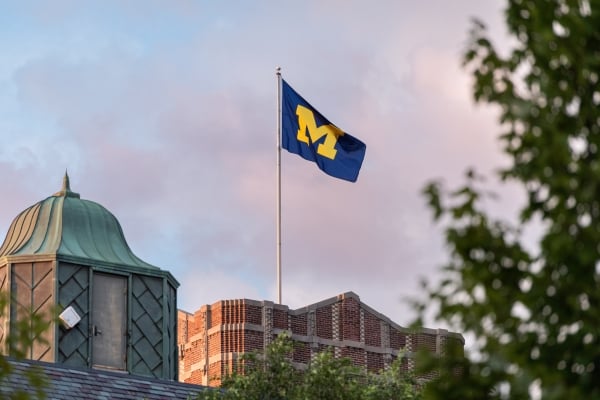
  • 3 Arrests Made at University of Michigan Protest

    3 Arrests Made at University of Michigan Protest

    Courtesy of the University of Michigan.

    Three pro-Palestinian protesters were arrested on the University of Michigan campus Wednesday, MLive Media Group, a local news organization, reported.

    The TAHRIR Coalition, a campus student group, led the protest in response to an event held by the university’s Students Supporting Israel chapter, which featured several Israel Defense Forces soldiers.

    Melissa Overton, the university’s deputy chief of public safety and security, told MLive that the individuals arrested were not affiliated with the university. She said the protesters blocked the exit to an underground parking garage and refused to move when ordered to. 

    They were charged with resisting and obstructing police, attempting to disarm an officer, disorderly conduct, and outstanding warrants, Overton said. The case has been forwarded to a prosecutor, she noted.

    Erek Mirque, a member of TAHRIR, told MLive that the arrests came as a surprise and that he was unaware of any confrontation with officers before the arrests.

    “We did not expect the situation to escalate the way that it did,” he said.

    Source link

  • Creating a campus where all accents are welcome

    Creating a campus where all accents are welcome

    This blog was kindly authored by Dr Gisela Tomé Lourido (@gisetomelourido.bsky.social), Associate Professor in Sociophonetics at the University of Leeds and Niamh Mullen, Associate Professor in English for Academic Purposes at the University of Leeds.

    ‘All Accents Welcome’ campaign launch

    Everyone has an accent – a way of speaking that reflects different aspects of our identities

    Accent variation is a natural feature of spoken language, shaped by our social, geographical, and cultural backgrounds. This diversity enriches our academic and professional environments by bringing a wider range of perspectives and ways of thinking.

    Despite this, the linguistic diversity of staff and students is typically overlooked in higher education strategies, discourse and practices. Additionally, accent bias – the automatic associations we make based on how someone speaks – is rarely discussed in academic settings.

     Yet, in the UK, 30% of university students report having their accent mocked or criticised in academic contexts. Similarly, 25% of professionals report experiencing accent-related bias in workplace settings. Recent research conducted by the first author and Professor Julia Snell, and reported in an earlier HEPI blog, has shown that these forms of microaggressions can damage university students’ confidence, reduce participation, and affect their sense of belonging and wellbeing.

    At the University of Leeds, we have launched the “All Accents Welcome” campaign: an initiative designed to raise awareness of the importance of accents to individuals’ identities. It highlights how accent bias can affect students’ and colleagues’ experiences and opportunities at university, while promoting the value of the diverse voices that strengthen our community, from all corners of the UK and the world.  

    As one contributor to the campaign put it:

    My accent is an integral part of who I am. It’s like my cultural identity, my roots.

    A campaign amplifying the voices of our community

    At the heart of the campaign is a video featuring staff and students sharing what their accents mean to them, and reflecting on the biases they have encountered. 

    Through the campaign, we present the University’s new Accent Equality Statement, a policy commitment to welcoming and respecting all accents, the statement aligns with broader institutional efforts to address class, race, gender, and other forms of inequality.

    Why accent bias should be on every higher education institutions’s agenda

    In the UK, self-consciousness and anxiety about accent bias are highest during university, more than at any other life stage. Judgements about accents are rarely about how someone speaks; they’re about who is speaking. Accent bias is deeply entangled with perceptions of class, race, nationality, gender, sexuality, and disability. It disproportionately affects students who are already navigating structural barriers, particularly those from working-class, racially minoritised, or multilingual backgrounds.

    Another contributor to the “All Accents Welcome” campaign said: “I thought twice before speaking in class because I thought I would be mocked at just because the way I spoke.” 

    For many students, accent bias adds another layer of complexity to their university experience. It influences how they are heard, how they participate, and how they succeed, not just at university, but in their future careers. While this is fundamentally an equity issue, it also affects key institutional metrics, including student satisfaction, outcomes, continuation, and employability. Yet, it remains under-recognised in most institutional equity and inclusion strategies.

    We believe that tackling accent bias must become a sector-wide priority. That means taking a collaborative, interdisciplinary, and holistic approach to create a cultural change where linguistic diversity is recognised as an asset and mocking, and questioning someone’s accent is de-normalised. In our earlier HEPI blog, we outlined four actionable recommendations for higher education institutions:  

    1. Raise awareness of the value of linguistic diversity and the impact of accent bias in Higher Education. Deliver campaigns, workshops, and talks using real stories, data, and interactive activities.
    2. Embed action to tackle accent bias into policy and practice. Revise institutional policies to include linguistic diversity and accent bias explicitly; incorporate training on accent bias into students and staff induction, and teaching, tutoring, and leadership development; and ensure assessment criteria and feedback are inclusive.
    1. Create report and support routes for students and staff who are the target of linguistic discrimination. Complement these with training staff providing support to students.
    2. Evaluate impact and identify areas for further change to ensure that efforts to tackle accent bias are effective, sustainable, and responsive to their specific contexts.

    From statement to action

    At the University of Leeds there is a growing community of staff and students committed to addressing accent bias and embedding this work into institutional practice. The campaign was co-designed with students, academic and professional services staff, and representatives from Leeds University Union, ensuring it reflects a wide range of lived experiences. It forms part of the work of the University’s institutional working group “Tackling Accent Bias”, which is focused on translating the statement into policy and practice, guided by the recommendations outlined above.

    Join the conversation

    We invite colleagues across the sector to watch our “All Accents Welcome” video and join us in reflecting on how accent bias may be operating in their own institutions. What assumptions do we make based on how someone speaks? How do those assumptions shape our interactions, decisions, and environments?

    Source link

  • Student-parents belong on college campuses. So do their children

    Student-parents belong on college campuses. So do their children

    Too many student-parents never make it to graduation, in no small part because their campuses don’t adequately help them fit college into their lives — or even just fit in.

    Yet over 3 million student-parents across the nation, myself included, are pursuing higher education, seeking the intergenerational benefits that come with earning a degree. To reap them, we must overcome many obstacles, as colleges aren’t designed for students like us.

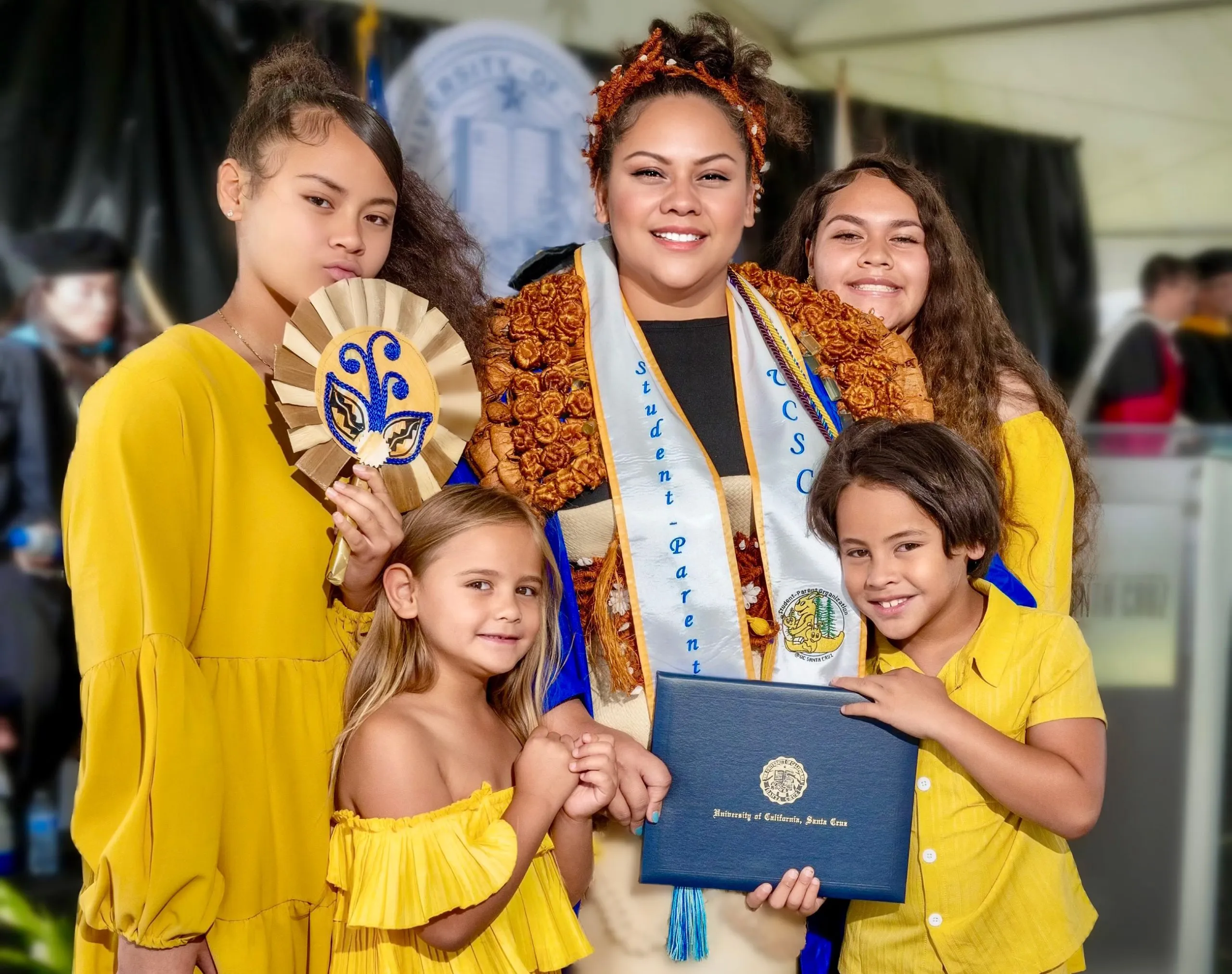
    For me, the last hurdle I had to clear was graduation itself. After years of sacrifice — not just my own, but my whole family’s — walking the stage with my four children at my graduation from the University of California, Santa Cruz was deeply important.

    The university, however, didn’t understand that or account for us. When I asked to accept my diploma with my kids, I was met with resistance, a particularly tough reminder of the work institutions have left to do to meet the needs and priorities of student-parents.

    Related: Interested in innovations in higher education? Subscribe to our free biweekly higher education newsletter.

    Earning my college degree in my late 30s was undoubtedly a major achievement, but so was going back for my bachelor’s in the first place — I didn’t even finish high school the first time around.

    After I became a mom at 20, I earned my GED, hoping it would help me support my family. Continuing my education only got harder. I started and stopped community college more times than I can count, juggling bills, jobs, custody battles and parenting.

    Finally, I transferred to UCSC, proud that I was taking this step two decades in the making and changing the trajectory of my and my family’s lives.

    However, I didn’t fully realize what my education would cost my children. Used to our tight-knit Tongan community, they felt like cultural outsiders when we moved to Santa Cruz, no longer surrounded by family, our native language or familiar foods and music.

    My children sacrificed their home and sense of belonging so that I could pursue this dream. As graduation approached, I knew I wanted to walk the stage with them. They had earned it just as much as I had.

    Yet the administration denied my request, citing the added logistical difficulties. They suggested I bring my kids to a separate, informal celebration for those of us living in family student housing instead. The offer sounded like “be invisible or settle for less.”

    I immediately started mobilizing UCSC’s Student Parent Organization, where I was president. Working with the student government, I drafted a resolution permitting student-parents to walk with their children. I reached out to alumni, administrators, fellow parents and friends for support.

    Thanks to our collective voice, the dean of students changed his mind, offered an apology and committed to changing the policy going forward for all graduating student-parents. Though my kids and I were placed at the end of the ceremony, we crossed the stage together as a family.

    That seed of inclusion will grow in them, just like it will for all the children of student-parents who walk that path in the future.

    The next year, my mentee and friend walked with her son at the UCSC commencement, this time without pushback. The university invited them to rehearsal, and on graduation day, they had VIP seats. She was one of the first to walk, not the last.

    That is the power of advocacy. It turns exclusion into inclusion. It rewrites the rules not just for one person, but for those who come after. I am proud to continue my advocacy work as a graduate student at the University of San Francisco and a member of The California Alliance for Student Parent Success.

    I have since seen institutions across California make good progress on their efforts to support student-parents, but colleges and universities nationwide must still do more. At the University at Buffalo, university police chased a graduating student across the stage when he attempted to bring his infant son with him.

    Related: A federal program helped student-parents thrive. Now it’s on life support

    These stories and the momentum building in the wake of September’s National Student Parent Month should serve as a call to higher education leaders across the country to cultivate campus climates that build trust and belonging among student-parents.

    This work should start before we even step foot on campus and continue until we graduate.

    Institutions that truly wish to serve families will ensure that the value we bring to higher education is visible. They will account for student-parents when planning campus events and weave together support networks of faculty, staff and peers who can respond to our needs.

    When we ask institutions for policies and practices to better accommodate our families, they will listen and act. They will hold themselves accountable to all of their students, parents included.

    Walking the stage with my kids was a step in the right direction, albeit an uphill climb. Let’s keep going and do better by student-parents and their families.

    Krystle Pale is a UC Santa Cruz graduate, a mother of five and a recent Advisory Committee member of The California Alliance for Student Parent Success.

    Contact the opinion editor at [email protected].

    This story about student-parents was produced by The Hechinger Report, a nonprofit, independent news organization focused on inequality and innovation in education. Sign up for Hechinger’s weekly newsletter.

    The Hechinger Report provides in-depth, fact-based, unbiased reporting on education that is free to all readers. But that doesn’t mean it’s free to produce. Our work keeps educators and the public informed about pressing issues at schools and on campuses throughout the country. We tell the whole story, even when the details are inconvenient. Help us keep doing that.

    Join us today.

    Source link