Category: Featured

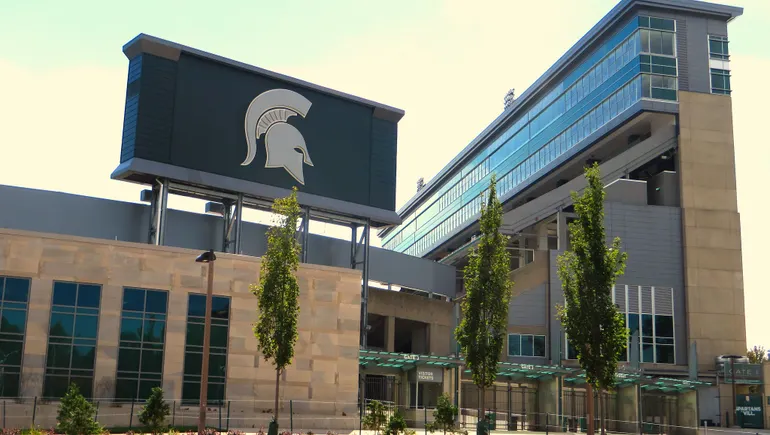
  • Michigan State University lays off 99 employees

    Michigan State University lays off 99 employees

    This audio is auto-generated. Please let us know if you have feedback.

    Dive Brief:

    • Michigan State University is laying off 99 faculty, staff and executives this month amid rising costs and other budget pressures, President Kevin Guskiewicz said in a public message Wednesday
    • The university had cut an additional 83 employees since March because of the Trump administration’s revocation of federal research funding. Taken together, the job cuts represent 1.3% of Michigan State’s workforce.
    • Officials expect the job eliminations to save the university $50 million annually. “Today we expect the overall general fund budget to be largely on target,” Guskiewicz said.

    Dive Insight:

    In explaining the layoffs, Guskiewicz pointed to rising costs, including significant increases in employee healthcare costs. The institution’s operating expenses generally have risen as well, a sectorwide trend playing out across the country.

    Between the fiscal years 2023 and 2024, Michigan State’s operating expenses rose 10% to $3.2 billion, according to its latest financial report. They rose 17.9% between fiscal years 2020 and 2024.

    Revenue hasn’t kept pace, and the university’s operating loss widened by nearly a quarter to $840 million in fiscal 2024. However, with state funding and other outside revenue sources factored in, the university’s total net position more than tripled during the same period.

    Along with inflation, federal funding disruptions have weighed on Michigan State’s budget. 

    By Oct. 1, the Trump administration had terminated 74 federally funded projects at the university, totaling $104 million in multiyear grants and contracts, according to Guskiewicz. Those include grants from the National Science Foundation, the U.S. Agency for International Development, the National Endowment for the Humanities, the National Institutes of Health and the U.S. Department of Agriculture.

    Another 86 research projects, at minimum, have been hit with stop-work orders, pauses on future funding or conditional terminations, Guskiewicz said. 

    Enrollment has been a bright spot for the university, with its fall headcount hitting 51,838 students, according to institutional data. 

    This total is close to our predictions and will keep us on the budget path we have laid out,” Guskiewicz said. Michigan State’s undergraduate class this semester hit a record 41,415 students.

    However, he noted recent declines in international enrollment have weighed on tuition revenue. International students made up 8.2% of Michigan State’s student body in fall 2025, down from 8.5% last year. Their share of the university’s enrollment has almost halved since 2015, when they made up 15% of its students.

    Michigan State’s colleges and administrative units have been working since the summer to cut their budgets by 9%. 

    I am proud of units achieving as many savings as possible through non-personnel actions and evaluating vacancies before filling open roles,” Guskiewicz said. “Nearly two-thirds of the reductions, in fact, were proposed across supplies, services and other non-personnel expenses.”

    But, he added, Michigan State wasn’t entirely able to avoid layoffs, hence the round of workforce cuts announced this week. 

    These colleagues are valuable parts of our community, and their loss, for any reason, is still felt by colleges and programs,” Guskiewicz said.  

    The layoff numbers don’t include those whose employment classification changed, or faculty whose contracts were not renewed. However, Guskiewicz said it was difficult to quantify how many of those contract nonrenewals were related to the budget cuts or other factors such as enrollment levels or course demand.
    Source link

  • As temperatures rise, math performance drops

    As temperatures rise, math performance drops

    This audio is auto-generated. Please let us know if you have feedback.

    Dive Brief:

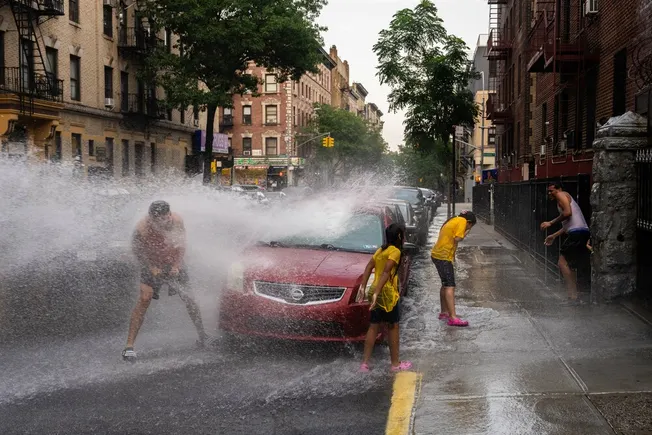
    • Academic performance drops when temperatures rise, according to a study released Thursday by the NWEA. When test-day temperatures clocked over 80 degrees, students had lower math MAP Growth scores, the organization that administers the assessment found. 

    • Extreme heat affects high-poverty students especially. The NWEA study found that high heat negatively impacted math scores up to twice as much for students in high-poverty schools than for those from low-poverty schools.

    • The study recommends educators set testing schedules around weather conditions when possible, create better testing conditions by moving testing to cooler areas and testing during the morning, invest in updated HVAC infrastructure, and ensure that districts’ infrastructure planning takes into account high-poverty communities. 

    Dive Insight:

    In 2020, over half of the nation’s schools (54%) needed to update or replace multiple building systems or features in their schools, according to a report released by the Government Accountability Office. About 41% of public school districts needed to update or replace the HVAC systems in at least half of their schools, according to the report. 

    “If not addressed, such problems can lead to indoor air quality problems and mold, and in some cases caused schools to adjust schedules temporarily,” the GAO report found.

    At the same time, the school year is getting hotter.

    Heat waves impact schools “seemingly everywhere,” according to the Climate Action Campaign, including in Arizona, Georgia, Michigan and Wisconsin. In August, for example, schools in Portland, Oregon, closed early in anticipation of a heat wave, according to local reports.

    And by this year, about 2,671 additional school districts were expected to log 32 or more days of weather over 80 degrees —  the heat threshold where cooling systems are typically installed. That number of school districts is a 39% increase since 1970, according to a 2021 project by the Center for Climate Integrity

    Such climate changes impact academics, a finding confirmed by the NWEA study released Thursday. 

    It gathered data from nearly 3 million MAP Growth tests administered to students in grades 3-6 across six states between 2022 and 2024. The study found that on days hotter than 101 degrees, students’ math performance was about 0.06 standard deviations below students who tested in 60 degree weather. The difference is about 10% of a 5th grader’s learning during a school year.

    “Our findings show that as temperatures continue to rise, disparities in school facilities, such as having appropriate HVAC systems, can deepen existing inequities and make school infrastructure and building conditions significant issues of educational equity,” said Sofia Postell, research analyst at NWEA, in a Thursday statement.

    The findings expand on previous ones examining heat’s impacts on student achievement. 

    In 2020, a study published by the American Economic Association found that “heat directly disrupts learning time,” and that without air conditioning, a school year hotter by 1 degree reduces that year’s learning by 1%. The same study also found that hot school days disproportionately impact minority students, and even account for about 5% of the racial achievement gap.

    Source link

  • Feds launch site for employers to pay controversial H-1B fee, clarify exemptions

    Feds launch site for employers to pay controversial H-1B fee, clarify exemptions

    This audio is auto-generated. Please let us know if you have feedback.

    Dive Brief:

    • The U.S. Treasury Department launched an online payment website for employers to pay President Donald Trump’s $100,000 fee on new H-1B visa petitions, according to an update Monday from the U.S. Citizenship and Immigration Services.
    • USCIS said the fee applies to new H-1B petitions filed on or after Sept. 21 on behalf of beneficiaries who are outside the U.S. and do not have a valid H-1B visa, or whose petitions request consular notification, port of entry notification or pre-flight inspection. Payment must be made prior to filing a petition with USCIS, per the agency.
    • Separately, USCIS’ update clarified that the fee requirement does not apply to petitions requesting an amendment, change of status or extension of stay for noncitizens who are inside the U.S., if that request is granted by USCIS. If it is not granted, then the fee applies.

    Dive Insight:

    Trump’s proclamation announcing the H-1B fee left employers with plenty of unanswered questions. While Monday’s update provides some clarity, the policy’s future is still uncertain in part because business groups, employers, unions, lawmakers and other stakeholders oppose it.

    At least two lawsuits have been filed seeking to enjoin the fee proclamation — one by the U.S. Chamber of Commerce in Washington, D.C., and another by a group of plaintiffs in California. Both similarly alleged that the H-1B fee violates the constitutional separation of powers as well as the Administrative Procedure Act. The complaints also warned of negative effects on U.S. employers that depend on the H-1B program to attract skilled foreign workers.

    In a letter to Trump and Secretary of Commerce Howard Lutnick, a bipartisan group of congressional lawmakers agreed to the need for reform of the H-1B program while expressing concerns about the potential effects of the fee on U.S. employers’ ability to compete with their global counterparts for talent.

    “The recently announced H-1B visa changes will undermine the efforts of the very catalysts of our innovation economy — startups and small technology firms — that cannot absorb costs at the same level as larger firms,” the lawmakers wrote.

    Trump and the White House have said the fee is necessary to combat “systemic abuse” of the H-1B program by employers that seek to artificially suppress wages at the cost of reduced job opportunities for U.S. citizens. In addition to the fee imposed on new visa petitions, the administration issued a proposed rule to change its selection process for H-1B visas to be weighted in favor of higher-paying offers.

    USCIS’ guidance noted that the Secretary of Homeland Security may grant other exceptions to the H-1B fee in “extraordinarily rare” circumstances where:

    • A beneficiary’s presence is in the national interest.
    • No American worker is available to fill the role.
    • The beneficiary does not pose a threat to U.S. security or welfare.
    • Requiring payment from the employer would significantly undermine U.S. interests.

    The agency provided an email address to which employers could send requests for fee exemption along with supporting evidence.

    Employers planning to file for new H-1B visas should plan to pay the fee unless litigation results in some kind of change, Akshat Divatia, attorney at law firm Harris Sliwoski, wrote in an article Tuesday. Divatia noted that some of the criteria for exemptions outlined by USCIS may conflict with congressional design of the H-1B program, and that employers “should watch closely how the courts respond” to such arguments.

    Source link

  • Everyone’s a free-speech hypocrite | The Foundation for Individual Rights and Expression

    Everyone’s a free-speech hypocrite | The Foundation for Individual Rights and Expression

    This essay was originally published in The New York Times on Sept. 23, 2025.


    If you’re a free-speech lawyer, you face a choice: Either expect to be disappointed by people of all political stripes — or go crazy. I choose low expectations.

    Again and again, political actors preach the importance of free speech, only to reach for the censor’s muzzle when it helps their side. If, like me, you defend free speech as a principle rather than invoke it opportunistically, you get distressingly accustomed to seeing the same people take opposite positions on an issue, sometimes within the space of just a few months.

    On the first day of his second presidential term, for example, Donald Trump signed an executive order titled “Restoring Freedom of Speech and Ending Federal Censorship,” castigating the Biden administration for pressuring online platforms to censor Americans’ speech. Last Thursday Mr. Trump mused that when broadcasters portray him negatively, “maybe their license should be taken away.”

    Or consider hate speech. The concept was developed in the 1980s by leftist legal scholars like Richard Delgado and Mari Matsuda, and it shaped the campus speech codes and so-called political correctness of the 1990s. Intellectuals on the right were quick to contest the idea of hate speech — U.S. law does not recognize a general hate-speech exception to the First Amendment, and never has. Charlie Kirk rejected the idea of using hate speech rationales to crack down on free speech. Yet after Mr. Kirk’s assassination, Republicans rushed to promise crackdowns on hateful expression, deploying the same concept.

    Critics of the idea of hate speech, including my organization, have long warned that the concept is so vague and broad that it provides a handy weapon to censor almost any opinion.

    Last week, Attorney General Pam Bondi vowed that “we will absolutely target you, go after you, if you are targeting anyone with hate speech.” When Mr. Trump was asked about this statement by Jonathan Karl of ABC, he said that Ms. Bondi would “probably go after people like you,” and that Mr. Karl’s network — which last year settled a defamation lawsuit brought by Mr. Trump — paid “$16 million for a form of hate speech.”

    Critics of the idea of hate speech, including my organization, have long warned that the concept is so vague and broad that it provides a handy weapon to censor almost any opinion. Unfortunately we have been vindicated on this point.

    Consider, too, the fight against so-called misinformation and disinformation. The Biden administration created (and then quickly shuttered, following criticism) an advisory board at the Department of Homeland Security on the threat of disinformation. The Biden administration also pressured social media platforms to censor Americans who posted what the administration considered obvious falsehoods, including the suggestion — now considered plausible by a large assortment of mainstream institutions and experts — that the coronavirus originated from a laboratory in Wuhan, China.

    Today, the right is making the same mistakes. The late-night talk show host Jimmy Kimmel included a line in a recent monologue suggesting that Mr. Kirk’s killer was a Trump sympathizer — which prosecutors’ documents seem to contradict. In the wake of conservative outrage, ABC suspended Mr. Kimmel’s show. That was an overreaction: If partisan wishful thinking were a regulatory infraction, few comedians or commentators on the left or the right would still have a job. (ABC said on Monday that it would resume Mr. Kimmel’s show on Tuesday.)

    It’s possible that Disney, ABC’s parent company, would have punished Mr. Kimmel on its own. But the Trump administration took the initiative. Before ABC suspended Mr. Kimmel’s show, the chairman of the Federal Communications Commission, Brendan Carr, said during a podcast interview: “We can do this the easy way or the hard way. These companies can find ways to change conduct, to take action, frankly on Kimmel, or there’s going to be additional work for the F.C.C. ahead.”

    Using your opponents’ nastiest tools doesn’t persuade them to disarm; it inspires retaliation.

    And then there’s cancel culture. The right has long balked at the use of social pressure to punish conservative thinkers by, for instance, getting them fired from their jobs. The rise in cancellations that began around 2014 was initially celebrated by the left, which it defended as “consequence culture.” Now comes the inevitable role reversal. A few days ago, Vice President JD Vance urged those who saw people celebrating Mr. Kirk’s assassination to “call them out,” including by calling “their employer.”

    I don’t like having to make a case for human rights such as freedom of speech by appealing to self-interest; these are supposed to be rights whose importance transcends one’s personal needs. But for political partisans, it’s often the only argument that cuts through. So here’s my practical warning: The weapon that you reach for today will be used against you tomorrow.

    Using your opponents’ nastiest tools doesn’t persuade them to disarm; it inspires retaliation. Tit for tat, forever and ever.

    “Free speech for me, but not for thee” is an all-too-familiar impulse in politics. But the point of the principle of free speech is that how we respond to ideas we don’t like is ultimately not about our opponents’ rights — it’s about ours.

    Source link

  • Policy uncertainty emerges as top barrier to student mobility 

    Policy uncertainty emerges as top barrier to student mobility 

    While affordability remains the greatest obstacle for students, IDP Education’s new Emerging Futures survey has revealed the growing impact of sudden and unclear policy changes shaping students’ international study decisions.  

    “Students and families are prepared to make sacrifices to afford their international education dreams. They can adjust budgets, seek scholarships and rely on part-time work. But they cannot plan for uncertainty,” said IDP chief partnerships officer Simon Emmett.  

    “When the rules change, without warning or clarity, trust falls away. Students hesitate, delay, or choose to study elsewhere.” 

    Drawing on the views of nearly 8,000 international students from 134 countries between July and August 2025, the results highlighted the critical importance of study destinations communicating policy changes to sustain trust among students.  

    The US and UK were rated the lowest for providing clear guidance on visas and arrivals processes, while New Zealand was identified as the top communicator in this respect.  

    What’s more, the UK saw the steepest rise in students withdrawing from plans to study there, indicating recent policy changes including plans to shorten the Graduate Route and increase compliance metrics for universities are creating uncertainty among international students. 

    Of the students who said they were pivoting away from major study destinations, over half (51%) indicated tuition fees had become unaffordable and one in five said it was too difficult to obtain a visa.  

    In markets such as Malaysia, the Philippines and the UAE, students reported delaying or redirecting applications almost immediately after unclear announcements by major destinations, the report said. 

    Meanwhile Canada’s share of withdrawals was shown to have eased, indicating messaging is helping to rebuild stability, the authors suggested, though Canadian study permit issuance has fallen dramatically in 2025.

    Without that stability, even the most attractive destinations risk losing trust

    Simon Emmett, IDP

    Despite policy disruptions in Australia over recent years, the country remained the most popular first-choice destination globally, ranked highly for value for money, graduate employment opportunities and post-study work pathways.  

    At the same time, many respondents flagged sensitivities to recent visa and enrolment changes, highlighting the need for consistent and transparent messaging to maintain Australia’s competitiveness, according to IDP.  

    The US saw the largest decline in popularity, dropping to third place behind Australia and the UK. 

    NAFSA CEO Fanta Aw said the findings should serve as a “wake-up call” that policy uncertainty has real human and economic costs, emphasising the need for “clear and consistent” communication from institutions and policymakers.  

    “Students are paying close attention to how the US administration handles student visas and post-study experiential learning opportunities like Optional Practical Training,” said Aw. 

    Visa restrictions and policy hostility have rocked the US under Trump’s second presidency, with global visa appointments suspended for nearly a month this summer, as well as thousands of student visa revocations and travel restrictions on 12 nations.  

    Post-study work opportunities are increasingly fragile in the US with government plans to overhaul the H-1B skilled worker visa to favour better paid jobs and OPT coming under increased scrutiny from policymakers. 

    Emmett highlighted the knock-on effect of these policy shocks, with student journeys being disrupted “not by ambition, but by uncertainty”. 

    “Countries that provide predictability will win the confidence of students and their families. Without that stability, even the most attractive destinations risk losing trust,” he said. 

    Despite financial and political challenges, demand for global study remained strong, with half of all prospective students intending to apply within six months, and a further 29% within a year. 

    South Asia emerged as the main driver of intent, with more than 60% of students surveyed from India, Pakistan and Bangladesh preparing near-term applications, though this region was also the most sensitive to abrupt or confusing policy shifts.  

    Source link

  • What the hell is going on at Indiana University?

    What the hell is going on at Indiana University?

    Indiana University banned its student newspaper from printing just days before homecoming weekend — after firing the paper’s advisor when he refused to censor critical coverage. 

    That would be bad enough on its own, but FIRE is taking this one personally, as the Indiana Daily Student reported this hostile campaign was due in part to its coverage of FIRE’s ranking Indiana University as the worst public university for free speech.

    You read that right. The school’s response to the news that they are bad at free speech … is to censor the news. It’s ironic — and not just in the Alanis Morissette sense — that these actions will likely push its overall ranking even lower next year. At least we can’t fault them for consistency.

    Take action now — tell Indiana University it can’t fire a free press

    And to make sure the school’s odious status fully benefits from the Streisand effect, we want to explain in excruciating detail exactly how the school earned such a low ranking. 

    “The president has called snipers on protestors before.” 

    That’s what one IU student told FIRE when asked for our annual survey to describe a time they felt they could not express their views on campus because of how other students, faculty, or administrators would respond. Another student told us:

    “When I, as a student leader and representative of my entire campus, had a sniper gun pointed at me when trying to defend a protest that was in compliance with school policies.”

    Both comments refer to how IU handled the pro-Palestinian protest encampments in the spring of 2024. On the eve of the protest at Dunn Meadow — a campus green space where students set up “shantytowns” in 1986 to protest and demand divestment from apartheid South Africa — administrators held an 11th-hour meeting and enacted a more restrictive speech policy banning unauthorized structures such as tents. The next day, they called in state police. That’s when officers with sniper rifles took position on the Indiana Memorial Union roof.

    The year prior, IU ranked 243 out of 251 schools in our College Free Speech Rankings and was the second-worst public university overall. This year, after the sniper incident, IU ranks 255 out of 257 schools — performing poorly in terms of openness (255), administrative support (251), self-censorship (246), and comfort expressing ideas (227). 

    2026 College Free Speech Rankings: America’s colleges get an ‘F’ for poor free speech climate

    The sixth annual College Free Speech Rankings show a continued decline in support for free speech among all students, but particularly conservatives.


    Read More

    When asked this year whether they had ever been disciplined or threatened with discipline for their expression on campus, roughly a quarter of IU students said yes. 2% said they had been disciplined and 21% said they had been threatened with it. 

    We told you IU was a bad place for free speech.

    IU faculty agree. Almost three-quarters of those we surveyed last year from March 4 to May 13 said it is “not at all” or “not very” clear that the administration protects free speech on campus, while 69% said academic freedom is “not at all” or “not very” secure on their campus.

    In April 2024, faculty launched a petition calling for a vote of “no confidence” in the university’s leadership. They cited encroachments on academic freedom and shared governance, highlighting examples that raised concerns about viewpoint discrimination. These included the university’s suspension of associate professor Abdulkader Sinno from his advising role after he publicly criticized the university for denying a room reservation to the Palestine Solidarity Committee, a student group he advised, as well as its cancellation of an art exhibit and talk featuring Palestinian artist Samia Halaby at its campus museum. 

    That no-confidence resolution passed, with 93% of the 948 faculty members in attendance voting in favor.

    Those two incidents negatively impacted IU’s performance in the 2025 College Free Speech Rankings, and the cancellation of Halaby’s exhibition and talk also hurt IU in this year’s rankings.

    But that’s not all. This year, IU was also penalized for: 

    • Postponing a campus event featuring prominent pro-Israel activist and Hamas critic Mosab Hassan Yousef after multiple student groups, including the Palestine Solidarity Committee and the Middle Eastern Student Association, criticized the event and called Yousef “Islamophobic.” IU told Yousef that it was postponing the event because of “security threats involving the Muslim community and several white supremacist groups.” The event was not rescheduled.
    • Failing to stop student protesters from disrupting a talk between Senator Jim Banks and Libs of TikTok’s Chaya Raichick by pushing and harassing attendees, chanting to disrupt the event, and accusing the speakers of supporting “genocide” and “killing children.” The discussion was halted as police removed several protesters. The event then continued without further disruption.
    • Canceling the LGBTQ+ Health Care Conference after President Trump issued executive orders restricting the use of federal funds for DEI initiatives.
    • Banning three students from campus for a year after they were arrested for trespassing during the aforementioned suddenly out-of-bounds pro-Palestinian encampment in Dunn Meadow.

    And then, last week, the school fired its Director of Student Media Jim Rodenbush and then doubled down on its censorship efforts by ordering the student newspaper Indiana Daily Student to cease its print publication because it published two stories about the school suspending the Palestine Solidarity Committee and about how the school was the worst-ranked public university in FIRE’s College Free Speech Rankings

    Front page of Indiana Daily Student Homecoming Edition on Thursday, October 16, 2025.https://issuu.com/idsnews/docs/indiana_daily_student_homecoming_eedition_-_thursd

    We told you Indiana University was a bad school for free speech. In fact, it’s literally one of the worst. And the public is as outraged as we are — so far, over 1,700 people have sent our Take Action email to IU President Pamela Whitten telling her she can’t censor a free press.

    Congratulations Indiana, you’ve managed to outdo yourself. See you at the bottom next year.

    Source link

  • What the hell is going on at Indiana University?

    What the hell is going on at Indiana University?

    Indiana University banned its student newspaper from printing just days before homecoming weekend — after firing the paper’s advisor when he refused to censor critical coverage. 

    That would be bad enough on its own, but FIRE is taking this one personally, as the Indiana Daily Student reported this hostile campaign was due in part to its coverage of FIRE’s ranking Indiana University as the worst public university for free speech.

    You read that right. The school’s response to the news that they are bad at free speech … is to censor the news. It’s ironic — and not just in the Alanis Morissette sense — that these actions will likely push its overall ranking even lower next year. At least we can’t fault them for consistency.

    Take action now — tell Indiana University it can’t fire a free press

    And to make sure the school’s odious status fully benefits from the Streisand effect, we want to explain in excruciating detail exactly how the school earned such a low ranking. 

    “The president has called snipers on protestors before.” 

    That’s what one IU student told FIRE when asked for our annual survey to describe a time they felt they could not express their views on campus because of how other students, faculty, or administrators would respond. Another student told us:

    “When I, as a student leader and representative of my entire campus, had a sniper gun pointed at me when trying to defend a protest that was in compliance with school policies.”

    Both comments refer to how IU handled the pro-Palestinian protest encampments in the spring of 2024. On the eve of the protest at Dunn Meadow — a campus green space where students set up “shantytowns” in 1986 to protest and demand divestment from apartheid South Africa — administrators held an 11th-hour meeting and enacted a more restrictive speech policy banning unauthorized structures such as tents. The next day, they called in state police. That’s when officers with sniper rifles took position on the Indiana Memorial Union roof.

    The year prior, IU ranked 243 out of 251 schools in our College Free Speech Rankings and was the second-worst public university overall. This year, after the sniper incident, IU ranks 255 out of 257 schools — performing poorly in terms of openness (255), administrative support (251), self-censorship (246), and comfort expressing ideas (227). 

    When asked this year whether they had ever been disciplined or threatened with discipline for their expression on campus, roughly a quarter of IU students said yes. 2% said they had been disciplined and 21% said they had been threatened with it. 

    We told you IU was a bad place for free speech.

    IU faculty agree. Almost three-quarters of those we surveyed last year from March 4 to May 13 said it is “not at all” or “not very” clear that the administration protects free speech on campus, while 69% said academic freedom is “not at all” or “not very” secure on their campus.

    In April 2024, faculty launched a petition calling for a vote of “no confidence” in the university’s leadership. They cited encroachments on academic freedom and shared governance, highlighting examples that raised concerns about viewpoint discrimination. These included the university’s suspension of associate professor Abdulkader Sinno from his advising role after he publicly criticized the university for denying a room reservation to the Palestine Solidarity Committee, a student group he advised, as well as its cancellation of an art exhibit and talk featuring Palestinian artist Samia Halaby at its campus museum. 

    That no-confidence resolution passed, with 93% of the 948 faculty members in attendance voting in favor.

    Those two incidents negatively impacted IU’s performance in the 2025 College Free Speech Rankings, and the cancellation of Halaby’s exhibition and talk also hurt IU in this year’s rankings.

    But that’s not all. This year, IU was also penalized for: 

    • Postponing a campus event featuring prominent pro-Israel activist and Hamas critic Mosab Hassan Yousef after multiple student groups, including the Palestine Solidarity Committee and the Middle Eastern Student Association, criticized the event and called Yousef “Islamophobic.” IU told Yousef that it was postponing the event because of “security threats involving the Muslim community and several white supremacist groups.” The event was not rescheduled.
    • Failing to stop student protesters from disrupting a talk between Senator Jim Banks and Libs of TikTok’s Chaya Raichick by pushing and harassing attendees, chanting to disrupt the event, and accusing the speakers of supporting “genocide” and “killing children.” The discussion was halted as police removed several protesters. The event then continued without further disruption.
    • Canceling the LGBTQ+ Health Care Conference after President Trump issued executive orders restricting the use of federal funds for DEI initiatives.
    • Banning three students from campus for a year after they were arrested for trespassing during the aforementioned suddenly out-of-bounds pro-Palestinian encampment in Dunn Meadow.

    And then, last week, the school fired its Director of Student Media Jim Rodenbush and then doubled down on its censorship efforts by ordering the student newspaper Indiana Daily Student to cease its print publication because it published two stories about the school suspending the Palestine Solidarity Committee and about how the school was the worst-ranked public university in FIRE’s College Free Speech Rankings

    We told you Indiana University was a bad school for free speech. In fact, it’s literally one of the worst. And the public is as outraged as we are — so far, over 1,700 people have sent our Take Action email to IU President Pamela Whitten telling her she can’t censor a free press.

    Congratulations Indiana, you’ve managed to outdo yourself. See you at the bottom next year.

    Source link

  • Most Students Pay Out-of-Pocket For Non-Degree Credentials

    Most Students Pay Out-of-Pocket For Non-Degree Credentials

    As Americans earn non-degree credentials in droves, many are paying for these programs out of pocket, according to a new report from The Pew Charitable Trusts.  

    The report, released Thursday, analyzed 2022 data from a new national survey of over 15,000 American adults fielded by the U.S. Census Bureau, called the National Training, Education, and Workforce Survey. The data included individuals who attained vocational certificates at a higher ed institution, such as a community college or trade school, as well as active industry licenses or personal certifications, like a teaching license.

    Interest in non-degree credential programs has exploded in recent years, the data showed. The rate at which Americans earned non-degree credentials tripled between 2009 and 2021. The annual vocational certificate attainment rate jumped from about 0.4 percent of U.S. adults to about 1.2 percent over that period, while the professional license attainment rate rose from about 0.5 percent to around 1.6 percent. More than a third (34 percent) of adults surveyed held a non-degree credential.

    Meanwhile, enrollment in degree programs has trended downwards. Both bachelor’s degree and associate degree enrollments fell between spring 2020 and spring 2025, by 1.1 percent and 7.8 percent respectively. (However, the analysis also found students often earned non-degree credentials on top of degrees. Slightly over half of adults who hold these credentials earned degrees, as well.)

    But even though non-degree credentials are “skyrocketing” across the country, “we know very little about how students pay for these programs,” said Ama Takyi-Laryea, a senior manager of Pew’s student loan initiative.

    The new data offers some answers. Most non-degree credential earners reported using their own money to pay for programs—51 percent of vocational certificate holders and 71 percent of professional license holders. Roughly a fifth of both groups said they took out government or private loans. Nearly a quarter (24 percent) of professional license holders and 15 percent of vocational certificate holders said they relied on employer financial support, while another 15 percent of vocational certificate earners used other kinds of scholarships. More than 60 percent of respondents used only one form of financial support to pay for their programs.

    Takyi-Laryea said these findings raise concerns, given that such programs can be “quite costly.” An Education Trust brief found that the median monthly cost of attendance for some of these programs ranges between about $2,100 and $2,500, depending on the type of provider. She wants to see further research done on how students afford these programs, including how often they use credit cards to pay program costs.

    “The outcomes for students are mixed when it comes to these programs,” she said. “And so sometimes, despite the hefty costs associated with it, students are left with unsustainable debt or with a credential of little value …More research into how students pay for these programs will protect them from riskier forms of financing.”

    Source link

  • Most Students Pay Out of Pocket for Nondegree Credentials

    Most Students Pay Out of Pocket for Nondegree Credentials

    As Americans earn nondegree credentials in droves, many are paying for these programs out of pocket, according to a new report from the Pew Charitable Trusts.

    The report, released Thursday, analyzed 2022 data from a new national survey of over 15,000 American adults fielded by the U.S. Census Bureau, called the National Training, Education and Workforce Survey. The data included individuals who earned vocational certificates at a higher ed institution, such as a community college or trade school, as well as active industry licenses or personal certifications, like a teaching license.

    Interest in nondegree credential programs has exploded in recent years, the data showed: The rate at which Americans earned nondegree credentials tripled between 2009 and 2021. The annual vocational certificate attainment rate jumped from about 0.4 percent of U.S. adults to about 1.2 percent over that period, while the professional license attainment rate rose from about 0.5 percent to around 1.6 percent. More than a third (34 percent) of adults surveyed held a nondegree credential.

    Meanwhile, enrollment in degree programs has trended downward. Both bachelor’s degree and associate degree enrollments fell between spring 2020 and spring 2025, by 1.1 percent and 7.8 percent respectively. (However, the analysis also found students often earned nondegree credentials on top of degrees. Slightly over half of adults who hold these credentials earned degrees, as well.)

    But even though attainment of nondegree credentials is “skyrocketing” across the country, “we know very little about how students pay for these programs,” said Ama Takyi-Laryea, a senior manager of Pew’s student loan initiative.

    The new data offers some answers. Most nondegree credential earners reported using their own money to pay for programs—51 percent of vocational certificate holders and 71 percent of professional license holders. Roughly a fifth of both groups said they took out government or private loans. Nearly a quarter (24 percent) of professional license holders and 15 percent of vocational certificate holders said they relied on employer financial support, while another 15 percent of vocational certificate earners used other kinds of scholarships. More than 60 percent of respondents used only one form of financial support to pay for their programs.

    Takyi-Laryea said these findings raise concerns, given that such programs can be “quite costly.” An Education Trust brief found that the median monthly cost of attendance for some of these programs ranges between $2,100 and $2,500, depending on the type of provider. She wants to see further research done on how students afford these programs, including how often they use credit cards to pay program costs.

    “The outcomes for students are mixed when it comes to these programs,” she said. “And so sometimes, despite the hefty costs associated with it, students are left with unsustainable debt or with a credential of little value … More research into how students pay for these programs will protect them from riskier forms of financing.”

    Source link

  • Can you picture your story on a big screen?

    Can you picture your story on a big screen?

    Some people would rather watch movies than read news articles.

    The thing is, an awful lot of movies came out of news articles. Consider the entire Fast & Furious movie franchise, starring Vin Diesel and my personal movie favorite Michelle Rodriguez (shout out!). It revolves around people who race souped up cars on city streets.

    The idea of the first movie started with an article by journalist Ken Li, after he saw someone steal a car in New York and that spurred him to investigate the underground world of street racing. Someone at Universal Studios saw the article and bought the rights to it. 

    Or consider the Tom Cruise movie Top Gun, about a cocky U.S. Navy pilot. The idea for that came from a story in California magazine about Navy pilots.

    How can all this help an aspiring journalist? Well, thinking about your news story as the movie that might be commissioned from it is a way of seeing the story. So how do you go about doing that?

    Visualize your story

    First, think of the characters in your story. Who are the central actors involved? Who is the Vin Diesel or Tom Cruise in your story? 

    Who does the problem you are exploring affect? Who is causing it or standing in the way of solutions? Who are the people trying to solve or mitigate the problem? In journalism, the basic story structure is Who, What, Where, When and Why. The characters are the Who of the story. 

    The most compelling movies (and news stories) revolve around conflict: What are the stakes? In Fast & Furious, one of the main conflicts is the role of Brian O’Connor, who starts out as an FBI agent investigating the car racers and then becomes loyal to them. 

    Movie scripts revolve around turning points: What could change the course? What steps are being taken to solve or mitigate the problem you are exploring? What are people or corporations or governments or organizations doing that could worsen the situation? This is the What of the story. 

    Then think about the setting: Where is the crisis playing out? The original Fast & Furious took place in Los Angeles. Top Gun took place at a naval base in San Diego, California. This is the Where of the story. 

    Finally, what drives your story is the motivation of the characters: Why do they take the actions they do? 

    In Top Gun, Tom Cruise’s character is motivated by the death of his friend Goose to be the best pilot he can be. In Fast & Furious, Vin Diesel is motivated by the death of Michelle Rodriguez’s character to seek justice. 

    Actions and motivations

    Death is a common motivation in movies — the killing of John Wick’s dog triggered one of the most successful movie franchises out there. But for non-fiction news stories, there can be all kinds of motivations: parents wanting to get their kids into good schools, communities wanting to fight crime in their neighborhoods, governments wanting to end homelessness. 

    In news stories this is the Why of the story. Why does some corporation build a plant in your community? Why does some NGO oppose a development proposal? What’s their reason and motivation?

    So now try this: Think of a problem around you that you want to explore. It could be about anything from climate change, to mental health or inequities in sports or education. Start by noting down the Who (actors), What (what’s at stake), When, Where (setting) and Why (the motivations of the characters). Then turn this into a few paragraphs as if you’re writing for a news site. 

    Start with a hook: It should be something interesting or important. Why is this a big story? Why should people care? Then summarize in one paragraph the whole story. What’s the overall problem? Where is it happening and when, how did it start, what is causing it and who is it affecting? 

    Next, slowly work through each of those elements — the who, what, where, when, how and why. There is the meat of your story. Finally, talk about what’s next. What are the solutions or mitigations happening or proposed?

    Who knows? You might get your story published and down the line a Hollywood or Bollywood producer calls you up. Now, isn’t that motivation to write a news story? Just make sure you have a good agent.


    Questions to consider:

    1. How can seeing your story as a movie help you report and write it?

    2. If your life played out as a movie, what would be the central theme?

    3. Think about the most important thing you are doing these days. What motivates you to do it?


    Source link