We asked 34 students from eight universities what they thought of higher education and what they would change. Their answers might surprise you.
Please login below to view content or subscribe now.
Membership Login


We asked 34 students from eight universities what they thought of higher education and what they would change. Their answers might surprise you.
Please login below to view content or subscribe now.
Get stories like this delivered straight to your inbox. Sign up for The 74 Newsletter
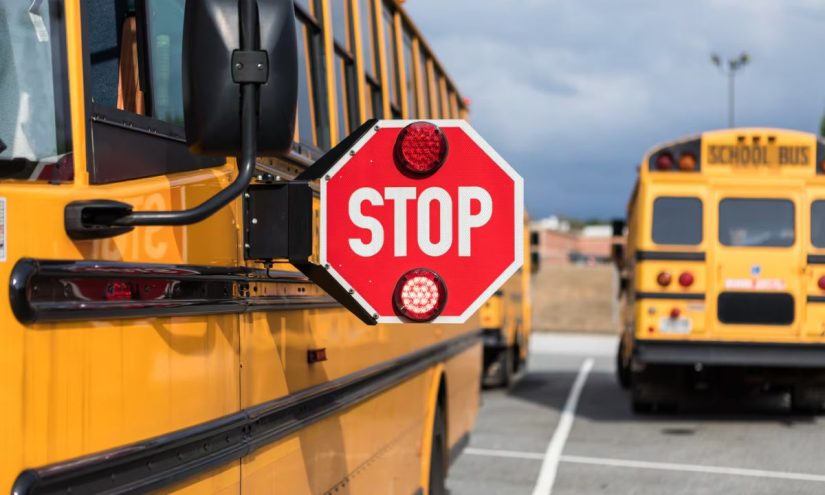
New York City’s troubled yellow school bus system is in the spotlight once again, with threats of a service disruption and looming mass layoffs due to a contract dispute with the city.
The city’s largest school bus companies notified the state Department of Labor that they are preparing to shut down operations and lay off employees on Nov. 1 if they don’t receive a contract extension, the New York Post first reported Monday.
Lawmakers, advocates, and city officials immediately condemned the bus companies’ threat, with schools Chancellor Melissa Aviles-Ramos calling the move “deeply upsetting and an act of bad faith.”
The timing of the bus company’s push, just before November’s mayoral election, for a five-year extension that would outlast the incoming mayor’s first term, “effectively bypassed the oversight of voters and elected officials who manage these vital services,” Aviles-Ramos said.
Mayoral frontrunner Zohran Mamdani agreed, telling reporters at an unrelated Tuesday press conference that the oversight panel in charge of approving the contract “is right to not give in to the threats.”
The bus companies argue they have no choice because their temporary contract is expiring and they can no longer operate without a longer-term agreement.
The episode is the latest in a long history of conflicts over how to manage the sprawling yellow bus system, which relies on a patchwork of largely for-profit companies to ferry some 150,000 students across nearly 19,000 routes each day. All told, the city spent nearly $2 billion on school busing last year.
Parents and advocates hope this clash can draw renewed attention to problems in a system notorious for delayed and no-show buses, long rides without sufficient AC, and a lack of transparency.
“There’s this tug of war over the money,” said Sara Catalinotto, the executive director of the advocacy group Parents for Improving School Transportation. “But this is a service, and without it these kids are discriminated against.”
The current dispute springs from a disagreement over how to handle the city’s “legacy” school bus contracts, which date back to the 1970s and are typically renewed every five years. They most recently expired in June.
In the months before the contracts expired, city Education Department officials signaled they were interested in rebidding the contracts, or soliciting offers from a new set of companies to more efficiently modernize buses, increase service, and strengthen sanctions for contract violations.
Simply renewing the existing contracts gives the city “far less negotiating ability … because we have to continue with this same set of vendors,” Emma Vadehra, the Education Department’s former deputy chancellor, told the City Council in May.
But city officials say they can’t move forward with rebidding without the option to offer something called the “Employee Protection Provision,” or EPP.
That protection — built into the legacy contracts for decades — ensures unionized bus workers laid off by one company are prioritized for hiring by other companies, at their existing wages. Drivers and union officials consider the provision a dealbreaker — and would almost certainly strike without it.
But city officials say a 2011 state court decision prohibits them from inserting EPP into new contracts if they rebid — and only allows them to keep EPP if they extend existing contracts. The only fix, city officials say, is changing state law — an effort that has so far stalled in Albany.
Without that state legislation, city officials faced a choice: inking another five-year extension or pushing for a shorter-term contract in the hopes state lawmakers quickly clear the way for a rebid.
While the city moved ahead with negotiations for a five-year extension, a growing number of advocates, parents, and lawmakers flooded meetings of the Panel for Educational Policy, or PEP — the body that approves Education Department contracts — to push for a shorter-term contract.
“Do not vote yes to extend for some long period of time,” said Christi Angel, a parent leader in District 75, which serves students with significant disabilities who disproportionately rely on busing, at the September PEP meeting. Roughly 43% of students who ride school buses have disabilities. “Don’t reward bad behavior,” Angel said. “This is a broken system.”
Their arguments quickly gained traction in the PEP, where multiple members expressed their opposition to a five-year extension at September’s meeting.
The panel is expected to vote on the five-year extension next month, after the mayoral election, said PEP Chair Greg Faulkner, though he would prefer to wait until the new mayor takes office in January.
“Shouldn’t the mayor-elect have some say in a billion dollar contract?” said Faulkner. “I just think that’s sound governance.”
Over the summer, the city and bus companies agreed to two emergency extensions to keep service running, the second of which expires on Oct. 31.
Without a guarantee of an active contract after that date — since the PEP is not voting this month — the bus companies claim they have no choice but to consider layoffs.
The city, however, had “long planned” to offer an emergency extension for November and December, and officials delivered the agreement to the bus companies on Monday, Aviles-Ramos said.
The PEP only votes on those extensions after they’ve already taken effect, Faulkner noted.
The bus companies, he said, are attempting to “create confusion in order to hold us hostage for a longer term agreement.”
The bus companies reject that assertion and say they simply cannot survive any longer on emergency extensions, which don’t allow them the kind of long-term certainty they need to operate their businesses.
“Banks will not finance 30-day extensions, buses can’t be bought, payroll cannot be paid,” said Sean Crowley, a lawyer representing several companies. “Enough is enough!”
The companies claim that they have already worked out the contours of a new five-year contract extension with the city and are just awaiting the PEP’s approval, though Faulkner said the Education Department hasn’t yet presented the PEP with the contract.
A spokesperson confirmed that several bus companies had received the city’s offer for another emergency contract extension and were reviewing the documents.
Aviles-Ramos said the city is working to get “alternative transportation services” in place if that falls through.
But even if the bus companies and city do manage to avoid a service shutdown Nov. 1, the episode raises larger questions about how to make lasting improvements in the troubled system. Ongoing driver shortages make that task even harder.
The bus companies argue that the five-year contract agreement they sketched out with the city would achieve many of those goals, including stricter accountability to ensure drivers use GPS tracking, more staffing to field parent complaints, and monetary penalties for companies that underperform, according to testimony submitted to the PEP in September.
But critics continue to push for a shorter-term extension to give the state legislature time to pass EPP legislation, and clear the way for a rebid.
Mamdani has not offered specifics about how he would manage the school bus system, but said Tuesday that given the many concerns about yellow bus service, any contract extension deserves a “hard look.”
Some reformers point to changes already underway. Under Mayor Bill de Blasio, the city bought out the largest bus company and turned it over to a nonprofit overseen by the city.
Matt Berlin, the CEO of that nonprofit, called NYCSBUS, and former director of the city’s Office of Pupil Transportation, believes the nonprofit model has “a lot to offer the city” and could expand.
Chalkbeat is a nonprofit news site covering educational change in public schools. This story was originally published by Chalkbeat. Sign up for their newsletters at ckbe.at/newsletters.
Did you use this article in your work?
We’d love to hear how The 74’s reporting is helping educators, researchers, and policymakers. Tell us how
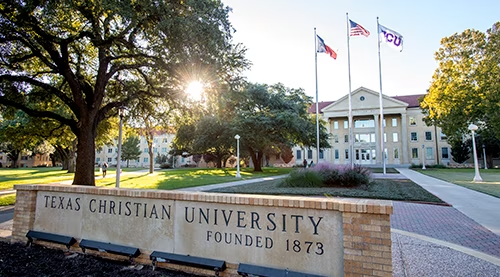
The decision, announced earlier this month, comes as higher education institutions nationwide face mounting scrutiny over programs related to diversity, equity and inclusion—particularly those focusing on gender and race. TCU officials cited low enrollment as the primary rationale, though faculty members say the timing suggests otherwise.
Discussions about restructuring or renaming the departments began in February. Those conversations centered on how to address external pressure against anything perceived as related to DEI initiatives—pressure that has intensified since the Trump administration began efforts to eliminate such programs.
Faculty members report that university messaging has been inconsistent. Last spring, they were told the two departments would merge but could not include “race” or “gender” in the combined department’s name. By August, officials indicated the merged department could retain those terms. The October announcement revealed all three units would be absorbed into the English department, which will retain its original name.
University data shows undergraduate enrollment in both departments remains minimal this fall: two seniors are majoring in women and gender studies, while nine students major in comparative race and ethnic studies—five seniors, three juniors and one sophomore.
Women and gender studies at TCU traces its roots to 1979, when professors Jean Giles-Sims and Priscilla Tate began advocating for such a program. The university formally launched it in 1994. The comparative race and ethnic studies program emerged in 2017 amid student concerns about campus climate, with its founding director telling media the program would help foster cultural change and attract a more diverse student body.
In his email to English faculty, Provost Floyd Wormley Jr.said that the restructuring aims to “ensure a more efficient and effective use of faculty and administrative resources” while maintaining fiscal sustainability.
Get stories like this delivered straight to your inbox. Sign up for The 74 Newsletter
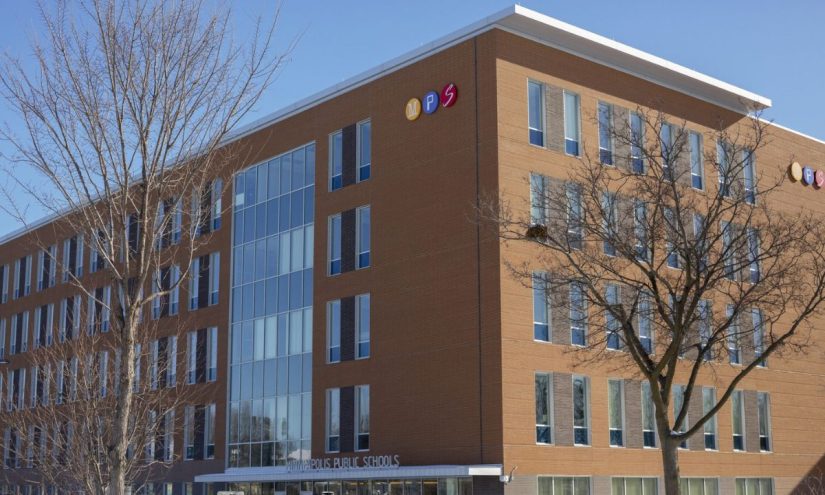
The Minneapolis school board has formally asked Superintendent Dr. Lisa Sayles-Adams for information that could lead to school closures. They passed a resolution to the effect at a recent meeting.
The board first drafted the directive —which asks for an initial report to the board by April 2026 — at two day-long meetings in June and August. The planning follows years of discussion about closing schools in a district with 29,000 students but the capacity for 42,000 and thus a bevy of half-empty schools.
Even as enrollment declines at a school building, the fixed expenses for building staff — like principals, secretaries, nurses, librarians, culinary workers, custodians and social workers — stay the same or go up. With so many buildings below capacity, a big portion of each Minneapolis student’s funding has to go toward covering these fixed building-level costs, draining money away from instruction and extracurricular activities.
The board resolution comprises topics for district administrators to investigate, including efficient use of current buildings, potential changes to magnet programs, and ways to increase enrollment in the district.
The process for downsizing the district’s footprint has been long and circuitous.
In October 2022, the district prepared a comprehensive financial assessment forecasting that without significant cost cutting, the district would end up draining its reserves, while expenses would exceed revenues by the end of fiscal year 2026. The district has avoided that fate by cutting services and raising class sizes, but it is still unable to balance its budget without relying on reserves and other one-time funds.
The 2022 memo did not prescribe closing schools, but it did present an analysis showing enrollment growth alone could not overcome the district’s structural inefficiencies resulting from operating many schools with small enrollments. At the time of the analysis, Anoka-Hennepin was operating 37 school buildings while enrolling about 37,000 students. Minneapolis was operating 61 buildings while enrolling about 29,000 students. Minneapolis had about half as many students per building as Anoka-Hennepin.
The board first publicly discussed reducing the number of schools in March 2023, when then-board Chair Sharon El-Amin asked Rochelle Cox, the then-interim superintendent, to develop a draft plan for “school transformation.” Neither Cox nor the board took action.
Two months before current Superintendent Dr. Lisa Sayles-Adams started at the district in early 2024, the School Board passed a “transformation resolution” that directed the district to do an accounting of physical space but stopped short of calling for a timeline on school closures.
Sayle-Adams promised to tackle “right-sizing” the district after passing a budget in June 2024, because, she said, the community asked her to address the issue.
The district is contending with rising costs and operating a significant number of small buildings, as well as buildings operating below capacity. Given the rising fixed costs of operating these buildings, that leaves less money for everything else, from class size reduction to teacher pay and programs commonly found in most school districts like world languages, art, music and athletics.
Across the district, as building-level enrollment has declined, students have lost access to services like academic support if they’re struggling; staff to address student behavior; and community liaisons to help parents connect with schools. Small elementary schools have difficulty funding full-time positions for electives like art, music and gym, while hiring part-time staff for these positions is challenging. Some elementary students have gone without these electives, or only have music or art for part of the school year.
Enrollment declines at middle and high schools have meant fewer elective options, like world languages, dance, theater and orchestra, as well as extracurriculars. Students also lose access to advanced coursework — like AP or IB classes — when there are too few students in the school who want to enroll. Many of the district’s high schools are now sharing athletic teams because individual schools lack enough students and funding to support a robust athletics program.
The decline in services drives some families to schools outside the district that have the services and programs they desire, compounding the enrollment declines.
Minneapolis Public Schools lost about 15% of its enrollment in the wake of the COVID-19 pandemic, due to a combination of factors including implementing a controversial plan redrawing school boundaries, and keeping its schools closed longer during the pandemic than any other Minnesota district, which was followed in March 2022 by a three week educator strike.
The district has enjoyed a small enrollment increase both last year and this year. Although the district does not track the immigration status of students, the increase has been attributed almost entirely to students newly arrived to the United States from Central America. Since the 2021-22 school year, English learner students have increased from 17% of the district’s students to 23% in the 2024-25 school year, according to Minnesota Department of Education data.
This year, the district expects to spend at least $17 million more on English learner services than it receives in funding from state and federal sources. Although the Legislature increased state aid for English learners during the 2023 legislative session, the district’s funding is insufficient to cover the cost of providing the intensive services needed by students with the lowest levels of English proficiency.
Many of the newcomer students are also unhoused, which has led to growing costs for the district to transport students from shelters outside district boundaries, as required under the federal McKinney-Vento law. The state has started to pay the cost of this transportation under a law passed in 2023.
It is not clear whether changes to federal immigration policy will impact the district’s ability to continue to rely on newcomers to stabilize or grow enrollment in the future.
Hazel Reinhardt, a demographer hired by the district, says enrollment is likely to continue to decline in the coming years because of lower birth rates, fewer families choosing to raise children in the city, and the state’s favorable laws around charter schools and open enrollment, allowing parents to send their children to St. Paul or suburban schools.
Reinhardt told the board in June that once parents leave for charter and private schools or open enrollment options, “precious few” districts are able to bring them back.
Most of the district’s funding is based on enrollment, so declining enrollment has created a ballooning fiscal crisis. Growing costs for both labor and services have outpaced increases in state and local funding.
The district continues to cut services, increase class sizes and pull from its dwindling reserve funds to balance its annual budget. The district is expected to use $25 million from its reserves this school year after using $85 million from reserves last school year.
The district’s enrollment woes and related financial distress are not unique to Minneapolis, with similar challenges facing large urban districts like Oakland, San Francisco, Denver, Seattle and Portland. Denver and Oakland have closed a small number of schools in recent years, but not enough to stabilize district finances. And school boards in Seattle and San Francisco have walked away from closure plans after significant public pressure, leaving both districts with growing budget deficits.
Minnesota Reformer is part of States Newsroom, a nonprofit news network supported by grants and a coalition of donors as a 501c(3) public charity. Minnesota Reformer maintains editorial independence. Contact Editor J. Patrick Coolican for questions: [email protected].
Did you use this article in your work?
We’d love to hear how The 74’s reporting is helping educators, researchers, and policymakers. Tell us how

This story first appeared in Hechinger’s climate and education newsletter. Sign up here.
In Illinois, the Chicago Teachers Union won a contract with the city’s schools to add solar panels on some buildings and clean energy career pathways for students, among other actions. In Minnesota, the Minneapolis Federation of Educators demanded that the district create a task force on environmental issues and provide free metro passes for students. And in California, the Los Angeles teachers union’s demands include electrifying the district’s bus fleet and providing electric vehicle charging stations at all schools.
Those are among the examples in a new report on how unionized teachers are pushing their school districts to take action on the climate crisis, which is damaging school buildings and disrupting learning. The report — produced by the nonprofit Building Power Resource Center, which supports local governments and leaders, and the Labor Network for Sustainability, a nonprofit that seeks to unite labor and climate groups — describes how educators can raise demands for climate action when they negotiate labor contracts with their districts. By emphasizing the financial case for switching to renewable energy, educators can simultaneously act on climate change, improve conditions in schools and save districts money, it says.
As federal support and financial incentives for climate action wither, this sort of local action is becoming more difficult — but also more urgent, advocates say. Chicago Public Schools has relied on funding for electric buses that has been sunsetted by the Trump administration, said Jackson Potter, vice president of the Chicago Teachers Union. But the district is also seeking other local and state funding and nonprofit support.
Bradley Marianno, an associate professor in the College of Education at the University of Nevada, Las Vegas, said that educator unions embracing climate action is part of a move started about 15 years ago in which more progressive unions — like those in Chicago, Los Angeles and elsewhere — focus on “collective good bargaining,” or advocating for changes that are good for their members but also the broader community. But this approach is unlikely to catch on everywhere: “The risk lies in members feeling that core issues like wages and working conditions are being overlooked in favor of more global causes,” he wrote in an email.
I recently caught up with Potter, the CTU vice president, about the report and his union’s approach to bargaining for climate action. Collaborating with local environmental and community groups, the Chicago Teachers Union ultimately succeeded in winning a contract that calls for identifying schools for solar panels and electrification, expanding indoor air quality monitoring, helping educators integrate climate change into their curriculum, and establishing training for students in clean energy jobs, among other steps.
This interview has been edited for length and clarity.
The report talks about contract negotiations being an underused — and effective — lever for demanding climate action. Why do you see that process as such an opportunity for climate action?
On the local level, our schools are 84, 83 years old on average. There is lead paint, lead pipes, mold, asbestos, PCBs, all kinds of contamination in the HVAC system and the walls that require upgrades. By our estimate, the district needs $30 billion worth of upgrades, and right now I think they spend $500 million a year to just do patch-up work. We’re at a point where it’s a system fail of epic proportions if we can’t figure out a way to transition and make things healthier. And so if you’re going to do a roof repair, put solar on it, have independence from fossil fuels, clean air in areas that have faced environmental racism and contamination.
We’re also dealing with a legacy of discrimination and harm, and that is true of the nation. So how do we get out of this and also save the planet and also prevent greater climate events that further destabilize vulnerable communities and put people at risk? It made sense for us to use our contract as a path to do both things — deal with this local crisis that was screaming for new solutions and ideas, in a moment when the climate is on fire, literally.
How challenging was it to get educators to view climate issues as a priority? There are so many other things, around pay and other issues, on the table.
When we started, it almost felt like people in the membership, in the community, viewed it as a niche issue. Like, ‘Oh, isn’t that cute, you care about green technology.’ As we figured out how to think about it and talk about it and probe where people were having issues in their schools, it became really obvious that when you started talking about asbestos, lead and mold remediation — and helping communities that have been hit the hardest with cumulative impacts and carcinogens and how those things are present in schools — that became much more tangible. Or even quality food and lunch and breakfast for students who are low-income. It went from bottom of the list to top of the list, instantaneously.
Your contract calls for a number of climate-related actions, including green pathways for students and agreements with building trade unions to create good jobs for students. Tell me about that.
We’re trying to use the transformation of our facilities as another opportunity for families and students in these communities that have been harmed the most to get the greatest benefit from the transformation. So if we can install solar, we want our students to be part of that project on the ground in their schools, gaining the skills and apprenticeship credentials to become the electricians of the future. And using that as a project labor agreement [which establishes the terms of work on a certain project] with the trades to open doors and opportunities. The same goes for all the other improvements — whether it’s heat pumps, HVAC systems, geothermal. And for EV — we have outdated auto shop programming that’s exclusively based on the combustible engine reliant on fossil fuels, whereas in [the nearby city of] Belvidere they are building electric cars per the United Auto Workers’ new contract. Could we gain a career path on electric vehicles that allows students to gain that mechanical knowledge and insight and prepares them for the vehicles of the future?
The report talks about the Batesville School District in Arkansas that was able to increase teacher salaries because of savings from solar. Have you tried to make the case for higher teacher salaries because of these climate steps?
The $500 million our district allocates for facility upgrades annually comes out of the general fund, so we haven’t at all thought about it in terms of salary. We’ve thought about it in terms of having a school nurse, social worker, mental health interventions at a moment when there is so much trauma. We see this as a win-win: The fewer dollars the district has to spend on facility needs means the more dollars they can spend on instructional and social-emotional needs for students. In terms of the Arkansas model, it’s pretty basic. If you get off the fossil fuel pipelines and electric lines and you become self-sufficient, essentially, powering your own electric and heat, there is going to be a boon, particularly if there are up-front subsidies.
When temperatures rise in classrooms, students have more trouble concentrating and their learning suffers — in math, in particular. That’s according to a new report from NWEA, an education research and testing company.
The report, part of a growing body of evidence of the harms of extreme heat on student performance, found that math scores declined when outdoor temperatures on test days rose above 80 degrees Fahrenheit. Students in high-poverty schools, which are less likely to have air conditioning, saw declines up to twice as large as those in wealthier schools.
The learning losses grew as temperatures rose. Students who took tests on 101-degree days scored roughly 0.06 standard deviations below students who tested when temperatures were 60 degrees, the equivalent of about 10 percent of the learning a fifth grader typically gains in a school year.
It’s not entirely clear why student math scores suffer more than reading when temperatures rise. But Sofia Postell, an NWEA research analyst, said that on math tests, students must problem-solve and rely on their memories, and that kind of thinking is particularly difficult when students are hot and tired. Anxiety could be a factor too, she wrote in an email: “Research has also shown that heat increases anxiety, and some students may experience more testing anxiety around math exams.”
The study was based on data from roughly 3 million scores on NWEA’s signature MAP Growth test for third to eighth graders in six states.
The report urged school, district and state officials to take several steps to reduce the effects of high heat on student learning and testing. Ideally, tests would be scheduled during times of the year when it wasn’t so hot, it said, and also during mornings, when temperatures are cooler. Leaders also need to invest in updating HVAC systems to keep kids cool.
“Extreme heat has already detrimentally impacted student learning and these effects will only intensify without action,” wrote Postell.
Mea culpa: A quick note to say I got two things wrong in my last newsletter — the name of the Natural Resources Defense Council was incorrect, as was the number of hours of learning California students have missed so far this year. It’s more than 54,000.
Contact editor Caroline Preston at 212-870-8965, via Signal at CarolineP.83 or on email at [email protected].
This story about teachers unions was produced by The Hechinger Report, a nonprofit, independent news organization focused on inequality and innovation in education. Sign up for the Hechinger newsletter on climate and education.

Join our zero2eight Substack community for more discussion about the latest news in early care and education. Sign up now.
Over the past two years, upwards of 18,000 young children in the Las Vegas metro area have received free monthly books in the mail as part of an early literacy program started by country icon Dolly Parton. But that ends this month.
Storied Inc., the Clark County-based nonprofit partner for Parton’s Imagination Library, last week announced to parents and guardians that its October books would be the last until additional funding for the program is secured. The program, when funded, provides a free, age-appropriate monthly book to children 0 to 5 years old.
According to Meredith Helmick, executive director of Storied, the nonprofit sought funding from the Nevada State Legislature earlier this year to keep the program going after an initial two-years of state grant funding ended, but they came up empty handed.
Assembly Speaker Steve Yeager sponsored a bill to appropriate $3.9 million to the United Way of Northern Nevada and the Sierra, which currently runs the Imagination Library for Washoe County residents, to expand the program statewide. The bill was referred to the Assembly Committee on Ways & Means, where it languished until the end of the regular session without a hearing or even a mention, according to the legislature’s website.
Helmick also hoped the nonprofit program might be able to secure funding through Senate Bill 460, Senate Majority Leader Nicole Cannizzaro’s omnibus education legislation.
An early version of that bill appropriated $50 million for early childhood literacy readiness programs, but an amendment reduced that to $0 for the fiscal year beginning July 2025 and $12 million for the fiscal year beginning July 2026. Helmick says lawmakers chose to prioritize expansion of preschool seats, a Cannizzaro priority.
SB460 was heavily negotiated and amended to include many of Gov. Joe Lombardo’s education priorities. Those priorities included setting aside $7 million in grant funding for charter school transportation.
It appears those other priorities came at the expense of existing innovative programs that were working.
Helmick says a survey of her families last year found 62% of them had fewer than 20 children’s books in their homes before enrolling their children in the program.
“This program is such a low cost, high reward program,” she added.
Helmick is hopeful the program can return to the Las Vegas area. She says Storied is having conversations with large companies and other nonprofits, reaching out to elected officials at all levels of government, and urging their supporters to do the same.
“We’ve heard rumors of a special session,” she adds. “Can we rewrite SB460 to include the language that it took out? Are there other funds that we could add or tap into that we could fit under? Maybe that’s an avenue.”
Meredith Helmick and her husband, Kyle, were inspired to start Storied Inc. after attempting to sign up their daughter for Imagination Library only to learn the nationwide program didn’t serve their area.
Dolly Parton launched Imagination Library in 1995 and the program has since given out more than 250 million free books to children in the United States and four other countries.
Storied Inc. is one of several partners running the program in Nevada. According to Helmick, the other partners have managed to continue their programs, either in whole or by scaling down the number of kids served.
The sheer size of Clark County’s population makes that a tougher task for Storied. According to the Imagination Library’s website, nearly 29,000 Nevada children are enrolled, the vast majority through Storied.
Helmick says that before they even had a chance to market the program or figure out stable funding, an intrepid stranger found the sign up form and shared it on a social media group for parents in Las Vegas.
“In 48 hours, we had 3,500 kids registered,” she recalls. “It was, like, ‘I guess we’re doing it now.’ But it all worked out beautifully.”
From there, the program quickly grew just by word of mouth. It was funded from June 2023 to July 2025 by a grant from the state’s Early Childhood Innovative Literacy Program. Participation fluctuates each month as kids are signed up or age out at 5 years old, but Helmick says it stays in the range of 18,000 or 19,000 thousand children spanning most of Clark County.
(Boulder City residents have a dedicated partner, Reading to Z, which currently serves fewer than 200 kids. Rural Clark County residents who live in Valley Electric Association’s service area can sign up for a program run by the energy cooperative’s charitable foundation.)
Over the summer, with the funding drying up, Storied stopped accepting new kids into the program.
“We didn’t want to disappoint families” by starting to send them books only to stop sending them a few months later, said Helmick. “One thing that sets (Imagination Library) apart is these books are sent directly to their home. I am a huge proponent of libraries. I’m there practically every week. But not everybody is able to do that. That is a barrier.”
Additionally, the books arrive addressed to the child.
“Getting it in the mail, the label with their name, it gives them ownership of the book,” says Helmick. “It makes a huge difference. I didn’t realize it until I heard it from families.”
On the inside of each book cover is a note from Imagination Library with tips for parents on conversations they can have with their child about the book, or questions they can ask to boost critical thinking and early reading skills.
“It isn’t just about the books and the words and the stories you’re reading with your kids,” said Helmick. “It’s sitting together side by side. It’s having conversations with them.”
Nevada Current is part of States Newsroom, a nonprofit news network supported by grants and a coalition of donors as a 501c(3) public charity. Nevada Current maintains editorial independence. Contact Editor Hugh Jackson for questions: [email protected].
Did you use this article in your work?
We’d love to hear how The 74’s reporting is helping educators, researchers, and policymakers. Tell us how

School (in)Security is our biweekly briefing on the latest school safety news, vetted by Mark Keierleber. Subscribe here.
The robots have taken over.
New research suggests that a majority of students use chatbots like ChatGPT for just about everything at school. To write essays. To solve complicated math problems. To find love.
Wait, what?
Nearly a fifth of students said they or a friend have used artificial intelligence chatbots to form romantic relationships, according to a new survey by the nonprofit Center for Democracy & Technology. Some 42% said they or someone they know used the chatbots for mental health support, as an escape from real life or as a friend.
Eighty-six percent of students say they’ve used artificial intelligence chatbots in the past academic year — half to help with schoolwork.
The tech-enabled convenience, researchers conclude, doesn’t come without significant risks for young people. Namely, as AI proliferates in schools — with help from the federal government and a zealous tech industry — on a promise to improve student outcomes, they warn that young people could grow socially and emotionally disconnected from the humans in their lives.
The latest in Trump’s immigration crackdown: The survey featured above, which quizzed students, teachers and parents, also offers startling findings on immigration enforcement in schools:
While more than a quarter of educators said their school collects information about whether a student is undocumented, 17% said their district shares records — including grades and disciplinary information — with immigration enforcement.
In the last school year, 13% of teachers said a staff member at their school reported a student or parent to immigration enforcement of their own accord. | Center for Democracy & Technology
Trigger warning: After a Washington state teenager hanged himself on camera, the 13-year-old boy’s parents set out to find out what motivated their child to livestream his suicide on Instagram while online users watched. Evidence pointed to a sadistic online group that relies on torment, blackmail and coercion to weed out teens they deem weak. | The Washington Post
Civil rights advocates in New York are sounding the alarm over a Long Island school district’s new AI-powered surveillance system, which includes round-the-clock audio monitoring with in-classroom microphones. | StateScoop
A federal judge has ordered the Department of Defense to restock hundreds of books after a lawsuit alleged students were banned from checking out texts related to race and gender from school libraries on military bases in violation of the First Amendment. | Military.com
More than 600 armed volunteers in Utah have been approved to patrol campuses across the state to comply with a new law requiring armed security. Called school guardians, the volunteers are existing school employees who agree to be trained by local law enforcement and carry guns on campus. | KUER
Get the most critical news and information about students’ rights, safety and well-being delivered straight to your inbox.
No “Jackass”: Instagram announced new PG-13 content features that restrict teenagers from viewing posts that contain sex, drugs and “risky stunts.” | The Associated Press
A Tuscaloosa, Alabama, school resource officer restrained and handcuffed a county commissioner after a spat at an elementary school awards program. | Tuscaloosa News
The number of guns found at Minnesota schools has increased nearly threefold in the last several years, new state data show. | Axios
More than half of Florida’s school districts received bomb threats on a single evening last week. The threats weren’t credible, officials said, and appeared to be “part of a hoax intended to solicit money.” | News 6
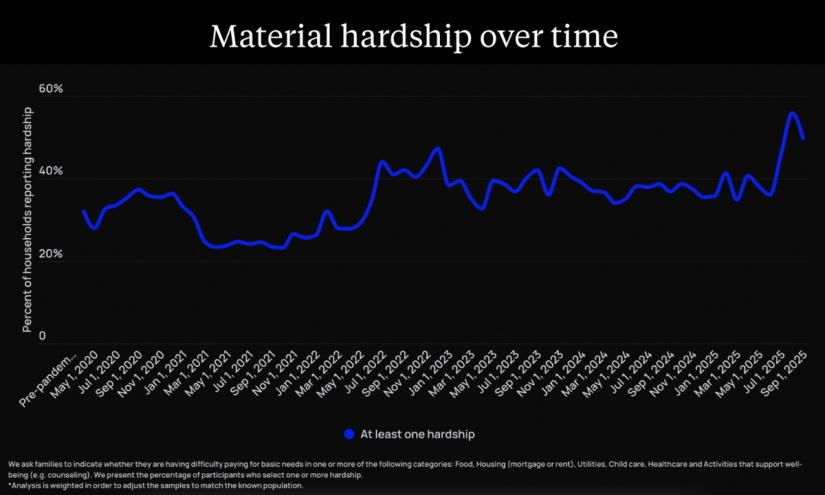
Survey: Nearly Half of Families with Young Kids Struggling to Meet Basic Needs
Education Department Leans on Right-Wing Allies to Push Civil Rights Probes
OPINION: To Combat Polarization and Political Violence, Let’s Connect Students Nationwide

Did you use this article in your work?
We’d love to hear how The 74’s reporting is helping educators, researchers, and policymakers. Tell us how

UK universities are under mounting financial pressure. Join HEPI and King’s College London Policy Institute on 11 November 2025 at 1pm for a webinar on how universities balance relatively stable but underfunded income streams against higher-margin but volatile sources. Register now. We look forward to seeing you there.
This blog was kindly authored by Philip Bakstad, Diversity and Inclusion Manager at Liverpool John Moores University.
Chris’s mum died soon after his birth and his dad was out of the picture. He was brought up by his Nan, living with her in her council house. Chris’s Nan passed away while Chris was doing his foundation year at Liverpool John Moores University. The council wanted the house back. Still grieving for his Nan, Chris was at risk of becoming homeless and dropping out of university.
Stories like Chris’ are not uncommon, yet they are at risk of being overlooked as university staff across the country gear up for the return of students each September. More on Chris later…
The start of the academic year is both an exciting and hectic time for students and staff on university campuses across the country. For care-experienced and estranged students (CEES), this time of year often comes with a unique set of anxieties and challenges, as they not only navigate the usual issues around meeting new friends, understanding timetables and deciding which Freshers events to attend, but also transition into new living set-ups which will often now be their permanent home while studying at their new university.
The terms ‘care-experienced’ and ‘estranged’ encapsulate a broad range of lived experiences of students who have faced particular challenges related to their family circumstances while growing up. This can include having previously lived in a formal foster care arrangement with a Local Authority; being raised by another family member in kinship care or becoming estranged from their parents after the age of 16.
Much has been done across the sector over the past two decades to address the under-representation of care-experienced and estranged students in higher education, but there remains a great deal of inconsistency. Young people who meet the formal definition of a ‘Care Leaver’ are eligible for a level of statutory support but this varies by Local Authority. For students who do not meet this legal definition but have experience of care or have faced other family disruption, there remains no national benchmark for what key support should be offered by all institutions across the higher education sector.
Organisations such as NNECL, the Unite Foundation and the much-missed charity StandAlone have been invaluable partners as universities have developed Access and Participation Plans and specific interventions to not only improve the number of care experienced and estranged students accessing higher education, but also ensure that each care-experienced or estranged student receives a holistic support package, tailored to their individual needs.
A key element of most institutions’ offer will be the provision of extended tenancies or ‘all year round’ accommodation. This recognises that many care-experienced and estranged students will be making their new accommodation their permanent base once the academic year begins. While this is now broadly accepted as best practice across the sector, many students still face difficulties in providing a guarantor or raising the funds for a deposit to secure the accommodation that will best suit their needs.
At Liverpool John Moores University, we have long operated a ‘Guarantor Waiver’ scheme as part of our partnership arrangements with our accommodation providers in the city, ensuring that no care-experienced or estranged student should be excluded from accessing accommodation at this key transition point in their lives. The Unite Foundation, led by students on their scholarship programme, are now campaigning for all universities to provide similar support.
The following case studies provide some insight into the experiences of care experienced and estranged students and highlight the importance of accommodation as an invaluable support during their degree studies. Some details have been changed to protect anonymity.
Chris had been raised by his grandmother since an early age. During his Foundation Year at LJMU his grandmother sadly passed away and he contacted the Student Advice team for support as he would no longer be able to return home to their council house at the end of the academic year. Chris’ mother had passed away shortly after his birth and he had no contact with his biological father so he was at immediate risk of becoming homeless over the summer period.
In the first instance, our accommodation partnership meant the university was able to reassure Chris that he would be able to extend his tenancy over the summer. At the same time, LJMU provided academic and wellbeing support to ensure his studies weren’t adversely impacted.
Chris’ key worry was having a stable home for the duration of his studies. He was very clear that living in halls worked for him as he had built up good relationships with the staff there. Moving into private accommodation and the logistical issues that posed caused him a great deal of anxiety.
The university signposted him towards the Unite Foundation Scholarship and his application was a success. Chris lived in a Unite Students property, with his rent and bills covered by the Scholarship, for the duration of his studies at LJMU.
As he navigated this complex period in his life, knowing that his university accommodation was guaranteed for three years was an anchor for Chris. He graduated with a 2:1 and is currently working in the IT sector.
Alice became estranged from her mother aged 18, following a breakdown in the relationship between her and her mother’s new partner. She was asked to leave the family home and slept on friends’ sofas before her college became aware of her circumstances. She then moved into a young person’s foyer – a supported living space for young people who would otherwise experience homelessness.
Alice’s Foyer Support Worker contacted LJMU as she was unable to provide a deposit or guarantor to secure her accommodation and had questions about how to apply for student finance as an independent student. Our partnership agreement enables LJMU to request that partner accommodation providers waive the need for a guarantor for care experienced and estranged students, so the university was able to quickly provide reassurance that the absence of a guarantor and deposit would not be a barrier to Alice booking her chosen accommodation.
Upon arriving at LJMU, Alice met other estranged students at a social meet-up and chose to live in an LJMU partner hall with three other students for years 2 and 3 of their studies. While their family circumstances were all different, this sense of community and peer support was invaluable to Alice and her flatmates. She is now a high school teacher and keeps support staff at LJMU updated on new developments in her life.
There is so much to be excited about at the start of each academic year. Meeting new students and supporting them to step into independence is a privilege for both academic and Professional Service staff at universities across the country. It is an important milestone in every young person’s life but, for care experienced and estranged students, can be an even more pivotal moment of change and uncertainty. While I’ve only touched on the importance of accommodation in providing stability in this blog, it’s worth reflecting on the fact that not every student moving into university accommodation will be doing so with the support (and ‘Bank of’) Mum and Dad and that, for this group of students, we need to continue to go the extra mile to ensure they are able to get in and get on in higher education.
Further information on LJMU support for care experienced and estranged students: https://www.ljmu.ac.uk/discover/student-support/inclusion/care-leavers

Educators are pushing for virtual schooling as an option for students and families who are living in fear of the increasing Immigrations and Customs Enforcement presence in and around school communities nationwide.
“This is an emergency,” said Chicago Board of Education member Anusha Thotakura during a public board meeting on Oct. 23. “Although the safest place for kids is at school, even if there is something that we can do to prevent one family being separated or one child coming back home to see that their parents are not there, we need to explore those avenues.”
The Chicago area, including its schools and students, has been hit hard in recent weeks by the federal government’s immigration crackdown. There have been multiple individuals apprehended by ICE on or near school grounds, including near elementary schools.
The Trump administration said the increased enforcement is needed to reduce illegal immigration and is important for national security and safety. Changes issued in January to Department of Homeland Security policy no longer protect schools from enforcement raids. Since then, schools have witnessed apprehensions during drop-off and pick-up hours.
In an effort to resist, school communities in Chicago — including oftentimes their teachers and education leaders — have formed school patrols and walking school buses, are providing families with groceries, and are also taking part in neighborhood watches by blowing whistles to alert community members when enforcement agents are nearby, Chicago education leaders have said.
However, travel to and from school is the main concern, said board member Emma Lozano during Thursday’s board meeting.
“Safe passage does not exist right now, they are all over the street,” Lozano said, saying that community members were being apprehended as recently as Thursday morning, leaving children frightened that they’d return to an empty house after school. “Our parents are asking for remote learning if possible.”
However, such a decision would likely require Illinois Gov. JB Pritzker to declare a state of emergency, board members said.
Chicago Teacher’s Union President Stacy Davis Gates also pushed the district earlier this week, saying to K-12 Dive that while a virtual academy already exists, it is not yet available to all students. In the meantime, educators are being as flexible and creative as possible to ensure students can still complete their assignments, she said.
Chicago wouldn’t be the first to float the idea of a virtual academy as a way to ensure both the safety and academic continuation for children of immigrants and immigrant children. In August, the Los Angeles Unified School District emphasized its virtual school option after a 15-year-old LAUSD student with disabilities was detained outside of a district high school at gunpoint.
In March, the New York State Education Department also told superintendents across the state that school districts were allowed to offer virtual learning “to individual students who may be unable or averse to attending school, including during times of political uncertainty.” Those students could include English Language Learners, immigrant and migrant students, as well as “others who may be affected and reluctant to attend school in person due to concerns about their personal safety and security,” said the letter.
The option for remote schooling comes as recent immigration enforcement policies under the Trump administration — including vagueness surrounding who will be arrested and how long they may be detained — is causing chronic anxiety in students. These federal immigration enforcement policies have been linked to absenteeism, classroom disengagement and heightened emotional distress, according to a July report released by psychiatric researchers at University of California, Riverside and New York University. This, the researchers wrote, has led students “to avoid school or withdraw from public life.”
“We feel the weight of ICE in our city, in our country, and students have been posting minute-by-minute updates on ICE agent locations in hopes to protect our fellow students,” said Destiny Singleton, in tears during the Thursday board meeting in Chicago. Singleton is a senior from the city’s Ogden International High School and is the board’s 2025-2026 honorary student member. “And I feel like we shouldn’t do this because we’re children and we shouldn’t need to protect ourselves in this way, and we are terrified. Everyone is terrified.”
About 620,000 K-12 students were in the U.S. without legal permission in 2021, according to research from Fwd.us, a nonprofit social welfare organization. The organization estimated that most states had at least 1,000 such students in K-12 schools and that some states like Florida and California had over 70,000. Texas, it says, had around 111,000.
Most states had tens of thousands of K-12 students with at least one parent who was in the country without legal permission, the organization said.
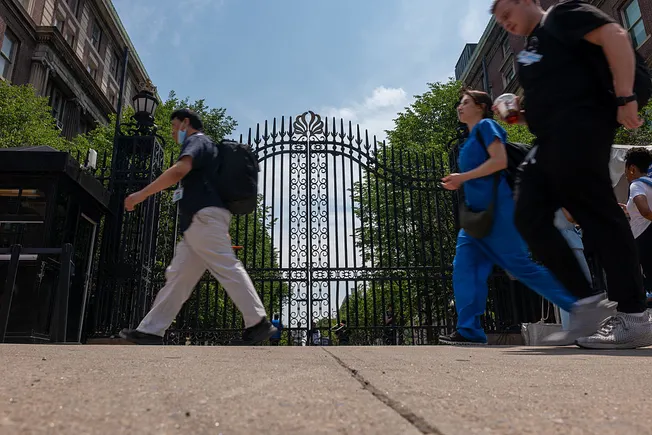
Columbia’s head-on encounter with the Trump administration left a mark on its finances, even if — as Sullivan pointed out — the damage wasn’t fully captured in the institution’s fiscal year, which ended June 30.
In March, the administration terminated $400 million of Columbia’s federal grants and contracts. The cuts came just days after the government announced a probe over allegations that the university hadn’t done enough to protect Jewish students from antisemitism.
Amid the turmoil, Columbia laid off nearly 180 employees tied to federally funded projects. The university also dipped into its endowment’s unrestricted funds to help preserve some of the research projects, creating what the institution called its Research Stabilization Fund.
Sullivan on Thursday said the fund issued some 500 internal grants to Columbia researchers in June and September. She didn’t specify the total amount spent but described the scale as “modest.”
Soon after terminating Columbia’s funding in March, the Trump administration offered the university an ultimatum. Columbia agreed to a host of unprecedented conditions in return for the government reinstating most of the canceled research grants.
Columbia signed a formal agreement with the Trump administration in July that included a $200 million payment to the government, to be paid over three years, in addition to a $21 million sum for a claims fund under an agreement with the U.S. Equal Employment Opportunity Commission. Although signed just after the close of fiscal 2025, the settlement is accounted for in Columbia’s financial statements.
But the heaviest impact on the university’s income statement came from rising operating costs, which jumped 5.3% to $6.6 billion. Expenses rose across the board — from salaries for instructors and administrators to research costs to maintenance.
Meanwhile, revenues grew more slowly. Sullivan described Columbia’s 4.1% increase in net tuition and fee revenue, which totaled $1.6 billion, as “modest.” Tempering that gain was a 4.6% rise in institutional financial aid to $622.6 million for the fiscal year. Columbia is among the most expensive colleges in the country to attend, though it offers free tuition to students from families that make under $150,000 a year.
With expenses rising at more than double operating revenue, Columbia saw its operating income shredded by nearly two-thirds, which Sullivan characterized as “modest” and “lower than our historical average.”
Still, Sullivan described its operating surplus as critical to helping fund capital projects, including maintenance and renovation of its facilities.
“The University’s ongoing cost containment efforts remain important to preserve financial flexibility and ensure that resources are allocated in a manner consistent with our priorities for excellence in teaching, research, and patient care,” she added.
To be sure, Columbia is still among the wealthiest universities in the U.S. Its net assets grew 3.7% year over year to $20.5 billion.
Gifts to the university’s endowment fell by about a quarter, to $177.9 million. Even so, the value of the endowment’s donor-restricted funds still rose 8.7%, to $10.9 billion.
In terms of operating income, Columbia’s Ivy League peer Harvard University fared worse. Its recently issued fiscal 2025 financials showed a $112.6 million operating loss, Harvard’s biggest loss in nearly a decade and a half.
Like Columbia, Harvard has come under financial attack by the Trump administration, which has sought to damage the institution on multiple fronts and is using several government agencies in its withering campaign of attacks.
“Even by the standards of our centuries-long history, fiscal year 2025 was extraordinarily challenging,” Harvard President Alan Garber said in a message accompanying the financial statements.”