Category: financial aid

  • Working Students Face New Challenges in a Shifting Policy Landscape

    Working Students Face New Challenges in a Shifting Policy Landscape

    Most undergraduates today are juggling academics with paid work, many logging 40 or more hours a week. That load leaves little margin: more non-academic responsibilities, less time for coursework, and fewer opportunities to engage on campus mean these students often feel the effects of federal policy changes first.

    The budget reconciliation bill signed into law on July 4 threatens to make those challenges worse, reshaping student loans and public benefit programs like the Supplemental Nutrition Assistance Program (SNAP) and Medicaid in ways that risk cutting off critical financial lifelines. On Pell Grants, the news is mixed: the bill restores a revised Workforce Pell program that could open doors to short-term training, but makes other changes that may reduce access for some students.

    For working students already balancing jobs, school, and basic needs, these changes could tip the balance toward longer time to degree, greater debt, or leaving school altogether. Using recent data, we explore how these students are making ends meet now, and what colleges, universities, and policymakers can do to protect and strengthen the supports that help them stay enrolled and graduate.

    Profile of student workers

    According to the 2020 National Postsecondary Student Aid Study (NPSAS:20), nearly three-quarters of undergraduate students work while enrolled, with around a third of those students working full time. Results from Trellis Strategies’ 2024 Student Financial Wellness Survey (SFWS) identified similar rates of employment, allowing the ability to cross-reference specific questions about overall financial wellness. In this post, we compare SFWS respondents who answered “yes” to the question “Do you work for pay?” with those who answered “no.”

    About half of all SFWS respondents reported using income from their employment to pay for school. However, many working students have additional financial commitments beyond their education. For example, 19 percent of working respondents indicated they provide financial support to a child, and 18 percent provide the same support to their parents or guardians. Overall, about half of working SFWS respondents (47 percent) shared that it was important for them to support their family financially while in college, compared to 38 percent of their non-working peers.

    This heightened familial commitment is reflected in the fact that many working students—36 percent of those responding to the 2024 SFWS—identify primarily as workers who go to school, rather than students who work. Furthermore, working students attend part-time at higher rates (38 percent) compared to their non-working peers (28 percent).

    How working students pay for college

    Most students who were working at the time the 2024 SFWS was administered self-reported using their employment to pay for college (see Figure 2). Many used personal savings as well, but only seven percent were able to “work their way through college” using employment and/or personal savings alone. Instead, working students, similar to their peers who don’t work, depend upon aid such as grants and loans to be able to access higher education.

    Nationally representative data from NPSAS:20 show that almost 40 percent of working students receive Pell Grants and more than a third borrow federal student loans (non-working students receive federal aid at similar rates).

    For these students, losing part of their federal aid could mean they can no longer afford higher education. This is especially true for those students with limited financial flexibility to fall back on. Working students in the SFWS were more likely to report using credit cards to pay for college and were less likely to receive financial support from parents or family, as compared to their non-working peers.

    Implications of policy changes

    The reconciliation bill passed by Congress in July 2025 (the One Big Beautiful Bill Act) includes many changes that impact students, with particularly significant consequences for those who work.

    On Pell Grants, the bill offers both opportunities and new concerns. It restores a revised Workforce Pell Grant program, starting July 2026, that expands the traditional Pell Grant to include eligible short-term non-degree programs at accredited institutions, an option that could help working students earn credentials more quickly and move into higher-paying jobs.

    At the same time, the bill restricts Pell eligibility when other scholarships, grants, or non-federal aid fully cover a student’s cost of attendance. Under this system, a working student who receives a private scholarship that might otherwise allow them to decrease their working hours could instead see their Pell Grant decrease. While intended to prevent Pell from being awarded in “full-ride” situations, the change could also affect working students who have substantial financial responsibilities beyond the calculated cost of attendance.

    The bill also includes significant changes to federal student loan programs and repayment options, with most of the changes effective as of July 1, 2026. Parents borrowing Parent PLUS loans will now have annual and aggregate borrowing caps. About one in 10 undergraduate students, including among working students, reported that their parents borrowed loans for their education. Limits on this borrowing may constrain the financial resources of some students, with possible negative consequences for their academic momentum.

    Changes to SNAP and Medicaid will affect state budgets, putting higher education at risk and making it harder for people to enroll in and complete a credential while meeting their basic needs. Many students, despite also working, already face significant barriers such as food and housing insecurity, as found in the 2024 SFWS.

    While no changes were made to student-specific eligibility criteria in SNAP, new work requirements in SNAP and Medicaid prioritize work over education, making it harder for people to complete a credential while maintaining access to food and health assistance. These work requirements will also create new administrative hurdles, which research shows result in people being kicked off of Medicaid despite being eligible.

    The net effect of these changes will relegate more people to low-wage work by delaying or denying their ability to complete credentials that would provide higher wages, lower unemployment and poverty rates, and less use of public benefits. While the Medicaid work requirement changes don’t begin until January 2028, the SNAP changes were effective upon signing of the bill. However, states are awaiting further guidance from the U.S. Department of Agriculture on how to administer those changes.

    Any reduction in financial aid or public assistance resources for students may mean that more students will need to work longer hours while enrolled to make ends meet. Besides reducing the number of hours available to study, work schedules can also directly conflict with class schedules and other campus activities.One-quarter of working respondents in the 2024 SFWS reported missing at least one day of classes due to conflicts with their job, and 56 percent of students with jobs agreed or strongly agreed that their job interfered with their ability to engage in extracurricular activities or social events at their school. Students with a weaker sense of connection and belonging at their institution have been shown to have worse academic performance and retention rates than their peers.

    Supporting working students

    While changes to federal student aid programs are still being debated, colleges and universities can ensure they have programs and processes in place to support working students at their campuses. Institutional leaders can:

    • Develop or enhance robust support systems, such as emergency grants, connection to public services, and adequate financial aid, to help students weather financial challenges, develop a stronger connection to their institution, and remain enrolled.
    • Implement strategic course scheduling that can help students more effectively plan employment, child care, transportation, and other needs so they can enroll in and complete more classes in a timely way.
    • Leverage regular data collection to respond to the needs of their specific student body. Participating in the annual Student Financial Wellness Survey is free and provides institutions with a customized report, benchmarking insights, and de-identified student data.
    • Policymakers should consider how programs can best serve students juggling multiple time commitments and financial priorities. Robust social services, such as child care and access to public assistance programs, can allow more working students the opportunity to thrive. Adequate financial aid can help students work less and complete their credentials sooner, opening the door to higher wages.

    If you have any questions or comments about this blog post, please contact us.

    Source link

  • Higher Education Inquirer : College Financial Aid: How It Really Works

    Higher Education Inquirer : College Financial Aid: How It Really Works

    Crucial Insights: Understanding College Financial Aid Dynamics

    (00:02:56) Variety of College Financial Assistance Options
    (
    00:05:18) Scholarships: Balancing Merit and Financial Need
    (
    00:10:00) Student Selection Strategies in College Admissions
    (
    00:21:40) Financial Aid Strategy at Competitive vs. Smaller Schools
    (
    00:26:29) Major-based Financial Aid Allocation in Colleges

    Source link

  • How the House Budget Threatens Student-Athletes – Edu Alliance Journal

    How the House Budget Threatens Student-Athletes – Edu Alliance Journal

    A Uniquely American Model Under Threat

    June 8, 2025, by Dean Hoke: Intercollegiate athletics occupy a powerful and unique place in American higher education—something unmatched in any other country. From the massive media contracts of Division I football to the community pride surrounding NAIA and NJCAA basketball, college sports are a defining feature of the American academic landscape. Unlike most nations, where elite athletic development happens in clubs or academies, the U.S. integrates competitive sports directly into its college campuses.

    This model is more than tradition; it’s an engine of opportunity. For many high school students—especially those from underserved backgrounds—the chance to play college sports shapes where they apply, enroll, and succeed. According to the NCAA, 35% of high school athletes say the ability to participate in athletics is a key factor in their college decision [1]. It’s not just about scholarships; it’s about identity, community, and believing their talents matter.

    At smaller colleges and two-year institutions, athletics often serves as a key enrollment driver and differentiator in a crowded marketplace. International students, too, are drawn to the American system for its academic-athletic fusion, contributing tuition revenue and global prestige. Undermining this model through sweeping changes to federal financial aid, without considering the downstream effects, risks more than athletic participation. It threatens a distinctively American approach to education, access, and aspiration.

    A New Threshold with Big Impacts

    Currently, students taking 12 credit hours per semester are considered full-time and eligible for the maximum Pell Grant, which stands at $7,395 for 2024-25 [2]. The proposed House budget raises this threshold to 15 credit hours per semester. For student-athletes, whose schedules are already packed with training, competition, and travel, this shift could be devastating.

    NCAA academic standards require student-athletes to maintain full-time enrollment (typically 12 hours) and make satisfactory academic progress [3]. Adding another three credit hours per term may force many to choose between academic integrity, athletic eligibility, and physical well-being. In sports like basketball, where teams frequently travel for games, or in demanding STEM majors, completing 15 credit hours consistently can be a formidable challenge.

    Financial Impact on Student-Athletes

    Key Proposed Changes Affecting Student-Athletes:

    • Pell Grant Reductions: The proposed budget aims to cut the maximum Pell Grant by $1,685, reducing it to $5,710 for the 2026–27 academic year. Additionally, eligibility criteria would become more stringent, requiring students to enroll in at least 15 credit hours per semester to qualify for full-time awards. These changes could result in approximately 700,000 students losing Pell Grant eligibility [4].
    • Elimination of Subsidized Loans: The budget proposes eliminating subsidized federal student loans, which currently do not accrue interest while a student is in school. This change would force students to rely more on unsubsidized loans or private lending options, potentially increasing their debt burden [5].
    • Cuts to Work-Study and SEOG Programs: The Federal Work-Study program and Supplemental Educational Opportunity Grants (SEOG) are slated for significant reductions or elimination. These programs provide essential financial support to low-income students, and their removal could affect over 1.6 million students [6].
    • Institutional Risk-Sharing: A new provision would require colleges to repay a portion of defaulted student loans, introducing a financial penalty for institutions with high default rates. This could strain budgets, especially at smaller colleges with limited resources [7].

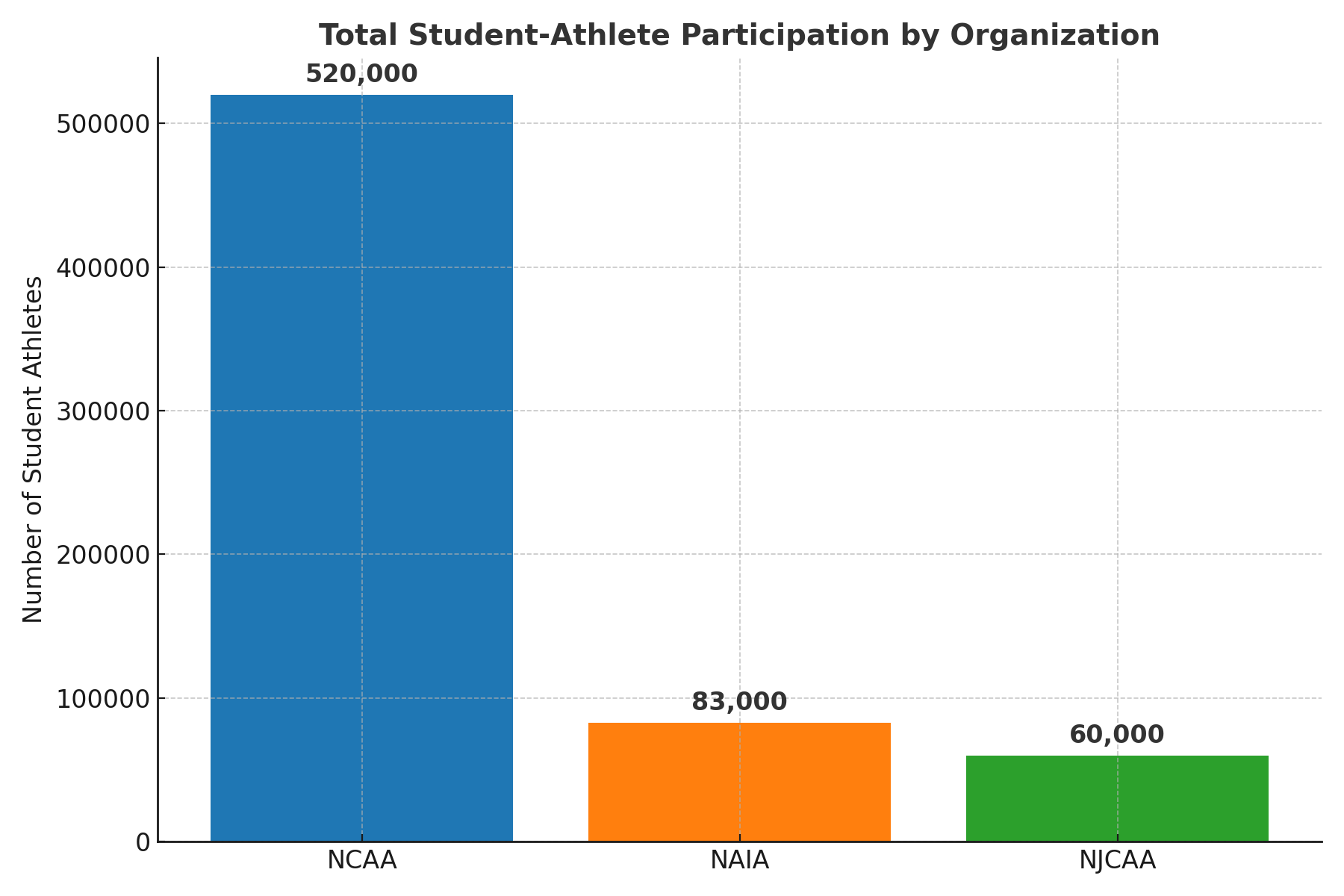
    Figure 1: Total student-athletes by national athletic organization (NCAA, NAIA, NJCAA).

    While Figure 1 highlights the total number of student-athletes in each organization, Figure 2 illustrates how deeply athletics is embedded in different types of institutions. NAIA colleges have the highest ratio, with student-athletes comprising 39% of undergraduate enrollment. Division III institutions follow at approximately 8.42%, and the NJCAA—serving mostly commuter and low-income students—relies on athletics for 8.58% of its total student base [8].

    Even Division I, with its large student populations, includes a meaningful share (2.49%) of student-athletes. These proportions underscore how vital athletics are to institutional identity, especially in small colleges and two-year schools where athletes often make up a significant portion of campus life, retention strategy, and tuition revenue.

    Figure 2: Percentage of student-athletes among total undergraduate enrollment by organization (NCAA Divisions I–III, NAIA, NJCAA).

    The Pell Grant Profile: Who’s Affected

    Pell Grants support students with the greatest financial need. According to a 2018 report, approximately 31.3% of Division I scholarship athletes receive Pell Grants. At individual institutions like Ohio State, the share is even higher: 47% of football players and over 50% of women’s basketball players. In the broader NCAA system, over 48% of athletes received some form of federal need-based aid in recent years [9].

    There are approximately 665,000 student-athletes attending college. The NCAA reports that more than 520,000 student-athletes currently participate in championship-level intercollegiate athletics across Divisions I, II, and III [10]. The National Association of Intercollegiate Athletics (NAIA) oversees approximately 83,000 student-athletes [11], while the National Junior College Athletic Association (NJCAA) supports around 60,000 student-athletes at two-year colleges [12].

    The NAIA and NJCAA systems, which serve many first-generation, low-income, and minority students, also have a high reliance on Pell Grant support. However, exact figures are less widely published.

    The proposed redefinition of “full-time” means many of these students could lose up to $1,479 per year in aid, based on projections from policy experts [13]. For low-income students, this gap often determines whether they can afford to continue their education.

    Fewer Credits, Fewer Dollars: Academic and Athletic Risks

    Another major concern is how aid calculations based on “completed” credit hours will penalize students who drop a class mid-semester or fail a course. Even if a student-athlete enrolls in 15 credits, failing or withdrawing from a single 3-credit course could drop their award amount [14]. This adds pressure to persist in academically unsuitable courses, potentially hurting long-term academic outcomes.

    Athletic departments, already burdened by compliance and recruitment pressures, may face added strain. Advisors will need to help students navigate increasingly complex eligibility and aid requirements, shifting focus from performance and development to credit-hour management.

    Disproportionate Effects on Small Colleges and Non-Revenue Sports

    The brunt of these changes will fall hardest on small, tuition-dependent institutions in the NCAA Division II, Division III, NAIA, and NJCAA. These colleges often use intercollegiate athletics as a strategic enrollment tool. At some NAIA schools, student-athletes comprise 40% to 60% of the undergraduate population [8].

    Unlike large Division I schools that benefit from lucrative media contracts and booster networks, these institutions rely on a patchwork of tuition, modest athletic scholarships, and federal aid to keep programs running. A reduction in Pell eligibility could drive enrollment declines, lead to cuts in athletic offerings, and even force some colleges to close sports programs or entire campuses.

    Already, schools like San Francisco State University, Cleveland State, and Mississippi College have recently announced program eliminations, citing budgetary constraints [15]. NJCAA institutions—the two-year colleges serving over 85,000 student-athletes—also face a precarious future under this proposed budget.

    Economic Importance by Division

    Division I: Athletics departments generated nearly $17.5 billion in total revenue in 2022, with $11.2 billion self-generated and $6.3 billion subsidized by institutional/government support or student fees [16]. Many Power Five schools are financially resilient, with revenue from TV contracts, merchandise, and ticket sales.

    Division II: Median revenue for schools with football was around $6.9 million, but generated athletic revenue averaged only $528,000, leading to significant deficits subsidized by institutional funds [17].

    Division III: Division III schools operate on leaner budgets, with no athletic scholarships and total athletics budgets often under $3 million per school. These programs are typically funded like other academic departments [18].

    NAIA and NJCAA: These schools rely heavily on student-athlete enrollment to sustain their institutions. Athletics are not profit centers but recruitment and retention tools. Without Pell Grants, many of these athletes cannot afford to enroll [11][12].

    Figure 3: Estimated number of NAIA, Division III, and NJCAA programs by state.

    Unintended Tradeoffs: Equity and Resource Redistribution

    Attempting to offset lost federal aid by reallocating institutional grants could result in aid being shifted away from non-athletes. This risks eroding equity goals, as well as provoking internal tension on campuses where athletes are perceived to receive preferential treatment.

    Without new revenue sources, institutions may also raise tuition or increase tuition discounting, potentially compromising their financial stability. In essence, colleges may be forced to choose who gets to stay in school.

    The High-Stakes Gamble for Student-Athletes

    Figure 4: Estimated impact of Pell Grant changes on student-athletes, including projected dropouts and loan default rates.

    For many student-athletes, especially those from low-income backgrounds, the Pell Grant is not just helpful—it’s essential. It makes the dream of attending college, competing in athletics, and earning a degree financially feasible. If the proposed changes to Pell eligibility become law, an estimated 50,000 student-athletes could be forced to drop out, unable to meet the new credit-hour requirements or fill the funding gap [19]. Those who remain may have no choice but to take on additional loans, risking long-term debt for a degree they may never complete. The reality is sobering: Pell recipients already face long-term student loan default rates as high as 27%, and for those who drop out, that figure climbs above 40% [20]. Stripping away vital support will almost certainly drive those numbers higher. The consequences won’t stop with individual students. Colleges—particularly smaller, tuition-dependent institutions where athletes make up a significant share of enrollment—stand to lose not just revenue, but the very programs and communities that give purpose to their campuses.

    Colleges, athletic associations, policymakers, and communities must work together to safeguard opportunity. Student-athletes should never be forced to choose between academic success and financial survival. Preserving access to both education and athletics isn’t just about individual futures—it’s about upholding a uniquely American pathway to achievement and equity.


    Dean Hoke is Managing Partner of Edu Alliance Group, a higher education consultancy. He formerly served as President/CEO of the American Association of University Administrators (AAUA). With decades of experience in higher education leadership, consulting, and institutional strategy, he brings a wealth of knowledge on small colleges’ challenges and opportunities. Dean is the Executive Producer and co-host for the podcast series Small College America. 

    References

    1. NCAA. (n.d.). Estimated probability of competing in college athletics. Retrieved from https://www.ncaa.org/sports/2021/11/4/estimated-probability-of-competing-in-college-athletics.aspx
    2. Federal Student Aid. (2024). Federal Pell Grants. Retrieved from https://studentaid.gov/understand-aid/types/grants/pell
    3. NCAA. (n.d.). Academic Standards and Eligibility. Retrieved from https://www.ncaa.org/sports/2021/6/17/academic-eligibility.aspx
    4. Washington Post. (2025, May 17). Most Pell Grant recipients to get less money under Trump budget bill, CBO finds. Retrieved from https://www.washingtonpost.com/education/2025/05/17/pell-grants-cbo-analysis/
    5. NASFAA. (2024). Reconciliation Deep Dive: House Committee Proposes Major Overhaul of Federal Student Loans, Repayment, and PSLF. Retrieved from https://www.nasfaa.org/news-item/36202/Reconciliation_Deep_Dive_House_Committee_Proposes_Major_Overhaul_of_Federal_Student_Loans_Repayment_and_PSLF?utm
    6. U.S. Department of Education, FY2025 Budget Summary. (2024). Proposed Cuts to Campus-Based Aid Programs. Retrieved from https://www2.ed.gov/about/overview/budget/index.html
    7. Congressional Budget Office. (2025). Reconciliation Recommendations of the House Committee on Education and the Workforce. Retrieved from https://www.cbo.gov/publication/61412
    8. NJCAA, NAIA, and NCAA. (2023). Student-Athlete Participation Reports.
    9. NCAA. (2018). Pell Grant data and athlete demographics. Retrieved from https://www.ncaa.org/news/2018/4/24/research-pell-grant-data-shows-diversity-in-division-i.aspx
    10. NCAA. (2023). 2022–23 Sports Sponsorship and Participation Rates Report. Retrieved from https://www.ncaa.org/research
    11. NAIA. (2023). NAIA Facts and Figures. Retrieved from https://www.naia.org
    12. NJCAA. (2023). About the NJCAA. Retrieved from https://www.njcaa.org
    13. The Institute for College Access & Success (TICAS). (2024). Analysis of Proposed Pell Grant Reductions. Retrieved from https://ticas.org
    14. Education Trust. (2024). Consequences of Redefining Full-Time Status for Financial Aid. Retrieved from https://edtrust.org
    15. ESPN. (2024, March); AP News. (2024, November). Athletic program eliminations at Cleveland State and Mississippi College.
    16. Knight Commission on Intercollegiate Athletics. (2023). College Athletics Financial Information (CAFI). Retrieved from https://knightnewhousedata.org
    17. NCAA. (2022). Division II Finances: Revenues and Expenses Report. Retrieved from https://www.ncaa.org/sports/2022/6/17/finances.aspx
    18. NCAA. (2023). Division III Budget Reports and Trends. Retrieved from https://www.ncaa.org
    19. Internal projection based on available data from NCAA, NAIA, NJCAA, and CBO Pell Grant impact estimates.
    20. Brookings Institution. (2018). The looming student loan default crisis is worse than we thought. Retrieved from https://www.brookings.edu/articles/the-looming-student-loan-default-crisis-is-worse-than-we-thought

    Source link

  • Pell Grant Dollars Are Left Unclaimed: What That Means for Students and States

    Pell Grant Dollars Are Left Unclaimed: What That Means for Students and States

    Title: Pell Dollars Left on the Table

    Authors: Louisa Woodhouse and Bill DeBaun

    Source: National College Attainment Network

    Pell Grants have long supported low-income students as they pursue higher education, increasing the financial capabilities and academic opportunities afforded to students. However, receiving federal financial aid through Pell Grants is dependent on filing the Free Application for Federal Student Aid (FAFSA), which can serve as a barrier to students.

    The National College Attainment Network (NCAN) has published a report on the unclaimed Pell Grants left on the table by high school graduates. Approximately 830,000 Pell Grant-eligible students did not complete FAFSA in the 2024 cycle, resulting in nearly $4.4 billion in unclaimed Pell Grant awards. These unclaimed funds are valuable to both students and states, with the ability to further the educational pursuits of low-income students and strengthen state economies.

    NCAN has run reports detailing the value of unclaimed Pell Grants over the past four years. Typically, nearly 60 percent of high school graduates complete the FAFSA by June 30, with completion rates trailing off markedly as students begin their summer.

    However, due to the technical challenges and delayed launch of FAFSA that occurred in the 2024 cycle, by the end of June, only 50 percent of high school graduates had completed the form. By August 30, 57 percent of students had filed the FAFSA, decreasing the amount of financial aid left on the table. The implications are clear: hindrance to the financial aid application process, whether that be through technical difficulties, decreased assistance, or short staffing, can result in many students losing access to Pell Grant funds.

    The impact of lower FAFSA completion rates, and therefore more unclaimed Pell Grants, is not felt exclusively by students but by states as well. In 2024, students in California and Texas each left nearly $550 million in Pell Grant awards unclaimed. While these states lose the most when FAFSA completion rates are low, they also stand to gain the most if completion rates increase.

    Analysis from NCAN finds that if FAFSA completion rates had increased by an additional 10 percentage points this year, California would have seen a $145 million increase in Pell Grant awards while Texas would have received an additional $130 million. The additional federal aid could translate into more students attending postsecondary institutions, filling workforce gaps and strengthening the states’ economies.

    In establishing the significance of increasing FAFSA filing rates for low-income students, NCAN offers commentary on how states can better support students, especially in the wake of potential policy changes directed at higher education. States can fund FAFSA completion efforts, providing additional in-school and online resources for students to access when filing. Additionally, FAFSA data sharing among states may enable high school counselors and local college access partners to better target students that could benefit from additional assistance.

    To read more about unclaimed Pell Grants and the role states can play on bolstering FAFSA completion rates, click here.

    —Julia Napier


    If you have any questions or comments about this blog post, please contact us.

    Source link

  • More Pell Grant Recipients Enrolling at Top-Tier Universities

    More Pell Grant Recipients Enrolling at Top-Tier Universities

    Title: Achieving Greater Socioeconomic Diversity at Highly Endowed Colleges and Universities

    Author: Phillip Levine

    Source: Brookings Institution

    Since the 2014-15 academic year, the share of students receiving a Pell Grant at institutions with large endowments (over $250,000 and $500,000 per full-time equivalent student, respectively) has increased. Pell Grant recipience is often used as a proxy for low-income status, pointing to an increase in the socioeconomic diversity of highly endowed institutions in the past decade. To pinpoint the source of this increase, the author of a new Brookings Institution brief examines several variables: eligibility, admissions standards, and student application behavior.

    Importantly, the eligibility requirements to receive a Pell Grant have changed over the years. The maximum award amount increased during the Great Recession while incomes fell, raising the number of people who qualified. From the 2008-09 to 2010-11 academic years, the share of students receiving a Pell Grant at institutions with large and very large endowments jumped from 12 percent to 17 percent.

    According to the author, changes in eligibility can likely explain part of the increase in Pell Grant recipience during the Great Recession. Since then, however, the maximum award amount in real dollars has decreased, despite the share of students receiving Pell Grants at highly endowed institutions continuing to rise.

    Adjusting for inflation to 2023 dollars, in the 2013-14 academic year, the maximum award was $7,410. Ten years later, in the 2023-24 academic year, the maximum award was $7,395. Over this period, the economy recovered and the share of students receiving Pell Grants across higher education writ large decreased. Because the figures at these institutions diverge from national figures, eligibility changes—and therefore the number of people qualifying—are likely not the cause of the increase in Pell Grant recipients at highly endowed institutions over the past decade.

    Examining average SAT scores from institutions with large and very large endowments indicates that changing admissions standards for Pell Grant students is not the source of the rise in socioeconomic diversity.

    When comparing scores from 2007-08 and 2011-12 with those from 2015-16 and 2019-20, the gap between the average scores of students with and without a Pell Grant at institutions with very large endowments decreased from 72 points in 2008/2012 to 58 points in 2016/2020. At institutions with large endowments, the gap in scores between Pell Grant recipients and those not receiving a grant narrowed even more, from 98 points in 2008/2012 to 51 points in 2016/2020, representing a statistically significant change. The shrinking gaps suggest that admissions standards for Pell Grant recipients have not been lowered.

    Because eligibility and admissions standards cannot explain the increase in the share of students at highly endowed institutions, it is likely that a higher number of Pell Grant recipients are applying to highly endowed schools and then choosing to enroll. Emerging research from the beginning of the decade on undermatching among low-income students coincides with an expansion of institutional initiatives to overcome these barriers, which may be contributing to higher application rates. Organizations like uAspire and Posse, which aim to recruit low-income, marginalized students, have also advanced this effort.

    While there are many barriers for low-income students to attend higher education, the evidence suggests there has been progress in improving access for these students at highly endowed institutions. Institutional commitment to promoting social mobility while adhering to their academic missions will not only benefit the institutions themselves but society at large as well.

    To read the full report, click here.

    —Erica Swirsky


    If you have any questions or comments about this blog post, please contact us.

    Source link

  • Case Study: Florida Policy Opening Enrollment for At-Risk Students

    Case Study: Florida Policy Opening Enrollment for At-Risk Students

    Title: The Role of State Policy in Supporting Students Experiencing Homelessness and Former Foster Youth in Higher Education

    Authors: Carrie E. Henderson and Katie Grissom

    Source: The Urban Institute

    Paying for a college degree is already a difficult, complex process for many students involving a variety of sources of financial aid and payment. For students with a history of foster care or housing instability, this task becomes even more challenging given the lack of financial and social support they experience growing up.

    To properly support these students, policymakers and higher education administrators need to create educational environments that go beyond teaching and learning to prioritize access to essential resources and socioeconomic conditions that can provide stability in students’ lives. State policy can provide critical opportunities to open pathways for students and address the personal, emotional, and logistical challenges that students face. A new report from the Urban Institute explores how the Florida state legislature took steps to enhance access to postsecondary education for homeless students and former foster youth and how it affected higher education attainment.

    Key findings include:

    New state policies expanded tuition and fee exemptions: In 2022, the Florida legislature created policies that expanded the eligibility for tuition and fee exemptions to match the federal definition of homeless children and youth and include students who had been involved in shelter, dependency, or termination of parental rights proceedings.

    Increase in tuition and fee exemptions rose since implementation: The data Florida collected showed an upward trend in the use of the homelessness fee exemption in both the Florida College System (FCS) and the State University System (SUS) between 2021-22 and 2023-24. In the FCS in 2023-24, the number of exemptions increased by 103 percent since 2021-22, from 689 to 1,396. SUS institutions experienced more incremental growth, as homelessness exemptions increased from 344 in 2021-22 to 432 in 2023–24, a 26 percent increase.

    Tuition and fee exemptions can reduce the financial burden of postsecondary education, making it more affordable and attainable for students from disadvantaged backgrounds. However, policymakers considering exemptions and subsidies should include dedicated funding to help institutions of higher education implement these services effectively. Without additional funding, colleges and universities lack the supplemental resources to implement policies feasibly. Furthermore, policymakers should listen to and work with administrators to fund holistic wraparound services that impact students’ ability to enroll, persist, and succeed in higher education.

    To read the full report from the Urban Institute, click here.

    —Austin Freeman


    If you have any questions or comments about this blog post, please contact us.

    Source link

  • New Might Not Always Mean Improved: The Benefits and Drawbacks of the New FAFSA

    New Might Not Always Mean Improved: The Benefits and Drawbacks of the New FAFSA

    Title: Chutes and Ladders: Falling Behind and Getting Ahead with the Simplified FAFSA

    Authors: Jonathan S. Lewis and Alyssa Stefanese Yates

    Source: uAspire

    Prior to the 2024-25 academic year, the Free Application for Federal Student Aid (FAFSA) underwent significant changes, mandated by Congress through the FAFSA Simplification Act. A recent uAspire survey of 274 students, parents, counselors, and financial aid administrators found the changes to the FAFSA entailed a number of “chutes,” or drawbacks, and several “ladders” that allowed for a more streamlined financial aid filing process.

    Key survey findings regarding the simplified FAFSA’s benefits and challenges include:

    Benefits:

    • Students appreciated the reduced number of questions within the new FAFSA form.
    • The office of Federal Student Aid improved help text and resources, which aided those accessing the form in answering common questions.
    • Some populations had easier experiences with FAFSA, such as those with relatively straightforward finances, and individuals without overwhelming extenuating circumstances.
    • Those with previous FAFSA experience noted a generally easier experience with the changes.
    • Students with access to high school or college counselors often found greater success with the changes, demonstrating the importance of accessibility to help during the process.

    Challenges:

    • More than half of those surveyed reported experiencing technical problems.
    • The delayed FAFSA timeline heightened stress among students and counselors.
    • Insufficient communication and customer service left approximately 4 million calls to the Department of Education’s call center between Jan. 1 and May 31 unanswered.
    • The issues above often compounded, forming intersecting challenges for students and counselors.
    • Individuals without a Social Security number and English language learners felt the challenges with FAFSA more severely, struggling in particular with technical problems and communication barriers, demonstrating that some populations had more difficult experiences than others.

    The authors conclude by recommending several additional changes to the FAFSA. To minimize the compounding negative effects of the chutes, financial aid processing should be completed faster; technical glitches should be fixed; and communication, wording, and form accessibility should be improved. The authors also recommend fortifying the ladders by finding additional opportunities to reduce the time spent and frustration felt by those filing.

    Overall, the survey highlights how the FAFSA changes produced diverse and polarizing effects. Many students found the process to be simple, securing their financial aid with just a few clicks; other students felt extreme stress caused by technical roadblocks and delays, which left them uncertain about how to pay for school.

    To read the full report from uAspire, click here. For additional information and to read about the Jan. 16 webinar with the authors of the report, click here.

    —Julia Napier


    If you have any questions or comments about this blog post, please contact us.

    Source link

  • Recommendations for States to Address Postsecondary Affordability

    Recommendations for States to Address Postsecondary Affordability

    Authors: Lauren Asher, Nate Johnson, Marissa Molina, and Kristin D. Hultquist

    Source: HCM Strategists

    An October 2024 report, Beyond Sticker Prices: How States Can Make Postsecondary Education More Affordable, reviews data to evaluate affordability of postsecondary education across nine states, including Alabama, California, Indiana, Louisiana, Ohio, Oklahoma, Texas, Virginia, and Washington.

    The authors emphasize the importance of considering net price, or the full cost of attendance less total aid. Depending on the state, low-income students pay 16-27 percent of their total family income to attend community college.

    At public four-year colleges with high net prices, students with family income of $30,000-48,000 py more than half of their income (51-53 percent) for school in two of the nine states. Four-year colleges with low net prices show cost variability based on whether a student is the lowest income, earning $0-30,000, or has $30,000-48,000 in income. Students in the former group pay 21-27 percent of their family income toward education, while students in the latter group pay 40-41 percent of their income.

    The brief recommends that policymakers take the following issues into account:

    • The way states fund public institutions is critical for low-income students. Consider increasing funding for community colleges as well as evaluating how student income factors into allocation of state funds.
    • Tuition policy is integral to making decisions about postsecondary education. Public perception of college affordability is influenced by tuition costs. States have the power to set limits on how much institutions can raise or change costs, but states also must be careful not to limit institutions from charging what they require to adequately support students’ needs.
    • Transparency and consistency among financial aid programs increase their reach. States should consider making financial aid programs more readily understandable. State financial aid policies should also increase flexibility to adjust for transferring, length of time to graduate, and financial aid from other sources.
    • How states support basic needs affects students’ ability to afford attending college. Policies at the state level can offer students more options for paying for food, housing, caregiving, and more.

    To read the full report, click here.

    Kara Seidel


    If you have any questions or comments about this blog post, please contact us.

    Source link

  • Good News About the FAFSA

    Good News About the FAFSA

    Millions of current and prospective college students were let down last year when the federal rollout of the new FAFSA form was badly bungled and delayed for months. The fallout from the resulting chaos and uncertainty was well-documented and widespread, including a drop in over 5 percent in first-year enrollment for fall 2024 linked at least in part to the FAFSA problems.

    But now, there is some good news for students, their families, and the institutions working hard to ensure that low- and middle-income students have a path to higher education.

    While we have been harsh critics of the Department of Education’s failed FAFSA rollout, it is important to recognize when they’ve done well. The department committed to making the new FAFSA form work as intended for the next academic year—and they not only have accomplished that, but they have also done it faster than promised, and faster than many expected.

    Education Secretary Miguel Cardona announced Nov. 21 that after four successful rounds of beta testing, the 2025-26 FAFSA form is now available to all students and families. While we would have preferred for the 2025-26 FAFSA to have been available on Oct.1, we applaud that the department’s announcement came 10 days ahead of the promised Dec. 1 date, and the system appears to be performing as expected. In addition, this fully opens the gateway to the other benefits of the new FAFSA form, including allowing hundreds of thousands more individuals to access Pell Grants, the cornerstone of college affordability for so many students.

    This success is mirrored by a rare bipartisan moment in Congress that underscores how important it is to get federal student financial aid determinations to low-income students as early as possible. During the lame-duck session of Congress–and despite the partisan polarization and acrimony of the election season—the House and Senate approved and sent to President Biden legislation  aimed at streamlining the application process for federal student aid by making Oct. 1 the official FAFSA launch date each year.

    ACE and other higher education associations identified how critical this change in date was, and Congress listened. The FAFSA Deadline Act, introduced earlier this year, gives students and families more time to make crucial financial decisions and institutions adequate time to provide clear and transparent aid offers. We pushed Congress to move the legislation as quickly as possible, and lawmakers acted quickly—and in a bipartisan manner—to approve it.

    Passage of this legislation is a vital step toward improving access to financial aid, particularly for low-income students. Ensuring a properly functioning FAFSA form is another.

    There has been much consternation, rightfully so, about the flawed FAFSA roll out, and the consequences remain serious. All of us—the government and colleges and universities—will have to work hard to bring back the students who were not able to attend college this year because the financial aid system failed them.

    Campus leaders can do their part by ensuring that current and prospective students are well informed about the FAFSA and how to best navigate the new form and process. In its Nov. 21 announcement about the release of the 2025-26 FAFSA, the department also included an array of resources that institutions can share with students and their families and college counselors.

    In a difficult political climate, it is great to see both the legislative and executive branches of the federal government working in tandem to better support low- and middle-income students. These twin successes are extremely important and long overdue. We’ll keep urging policymakers to build on this progress in 2025, and we know that our institutions will do their part as well.


    If you have any questions or comments about this blog post, please contact us.

    Source link

  • Troubled FAFSA Rollout Linked to Sharp Decline in First-Year College Enrollment

    Troubled FAFSA Rollout Linked to Sharp Decline in First-Year College Enrollment

    Title: Fewer Freshmen Enrolled in College This Year Following Troubling FAFSA Cycle

    Author: Katharine Meyer

    Source: Brookings Institution, National Student Clearinghouse Research Center

    The rollout of the new FAFSA form last year triggered cascading consequences across the higher education community. The launch was delayed, customer calls remained unanswered, and the number of filings decreased by about three percent. As the form’s issues compounded, experts predicted that the fumbled rollout would likely negatively impact the higher education sector across several metrics, particularly new student enrollment.

    The National Student Clearinghouse Research Center collected data at the beginning of the academic year to begin painting the updated enrollment picture and will follow up with final enrollment numbers for the 2024-25 academic year. The Brookings Institution analyzed the preliminary data and observed large declines in FAFSA filings, followed by a decrease in first-year enrollment.

    Across all institutions, first-year enrollment is down 5.8 percent among 18-year-olds and 8.6 percent among 19-20-year-olds. At public four-year institutions, first-year enrollment declined 8.5 percent, and it declined 6.5 percent at private four-year institutions. White freshman enrollment declined the most (11.4 percent), followed by multiracial (6.6 percent) and Black (6.1 percent) first-year student enrollment. Enrollment at HBCUs, however, increased 5.9 percent from last year and has cumulatively increased 12.6 percent since fall 2022.

    First-year enrollment at four-year schools declined across all levels of Pell Grant recipience. Institutions that experienced the largest declines in first-year enrollment, though, were public and private four-year institutions with the highest shares of students receiving Pell Grants (-10.4 and -10.7 percent, respectively). First-year enrollment at four-year colleges is also down across all levels of selectivity, with the largest decline occurring at very competitive public four-year institutions (-10.8 percent), followed by competitive public four-year institutions (-10.3 percent).

    Despite declines in first-year enrollment, total college enrollment increased three percent, due in part to a 4.7 percent increase in community college enrollment. Interestingly, this increase occurred at certain types of two-year institutions but not all of them. At colleges that predominantly award associate degrees and some bachelor’s degrees, freshman enrollment increased 2.2 percent, and at two-year institutions that enroll a higher proportion of low-income students, first-year enrollment increased 1.2 percent. At community colleges only awarding associate degrees, however, enrollment decreased by 1.1 percent.

    The author notes these insights come with caveats; many factors have contributed to enrollment decline over the last decade, notably falling public confidence in higher education and the ever-growing cost of attending college. The sharp decline in first-year enrollment, however, correlates with the troubled FAFSA launch. Continuing to collect data over time will provide more insight into the implications of recent disruptions to enrollment trends, particularly following the COVID-19 pandemic and the FAFSA rollout. The 2025-26 FAFSA form will be available this December, and its functionality will determine the gravity of the past year’s enrollment decline.

    To view the National Student Clearinghouse Research Center data dashboard, click here. To read the Brookings Institution analysis, click here.

    —Erica Swirsky


    If you have any questions or comments about this blog post, please contact us.

    Source link