
Category: Future of Learning

  • Federal cuts to AmeriCorps could make it harder for recent graduates to find jobs

    Federal cuts to AmeriCorps could make it harder for recent graduates to find jobs

    This story about AmeriCorps jobs was produced by The Hechinger Report, a nonprofit, independent news organization focused on inequality and innovation in education. Sign up for the Hechinger newsletter.

    Lily Tegner didn’t know what she wanted to do when she graduated from Oregon State University with a chemical engineering degree five years ago. She entered the workforce at a point when unemployment briefly skyrocketed and companies were freezing hiring because of the Covid pandemic. “I didn’t have a very clear direction as far as where I was going in life,” she said. 

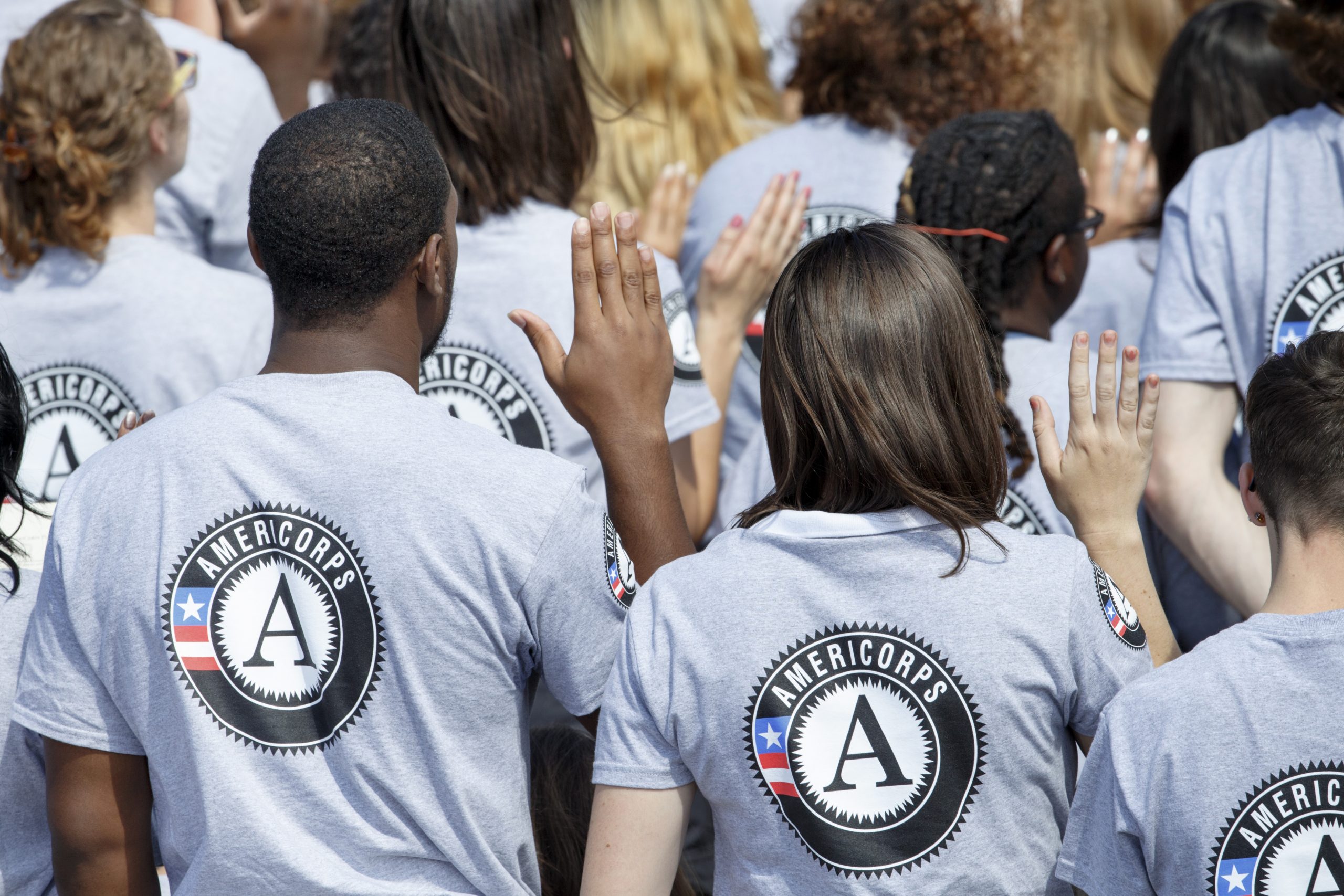
    Like hundreds of thousands of other young adults, Tegner kick-started her career through AmeriCorps, a federal agency that sends its members to communities across the country to tutor students, help after disasters strike and restore wildlife habitats, among other activities. She took a position at the Alaska Afterschool Network, where her job was to help find ways to expand science, technology, engineering and math access in its programs. Four years later, she’s still there — now, as a full-time employee managing the nonprofit’s AmeriCorps program. 

    “This state became my home,” Tegner said, adding that her year in AmeriCorps “completely changed the trajectory of my career.” 

    An AmeriCorps member poses with a student in one of the Alaska Afterschool Network’s funded programs. The organization lost its AmeriCorps funding last spring. Credit: Courtesy of Alaska Afterschool Network

    This spring, Alaska Afterschool Network was one of hundreds of organizations abruptly notified that its AmeriCorps funding had been terminated. Federal funding cuts forced the nonprofit to eliminate three full-time positions and cancel 19 internships scheduled for this summer. Tegner’s job is also at risk, though the organization is trying to find a way to keep her on. 

    In late April, the Trump administration slashed 41 percent of AmeriCorps’ funding, cutting about $400 million in grants and letting go of more than 32,000 members serving in hundreds of programs across the United States. In June and also this month, judges ordered the government to restore some funding, but the ruling does not reinstate all the money that was taken away. Shrinking AmeriCorps is among the many steps the Trump administration has taken to curb what he has called “waste, fraud and abuse” of federal funds. More action is expected in the months ahead. 

    Related: Become a lifelong learner. Subscribe to our free weekly newsletter featuring the most important stories in education. 

    Over the years, the program former President Bill Clinton created has deployed more than a million people. On top of gutting AmeriCorps, the cuts have diminished the reach of an agency that has been a critical path to a career for recent high school and college graduates at a time when entry-level jobs can be difficult to find.

    AmeriCorps was created more than three decades ago to oversee expanded federal volunteer programs, incorporating existing projects including Volunteers in Service to America and the National Civilian Community Corps. Its members take on community service positions across the country that can last for up to two years. They receive a small living stipend, and full-time members are eligible for health insurance. At the end of their terms, members are awarded a grant that can be used to pay college tuition or student loans.

    “AmeriCorps dollars have a powerful ripple effect, for both the AmeriCorps members and the students that they serve,” said Leslie Cornfeld, founder and CEO of the National Education Equity Lab, a nonprofit that brings college courses to high-poverty schools. “In many instances, it helps them define their careers.” 

    About half of the AmeriCorps funding for the Philadelphia Higher Education Network for Neighborhood Development was cut this spring. Credit: Courtesy of PHENND

    Federal surveys of AmeriCorps members from 2019, 2021 and 2023 show that 90 percent of members joined the national program in part to gain skills that would help them in school and work, and well over 80 percent said their experience in AmeriCorps helped further their “professional goals and endeavors.”

    The Trump administration cited fraud as part of its reason for nearly halving the AmeriCorps budget. Audits of the agency have raised questions about its financial management. 

    Related: Hundreds of thousands of students are entitled to training and help finding jobs. They don’t get it

    Peter Fleckenstein, 23, joined Aspire Afterschool in Arlington, Virginia, through AmeriCorps last year after graduating from the University of Delaware with a degree in psychology. He saw AmeriCorps as a way to build out his resume; even the entry-level positions he encountered during his job search required experience in the field. 

    In his position at the after-school program, Fleckenstein leads daily activities for a group of about two dozen fourth grade students. The experience has helped him crystallize his career aspirations: Before AmeriCorps, he was considering clinical social work or teaching. Now, he wants to become a counselor.

    “Working with the kids here is a lot of behavior management: problem solving, helping them regulate themselves,” Fleckenstein said. “Doing one-on-one work with them, building habits and routines with them — that is something that I could focus on more if I was in a counseling job.”

    Fleckenstein’s position was cut in April before he could complete his one-year term set to end in August, but Aspire Afterschool was able to raise money through donations to hire him and some of the nonprofit’s other AmeriCorps members part-time to finish out their grant year. 

    The Philadelphia Higher Education Network for Neighborhood Development lost half of its AmeriCorps funding this past spring when the federal agency was slashed. Credit: Courtesy of PHENND

    While some members have joined Americorps after graduating, student Deja Johnson, 24, joined as a way to help pay for college. Her term at The Scholarship Academy — a nonprofit in Atlanta helping low-income high school students navigate financial aid applications — was supposed to end with a $7,400 education grant. Because the terms were cut short, members have been told they’ll get only a prorated portion of the money.

    “It’s a little bit of a shame,” said Johnson, who is using the education grant to pursue a bachelor’s degree in nonprofit leadership. 

    “That’s what a lot of us look forward to with this work that we’re doing, because we know how much of a sacrifice it can be at times. It’s that ‘pouring into our community’ — and that’s how our community pours into us,” Johnson said.

    The AmeriCorps termination letters told grantees that their programs no longer met agency priorities, but the nonprofits were not told what those priorities are. Programs with different missions, in both Democratic- and Republican-led communities, were cut.

    Sira Coulibaly, a member with the Philadelphia Higher Education Network for Neighborhood Development’s Next Steps AmeriCorps program, packs bags of food for the Metropolitan Area Neighborhood Nutrition Alliance. Credit: Courtesy of PHENND

    The Hindman Settlement School, a nonprofit in rural Kentucky, was one victim of the cuts. The organization receives about $1 million a year from AmeriCorps for its program tutoring students with math and reading learning disabilities in more than two dozen schools. Losing that funding means drastically scaling back services, said Josh Mullins, senior director of operations at the Hindman Settlement School. He said he does not know why Hindman’s grants were terminated: The nonprofit regularly passes its audits, and its last annual report showed an average gain of seven months in reading levels among students in its dyslexia intervention program.

    A statement published in January on an AmeriCorps webpage says the agency is in the process of “conducting a full review” to comply with President Donald Trump’s executive order banning diversity, equity and inclusion in federal programs. But Mullins and other AmeriCorps grantees said diversity, equity and inclusion efforts were not listed anywhere as part of their operations.

    “That’s what’s devastating,” Mullins said. “It was completely out of our control. There was nothing you could do.”

    Related: Tracking Trump: His actions to dismantle the Education Department, and more

    The administration also gutted 85 percent of the agency’s federal staff, which has caused problems even for programs that are still receiving AmeriCorps funding. 

    The federal government terminated about half of the AmeriCorps grants for the Philadelphia Higher Education Network for Neighborhood Development. The group uses the funding to place members in local nonprofits and to help develop community partnerships in high-poverty schools. Director Hillary Kane said she’s been experiencing delays from the national AmeriCorps office in getting members approved for the programs that are still operating.

    “We need the humans in D.C. to do the stuff that they do, so we can do the stuff that we do,” Kane said. “The person we communicate with isn’t there.”

    About half of the AmeriCorps funding for the Philadelphia Higher Education Network for Neighborhood Development was cut this spring. Credit: Courtesy of PHENND

    On June 5, a federal judge granted a temporary injunction ordering the Trump administration to restore AmeriCorps funding in states that had sued over the budget cuts. The lawsuit, which was filed by two dozen Democratic-led states in May, challenges the administration’s authority to cancel the funding without Congressional approval. But the judge’s injunction does not require the Trump administration to reinstate AmeriCorps’ federal employees, and funding is not being restored to programs in states that did not sign on to the lawsuit, including Alaska, home of the Alaska Afterschool Network, or Virginia, where Aspire Afterschool is based.

    The Hindman Settlement School in Kentucky was one organization whose funding was restored this summer because of the lawsuit. Mullins said he’s hopeful the nonprofit will continue to receive AmeriCorps funding for the upcoming grant cycle in the fall.

    For Kane, the injunction does not undo the chaos caused by the abrupt cancellation of half of her Philadelphia organization’s funding. Many terminated members that were with Kane’s organization have already moved on. 

    “It’s too late for us,” she said.

    Related: Schools push career ed classes ‘for all,’ even kids heading to college

    Programs whose grants were cut can apply again in the next grant cycle, but the president’s 2026 budget calls for shutting down AmeriCorps entirely. 

    While the debate in Washington rages, current and former volunteers mourn the potential loss of a program they said gave their lives meaning and led to employment. The avenue AmeriCorps provided for Tegner to start a career at the Alaska Afterschool Network gave her purpose in life, she said. She’s worried if the program ends, there won’t be another pathway on the same scale for young idealists who aren’t sure what they want to do with their lives.

    “It helps young people of all ages grow and try new things,” Tegner said. “That’s very much what it was for me.”

    Contact staff writer Ariel Gilreath on Signal at arielgilreath.46 or at [email protected].   

    This story about AmeriCorps jobs was produced by The Hechinger Report, a nonprofit, independent news organization focused on inequality and innovation in education. Sign up for the Hechinger newsletter.
    The Hechinger Report provides in-depth, fact-based, unbiased reporting on education that is free to all readers. But that doesn’t mean it’s free to produce. Our work keeps educators and the public informed about pressing issues at schools and on campuses throughout the country. We tell the whole story, even when the details are inconvenient. Help us keep doing that.

    Join us today.

    Source link

  • Alabama high school requirements now allow students to trade chemistry for carpentry

    Alabama high school requirements now allow students to trade chemistry for carpentry

    BIRMINGHAM, Ala. — In a corner of Huffman High School, the sounds of popping nail guns and whirring table saws fill the architecture and construction classroom.

    Down the hall, culinary students chop and saute in the school’s commercial kitchen, and in another room, cosmetology students snip mannequin hair to prepare for the state’s natural hair stylist license.

    Starting this fall, Alabama high school students can choose to take these classes — or any other state-approved career and technical education courses — in place of upper level math and science, such as Algebra 2 or chemistry.

    Alabama state law previously required students to take at least four years each of English, math, science and social studies to graduate from high school. The state is now calling that track the “Option A” diploma. The new “Option B” workforce diploma allows students to replace two math and two science classes with a sequence of three CTE courses of their choosing. The CTE courses do not have to be related to math or science, but they do have to be in the same career cluster. Already, more than 70 percent of Alabama high school students take at least one CTE class, according to the state’s Office of Career and Technical Education/Workforce Development.

    The workforce diploma will give students more opportunities to get the kind of skills that can lead to jobs right after high school, legislators said. But there’s a cost: Many universities, including the state’s flagship University of Alabama, require at least three math credits for admission. The workforce diploma would make it more difficult for students on that track to get into those colleges.

    The law passed in 2024 alongside a spate of bills aimed at boosting the state’s labor participation rate, which at 58 percent as of January remained below the national rate of 63 percent. Simply put, Alabama wants to get more of its residents working.

    Alabama is giving high school students a new pathway to a high school diploma: fewer math and science classes in exchange for more career and technical education courses. Credit: Tamika Moore for The Hechinger Report

    The new diploma option also comes at a time when public perception of college is souring: Only 36 percent of U.S. adults have a lot of confidence in higher education, according to a 2024 Gallup poll. Just 43 percent of Alabama high schoolers who graduated in 2023 enrolled in one of the state’s public colleges the following fall.

    “The world of higher education is at a crossroads,” said Amy Lloyd, executive director of the education advocacy nonprofit All4Ed and former assistant secretary for the Office of Career, Technical, and Adult Education at the U.S. Department of Education. “Americans are questioning the value of the return on their investment: Is it worth my money? Is it worth my time?”

    Related: A lot goes on in classrooms from kindergarten to high school. Keep up with our free newsletter on K-12 education.

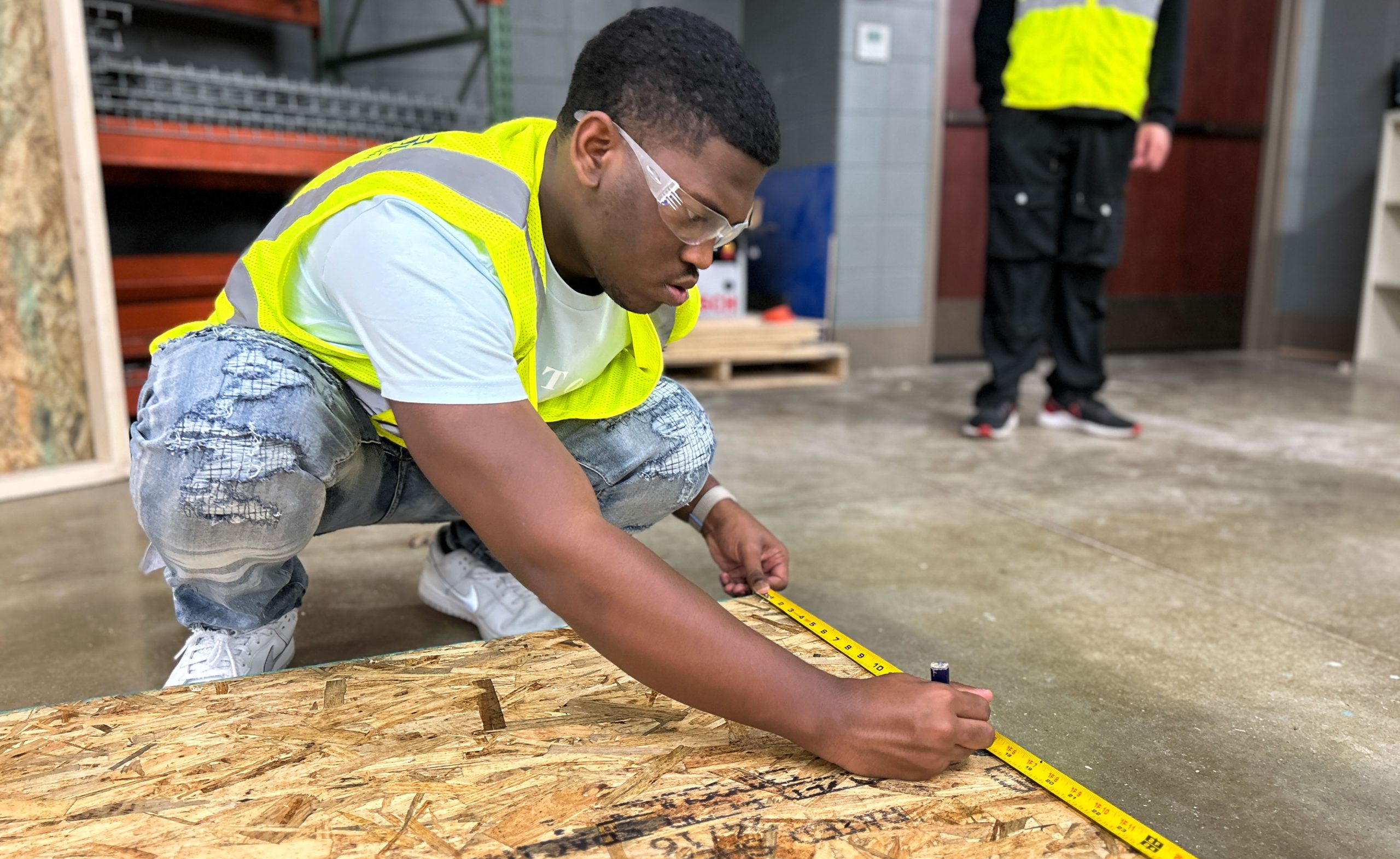
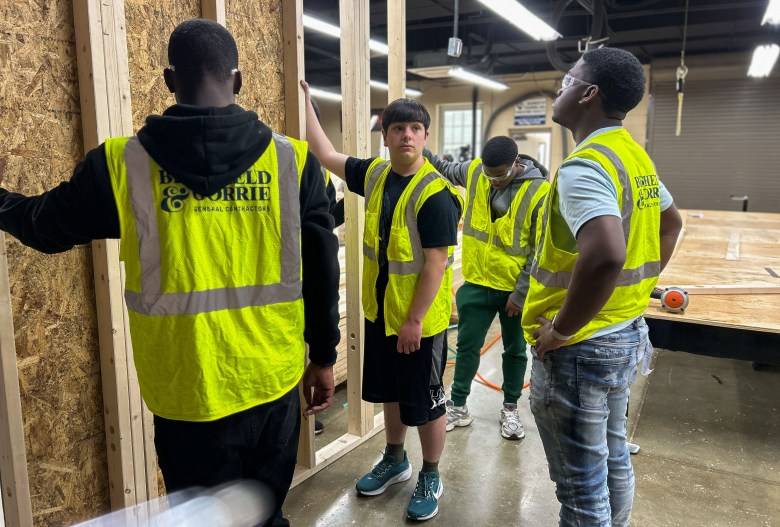
    One recent afternoon in Huffman High School’s architecture class, a few students in bright yellow safety vests were measuring a wall they had built. At the end of the semester, the project will culminate in a tiny home.

    Lucas Giles, a senior, started taking architecture his sophomore year as a way to “be able to fix things around the home without having to call other people,” he said. The new workforce diploma option won’t apply to him since he’s graduating this year, but he said he likely would have opted for it to fit more architecture classes into his schedule — that is, until he learned it would make it harder for him to attend college and study engineering.

    “I wouldn’t have the credits,” Giles realized.

    Students who earn a workforce diploma and end up wanting to go to college after all can enroll in community colleges, or aim for state colleges that have less stringent admissions requirements, said Alabama education chief Eric Mackey. The key to the new diploma will be ensuring school counselors are properly advising students, he added.

    “That’s where the counselor comes in and says, ‘If you want to be a nurse, then yes, you need the practical stuff at the career tech center — taking blood pressure and trauma support — but you also need to be taking biology, physiology, chemistry and all those things, too,’” Mackey said.

    Because the diploma only makes sense for a specific subset of students — those who do not plan to go to a four-year college that requires more math or science and who cannot otherwise fit CTE classes in their schedule — counselors have a huge role to play in guiding students. As of 2023, there were 405 students for every counselor in Alabama’s public schools, well over the recommended ratio of 250 to 1.

    Mackey said the state added career coaches in recent years to ease the counseling workload, but in many districts there is just a single coach, who rotates among schools.

    Samantha Williams, executive director of the nonprofit Birmingham Promise, fears the workforce diploma may shut off students’ options too early. Birmingham Promise helps students in Birmingham City Schools pay college tuition and connects them to internship opportunities while in high school.

    “Do you really think that all of our school districts are preparing students to know what they want to do” by the time they’re in high school, Williams asked.

    Williams also worries that lower-performing students might be steered to this diploma option in order to boost their schools’ rankings.

    Students who opt for the workforce diploma will not have their ACT test scores included in their schools’ public reports. Legislators decided that schools should not have to report standardized test scores for students who did not have to take the requisite math and science classes.

    “The concern a lot of people voiced was ‘Hey, isn’t everyone just going to place the kids who are underperforming in the workforce diploma so their ACT scores don’t bring down the whole?’” Williams said. “There’s a strong perverse incentive for people to do that.”

    Speaking to the state’s Board of Education last fall, Mackey warned the “furor of the state superintendent will come down on” anyone who tries to redirect students toward the workforce diploma because of low ACT scores.

    Related: What happened when a South Carolina city embraced career education for all its students

    At Headland High School in rural Henry County, Alabama, every student takes at least one CTE course, according to Principal Brent Maloy. The most popular classes, he said, are financial management and family consumer science.

    “We don’t force them in — everybody registers themselves, they pick their own classes,” Maloy said. “But there’s just about a zero percent chance that a kid’s not going to have a career tech class when they graduate.”

    The school has hosted information sessions for parents and students about the new diploma option ahead of next school year. In a poll of rising juniors and seniors, 20 percent said they would like to pursue a workforce diploma, and another 30 percent said they might be interested. Maloy is anticipating about 25 percent of students will actually opt in to the pathway.

    Most graduates of Headland enroll in a two-year school after graduation anyway, Maloy said, and the workforce diploma won’t hinder that. But the high school has only one counselor for its 450 students, and making sure students fully understand this diploma pathway — and its limitations — is likely to add pressure and extra responsibilities on counselors with heavy workloads.

    Students hold up the wall of a tiny home they’re building in a career and tech architecture class at Huffman High School in Birmingham, Alabama. Credit: Ariel Gilreath/The Hechinger Report

    “There’s so much pressure on our secondary counselors already just to make sure that all of the boxes are checked before graduation. It’s going to put an extra box for them to check,” Maloy said.

    Ultimately, state businesses and industries want this change, said Mackey, who started his career as a middle and high school science teacher.

    “They were saying, ‘We really need students with skills over, say, calculus,’” Mackey said. “That doesn’t mean some students don’t need calculus — we want to still offer those higher math courses and higher science courses.”

    But, reflecting on his own experience as a high school science teacher, “I can tell you that every student doesn’t need high school chemistry,” Mackey said.

    The chamber of commerce in Mobile, Alabama, is one group that advocated for the workforce diploma. Career tech classes are a good way for students to better learn what they want to do before graduating high school, and they are also an avenue for students to get skills in high wage industries prevalent in Alabama, said Kellie Snodgrass, vice president of workforce development at the Mobile Chamber.

    Less than half of high school graduates in the region end up enrolling in college after graduation, Snodgrass said, and only 20 percent of high-wage jobs in Mobile require a college degree. A large chunk of jobs in the state, and in Mobile in particular, are in manufacturing.

    “It’s terrible when a student goes away to college and comes back and can’t find a job, when we have thousands of open jobs here,” Snodgrass said.

    In an emailed statement, Trevor Sutton, the vice president of economic development at the Birmingham Business Alliance, said the diploma option was a “win for the state of Alabama” that would allow students a chance to learn both “hard and soft skills like communication and time management.”

    Related: States bet big on career education, but struggle to show it works

    At least 11 states have embraced policies that give students flexibility to use career tech courses for core academic credits, according to a review from the Education Commission of the States.

    Like Alabama, Indiana also made changes to its diploma requirements in 2024. After more than a year of public debate, the state created three graduation pathways that are meant to lead to college admissions, the workforce, or enlistment in the military. Those changes will be effective for students in the class of 2029, or current eighth graders.

    Having industry buy-in on career tech programs is important, said Lloyd with All4Ed, because most students will need either an industry or post-secondary credential to land a job with a comfortable wage.

    “The reality is a high school diploma is not enough in today’s labor market to have a guaranteed ticket to the middle class,” Lloyd said.

    The problem, Lloyd said, is most K-12 industry credentials have little use to employers. Only 18 percent of CTE credentials earned by K-12 students in the U.S. were in demand by employers, according to a 2020 report from the Burning Glass Institute.

    The key in Alabama will be ensuring students are going into career pathways that line up with job demand, Snodgrass said. Out of the more than 33,000 CTE credentials Alabama high school students earned in 2023, only 2 percent were in manufacturing, which is one of the state’s highest need areas.

    Still, attitudes toward high school CTE courses — once largely thought of as classes for students who struggled academically — have improved significantly over the years. And many schools offer CTE programs like aerospace, robotics or conservation that could help students get into high-demand undergraduate programs at universities.

    “We’re increasingly blurring the lines between what has been historically siloed in people’s minds in terms of career education versus academic education,” Lloyd said. “Those are very often one and the same.”

    Contact staff writer Ariel Gilreath at [email protected]

    This story about Alabama high school requirements was produced by The Hechinger Report, a nonprofit, independent news organization focused on inequality and innovation in education. Sign up for the Hechinger newsletter

    The Hechinger Report provides in-depth, fact-based, unbiased reporting on education that is free to all readers. But that doesn’t mean it’s free to produce. Our work keeps educators and the public informed about pressing issues at schools and on campuses throughout the country. We tell the whole story, even when the details are inconvenient. Help us keep doing that.

    Join us today.

    Source link