Category: future

  • K12 Earns High Marks for Excellence in Online Public Education

    K12 Earns High Marks for Excellence in Online Public Education

    RESTON, Va.(GLOBE NEWSWIRE) — K12, a portfolio brand of Stride, Inc. has been recognized for its steadfast commitment to quality education. In a recent review by Cognia, a global nonprofit that accredits schools, K12 earned an impressive Index of Education Quality (IEQ) score of 327, well above the global average of 296. Cognia praised K12 for creating supportive environments where students are encouraged to learn and grow in ways that work best for them. 

    For over 25 years, K12 has been a pioneer in online public education, delivering flexible, high-quality learning experiences to families across the country. Having served more than 3 million students, K12 has helped shape the future of personalized learning. This long-standing presence in the field reflects a deep understanding of what families need from a modern education partner. The recent Cognia review further validates K12’s role as a trusted provider, recognizing the strength of its learning environments and its commitment to serving all students. 

    “What stood out in this review is how clearly our learning environments are working for students,” said Niyoka McCoy, Chief Learning Officer at Stride, Inc. “From personalized graduation plans to real-time feedback tools and expanded course options, the Cognia team saw what we see every day, which is students being supported in ways that help them grow, stay engaged, and take ownership of their learning.” 

    K12’s impact extends well beyond the virtual classroom. In 2025, the organization was honored with two Gold Stevie® Awards for Innovation in Education and recognized at the Digital Education Awards for its excellence in digital learning. These awards highlight K12’s continued leadership in delivering meaningful, future-focused education. What sets K12-powered online public schools apart is a curriculum that goes beyond the basics, offering students access to STEM, Advanced Placement, dual-credit, industry certifications, and gamified learning experiences. K12’s program is designed to spark curiosity, build confidence, and help students thrive in college, careers, and life. 

    Through student-centered instruction and personalized support, K12 is leading the way in modern education. As the learning landscape evolves, K12 adapts alongside it, meeting the needs of today’s students while shaping the future of education. 

    To learn more about K12 and its accredited programs, visit k12.com.

    About Stride, Inc.  

    Stride Inc. (LRN) is redefining lifelong learning with innovative, high-quality education solutions. Serving learners in primary, secondary, and postsecondary settings, Stride provides a wide range of services including K-12 education, career learning, professional skills training, and talent development. Stride reaches learners in all 50 states and over 100 countries. Learn more at Stridelearning.com.

    eSchool News Staff
    Latest posts by eSchool News Staff (see all)

    Source link

  • Middle and high school students need education, career guidance

    Middle and high school students need education, career guidance

    Key points:

    Students need more support around education paths and career options, including hands-on experiences, according to a new nationwide survey from the nonprofit American Student Assistance.

    The survey of more than of 3,000 students in grades 7-12 offers insights into teens’ plans after high school. The research, Next Steps: An Analysis of Teens’ Post-High School Plans, uncovers evolving trends in teenagers’ attitudes, perceptions, and decision-making about their post-high school plans.

    “This analysis of teens’ post high school plans reveals shifts in students’ thinking and planning. We need to change the way we help young people navigate the complex and evolving landscape of education and career options,” said Julie Lammers, Executive Vice President of ASA. “Starting in middle school, our young people need early access to opportunities that empowers them to explore careers that match their interests and strengths; hands-on, skills-based experiences in high school; and information and resources to navigate their path to postsecondary education and career. All of this will enable them to graduate informed, confident, and empowered about what they want to do with their futures.” 

    The survey offers notable findings regarding parental influence on teens’ planning, perceptions of nondegree pathways like trade or technical school, apprenticeships, and certificate programs, and a continued drop-off in kids’ plans to go to college immediately after high school graduation.

    Key findings include:

    Teens’ interest in college is down while nondegree paths are on the rise. Nearly half of all students said they aren’t interested in going to college, with just 45 percent saying two- or four-year college was their most likely next step. Meanwhile 38 percent of teens said they were considering trade or technical schools, apprenticeships, and technical bootcamp programs, although only 14 percent say that such a path is their most likely next step.

    Parents are one of teens’ biggest influencersand they’re skeptical of nondegree options. A vast majority (82 percent) of teens said their parents agree with their plans to go to four-year college, while only 66 percent said parents supported plans to pursue a nondegree route. In fact, teens reported parents were actually more supportive (70 percent) of foregoing education altogether right after high school vs. pursuing a nondegree program.    

    A concerning number of young people don’t have plans for further education or training. Nearly one quarter (23 percent) said they have no immediate plans to continue formal education or training upon graduation. Teens not planning to continue education after high school indicated they were thinking of beginning full-time work, entering a family business, starting their own business, or joining the military.

    Teens, and especially middle schoolers, are feeling better prepared to plan their futures. In recent years policymakers, educators, employers, and other stakeholders have pushed to make career-connected learning a more prominent feature of our education to workforce system. Survey results say it’s paying off. Agreement with the statement “my school provides me with the right resources to plan for my next steps after high school” grew from just 59 percent in 2018, to 63 percent in 2021, to 82 percent in 2024. Notably, the largest increase occurred at the middle school level, where confidence in in-school planning resources jumped from 60 percent in 2018 to 90 percent in 2024.

    Girls are much more likely to plan to attend college than boys. Boys and girls are equally interested in college when they’re in middle school, but by high school, more than half (53 percent) of girls say they’re likely to attend college compared to just 39 percent of boys. The gender gap is smaller when it comes to nondegree pathways: 15 percent of high school boys say they will likely attend vocational/trade school, participate in an apprenticeship, or take a certificate program, compared to 10 percent of high school girls.

    City kids aren’t as “into” college. Urban teens were least likely (39 percent) to say they plan to go to college. Suburban teens are much more likely to plan to attend a college program (64 percent) while 46 percent of rural students planned on college.

    Students of color are college bound. More than half (54 percent) of Black teens and 51 percent of Hispanic youth are planning to go to college, compared to 42 percent of White teens.  

    This press release originally appeared online.

    eSchool News Staff
    Latest posts by eSchool News Staff (see all)

    Source link

  • Microsoft and FFA help students use smart sensors and AI to learn about the future of farming and technology

    Microsoft and FFA help students use smart sensors and AI to learn about the future of farming and technology

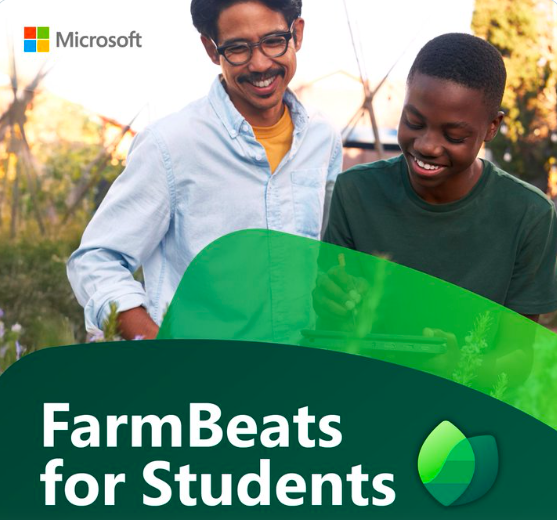
    Microsoft Corp. and the National FFA Organization on Tuesday announced the national expansion of FarmBeats for Students, a cutting-edge educational program integrating smart sensors, data science and artificial intelligence (AI) to teach precision agriculture in classrooms. Starting today, FFA teachers and students throughout the United States, including FFA chapters in 185 middle and high schools, will receive a classroom set of FarmBeats for Students kits free of charge. The kits include ready-to-use sensor systems along with curriculum for teachers and are designed for classrooms of all kinds; no prior technical experience is required.

    More and more farmers are adopting advanced technology, including automating systems such as tractors and harvesters and using drones and data analysis to intervene early against pests and disease, to maximize crop yield, optimize resource usage, and adjust to changing weather patterns. Gaining hands-on experience with machine automation, data science and AI will help American agricultural students remain competitive in the global market.

    Using the FarmBeats for Students kits and free curriculum, students build environmental sensor systems and use AI to monitor soil moisture and detect nutrient deficiencies — allowing them to understand what is happening with their plants and make data-driven decisions in real time. Students can adapt the kit to challenges unique to their region — such as drought, frost and pests — providing them with practical experience in tackling real-world issues in their hometowns.

    “Microsoft is committed to ensuring students and teachers have the tools they need to succeed in today’s tech-driven world, and that includes giving students hands-on experience with precision farming, data science and AI,” said Mary Snapp, Microsoft vice president, Strategic Initiatives. “By teaming up with FFA to bring FarmBeats for Students to students across the country, we hope to inspire the next generation of agriculture leaders and equip them with the skills to tackle any and all challenges as they guide us into the future.”

    “Our partnership with Microsoft exemplifies the power of collaboration in addressing industry needs while fostering personal and professional growth among students,” said Christine White, chief program officer, National FFA Organization. “Supporting agricultural education and leadership development is crucial for shaping the next generation of innovators and problem solvers. Programs like this equip students with technical knowledge, confidence and adaptability to thrive in diverse and evolving industries. Investing in these young minds today sets the stage for a more sustainable, innovative and resilient agricultural future.”

    In addition, teachers, students or parents interested in FarmBeats for Students can purchase a kit for $35 at this link and receive free training at Microsoft Learn.

    Any educator interested in implementing the FarmBeats for Students program can now access a new, free comprehensive course on the Microsoft Educator Learn Center, providing training on precision agriculture, data science and AI, allowing teachers to earn professional development hours and badges. 

    FarmBeats for Students was co-developed by Microsoft, FFA and agriculture educators. The program aligns with the AI for K-12 initiative guidelines; Agriculture, Food and Natural Resources career standards; Computer Science Teachers Association standards; and Common Core math standards.

    For more information about FarmBeats for Students, visit aka.ms/FBFS.

    Kevin Hogan
    Latest posts by Kevin Hogan (see all)

    Source link

  • Alliant Credit Union Foundation Grants $108K to Boost AI and Digital Programs at Ridgewood High School

    Alliant Credit Union Foundation Grants $108K to Boost AI and Digital Programs at Ridgewood High School

    The Alliant Credit Union Foundation has awarded a $108,000 grant to Digital Leaders Now, the nonprofit that powers the Digital Leaders Academy at Ridgewood Community High School District 234, to support the implementation of innovative digital opportunity programs.

    The initiative will begin rolling out in Spring 2025, with full program implementation for the 2025-2026 school year. The grant will help students gain critical digital skills, enhance career preparation opportunities at Ridgewood and beyond, and ensure teachers have the necessary resources to integrate technology into the classroom effectively.

    “The Alliant Credit Union Foundation is committed to fostering educational opportunities that prepare students for the future,” said Meredith Ritchie, President of The Alliant Credit Union Foundation. “By partnering with the Digital Leaders Academy, we are helping to bridge the digital divide and ensure that students in Ridgewood Community High School District 234 are equipped with the skills and knowledge they need to succeed in the evolving workforce.”

    The grant will support key initiatives, including:

    • Integration of AI Tools: Students will gain hands-on experience using AI and emerging technologies to enhance their learning and problem-solving skills.
    • Teacher Training & Development: Supporting professional development programs that empower educators with the tools and knowledge to incorporate digital learning strategies into their curriculum.
    • Digital Fluency Expansion: Enhancing student digital literacy and technology-based learning experiences to build a foundation for future careers.
    • Career Readiness Programs: Preparing students for high-demand technology roles by connecting them with industry experts, mentorship opportunities, and real-world applications of digital skills.

    Through this initiative, the Alliant Credit Union Foundation continues its mission of driving positive change in education by expanding access to technology and professional development resources.

    “The Digital Leaders Academy is a testament to the power of partnership and community. With the support of Alliant, we’re equipping students, teachers, and parents with the tools to thrive in the digital age, because when we invest in digital fluency, we unlock limitless potential,” said Caroline Sanchez Crozier, Founder of Digital Leaders Now, an Illinois-based nonprofit, and creator of Digital Leaders Academy.

    Ridgewood Community High School District 234 students will benefit from enhanced learning experiences, giving them a competitive edge in today’s digital economy.

    Kevin Hogan
    Latest posts by Kevin Hogan (see all)

    Source link

  • Students learn the basics of AI as they weigh its use in their future careers

    Students learn the basics of AI as they weigh its use in their future careers

    This story was originally published by Chalkbeat. Sign up for their newsletters at ckbe.at/newsletters.

    On a recent Thursday morning, Michael Taubman asked his class of seniors at North Star Academy’s Washington Park High School: “What do you think AI’s role should be in your future career?”

    “In school, like how we use AI as a tool and we don’t use it to cheat on our work … that’s how it should be, like an assistant,” said Amirah Falana, a 17-year-old interested in a career in real estate law.

    Fernando Infante, an aspiring software developer, agreed that AI should be a tool to “provide suggestions” and inform the work.

    “It’s like having AI as a partner rather than it doing the work,” said Infante during class.

    Falana and Infante are students in Taubman’s class called The Summit, a yearlong program offered to 93 seniors this year and expanding to juniors next year that also includes a 10-week AI course developed by Taubman and Stanford University.

    As part of the course, students use artificial intelligence tools – often viewed in a negative light due to privacy and other technical concerns – to explore their career interests and better understand how technology could shape the workforce. The class is also timely, as 92% of companies plan to invest in more AI over the next three years, according to a report by global consulting firm McKinsey and Company.

    The lessons provide students with hands-on exercises to better understand how AI works and how they can use it in their daily lives. They are also designed so teachers across subject areas can include them as part of their courses and help high school students earn a Google Career Certificate for AI Essentials, which introduces AI and teaches the basics of using AI tools.

    Students like Infante have used the AI and coding skills they learned in class to create their own apps while others have used them to create school surveys and spark new thoughts about their future careers. Taubman says the goal is to also give students agency over AI so they can embrace technological changes and remain competitive in the workfield.

    “One of the key things for young people right now is to make sure they understand that this technology is not inevitable,” Taubman told Chalkbeat last month. “People made this, people are making decisions about it, and there are pros and cons like with everything people make and we should be talking about this.”

    Students need to know the basics of AI, experts say

    As Generation Z, those born between 1997 and 2012, graduate high school and enter a workforce where AI is new, many are wondering how the technology will be used and to what extent.

    Nearly half of Gen Z students polled by The Walton Family Foundation and Gallup said they use AI weekly, according to the newly released survey exploring how youth view AI. (The Walton Family Foundation is a supporter of Chalkbeat. See our funders list here.) The same poll found that over 4 in 10 Gen Z students believe they will need to know AI in their future careers, and over half believe schools should be required to teach them how to use it.

    This school year, Newark Public Schools students began using Khan Academy’s AI chatbot tutor called Khanmigo, which the district launched as a pilot program last year. Some Newark teachers reported that the tutoring tool was helpful in the classroom, but the district has not released data on whether it helped raise student performance and test scores. The district in 2024 also launched its multimillion project to install AI cameras across school buildings in an attempt to keep students safe.

    But more than just using AI in school, students want to feel prepared to use it after graduating high school. Nearly 3 in 4 college students said their colleges or universities should be preparing them for AI in the workplace, according to a survey from Inside Higher Ed and College Pulse’s Student Voice series.

    Many of the challenges of using AI in education center on the type of learning approach used, accuracy, and building trust with the technology, said Nhon Ma, CEO of Numerade – an online learning assistant that uses AI and educators to help students learn STEM concepts. But that’s why it’s important to immerse students in AI to help them understand the ways it could be used and when to spot issues, Ma added.

    “We want to prepare our youth for this competitive world stage, especially on the technological front so they can build their own competence and confidence in their future paths. That could potentially lead towards higher earnings for them too,” Ma said.

    For Infante, the senior in Taubman’s class, AI has helped spark a love for computer science and deepened his understanding of coding. He used it to create an app that tracks personal milestones and goals and awards users with badges once they reach them. As an aspiring software developer, he feels he has an advantage over other students because he’s learning about AI in high school.

    Taubman also says it’s especially important for students to understand how quickly the technology is advancing, especially for students like Infante looking towards a career in technology.

    “I think it’s really important to help young people grapple with how this is new, but unlike other big new things, the pace is very fast, and the implications for career are almost immediate in a lot of cases,” Taubman added.

    Students learn that human emotions are important as AI grows

    It’s also important to remember the limitations of AI, Taubman said, noting that students need the basic understanding of how AI works in order to question it, identify any mistakes, and use it accordingly in their careers.

    “I don’t want students to lose out on an internship or job because someone else knows how to use AI better than they do, but what I really want is for students to get the internship or the job because they’re skillful with AI,” Taubman said.

    Through Taubman’s class, students are also identifying how AI increases the demand for skills that require human emotion, such as empathy and ethics.

    Daniel Akinyele, a 17-year-old senior, said he was interested in a career in industrial and organizational psychology, which focuses on human behavior in the workplace.

    During Taubman’s class, he used a custom AI tool on his laptop to explore different scenarios where he could use AI in his career. Many involved talking to someone about their feelings or listening to vocal cues that might indicate a person is sad or angry. Ultimately, psychology is a career about human connection and “that’s where I come into play,” Akinyele said.

    “I’m human, so I would understand how people are feeling, like the emotion that AI doesn’t see in people’s faces, I would see it and understand it,” Akinyele added.

    Falana, the aspiring real estate attorney, also used the custom AI tool to consider how much she should rely on AI when writing legal documents. Similar to writing essays in schools, Falana said professionals should use their original writing in their work but AI could serve as a launching pad.

    “I feel like the legal field should definitely put regulations on AI use, like we shouldn’t be able to, draw up our entire case using AI,” Falana said.

    During Taubman’s class, students also discussed fake images and videos created by AI. Infante, who wants to be a software developer, added that he plans to use AI regularly on the job but believes it should also be regulated to limit disinformation online.

    Taubman says it’s important for students to have a healthy level of skepticism when it comes to new technologies. He encourages students to think about how AI generates images, the larger questions around copyright infringement, and their training processes.

    “We really want them to feel like they have agency in this world, both their capacity to use these systems,” Taubman said, “but also to ask these broader questions about how they were designed.”

    Chalkbeat is a nonprofit news site covering educational change in public schools.

    For more on AI in education, visit eSN’s Digital Learning hub.

    Latest posts by eSchool Media Contributors (see all)

    Source link

  • Career-connected learning builds a more employable, future-ready generation

    Career-connected learning builds a more employable, future-ready generation

    Key points:

    Abraham Maslow’s Hierarchy of Needs is a fundamental psychological theory that explains human motivation. At its base are physiological and safety needs, followed by love and belonging, esteem, and self-actualization at the peak. While this theory is universally recognized for understanding personal growth in human development, it can also be applied to an individual’s educational journey.

    Had Maslow been an educator, he might have reconsidered the foundation of our education system to one that would align student aptitudes and interests to sustain the rapidly changing workforce. Consider the phrase, “If you give a man a fish, he will be hungry tomorrow. If you teach a man to fish, he will be richer forever.” It could be applied here, too. If we pair students’ strengths and aptitudes with in-demand careers through personalized learning, we are ensuring the success of our students and tomorrow’s workforce, thus realigning motivation and fulfilling the individuals Hierarchy of Needs.

    States have begun investing in career-connected learning (CCL) to connect learning to career pathways as a means to boost employability and inevitably support businesses and the local economy.

    Students are rarely guided toward career paths that match their aptitudes (or natural talents). But if our districts began doing so, we would likely see higher levels of employment and job satisfaction, and lower economic instability and gaps in the job market. This could ultimately impact our communities and the national economy at large.

    While work is being done, there is still plenty to do as the career exposure gap grows, particularly in IT, manufacturing, finance, and more. It’s time for educational stakeholders–policy, K-12 decision makers, guidance counselors and parents alike–to rethink how we prepare young people for their futures.

    The foundation: Addressing basic needs first

    It has become ever so clear that every student, starting as early as junior high, should have the opportunity to take an aptitude assessment. Researchers have identified that students’ natural aptitudes solidify by age 14, forming the foundation for understanding what they’re inherently good at. If Maslow were designing today’s educational experience, this would be the starting point–helping students discover their strengths and setting the stage for growth.

    Students’ ability to learn, and therefore their level of education, has always shown to have direct correlations to their physical well-being and sense of security. Often, students feel discouraged and unengaged in their coursework because it doesn’t connect to their innate strengths, making it harder to feel confident in their abilities and motivated to tap into potential future pathways for employment. 

    When these foundational supports are provided, students are likely to feel ready to explore career opportunities and develop the workplace-ready skills needed in today’s economy.

    Building confidence: Belonging and self-esteem in education

    Students thrive when they feel a sense of belonging–both in the classroom and in the broader community. They also need to build self-esteem by experiencing achievement, recognition, and purpose. Connecting education with natural aptitudes and real-world career experiences can foster this sense of belonging and achievement.

    Encouraging students to participate in internships, apprenticeships, or mentorship programs can bridge the connection between their talents and real-world job opportunities. This fosters a sense of community and a personal identity tied to their future careers and success. CCL helps students understand that they have valuable contributions to make, both in school and beyond, which often leads to students taking ownership of their educational journeys.

    Path to self-actualization: Unlocking career potential

    At the pinnacle of Maslow’s hierarchy is self-actualization. Students are no longer just attending school to pass tests–they are actively seeking knowledge and skills to help them achieve their dreams. Students are often more motivated when they see the relevance of their learning, especially when they understand how it connects to their future aspirations.

    Tech solutions have helped districts provide personalized career assessments and work-based learning experiences for students, which empowers them to explore their career interests in-depth. When we offer students opportunities for hands-on exploration and real-world application, they find greater fulfillment in their educational experiences and a stronger desire to achieve higher learning goals.

    The crisis: How the current system is failing to meet Maslow’s vision

    Most high school graduates (75 percent) do not feel prepared to make college or career decisions after graduation.

    Simultaneously, 40 percent of employers stated that educational institutions do not sufficiently prepare students for their future careers, and 90 percent emphasized the need for stronger partnerships between K-12 schools and postsecondary institutions.

    Despite the clear benefits of linking education to career pathways, more often schools solely focus on academic success, neglecting the broader skills students need to thrive in the workforce. And CCL is frequently seen as a nice-to-have, rather than an essential piece of education. The growing career exposure gap is evidence of this disconnect.

    Closing this disconnect begins with helping people understand where to invest in their skills. 

    A new model: Career-connected learning as the solution

    By ensuring basic needs are met, fostering belonging and esteem, and unlocking students’ potential, we equip students with the real-world skills they need to succeed. CCL benefits every student and should be seen as an essential part of education, not just a nice-to-have.

    Personalized learning platforms, aptitude assessments, career identification, and skill-based learning tools provide the foundation for this transformation. But it’s the convergence among educators, employers, policymakers, and technology providers that will ultimately ensure that every student has the opportunity to realize their full potential. 

    My final thoughts: Maslow would remind us that education isn’t just about filling students’ heads with knowledge–it’s about inspiring them to dream, grow, and discover their limitless opportunities. This vision offers not just hope for individual students, but economic benefits for society as a whole.

    Latest posts by eSchool Media Contributors (see all)

    Source link

  • Reimagining readiness in Indiana education

    Reimagining readiness in Indiana education

    Key points:

    Across the country, education is on the brink of significant change. As schools, districts, and policymakers grapple with the realities of a rapidly evolving workforce that requires discipline-specific knowledge, high-tech know-how, and hands-on skills, there is a growing recognition that the traditional approaches to preparing students for the real world no longer suffice. 

    This shift brings uncertainty and anxiety for district leaders here in Indiana. Change can be intimidating, especially when the stakes are as high as the future success of our students. Yet, this moment also holds immense potential to redefine what it means to truly ready them for a workplace that is continually reinventing itself.

    To confront the challenges future-focused schools face, we’re sharing our approach from two distinct, but complementary, perspectives. One, from the superintendent of Eastern Hancock Schools, a small, rural district in Indiana that is deeply rooted in its community and focused on creating opportunities for students through strong local partnerships. The other, from the president and CEO of Project Lead The Way (PLTW), a national nonprofit organization that provides schools with innovative, hands-on, project-based STEM curriculum designed to develop critical skills and knowledge, while preparing students for careers beyond the classroom. 

    While we work in different contexts, our shared mission of preparing students and educators for an ever-changing world unites us. Together, we aim to highlight the excitement and possibility that change can bring when approached with readiness and purpose.

    Redefining what it means to be ready

    The jobs of tomorrow will demand far more than technical knowledge. As industries transform at warp speed, accelerated by AI, automation, and other technological advancements, many of today’s students will enter careers that don’t yet exist. 

    Preparing them for this reality requires educators to focus on more than just meeting academic benchmarks or prepping for the next standardized test. It demands fostering critical thinking, collaboration, communication skills, and, perhaps most importantly, confidence–characteristics many employers say are lacking among today’s graduates.

    At Eastern Hancock, this preparation begins by creating opportunities for students to connect their learning to real-world applications. The district’s robust work-based learning program allows juniors and seniors to spend part of their day in professional placements across industries, such as construction, healthcare, engineering, and education, where they receive hands-on training. These experiences not only provide exposure to potential careers but also help students develop soft skills, including teamwork and problem-solving, that are critical for success in any field.

    We also know that when students have earlier access to STEM learning and concepts, they are more inclined to pursue a STEM-driven career, such as computer science and engineering. Students in PLTW programs tackle meaningful problems as capable contributors, such as designing prototypes to address environmental issues, exploring biomedical innovations, and solving arising problems like cybersecurity and information safety.

    Preparation, however, is about more than providing opportunities. Many students dismiss career paths because they lack the self-assurance to see themselves thriving in those roles. Both Eastern Hancock and PLTW work to break down these barriers–helping students build self-esteem, explore new possibilities, and develop confidence in chosen fields they may have once considered out of reach.

    Empowering educators to lead with confidence

    While students are at the heart of these changes, educators are the driving force behind them. For many teachers, however, change can feel overwhelming, even threatening. Resistance to new approaches often stems from a fear of irrelevance or a lack of preparation. To truly transform education, it is essential to support teachers with the resources, tools, and confidence they need to thrive in evolving classrooms.

    PLTW’s professional development programs equip educators with training that builds their capacity to lead transformative learning experiences. Teachers leave PLTW sessions with practical strategies, a renewed sense of purpose, and the self-assurance to inspire their students through immersive classroom experiences.

    At Eastern Hancock, the promise of growth drives efforts to support educators through professional development that aligns with their goals and the district’s vision. Teachers collaborate to set meaningful objectives, fostering a culture of innovation and shared purpose. This approach ensures that educators feel prepared not only to guide students but also to grow alongside them.

    Blending a local approach and national reach illustrates how schools and organizations at every level can work together to address the shared challenge of preparing and supporting educators for the future. By empowering teachers with the tools and confidence they need, both Eastern Hancock and PLTW demonstrate how readiness can ripple outward to transform entire communities.

    Delivering on the promises of education

    Indiana’s reimagined graduation requirements offer schools the chance to redefine what it means to be truly prepared for the future. At Eastern Hancock, we’ve seen how aligned values–like those we share with PLTW–can inspire new ways of thinking about career readiness. We’re both deeply committed to ensuring students are equipped with the skills, experiences, and confidence they need to thrive in an unpredictable world.

    Change may cause anxiety, but it also creates opportunities for innovation, growth, and excitement. When educators, students, and communities embrace readiness, the future of education becomes a source of hope and possibility-for Indiana and for the nation.

    Latest posts by eSchool Media Contributors (see all)

    Source link

  • White House order prioritizes AI in schools

    White House order prioritizes AI in schools

    Key points:

    • The Trump administration is elevating AI programs in K-12 education
    • The human edge in the AI era
    • Report details uneven AI use among teachers, principals
    • For more news on AI in education, visit eSN’s Digital Learning hub

    A new executive order signed by President Trump takes aim at AI policies in K-12 education by “fostering interest and expertise in artificial intelligence (AI) technology from an early age to maintain America’s global dominance in this technological revolution for future generations.”