Category: Gaza

  • Gaza, higher education, and the ethics of institutional neutrality

    Gaza, higher education, and the ethics of institutional neutrality

    When I published my academic article Witnessing Silence: The Palestinian Genocide, Institutional Complicity, and the Politics of Knowledge in June this year, I shared it on LinkedIn expecting it might quietly circulate among those already engaging with Palestine and decolonial education.

    Instead, what followed was an unexpectedly wide response – emails, messages, and private conversations from academics and professional services staff across the sector, expressing that the piece gave language to something they had been living with but unable to name.

    Where the original piece offered a theoretically grounded, autoethnographic account of institutional complicity and epistemic violence in UK higher education, this is a direct reflection on what that silence means in practice: for those of us who work within universities, support students, write policy, and try to teach with integrity in times of crisis.

    This is not a neutral topic. Nor, I believe, should it be. But it is one that demands clarity, care, and honesty about what our sector chooses to say – or not say – when faced with the mass killing of civilians, including thousands of children. It also demands that we reckon with how our silences function, who they serve, and who they leave behind.

    What is the silence we’re talking about?

    Since October 2023, higher education institutions in the UK have issued few, if any, direct statements on the situation in Gaza. Where communications have been made, they have been strikingly general: references to “ongoing events in the Middle East,” or “the situation in Israel and Gaza.” In many cases, even the word “Palestine” is omitted altogether.

    This is not simply a matter of tone. Language signals recognition, and its absence is felt. In the same period, UK universities have published clear and immediate statements on the war in Ukraine, the Christchurch mosque attacks, and the murder of George Floyd. These responses were swift and specific, naming both the nature of the violence and the communities affected.

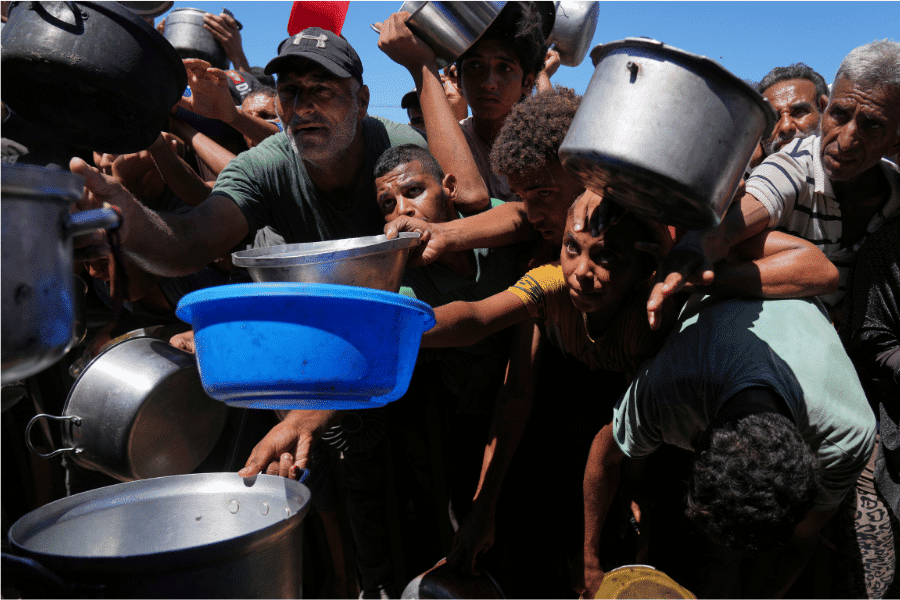
    By contrast, when it comes to Gaza, where, as of April 2025, the Palestinian Central Bureau of Statistics reported that 17,954 children killed, 39,384 children orphaned, and 7,065 children injured, many with life-changing disabilities most institutions have chosen vagueness or silence.

    The use of the term “genocide” is not a personal flourish. It has been raised by international human rights organisations such as Amnesty International, by UN experts, and by legal scholars. It is also under formal consideration at the International Court of Justice, which in January 2024 issued provisional measures recognising a plausible risk of genocide in Gaza. To avoid naming this, or to replace it with neutral euphemisms, is not caution. It is abandonment.

    I do not assume that this silence stems from indifference. In many cases, it reflects complex pressures: reputational risk, external scrutiny, internal disagreement, legal advice. But intention does not cancel out impact. And the cumulative impact of this silence is a deepening sense that Palestinian suffering is institutionally unrecognisable: too controversial to name, too politically fraught to mourn, too inconvenient to address.

    How silence affects minoritised staff and students

    The consequences of silence are not theoretical; they are lived. For many Muslim, Arab, and pro-Palestinian staff and students, the ongoing refusal to acknowledge what is happening in Gaza has created a climate of anxiety, exhaustion, and quiet despair. What I describe in my research as “moral injury” – the psychological toll of witnessing profound injustice while being expected to remain silent – has become, for many, a defining feature of daily academic life.

    I’ve heard this from colleagues across roles and disciplines: early career researchers who self-censor in lectures and grant proposals, students too afraid to name Palestine in their dissertations, and professional services staff torn between personal conviction and institutional messaging. Some have received formal warnings; others speak only in private, fearful of reputational damage or being labelled as disruptive. The burden of caution is not equally distributed.

    These are not isolated feelings. For many colleagues and friends, this silence also carries an unbearable weight: the knowledge that our lives are treated as less valuable and more easily dispensable. Conflicts in Iraq, Afghanistan, Yemen, Gaza, and Syria have taken millions of lives, yet they rarely provoke the same sustained outrage or mobilisation that far smaller losses elsewhere receive – a phenomenon documented by Kearns et al. (2019). To live with that awareness is haunting. And when universities, too, remain vague or silent, the omission feels less like caution and more like confirmation, that even here, in institutions that speak of justice and care, some lives – our lives – and losses are considered harder to name.

    I want to be clear: I am not accusing individuals of deliberate harm. But when institutions fail to name atrocities, when they issue statements that sidestep historical context, and when they offer wellbeing support without acknowledging what that support is for, they deepen a sense of abandonment that many minoritised staff already carry. It becomes harder to feel safe, heard, or morally aligned with the institutions we work in.

    Silence becomes censorship

    Silence in our universities is not just absence. It often comes with a cost for anyone who dares to speak. What looks like neutral restraint can be revealed, in practice, as institutional censorship.

    Since October 2023, disciplinary investigations have spread across UK campuses. A joint investigation found that at least 28 universities launched formal proceedings against students and staff over pro-Palestinian activism, involving more than a hundred people. Other reporting suggests that as many as 250 to 300 employees across the sector have been investigated or threatened with dismissal simply for expressing pro-Palestinian views.

    A HEPI report documents how encampments across UK universities, including many Russell Group members, were met with heavy institutional responses. Emails obtained by journalists also show that university security teams adopted “US-style” surveillance tactics during protests, often under pressure from their own professional networks.

    These are not isolated anecdotes. The pattern is clear. Silence is not neutral. It is often enforced. When colleagues or students raise their voices, they risk being investigated, disciplined, or even expelled. That cost is real and immediate, and it must be named.

    Ethical contradictions

    What makes the silence so disorienting is not just the absence of language, it’s the dissonance between that silence and the values our sector claims to uphold. We talk about decolonisation, inclusive pedagogy, and trauma-informed practice. We encourage students to “critically engage with systems of power,” and we celebrate academic freedom as foundational to our purpose. Yet when faced with a case of genocide – documented by international bodies, witnessed daily in the media, and devastating in its scale – many universities fall silent.

    This is not simply a question of public statements. It is a deeper ethical contradiction that permeates the day-to-day environment of higher education institutions. When staff are encouraged to design anti-racist curricula but discouraged from naming colonial violence in Palestine, the message is clear: some histories are welcome, others are not. When mental health services are promoted but cannot address the context of collective grief, the care offered feels hollow.

    None of this is new. As my article argues, the logic of institutional silence is historically patterned. Higher education has long been selective in its expressions of solidarity – often willing to speak when the political stakes are low, but cautious when they risk reputational or legal exposure. What we are seeing now is the cumulative effect of that selectivity: a moral framework that is uneven, inconsistent, and, for many, increasingly untenable.

    What can institutions do?

    If silence has consequences, then breaking it must be an intentional act. This doesn’t mean rushing to issue statements for every global tragedy. But it does require universities to reflect on the ethical frameworks guiding their public responses, especially when those responses (or omissions) disproportionately impact already marginalised groups.

    First, naming matters. Even if a university does not take a political position, it can acknowledge the reality of civilian death and collective grief. It can refer explicitly to Palestinians as a people, not just as part of a geography. It can recognise that some communities in our institutions are disproportionately affected by what is unfolding, and that they are looking to us not just for pastoral care, but for moral clarity.

    Second, policy protections must catch up with practice. Staff who speak out within the bounds of academic freedom should not face disproportionate scrutiny or reputational risk. Nor should students be penalised for engaging critically with the politics of occupation, war, or settler colonialism. Institutional support must be consistent, not selectively applied based on the political palatability of the cause.

    Finally, universities must reckon with the unequal distribution of emotional labour. Many of us who are called upon to “lead conversations” on inclusion or belonging are also the ones absorbing the silence around Palestine. That dissonance is unsustainable – and addressing it requires more than a line in a strategy document. It requires courage, consistency, and care.

    There is no perfect statement, no risk-free position. But neither is neutrality ever neutral. If we expect students and staff to bring their whole selves into our classrooms, then we must be prepared to name the losses and injustices that shape those selves—and to respond with more than silence.

    Silence is not safety

    The idea that universities must remain neutral in the face of political crisis may feel institutionally safe, but it is ethically brittle. Neutrality, when applied unevenly, is not neutrality at all. It becomes complicity, dressed up as caution.

    What makes this moment so painful for many in the sector is not just the lack of solidarity, but the sense that even the language of care has become selective. If we are truly committed to fostering inclusive, trauma-informed institutions, then we cannot exclude entire communities from the scope of our empathy. We cannot preach justice in our classrooms while avoiding it in our corridors.

    In the weeks following the article’s publication, I received messages from colleagues across the country – many from minoritised backgrounds – who described feeling both moved and afraid: seen, perhaps for the first time, but still unsure whether it was safe to speak.

    There is still time for institutions to act, not by offering perfect words, but by showing they are listening. By naming what is happening. By protecting those who speak. And by recognising that silence is not safety. For many of us, it is precisely the thing we are trying to survive.

    Source link

  • When nations go too far

    When nations go too far

    When one nation invades another as Russia did with Ukraine, or when one country attacks civilians and then in retaliation for attacks on its citizenry the other country launches disproportional violence, where does international law come in?

    What good is international law if countries continue to violate its basic premises?

    Even though going to war violates most international law, international humanitarian law (IHL) is designed to establish parameters for how wars can be fought.

    So, paradoxically, while war itself is illegal except for under unusual circumstances such as when a country’s very existence is at stake, international humanitarian law establishes the dos and don’ts of what can be done during violent conflicts. (IHL deals with jus in bello, how wars are fought, not jus in bellum, why countries go to war.)

    The basics of international humanitarian law have evolved over time.

    The development of proportional response

    One of the earliest sets of laws came out of ancient Babylon — which is now Iraq — around 1750 BC. The Hammurabi Code, named after Babylonian King Hammurabi, declared “an eye for an eye,” which was a precursor of the concept of proportional response.

    Proportionality means if someone pokes out your eye, you cannot cut off his legs, hands and head and kill all his family and neighbors.

    Most modern laws of war date from the U.S. Civil War and the Napoleonic wars in Europe. During the American Civil War, President Abraham Lincoln asked Columbia University legal scholar Franz Lieber to establish a code for conduct for soldiers during war.

    At about the same time, after observing a particularly horrendous battle of armies fighting Napoleon, the Swiss Henry Dunant and colleagues founded the International Committee of the Red Cross which lay the groundwork for the Geneva Conventions, which govern how civilians and prisoners of war should be treated.

    The basics of modern international humanitarian law can be found in the four Geneva Conventions of 1949 and their Additional Protocol of 1977. The purpose of the Conventions and Protocol is the protection of civilians by distinguishing between combatants and non-combatants and the overall aim of “humanizing” war by assuring the distinction between fighters and civilians.

    Source link

  • Col. Larry Wilkerson: Defeated Once, Israel Faces a Collapse It May Not Survive (Dialogue Works)

    Col. Larry Wilkerson: Defeated Once, Israel Faces a Collapse It May Not Survive (Dialogue Works)

    Dedicated to dialogue and peace, “Dialogue Works” is hosted by Nima Rostami Alkhorshid.

    At Dialogue works, we believe there’s nothing more unstoppable than when people come together. This group’s mission is to create a global community of diverse individuals who will support, challenge, and inspire one another by providing a platform for Dialogue. We encourage you to share your knowledge, ask questions, participate in discussions, and become an integral part of this little community. Together we can become a better community and provide our members with a much better experience.

    Source link

  • UK universities and the war in Gaza

    UK universities and the war in Gaza

    2024 was a difficult year for UK higher education, particularly in the international arena.

    Universities from all parts of the sector struggled to meet their overseas student recruitment targets in an increasingly competitive global market. Some international research collaborations – once encouraged by governments and funding councils – came under tighter scrutiny.

    And many campuses were rocked by protests over the conflict in the Middle East. I have touched on the last of these issues in a previous Wonkhe article – but it is worth revisiting in the light of ongoing tensions.

    Campus protests

    There are wars underway in diverse parts of the world – last year saw serious loss of life in Ukraine, Sudan, Myanmar and Yemen, to name only a few. However, nowhere attracts the attention of staff and students like the invasion of the Gaza Strip which followed the 7 October attack on Israel and the abduction of hundreds of civilian hostages.

    Some argue that this is unfair or, at least, disproportionate – why has Israel faced so much criticism when other regimes have committed atrocities against civilian populations with no demonstrations on British campuses? While that is undeniable, it is also true that the Palestinian people in Gaza are enduring a horrendous situation; despite the recent ceasefire, tens of thousands of innocent lives have been lost and hundreds of thousands are still denied access to basic essentials. The anguish and concern expressed by staff and students in response to their plight are surely justified.

    During 2024, that concern manifested itself in encampments across 30 or so universities. There were numerous marches, often organised in combination with civic gatherings. The public events tended to focus on demands that the government condemn the Israeli military action and use its influence to stop the war.

    On campus, the centre of attention was slightly different, with pressure on university administrations not only to provide financial support for Palestinian scholars but also to disinvest in companies which supplied arms to Israel. This drew on a longer running campaign which argued that any investment in the arms trade is fundamentally immoral. The incoming Labour government’s withdrawal of some export licences has not changed the situation – the issue has become a rallying point for those who feel powerless to alleviate the suffering of innocent people in the war zone.

    Formulating a response

    The protests have put university managers under considerable pressure. Initially, administrators were reluctant to say anything, being anxious to avoid alienating different groups or to make individuals who had an affiliation with Israel feel under attack. UK senior managers were also aware of the deep divisions on some American campuses – several heads of institutions resigned after making infelicitous statements while navigating between radical student opinion and aggrieved benefactors.

    Even so, quite quickly senior managers in British universities began to share ideas and formulate a common position. This generally involved voicing support for academic freedom and freedom of expression while calling on protestors to respect the position of others. There were nuances – some institutions banned flags or outlawed certain contentious slogans; several announced that they would not talk to activists until camps were disbanded. In the face of prolonged disruption, a few resorted to legal interventions to remove tented villages.

    For the most part, though, UK universities engaged with all shades of opinion, facilitated peaceful protest and sought to foster rather than stifle debate. The monthly colloquies at meetings organised by Universities UK were supplemented by occasional reflective discussions at events elsewhere.

    Like others, the University of Glasgow’s senior management and university court (the governing body) considered the ethical position as well as the politics of the situation. We communicated regularly with the wider community, reached out to activists and met with faith groups, student representatives, civic leaders and national bodies.

    A key concern was to ensure that students (especially, in this instance, Jewish and Muslim students and staff) always felt welcome and safe on campus. We were one of the first institutions to call for the release of the hostages and a humanitarian ceasefire. The university issued regular reminders about good conduct but did not rush to take disciplinary action against individuals. When students occupied a building, senior managers met with the leaders; we permitted a peaceful demonstration outside the door of the governing body meeting. In response to Students’ Representative Council (SRC) and trade union demands, we undertook a widespread consultation on disinvestment in the arms trade.

    Despite vociferous calls from students and trade unions, Glasgow’s Court voted two-to-one against disinvestment; following a thoughtful discussion, a majority agreed with senior managers that it was morally right for the UK to have a defence sector and that this should be distinguished both from the conflict in the Middle East and from the question of which countries the UK sold arms to. In essence, the Court’s position was unchanged from 2020, when officers were instructed to write to government ministers calling for tighter restrictions on sales to countries which breached international law, or which had poor human rights records.

    Towards reconstruction

    The decision on disinvestment does not constitute the sum of our response to the situation in the Middle East. Alongside this, we have sought to build on Glasgow’s status as a University of Sanctuary through practical action in support of those suffering in Gaza and other conflict zones.

    A key aspect of this was the conference we organised in December, in conjunction with Professor Sultan Barakat of Hamad Bin Khalifa University, on the post-war reconstruction of higher education in Gaza.  With most university campuses in the area reduced to rubble, reconstruction might seem like a momentous task, but the event attracted nearly 200 registrations. It drew strong support from UK universities and significant engagement from colleagues based in the Middle East.

    The conference delegates heard directly from victims of the conflict. They learned of its disastrous impact and considered academic analyses of aid interventions (often meagre and inadequate) as well as efforts to support students and academics to continue their studies. The attendees engaged in the difficult task of identifying how UK higher education can best support universities in the region to rebuild.

    Key messages included the undying hunger of Palestinians in Gaza for higher education, their determination to create a better future and the belief that, with international support, all obstacles to reconstruction can be overcome. Scotland’s former First Minister Humza Yousaf (who gave a moving address in the main Glasgow synagogue following the 7 October attack on Israel) told the conference: “this is not about taking sides – it’s about being pro-humanity.”

    The conversation will not cease – we intend to reconvene in Qatar and online in the spring, and to strengthen links with colleagues in key agencies, such as the Council for At-Risk Academics (CARA), who attended the conference. We will continue to draw support from a coalition of interests, including the UCU, whose local representatives actively supported the event.

    In the coming semester, we anticipate further protest and vigorous debate at Glasgow over the correct response to the war in Gaza and its aftermath.  The situation there remains desperate and the prospects for a lasting peace – for Palestinians, Israelis and Lebanese alike – are still very uncertain. But the events of the past few days should give us hope, and we in the higher education sector should do everything we can to advance the cause of peace and reconstruction. By identifying solutions to age-old problems, sharing our resources and giving practical assistance to colleagues in need, we can help make hope a reality.

    The author is writing in a personal capacity.

    Source link

  • UK universities can support Gaza’s immediate education needs

    UK universities can support Gaza’s immediate education needs

    Since the conflict began in 2023, I have interviewed numerous higher education students and academics, both in Gaza and those displaced elsewhere.

    Their stories are profoundly inspiring and speak to the resilience and determination of a community that refuses to let adversity extinguish its aspirations. For students in Gaza, education is far more than a pathway to personal advancement – it is a fragile lifeline, a stabilising force in the midst of chaos, and a source of hope for the future.

    For academics, their passion for teaching and inspiring the next generation endures, even as universities lie in ruins and teaching becomes a voluntary effort.

    Education cannot wait

    In a region devastated by conflict, young Palestinians – particularly those pursuing critical fields such as medicine, pharmacy, and engineering – demonstrate extraordinary resilience as they strive to continue their education under unimaginable circumstances. For these students, education is not merely a personal milestone; it is a transformative force for the public good, equipping them with the skills needed to rebuild their society and economy. UK universities are uniquely positioned to play a pivotal role in addressing these challenges. Having recently supported Ukrainian students and academics during a time of crisis, they have developed valuable experience and insights into providing meaningful and structured support. The need to act now is pressing, as education cannot wait.

    The immediate priority is access to online resources – lecture recordings, virtual labs, digital textbooks, and open-access courses – that can sustain continuity in education for Gaza’s students, particularly those in fields like medicine and pharmacy. For instance, final-year medical students in Gaza have been unable to graduate due to the ongoing conflict, creating an urgent need for virtual alternatives to traditional clinical training. Palestinian academics have stressed the importance of accessible online lecture materials and virtual labs to ensure these students can complete their education and serve their communities where they are desperately needed.

    For UK universities, supporting these students is not just an act of compassion but a reinforcement of the broader mission of education: to empower, rebuild, and promote peace and stability. Given the logistical and security challenges that make physical attendance in schools and universities nearly impossible, the solution must be digital. UK universities could, for example, create licenses to share lecture materials such as recordings, slides, and lab simulations with students in Gaza.

    Virtual mentorship, remote internships

    Virtual mentorship programmes could also be established, enabling UK healthcare professionals to guide Palestinian medical students through remote internships and online training modules, equipping them with vital knowledge and practical skills. Collaborating with technology partners to provide devices, software, and secure internet access could further bridge the digital divide, ensuring that students can continue their education even amidst displacement.

    This approach could extend to pharmacy and engineering students, who face similar challenges. Pharmacy students could benefit from virtual labs and training programmes, while engineering students could access workshops on sustainable design, structural engineering, and public works – fields critical to Gaza’s rebuilding efforts. These initiatives would not only address immediate educational needs but also help create a pipeline of skilled professionals prepared to contribute to their communities’ recovery.

    Beyond individual training, research partnerships between UK universities and Palestinian institutions could provide both short- and long-term educational support. Establishing an interdisciplinary Centre for Palestine Studies within UK universities, for instance, would create a platform for collaborative research on pressing issues such as public health, environmental sustainability, and renewable energy. These partnerships could amplify Palestinian academics’ voices through joint publications, international conferences, and shared funding opportunities, while providing mentorship and resources that are otherwise inaccessible in Gaza.

    Our educators could also support the economic recovery in Gaza, which requires more than just rebuilding physical infrastructure; it necessitates cultivating an entrepreneurial spirit. UK universities with strong business and social entrepreneurship programmes could offer virtual training, mentorship, and incubator partnerships for Gaza’s students. Skills workshops on sustainable finance, small business management, and social entrepreneurship could empower young Palestinians to rebuild their economy, fostering resilience and independence.

    Beyond education

    However, significant challenges remain, including the reconstruction of homes, schools, and infrastructure. For now, support can only reach those students with access to the internet and devices, such as laptops. In the long term, UK universities should partner with charities, NGOs, and funding bodies such as the Wellcome Trust and the Royal Society to help rebuild Gaza’s educational and healthcare infrastructures. Dialogue with Palestinian colleagues is essential to developing a strategic framework for digitisation and reconstruction that is both practical and impactful.

    Imagine British universities collaborating with Palestinian institutions to create start-up incubators focused on renewable energy, healthcare technology, or sustainable agriculture. These ventures could foster economic independence, create jobs, and lay the foundation for a stronger and more resilient Gaza. Students in Gaza don’t just want access to education – they want the tools to contribute actively to their communities, creating a sustainable future for themselves and their families.

    UK universities now stand at a critical juncture. By extending support to students and academics in conflict zones, they have the opportunity to reaffirm the transformative power of education. Young Palestinians, who continue their studies amidst tremendous adversity, exemplify education’s potential to not only uplift individuals but to rebuild communities.

    The UK’s academic community has long championed education as a force for peace, progress, and the public good. By sharing resources, expertise, and a commitment to equity, UK universities can help rebuild Gaza—not just in physical terms, but in spirit, knowledge, and skill.

    This is a moment for UK universities to step up – for Gaza’s students, for the future of Gaza, and for the enduring promise of education as a beacon of hope and resilience.

    Source link