Category: General

  • Association Leaders Gathered to Learn, Laugh and Launch a New Year at the 2022 ALP! – CUPA-HR

    Association Leaders Gathered to Learn, Laugh and Launch a New Year at the 2022 ALP! – CUPA-HR

    by CUPA-HR | July 20, 2022

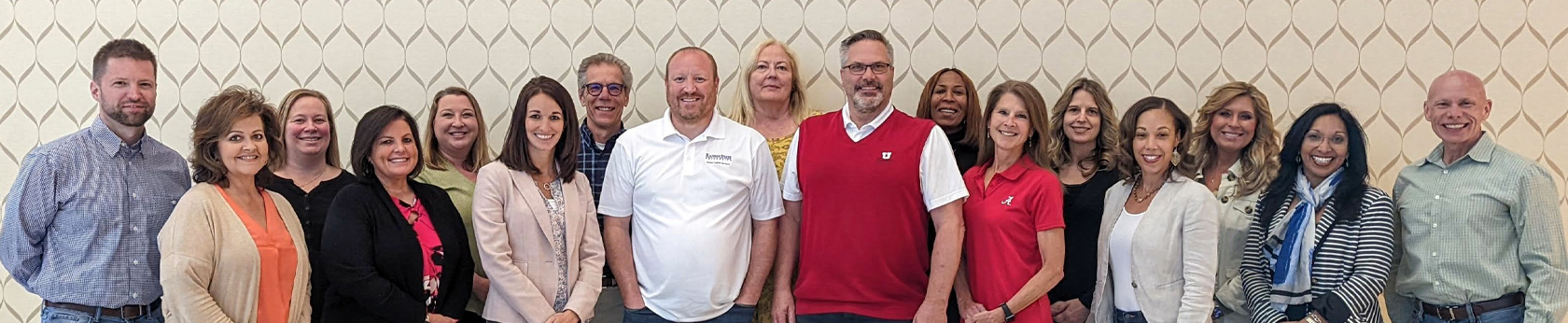
    CUPA-HR’s Association Leadership Program (ALP) has taken place every July for more than two decades, bringing together chapter, region, and national board members; association staff; key corporate partners; and other invited guests. After two years of meeting only virtually, these leaders were finally able to meet again in person last week.

    “We’re Still Standing!”

    The HR challenges of the past two years have included leading emergency COVID-19 response, exploring a new frontier of flexible work, and addressing unprecedented talent recruitment and retention challenges. Through it all, higher ed HR professionals have been on the front lines, adapting and transforming the workplace with resourcefulness, leadership and strategic insights.

    To celebrate that strength and resilience, CUPA-HR president and CEO, Andy Brantley, and national board chair, Jay Stephens, kicked off the two-day meeting with Elton John’s “I’m Still Standing” playing in the background and issued an irresistible photo challenge for attendees. (Be sure to check out the photos posted to Twitter with the hashtag #cupahr22.)

    Building Knowledge and Connection

    The ALP’s highly interactive program included:

    • tips for managing chapters and developing a leadership pipeline
    • updates on CUPA-HR’s work on Title IX and other public policy imperatives
    • a practical overview of CUPA-HR’s DEI Maturity Index and new Research Center
    • a discussion of winning strategies for higher ed’s post-pandemic war for talent
    • a presentation on cultivating trauma-informed practice in higher education leadership

    Beyond the programming, however, what attendees valued most about the event was the opportunity to validate their campus experiences in conversations with peers, rekindle the motivation behind their work, and take away great ideas for transforming their HR teams and their institutions in ways big and small.

    Interested in Taking Your Professional Development Further?

    CUPA-HR’s volunteer leaders have committed to advancing the profession and the mission of CUPA-HR. They understand the complexities of higher ed HR, and they want to enhance the knowledge and skills they need to lead their institutions into the future.

    Are you ready to take that next step in developing your leadership skills, shaping the profession, and gaining one-of-a-kind access to successful practices and HR professionals from across the country? Then CUPA-HR leadership — in a chapter, at the region level, or even on the national board of directors — might be right for you. Learn more about how you can get involved.


    Source link

  • The Emerging CUPA-HR Leaders Program Welcomes a New Cohort for 2022-23 – CUPA-HR

    The Emerging CUPA-HR Leaders Program Welcomes a New Cohort for 2022-23 – CUPA-HR

    by CUPA-HR | July 19, 2022

    The goal of CUPA-HR’s Emerging CUPA-HR Leaders program is to identify potential volunteer leaders who have shown exemplary leadership and initiative within higher ed HR and exhibit the desire to play an active role in advancing the profession. Invited participants have the unique opportunity to engage in problem-solving work groups and develop deep networks with peers while gaining an inside look at CUPA-HR’s operations and structure.

    Throughout the program, participants are encouraged to serve the association in a leadership capacity, lending a fresh and informed perspective. Many participants have gone on to hold positions on chapter boards, region boards and CUPA-HR’s national board of directors.

    The 2021-22 Cohort Curated Best Practices for CUPA-HR Chapters

    Before our previous cohort of leaders embark on the next step in their professional journeys, we want to acknowledge a special project they developed over the past several months. Each year, CUPA-HR recognizes outstanding work by chapters across the country, especially in the areas of event planning and programming, engagement, chapter management and leader development. The 2021-22 Emerging CUPA-HR Leaders wanted to collect those best practices in a format that was easy to share with future chapter leaders. As a result, CUPA-HR’s Chapter Toolkit now includes recorded interviews with some of CUPA-HR’s most experienced chapter leaders passing along lessons learned and secrets to chapter success.

    Many thanks to our 2021-22 Emerging CUPA-HR Leaders for their time and efforts:

    • Meg Arnold, Director of Organizational Development at Belmont University
    • Nicole Englitsch, Organizational Development Specialist at The University of Texas Rio Grande Valley
    • Jamee Harrington, Chief HR officer at Rogue Community College
    • Shannon Raum, Assistant Director of HR at Notre Dame of Maryland University
    • Taylor Zeilinger, HR Manager at the University of Wisconsin-Madison

    The 2022-23 Cohort Will Explore New Ways to Grow the Profession

    “We are excited to welcome this year’s Emerging CUPA-HR Leaders cohort,” says CUPA-HR President and Chief Executive Officer Andy Brantley. “These individuals are outstanding higher education human resources leaders who will help us lead the association into the future.”

    Congratulations to the 2022-23 Emerging CUPA-HR Leaders:

    • Laura Good, Assistant Director of Human Resources and Benefit Systems Manager, University of Mount Union
    • Leslie Hardin, Vice President Human Resources, Johnson County Community College
    • Beth Muha, Assistant Vice President of Human Resources, American University
    • Allyson Mullin, Executive Director of Human Resources, Alvernia University
    • Krista Vaught, Assistant Director, Employee Learning and Engagement, Vanderbilt University
    • Angela Wurtsmith, Executive Director of Human Resources, Colorado Mountain College

    Interested in joining our 2023-24 cohort? Learn more about the Emerging CUPA-HR Leaders program.


    Source link

  • DOL Targets October 2022 for Release of a New Overtime Proposal – CUPA-HR

    DOL Targets October 2022 for Release of a New Overtime Proposal – CUPA-HR

    by CUPA-HR | June 29, 2022

    On June 21, the Biden administration released the anticipated Spring 2022 Unified Agenda of Regulatory and Deregulatory Actions (Regulatory Agenda), providing the public with a detailed glimpse into the regulatory and deregulatory activities under development across approximately 67 federal departments, agencies and commissions. Agendas are generally released in the fall and spring and set target dates for each agency and sub-agency’s regulatory actions for the coming year.

    Based on a thorough review of the Regulatory Agenda, CUPA-HR would like to highlight the following proposed actions for members, including an updated target date for the release of a new overtime proposal.

    Department of Labor

    Wage and Hour Division – Defining and Delimiting the Exemptions for Executive, Administrative, Professional, Outside Sales and Computer Employees

    According to the Regulatory Agenda, the Department of Labor (DOL)’s Wage and Hour Division (WHD) is now planning to release a Notice of Proposed Rulemaking (NPRM) to address changes to the Fair Labor Standards Act (FLSA)’s overtime pay requirements in October 2022. In the Fall 2021 Regulatory Agenda, WHD announced their intention to move forward with the NPRM with the goal “to update the salary level requirement of the section 13(a)(1) exemption [under the FLSA].”

    Changes to overtime pay requirements have been implemented through regulations under both the Obama and Trump administrations. In May 2016, the Obama administration’s DOL issued a final rule increasing the salary threshold from $23,660 to $47,476 per year and imposed automatic updates to the threshold every three years. However, court challenges prevented the rule from taking effect and it was permanently enjoined in September 2017. After the Trump administration started the rulemaking process anew, in September 2019, DOL issued a new final rule raising the minimum salary level required for exemption from $23,660 annually to $35,568 annually. This final rule went into effect January 1, 2020, and it remains in effect today.

    From April through June 2022, DOL held several listening sessions for interested stakeholders to discuss any support or concerns they may have with the anticipated rulemaking. CUPA-HR participated in all of the calls, expressing our concerns with the timing of the rulemaking as it relates to the ongoing challenges of the COVID-19 pandemic, a historically tight labor market, and increasing inflation.

    Employment and Training Administration – Strengthening Wage Protections for the Temporary and Permanent Employment of Certain Aliens in the United States

    In October 2022, DOL’s Employment and Training Administration (ETA) plans to issue an NPRM to establish “a new wage methodology for setting prevailing wage levels for H-1B/H-1B1/E-3 and PERM programs consistent with the requirements of the Immigration and Nationality Act.” The proposal will likely amend the Trump administration’s final rule that was scheduled to take effect on November 14, 2022, but was subsequently vacated by a federal court in June 2021. The new proposal, which is included in the Department’s Statement of Regulatory Priorities, will take into consideration the feedback it received in response to a Request for Information (RFI) on data and methods for determining prevailing wage levels “to ensure fair wages and strengthen protections for foreign and U.S. workers.”

    CUPA-HR filed comments in opposition to the Trump administration’s regulations on the issue and in response to the Biden administration’s RFI.

    National Labor Relations Board

    Joint Employer

    In July 2022, the National Labor Relations Board (NLRB) is planning to release an NPRM to potentially amend the standard determining when two employers may be considered joint employers under the National Labor Relations Act. The new standard will revise the 2020 Trump Administration’s final rule, which reversed the Obama-era NLRB decision in the 2015 Browning-Ferris Industries case and established that an entity can only be a joint employer if it actually exercises control over the essential terms and conditions of another employer’s employees. While details of the Democratic-majority NLRB’s NPRM on joint employer status are unknown, we would expect them to revise the current standard to reflect the Obama-era decision.

    Department of Homeland Security

    USCIS – Modernizing H-1B Requirements and Oversight and Providing Flexibility in the F-1 Program

    In May 2023, the Department of Homeland Security (DHS)’s United States Citizenship and Immigration Services (USCIS) plans to release an NPRM to “amend its regulations governing H-1B specialty occupation workers and F-1 students who are the beneficiaries of timely filed H-1B cap-subject petitions.” The NPRM will specifically propose to “revise the regulations relating to ‘employer-employee relationship’ and provide flexibility for start-up entrepreneurs; implement new requirements and guidelines for site visits including in connection with petitions filed by H-1B dependent employers whose basic business information cannot be validated through commercially available data; provide flexibility on the employment start date listed on the petition (in limited circumstances); address ‘cap-gap’ issues; bolster the H-1B registration process to reduce the possibility of misuse and fraud in the H-1B registration system; and clarify the requirement that an amended or new petition be filed where there are material changes, including by streamlining notification requirements relating to certain worksite changes, among other provisions.”

    ICE – Optional Alternative to the Physical Examination Associated With Employment Eligibility Verification (Form I-9)

    According to the Regulatory Agenda, DHS plans to issue an NPRM in July 2022 to “revise employment eligibility verification regulations to allow the Secretary to authorize alternative document examination procedures in certain circumstances or with respect to certain employers.”

    DHS has provided temporary flexibility in the Form I-9 verification process since the beginning of the COVID-19 pandemic. Specifically, the flexibility guidance allows for remote inspection of Form I-9 documents in situations where employees work exclusively in a remote setting due to COVID-19-related precautions. While that guidance is only temporary, DHS issued a Request for Public Input (RPI) on October 26, 2021, to determine whether those flexibilities should be kept in place permanently. It is possible that DHS will use that feedback to develop and implement this NPRM.

    CUPA-HR has engaged with DHS on the Form I-9 flexibilities through the pandemic. Most recently, DHS announced an additional extension of the Form I-9 flexibility guidance through October 31, 2022. CUPA-HR sent a letter to USCIS Director Ur M. Jaddou asking for this additional extension. Additionally, CUPA-HR submitted comments in response to the RPI based on a recent survey detailing members’ experiences with the Form I-9 verification process flexibilities.

    On June 7, ICE sent its proposal to the Office of Information and Regulatory Affairs (OIRA). OIRA is the White House office responsible for reviewing regulations and proposed regulations before they are publicly released and generally takes 30-90 days for this review, indicating ICE is on target to issue their proposal in July.

    Department of Agriculture

    Agriculture Acquisition Regulation: Internal Policy and Procedural Updates and Technical Changes

    In December 2022, the Department of Agriculture (USDA) plans to re-propose an NPRM that was previously issued in February 2022 and included controversial provisions that would require federal contractors on projects procured by the agency to certify their compliance with dozens of federal and state labor laws and executive orders.

    In the February NPRM, USDA provided only 32 days for stakeholder comment submissions on the proposal. CUPA-HR filed an extension request with the department asking for an additional 90 days to “evaluate the NPRM’s impact on [members’] research missions and collect the information needed in order to provide thoughtful and accurate input to the USDA,” as well as official comments that were pulled from 2012 comments CUPA-HR submitted with the Society for Human Resource Management (SHRM).

    While it is unclear whether the December NPRM will include the blacklisting language again, the abstract of the re-proposal states that “the new proposed rule would be responsive to the comments received on our February 2022 proposal.”


    Source link

  • CUPA-HR Welcomes a New Board of Directors for 2022-23 – CUPA-HR

    CUPA-HR Welcomes a New Board of Directors for 2022-23 – CUPA-HR

    by CUPA-HR | June 28, 2022

    As we prepare for a new year at CUPA-HR, we want to take a moment to introduce our board of directors for 2022-23 and thank those who have served on the board over the past year. The board, which guides the association’s strategic priorities, is an incredible team of higher ed HR leaders who are dedicated to supporting and advancing the higher ed HR profession.

    Returning Board Members

    The chair of CUPA-HR’s board of directors for 2022-23 is Jay Stephens, vice president for human capital services at Kansas State University.  Jay has worked in human resources for nearly 20 years and has served on the CUPA-HR national board since 2018. Prior to joining Kansas State University, he was the associate vice president of human resources at Boise State University.

    Also returning to this year’s board are:

    Executive Committee Members

    • Jami Painter, Chair-Elect – Associate Vice President and Chief Human Resources Officer, University of Illinois System
    • Jeff C. Herring, Past Chair – Chief Human Resources Officer, The University of Utah
    • Kelli Shuman, Treasurer – Associate Vice President for Human Resources and Chief Human Resources Officer, Elon University
    • Andy Brantley, Ex-Officio – President and CEO, CUPA-HR

    Regional Directors

    • Kristi Yowell, Eastern Region – Associate Vice President for Human Resources, Goucher College
    • Renee Hiller, Midwest Region – Director of Human Resources, Michigan Technological University
    • Theresa Elliot-Cheslek, Western Region – Vice President and Chief Human Resource Officer, Washington State University

    At-Large Directors

    • Amanda Bailey, Vice President for Human Resources, Boston University
    • Heather Hart, Executive Director of Human Resources, Ivy Tech Community College of Indiana-Lafayette
    • El pagnier Kay (EK) Hudson, Senior Vice President, Human Resources and Vice Provost, Diversity, Equity, and Inclusion, Florida International University
    • Robyn Salvo, Associate Vice President for Human Resources, Monmouth University

    New Board Members

    In addition to our continuing board members, CUPA-HR is pleased to welcome six new members to the board:

    Thank You!

    As we conclude CUPA-HR’s 75th anniversary year, we also want to celebrate the outstanding leaders who are rolling off the board. They have invested countless hours of their time and energy in leading our profession and our association, and we are so grateful for their wisdom and guidance.

    • Susan Norton, Past Chair – Senior Associate Vice President for Human Resource, University of Alabama
    • Leanne Fuller – Director, Human Resource Services, Auburn University
    • Sheraine Gilliam, formerly with the University of North Texas System
    • Carl Sorensen, Senior Associate Vice President for Human Resources, University of Richmond

    We couldn’t accomplish our mission without our leaders. Thank you for your dedication and commitment!

    CUPA-HR’s  2021-22 Board of Directors


    Source link

  • Department of Education Releases Title IX Proposed Rule – CUPA-HR

    Department of Education Releases Title IX Proposed Rule – CUPA-HR

    by CUPA-HR | June 23, 2022

    On June 23, the Department of Education released the highly anticipated Notice of Proposed Rulemaking (NPRM) to amend Title IX. The NPRM proposes to replace the Trump administration’s 2020 Title IX rule and establishes safeguards for transgender students by proposing a ban on “all forms of sex discrimination, including discrimination based on sex stereotypes, sex characteristics, pregnancy or related conditions, sexual orientation and gender identity.” The proposal will be open for public comment for 60 days following publication in the Federal Register.

    In March 2021, President Biden issued an Executive Order (EO) titled, “Guaranteeing an Educational Environment Free from Discrimination on the Basis of Sex, Including Sexual Orientation and Gender Identity.” The EO directed the secretary of education to evaluate the Trump administration’s Title IX regulations and to “issue new guidance as needed on the implementation of the rule.”

    Of significance, the NPRM proposes to repeal the Trump administration’s requirement for live hearings for Title IX investigations. It also proposes to change the definition of sexual harassment back to “unwelcome sex-based conduct” that creates a hostile environment sufficiently severe or pervasive that it denies or limits a person’s ability to participate in a school’s education program or activity.

    CUPA-HR will be conducting a deeper analysis of the 700-page proposal in the days and weeks to come and will be partnering with other higher education associations to ensure the department receives meaningful feedback on its proposal.

    For additional information on the proposed rule, the department has provided a summary of the major provisions and a fact sheet.


    Source link

  • CUPA-HR Participates in DOL Overtime Regional Listening Sessions – CUPA-HR

    CUPA-HR Participates in DOL Overtime Regional Listening Sessions – CUPA-HR

    by CUPA-HR | June 14, 2022

    In May and June, CUPA-HR participated in five regional listening sessions hosted by the Department of Labor (DOL) on the anticipated Notice of Proposed Rulemaking (NPRM) to update the criteria for the “executive, administrative and professional” exemptions for overtime pay under the Fair Labor Standards Act (FLSA). The listening sessions provided regional employers the opportunity to discuss their support or concerns with changes to the minimum salary level required to be exempt from overtime payments under the FLSA.

    CUPA-HR joined each of the five sessions to express concerns with the timing of the proposed increase to the minimum salary threshold to qualify for exempt status under the FLSA. Specifically, we raised concerns with the timing of such changes, as they would come while institutions, employees and students are still grappling with the challenges of the COVID-19 pandemic, a tight labor market and historically high inflation. Additionally, several CUPA-HR members joined the calls to raise similar concerns and discuss issues more specific to their individual institutions.

    Though many in higher ed and other industries are expressing similar concerns about raising the overtime minimum salary threshold level at this time, labor unions and worker advocates have led efforts to both raise the minimum salary threshold and expand coverage of overtime regulations to workers currently not covered under the FLSA. Notably, the National Education Association sent a letter to DOL urging the agency to remove the teacher exemption that currently exempts teachers from the FLSA requirements to receive overtime payments regardless of how much they are paid.

    The overtime NPRM that was targeted for release in April 2022 is now expected to come anytime within the next couple of months, though more information on when it will be released may be included in the anticipated Spring 2022 Regulatory Agenda. CUPA-HR will continue to monitor for the NPRM and will keep members apprised of any updates to the overtime regulations.


    Source link

  • HEERF Funds Can Be Used to Support Mental Health Resources – CUPA-HR

    HEERF Funds Can Be Used to Support Mental Health Resources – CUPA-HR

    by Lakyn Whaley | June 7, 2022

    On May 19, the U.S. Department of Education released an FAQ document which confirms that Higher Education Emergency Relief Fund (HEERF) monies can be used to support the mental health of faculty, staff, and students. The document addresses commonly asked questions and provides specific examples on how some institutions have already used HEERF funding to improve their mental health programming and support.

    While the document notes that institutions generally have “broad flexibility” to use these funds to create and maintain mental health resources, it does offer several ideas for acceptable use of HEERF grants to help your campus get started. These include:

    • In-person mental health professionals
    • Telehealth
    • Wellness activities
    • Suicide prevention training
    • Peer support programs
    • Mental health hotlines
    • Screening, brief intervention, and referral to treatment

    The performance period for the HEERF grants has also been extended and will now continue until June 30, 2023.

    CUPA-HR will keep members apprised of any updates related to HEERF grants.


    Source link

  • DHS to Temporarily Increase the Automatic Extension Period of Work Permits for Certain Visa Applicants – CUPA-HR

    DHS to Temporarily Increase the Automatic Extension Period of Work Permits for Certain Visa Applicants – CUPA-HR

    by CUPA-HR | May 4, 2022

    Effective May 4, U.S. Citizenship and Immigration Services (USCIS) announced a Temporary Final Rule (TFR) to increase the automatic extension period of expiring employment authorization documents (EADs) for certain renewal applicants from 180 days to 540 days.

    Specifically, the TFR applies to three groups of applicants in EAD categories currently eligible for the previous 180-day automatic extension of employment authorization and EAD validity. They are as follows:

    • Renewal applicants whose renewal Form I-765 application remains pending as of May 4, 2022, and whose EAD has not expired or whose current 180-day auto-extension has not yet lapsed.
    • New renewal applicants who file Form I-765 during the 18-month period following the rule’s publication to avoid a future gap in employment authorization and/or documentation.
    • Renewal applicants with a pending EAD renewal application whose 180-day automatic extension has lapsed and whose EAD has expired will be granted an additional period of employment authorization and EAD validity beginning on May 4, 2022, and lasting up to 540 days from the expiration date of their EAD.

    Categories that are eligible for the lengthened automatic extension can be found here and include refugees and asylees (a3 and a5), spouses of certain H-1B principal non-immigrants with an unexpired I-94 showing H-4 non-immigrant status (c26), and adjustment of status applicants (c9), among others.

    The TFR is part of a trio of efforts USCIS announced on March 29, 2022, to address the agency’s major backlogs and crisis-level processing delays. According to USCIS Director Ur M. Jaddou, “as USCIS works to address pending EAD caseloads, the agency has determined that the current 180-day automatic extension for employment authorization is currently insufficient,” and this temporary rule is necessary to “provide those non-citizens otherwise eligible for the automatic extension an opportunity to maintain employment and provide critical support for their families, while avoiding further disruption for U.S. employers.”

    CUPA-HR will continue to monitor the implementation of the new auto-extension period and keep members apprised of further developments.


    Source link

  • Award-Winning Work in Higher Ed HR – 2022 HR Excellence Award and Higher Ed HR Rock Star Award – CUPA-HR

    Award-Winning Work in Higher Ed HR – 2022 HR Excellence Award and Higher Ed HR Rock Star Award – CUPA-HR

    by CUPA-HR | May 3, 2022

    From creating diversity efforts and development initiatives to leading change, human resources teams and HR practitioners across the country are doing great work every day.

    CUPA-HR’s regional Higher Education HR Awards program recognizes some of the best and brightest in higher ed HR and honors HR professionals who have given their time and talents to the association.

    Here are this year’s regional award recipients:

    HR Excellence Award

    Honoring transformative HR work in higher education and recognizing a team that has provided HR leadership resulting in significant and ongoing organizational change within its institution

    Office of Human Resources Management, Fordham University (Eastern Region)
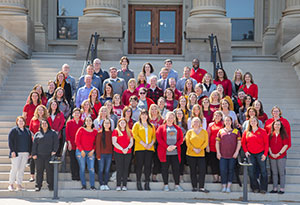
    Fordham University’s office of human resources management has transformed from a primarily transaction-focused department to a strategic partner that is relied upon throughout the university. The department has demonstrated its strategic strength on multiple fronts including the management of the university’s COVID-19 shutdown and reopening, return-to-work policies, customer service, technology, communication with employees that resulted in increased engagement and trust, anti-bias training, professional development initiatives and the performance management process. Additionally, in keeping with and living Fordham’s Jesuit mission of Cura Personalis, “caring for the whole person,” the office developed and implemented programs to help employees maintain a healthy work-life balance. Some health and wellness services that were developed include back-up childcare support, on-site and virtual physical fitness classes, and behavioral health services, such as a registered dietician available to employees. In doing so, the HR team has distinguished itself as a trusted advisor to employees, managers and senior leaders alike.

    University Human Resources, Iowa State University (Midwest Region)

    In 2019, Iowa State University implemented a new financial management and human capital management system. In conjunction with the new system, finance and HR service delivery teams were developed, pulling distributed customer-facing finance and HR roles into two centralized teams. University human resources’ performance through this significant and ongoing organizational change has been positive for the entire campus community. The HR delivery model has led to increased consistency and standardization in delivery of services across the university. It has also created a more well-trained and cohesive team of professionals that work together up and down the chain to find creative solutions to HR challenges and opportunities. HR support for leaders across the institution has significantly improved through better access to accurate data, streamlined processes for workforce and position planning, compensation adjustments, support addressing low-preforming employees and behavioral issues, large-scale employee movement and reorganizations, and professional human capital consulting. The new HR delivery systems have resulted in a much more efficient, collaborative and cohesive HR unit that is better equipped to serve employees and supervisors. At the same time, employees and supervisors have benefitted from HR’s reliability, transparency, accountability and consistency in its efforts to support them.

    Talent and Culture Department, Broward College (Southern Region)
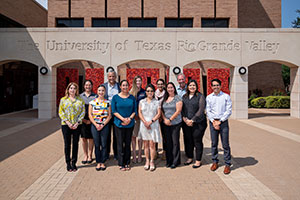
    Recognizing that HR alone cannot create culture but that it plays a critical role in ensuring the infrastructure is in place to support the cultural aspirations of an organization, the talent and culture department at Broward College has worked over the last several years to spearhead significant organizational change. Beginning in 2019, the university launched its three-year culture transformation plan. An integral step in the transformation process was the implementation of information-gathering discussions between the HR leadership team and employee groups comprised of administrators, faculty and professional technical staff, which provided substantive feedback on areas that needed the most attention. This organizational change, led by the talent and culture department, has resulted in more substantive collaboration; stronger relationships among faculty, staff and administrators; and greater trust and communication between employees and their supervisors. It has also served as a catalyst for innovative projects throughout the organization designed to maximize the experience of employees, students and the community. Some major initiative highlights include the creation of talent business partner roles, Leadership 360 Assessments, psychological safety workshops, employee resource groups, employee onboarding, and a leadership development program called BC LEAD that educates and empowers managers at all levels to rise to leadership excellence.

    HR Campus Climate Liaisons, The University of Texas Rio Grande Valley (Western Region)

    After implementing a strategic action planning process, led by an internal HR workgroup called Campus Climate Liaisons, The University of Texas Rio Grande Valley saw double-digit improvements in climate survey results within three years, all amid a pandemic. The liaison group consists of individuals from various HR areas, such as talent development, organizational development, employee wellness and employee relations/business partners. The group was trained to provide support to assigned departments with result-sharing, action-planning and ongoing progress-reporting. This method ensured that all departments received the same level of support and helped the HR team better track progress toward climate goals. It also helped empower all department leaders to have conversations about campus climate and department climate. The biggest improvements were seen in areas of faculty, administration and staff relations; senior leadership; and facilities. The campus climate liaison model has been so successful that it will continue to be used for future campus climate initiatives and to provide ongoing support to all departments.

    Higher Ed HR Rock Star Award

    This award recognizes an individual who is serving in the first five years of a higher education HR career who has already made a significant impact.

    Audrey Davis, Assistant Director of Personnel, Texas Tech University (Western Region)

    With her enthusiasm and inspirational demeanor, Audrey Davis has built strong and trusting relationships with each department she works with, not only within university student housing, but within each auxiliary services area at Texas Tech University. Since taking over the personnel team, Audrey has demonstrated continuous innovation and creative thinking, which has completely changed the way the student housing personnel team operates and provides services. After only two years in her role, she has identified and eliminated major gaps in the onboarding/offboarding processes. She has also developed a collaborative hiring system that allows hiring managers to communicate efficiently with the personnel team to discuss new hires, promotions and terminations. Audrey’s initiatives have resulted in university student housing being named a center for excellence for human resourcing by the assistant vice president for auxiliary services. Audrey continues to make a positive impact with her role and demonstrates her passion through advocacy, by fostering a welcoming work environment and by building confidence in her team to serve as a one-stop shop for personnel services.


    Source link

  • 2022 Data: Changes in Higher Ed Pay and Workforce Size – CUPA-HR

    2022 Data: Changes in Higher Ed Pay and Workforce Size – CUPA-HR

    by CUPA-HR | April 27, 2022

    CUPA-HR has released its data on overall higher ed pay increases, as well as changes in workforce size for 2021-22.

    Higher Ed Pay Increases Have Not Kept Pace With Inflation

    The soaring inflation rate has far outpaced pay increases for the higher education workforce. According to findings from CUPA-HR’s annual workforce surveys for 2021-22, overall median salaries for administrators increased by 3.4%. Professionals and non-exempt staff saw increases of 2.9%, and salaries for tenure-track and non-tenure-track faculty increased by 1.6% and 1.5%, respectively. The inflation rate for 2021 was 6.8% and continues to climb.

    This is not the first year that pay increases have not kept up with inflation. Pay increases for administrators, professionals and staff last met or exceeded inflation in 2019-20.  Non-tenure-track faculty salary increases last met or exceeded inflation in 2016-17, and tenure-track faculty salary increases have not kept pace with inflation in any of the past six years.

    Explore pay-increase trends on CUPA-HR’s website.

    Overall Workforce Size Has Declined in the Wake of the Pandemic

    Historically, the overall size of the higher education workforce has increased from year to year. However, colleges and universities are experiencing the same employee recruitment and retention challenges that most U.S. employers have struggled with in the past few years. In both 2020-21 and 2021-22, the size of full-time staff, part-time staff, and tenure-track faculty declined from the prior year.

    Two areas of the workforce that saw growth this year were those of non-tenure-track faculty and adjuncts. Although the number of non-tenure-track faculty and adjuncts declined between 2019-20 and 2020-21, those numbers have rebounded in 2021-22.

    Explore the trends in workforce size changes on CUPA-HR’s website.

    In-Depth Data and Custom Reports

    Higher ed institutions can use CUPA-HR’s DataOnDemand (DOD) subscription service to run comprehensive data tables and analyses.


    Source link