Category: generative engine optimization

  • Generative Engine Optimization (GEO) for Higher Education

    Generative Engine Optimization (GEO) for Higher Education

    Preparing for an AI-Powered Evolution in How Students Search

    If you’ve ever been involved in your institution’s digital marketing efforts, you’ve undoubtedly heard of search engine optimization — otherwise known as SEO. 

    But after more than a decade of optimizing keywords and backlinks in content for search engines like Google and Bing, we’re now at the dawn of a new age spurred on by artificial intelligence (AI) and a new approach is required: generative engine optimization (GEO). 

    As prospective students turn to AI tools and large language models (LLMs) to guide their college search, traditional SEO tactics are no longer enough. Digital marketing teams must also incorporate new GEO-focused tactics into their strategies.

    In an increasingly competitive and LLM-driven world, institutions must now rethink their visibility, branding, and recruitment strategies for a digital landscape that continues to evolve.

    Understanding Generative Engines and Their Impact on Students’ Search Behavior

    Generative engine optimization is emerging as a critical response to the way AI is reshaping how prospective students find and evaluate colleges. Unlike traditional search engines, generative engines powered by large language models deliver conversational, synthesized responses — often without requiring users to click through to a website. 

    This shift is impacting how institutions need to approach their digital visibility and student engagement efforts.

    The Rise of LLMs

    As students move away from traditional search engines toward AI search tools, LLMs and LLM-powered tools like ChatGPT, Claude, Perplexity, and Google’s Gemini and Search Generative Experience (SGE) are leading the way. 

    These platforms generate real-time, AI-powered answers that summarize information from across the web — often citing sources, but not always linking to them directly. Their growing popularity signals a move away from standard search engine results toward fluid, question-driven discovery.

    The Impact of LLMs on Students’ Search Experiences

    Prospective students are already turning to generative engines to ask nuanced questions such as, “What are the top 20 online MSW programs?” or “Which colleges have the best student support services for veterans?” 

    Instead of having to navigate a list of blue links, they’re receiving direct, synthesized answers to their questions. This introduces key shifts that digital marketers must consider, including: 

    For colleges and universities, adapting to this new behavior is essential to staying prominent in students’ minds during their decision-making process.

    SEO vs. GEO in Higher Education

    Search engine optimization and generative engine optimization share a common goal: to ensure content is discoverable, relevant, and credible. Both approaches rely on strategic keyword usage, high-quality content, and data-driven refinement to increase visibility.

    SEO was built for traditional search engines that return ranked lists of links. GEO is designed for AI-powered engines that synthesize information and deliver complete answers. 

    For universities, this change requires a new, blended approach — one that takes both SEO and GEO into account when creating admissions materials, program pages, and search rankings-focused content such as blog posts.

    How Generative Engines Pull and Rank University Content

    Generative engines like ChatGPT and Google’s SGE don’t rank web pages the same way traditional search engines do. Instead, they synthesize information from multiple sources to deliver a single, cohesive answer. 

    To be included in these AI-generated responses, university content needs to strike a balance between academic credibility and an accessible, student-friendly structure. AI prioritizes information that is well-organized, clearly written, and backed by authoritative sources, such as: 

    Institutions that prioritize clarity and credibility in their content are more likely to be cited and surfaced in generative search results.

    Key GEO Strategies for Colleges and Universities

    To stay visible in AI-driven searches, institutions need to adopt innovative content strategies tailored to how generative engines interpret and deliver information. Here are some core GEO tactics:

    Showcase Faculty Within Content

    Ensure AI- and LLM-Friendly Structure and Markup

    Create Concise and Clear Content

    Use Content Formats That Perform Well in GEO

    Build Brand Authority and Trust

    Measuring GEO Performance in Enrollment Marketing

    As with every digital marketing initiative, it’s not enough to just roll out a GEO strategy — institutions need to measure its success. Here’s how it’s done in the GEO world:

    Create LLM-Focused Dashboards via GA4 and Looker Studio

    Institutions can build LLM-focused dashboards using Google Analytics 4 (GA4) and Looker Studio by creating filters for platforms like ChatGPT, Perplexity, Microsoft Copilot, Google Gemini, and Claude. 

    Google currently doesn’t provide direct data for AI Overview referrals, and they have been neutral in response to questions on if they will ever release AI Overview data.  

    While LLMs are still evolving, isolating referral traffic from these tools can provide institutions with early insight into how students are discovering their content through AI.

    Use Attribution Models for AI-Influenced Student Journeys

    To fully understand how GEO affects students’ enrollment behavior, marketers need to evolve their attribution models, or how enrollment conversions are attributed to different channels. AI-generated responses often play a role at the top of the enrollment funnel, influencing students before they ever land on a university’s website. 

    Measuring that influence through multitouch attribution and long-view funnel analysis will become increasingly important as AI tools reshape how students explore, compare, and commit to higher education programs.

    Challenges and Ethical Considerations

    As generative engines continue to shape how students discover universities, inherent challenges will likely arise. 

    AI tools can misrepresent data or present outdated information, raising concerns about their accuracy and whether they can be trusted. There’s also the risk that well-resourced, elite institutions may disproportionately dominate generative search results, reinforcing existing inequities. Lack of transparency in how algorithms surface and prioritize content makes it difficult for institutions to ensure they are receiving fair and accountable representation.

    Future Trends in Higher Education GEO

    When it comes to emerging digital marketing techniques like GEO, early investments can help institutions stay ahead of the curve.  

    Multimodal Optimization for Virtual Campus Tours and Visual Content

    As generative engines evolve, optimizing for multimodal content — such as images, video, and virtual tours — will become increasingly important. 

    This goes beyond traditional desktop experiences. In Meta’s first quarter 2025 earnings call, Mark Zuckerberg predicted that smart glasses will eventually replace smartphones, describing them as ideal for AI and the metaverse. 

    With Meta already partnering with Ray-Ban on AI-integrated eyewear, higher ed marketers need to start preparing content that’s not just LLM-friendly but also immersive, interactive, and wearable-ready.

    AI-Driven Personalization for Students

    Rather than relying on static rankings or one-size-fits-all search experiences, AI is ushering in a wave of hyperpersonalization. Prospective students may soon interact with personalized advisors, see school rankings tailored to their goals, and receive customized digital content that aligns with their academic and career interests. 

    This shift will push institutions to deliver flexible, student-centered content that adapts to each individual’s intent and pathway.

    Search by Outcome, Not Degree

    Generative tools are beginning to trace backward from desired career outcomes by identifying what roles successful professionals hold, then linking those roles to specific programs, professors, and institutions. 

    For colleges and universities, this means alumni outcomes, employer partnership information, and job title visibility are essential signals. Institutions that surface these elements clearly will be better positioned to show up in outcome-based searches and AI-generated guidance.

    Ready to Get Ahead of the Curve

    The use of AI and large language models in search is only going to increase, fundamentally reshaping how students discover, evaluate, and engage with higher education institutions. 

    Developing a strong generative engine optimization strategy is essential. GEO needs to be seamlessly integrated into your existing SEO and digital marketing efforts to ensure your institution stays visible and relevant in a rapidly shifting landscape.

    With generative engines evolving at an unprecedented pace, now is the time to prepare for how you’ll reach the next generation of students.

    Want to talk through how GEO fits into your broader enrollment strategy? Contact Archer Education to start the conversation.

    Sources 

    Search Engine Journal, “How LLMs Interpret Content: How to Structure Information for AI Search”

    Search Engine Land, “What Is Generative Engine Optimization (GEO)?”

    The Verge, “Why Mark Zuckerberg Thinks AR Glasses Will Replace Your Phone”

    Yahoo Tech, “What Mark Zuckerberg Said About Smartglasses This Week Reveals His Opinion on AI”

    Subscribe to the Higher Ed Marketing Journal:

    Source link

  • Mastering SEO and GEO in Education Marketing

    Mastering SEO and GEO in Education Marketing

    Reading Time: 12 minutes

    The modern digital era has brought with it a world of remarkable changes and developments in the information space that today’s students are well-placed to enjoy. The search engine as you know it is changing and adapting to these changes, with old methods and processes giving way to newer, more effective ones. 

    While traditional Search Engine Optimization (SEO) remains essential, Generative Engine Optimization (GEO) is emerging as a complementary strategy for AI-driven search experiences. With AI-powered search engines like Google’s Gemini and ChatGPT transforming how prospective students find information online, today’s schools must adapt or risk being swept under the radar.

    Keen on increasing organic traffic and leads?

    Optimize your site, attract students, and elevate your visibility with our specialized SEO strategies.

    The Evolution of Search in Education Marketing

    Now, a few well-placed keywords are not enough. Although about 91% of today’s organizations still make significant marketing-related gains from SEO, the rules are fundamentally different now. Today’s prospective students use the search engine in ways that are quite unprecedented.

    While traditional search engines serve up lists of links, AI-powered search engines deliver direct answers. Even better, they deliver such complete conversational responses that you do not need to visit a website. There’s a dual approach to this process: maintaining strong SEO foundations while embracing the emerging power of GEO.

    Educational institutions stand to gain from this development. Prospective students can conduct exhaustive research without contacting an admissions office. By tapping the search button, they can get answers to vital questions about program details, application requirements, and career outcomes.

    SEO: Still the Foundation of Digital Visibility

    While AI is visibly gaining momentum, SEO remains an important tool. When executed properly, it can produce these benefits:

      • Enhanced Visibility: Optimised content drives organic traffic, increasing inquiries and applications to your school. Recent industry sources report that schools that invest in comprehensive SEO measures enjoy a significant improvement in conversion rates.
      • Better User Experience: With clear metadata, logical headings, and mobile-friendly designs, students can find information better on websites. The results include longer site visits, lower bounce rates, and higher engagement, which can help boost search rankings further. 
    • Established Authority: By creating comprehensive content, you’re signalling to search engines and users that your school is knowledgeable and can be trusted. It gives a sense of authority that can ultimately boost your school’s profile. 

    What is the difference between SEO and GEO marketing? The key difference between SEO and Generative Engine Optimization marketing lies in their focus and approach. SEO is used for traditional search engines, and GEO is used for AI-Driven searches:

    • SEO optimizes content for traditional search engines (Google, Bing) to improve rankings in organic search results using keywords, backlinks, and technical SEO strategies.
    • GEO marketing optimizes content for AI-driven search experiences (Google SGE, ChatGPT), ensuring content is AI-friendly, conversational, and structured for retrieval by generative AI models.

    While SEO targets search engine algorithms, GEO marketing tailors content for AI-driven responses and voice search interactions.

    Effective SEO Strategies for Education

    The optimization approaches discussed below have been proven to be used by the most successful institutions. 

    Strategic On-Page Optimization:

    Using long-tail keywords like “best MBA programs in Canada for working professionals” can help capture niche audiences.

    Content Authority: 

    Create in-depth guides and case studies addressing the nuanced questions that prospective students typically ask. So, instead of just listing program requirements, develop extensive resources that cover career paths, industry connections, and student outcomes. 

    Mobile Optimization: 

    A responsive design is a must-have, thanks to most searches now happening on mobile devices. This holds true for young people who use smartphones to explore their educational options. 

    Schema Implementation: 

    Structured data markup can help search engines interpret your content much better. An education-specific schema like EducationalOccupationalCredential or EducationalOrganization can boost your program’s visibility in search results.

    Local SEO: 

    Institutions with physical campuses need to optimize for local searches. This includes claiming and maintaining Google Business Profile listings, building local citations, and creating location-specific content highlighting campus facilities and community connections.

    The AI Search Revolution: Understanding GEO

    What is Generative Engine Optimization (GEO)?

    More pertinently, what is GEO in SEO? Generative Engine Optimization in SEO refers to optimizing content for AI-driven search engines and generative AI models like Google’s Search Generative Experience (SGE) and ChatGPT. It focuses on structuring content for AI retrieval by using natural language, clear formatting, authoritative sources, and relevant keywords to improve visibility in AI-generated responses.

    The way we interact with information today has changed drastically, courtesy of AI-powered search engines. You can now get direct, synthesized answers culled from several sources, so you don’t have to click through multiple links. The way this happens is in these three steps:

    AI models scour the web for relevant information, searching from institutional websites to educational forums and third-party resources.

    They blend this information into coherent, structured responses that address the specific query and can often include details from multiple sources. 

    Users will now get conversation-like answers without having to visit individual websites. These answers often come complete with citations or even visual elements.

    Mastering GEO for Education Marketing

    Imagine asking an AI assistant for the best digital marketing courses or top universities for business programs—and your institution doesn’t appear. That’s where Generative Engine Optimization (GEO) comes in.

    What is GEO in digital marketing? GEO in digital marketing optimizes content for AI-driven search tools like Google’s Search Generative Experience (SGE) and ChatGPT. Unlike traditional SEO, which focuses on ranking in search engine results, GEO ensures your content is structured, conversational, and AI-friendly, making it more likely to surface in AI-generated responses.

    As AI search adoption grows, Generative Engine Optimization is becoming critical. Prospective students are no longer just typing keywords into Google; they’re asking AI assistants for tailored recommendations. If your institution isn’t optimizing for AI-driven search, you risk being invisible in the conversations shaping students’ decisions.

    That’s why mastering GEO for education marketing is no longer optional—it’s essential. Schools, colleges, and universities must adapt their digital strategies to ensure AI models recognize their programs, faculty, and unique offerings. Ignoring this trend means missing out on valuable opportunities to engage with future students where they’re already searching.

    Focus on these strategies if you’re looking to succeed with GEO:

    • Answer-focused Content: Use a Q&A format to create clear and concise responses to common questions. Instead of burying tuition-related information in program pages, provide direct answers to questions like “How much does it cost to attend [School Name]?” 
    • Authoritative Information: Provide precise, updated information and only cite credible sources. You can reference accreditation bodies, link to relevant research and put out consistent information across all digital channels. 
    • Comprehensive FAQs: Use detailed FAQ sections to cover key topics like admissions and campus life. Using proper schema markup, structure these sections so that AI tools can pull information straight from your authoritative source.
    • AI-Friendly Schema: To make your content more machine-readable, use FAQ, Course, Event, and Speakable schemas. This way, AI systems can connect the different pieces of information contained on your site.
    • Multichannel Distribution: Let your content be shown across platforms like YouTube, LinkedIn, and Quora to gain more visibility. Because AI search engines pull material from varying sources, a consistent message across your channels will help your school be represented the right way.

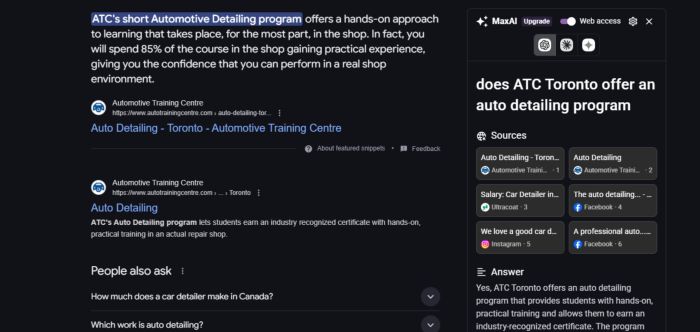
    Example: This screenshot captures Google search results for “Does ATC Toronto offer an auto detailing program?” It includes a prominently featured snippet directly answering the question on the left side of the page, and AI search results also answer the question on the right.

    HEM Image 2HEM Image 2

    Source: Google

    Creating Content That Excels in Both Worlds

    Here are our best tips for creating suitable content for traditional and AI-driven searches:

    Create Optimal Content:

    • Optimize Your Content Structure because human readers and AI algorithms will benefit immensely from clear organization. 
    • Create a logical hierarchy using descriptive headings and subheadings. For example, move your program pages from a general overview to curriculum, faculty, career outcomes, and other specific details. 
    • Incorporate bullet points and numbered lists for easy scanning. This is particularly important for details about admission requirements, application deadlines, and program benefits.
    • Implement appropriate schema markup to help search engines understand your content.
    • Let your content have a clear content hierarchy that guides users from general information to specific details.

    Focus On Quality and Engagement

    • It is important to create high-quality content that addresses user intent. Follow these strategies:
    • Reach out to prospective students with answers to their most asked questions. Correctly predict and sort out their needs across all decision-making stages.
    • Balance authoritative information with a conversational tone. Do this while avoiding academic jargon and maintaining the appropriate level of sophistication for your target audience.
    •  Use short paragraphs and clear language to make your content readable. Also, blend concise, direct answers with in-depth guides. 
    • Let your student testimonials, faculty perspectives, and alumni success stories feature authentic voices as they can help humanize your institution. 

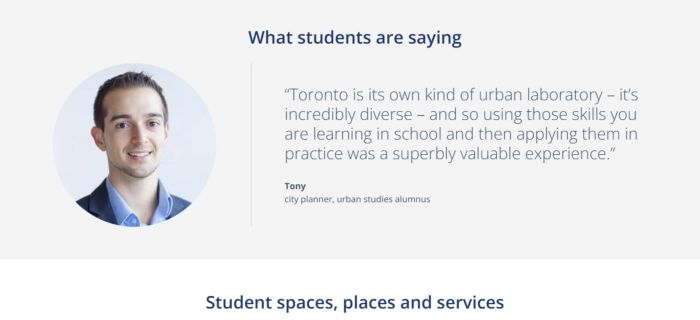
    Example: The University of Toronto has a section on its website that features testimonials from current students, alumni, and staff, helping to boost the school’s image with genuine feedback.

    HEM Image 3HEM Image 3

    Source: University of Toronto – Current Students

    Embrace Semantic SEO

    Modern search optimization has gone past keywords, and here’s how:

    Develop comprehensive pillar pages that cover broad topics like “Graduate Programs” or “Student Life” with links to more specific content. Use natural language mirroring how people speak and search. Incorporate variations and related as opposed to repeating the same keywords.

    • Create content clusters that address related topics and questions. Also, you can link between them to establish topical authority and help users navigate your site.
    • Consider the semantic field around educational topics, including synonyms, related concepts, and commonly associated terms.

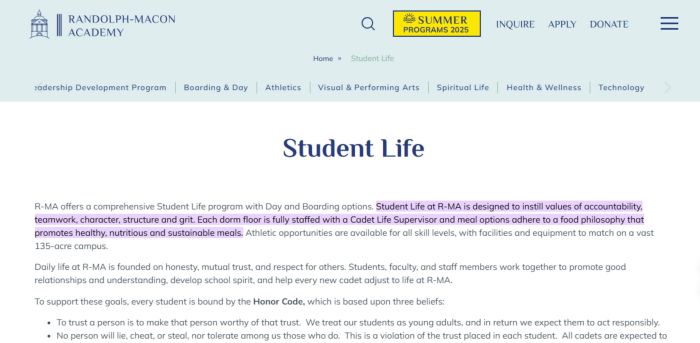
    Example: Here, R-MA demonstrates its mastery of semantic SEO with this Student Life page. Apart from providing a general overview of the school’s Student Life Program, the page also contains links to specific aspects of the program.

    HEM Image 4HEM Image 4

    Source: Randolph-Macon Academy

    Overcoming the Zero-Click Challenge

    One of the biggest threats to education marketers is the rise of zero-click searches, where users get answers without visiting your website. Nearly 65% of Google searches now end without clicks to any websites. This trend is particularly problematic for institutions relying on website traffic for lead generation.

    Here’s a quick look at how Zero-Click searches show up in search engines:

    Featured Snippets: This displays key information directly in results, answering questions about application deadlines, tuition costs, and program requirements without requiring clicks.  

    Voice Search: Conversational queries often receive single, direct answers, particularly for straightforward questions like “When are applications due for [School Name]?”

    AI Summaries: New tools seek to compile information from multiple sources into one response. Synthesizing details about educational programs without directing users to specific institutional websites.

    Strategies to Combat Zero-Click Searches

    • Optimize the content for featured snippets: Structure content to rank better by directly answering questions. 
    • Implement FAQ Schema: Mark up Q&A content with the right schema so your answers appear more in search results. 
    • Create must-click content: Create resources that resonate with the users, including calculators and virtual campus tours.
    • Leverage Rich Results: Using structured data, enhance how your content appears in search results so it’s more appealing and clicked.
    • Focus on Complex Questions: Target those queries that you can’t answer in a snippet, those that need you to go further into your school’s offerings. 

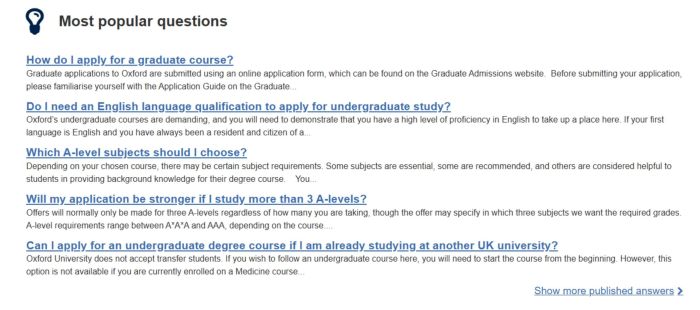
    Example: Oxford University enhances its FAQ sections using structured data. By doing so, their answers are featured directly in search results—ensuring that key information about admissions and tuition is visible in a zero-click environment.

    HEM Image 5HEM Image 5

    Source: Oxford University Help Center

    Optimizing for Voice and Conversational Search

    With voice assistants becoming more popular, optimizing for spoken queries is becoming increasingly important. Over 27% of searches are run through a voice interface, mostly among the younger generations. Here are some voice search best practices to use to this effect.

    • Use natural, question-based keywords that match how people speak, such as “How do I apply to [School Name]?” rather than “application process.”
    • Voice search is predominantly mobile-driven, so make sure your site is mobile-friendly and fast-loading.

    Creating Conversation-Ready Content

    To create conversation-ready content, you’ll need to follow certain rules. Our best tips include writing in short, digestible paragraphs that voice assistants can easily read aloud. 

    You must provide direct answers to common questions to start each relevant section. Another key tip is to create how-to guides and FAQ sections that fit with voice queries. 

    Let your content follow a conversation-like style, just like prospective students engage. There should be relevant context to match every user request, and the information provided should be clear and concise for the best results. 

    Essential Tools and Emerging Trends

    To stay competitive in educational marketing, you need the right tools and awareness of emerging trends. Here are some must-have SEO and GEO tools. 

    • Google Search Console: Monitor performance and identify opportunities by tracking how your pages appear in search results and which queries trigger their appearance.
    • SEMrush: Research keywords and analyze competitor strategies while paying particular attention to education-specific terms and competing institutions.
    • Ahrefs: Track backlinks and content performance, building a strong link profile that enhances your institution’s perceived authority.
    • Schema Markup Generators: Create and validate structured data to improve how search engines interpret your content.
    • Mobile Testing Tools: Ensure optimal performance across all devices, recognizing that many prospective students research educational options on smartphones.

    Trends Reshaping Education Marketing

    • AI-Generated Search Summaries: By focusing on direct answers instead of posting traditional link listings, your search results appear faster and function better. 
    • Voice Search Growth: This accounts for over 27% of all searches, mostly among younger demographic groups.
    • Engagement as a Ranking Signal: User interaction affects visibility, with metrics like time on site and interaction rates affecting search performance.
    • Video Content Prominence: Educational videos are gaining importance in search results, particularly for how-to and explanatory content about programs and campus life.
    • Social Proof Integration: With reviews, testimonials, and user-generated content, you can create more impact in traditional and AI-driven search results.

    The Human Element: Storytelling in a Digital World

    Although technical optimization remains crucial, education marketing relies heavily on human connection. The schools that balance data-driven strategies with authentic storytelling that resonates with prospective students succeed.

    • If you’re looking for a means to build student trust in your offerings through authenticity, here’s how to go about it. 
    • Share real student success stories and testimonials that show how transformative your educational programs are. 
    • Highlight those unique program features and opportunities that differentiate your institution from competitors.
    • Maintain transparency and avoid excessive jargon. Focus on pointing out what makes your institution special.
    • Create content that addresses the emotional aspects of the educational decision.

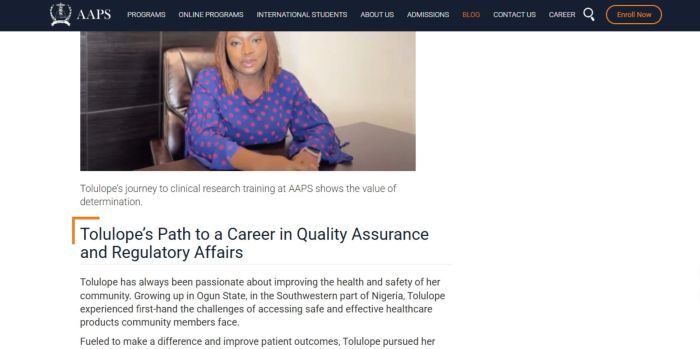
    Example: Here, AAPS masterfully emphasizes the transformative power of its program by highlighting the experiences and successes of a student, recounted by the student herself.

    HEM Image 6HEM Image 6

    Source: AAPS

    Blending Data and Creativity

    • Use analytics to inform content strategy, identifying topics and formats that resonate with your target audience.
    • Enhance text with visual and interactive elements that engage users and encourage deeper exploration of your offerings.
    • Personalize messaging for different audience segments, with their varying priorities and concerns.
    • Test and refine approaches based on performance data, continuously improving your digital marketing effectiveness.

    Embracing the Future of Education Marketing

    As the digital outlook for today’s educational market continues to evolve, schools must continually adapt to remain competitive. The future of search engines belongs to those who can master both SEO and GEO to produce results that drive and direct conversations. 

    The tide favours schools whose content resonates with traditional search engines and AI-powered platforms. The target is to position your institution for this kind of leverage, and that’s the essence of this piece. 

    Ready to transform your digital presence? Start optimizing today and watch your institution’s story unfold—one search at a time.

    Keen on increasing organic traffic and leads?

    Optimize your site, attract students, and elevate your visibility with our specialized SEO strategies.

    Frequently Asked Questions

    Question: What is the difference between SEO and GEO marketing?

    Answer: The key difference between SEO and Generative Engine Optimization marketing lies in their focus and approach. SEO is used for traditional search engines and GEO is used for AI- Driven searches.

    Question: What is GEO in SEO?

    Answer: Generative Engine Optimization in SEO refers to optimizing content for AI-driven search engines and generative AI models like Google’s Search Generative Experience (SGE) and ChatGPT.

    Question: What is GEO in digital marketing?

    Answer: GEO in digital marketing optimizes content for AI-driven search tools like Google’s Search Generative Experience (SGE) and ChatGPT.

    Source link