Category: goals

  • Why empowering students sets the best course for future success

    Why empowering students sets the best course for future success

    Key points:

    When middle school students make the leap to high school, they are expected to have a career path in mind so their classes and goals align with their future plans. That’s a tremendous ask of a teenager who is unaware of the opportunities that await them–and emerging careers that have yet to exist.

    Mentors, parents, and educators spend so much time urging students to focus on their future that we do them a disservice by distracting them from their present–their passions, their interests, their hobbies. This self-discovery, combined with exposure to various career fields, fuels students’ motivation and serves as a guidebook for their professional journey.

    To meet their mission of directing every student toward an individualized post-secondary plan, schools need to prioritize recognizing each student’s lifestyle goals. That way, our kids can find their best-fit career and develop greater self-awareness of their own identity.

    Give students greater autonomy over their career exploration

    The most problematic aspect of traditional career-readiness programs is that they’re bound so tightly to the classes in which a student excels.

    For example, a high schooler on a technology track might be assigned an engineer as a mentor. However, that same student may also possess a love for writing, but because their core classes are science-based, they may never learn how to turn that passion into a career in the engineering field, whether as a UX writer, technical editor, or tech journalist. 

    Schools have the opportunity to help students identify their desired lifestyle, existing strengths, and possible career paths. In Aurora Public Schools in Nebraska, the district partnered with our company, Find Your Grind, an ESSA Tier 2 validated career exploration program, to guide students through a Lifestyle Assessment, enabling them to discover who they are now and who they want to become. Through this approach, teachers helped surface personalized careers, mentors, and pathway courses that aligned with students’ lifestyle goals.

    Meanwhile, in Ohio, school districts launched Lifestyle Fairs, immersive, future-ready events designed to introduce students to real-world career experiences, industry mentors, and interactive learning grounded in self-discovery. Hilliard City Schools, for example, welcomed more than seventh-grade students to a Lifestyle Fair this past May

    Rather than rely on a conventional booth-style setup, Hilliard offered interactive activations that centered on 16 lifestyle archetypes, including Competitor, Explorer, Connector, and Entrepreneur. The stations allowed students to engage with various industry leaders and participate in hands-on activities, including rocket launch simulations and creative design challenges, to ignite their curiosity. Following the Fair, educators reported increased student engagement and a renewed enthusiasm for learning about potential career paths.

    Create a fluidity path for future success

    According to the World Economic Forum, by 2030, 97 million jobs will be displaced by AI, significantly impacting lower-wage earners and workers of color. At the same time, 170 million new jobs are expected to be created, especially in emerging fields. By providing students more freedom in their career exploration, educators can help them adapt to this ever-changing 21st-century job market.

    Now is the time for school districts to ensure all students have access to equitable career planning programs and work to close societal disparities that hinder professional opportunities. Instead of setting students on a predetermined pathway toward a particular field–which may or may not exist a decade from now–educators must equip them with future-proof and transferable core skills, including flexibility, initiative, and productivity, in addition to job-specific skills. As the job market shifts, students will be prepared to change direction, switch jobs, and pivot between careers. 

    In Hawaii, students are taking advantage of career exploration curriculum that aligns with 21st-century career and technical education (CTE) frameworks. They are better prepared to complete their Personal Transition Plans, which are required for graduation by the state, and have access to micro-credentials that give them real-world experience in different industries rather than one particular field.

    For decades, career planning has placed students in boxes, based on what the adults in their lives expect of them. Ensuring every child reaches their full professional potential means breaking down the barriers that have been set up around them and allowing them to be at the center of their own career journey. When students are empowered to discover who they are and where they want to be, they are excited to explore all the incredible opportunities available to them. 

    Latest posts by eSchool Media Contributors (see all)

    Source link

  • Games for Change Opens 2026 Student Challenge to Game Creators and Innovators Ages 10–25

    Games for Change Opens 2026 Student Challenge to Game Creators and Innovators Ages 10–25

    The annual global game design awards $20,000 in grand prizes for creative and impactful games that advance the UN Sustainable Development Goals

    NEW YORK, NY — [NOV 10, 2025] — Games for Change (G4C), the leading nonprofit that empowers game creators and innovators to drive real-world change, today announced the kick off of the 2025- 2026 Games for Change Student Challenge, a global game design program inviting learners ages 10–25 years old to tackle pressing world issues that address the United Nations Sustainable Development Goals, through creativity, play, and purposeful design.

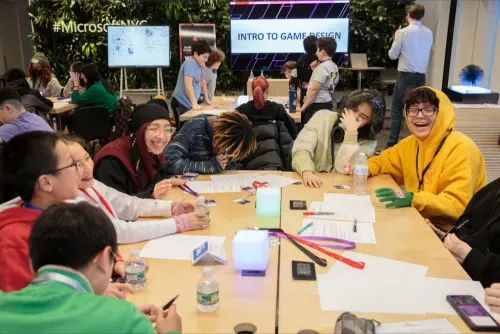
    Now in its eleventh year, the Student Challenge has reached more than 70,000 students and almost 2,000 educators and faculty across 600cities in 91 countries, inspiring the creation of over 6,600 original student-designed games that connect learning to action. From November to April 2026, participants will design and submit games for consideration in regional and global competitions, with Game Jams taking place worldwide throughout the season.

    “The G4C Student Challenge continues to show that when young people design games about real-world issues, they see themselves not just as players, but as problem solvers and changemakers,” said Arana Shapiro, Chief Operations and Programs Officer at Games for Change. “Through game design, students learn to think critically, collaborate, and build solutions with purpose. In a world shaped by AI and constant change, durable skills like problem solving, critical thinking, and game design will allow all learners to thrive in their communities and worldwide.”

    This year, students will explore three new themes developed with world-class partners to inspire civic imagination and problem-solving:

    Two grand-prize winners will receive a total of $20,000 in scholarships, generously provided by Take-Two Interactive and Endless. Winners and finalists will be celebrated at the Student Challenge Awards on May 28, 2026, in recognition of exceptional creativity, social impact, and innovation in student game design.

    “With 3.4 billion players worldwide, the video games industry has an unprecedented ability to reach and inspire audiences across cultures and our next generation of leaders,” said Lisa Pak, Head of Operations at Playing for the Planet. “We’re excited about our collaboration with Games for Change, empowering students to use their creativity to spotlight the threats to reefs, rainforests, and our climate. Together, we’re transforming play into a powerful tool for awareness, education, and action.”

    More than 319 million people face severe hunger around the world today,” said Jessamyn Sarmiento, Chief Marketing Officer at World Food Program USA. “Through the ‘Outgrow Hunger’ theme, we’re giving the next generation a way to explore the root causes of food insecurity and imagine solutions through research, game design, and play. This collaboration helps students connect their creativity to one of the most urgent challenges of our time—ending hunger for good.”

    Additionally, G4C is expanding its educator support with the launch of the G4C Learn website, the world’s largest online resource library featuring lesson plans, tutorials, and toolkits to guide students, teachers, and faculty on topics like game design, game-based learning, esports, career pathways, and more. In partnership with Global Game Jam, educators worldwide can receive funding, training, and support to host Student Challenge Game Jams in their classrooms and communities.

    “Games turn learning into challenges students actually want to take on,” said Luna Ramirez, CTE teacher at Thomas A. Edison CTE High School based in New York City. “When students design games to tackle pressing global problems affecting their communities, they become curious about the world around them, experimenting, and bringing ideas to life. The best learning happens when students take risks, fail forward, and collaborate, and that’s exactly what the Games for Change Student Challenge empowers.”

    Educators, parents, and learners ages 10–25 can now registerfor the 2026 Games for Change Student Challenge and access free tools and resources at learn.gamesforchange.org.

    This year’s Student Challenge is made possible through the generous support of key partners, including Endless, General Motors, Verizon, Motorola Solutions Foundation, Take-Two Interactive, World Food Program USA, Playing for the Planet, Unity, and Global Game Jam.

    About Games for Change

    Since 2004, Games for Change (G4C) has empowered game creators and innovators to drive real-world change through games and immersive media, helping people learn, improve their communities, and make the world a better place. G4C partners with technology and gaming companies, nonprofits, foundations, and government agencies to run world-class events, public arcades, design challenges, and youth programs. G4C supports a global community of developers using games to tackle real-world challenges, from humanitarian conflicts to climate change and education. For more information, visit: https://www.gamesforchange.org/.

    Media contact(s):

    Alyssa Miller

    Games for Change

    [email protected]

    973-615-1292

    Susanna Pollack
    [email protected]

    Latest posts by eSchool News Contributor (see all)

    Source link

  • Crafting technology-driven IEPs

    Crafting technology-driven IEPs

    Key points:

    Individualized Education Plans (IEP) have been the foundation of special education for decades, and the process in which these documents are written has evolved over the years.

    As technology has evolved, writing documents has also evolved. Before programs existed to streamline the IEP writing process, creating IEPs was once a daunting task of paper and pencil. Not only has the process of writing the IEP evolved, but IEPs are becoming technology-driven.

    Enhancing IEP goal progress with data-driven insights using technology: There are a variety of learning platforms that can monitor a student’s performance in real-time, tailoring to their individual needs and intervening areas for improvement. Data from these programs can be used to create students’ annual IEP goals. This study mentions that the ReadWorks program, used for progress monitoring IEP goals, has 1.2 million teachers and 17 million students using its resources, which provide content, curricular support, and digital tools. ReadWorks is free and provides all its resources free of charge and has both printed and digital versions of the material available to teachers and students (Education Technology Nonprofit, 2021).

    Student engagement and involvement with technology-driven IEPs: Technology-driven IEPs can also empower students to take an active role in their education plan. According to this study, research shows that special education students benefit from educational technology, especially in concept teaching and in practice-feedback type instructional activities (Carter & Center, 2005; Hall, Hughes & Filbert, 2000; Hasselbring & Glaser, 2000). It is vital for students to take ownership in their learning. When students on an IEP reach a certain age, it is important for them to be the active lead in their plan. Digital tools that are used for technology-driven IEPs can provide students with visual representations of their progress, such as dashboards or graphs. When students are given a visual representation of their progress, their engagement and motivation increases.

    Technology-driven IEPs make learning fun: This study discusses technology-enhanced and game based learning for children with special needs. Gamified programs, virtual reality (VR), and augmented reality (AR) change the learning experience from traditional to transformative. Gamified programs are intended to motivate students with rewards, personalized feedback, and competition with leaderboards and challenges to make learning feel like play. Virtual reality gives students an immersive experience that they would otherwise only be able to experience outside of the classroom. It allows for deep engagement and experiential learning via virtual field trips and simulations, without the risk of visiting dangerous places or costly field trip fees that not all districts or students can afford. Augmented reality allows students to visualize abstract concepts such as anatomy or 3D shapes in context. All these technologies align with technology-driven IEPs by providing personalized, accessible, and measurable learning experiences that address diverse needs. These technologies can adapt to a student’s individual skill level, pace, and goals, supporting their IEP.

    Challenges with technology-driven IEPs: Although there are many benefits to
    technology-driven IEPs, it is important to address the potential challenges to ensure equity across school districts. Access to technology in underfunded school districts can be challenging without proper investment in infrastructures, devices, and network connection. Student privacy and data must also be properly addressed. With the use of technologies for technology-driven IEPs, school districts must take into consideration laws such as the Family Educational Rights and Privacy Act (FERPA).

    The integration of technology into the IEP process to create technology-driven IEPs represents a shift from a traditional process to a transformative process. Technology-driven IEPs create more student-centered learning experiences by implementing digital tools, enhancing collaboration, and personalized learning experiences. These learning experiences will enhance student engagement and motivation and allow students to take control of their own learning, making them leaders in their IEP process. However, as technology continues to evolve, it is important to address the equity gap that may arise in underfunded school districts.

    Latest posts by eSchool Media Contributors (see all)

    Source link