Graduate student enrollment is increasingly critical to the overall enrollment health for universities. As demographic changes make it harder to grow traditional undergraduate enrollment, institutions will need graduate student population growth to fill in those gaps.
The good news is that the graduate student market is growing. According to National Student Clearinghouse data, graduate enrollment reached an all-time high of 3.2 million in fall 2024, with a 3.3% increase over the year before.
However, in order to compete for these students, you need to understand their motivations, influences, and concerns when it comes to their selection of a higher educational institution. To dig into these issues, RNL surveyed 1,400 prospective and enrolled graduate students on a wide range of issues that relate to their decision to pursue graduate study. Here are some of the key findings that enrollment managers need to know.
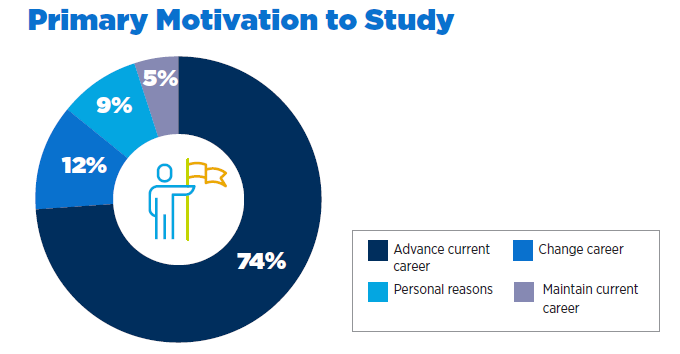
What is their primary motivation to study?
It’s no surprise that today’s students are career-oriented, but it’s clear that advancing their current career is the top driver, with 74% of our participants listing that as their primary motivation to study.
What does this mean for us as practitioners in higher education? It’s critical to not only highlight career-related information, but also to make sure that information and outcomes are very easy to find. In another finding from our report, 90% of respondents indicated that it’s important for program pages to provide specific and easy-to-access information on careers related to their field.
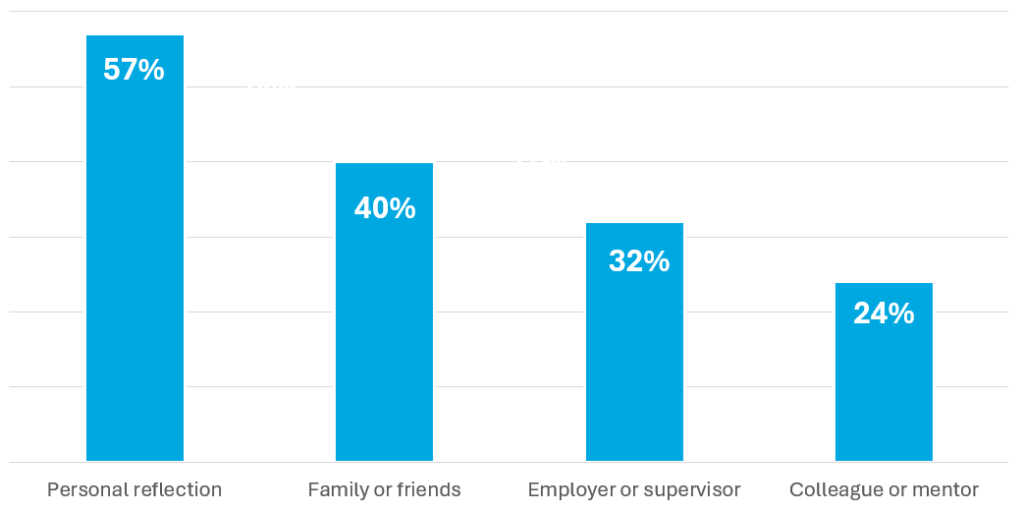
What influences graduate students to consider graduate study?
As you can see here, these decisions are largely self-motivated even if the reasons to pursue grad study are career-oriented. I find it interesting that these are not more employer-driven, especially when it comes to continuing degrees. However, it still shows that the majority of graduate students are self-motivated, intrinsic learners who see graduate study as a way to improve their lives.
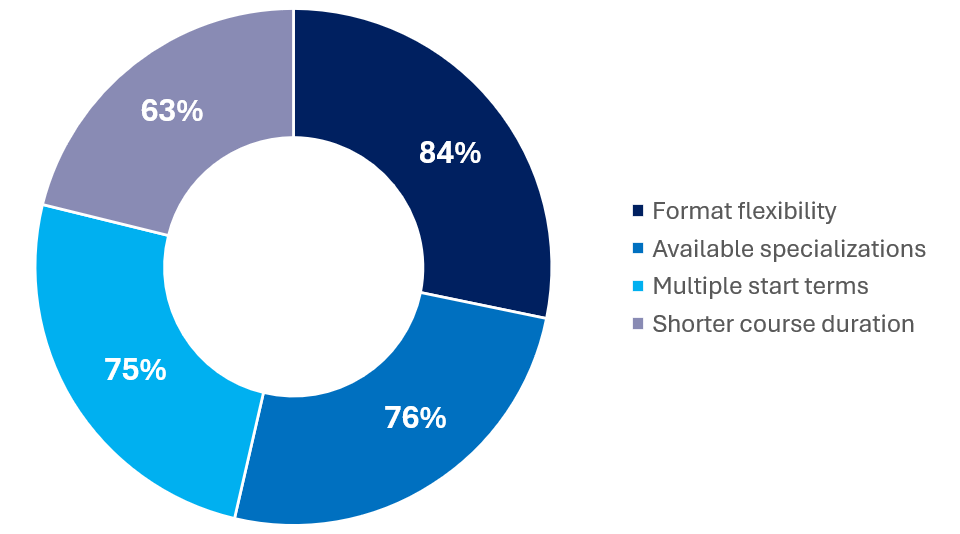
What are the most important program features to prospective graduate students?
For our survey respondents, format flexibility was the feature that was cited as most important, followed closely by available specializations. This is interesting, as the respondents cited modality, course format, and specializations, and then flexible scheduling. This could be a reflection of the growing number of Gen Z students (those under 29) who make up 56% of the graduate student population according to the fall 2023 IPEDS snapshot. This change in student age demographic emphasizes the importance of offering and designing those programs for multiple delivery types and really meeting those students where they are.
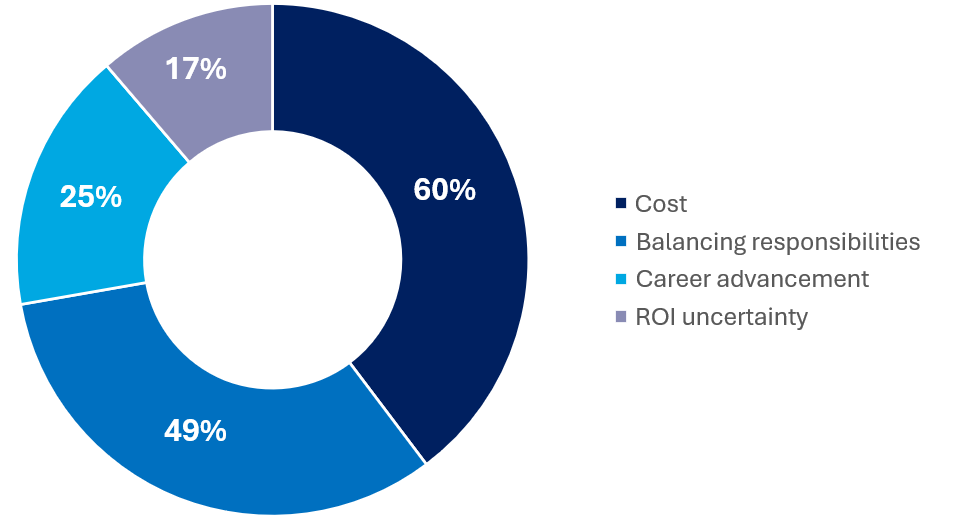
What are the main concerns of graduate students?
I don’t think anyone will be shocked that cost is a concern for 60% of graduate students. But half of our respondents also cited balancing responsibilities as a primary concern. This is again, not shocking considering the vast majority of our participants said they worked full-time. While fewer than 20% cited ROI uncertainty, that still represents 1 in 5 of our survey takers. The bottom line is that institutions need to directly address these pain points when they conduct outreach with students. Mitigating some of those concerns right away can help students feel more comfortable in the process and be more likely to enroll in, and ultimately complete their programs.
What will inhibit a graduate student from applying to a program?
Finally, we asked our survey respondents which common requirements would potentially dissuade them from applying to a program.
As you can see, 1 in 3 students cited letters of recommendation and essays/personal statements. This is not to say that institutions should remove these requirements, but be mindful if your program really needs them in the evaluation process. Similarly, for items such as transcripts, look for ways to make it easier for transcripts to be submitted or gathered to remove the burden from students—and a potential barrier from applying to your program.
Read the full report for even more insights
These findings represent a fraction of what you will find in the 2025 Graduate Student Recruitment Report. It’s packed with findings on the channels graduate students use to search for schools, how they use search engines for research, which digital ads they click on, and much more.
Talk with our graduate and online enrollment experts
Ask for a free consultation with us. We’ll help you assess your market and develop the optimal strategies for your prospective graduate students and online learners.
Nearly half of all students worldwide have engaged in online learning.
Online and hybrid education have shifted from emergency responses during the COVID-19 pandemic to permanent, influential forces reshaping education from kindergarten to high school to higher education. Once seen as supplemental, these models play a central role in how students, families, and institutions approach learning, access, and opportunity.
Full online enrollment remains rare in grades K-12, with just 0.6% of U.S. public school students fully online. However, hybrid learning is widespread, with 63% of students using online tools daily (National Center for Education Statistics, 2023). Globally, nearly half of all students have engaged in online learning, fueling a K–12 online education market valued at more than 171 billion U.S. dollars (Devlin Peck, n.d.; Yellow Bus ABA, n.d.).
In higher education, the shift is even more pronounced. By 2023, over half of U.S. college students had taken at least one online course, and over one-quarter were enrolled exclusively online (National Center for Education Statistics, 2023; BestColleges, 2023). Adult learners and graduate students have been especially drawn to online programs, attracted by the flexibility and accessibility they offer (Arizton Advisory & Intelligence, 2023).
But the numbers alone do not tell the whole story. To understand the future of online and hybrid learning, we need to listen to families, not as bystanders, but as essential decision-makers, advocates, and partners in shaping students’ educational journeys.
What families and students think, and why it matters
Across education levels, families appreciate the flexibility of online and hybrid models but consistently voice concerns about academic rigor, social connection, and equitable access.
In K–12, parents generally prefer in-person schooling but want schools to improve the quality of online options (Barnum, 2020; Dong, Cao, & Li, 2020; Garbe, Ogurlu, Logan, & Cook, 2020). Adult and international students in higher education often rely on online programs to balance work and family demands. However, they face barriers such as isolation, inconsistent internet access, and limited interaction with peers and faculty (Kibelloh & Bao, 2014).
Research underscores that strong course design is essential for satisfaction and success (Babb, Stewart, & Johnson, 2010; Detyna & Koch, 2023) and that social connection is not a luxury but a critical factor in persistence and well-being (Tayebinik & Puteh, 2012). Equity gaps also loom large: students without access to reliable devices, broadband, or support networks face steeper challenges (Eduljee, Murphy, Emigh-Guy, & Croteau, 2023; Neece, McIntyre, & Fenning, 2020).
Families’ pandemic experiences reinforce these themes. Many described overwhelming stress and inequities that left them skeptical of online learning without stronger support and communication (Dong et al., 2020; Garbe et al., 2020; Neece et al., 2020).
Key findings: What families want, and what budget cuts threaten
1. Families are cautious about fully online. Only 11% said they would consider a fully online experience for their student. In contrast, about 60% were open to hybrid models, which they saw as the “best of both worlds,” combining affordability, flexibility, and connection.
2. First-generation families are more open. Nearly one in five said they would consider fully online, and 60% were open to hybrid options. These pathways can be lifelines, but cuts to advising, technology, or aid risk undermining that promise.
3. Income divides are stark. Families earning under $60,000 were twice as likely to express interest in fully online compared to higher-income families. Yet as state funding declines, public colleges may raise tuition or online fees, making even “affordable” pathways harder to access.
4. Race and ethnicity matter. Black and Hispanic families showed greater openness to online and hybrid formats than Asian or White families. That opportunity will only expand if institutions sustain culturally responsive communication, peer representation, and targeted support.
5. Generational and gender differences are shifting demand. Younger parents and female caregivers are more comfortable with online and hybrid learning. Demand will keep growing, but families may see online options as second-class without continued investments in quality and communication.
6. Region matters, too. Families in the Great Lakes and Far West regions were more receptive to online learning, while New England families leaned more traditional. These cultural and infrastructural differences should shape institutional strategies.
These findings show that online and hybrid education hold real promise, especially for families seeking flexibility, affordability, and access. But that promise rests on a fragile foundation. Budget cuts threaten the very investments that make these models credible: faculty development, instructional design, technology, and support services. Without them, families’ trust could erode.
What this means for colleges: Practical implications
The research points to clear takeaways for colleges and universities:
Flexibility matters, but only if paired with quality. Families want flexible options backed by evidence of rigor, outcomes, and strong faculty engagement.
Hybrid is a strength, not a compromise. Market it as a high-quality “best of both worlds,” not a fallback option.
Equity-focused support is critical. Expand device loan programs, connectivity grants, and first-generation mentoring to close gaps.
Culturally tailored communication builds trust. Engage families with inclusive outreach and visible peer representation.
Generational shifts mean rising demand. Younger parents are more open to online and hybrid; invest now to meet tomorrow’s expectations.
Regional strategy matters. Align program design and marketing with local cultures, broadband realities, and institutional density.
Ultimately, this is about listening. For some families, online pathways may be the only way higher education is possible. For others, a hybrid model that blends connection with convenience is the right fit. Institutions that understand these diverse perspectives and invest in the structures that support them will be best positioned to earn families’ trust and help students thrive.
Babb, S., Stewart, C., & Johnson, R. (2010). Constructing communication in blended learning environments. Journal of Online Learning and Teaching, 6(2), 365–374.
Tayebinik, M., & Puteh, M. (2012). Sense of community: How important is this quality in blended courses? In Proceedings of the International Conference on Education and Management Innovation (Vol. 30, pp. 606–609). IACSIT Press. Yellow Bus ABA. (n.d.). Online education market size. YellowBusABA.com.
Each student has a different way of perceiving, processing, and connecting with information.
If you have ever wondered why one student peppers you with questions during a campus tour while another spends the visit sketching buildings, possibly giving your founder’s statue a comically large nose, you may have met what psychologist Howard Gardner calls multiple intelligences (Gardner, 1983, 1999).
Gardner proposed that intelligence is not a single metric but a collection of capabilities: linguistic, logical-mathematical, spatial, musical, bodily-kinesthetic, interpersonal, intrapersonal, and naturalistic. Each shapes how a student processes the world and how they connect during the college search. If you have ever tried to woo a future engineer with poetic descriptions of ivy-covered halls, you know: some want facts, others want a vibe, and a few want to hear about your beekeeping club.
From theory to practice
In K–12 education, Gardner’s theory inspired teachers to differentiate instruction to meet students where they are. Teachers understand that linguistic learners thrive in storytelling and debate. Kinesthetic learners act out history. Visual-spatial thinkers create models and posters.
Preferences also carry into decision-making. A student with strong interpersonal intelligence may thrive in group discussion, while an intrapersonal learner prefers reflection (Shearer, 2018).
A colleague once hosted two prospective students on the same tour. One chatted nonstop with ambassadors about clubs. The other hung back, took notes, and later emailed questions about academics. Both left a positive impression, but they connected in entirely different ways. There is no one-size-fits-all approach.
From classroom to campus tour
This theory has clear enrollment applications (statistics are from the 2025 E-Expectations Report from RNL, Halda, and Modern Campus).
Bodily-kinesthetic learners may need to walk your campus to “get” it physically. Eighty percent of students visit in person, and 88% find visits helpful.
Visual-spatial learners may prefer your virtual tour; 77% use it, and 84% find it helpful.
Musical learners might connect emotionally through audio, pacing, or sound design in videos.
Interpersonal learners thrive in authentic conversations, one-on-one chats, and social media DMs. Twenty-seven percent follow colleges on social as an early outreach step; 37% do so for student life content.
Intrapersonal learners might prefer ROI tools, microsites, or downloadable guides.
Logical-mathematical learners value dashboards, calculators, and evidence-based outcomes. Financial aid calculators are used by 81% and rated helpful by 85%.
When the fit feels off
Each intelligence has a “no-thanks” zone:
Kinesthetic learners disengage from dense PDFs.
Visual-spatial thinkers lose interest in text-heavy pages.
Musical learners notice when tone and pacing are off.
Interpersonal learners tire of one-way communication.
Intrapersonal learners feel drained by busy group events.
Logical-mathematical thinkers want facts, not fluff.
Linguistic learners need narrative and nuance.
Naturalistic learners respond to sustainability stories, not generic city skylines.
E-Expectations data confirm this. Sixty-three percent of students use Instagram, but only 53% see college content there, missing visual, musical, and interpersonal opportunities. Nearly half (45%) use AI chatbots, and 27% fill out inquiry forms afterward, showing these tools’ value for personalization (RNL et al., 2025).
AI as a multiple intelligences tool
AI chatbots can adapt content type, video, infographic, or ROI data, to match a student’s preference. After engaging with an AI assistant, 24% of students said they were more likely to apply, and 29% emailed admissions (RNL et al., 2025).
This is not about tech for tech’s sake. It is about designing digital interactions that honor different learning and connecting methods.
Matching intelligences to enrollment touchpoints
Each intelligence represents a unique way of perceiving, processing, and connecting with information. Your emails, tours, and inquiry forms can spark curiosity or shut it down, depending on how well they align.
Ask yourself:
Are you offering an “entry point” for every kind of learner?
Where are your blind spots?
What simple tweaks could widen the invitation?
This is not about building eight separate funnels. It is about creating a flexible ecosystem where every student can find something that feels made for them.
Sustainability initiatives, green campus tours, and community-based learning stories
Generic marketing is disconnected from the environment.
(Table adapted from Gardner 1983, 1999; RNL et al, 2025.)
Final thought
You do not need a degree in educational psychology to use multiple intelligences in enrollment strategy. You need to remember that students are cognitively and emotionally diverse (Gardner, 1983, 1999).
The smartest move? Offer multiple ways to connect and then let students choose.
Talk with our marketing and recruitment experts
RNL works with colleges and universities across the country to ensure their marketing and recruitment efforts are optimized and aligned with how student search for colleges. Reach out today for a complimentary consultation to discuss:
Institutions need to optimize their website content for AI-powered search results.
Search is dramatically evolving—and fast. Generative AI (Gen AI), especially Large Language Models (LLMs), are completely reshaping how information is processed, synthesized, and delivered. This changes how prospective students are influenced and impacts your institution’s visibility.
For today’s prospective college students, “search” is far more than a simple tool to find the best university; it’s what they do first to find the information they need during all stages of their college journey. In a world overflowing with options, your university’s visibility and prominence in these evolving search results can be the deciding factor in whether you’re even on a student’s radar.
I’ve recently had several conversations with university leaders, and one thing is clear: maximizing discoverability in this new, AI-powered era is top of mind. This blog is a direct result of those conversations and aims to cut through the noise to explain the why, what, and how of AI-driven student search.
The WHY: Generative AI-Powered Search
Generative AI (Gen AI) is the powerful application of machine learning that is transforming how information is created, compiled, and presented. Gen AI’s ability to create, summarize, and discover new information is precisely why it has become so crucial to modern online searching.
At the core are LLMs like ChatGPT and Gemini that are trained on massive amounts of data to understand and generate human-like language. These models enable students to ask complex, conversational questions like: “Which MBA program is best if I’m working full-time and want to study online?”
LLMs understand the intent behind that question—not just the words. That’s a huge leap from traditional keyword-based search. And the Gen AI is pulling from a vast range of sources, summarizing information, and delivering fast, context-rich answers with relevant links.
The WHAT: AI is Transforming Student Search
1. The rise of conversational search
Search is no longer just about typing in a few keywords and scrolling through results. Today’s prospective students are asking real questions, using full sentences, and expecting immediate, tailored answers whether it’s on Gemini, Siri, or ChatGPT.
In 2025, over 20% of the global population is already using voice search like Siri and Alexa. Many of these searches are like natural conversations—they’re specific, urgent, and detailed. That means your website content needs to be structured to answer these questions directly and naturally.
Your content needs to do more than just match keywords; it needs to thoroughly and thoughtfully answer the actual questions behind what students ask the Gen AI tool. Otherwise, your university could remain hidden from the Gen AI tools students use most.
2. Google AI overviews and AI mode: A new front page
Google’s AI Overviews (AIOs) are fundamentally changing the Search Engine Results Page (SERP) and content visibility by providing AI-generated summaries at the top. Instead of showing multiple blue links, AIOs serve up AI-generated summaries right at the top—pulling from multiple sources and citing them directly. If your content is cited in the summary, your visibility increases. If not, you might be left out entirely.
Soon, these summaries will be able to have paid ads in them. As part of the release in Google Marketing Live 2025, ads will appear directly within these AI Overviews, creating new high-visibility placements that are essential for maintaining paid visibility. You need to start planning to include AIO ads as part of your paid media strategy. Visibility is no longer about just bidding on keywords—it’s about being where the AI puts attention.
3. The accuracy challenge with LLMs
LLMs, which are also the technology powering AI Overviews, are powerful, but not perfect. They generate answers quickly, but if they lack real-time data, they can “hallucinate” or produce outdated info. Think of it this way—while your institutional content can become part of an AI’s knowledge base, the accuracy and strength of the AI’s responses are heavily dependent on your website’s structure for AI discoverability and the completeness and timeliness of your content on key pages like academic programs, faculty profiles, research archives, financial aid and student success stories.
However, students do not just take the face value of a summary. They want to dive deeper. Interestingly, AI assistants often pull from forums like Reddit or Quora. That’s a signal: clarity, authenticity, and helpfulness now compete with traditional authority. If your content sounds genuinely human and directly answers real student questions, it’s more likely to be cited by these tools and trusted by prospective students.
Talk with our digital marketing and enrollment experts
RNL works with colleges and universities across the country to ensure their digital marketing is optimized and filling their academic programs. Reach out today for a complimentary consultation to discuss:
Search engine optimization
Digital marketing
Lead generation
Digital engagement throughout the enrollment funnel
We are firmly in the age of Search + Chat. For universities’ content creators and marketing teams, this means adapting your strategy to a hybrid model where optimizing for both traditional search engines and AI citations is crucial. It’s no longer about ranking high on Google; it’s about being part of the conversation students are having with AI.
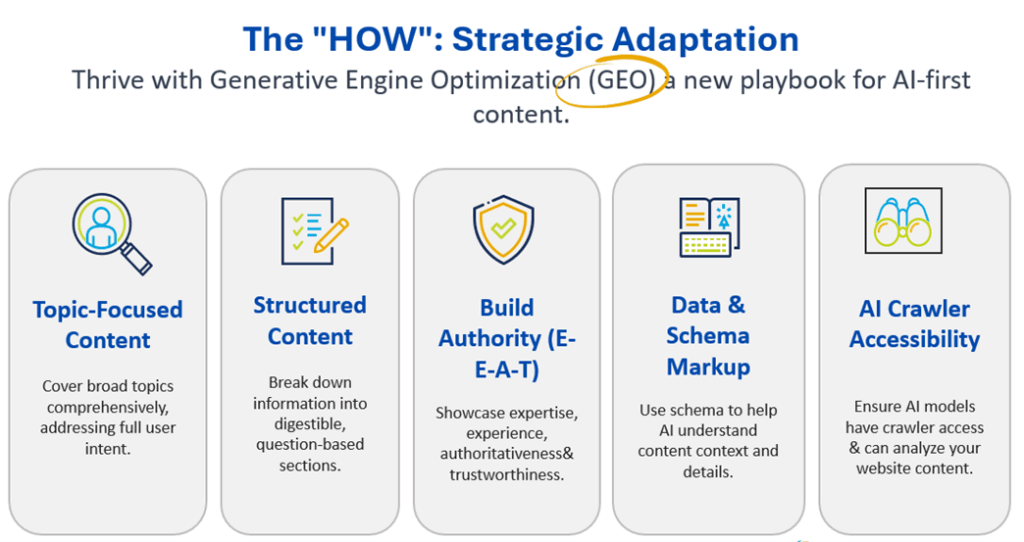
Just as prompt engineers craft inputs for LLMs, your content needs to “prompt” search AI effectively. This means creating well-structured, meaningful content that makes it easy for AI to understand and cite your information. This adds a layer of sophistication to content optimization, moving us toward what some call Generative Engine Optimization (GEO). Think of it as SEO, reimagined for an AI-first search environment.
Top 5 GEO Strategies You Can Focus on Now
1. Topic-focused content
Move beyond program name focus to cover broader topics comprehensively, addressing full student intent. For example, instead of just “Best Online MBA,” create content around “Which MBA program is the best while balancing a full-time job?” or “career paths in business analytics” or “balancing graduate studies with work.” This helps AI understand the full context, making your university’s degree program’s content relevant for diverse student queries.
2. Answer-focused structure
Use short, digestible sections with clear, question-based headings. For example, “When are the application deadlines for fall 2025?” or “How do I schedule a campus tour?” Include plain-text facts and data-driven claims (e.g., graduate employment rates, program rankings, faculty research impact). Content with specific data is 40% more likely to appear in LLM responses.
3. Build authority (E-E-A-T)
AI models favor content that signals Experience, Expertise, Authoritativeness, and Trust. For universities, this means transparently displaying faculty qualifications, publishing original research, program rankings, and highlighting alumni success, through testimonials. Strong E-E-A-T signals trustworthiness to AI, crucial for students making significant educational decisions. This isn’t just for humans, it’s how AI decides your credibility.
4. Structured data and schema markup to speak AI’s language
Think of schema markup as a universal translator for your website. It’s code you add to your pages that tells AI models and search engines what specific pieces of information mean, not just what they say. For example:
You can mark up your academic programs as “Courses,” detailing credit hours, learning outcomes, and faculty.
Your events (like campus tours or info sessions) can be identified as “Events” with dates, times, and locations.
Faculty profiles can be marked as “Persons,” highlighting their name, title, department, and research interests.
Testimonials can be flagged as “Reviews,” complete with star ratings and reviewer names.
Why this matters: When AI understands the precise context of your content, it can extract accurate information more effectively. This dramatically boosts your visibility in AI Overviews, rich snippets, and voice search.
5. AI crawler accessibility
For AI models to learn from your website, they first need to be able to “read” it. This means ensuring your university’s websites and program pages are fully accessible to AI crawlers.
Check your robots.txt file: This file tells web crawlers (including those used by AI) which parts of your site they can and cannot access. Make sure it’s not inadvertently blocking important academic programs, admissions details, or faculty research sections.
Handle JavaScript-heavy elements: Many modern university sites use JavaScript for interactive elements like program finders, application portals, or dynamic course catalogs. If not set up correctly, AI crawlers might not “see” the content generated by this JavaScript. Consider Server-Side Rendering (SSR) or Static Site Generation (SSG) to ensure this critical content is visible to crawlers.
If AI crawlers can’t access your academic program content, it won’t be discoverable by AI- powered search.
Final Thoughts: Show Up Where It Counts
The AI-driven evolution of student search isn’t a distant prediction—it’s happening now. My conversations with campus partners consistently confirms this: AI isn’t replacing traditional student search, but profoundly reshaping how students search, find, trust, and act on information.
The smartest path forward isn’t choosing between Google and AI chat tools. It’s using both. This is a powerful convergence where AI assistants deliver fast, personalized insights, while Google Search provides foundational depth, structure and authority.
Ask yourself: Is your content part of that journey? Is it fresh, factual, and findableAI and traditional search? For higher ed marketing and enrollment management professionals seeking to make a lasting impact, the answer is clear: Be the answer in both places.
At RNL, we’re committed to helping universities stay discoverable throughout the entire funnel—from awareness to inquiry to application and enrollment. We care deeply about the student journey too, and we know how critical it is for students to find the right-fit institutions at the right time. That’s why we stay agile—continuously evolving our strategies to meet students where they are and help institutions show up early, stay relevant, and convert when it counts.
Talk with our digital marketing and enrollment experts
RNL works with colleges and universities across the country to ensure their digital marketing is optimized and filling their academic programs. Reach out today for a complimentary consultation to discuss:
Search engine optimization
Digital marketing
Lead generation
Digital engagement throughout the enrollment funnel
From speed-to-lead to 24/7 support: Meeting student needs in the digital age
In our recent webinar, “The Importance of Speed to Lead in Meeting Your Enrollment Goals,” we highlighted how rapid, personalized responses to prospective students can significantly impact their perception of an institution’s quality and commitment. This principle of timely, relevant communication extends beyond the admissions process and into the heart of the student experience, particularly in online education. In this post, we’ll delve into how this same philosophy applies to technical support, forming a crucial component of student success and retention.
The critical role of 24/7 technical support in online education
Building on the speed-to-lead concept, the need for swift and effective technical support in online learning environments has become paramount. As we transition from initial student engagement to ongoing support, responsive assistance becomes even more critical. Let’s explore why timely technical support is essential and how it ties to student retention, institutional credibility, and mission fulfillment.
The importance of quick response to technical needs
Just as rapid responses to inquiries can influence a student’s decision to enroll, quick resolution of technical issues can determine a student’s ability to succeed in their coursework. Student satisfaction is closely tied to the quality of the overall experience institutions provide to students, including addressing technical issues and how the institution responds to the students as individuals when they have a concern. When students encounter technical barriers without immediate resolution, their frustration can lead to disengagement and even withdrawal from courses.
The importance of swift technical support in higher education cannot be overstated, as exemplified by several leading institutions.
Penn State University’s IT Service Desk stands out with its comprehensive 24/7 technology support model. Utilizing a blend of 20 students and full-time staff members, they efficiently manage up to 600 daily requests during peak periods. This continuous operation throughout the year, pausing only for university holidays, ensures that the Penn State community receives timely assistance for diverse IT-related issues, from learning management systems to account access and new IT service implementations.
Arizona State University (ASU): ASU’s help center provides round-the-clock service for their large student body. They have 81 employees and 22 student representatives who offer 24/7 support for approximately 100,000 students, including both on-campus and online learners. The center serves as a comprehensive “front door” to the university, assisting with various inquiries beyond just technical issues.
The University of Central Florida (UCF) has adopted a strategic approach to technical support. By deploying technicians during high-demand hours, UCF effectively minimizes downtime for both students and faculty. This proactive strategy maintains the continuity of the learning process and demonstrates the institution’s commitment to student success.
In instances where staffing may be limited, universities are increasingly turning to AI-powered solutions to meet the demand for immediate, round-the-clock support. For example, Thompson Rivers University has implemented a 24/7 chatbot support system. This AI-driven tool automates 83% of incoming chats to their Future Student department, providing instant responses outside of regular business hours. Moreover, a number of innovative platforms such as RNL’s Compass digital assistant provide AI-powered chatbots designed for higher education. These AI-powered assistants can seamlessly integrate with various campus systems, including SIS/ERP, ITSM, and LMS, to address a wide range of inquiries related to IT, admissions, financial aid, and more. By leveraging such technologies, institutions can significantly reduce support costs while ensuring students and faculty receive timely, personalized assistance at any hour.
The case for a 24×7 support model
A 24/7 support model aligns with the flexibility that online education promises. Students often engage with coursework outside traditional hours, making access to technical assistance at any time a necessity rather than a luxury. Institutions like Faith Christian School emphasize the importance of uninterrupted access to educational resources, which fosters independence and self-directed learning. Similarly, Google Cloud’s Student Success Services leverage virtual assistants to provide instant answers around the clock, freeing up staff for more personalized guidance.
The availability of 24/7 technical support is increasingly viewed as a marker of institutional quality. Students now expect seamless access to both academic content and support services when selecting a university. Institutions that fail to meet these expectations risk damaging their reputation and losing prospective students. RNL student satisfaction and priorities data shows that approximately two-thirds of students value institutions addressing their personal needs throughout the recruitment process, which can factor in their decision to enroll at the institution. Offering robust technical support signals that a university is technologically advanced and committed to providing an optimal learning environment.
Enabling student success and institutional mission
Timely technical support directly contributes to student success by removing barriers to learning. When students can focus on their studies without being derailed by technical difficulties, they are more likely to persist in their programs. This aligns with the broader mission of most universities: helping students succeed academically and graduate. Demonstrating the lived expression of institutional mission through 24/7 support for student services can enhance retention and overall well-being. By addressing both academic and non-academic challenges in real-time, universities create an ecosystem where students thrive.
Conclusion: Timely support is critical to the online student experience
From the initial point of contact through to graduation, the principle of timely, personalized support remains crucial. The importance of responding quickly to students’ technical needs is a natural extension of the speed-to-lead philosophy in enrollment management. A 24/7 support model not only ensures uninterrupted learning but also strengthens institutional credibility and fosters student retention. By prioritizing timely assistance across all aspects of the student journey, universities can live up to their mission of empowering students to succeed academically and graduate with confidence. As these examples illustrate, investing in comprehensive support systems is an investment in both student success and institutional sustainability.
How can you leverage technology across the student lifecycle?
With students expecting personalized attention 24/7, you need to be able to engage them at any point in the student lifecycle. Talk with our experts about how you can use the latest technology to create those connections to strengthen recruitment and retention.
The last year has been one of significant strides for RNL. We embarked on a journey to enhance our existing tools, aiming to provide our partners with even more powerful and effective solutions. This commitment has driven us to develop a suite of AI-powered tools designed to strengthen your connections with students and donors.
A focus on data-driven decisions and user-friendly solutions
Our primary goal was to create AI tools that are not only secure but also user-friendly and insightful. We aimed to provide you with a comprehensive view of your data, empowering you to make informed decisions and develop winning strategies. We understand the importance of ease of use, ensuring that our tools are accessible to everyone, regardless of their technical expertise.
Key achievements: RNL Insights, Compass, and RNL Answers
RNL Insights: This AI-powered data management platform revolutionizes how you work with your data. By integrating data from various sources, including your enrollment CRM, financial aid modeling tool, and marketing analytics, Insights provides a unified view for informed decision-making. Its intuitive conversational interface allows you to ask questions and receive immediate answers, uncovering valuable insights you might have otherwise missed.
RNL Compass: Our AI-powered digital assistant, Compass, streamlines communication and enhances efficiency. By automating responses to common student and parent inquiries, Compass frees up your admissions team to focus on more strategic tasks. Integrated with your CRM, Compass provides personalized answers, ensuring each interaction is tailored to the individual’s needs.
RNL Answers: This AI copilot leverages your institution’s private data to provide valuable insights and support. Whether it’s crafting compelling marketing messages, assisting traveling admissions officers, or building robust knowledge bases for new team members, RNL Answers offers a secure and reliable AI-powered solution.
Beyond technology: Empowering partners with AI expertise
We recognize the importance of responsible AI adoption. To this end, we have introduced AI Governance and Education Consulting Services. These services provide guidance on integrating AI into your institution, including:
AI Education: Training leadership teams, faculty, and staff on the fundamentals of AI.
AI Governance Frameworks: Assisting in the development of frameworks that ensure ethical and responsible AI usage.
Collaboration and continuous improvement
To ensure our solutions remain aligned with your evolving needs, we have established the Leadership AI Council and the Product Advisory Council. These groups, comprised of our valued partners, provide valuable feedback and insights, shaping the future of our AI-powered solutions.
Looking ahead: A future of innovation
We have also began migrating some of the outbound communication tools our agents use to deliver your omnichannel outreach services to our new all-in-one platform—RNL Reach. While as a partner, your involvement in transitioning to RNL Reach is very minimal, but you will feel the benefit of the solution because your agents will be able to be more efficient in how they execute your campaigns and provide stronger analytics and reporting. This is the first step to making the new solutions and services we have planned in 2025 possible!
In 2025, we are committed to building upon the strong foundation we’ve established this year. We will leverage our expertise in consulting, data analysis, and AI to develop innovative solutions that address your unique challenges and help you achieve your goals.
A note of gratitude
We extend our sincere gratitude to all our partners for their trust and collaboration. We are honored to work alongside you and contribute to your success. We look forward to a continued partnership in the years to come.
Discover RNL Edge, the AI solution for higher education
RNL Edge is a comprehensive suite of higher education AI solutions that will help you engage constituents, optimize operations, and analyze data instantly—all in a highly secure environment that keeps your institutional data safe. With limitless uses for enrollment and fundraising, RNL Edge is truly the AI solution built for the entire campus.
In today’s digital-first world, higher education institutions are increasingly turning to digital marketing to educate, engage, enroll, and retain students. However, one of the key challenges that the campus decision-makers face is understanding the potential costs associated with digital marketing and how to effectively budget for growth.
As someone deeply immersed in the world of digital strategy, I often find myself having the same conversation with campus leaders: how do we set realistic expectations about what it really costs to do effective digital marketing? And more importantly, how do we directly link those costs with your institution’s growth objectives? In this blog, I will highlight the key data-driven strategies for assessing ROI and how these strategies inform a strategic budget plan that strengthens your institution’s overall portfolio and drives sustainable growth.
The importance of setting realistic expectations
Success in higher education landscape, particularly when managing a large portfolio, is driven by a disciplined, metrics-oriented approach. From my experience, the institutions that excel are those that rely on crisp numbers, rigorously evaluate their plans ahead of time, and understand the value of projections and estimations. By leveraging detailed forecasts and aligning resources accordingly, we can navigate the complexities of enrollment growth with precision and confidence, always mindful that incremental progress, evaluated at every stage, is key to achieving long-term goals.
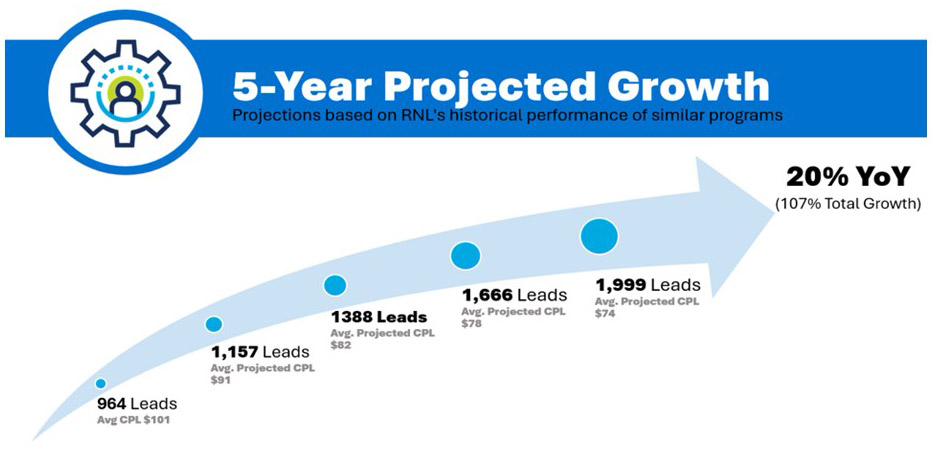
Setting expectations means recognizing that significant results take time and careful planning. This translates to setting realistic growth expectations based on an understanding that reaching your enrollment goals will take multiple academic terms. When I am collaborating with our partners, we adopt a structured five year growth trajectory where Year 1 serves as the “foundational” phase, establishing the core infrastructure and strategic alignment. Year 2 is focused on “scaling,” optimizing initial investments to drive measurable growth. Years 3 and beyond are dedicated to “sustained value creation,” with a continuous focus on refining processes and maximizing returns through ongoing optimization and strategic enhancements. This phased approach allows for calculated risk-taking and ensures a clear path to long-term, scalable success.
Once we’ve set realistic expectations for our digital strategy, it’s crucial to ensure that every tactic -whether paid digital marketing, SEO, or creative content, all work together seamlessly to achieve your goals. These elements don’t function in isolation; rather, they complement each other to drive greater visibility, engagement, and, ultimately, enrollments. A well-rounded strategy that integrates SEO to boost discoverability, paid digital marketing for targeted reach, and compelling content to engage prospective students will create a strong foundation for success. By understanding how these components interrelate, you’ll be better equipped to assess their effectiveness and make data-driven adjustments as needed.
From here, let’s dive into how digital strategy translates into budget planning and ROI. Understanding the interconnectedness of these key elements will help you allocate resources more efficiently and set a clear path for measuring the success of your investments.
Connecting strategy to ROI and crafting a strategic budget plan for growth
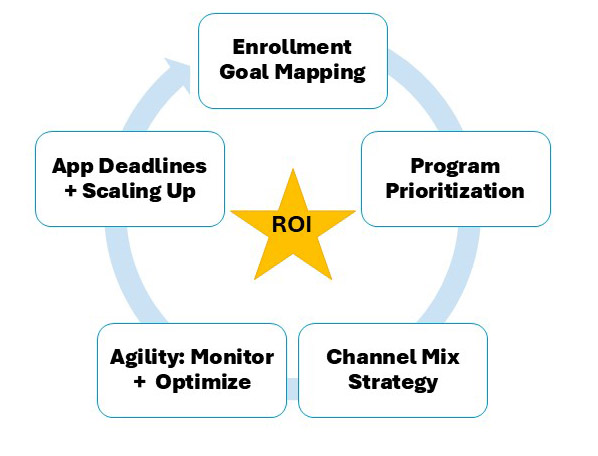
The connection between strategy and ROI is grounded in the ability to align your digital marketing efforts with measurable outcomes, and it all starts with the establishment of clear and precise enrollment goals. Prioritizing top programs ensures that marketing resources are directed toward the areas with the highest demand or growth potential, improving overall program performance. The right channel mix is crucial to reaching the right audience, maximizing visibility, and efficiently converting interest into applications. Monitoring data and optimizing it in real-time ensures that marketing efforts are continuously adjusted for maximum effectiveness, enhancing the likelihood of meeting targets and improving ROI. Finally, effective allocation based on application timing, seasonality projections, and market revisions allows for strategic adjustments in campaigns to account for fluctuating demands, ensuring marketing spend is optimized throughout the enrollment cycle. Collectively, these elements create a robust framework for maximizing ROI, ensuring that marketing investments lead to increased applications, conversions, and, ultimately, student enrollment.
How do you craft a budget that supports your growth goals? Whether you are the decision-making authority or a decision influencer, here are the essential steps to craft a budget plan that aligns with your institution’s growth objectives and maximizes your enrollments:
1. Define your enrollment goals in detail
When you think of marketing costs, what comes to mind first? How much will it cost to meet your enrollment goals, right? So, your first step in planning a budget is to have your overall Enrollment goal (and, for graduate or online programs, a goal for every program) in front of you. With the goal (or program-level goals) in hand, determine what that means in terms of percentage growth from the current state. You may also have subsidiary goals like enhancing brand awareness, building more brand equity, or engaging alumni. If these are going to be part of your plan, they should also have tangible goals for what you are trying to do. Defining your enrollment goals helps you allocate your budget accordingly and measure ROI effectively.
STRATEGY TIP
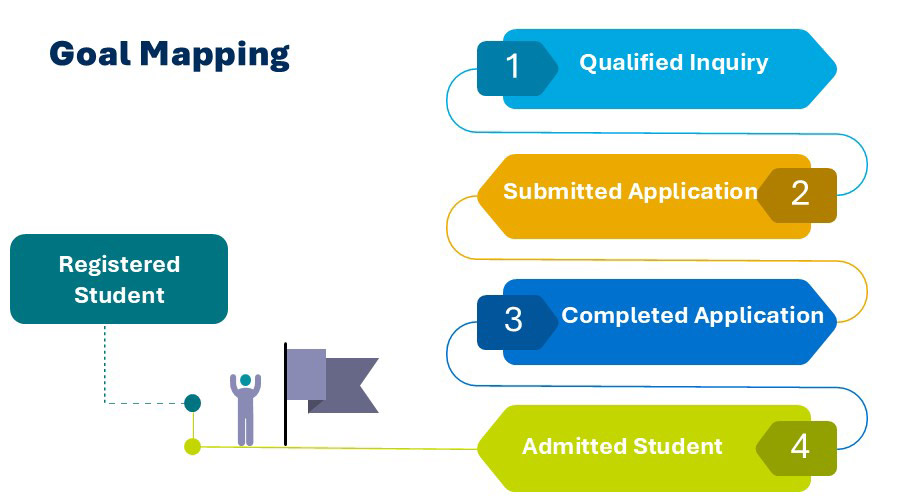
Develop a “Goal Mapping” Scenario or you can say a Reverse Funnel (for each program). After you set enrollment goals (for the year or the term) you then need to understand the lead to enroll ratio. This will help you work backwards to determine how many accepted apps/admits will be needed, how many completed apps, how many submitted apps, and finally how many qualified leads will be needed. Based on the program category, dig deeper into what the Cost per Leads (CPL’s) are, based on industry benchmarks. That will help you calculate the estimated ad spend needed to generate those qualified leads.
A note on program-level goals: If you don’t have program-level enrollment goals for your online and graduate programs, finalize those as soon as possible. Until then, focus marketing on building brand awareness. It is likely that people in your own backyard could be less familiar with your program than you may think they are. Brand advertising will ensure that awareness rises so that when you have your program goals, you can build your campaigns on a higher level of familiarity with your institution. However, given that Google reports that 75 percent of graduate and online program searches don’t include an institution name, remember that branding alone will not be enough to fill your classes.
Institutional example: When we began work with one of our partners nearly two years ago, they had not established program-level goals. So, in year one, we focused the largest portion of the budget on institutional awareness, with mini-campaigns focused on specific programs of importance to the institution. By the beginning of the second year, the institution had set program-level goals based on a greater understanding of market conditions. At that point, we began transitioning our campaigns to focus (ultimately 80 percent of the budget) on the programs with the “mini campaign” focused on continuing the brand equity efforts.
2. Prioritize your programs
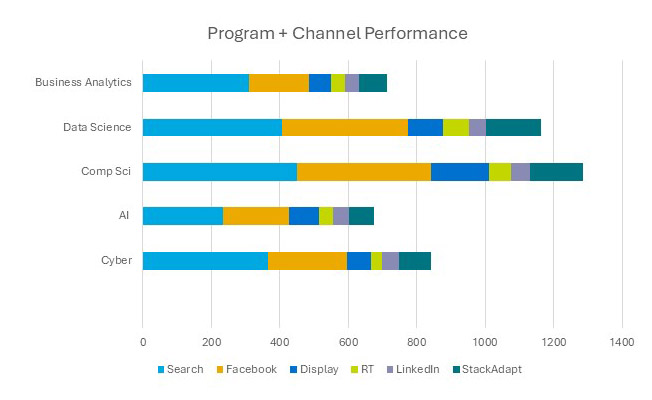
It is highly unlikely that most institutions can spend marketing dollars on every program they offer. This means that in order to maximize the ROI of your marketing budget, you must prioritize your programs. But how? Take a data-driven approach, prioritizing programs for which you a) know there is market demand both among students and employers, and b) understand the competitor environment. These are the “cash cows” that will demonstrate the best ROI on your marketing spend and support the programs that, while not demonstrating significant market demand, are critical to the institutional mission.
STRATEGY TIP
Spreading a $100K marketing budget across 15 -20 programs will only dilute the ad spend, by spreading it too thin. Instead, identify the top 5-7 programs that have the greatest market demand and focus on them. Note that sometimes, the programs that seem most in need of a “marketing boost”, really aren’t. They are struggling because their market demand situation is not what it once was.
Institutional example: A partner institution recently commissioned RNL to conduct a Program Prioritization and Positioning study focused on their current program mix. The goal was to take a data-driven deep dive into 12 programs vying for marketing dollars, with a focus on understanding student demand and employer needs in the region. The results indicated that while one of the programs they had planned to prioritize came out on top, two others that they hadn’t been planning to focus on also demonstrated strong demand, and one of the programs that they had questioned was confirmed as having weak local market demand.
3. Determine your channel strategy
Once you have prioritized your programs for marketing ROI, setting your channel strategy is pivotal. Personas (at the graduate and online levels developed for each program) dictate the channels on which you should focus. You don’t want (or need) to be present on every single channel just for the sake of “eyeballs.” Be mindful of the budget and how best to use it in order to maximize return, which can only be accomplished if you apply the personas that will inform you where your target student spend their “digital time.” So, for example, not every program may benefit from marketing on LinkedIn. Since it is expensive with a $10 minimum ad spend, a persona-based approach may indicate that other platforms are a much better match. But you can only do this if you know the characteristics of your audience, and that comes from the program personas.
STRATEGY TIP
The critical element in increasing marketing ROI is to engage the right students at the right time on the right channel, without spreading your budget too thin. In contrast, being too invested in any single channel exclusively or too long is also almost always the wrong strategy. There is always a point of diminishing returns as students cycle to different platforms, and you want to be sure to know where to go next before you approach that point by being able to tap into the next new thing.
Institutional example: One of our prestigious campus partners was struggling with recent market shifts that resulted in an overall decline in applications. We dug into market and performance data to help them prioritize programs that had the highest lead-to-enroll ratios, lowest cost per acquisition, and good search volume with an eye to increasing marketing ROI and overall success. This approach not only helped regain their momentum at the top of the funnel but also generated strong conversion volume that exceeded goals and sustainably reduced cost per conversion. These changes benefited not only the marketing operation but were also felt by the call center, and further down the funnel where we saw an increase in applications.
Talk with our digital and enrollment experts
We’re to help you find the right digital marketing and recruitment strategies. Let’s set up a time to talk.
4. Analyze data regularly and optimize with agility
If (quality) content is king, data is queen! Sustained growth can only occur when data and insights are continuously incorporated into strategy. Analyzing performance data is crucial to understanding which programs and channels are yielding the largest numbers of applications and enrollments and, hence, generating the best return on ad spend (ROAS). This type of analysis allows for a data-driven approach to strategic pivots on how the marketing budget is allocated to ensure the highest ROI (or ROAS) across channels and the program portfolio. As the cost of marketing has risen, so has the need for marketers to make an effective case to senior leadership for additional marketing dollars. You can only do this if you can demonstrate that you are the best possible stewards of current resources.
STRATEGY TIP
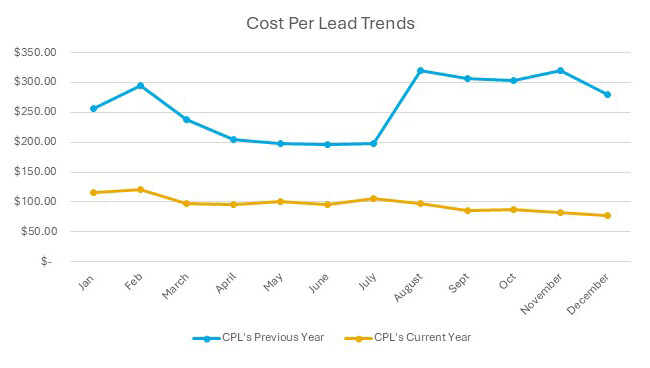
As you continue to increase your campaign efficiency and success with the focus on ROI, your cost per lead will gradually start to go down – on average by 5 – 10 percent in year 2 and beyond. So, campaigns can generate more qualified leads efficiently over the years (for the same cost), thereby maximizing the return on your ad spend (ROAS). This helps you not just grow but also helps in building forecasts and projections for growth compounded over several years – and it also provides a strong ROI-driven basis for any requests you may need to make for additional funds elsewhere.
A note on analytics platforms: The fact that resources have become increasingly scarce at the same time as marketing costs have skyrocketed has resulted, out of necessity, in more sophisticated tracking of ROI. If your internal systems are set up in the correct manner (or if you are working with a strategic partner like RNL) every lead can be tracked to its source, thereby allowing for the assessment of just how effectively each marketing dollar has been used.
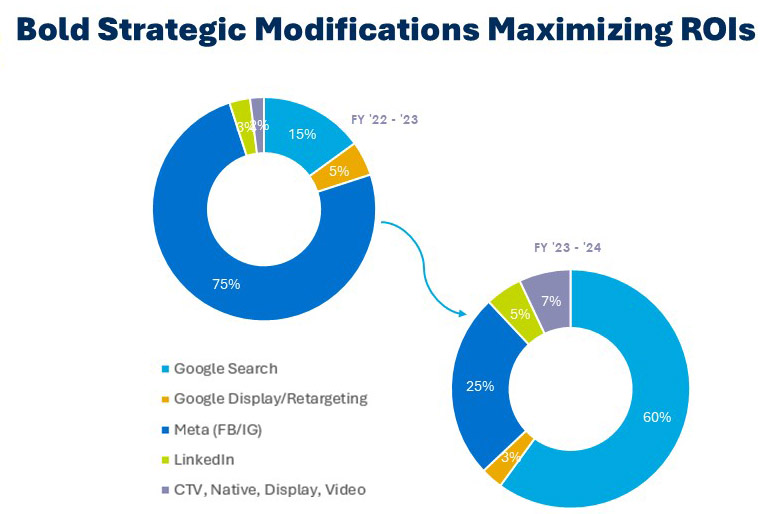
Institutional example: A prestigious campus partner was having challenges with converting leads to applications and enrollments. We reviewed their full-funnel data (compete with attribution percentages) and realized something wasn’t working. The top of the funnel was healthy, with good lead volume. However, down the funnel we saw that a disproportionate number of leads were not converting to apps and enrollments. As a result of the review and data analysis, we made a bold strategic pivot to shift significant budget allocations to the channel (Google search) that we could see was producing the greatest numbers of applications and enrollments. Without the data, solving the challenge would have been impossible. With the data, it was easy. Since we made this change, applications, and enrollments have consistently increased each academic period.
Making sure that the top of the funnel strategy is guided by down funnel numbers is the KEY! Effective strategy must evolve through ongoing optimizations with thoughtful placements across diverse media platforms that are informed by performance data. Remember that the path to enrollment is rarely linear and an integrated media strategy allows you to provide a personalized message in the right place at the right time.
5. Understand and account for seasonality/application timings/expansion
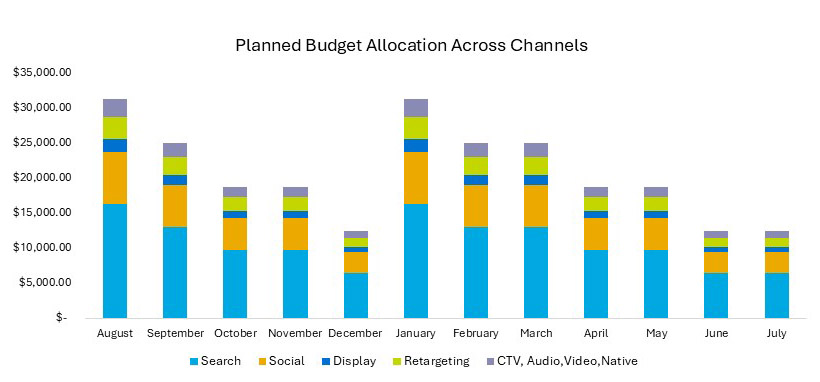
Another aspect of the dynamic nature of the marketing process relates to the seasonality of lead flow – and subsequent enrollment. This requires flexibility to adjust your strategies based on real-time performance data collected throughout the year. For any program or institution, there are times of the year during which more or fewer leads are generated. Fully understanding these trends takes time; you can make preliminary judgments on when the lead volume is highest and lowest within one year, but multiple years will allow for greater certainty. As you build your capacity to track lead generation – and conversion throughout the funnel – by program and source – you can create visualizations that map these factors by month. They can be used to build monthly budget allocations like those presented below.
Institutional example: For one campus partner we used the annual performance data in an innovative way. Our data insights indicated that there was more market share to capture, by having the program leverage low cost per conversion at the top of the funnel at certain points in the year, and low cost per acquisition at the bottom at other points of the year. There was time to scale up both applications and enrollments. We developed a forecast plan to address the potential areas of opportunity, calculated the cost, and pitched it to the partner. Once approved, we moved with agility, and implemented additional ad spend on the top champion programs and frontloaded the budgets for the academic periods yielding the highest number of applicants and enrollments. With this, we were not only able to meet the qualified lead goal but also exceeded the enrollments by 19% for the following academic period.
The lifetime value of the student
As you budget for growth, it’s crucial to consider the lifetime value (LTV) of a student. LTV refers to the total revenue a student generates throughout their academic journey and beyond. This value encompasses tuition fees, ancillary revenues (like housing and meal plans), alumni donations, and increasingly in our era lifelong learning opportunities.
Talk with our digital and enrollment experts
We’re to help you find the right digital marketing and recruitment strategies. Let’s set up a time to talk.