Ever call a service provider only to get bounced between departments, retelling your story to every new agent, each one promising a fix that never comes? You hang up frustrated, unheard, and uncertain.
This same dynamic plays out in higher ed every day. A prospective student tells an admissions counselor, “I need to finish my graduate degree in one year.” That context gets lost in the handoff. The student success team never hears it. Course sequencing doesn’t line up. Frustration builds. Momentum stalls.
That isn’t just a communication slip. It’s a broken promise.
Too often, institutions treat the student journey as a series of separate phases — marketing handles outreach, admissions manages enrollment, and student success supports retention — but students don’t experience their education in phases. They experience it as one journey.
And when we don’t design for that, we create invisible gaps that undermine trust, break continuity, and erode outcomes.
This isn’t a marketing problem. Or an admissions problem. Or even a student success problem. It’s an alignment problem.
The real challenge is that internal teams aren’t playing from the same sheet of music. Without shared data, shared metrics, and shared goals, it’s impossible to have a meaningful conversation about where the student journey breaks down.
It also makes improvement feel like guesswork. One team pushes harder on applications. Another tries to boost first-term persistence. But without a full-funnel view, efforts remain disjointed and hard to scale.
To grow enrollment and retention sustainably, you need institutional alignment around the full journey, from first click to graduation.
Full-Funnel Enrollment Planning as a Solution for Growth
A full-funnel strategy doesn’t just connect dots — it puts everyone on the same map. Sustainable enrollment growth requires moving beyond early-stage efforts and focusing on a unified enrollment strategy that carries a prospective student from interest all the way through graduation. That means marketing, admissions, and student success teams need to share the same data, vision, and goals. Here’s what that looks like in practice.
Connect Marketing, Admissions, and Student Success
Replace handoffs with collaboration. That means shared access to student data, from first inquiry to graduation. When teams see the same big picture, outreach becomes more relevant, timing improves, and support gets proactive.
Build a Shared Road Map With Clear Metrics
Institutions need to establish a single road map that charts the student journey from inquiry to enrollment to graduation and attach measurable goals to each phase, such as enrollment yield, first-term persistence, and long-term retention rates. A shared scorecard keeps the discussion focused on the big-picture student journey, rather than team silos.
This shared dataset should be analyzed to detect patterns and trends. Where are students dropping out of the funnel? Which programs retain the best-fit learners? Which messages produce the best engagement? The insights you glean from your analysis can help you tweak targeting and support.
Align Around Student Fit Early
Retention starts with recruitment. When marketing and admissions teams are aligned with student success, they can spot patterns of persistence and adjust targeting accordingly. It’s not just about getting more students in the door — it’s about attracting students who will thrive.
Structure Cross-Team Check-Ins
Yes, it means more meetings, but structured, purposeful alignment sessions across departments can surface insights you’d otherwise miss. Better yet, tie every meeting to shared key performance indicators (KPIs) and use that data to drive strategy.
Treat Technology as a Bridge, Not a Band-Aid
Modern customer relationship management (CRM) platforms give you visibility into every stage of the funnel. Real-time reporting and alerts enable teams to identify issues — where students are disengaging, where more support is needed, which outreach messages are failing to resonate — and respond quickly before they become systemic.
Reframing Retention as a Targeting Opportunity
Strong retention doesn’t begin in week eight of the semester. It begins the moment a prospective student clicks “Learn More.” Strategies for success include the following:
Target right-fit students using behavioral and demographic data.
Tailor outreach to meet the expectations of adult and online learners.
Use predictive insights to intervene before a student disengages.
When you design a journey that prioritizes clarity, continuity, and fit, your enrollment and retention numbers start to reflect that.
Key Takeaways
With the value of higher ed under scrutiny and students facing more choices than ever, institutions must start treating the student journey like a customer journey.
That means designing around measurable satisfaction at every stage. Rallying around shared information. And giving every team a role in both the promise and the delivery of student success.
Because when students fall through the cracks, they don’t just feel confused. They feel let down.
Enrollment growth requires an end-to-end student journey approach, not a single-stage fix.
Full-cycle planning drives stronger enrollment and better retention.
Alignment among internal teams is the foundation for sustainable results.
It’s Time to Close the Gaps
At Archer Education, we partner with institutions to connect marketing, enrollment, and student success into one seamless journey. We help you build full-cycle strategies that grow enrollment, increase retention, and, most importantly, deliver on your promises to students.
Ready to start the conversation? Let’s talk.
Contact our team to learn more about our tech-enabled strategy, marketing, enrollment, and retention services.
In full disclosure, I work in higher education marketing. But I’m here to say: Marketing can’t fix a bad program. OK, maybe “bad” is too strong of a word, but degree programs that aren’t aligned to the modern learner’s needs and expectations — or the job market — can be challenging. Let’s discuss.
For this article, we’ll primarily focus on adult online learners. And these prospective students are very different from those coming right out of high school. According to Common App, first-time college students apply to about six different colleges, on average. The online learner typically inquires with only two institutions, according to an EducationDynamics report, and 45% apply to just one.
What does this mean for schools with online programs? You have to get in front of your target audience quickly and make your case clearly. But if you don’t have the right mix of features or programs for these students, it doesn’t matter if your marketing is excellent.
Give Online Learners What They Need
Online learners typically work at least part time and often full time. They have different needs and expectations for their higher education experience. They need flexibility. They also don’t want to be in school longer than necessary. Most are earning a degree to improve their career options.
Below are a few things to consider when formatting your programs and processes for online students.
Efficiency
Once online learners have decided to take the step of applying, they’re committed and want to get started quickly. According to the EducationDynamics report, 80% enroll in the school that admits them first, and more than 50% expect to begin courses within a month of being admitted.
That means admissions teams have to move quickly and the programs must offer multiple start dates per year. If you make prospective students wait, you lose out. Delays can make an otherwise good program fall into the “bad” category.
This one can be challenging. You need enough students to merit multiple start dates. That’s where that good marketing comes in!
Relevant Skills
Online learners choose online because they’re working and need a flexible school schedule to accommodate their work and personal commitments. But let’s focus on the work part here. These students need skills and credentials that will boost their earnings and opportunities. That’s one of the most cited reasons for returning to school.
So, again, the degree must match the skills students need to find work. If the only online programs you offer are in computer science, you may find that you’re wasting your marketing dollars. Yes! Computer science! In the age of artificial intelligence (AI), computer science and engineering graduates are struggling to find work.
Personal opinion: Liberal arts and studies will become more important if they can teach students the durable skills needed in the AI era — communication, critical thinking, and research skills.
Clear Information
Degree program pages and websites sometimes obscure information users need to make decisions. And we saw above how quickly online learners are making decisions and want to get started. If your program page hides costs, financial aid information, credit hours, and requirements, you’re going to drop out of their consideration set.
Online learners want to weigh available information and make informed decisions. Some will certainly have price sensitivity, but it’s not the only consideration, so don’t hide tuition rates and fees. The EducationDynamics report notes that “flexibility can even overcome cost, with 30% of respondents indicating they would enroll at a more expensive institution if the available format, schedule, or location were ideal.” Show your cards. Let the students make their decisions with the information available.
If your program doesn’t meet student requirements in this area, marketing won’t make a significant impact on your enrollments.
Be Discriminating in Your Marketing Spend
Sometimes there are politics at play or other reasons to market or support certain programs, but when possible, be thoughtful and intentional about where you spend your marketing dollars. Because marketing can’t solve for a challenging program, you must put your budget toward programs that meet student needs, including those that meet the criteria above.
It’s tempting to give equal shares to all programs, but unless you have an unlimited budget, that’s not the best use of your funds.
If you must give some marketing love to all programs, even the “bad” ones, try a brand-focused approach that connects to an all-programs page. For example, send some limited traffic to a dedicated landing page that briefly covers all available programs. That way, you’ve covered the challenged programs without dedicated resources.
Use the remainder of your budget on programs that align with students’ needs, so you can enjoy a lower cost per enrollment. Who doesn’t love a “chase the winners” strategy?
Need More Help?
Archer Education has deep expertise in both of these areas: marketing and program assessments. Our Strategy and Development team can help you take an unfiltered view of your programs and processes to create a plan for future success, even as the market shifts. If you have good programs and need marketing support, we’re here for that, too.
How SEO for Universities Powers Sustainable Enrollment Growth
There’s a good chance you landed on this article after typing a question or a set of keywords into a search engine. That’s because we optimized this article for said search using search engine optimization (SEO) strategies. As a university marketer, you should be doing the same thing to reach prospective students.
Today’s recruitment landscape is digital, and a search engine query is often the first and most critical step a prospective student takes toward enrolling. SEO for universities is a central driver of discoverability, engagement, and application starts.
By employing higher education SEO tactics and investing in strategic, search-focused marketing, institutions can build sustainable enrollment pipelines. But how do you build an SEO strategy that goes beyond plugging keywords into program pages?
In this article, we’ll cover:
Why search is the cornerstone of student decision-making.
How SEO aligns with every stage of the enrollment funnel.
How universities can improve their rankings, engagement, and lead quality.
Why higher education SEO efforts deserve long-term strategic investment.
Why Universities Use SEO Strategies for Enrollment Growth
In an increasingly competitive enrollment landscape, SEO offers higher education institutions a sustainable, cost-effective foundation for long-term growth. Unlike time-limited paid campaigns, SEO builds momentum and equity over time, positioning your institution in front of prospective students at the exact moment they’re looking for options.
Today’s Students Start With Search
Before a prospective student ever talks to an admissions counselor or clicks on an ad, they almost always begin with a Google search. In fact, a majority of students report using search engines as their first step in looking for college and university options, according to recent research from EAB and Modern Campus.
If your institution doesn’t show up organically on the first page of results, you’re not in the conversation.
What makes organic search results particularly powerful is the trust factor. While ads can drive visibility, organic rankings signal authority, relevance, and credibility, especially in the eyes of Gen Z prospects, who are increasingly ad-skeptical and research-savvy.
Additionally, mobile-first behavior and voice-assisted searches for terms such as “best online MBA program in Texas” or “affordable RN to BSN degree near me” raise the stakes for technical SEO. A university’s site must not only be optimized for keywords but also be fast, intuitive, and responsive to be able to meet students where they are: on their phones, on the go, and expecting answers immediately.
Long-Term ROI of Organic vs. Paid Media
SEO is an investment, not a line item. While a paid search ad can generate quick visibility, it’s fleeting, as your ad disappears the moment the budget runs dry. But SEO creates a compounding return. Each blog post, landing page, and FAQ that’s optimized for student search behavior becomes an evergreen asset that continues working long after it’s published.
Over time, this strategy leads to a lower cost per inquiry compared to paid media. And, more importantly, SEO brings in better-qualified leads from students who find your programs through specific, intent-driven queries. They are more likely to be engaged, aligned with your offerings, and prepared to convert.
Mapping SEO to the Student Enrollment Journey
To maximize the impact of SEO for your university, you need to guide prospective students through a decision-making journey that’s often long, nonlinear, and filled with questions. The most effective SEO strategies map content to each stage of the enrollment funnel, from first touch to final application.
Awareness Stage Content
At the top of the funnel, students are exploring their options. They’re not searching for your university by name. They’re asking broad, future-focused questions such as “What degree do I need to become a UX designer?” or “What are the best jobs in environmental science?” This is where search-driven blog content plays a critical role.
By creating optimized articles with titles such as “Top Degrees for a Career in UX Design” or “10 Top Environmental Science Jobs in the Next Decade,” an institution can capture early interest from prospective students who haven’t yet narrowed their choices. These types of pieces not only build organic traffic to your site but also establish your institution as a thought leader in career-aligned education.
SEO-optimized pages that provide detailed degree overviews and career outcome lists can further reinforce your institution’s relevance while helping students begin to connect their goals to your academic offerings. Remember: This stage is about visibility and value, not a hard sell.
Consideration Stage Content
Once students have a clearer sense of their path, they shift into the consideration phase, digging deeper into specific programs and comparing schools. They want evidence of factors such as faculty expertise, curriculum relevance, and positive student experiences.
This is where midfunnel content shines.
Detailed faculty bios, curriculum guides, and sample course descriptions — each optimized for key search phrases — can improve your search rankings while offering meaningful substance to prospective students. For example, a student researching “online master’s in public health with epidemiology focus” should land on a program page that mirrors those terms and provides them with real answers.
Video content, especially when paired with keyword-rich titles and descriptions, helps tell the story of your institution in a more human, engaging way. Students’ testimonials, day-in-the-life videos, and faculty spotlights can also help move students from interest to intent, especially if that content is discoverable via search.
Conversion Stage Content
As prospective students near a decision, they seek clarity and confidence. They’re looking for reassurance that they can take the next step, and that it’s the right one. Conversion-stage SEO content should answer students’ practical, high-intent queries about your institution, such as “how to apply to [University Name],” “[University Name] financial aid for graduate students,” or “[University Name] application deadlines for fall 2026.”
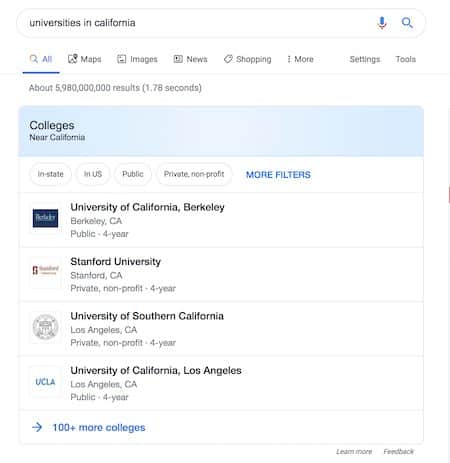
For institutions with campus-based programs, locally oriented SEO becomes critical at this stage. Optimizing for geographic search terms, such as “colleges in Chicago with data science programs,” ensures you show up in local map packs (the local business listings that appear with a map in location-based Google searches), directory listings, and mobile searches.
It’s about being visible and accessible right when students are ready to act.
Optimized admissions FAQs, application checklists, and explainers on cost, scholarships, and financial aid reduce friction and address students’ common concerns. These pages nudge students across the finish line.
Proven SEO Strategies for Universities
To truly move the needle on enrollments resulting from organic search results, universities need to go beyond the basics of content creation. SEO success in higher education relies on a layered approach that blends technical excellence, strategic content development, and an optimized student experience.
Technical SEO as a Foundation
No matter how compelling your content is, it won’t perform if search engines can’t access and interpret it. That’s why technical SEO is the critical first step in building your search visibility.
To help your site show up in search results, you need to fix problems such as broken links, too many redirects, slow-loading code, or pages that are hard for search engines to reach. Tools like Google Search Console and Screaming Frog can help you identify these hidden roadblocks.
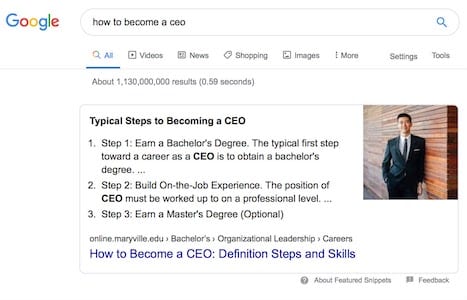
One particularly valuable tactic for universities is adding schema markup — structured data tags — to your content, especially on pages with information designed to respond to high-intent queries, such as those containing academic program descriptions, faculty bios, and FAQs. With schema, search engines can better understand the structure and purpose of your content, making it eligible for rich results, such as showing up in featured snippets and accordions. That visibility boost often translates into higher click-through rates from searches.
Content That Matches Searchers’ Intent
Great university SEO content is as student-centric as it is keyword rich. The most effective universities use keyword research to inform their content strategy, ensuring that it aligns with the questions, concerns, and goals of prospective students.
This includes building program clusters, or content hubs, around key degree areas. For example, a hub for your Master of Science in Data Science program might include pages on career paths, curriculum breakdowns, faculty Q&As, students’ success stories, and downloadable guides — all linked together to establish topical authority.
Modern search results also reward content that demonstrates experience, expertise, authoritativeness, and trustworthiness (EEAT). Universities are naturally well positioned to feature real instructors, cite data, and include named authors with academic credentials to increase their credibility with both students and algorithms.
Student Experience + SEO
The student experience is not separate from SEO. Google’s algorithm increasingly favors sites that provide clear, intuitive pathways to information, particularly on mobile devices.
For universities, that means streamlined site navigation and a logical content hierarchy that surfaces pages with key data such as program offerings, admissions steps, and tuition details within two or three clicks from the homepage. Critical content shouldn’t be buried beneath layers of institutional jargon or outdated menus.
Internal linking is another underrated but powerful tactic. By connecting related content — such as linking from a faculty bio to a program page, or from a blog post to an application checklist — you improve the crawlability of your site, increase the depth of information you provide on a topic, and keep students engaged longer.
The result? Higher page authority, better rankings, and more informed prospective students.
Treating SEO as a Strategic Enrollment Asset
In many universities, SEO is still siloed within the marketing team and treated as a narrow tactic for improving search engine rankings. But SEO should be reframed as a long-term, strategic asset that drives enrollment growth and informs data-driven decision-making.
Holistic Attribution Models
One of the biggest missed opportunities in SEO for universities is how it’s measured. Traditional models often rely on last-click attribution, a model that gives 100% of the credit for a conversion to the final touchpoint a student interacted with before taking action. This underrepresents SEO’s influence, particularly in a student journey that spans weeks or months and touches multiple channels.
Universities should adopt holistic attribution models that track assisted conversions, or interactions a student has with your marketing channels that contribute to their conversion, not just their final clicks. A search may not be the student’s last touchpoint, but it often plays a vital role in their early awareness or during their midfunnel research. Ignoring that role means underinvesting in a channel that silently drives consideration.
To see the full picture, it’s essential to align tools like Google Search Console and Google Analytics with your customer relationship management (CRM) system. Mapping behaviors based on organic search results, like blog visits, program page views, or FAQ engagement, to downstream enrollment actions helps quantify SEO’s true impact and justify investment at the leadership level.
Collaboration Across Teams
Your SEO team shouldn’t live in a vacuum. They intersect with admissions, content strategy, web development, student experience, and even academic department teams. When these teams operate separately, SEO efforts stall. But when collaboration is intentional, the entire enrollment ecosystem benefits.
For example, admissions teams can surface real students’ questions to inform keyword targeting. Student experience teams can help optimize navigation for both search bots and prospective students. Academic departments can contribute subject-matter expertise to improve your pages’ EEAT and topical depth.
SEO-informed content planning — whether for a blog calendar, landing page update, or digital ad campaign — ensures every piece of your content is geared toward a discoverability goal. This strengthens your SEO’s performance and boosts the efficiency of your other marketing channels, from paid search ads to email nurture campaigns.
Preparing for What’s Next
The SEO landscape is evolving rapidly, and universities need to anticipate what’s coming, including search tactics driven by artificial intelligence (AI). With Google’s AI Overviews (also known as Search Generative Experience, or SGE), zero-click searches, and the growing prominence of featured snippets, institutions must rethink how visibility is defined.
Ranking No. 1 doesn’t guarantee clicks if the answer is shown directly in the search result. That’s why future-ready SEO strategies focus on content depth and authority. Winning in AI-driven search engine results pages requires comprehensive, well-structured content that answers layered queries, not just surface-level questions.
Institutions should also monitor how AI tools interpret their content and brand. Structured data, semantic markup, and content clarity all influence how your pages are represented in machine-generated summaries and voice search results.
Ready to Make SEO a Strategic Pillar for Your School?
SEO for universities isn’t a mere marketing tactic. It’s a foundational strategy for long-term enrollment growth, helping to future-proof your institution’s enrollment efforts in a volatile higher education market.
While SEO is critical, it’s also complicated, which is why Archer Education provides colleges and universities with the expert insights required to create a truly strategic SEO plan that integrates with other elements of your marketing strategy.
Contact us to learn more about how SEO can ignite your institution’s growth over the long haul.
Why Centralized Marketing Matters for Online Programs in Higher Ed
At Archer, we’ve onboarded hundreds of institutional partners to help them grow their online programs. And while every partner is unique, there’s one pain point we encounter time and again: decentralized school-level marketing that creates more friction than momentum.
In many institutions, individual colleges or schools manage their own marketing campaigns, budgets, and creative direction. While this siloed approach offers an initial promise of agility and autonomy, it often leads to deeper problems in the market, such as:
Fragmented messaging
Inconsistent branding
Internal competition
Wasted spend as schools bid against each other
Missed opportunities for reach and impact at the brand and portfolio level
The result? Confused students consuming competing voices from the same institution, and internal marketing teams scrambling to scale best practices and measure impact — often without apples-to-apples data and reporting for performance comparisons.
Universities need an integrated marketing strategy that balances a holistic brand and portfolio-level approach with maintaining individual school-level autonomy for certain decisions and activities. This hybrid model unlocks collaboration, reduces conflict, and lifts visibility for all programs within a portfolio.
With shared goals, aligned messaging, and coordinated tactics across all of their schools, universities can amplify their brand and stretch their budgets further — delivering clear, compelling stories across myriad channels to prospective students.
Risks of Decentralized Marketing
In some models of governance, decentralization can be a strength — empowering local leadership and ensuring responsiveness to specific community needs. But when it comes to marketing online university programs in a highly competitive environment, decentralization alone as a strategy is more often a liability than an asset.
Having different departments, schools, or programs run their own campaigns and technology stacks may seem like a way to move faster, but in practice, it creates challenges that can hinder online program growth. Let’s explore some examples.
Brand Confusion
As prospective students evaluate your institution’s online offerings, they are not concerned with the internal structures of your institution. They expect clarity and consistency in the information you provide. When each college or division presents a different tone, design style, and creative messaging approach, you’re left with a weakened institutional brand.
Mixed marketing across digital ads, program pages, email drips, and even tuition and scholarship messaging can erode the trust and credibility you’ve been building with prospective students. For example, inconsistent explanations of scholarships or conflicting tuition information (e.g., on program pages and via tuition calculators) can trigger frustration or skepticism.
In short: Your audience — the prospective student — sees one university. If your university is in conflict with its own marketing, the brand loses power.
Inefficiency and Internal Competition
Without centralized marketing oversight, different teams often end up targeting the same audiences with overlapping campaigns — sometimes even bidding against each other in paid channels. This dilutes your paid marketing efficacy by driving up your cost per lead, wasting precious budget dollars, and undermining the collective impact of your institution’s marketing investments.
Inconsistent Student Experience and Success Metrics
Perhaps the most concerning result of decentralized marketing is a fragmented and uneven student journey. One program might offer seamless inquiry-to-enrollment processes, while another loses momentum after the application process due to poor follow-up and disconnected systems.
When your programs use different customer relationship management (CRM) platforms, it becomes difficult to track leads accurately and measure outcomes with consistency. Reporting becomes murky. Success metrics vary. Problems get misdiagnosed.
Instead of addressing the root causes of problems, your teams might blame each other (e.g., the marketing team and the admissions team) for the other’s perceived performance issues, when the real problem is systemic disconnection.
The Case for Centralized Marketing
Centralization doesn’t mean turning every school or program into a cookie-cutter version of the institution’s mission statement, and it doesn’t mean taking any team’s autonomy away. It’s about aligning around a shared strategy — one that empowers individual teams to execute effectively within a cohesive, coordinated framework.
Unified Brand Messaging
A strong, centralized brand platform allows your university to speak with one clear voice about its online programs, telling the story of:
What your programs offer
Who your programs serve
Why your programs matter
This shared narrative should be rooted in your institution’s values and designed to build trust with prospective students. When every program draws from the same story and messaging pillars, it strengthens your presence across every touchpoint — from digital ads and landing pages to nurture emails and program brochures. Each program’s value propositions may differ, but the institution’s story endures.
Additionally, a unified approach enables your institution to leverage the brand and portfolio-level marketing that raises visibility across all your programs. For example, some institutions have an integrated marketing program for their undergraduate experience but lack a cohesive approach for their online graduate programs. This is a missed opportunity to build a portfolio-level branded presence through channels that individual schools may not be able to afford on their own.
A robust YouTube presence that highlights the benefits of your online graduate education experience (program agnostic), showcases your alumni and graduate education outcomes, and forefronts your strategic organizational partnerships that span individual schools and programs increases the impact for the entire institution with one investment.
Integrated Campaign Planning
Centralized marketing brings together your paid media, content marketing, email strategy, and organic social media into one master plan.
Gone are the days of multiple teams across your institution launching disconnected campaigns, as central calendars and shared audience strategies help ensure each tactic contributes to every team’s strategic goals. This means reduced duplication, avoidance of internal bidding wars, and maximization of every marketing dollar.
However, your individual schools can and should have decision-making authority over the key value proposition definitions, target personas, and positioning of programs within their fields. This requires a collaborative conversation in an integrated campaign-planning scenario.
And schools should continue to develop campaigns where the impact is greatest for them — for example, hosting prospective student events and webinars, offering ambassador programs for prospective student questions, and attending events meaningful to their specific program field, such as at conferences and exhibit halls.
Shared Data and Measurement
In a world of data, perhaps the greatest and most immediate impact of centralized marketing will be felt in how your institution tracks performance holistically. With unified key performance indicators (KPIs) and shared access to insights, marketing teams at all levels — central and within academic schools — can identify what’s working for them, pivot when needed, and scale successful tactics across programs.
Teams can review where the branded portfolio-level efforts are causing the greatest lift in impressions and leads and determine together how school-level marketing activities can make the most impactful use of funds.
What Centralized Marketing Looks Like in Practice
At Archer, we’ve seen institutions achieve dramatic improvements simply by unifying their marketing strategy — even if execution remains shared and distributed. With a strong central foundation in place, teams tap into shared creative resources, coordinate campaigns across programs, and drive stronger performance through unified media buying and consistent messaging.
At its best, centralized marketing can:
Empower programs to amplify one another rather than compete
Allow creative strategy to be produced once then repurposed widely
Create paid efforts that are smarter, more cost effective, and better targeted
In sum, when your institution implements an integrated marketing model that fosters collaboration among academic schools, it can result in performance that is greater than the sum of its parts.
Archer Education knows what it takes to bring siloed departments together. Our unique partnership-based approach allows us to truly understand your institution, then implement efficiencies to ignite your online programs’ potential through a centralized marketing strategy that is balanced with school autonomy and meaningful participation. Contact us today to learn more.
For the past year, our team at Archer has fully embraced the shift towards AI in enrollment marketing, especially in SEO. We have reshaped the way we think about the tools, experiences, and content we can deliver across the student journey. This radical shift in approach now has us pushing for more automation and innovation.
As a team, we decided to leave no stone unturned until we could reverse-engineer the output and influence it at will. Under that lens, we examined an emerging web standard for AI, the LLMs.txt file.
Are LLMs.txt files being implemented across the web? The short and simple answer is no. As of today, Anthropic is the only major player in the LLM space that supports this standard. But the file is getting crawled. As of this blog post, our log file shows that our LLMs.txt files have been pinged over 8,000 times.
The table below shows the total number of pings for eight sites that we tested this file with.
AGENT
TOTAL
%
8LEGS
5
0.06%
AhrefsBot
162
1.83%
AhrefsSiteAudit
8
0.09%
Applebot
3
0.03%
AwarioBot
6
0.07%
Barkrowler
20
0.23%
bingbot
41
0.46%
CCBot
5
0.06%
Chrome/Safari
101
1.14%
DataForSeoBot
10
0.11%
Dataprovider.com
8
0.09%
Edge
1
0.01%
Facebook
1
0.01%
facebookexternalhit
9
0.10%
Firefox
14
0.16%
Google-Apps-Script
3
0.03%
Googlebot
55
0.62%
GPTBot
2
0.02%
meta-externalagent
6
0.07%
Mobile Safari
4
0.05%
Mozilla
3
0.03%
Mozilla/5.0
26
0.29%
OAI-SearchBot
8,330
94.35%
Opera
1
0.01%
PTST
9
0.10%
Safari
1
0.01%
Scrapy
1
0.01%
search.marginalia.nu
1
0.01%
SEOkicks
1
0.01%
SemrushBot
12
0.14%
SiteAuditBot
1
0.01%
Slurp
1
0.01%
Yahoo Slurp
1
0.01%
YandexBot
8
0.09%
TOTAL
8,829
What is LLMs.txt and Why Does It Matter?
If you’re tuned into the GEO/SEO debate, there seems to be a great shift in how LLMs differ from traditional search engines. An LLMs text file is most comparable to a robots.txt file, as it lives in the root directory of a site and provides instructions for crawling. The LLMs.txt file enables the conversion of your site’s information architecture into Markdown language, resulting in a simplified and clean view of your site’s structure.
This simple, clean view offers LLM crawlers an unmitigated path to your content, and that matters because LLMs cannot render JavaScript. This means that LLM scrapers are inferring context around a document from raw HTML. As Jono Alderson noted back in May 2025, this has a profound impact on how LLMs ingest your content.
Websites built using client-side rendering have a chance of displaying no content at all, which reduces the likelihood of your content being cited. Simply put, if LLMs can’t parse your content, then you won’t be able to stay competitive.
How Crawlers Are Interacting with Archer’s LLMs.txt Files
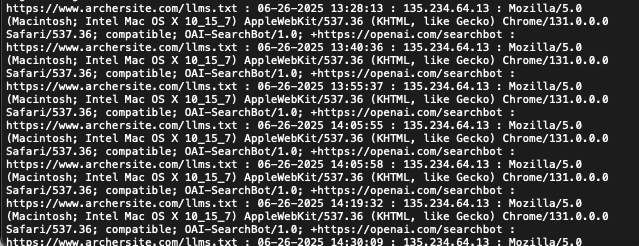
When looking at the crawl numbers, OpenAI is dominating the crawl, with over 94% of our pings coming from OpenAI’s search bot. When examining the log file, we can see that the search bot pings our servers several times per hour, sometimes even within seconds of each other.
I had Gemini 2.5 analyze the log file for patterns, and here’s what it identified:
This pattern is consistently observable throughout the logs. For example:
On June 26, 2025, the bot requested a URL from genericsite.com at 14:05:55 UTC and then again just three seconds later at 14:05:58 UTC.
On July 10, 2025, genericsite2.com was subjected to a sustained burst of requests, with hits logged at 15:21:46, 15:23:03, 15:29:09, and 15:32:16 UTC.
On July 6, 2025, two requests were made to the same domain just one second apart, at 02:49:15 and 02:49:16 UTC.
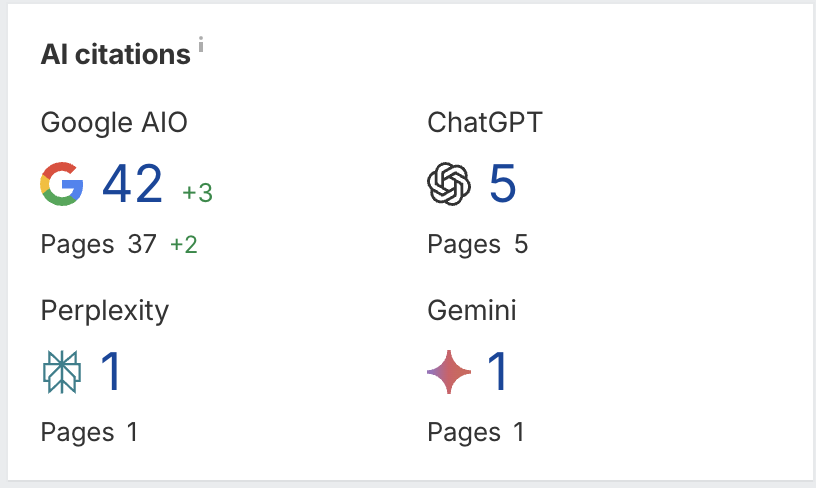
When looking at the Ahrefs AI citations sections, we’ve only just begun to see an uptick in performance for citations across AI. The screenshot below shows what we’d expect from such low-traffic sites. A few weeks ago, when this reporting feature launched, these numbers were closer to zero.
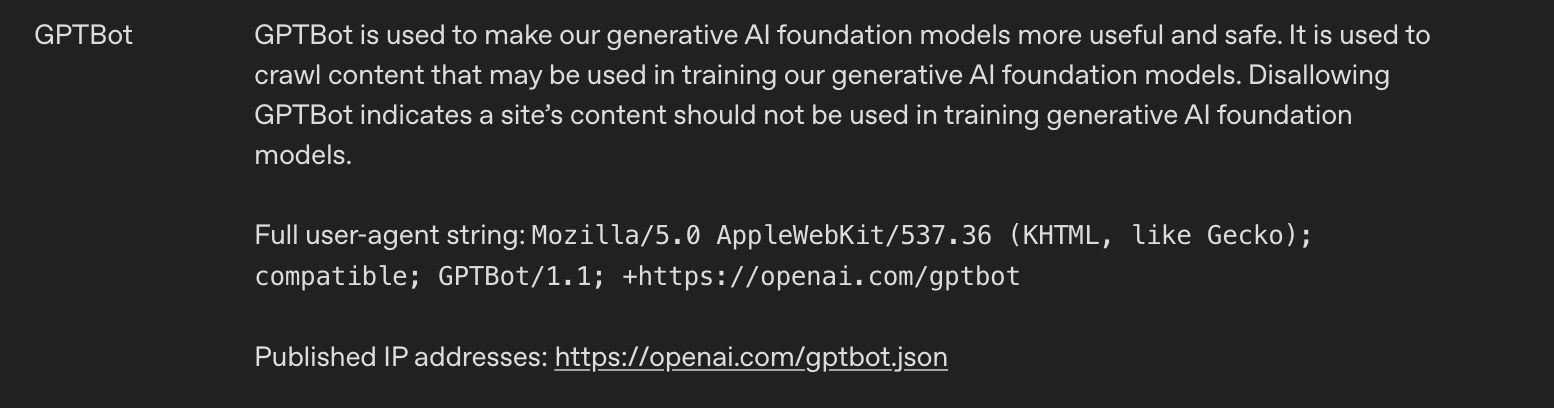
What’s also interesting to note is that GPT bot pinged our LLMs.txt file for two smallers sites, which saw less pings from OpenAI’s search bot. GPT bot is exclusively used to train the model, so this indicates that OpenAI found our file valuable.
In full opaqueness, I’ve anonymized our sites to avoid malicious intent, but these sites are niche-specific. The sites focus on industry-specific degrees and mainly features informational content around career outcomes, licensure, variations of degrees, and helpful information for prospective students looking to enroll. There’s a lot of great information to train on and surface in outputs.
How Did We Get AI Bots to Crawl our LLMs.txt File?
I saw your questions, asking us how we coaxed LLM bots to crawl our file. Many of you wanted to know if we added a link to our file; of course, we did! We treated this file like any other standard for SEO. If this were an XML sitemap, we’d submit it to Google Search Console and link to it on our robots.txt file. So why wouldn’t we treat this standard the same way?
I’m a big baseball fan, and our methodology for implementing the file is inspired by a line from one of my favorite baseball movies, Field of Dreams.
“If you link to it, they will come.”
Thanks to the brilliance of our team, we decided to approach this differently. Rather than listing a link to the file in robots.txt, which is common practice for an XML sitemap, we decided to inject a link to the file in the
section of our sites.
We implemented this using the “alternate” link relationship type, which suggests an alternative version of a document. We expected to get crawls from all sorts of bots, but we didn’t expect to get so many in such a short period.
Have We Checked the IP Addresses of AI Bots?
When I first announced this on Twitter, many of the initial comments inquired about IP abuse and malicious intent. Given the frequency of server pings, we were concerned about the potential for spoofers looking for site vulnerabilities. We checked the IP address 135.234.64.13, which is identified within OpenAI’s documentation.
Should You Implement LLMs.txt on Your Site?
When looking at the evolving landscape, I’d say yes. Google has a 20-year head start, which enables it to parse unstructured data with ease. That’s a significant investment in infrastructure, which means competitors must raise substantial capital to catch up.
With that said, if you have a deadline-driven product, such as a master’s degree or a relatively new offering with limited documentation, and your site is not optimized for AI, your users may encounter hallucinations. I hypothesize that the LLMs.txt file serves as a safeguard, providing pertinent information to the LLMs and can help reduce errors by serving fresh content.
For example, a prospective student searches for a Fall application deadline, but LLM models have been trained on an earlier version of our site. LLMs need to do a live search or RAG to satisfy user intent. Another example might be sweeping changes to the curriculum for a new semester. How can we maintain accuracy for our students?
The Future of LLMs.txt
I am not a crystal ball gazer, nor do I possess the power of prescience. At this moment, all we can do is test and monitor the file. Our team will continue to monitor bot behavior and report on our findings.
With each passing day, we’re seeing shifts in user behavior, improved models, and wide-scale change. No one knows what the future holds for agentic search, but I do know that the industry needs to evolve with the tech stack.
At Archer, our team would learn firsthand. It’s the only way we can future-proof our university partner’s success. In higher education, we face various challenges, including declining enrollments, which is an industry-wide issue.
Final Thoughts on the LLMs.txt File
While the LLMs text file is not yet a widely adopted standard across the web, the recent flurry of bot activity suggests there is value. Given the limitations of current LLM crawlers, this file might be your best bet in safeguarding against pitfalls that will have you excluded from these new systems.
As the industry evolves, it’s our duty as stewards of the web to test, try, break, and fix things. I encourage marketers, SEOs, and web engineers to think differently and lean into curiosity. It is through that lens that we can help our partners be found wherever their students are. If you’d like to talk more about AI-powered SEO and how Archer is helping universities show up where students are searching, the Archer team is ready to help.
Pitching compelling storylines and sources are the crux of any public relations strategy. In the higher education digital marketing space, we at Archer Education leverage the expertise of professors from our partner institutions to help increase the school’s visibility, student enrollment, thought leadership, and brand awareness.
Professors make excellent sources for stories through unmatched expertise and experience in their respective fields, but without the correct messaging and communication strategy, this opportunity could be missed.
In this article, we’ll go over how to write a media pitch in higher education and review the most common types of media pitches.
What Is a Media Pitch?
Media pitches in higher education are strategic communications sent to journalists, editors, or media outlets to promote faculty expertise, research, or institutional initiatives. These pitches typically highlight faculty insights on current events, groundbreaking studies, or thought leadership in their field.
These pitches are particularly key to faculty promotion because they enhance visibility, establish credibility, and position faculty as subject matter experts. Media coverage can lead to invitations for speaking engagements, collaborative research opportunities, and increased citations — all of which contribute to professional advancement for the faculty member and enhanced institutional reputation.
How to Create Your Media Pitch
Before we dive into best practices, tips, and examples of PR pitching, let’s go over some of the basics of how to structure a media pitch. Creating a set standard for yourself and your team will not only streamline the process and allow you to be as efficient as possible, but it will also ensure consistency amongst your team and allow for smooth training programs.
Select the Right Type of Journalism Lead
Before you even start writing a pitch, you want to make sure you find a lead that will entice whoever you are reaching out to. The lead is the angle into your story that makes everything relevant. You can look for two types of leads that are applicable throughout journalism:
A news peg is a trending story or topic in the news that relates to what you’re pitching. For example, leveraging a political debate or a new medical study that was just released. This allows you to hook the reader with a relevant and widespread story.
A time peg represents an upcoming date or event. For example, anniversaries of days like 9/11 or Hurricane Katrina, days or weeks dedicated to specific causes like “Health IT Week” or “Mental Health Awareness Day,” or even months like “Breast Cancer Awareness Month.”
These types of dates and events can be easily leveraged for PR purposes as media outlets will often shape content around significant or relevant time pegs. In order to keep track and take advantage of these dates, it’s helpful to create and consistently update an internal editorial calendar with your team.
Develop Your Pitch Structure
Below is the basic outline/structure you should consider when writing a media pitch:
As mentioned above, start with the lead. This should be the first thing the reporter or editor reads. An enticing lead that is relevant to their beat will ensure they continue through your pitch.
The second part is your call-to-action. This is the action you want your audience to take. Whether it is writing a product review, publishing a piece of content, or conducting an interview, it’s important to make your intention here as clear as possible.
Next comes your value proposition. This is a key piece of the puzzle as it will be the meat of the pitch; this is where you can showcase the value of what you are offering and why they should be interested in it. It is essential in differentiating yourself from the hundreds of other pitches they receive.
The last piece of the pitch is your conclusion. This is a straightforward recap that includes a recap of the call-to-action and a thank you.
Use the Right Subject Line for Your Pitch Email
Subject lines are the first and sometimes only thing that a media contact will see — often determining whether they will even bother to open your email or not. Ensuring that your subject line is clear, concise, and enticing is critical. According to Omeda, subject lines with 20 characters or fewer achieve the highest open rates, averaging 29.9%. Open rates decline to 17.3% for subject lines between 20 and 124 characters.
Interestingly, subject lines exceeding 174 characters see a slight recovery in open rates, averaging around 23%. However, due to potential display issues and the risk of being cut off, it’s generally recommended to keep subject lines concise. Prioritizing brevity ensures better visibility across various devices and enhances the likelihood of engagement.
While creating a subject line that produces an “open” should always be the goal, you should make sure to avoid using “click-bait” phrasing as a tactic to draw in the recipient, as this is considered unprofessional. The last thing you want to do is mislead your audience or appear spammy.
How to Pitch the Media: Communication Strategies
Now that you understand the basics on how to write and structure a media pitch, let’s cover some media pitching strategies that can lead to greater success.
Use Timely Stories and Research
Don’t deprive yourself of using relevant news pegs or research as your hook for your pitch. It’s no secret that the media lives off of news pegs, trending topics, and new research to tell their stories. To increase the chances of someone showing interest in your pitch, it’s important to make their job as easy as possible. It’s a good idea to spell out the story for them so that your source or story fits in seamlessly with trending news topics and their target audience’s interests.
Reporters and editors receive hundreds of pitches every day, so providing them with a story that their readers will be interested in and offering sources to help supplement that story will make them more compelled to move forward with the conversation.
Along these same lines, always try to include hyperlinks to any research or statistics that you reference in your pitch. You don’t want them to shy away from expressing interest or continuing the conversation simply because they don’t have time to do the legwork to track down the sources themselves.
Know the Reporter’s Beat
You can have the best pitch in the world, but if it doesn’t align with the reporter’s beat (the types of stories they cover), then it will provide no use or value to them. In fact, it will only blatantly show that you are sending out mass email distributions and aren’t doing the appropriate research and legwork before pitching them. While it’s not always realistic or feasible, personalize pitches whenever possible and mention any related articles that they recently wrote.
Keep it Concise and Know Your Story
As previously mentioned, media contacts receive hundreds of pitches a day. If you’re lucky enough to get yours opened, the worst thing that someone with very little time can be confronted with is an unnecessarily long pitch. Find out how to say everything that you need to say in a paragraph or less (with rare exceptions). The more specific and focused you can be, the better. It’s also crucial to understand and communicate the story you’re trying to tell and how it aligns with the larger media trends yet provides a unique angle to the storyline.
Follow Up Is Key to Media Pitching
Following up on initial email pitches is one of the most crucial elements of the pitching process. This is where most of your interest and responses will come from, so ensure that you schedule reminders to follow up.
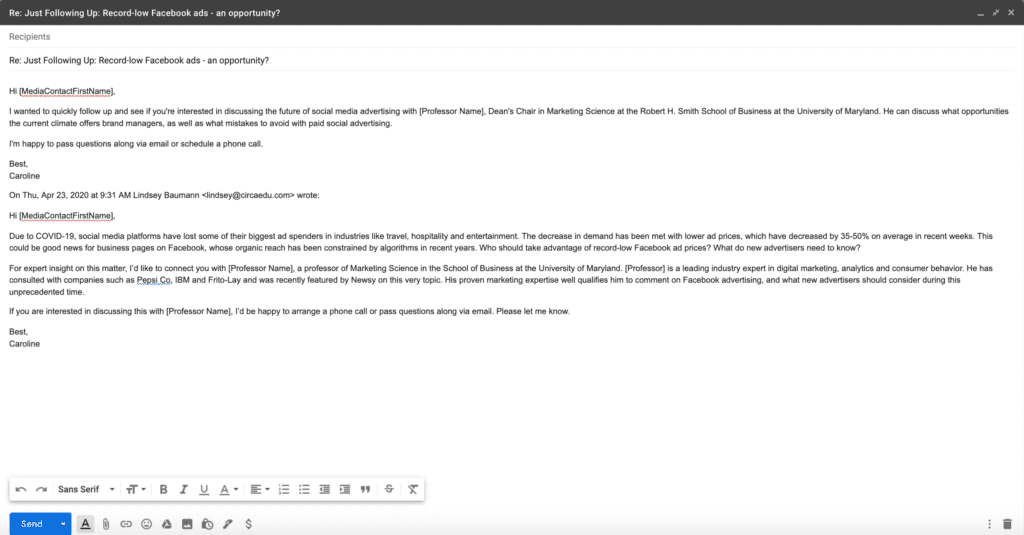
Generally, it’s appropriate to wait about one week until you send follow-ups out; this will ensure that the media contact has sufficient time to get through their emails and respond if they are planning to. If the story is incredibly time-sensitive, you can follow-up a bit sooner. Similarly, if it is not a time-sensitive story at all, then waiting a little longer than a week can be a good strategy. Just be sure to include your original pitch at the bottom of your follow-up email to help jog the recipient’s memory and provide more context.
Media Pitch Examples
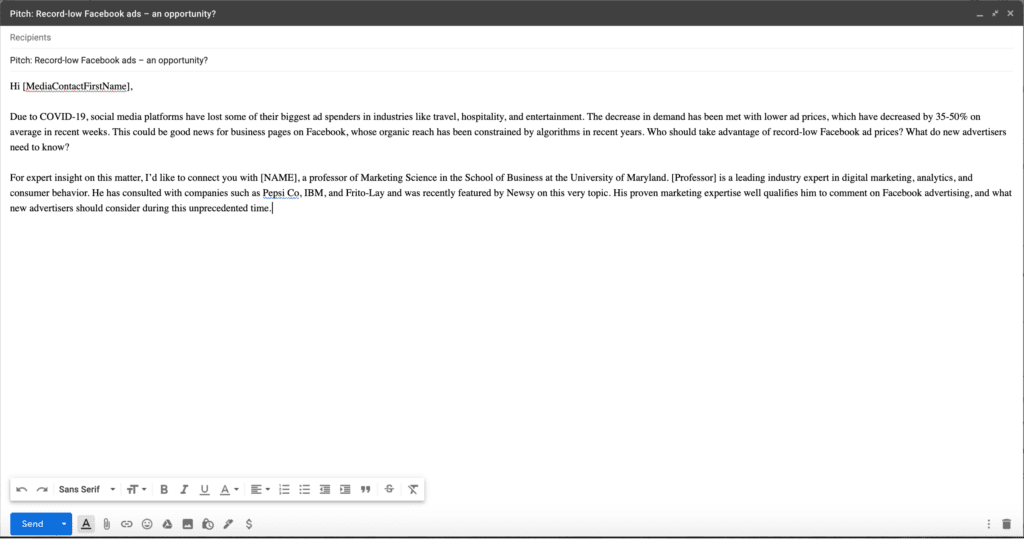
Now that you have the information that you need to be successful with your pitch writing, here are some real-life examples of media pitches and pitch letters that our team sent to the media.
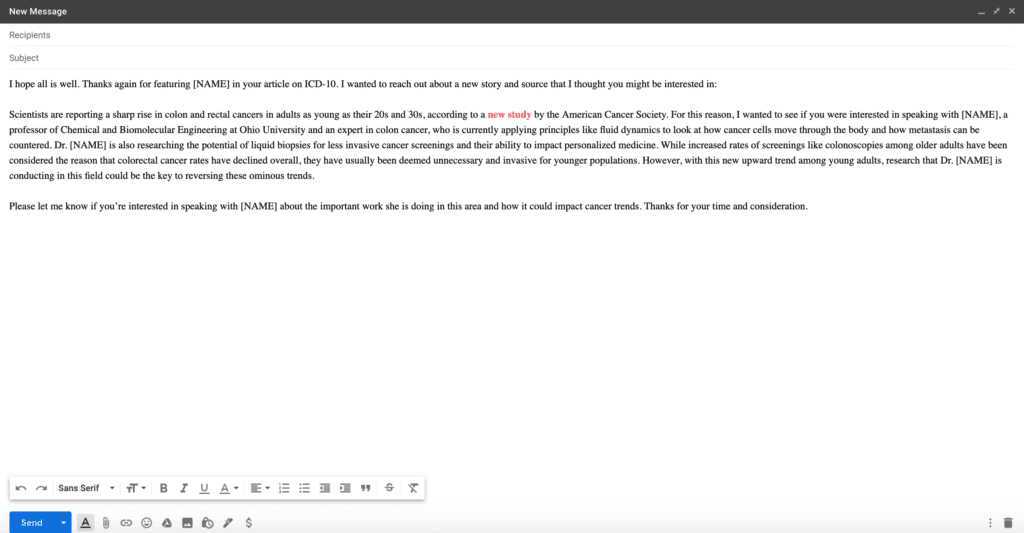
1. Cold Pitch
A cold pitch is an unsolicited email or message sent to a journalist or media outlet with whom there is no prior relationship. It typically introduces a faculty member’s expertise or research in hopes of securing media coverage.
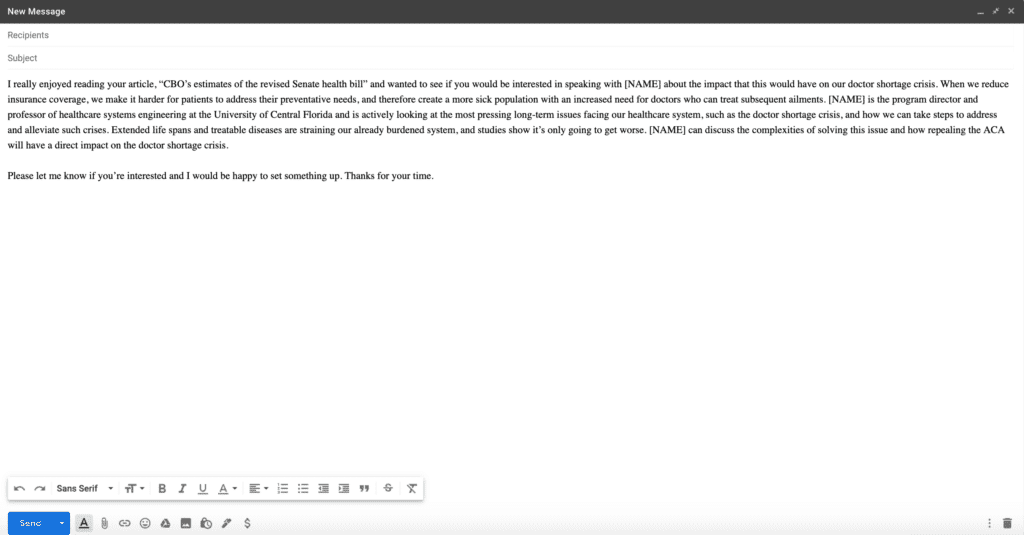
2. Pitch for Established Contact/Relationship
This type of pitch is sent to a journalist or media contact with whom a relationship already exists. It builds on past interactions, making it more likely to be well received and result in coverage.
3. Personalized Pitch
A personalized pitch is tailored specifically to a journalist’s interests, past work, or the needs of their publication. It demonstrates a clear understanding of their audience and increases the chances of engagement.
4. Follow-Up Pitch
A follow-up pitch is sent after an initial pitch to reinforce interest, provide additional details, or remind the recipient about the story idea. It’s essential for maintaining momentum and increasing response rates.
How to Write Media Pitches That Consistently Convert
In today’s media landscape, consistent PR exposure is essential for faculty members looking to establish themselves as thought leaders and elevate their institution’s brand. At Archer Education, we specialize in crafting strategic media pitches that align with timely news cycles, ensuring professors and researchers receive the visibility they deserve. Whether through cold outreach, leveraging existing media relationships, or personalized pitches, we help faculty secure media placements that enhance their credibility, attract prospective students, and showcase their expertise to a broader audience.
Our experience in higher education marketing allows us to effectively position faculty members in conversations that matter, increasing opportunities for interviews, guest articles, and thought leadership features. Don’t let valuable media opportunities go untapped — connect with us today to develop a custom PR strategy that amplifies your faculty’s impact and strengthens your institution’s reputation.
Why College Student Personas Are Critical for Enrollment Marketing Success
Every message has an audience. Even this article was written with you in mind: someone navigating the complexities of higher ed marketing and looking for a smarter way to connect with students.
In the competitive world of college and university marketing, developing comprehensive college student personas is essential. A well-crafted persona helps you move beyond generic outreach and into the realm of meaningful engagement, putting you in the shoes of your prospective students to tell the story of:
Where they’ve been
Where they’re headed
How your program can help them get there
A story-driven, persona-based approach allows you to lower acquisition costs, boost student engagement, and reinforce your institution’s mission. But more importantly, it helps students feel seen. When students feel welcomed and understood, real connection happens.
That’s when a prospect takes a first step toward becoming a future graduate.
What Are Student Personas?
College student personas are fictional, research-based profiles that represent key segments of your institution’s prospective audience.
A persona can help you understand an audience group’s motivations, goals, challenges, backgrounds, and even decision-making behaviors. Rather than marketing to a broad, faceless group, personas allow you to tailor your messaging to be more relevant and compelling.
A well-detailed student persona might include details such as:
Age range
Academic interests
Career goals
Financial concerns
Preferred communication channels
Ideally, each persona will be grounded in data from multiple sources including surveys, interviews, feedback from admissions, and digital marketing analytics, if available.
How Personas Enhance the Student Journey
Student personas are a critical jumping-off point for marketing and enrollment efforts in higher education. Persona identification should occur early in the brand development process to ensure that the brand, messaging, and story align with each audience — whether it is career changers, veterans pursuing education in civilian life, or working nurses looking to advance in their careers.
A persona-driven approach focuses on a multifaceted view of your college or university’s core audiences, primarily consisting of their demographics, psychographics, and behavioral attributes.
While developing multiple custom personas for all your degree programs may seem daunting and can be time consuming, the effort will pay off in the long run in terms of enrollment and student success.
Aligning all key stakeholders involved in developing and deploying the story and identity of a brand around key student personas is also critical to creating a more cohesive and clear experience for students throughout their journey. These personas should inform and influence all teams and stakeholders in their strategies — from paid media ads and targeting, to blog content, to website copy and landing pages, to nurture campaigns.
No matter where students are in their educational journey, having a seamless experience across all channels and touchpoints is more important than ever before.
Utilizing various forms of primary and secondary research in the form of interviews, focus groups, market research, historical student data, and more, we at Archer Education are able to craft a deeper and more comprehensive understanding of what prospective students care about and how to most effectively reach and engage with them.
Steps to Create College Student Personas
Creating college student personas starts with research. Whether your enrollment marketing team does the research itself or relies on secondary sources (we suggest using a combination of both) the information-gathering process for developing student personas is essentially the same. Enrollment marketers will want to begin by gathering a lot of information from a wide range of sources.
1. Conduct Discovery Interviews
Interviews with key institutional stakeholders including program directors, enrollment and admissions teams, faculty, alumni, and current students are an important source of information for understanding student aspirations and goals, challenges and pain points, and even lifestyle circumstances.
We recommend speaking with as many stakeholders as possible to gather diverse insights and perspectives through one-on-one discussions, group interviews, and focus groups to inform robust college student personas. The interviewer’s goals are to:
Learn who students are by gathering demographic and psychographic data. Psychographics focuses on understanding students’ values, goals, interests, and emotions to gain a complete and accurate picture of them as individuals.
Discover why students want to enroll in a particular program.
Explore why they’re attracted to a particular institution.
Learn what challenges or pain points they face.
Find out what they want to accomplish after graduation.
Stories and examples gathered during interviews with current students and alumni about how your program helped them achieve their educational or career goals are especially effective for connecting with prospective students.
2. Mine Historical Student Data
Existing student demographic data (if available) including age, gender, prior education (degree type and level), and job title can help provide very tangible and relevant information for student personas. Institutions that consistently track and report data have an advantage, while brand-new programs that lack historical data may need to lean more heavily on other sources.
Student or alumni reports or survey results, if available, can provide great supplemental information for getting to know prospective, current, and former students better.
3. Conduct Market Research
Many students today, and nontraditional adult learners in particular, are hyperfocused on outcomes and looking for a return on investment in their chosen degree program. Marketing tools and resources enrollment marketers can use to make their program’s case to prospective students include:
Government data on job growth and salaries from the U.S. Bureau of Labor Statistics
Insights from sources such as Lightcast, an aggregator of economic, labor market, demographic, education, profile, and job posting data
Industry-specific articles that highlight opportunities and motivate students to enroll
4. Leverage Audience Intelligence Tools
The ability to gather insights into audiences through social listening and other data sources — known as audience intelligence — is gaining traction with marketers as tools become more advanced. At Archer, one tool that our team uses is Sparktoro, an audience research tool that crawls millions of social profiles and web pages to learn what (and who) your audience reads, listens to, watches, follows, shares, and talks about online. This is a helpful supplemental tool that can help provide a clearer picture of your audiences across various data points and attributes.
If you’re not in a position to pay for audience intelligence tools, some free tools are available, such as CareerOneStop, which is sponsored by the U.S. Department of Labor. This tool is more limited to demographic information, but it can be helpful for learning more about certain industries or occupations that relate to a given student persona.
Facebook Audience Insights is another free tool that we have leveraged in the past to gain a better understanding of users connected to our partners’ pages, as well as to learn about the interests and affinities of a given audience. The tool has become more limited as Facebook has tightened up its access to users’ data and profile attributes, but it still may be worth checking out — especially if Facebook is one of your primary marketing channels.
5. Synthesize Research and Outline Personas
When discovery interviews are complete and market, audience, and other research has been gathered, it’s time to begin synthesizing what you’ve found and outlining your data-informed personas.
Depending on the scope of your project and goals, the structure and template you decide to use for college student personas may look quite different. Personas developed for the entire graduate school of an institution, for example, will probably look very different from personas created for one specific program.
Regardless of the scope and subsequent approach, you should ensure that you’ve covered your bases across the spectrum of core audiences while trying to make each as distinct as possible from one another — either in terms of shared interests and goals, or in terms of demographic factors such as incoming occupation (such as being a working nurse) or lifestyle circumstances (such as being a stay-at-home parent returning to school).
Once you’ve identified the distinct student personas you want to focus on, it’s time to build them out in greater detail. The more in-depth information you’ve gathered, the easier it will be to create distinct, detailed personas that are applicable. When creating personas, make sure to honor your institution’s commitment to diversity, equity, and inclusion by representing students of different races, ethnicities, gender identities, and abilities. Don’t let your personas reinforce stereotypes.
There are many different templates and approaches you can use to develop personas — and there is no “right” way. Again, it really depends on your specific goals and how you can make the personas as applicable and actionable as possible.
At Archer, our teams find that including areas such as skills, interests, incoming occupations, age, education, media usage, and more are important. Also, we highly recommend including a “story” section (as in the examples below) to humanize your fictional student and create a clearer picture of who this persona is and what they care about.
College Student Persona Examples
When we are tasked with creating personas across multiple programs and verticals, we like to create a persona architecture with overarching personas and subpersonas so we can plug them in across various programs, depending on our partner’s needs and goals. This gives our enrollment marketing teams options to target student personas on a broader or more granular level, depending on what makes the most sense for the program.
The persona examples for students below feature overarching personas for a mix of tech/coding bootcamp programs with detailed subpersonas for each target beneath.
Technology is a broad field with opportunities for individuals who come in with a diverse mix of experience, education, interests, and skills. Developing a broader overarching persona (with subpersonas underneath) can help provide a high-level snapshot into a broader group of individuals who still share important commonalities. You can include things such as an overview and some of the top motivations that are most relevant to that audience, in addition to other elements that help showcase who this audience is and what they care about.
Then drill down using the data and stories you’ve collected in your research to animate your multiple subpersonas. Below is a subpersona we created for a partner’s tech bootcamp degree program.
The next example below is a program-specific persona created for a single degree program. Programmatic personas typically include more in-depth and detailed information than personas designed to encompass more than one program. Notice the inclusion of sample job titles and skills.
Developing student personas will not only help your institution attract the right students, it will help your marketing teams, enrollment specialists, and administrators identify and better understand your students’ needs and goals — a win-win for educators and students alike.
Creating Student Personas to Drive Enrollment
Persona-based marketing is a tried-and-true tool for customer acquisition, and higher education is no exception. When exploring colleges or degree programs, students want to know which one will be a good fit for them. Recognizing themselves in your marketing materials can make the difference between their moving forward in the enrollment funnel and moving on to a competitor.
At Archer Education, we partner with dozens of institutions to craft story-driven, persona-based approaches to student acquisition. Request more information and see what Archer can do to help you connect with and enroll the right students.
Student Recruitment Ideas for Better Enrollment Marketing
College recruitment strategies have undergone a seismic shift in recent years with the rise of an always-on digital audience and the growing accessibility of online programs. Fewer geographical constraints and heightened competition have fueled this realignment, prompting institutions to craft student recruitment strategies that are as dynamic as the students they aim to enroll.
In the modern, digital-first landscape of higher education, recruitment season is no longer confined to the traditional August to December window. Students are applying and enrolling year-round, and your institution must constantly assess which strategies are driving results and which are falling flat.
By embracing smarter, data-driven marketing tactics, you can stand out in the crowded landscape of online education, uniting students under the shared mission of your institution.
The Importance of Student Recruitment Strategies
You’ve been working in higher education for over a decade, but recently, student recruitment seems harder. You’re not alone. Prospective students are going in less traditional directions and finding cheaper, faster ways to become qualified for the workforce through modalities such as online certificates and boot camp programs. Inflation isn’t helping either.
But through a realignment of strategy to meet digital native consumers, you can meet students where they are and capitalize on projected enrollment growth.
Don’t get scared into sticking with outdated ways of reaching prospective students. Instead, rise to the challenge, get a better understanding of the landscape you’re working with, and refresh your enrollment marketing strategy.
3 Student Recruitment Strategies
We won’t tell you that all traditional marketing strategies are outdated, but we do want to make it crystal clear that students are online. They’re surfing the web on their smartphones and discovering new universities and programs through (mostly mobile) online journeys. If your enrollment strategy isn’t rooted in this reality, you’re at risk of losing more than half of your potential students.
1. Meet Them Where They’re At (On Their Phones!)
With 91% of the U.S. residents owning a smartphone, it’s no surprise prospective students are surfing the web from their mobile devices. In fact, a recent report by Oberlo tells us that over 60% of all internet traffic comes from mobile devices.
Most of the time, however, our web developers, brand managers, and marketing professionals are viewing and building websites on their desktop computers. While working from a computer is convenient, it’s imperative that every single UX/UI change made to your university/program website is tested on both desktop and mobile.
Don’t lose out on prospects just because you didn’t consider both desktop and mobile website views in your design process. It may seem obvious, but plenty of colleges and universities aren’t considering this important strategic detail.
2. Consider Utilizing Paid Media
Now that you’ve cleaned up your mobile site, you’re ready to start pushing students from other platforms to your program pages through a key college recruitment strategy: paid media. While paid media isn’t the cheapest option, it’s often one of the most effective. Google Ads, LinkedIn, and Facebook provide fairly straightforward ways to spend for clicks.
We recommend starting with PPC (pay per click) campaigns to attract prospective students to your site. These campaigns help the most with bringing in entirely new audience members whom you may not have been able to reach through organic efforts. The internet is vast, and it’s not always easy to track down potential candidates without some extra help.
After bringing in new prospects from platforms like Google and LinkedIn, your job is to create a journey where they’ll sign up for your newsletter or respond to a survey so you can effectively follow up and make their click worthwhile. It may seem pricey at first, but once the leads start coming in and you’re able to connect with them well after that first click, you’ll see the return on investment.
PPC campaigns can also help speed up the process if you’re finding yourself behind on your goals this quarter.
3. Tap Into Popular Platforms and Their Users
If paid media feels a bit too far out of reach, some high-growth organic options can help your student recruitment strategy.
Use Instagram to Engage With Students
Most institutions now have a presence on LinkedIn and Facebook, but university marketers may be missing a huge opportunity with Instagram. A recent article from RivalIQ cited higher ed’s impressive average engagement rate of 2.43% on Instagram, compared with the median across all industries of 0.43%.
Instagram should be used in a completely different way than Facebook and LinkedIn, which can be deterring for content teams, but clearly prospective students are interested in engaging there. Be sure to connect with them and provide tailored content.
Harness the Power of Testimonials
When you hear the words “influencer marketing,” you may think of famous teenagers with millions of followers dancing their hearts out to a 15-second song. While plenty of those influencers are out there, so are users who share their educational journeys, financial tips and tricks, and personal stories about their lives and experiences.
With the number of graduates, administrators, and staff members your school has on social media, you’re sure to find some influential users who are willing to share their satisfaction with your program on their channels. It doesn’t require millions of followers either.
Nano influencers (influencers with a following between 1K and 10K) are “everyday people” who come across as more authentic and with much more enthusiasm than the players in the big leagues (micro/macro influencers). According to a recent study from Matter Communications, 69% of consumers depend on recommendations from influencers, family members, and friends over information provided by brands. That means two of every three consumers want to read reviews from online personalities they see as trustworthy sources — an amplified version of word-of-mouth marketing.
Use Short-Form Video to Reach New Audiences
Short-form video is an important college recruitment strategy for engaging with students. Though the style of content may seem daunting and the editing may seem like a lot of work, recent studies have indicated that Gen Z users prefer TikTok for search over Google — making it an indispensable part of your strategy.
Although prospective student demographics look different across universities, your target students are likely on TikTok. And more importantly, they’re using it as a source of information. The hashtag #LearnOnTikTok had over 360 billion views as of 2024, according to The Leap.
Think of the reasons users visit your website — and the questions they have — and use that insight to inform the kinds of content you can provide to educate prospective students.
We Can Help Build Your Online College Recruitment Strategies
The higher-ed landscape is still undergoing unexpected shifts at a faster rate than most of us are ready for. Some days, you might feel like you’ll be playing catch-up for ages, and evolving marketing tactics might make that race feel even harder. It’s a lot to manage a robust omnichannel college recruitment strategy, but you don’t have to do it all internally.
At Archer Education, we partner with colleges and universities to create effective messaging that will illuminate your brand’s strengths and unique values to attract and convert high-quality students. Our experts are always in the know, employing tech-enabled, modern enrollment tactics to attract prospective students’ attention, drive engagement, and facilitate action. Don’t overstretch your team members — let us help. Contact us today for more information.
How to Deliver a Personalized Experience Throughout the Student Journey
Imagine this: a prospective student fills out a request for information on your website, sharing personal details like their program of interest, transfer status, and intended start date. What happens next? Too often, the response is a generic email or text urging them to apply. Then, perhaps unsurprisingly, many institutions see declining contact rates and applications.
Delivering an engaging, personalized experience — at scale, across programs, and from the very first interaction — is no small feat. But it’s also essential in today’s competitive higher education landscape. While complex communication plans and sophisticated automation tools play a role, sometimes the simplest approach can make the biggest difference: Asking the right questions.
Focusing on the right questions can strengthen student relationships, increase lead-to-application rates, and even drive application-to-enrollment success, helping institutions connect personally with students and boost engagement at every stage of their journey.
What Is Student Engagement in Higher Ed?
Before we can start asking students questions, we must first ask ourselves an obvious question: What is student engagement?
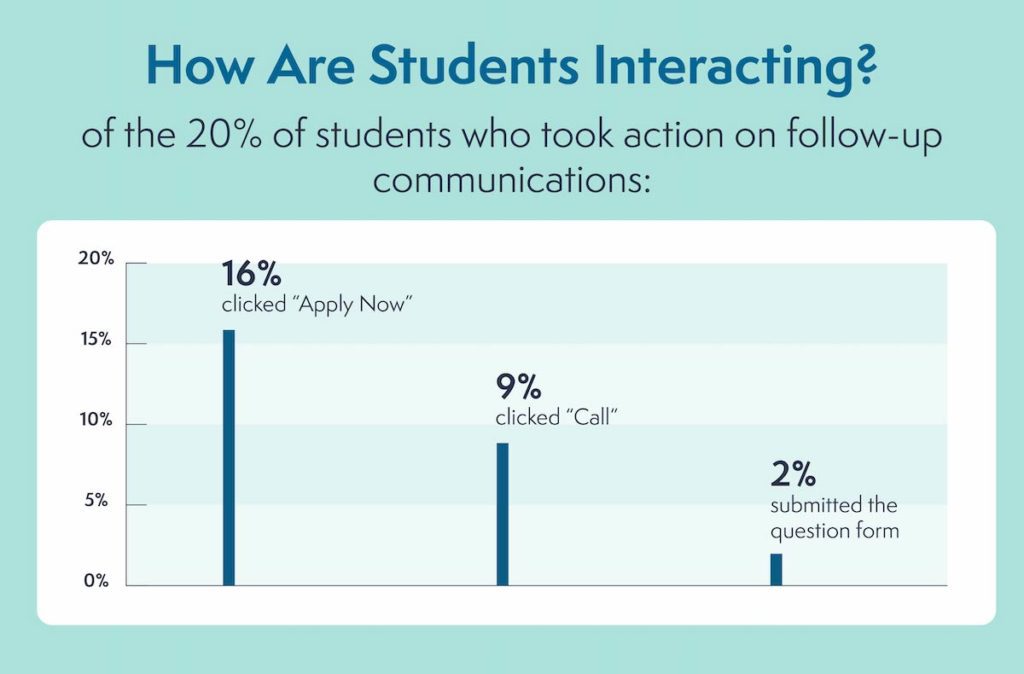
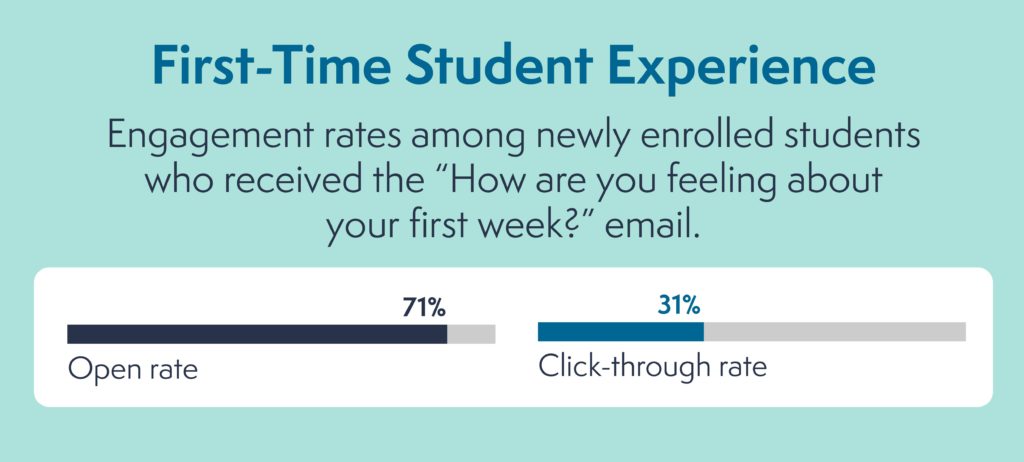
Engagement rates are metrics that show how actively involved your audience is with your content. By tracking specific metrics, your institution can analyze the effectiveness of your marketing campaigns. You should track the number of people who interact with your follow-up communications: whether they open, click, respond to, or visit a website.
Every interaction a prospective student has with your institution’s website, social media posts, texts or emails, and other digital content generates data that you can use to capture information about leads (prospective students) and better understand and optimize future marketing efforts.
Tracking and analyzing “clicks” can tell you:
If prospects are opening, clicking, responding to emails or texts, answering calls, and otherwise interacting with your institution — leading indicators of intent to apply and even enroll
Which prospects are the most engaged — so you can prioritize communications with them while your brand is top of mind
At Archer, we’ve seen clients have 44% higher application-to-start rates and 33% higher application rates when prospective students engage with an institution’s post-inquiry communication. This makes for an efficient use of resources, as you’ve already generated the inquiry. A bump in conversion rates can go a long way in stretching a limited budget.
One Simple Thing You Can Do to Increase Student Engagement
Imagine you have the opportunity to meet with every prospective student in person for coffee. What would you do? How would you engage with them? You’d probably begin to build rapport by asking them lots of questions.
A digital meetup should be treated no differently than an in-person engagement. “Digital” is simply another method of communication. Granted, you’re not able to sit at your computer and chat online with every prospect, but in terms of how to interact and build student engagement, you should think of it the same way: as a two-way conversation.
Simply put, stop talking at prospective students and start communicating with them.
As much as you’re tempted to begin by telling them how great your school and program are, it’s best to first understand where a student is coming from and what they’re looking for.
At Archer, our team and our proprietary end-to-end student support solution — called Onward — are available to students 24/7. Built exclusively for the student journey, Onward collects and analyzes data on digital student engagement and optimizes digital student communication with a goal of increasing post-inquiry engagement. It has taught us a lot.
We’ve found that one of the most impactful things we can do in our follow-up communication with students to boost engagement rates — at any stage of the student lifecycle — is to ask questions. Indeed, in follow-up exchanges where we ask students specific questions (and provide an option to answer directly in that communication), we see click-through rates 42% higher than average.
It’s Not Too Late to Start Asking Questions
Even if you’ve already missed a key opportunity to ask questions of new prospects, circling back to get to know them better at any point in their student journey can have an impact.
Working with our partner Peru State College, we started sending a “What’s holding you back?” email to prospective students who weren’t taking the next step forward. The email not only asked “What’s holding you back from enrolling with us?” but also let the recipient click on an answer. For that email, we saw an average open rate of 16% — which doesn’t look too impressive until you consider these prospects had stopped engaging — and, more importantly, an average 33% click-through rate (with a majority of clicks leading to “apply now” pages). Not only did the email help the college reconnect with “lost” students, but we learned how to better connect with unconverted prospects going forward.
The email allowed us to determine who was stopping out and why.
The top reason for not moving forward was related to finances (35%).
More than 20% of prospective students had enrolled elsewhere.
5% said they weren’t ready to enroll yet but wanted to attend in the future.
These insights informed our follow-up digital communication, as well as our one-on-one admissions team follow-up. As a result, we reengaged with a meaningful percentage of stopped-out prospects by understanding some of their challenges and following up with relevant information. Moreover, 20% of this audience took action by clicking to start or finish their application and/or call an admissions rep.
Student Engagement Strategies for Every Higher Ed Stage
We used this same engagement strategy for first-time students enrolled in Peru State College’s online programs. Before we could view information in our partner’s learning management system to see if students were showing up for class or turning in assignments — leading indicators of student success — we wanted to check in with these new students directly to ask how their first week was going. The email asked, “How are you feeling about your first week?”
This email had an average open rate of 71% and an average click-through rate (CTR) of 31%.
Using a similar email, Archer helped another partner intervene to help 14 students who had indicated they weren’t having the best first-week experience. By asking follow-up questions to learn what wasn’t working for them, and forwarding that information to our admissions team, we were able to connect those students with a success coach at the university.
Optimize Student Engagement at Your Higher Education Institution
Higher-ed marketers and enrollment professionals know from experience that the success of every student is important to an institution’s long-term success. Providing a more personalized and engaging student experience can have a positive impact on enrollment growth and student retention.
It’s time for you to start having meaningful digital conversations that make an impact.
While Archer Education uses Onward, our easily scalable end-to-end student support solution, to deliver personalized communication and tailored post-inquiry follow-up 24/7, you don’t need a sophisticated lead nurturing tool to improve your student engagement strategies. Simply start asking questions in your communication with students and provide them with an easy way to respond.
Want to learn more about how to modernize your student experience and increase enrollment and retention rates with Archer’s Onward student support solution? Reach out to us and learn more today.
Angie Mohr is the senior vice president of student engagement at Archer Education. With a background in marketing, communications, and CRM and marketing automation, she has over 15 years of strategic communications and higher education experience. In her current role at Archer Education, a full-service marketing and enrollment solutions provider for higher education institutions, Angie focuses on supporting student acquisition and life cycle delivery services, utilizing scalable communications strategies and technologies to help prospective students engage, enroll, and persist in their student journey.
Boost Your Enrollment Cycle With These Higher Ed SEO Strategies
Billions of queries occur daily through global search engines on desktop, mobile, and voice devices. These organic searches are the largest drivers of website traffic, particularly for higher education institutions, making SEO an essential ingredient in the recipe for generating student leads. A student’s journey toward enrollment is a roller coaster of considerations. From looking at financial costs and career opportunities to assessing workloads and faculty projects, students turn to search engines to answer their questions.
Optimizing your university’s website involves looking at a variety of SEO factors: webpage speed, page titles and headings, URL structure, link building, content, and more. Here at Archer, our higher education SEO team members have expert insight at every step on the path toward optimizing a university’s website, including technical on-page improvements, off-page link building, and, most importantly, content creation and promotion.
Let’s explore how your institution can stay relevant and bring new prospective students in with a sophisticated higher education SEO strategy.
SEO for Higher Education: What You Need to Know
Online content saturation is at an all-time high, and competition in higher ed is intensifying. Meanwhile, the audiences that institutions are marketing to have become less traditional.
Capturing the attention of prospective students at a critical point in their college enrollment journey takes a deep understanding of all the nuances of search engine optimization, including search intent, click-through rates, and mobile experience. To create content that will engage online audiences, universities must have strong SEO strategies to ensure brand discovery.
7 SEO Strategies to Boost Your College Enrollment Cycle
Our higher ed SEO experts have pulled together a list of seven strategies to help capture students along their path to college enrollment. Their expertise will help guide you in discerning what’s important in an SEO strategy and where to set focus for the rest of the year.
1. Determine Your Student Journey
Student journey maps are going to be key in helping you guide the focus and intent of your content. How are you making students aware of your programs? At what point are they considering your programs? Where in the journey do they make a decision, and what do they need to get there?
Students looking to advance their academic and professional careers are at some point in the sales funnel, but they’re also at some stage in their search engine journey. If you’re doing it right, you’ve constructed this journey carefully and provided several different routes for the different kinds of prospective students you interact with.
For example, a student might be only tangentially familiar with the construction industry, so you can gain their interest by crafting a piece about construction careers that graduates can enter after receiving a construction management degree. On the other hand, a student might be further along in their journey and might be at the point of more serious consideration of an engineering degree. For this student, you can craft a post about stress management for engineering students.
If you want to get students to your website, finding blog topics is only half the game. Using keywords to optimize your content is how you push those posts to the finish line. Google’s latest algorithms emphasize value, so figure out what value you can provide your reader at every stage of inquiry.
By walking through the student’s college enrollment experience and differentiating content based on the needs of each stage, you can curate specific content to respond to their search intent, keep them engaged with your brand, and guide them down your content map to a post that encourages them to convert.
2. Satisfy Student Search Intent
Since search intent is Google’s ultimate goal, when it comes to SEO for higher education, keyword research and content creation that match the student’s search intent should be a primary focus.
The “How to Become a CEO” article above is a great example of a university-created piece of content that matches search intent and provides steps that show how the university program can help the searcher accomplish their goal. Content should discuss a range of topics that align with the university’s mission and program’s course curriculum while still keeping the searcher top of mind. With each piece of content, you’ll be able to attract a variety of students who are in different places in the student discovery process.
Each of these posts should have a strong call to action (CTA) that intrigues prospective students to learn more about the university’s program and how they can become more involved and apply. This CTA can include an aesthetically pleasing “learn more” button that directs readers to a “request more information” form.
In 2023, Google introduced a new helpful content algorithm intended to help searchers find relevant results. This update is intended to weed out nonhelpful search results, defined as content that lacks experience, expertise, authoritativeness, or trustworthiness (E-E-A-T).
What does this mean for universities? Crafting high-quality content that meets student search intent is even more important. Instead of focusing solely on SEO keywords, university website pages and blogs need to meet Google’s quality standards in one or more E-E-A-T fields.
Experience: The content is created by someone with firsthand involvement in the subject matter.
Expertise: The content creator has formal knowledge of the subject matter.
Authoritativeness: The content contains credible information, and the website has a good reputation for providing quality content.
Trustworthiness: The content includes clear and transparent sourcing to verify the accuracy and reliability of the information.
Universities can meet these expectations by providing high-quality information that highlights faculty and student experiences and expertise.
4. Elevate Your Content Strategy
Searchers are no longer satisfied with traditional text-based content or boring images. This is especially true for millennials and Gen Zers, who account for 42% of the U.S. population, according to Statista, and the majority of a university’s target market.
To capture the attention of these easily distracted searchers, higher education SEO strategies should branch out beyond traditional articles and infographics to include visually captivating and psychologically intriguing content, such as interactive graphics or videos. This refreshed content strategy should aim to not only catch a searcher’s immediate attention but also leave a lasting brand imprint to intrigue searchers to come back for more.
Check out the following example of an engaging piece of content from Zippia.com that outlines the different career paths for cost accountants. The piece is interactive, allowing the user to move their mouse along the different career paths to reveal more detailed and relevant information.
This interactive map is fun and easy to use while still providing the quality and quantity of content the user is looking for. It illustrates the kind of memorable yet useful experience required to capture a student’s attention.
5. Occupy Google Search Results
Occupying more real estate on ever-evolving search engine results pages (SERPs) is more crucial than ever. A large number of Google searches do not result in a click. With the advent of more featured snippets, the importance of a technically sound website, structured data, and high-quality content grows.
While on-page SEO is still crucial for ranking on the SERP, off-page efforts and creating a user experience (UX) that expands past your website are the next wave of occupying internet real estate. Off-page citations, or references to your institution on websites such as U.S. News and Wikipedia, will push hints and signals to Google that validate your brand. Quality higher education SEO strategies should also include a UX that helps your site stand out in today’s saturated marketplace.
6. Optimize Your Website for Mobile
To enhance the college enrollment funnel experience, you need to maintain the health of your website for both desktop and mobile.
Since a majority of search engine visits come from mobile devices, there’s no question that higher education SEO teams should be focusing on the mobile user experience of their websites. Now that Google has mobile-first indexing best practices, your team has new factors to consider. If your website’s content differs between desktop and mobile, for example, then your site is at risk of having pages not indexed or crawled, which could result in a significant loss of traffic.
For starters, ensure that desktop and mobile versions of your website have identical content, as well as identical technical elements, such as structured data and meta tags. Whether you’re developing content or updating your website design, always be sure to consider both platforms in any updates you make.
7. Understand Your Competition
With Google ads for search terms like “online mba” generating a high cost per click (CPC), higher education is one of the most competitive segments of search engine rankings. Why? Simply put, graduate degree programs are expensive and have large marketing budgets. In addition, affiliate marketing is rampant in the higher education space. What’s affiliate marketing? Affiliate marketers in higher education essentially sell student leads to universities.
These affiliate sites often have large SEO budgets and benefit from degree ranking and badging tactics. Take a look at the density of non-edu sites in the search results by Googling “online mba.”
In addition to competing with a number of affiliate websites, traditional schools have to compete with for-profit institutions and institutions with powerful national and regional brands.
Despite the competitive market, a long-term higher education SEO strategy, with a nuanced understanding of the market, can yield tremendous results around student enrollments and thought leadership.
SEO for Higher Education: Boost Your Results with Archer
Here at Archer Education, we partner with accredited universities to help higher-ed leaders and marketers accelerate online learning growth and enrollment. We offer a variety of tech-enabled marketing, enrollment, and retention services, and our team of SEO experts is always up to date on strategies to help your program gain visibility in prospective students’ search results.
Our SEO tactics can help your university:
Increase its visibility in student-generating keywords
Grow the amount of organic traffic to the site
Ensure its site is optimized for organic search
Contact us or visit our SEO tactics page to learn more about how Archer can help you reach your enrollment goals.