
Category: Hewitt

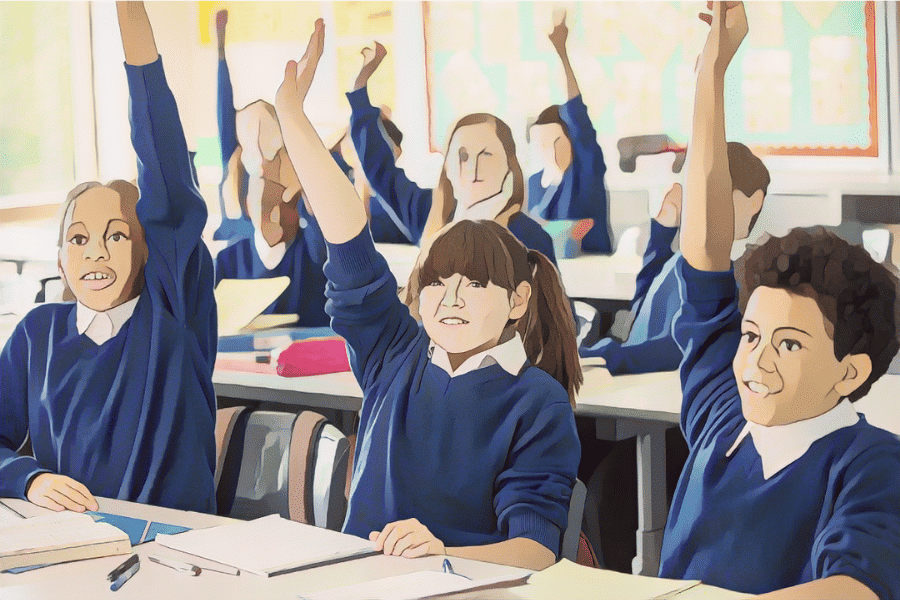
  • When will we listen to what young people say?

    When will we listen to what young people say?

    Imagine adding your thoughts to a conversation, only to have them dismissed by the group — and not because of what you said, but because they thought you were too young to know what you are talking about or understand the topic at hand.

    That’s what teens around the world face when they try to participate in “adult” conversations.

    On Tuesday 2 December, we gathered seven people from six countries in a live virtual roundtable to discuss whether and how young people are able to speak out and be heard. Five teens from News Decoder partners schools in India, South Africa and the United States were joined by News Decoder correspondent Alfonso Silva-Santisteban from Peru and Marouane El Bahraoui, a research intern at the Carter Center in the United States and African Leadership Academy alum originally from Morocco.

    When we asked each of the teens whether they felt they were listened to, they all agreed on one thing: When talking to their peers they felt understood and respected. But when trying to get their opinions across in a room of adults, they were often dismissed and felt disrected.

    “If I’m talking about a certain topic to my peers and they already have that knowledge already, they already know what I’m talking about, then it’s much easier for them to actually hear me and understand me,” said Ramona-Blessing Mkunna, a Tanzanian student studying at the African Leadership Academy in South Africa.

    Some voices are valued more.

    Sophie De Lavandeyra, a student at The Hewitt School in New York City said that she feels that even when she speaks to teachers or family members, she is heard and listened to but not equally valued. “And ultimately, there’s this sense of ‘I’m a student, I’m a child’, so therefore my opinions must be not as valued as other adults in my community,” she said.

    Sydney also attends Hewitt and said that the problem of being heard is more pronounced for girls. “I think people can undermine our opinions or statements and beliefs that we have,” she said.

    Mahee Mantri, a student at VIBGYOR High in India said that she feels that people look at age and not experience, and that while her experiences might be different, they should still be considered valid. It seems, she said, that the age difference gives some people an excuse to not listen.

    That young people feel they aren’t heard may be the one unifying aspect of what we call the “Gen Z” generation — the first generation to be born in a fully-digital world.

    El Bahraoui said that if there is a Gen Z movement, it is one that doesn’t have a leader and it doesn’t have a specific set of demands, but the demands they do have seem to cross borders: lowering unemployment, ending nepotism and corruption, slowing down climate change.

    “Young people are afraid of the uncertain future or the uncertainty of the future. That’s why there is all this anger and people going out to the street and protesting because people want some stability some certainty,” he said.

    From anger to action

    In many places, like Kenya, to get heard youth are taking to the streets in protests and when they do, it has produced results, El Bahraoui said. “Some protests led to the dissolution of the house of representatives,” he said. “Some protests led to the ousting of the president or the head of state. Other protests led only to the government removing a financial bill, such as the case in Kenya. There was a tax bill and then Gen Z protests went to the streets and the government just removed that bill, instead of removing the whole government or the whole parliament.”

    Silva-Santisteban said some of the frustrations young people have is that even when protests produce change, often those changes aren’t long-lasting or significant.

    “There’s an outburst of outrage and young people are called to be responsible of the change. Like they’re the spearheads of the protest. And at some point they become responsible of the change, but then the conditions are the same, especially in a country [like] Peru where you have a political crisis, a lot of conditions for unemployment.”

    Meanwhile, the young people that took to the streets face violence and are stigmatized, he said.

    The young people in the roundtable seemed to agree that shouting demands might not be the most effective way to get heard. Instead it comes down to an ongoing process of talking to people you might not agree with, and more important listening respectfully to what they have to say.

    Dialogue is needed.

    Anna Bamugye, a Ugandan student at the African Leadership Academy, said that you can’t force your opinions on people. “It’s about understanding each other and where you’re coming from,” she said. “And most of the time, we find comfort in talking to those who understand what we’re trying to convey, what the message we’re trying to say.”

    But in order to get a message to people, you must talk to people who may not understand you. “You have to talk to people who have different views,” she said. “To hear where other people are coming from allows you to understand, and maybe just help understand how you can shift that person’s perspective and understand where both parties are coming from.”

    In this way too, she said, you could learn something from them that you had never thought of.

    Mkunna said that If the goal is to raise awareness, you have to consider the most effective way of doing that. She has cousins who were born with autism and has found that in Tanzania people are largely ignorant about autism. As a result, autistic people face discrimination. She decided to launch a social media campaign to educate people about autism. “I think it really helped,” she said. “Because we got a chance to go on national TV and we went on radio and we talked about autism.”

    In New York, Del Cid and De Lavandeyra found themselves angry about the immigration raids taking place in New York and all over the country. Del Cid channeled her anger into photography. “So I personally use my art and the images that I take to kind of convey a story and a narrative,” she said.

    De Lavandeyra wrote an AI program using a large language model, that lets people who speak little English get questions answered. The program allows them “to be able to chat in whatever language is their home language, and be able to ask questions and get their legal answers based off [U.S. Citizenship and Immigration Services] data,” she said. “But written in a way where they could understand, and it was not just a bunch of legal jargon that felt unintelligible for them and something they weren’t being able to process.”

    Mantri said that it is important to both listen and speak up. “I feel there is a generation gap which I experienced in my parents or their generation, and in my generation we question why — why is it things are like that?” she said. “I always like to question why is it like this and they probably just hear it and consider it as back answering or disrespect.”


     Questions to consider:

    1. What is the difference between being heard and having someone listen to what you say?

    2. Why is the ability to listen to what people say important if you want to get your opinions across?

    3. In what ways do you try to get your voice heard?


    Source link

  • Can you eliminate a gender gap by segregating genders?

    Can you eliminate a gender gap by segregating genders?

    In her 23 years as an educator at Hunter College High School, a highly-competitive coeducational high school in New York City, Jana Lucash has found that boys in her class will often participate even when they are not prepared. Her female students, in contrast, seem to be unwilling to participate unless they absolutely know the correct answer. 

    This is one reason that many parents choose to send their daughters to all-girls schools. These schools are known for fostering connections and developing academic success. 

    But do social pressure, competition and other negative consequences outweigh the benefits of a predominantly female environment?

    I attend an all-girls school and so I decided to explore the positive and negative aspects of being a part of this type of environment.

    All-girls schools are educational institutions catering exclusively to female students, allowing them to grow intellectually and socially in a single-gender environment. 

    Gender segregation

    These schools generally have a reputation for creating a supportive and empowering atmosphere for young girls and women. The purpose of an all-girls school is to encourage academic excellence, build confidence and teach leadership skills to their students. 

    While these institutions around the world often leave positive impacts on their attendees, like increased participation in class and eliminating distractions, they are also critiqued for their competitive nature, which could negatively affect student mental health. 

    These issues raise serious concerns and questions about how beneficial and positively impactful these all-girls schools truly are for the population that they serve.  

    Research has shown that all-girls schools increase student participation in the STEM field and other male-dominated fields after graduation. A study conducted by Goodman Research Group, back in 2005 asked some 1,000 recent graduates of all-girl schools to participate in a survey, which focused on the academic and social impact of single-gender institutions. 

    After conducting the survey, the authors found that 74% of the grads felt more encouragement in math, science and technology by attending an all-girls school. Additionally, they found that all-girls school graduates were six times more likely to major in science, math and technology, in comparison to girls attending coeducational schools. 

    Girl empowerment

    All-girls institutions cultivate an environment where female students feel empowered to explore their interests and academic pursuits, specifically in male-dominated fields. This not only encourages young women to follow their aspirations, but allows them to challenge the stereotypical gender barriers in professional fields where women are underrepresented. 

    All-girls schools also offer students a social environment with a strong sense of community and an emphasis on building strong relationships. Many young women feel more connected to their peers and lose the social pressures that are typically present in coeducational schools. 

    A 2013 survey, which was conducted on behalf of the National Coalition for Girls Schools, asked a series of questions to 2,000 students from schools that were all-girls, with an additional 5,000 girls who attended coed private schools and another 5,000 girls who attended coed public schools. 

    The study concluded that almost 97% of all-girls school students felt their ideas and opinions were more respected at their single-gender school compared to 58% of girls at coeducational schools.

    Without feeling pressure and judgement from their male counterparts, female students tend to feel more safe and are more inclined to express themselves and their ideas. This environment allows students to feel a sense of belonging, confidence and power that is not always found in a coed environment.

    Coed education versus single-gender schools

    At coeducational schools, girls’ voices and opinions might be self silenced or silenced by the more rambunctious boys in the room. In addition, these institutions and faculty can further undermine the confidence and self-worth of their female students.

    Lucash at Hunter College High School, for example, found that girls tend to self-silence and boys have no trouble expressing themselves throughout class. 

    This sentiment is echoed by a 10th-grade student at The Hewitt School, which I attend. Abby Potenza attended a coeducational school prior to switching to Hewitt.

    “Being at an all-girls school has given me both confidence and a sense of comfort to express my opinions and ask questions, which I did not receive at a coed school,” Potenza said. “I feel the environment, both social and educational, is stronger and more supportive at an all-girls school.”

    When I was an elementary school student in a progressive, coeducational environment, I too experienced the detrimental impact of being silenced, both institutionally and by an educator. 

    Being silenced and self-silencing

    In an advanced math class in fourth grade, I found myself one of three girls in a class of 20 students. For a school which valued diversity and equity, it was disturbing that the institution itself could not see that as a problem.

    This shows that many institutions in the 21st century do not prioritize creating a supportive and empowering environment for girls.

    Most positive associations with single-gender education can be countered by certain challenges and all-girls schools are no exception. While these schools empower young women and can foster a supportive environment, a sense of competition can often emerge.

    Miriam Walden teaches English at The Hewitt School and sees a similar competitive nature. 

    “Even when you take away the boys in the classroom, there is still competition between girls, a lot of competition,” Walden said. “It’s very subtle and it’s very insidious and so there is a lot of harm that happens at the school, socially, around status, academic success, wealth, where you are going to college. All of this stuff becomes extremely damaging to many students.”

    The global popularity of single-gender education

    Outside of the United States, single-gender education is popular in many countries. The reasoning for attending these single-gender schools varies from community to community, country to country. Some of the variables that impact the choice to attend these schools include religion, socio-economic status and geography. 

    In 2022, University of Oslo researcher Sadaf Basharat looked at math achievement in Saudi Arabia where single-gender education is mandatory and found that girls do better than boys in math, according to international assessment standards known as TIMSS. 

    Other countries in the Middle East, such as Oman, Iran, Kuwait and Bahrain, which have a high proportion of single-gender schools, have also seen female students in recent years outperforming their male classmates in math.

    While single-gender schools open the opportunity for girls and young women to be educated, countries such as Afghanistan are prohibiting women from attending secondary schools, whether single-gender or coeducational.

    The academic effect single-gender schools in the United States have on their students is equal to the ones at international single-gender schools. A 2016 study in the Caribbean Educational Research Journal found that students at all-girls schools in the Caribbean have a higher passing rate than both girls attending coeducational schools, as well as boys in coeducational schools and single-gender schools.  

    Due to the demographics of the students who attend all-girls schools outside of the United States, the data is not as conclusive as to the negative impact of these types of schools on their students’ competitive nature. 

    For instance, UNESCO published a study by the London Business School’s Global Entrepreneurship Monitor that found that all-girl’s schools in countries such as Trinidad and Tobago and Thailand attract a wealthier subset of the population, which could create a false representation of what the possible positive outcomes are. 

    Competition between girls

    All-girls schools offer an educational environment with both important benefits and possible limitations for students. On one hand, these institutions offer students a supportive atmosphere which encourages them to reach their full potential and cultivate a strong sense of confidence. This environment can lead to higher academic success and a greater likelihood of breaking gender norms in the workplace. 

    They also encourage young women to move past gendered expectations regarding future intellectual pursuits and challenges them to break societal barriers by moving into STEM-based fields specifically. 

    On the other hand, all-girls schools can create a bubble of competition and rivalry that can limit a young woman’s development and aspirations. The focus on academic achievement is only intensified in a single-gender educational environment and can be pressuring and damaging. 

    Weighing out the benefits and drawbacks of an all-girls school is important when making the decision on whether to attend one, or in determining how you perceive single-gender schools in general. The question is, what would be best for you or your daughter?


    The views and citations expressed by this student journalist are their own and not those of their school or any person or organization affiliated or doing business with their school.


    Questions to consider:

    1. Why might a parent choose to send a child to a single-gender school?

    2. Why do some teachers think girls don’t do as well when there are boys in the class?

    3. Do you think you would do better or worse by changing to an single-gender school if you attend a coed school now or vice versa? Why?


    Source link

  • And the winners are…

    And the winners are…

    The judges in the 17th News Decoder Storytelling Competition chose as winners articles by students from The Hewitt School and The Tatnall School in the United States and Realgymnasium Rämibühl Zürich in Switzerland. 

    The entries tackled serious issues such as grade inflation, the local impacts of an international conference, demographic changes at universities, cell phones in classes, nepotism and the loss of languages to climate change.

    First Prize went to Stella Petersen of The Tatnall School in the U.S. state of Delaware for “Eliminating grade inflation isn’t as easy as ABC”, an article that considers whether letter or numerical grades on assignments are the best measure of student achievement. 

    One judge noted that the story was different from the others in the contest and well sourced. Another judge wrote: “This topic of grade inflation is an up-and-coming relevant conversation even across colleges around the country, and so many implications were considered here. The nuance in this article is marvellously impressive.”

    And for second place…

    Tying for Second Prize were Sophie De Lavendeyra of The Hewitt School in New York City and the team of Lennox Huisman and Maximilian Wunderli from Realgymnasium Rämibühl Zürich. 

    De Lavendeyra’s article, “Universities struggle with the speed of demographic change“, tackled the struggle of a university to meet the needs of a rapidly-changing student body. 

    In “When world leaders descend on your town”, Huisman and Wunderli looked at how the town and inhabitants of Davos, Switzerland are affected each year by the hordes of people who arrive for the World Economic Forum. Of the story, one judge wrote: “This was BY FAR my personal favorite in this storytelling contest. It grabbed at what really matters in journalism: How real-world, normal people are affected by big players attending the World Economic Forum.”

    The caliber of the entries as a whole was impressive. That can be seen in the fact that the judges had a particularly difficult time with the Third Prize winner — they ended with a four-way tie: Yi Le Low of Realgymasium Rämibühl won for “As fans flock to women’s football, pay stays out of play”; and from Tatnall, the third-place winners were Charles Norris for “Are smartphones at school all bad?”; Chloe Abel for “Should getting ahead depend on who you know?” and Simone Bessong for “Silencing voices by banning books“.

    The winners were selected by a three-person jury that included John West, a News Decoder correspondent based in Paris; ​Chloé Pété, a project officer for the international nonprofit organization Media & Learning Association; and ​Kaja Andrić, ​a former​ News Decoder intern and a journalism student at New York University.

    Judging student stories by professional standards

    The judges used the following criteria to rank the stories: whether the topic was fresh, different or timely; whether the student interviewed anyone for the story; whether the student reported the story without bias; whether the student considered different perspectives and finally the judge’s own subjective assessment. 

    Besides the winning entries, student Arya Sharma from VIBGYOR High NIBM in Pune, India won honorable mention for a story about how climate change can result in the extinction of human languages because of forced migration. One judge wrote: “This is my favourite story. I loved the topic, the style.”

    News Decoder Educational News Director Marcy Burstiner was particularly impressed by the challenging topics students took on. “There was such a great diversity of story topics,” she said. “It shows how curious students are about all kinds of things. They are questioning what they see around them and what they read.”

    It can’t be overstated how difficult a challenge the students were given, Burstiner said. Not only did they have to come up with an original topic to investigate, they need to find credible sources for their information and, at least for all the prize winners, they found experts to interview, and incorporated quotes from these people into their interviews.

    “Imagine, here you have a high school student asking a professional to set aside time to answer their questions for a story that will be published,” Burstiner said. “That is a difficult thing for professional journalists to do.”

    How the contest works

    The contest is held two times a year in honor of the late Arch Roberts Jr., who served with the International Atomic Energy Agency in Vienna after more than 12 years as a staff member with the U.S. House Foreign Affairs Committee. With the backing of an anonymous donor, News Decoder was able to award a total of $850 in cash prizes to this year’s winners.

    The entries came from students across News Decoder’s network of school partners. 

    To be considered for the contest, an entry must have been written by one or more students enrolled in a News Decoder partner institution. Students from nine schools in seven countries submitted articles to this iteration of the Storytelling Contest. Learn more about News Decoder’s school partnership program.

    Read the contest winners here:

    First Prize

    Eliminating grade inflation isn’t as easy as ABC

    Second Prize

    Universities struggle with the speed of demographic change

    When world leaders descend on your town

    Third Prize

    Are smartphones at schools all bad?

    Silencing voices by banning books

    Should getting ahead depend on who you know?

    As fans flock to women’s football, pay stays out of play

    Source link