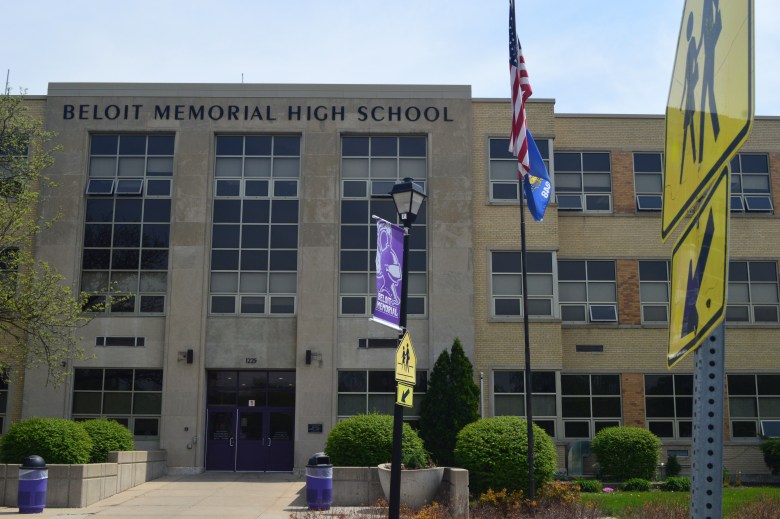
Category: high school

  • Some social emotional lessons improve how kids do at school, Yale study finds

    Some social emotional lessons improve how kids do at school, Yale study finds

    Social emotional learning — lessons in soft skills like listening to people you disagree with or calming yourself down before a test — has become a flashpoint in the culture wars. 

    The conservative political group Moms for Liberty opposes SEL, as it is often abbreviated, telling parents that its “goal is to psychologically manipulate students to accept the progressive ideology that supports gender fluidity, sexual preference exploration, and systemic oppression.” Critics say that parents should discuss social and emotional matters at home and that schools should stick to academics. Meanwhile, some advocates on the left say standard SEL classes don’t go far enough and should include such topics as social justice and anti-racism training. 

    While the political battle rages on, academic researchers are marshalling evidence for what high-quality SEL programs actually deliver for students. The latest study, by researchers at Yale University, summarizes 12 years of evidence, from 2008 to 2020, and it finds that 30 different SEL programs, which put themselves through 40 rigorous evaluations involving almost 34,000 students, tended to produce “moderate” academic benefits.

    Related: Our free weekly newsletter alerts you to what research says about schools and classrooms.

    The meta-analysis, published online Oct. 8 in the peer-reviewed journal Review of Educational Research, calculated that the grades and test scores of students in SEL classes improved by about 4 percentile points, on average, compared with students who didn’t receive soft-skill instruction. That’s the equivalent of moving from the 50th percentile (in the middle) to the 54th percentile (slightly above average). Reading gains were larger (more than 6 percentile points) than math gains (fewer than 4 percentile points). Longer-duration SEL programs, extending more than four months, produced double the academic gains — more than 8 percentile points. 

    “Social emotional learning interventions are not designed, most of the time, to explicitly improve academic achievement,” said Christina Cipriano, one of the study’s four authors and an associate professor at Yale Medical School’s Child Study Center. “And yet we demonstrated, through our meta-analytic report, that explicit social emotional learning improved academic achievement and it improved both GPA and test scores.”

    Cipriano also directs the Education Collaboratory at Yale, whose mission is to “advance the science of learning and social and emotional development.”

    The academic boost from SEL in this 2025 paper is much smaller than the 11 percentile points documented in an earlier 2011 meta-analysis that summarized research through 2007, when SEL had not yet gained widespread popularity in schools. That has since changed. More than 80 percent of principals of K-12 schools said their schools used an SEL curriculum during the 2023-24 school year, according to a survey by the Collaborative for Academic, Social, and Emotional Learning (CASEL) and the RAND Corporation. 

    Related: A research update on social-emotional learning in schools

    The Yale researchers only studied a small subset of the SEL market, programs that subjected themselves to a rigorous evaluation and included academic outcomes. Three-quarters of the 40 studies were randomized-controlled trials, similar to pharmaceutical trials, where schools or teachers were randomly assigned to teach an SEL curriculum. The remaining studies, in which schools or teachers volunteered to participate, still had control groups of students so that researchers could compare the academic gains of students who did not receive SEL instruction. 

    The SEL programs in the Yale study taught a wide range of soft skills, from mindfulness and anger management to resolving conflicts and setting goals. It is unclear which soft skills are driving the academic gains. That’s an area for future research.

    “Developmentally, when we think about what we know about how kids learn, emotional regulation is really the driver,” said Cipriano. “No matter how good that curriculum or that math program or reading curriculum is, if a child is feeling unsafe or anxious or stressed out or frustrated or embarrassed, they’re not available to receive the instruction, however great that teacher might be.”

    Cipriano said that effective programs give students tools to cope with stressful situations. She offered the example of a pop quiz, from the perspective of a student. “You can recognize, I’m feeling nervous, my blood is rushing to my hands or my face, and I can use my strategies of counting to 10, thinking about what I know, and use positive self talk to be able to regulate, to be able to take my test,” she said.

    Related: A cheaper, quicker approach to social-emotional learning?

    The strongest evidence for SEL is in elementary school, where the majority of evaluations have been conducted (two-thirds of the 40 studies). For young students, SEL lessons tend to be short but frequent, for example, 10 minutes a day. There’s less evidence for middle and high school SEL programs because they haven’t been studied as much. Typically, preteens and teens have less frequent but longer sessions, a half hour or even 90 minutes, weekly or monthly. 

    Cipriano said that schools don’t need to spend “hours and hours” on social and emotional instruction in order to see academic benefits. A current trend is to incorporate or embed social and emotional learning within academic instruction, as part of math class, for example. But none of the underlying studies in this paper evaluated whether this was a more effective way to deliver SEL. All of the programs in this study were separate stand-alone SEL lessons. 

    Advice to schools

    Schools are inundated by sales pitches from SEL vendors. Estimates of the market size range wildly, but a half dozen market research firms put it above $2 billion annually. Not all SEL programs are necessarily effective or can be expected to produce the academic gains that the Yale team calculated. 

    Cipriano advises schools not to be taken in by slick marketing. Many of the effective programs have no marketing at all and some are free. Unfortunately, some of these programs have been discontinued or have transformed through ownership changes. But she says school leaders can ask questions about which specific skills the SEL program claims to foster, whether those skills will help the district achieve its goals, such as improving school climate, and whether the program has been externally evaluated. 

    “Districts invest in things all the time that are flashy and pretty, across content areas, not just SEL,” said Cipriano. “It may never have had an external evaluation, but has a really great social media presence and really great marketing.” 

    Cipriano has also built a new website, improvingstudentoutcomes.org, to track the latest research on SEL effectiveness and to help schools identify proven programs.

    Cipriano says parents should be asking questions too. “Parents should be partners in learning,” said Cipriano. “I have four kids, and I want to know what they’re learning about in school.”

    This meta-analysis probably won’t stop the SEL critics who say that these programs force educators to be therapists. Groups like Moms for Liberty, which holds its national summit this week, say teachers should stick to academics. This paper rejects that dichotomy because it suggests that emotions, social interaction and academics are all interlinked. 

    Before criticizing all SEL programs, educators and parents need to consider the evidence.

    Contact staff writer Jill Barshay at 212-678-3595, jillbarshay.35 on Signal, or [email protected].

    This story about SEL benefits was produced by The Hechinger Report, a nonprofit, independent news organization focused on inequality and innovation in education. Sign up for Proof Points and other Hechinger newsletters.

    The Hechinger Report provides in-depth, fact-based, unbiased reporting on education that is free to all readers. But that doesn’t mean it’s free to produce. Our work keeps educators and the public informed about pressing issues at schools and on campuses throughout the country. We tell the whole story, even when the details are inconvenient. Help us keep doing that.

    Join us today.

    Source link

  • What educators need to know

    What educators need to know

    Key points:

    Literacy has always been the foundation of learning, but for middle school students, the stakes are especially high. These years mark the critical shift from learning to read to reading to learn.

    When students enter sixth, seventh, or eighth grade still struggling with foundational skills, every subject becomes harder–science labs, social studies texts, even math word problems require reading proficiency. For educators, the challenge is not just addressing gaps but also building the confidence that helps adolescents believe they can succeed.

    The confidence gap

    By middle school, many students are keenly aware when they’re behind their peers in reading. Interventions that feel too elementary can undermine motivation. As Dr. Michelle D. Barrett, Senior Vice President of Research, Policy, and Impact at Edmentum, explained:

    “If you have a student who’s in the middle grades and still has gaps in foundational reading skills, they need to be provided with age-appropriate curriculum and instruction. You can’t give them something that feels babyish–that only discourages them.”

    Designing for engagement

    Research shows that engagement is just as important as instruction, particularly for adolescents. “If students aren’t engaged, if they’re not showing up to school, then you have a real problem,” Barrett said. “It’s about making sure that even if students have gaps, they’re still being supported with curriculum that feels relevant and engaging.”

    To meet that need, digital programs like Edmentum’s Exact Path tailor both design and content to the learner’s age. “A middle schooler doesn’t want the cartoony things our first graders get,” Barrett noted. “That kind of thing really does matter–not just for engagement, but also for their confidence and willingness to keep going.”

    Measuring what works

    Educators also need strong data to target interventions. “It’s all about how you’re differentiating for those students,” Barrett said. “You’ve got to have great assessments, engaging content that’s evidence-based, and a way for students to feel and understand success.”

    Exact Path begins with universal screening, then builds personalized learning paths grounded in research-based reading progressions. More than 60 studies in the past two years have shown consistent results. “When students complete eight skills per semester, we see significant growth across grade levels–whether measured by NWEA MAP, STAR, or state assessments,” Barrett added.

    That growth extends across diverse groups. “In one large urban district, we found the effect sizes for students receiving special education services were twice that of their peers,” Barrett said. “That tells us the program can be a really effective literacy intervention for students most at risk.”

    Layering supports for greater impact

    Barrett emphasized that literacy progress is strongest when multiple supports are combined. “With digital curriculum, students do better. But with a teacher on top of that digital curriculum, they do even better. Add intensive tutoring, and outcomes improve again,” she said.

    Progress monitoring and recognition also help build confidence. “Students are going to persist when they can experience success,” Barrett added. “Celebrating growth, even in small increments, matters for motivation.”

    A shared mission

    While tools like Exact Path provide research-backed support, Barrett stressed that literacy improvement is ultimately a shared responsibility. “District leaders should be asking: How is this program serving students across different backgrounds? Is it working for multilingual learners, students with IEPs, students who are at risk?” she said.

    The broader goal, she emphasized, is preparing students for lifelong learning. “Middle school is such an important time. If we can help students build literacy and confidence there, we’re not just improving test scores–we’re giving them the skills to succeed in every subject, and in life.”

    Laura Ascione
    Latest posts by Laura Ascione (see all)

    Source link

  • Learning to debate is an important facet of education, but too often public school students are left out 

    Learning to debate is an important facet of education, but too often public school students are left out 

    Ever since I first stepped onto the debate stage, I have been passionate about speech and debate. For the last three of my high school years, I have competed and placed nationally at major tournaments in Dallas, Los Angeles, Chicago, Atlanta and Las Vegas, among many others. Debate demands an incredible amount of research, preparation and practice, but those aren’t the biggest challenges for me.  

    I attend a public high school in California that lacks a formal debate program or coach, which has forced me to choose between quitting an activity I love and competing independently without any school support.  

    I chose the latter. And that means I prepare alone in the dark, navigate complex registration processes and, most importantly, pay hefty fees. 

    As many of us know, debate is an effective way to strengthen students’ comprehension, critical thinking and presentation skills. Debate allows students to explore ideas in a myriad of topics, from biotechnology to nuclear proliferation​​​​, and find their unique passions and interests. 

    Yet for many students, a lack of school support is a major entry barrier. It has turned debate into another private-school-dominated space, where private-school students receive access to higher quality research and on-the-spot coaching on argument structure and prose, like a football coach adjusting strategy on the sidelines. Additionally, most prestigious tournaments in the U.S. prohibit non-school-affiliated debaters like me from competing altogether.  

    Related: A lot goes on in classrooms from kindergarten to high school. Keep up with our free weekly newsletter on K-12 education.  

    These circumstances de facto prevent lower-income debaters from becoming successful in the activity. And that is why I believe that all schools should incorporate speech and debate classes into their core curriculums. Existing history and English teachers could act as debate coaches, as they do in many private schools. School districts could even combine programs across high schools to save resources while expanding access (Mountain View High School and Los Altos High School in California have pursued this strategy).  

    Over the past two decades, the debate community has engaged in efforts to democratize access to speech and debate through the creation of new formats (for example, public forum), local debate associations and urban debate leagues, among others.  

    However, many of these initiatives haven’t been successful. These newer formats, initially intended to lessen the research burden on debaters, have shifted toward emphasizing strict evidence standards and complex debate jargon. This shift has made debate less, not more, accessible, and led to more students from private schools — who were quickly able to ​​​​out-prepare those from public​​ schools — entering and dominating the competition.  

    Local debate associations and​​​​ competitive leagues for neighboring schools have provided more students with opportunities to participate. Still, debate via these organizations is limited, as they don’t provide direct coaching to member schools or rigorous opportunities for students, and prohibit certain students and programs from competing.  

    Similarly, urban debate leagues (for example, the Los Angeles Metropolitan ​​​​Debate League) have been incredibly successful in expanding debate access to lower-income and minority students; however, these programs are concentrated in major metropolitan cities, face opposition from some school districts and rely on donor funding, which can be uncertain.  

    In my debate rounds, I have analyzed pressing social problems such as global warming and economic inequality through a policymaking lens; in some rounds I defended increased wealth taxes, and in others I argued against bans on fossil fuels. Without debate, I wouldn’t be so conscious of the issues in my community. Now, as I enter college, I’m looking forward to continuing debate and leveraging my skills to fight for change.  

    Related: High school students find common ground on the debate stage 

    Speaking of college, in the competition for admission to the most selective colleges, extracurricular involvement can be a deciding factor, and debate is an excellent way to stand out, at least for those students with proper support.  

    However, when students from rural and low-income communities lack access to the same opportunities as students from more metropolitan and higher-income communities, we risk exacerbating the educational achievement gap to our collective detriment.  

    In the meantime, debate tournaments should reduce entry barriers for nontraditional debaters and for students from public schools without coaches and extra support.  

    Without these initiatives, too many rural and low-income students will be excluded from an amazing activity, one that is especially important in today’s polarizing and divisive climate.  

    Aayush Gandhi is a student at Dublin High School. He is an avid writer and nationally ranked Lincoln-Douglas debater.  

    Contact the opinion editor at [email protected].  

    This story about debate programs was produced by The Hechinger Report, a nonprofit, independent news organization focused on inequality and innovation in education. Sign up for Hechinger’s weekly newsletter.  

    The Hechinger Report provides in-depth, fact-based, unbiased reporting on education that is free to all readers. But that doesn’t mean it’s free to produce. Our work keeps educators and the public informed about pressing issues at schools and on campuses throughout the country. We tell the whole story, even when the details are inconvenient. Help us keep doing that.

    Join us today.

    Source link

  • They can’t count on federal money

    They can’t count on federal money

    ASHE COUNTY, N.C. — In the time it took to read an email, the federal money vanished before Superintendent Eisa Cox’s eyes: dollars that supported the Ashe County school district’s after-school program, training for its teachers, salaries for some jobs. 

    The email from the Department of Education arrived June 30, one day before the money — $1.1 million in total — was set to materialize for the rural western North Carolina district. Instead, the dollars had been frozen pending a review to make sure the money was spent “in accordance with the President’s priorities,” the email said. 

    In a community still recovering from Hurricane Helene, where more than half of students are considered economically disadvantaged, Cox said there was no way they could replace that federal funding. “It is scary to think about it, you’re getting ready to open school and not have a significant pot of funds,” she said.

    School leaders across the country were reeling from the same news. The $1.1 million was one small piece of a nearly $7 billion pot of federal funding for thousands of school districts that the Trump administration froze — money approved by Congress and that schools were scheduled to receive on July 1. For weeks, leaders in Ashe County and around the country scrambled to figure out how they could avoid layoffs and fill financial holes — until the money was freed July 25, after an outcry from legislators and a lawsuit joined by two dozen states.

    “I had teachers crying, staff members crying. They thought they were going to lose their jobs a week before school,” said Curtis Finch, superintendent of Deer Valley Unified School District in Phoenix. 

    About $1.1 million was at stake for the Ashe County school district in western North Carolina this summer when a portion of K-12 schools’ federal funding was frozen. Credit: Ariel Gilreath/The Hechinger Report

    Now, as educators welcome students back to classrooms, they can no longer count on federal dollars as they once did. They must learn to plan without a playbook under a president intent on cutting education spending. For many districts, federal money is a small but crucial sliver of their budgets, potentially touching every part of a school’s operations, from teacher salaries to textbooks. Nationally, it accounts for about 14 percent of public school funding; in Ashe County, it’s 17 percent. School administrators are examining their resources now and budgeting for losses to funding that was frozen this summer, for English learners, after-school and other programs.

    So far, the Trump administration has not proposed cutting the largest pots of federal money for schools, which go to services for students with disabilities and to schools with large numbers of low-income students. But the current budget proposal from the U.S. House of Representatives would do just that. 

    At the same time, forthcoming cuts to other federal support for low-income families under the Republican “one big, beautiful bill” — including Medicaid and SNAP — will also hammer schools that have many students living in poverty. And some school districts are also grappling with the elimination of Department of Education grants announced earlier this year, such as those designed to address teacher shortages and disability services. In politically conservative communities like this one, there’s an added tension for schools that rely on federal money to operate: how to sound the alarm while staying out of partisan politics.

    For Ashe County, the federal spending freeze collided with the district’s attempt at a fresh start after the devastation of Helene, which demolished roads and homes, damaged school buildings and knocked power and cell service out for weeks. Between the storm and snow days, students here missed 47 days of instruction.

    Cox worries this school year might bring more missed days: That first week of school, she found herself counting the number of foggy mornings. An old Appalachian wives’ tale says to put a bean in a jar for every morning of fog in August. The number of beans at the end of the month is how many snow days will come in winter. 

    “We’ve had 21 so far,” Cox said with a nervous laugh on Aug. 21.

    Related: A lot goes on in classrooms from kindergarten to high school. Keep up with our free weekly newsletter on K-12 education

    Fragrant evergreen trees blanket Ashe County’s hills, a region that bills itself as America’s Christmas Tree Capital because of the millions of Fraser firs grown for sale at the holidays. Yet this picturesque area still shows scars of Hurricane Helene’s destruction: fallen trees, damaged homes and rocky new paths cut through the mountainsides by mudslides. Nearly a year after the storm, the lone grocery store in one of its small towns is still being rebuilt. A sinkhole that formed during the flooding remains, splitting open the ground behind an elementary school.

    Ashe County Schools Superintendent Eisa Cox visits classrooms at Blue Ridge Elementary School during the first week of the school year in Warrensville, N.C. Credit: Ariel Gilreath/The Hechinger Report

    As students walked into classrooms for the first time since spring, Julie Taylor — the district’s director of federal programs — was reworking district budget spreadsheets. When federal funds were frozen, and then unfrozen, her plans and calculations from months prior became meaningless.

    Federal and state funding stretches far in this district of 2,700 students and six schools, where administrators do a lot with a little. Even before this summer, they worked hard to supplement that funding in any way possible — applying to state and federal grants, like one last year that provided money for a few mobile hot spots for families who don’t have internet access. Such opportunities are also narrowing: The Federal Communications Commission, for example, recently proposed ending its mobile hot spot grant program for school buses and libraries. 

    “We’re very fiscally responsible because we have to be — we’re small and rural, we don’t have a large tax base,” Taylor said.

    Related: English learners stopped coming to class during the pandemic. One group is tackling the problem by helping their parents

    When the money was frozen this summer, administrators’ minds went to the educators and kids who would be most affected. Some of it paid for a program through Appalachian State University that connects the district’s three dozen early-career teachers with a mentor, helps them learn how to schedule their school days and manage classroom behavior. 

    The program is part of the reason the district’s retention rate for early career teachers is 92 percent, Taylor said, noting the teachers have said how much the mentoring meant to them. 

    Also frozen: free after-school care the district provides for about 250 children throughout the school year — the only after-school option in the community. Without the money, Cox said, schools would have to cancel their after-school care or start charging families, a significant burden in a county with a median household income of about $50,000.

    Sixth grade students make self-portraits out of construction paper during the first week of the school year at Blue Ridge Elementary School in Warrensville, N.C., in August. Credit: Ariel Gilreath/The Hechinger Report

    The salary for Michelle Pelayo, the district’s migrant education program coordinator for nearly two decades, was also tied up in that pot of funding. Because agriculture is the county’s biggest industry, Pelayo’s work in Ashe County extends far beyond the students at the school. Each year, she works with the families of dozens of migrant students who move to the area for seasonal work on farms, which generally involves tagging and bundling Christmas trees and harvesting pumpkins. Pelayo helps the families enroll their students, connects them with supplies for school and home, and serves as a Spanish translator for parent-teacher meetings — “whatever they need,” she said.

    Kitty Honeycutt, executive director of the Ashe County Chamber of Commerce, doesn’t know how the county’s agriculture industry would survive without the migrant students Pelayo works with. “The need for guest workers is crucial for the agriculture industry — we have to have them,” she said. 

    A couple of years ago, Pelayo had the idea to drive to Boone, North Carolina, where Appalachian State University’s campus sits, to gather unwanted appliances and supplies from students moving out of their dorm rooms at the end of the year to donate to migrant families. She’s a “find a way or make a way” type of person, Honeycutt said. 

    Cox is searching for how to keep Pelayo on if Ashe County loses these federal funds next year. She’s talked with county officials to see if they could pay Pelayo’s salary, and begun calculating how much the district would need to charge families to keep the after-school program running. Ideally, she’d know ahead of time and not the night before the district is set to receive the money. 

    Related: Trump’s cuts to teacher training leave rural districts, aspiring educators in the lurch

    Districts across the country are grappling with similar questions. In Detroit, school leaders are preparing, at a minimum, to lose Title III money to teach English learners. More than 7,200 Detroit students received services funded by Title III in 2023. 

    In Wyoming, the small, rural Sheridan County School District 3 is trying to budget without Title II, IV and V money — funding for improving teacher quality, updating technology and resources for rural and low-income schools, among other uses, Superintendent Chase Christensen said.

    Schools are trying to budget for cuts to other federal programs, too — such as Medicaid and food stamps. In Harrison School District 2, an urban district in Colorado Springs, Colorado, schools rely on Medicaid to provide students with counseling, nursing and other services.

    The district projects that it could lose half the $15 million it receives in Medicaid next school year. 

    “It’s very, very stressful,” said Wendy Birhanzel, superintendent of Harrison School District 2. “For a while, it was every day, you were hearing something different. And you couldn’t even keep up with, ‘What’s the latest information today?’ That’s another thing we told our staff: If you can, just don’t watch the news about education right now.”

    Related: Tracking Trump: His actions on education 

    There’s another calculation for school leaders to make in conservative counties like Ashe, where 72 percent of the vote last year went for President Donald Trump: objecting to the cuts without angering voters. When North Carolina’s attorney general, a Democrat, joined the lawsuit against the administration over the frozen funds this summer, some school administrators told state officials they couldn’t publicly sign on, fearing local backlash, said Jack Hoke, executive director of the North Carolina School Superintendents’ Association.

    Cox sees the effort to slash federal funds as a chance to show her community how Ashe County Schools uses this money. She believes people are misguided in thinking their schools don’t need it, not malicious. 

    “I know who our congresspeople are — I know they care about this area,” Cox said, even if they do not fully grasp how the money is used. “It’s an opportunity for me to educate them.”

    If the Education Department is shuttered — which Trump said he plans to do in order to give more authority over education to states — she wants to be included in state-level discussions for how federal money flows to schools through North Carolina. And, importantly, she wants to know ahead of time what her schools might lose.

    As Cox made her rounds to each of the schools that first week back, she glanced down at her phone and looked up with a smile. “We have hot water,” she said while walking in the hall of Blue Ridge Elementary School. It had lost hot water a few weeks earlier, but to Cox, this crisis was minor — one of many first-of-the-year hiccups she has come to expect. 

    Still, it’s one worry she can put out of her mind as she looks ahead to a year of uncertainties.

    Meanwhile, the anxiety about this school year hasn’t reached the students, who were talking among themselves in the high school’s media center, creating collages in the elementary school’s art class and trekking up to Mount Jefferson — a state park that sits directly behind the district’s two high schools — for an annual trip. 

    They were just excited to be back.  

    Marina Villeneuve contributed data analysis to this story. 

    Contact staff writer Ariel Gilreath on Signal at arielgilreath.46 or at [email protected].

    This story about public school funding was produced by The Hechinger Report, a nonprofit, independent news organization focused on inequality and innovation in education. Sign up for the Hechinger newsletter.

    The Hechinger Report provides in-depth, fact-based, unbiased reporting on education that is free to all readers. But that doesn’t mean it’s free to produce. Our work keeps educators and the public informed about pressing issues at schools and on campuses throughout the country. We tell the whole story, even when the details are inconvenient. Help us keep doing that.

    Join us today.

    Source link

  • Human connection still drives school attendance

    Human connection still drives school attendance

    Key points:

    At ISTE this summer, I lost count of how many times I heard “AI” as the answer to every educational challenge imaginable. Student engagement? AI-powered personalization! Teacher burnout? AI lesson planning! Parent communication? AI-generated newsletters! Chronic absenteeism? AI predictive models! But after moderating a panel on improving the high school experience, which focused squarely on human-centered approaches, one district administrator approached us with gratitude: “Thank you for NOT saying AI is the solution.”

    That moment crystallized something important that’s getting lost in our rush toward technological fixes: While we’re automating attendance tracking and building predictive models, we’re missing the fundamental truth that showing up to school is a human decision driven by authentic relationships.

    The real problem: Students going through the motions

    The scope of student disengagement is staggering. Challenge Success, affiliated with Stanford’s Graduate School of Education, analyzed data from over 270,000 high school students across 13 years and found that only 13 percent are fully engaged in their learning. Meanwhile, 45 percent are what researchers call “doing school,” going through the motions behaviorally but finding little joy or meaning in their education.

    This isn’t a post-pandemic problem–it’s been consistent for over a decade. And it directly connects to attendance issues. The California Safe and Supportive Schools initiative has identified school connectedness as fundamental to attendance. When high schoolers have even one strong connection with a teacher or staff member who understands their life beyond academics, attendance improves dramatically.

    The districts that are addressing this are using data to enable more meaningful adult connections, not just adding more tech. One California district saw 32 percent of at-risk students improve attendance after implementing targeted, relationship-based outreach. The key isn’t automated messages, but using data to help educators identify disengaged students early and reach out with genuine support.

    This isn’t to discount the impact of technology. AI tools can make project-based learning incredibly meaningful and exciting, exactly the kind of authentic engagement that might tempt chronically absent high schoolers to return. But AI works best when it amplifies personal bonds, not seeks to replace them.

    Mapping student connections

    Instead of starting with AI, start with relationship mapping. Harvard’s Making Caring Common project emphasizes that “there may be nothing more important in a child’s life than a positive and trusting relationship with a caring adult.” Rather than leave these connections to chance, relationship mapping helps districts systematically identify which students lack that crucial adult bond at school.

    The process is straightforward: Staff identify students who don’t have positive relationships with any school adults, then volunteers commit to building stronger connections with those students throughout the year. This combines the best of both worlds: Technology provides the insights about who needs support, and authentic relationships provide the motivation to show up.

    True school-family partnerships to combat chronic absenteeism need structures that prioritize student consent and agency, provide scaffolding for underrepresented students, and feature a wide range of experiences. It requires seeing students as whole people with complex lives, not just data points in an attendance algorithm.

    The choice ahead

    As we head into another school year, we face a choice. We can continue chasing the shiny startups, building ever more sophisticated systems to track and predict student disengagement. Or we can remember that attendance is ultimately about whether a young person feels connected to something meaningful at school.

    The most effective districts aren’t choosing between high-tech and high-touch–they’re using technology to enable more meaningful personal connections. They’re using AI to identify students who need support, then deploying caring adults to provide it. They’re automating the logistics so teachers can focus on relationships.

    That ISTE administrator was right to be grateful for a non-AI solution. Because while artificial intelligence can optimize many things, it can’t replace the fundamental human need to belong, to feel seen, and to believe that showing up matters.

    The solution to chronic absenteeism is in our relationships, not our servers. It’s time we started measuring and investing in both.

    Latest posts by eSchool Media Contributors (see all)

    Source link

  • ¿Qué ha pasado desde que Texas eliminó las matrículas estatales para los estudiantes indocumentados?

    ¿Qué ha pasado desde que Texas eliminó las matrículas estatales para los estudiantes indocumentados?

    SAN ANTONIO — Ximena tenía un plan. 

    La joven de 18 años de Houston iba a comenzar clases este otoño en la Universidad de Texas en Tyler, donde le habían concedido una beca de 10.000 dólares al año. Esperaba que eso le permitiera alcanzar su sueño: un doctorado en Química, seguido de una carrera como profesora o investigadora.

    “Y entonces se produjo el cambio en la matrícula estatal, y fue entonces cuando supe con certeza que tenía que dar un giro”, dijo Ximena. (The Hechinger Report se refiere a ella solo por su nombre de pila porque ella teme represalias por su situación migratoria).

    Aunque Ximena pasó sus primeros años en el norte de México, la mayoría de sus recuerdos son de después de mudarse a Estados Unidos con su padre. Ha asistido a escuelas en Estados Unidos desde el jardín de infancia y, para ella, el 12.º grado consistió principalmente en explicar conceptos avanzados de química a sus compañeros de clase y dirigir laboratorios como asistente de enseñanza.

    Pero en junio, los sueños de Ximena se vieron truncados cuando la oficina del fiscal general de Texas y la administración Trump colaboraron para poner fin a las disposiciones de una ley estatal que ofrecía a miles de estudiantes indocumentados como ella tasas de matrícula más bajas en las universidades públicas de Texas. Los funcionarios estatales y federales argumentaron con éxito ante los tribunales que la política vigente desde hacía mucho tiempo discriminaba a los ciudadanos estadounidenses de otros estados que pagaban una tasa más alta. Ese razonamiento se ha replicado ahora en demandas similares contra Kentucky, Oklahoma y Minnesota, como parte de una ofensiva más amplia contra el acceso de los inmigrantes a la educación pública.

    En la UT Tyler, la matrícula y las tasas estatales para el próximo año académico ascienden a un total de 9.736 dólares, frente a los más de 25.000 dólares que pagan los estudiantes de fuera del estado. Ximena y su familia no podían permitirse el elevado coste de la matrícula, por lo que la joven se retiró. En su lugar, se matriculó en el Houston Community College, donde los costos para los estudiantes de fuera del estado son de 227 dólares por hora semestral, casi tres veces más que la tarifa para los residentes en el distrito. La escuela solo ofrece clases básicas de química de nivel universitario, por lo que, para prepararse para un doctorado o para trabajar en investigaciones especializadas, Ximena seguirá necesitando encontrar la manera de pagar una universidad de cuatro años en el futuro.

    Su difícil situación es precisamente lo que los legisladores estatales de ambos partidos políticos esperaban evitar cuando aprobaron la Texas Dream Act o Ley de Sueños de Texas, una ley de 2001 que no solo abrió las puertas de la educación superior a los estudiantes indocumentados, sino que también tenía por objeto reforzar la economía y la mano de obra de Texas a largo plazo. Con esa ley, Texas se convirtió en el primero de más de dos docenas de estados en aplicar la matrícula estatal a los estudiantes indocumentados, y durante casi 24 años, esta política histórica se mantuvo intacta. Los legisladores conservadores propusieron repetidamente su derogación, pero a pesar de los años de control de un solo partido en la legislatura estatal, no hubo suficientes republicanos que apoyaran la derogación, incluso esta primavera, días antes de que la oficina del fiscal general de Texas y el Departamento de Justicia federal decidieran ponerle fin.

    Ahora, a medida que se acerca el semestre de otoño, los estudiantes inmigrantes están sopesando si darse de baja de sus cursos o esperar a que se aclare cómo les afecta el acuerdo de consentimiento firmado por el estado y el Departamento de Justicia. Los defensores de los inmigrantes temen que las universidades de Texas estén excluyendo a posibles alumnos que se encuentran en situación legal y siguen reuniendo los requisitos para pagar la matrícula estatal a pesar de la sentencia judicial, incluidos los beneficiarios del programa de Acción Diferida para los Llegados en la Infancia (DACA), los solicitantes de asilo y los que tienen Estatus de Protección Temporal o TPS, porque el personal de la universidad carece de conocimientos sobre inmigración y no ha recibido directrices claras sobre quién debe pagar exactamente la matrícula más alta.

    En el Austin Community College, que presta servicio a un área tan grande como el estado de Connecticut, los miembros del consejo de administración no están seguros de cómo aplicar correctamente la sentencia judicial. Mientras esperan respuestas, hasta ahora han decidido no enviar cartas a sus estudiantes solicitándoles información confidencial para determinar las tasas de matrícula.

    Una valla publicitaria que promociona el Austin Community College en español se encuentra en una autopista que conduce a Lockhart, Texas. Credit: Sergio Flores for The Hechinger Report

    “Esta confusión perjudicará inevitablemente a los estudiantes, porque lo que vemos es que, ante la falta de información y la presencia del miedo y la ansiedad, los estudiantes optarán por no continuar con la educación superior o se esconderán en las sombras y se sentirán como miembros marginados de la comunidad”, afirmó Manuel González, vicepresidente del consejo de administración del ACC.

    Por su parte, los expertos en políticas públicas advierten de que la mano de obra de Texas podría verse afectada, ya que los jóvenes con talento, muchos de los cuales han cursado toda su educación en el sistema de escuelas públicas del estado, ya no podrán permitirse los títulos de asociado y licenciatura que les permitirían seguir carreras que ayudarían a impulsar sus economías locales. En virtud de la Ley Texas Dream, los beneficiarios estaban obligados a comprometerse a solicitar la residencia permanente legal lo antes posible, lo que les daba la oportunidad de mantener puestos de trabajo relacionados con sus títulos. Sin la condición de residentes, es probable que sigan trabajando, pero en empleos peor remunerados y menos visibles.

    Relacionado: ¿Te interesa recibir más noticias sobre universidades? Suscríbete a nuestro boletín quincenal gratuito de educación superior.

    “Es una visión muy cortoplacista en lo que respecta al bienestar del estado de Texas”, afirmó Barbara Hines, antigua profesora de Derecho que ayudó a los legisladores a redactar la Ley Texas Dream.

    A principios de siglo, casi dos décadas después de que los niños indocumentados obtuvieran el derecho a asistir a la escuela pública en Estados Unidos, los estudiantes inmigrantes y sus defensores seguían frustrados porque la universidad seguía estando fuera de su alcance.

    Para el mayor general retirado de la Guardia Nacional del Ejército Rick Noriega, un demócrata que en ese momento formaba parte de la Legislatura de Texas, esa realidad le tocó de cerca cuando se enteró de que un joven trabajador de su distrito quería matricularse en el community college local para estudiar mecánica aeronáutica, pero no podía permitirse pagar la matrícula fuera del estado.

    Noriega llamó a la oficina del rector de la escuela, que pudo proporcionar fondos para que el estudiante se inscribiera. Pero esa experiencia le llevó a preguntarse: ¿cuántos niños más de su distrito se enfrentaban a las mismas barreras para acceder a la educación superior?

    Así que colaboró con un sociólogo para encuestar a los estudiantes de las escuelas secundarias locales sobre el problema, que resultó ser muy frecuente. Y el distrito de Noriega no era una excepción. En un estado que durante mucho tiempo ha tenido una de las mayores poblaciones de inmigrantes no autorizados del país, los políticos de todos los partidos conocían a electores, amigos o familiares afectados y querían ayudar. Una vez que Noriega decidió proponer la legislación, un republicano, Fred Hill, pidió ser coautor del proyecto de ley.

    Para los defensores de la Ley Texas Dream, el mejor argumento a favor de la matrícula estatal para los estudiantes indocumentados era de carácter económico. Después de que el estado ya hubiera invertido en estos estudiantes durante la educación pública K-12, tenía sentido seguir desarrollándolos para que, con el tiempo, pudieran ayudar a satisfacer las necesidades de mano de obra de Texas.

    “Habíamos gastado todo ese dinero en estos jóvenes, y ellos habían hecho todo lo que les pedimos —en muchos casos, eran superestrellas, los mejores de su promoción y cosas por el estilo— y luego se topaban con este obstáculo, que era la educación superior, cuyo costo era prohibitivo”, dijo Noriega.

    La legislación fue aprobada fácilmente por la Cámara de Representantes de Texas, que en ese momento estaba controlada por los demócratas, pero el Senado, liderado por los republicanos, se mostró menos complaciente.

    “Ni siquiera pude conseguir una audiencia. Me dijeron rotundamente: “No, esto no va a salir adelante””, afirmó Leticia Van de Putte, la entonces senadora estatal que patrocinó la legislación en su cámara.

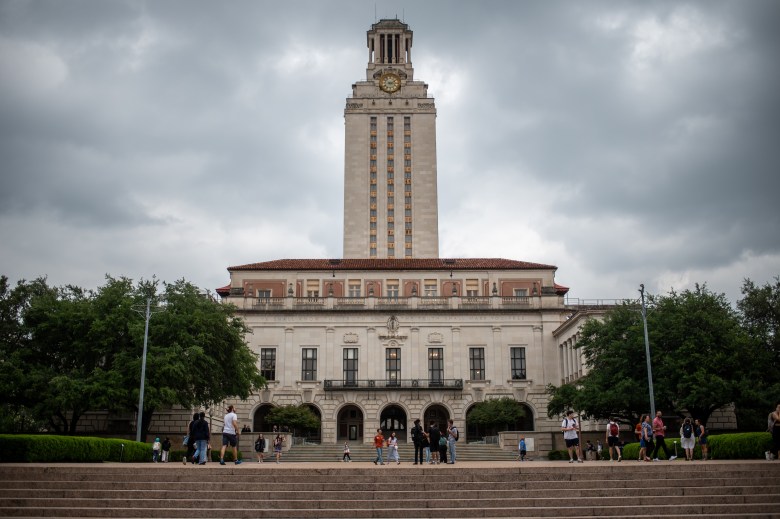
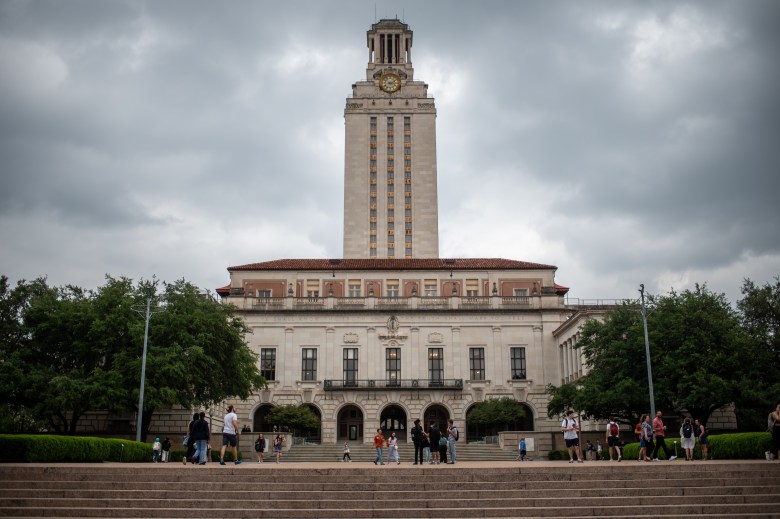
    Las nubes cubren el cielo detrás de la torre de la Universidad de Texas en Austin. Credit: Sergio Flores for The Washington Post via Getty Images

    Para persuadir a sus colegas republicanos, añadió varias restricciones, entre ellas la de exigir a los estudiantes indocumentados que vivieran en Texas durante tres años antes de terminar la escuela secundaria o recibir un GED. (Se estimó que tres años era el tiempo medio que tardaría una familia en pagar suficientes impuestos estatales para compensar la diferencia entre la matrícula estatal y la matrícula fuera del estado). También incluyó la cláusula que obligaba a los estudiantes indocumentados que accedían a la matrícula estatal a firmar una declaración jurada en la que se comprometían a solicitar la tarjeta de residencia tan pronto como pudieran.

    Van de Putte también recurrió a los grupos empresariales de Texas para insistir en los argumentos económicos a favor del proyecto de ley. Y convenció a la comunidad empresarial para que pagara los autobuses que llevarían a pastores evangélicos conservadores latinos de Dallas, San Antonio, Houston y otras zonas del estado a Austin, para que pudieran llamar a las puertas en apoyo de la legislación y rezar con los senadores republicanos y su personal.

    Después de eso, la Ley Texas Dream fue aprobada por abrumadora mayoría en el Senado estatal en mayo de 2001, y el entonces gobernador Rick Perry, republicano, la promulgó como ley al mes siguiente.

    Relacionado: El College Board cancela programa de premios para estudiantes negros y latinos de alto rendimiento 

    Sin embargo, en 2007, incluso cuando los defensores de los derechos de los inmigrantes, los grupos religiosos y las asociaciones empresariales formaron una coalición para defender a los inmigrantes contra las políticas estatales perjudiciales, la legislatura de Texas comenzó a presentar una serie de propuestas generalmente contrarias a los inmigrantes. En 2010, las encuestas sugerían que los tejanos se oponían de manera abrumadora a que los estudiantes indocumentados pagaran las tasas de matrícula estatales.

    En 2012, un nuevo grupo de políticos de derecha fue elegido para ocupar cargos públicos, muchos de ellos opuestos filosóficamente a la ley y muy críticos al respecto. La defensa de la política por parte de Perry se volvió en su contra durante las primarias presidenciales republicanas de 2012, cuando su campaña fue objeto de críticas después de que, durante un debate, dijera a los oponentes de la igualdad en las matrículas: “No creo que tengan corazón”.

    Aún así, ninguno de los muchos proyectos de ley presentados a lo largo de los años para derogar la Ley Texas Dream tuvo éxito. E incluso el gobernador Greg Abbott, un republicano partidario de la línea dura en materia de inmigración, se mostró en ocasiones ambiguo sobre la política, y su portavoz afirmó en 2013 que Abbott creía que “el objetivo” de la matrícula estatal independientemente del estatus migratorio era “noble”.

    Los observadores legislativos afirman que algunos republicanos del estado siguen apoyando la política. “Es una cuestión bipartidista. Hay republicanos que apoyan la matrícula estatal”, afirmó Luis Figueroa, director de asuntos legislativos de la organización sin fines de lucro Every Texan, dedicada a la investigación y la defensa de políticas públicas. “Pero no pueden decirlo públicamente”.

    Mientras tanto, a medida que el tema se volvía más controvertido políticamente en Texas, la Texas Dream Act acabó amplificando un debate más amplio que finalmente condujo a la creación del DACA, el programa de la era Obama que ha dado a algunos inmigrantes indocumentados acceso a protecciones contra la deportación y permisos de trabajo.

    Relacionado: Las amenazas de deportación de Trump pesan sobre los grupos que ofrecen ayuda con la FAFSA 

    Incluso antes del DACA, muchos inmigrantes trabajaban, y los que siguen sin papeles a menudo siguen haciéndolo, ya sea como contratistas independientes para empleadores que hacen la vista gorda ante su estatus migratorio o creando sus propios negocios. Un estudio de mayo de 2020 reveló que los residentes no autorizados constituyen el 8,2 % de la población activa del estado y que, por cada dólar gastado en servicios públicos para ellos, el estado de Texas recuperaba 1,21 dólares en ingresos.

    Pero sin el permiso legal inmediato para trabajar, los graduados universitarios indocumentados que se habían beneficiado de la Ley Dream de Texas se vieron limitados a pesar de sus títulos. A medida que la lucha por la equidad en las matrículas se extendía a otros estados, también lo hacía la lucha por una solución legal que apoyara a los estudiantes beneficiados.

    Cuando estos jóvenes, cariñosamente apodados “soñadores o dreamers”, pasaron a primer plano para defenderse más públicamente, su difícil situación despertó simpatía. En 2017, el mismo año en que Trump comenzó su primer mandato, las encuestas dieron un giro y mostraron que la mayoría de los tejanos apoyaba las matrículas estatales para los estudiantes indocumentados. Más recientemente, las investigaciones han indicado una y otra vez que los estadounidenses apoyan una vía para que los residentes indocumentados traídos a Estados Unidos cuando eran niños obtengan la residencia legal.

    Pero los argumentos en contra de la matrícula estatal, independientemente del estatus migratorio, también ganaron popularidad: los críticos sostenían que la política es injusta para los ciudadanos estadounidenses de otros estados que tienen que pagar tasas más altas, o que los estudiantes indocumentados están ocupando plazas en escuelas competitivas que podrían ser ocupadas por estadounidenses.

    El Departamento de Justicia se apoyó en una retórica similar en la demanda que acabó con la igualdad en las matrículas en Texas, alegando que la ley estatal queda invalidada por la legislación federal de 1996 que prohíbe a los inmigrantes indocumentados acceder a la matrícula estatal basada en la residencia. Ese argumento se ha convertido en un modelo, ya que la administración Trump ha presentado demandas para desmantelar las políticas de matrícula estatal de otros estados para los residentes indocumentados.

    En Kentucky, el fiscal general del estado, el republicano Russell Coleman, ha seguido los pasos de Texas y ha recomendado que el consejo estatal que supervisa la educación superior retire su normativa que permite el acceso a la matrícula estatal en lugar de luchar por defenderla en los tribunales.

    Al mismo tiempo, la administración Trump ha encontrado otras formas de recortar las oportunidades de educación superior para los estudiantes indocumentados, revocando una política que les había ayudado a participar en programas de formación profesional, técnica y para adultos, e investigando a las universidades por ofrecerles becas.

    Relacionado: Universidades recurren estudiantes hispanos para compensar disminución en la matrícula

    En Texas, el repentino cambio de política con respecto a las matrículas estatales está causando caos. Las dos universidades más grandes del estado, Texas A&M y la Universidad de Texas, están utilizando diferentes directrices para decidir qué estudiantes deben pagar las tasas fuera del estado.

    “Creo que las universidades son las que se encuentran en esta situación realmente difícil”, dijo Figueroa. “No son expertos en inmigración. Han recibido muy poca orientación sobre cómo interpretar el decreto de consentimiento”.

    En medio de tanta confusión, Figueroa predijo que es probable que surjan futuras demandas. Los estudiantes y organizaciones afectados ya han presentado mociones ante los tribunales para defender tardíamente la Ley Texas Dream contra el Departamento de Justicia.

    Mientras tanto, los jóvenes estudiantes se enfrentan a decisiones difíciles. Una estudiante, que pidió permanecer en el anonimato debido a su condición de inmigrante indocumentada, estaba leyendo las noticias en su teléfono antes de acostarse cuando vio un titular sobre el resultado del caso judicial del Departamento de Justicia.

    “Me eché a llorar porque, como alguien que ha luchado por salir adelante en sus estudios, ahora que estoy en la educación superior, ha sido una bendición”, dijo. “Así que lo primero que pensé fue: “¿Qué voy a hacer ahora? ¿Hacia dónde va mi futuro? ¿Los planes que tenía para mí tendrán que detenerse por completo?””.

    La joven, que vive en San Antonio desde que tenía 9 meses, se había matriculado en seis cursos para el otoño en la Universidad Texas A&M-San Antonio y no estaba segura de si abandonarlos. Sería su último semestre antes de obtener sus títulos en psicología y sociología, pero no podía imaginar pagar la matrícula fuera del estado.

    “Estoy en el limbo”, dijo, como “muchos estudiantes en este momento”.

    Comunícate con la editora Caroline Preston al 212-870-8965 o [email protected]

    Esta historia sobre los estudiantes indocumentados fue producida por The Hechinger Report, una organización de noticias independiente y sin fines de lucro que se centra en la desigualdad y la innovación en la educación. Suscríbase al boletín informativo del Hechinger.

    The Hechinger Report provides in-depth, fact-based, unbiased reporting on education that is free to all readers. But that doesn’t mean it’s free to produce. Our work keeps educators and the public informed about pressing issues at schools and on campuses throughout the country. We tell the whole story, even when the details are inconvenient. Help us keep doing that.

    Join us today.

    Source link

  • What’s happened since Texas killed in-state tuition for undocumented students

    What’s happened since Texas killed in-state tuition for undocumented students

    SAN ANTONIO — Ximena had a plan. 

    The 18-year-old from Houston was going to start college in the fall at the University of Texas at Tyler, where she had been awarded $10,000 a year in scholarships. That, she hoped, would set her up for her dream: a Ph.D. in chemistry, followed by a career as a professor or researcher.

    “And then the change to in-state tuition happened, and that’s when I knew for sure that I had to pivot,” said Ximena, who was born in Mexico but attended schools stateside since kindergarten. (The Hechinger Report is referring to her by only her first name because she fears retaliation for her immigration status.) 

    In June, the Texas attorney general’s office and the Trump administration worked together to end the provisions in a state law that had offered thousands of undocumented students like her lower in-state tuition rates at Texas public colleges. State and federal officials successfully argued in court that the long-standing policy discriminated against U.S. citizens from other states who paid a higher rate. That rationale has now been replicated in similar lawsuits against Kentucky, Oklahoma and Minnesota — part of a broader offensive against immigrants’ access to public education. 

    At UT Tyler, in-state tuition and fees for the upcoming academic year total $9,736, compared to more than $25,000 for out-of-state students. Ximena and her family couldn’t afford the higher tuition bill, so she withdrew. Instead, she enrolled at Houston Community College, where out-of-state costs are $227 per semester hour, nearly three times the in-district rate. The school offers only basic college-level chemistry classes, so to set herself up for a doctorate or original research, Ximena will still need to find a way to pay for a four-year university down the line. 

    Her predicament is exactly what state lawmakers from both political parties had hoped to avoid when they passed the Texas Dream Act, 2001 legislation that not only opened doors to higher education for undocumented students but was also meant to bolster Texas’s economy and its workforce long-term. With that law, Texas became the first of more than two dozen states to implement in-state tuition for undocumented students, and for nearly 24 years, the landmark policy remained intact. Conservative lawmakers repeatedly proposed to repeal it, but despite years of single-party control in the state legislature, not enough Republicans embraced repeal even as recently as this spring, days before the Texas attorney general’s office and the federal Department of Justice moved to end it. 

    Now, as the fall semester approaches, immigrant students are weighing whether to disenroll from their courses or await clarity on how the consent agreement entered into by the state and DOJ affects them.

    Immigration advocates are worried that Texas colleges and universities are boxing out potential attendees who are lawfully present and still qualify for in-state tuition despite the court ruling — including recipients of the Deferred Action for Childhood Arrivals program, asylum applicants and Temporary Protected Status holders — because university personnel lack immigration expertise and haven’t been given clear guidelines on exactly who needs to pay the higher tuition rate

    At Austin Community College, which serves an area as large as Connecticut, members of the board of trustees are unsure how to accurately implement the ruling. As they await answers, they’ve so far decided against sending letters asking their students for sensitive information in order to determine tuition rates. 

    “This confusion will inevitably harm students because what we find is that in the absence of information and in the presence of fear and anxiety, students will opt to not continue higher education,” said Manuel Gonzalez, vice chair of the ACC board of trustees.

    A billboard promoting Austin Community College in Spanish sits on a highway that leads to Lockhart, Texas. Credit: Sergio Flores for The Hechinger Report

    Policy experts, meanwhile, warn that Texas’s workforce could suffer as talented young people, many of whom have spent their entire education in the state’s public school system, will no longer be able to afford the associate’s and bachelor’s degrees that would allow them to pursue careers that would help propel their local economies. Under the Texas Dream Act, beneficiaries were required to commit to applying for lawful permanent residence as soon as possible, giving them the opportunity to hold down jobs related to their degrees. Without resident status, it’s likely they’ll still work — just more in lower-paying, under-the-radar jobs.  

    “It’s so short-sighted in terms of the welfare of the state of Texas,” said Barbara Hines, a former law school professor who helped legislators craft the Texas Dream Act. 

    Related: Become a lifelong learner. Subscribe to our free weekly newsletter featuring the most important stories in education. 

    By the turn of the century, almost two decades after undocumented children won the right to attend public school in the U.S., immigrant students and their champions remained frustrated that college remained out of reach. 

    For retired Army National Guard Maj. Gen. Rick Noriega, a Democrat who served in the Texas Legislature at the time, that reality hit close to home when he learned of a young yard worker in his district who wanted to enroll at the local community college for aviation mechanics but couldn’t afford out-of-state tuition. 

    Noriega called the school chancellor’s office, which was able to provide funding for the student to attend. But that experience led him to wonder: How many more kids in his district were running up against the same barriers to higher education? 

    So he worked with a sociologist to poll students at local high schools about the problem, which turned out to be widespread. And Noriega’s district wasn’t an outlier. In a state that has long had one of the nation’s largest unauthorized immigrant populations, politicians across the partisan divide knew affected constituents, friends or family members and wanted to help. Once Noriega decided to propose legislation, a Republican, Fred Hill, asked to serve as a joint author on the bill. 

    To proponents of the Texas Dream Act, the best argument in support of in-state tuition for undocumented students was an economic one. After the state had already invested in these students during K-12 public schooling, it made sense to continue developing them so they could eventually help meet Texas’ workforce needs. 

    “We’d spent all this money on these kids, and they’d done everything that we asked them to do — in many instances superstars and valedictorians and the like — and then they hit this wall, which was higher education that was cost prohibitive,” said Noriega. 

    The legislation easily passed the Texas House of Representatives, which was Democratic-controlled at the time, but the Republican-led Senate was less accommodating. 

    “I couldn’t even get a hearing,’” said Leticia Van de Putte, the then-state senator who sponsored the legislation in her chamber. 

    To persuade her Republican colleagues, she added several restrictions, including requiring undocumented students to live in Texas for three years before finishing high school or receiving a GED. (Three years was estimated as the average time it would take a family to pay enough in state taxes to make up the difference between in-state and out-of-state tuition.) She also included the clause mandating that undocumented students who accessed in-state tuition sign an affidavit pledging to pursue green cards as soon as they were able.   

    Van de Putte also turned to Texas business groups to hammer home the economic case for the bill. And she convinced the business community to pay for buses to bring Latino evangelical conservative pastors from Dallas, San Antonio, Houston and other areas of the state to Austin, so they could knock on doors in support of the legislation and pray with Republican senators and their staff. 

    After that, the Texas Dream Act overwhelmingly passed the state Senate in May 2001, and then-Gov. Rick Perry, a Republican, signed it into law the following month.

    Related: How Trump is changing higher education: The view from four campuses

    Yet by 2007, even as immigrant rights advocates, faith-based groups and business associations formed a coalition to defend immigrants against harmful state policies, the Texas legislature was starting to introduce a wave of generally anti-immigrant proposals. In 2010, polling suggested Texans overwhelmingly opposed allowing undocumented students to pay in-state tuition rates. 

    By 2012, a new slew of right-wing politicians was elected to office, many philosophically opposed to the law — and loud about it. Perry’s defense of the policy had come back to haunt him during the 2012 Republican presidential primary, when his campaign was dogged by criticism after he told opponents of tuition equity during a debate, “I don’t think you have a heart.” 

    Still, none of the many bills introduced over the years to repeal the Texas Dream Act were successful. And even Texas Gov. Greg Abbott, a Republican border hawk, at times equivocated on the policy, with his spokesperson saying in 2013 that Abbott believed “the objective” of in-state tuition regardless of immigration status was “noble.”

    Legislative observers say that some Republicans in the state continue to support the policy. “It’s a bipartisan issue. There are Republicans in support of in-state tuition,” said Luis Figueroa, senior director of legislative affairs at the public policy research and advocacy nonprofit Every Texan. “They cannot publicly state it.”

    Meanwhile, as the topic became more politically charged in Texas, the Texas Dream Act ended up amplifying a larger conversation that eventually led to the creation of DACA, the Obama-era program that has given some undocumented immigrants access to deportation protections and work permits. 

    Even before DACA, many immigrants worked, and those who remain undocumented often still do, either as independent contractors for employers that turn a blind eye to their immigration status or by starting their own businesses. A study from May 2020 found that unauthorized residents make up 8.2 percent of the state’s workforce, and for every dollar spent toward public services for them, the state of Texas recouped $1.21 in revenue. 

    But without the immediate legal permission to work, undocumented college graduates who had benefited from the Texas Dream Act found themselves limited despite their degrees. As the fight for tuition equity spread to other states, so did the fight for a legal solution to support the students it benefited. 

    When these young people — affectionately dubbed Dreamers — took center stage to more publicly advocate for themselves, their plight proved sympathetic. By 2017, the same year Trump began his first term, polling had flipped to show a plurality of Texans in support of in-state tuition for undocumented students. More recently, research has indicated time and time again that Americans support a pathway to legal status for undocumented residents brought to the U.S. as children. 

    But arguments against in-state tuition regardless of immigration status also grew in popularity: Critics contended that the policy is unfair to U.S. citizens from other states who have to pay higher rates, or that undocumented students are taking spots at competitive schools that could be filled by documented Americans. 

    The DOJ leaned on similar rhetoric in the lawsuit that killed tuition equity in Texas, saying the state law is superseded by 1996 federal legislation banning undocumented immigrants from getting in-state tuition based on residency. That argument has become a template as the Trump administration has sued to dismantle other states’ in-state tuition policies for undocumented residents.

    In Kentucky, state Attorney General Russell Coleman, a Republican, has followed in Texas’ footsteps, recommending that the state council overseeing higher education withdraw its regulation allowing for access to in-state tuition instead of fighting to defend it in court. 

    At the same time, the Trump administration has found other ways to cut back on higher education opportunities for undocumented students, rescinding a policy that had helped them participate in career, technical and adult education programs and investigating universities for offering them scholarships. 

    Related: Which schools and colleges are being investigated by the Trump administration? 

    Back in Texas, the sudden policy change regarding in-state tuition is causing chaos. Even the state’s two largest universities, Texas A&M and the University of Texas, are using different guidelines to decide which students must pay out-of-state rates. 

    Clouds fill the sky behind the tower at the University of Texas. Credit: Sergio Flores for The Washington Post via Getty Images

    “Universities, I think, are the ones that are put in this really difficult position,” Figueroa said. “They are not immigration experts. They’ve received very little guidance about how to interpret the consent decree.” 

    Amid so much confusion, Figueroa predicted, future lawsuits will likely crop up. Already, affected students and organizations have filed motions in court seeking to belatedly defend the Texas Dream Act against the DOJ.

    In the meantime, young scholars are facing difficult choices. One student, who asked to remain anonymous because of her undocumented immigration status, was scrolling through the news on her phone before bed when she saw a headline about the outcome of the DOJ court case. 

    “I burst in tears because, you know, as someone who’s been fighting to get ahead in their education, right now that I’m in higher education, it’s been a complete blessing,” she said. “So the first thing that I just thought of is ‘What am I going to do now? Where is my future heading?’ The plans that I have had going for me, are they going to have to come to a complete halt?’” 

    The young woman, who has lived in San Antonio since she was 9 months old, had enrolled in six courses for the fall at Texas A&M-San Antonio and wasn’t sure whether to drop them. It would be her final semester before earning her psychology and sociology degrees, but she couldn’t fathom paying for out-of-state tuition. 

    “I’m in the unknown,” she said, like “many students in this moment.”

    Contact editor Caroline Preston at 212-870-8965, via Signal at CarolineP.83 or on email at [email protected].

    This story about the Texas Dream Act was produced by The Hechinger Report, a nonprofit, independent news organization focused on inequality and innovation in education. Sign up for the Hechinger newsletter.

    The Hechinger Report provides in-depth, fact-based, unbiased reporting on education that is free to all readers. But that doesn’t mean it’s free to produce. Our work keeps educators and the public informed about pressing issues at schools and on campuses throughout the country. We tell the whole story, even when the details are inconvenient. Help us keep doing that.

    Join us today.

    Source link

  • Why high schools should use teaching assistants

    Why high schools should use teaching assistants

    Key points:

    Exam scores always seem to go up. Whether it’s the SAT when applying for college or an AP score to earn college credit, competitive scores seem to be creeping up. While faculty are invaluable, students who recently completed classes or exams offer insight that bridges the gap between the curriculum and the exam. I believe students who recently excelled in a course should be allowed and encouraged to serve as teaching assistants in high school.

    Often, poor preparation contributes to students’ disappointing exam performance. This could be from not understanding content, being unfamiliar with the layout, or preparing the wrong material. Many times, in courses at all levels, educators emphasize information that will not show up on a standardized test or, in some cases, in their own material. This is a massive issue in many schools, as every professor has their own pet project they like to prioritize. For example, a microbiology professor in a medical school may have an entire lecture on a rare microbe because they research it, but nothing about it will be tested on the national board exams, or even their course final exams. This was a common theme in high school, with history teachers loving to share niche facts, or in college, when physics professors loved to ask trick questions. By including these things in your teaching, is it really benefiting the pupil? Are students even being tested correctly over the material if, say, 10 percent of your exam questions are on information that is superfluous?

    Universities can get around this issue by employing teaching assistants (TAs) to help with some of the confusion. Largely, their responsibilities are grading papers, presenting the occasional lecture, and holding office hours. The lesser-known benefit of having and speaking with TAs is the ability to tell you how to prioritize your studying. These are often older students who have been previously successful in the course, and as a result, they can give a student a much better idea of what will be included on an exam than the professor.

    When I was a TA as an undergrad, we were required to hold exam prep sessions the week of a big test. During these sessions, students answered practice questions about concepts similar to what would show up on the exam. All the students who showed up to my sessions performed extremely well on the tests, and they performed well because they were prepared for the exam and knew the concepts being tested. As a result, they would finish the course with a much higher grade because they knew what they should be studying. It is much more effective to give a student a practice question that uses similar concepts to what will be on their exam than it is for a professor to give a list of topics that are covered on a test. For example, studying for a math test is more impactful when answering 50 practice questions versus a teacher handing you a list of general concepts to study, such as: “Be able to manipulate inequalities and understand the order of operations.”

    Universities seem to know that professors might not provide the best advice, or at the least, they have used TAs as a decent solution to the problem. It is my opinion that having this style of assistance in high school would be beneficial to student outcomes. Having, say, a senior help in a junior-level class may work wonders. Teachers would have a decrease in their responsibilities based on what they trust their TA to do. They could help grade, run review sessions, and make and provide exam prep materials. In essence, all the unseen work in teaching that great teachers do could be done more efficiently with a TA. Every student has had an amazing teacher who provides an excellent study guide that is almost identical to the test, making them confident going into test day. In my experience, those guides are not completed for a grade or a course outcome, and effectively become extra work for the educator, all to help the students who are willing to use them effectively. Having a TA would ease that burden–it would encourage students to consider teaching as a profession in a time when there is a shortage of educators.

    There are many ways to teach and learn, but by far the best way to be prepared for a test is by talking to someone who has recently taken it. Universities understand that courses are easier for students when they can talk to someone who has taken it. It is my opinion that high schools would be able to adopt this practice and reduce teacher workload while increasing the student outcomes. 

    Latest posts by eSchool Media Contributors (see all)

    Source link

  • How one state revamped high school to reflect that not everyone goes to college

    How one state revamped high school to reflect that not everyone goes to college

    This story is part of Hechinger’s ongoing coverage about rethinking high school. Read about high school apprenticeships in Indiana, a new diploma in Alabama that trades chemistry for carpentry, and “career education for all” in Kentucky.

    ELKHART, Ind. — The numbers were discouraging, and in some cases getting worse. Nearly 30 percent of Indiana’s high schoolers were chronically absent in 2022. Only about 52 percent of students in the state enrolled in college in 2023, a 12-percentage-point drop in seven years. Fewer students were pursuing other paths, too: The share of students enlisting in the military, for example, declined by 41 percent from 2018 to 2022.

    When Katie Jenner toured the state after becoming education secretary in 2021, she heard from many students who said they simply didn’t value high school or see how it would help them. “That was really hard to hear,” Jenner said. “We had to look in the mirror and say, ‘OK, this is the reality. Let’s do better.’”   

    Jenner and her team began redesigning what high school looks like in Indiana, in an effort to make it more relevant to young people’s futures and help them gain a better grasp of career paths. For too long, she and others argued, kids had been pushed to plan for four-year college, yet only about half of seniors actually enrolled, and those who did go often dropped out before graduating. 

    When a draft of the plan was released in early 2024, it drew fierce protest from many parents and educators who worried the state was prioritizing workforce learning over academics. Jenner and her staff reworked the proposal, eventually crafting a plan that alleviated some, though not all, of the concerns. 

    The “New Indiana Diploma” — which was signed into law in April and goes into effect for all incoming first-year students this academic year — gives students the option to earn different “seals” in addition to a basic diploma, depending on whether they plan to attend college, go straight to work or serve in the military. Jenner describes it as an effort to tailor the diploma to students’ interests, expose students to careers and recognize different forms of student achievement. 

    Experts said the template is something of a model nationally, at a time when more states are reconsidering how to help students prepare for careers and the federal government is also pushing alternatives to four-year college. Elements of that effort have earned bipartisan support: Presidents from both parties have advocated for expanding work-based learning, and President Donald Trump recently called for the creation of 1 million new apprenticeships.  

    “The basic architecture of American high school is being questioned and challenged,” said Timothy Knowles, president of the Carnegie Foundation.* Indiana is at the forefront of an effort to incorporate more experiential learning instead of restricting education to school buildings, he said: “Indiana is really breaking ground.” 

    Related: A lot goes on in classrooms from kindergarten to high school. Keep up with our free weekly newsletter on K-12 education.

    The initial proposal Jenner’s agency drafted would have created two high school diplomas, “Graduates Prepared to Succeed” and “Graduates Prepared to Succeed Plus.” Both would have scaled back math and science requirements and loosened recommendations for world languages and other electives. Meanwhile, they would have encouraged all students to participate in work-based learning in apprenticeships, internships or job shadowing, with at least 75 hours in such activities required for the “plus” diploma. 

    Indiana hopes that work-based learning opportunities at companies like Alpha Systems and Hoosier Crane Service Company, in Elkhart, Indiana, can flourish under the new diploma system. Credit: Camilla Forte/The Hechinger Report

    In 2024, the state board of education held dozens of meetings to gather feedback on the proposal for the revamped diplomas — and the backlash was intense. Leaders of higher education institutions, including the state’s flagship schools, Indiana and Purdue universities, said students graduating under the new system would not meet minimum requirements for admission. Purdue’s president, Mung Chiang, wrote a letter to Jenner showing that the proposed diploma system required too few credits in every subject except English.   

    Hoosier parents were furious that their children might have to sacrifice more challenging courses to fulfill the mandatory work experience requirement under the “plus” option. At an Indiana Department of Education hearing in June 2024, parent Michelae Hill was among dozens who criticized the proposal, calling it “intentionally dumbing down our population” and warning that “what will happen is that we are ensuring a permanent underclass, we are ensuring cheap workers.” There were also questions about the logistics of workplace learning, including transportation and possible safety issues on job sites. 

    State education policy makers went back to the drawing board. The revised version, adopted last December, establishes one basic diploma that all graduates earn, plus the seals students can pursue depending on their post-high-school plans. Even within each seal, students have several ways of meeting the requirements.  

    For example, to receive the “enrollment” seal — meant primarily for college-bound students — high schoolers can choose from more advanced classes in math, science, social studies and world languages, and may earn additional credits in Advanced Placement, International Baccalaureate or other such college-level courses. An “enrollment honors plus” seal requires that students concurrently obtain a credential such as an associate’s degree or technical certificate and complete 75 hours of work-based learning in apprenticeships, internships or other such programs. 

    “We wanted rigor and flexibility and less cookie cutter,” said Jenner.  

    Related: Apprenticeships for high schoolers are touted as the next big thing. One state leads the way

    Even the updated system has critics, though. For the basic diploma, students must earn a minimum of 42 credits, two more than before. But how students reach that threshold is different: Economics, geometry and Algebra II are no longer required, while courses in financial literacy and communication are. Physical education is one credit instead of two, and world languages and fine arts are no longer recommended electives.

    Professor Michael Hicks, who runs the Center for Business and Economic Research at Ball State University in Indiana, said he worries about the reduced mathematics rigor in particular. While most states do not require Algebra II for graduation, the class is often seen as a necessity for admission to selective colleges and for certain careers. Hicks said high-achieving, well-resourced students may benefit from the flexibility of the new diploma, as could students committed to the military. But many other students could be harmed, he said, if they are left with the impression that the basic diploma alone will prepare them well for college when it does not. 

    “It is essentially funneling children away from academic opportunity very early at a time when we really needed to have more kids pushed into the academic options that would get them into college,” he said, arguing that people with college degrees outearn those with only a high school education and have also fueled the state’s and country’s economic growth of the past several decades. “This curriculum will cause the Indiana economy to stall and potentially go into reverse.” 

    At public meetings last winter, some parents and educators raised concerns that the new system amounted to an unfunded mandate for school districts and would put a huge burden in particular on counselors, who would be working closely with students to help chart their diploma paths. Critics also objected to the de-emphasis of other classes like music and foreign languages. Megan Worcester, the president of the Indiana Foreign Language Teachers Association, said the reduced emphasis on foreign language would hurt the state’s economy; she cited a study in which nearly 1 in 4 employers surveyed said they had lost or couldn’t pursue a business opportunity because of language barriers. 

    Jenner, a former high school teacher, said the new diploma allows students greater flexibility to choose electives depending on their goals, which could include language and music study. While Algebra II is no longer required, students must take four math credits beyond the required Algebra I and personal finance, she said. Jenner also said the state had allocated a portion of $50 million in discretionary funding to train counselors in helping students navigate the new diploma system. In addition, it dedicated up to $10 million in grants to help students pay for transportation, equipment and certifications related to work-based learning, and also provided financial assistance to companies that take on apprentices. Each school that offers work-based learning will receive an extra $500 per participating student.

    The new plan eventually quieted the concerns of many education leaders. Several universities, including Indiana and Purdue, released letters of support. “We appreciate the thoughtful adjustments to the work based learning requirements, AP testing and transferability of dual credits,” wrote Pamela Whitten, president of Indiana University. (Neither university agreed to an interview with its leaders.) All major education groups in the state, including the Indiana State Teachers Association, Indiana School Boards Association and the Indiana Association of Public School Superintendents, endorsed the plan. 

    Ty Zartman, a student apprentice at Hoosier Crane Service Company in Elkhart, Indiana, decided to go straight to work after graduating high school, despite being a straight A student. Parents and educators objected to Indiana’s first proposal for a new high school diploma system, arguing that the emphasis on workplace experience would crowd out academic learning. Credit: Camilla Forte/The Hechinger Report

    In April, Gov. Mike Braun announced that beginning this year, students who earn the state’s “enrollment honors plus” seal will be automatically accepted into the state’s public colleges and universities, including Purdue and Indiana, potentially persuading more students to enroll. 

    Parent Chantee Eldridge said she believes the new diploma will make higher education more affordable and help students sharpen their career plans at an earlier age. Her son, Micah, is a 16-year-old senior at Brownsburg High School, near Indianapolis, and has already taken dual credit courses through a partnership with Vincennes University. College credits can be expensive, she said, so earning them at no cost in high school can be a big money saver. 

    Micah, who has a 3.7 GPA and plays semi pro soccer, said he’s always enjoyed challenging classes and plans to go to college. “When things get repeated, that’s when I get bored and start to tap out mentally,” he said. In college, he anticipates studying psychology — a surprise to his mother, who expected him to pursue math or physics, two topics he’s always excelled in. She likes the idea of him doing an internship with a psychologist, so he can learn more about the field and gain practical work experience before he goes to college; that’s the sort of opportunity that will become more common under this new diploma system. 

    “Very rarely do you know exactly what you want to do between 16 and 18,” Eldridge said. “That will help students and their families make an informed decision.”  

    Related: Schools push career education ‘for all,’ even kids heading to college 

    For students who want to go straight into the workforce, the employment seals are designed to provide exposure to career options and work experience that boost students more quickly into higher-paying roles. Under the “employment honors” seal, students must: take coursework or earn a credential aligned to a specific occupation; complete 150 hours of work-based learning; and demonstrate communication, collaboration and work ethic skills. The “employment honors plus” seal requires that students also earn an associate’s degree or advanced industry certificate and complete 650 hours of work-based learning.

    Matt Mindrum, president and CEO of the Indy Chamber, said that most of the 150,000 vacant jobs in Indiana right now don’t require a four-year degree. “And yet 100 percent of our high school students are pushed through a college preparatory path. That makes no sense,” he said. He believes an alternate path is critical for driving economic growth in the state, by helping to fill existing jobs and attract new businesses. 

    Edgar Soto, a senior at Concord High School in Elkhart, is the kind of student Mindrum has in mind. Soto said he has never wanted to attend a four-year college. To get workforce experience, he enrolled in an apprenticeship through his school and is up before dawn each morning to start work with manufacturing technology company Alpha Systems. “It’s something new every day. I love it,” he said. He earns $17 an hour and gives half his paycheck to his mom for family expenses. When school is in session, he spends his afternoons taking classes back at Concord High. 

    Indiana’s Elkhart County has been at the forefront of expanding apprenticeships to high schoolers, but it’s had trouble recruiting companies — a challenge for the state as it tries to expand work-based learning. Credit: Camilla Forte/The Hechinger Report

    Working has motivated him to study harder at school, he said; he’s never cared for math, but when he realized it was important for his job, he began asking his teacher for extra help. “I got a taste of the real world and I want to be that type of person who does things right,” he said. 

    Alpha Systems pays for him to take classes in industrial systems through the state community college system, Ivy Tech, and has promised to pay for any further postsecondary education if he stays with the company. In just a few years, company executives said, he could easily make more than $40 an hour, approximately $80,000 a year. 

    Mindrum is working with employers around the state to try to increase work-based learning opportunities so they match student demand, a particular challenge in rural areas. Communities that have already made a commitment to work-based learning have had trouble recruiting enough employers: For example, in Elkhart County, only 1 in 3 high schoolers who apply for an apprenticeship gets one. Schools will also have to reorganize class schedules and overcome transportation challenges to ensure students can complete the necessary work-based learning under the various seals. The state has a goal of 50,000 apprenticeships by 2030. “It’s an aggressive but achievable target,” Mindrum said. 

    Related: A new kind of high school diploma trades chemistry for carpentry 

    Supporters hope the revamped diploma will also encourage more students to enlist in military service. Nationally, the military is struggling to recruit, and according to Army data, just 23 percent of 17- to 24-year-olds who apply to the U.S. military meet its medical fitness and academic requirements. In Indiana, the number of students enlisting in the National Guard dropped by 38 percent between 2018 and 2022, the sharpest decline of any state. 

    Retired Maj. Gen. Dale Lyles, who led the Indiana National Guard and helped create the “enlistment” seal criteria, said students often don’t know much about enlisting and the benefits of military service. In Indiana, for example, serving in the National Guard unlocks free tuition to state colleges.

    The new diploma options are meant to fix that: Students in the “enlistment honors” and “enlistment honors plus” seals are taught about each branch of service, what it means to swear an oath to your country and the many different job opportunities available. They also must take a public service course or complete a year of Junior ROTC and receive a certain score on the military’s aptitude test, the Armed Services Vocational Aptitude Battery, among other requirements. Students can receive coaching for the test and have the opportunity to visit Camp Atterbury-Muskatatuck, a nearly 35,000-acre military post, for hands-on learning opportunities.

    “Today’s military is much different than it was even five years ago, just because of the high degree of technology,” said Lyles, citing the Indiana National Guard’s platoon that flies automated aerial drones and its cyber warfare battalion. “We are in a battle for talent.” He added that the pathway emphasizes that there are other ways to serve, including as a firefighter, as a police officer or in the Department of Homeland Security. 

    Nicholas Purdy, a 17-year-old from Marion, has three grandparents who served in the military and said he’s always been interested in enlisting. In his first year of high school, he signed up for JROTC, and he said he loves traveling to other states for competitions and leadership camps where students participate in activities such as rappelling, water operations and land navigation. “It doesn’t matter what your background is, how much money you have, your looks,” he said of the experience. “The only thing that matters is your character.” 

    His mother, Stephanie Purdy, said she’s seen his confidence deepen as a result of his experiences with JROTC. Nicolas has won ribbons and pins for marksmanship and leadership that he wears on his uniform, and he likes the idea that under the new seals, those accomplishments would be reflected on his high school transcript. Nicholas wants to become a combat medic in the army. “The training set me up for really good opportunities, and it’s all paid for,” he said. 

    Jenner’s work continues — with a pressing deadline, as schools roll out these changes for first-year students this year. Her office is working on an online advising tool, a pilot program to help communities identify solutions to transportation challenges, guidance for educators on the new diploma options and courses, and incentives for school districts to measure skills like communication, collaboration and work ethic, not just academic outcomes.   

    It’s a big task. “This is new terrain for our country when you think about the level of scale we’re trying to accomplish,” said Jenner. “We don’t have a model to just copy and paste, so we’re going to learn some lessons along the way.” 

    *Due to an editing error, an earlier version of this story included an inaccurate description of the Carnegie Foundation.

    Contact editor Caroline Preston at 212-870-8965, via Signal at CarolineP.83 or on email at [email protected]

    This story about work-based learning was produced by The Hechinger Report, a nonprofit, independent news organization focused on inequality and innovation in education. Sign up for the Hechinger newsletter.

    The Hechinger Report provides in-depth, fact-based, unbiased reporting on education that is free to all readers. But that doesn’t mean it’s free to produce. Our work keeps educators and the public informed about pressing issues at schools and on campuses throughout the country. We tell the whole story, even when the details are inconvenient. Help us keep doing that.

    Join us today.

    Source link

  • This school built high-end career and technical education training sites on campus to prepare students for local skilled jobs

    This school built high-end career and technical education training sites on campus to prepare students for local skilled jobs

    This story is part of Hechinger’s ongoing coverage about rethinking high school. See our articles about a new diploma in Alabama, a “career education for all” model in Kentucky, and high school apprenticeships in Indiana

    BELOIT, Wis. — As Chris Hooker eyed a newly built piece of ductwork inside Beloit Memorial High School, a wry smile crept over his face. “If you worked for me,” he told a student, considering the obviously crooked vent, “I might ask if your level was broken.”

    Hooker, the HVAC manager of Lloyd’s Plumbing and Heating Corp. in nearby Janesville, was standing inside a hangar-sized classroom in the school’s advanced manufacturing academy, where students construct full-size rooms, hang drywall and learn the basics of masonry. His company sends him to the school twice a week for about two months a year to help teach general heating, venting and air conditioning concepts to students. 

    “I cover the mountaintop stuff,” he said, noting that at a minimum students will understand HVAC when they become homeowners.

    But the bigger potential payoff is that these students could wind up working alongside Hooker after they graduate. If his firm has an opening, any student recommended by teacher Mike Wagner would be a “done deal,” Hooker said. “Plus, if they come through this class, I know them.” 

    Manufacturing and construction dominate the business needs inside Beloit, a small city of 36,000 just minutes from the Illinois border. Sitting at the nexus of two major highways, and within 100 miles of Chicago, Milwaukee and Madison, Beloit is home to a range of businesses that include a Frito-Lay production plant, an Amazon distribution center and a Navy subcontractor. In the next two years, a $500 million casino and hotel complex is scheduled to open. 

    But staffing these companies into the future is a major concern. Across the country, the average age of manufacturing workers is increasing, and one in four of these workers is age 55 or older, according to U.S. Bureau of Labor Statistics’ 2021 figures, the most recent available. In many other jobs the workforce is aging, too. Wisconsin is one of several states looking to boost career and technical education, or CTE, as a possible solution to the aging and shrinking workforce. 

    Having industry standard machines is a key part of Beloit Memorial High School’s manufacturing program; here a student uses a JET metalworking machine to create precise cuts for his project. Credit: Wayne D’Orio for The Hechinger Report

    While the unemployment rate of Rock County, which includes Beloit, is 3.6 percent, only slightly higher than the state’s 3.2 percent, there’s a worker mismatch in the city, according to Drew Pennington, its economic development director.

    Every day, 14,000 city residents travel outside of Beloit to work, while the same number commute into the city to fill mostly higher-paying jobs, said Pennington. 

    So when Beloit decided to revamp its public high school in 2018, CTE and work-based learning were at the forefront of the transformation. 

    The 1,225-student school now has three academies that cover 13 different career paths. After ninth grade, students choose to concentrate in an area, which means taking several courses in a specific field. Students also have the option to do work-based learning, which can mean internships, a youth apprenticeship or working at high-end simulated job sites inside the school. 

    “This creates not just a pipeline to jobs but also to career choices,” said Jeff Stenroos, the district’s director of CTE and alternative education.

    Related: A lot goes on in classrooms from kindergarten to high school. Keep up with our free weekly newsletter on K-12 education.

    “There are a lot of really good-paying jobs in this area. Students don’t need to leave, or go earn a four-year degree,” Stenroos said. An auto mechanic can “earn six figures by the age of 26 and that’s more than an educator with a master’s degree,” he said.

    Beloit’s effort is a shift in high school emphasis similar to the extensive CTE programs being run in other places, notably Indiana, Kentucky and Alabama. In 2024, 40 states enacted 152 CTE-related policies, the biggest push in five years, according to Advance CTE, a nonprofit group that represents state CTE officials. Nationwide, about 20 percent of high school students take a concentration of CTE courses, it says, adding that the high school graduation rate for students who concentrate in CTE is 90 percent, 15 percentage points higher than the national average. 

    Three years ago, Wisconsin called for 7 percent of its high school students to be in workplace learning programs by 2026. Beloit’s progress puts it far ahead of that target. In Beloit Memorial, nearly 1 in 3 students meet this designation today, Stenroos said. 

    The high school features a cavernous construction area where students build full-scale rooms, learn masonry and complete plumbing and electrical wiring projects. The metal shop offers 16 welding stations and a die-cutter machine that allows students to create customized pieces to fit projects. Down the street, the school runs an eight-bay car repair center, a space it took over when a Sears autobody shop left town.

    These spaces are “better than a lot of technical colleges,” Stenroos said.

    In addition to their high school courses, Beloit Memorial students pile up industry-recognized certifications, Stenroos said. More than 40 percent of its students graduate with at least one certification, and 1 in 4 of them has multiple certifications. 

    Related: Schools push career ed classes for all, even kids heading to college

    While some simple certifications, such as OSHA Workplace Safety, can be accomplished in just 10 hours, others, such as those for the American Welding Society, require up to 500 hours of student work, he added. The state has called for 9 percent of graduating high school students to have earned at least one certification by next year. To incentivize schools to offer these opportunities, the state’s Department of Workforce Development pays schools for each student who earns a certification; in 2024, Beloit received $85,000 through this program, Stenroos said.

    One of the school’s best automotive students, Geiry Lopez, graduated this year with five Automotive Service Excellence certifications. Standing less than 5 feet tall, Lopez said she is not bothered that she might not look like a typical mechanic. “I know I can do this,” she said, adding that she hopes to work on heavy machinery such as tractor trailers after she graduates.

    She’s worked on her own car, with some fellow students, replacing the brakes, a front axle, rotors and wheel bearings at the school’s garage, she said, although she still hasn’t been able to drive it.

    “My dad is taking forever to teach me how to drive,” she said. 

    The garage operates like an actual business, but the only customers are teachers and other Beloit staffers and students. Students estimate work costs, order parts and communicate with customers before any repairs take place. While oil changes and brake replacements are common, some students are totally rebuilding an engine in one car. 

    Over in the welding room, rising senior Cole Mellom was putting the finishing touches on a smoker he built in less than a month’s time. He said he loved the creativity of finding a plan, cutting the metal and building something that he could sell, all while in school. Plus, he knows that welding is a key skill needed for his dream job, race-car fabrication.

    Officials revamped the Beloit Memorial High School in 2018 to funnel students into academies that are connected to jobs in the area and the state. Credit: Wayne D’Orio for The Hechinger Report

    In the past, students created a custom-made protective plate that the city’s police use on a bomb squad vehicle.

    The welding program has 125 students this year and had to turn away 65 more because of space limitations, Stenroos said; last year, 17 of the school’s welding academy graduates enlisted in the armed forces to specialize in welding. 

    These programs are designed to help meet the future needs of the state’s workforce. More than one-third of Wisconsin jobs will require education beyond high school but less than a bachelor’s degree by 2031, according to the Association for Career and Technical Education. For the last four years, the state has had more job openings than people on unemployment.

    “There’s more jobs than there are people to fill them right now,” said Deb Prowse, a former career academy coach at Beloit Memorial who now works at Craftsman with Character, an area nonprofit that helps train students for careers in skilled trades.

    Hooker, the Lloyd’s Plumbing HVAC manager, agreed. “Every project we work on has a delay, from a multimillion-dollar mansion to a three-bedroom spec,” he said. “There aren’t enough workers.”

    The main reason Beloit Memorial has been able to zoom past state and national goals for both CTE and work-based learning is the school’s single-minded focus since 2018 on helping to ensure that its graduates will understand what businesses need and giving them a head start toward gaining those skills.

    High school officials actually pared back the program from 44 pathways to 13, Stenroos said, part of an effort to tie each pathway to specific jobs. About 75 percent of pathways target area jobs, with the remaining quarter highlighting prominent professions within the state, he added. 

    Even though three straight budget referendum defeats have left the district with a $6.2 million funding gap, Stenroos said he’s been able to keep the CTE equipment modernized through donations and strategic allocation of the school’s federal Perkins grant and the state reimbursement for student certifications. In one instance, the school recently bought a $20,000 scanner for its automotive program; the machine can not only help diagnose a car problem, but also connect students to garages throughout the country that have successfully fixed the specified problem. 

    “It’s an expensive piece of equipment,” Stenroos said, “but it’s industry-certified and will give students real-life experience.”

    Each of the three academies has an advisory board of teachers and industry professionals who work out how to embed practical lessons in classroom curriculum. “We ask business people, ‘What do you need, and how can we help our kids get there?’” said Stenroos.

    Related: A new kind of high school diploma trades chemistry for carpentry

    “It’s really cool how receptive the school is to feedback,” said Heather Dobson, the business development manager at Corporate Contractors, Inc., a 200-person general contracting firm.

    She explained that the district has incorporated small changes over the years, such as having students work in Microsoft programs instead of Google Classroom apps and teaching them how to write a professional email.

    “Rarely is there an idea presented that they don’t embrace,” said Celestino Ruffini, the CEO of Visit Beloit, a nonprofit that promotes tourism of the city. The school is expanding its hospitality program because of the expected influx of jobs connected to the new casino and hotel, he said. 

    All the changes aren’t at the high school, however. In order to employ Beloit Memorial students, Frito-Lay had to alter its corporate policy of not allowing anyone under 18 to work in its plants, according to Angela Slagle, a supply chain manager there. The company now hires Beloit Memorial students for its career exploration youth apprenticeship program, she added. 

    The connection to area businesses goes beyond the school’s leaders. Each year, about 10 teachers complete an externship in which they spend one week of their summer at a local business. Teachers are paid $1,000 for the 20 hours, and they not only learn about what jobs a company may have but also find ways to incorporate real-world problems into their classroom lessons.

    A few summers back, math teacher Michelle Kelly spent a week at Corporate Contractors. She was searching for different ways to use construction-based math problems with her students. In addition to using math to estimate a bid for a project or calculate the surface area of a job, she realized that complex math is needed to build a truss, the framework used to support a roof or bridge.

    Because the triangular truss is supported by different lengths of wood inside its structure, Kelly said, building one requires the calculation of angles, total area, how much wood is needed and more. Since all her algebra students were in the school’s construction academy, she partnered with those teachers to go beyond blueprints and have the 10th graders build trusses, a collection of which sit in the back of her classroom.

    A student’s detailed outline for creating a truss in Michelle Kelly’s 10th grade algebra class at Beloit Memorial High School, which is embracing career and technical education. Credit: Wayne D’Orio for The Hechinger Report

    She sees this work as one way to help counter the chronic absenteeism that has existed since Covid. Teaching with this kind of hands-on work makes students see the relevance of algebra, she said. “Would it be easier to just have them take a test? Yes.” 

    Beloit Memorial Principal Emily Pelz said the school’s work is paying off. In the last four years, the school’s four-year graduation rate has ticked up slightly, from 83.4 percent in 2021-22 to 85.2 percent in 2024-25, while its attendance went from 78.5 percent to 84.8 percent in the same period, Pelz said. 

    Related: ‘Golden ticket to job security’: Trade union partnerships hold promise for high school students

    Rik Thomas, a rising senior who already has his own business repairing and modifying cars, said this work has definitely made him more interested in school. While he thought the academy would merely explain what a construction career might include, “It’s nice to find out how to do the work.” His father works in construction and, Thomas added, “He loves that I take this program.” 

    Thomas and his classmates built a wooden shed earlier this year and were able to sell it for $2,500, with the money going to pay for more materials. Likewise, the first smoker created in the welding class was bought by Stenroos; the students are looking forward to posting the second one for sale after they determine how much they should charge. 

    While the school’s construction and other trade-related fields have drawn the most attention, its three academies also offer career paths in healthcare, education, business, the arts, hospitality and more. 

    For example, rising senior Tayvon Cates said he hopes to study pre-med at a historically Black college or university on his way to becoming a cardiology radiologist. Cates, who is in the school’s health and education academy, said, “If you want to do something, the school can help you do it.”

    This story about career and technical education was produced by The Hechinger Report, a nonprofit, independent news organization focused on inequality and innovation in education. Sign up for Hechinger’s weekly newsletter.

    The Hechinger Report provides in-depth, fact-based, unbiased reporting on education that is free to all readers. But that doesn’t mean it’s free to produce. Our work keeps educators and the public informed about pressing issues at schools and on campuses throughout the country. We tell the whole story, even when the details are inconvenient. Help us keep doing that.

    Join us today.

    Source link