Category: Higher education access

  • The view from 4 campuses

    The view from 4 campuses

    A Black History Month event, canceled. A lab working to fight hunger, shuttered. Student visas revoked, then reinstated, uncertain for how long. Opportunities for students pursuing science careers, fading.

    The first six months of the Trump administration have brought a hailstorm of changes to the nation’s colleges and universities. While the president’s faceoffs with Harvard and Columbia have generated the most attention, students on campuses throughout the country are noticing the effects of the administration’s cuts to scientific and medical research, clampdown on any efforts promoting diversity equity and inclusion (DEI), newly aggressive policies for students with loan debt, revoking of visas for international students and more

    Many of the administration’s actions are being challenged in court, but they are influencing the way students interact with each other, what support they can get from their institutions — and even whether they feel safe in this nation.   

    The Hechinger Report traveled to campuses around the country to look at what these changes mean for students. Reporters visited universities in four states — California, Illinois, Louisiana and Texas — to understand this new era for higher education.

    Related: Interested in more news about colleges and universities? Subscribe to our free biweekly higher education newsletter.

    Louisiana State University 

    BATON ROUGE, La. — Last fall, Louisiana State University student A’shawna Smith had an idea for a new campus group to educate students about their legal rights and broader problems in the criminal justice system. Smith, a sociology major, had spent the prior summer interning at a law firm and noticed how many clients didn’t know their rights after an arrest. 

    Smith, now a rising senior, called it The Injustice Reform and soon recruited classmates and a campus adviser. They wrote a mission statement and trained as student group leaders. On Feb. 20, LSU’s student government, which awards money to campus groups that comes from student fees, gave them $1,200; Smith and her classmates planned to use the award to recruit members and organize events. 

    At Louisiana State University, in Baton Rouge, students say actions taken by the school’s administration in response to the federal crackdown on diversity, equity and inclusion are changing the campus culture and harming the operations of student government. Credit: Tyler Kaufman/AP Photo

    But on April 8, Injustice Reform’s treasurer received a text message from Cortney Greavis, LSU’s student government adviser. She said LSU was rescinding the money: The group’s mission statement ran afoul of new federal and state restrictions on DEI. Its mission mentions racial disparities and police brutality, but the organizers were never told which words violated the rules. Smith and fellow leaders started chipping in their own money to keep the group going: $10 here and there, whatever they could afford, said Bella Porché, a rising senior on the group’s executive board. 

    Canceling awards to student groups is one way students say administrators at LSU, the state’s flagship university, have restricted what they can do and say since the U.S. Department of Education wrote to schools and colleges nationwide on Valentine’s Day. The letter described DEI efforts — designed to rectify current and historic discrimination — as discriminatory and threatened schools with the loss of federal money unless they ended the consideration of race in admissions, financial aid, housing, training and other practices. 

    Since the letter, discussion of DEI on campus “has become an anti-gay, anti-Black sort of conversation,” said Emma Miller, a rising senior and elected student senator. “People who are minorities don’t feel safe anymore, don’t feel represented, don’t feel seen, because DEI is being wiped away and their university is not saying anything.” 

    In a March 7 report, the university detailed dozens of changes made to comply with the letter’s demands. For example, it ended any preference granted to students from historically underrepresented groups for certain privately funded scholarships; opened membership in school-funded student organizations — like a women-in-business group — to all; and canceled activities perceived to emphasize race, even a fitness class kicking off Black History Month.  

    Student government leaders say the restrictions hinder their ability to operate. Rising junior Tyhlar Holliway, a member of the student government’s Black Caucus, said school administrators essentially shut down the caucus’ proposal that the student government issue a statement after the Department of Education letter in support of DEI programs and initiatives. 

    LSU public relations staff did not respond to interview requests or to an emailed list of questions, and the school’s civil rights and Title IX division director declined to speak.

    Miller said administrators have told student leaders that all their proposed legislation must be reviewed by the school’s general counsel for compliance with the March 7 guidelines. The administration, for example, blocked a student government bill to fund a Black hair care event designed to help students prepare for career and professional opportunities, said senior Paris Holman, a student government member. “We have conferences and interviews and need to know how to take care of our hair,” said Holman, who is Black. 

    Students have also tailored the language of other bills to avoid the appearance of support for DEI. Holman said that in one case the student senate changed the language in a bill funding an end-of-year event for a minority student organization to remove any reference to the organization as serving minority students. 

    The school also overrode student government decisions about which groups, like A’shawna Smith’s, could be funded by student fees. In February, the student government voted to provide $641 to help a pre-med student, who is Black, attend a student medical education conference, in part so she could share what she’d learn with other pre-med students. A few weeks later, she received an email from Greavis, the student government adviser, saying she wouldn’t be able to attend with university funds because that money could no longer be used for “DEI-related events, initiatives, programs, or travel.” Greavis didn’t respond to requests for an interview.

    The email didn’t specify why the medical conference crossed the line. But the sponsoring organization’s mission statement notes its commitment to “supporting current and future underrepresented minority medical students,” and a conference plenary speaker was scheduled to address the “enduring case for DEI in medicine.” Fewer than 6 percent of doctors are Black and research has shown improved health outcomes for Black patients who are seen by physicians of the same race.    

    “It doesn’t feel like a democracy,” said Holman of serving in student government at this moment. 

    She and other students say the university’s actions are starting to change the broader culture at LSU, which serves nearly 40,000 undergraduate and graduate students on its campus of Italian Renaissance buildings shaded by magnolias and Southern live oaks. About 60 percent of students are white and 18 percent are Black, according to federal data

    Mila Fair, a rising sophomore journalism major and a reporter for the campus TV station, said students tell her they’re afraid to join protests, in part because of LSU’s new anti-DEI rules and the national crackdown on student demonstrations. Those who do attend are often afraid to go on camera with her, she said. 

    Professor Andrew Sluyter of Louisiana State University. The university purged hundreds of webpages referencing DEI-related content, including a press release announcing a prestigious fellowship he’d won that mentioned “higher education’s racial inequities.” Credit: Steven Yoder for The Hechinger Report

    Latin American studies professor Andrew Sluyter said administrators normally listen to the student government — even more than to the faculty government — but now worry about students getting the school into “political hot water.” He had his own run-in with the DEI ban: As part of a February effort to scrub school websites of diversity references, in which the university purged hundreds of webpages referencing DEI-related content, LSU deleted a 2022 press release announcing a prestigious fellowship he’d won that mentioned “higher education’s racial inequities.” 

    Students recognize the pressure LSU is under from the federal government, but they want administrators to stand up for them, said graduate student Alicia Cerquone, a student senator. “We want some sort of communication from the university that shows commitment to its community, that they have our backs and they’ll protect students,” she said. 

    Steven Yoder

    The University of California, Berkeley  

    BERKELEY, Calif. — Since early April, Rayne Xue, a junior at the University of California, Berkeley, has watched with trepidation as the Trump administration has taken one step after another to limit international students’ access to American higher education. 

    First came the abrupt cancellation, then reinstatement, of visas for 23 Berkeley students and recent graduates. Then the government cut off Harvard’s ability to enroll international students — a move since blocked by a federal judge — raising fears that something similar could happen at Berkeley. And late last month, as this year’s graduates were celebrating their recent commencements, Secretary of State Marco Rubio paused interviews for all new student visas and announced he would “aggressively revoke” those of Chinese students.

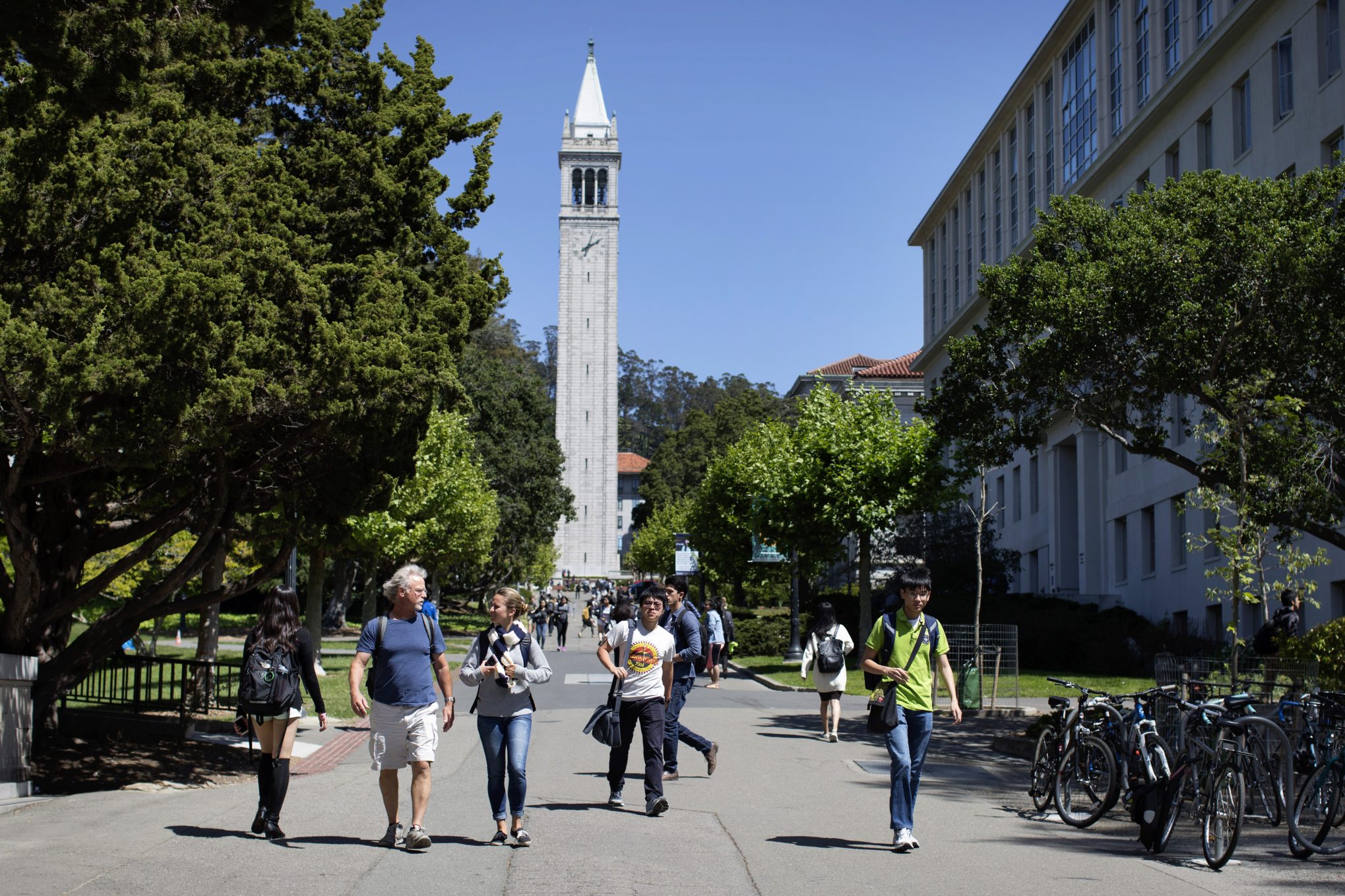
    About 16 percent of University of California, Berkeley, students come from outside the United States. Credit: Eric Risberg/AP Photo

    Xue, who is from Beijing and won a student senate seat this past spring on a platform of supporting international students, said the administration’s actions strike at a critical part of campus life at Berkeley.

    “College is the opportunity of a lifetime to unlearn prejudices and embrace new perspectives, neither of which is possible without a student body that comes from a wide range of geographic and cultural backgrounds,” she said.

    About 16 percent of UC Berkeley’s more than 45,000 students come from outside the United States to study at the crown jewel of California’s public research university system, where creeks run through campus beneath cooling redwoods and parking spaces are set aside for Nobel laureates. China, India, South Korea and Canada send the biggest numbers. International students pay higher tuition than California residents, boosting the university’s coffers and subsidizing some of their peers. Many of them conduct cutting-edge research in fields like computer science, engineering and chemistry.

    Now the Trump administration’s immigration crackdown, magnified by the yanking of billions in federal research dollars, has international students worried about their future on campus. Many are changing their behavior to avoid scrutiny: Some canceled travel plans and many said they avoid walking near any campus protests in fear of being photographed.

    “It’s difficult for international students to feel secure when they cannot anticipate what the administration might charge against them next — or whether they might be unfairly targeted,” said one global studies major who asked not to be identified for fear of attracting retaliation.

    Tomba Morreau, a rising junior from the Netherlands studying sociology, said he stopped posting about politics on social media — just in case.

    That kind of self-censorship troubles Paul Fine, co-chair of the Berkeley Faculty Association, which represents about a fifth of the university’s tenure-track faculty. 

    Federal policies are “creating this culture of fear where people start to censor themselves and try to stay under the radar and not show up in their full selves, whether for academic work or activism,” he said.

    Related: International students are rethinking coming to the U.S. That’s a problem for colleges

    International students in Fine’s classes told him they wanted to attend a recent protest against federal threats to higher education but were afraid of the consequences, he said. Others told him they were skipping academic conferences outside the United States that they otherwise would have attended.

    “Berkeley really prides ourselves on being an intellectual hub that convenes people from all over the world to work on the most important problems,” Fine said. Now that identity is at risk, he said, especially as actual and threatened cuts to grants make it harder for faculty to hire international graduate students and postdocs. 

    Most poignant, he said, was hearing from demoralized Chinese students who left a repressive government to come to the United States only to see attacks on academic freedom replicated here. 

    Xue said she hopes the crisis facing universities would draw attention to the challenges international students face, including limited financial aid and the stereotype that all of them are wealthy. With her colleagues in student government, she is lobbying for Berkeley to spend more on the international office, which provides one-on-one advising on visa issues and employment.

    For Lily Liu, a Chinese computer scientist, 2025 was shaping up to be a year of milestones. She graduated with a doctorate last month, has a job lined up at a leading artificial intelligence company and is engaged to be married in November.

    But the Trump administration’s changing policies toward international scholars have complicated celebrations for Liu, who’s in a federal program that extends her visa for up to a year beyond graduation so she can gain work experience here. She canceled summer travel plans with her family, concerned she might not be let back into the country. And she’s considering moving her wedding to the United States from China, even though many of her relatives wouldn’t be able to attend.

    “For international students, every policy affects us a lot,” she said. So Liu is careful. After the publication of her thesis was delayed, she visited Berkeley’s international office to make sure the setback wouldn’t affect her work permit. Her fiancé has a green card, which should theoretically mean his immigration status is more stable. But these days, she said, who knows? 

    — Felicia Mello 

    The University of Texas at San Antonio 

    SAN ANTONIO, Texas — Growing up here, Reina Saldivar had always loved science — all she wanted to watch on TV was “Animal Planet.” Yet until she applied on a whim to a program for aspiring researchers after her first year at the University of Texas at San Antonio, she assumed she would spend her life as a lab technician, running cultures. 

    The program, Maximizing Access to Research Careers, or MARC, was started by the National Institutes of Health decades ago at colleges around the country to prepare students, especially those from historically underrepresented backgrounds, for livelihoods in the biomedical sciences. 

    Saldivar got in. And through the program, she spent much of her time on campus in a university lab, helping develop a carrier molecule for a new Lyme disease vaccine. Now Saldivar, who graduated this spring, plans to eventually return to academia for a doctorate.  

    “What MARC taught me was that my dreams aren’t out of reach,” she said.

    Saldivar is among hundreds who’ve participated in the MARC program since its 1980 founding at the University of Texas at San Antonio. She may also be among the last. In April, the university’s MARC program director, Edwin Barea-Rodriguez, opened his email inbox to find a form letter terminating the initiative and advising against recruiting more cohorts. 

    The letter cited “changes in NIH/HHS [Health and Human Services] priorities.” In recent months, the Trump administration has canceled at least half a dozen programs meant to train scholars and diversify the sciences as part of an effort to root out what the president labels illegal DEI. 

    In a statement to The Hechinger Report, NIH said that it “is committed to restoring the agency to its tradition of upholding gold-standard, evidence-based science” and is reviewing grants to make sure the agency is “addressing the United States chronic disease epidemic.” 

    With MARC ending, Barea-Rodriguez is searching for a way to continue supporting current participants until they graduate next academic year. Without access to federal money, however, the young scientists are anxious about their futures — and that of public health in general. 

    “It took years to be where we are now,” said Barea-Rodriguez, who said he was not speaking on behalf of his university, “and in a hundred days everything was destroyed.” 

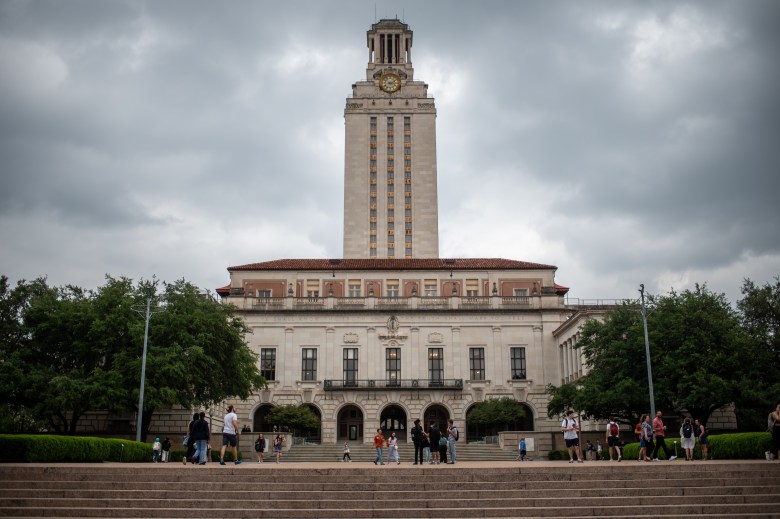
    UTSA’s sprawling campus sits on the northwest edge of San Antonio, far from tourist sites like the Alamo and the River Walk. Forty-four percent of the nearly 31,000 undergraduate students are the first in their families to attend college; more than 61 percent identify as Hispanic or Latino. The university was one of the first nationwide to earn Department of Education recognition as a Hispanic-serving institution, a designation for colleges where at least a quarter of full-time undergraduates are Hispanic.

    When Barea-Rodriguez arrived to teach at the school in 1995, many locals considered it a glorified community college, he said. But in the three decades since, the investments NIH made through MARC and other federal programs have helped it become a top-tier research university. That provided students like Saldivar with access to world-class opportunities close to home and fostered talent that propelled the economy in San Antonio and beyond. 

    The Trump administration has quickly upended much of that infrastructure, not only by terminating career pipeline programs for scholars, but also by pulling more than $8.2 million in National Science Foundation money from UTSA. 

    One of those canceled grants paid for student researchers and the development of new technologies to improve equity in math education and better serve elementary school kids from underrepresented backgrounds in a city that is about 64 percent Hispanic. Another aimed to provide science, technology, engineering and math programming to bilingual and low-income communities. 

    UTSA administrators did not respond to requests for comment about how federal funding freezes and cuts are affecting the university. Nationwide, more than 1,600 NSF grants have been axed since January.

    Related: So much for saving the planet. Climate careers, plus many others, evaporate for class of 2025 

    In San Antonio, undergraduates said MARC and other now-dead programs helped prepare them for academic and professional careers that might have otherwise been elusive. Speaking in a lab remodeled and furnished with NIH money, where leftover notes and diagrams on glass erase boards showed the research questions students had been noodling, they described how the programs taught them about drafting an abstract, honing public speaking and writing skills, networking, putting together a résumé and applying for summer research positions, travel scholarships and graduate opportunities. 

    “All of the achievements that I’ve collected have pretty much been, like, a direct result of the program,” said Seth Fremin, a senior biochemistry major who transferred to UTSA from community college and has co-authored five articles in major journals, with more in the pipeline. After graduation, he will start a fully funded doctoral program at the University of Pittsburgh to continue his research on better understanding chemical reactions. 

    Seth Fremin, a senior biochemistry major at the University of Texas at San Antonio, with Edwin Barea-Rodriguez. Credit: Alexandra Villareal for The Hechinger Report

    Similarly, Elizabeth Negron, a rising senior, is spending this summer at the Massachusetts Institute of Technology, researching skin microbiomes to see if certain bacteria predispose some people to cancers. 

    “It’s weird when you meet students who didn’t get into these programs,” Negron said, referring to MARC. “They haven’t gone to conferences. They haven’t done research. They haven’t been able to mentor students. … It’s very strange to acknowledge what life would have been without it. I don’t know if I could say I’d be as successful as I am now.” 

    With money for MARC erased, Negron said she will probably need a job once she returns to campus in the fall so she can afford day-to-day expenses. Before, research was her job. 

    “Without MARC,” she said, “it becomes a question of can I at least cover my tuition and my very basic needs.” 

    — Alexandra Villarreal 

    The University of Illinois Urbana-Champaign

    CHAMPAIGN, Ill. — When Peter Goldsmith received notice in late January that his Soybean Innovation Lab at the University of Illinois would soon lose all of its funding, he had no idea it was coming. Suddenly Goldsmith, the lab’s director, had to tell his 30 employees they would soon be out of a job and tell research partners across Africa that operations would come to a halt. The lab didn’t even have money to water its soybean fields in Africa. 

    One employee, Julia Paniago, was in Malawi when she got the news. “We came back the next day,” she said of her team, “and it was a lot of uncertainty. And a lot of people cried.”

    The University of Illinois’ Soybean Innovation Lab (SIL) was part of a network of 17 labs at universities across the country, all working on research related to food production and reducing global hunger, and all funded through the U.S. Agency for International Development — until the Trump administration shut down USAID.

    Brian Diers is former deputy director of the University of Illinois’ Soybean Innovation Lab. The lab lost its funding because of cuts to the U.S. Agency for International Development. Credit: Miles MacClure for The Hechinger Report

    Soybeans — which provide both oil and high-protein food — aren’t yet commonly grown in Malawi. SIL researchers have been working toward two related goals: helping local farmers increase soybean production and ameliorate malnutrition and generating enough interest in the crop there that a new export market will open for American farmers.

    The lab’s researchers work in soybean breeding, economics and mechanical research as well as education. They hope to show that soybean production in Africa is worth further investment so that eventually the private sector will come in after them.

    “The people who work at SIL, they like being right at the frontier of change,” Goldsmith said. “It’s high-risk work — that’s what the universities do, that’s what scientific research is about.”

    UI, the state’s flagship with a sprawling campus spread between the cities of Urbana and Champaign, is noted for its research work, especially agricultural research.

    Labs and researchers across the university lost funding in cuts made by the Trump administration; more than $25 million from agencies including NIH, NSF and the National Endowment for the Humanities was cut, Melissa Edwards, associate vice chancellor for research and innovation, said, a total of 59 grants amounting to 3.6 percent of their overall federal grant portfolio.

    Annette Donnelly, who just received her doctorate in education, is among those affected. Her research focuses on educating malnourished children in Africa and developing courses to help Africans learn how to process soybeans into oil.

    Related: The college degree gap between Black and white Americans was always bad. It’s getting worse

    In April, SIL was handed a lifeline — an anonymous $1 million gift that will keep the lab running through April 2026. The donation wasn’t enough for Goldsmith to rehire all of his employees; SIL’s annual operating budget before the USAID cuts was $3.3 million (and would have kept things running through 2027). But, he said, the money will allow SIL to continue its research in the Lower Shire Valley in Malawi, a project he hopes will attract future donors to fund the lab’s work. 

    The April donation saved Donnelly’s job, but her priorities shifted.  “We’re doing research,” she said, “but we’re also doing a lot of proposal writing. It has taken on a much greater priority.” 

    Donnelly hopes to attract more funding so she can resume research she had started in western Kenya, demonstrating that introducing soy into children’s diets increased their protein intake by up to 65 percent, she said.

    The impact that funding cuts will have on researchers at the soybean lab pales in comparison to the impact on their partners in Africa, Donnelly emphasized. There, she said, the cuts mean processors will likely slow production, limiting their ability to deliver soy products. “The consequences there are much bigger,” she said.

    The Soybean Innovation Lab was funded through the Feed the Future initiative, a program to help partner countries develop better agricultural practices that began under the Obama administration in 2010. All 17 Feed the Future innovation labs funded through USAID lost funding, except for the one at Kansas State University, which studies heat-tolerant wheat.

    The soybean lab’s office is housed on a quiet edge of the Illinois campus in a building once occupied by the university’s veterinary medicine program. Across the street, rows of greenhouses are home to the Crop Science Department’s experiments.

    There, Brian Diers is breeding soybean varieties that resist soybean rust, a disease that’s been an obstacle to ramping up soybean production across sub-Saharan Africa. A professor emeritus who is retired, Diers works part-time at SIL to assist with soybean breeding. The April donation wasn’t enough to cover his work. Now he volunteers his time.

    “ If we can help African agriculture take off and become more productive, that’s eventually going to help their economies and then provide more opportunities for American farmers to export to Africa,” he said.

    Goldsmith drew an analogy between his lab’s work and the state of American agriculture in the 1930s. As the Dust Bowl swept through the Great Plains, Monsanto or another company could have stepped in to help combat it, but didn’t. Public land-grant universities did. 

    “That’s where the innovation comes from, from the public land grants in the U.S.,” Goldsmith said. “And now the public land grants still work in U.S. agriculture but also in the developing world.” 

    Commercial soybean producers hesitate to dip their toes into unproven markets, he said, so it’s SIL’s job to demonstrate that a viable market exists. “That was our secret sauce, in that lots of commercial players liked the products, the technologies we had, and wanted to move into the soybean space, but it wasn’t a profitable market,” Goldsmith said of the African soybean market.

    Diers said federal funding cuts imperil not just the development of commerce and global food production but the next generation of scientists as well. 

    “We could potentially lose a generation of scientists who won’t go into science because there’s no funding right now,” he said. 

    — Miles MacClure

    Contact editor Lawrie Mifflin at [email protected] or 212-678-4078. Contact editor Caroline Preston at 212-870-8965, via Signal at CarolineP.83 or on email at [email protected].

    This story about international students was produced by The Hechinger Report, a nonprofit, independent news organization focused on inequality and innovation in education. Sign up for the Hechinger newsletter.

    The Hechinger Report provides in-depth, fact-based, unbiased reporting on education that is free to all readers. But that doesn’t mean it’s free to produce. Our work keeps educators and the public informed about pressing issues at schools and on campuses throughout the country. We tell the whole story, even when the details are inconvenient. Help us keep doing that.

    Join us today.

    Source link

  • Help us tell the story of how the Trump administration is changing higher education

    Help us tell the story of how the Trump administration is changing higher education

    Since January, President Donald Trump has taken countless steps to transform the nation’s colleges and universities. His administration has cut scientific and medical research, ended efforts to promote diversity equity and inclusion (DEI), introduced newly aggressive policies on loan repayment, revoked visas for international students, and more. While Trump’s battles with Harvard and Columbia have received the most attention, the administration’s actions have had consequences far beyond those two universities.  

    We want to know how the Trump administration is affecting higher education and life on your campus. What, if any, changes are you seeing at your college or university because of federal policy shifts? In what ways do you see higher education changing?

    If you prefer, you can also email us directly at [email protected]. Contact editor Lawrie Mifflin at [email protected] or 212-678-4078. Contact editor Caroline Preston at 212-870-8965, via Signal at CarolineP.83 or on email at [email protected].

    This story about higher education was produced by The Hechinger Report, a nonprofit, independent news organization focused on inequality and innovation in education. Sign up for our newsletters.

    The Hechinger Report provides in-depth, fact-based, unbiased reporting on education that is free to all readers. But that doesn't mean it's free to produce. Our work keeps educators and the public informed about pressing issues at schools and on campuses throughout the country. We tell the whole story, even when the details are inconvenient. Help us keep doing that.

    Join us today.


    Source link

  • El College Board cancela programa de premios para estudiantes negros y latinos de alto rendimiento 

    El College Board cancela programa de premios para estudiantes negros y latinos de alto rendimiento 

    El College Board modificó este mes los criterios de concesión de becas del Programa Nacional de Reconocimiento o National Recognition Program, en una medida que podría desplazar decenas de miles de dólares de becas de estudiantes negros y latinos a estudiantes blancos. 

    Las universidades utilizaban los premios para contratar y ofrecer becas a estudiantes de alto rendimiento procedentes de grupos subrepresentados en la enseñanza superior. Anteriormente, el premio reconocía los logros académicos de estudiantes de cinco categorías: negros, hispanos, indígenas americanos, de primera generación y residentes en zonas rurales o ciudades pequeñas.  

    Las categorías raciales fueron eliminadas.  

    Ahora, los estudiantes que viven en ciudades pequeñas y zonas rurales pueden seguir obteniendo el premio si obtienen en el PSAT -precursor del SAT que se administra en las escuelas secundarias de todo el país- una puntuación que se sitúe en el 10% superior de todos los estudiantes de ciudades pequeñas y zonas rurales de su estado. Lo mismo ocurre con los estudiantes de primera generación, pero no con los de categorías raciales subrepresentadas. 

    Relacionados: ¿Le interesan más noticias sobre universidades? Suscríbase a nuestro boletín sobre educación superior quincenal gratuito

    Los críticos se mostraron decepcionados por la decisión del College Board. 

    “Creían que la desigualdad racial era algo importante que había que abordar ayer, y al cambiar eso, están dando a entender que no es algo importante por lo que luchar ahora”, dijo Rachel Perera,  investigadora de estudios gubernamentales en la liberal Brookings Institution.  “Esa es la cuestión central que se debate, aunque no se haga de forma explícita: ¿existe la discriminación racial?”.  

    En una declaración en su sitio web, el College Board recordó la sentencia del Tribunal Supremo de 2023 que prohibió el uso de la raza como criterio en las admisiones, aunque los premios del Programa Nacional de Reconocimiento se utilizaban para becas y contratación, no para admisiones. 

    “Las recientes acciones legales y regulatorias han limitado aún más la utilidad de estos premios para los estudiantes y las universidades”, dice la declaración. Además, el presidente Donald Trump ha dejado claro en repetidas ocasiones que desaprueba las políticas que tienen en cuenta la raza en la educación superior, y algunos estados han prohibido la consideración de la raza en las decisiones sobre becas.   

    En 2023-24, el College Board concedió 115.000 premios de reconocimiento y algo menos de la mitad correspondieron a categorías raciales. El año anterior hubo más de 80.000 premios y la mayoría fueron para estudiantes negros, hispanos e indígenas americanos. Aunque el College Board no reparte dinero por sí mismo, las universidades lo utilizan para seleccionar a los estudiantes que recibirán becas. Según Holly Stepp, directora de comunicaciones del College Board, éste no mantiene una lista de las instituciones que utilizaron las categorías raciales. 

    El College Board inició el programa en 1983 para reconocer a los estudiantes hispanos de alto rendimiento. En 2020, se añadieron las otras dos categorías raciales y las designaciones de ciudad pequeña y rural. Los estudiantes de primera generación pudieron ganar el premio a partir del año pasado. Las ciudades pequeñas podían incluir aquellas con ingresos modestos o enclaves ricos como Aspen (Colorado). Además, todos los estudiantes deben tener al menos una media de B+. 

    Relacionado: El recorte de las becas basadas en la raza bloquea el acceso a la universidad,  los estudiantes según

    Aunque ahora estudiantes de todas las razas pueden obtener los premios, la supresión de las categorías raciales afectará probablemente de forma desproporcionada a los estudiantes negros e hispanos.  

    En promedio, los estudiantes asiáticos y blancos obtienen puntuaciones más altas en el PSAT. La puntuación media de los estudiantes blancos en el PSAT del año pasado fue de 994, frente a los 821 de los estudiantes negros, lo que supone una diferencia de 173 puntos. La media de los estudiantes asiáticos fue aún mayor, 1108, mientras que la de los hispanos y los indígenas americanos fue de 852 y 828 puntos, respectivamente.  

    “Se trata de un avance hacia las categorías que no tienen en cuenta la raza, cuando sabemos que la educación y el acceso a la educación no son independientes de la raza”, afirmó Wil Del Pilar, vicepresidente senior de EdTrust, un grupo político de tendencia izquierdista. 

    Sin embargo, algunos conservadores elogiaron la medida, argumentando que los programas de becas y contratación en función de la raza eran formas de eludir las sentencias de la Corte Suprema sobre la acción afirmativa y que constituían una forma de discriminación inversa. 

    Jonathan Butcher, investigador principal de política educativa en la conservadora Heritage Foundation, dijo que cree que la discriminación racial existe y debe abordarse, pero que las políticas educativas que tienen en cuenta la raza son ilegales e ineficaces. 

    “Si se utilizan preferencias raciales, se está preparando a los estudiantes para que pierdan la confianza en sí mismos cuando se enfrenten a una situación para la que no están preparados”, afirma Butcher. 

    Relacionado: Cruzaron la frontera en busca de mejores escuelas. Ahora, algunas familias dejan EEUU

    En lugar de las categorías raciales, este año se ha añadido una nueva designación que reconoce a los estudiantes que obtienen una puntuación en el PSAT dentro del 10% de los mejores de su escuela secundaria.  

    Los expertos afirman que es poco probable que las universidades ofrezcan becas a todos los estudiantes que obtengan las mejores notas del 10% de todos las escuelas secundarias del país, dado el coste que ello supondría. Funcionarios de la Universidad de Nuevo México, por ejemplo, dijeron que dejarían de utilizar las designaciones del College Board a partir del año escolar 2026-27. 

    “Actualmente estamos analizando nuestra estrategia de becas, pero se harán cambios en todos los ámbitos”, dijo Steve Carr, director de comunicaciones de la universidad, en un correo electrónico. 

    En 2023-24, la Universidad de Nuevo México concedió becas por valor de 15.000 dólares cada una a 149 estudiantes negros, hispanos e indígenas americanos. 

    La Universidad de Arizona también ofreció becas a los estudiantes que obtuvieron premios del Programa de Reconocimiento Nacional en las designaciones raciales el año pasado. 

    “La universidad ya estaba evaluando su estrategia de becas y tendrá en cuenta el anuncio del College Board a la hora de determinar la mejor manera de avanzar y apoyar a nuestros estudiantes”, dijo Mitch Zak, portavoz de la Universidad de Arizona, en un correo electrónico. 

    Además de las puntuaciones obtenidas en el PSAT, los estudiantes pueden optar al premio del College Board si obtienen una puntuación de 3 o más en dos de los cinco exámenes de Colocación Avanzada o Advanced Placement realizados durante su noveno y/o décimo curso, aunque muchas escuelas secundarias no ofrecen de manera uniforme cursos AP a los estudiantes de primer y segundo año.  

    “No podemos hablar de méritos si no estamos todos en el mismo punto de partida en cuanto a lo que recibimos de nuestra educación primaria y secundaria”, dijo Del Pilar, “y cómo podemos desenvolvernos en el entorno de preparación de exámenes, o la falta de preparación de exámenes que reciben ciertas comunidades”. 

    Comunícate Meredith Kolodner en el 212-870-1063 o en [email protected] o en Signal en merkolodner.04 

    Esta historia sobre el College Board fue producida por The Hechinger Report, una organización de noticias independiente y sin ánimo de lucro centrada en la desigualdad y la innovación en la educación. Suscríbase al boletín de Hechinger

    The Hechinger Report provides in-depth, fact-based, unbiased reporting on education that is free to all readers. But that doesn’t mean it’s free to produce. Our work keeps educators and the public informed about pressing issues at schools and on campuses throughout the country. We tell the whole story, even when the details are inconvenient. Help us keep doing that.

    Join us today.

    Source link

  • Clean energy workforce training hub a ‘gamechanger’ in this struggling factor town

    Clean energy workforce training hub a ‘gamechanger’ in this struggling factor town

    Decatur, Illinois, has been losing factory jobs for years. A training program at a local community college promises renewal and provides training for students from disenfranchised communities

    This story is part of a collaboration between the Institute for Nonprofit News’ Rural News Network and Canary Media, South Dakota News WatchCardinal News, The Mendocino Voice and The Maine Monitor, with support from Ascendium Education Group. It is reprinted with permission. 

    DECATUR, IL. — A fistfight at a high school football game nearly defined Shawn Honorable’s life.

    It was 1999 when he and a group of teen boys were expelled and faced criminal charges over the incident. The story of the “Decatur Seven” drew national headlines and protests led by the Rev. Jesse Jackson, who framed their harsh treatment as blatant racism. The governor eventually intervened, and the students were allowed to attend alternative schools.

    Honorable, now 41, was encouraged by support “from around the world,” but he said the incident was traumatizing and he continued to struggle academically and socially. Over the years, he dabbled in illegal activity and was incarcerated, most recently after a 2017 conviction for accepting a large amount of marijuana sent through the mail.

    Today, Honorable is ready to start a new chapter, having graduated with honors last week from a clean energy workforce training program at Richland Community College, located in the Central Illinois city of Decatur. He would eventually like to own or manage a solar company, but he has more immediate plans to start a solar-powered mobile hot dog stand. He’s already chosen the name: Buns on the Run.

    “By me going back to school and doing this, it shows my nephews and my little cousins and nieces that it is good to have education,” Honorable said. “I know this is going to be the new way of life with solar panels. So I’ll have a step up on everyone. When it comes, I will already be aware of what’s going on with this clean energy thing.”

    Shawn Honorable graduated with honors last week from Richland Community College’s clean energy workforce training program in Decatur, Illinois, part of a network of hubs funded by the state’s 2021 Climate and Equitable Jobs Act. Credit: Lloyd DeGrane/Canary Media

    After decades of layoffs and factory closings, the community of Decatur is also looking to clean energy as a potential springboard.

    Located amid soybean fields a three-hour drive from Chicago, the city was long known for its Caterpillar, Firestone Tire, and massive corn-syrup factories. Industrial jobs have been in decline for decades, though, and high rates of gun violence, child poverty, unemployment, and incarceration were among the reasons the city was named a clean energy workforce hub funded under Illinois’ 2021 Climate and Equitable Jobs Act (CEJA).

    Decatur’s hub, based at Richland Community College, is arguably the most developed and successful of the dozen or so established statewide. That’s thanks in part to TCCI Manufacturing, a local, family-owned factory that makes electric vehicle compressors. TCCI is expanding its operations with a state-of-the-art testing facility and an on-site campus where Richland students will take classes adjacent to the manufacturing floor. The electric truck company Rivian also has a factory 50 miles away.

    “The pieces are all coming together,” Kara Demirjian, senior vice president of TCCI Manufacturing, said by email. “What makes this region unique is that it’s not just about one company or one product line. It’s about building an entire clean energy ecosystem. The future of EV manufacturing leadership won’t just be on the coasts — it’s being built right here in the Midwest.”

    Powering Rural Futures: Clean energy is creating new jobs in rural America, generating opportunities for people who install solar panels, build wind turbines, weatherize homes and more. This five-part series from the Rural News Network explores how industry, state governments and education systems are training this growing workforce.

    Related: Want to read more about how climate change is shaping education? Subscribe to our free newsletter.

    The Decatur CEJA program has also flourished because it was grafted onto a preexisting initiative, EnRich, that helps formerly incarcerated or otherwise disenfranchised people gain new skills and employment. The program is overseen by the Rev. Courtney Carson, a childhood friend of Honorable and another member of the Decatur Seven.

    “So many of us suffer significantly from our unmet needs, our unhealed traumas,” said Carson, who was jailed as a young man for gun possession and later drag racing. With the help of mentors including Rev. Jackson and a college basketball coach, he parlayed his past into leadership, becoming associate pastor at a renowned church, leading a highway construction class at Richland, and in 2017 being elected to the same school board that had expelled him.

    Carson, now vice president of external relations at the community college, tapped his own experience to shape EnRich as a trauma-informed approach, with wraparound services to help students overcome barriers — from lack of childcare to PTSD to a criminal record. Carson has faith that students can overcome such challenges to build more promising futures, like Decatur itself has done.

    “We have all these new opportunities coming in, and there’s a lot of excitement in the city,” Carson said. “That’s magnificent. So what has to happen is these individuals who suffered from closures, they have to be reminded that there is hope.”

    Richland Community College’s clean energy jobs training starts with an eight-week life skills course that has long been central to the larger EnRich program. The course uses a Circle of Courage practice inspired by Indigenous communities and helps students prepare to handle stressful workplace situations like being disrespected or even called a racial slur.

    “Being called the N-word, couldn’t that make you want to fight somebody? But now you lose your job,” said Carson. “We really dive deep into what’s motivating their attitude and those traumas that have significantly impacted their body to make them respond to situations either the right way or the wrong way.”

    The training addresses other dynamics that might be unfamiliar to some students — for example, some male students might not be prepared to be supervised by a woman, Carson noted, or others might not be comfortable with LGBTQ+ coworkers.

    Karl Evans instructs Richland Community College students on the inner workings of a gas furnace. Credit: Lloyd DeGrane/Canary Media

    Life skills are followed by a construction math course crucial to many clean energy and other trades jobs. During a recent class, 24-year-old Brylan Hodges joked with the teacher while converting fractions to decimals and percentages on the whiteboard. He explained that he moved from St. Louis to Decatur in search of opportunity, and he hopes to become a property manager overseeing solar panel installation and energy-efficiency upgrades on buildings.

    Students take an eight-hour primer in clean energy fields including electric vehicles, solar, HVAC, and home energy auditing. Then they choose a clean energy track to pursue, leading to professional certifications as well as a chance to continue at Richland for an associate degree. Under the state-funded program, students are paid for their time attending classes.

    Related: Students partnered with an EV battery factory to train students and ignite the economy. Trump’s clean energy war complicates their plans

    Marcus James was part of the first cohort to start the program last October, just days after his release from prison.

    He was an 18-year-old living in Memphis, Tennessee, when someone shot at him, as he describes it, and he fired back, with fatal consequences. He was convicted of murder and spent 12 years behind bars. After his release he made his way to Decatur, looking for a safer place to raise his kids. Adjusting to life on the outside wasn’t easy, and he ended up back in prison for a year and a half on DUI and drug possession charges.

    Following his release, he was determined to turn his life around.

    “After I brought my kids up here, I end up going back to prison. But at that moment, I realized, man, I had to change,” James told a crowd at an event celebrating the clean jobs program in March.

    The Rev. Courtney Carson, vice president of external relations at the community college. Credit: Lloyd DeGrane/Canary Media

    James said that at first, he showed up late to every class. But soon the lessons sank in, and he was never late again. He always paid attention when people talked, and he gained new confidence.

    “As long as I put my mind to it, I can do it,” said James, who would like to work as a home energy auditor. Richland partners with the energy utility Ameren to place trainees in such positions.

    “I like being out in the field, learning new stuff, dealing with homes, helping people,” James said, noting he made energy-efficiency improvements to his own home after the course.

    Related: To fill ‘education deserts,’ more states want community colleges to offer bachelor’s degrees

    Illinois’ 2017 Future Energy Jobs Act (FEJA) launched the state’s clean energy transition, baking in equity goals that prioritize opportunities for people who benefited least and were harmed most by the fossil fuel economy. It created programs to deploy solar arrays and provide job training in marginalized and environmental justice communities.

    FEJA’s rollout was rocky. Funding for equity-focused solar installations went unspent while workforce programs struggled to recruit trainees and connect them with jobs. The pandemic didn’t help. The follow-up legislation, CEJA, expanded workforce training programs and remedied snafus in the original law.

    Melissa Gombar is principal director of workforce development programs for Elevate, a Chicago-based national nonprofit organization that oversaw FEJA job training and subcontracts for a Chicago-area CEJA hub. Gombar said many community organizations tasked with running FEJA training programs were relatively small and grassroots, so they had to scramble to build new financial and human resources infrastructure.

    “They have to have certain policies in place for hiring and procurement. The influx of grant money might have doubled their budget,” Gombar said. Meanwhile, the state employees tasked with helping the groups “are really talented and skilled, trying their best, but they’re overburdened because of the large lift.”

    CEJA, by contrast, tapped community colleges like Richland, which already had robust infrastructure and staffing. CEJA also funds community organizations to serve as “navigators,” using the trust and credibility they’ve developed in communities to recruit trainees.

    Richland Community College received $2.6 million from April 2024 through June 2025, and the Community Foundation of Macon County, the hub’s navigator, received $440,000 for the same time period. The other hubs similarly received between $1 million and $3.3 million for the past year, and state officials have said the same level of funding will be allocated for each of the next two years, according to the Illinois Clean Jobs Coalition.

    CEJA hubs also include social service providers that connect trainees with wraparound support; businesses like TCCI that offer jobs; and affiliated entrepreneur incubators that help people start their own clean energy businesses. CEJA also funded apprenticeship and pre-apprenticeship programs with labor unions, which are often a prerequisite for employment in utility-scale solar and wind.

    “The sum of the parts is greater than the whole,” said Drew Keiser, TCCI vice president of global human resources. “The navigator is saying, ‘Hey, I’ve connected with this portion of the population that’s been overlooked or underserved.’ OK, once you get them trained, send their resumes to me, and I’ll get them interviewed. We’re seeing a real pipeline into careers.”

    The hub partners go to great lengths to aid students — for example, coordinating and often paying for transportation, childcare, or even car repairs.

    “If you need some help, they always there for you,” James said.

    Related: Losing faith: Rural, religious colleges are among the most endangered

    In 1984, TCCI began making vehicle compressors in a Decatur plant formerly used to build Sherman tanks during World War II. A few decades later, the company began producing compressors for electric vehicles, which are much more elaborate and sensitive than those for internal combustion engines.

    In August 2023, Gov. JB Pritzker joined TCCI President Richard Demirjian, the Decatur mayor, and college officials for the groundbreaking of an Electric Vehicle Innovation Hub, which will include a climatic research facility — basically a high-tech wind tunnel where companies and researchers from across the world can send EV chargers, batteries, compressors, and other components for testing in extreme temperatures, rain, and wind.

    A $21.3 million capital grant and a $2.2 million electric vehicle incentive from the state are funding the wind tunnel and the new facilities where Richland classes will be held. In 2022, Pritzker announced these investments as furthering the state goal of 1 million EVs on the road by 2030.

    Far from the gritty industrial environs that likely characterized Decatur workplaces of the past, the classrooms at TCCI feature colorful decor, comfortable armchairs, and bright, airy spaces adjacent to pristine high-tech manufacturing floors lined with machines.

    “This hub is a game changer,” said Keiser, noting the need for trained tradespeople. “As a country, we place a lot of emphasis on kids going to college, and maybe we’ve kind of overlooked getting tangible skills in the hands of folks.”

    A marketing firm founded by Kara Demirjian – Richard Demirjian’s sister – and located on-site with TCCI also received clean energy hub funds to promote the training program. This has been crucial to the hub’s success, according to Ariana Bennick, account executive at the firm, DCC Marketing. Its team has developed, tested, and deployed digital billboards, mailers, ads, Facebook events, and other approaches to attract trainees and business partners.

    “Being a part of something here in Decatur that’s really leading the nation in this clean energy initiative is exciting,” Bennick said. “It can be done here in the middle of the cornfields. We want to show people a framework that they can take and scale in other places.”

    With graduation behind him, Honorable is planning the types of hot dogs and sausages he’ll sell at Buns on the Run. He said Tamika Thomas, director of the CEJA program at Richland, has also encouraged him to consider teaching so he can share the clean energy skills he’s learned with others. The world seems wide open with possibilities.

    “A little at a time — I’m going to focus on the tasks in front of me that I’m passionate about, and then see what’s next,” Honorable said. He invoked a favorite scene from the cartoon TV series “The Flintstones,” in which the characters’ leg power, rather than wheels and batteries, propelled vehicles: “Like Fred and Barney, I’ll be up and running.”

    The Hechinger Report provides in-depth, fact-based, unbiased reporting on education that is free to all readers. But that doesn’t mean it’s free to produce. Our work keeps educators and the public informed about pressing issues at schools and on campuses throughout the country. We tell the whole story, even when the details are inconvenient. Help us keep doing that.

    Join us today.

    Source link

  • College Board cancels award program for high-performing Black and Latino students

    College Board cancels award program for high-performing Black and Latino students

    The College Board this month changed the criteria for its National Recognition Program awards in a move that could shift tens of thousands of scholarship dollars from Black and Latino students to white students.

    Colleges used the awards to recruit and offer scholarships to high-performing students from groups underrepresented in higher education. The award previously recognized academic achievement by students in five categories — Black, Hispanic, Native American, first-generation and those living in rural areas or small towns.

    The racial categories have been eliminated.

    Now, students living in small towns and rural areas can still earn the award if they score in the top 10 percent among all small-town and rural students in their state on the PSAT — a precursor to the SAT that is administered in high schools around the country. The same is true for first-generation students but not for students in underrepresented racial categories.

    Related: Interested in more news about colleges and universities? Subscribe to our free biweekly higher education newsletter.

    Critics said they were disappointed by the College Board’s decision.

    “They believed racial inequality was something important to address yesterday, and by changing that, they’re implying that it’s not something important to fight for now,” said Rachel Perera, a fellow in government studies at the liberal Brookings Institution. “That’s the heart of the question that’s being debated — although it’s not being debated in explicit terms — does racial discrimination exist?”

    In a statement on its website, the College Board noted the 2023 Supreme Court ruling that prohibited the use of race in admissions, although the National Recognition Program awards were used for scholarships and recruitment, not admissions.

    “Recent legal and regulatory actions have further limited the utility of these awards for students and colleges,” the statement says. Also, President Donald Trump has repeatedly made clear his disapproval of race-conscious policies in higher education, and some states have banned consideration of race in scholarship decisions. 

    In 2023-24, the College Board issued 115,000 recognition awards, and a little less than half were in the racial categories. The previous year there were more than 80,000 awards and the majority were for Black, Hispanic and Native American students. While the College Board doesn’t hand out money itself, universities use it to select students for scholarships. The Board has not maintained a list of which institutions used the racial categories, according to Holly Stepp, College Board’s director of communications.

    The College Board started the program in 1983 to recognize high-performing Hispanic students. In 2020, the other two racial categories and the small town and rural designations were added. First-generation students could win the award starting last year. Small towns could include those with modest incomes or wealthy enclaves like Aspen, Colorado. All students must also have at least a B+ average.

    Related: Cutting race-based scholarships blocks path to college, students say

    While students of all races can now earn the awards, the removal of the racial categories will likely disproportionately affect Black and Hispanic students.

    On average, Asian and white students score higher on PSATs. White students’ average score on the PSAT last year was 994 last year compared with 821 for Black students — a gap of 173 points. Asian students’ average was even higher at 1108 while Hispanic and Native American students averaged 852 and 828 respectively.

    “It’s a move towards race-blind categories when we know that education and access to education isn’t race-blind,” said Wil Del Pilar, senior vice president at the left-leaning policy and advocacy group EdTrust.

    Some conservatives praised the move, however, arguing that race-conscious scholarship and recruitment programs were ways to get around the Supreme Court’s rulings on affirmative action and that they were a form of reverse discrimination.

    Jonathan Butcher, senior research fellow in education policy at the conservative Heritage Foundation, said he believes that racial discrimination does exist and should be addressed, but that race-conscious education policies were both illegal and ineffective.

    “If you are using racial preferences, you are setting students up for a loss of confidence when they struggle in a situation they’re not prepared for,” Butcher said.

    Related: How did students pitch themselves to colleges after last year’s affirmative action ruling?

    In place of the racial categories, a new designation has been added this year that recognizes students who score in the top 10 percent of their high school on the PSAT.

    Experts say colleges are unlikely to offer scholarships to all students who score in the top 10 percent of every high school in the country, given the cost that would entail. Officials at the University of New Mexico, for example, said they would stop using the College Board designations beginning in the 2026-27 school year.

    “We’re currently analyzing our scholarship strategy, but changes will be made across the board,” said Steve Carr, the university’s director of communications, in an email.

    In 2023-24, the University of New Mexico awarded scholarships based on the College Board designations worth $15,000 each to 149 Black, Hispanic and Native American students.

    The University of Arizona also offered scholarships to students who earned National Recognition Program awards in the racial designations last year.

    “The university was already evaluating its scholarship strategy and will consider the College Board’s announcement as we determine how best to move forward and support our students,” said Mitch Zak, spokesman for the University of Arizona, in an email.

    In addition to the PSAT scores, students are eligible for the College Board award if they score a 3 or higher out of 5 on two Advanced Placement exams taken during their ninth and/or 10th grade year, although many high schools don’t uniformly offer AP courses to freshmen and sophomores.

    “We can’t really have a conversation around merit if we’re not all at the same starting point in terms of what we receive from our K-12 education,” said Del Pilar, “and how we’re able to navigate the test prep environment, or the lack of test prep that certain communities receive.”

    Contact senior investigative reporter Meredith Kolodner at 212-870-1063 or [email protected] or on Signal at merkolodner.04

    This story about the College Board was produced by The Hechinger Report, a nonprofit, independent news organization focused on inequality and innovation in education. Sign up for the Hechinger newsletter.
    The Hechinger Report provides in-depth, fact-based, unbiased reporting on education that is free to all readers. But that doesn’t mean it’s free to produce. Our work keeps educators and the public informed about pressing issues at schools and on campuses throughout the country. We tell the whole story, even when the details are inconvenient. Help us keep doing that.

    Join us today.

    Source link

  • As colleges close, small religious campuses in rural states are among the most imperiled

    As colleges close, small religious campuses in rural states are among the most imperiled

    DAVENPORT, Iowa — The Catholic prayer for the faithful echoed off the limestone walls and marble floor of the high-ceilinged chapel.

    It implored God to comfort the poor and the hungry. The sick and the suffering. The anxious and the afraid.

    Then it took an unexpected turn.

    “Lord, hear our prayer for St. Ambrose and Mount Mercy University,” the young voice said, “that the grace of the Holy Spirit may help us to follow God’s plan for our new partnership.”

    The speaker was talking about ongoing efforts to unite St. Ambrose University, where this weeknight Mass was being held, with fellow Catholic university Mount Mercy. Small religious schools in rural states are shutting down at an accelerating rate, a fate these two are attempting to avoid.

    Credit: Mike Rundle for The Hechinger Report

    “Lord, hear our prayer,” responded the congregation of students in St. Ambrose-branded T-shirts and hoodies.

    The heads of both St. Ambrose and Mount Mercy, which is in Cedar Rapids, said they’ve watched as nearby religiously affiliated colleges, athletic rivals and institutions that employed their friends and former colleagues closed.

    With falling numbers of applicants to college — especially in the Midwest — “we just don’t have the demographics anymore,” said St. Ambrose President Amy Novak. Now, as fewer graduates emerge from high schools, combining forces is a way to forestall “the reality that we might all see in five or seven years,” Novak said.

    For many other small religiously affiliated institutions, time has already run out.

    See a list of religiously affiliated colleges that have closed, been merged, or announced that they are closing or merging.

    More than half of the 77 nonprofit colleges and universities that have closed or merged since 2020, or announced that they will close or merge, were religiously affiliated, according to a Hechinger Report analysis of news coverage and federal data. More than 30 that are still in business are on a U.S. Department of Education list of institutions considered “not financially responsible” because of comparatively low cash reserves and net income and high levels of debt.

    Related: Interested in innovations in higher education? Subscribe to our free biweekly higher education newsletter.

    Some small, religiously affiliated institutions that are not on these lists are also showing signs of strain. Saint Augustine’s University in North Carolina, which is Episcopal, has 200 students, down from 1,100 two years ago, and has lost its accreditation. The 166-year-old St. Francis College in New York, which is Catholic, has sacked a quarter of its staff. Catholic Saint Louis University in Missouri laid off 20 employees, eliminated 130 unfilled faculty and staff positions and sold off its medical practice after running a deficit.

    Bluffton University in Ohio, which is Mennonite, is looking for a new partner after a planned merger fell through in February and the president resigned. Catholic St. Norbert College in Wisconsin is eliminating 11 majors and minors and 21 faculty positions. And Georgetown College in Kentucky averted closing only after an alumnus gave it $16 million, which, along with another $12 million in donations, was enough to pay off crippling debt that was costing the small Baptist institution $3 million a year just in interest.

    Other religiously affiliated schools are also taking steps to buttress themselves against demographic and financial challenges. Ursuline College in Ohio, for instance, which has fewer than 1,000 students, has agreed to merge with larger Gannon University, 95 miles away. Both are Catholic. Spring Hill College in Alabama and Rockhurst University in Missouri, both also Catholic, are teaming up so they can jointly offer more academic programs, though they will remain independent.

    More than a fifth of colleges and universities in the United States, or 849 out of 3,893, are religiously affiliated, according to the most recent figures from the National Center for Education Statistics.

    The threats to them are getting new attention. Presidents of 20 Catholic universities and colleges met in November in Chicago at a conference sponsored by DePaul University and held at the offices of the Deloitte consulting firm, which collected data to help them figure out solutions to the challenges they face.

    “The intent was to think about a blueprint for the future of Catholic higher education,” including more partnerships, shared services and other kinds of alliances, said Donna Carroll, president of the Association of Catholic Colleges and Universities. “Survival of the fittest is not the strategy that will advance the common good of Catholic higher education. We have to work together.”

    The American Council on Education last year launched a Commission on Faith-Based Colleges and Universities, with leaders of what has since grown to 17 institutions including Pepperdine, Brigham Young and Yeshiva universities and the University of Notre Dame.

    The idea of the commission, which is scheduled to meet in Washington in June, is “to increase visibility for the important contributions of religious and faith-based colleges and universities and to foster collaboration” among them.

    Some religious colleges and universities are doing fine, and even posting enrollment gains — at least in part because of growing political divisions, campus protests and ideological attacks on secular institutions, said David Hoag, president of the Council for Christian Colleges and Universities.

    Credit: Mike Rundle for The Hechinger Report

    Parents are “wanting to put their son or daughter at a safe place that’s going to have a biblical worldview or a way to look at challenges that’s not polarized,” Hoag said. “At our institutions, you’re not going to be seeing protests or things that are happening at many of these [other] universities and colleges. You’re going to see them rallying together, whether it’s for a sporting event or for a revival or baptisms.”

    Other trends also offer some hope to religiously affiliated colleges and universities. A long decline in the proportion of adults who consider themselves affiliated with a religion appears to have leveled off, the Pew Research Center finds. And while enrollment at parochial schools that feed graduates to Catholic universities fell more than 10 percent from 2017 to 2021, the most recent year for which the figure is available, the number of students at other kinds of religious primary and secondary schools is up.

    Even religiously affiliated institutions confronting the realities of falling enrollment and financial woes fill a critically important role, their advocates say. They often serve low-income students who are the first in their families to go to college and are reluctant to enroll at large public universities.

    Related: The number of 18-year-olds is about to drop sharply, packing a wallop for colleges — and the economy 

    Many are in rural areas where access to higher education is more limited than in urban and suburban places and is becoming less available still as public universities in rural states have merged or closed or cut dozens of majors.

    Attending a small rural, religiously affiliated institution “is, I think — especially for rural students — a great opportunity,” said Todd Olson, president of Mount Mercy, above the sound of trains crossing Cedar Rapids outside his window. “I know kids from very small towns around Iowa,” like the one where he grew up, Olson said. “This campus is a much more comfortable place for them.”

    Credit: Mike Rundle for The Hechinger Report

    When Jacob Lange arrived at St. Ambrose from East Dubuque, Illinois, and attended a Mass on campus, “all of a sudden all these new people I had never met were kind of chatting with me and it was really kind of nice. It felt like I was kind of included and I didn’t really think I would be originally,” he said. “You figure, ‘I’m probably going to sit in the back and probably not talk to anyone all night,’ and then I showed up, and I walked out here and all of a sudden they’re, like, ‘Here, come join our group.’ ”

    His parents also liked that he decided to go to a Catholic university, Lange said. “You know, you go to one of these big schools with 25,000 kids, and you’re kind of worried about your kid — like, what kind of dumb things is he going to get up to?”

    Catholic universities in particular have a slightly higher four-year graduation rate than the national average, according to the Center for Catholic Studies at St. Mary’s University in Texas. Graduates have a stronger sense of community purpose, the center found in a survey. Alumni are 9 percentage points more likely to say they participate in civic activities.

    Related: See Hechinger’s list of all college closures since 2008

    More students at religiously affiliated than at secular institutions receive financial aid, the American Council on Education says. Three out of five get scholarships from the colleges themselves, compared to fewer than one in four at other kinds of schools. At both Mount Mercy and St. Ambrose, which have about 1,450 and 2,700 students, respectively, 100 percent get financial aid.

    But these benefits for students can be vulnerabilities for budgets, said Novak, at St. Ambrose.

    “We serve the poor. We educate the poor,” she said. “That is a risky financial proposition at the moment for small, regional institutions that are largely tuition-driven.”

    The threats to smaller religiously affiliated institutions in rural areas stem largely from the downturn in the already short supply of high school graduates choosing to enroll. The proportion of such students going straight to college has fallen even more sharply in many largely rural states.

    While they’re generous with their financial aid, religiously affiliated colleges are also generally more expensive than many other higher education institutions, at a time when many families are questioning the return on their investments in tuition. Median tuition and fees average $25,416 a year, according to the American Council on Education.

    Related: ‘Easy to just write us off’: Rural students’ choices shrink as colleges slash majors

    St. Ambrose and Mount Mercy, about 90 minutes away, are teaming up from positions of relative strength. Publicly available financial documents suggest that neither faces the immediate enrollment or financial crises that threaten many similar institutions. But their leaders say that they’re trying to fend off problems that could arise later. By joining forces, each can increase its number of programs while lowering administrative costs.

    Reaction among students and alumni has been mixed.

    Combining with St. Ambrose “was kind of nerve-racking at the beginning because it’s, like, ‘Oh, this is a lot of change,’ ” said Alaina Bina, a junior nursing major at Mount Mercy.

    She picked the university in the first place because she liked the small, hilly campus.

    “I came from a small town, so I didn’t really want to go bigger,” she said. “Even when I came here on a tour, people would say ‘Hi’ to each other. You just know everyone, and that’s kind of how it is in a small town, too.”

    Students were worried about what name would appear on their degrees (the degrees will still say “Mount Mercy”) and whether sports teams that once competed against each other would be merged. Novak and Olson promised to keep their athletics programs separate and even add a sport at Mount Mercy: football, beginning in 2026.

    Combining sports teams “would not be wise at all from a business perspective,” Olson said the two agreed, because they are “a powerful enrollment driver” for both schools.

    Credit: Mike Rundle for The Hechinger Report

    “Honestly, this was probably the biggest student concern,” said Nasharia Patterson, student government president at Mount Mercy, who was wearing a brace on her wrist from an awkward back tuck basket catch during cheer practice. Keeping the athletics teams “gives us a piece of Mount Mercy specifically to just hold on to.”

    Among alumni, meanwhile, “there’s mixed feelings” about what’s happening to their alma mater, said Sarah Watson, a leadership development consultant who graduated from Mount Mercy in 2008.

    Still, she said, “I know the great challenges that higher ed is facing right now. It’s not just Mount Mercy. It’s not just St. Ambrose. It’s the bigger schools, too. Enrollment numbers have dropped. The desire to go to a traditional four-year college is just not quite what it used to be.”

    For Mount Mercy, which was founded by an order of nuns in 1928, Watson said, “If we don’t do this, what’s the alternative? We want to be around for another hundred years.”

    After all, said Novak, the St. Ambrose president, “to watch universities close across the heartland because we can’t make it work will leave our communities fallow.”

    Carroll, of the Catholic colleges and university association, said that many other religiously affiliated institutions are closely watching what’s happening at St. Ambrose and Mount Mercy.

    “It’s a leap of faith,” she said. “And who better to take a leap of faith than a Catholic institution?”

    Religiously affiliated colleges that have closed or merged, or announced that they will merge, since 2020

    Alderson Broaddus University, West Virginia, Baptist

    Alliance University, New York, Christian

    Ancilla College, Indiana, Catholic

    B. H. Carroll Theological Institute, Texas, Baptist

    Birmingham-Southern College, Alabama, Methodist

    Bloomfield College, New Jersey, Presbyterian

    Cabrini University, Pennsylvania, Catholic

    Cardinal Stritch University, Wisconsin, Catholic

    Chatfield College, Ohio, Catholic

    Clarks Summit University, Pennsylvania, Baptist

    College of Saint Rose, New York, Catholic

    Compass College of Film & Media, Michigan, Christian

    Concordia College New York, Lutheran

    Concordia University, Oregon, Lutheran

    Eastern Nazarene College, Massachusetts, Christian

    Finlandia University, Michigan, Lutheran

    Fontbonne University, Missouri, Catholic

    Holy Family College, Wisconsin, Catholic

    Holy Names University, California, Catholic

    Iowa Wesleyan University, Iowa, Methodist

    Judson College, Alabama, Baptist

    Limestone University, South Carolina, Christian

    Lincoln Christian University, Illinois, Christian

    MacMurray College, Illinois, Methodist

    Magdalen College, New Hampshire, Catholic

    Martin Methodist College, Tennessee, Methodist

    Marymount California University, California, Catholic

    Mount Mercy University, Iowa, Catholic

    Multnomah University, Oregon, Christian

    Nebraska Christian College, Nebraska, Christian

    Notre Dame College of Ohio, Catholic

    Ohio Valley University, West Virginia, Christian

    Presentation College, South Dakota, Catholic

    Rosemont College, Pennsylvania, Catholic

    St. Louis Christian College, Missouri, Christian

    St. Augustine College, Illinois, Episcopal

    St. John’s University Staten Island campus, New York, Catholic

    University of Saint Katherine, California, Orthodox Christian

    Ursuline College, Ohio, Catholic

    Wave Leadership College, Virginia, Christian

    Wesley College, Delaware, Methodist

    SOURCE: Hechinger Report analysis of news coverage and federal data.

    Back to story

    Contact writer Jon Marcus at 212-678-7556 or [email protected].

    This story about religious colleges and universities was produced by The Hechinger Report, a nonprofit, independent news organization focused on inequality and innovation in education. Sign up for our higher education newsletter. Listen to our higher education podcast.

    The Hechinger Report provides in-depth, fact-based, unbiased reporting on education that is free to all readers. But that doesn’t mean it’s free to produce. Our work keeps educators and the public informed about pressing issues at schools and on campuses throughout the country. We tell the whole story, even when the details are inconvenient. Help us keep doing that.

    Join us today.

    Source link

  • To fill “education deserts,” some states want community colleges to offer bachelor’s degrees

    To fill “education deserts,” some states want community colleges to offer bachelor’s degrees

    MUSCATINE, Iowa — The suspect moved menacingly toward her, but Elexiana Oliva stood her ground, gun drawn and in a half crouch as she calmly tried to talk him down.

    The confrontation wasn’t real, and neither was the gun. But the lesson was deadly serious.

    Oliva is a criminal justice major at Muscatine Community College in this largely agricultural community along the Mississippi River. She was in a simulation lab, with that scenario projected on a screen as classmates watched, spellbound.

    Just 18, Oliva is determined to become a police detective, a plan that includes earning a bachelor’s degree after she finishes her associate degree here. But she’ll have to go somewhere else to do it — likely, in her case, to a university in Texas.

    Oliva and her classmates here are among the 13 million adults across the country who the American Council on Education estimates live beyond a reasonable commute from the nearest four-year university — a problem getting worse as private colleges in rural places close, public university campuses merge or shut down and rural universities cut majors and programs.

    “It’s not our fault that we grew up in a place where there’s not a lot of big colleges and big universities,” Oliva said.

    Related: Interested in innovations in higher education? Subscribe to our free biweekly higher education newsletter.

    Iowa has joined a growing number of states that are considering letting community colleges like this one offer bachelor’s degrees, or where community colleges have already started adding them, as a way of filling these so-called rural higher education deserts and training workers in rural places for jobs in fields where there are growing shortages.

    “It would be a big game-changer, especially for those who have a low income or a medium income and want to go and further our education,” Oliva said.

    Downtown Muscatine, Iowa. About an hour from the nearest public university, Muscatine could benefit from a proposal to let community colleges offer bachelor’s degrees. Credit: Mike Rundle for The Hechinger Report

    About half of states allow community colleges to offer bachelor’s degrees. In Iowa, which is among the half that don’t, lawmakers have commissioned a study to determine whether it should add bachelor’s degrees in some programs at the state’s 15 community colleges. An interim report is due in May.

    A similar proposal in Illinois is backed by that state’s governor, JB Pritzker, who has said the move would make it easier and more affordable for residents to get degrees — “particularly working adults in rural communities.” Three-quarters of community college students in Illinois said they would pursue bachelor’s degrees if they could do it on the same campus, according to a survey released by Pritzker’s office.

    Kentucky’s legislature is considering converting one technical and community college into a four-year institution offering both technical and bachelor’s degrees. Some Wyoming community colleges have also added a limited number of bachelors degrees.

    And in Texas, Temple College will open a center in June where students at the two-year public institution will be able to earn bachelor’s degrees through partner Texas A&M University-Central Texas, including in engineering technology with a concentration in semiconductors.

    “When you can offer university classes on community college campuses, that makes a world of difference” to rural students, said Christy Ponce, the president of Temple.

    What’s been blocking many of these students from continuing their educations, Ponce said, “is the sheer distance. There’s not a public university option within an hour or more away. And affordability and transportation barriers are huge issues.”

    Fewer than 25 percent of rural Americans hold bachelor’s degrees or higher, according to the National Center for Education Statistics, compared to the national average of 33 percent. And the gap is getting wider, the U.S. Department of Agriculture finds in its most recent analysis of this.

    Related: ‘Easy to just write us off’: Rural students’ choices shrink as colleges slash majors

    Significantly fewer students in rural places than in urban areas believe that they can get degrees, a Gallup survey for the Walton Family Foundation found, citing the lack of nearby four-year universities as a principal reason.

    In those states that already allow community colleges to offer bachelor’s degrees, they’re often limited to certain high-demand fields, such as teaching and nursing. Even as this idea has spread, America’s 960 public community colleges collectively confer only about 1 percent of bachelor’s degrees each year, the American Association of Community Colleges reports.

    In many places, what’s stopping them from giving out more is opposition from four-year universities and colleges, many of which are increasingly hard up for students as the number of 18-year-olds begins to fall — a phenomenon enrollment managers have dubbed the demographic cliff.

    That Illinois proposal, for example, is stalled in committee after several public and private university presidents issued a statement opposing it. Negotiations are continuing.

    While community colleges in California have been allowed since 2021 to offer bachelor’s degrees, several have been blocked from adding four-year programs that the California State University System contends it already offers. An independent mediator has been brought in to resolve the impasse.

    Related: Fewer students and fewer dollars mean states face closing public universities and colleges 

    And while the two-year, public College of Western Idaho will launch a bachelor’s degree in business administration in the fall, it’s doing so only over the objections of Boise State University, which said it “could hurt effective and efficient postsecondary education in Idaho, cannibalizing limited resources available to postsecondary education and duplicating degree offerings.”

    Community colleges also need more students; their enrollment declined by 39 percent from 2010 to 2021, and they face that same impending demographic cliff. Those that add bachelor’s degrees increase their full-time enrollment from 11 percent to 16 percent, research conducted at the University of Michigan has found.

    The Norbert F. Beckey Bridge, seen from the Mark Twain Overlook in Muscatine, Iowa, which links Muscatine with Rock Island County, Illinois, across the Mississippi River. Credit: Mike Rundle for The Hechinger Report

    The principal impetus for the largely bipartisan push to offer bachelor’s degrees at community colleges, however, is to train more workers for those fields in which there are shortages.

    “What I think is misunderstood is that, in general, these are not like the baccalaureates that conventional four-year institutions offer,” said Davis Jenkins, a senior research scholar at the Community College Research Center at Teachers College, Columbia University. (The Hechinger Report, which produced this story, is an independent unit of Teachers College.)

    Related: In this tiny and shrinking Mississippi county, getting a college degree means leaving home behind

    Bachelor’s degrees at community colleges, said Jenkins, “meet an economic need for bachelor’s degree graduates that isn’t being met by other institutions.”

    That includes by helping rural workers move up in their jobs without leaving home. “It’s all about serving our workforce needs,” said Iowa state Rep. Taylor Collins, Republican chair of Iowa’s House Committee on Higher Education, who requested the study into whether bachelor’s degrees should be offered at community colleges in that state. “It’s a way to upskill our workforce.”

    In his own district, south of Muscatine, “we’re kind of on an island where we only have the community college” — especially since the closing of nearby private Iowa Wesleyan University in 2023. “There are a lot of students who are place-bound. There are a lot of students who want to live locally” and not move away to get a bachelor’s degree.

    That’s a focus of the ongoing study, said Emily Shields, executive director of Community Colleges for Iowa, which is conducting it. “Sometimes people have ties, responsibilities, jobs, family things, where moving to where there is a degree available isn’t an option for them,” Shields said.

    Sure, she said, rural students can take courses online. But “you’re not getting the student services, you’re not getting activities, you’re not getting the other sort of enrichment support and belonging that a lot of our students, I think, are looking for.” 

    Many also say they’re looking for the kind of individual attention they get in their hometown and at a community college such as the one in Muscatine, which has an enrollment of 1,800.

    Related: Tribal colleges win reprieve from federal staff cuts

    Shiloh Morter stayed in his hometown of Muscatine, Iowa, to go to community college. Among the advantages, he says: “The sunsets here are pretty nice. I can tell you, there’s not a whole lot of other places that have clouds like we do.” Credit: Mike Rundle for The Hechinger Report

    Shiloh Morter bikes to campus on all but the very coldest days. He plans to become an engineer, but “figured I would save the money and go to community college and try and branch out and develop better habits” first, said Morter, who is 20.

    In the automotive technology garage off the main corridor of the small school, cars were lined up neatly with their hoods popped. Nursing students worked on anatomically correct crash test dummy-style “patients.”

    Twenty-year-old Mykenah Pothoff enrolled at the college when it debuted a registered nursing program, saving herself money on tuition and a nearly hourlong drive, each way, to the University of Iowa. She also was worried about “just, like, finding my way around” the university, which has more than 30,000 students.

    Jake Siefers is majoring in psychology at an Iowa community college. If he could stay and get his bachelor’s degree in the same place, “it would be huge,” he says. “There’s a lot of untapped human potential” in rural places that could benefit from more access to higher education. Credit: Mike Rundle for The Hechinger Report

    Jake Siefers, 32, is a psychology major planning to go on to get bachelor’s and master’s degrees. Siefers said he hopes to help other people who, like him, are recovering from alcoholism, and for whom he said there are too few services in Iowa. So he came home to Muscatine to start working toward an associate degree at the community college.

    I could afford it, and it was close and I actually know a lot of people that work here,” said Siefers. “It’s great coming in here and being, like, ‘Hey, I went to high school with you, and you work in the office.’ I mean, that’s everyone in Iowa, right?”

    If he could stay and get his bachelor’s degree in Muscatine, “it would be huge,” he said. “There’s a lot of untapped human potential” in rural places that could benefit from the kind of access to a higher education that is now more limited, said Siefers. 

    Letting students like them finish bachelor’s degrees near where they live “would make it easier for everybody,” said Jaylea Perez, 19, another psychology major who also plans to earn one.

    Jaylea Perez is enrolled in community college in Iowa but eventually hopes to earn a bachelor’s degree in psychology. Adding bachelor’s degrees at community colleges “would make it easier for everybody,” she says. Credit: Mike Rundle for The Hechinger Report

    Simply having bachelor’s degrees available would make rural students aspire to them who otherwise might not, said Naomi DeWinter, president of Muscatine Community College.

    “Everything opens up to them,” said DeWinter, in a coffee shop across the highway from the Walmart.

    She sees the most potential among people already working, such as paraprofessionals in schools who want to become teachers; a state job board lists nearly 1,000 vacancies in Iowa for teachers.

    DeWinter recalled a graduate so exemplary that he was featured in a promotional video, who after earning his associate degree started substitute-teaching while commuting in his free time to the University of Iowa to get his bachelor’s degree — one course at a time.

    “He said, ‘That’s how I’m juggling my work, my family and the affordability,’ ” she said. “His whole career is going to be over before he’s a [full-time] teacher. I feel as though we failed him.”

    Like the substitute teacher, students said they want to stay in Muscatine, despite those limits. They like the peace and quiet compared to cities — hardly anyone ever honks, they noted — and the sense of community evident among the friends who run into each other at the Hy-Vee.

    “We don’t have the best view of the Milky Way, but we for sure definitely don’t have a bad one,” said Shiloh Morter, ticking down a list of advantages to living on the sweeping plain carpeted with cultivated fields and dotted with barns and silos. “And, yeah, the sunsets here are pretty nice. I can tell you, there’s not a whole lot of other places that have clouds like we do.”

    Contact writer Jon Marcus at 212-678-7556 or [email protected].

    This story about rural higher education and community college bachelor’s degrees was produced by The Hechinger Report, a nonprofit, independent news organization focused on inequality and innovation in education. Sign up for our higher education newsletter. Listen to our higher education podcast.

    The Hechinger Report provides in-depth, fact-based, unbiased reporting on education that is free to all readers. But that doesn't mean it's free to produce. Our work keeps educators and the public informed about pressing issues at schools and on campuses throughout the country. We tell the whole story, even when the details are inconvenient. Help us keep doing that.

    Join us today.


    Source link

  • Las instituciones de enseñanza superior recurren estudiantes hispanos para compensar disminución en la matrícula

    Las instituciones de enseñanza superior recurren estudiantes hispanos para compensar disminución en la matrícula

    RIVER FOREST, Illinois — Cuando Jacqueline Quintero empezó a explorar opciones para ir a la universidad cuando se graduara de secundaria, se dio cuenta de algo que muchas parecían tener en común.

    “No me gusta decirlo, pero todo el mundo parecía tan blanco”, dijo Quintero, cuyos padres llegaron a Estados Unidos desde México. “Simplemente no sentía que yo pertenecía allí”.

    Hasta que fue a una recepción para estudiantes admitidos en la Dominican University, cerca de donde creció en los suburbios del oeste de Chicago. Entre las cosas que la hicieron decidirse casi de inmediato a ir allí: Se proporcionaba información a las familias tanto en inglés como en español.

    “Por fin mis padres pudieron hacer preguntas” en su lengua materna, dice Quintero, que ahora cursa el penúltimo año de la carrera de Derecho. “Estaba acostumbrada a traducirles toda mi vida. Me puse a llorar, literalmente”.

    Este aparentemente pequeño detalle es uno de los muchos que han ayudado a impulsar la matrícula de Dominican en casi un 25 por ciento desde 2021, un período durante el cual las instituciones comparables han luchado por atraer estudiantes y cuando el número de jóvenes de 18 años está a punto de comenzar un largo declive.

    Esto se debe a que la universidad ha aprovechado un grupo de clientes potenciales que está creciendo: Los graduados hispanos como Quintero.

    Históricamente, a las universidades y escuelas superiores no les ha ido bien a la hora de reclutar estudiantes hispanos. Ahora su propio éxito puede depender en gran medida de ello.

    “La demografía de nuestro país está cambiando, y la enseñanza superior tiene que adaptarse”, afirma Glena Temple, presidenta de Dominican.

    O, como dijo Quintero, sonriendo: “Ahora nos necesitan”. 

    Relacionado: ¿Te interesa recibir más noticias sobre universidades? Suscríbete a nuestro boletín quincenal gratuito de educación superior.

    Jacqueline Quintero, hija de inmigrantes mexicanos, estudia en la Dominican University y tiene previsto estudiar Derecho. “Ahora nos necesitan”, dice refiriéndose a las universidades que reclutan estudiantes hispanos como ella. Credit: Camilla Forte/The Hechinger Report

    Mientras que se prevé que en 2041 las cifras de graduados en enseñanza secundaria blancos, negros y asiáticos disminuyan en un 26%, un 22% y un 10%, respectivamente, se prevé que el número de graduados hispanos en enseñanza secundaria durante ese periodo aumente un 16%, según la Western Interstate Commission for Higher Education, que realiza el seguimiento de estos datos.

    Según el Centro Nacional de Estadísticas Educativas, casi 1 de cada 3 alumnos desde preescolar hasta 12º curso es hispano. Esta cifra es superior a la de menos de 1 de cada 4 de hace una década. La proporción de alumnos hispanos en las escuelas públicas es aún mayor en algunos estados, como California (56%), Texas (53%) y Florida (38%).

    Esto hace que estos jóvenes – a menudo hijos o nietos de inmigrantes, o inmigrantes ellos mismos – adquieran una nueva importancia para las universidades, que históricamente no han conseguido atraer a tantos estudiantes hispanos como a gente de otros orígenes raciales. 

    Sin embargo, en un momento en que la educación superior necesita que aumente, la proporción de estudiantes hispanos que van a la universidad ha ido disminuyendo. Invertir esa tendencia es todo un reto, por muchas razones – el elevado costo, la necesidad de encontrar un trabajo inmediatamente después de la secundaria, el hecho de que muchos proceden de familias sin experiencia universitaria a las que pedir consejo – agravadas por los ataques cada vez más agresivos a los programas de diversidad de los campus, que podrían dificultar aún más la captación y el apoyo a estos estudiantes. 

    En el pasado, según Deborah Santiago, directora ejecutiva de la organización de defensa de los hispanos Excelencia in Education, las instituciones de enseñanza superior “podían alcanzar sus cifras [de matriculación] sin implicar a esta población. Eso ya no es así”.

    Ese gran número de estudiantes hispanos que se acercan a la edad universitaria “es para lo que tenemos que prepararnos como instituciones de enseñanza superior y para satisfacer las necesidades de nuestras comunidades”, afirma Greg Mosier, presidente del Kansas City Kansas Community College, que ahora se anuncia en periódicos en español y en la radio en español.

    “A medida que los baby boomers se jubilan, la población joven es mucho menor y tiene que sostener a una población de más edad”, afirma Michael Collins, vicepresidente del Centro para la Equidad Económica Racial de la organización sin fines de lucro Jobs for the Future. 

    El Centro para la Liberación Cultural de la Dominican University, cerca de Chicago. La sala es un lugar de estudio, conversación y encuentro para estudiantes de todas las procedencias. Credit: Camilla Forte/The Hechinger Report

    A menos que las universidades construyan redes más amplias, dijo Collins – incluyendo la ayuda para que más hispanoamericanos puedan acceder a empleos mejor pagados – “nuestra calidad de vida será menor. Es un panorama bastante desolador”.

    Incluso los más pequeños esfuerzos por matricular y apoyar a los estudiantes hispanos se complican aún más con la retirada de los programas de diversidad y las ayudas económicas a los estudiantes indocumentados, muchos de ellos hispanos. 

    En febrero, Florida puso fin a la política de cobrar una matrícula estatal a los estudiantes indocumentados, por ejemplo. Otros estados han impuesto o están considerando medidas similares. La administración Trump ha desechado un programa de la era Biden para apoyar a las instituciones que prestan servicios a los hispanos. Y el Departamento de Educación, en una carta a las universidades, interpretó que la sentencia del Tribunal Supremo de 2023 que prohíbe las preferencias raciales en la admisión prohíbe “la toma de decisiones basada en la raza, sin importar la forma.”

    Aunque la base jurídica de esa decisión ha sido ampliamente cuestionada, tiene en vilo a las instituciones de enseñanza superior. Incluso muchos colegios y universidades que los activistas elogiaron por impulsar la matriculación de hispanos no quisieron hablar de ello.

    Algunos expertos dicen que la mayoría de los programas para reclutar y apoyar a los estudiantes hispanos no se verían afectados por las campañas anti DEI, ya que se ofrecen a cualquiera que los necesite. “Estas cosas funcionan para todos los estudiantes”, dijo Anne-Marie Núñez, directora ejecutiva del Instituto para el Éxito de los Estudiantes Hispanos de la Universidad de Texas en El Paso.

    Relacionados: En Puerto Rico, la campaña de Trump para desmantelar el Departamento de Educación pega más fuerte

    La proporción de graduados de secundaria hispanos que van directamente a la universidad es inferior a la de sus compañeros blancos, y está disminuyendo: del 70% al 58% entre 2012 y 2022. Ese es el último periodo para el que se dispone de cifras del Centro Nacional de Estadísticas Educativas. Los estudiantes hispanos que se matriculan en la universidad también la abandonan en mayor proporción

    Hay razones económicas y culturales para ello. 

    Según la Oficina del Censo, el ingreso medio anual de las familias hispanas es más de un 25% inferior al de las familias blancas, lo que significa que la universidad puede parecer fuera de su alcance. El Center for Law and Social Policy ha calculado que más de tres cuartas partes de los estudiantes hispanos que acuden incluso a colegios comunitarios de bajo coste tienen necesidades financieras no cubiertas

    Esto empuja a muchos directamente al mercado laboral. Muchos estudiantes universitarios hispanos trabajan al menos a tiempo parcial mientras estudian, algo que, según las investigaciones, reduce la probabilidad de graduarse.

    Cuando Eddie Rivera terminó la secundaria en Carolina del Norte, “la universidad no era realmente una opción. Mi consejero no me ayudó. Sólo seguí lo que mi cultura hispana nos dice, que es ir a trabajar”.

    Cuando Eddie Rivera terminó la secundaria en Carolina del Norte, “sólo seguí lo que mi cultura hispana nos dice, que es ir a trabajar”. Animado por sus compañeros, acabó matriculándose en la Dominican University. Credit: Camilla Forte/The Hechinger Report

    Rivera, que tiene el estatus DACA, o Acción Diferida para los Llegados en la Infancia, trabajó en una residencia de ancianos, en un parque de trampolines cubierto y en un hospital durante la pandemia, donde sus colegas le animaron a ir a la universidad. Con la ayuda de un programa de becas para estudiantes indocumentados, también terminó en Dominican, donde a sus 28 años es estudiante de tercer año y se especializa en relaciones internacionales y diplomacia, con planes de obtener una maestría en política exterior y seguridad nacional.

    Dominican, una pequeña universidad católica que data de 1922 y que antes se llamaba Rosary College, tiene una historia de educación de hijos de inmigrantes, del norte y centro de Europa, inicialmente. 

    Hoy, de las farolas del campus de 30 acres cuelgan pancartas con fotos de antiguos alumnos hispanos de éxito, y una banda de mariachis dirige las celebraciones del Día de los Muertos. 

    Las visitas a la institución se realizan en inglés y español, se ofrece a los estudiantes trabajo en el campus y el personal ayuda a familias enteras a superar crisis sanitarias, de vivienda y financieras. Dominican añadió un campus satélite en otoño en el barrio mexicano-americano de Pilsen, en Chicago, que ofrece titulaciones de dos años orientadas al empleo. Todos los estudiantes de la universidad reciben ayuda financiera, según datos federales. 

    Relacionado: ‘Hay una cultura de temor’: Estudiantes indocumentados agonizan ante inicio del nuevo mandato de Trump

    “Todos los días me encuentro con un miembro del personal o un profesor que me pregunta qué me pasa en la vida y cómo pueden ayudarme”, dice Aldo Cervantes, estudiante de tercer año de Negocios con especialización en Contabilidad, que quiere dedicarse a la banca o a los recursos humanos.

    También hay una Academia Familiar para que los padres, abuelos, hermanos y primos de los estudiantes conozcan los recursos de la universidad; como incentivo, las familias que acudan a cinco sesiones obtienen créditos para que su estudiante realice un curso de verano sin costo alguno.

    Un armario de ropa en la Dominican University para estudiantes que necesitan trajes de negocios para entrevistas de trabajo. Uno de los factores que frenan la matriculación de hispanos en la universidad es la menor renta media de los hogares. Credit: Camilla Forte/The Hechinger Report

    “Cuando observamos a la población latina que va a la universidad, no se trata de una elección individual”, afirma Gabe Lara, Vicepresidente de Éxito y Compromiso Estudiantil, utilizando el término preferido por la universidad para referirse a las personas de ascendencia latinoamericana. “Es una elección familiar”.

    Estas y otras medidas han contribuido a más que duplicar la proporción de estudiantes hispanos en los últimos 10 años, hasta casi el 70% de los 2.570 estudiantes de Dominican, según cifras facilitadas por la universidad. 

    Genaro Balcazar dirige las estrategias de matriculación y marketing como director de operaciones de la universidad, tiene una forma pragmátuca de ver la situación.

    “Atendemos las necesidades de los alumnos no por quiénes son”, dijo Balcázar, “sino porque necesitan la ayuda”.

    Comunícate con Jon Marcus al 212-678-7556 o [email protected]

    Este artículo sobre la enseñanza superior  y el reclutamiento de alumnos hispanos fue producido por The Hechinger Report, una organización de noticias independiente sin fines de lucro centrada en la desigualdad y la innovación en la educación. Suscríbete a nuestro boletín. Escucha nuestro podcast sobre educación.

    The Hechinger Report provides in-depth, fact-based, unbiased reporting on education that is free to all readers. But that doesn’t mean it’s free to produce. Our work keeps educators and the public informed about pressing issues at schools and on campuses throughout the country. We tell the whole story, even when the details are inconvenient. Help us keep doing that.

    Join us today.

    Source link

  • In some states, colleges face a double dose of DOGE

    In some states, colleges face a double dose of DOGE

    Oklahoma wants some of its less-expensive universities to cut travel and operational costs, consolidate departments and reduce energy use — all in the name of saving money.

    Already, earning a degree at one of these regional institutions is relatively inexpensive for students, costing in total as much as $15,000 less per year than bigger state universities in Oklahoma. And the schools, including Southeastern Oklahoma State University and the University of Central Oklahoma, graduate more teachers and nurses than those research institutions. Those graduates can fill critically needed roles for the state.

    Still, state policymakers think there are more efficiencies to be found.

    Higher education is one of the specific areas targeted by a new state-run agency with a familiar name, with the goal of “protecting our Oklahoma way of life,” Republican Gov. Kevin Stitt said in the first DOGE-OK report this spring. The Oklahoma Division of Government Efficiency, created around the same time as the federal entity with a similar title, counts among its accomplishments so far shifting to automated lawn mowers to cut grass at the state capital, changing to energy-efficient LED lighting and cutting down on state government cell phone bills. The Oklahoma governor’s office did not respond to a request for comment about this effort.

    Oklahoma is one of about a dozen states that has considered an approach similar to the federal DOGE, though some state attempts were launched before the Trump administration’s. The federal Department of Government Efficiency, established the day Trump took office on Jan. 20, has commanded deep cuts to federal spending and the federal workforce, with limited justification.

    As academia becomes a piñata for President Donald Trump and his supporters, Republican state lawmakers and governors are assembling in line: They want to get their whacks in too.

    Related: Interested in more news about colleges and universities? Subscribe to our free biweekly higher education newsletter.

    Beyond Oklahoma, Florida Gov. Ron DeSantis launched FL DOGE in February, with a promise to review state university and college operations and spending. Republicans in the Ohio statehouse formed an Ohio DOGE caucus. One of the Iowa DOGE Task Force’s three main goals is “further refining workforce and job training programs,” some of which are run through community colleges, and its members include at least two people who work at state universities.

    The current political environment represents “an unprecedented attack on higher education,” said Veena Dubal, a law professor at the University of California, Irvine, and general counsel for the American Association of University Professors.

    The state-level scrutiny comes atop those federal job cuts, which include layoffs of workers who interact with colleges, interdepartmental spending cuts that affect higher education and the shrinking of contracts that support research and special programs at colleges and universities. Other research grants have been canceled outright. The White House is pursuing these spending cuts at the same time as it is using colleges’ diversity efforts, their handling of antisemitism and their policies about transgender athletes to force a host of changes that go beyond cost-cutting — such as rules about how students protest and whether individual university departments require more supervision.

    Florida Atlantic University students Zayla Robinson, Aadyn Hoots and Meadow Swantic (from left to right) sit together at the Boca Raton campus. Swantic objects to Florida’s efforts to dictate what subjects universities can or can’t teach: “You can’t erase history.” Credit: Michael Vasquez for The Hechinger Report

    Higher education, which relies heavily on both state dollars and federal funding in the form of student loans and Pell grants, research grants and workforce training programs, faces the prospect of continued, and painful, budget cuts.

    “Institutions are doing things under the threat of extinction,” Dubal said. “They’re not making measured decisions about what’s best for the institution, or best for the public good.”

    For instance, the Trump administration extracted a number of pledges from Columbia University as part of its antisemitism charge, suspending $400 million in federal grants and contracts as leverage. This led campus faculty and labor unions to sue, citing an assault on academic freedom. (The Hechinger Report is in an independent unit of Teachers College.) Now Harvard faces a review of $9 billion in federal funding, also over antisemitism allegations, and the list of universities under similar scrutiny is only growing.

    Related: The Hechinger Report’s Tuition Tracker helps reveal the real cost of college

    Budget cuts are nothing new for higher education — when a recession hits, it is one of the first places state lawmakers look to cut, in blue states or red. One reason: Public universities can sometimes make up the difference with tuition increases.

    What DOGE brings, in Washington and statehouses, is something new. The DOGE approach is engaging in aggressive cost-cutting that specifically targets certain programs that some politicians don’t like, said Jeff Selingo, a special adviser to the president at Arizona State University.

    “It’s definitely more political than it is fiscal or policy-oriented,” said Selingo, who is also the author of several books on higher education.

    “Universities haven’t done what certain politicians wanted them to do,” he added. “This is a way to control them, in a way.”

    The current pressure on Florida colleges extends far beyond budget matters. DeSantis has criticized college campuses as “intellectually repressive environments.” In 2021, Florida state lawmakers passed a law, signed by the governor, to fight this perceived ideological bent by requiring a survey of public university professors and students to assess whether there is enough intellectual diversity on campus.

    A diversity-themed bus transports students at the University of Central Florida’s Orlando campus. Credit: Michael Vasquez for The Hechinger Report

    At New College in Sarasota, DeSantis led an aggressive cultural overhaul to transform the college’s atmosphere and identity into something more politically conservative. The governor has cited Hillsdale College, a conservative private Christian institution in Michigan, as a role model.

    Faculty and students at New College sued. Their complaints included allegations of academic censorship and a hostile environment for LGBTQ+ students, many of whom transferred elsewhere. One lawsuit was ultimately dropped. Since the takeover, the college added athletics programs and said it has attracted a record number of new and transfer students.

    Related: A case study of what’s ahead with Trump DEI crackdowns

    Across America, Republicans control both the legislature and the governor’s mansion in 23 states, compared with 15 states fully controlled by Democrats. In those GOP-run states, creating a mini-DOGE carries the potential for increased political might, with little oversight.

    In Florida, “state DOGE serves as an intimidation device,” one high-ranking public university administrator told The Hechinger Report. The administrator, who asked not to be named for fear of retribution, said “there’s also just this atmosphere of fear.”

    In late March, university presidents received a letter signed by the “DOGE Team” at the governor’s office. The letter promised a thorough review by FL DOGE officials, with site visits and the expectation that each college appoint a designated liaison to handle FL DOGE’s ongoing requests.

    The letter highlighted some of the items FL DOGE might request going forward, including course codes, descriptions and syllabi; full detail of all centers established on campus; and “the closure and dissolution of DEI programs and activities, as required by law.”

    The student union at Florida Atlantic University in Boca Raton. Florida Gov. Ron DeSantis, a Republican, launched FL DOGE in February, promising to review state university and college operations and spending. Credit: Michael Vasquez for The Hechinger Report

    The state did not respond to a question about whether FL DOGE is designed to attack higher education in the state. Molly Best, the deputy press secretary, noted that FL DOGE is now up and running, and cities and counties are also receiving letters requesting certain information and that the public will be updated in the future. 

    DOGE in Florida also follows other intervention in higher education in the state: Florida’s appointed Board of Governors, most of whom are chosen by the governor, removed dozens of courses from state universities’ core curriculum to comply with the Stop WOKE Act, a state law that took effect in 2022. The law, which DeSantis heavily promoted, discourages the teaching of concepts such as systemic racism or sexism. The courses removed from Florida’s 12 state universities were primarily sociology, anthropology and history courses.

    “You can’t erase history,” said Meadow Swantic, a criminal justice major at Florida Atlantic University, a public institution, in an interview at its Boca Raton campus. “There’s certain things that are built on white supremacy, and it’s a problem.”

    Fellow Florida Atlantic student Kayla Collins, however, said she has noticed some professors’ liberal bias during class discussions.

    “I myself have witnessed it in my history class,” said Collins, who identifies as Republican. “It was a great history class, but I would say there were a lot of political things brought up, when it wasn’t a government class or a political science class.” 

    At the University of Central Florida in Orlando, political science major Liliana Hogan said she had a different experience of her professors’ political leanings.

    “You hear ‘people go to university to get woke’ or whatever, but actually, as a poli-sci student, a lot of my professors are more right-wing than you would believe,” Hogan said. “I get more right-leaning perspectives from my teachers than I would have expected.” Hogan said.   

    Another UCF student, Johanna Abrams, objected to university budget cuts being ordered by the state government. Abrams said she understands that tax dollars are limited, but she believes college leaders should be trusted with making the budget decisions that best serve the student body.

    “The government’s job should be providing the funding for education, but not determining what is worthy of being taught,” Abrams said. 

    Related: Inside Florida’s ‘underground lab’ for far-right education policies

    Whatever their missions and attempts at mimicry, state-level DOGE entities are not necessarily identical to the federal version.

    For instance, in Kansas, the Committee on Government Efficiency, while inspired by DOGE, is in search of ideas from state residents about ways to make the state bureaucracy run better rather than imposing its own changes. A Missouri Senate portal inspired by the federal DOGE works in a similar way. Yet the federal namesake isn’t taking suggestions from the masses to inform its work.  

    And at the federal level, then-DOGE chief Elon Musk in February emailed workers, asking them to respond “to understand what they got done last week,” he posted on X. “Failure to respond will be taken as a resignation.” Employees were asked to reply with a list of five accomplishments.

    The Ohio DOGE Caucus noted explicitly it won’t be doing anything like that.

    “We’re not going to be emailing any state employees asking them to give us five things they worked on throughout the week,” Ohio state Rep. Tex Fischer, a Republican, told a local radio station. “We’re really just trying to get like-minded people into a room to talk about making sure that government is spending our money wisely and focusing on its core functions that we all agree with.”

    Contact editor Nirvi Shah at 212-678-3445, securely on Signal at NirviShah.14 or via email at [email protected].

    This story about DOGE cuts was produced by The Hechinger Report, a nonprofit, independent news organization focused on inequality and innovation in education. Sign up for the Hechinger newsletter.

    The Hechinger Report provides in-depth, fact-based, unbiased reporting on education that is free to all readers. But that doesn’t mean it’s free to produce. Our work keeps educators and the public informed about pressing issues at schools and on campuses throughout the country. We tell the whole story, even when the details are inconvenient. Help us keep doing that.

    Join us today.

    Source link

  • College Uncovered: The Missing Men

    College Uncovered: The Missing Men

    Something has been happening on college campuses that’s as surprising as it is dramatic: The number of women enrolled has overtaken the number of men.

    Women now outnumber men by about 60 percent to 40 percent, and that gaps keep getting wider. And men who do enroll are also more likely to drop out.

    There are a lot of reasons for this. Boys get lower grades than girls, on average, in elementary and middle schools. They’re more likely to be held back or face disciplinary actions. They’re less likely to graduate from high school. And more men than women go into the skilled trades, instead of getting college degrees.

    Among the results: Universities and colleges now tip the scales for men in admission to try to keep the genders even.

    But as things keep falling out of balance, there are impacts on the financial success for men and on economic growth for everybody.

    We’ll hear from men and women students about what that’s like right now, and from colleges about what they’re trying to do about it.

    Listen to the whole series

    TRANSCRIPT

    [Kirk] This is College Uncovered. I’m Kirk Carapezza …

    [Jon] …and I’m Jon Marcus.

    [sound of referee] Climbers ready? Contestants ready? One, two, go!

    [Jon] This is the sound of one of the most unusual extracurricular activities at the University of Montana: running up a fallen tree with careful footwork, and neatly sawing off the end of it.

    [sound of club member] So really what we’re trying to do is keep the tradition of antique logger sports alive by bringing in new generations to doing activities that they did hundreds of years ago. I mean, we’re using cross-cut saws that they used to cut down giant redwoods.

    [Jon] That might seem like a throwback, but the University of Montana Woodsmen team has an important new purpose. Promoting programs such as forestry has become part of the university’s new strategy to attract an increasingly important type of student.

    [Kelly Nolin] There are definitely some efforts that are happening at the institution to help men find their community and to find a space.

    [Jon] That’s Kelly Nolin. She’s director of admissions at the University of Montana.

    [Kelly Nolin] Our gender split is about 42 percent male, 56 percent female. So it’s definitely widening, and it’s clearly a concern for a variety of reasons. And so that’s why we decided to look into opportunities to recruit more male students.

    [Jon] What Nolan says she’s trying to solve is a really big problem that most people don’t know is even happening: The proportion of men who are going to college is falling way behind the proportion of women who are going.

    Nationwide, women now outnumber men by about 60 percent to 40 percent, and that gap keeps getting wider. Far more young women than young men who graduate from high school are going to college, and men who do enroll are also more likely to drop out.

    We’ll tell you how this might actually be creating an advantage for men in the admissions process, and even how it affects even the dating scene on campuses — which, let’s face it, is a big part of college to a lot of students.

    Take it from Amber Turner. She’s a freshman at Nova Southeastern University in South Florida, which is now more than 70 percent women.

    [Amber Turner] It’s a lot more women than men and the men usually have a lot more options, whereas the women have disgusting options because there aren’t many of them. I have a boyfriend, personally, but I saw with my friends that it’s kind of like nobody here for them.

    [Jon] But fewer men in college has really serious implications for not only colleges that need to fill seats — or, for that matter, students frustrated by the dating pool. It affects the prospects of financial success for men, and of economic growth for everybody.

    This is College Uncovered, from GBH News and The Hechinger Report — a podcast pulling back the ivy to reveal how colleges really work. I’m Jon Marcus of The Hechinger Report …

    [Kirk] … and I’m Kirk Carapezza with GBH. Colleges don’t want you to know how they operate, so GBH …

    [Jon] … in collaboration with The Hechinger Report, is here to show you.

    Today on the podcast: ‘The Missing Men.’

    [Kirk] This season, we’ve been talking about the demographic cliff. That’s the decline that’s starting in the number of 18-year-olds, and how it will affect colleges and the economy.

    Now here’s a related milestone you might not have heard about. The number of college-educated women in the workforce has for the first time overtaken the number college-educated men. That’s because more women than men have been going to college.

    There are a lot of reasons for this. Boys in elementary and middle school get lower grades than girls. They’re more likely to be held back or face disciplinary action. And they’re less likely to graduate from high school. Jon, you and I have talked to high school senior boys about all of this.

    [Jon] Right, Kirk, and a lot of them were worried that they don’t have the confidence to tackle college.

    [Abdukadir Abdullahi] I feel like there’s more distractions for guys to get, like, the best grades because every school, like, the guy is always the class clown, and stuff like that.

    [Jon] That’s Abdukadir Abdullahi. He’s the son of a single father and just didn’t see himself in college. Neither did Pedro Hidalgo, even though he actually wanted to go.

    [Pedro Hidalgo] College was something I always wanted to reach and I always wanted to be accepted to, but I never had that belief within myself that I could do it.

    [Jon] Men are more likely than women to go into the skilled trades, which is faster and cheaper than paying for what seems to them to be an endless and expensive stretch of time in college. That’s what Abdullahi was planning to do.

    [Kirk] Back when you thought college wasn’t for you, what was the alternative? You were planning to just go straight to work or join the military or did you have an alternative plan?

    [Abdukadir Abdullahi] I was going to, like, be a plumber or something like that, like where you could have to go to school, but you could make a decent amount of money.

    [Kirk] In the end, he and the rest of these guys did end up going to college. But a lot of other high school boys feel like they need to get jobs right away, especially if they come from families that need help with their finances.

    Here’s Hidalgo’s classmate, Debrin Adon. His parents immigrated to the United States from the Dominican Republic.

    [Debrin Adon] I’m not going to speak for every man, but at least for young men like my classmates and I, we’re more focused on like money, you know? Like, getting money — getting that paycheck.

    [Kirk] That’s right. So a lot of them get jobs right out of high school and then they buy a car and maybe get married and by that point, it’s almost certain that they’ll never go to college.

    This is Kellie Becker. She’s the college counselor at the school where Abdullahi went.

    [Kellie Becker] A lot of young men are working. They’re working for their families. Like, they’re the man of the house. They are providing their entire family with one paycheck and they get a little taste of that where they, some of them, have to do it or some of them want to do it because they’re getting that money.

    [Kirk] These are just a few of the reasons we’ve ended up here. Fifty years ago, the gender divide was exactly the reverse, and there were far more men than women in college. Since then, there’s been a lot of work to encourage women to get degrees. But much less of that kind of thing is targeted at men. Women also disproportionately work in fields that require degrees, such as social work and teaching. And we’ve already heard how boys don’t do as well as girls in lower grades, how young men feel responsible for helping their families right out of high school and how many of them go into the trades. The decline is even steeper for Black men. Their numbers went way down during the pandemic. Even at historically Black colleges, Black men now make up only about a quarter of the students.

    [Michael Sinclair] Money is one of the main factors. A lot of our young men are looking for opportunities to earn a living, but they need the money now.

    [Kirk] That’s Michael Sinclair. He’s an associate professor at Morgan State University, and he points out that this becomes a vicious cycle.

    [Michael Sinclair] There’s a statement that my father once told me: You can’t be what you can’t see. And if you’re not seeing Black men on college campuses, a lot of young people don’t think that that’s for them.

    [Kirk] This mismatch between men and women is starting to create an odd divide on many college campuses.

    [Jon] Exactly, Kirk. I visited another big university, the University of Vermont. It’s already 64 percent female. I went to the student union, where Melinda Wetzel told me what it was like to be a woman student there.

    [Melinda Wetzel] Oh, yeah, I do have one small class that there is only one guy. I do undergraduate research and when I’m in the medical building, I feel like I hardly ever see men. I feel I’m walking around and it’s just, like, a bunch of ladies.

    [Jon] This extends to areas on campus you might not expect.

    [Melinda Wetzel] I was at the gym the other day and, like, if you think about going to a gym, you think of, like, oh, no, like, there’s going to be a lot of scary guys there. I looked around and I actually pointed out to my friend, like, ‘Whoa, look at all the girls here. This is great.’

    [Jon] Now, some men on campus also think it’s great that there are more women.

    [Pete Azan] So in our class we have, like, 83 girls and like 30 guys. They told us that like the first day of school. So we were all shocked.

    [Jon] Pete Azan is studying dental medicine down at Nova Southeastern. More women than men are going into dentistry these days, too — not only there, but nationwide. He’s okay with that, though.

    [Pete Azan] I love it. I go to class every day the happiest man, because I get to be around beautiful women all day.

    [Jon] And however you might feel about that, there’s another potential advantage for men to this little-noticed trend:

    [Kirk] To keep the gender mix more evenly balanced, a lot of universities are making it easier for men to get in. That’s become especially important as they start to topple over that demographic cliff that’s coming, in the number of students of any gender.

    Sourav Guha used to work in university admissions. He saw how men got an edge so colleges could keep the genders balanced. Now Guha is executive director of the Consortium on Higher Achievement and Success. It supports students who are already enrolled in college.

    [Sourav Guha] I’d put it this way: There were a lot of high school girls who, in terms of credentials, looked as good as or better than some of the boys we admitted, but the girls ended up either wait-listed or rejected. It’s not that the students we were taking were not qualified or capable of being there, but certainly they had credentials, like, maybe a lower GPA, sort of different classes, different levels of high school achievement.

    [Kirk] So listen to what he’s saying there, Jon. At some schools, the odds that men will get in are now better than the odds that women will.

    [Jon] Right, Kirk. And it’s absolutely true. We looked it up. A lot of prestigious universities are accepting more of their male applicants than their female applicants. Boston University, Brown, Vanderbilt, the University of Chicago, the University of Miami, the University of Southern California — all of them took at least slightly more male than female applicants.

    [Kirk] Now, that might keep the genders balanced for a while at those selective colleges and universities, even if it is at the expense of women who apply to them. But the problem isn’t going away, and some experts are warning that the repercussions are significant.

    [Jon] Right, Kirk. Richard Reeves researched this phenomenon of men not going to college and became so alarmed about it that he founded an organization to study and address it, the American Institute for Boys and Men.

    [Richard Reeves] Now, there are lots of good organizations ringing the alarm bells when there are gaps facing women and girls, and that is great, and they do a great job of it. But it hasn’t really been anyone’s job to wake up every day and ring the alarm bell around declining male enrollment in colleges.

    [Jon] Reeves says this should matter to everyone.

    [Richard Reeves] We’re leaving too much male talent on the table as a result of the failure of our education system to serve men as well as women. And as a result, those men are not doing as well in the economy as they could. That’s bad for the economy. It’s also bad for the women that they will end up with. And so this is, in the end, bad for everybody.

    [Jon] Colleges are trying lots of things to appeal to men. The University of Vermont has started running an entrepreneurship competition for high school students. It’s open to anyone, but more boys than girls have entered. That’s what the university expected, based on focus groups that showed that men liked entrepreneurship programs. The grand prize is a full-tuition scholarship.

    Like a lot of schools, Vermont is also using its athletic programs to attract men.

    Now, you’d think more women getting college degrees would be translating into higher pay and more promotions. But while there may be more of them in college, the degrees they tend to get are often in lower-paying fields. Men still outnumber women in disciplines such as engineering and business, which have a bigger payoff.

    Sourav Guha explains.

    [Sourav Guha] If you look at the top two fields for women, it’s still nursing and teaching. You know, for men, it’s software development. So women are going to college and the economic returns they’re getting from college are not the same that men are getting.

    [Kirk] But Richard Reeves says men who don’t get degrees at all will generally be worse off.

    [Richard Reeves] One of the myths that is really important to nail here is the idea that, well, men don’t need college degrees because there are lots of jobs — well-paid, good jobs that men can go and do even if they don’t have higher educations. That is not true anymore.

    [Kirk] However they’re approaching it, and for whatever reasons, colleges are laser-focused on this issue. As we’ve been saying all this season, they need all the students they can get right now.

    [Jon] Yeah, Kirk, and Reeves is worried about a new reason men are finding to not go to college: politics.

    [Kirk] Right. As colleges continue to be targets in the culture wars, Reeves says some men consider them not only woke, but anti-male.

    [Richard Reeves] I’m worried that not only does higher education seem like it’s more female and coded a bit more female, but also coded left, progressive and maybe even somewhat intolerant toward men, and particularly perhaps conservative men from, say, rural areas, right? I think if you want to find someone who’s pretty skeptical about higher education, it may well be a conservative white guy living in a rural area. And turns out that is one of the groups that we’re really seeing a big decline in enrollment.

    [Jon] This concern isn’t lost on colleges. We already heard from University of Montana admissions director Kelly Nolin. Among the ways her university has tried to win back men is by inviting conservative speakers such as Turning Point USA founder Charlie Kirk.

    [Charlie Kirk] And I’m going to make a case, and I don’t know if it’ll be persuasive to do, why I think DEI is unbiblical. …

    [Kelly Nolin] And regardless of how you feel about his political views, it was an important moment for people in our state to see that as a liberal arts college, we were willing and able to bring a conservative person to campus, but also somebody who appeals to a lot of men. And so just sharing those different perspectives, trying to break some of the stereotypes of how people in our state or maybe outside of our state view us, that’s some of work that we’re doing right now.

    [Jon] That’s on top of pushing its forestry school and that Woodsmen Club and other things, based on what it learned from focus groups of male students.

    [Kelly Nolin] They really felt, in their experience, that we needed to focus more on the attractive nature of our location. So some of the activities that are available to students very easily — things like fly-fishing, hiking, skiing, hunting — those were important to these students. And they weren’t things that we were really highlighting in our brochures.

    [Jon] Kirk, you and I got to go to the University of Montana on assignment, and it is a really beautiful natural setting, although, as I recall, I beat you to the top of Mount Sentinel when we hiked it.

    [Kirk] I was taking in the scenery, Jon. But, yes, those are the kinds of things the university is now using to market itself to men.

    [Kelly Nolin] We sent an email with a link to our wild sustenance class, which is a class about hunting that really focuses on not just the mechanics of hunting, but the conservation purpose behind hunting that could appeal to a wide range of people from a wide variety of political affiliations.

    [Kirk] Yeah, Jon, and just as an aside, that email had an unexpected effect.

    [Kelly Nolin] I will tell you that somebody saw that ad and they came to visit. And when they were asked why they were looking at the University of Montana for college — they were from Virginia — they said they wanted to come someplace where they had rugged men.

    [Kirk] She’s laughing because that person was a woman.

    [Jon] Right. But colleges are taking this deadly seriously. As we’ll continue to discuss this season, they are facing down that demographic cliff and every student counts.

    This is College Uncovered. I’m Jon Marcus from The Hechinger Report.

    [Kirk] And I’m Kirk Carapezza from GBH. This episode was produced and written by Jon Marcus …

    [Jon] … and Kirk Carapezza.

    If you want to see whether a college accepts more male than female applicants, we’ve linked in the show notes to the federal government website where you can find that.

    [Kirk] We had help on this episode from Liam Elder-Connors of Vermont Public and reporter Yvonne Zum Tobel in South Florida. Our sound of the Woodsmen Club came from the University of Montana student newspaper.

    This episode was edited by Jonathan A. Davis. Our executive editor is Jennifer McKim. Our fact-checker is Ryan Alderman.

    [Jon] Mixing and sound design by David Goodman and Gary Mott. All of our music is by college bands. Our theme song and original music is by Left Roman out of MIT.

    Mei He is our project manager and head of GBH podcasts is Devin Maverick Robbins.

    [Kirk] College Uncovered is made possible by Lumina Foundation. It’s produced by GBH News and The Hechinger Report and distributed by PRX.

    Thanks so much for listening.

    More information about the topics covered in this episode:

    To see the acceptance rates of men vs. women applicants at any college or university, go here, enter the name of the institution, and click on ADMISSIONS.

    Universities and colleges search for ways to reverse the decline in the ranks of male students

    The Hechinger Report provides in-depth, fact-based, unbiased reporting on education that is free to all readers. But that doesn’t mean it’s free to produce. Our work keeps educators and the public informed about pressing issues at schools and on campuses throughout the country. We tell the whole story, even when the details are inconvenient. Help us keep doing that.

    Join us today.

    Source link