A late-night directive from the White House budget office Monday that appeared to freeze streams of federal dollars that pay for everything from school lunches to university research is facing immediate legal challenges — after first stunning the education world.
“There is no question this policy is reckless, dangerous, illegal, and unconstitutional,” said New York Attorney General Leticia James, one of the first to announce a lawsuit against the Trump administration freeze. “When Congress dedicates funding for a program, the president cannot pull that funding on a whim.”
After widespread confusion, the administration clarified that some education aid would not be affected, specifying Pell Grants and federal student loans. In addition, according to Education Department spokeswoman Madi Biedermann, the pause does not affect Title I funding that supports K-12 schools with many low-income students, IDEA grants for students with disabilities or other so-called formula grants.
Many questions are still unanswered, however. What triggered the confusion: a two-page memo sent to government agencies late Monday by Matthew J. Vaeth, acting director of the White House Office of Management and Budget. It said federal agencies must pause distributing grant or loan money until after they review that spending to ensure it does not run afoul of the executive orders President Donald Trump has issued since he took office last week. Agencies have until Feb. 10 to report back on spending that runs counter to the executive orders, “including, but not limited to, financial assistance for foreign aid, nongovernmental organizations, DEI, woke gender ideology, and the green new deal.”
Related: Become a lifelong learner. Subscribe to our free weekly newsletter featuring the most important stories in education.
White House spokeswoman Karoline Leavitt later said federal money sent directly to individuals — in the form of Medicare, Social Security benefits, food stamps and welfare benefits, among other aid — also would not be affected by the pause.
Biermann, the Education spokeswoman, said the department “is working with OMB to identify other programs that are not covered by the memo.”
The Hechinger Report is working to decipher some of the effects of the pause. This article will be updated. Send your questions to [email protected].
Is Head Start affected?
The federal grant that funds early childhood programs for low-income children is not at risk under the freeze, according to a memo issued on Tuesday by the Office of Management and Budget and reported by Bloomberg News and other outlets. The clarification ended several hours of speculation and fear among advocates and program officials that the federally-funded early learning program would be cut off from funding.
Still, several Head Start providers who logged into their payment system Tuesday morning found a message that warned payments could be delayed due to “potentially unallowable grant payments,” according to The Huffington Post. But later Tuesday, the National Head Start Association said “Head Start agencies are not included in the list of federal grants and loans whose funds are frozen. Agencies have been able to access funds through the Payment Management System.”
What does this mean for Child Care and Development Block Grants (CCDBG)?
It is unclear whether the block grant — which provides federal funding for states to improve child care quality and run subsidy programs to help low income families pay for care — will be touched by the freeze. The Administration for Children and Families did not address the question in response to a request for comment.
Some early childhood experts suspect the grant will be affected, which could have repercussions for the children and programs that rely on those funds. “Trump and his administration are going out of their way — even circumventing the law — to deprive children and the people who care for them the resources they need to ensure safe and nurturing environments for our kids,” said Julie Kashen, director of women’s economic justice and senior fellow at The Century Foundation, in a statement.
Read more: The Hechinger Report examined how child care block grant funds are stretched too far to help all the families that are eligible.
What about school lunch?
School cafeterias rely on monthly payments from the federal government to cover the cost of food labor and supplies. It isn’t clear whether those payments will be affected, the School Nutrition Association, an organization that represents people who work in school cafeterias, said. It was hoping for more clarity from the U.S. Department of Agriculture. Grants do pay for other types of school food programs, such as the Farm to School Program, which incorporates local foods into school meals.
Does the pause affect student loans or Pell grants? What about federal Work Study?
Loans and Pell Grants are not affected by the funding pause because their funding goes directly to individual students, according to Biedermann, the U.S. Department of Education spokeswoman.
But Ted Mitchell, president of the American Council on Education, which represents more than 1,600 colleges and universities, told the Boston Globe that his team believes that work-study programs are included in the freeze. Many students rely on these programs to earn money to help pay for college.
What about grants for HBCUs and MSIs (Minority Serving Institutions)?
The Education Department said the freeze will not affect grant programs for historically Black colleges and universities and predominantly Black institutions, the Washington Post reported. The federal government provides these colleges with money for a host of programs, including graduate education, science programs and infrastructure.
A department spokesperson told the Post that “the administration strongly supports HBCUs and MSIs [Minority Serving Institutions]. Funds flowing under those grant programs will not be paused, but we will work to ensure the programs are in line with the President’s priorities.”
The Hechinger Report provides in-depth, fact-based, unbiased reporting on education that is free to all readers. But that doesn’t mean it’s free to produce. Our work keeps educators and the public informed about pressing issues at schools and on campuses throughout the country. We tell the whole story, even when the details are inconvenient. Help us keep doing that.
Diversity rates at several elite colleges and universities have plummeted, a little over a year after the Supreme Court’s restriction on race-conscious admissions. It’s a divisive but unsurprising blow to historically underrepresented students seeking educational opportunity and access.
While demographic data is still forthcoming, the challenges these students face to attend certain colleges continue to build. MIT, Amherst College, and Tufts have already seen sharp declines in the diversity of their student populations.
But not all is lost. Ethnically diverse students have options to express their full identities, and organizations providing services to them have options to support these students’ overall success through postsecondary pathways.
While assessing the state of race in higher education admissions, we cannot ignore its historical context in colleges in America. Colleges and universities were built by and explicitly served the educational needs of wealthy white men. For too long, the only people of color on campus were the (often enslaved) servants of white students.
We should also bear in mind that, at elite universities today, the students who are overlooked in favor of race-neutral policies are not the only ones who miss out — students already on campus lose out on the richness that having a diverse array of educational experiences can provide, with their opportunities to encounter alternative viewpoints limited.
Related: Interested in innovations in the field of higher education? Subscribe to our free biweekly Higher Education newsletter.
Oftentimes, first-generation, Black, Hispanic and Native American students experience an inherent and often unspoken isolation on campus at predominantly white institutions.
As a Black Chicana, I vividly remember being the singular student of color in my freshman-year seminar at Michigan State. My experience was not without the awkwardness of questioning my own merit and if I belonged there in the first place. We traveled to Ireland, and due to the humidity, I put on my silk bonnet to protect my hair. It was met with questions and stares.
Here we are in 2025, discussing the all-too-familiar concept of racial bias in America, while institutions are bound by new laws that result in restricted access for the students whose right to educational access has historically been systematically denied. So what can we do?
While it requires creativity, students can still highlight who they are in their applications by foregrounding their lived experiences outside of their grades, test scores and academic histories. For example, students can share the intricacies of being a historically marginalized person in America — from being asked to speak English to being pulled over for driving while Black. They can write about their experiences and identities in personal statements and on their resumes and through discussions of their community involvement. Students owe it to themselves to share their personal moments of overcoming barriers in everyday life.
Institutions can ask essay questions that provoke such responses and allow students to share without prejudice or fear of reprisal. Students’ insightful perspectives should be applauded by educational institutions, and the power of their words should be respected.
Underrepresented students also have options other than the traditional elite universities. Historically Black colleges and universities (HBCUs) and Hispanic-serving institutions (HSIs) are an alternative to predominantly white institutions like the ones mentioned above. Students can make the college experience what they want and need, and it is no different at smaller institutions like Lane College, an HBCU, or Colorado State University, Pueblo, an HSI.
At these schools, a student’s culture and identity are revered and shared. Educational institutions that see the value in diversity should be reconsidered as the best option for ethnically diverse students.
And, as educational institutions grapple with the effects of the Supreme Court ruling, they should support the students from historically marginalized populations already on their campuses to ensure that they feel welcome, supported and valued. Building robust affinity groups not only provides current students with communities they can co-create and adapt to their needs, but also demonstrates that the institutions are committed to creating spaces for all students.
Scholarship providers and organizations that support underrepresented students will continue to play a vital role in fostering diversity on college campuses. Mission-driven organizations like the one I work for, the Sachs Foundation, still help Black students who lack the financial capacity or easy access to attend elite schools like MIT and Brown.
Students deserve to have their whole selves valued, welcomed and supported when applying for higher education.
Pamela Roberts-Mora is the chief operations officer at the Sachs Foundation, serving Black youth from Colorado through educational and community programs. She was a first-generation college student.
The Hechinger Report provides in-depth, fact-based, unbiased reporting on education that is free to all readers. But that doesn’t mean it’s free to produce. Our work keeps educators and the public informed about pressing issues at schools and on campuses throughout the country. We tell the whole story, even when the details are inconvenient. Help us keep doing that.
RANDOLPH, Vt. — The thermostat was turned low in the admissions office at Vermont State University on a cold winter morning.
It’s “one of our efficiencies,” quipped David Bergh, the institution’s president, who works in the same building.
Bergh was joking. But he was referring to something decidedly serious: the public university system’s struggle to reduce a deficit so deep, it threatened to permanently shutter several campuses after dramatic drop-offs in enrollment and revenue.
While much attention has been focused on how enrollment declines are putting private, nonprofit colleges out of business at an accelerating rate — at least 17 of them in 2024 — public universities and colleges are facing their own existential crises.
State institutions nationwide are being merged and campuses shut down, many of them in places where there is already comparatively little access to higher education.
David Bergh, president of the newly consolidated Vermont State University, in the building where he works at the VTSU campus in Randolph. “Public institutions are not exempt from the challenges” facing higher education, Bergh says. Credit: Oliver Parini for The Hechinger Report
“Public institutions are not exempt from the challenges” facing higher education, Bergh said. “We are already seeing it, and we’re going to see more of it, and it’s particularly acute in some more rural states, where there’s a real need to balance limited resources but maintain access for students.”
Vermont is a case study for this, and an example of how political and other realities make it so hard for public universities and colleges to adapt to the problems confronting them.
“The demographics of fewer traditional-age college students, the over-building of these campuses, the change in the demand for what we need for our workforce in terms of programs — this is something that’s happening everywhere,” said Vermont State Rep. Lynn Dickinson, who chairs the Vermont State Colleges System Board of Trustees.
Related: Interested in innovations in higher education? Subscribe to our free biweekly higher education newsletter.
Public university and college mergers have already happened in Pennsylvania, Georgia, California and Minnesota, and public campuses have closed in Ohio and Wisconsin. A merger of public universities and community colleges in New Hampshire is under study.
When state university and college campuses close, the repercussions for communities around them can be dire.
Until this month, local students had a college “in their backyard,” said Thomas Nelson, county executive in Outagamie County, Wisconsin, where the two-year Fox Cities outpost of the University of Wisconsin Oshkosh this spring will become the sixth public campus in that state to be shuttered since 2023, after a long enrollment slide. “We’ve had this institution for 60 years in our community, and now it’s gone.”
Not only students are affected. In many rural counties, “there really isn’t a lot beyond the university,” Nelson said. “So that’s going to be devastating for the economy. It’s going to kill jobs. It’s going to be one more strike against them when they are competing with other communities with more amenities.”
Attempts to close these campuses attract the intervention of politicians, who have more control over whether public than private nonprofit colleges in their districts close. After all, “they own the place,” said Dan Greenstein, former chancellor of Pennsylvania’s State System of Higher Education, who — after that state’s enrollment fell by nearly one-fifth — led a reconfiguration that resulted in six previously separate public universities there being merged into two systems.
Even trying to rename a public university can have political consequences. When Augusta State University in Georgia was combined with Georgia Health Sciences University to become Georgia Regents University, there was a local outcry over the fact that “Augusta” was no longer in the name. Within two years, the merged school had yet another new name: Augusta University.
“Public institutions are complex structures,” said Ricardo Azziz, who led that consolidation, served as president of the resulting institution and now heads the Center for Higher Education Mergers and Acquisitions at the Foundation for Research and Education Excellence. “They’re influenced by politics. They’re influenced by elected officials.”
When the proposal to close campuses in Vermont was met with public and political resistance, state planners backed down and decided instead to merge them, laying off staff and cutting programs. That did not go well, either, and resulted in raucous public meetings, votes of “no confidence,” plans that were announced and then rescinded and a revolving door of presidents and chancellors. Only now, in its second year, has the process gotten smoother.
Alarm bells started sounding about problems in Vermont’s state universities before the Covid-19 pandemic. With the nation’s third-oldest median age, after Maine and New Hampshire, according to the Census Bureau, the state had already seen its number of young people graduating from high school fall by 25 percent over the previous decade.
Enrollment at the public four-year and community college campuses — not including the flagship University of Vermont, which is separate — was down by more than 11 percent. A fifth of the rooms in the dorms were empty. And with the birthrate in the state lower than it was before the Civil War, there was no rebound in sight.
These trends have contributed to the closings of six of Vermont’s in-person undergraduate private, nonprofit colleges and universities since 2016.
“We’d be keeping our head in the sand if we didn’t think that those same forces were going to affect our public higher education system,” said Jeb Spaulding, who, as chancellor at the time, merged two of Vermont’s five state colleges, in Johnson and Lyndon, in 2018.
The red ink continued to flow. Two years later, just after Covid hit, Spaulding recommended that three of the five public campuses be shut down altogether — Johnson and Lyndon, plus Vermont Technical College in Randolph.
“What we needed to do was save the Vermont State Colleges System as a whole,” which has 145 buildings for fewer than 5,000 students, Spaulding recalled. That same problem of excess capacity is affecting higher education nationwide.
“It was well known that we had too much bricks and mortar for the number of traditional-type students that were going to be available in Vermont,” Spaulding said. “We saw all that coming, and we had started a process of educating people and working on what would be a realistic public-sector consolidation plan so that we could actually put our resources into having a smaller constellation, but well financed and up to date.”
The reaction to the plan was explosive, even in the midst of a pandemic. At socially distanced drive-by protests, critics brandished signs that said: “Start Saving: Fire Jeb.” Within four days, the proposal to close campuses was withdrawn. A week after that, Spaulding resigned.
“I guess I didn’t realize that in the public realm, you can’t make the kind of difficult decisions that if you were at a private institution you would have to make,” he recounted. “When the politics got involved, then it became clear to me that there was no way that I was going to be able to get that through.”
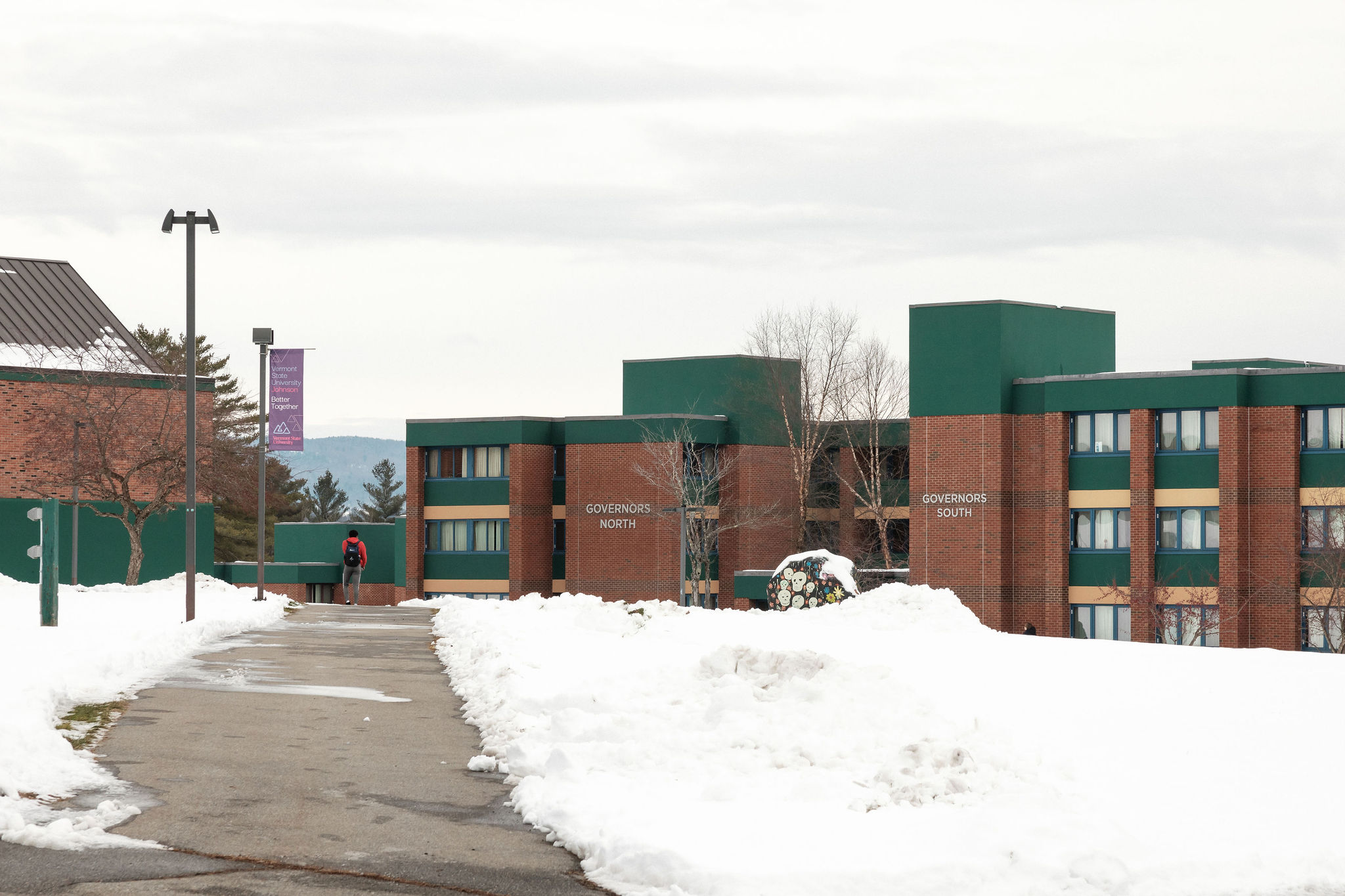
Instead of closing the campuses, the state decided to combine them with the other two, in Castleton and Williston, all under one umbrella renamed Vermont State University, or VTSU. In exchange, the blended institutions would be required to cut spending to help reduce a deficit estimated at the time to be about $22 million.
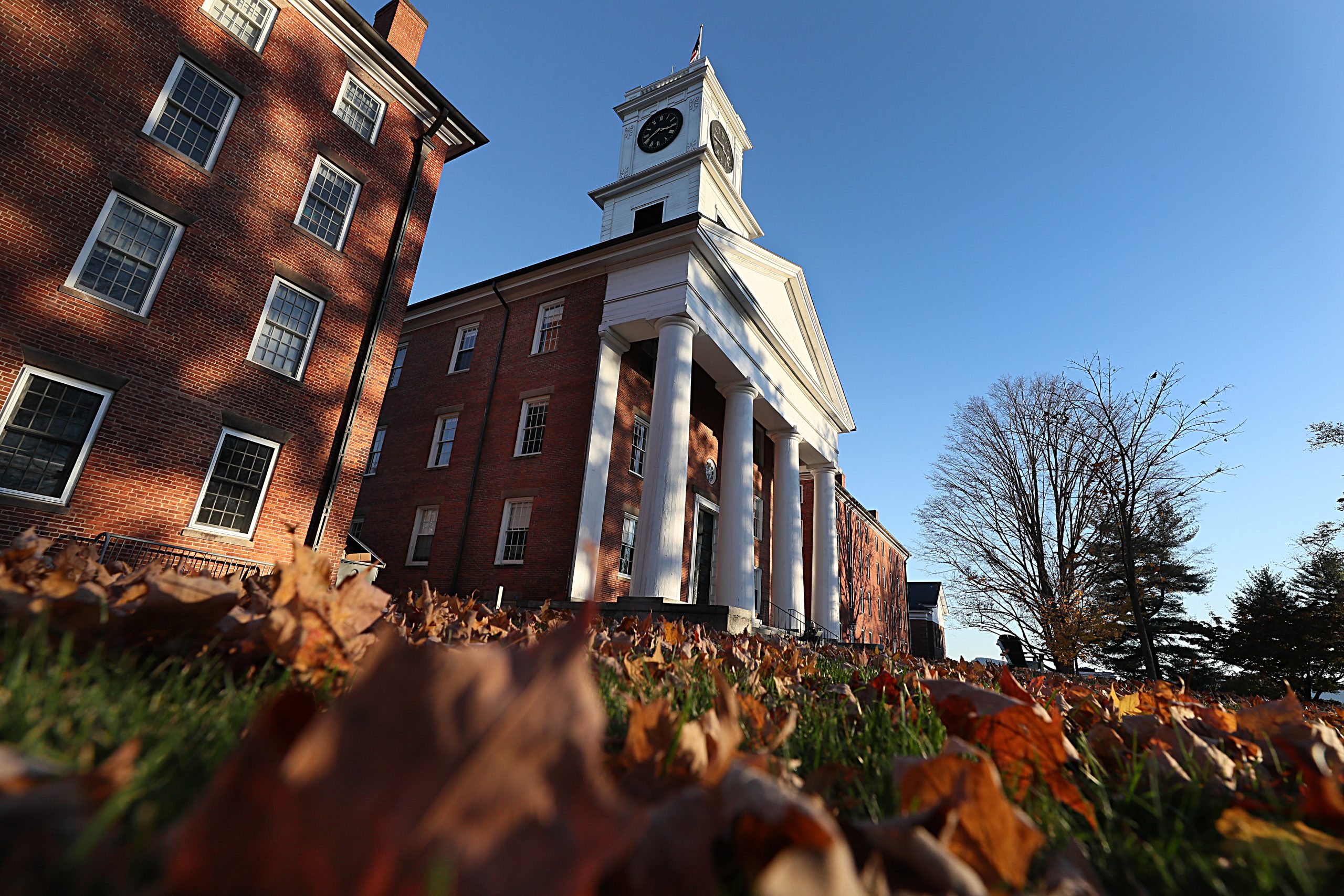
That decision was almost as contentious. As in Georgia, even the name was controversial. Alumni petitioned in vain for the new system to be called Castleton University instead of Vermont State, to preserve the legacy of the state’s oldest and the nation’s 18th-longest-operating higher education institution, founded in 1787, instead of demoting it to “Castleton Campus.”
Beth Mauch, who as chancellor has overseen VTSU and Vermont’s community college campuses since January, said she gets this kind of sentiment. “There are community members who have had these institutions in their community. There are folks who are alumni of these institutions who remember them in a certain way,” said Mauch. “Really, they are in the fabric of a community.”
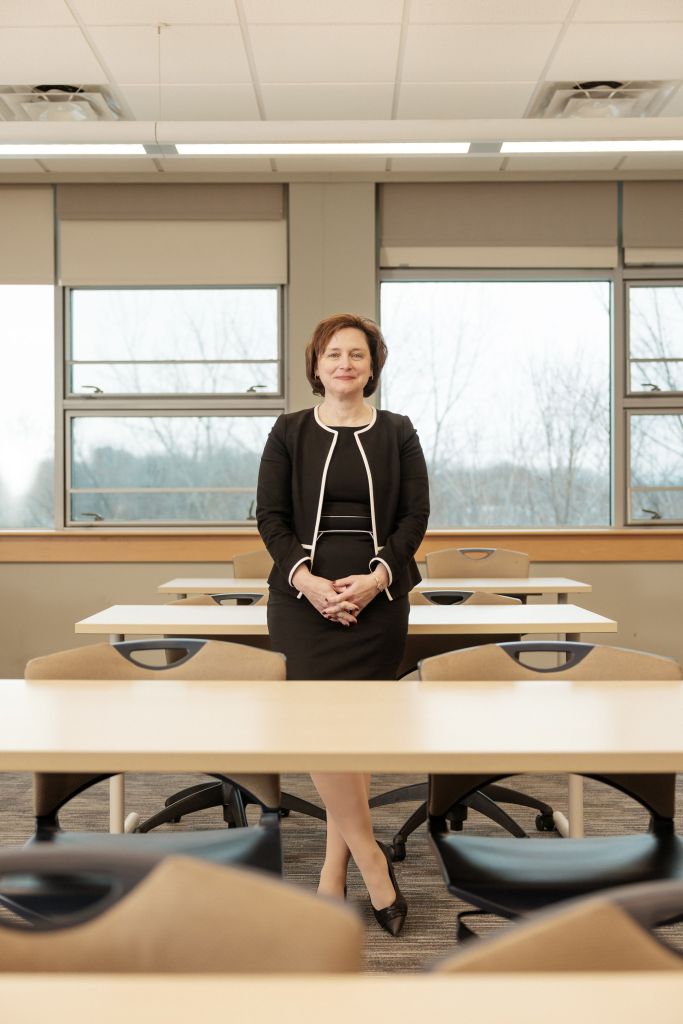
Beth Mauch, chancellor of the Vermont State University system and the state’s community college campuses. “Really, they are in the fabric of a community,” Mauch says. Credit: Oliver Parini for The Hechinger Report
That close relationship between the universities and their communities only resulted in additional friction when 23 full-time faculty positions were cut, out of the then-existing 208. So were an equal number of administrators and staff. Not only were there more beds and buildings than were needed for the number of students, there were too many faculty compared to other comparably sized universities, a planning document said.
Neighbors of the campuses, and their elected representatives, didn’t see it that way.
“The people that work at the colleges are local. Everyone knows people that work at these colleges,” said Billie Neathawk, a librarian at what was formerly Castleton University for more than 25 years, and a union officer. “They’re related to people. Especially in a small state like Vermont, everybody knows everybody.”
The layoffs went through anyway. There were also cuts to majors. Ten academic programs were eliminated, 10 others changed locations and still others were consolidated. That meant students at any campus could take the remaining courses in a format combining in-person and online instruction that the system dubbed “In-Person Plus.”
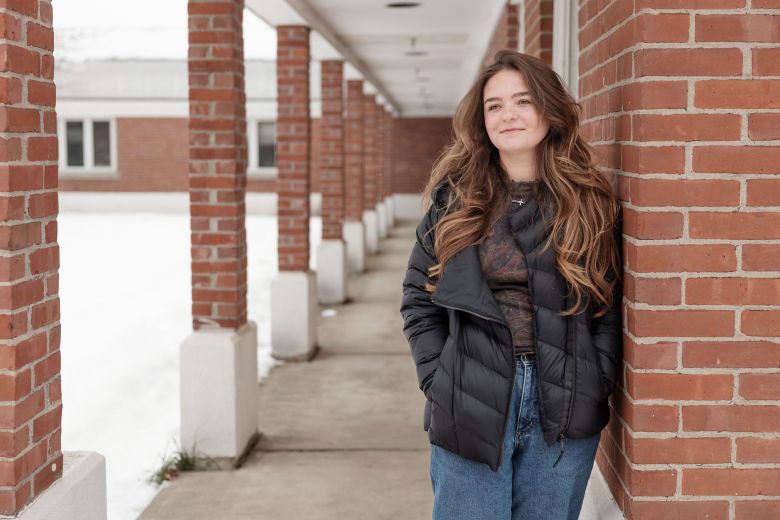
Lilly Hudson is a junior at Vermont State University, whose consolidation means some programs are being offered online. Hudson prefers learning in a classroom but liked being able to take a class online from another campus that wasn’t available on hers. Credit: Oliver Parini for The Hechinger Report
Lilly Hudson, a junior at Castleton, said she prefers learning in a classroom. “It’s just such a difference to be able to see people and meet your professors and go in person,” said Hudson, who is majoring in early education. But she was also able to take a class online from another campus that wasn’t available on hers.
That can be an underappreciated upside to mergers, said Greenstein, now managing director of higher education practice at the consulting firm Baker Tilly. “You can only run as many programs, majors and minors as you can enroll students into,” he said. But by merging institutions and letting students take courses from other campuses online, “now they can go from 20 programs to 80 or 90.”
While that seemed a step forward, the consolidated university’s inaugural president, Parwinder Grewal, next announced that, to cut costs, its libraries would go all-digital and give away their books, the Randolph campus would no longer field intercollegiate sports teams, and athletics on the Johnson campus would move from the NCAA to the less prestigious U.S. Collegiate Athletic Association.
This proved another blunder in a state so fond of its libraries that it has the nation’s highest per-capita number of library visits, and where rural communities rally around even Division 3 athletics. Faculty and staff unions and student government associations on every campus voted “no confidence” in the university’s administration. Athletes transferred away. Grewal was loudly booed when he met with students.
“There was a hot streak there where, every email, we were, like, now what’s going on?” said Raymonda Parchment, a student who was halfway toward her bachelor’s degree at the time.
Raymonda Parchment, who just graduated from Vermont State University, is grateful that a plan to close some public campuses was reversed. “If you can’t afford to go out of state for college, and you can’t afford to pay for maybe a dorm for a couple of years, where does that leave you if there’s no school within commuting distance?” she asks. Credit: Oliver Parini for The Hechinger Report
The library and athletics decisions were eventually reversed, too, and Grewal was out before he’d served a full year. But the damage was done. When the new university finally debuted, at the start of the 2023-24 school year, freshman enrollment was down by about 14 percent from what it had been at the separate campuses the year before.
“I know a lot of friends whose programs were consolidated and shuffled around,” said Parchment, in an otherwise empty study room on the snow-covered Johnson campus. “That was probably the biggest change for students that had direct impact on them. Some people’s programs don’t exist anymore. Some people’s programs have been moved to a different campus.”
Vermont is still working out the kinks, said Bergh, the system’s current president, who was the president of private, nonprofit Cazenovia College in New York when it closed in 2023.
Although first-year enrollment went up about 14 percent this fall, he said, “We’re still surfacing places where our systems aren’t talking to each other as well as they should be, and that we need to correct.”
Parchment likes that it’s easier now to move from one campus in the system to another, without having to go through the red tape of the transfer process. She graduated at the end of the fall semester after moving from Castleton to Johnson to be closer to an internship.
And no campuses were ultimately closed, as had been proposed — a relief to students, prospective students and community members, Parchment said. “Because if you can’t afford to go out of state for college, and you can’t afford to pay for maybe a dorm for a couple of years, where does that leave you if there’s no school within commuting distance?”
Hudson, the Castleton student, whose father is a sixth-generation farrier — a specialist in trimming, cleaning and shoeing horses’ hooves — agreed.
The campuses are “in the middle of an area where there’s a lot of rural towns,” she said. Keeping them in operation means that students nearby who want to go to college “don’t have to pick up their lives and move.”
But Spaulding, the former chancellor, warned that public higher education budget and enrollment problems aren’t likely to subside, in Vermont or many other states.
“I don’t think the storm is over by any stretch of the imagination.”
The Hechinger Report provides in-depth, fact-based, unbiased reporting on education that is free to all readers. But that doesn't mean it's free to produce. Our work keeps educators and the public informed about pressing issues at schools and on campuses throughout the country. We tell the whole story, even when the details are inconvenient. Help us keep doing that.