Category: Higher education completion

  • Alabama high school requirements now allow students to trade chemistry for carpentry

    Alabama high school requirements now allow students to trade chemistry for carpentry

    BIRMINGHAM, Ala. — In a corner of Huffman High School, the sounds of popping nail guns and whirring table saws fill the architecture and construction classroom.

    Down the hall, culinary students chop and saute in the school’s commercial kitchen, and in another room, cosmetology students snip mannequin hair to prepare for the state’s natural hair stylist license.

    Starting this fall, Alabama high school students can choose to take these classes — or any other state-approved career and technical education courses — in place of upper level math and science, such as Algebra 2 or chemistry.

    Alabama state law previously required students to take at least four years each of English, math, science and social studies to graduate from high school. The state is now calling that track the “Option A” diploma. The new “Option B” workforce diploma allows students to replace two math and two science classes with a sequence of three CTE courses of their choosing. The CTE courses do not have to be related to math or science, but they do have to be in the same career cluster. Already, more than 70 percent of Alabama high school students take at least one CTE class, according to the state’s Office of Career and Technical Education/Workforce Development.

    The workforce diploma will give students more opportunities to get the kind of skills that can lead to jobs right after high school, legislators said. But there’s a cost: Many universities, including the state’s flagship University of Alabama, require at least three math credits for admission. The workforce diploma would make it more difficult for students on that track to get into those colleges.

    The law passed in 2024 alongside a spate of bills aimed at boosting the state’s labor participation rate, which at 58 percent as of January remained below the national rate of 63 percent. Simply put, Alabama wants to get more of its residents working.

    Alabama is giving high school students a new pathway to a high school diploma: fewer math and science classes in exchange for more career and technical education courses. Credit: Tamika Moore for The Hechinger Report

    The new diploma option also comes at a time when public perception of college is souring: Only 36 percent of U.S. adults have a lot of confidence in higher education, according to a 2024 Gallup poll. Just 43 percent of Alabama high schoolers who graduated in 2023 enrolled in one of the state’s public colleges the following fall.

    “The world of higher education is at a crossroads,” said Amy Lloyd, executive director of the education advocacy nonprofit All4Ed and former assistant secretary for the Office of Career, Technical, and Adult Education at the U.S. Department of Education. “Americans are questioning the value of the return on their investment: Is it worth my money? Is it worth my time?”

    Related: A lot goes on in classrooms from kindergarten to high school. Keep up with our free newsletter on K-12 education.

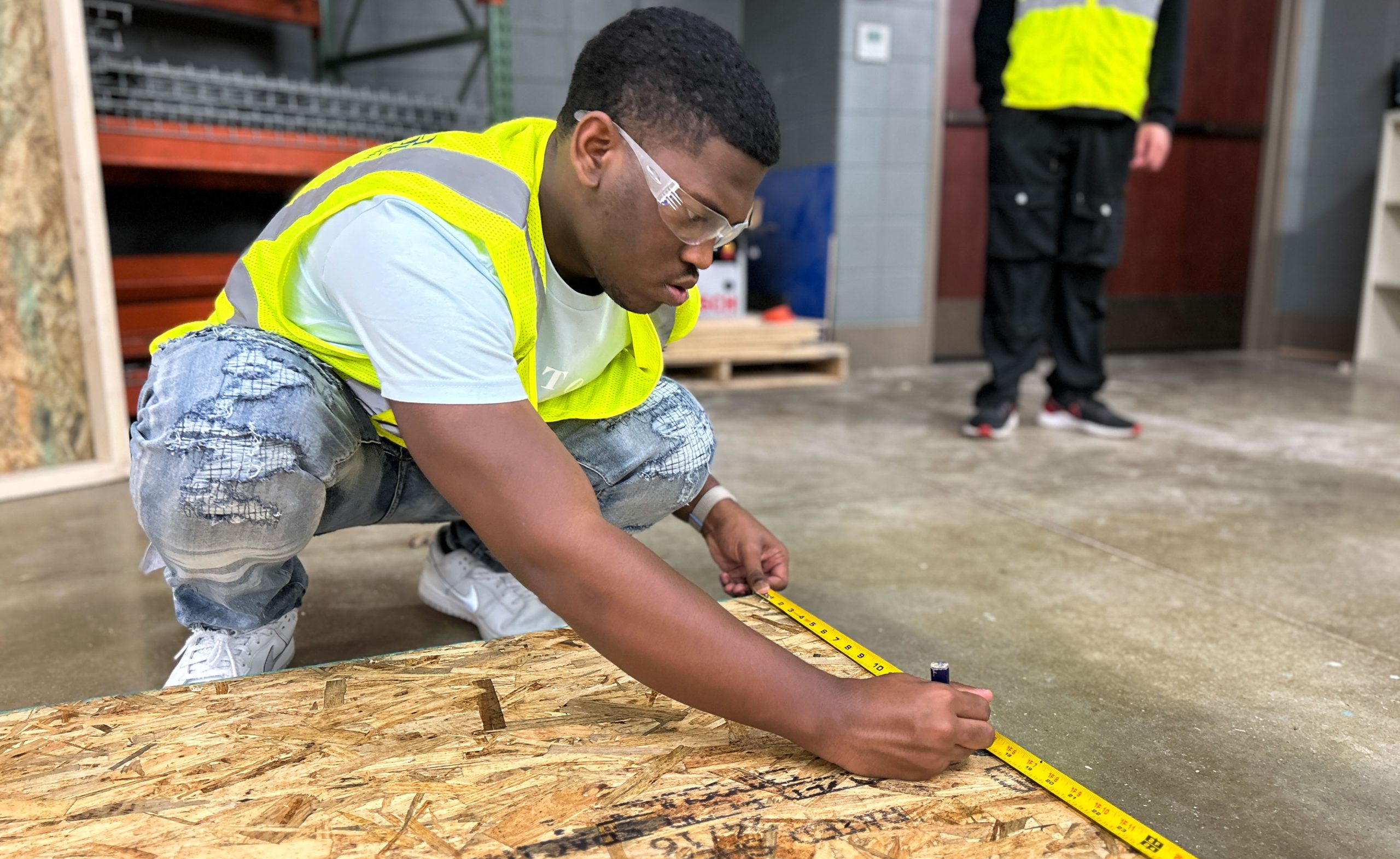
    One recent afternoon in Huffman High School’s architecture class, a few students in bright yellow safety vests were measuring a wall they had built. At the end of the semester, the project will culminate in a tiny home.

    Lucas Giles, a senior, started taking architecture his sophomore year as a way to “be able to fix things around the home without having to call other people,” he said. The new workforce diploma option won’t apply to him since he’s graduating this year, but he said he likely would have opted for it to fit more architecture classes into his schedule — that is, until he learned it would make it harder for him to attend college and study engineering.

    “I wouldn’t have the credits,” Giles realized.

    Students who earn a workforce diploma and end up wanting to go to college after all can enroll in community colleges, or aim for state colleges that have less stringent admissions requirements, said Alabama education chief Eric Mackey. The key to the new diploma will be ensuring school counselors are properly advising students, he added.

    “That’s where the counselor comes in and says, ‘If you want to be a nurse, then yes, you need the practical stuff at the career tech center — taking blood pressure and trauma support — but you also need to be taking biology, physiology, chemistry and all those things, too,’” Mackey said.

    Because the diploma only makes sense for a specific subset of students — those who do not plan to go to a four-year college that requires more math or science and who cannot otherwise fit CTE classes in their schedule — counselors have a huge role to play in guiding students. As of 2023, there were 405 students for every counselor in Alabama’s public schools, well over the recommended ratio of 250 to 1.

    Mackey said the state added career coaches in recent years to ease the counseling workload, but in many districts there is just a single coach, who rotates among schools.

    Samantha Williams, executive director of the nonprofit Birmingham Promise, fears the workforce diploma may shut off students’ options too early. Birmingham Promise helps students in Birmingham City Schools pay college tuition and connects them to internship opportunities while in high school.

    “Do you really think that all of our school districts are preparing students to know what they want to do” by the time they’re in high school, Williams asked.

    Williams also worries that lower-performing students might be steered to this diploma option in order to boost their schools’ rankings.

    Students who opt for the workforce diploma will not have their ACT test scores included in their schools’ public reports. Legislators decided that schools should not have to report standardized test scores for students who did not have to take the requisite math and science classes.

    “The concern a lot of people voiced was ‘Hey, isn’t everyone just going to place the kids who are underperforming in the workforce diploma so their ACT scores don’t bring down the whole?’” Williams said. “There’s a strong perverse incentive for people to do that.”

    Speaking to the state’s Board of Education last fall, Mackey warned the “furor of the state superintendent will come down on” anyone who tries to redirect students toward the workforce diploma because of low ACT scores.

    Related: What happened when a South Carolina city embraced career education for all its students

    At Headland High School in rural Henry County, Alabama, every student takes at least one CTE course, according to Principal Brent Maloy. The most popular classes, he said, are financial management and family consumer science.

    “We don’t force them in — everybody registers themselves, they pick their own classes,” Maloy said. “But there’s just about a zero percent chance that a kid’s not going to have a career tech class when they graduate.”

    The school has hosted information sessions for parents and students about the new diploma option ahead of next school year. In a poll of rising juniors and seniors, 20 percent said they would like to pursue a workforce diploma, and another 30 percent said they might be interested. Maloy is anticipating about 25 percent of students will actually opt in to the pathway.

    Most graduates of Headland enroll in a two-year school after graduation anyway, Maloy said, and the workforce diploma won’t hinder that. But the high school has only one counselor for its 450 students, and making sure students fully understand this diploma pathway — and its limitations — is likely to add pressure and extra responsibilities on counselors with heavy workloads.

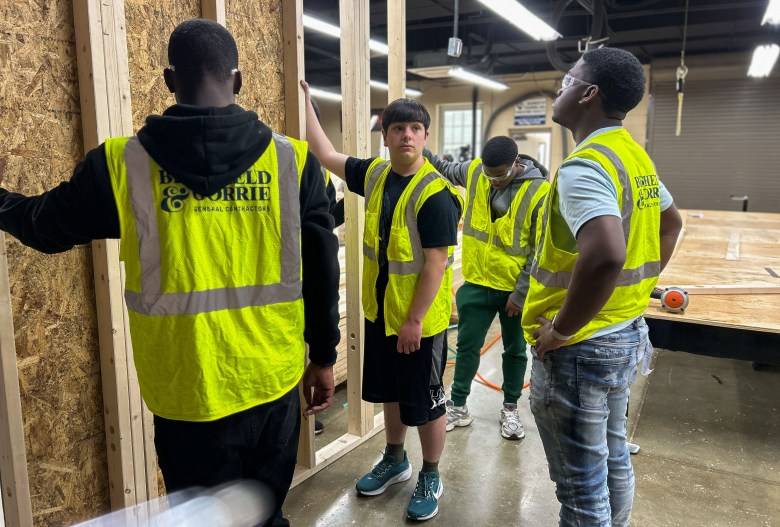
    Students hold up the wall of a tiny home they’re building in a career and tech architecture class at Huffman High School in Birmingham, Alabama. Credit: Ariel Gilreath/The Hechinger Report

    “There’s so much pressure on our secondary counselors already just to make sure that all of the boxes are checked before graduation. It’s going to put an extra box for them to check,” Maloy said.

    Ultimately, state businesses and industries want this change, said Mackey, who started his career as a middle and high school science teacher.

    “They were saying, ‘We really need students with skills over, say, calculus,’” Mackey said. “That doesn’t mean some students don’t need calculus — we want to still offer those higher math courses and higher science courses.”

    But, reflecting on his own experience as a high school science teacher, “I can tell you that every student doesn’t need high school chemistry,” Mackey said.

    The chamber of commerce in Mobile, Alabama, is one group that advocated for the workforce diploma. Career tech classes are a good way for students to better learn what they want to do before graduating high school, and they are also an avenue for students to get skills in high wage industries prevalent in Alabama, said Kellie Snodgrass, vice president of workforce development at the Mobile Chamber.

    Less than half of high school graduates in the region end up enrolling in college after graduation, Snodgrass said, and only 20 percent of high-wage jobs in Mobile require a college degree. A large chunk of jobs in the state, and in Mobile in particular, are in manufacturing.

    “It’s terrible when a student goes away to college and comes back and can’t find a job, when we have thousands of open jobs here,” Snodgrass said.

    In an emailed statement, Trevor Sutton, the vice president of economic development at the Birmingham Business Alliance, said the diploma option was a “win for the state of Alabama” that would allow students a chance to learn both “hard and soft skills like communication and time management.”

    Related: States bet big on career education, but struggle to show it works

    At least 11 states have embraced policies that give students flexibility to use career tech courses for core academic credits, according to a review from the Education Commission of the States.

    Like Alabama, Indiana also made changes to its diploma requirements in 2024. After more than a year of public debate, the state created three graduation pathways that are meant to lead to college admissions, the workforce, or enlistment in the military. Those changes will be effective for students in the class of 2029, or current eighth graders.

    Having industry buy-in on career tech programs is important, said Lloyd with All4Ed, because most students will need either an industry or post-secondary credential to land a job with a comfortable wage.

    “The reality is a high school diploma is not enough in today’s labor market to have a guaranteed ticket to the middle class,” Lloyd said.

    The problem, Lloyd said, is most K-12 industry credentials have little use to employers. Only 18 percent of CTE credentials earned by K-12 students in the U.S. were in demand by employers, according to a 2020 report from the Burning Glass Institute.

    The key in Alabama will be ensuring students are going into career pathways that line up with job demand, Snodgrass said. Out of the more than 33,000 CTE credentials Alabama high school students earned in 2023, only 2 percent were in manufacturing, which is one of the state’s highest need areas.

    Still, attitudes toward high school CTE courses — once largely thought of as classes for students who struggled academically — have improved significantly over the years. And many schools offer CTE programs like aerospace, robotics or conservation that could help students get into high-demand undergraduate programs at universities.

    “We’re increasingly blurring the lines between what has been historically siloed in people’s minds in terms of career education versus academic education,” Lloyd said. “Those are very often one and the same.”

    Contact staff writer Ariel Gilreath at [email protected]

    This story about Alabama high school requirements was produced by The Hechinger Report, a nonprofit, independent news organization focused on inequality and innovation in education. Sign up for the Hechinger newsletter

    The Hechinger Report provides in-depth, fact-based, unbiased reporting on education that is free to all readers. But that doesn’t mean it’s free to produce. Our work keeps educators and the public informed about pressing issues at schools and on campuses throughout the country. We tell the whole story, even when the details are inconvenient. Help us keep doing that.

    Join us today.

    Source link

  • Two tribal colleges have been allowed to rehire staff that had been cut by the federal government

    Two tribal colleges have been allowed to rehire staff that had been cut by the federal government

    After weeks of uncertainty, two tribal colleges have been told they can hire back all employees who were laid off as part of the Trump administration’s deep cuts across the federal workforce in February, part of a judge’s order restoring some federal employees whose positions were terminated.

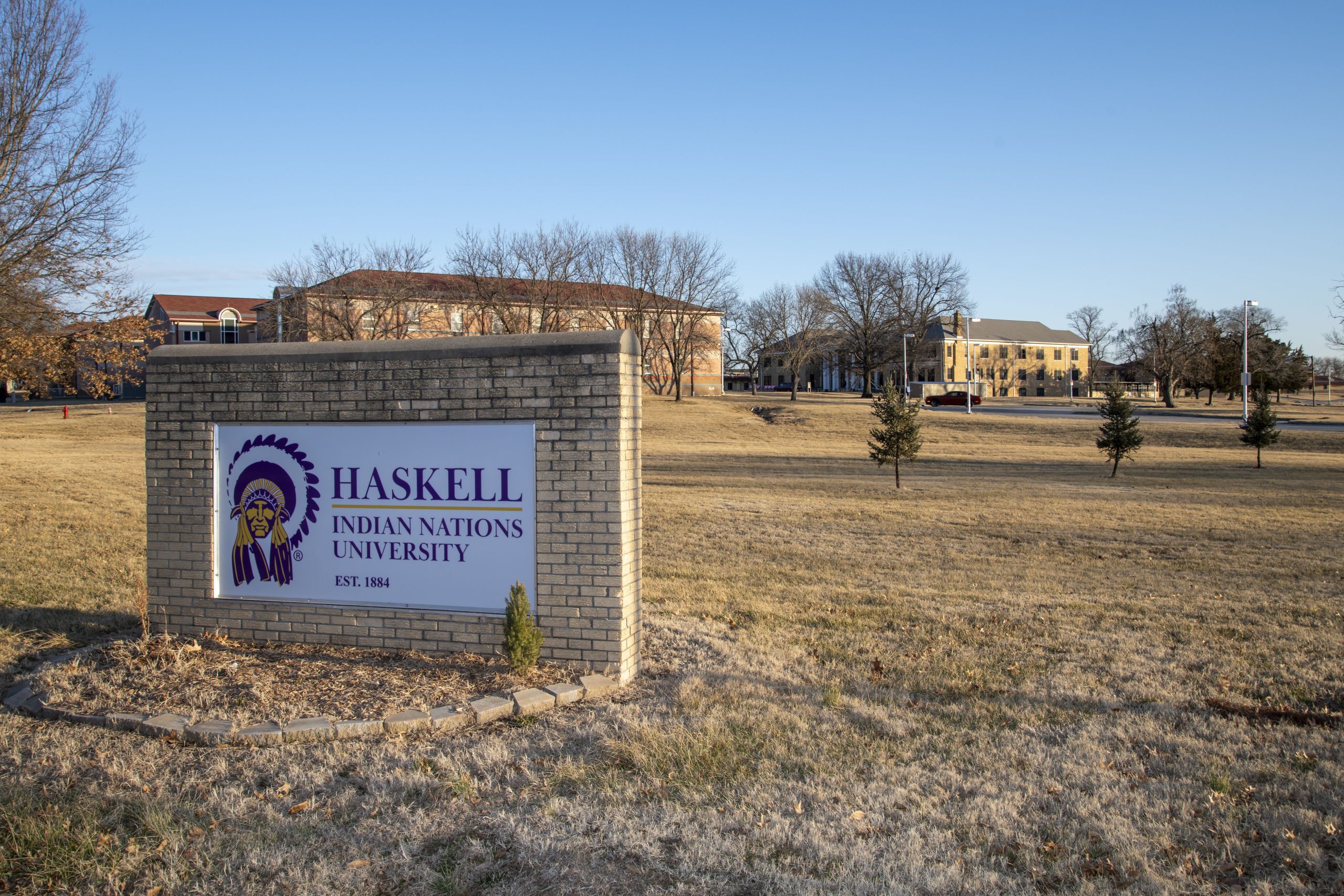
    Haskell Indian Nations University in Kansas and Southwestern Indian Polytechnic Institute, widely known as SIPI, in New Mexico lost about 70 employees in mid-February amid widespread staffing cuts to federal agencies. While most of the nation’s 37 tribal colleges and universities are chartered by American Indian tribes, Haskell and SIPI are not associated with individual tribes and are run by the federal government.

    About 55 employees were laid off and 15 accepted offers to resign, according to a lawsuit filed last month by tribes and students. The colleges were forced to cancel or reconfigure a wide range of services, from sports and food service to financial aid and classes. In some cases, instructors were hired by other universities as adjuncts and then sent back to the tribal colleges to keep teaching.

    Related: Interested in more news about colleges and universities? Subscribe to our free biweekly higher education newsletter.

    It was not clear this week when and if the workers would return, whether the employees who resigned would also be offered their jobs back, or if the government would allow colleges to fill vacancies. Both colleges said some employees had turned down the offers.

    The Bureau of Indian Education, which runs the colleges, declined to answer questions except to confirm the laid-off workers would be offered jobs with back pay to comply with a judge’s order that the government reverse course on thousands of layoffs of probationary employees. But the agency also noted the jobs would be available “as the White House pursues its appeals process,” indicating possible turmoil if an appeals court reinstates the layoffs.

    Both colleges said the bureau also has refused to answer most of their questions.

    SIPI leaders were told last week that the positions were being restored, said Adam Begaye, chairman of the SIPI Board of Regents. The 270-student college lost 21 employees, he said, four of whom decided to take early retirement. All but one of the remaining 17 agreed to return, Begaye said.

    The chaos has been difficult for those employees, he said, and the college is providing counseling.

    “We want to make sure they have an easy adjustment, no matter what they’ve endured,” Begaye said.

    Related: How a tribe won a legal battle against the federal Bureau of Indian Education and still lost

    The chairman of Haskell’s Board of Regents, Dalton Henry, said he was unsure how many of the 50 lost employees were returning. Like SIPI, Haskell was forced after the layoffs to shift job responsibilities and increase the workload for instructors and others.

    Haskell was reviewed by accreditors in December, and Henry said he was worried how the turmoil would affect the process. Colleges and universities must be accredited to offer federal and state financial aid and participate in most other publicly funded programs.

    Henry declined to discuss his thoughts on the chaos, saying there was nothing the college could do about it.

    “Whatever guidance is provided, that’s what we have to adhere to,” he said. “It’s a concern. But at this point, it’s the federal government’s decision.”

    The Bureau of Indian Affairs declined to make the presidents of the two colleges available for interviews.

    Tribal colleges and universities were established to comply with treaties and the federal trust responsibility, legally binding agreements in which the United States promised to fund Indigenous education and other needs. But college leaders argue the country has violated those contracts by consistently failing to fund the schools adequately.

    In the federal lawsuit claiming the Haskell and SIPI cuts were illegal, students and tribes argued the Bureau of Indian Education has long understaffed the colleges. The agency’s “well-documented and persistent inadequacies in operating its schools range from fiscal mismanagement to failure to provide adequate education to inhospitable buildings,” plaintiffs claimed.

    Related: Tribal college campuses are falling apart. The U.S. hasn’t fulfilled its promise to fund the schools

    Sen. Jerry Moran and Rep. Tracey Mann, both Kansas Republicans, said before Trump took office that they plan to introduce a bill shifting Haskell from federal control to a congressional charter, which would protect the university from cuts across federal agencies such as the Bureau of Indian Education.

    “[F]or the last few years the university has been neglected and mismanaged by the Bureau of Indian Education,” Moran said in a written statement in December. “The bureau has failed to protect students, respond to my congressional inquiries or meet the basic infrastructure needs of the school.”

    The February cuts brought rare public visibility to tribal colleges, most of which are in remote locations. Trump’s executive orders spurred outrage from Indigenous communities and a flurry of national news attention.

    “We’re using this chaos as a blessing in disguise to make sure our family and friends in the community know what SIPI provides,” said Begaye, the SIPI board president.

    The uncertainty surrounding the colleges’ funding has left a lasting mark, said Ahniwake Rose, president and CEO of the American Indian Higher Education Consortium, which advocates for tribal colleges. But she added she was proud of how the schools have weathered the cuts.

    “Indian country is always one of the most resourceful and creative populations,” she said. “We’ve always made do with less. I think you saw resilience and creativity from Haskell and SIPI.”

    Contact editor Christina A. Samuels at 212-678-3635 or [email protected].

    This story about tribal colleges was produced by The Hechinger Report, a nonprofit, independent news organization focused on inequality and innovation in education. Sign up for the Hechinger newsletter.

    The Hechinger Report provides in-depth, fact-based, unbiased reporting on education that is free to all readers. But that doesn’t mean it’s free to produce. Our work keeps educators and the public informed about pressing issues at schools and on campuses throughout the country. We tell the whole story, even when the details are inconvenient. Help us keep doing that.

    Join us today.

    Source link

  • OPINION: Here’s why we cannot permit America’s partnership with higher education to weaken or dissolve

    OPINION: Here’s why we cannot permit America’s partnership with higher education to weaken or dissolve

    Abrupt cuts in federal funding for life saving medical research. Confusing and misleading new guidance about campus diversity programs. Cancellation, without due process, of hundreds of millions of dollars in federal grants and contracts held by a major university. Mass layoffs at the Education Department, undermining crucial programs such as federal student aid.

    All of this, and more, in the opening weeks of the second Trump administration.

    The president has made clear that colleges and universities face a moment of unprecedented challenge. The partnership the federal government forged with American higher education long ago, which for generations has paid off spectacularly for our country’s civic health, economic well-being and national security, appears in the eyes of many to be suddenly vulnerable.

    America must not permit this partnership to weaken or dissolve. No nation has ever built up its people by tearing down its schools. Higher education builds America — and together, we will fight to ensure it continues to do so.  

    Related: Tracking Trump: his actions on education    

    Some wonder why more college and university presidents aren’t speaking out. The truth is, many of them fear their institutions could be targeted next.

    They are also juggling immense financial pressures and striving to fulfill commitments to teaching and research.

    But the American Council on Education, which I lead, has always stood up for higher education. We have done it for more than a century, and we are doing it now. We will use every tool possible — including litigation, advocacy and coalition-building — to advance the cause.

    ACE is the major coordinating body for colleges and universities. We represent institutions of all kinds — public and private, large and small, rural and urban — with a mission of helping our members best serve their students and communities.

    Let me be clear: We welcome scrutiny and accountability for the public funds supporting student aid and research. Our institutions are subject to state and federal laws and must not tolerate any form of discrimination, even as they uphold freedom of expression and the right to robust but civil protest. 

    We also know we have much work to do to raise public confidence in higher education and the value of a degree.

    However, we cannot allow unwarranted attacks on higher education to occur without a vigorous and proactive response.

    When the National Institutes of Health announced on Feb. 7 a huge cut in funding that supports medical and health research, ACE joined with the Association of American Universities, the Association of Public and Land-grant Universities and a number of affected universities in a lawsuit to stop this action.

    ACE has almost never been a plaintiff in a lawsuit against the federal government, but the moment demanded it. We are pleased that a federal judge has issued a nationwide preliminary injunction to preserve the NIH funding.

    When the Education Department issued a “Dear Colleague” letter Feb. 14 that raised questions about whether campus programs related to diversity, equity      and inclusion would be permissible under federal law, ACE organized a coalition of more than 70 higher education groups calling for the department to rescind the letter.      

    We raised concerns about the confusion the letter was causing. We pointed out that the majority opinion from Chief Justice John Roberts in the Students for Fair Admissions case acknowledged that diversity-related goals in higher education are “commendable” and “plainly worthy.”    

     We invited the department to engage with the higher education community to promote inclusive and welcoming educational environments for all students, regardless of race or ethnicity or any other factors. We remain eager to work with the department. 

    Related: Fewer scholarships and a new climate of fear follow      the end of affirmative action

    Unfortunately, in recent days the administration has taken further steps we find alarming.

    ACE denounced the arbitrary cancellation of $400 million in federal grants and contracts with Columbia University. Administration officials claimed their action was a response to failures to adequately address antisemitism at Columbia, though it bypassed well-established procedures for investigating such allegations. (The Hechinger Report is an independent unit of Teachers College, Columbia University.)

    Ultimately, this action will eviscerate academic and research activities, to the detriment of students, faculty, medical patients and others.

    Make no mistake: Combating campus antisemitism is a matter of utmost priority for us. Our organization, along with Hillel International and the American Jewish Committee, organized two summits on this topic in 2022 and 2024, fostering important dialogue with dozens of college and university presidents.

    We also are deeply concerned about the letter the Trump administration sent to Columbia late last week that makes certain demands of the university, including a leadership change for one of its academic departments. To my mind, the letter obliterated the boundary between institutional autonomy and federal control. That boundary is essential. Without it, academic freedom is at risk.

    Meanwhile, layoffs and other measures slashing the Education Department’s workforce by as much as half will cause chaos and harm to financial aid and other programs that support millions of students from low- and middle-income families. We strongly urge the administration to change course and Congress to step in if it does not.

    Despite all that has happened in the past several weeks, we want President Trump and his administration to know this: Higher education is here for America, and ready to keep building. Colleges and universities have long worked with the government in countless ways to strengthen our economy, democracy, health and security. We cannot abandon that partnership. We must fortify it. 

    Ted Mitchell is president of the American Council of Education in Washington, D.C.

    Contact the opinion editor at [email protected].

    This story about academic freedom was produced by The Hechinger Report, a nonprofit, independent news organization focused on inequality and innovation in education. Sign up for Hechinger’s weekly newsletter.

    The Hechinger Report provides in-depth, fact-based, unbiased reporting on education that is free to all readers. But that doesn’t mean it’s free to produce. Our work keeps educators and the public informed about pressing issues at schools and on campuses throughout the country. We tell the whole story, even when the details are inconvenient. Help us keep doing that.

    Join us today.

    Source link

  • OPINION: The demographic cliff in higher education should be seen as an opportunity, not a crisis

    OPINION: The demographic cliff in higher education should be seen as an opportunity, not a crisis

    This spring, the number of high school graduates in the United States is expected to hit its peak. Starting in the fall, enrollment will likely enter a period of decline that could last a decade or more.

    This looming “demographic cliff” has been on the minds of education leaders for nearly two decades, dating back to the start of the Great Recession. A raft of college closures over the past five years, exacerbated by the pandemic, has for many observers been the canary in the coal mine.

    In the years to come, schools at all levels — reliant on per-pupil funding for K-12 and on tuition dollars for colleges and universities — will begin feeling the squeeze.

    The question now is whether to treat the cliff as a crisis or an opportunity.

    Related: Interested in innovations in the field of higher education? Subscribe to our free biweekly Higher Education newsletter.

    As they prepare for enrollment shortfalls, superintendents and college presidents are primarily focused on crisis management. With good reason, they’re spending the bulk of their time on the hard short-term decisions of cutting programs and personnel to meet looming budget shortfalls.

    In the precious few years before the situation becomes even more dire, the question is whether schools should just continue bracing for impact — or if they can think bigger in ways that could be transformative not just for the landscape of education, but for the economy more broadly. In my view, they should think about what it would look like to make a moment of crisis a real opportunity.

    Here are some ideas about how that could happen. The first involves blurring the lines between high school and college.

    Colleges today feel immense pressure because there aren’t enough high school graduates. High schools feel similar pressure because there are fewer young people around to enroll each year — not to mention the chronic absenteeism and disengagement that has persisted since the pandemic.

    What if the two worked more closely together — in ways that helped high schools keep students engaged while enabling colleges to reach a broader range of students?

    In many states, this is already happening. At last count, 2.5 million high schoolers took at least one dual-enrollment course from a college or university. But it’s not enough to just create tighter connections between one educational experience and another. Today’s students — and today’s economy — also demand clearer pathways from education to careers. It makes sense to blur the lines between high schools, colleges and work.

    So imagine taking these changes even further — to a world in which instead of jumping from high school to college, students in their late teens entered entirely new institutions that paid them for work-based learning experiences that would lead them to a degree and eventually a career.

    That’s a lofty goal. But it’s the kind of big thinking that both high schools and colleges may need to reinvent themselves for the country’s shifting demographics.

    Colleges have an opportunity right now to double down on creating and expanding job-relevant programs — and to think even bigger about who they serve. That could include expanding opportunities for adult learners who have gained skills outside the classroom through credit for prior learning and competency-based learning. It could also mean speeding up the development of industry-relevant coursework to better align with the needs of the labor market and leaning into short-form training programs to upskill incumbent workers.

    Related: The number of 18-year-olds is about to drop sharply, packing a wallop for colleges — and the economy

    Not every student is ready to invest four years of time and money to earn a bachelor’s degree. But they shouldn’t have to be — and colleges have a chance to expand their offerings in ways that give students more pathways into today’s fast-changing economy and further education if they so choose.

    Part of the problem with the current trajectory from high school to college is that the wrong things get incentivized. Both K-12 schools and colleges get money and support based on the number of students they enroll and (sometimes) the number of people who graduate — not on how well they do at helping people gain the skills to effectively participate in the economy.

    That’s not anyone’s fault. But it often boils down to a matter of policy. Which means that changing policy can create new incentives to tighten the connections between high school, college and work.

    States like Colorado are already taking the lead on this shift. Colorado’s “Big Blur” task force put out a report with recommendations on how to integrate learning and work, including by creating a statewide data system to track the outcomes of educational programs and updating the state’s accountability systems to better reflect “the importance of learners graduating ready for jobs and additional training.”

    If schools and policymakers stay the course in the decade to come, they already know what’s ahead: declining enrollment, decreased funding and the exacerbation of all the challenges that they’ve already begun to face in recent years.

    It’s not the job of the education system to turn the tide of demographic change. But the system does have a unique, and urgent, opportunity to respond to this changing landscape in ways that benefit not only students but the economy as a whole. The question now is whether education leaders and policymakers can seize that opportunity before it’s too late.

    Joel Vargas is vice-president of education practice at Jobs for the Future.

    Contact the opinion editor at [email protected].

    This story about demographic cliff in higher education was produced by The Hechinger Report, a nonprofit, independent news organization focused on inequality and innovation in education. Sign up for Hechinger’s weekly newsletter.

    The Hechinger Report provides in-depth, fact-based, unbiased reporting on education that is free to all readers. But that doesn’t mean it’s free to produce. Our work keeps educators and the public informed about pressing issues at schools and on campuses throughout the country. We tell the whole story, even when the details are inconvenient. Help us keep doing that.

    Join us today.

    Source link

  • Online college courses are popular, why do they still cost so much?

    Online college courses are popular, why do they still cost so much?

    Emma Bittner considered getting a master’s degree in public health at a nearby university, but the in-person program cost tens of thousands of dollars more than she had hoped to spend.

    So she checked out master’s degrees she could pursue remotely, on her laptop, which she was sure would be much cheaper.

    The price for the same degree, online, was … just as much. Or more.

    “I’m, like, what makes this worth it?” said Bittner, 25, who lives in Austin, Texas. “Why does it cost that much if I don’t get meetings face-to-face with the professor or have the experience in person?”

    Among the surprising answers is that colleges and universities are charging more for online education to subsidize everything else they do, online managers say. Huge sums are also going into marketing and advertising for it, documents show.

    Universities and colleges “see online higher education as an opportunity to make money and use it for whatever they want to make money for,” said Kevin Carey, vice president of education and work at the left-leaning think tank New America.

    Online higher education is projected to pass an impressive if little-noticed milestone this year: For the first time, more American college students will be learning entirely online than will be learning 100 percent in person.

    Bittner’s confusion about the price is widespread. Eighty percent of Americans think online learning after high school should cost less than in-person programs, according to a 2024 survey of 1,705 adults by New America.

    After all, technology has reduced prices in many other industries. And online courses don’t require classrooms or other physical facilities and can theoretically be taught to a much larger number of students, creating economies of scale.

    While consumers complained about remote learning during the pandemic, online enrollment has been rising faster than was projected before Covid hit.

    Yet 83 percent of online programs in higher education cost students as much as or more than the in-person versions, an annual survey of campus chief online learning officers finds. About a quarter of universities and colleges even tack on an additional “distance learning fee,” that survey found.

    In addition to using the income from their online divisions to help pay for the other things they do, universities say they have had to pay more than they anticipated on advising and support for online students, who get worse results, on average, than their in-person counterparts.

    Bringing down the price of a degree “was certainly a key part of the appeal” when online higher education began, said Richard Garrett, co-director of that survey of online education managers and chief research officer at Eduventures, an arm of the higher education technology consulting company Encoura.

    “Online was going to be disruptive. It was supposed to widen access. And it would reduce the price,” said Garrett. “But it hasn’t played out that way.”

    Related: Interested in more news about colleges and universities? Subscribe to our free biweekly higher education newsletter.

    Today, online instruction for in-state students at four-year public universities costs $341 a credit, the independent Education Data Initiative finds — more than the average $325 a credit for face-to-face tuition. That adds up to about $41,000 for a degree online, compared to about $39,000 in tuition for a degree obtained in person.

    Two-thirds of private four-year universities and colleges with online programs charge more for them than for their face-to-face classes, according to the survey of online managers. The average tuition for online learning at private universities and colleges comes to $516 per credit.

    And community colleges, which collectively enroll the largest number of students who learn entirely online, charge them the same as or more than their in-person counterparts in 100 percent of cases, the survey of online officers found (though Garrett said that’s likely because community college tuition overall is already comparatively low).

    Social media is riddled with angry comments about this. A typical post: “Can someone please explain to me why taking a course online can cost a couple $1000 more than in person?”

    Online education officers respond that online programs face steep startup costs and need expensive technology specialists and infrastructure. In a separate survey of faculty by the consulting firm Ithaka S+R, 80 percent said it took them as much time, or more, to plan and develop online courses as it did in-person ones because of the need to incorporate new kinds of technology.

    Online programs also need to provide faculty who are available for office hours, online advisors and other resources exclusively to support online students, who tend to be less well prepared and get worse results than their in-person counterparts. For the same reasons, many online providers have put caps on enrollment, limiting those expected economies of scale.

    “You still need advisers, you still need a writing center, a tutoring center, and now you have to provide those services for students who are at a distance,” said Dylan Barth, vice president of innovation and programs at the Online Learning Consortium, which represents online education providers.

    Related: The number of 18-year-olds is about to drop sharply, packing a wallop for colleges — and the economy

    Still, 60 percent of public and more than half of private universities are taking in more money from online education than they spend on it, the online managers’ survey found. About half said they put the money back into their institutions’ general operating budgets.

    Such cross subsidies have long been a part of higher education’s financial strategy, under which students in classes or fields that cost less to teach generally subsidize their counterparts in courses or disciplines that cost more. English majors subsidize their engineering classmates, for example. Big first-year lecture classes subsidize small senior seminars. Graduate students often subsidize undergrads.

    “Online education is another revenue stream from a different market,” said Duha Altindag, an associate professor of economics at Auburn University who has studied online programs.

    Universities “are not trying to use technology to become more efficient. They’re just layering it on top of the existing model,” said New America’s Carey, who has been a critic of some online education models.

    “Public officials are not stopping them,” he said. “They’re not coming and saying, ‘Hey, we’re seeing this new opportunity to save money. These online courses could be cheaper. Make them cheaper.’ This is just a continuation of the status quo.”

    Another page that online managers have borrowed from higher education’s traditional pricing playbook is that consumers often equate high prices with high quality, especially at brand-name colleges and universities.

    “Market success and reputation can support higher prices,” Garrett said. It’s not what online courses cost to provide that determines the price, in other words, but how much consumers are willing to pay.

    Related: Apprenticeships are a trending alternative to college — but there’s a hitch

    With online programs competing for customers across the country, rather than for those within commuting distance of a campus or willing to relocate to one, universities and colleges are also putting huge amounts into marketing and advertising.

    An example of this kind of spending was exposed in a review by the consulting firm EY of the University of Arizona Global Campus, or UAGC, which the university created by acquiring for-profit Ashford University in 2020. Obtained through a public-records request by New America, the report found that the university was paying out $11,521 in advertising and marketing for every online student it enrolled.

    The online University of Maryland Global Campus committed to spending $500 million for advertising to out-of-state students over six years, a state audit found.

    “What if you took that money and translated it into lower tuition?” asked Carey.

    The online University of Maryland Global Campus is spending $500 million to market and advertise to out-of-state students over six years.

    While they’re paying the same as or more than their in-person counterparts, meanwhile, online students get generally poorer success rates.

    Online instruction results in lower grades than face-to-face education, according to research by Altindag and colleagues at American University and the University of Southern Mississippi — though they also found that the gap is narrowing. Students online are more likely to have to withdraw from or repeat courses and less likely to graduate on time, these researchers found, which further increases the cost.

    Another study, by University of Central Florida Institute of Higher Education Director Justin Ortagus, found that taking all of their courses online reduces the odds that community college students will ever graduate.

    Lower-income students fare especially poorly online, that and other research shows; scholars say this is in part because many come from low-resourced public high schools or are balancing their classes with work or family responsibilities.

    Students who learn entirely online at any level are less likely to have graduated within eight years than students in general, who have a 66 percent eight-year graduation rate, data from the National Center for Education Statistics shows.

    Graduation rates are particularly low at for-profit universities, which enroll a quarter of the students who learn exclusively online. In the American InterContinental University System, for example, only 11 percent of students graduated within eight years after starting, federal data shows, and at the American Public University System, 44 percent. The figures are for the period ending in 2022, the most recent for which they have been widely submitted.

    Several private, nonprofit universities and colleges also have comparatively lower eight-year graduation rates for students who are online only, the data shows, including Southern New Hampshire University (37 percent) and Western Governors University (52 percent).

    Related: Some colleges aim financial aid at a declining market: students in the middle class

    If they do receive degrees, online-only students earn more than their entirely in-person counterparts for the first year after college, Eduventures finds — perhaps because they tend to be older than traditional-age students, researchers speculated. But that advantage disappears within four years, when in-person graduates overtake them.

    For all the growth in online higher education, employers appear to remain reluctant to hire graduates of it, according to still other research conducted at the University of Louisville. That study found that applicants for jobs who listed an online as opposed to in-person degree were about half as likely to get a callback for the job.

    How strongly consumers feel that online higher education should cost less than the in-person kind was evident in lawsuits brought against universities and colleges that continued to charge full tuition even after going remote during the Covid-19 pandemic.

    Students had part of their payments refunded under multimillion-dollar settlements with the University of Chicago, Pennsylvania State University, Rensselaer Polytechnic Institute, the University of Maine System and others.

    Yet students keep signing on. For all the complaining about remote learning at the time, its momentum seems to have been speeded up by the pandemic, which was followed by a 12 percent increase in online enrollment above what had been projected before it hit, according to an analysis of federal data by education technology consultant Phil Hill.

    Online students save on room and board costs they would face on residential campuses, and online higher education is typically more flexible than the in-person kind.

    Sixty percent of campus online officers say that online sections of classes tend to fill first, and nearly half say online student numbers are outpacing in-person enrollment.

    There have been some widely cited examples of online programs with dramatically lower tuition, such as a $7,000 online master’s degree in computer science at the Georgia Institute of Technology (compared to the estimated nearly $43,000 for the two-year in-person version), which has attracted thousands of students and a few copycat programs.

    There are also early signs that prices for online higher education could fall. Competition is intensifying from national nonprofit providers such as Western Governors, which charges a comparatively low average $8,300 per year, and Southern New Hampshire, whose undergraduate price per credit hour is a slightly lower-than-average (for online courses) $330.

    Related: Fewer students and fewer dollars mean states face closing public universities and colleges

    Universities have started cutting their ties with for-profit middlemen, called online program managers, who take big cuts of up to 80 percent of revenues. Nearly 150 such deals were canceled or ended and not renewed in 2023, the most recent year for which the information is available, the market research firm Validated Insights reports.

    Another thing that could lower prices: As more online programs go live, they no longer require high up-front investment — just periodic updating.

    “It is possible to save money on downstream costs if you offer the same course over a number of years,” Ortagus said.

     A student studies on her laptop. The number of college students who learn entirely online will this year surpass the number who take all their classes in person.

    While that survey of online officers found a tiny decline in the proportion of universities charging more for online than in-person classes, however, the drop was statistically insignificant. And as their enrollments continue to plummet, institutions increasingly need the revenue from online programs.

    Bittner, in Texas, ended up in an online master’s program in public health that was just being started by a private, nonprofit university, and was cheaper than the others she’d found.

    Her day job is at the national nonprofit Young Invincibles, which pushes for reforms in higher education, health care and economic security for young Americans. And she still doesn’t understand the online pricing model.

    “I’m so confused about it. Even in the program I’m in now, you don’t get the same access to stuff as an in-person student,” she said. “What are you putting into it that costs so much?”

    Contact writer Jon Marcus at 212-678-7556 or [email protected].

    This story about the cost of online higher education was produced by The Hechinger Report, a nonprofit, independent news organization focused on inequality and innovation in education. Sign up for our higher education newsletter. Listen to our higher education podcast.

    The Hechinger Report provides in-depth, fact-based, unbiased reporting on education that is free to all readers. But that doesn’t mean it’s free to produce. Our work keeps educators and the public informed about pressing issues at schools and on campuses throughout the country. We tell the whole story, even when the details are inconvenient. Help us keep doing that.

    Join us today.

    Source link

  • A new Utah law has caused the University of Utah to severely limit DEI initiatives on campus, in a case study of what might happen in other states

    A new Utah law has caused the University of Utah to severely limit DEI initiatives on campus, in a case study of what might happen in other states

    SALT LAKE CITY — Nineteen-year-old Nevaeh Parker spent the fall semester at the University of Utah trying to figure out how to lead a student group that had been undercut overnight by matters far beyond student control.

    Parker, the president of the Black Student Union, feared that a new Utah law banning diversity, equity and inclusion efforts at public colleges had sent a message to students from historically marginalized groups that they aren’t valued on campus. So this spring, while juggling 18 credit hours, an internship, a role in student government and waiting tables at a local cafe, she is doing everything in her power to change that message.

    Because the university cut off support for the BSU — as well as groups for Asian American and for Pacific Islander students — Parker is organizing the BSU’s monthly meetings on a bare-bones budget that comes from student government funding for hundreds of clubs. She often drives to pick up the meeting’s pizza to avoid wasting those precious dollars on delivery fees. And she’s helping organize large community events that can help Black, Asian and Latino students build relationships with each other and connect with people working in Salt Lake City for mentorship and professional networking opportunities.

    Nineteen-year-old University of Utah student Nevaeh Parker is working hard to keep the Black Student Union going after the organization lost financial support.  Credit: Image provided by Duncan Allen

    “Sometimes that means I’m sacrificing my grades, my personal time, my family,” Parker, a sophomore, said. “It makes it harder to succeed and achieve the things I want to achieve.”

    But she’s dedicated to keeping the BSU going because it means so much to her fellow Black students. She said several of her peers have told her they don’t feel they have a place on campus and are considering transferring or dropping out.

    Utah’s law arose from a conservative view that DEI initiatives promote different treatment of students based on race, ethnicity, gender or sexuality. House Bill 261, known as “Equal Opportunity Initiatives,” which took effect last July, broadly banished DEI efforts and prohibited institutions or their representatives speaking about related topics at public colleges and government agencies. Violators risk losing state funding.

    Now President Donald Trump has set out to squelch DEI work across the federal government and in schools, colleges and businesses everywhere, through DEI-related executive orders and a recent “Dear Colleague” letter. As more states decide to banish DEI, Utah’s campus may represent what’s to come nationwide.

    Related: Interested in more news about colleges and universities? Subscribe to our free biweekly higher education newsletter.

    Because of the new state law, the university last year closed the Black Cultural Center, the Center for Equity and Student Belonging, the LGBT Resource Center and the Women’s Resource Center – in addition to making funding cuts to the student affinity groups.

    In place of these centers, the university opened a new Center for Community and Cultural Engagement, to offer programming for education, celebration and awareness of different identity and cultural groups, and a new Center for Student Access and Resources, to offer practical support services like counseling to all students, regardless of identity.

    For many students, the changes may have gone unnoticed. Utah’s undergraduate population is about 63 percent white. Black students are about 1 percent, Asian students about 8 percent and Hispanic students about 14 percent of the student body. Gender identity and sexuality among students is not tracked.

    For others, however, the university’s racial composition makes the support of the centers that were eliminated that much more significant.

     In response to a new state law that broadly banned diversity, equity and inclusion efforts, the University of Utah closed its Center for Equity and Student Belonging, the Black Cultural Center, the Women’s Resource Center and the LGBT Resource Center. Credit: Olivia Sanchez/The Hechinger Report

    Some — like Parker — have worked to replace what was lost. For example, a group of queer and transgender students formed a student-run Pride Center, with support from the local Utah Pride Center. A few days a week, they set up camp in a study room in the library. They bring in pride flags, informational fliers and rainbow stickers to distribute around the room, and sit at a big table in case other students come looking for a space to study or spend time with friends.

    Lori McDonald, the university’s vice president of student affairs, said so far, her staff has not seen as many students spending time in the two new centers as they did when that space was the Women’s Resource Center and the LGBT Resource Center, for example.

    “I still hear from students who are grieving the loss of the centers that they felt such ownership of and comfort with,” McDonald said. “I expected that there would still be frustration with the situation, but yet still carrying on and finding new things.”

    One of the Utah bill’s co-sponsors was Katy Hall, a Republican state representative. In an email, she said she wanted to ensure that support services were available to all students and that barriers to academic success were removed.

    “My aim was to take the politics out of it and move forward with helping students and Utahns to focus on equal treatment under the law for all,” Hall said. “Long term, I hope that students who benefitted from these centers in the past know that the expectation is that they will still be able to receive services and support that they need.”

    The law allows Utah colleges to operate cultural centers, so long as they offer only “cultural education, celebration, engagement, and awareness to provide opportunities for all students to learn with and from one another,” according to guidance from the Utah System of Higher Education.

    Given the anti-DEI orders coming from the White House and the mandate from the Department of Education earlier this month calling for the elimination of any racial preferences, McDonald said, “This does seem to be a time that higher education will receive more direction on what can and cannot be done.”

    But because the University of Utah has already had to make so many changes, she thinks that the university will be able to carry on with the centers and programs it now offers for all students.

    Related: Facing legal threats, colleges back off race-based programs

    Research has shown that a sense of belonging at college contributes to improved engagement in class and campus activities and to retaining students until they graduate. 

    “When we take away critical supports that we know have been so instrumental in student engagement and retention, we are not delivering on our promise to ensure student success,” said Royel M. Johnson, director of the national assessment of collegiate campus climates at the University of Southern California Race and Equity Center.

    Creating an equitable and inclusive environment requires recognizing that there is no one-size-fits-all approach to supporting students, said Paulette Granberry Russell, president of the National Association of Diversity Officers in Higher Education. A student who grew up poor may not have had the same opportunities in preparing for college as a student from a wealthy or middle-class family. Students from some minority groups or those who are the first in their family to go to college may not understand how to get the support they need.

    “This should not be a situation where our students arrive on campus and are expected to sink or swim,” she said.

    Student Andy Whipple wears a beaded bracelet made at a “Fab Friday” event hosted by the LGBT Resource Center at the University of Utah. The LGBT Resource Center was closed recently to comply with a new state law that limits diversity, equity and inclusion work. Credit: Olivia Sanchez/The Hechinger Report

    Kirstin Maanum is the director of the new Center for Student Access and Resources; it administers scholarships and guidance previously offered by the now-closed centers. She formerly served as the director of the Women’s Resource Center.

    “Students have worked really hard to figure out where their place is and try to get connected,” Maanum said. “It’s on us to be telling students what we offer and even in some cases, what we don’t, and connecting them to places that do offer what they’re looking for.”

    That has been difficult, she said, because the changeover happened so quickly, even though some staffers from the closed centers were reassigned to the new centers. (Others were reassigned elsewhere.)

    “It was a heavy lift,” Maanum said. “We didn’t really get a chance to pause until this fall. We did a retreat at the end of October and it was the first time I felt like we were able to really reflect on how things were going and essentially do some grief work and team building.”

    Before the new state law, the cultural, social and political activities of various student affinity groups used to be financed by the university — up to $11,000 per group per year — but that money was eliminated because it came from the Center for Equity and Student Belonging, which closed. The groups could have retained some financial support from the university if they agreed to avoid speaking about certain topics considered political and to explicitly welcome all students, not just those who shared their race, ethnicity or other personal identity characteristics, according to McDonald. Otherwise, the student groups are left to fundraise and petition the student government for funding alongside hundreds of other clubs.

    Related: Tracking Trump — a week-by-week look at his actions on education

    Parker said the restrictions on speech felt impossible for the BSU, which often discusses racism and the way bias and discrimination affect students. She said, “Those things are not political, those things are real, and they impact the way students are able to perform on campus.”

    She added: “I feel as though me living in this black body automatically makes myself and my existence here political, I feel like it makes my existence here debatable and questioned. I feel like every single day I’m having to prove myself extra.”

    In October, she and other leaders of the Black Student Union decided to forgo being sponsored by the university, which had enabled traditional activities such as roller skating nights, a Jollof rice cook-off (which was a chance to engage with different cultures, students said) and speaker forums.

    Alex Tokita, a senior who is the president of the Asian American Student Association, said his group did the same. To maintain their relationship with the university by complying with the law, Tokita said, was “bonkers.”

     Alex Tokita, a senior at the University of Utah, is the president of the Asian American Student Association. The organization chose to forgo university sponsorship because it did not want to comply with a new state law that restricts speech on certain topics. Credit: Olivia Sanchez/The Hechinger Report

    Tokita said it doesn’t make sense for the university to host events in observation of historical figures and moments that represent the struggle of marginalized people without being able to discuss things like racial privilege or implicit bias.

    “It’s frustrating to me that we can have an MLK Jr. Day, but we can’t talk about implicit bias,” Tokita said. “We can’t talk about critical race theory, bias, implicit bias.” 

    As a student, Tokita can use these words and discuss these concepts. But he couldn’t if he were speaking on behalf of a university-sponsored organization.

    LeiLoni Allan-McLaughlin, of the new Center for Community and Cultural Engagement, said that some students believe they must comply with the law even if they are not representing the university or participating in sponsored groups.

    “We’ve been having to continually inform them, ‘Yes, you can use those words. We cannot,’” Allan-McLaughlin said. “That’s been a roadblock for our office and for the students, because these are things that they’re studying so they need to use those words in their research, but also to advocate for each other and themselves.”

    Related: Cutting race-based scholarships blocks path to college, students say

    Last fall, Allan-McLaughlin’s center hosted an event around the time of National Coming Out Day, in October, with a screening of “Paris Is Burning,” a film about trans women and drag queens in New York City in the 1980s. Afterward, two staff members led a discussion with the students who attended. They prefaced the discussion with a disclaimer, saying that they were not speaking on behalf of the university.

    Center staffers also set up an interactive exhibit in honor of National Coming Out Day, where students could write their experiences on colorful notecards and pin them on a bulletin board; created an altar for students to observe Día de los Muertos, in early November, and held an event to celebrate indigenous art. So far this semester, the center has hosted several events in observance of Martin Luther King Jr. Day and Black History Month, including an educational panel, a march and a pop-up library event.

    Such events may add value to the campus experience overall, but students from groups that aren’t well represented on campus argue that those events do not make up for the loss of dedicated spaces to spend time with other students of similar backgrounds.

     Sophomore Juniper Nilsson looks at a National Coming Out Day exhibit in the student union at the University of Utah. The exhibit was set up by the new Center for Community and Cultural Engagement. Credit: Olivia Sanchez/The Hechinger Report

    For Taylor White, a recent graduate with a degree in psychology, connecting with fellow Black students through BSU events was, “honestly, the biggest relief of my life.” At the Black Cultural Center, she said, students could talk about what it was like to be the only Black person in their classes or to be Black in other predominantly white spaces. She said without the support of other Black students, she’s not sure she would have been able to finish her degree. 

    Nnenna Eke-Ukoh, a 2024 graduate who is now pursuing a master’s in higher educational leadership at nearby Weber State University, said it feels like the new Center for Community and Cultural Engagement at her alma mater is “lumping all the people of color together.”

    “We’re not all the same,” Eke-Ukoh said, “and we have all different struggles, and so it’s not going to be helpful.”

    Contact staff writer Olivia Sanchez at 212-678-8402 or [email protected].

    This story about campus DEI initiatives was produced by The Hechinger Report, a nonprofit, independent news organization focused on inequality and innovation in education. Sign up for the Hechinger newsletter.

    The Hechinger Report provides in-depth, fact-based, unbiased reporting on education that is free to all readers. But that doesn’t mean it’s free to produce. Our work keeps educators and the public informed about pressing issues at schools and on campuses throughout the country. We tell the whole story, even when the details are inconvenient. Help us keep doing that.

    Join us today.

    Source link

  • As diversity rates at elite colleges hang in the balance, some students still face increased exclusion and barriers

    As diversity rates at elite colleges hang in the balance, some students still face increased exclusion and barriers

    Diversity rates at several elite colleges and universities have plummeted, a little over a year after the Supreme Court’s restriction on race-conscious admissions. It’s a divisive but unsurprising blow to historically underrepresented students seeking educational opportunity and access.

    While demographic data is still forthcoming, the challenges these students face to attend certain colleges continue to build. MIT, Amherst College, and Tufts have already seen sharp declines in the diversity of their student populations.

    But not all is lost. Ethnically diverse students have options to express their full identities, and organizations providing services to them have options to support these students’ overall success through postsecondary pathways.

    While assessing the state of race in higher education admissions, we cannot ignore its historical context in colleges in America. Colleges and universities were built by and explicitly served the educational needs of wealthy white men. For too long, the only people of color on campus were the (often enslaved) servants of white students.

    We should also bear in mind that, at elite universities today, the students who are overlooked in favor of race-neutral policies are not the only ones who miss out — students already on campus lose out on the richness that having a diverse array of educational experiences can provide, with their opportunities to encounter alternative viewpoints limited.

    Related: Interested in innovations in the field of higher education? Subscribe to our free biweekly Higher Education newsletter.

    Oftentimes, first-generation, Black, Hispanic and Native American students experience an inherent and often unspoken isolation on campus at predominantly white institutions.

    As a Black Chicana, I vividly remember being the singular student of color in my freshman-year seminar at Michigan State. My experience was not without the awkwardness of questioning my own merit and if I belonged there in the first place. We traveled to Ireland, and due to the humidity, I put on my silk bonnet to protect my hair. It was met with questions and stares.

    Here we are in 2025, discussing the all-too-familiar concept of racial bias in America, while institutions are bound by new laws that result in restricted access for the students whose right to educational access has historically been systematically denied. So what can we do?

    While it requires creativity, students can still highlight who they are in their applications by foregrounding their lived experiences outside of their grades, test scores and academic histories. For example, students can share the intricacies of being a historically marginalized person in America — from being asked to speak English to being pulled over for driving while Black. They can write about their experiences and identities in personal statements and on their resumes and through discussions of their community involvement. Students owe it to themselves to share their personal moments of overcoming barriers in everyday life.

    Related: What’s a college degree worth? States start to demand colleges share the data

    Institutions can ask essay questions that provoke such responses and allow students to share without prejudice or fear of reprisal. Students’ insightful perspectives should be applauded by educational institutions, and the power of their words should be respected.

    Underrepresented students also have options other than the traditional elite universities. Historically Black colleges and universities (HBCUs) and Hispanic-serving institutions (HSIs) are an alternative to predominantly white institutions like the ones mentioned above. Students can make the college experience what they want and need, and it is no different at smaller institutions like Lane College, an HBCU, or Colorado State University, Pueblo, an HSI.

    At these schools, a student’s culture and identity are revered and shared. Educational institutions that see the value in diversity should be reconsidered as the best option for ethnically diverse students.

    And, as educational institutions grapple with the effects of the Supreme Court ruling, they should support the students from historically marginalized populations already on their campuses to ensure that they feel welcome, supported and valued. Building robust affinity groups not only provides current students with communities they can co-create and adapt to their needs, but also demonstrates that the institutions are committed to creating spaces for all students.

    Scholarship providers and organizations that support underrepresented students will continue to play a vital role in fostering diversity on college campuses. Mission-driven organizations like the one I work for, the Sachs Foundation, still help Black students who lack the financial capacity or easy access to attend elite schools like MIT and Brown.

    Students deserve to have their whole selves valued, welcomed and supported when applying for higher education.

    Pamela Roberts-Mora is the chief operations officer at the Sachs Foundation, serving Black youth from Colorado through educational and community programs. She was a first-generation college student.

    Contact the opinion editor at [email protected].

    This story about college diversity was produced by The Hechinger Report, a nonprofit, independent news organization focused on inequality and innovation in education. Sign up for our higher education newsletter. Listen to our higher education podcast.
    The Hechinger Report provides in-depth, fact-based, unbiased reporting on education that is free to all readers. But that doesn’t mean it’s free to produce. Our work keeps educators and the public informed about pressing issues at schools and on campuses throughout the country. We tell the whole story, even when the details are inconvenient. Help us keep doing that.

    Join us today.

    Source link

  • Like private colleges, some public college campuses are beginning to close

    Like private colleges, some public college campuses are beginning to close

    RANDOLPH, Vt. — The thermostat was turned low in the admissions office at Vermont State University on a cold winter morning.

    It’s “one of our efficiencies,” quipped David Bergh, the institution’s president, who works in the same building.

    Bergh was joking. But he was referring to something decidedly serious: the public university system’s struggle to reduce a deficit so deep, it threatened to permanently shutter several campuses after dramatic drop-offs in enrollment and revenue.

    While much attention has been focused on how enrollment declines are putting private, nonprofit colleges out of business at an accelerating rate — at least 17 of them in 2024 — public universities and colleges are facing their own existential crises.

    State institutions nationwide are being merged and campuses shut down, many of them in places where there is already comparatively little access to higher education.

    David Bergh, president of the newly consolidated Vermont State University, in the building where he works at the VTSU campus in Randolph. “Public institutions are not exempt from the challenges” facing higher education, Bergh says. Credit: Oliver Parini for The Hechinger Report

    “Public institutions are not exempt from the challenges” facing higher education, Bergh said. “We are already seeing it, and we’re going to see more of it, and it’s particularly acute in some more rural states, where there’s a real need to balance limited resources but maintain access for students.”

    Vermont is a case study for this, and an example of how political and other realities make it so hard for public universities and colleges to adapt to the problems confronting them.

    “The demographics of fewer traditional-age college students, the over-building of these campuses, the change in the demand for what we need for our workforce in terms of programs — this is something that’s happening everywhere,” said Vermont State Rep. Lynn Dickinson, who chairs the Vermont State Colleges System Board of Trustees.

    Related: Interested in innovations in higher education? Subscribe to our free biweekly higher education newsletter.

    Public university and college mergers have already happened in Pennsylvania, Georgia, California and Minnesota, and public campuses have closed in Ohio and Wisconsin. A merger of public universities and community colleges in New Hampshire is under study.

    When state university and college campuses close, the repercussions for communities around them can be dire.

    Until this month, local students had a college “in their backyard,” said Thomas Nelson, county executive in Outagamie County, Wisconsin, where the two-year Fox Cities outpost of the University of Wisconsin Oshkosh this spring will become the sixth public campus in that state to be shuttered since 2023, after a long enrollment slide. “We’ve had this institution for 60 years in our community, and now it’s gone.”

    Not only students are affected. In many rural counties, “there really isn’t a lot beyond the university,” Nelson said. “So that’s going to be devastating for the economy. It’s going to kill jobs. It’s going to be one more strike against them when they are competing with other communities with more amenities.”

    Attempts to close these campuses attract the intervention of politicians, who have more control over whether public than private nonprofit colleges in their districts close. After all, “they own the place,” said Dan Greenstein, former chancellor of Pennsylvania’s State System of Higher Education, who — after that state’s enrollment fell by nearly one-fifth — led a reconfiguration that resulted in six previously separate public universities there being merged into two systems.

    Even trying to rename a public university can have political consequences. When Augusta State University in Georgia was combined with Georgia Health Sciences University to become Georgia Regents University, there was a local outcry over the fact that “Augusta” was no longer in the name. Within two years, the merged school had yet another new name: Augusta University.

    “Public institutions are complex structures,” said Ricardo Azziz, who led that consolidation, served as president of the resulting institution and now heads the Center for Higher Education Mergers and Acquisitions at the Foundation for Research and Education Excellence. “They’re influenced by politics. They’re influenced by elected officials.”

    Related: ‘Easy to just write us off’: Rural students’ choices shrink as colleges slash majors

    When the proposal to close campuses in Vermont was met with public and political resistance, state planners backed down and decided instead to merge them, laying off staff and cutting programs. That did not go well, either, and resulted in raucous public meetings, votes of “no confidence,” plans that were announced and then rescinded and a revolving door of presidents and chancellors. Only now, in its second year, has the process gotten smoother.

    Alarm bells started sounding about problems in Vermont’s state universities before the Covid-19 pandemic. With the nation’s third-oldest median age, after Maine and New Hampshire, according to the Census Bureau, the state had already seen its number of young people graduating from high school fall by 25 percent over the previous decade.

    Enrollment at the public four-year and community college campuses — not including the flagship University of Vermont, which is separate — was down by more than 11 percent. A fifth of the rooms in the dorms were empty. And with the birthrate in the state lower than it was before the Civil War, there was no rebound in sight.

    These trends have contributed to the closings of six of Vermont’s in-person undergraduate private, nonprofit colleges and universities since 2016.

    “We’d be keeping our head in the sand if we didn’t think that those same forces were going to affect our public higher education system,” said Jeb Spaulding, who, as chancellor at the time, merged two of Vermont’s five state colleges, in Johnson and Lyndon, in 2018.

    The red ink continued to flow. Two years later, just after Covid hit, Spaulding recommended that three of the five public campuses be shut down altogether — Johnson and Lyndon, plus Vermont Technical College in Randolph.

    Related: Colleges are now closing at a pace of one a week. What happens to the students?

    “What we needed to do was save the Vermont State Colleges System as a whole,” which has 145 buildings for fewer than 5,000 students, Spaulding recalled. That same problem of excess capacity is affecting higher education nationwide.

    “It was well known that we had too much bricks and mortar for the number of traditional-type students that were going to be available in Vermont,” Spaulding said. “We saw all that coming, and we had started a process of educating people and working on what would be a realistic public-sector consolidation plan so that we could actually put our resources into having a smaller constellation, but well financed and up to date.”

    The reaction to the plan was explosive, even in the midst of a pandemic. At socially distanced drive-by protests, critics brandished signs that said: “Start Saving: Fire Jeb.” Within four days, the proposal to close campuses was withdrawn. A week after that, Spaulding resigned.

    “I guess I didn’t realize that in the public realm, you can’t make the kind of difficult decisions that if you were at a private institution you would have to make,” he recounted. “When the politics got involved, then it became clear to me that there was no way that I was going to be able to get that through.”

    Instead of closing the campuses, the state decided to combine them with the other two, in Castleton and Williston, all under one umbrella renamed Vermont State University, or VTSU. In exchange, the blended institutions would be required to cut spending to help reduce a deficit estimated at the time to be about $22 million.

    That decision was almost as contentious. As in Georgia, even the name was controversial. Alumni petitioned in vain for the new system to be called Castleton University instead of Vermont State, to preserve the legacy of the state’s oldest and the nation’s 18th-longest-operating higher education institution, founded in 1787, instead of demoting it to “Castleton Campus.”

    Related: A trend colleges might not want applicants to notice: It’s becoming easier to get in

    Beth Mauch, who as chancellor has overseen VTSU and Vermont’s community college campuses since January, said she gets this kind of sentiment. “There are community members who have had these institutions in their community. There are folks who are alumni of these institutions who remember them in a certain way,” said Mauch. “Really, they are in the fabric of a community.”

    Beth Mauch, chancellor of the Vermont State University system and the state’s community college campuses. “Really, they are in the fabric of a community,” Mauch says. Credit: Oliver Parini for The Hechinger Report

    That close relationship between the universities and their communities only resulted in additional friction when 23 full-time faculty positions were cut, out of the then-existing 208. So were an equal number of administrators and staff. Not only were there more beds and buildings than were needed for the number of students, there were too many faculty compared to other comparably sized universities, a planning document said.

    Neighbors of the campuses, and their elected representatives, didn’t see it that way.

    “The people that work at the colleges are local. Everyone knows people that work at these colleges,” said Billie Neathawk, a librarian at what was formerly Castleton University for more than 25 years, and a union officer. “They’re related to people. Especially in a small state like Vermont, everybody knows everybody.”

    The layoffs went through anyway. There were also cuts to majors. Ten academic programs were eliminated, 10 others changed locations and still others were consolidated. That meant students at any campus could take the remaining courses in a format combining in-person and online instruction that the system dubbed “In-Person Plus.”

    Lilly Hudson is a junior at Vermont State University, whose consolidation means some programs are being offered online. Hudson prefers learning in a classroom but liked being able to take a class online from another campus that wasn’t available on hers. Credit: Oliver Parini for The Hechinger Report

    Lilly Hudson, a junior at Castleton, said she prefers learning in a classroom. “It’s just such a difference to be able to see people and meet your professors and go in person,” said Hudson, who is majoring in early education. But she was also able to take a class online from another campus that wasn’t available on hers.

    That can be an underappreciated upside to mergers, said Greenstein, now managing director of higher education practice at the consulting firm Baker Tilly. “You can only run as many programs, majors and minors as you can enroll students into,” he said. But by merging institutions and letting students take courses from other campuses online, “now they can go from 20 programs to 80 or 90.”

    While that seemed a step forward, the consolidated university’s inaugural president, Parwinder Grewal, next announced that, to cut costs, its libraries would go all-digital and give away their books, the Randolph campus would no longer field intercollegiate sports teams, and athletics on the Johnson campus would move from the NCAA to the less prestigious U.S. Collegiate Athletic Association.

    Related: Universities and colleges search for ways to reverse the decline in the ranks of male students

    This proved another blunder in a state so fond of its libraries that it has the nation’s highest per-capita number of library visits, and where rural communities rally around even Division 3 athletics. Faculty and staff unions and student government associations on every campus voted “no confidence” in the university’s administration. Athletes transferred away. Grewal was loudly booed when he met with students.

    “There was a hot streak there where, every email, we were, like, now what’s going on?” said Raymonda Parchment, a student who was halfway toward her bachelor’s degree at the time.

    Raymonda Parchment, who just graduated from Vermont State University, is grateful that a plan to close some public campuses was reversed. “If you can’t afford to go out of state for college, and you can’t afford to pay for maybe a dorm for a couple of years, where does that leave you if there’s no school within commuting distance?” she asks. Credit: Oliver Parini for The Hechinger Report

    The library and athletics decisions were eventually reversed, too, and Grewal was out before he’d served a full year. But the damage was done. When the new university finally debuted, at the start of the 2023-24 school year, freshman enrollment was down by about 14 percent from what it had been at the separate campuses the year before.

    “I know a lot of friends whose programs were consolidated and shuffled around,” said Parchment, in an otherwise empty study room on the snow-covered Johnson campus. “That was probably the biggest change for students that had direct impact on them. Some people’s programs don’t exist anymore. Some people’s programs have been moved to a different campus.”

    Vermont is still working out the kinks, said Bergh, the system’s current president, who was the president of private, nonprofit Cazenovia College in New York when it closed in 2023.

    Although first-year enrollment went up about 14 percent this fall, he said, “We’re still surfacing places where our systems aren’t talking to each other as well as they should be, and that we need to correct.”

    Parchment likes that it’s easier now to move from one campus in the system to another, without having to go through the red tape of the transfer process. She graduated at the end of the fall semester after moving from Castleton to Johnson to be closer to an internship.

    And no campuses were ultimately closed, as had been proposed — a relief to students, prospective students and community members, Parchment said. “Because if you can’t afford to go out of state for college, and you can’t afford to pay for maybe a dorm for a couple of years, where does that leave you if there’s no school within commuting distance?”

    Hudson, the Castleton student, whose father is a sixth-generation farrier — a specialist in trimming, cleaning and shoeing horses’ hooves — agreed.

    The campuses are “in the middle of an area where there’s a lot of rural towns,” she said. Keeping them in operation means that students nearby who want to go to college “don’t have to pick up their lives and move.”

    But Spaulding, the former chancellor, warned that public higher education budget and enrollment problems aren’t likely to subside, in Vermont or many other states.

    “I don’t think the storm is over by any stretch of the imagination.”

    Contact writer Jon Marcus at 212-678-7556 or [email protected].

    This story about public college closings was produced by The Hechinger Report, a nonprofit, independent news organization focused on inequality and innovation in education. Additional reporting by Liam Elder-Connors. Sign up for our higher education newsletter. Listen to our higher education podcast.
    The Hechinger Report provides in-depth, fact-based, unbiased reporting on education that is free to all readers. But that doesn't mean it's free to produce. Our work keeps educators and the public informed about pressing issues at schools and on campuses throughout the country. We tell the whole story, even when the details are inconvenient. Help us keep doing that.

    Join us today.


    Source link