

Steady lead generation for colleges and universities is what keeps enrollment strong. Without a consistent flow of qualified inquiries, even the best programs struggle to meet their targets. The challenge, however, is that prospective students now have more options than ever, online and on campus, at home and abroad. Competing for their attention requires more than just a few ads or a static website; it demands a thoughtful, multi-channel strategy that builds trust and delivers value.
The good news is that digital marketing offers powerful tools to do just that. From content that tells your school’s story to SEO, social media engagement, targeted ads, and personalized email campaigns, every channel plays a role in capturing interest and moving students closer to enrollment. Add in technologies like CRM systems, chatbots, and virtual events, and institutions can create highly tailored experiences that convert browsers into applicants.
This article explores nine proven strategies to boost lead generation for higher education in the current industry. We’ll highlight real-world examples, including case studies from HEM’s own work, and show how combining smart tactics with the right technology can help your institution attract, nurture, and convert more qualified student leads.
Struggling with lead generation?
Our expert digital marketing services can help you attract and enroll more students!
1. Leverage Content Marketing to Attract and Engage Prospective Students
Content marketing is one of the most reliable ways for higher education institutions to generate quality leads. By creating blog posts, videos, and downloadable guides that address real student questions, schools can attract organic traffic, build trust, and guide prospects through the enrollment funnel. Effective content also boosts SEO, keeping your institution visible when students search for programs or career paths.
How can content marketing help universities generate more leads? Content marketing attracts prospective students by answering their questions and showcasing institutional strengths. Blogs, guides, and videos build trust, improve SEO visibility, and highlight success stories. This engagement draws high-intent visitors to program pages, where they can convert into inquiries or applications.
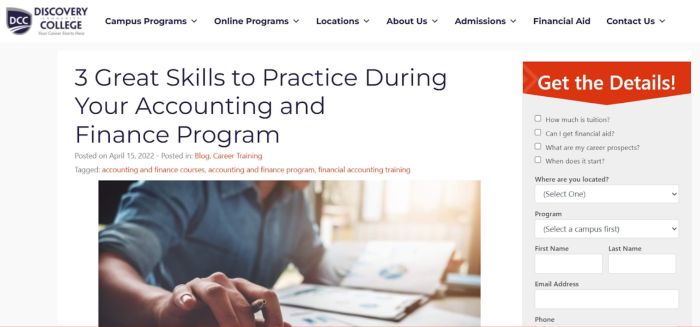
Example: Discovery Community College’s official blog uses program-specific keywords in post titles to boost SEO. For example, one post is titled “3 Great Skills to Practice During Your Accounting and Finance Program,” directly incorporating the Accounting and Finance program name. This keyword-focused approach makes it far more likely that the content appears in search results when potential students are googling that training area. By optimizing blog content for high-intent queries, Discovery Community College increases its visibility to the right audience and draws in quality traffic (prospects already interested in those programs).
Source: Discovery Community College
Gated content like e-books or checklists can add another layer—prospects are more willing to share contact details if the resource provides clear value, such as a scholarship checklist or career outlook guide.
2. Optimize Your Website for Search Engines (SEO)
Even the best content won’t generate leads if students can’t find it. That’s why SEO is essential. Since most students begin their school search online, ranking on the first page of Google for program- and location-based keywords (“MBA programs in Canada,” “best nursing degree in Ontario”) is critical. The higher you rank, the more qualified traffic you attract.
Effective SEO starts with understanding what prospective students are searching for and weaving those terms naturally into your program pages, blog posts, and FAQs. On-page basics, like strong titles, meta descriptions, mobile-friendly design, and fast load times, should work hand in hand with technical SEO and local optimization.
How can universities leverage SEO to improve their lead generation efforts? SEO boosts visibility when students search for programs, scholarships, or career outcomes. By optimizing program pages, blogs, and local listings with relevant keywords, universities appear in top search results. This organic traffic delivers high-intent leads, students actively seeking education opportunities, directly into the recruitment funnel.
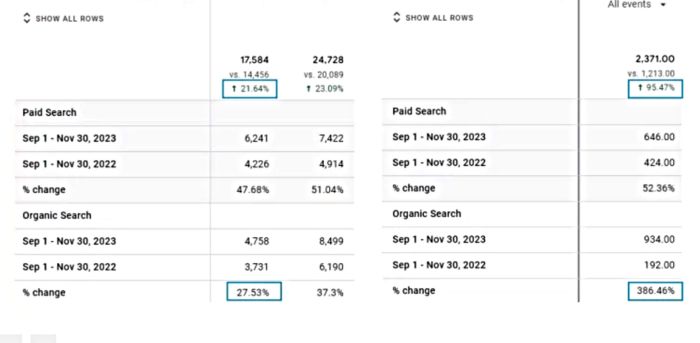
Example: Partnering with HEM, Cumberland College invested in multilingual SEO, optimizing its website in both English and French. Within a year, organic traffic grew by 27.5%, and leads from SEO traffic surged by 386%. This data-driven strategy directly fueled a 20–35% increase in new enrollments, proving how powerful SEO can be for lead generation for higher education.
Source: Higher Education Marketing
3. Optimize Your Website’s Landing Pages and Lead Capture Forms
Attracting visitors is only half the battle; converting them into leads is what drives enrollment. Landing pages and inquiry forms are at the heart of conversion rate optimization (CRO) for higher education. With education landing pages averaging a 4.5% conversion rate, small improvements can mean a big jump in inquiries. To maximize results:
- Mobile-first design: Students browse on their phones, so pages must load fast and display seamlessly.
- Clear, concise copy: Use scannable headlines and bullet points to highlight benefits.
- Prominent CTA: Each page should push one clear action: “Request Info” or “Register Now,” with an eye-catching button.
- Short forms: Ask only for essential info (name, email, program interest). Long forms create friction.
- Trust signals: Add student testimonials, alumni outcomes, or accreditation badges to reassure visitors.
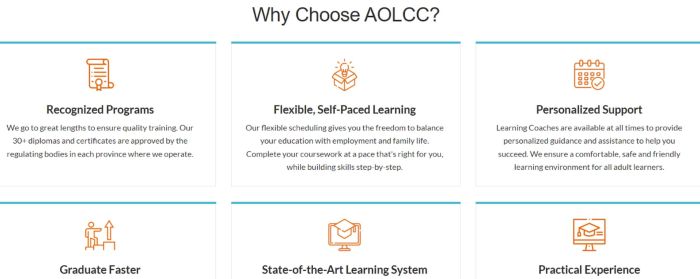
Example: The Academy of Learning Career College’s landing pages highlight clear program benefits and unique selling points to persuade visitors. AOLCC outlines its proposition value on landing pages, essentially listing what students gain from the program, and expands on each point to hold interest. By foregrounding these program benefits, AOLCC’s pages effectively communicate value and encourage prospects to take the next step (e.g., request info or apply).
Source: AOLCC
4. Implement Chatbots and Live Chat for Instant Engagement
Today’s prospective students expect instant answers when they land on a university website. Chatbots and live chat make that possible, engaging visitors the moment they arrive instead of waiting for them to stumble upon a form. A chatbot that greets with a simple “Do you have questions about admissions or programs?” lowers barriers, creates an immediate connection, and often captures leads that would otherwise leave without taking action.
Configured well, education chatbots can handle common questions around deadlines, prerequisites, or housing 24/7. When a query requires a human touch, they can hand off to a live staff member or at least collect contact details for follow-up. This style of communication appeals especially to Gen Z, who spend significantly more time on messaging apps than older generations and respond well to the casual, conversational tone of chat.
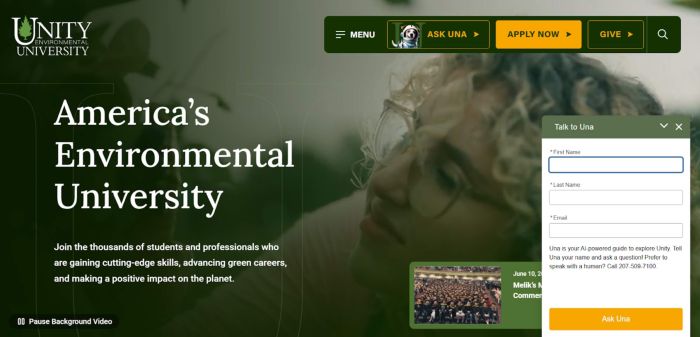
Example: Unity Environmental University launched an AI virtual agent named “Una” to assist prospective students in finding suitable programs and navigating the application process. According to Unity’s press release, Una is available 24/7 as a personalized guide, providing instant answers about admissions and even helping complete application steps.
Source: Unity Environmental University
From a practical standpoint, institutions can blend live and automated support depending on resources. Staff-led chat during business hours provides personal attention, while chatbots can cover after-hours. The key is visibility: a small but inviting chat icon, integrated with your CRM to capture leads automatically, turns your site into an “always-on” recruitment assistant. In higher education lead generation, that combination of accessibility, speed, and personalization is increasingly what sets strong digital strategies apart.
5. Harness the Power of Social Media Platforms
Social media remains one of the most powerful tools for lead generation for colleges. Prospective students spend hours daily on platforms like Instagram, TikTok, Facebook, LinkedIn, and X. Making these spaces essential for reaching and engaging them. Each channel serves a slightly different role: Instagram and TikTok connect best with high school and undergraduate audiences, LinkedIn appeals to graduate and professional prospects, while Facebook often reaches parents and working adults.
What role do social media platforms play in lead generation for higher education institutions? Social media connects universities with prospects where they already spend time. Authentic posts, student takeovers, and targeted ads spark awareness, build community, and drive traffic to lead forms. Engagement nurtures interest over time, transforming casual followers into applicants and amplifying recruitment campaigns.
To generate leads, institutions should focus on consistent posting, authentic storytelling, and quick responses to comments or direct messages. Content like student takeovers, alumni testimonials, and “day in the life” videos resonates strongly, helping prospects envision themselves at your school.
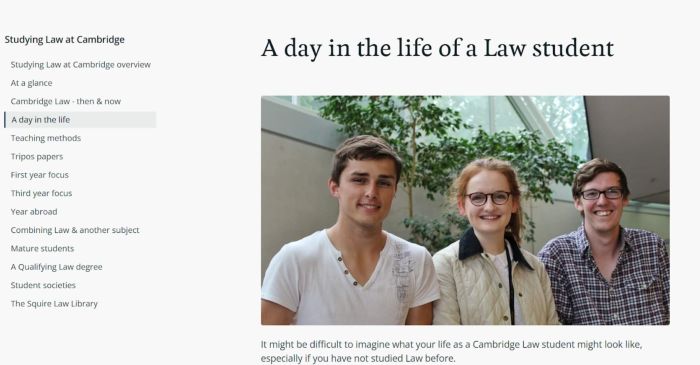
Example: The University of Cambridge leverages authentic, student-led “Day in the Life” videos on its official channels (website, YouTube, TikTok) to showcase everyday student experiences. These videos are produced through the university’s own outlets, not third-party media, ensuring they are direct primary sources from Cambridge. For instance, Cambridge’s Faculty of Law features a “Day in the life of a Law student” video on its official site and YouTube, where “three first year Law students, Robbie, Katie and Scott, give us an insight into a typical day in their lives, using hand-held cameras”. In this video, the students themselves film their lectures, study sessions, and social activities, offering a genuine glimpse into daily life in Cambridge.
Source: University of Cambridge
Done well, social media builds community, nurtures awareness, and funnels engaged viewers toward applications or info requests.
6. Invest in Targeted Paid Advertising (SEM & Social Ads)
While organic search and social media build long-term visibility, paid advertising can accelerate lead generation for colleges by reaching the right students at the right time. Search engine marketing (SEM), such as Google Ads, is especially valuable for competitive programs or new offerings that don’t yet rank organically. Targeting keywords like “online MBA in healthcare” ensures your ads appear when students are actively searching, capturing high-intent leads ready to convert.
On social platforms, precise targeting by age, interests, location, or even undergraduate major allows you to reach audiences that align with your programs. Retargeting campaigns are equally powerful, reminding visitors who viewed your site or started an application to take the next step.
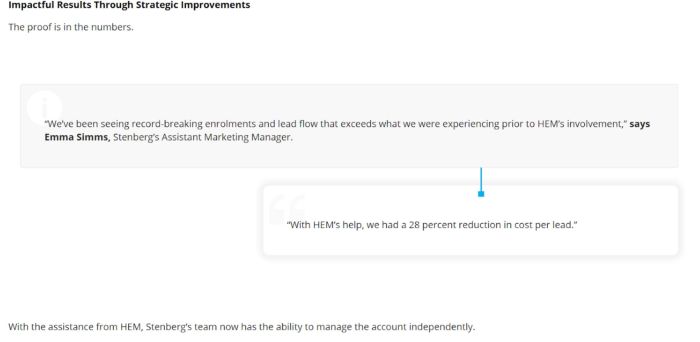
Example: Stenberg College leveraged Google Ads to attract more qualified leads for its healthcare and nursing programs. HEM’s case study notes that Stenberg uses Google Ads as a “key marketing tool to recruit students,” and with HEM’s expertise, the college’s ads now generate both more leads and better-qualified leads for admissions. The partnership allowed Stenberg to optimize keywords, ad creatives, and targeting, resulting in improved ROI on their ad spend and a healthier enrollment pipeline.
Source: Higher Education Marketing
7. Nurture Leads With Email Marketing and Marketing Automation
Capturing a lead is only the start. The real work begins with nurturing that interest into enrollment. Email marketing remains one of the most powerful tools in higher ed lead generation, delivering an estimated ROI of $36 for every $1 spent. Students also welcome it: surveys show nearly 70% prefer to hear from institutions via email.
The key is relevance. Segment leads by program, stage in the decision journey, or demographics, and tailor messages accordingly. Personalization should go beyond using a first name. It should highlight specific programs, address common concerns, or share stories aligned with student interests. Mapping emails to the student journey also ensures prospects receive the right content at the right time, from early-stage guides to deadline reminders.
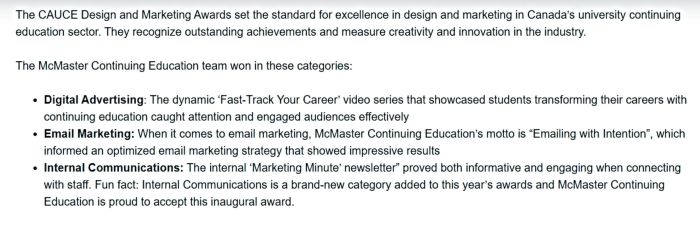
Example: By developing email campaigns tailored to specific learner personas (“Emailing with Intention”), McMaster’s Continuing Ed achieved email engagement far above industry benchmarks. In fact, its automated drip emails earned about a 27.9% open rate, outperforming average open rates (~21.5%) for education emails. This persona-driven strategy was recognized with national marketing awards, underscoring how segmenting messaging to audience needs leads to more engaged prospects and higher conversion potential.
Source: McMaster University
8. Host Events and Leverage Virtual Engagement Opportunities
Events remain one of the most effective lead generation tools in higher education because they let prospects experience your institution firsthand. In-person open houses, campus tours, and information sessions build emotional connections as students meet faculty, see facilities, and imagine themselves on campus. From a lead gen perspective, event registrations and check-ins capture valuable contact information, which can then be nurtured with timely follow-up emails or calls.
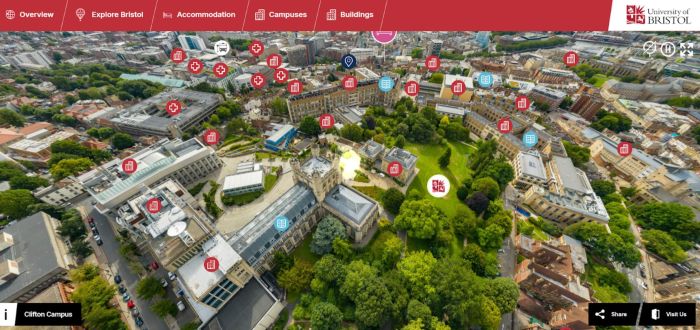
Virtual events have expanded this reach even further. Online open houses, live webinars, and 360° virtual tours allow schools to engage international prospects and those unable to travel. The University of Bristol, for example, hosts a dedicated page for virtual campus and city tours, giving global audiences a way to explore on their own time.
Example: Bristol has embraced virtual engagement to reach students globally. The university maintains a dedicated page for virtual events and tours, where prospects can take self-guided 360° campus tours and even explore the city online. During the pandemic, such virtual open days were crucial: over half of UK prospective students surveyed (59%) attended at least one virtual open day. By offering rich virtual events and tours, the University of Bristol kept students engaged during lockdowns and expanded its reach beyond those able to visit in person. This virtual strategy not only sustained interest through difficult times but continues to complement in-person events as a convenient lead generator.
Source: Bristol University
The most effective events, whether in-person or online, blend interactivity with personal connection. Live chats, Q&As, and student ambassador involvement ensure attendees feel engaged, while follow-up communications help convert that interest into applications.
9. Utilize CRM Systems and Data Analytics to Refine Your Outreach
Behind every strong lead generation program is a system that manages, tracks, and optimizes outreach. A Customer Relationship Management (CRM) platform, such as HubSpot, Slate, or HEM’s own Mautic CRM, centralizes prospect data, automates follow-ups, and makes it easier to measure performance.
Every new lead, whether from a form, ad, or event, flows into the CRM, where it can be segmented, scored, and assigned to counselors. Automated workflows ensure timely engagement: for example, sending a personalized welcome email immediately after an inquiry and triggering reminders if no action follows.
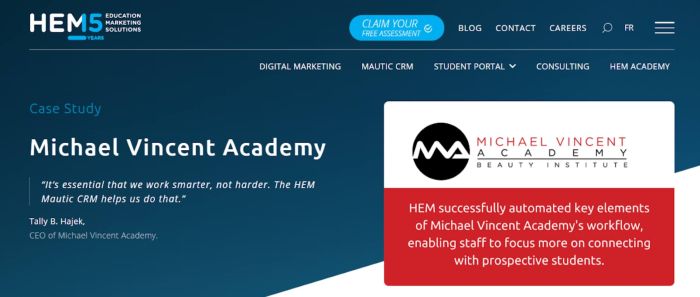
Example: Michael Vincent Academy overhauled its recruitment process by adopting a customized CRM automation solution with HEM. Michael Vincent Academy automated key workflows using the CRM, which dramatically improved efficiency in managing inquiries. Staff could spend less time on manual follow-ups and more on building relationships with prospects. The result was a smoother funnel, inquiries were responded to promptly, and no prospective student fell through the cracks, ultimately leading to higher enrollment yields.
Source: HEM
Analytics make this even more powerful. By monitoring lead sources, campaign performance, and student behaviors, institutions can refine targeting and invest where returns are strongest. Business School Lausanne, for instance, leverages data insights to optimize international outreach and ensure global diversity in recruitment.
In short, a data-driven CRM approach ensures no lead slips through the cracks and every prospect receives timely, personalized attention.
Integrating the 9 Strategies Into a Cohesive Lead Generation Plan
Effective lead generation in higher education isn’t driven by one silver bullet; it’s the outcome of multiple strategies working together. Content fuels SEO, SEO drives visitors to optimized landing pages, social media and paid ads amplify your reach, while email and CRM workflows nurture prospects into applicants. Layered on top, data and analytics help refine every stage, creating a cycle of attraction, engagement, and conversion that grows stronger over time.
Real-world outcomes show the power of this integrated approach. Webster University Geneva reported a 30% surge in enrollments through digital marketing and timely follow-ups, while Cumberland College doubled its lead flow by combining SEO content with paid ads and social engagement. Even more targeted initiatives, like Queen Anne’s School’s multi-platform ad campaigns or McMaster University’s persona-based email drips, prove that each tactic can meaningfully contribute to the bigger picture when executed strategically.
Think of your role as designing a system that balances creativity with data. Keep testing new formats, from TikTok challenges to interactive quizzes, while staying agile to shifts like AI tools or evolving privacy rules. Above all, keep the student experience front and center: personalization, authenticity, and responsiveness are what today’s learners value most.
By applying the nine strategies outlined in this guide, your institution can not only attract more qualified leads but also convert them into enrolled students in a sustainable, scalable way. Lead generation may be challenging, but with a student-first mindset and a data-informed strategy, you’ll build a steady pipeline of future students ready to join your community.
Struggling with lead generation?
Our expert digital marketing services can help you attract and enroll more students!
Frequently Asked Questions
Question: How can content marketing help universities generate more leads?
Answer: Content marketing attracts prospective students by answering their questions and showcasing institutional strengths. Blogs, guides, and videos build trust, improve SEO visibility, and highlight success stories. This engagement draws high-intent visitors to program pages, where they can convert into inquiries or applications.
Question: What role do social media platforms play in lead generation for higher education institutions?
Answer: Social media connects universities with prospects where they already spend time. Authentic posts, student takeovers, and targeted ads spark awareness, build community, and drive traffic to lead forms. Engagement nurtures interest over time, transforming casual followers into applicants and amplifying recruitment campaigns.
Question: How can universities leverage SEO to improve their lead generation efforts?
Answer: SEO boosts visibility when students search for programs, scholarships, or career outcomes. By optimizing program pages, blogs, and local listings with relevant keywords, universities appear in top search results. This organic traffic delivers high-intent leads, students actively seeking education opportunities, directly into the recruitment funnel.