Higher education is under siege from the Trump administration. Those opposing this siege and the administration’s attacks on democracy would do well to heed the wise advice of Benjamin Franklin given just prior to the signing of the Declaration of Independence in 1776: “We must all hang together, or most assuredly we shall all hang separately.”
This is particularly true right now for college and university presidents.
College presidents come from a tradition based on the importance of ideas, of fairness, of speaking the truth as they understand it, whatever the consequences. If they don’t speak out, what will later generations say when they look back at this dark, dark time?
The idea that Trump’s attacks on higher education are necessary to combat antisemitism is the thinnest of covers, and yet only a very few college presidents have been brave enough to call this what it is.
The president and those around him don’t care about antisemitism. Trump said people who chanted “Jews will not replace us” were “very fine people”; he dined with avowed antisemites like Nick Fuentes and Ye (Kanye West).
Marjorie Taylor Greene blamed the California wildfires of 2018 on space lasers paid for by Jewish bankers. Robert Kennedy claimed that Covid “targeted” white and Black people but spared Ashkenazi Jews and Chinese people. The Proud Boys pardoned by Trump for their part in the January 6 insurrection have routinely proclaimed their antisemitism; they include at least one member who has openly declared admiration for Adolf Hitler.
Fighting antisemitism? That was never the motive for the Trump administration’s attacks on colleges and universities. The motive was — and continues to be — to discipline and tame institutions of higher learning, to bring them to heel, to turn them into mouthpieces of a single ideology, to put an end to the free flow of ideas under the alleged need to combat “wokeism.”
Related: Interested in innovations in the field of higher education? Subscribe to our free biweeklyHigher Education newsletter.
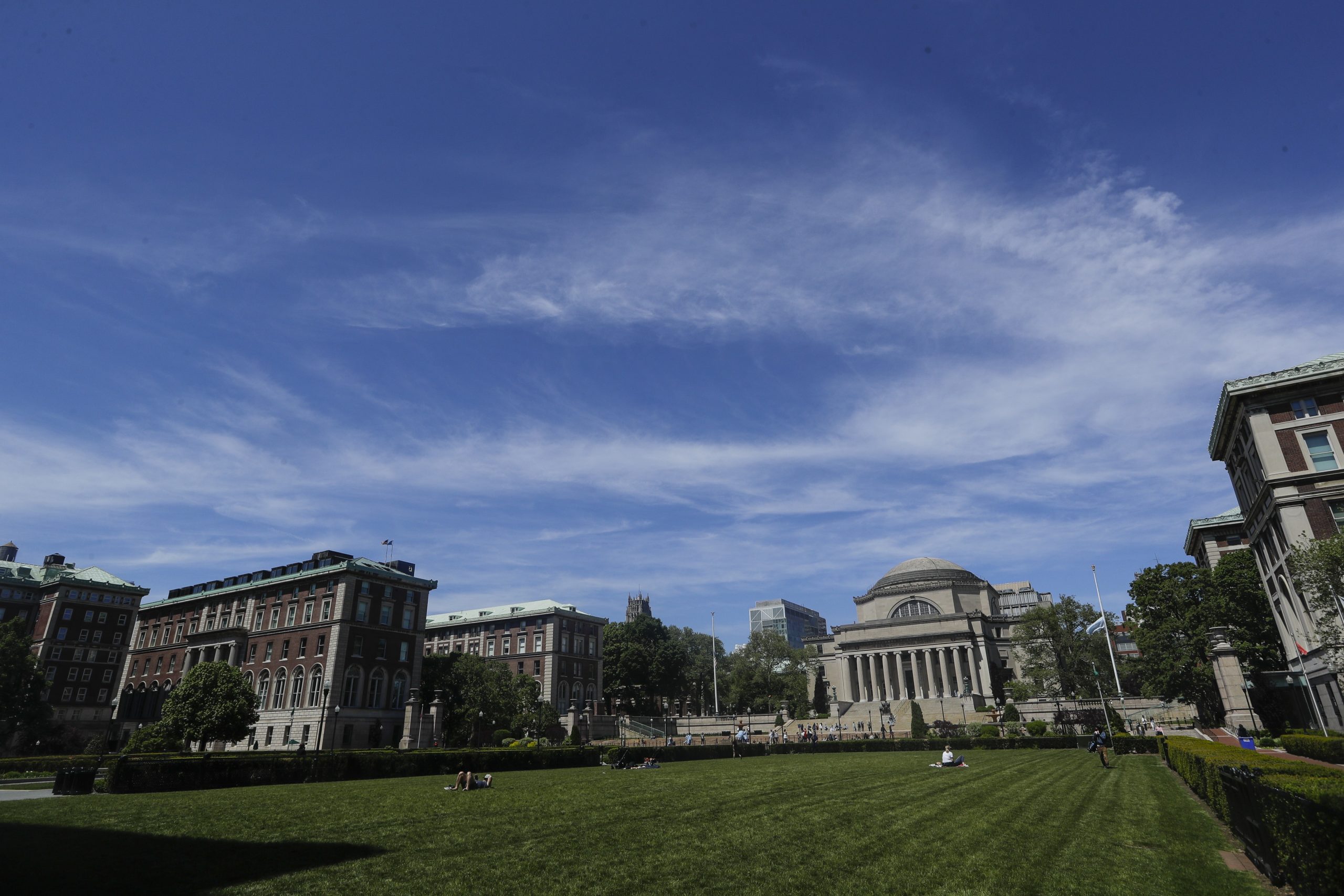
Columbia University has been a prime target of the Trump administration’s financial threats. I’ve been a university provost. I’m not naïve about the tremendous damage the withholding of federal support can have on a school. But the fate of Columbia should be a cautionary tale for those who think keeping their heads down will help them survive. (The Hechinger Report is an independent, nonprofit, nonpartisan organization based at Teachers College, Columbia University.)
Columbia was more than conciliatory in responding to concerns of antisemitism. The administration suspended two student groups, Students for Justice in Palestine and Jewish Voice for Peace, for holding rallies that allegedly included “threatening rhetoric and intimidation.”
They suspended four students in connection with an event featuring speakers who “support terrorism and promote violence.”
They called in police to dismantle the encampment created to protest the War in Gaza. Over 100 protesters were arrested.
They created a Task Force on Antisemitism, and accepted its recommendations. They dismissed three deans for exchanging text messages that seemed to minimize Jewish students’ concerns and referenced antisemitic tropes.
President Minouche Shafik resigned after little more than a year in office. (Last week, the university’s interim president, Katrina Armstrong, also resigned.) In September 2024, the ADL reports, the university went so far as to introduce “new policies prohibiting the use of terms like ‘Zionist’ when employed to target Jews or Israelis.”
None of this prevented the Trump administration from cancelling $400 million worth of grants and contracts to Columbia — because responding to antisemitism was never the real impetus for the attack.
Was Marjorie Taylor Greene asked to renounce antisemitism as a condition for her leadership in Congress?
Was Robert Kennedy asked to renounce antisemitism in order to be nominated for a Cabinet position?
Were the Proud Boys asked to renounce antisemitism as a condition for their pardoning?
This is an attack on higher education as a whole, and it requires a collective defense. Columbia yesterday. Harvard today, your school tomorrow. College presidents cannot be silent as individual schools are attacked. They need to speak out as a group against each and every incursion.
They need to pledge to share resources, including financial resources, to resist these attacks; they should mount a joint legal resistance and a joint public response to an attack on any single institution.
These days, as many have observed, are much like the dark days of McCarthyism in the 1950s. In retrospect, we wonder why it took so long for so many to speak up.
Today we celebrate those who had the moral strength to stand up right then and say, “No. This isn’t right, and I won’t be part of it.”
The politicians of the Republican Party have made it clear they won’t do that, though most of them understand that Trumpism is attacking the very values — freedom, democracy, fairness — that they celebrate as “American.”
They have earned the low opinion most people have of politicians. But college and university presidents should — and must — take a stand.
Rob Rosenthal is John E. Andrus Professor of Sociology, Emeritus, at Wesleyan University.
This story about higher education and the Trump administration was produced byThe Hechinger Report, a nonprofit, independent news organization focused on inequality and innovation in education. Sign up for Hechinger’sweekly newsletter.
The Hechinger Report provides in-depth, fact-based, unbiased reporting on education that is free to all readers. But that doesn’t mean it’s free to produce. Our work keeps educators and the public informed about pressing issues at schools and on campuses throughout the country. We tell the whole story, even when the details are inconvenient. Help us keep doing that.
More than 17,400 high school seniors last fall got the sweetest news any anxious student can get: Congratulations, because of your high school GPA, you’re automatically admitted to one of 10 California State University campuses of your choice — and they’re all relatively affordable.
Even with less than a week to go before the campuses wrap their final decisions about whom to admit, a pilot program focusing on Riverside County is already showing that more students have been admitted from the county than last year, about 10,600 so far in 2025 compared to last year’s roughly 9,800.
The pilot builds on Cal State’s efforts to enroll more students and works like this: High school seniors receive a notice in the mail that they’re automatically admitted as long as they maintain their grades, finish the 15 mandatory courses necessary for admission to a Cal State, and complete an admissions form to claim their spot at a campus. Cal State was able to mail the notices because it signed an agreement with the Riverside County Office of Education that gave the university eligible students’ addresses.
Now in the program’s first year, Cal State joins other public universities across the country in a growing national movement to automatically admit eligible students. From November through January, Cal State informed students they were accepted to the 10 campuses. To claim a spot, students needed to go online and pick at least one campus.
If past admissions and enrollment trends hold, Cal State as a system will educate hundreds of more students, all from Riverside, than they would have without the pilot. That’d be a boon for a system that prides itself on its affordability and motto that it’s the people’s university; Cal State admits a far higher percentage of students than the University of California. It also could serve as a much-needed budget boost from the extra tuition revenue those students bring, especially at campuses with sinking enrollment.
Eight campuses — Channel Islands, Chico, East Bay, Humboldt, Maritime Academy, Monterey Bay, San Francisco, and Sonoma — are so under-enrolled that Cal State is pulling some of their state revenues to send to campuses that are still growing. Cal Maritime is soon merging with another campus because of its perilous finances. The pilot also includes the two closest campuses to the county, San Bernardino and San Marcos.
The system chose Riverside County because all of its public high school students were already loaded onto a state data platform that can directly transmit student grades to Cal State — a key step in creating automatic admissions. Riverside is also “ethnically and economically representative of the diversity of California — many of the students the CSU is so proud to serve,” a spokesperson for the system, Amy Bentley Smith, wrote in an email.
At Heritage High School, a public school in Riverside County, the pilot encouraged students who previously didn’t even consider attending a public four-year university to submit the automatic admission forms to a Cal State.
Silvia Morales, a 17-year-old senior at Heritage, got an automatic admissions letter. “I was pretty set on going to community college and then transferring, because I felt like I wasn’t ready for the four-year commitment to a college,” she said.
Even with a 3.0 GPA, higher than the 2.5 GPA Cal State requires for admission, she nearly didn’t submit the forms to secure her admission until early January. That’s well past the standard Nov. 30 admissions deadline.
It wasn’t until her counselor, Chris Tinajero, pulled her into a meeting that she decided to opt into the pilot. “I went through the sales pitch like, ‘Hey, you get this guaranteed admission, you’re an amazing student,’” he recounted.
The pitch worked. Though Cal State sent a physical pamphlet and her high school also emailed her about the pilot, “I wasn’t really paying attention,” Morales said. She needed an adult she trusted at the school to persuade her that the applications were worth the effort, she said.
Morales applied to three Cal State campuses in the pilot plus two outside the program that were still accepting late applications — Chico, Humboldt, Los Angeles, Northridge and San Bernardino. She got into each one, she said.
Her parents are “proud of me because I want to go to college,” Morales said. Neither went to college, she added.
Final enrollment figures won’t be tallied until August, including how many of the students admitted through the pilot attended one of the 10 campuses. But the system’s chancellor’s office is already planning to replicate the pilot program in a Northern California county, which will be named sometime in April, Cal State officials said.
A bill by Christopher Cabaldon, a state senator and Democrat from Napa, would make automatic enrollment to Cal State for eligible students a state law. The bill hasn’t been heard in a committee yet.
A boost in application numbers
Of the 17,000 students who received an invitation to secure their automatic admissions, about 13,200 submitted the necessary forms. That’s about 3,000 more students who applied from the county than last year.
Those who otherwise wouldn’t have applied to a Cal State include students who were eyeing private colleges, said Melina Gonzalez, a counselor at Heritage who typically advises students who are already college-bound.
Nearby private colleges offer all students application fee waivers; at Cal State, typically only low-income students receive fee waivers. But the pilot provided each Cal State student one fee waiver worth $70, which was a draw to students and their parents who don’t qualify for the fee waiver but might struggle to pay.
Last year, 10 of the 100 senior students Gonzalez counseled didn’t apply to a Cal State. This application season, all her students submitted at least one Cal State application, she said.
“It was big, it was really cool, their eyes, they were so excited,” she said of the automatically admitted students. “They would come in and show me their letters.”
Parents called her asking if the pamphlet from Cal State was authentic. With guaranteed admission, some parents ultimately decided to pay for additional applications to campuses in the pilot, knowing it wasn’t in vain.
At Heritage, high school counselors reviewed Cal State’s provisional list of students eligible for the pilot to add more seniors, such as those who hadn’t yet completed the mandatory courses but were on track to do so.
Tinajero was also able to persuade some students who hadn’t completed all the required courses for Cal State entry to take those, including online classes. Still, others with qualifying grades didn’t apply because they weren’t persuaded that a four-year university was for them. Tinajero sees program growth in the coming years, assuming Cal State continues with the pilot. Younger high school students who witnessed the fanfare of automatic admissions may take more seriously the need to pass the 15 required courses to be eligible for a Cal State or University of California campus, he said.
That’s part of Cal State’s vision for this pilot, said April Grommo, the system’s assistant vice chancellor of strategic enrollment management: Begin encouraging students to take the required courses in ninth grade so that by 11th and 12th grade they’re more receptive to applying to Cal State.
Pilot leads to more applications
The automatic admissions pilot is likely what explains the jump in overall applicants, said Grommo. “If you look at the historical numbers of Riverside County students that have applied to the CSU, it’s very consistent at 10,000, so there’s no other accelerator or explanation for the significant increase in the applications,” she said.
Some campuses in the pilot are probably going to see more students from Riverside County than others. The eight under-enrolled Cal State campuses each enrolled fewer than than 100 Riverside students as freshmen, a CalMatters review of 2024 admissions data show. Two enrolled fewer than 10 Riverside students as freshmen.
Cal State isn’t solely relying on past trends to enroll more students. Grommo cited research that suggests direct admissions programs are associated with increases in student enrollment, but not among low-income students, who are less familiar with the college-going process or have additional economic and family demands, like work and child care.
The quad at San Francisco State University in San Francisco on July 7, 2023. Photo by Semantha Norris, CalMatters
Even after students are admitted, some don’t complete key steps in the enrollment process, such as maintaining their grades in the second semester, completing registration forms to enroll, and paying deposits. Others, especially low-income students, have a change of heart over summer about attending college, which scholars call “summer melt.” Then there are the students who got into typically more selective campuses, such as at elite private schools and the University of California, and choose instead to go to those.
To prompt more students to actually enroll, Cal State officials in early March hosted two college fairs in Riverside County for students admitted through the pilot. About 2,600 students signed up to be bussed from their high schools to large venues, including the Riverside Convention Center, where they met with staff, alumni and current students from all 10 Cal State campuses participating in the program. Those were followed by receptions with students and parents.
Grommo said they maxed out capacity at both venues for the student events. While it’s common for individual campuses to host events for admitted students, it was a first for Cal State’s central office.
The event costs, physical mailers to students about their admissions guarantee, invitation to the college fairs and another flyer about the relative affordability of a Cal State cost the system’s central office around $300,000, Grommo estimates. But if the event moves the needle on students agreeing to attend a Cal State, the tuition revenue at the largely under-enrolled campuses alone would be a huge return on investment.
The effort is a far more targeted approach than another admissions outreach effort Cal State rolled out last fall to inform students who started but didn’t finish their college applications that they’re provisionally accepted, as long as they complete and send their forms. The notification went to 106,000 students and was the result of a $750,000 grant Cal State won from the Lumina Foundation, a major higher education philanthropy. The system will know by fall if this notification resulted in more students attending a Cal State.
But that was aimed at students who already applied. The Riverside pilot brings in students, like Morales, who wouldn’t have applied without the mailers and entreaties from counselors. She’s leaning toward picking Cal State San Bernardino for next fall. It’s close to home and an older cousin recently graduated who had a good experience there, she said.
Her next task? Working with her parents to complete the federal application for financial aid by April 2, the deadline for guaranteed tuition waivers for low- and middle-income students.
It’s possible that Cal State may take the direct admissions pilot statewide. All counties are required by state law to join the state-funded data system that Riverside is already a part of to electronically transmit students’ high school grades to Cal States and UCs. Doing so removes the need for schools to send campuses paper transcripts. The deadline for all counties to join the state data system is summer of 2026.
Small colleges have long played a significant role in shaping American higher education. They may not make national headlines every day, but their impact on students, communities, and the broader landscape of learning is undeniable. That’s why Kent Barnds and I, Dean Hoke, created Small College America. Its mission is to present critical discussions at the forefront by interviewing small college higher education leaders, policy experts, and innovators. The podcast delves into the evolving role of small colleges, their economic impact, innovative strategies for sustainability, and how they can continue to provide a highly personalized educational experience.
Each episode explores the distinctiveness of small colleges—through conversations with presidents, provosts, foundation leaders, and changemakers who are deeply engaged in the work of shaping the future. We focus on the real issues small colleges face—from enrollment shifts and financial pressures to mission clarity, leadership, and collaborative innovation.
Why is now the perfect time for this podcast? Higher education faces unprecedented challenges, and small colleges, with their adaptability and personalized approaches, offer valuable lessons and innovative solutions critical to the broader education landscape.
Our most recent episodes include:
Wendy Sherman Heckler and Chet Haskell – From Otterbein University and Antioch University, respectively these two leaders discuss their groundbreaking collaboration known as the Coalition for the Common Good. It’s a bold new model for partnership between mission-driven institutions focused on shared values and long-term sustainability.
Eric Lindberg—Executive Director of the Austin E. Knowlton Foundation in Cincinnati, Ohio, shares insights into the Foundation’s commitment to supporting small colleges, reflects on his own liberal arts experience, and outlines how strategic philanthropy can strengthen institutional resilience.
Dr. Paaige Turner, Provost and Executive Vice President at Aurora University discusses her transition into the role after serving as Dean at Ball State University. She brings a fresh perspective on leadership, regional relevance, and the evolving communication needs of today’s students.
Upcoming Guests:
We’re excited to welcome several new voices to the podcast in upcoming episodes:
Charles Kim, retired Managing Director at Kaufman Hall and former head of its Higher Education division, now serves on the boards of Augustana College and Westminster College.
Scott Wiegandt, Director of Athletics at Bellarmine University, who helped lead the university’s move from NCAA Division II to Division I.
Karin Fischer, senior writer for The Chronicle of Higher Education and author of the Latitudes newsletter, brings deep insight into the global and domestic challenges facing small colleges.
Steve Bahls, President Emeritus of Augustana College and national expert on shared governance, discusses how collaboration can lead to institutional agility and long-term success.
Matthew Ward, Vice President of Enrollment Management at California Lutheran University.
Liz Nino, Executive Director of International Enrollment at Augustana College.
Dr. Marco Clark, President of Holy Cross College at Notre Dame, Indiana.
Whether you’re a small college president, a prospective student, an alum, or simply someone passionate about the future of higher education, we invite you to join us. Each episode of Small College America is a chance to learn, reflect, and engage with the people who are shaping this vital sector.
Subscribe on your favorite podcast platform or listen directly at https://www.podpage.com/small-college-america/. We hope you’ll tune in. If there’s a story or college you think we should feature, let us know.
Small colleges are changing higher education—be part of the conversation.
Dean Hoke is Managing Partner of Edu Alliance Group, a higher education consultancy, and a Senior Fellow with the Sagamore Institute. He formerly served as President/CEO of the American Association of University Administrators (AAUA). With decades of experience in higher education leadership, consulting, and institutional strategy, he brings a wealth of knowledge on small colleges’ challenges and opportunities. Dean, along with Kent Barnds, is a co-host for the podcast series Small College America.
Our study addresses the paradox of expanding higher education, particularly in Iran, failing to translate into substantial societal impact. We adopted an interpretive research paradigm to explore participants’ experiences and perspectives, emphasising qualitative inquiry. Specifically, we applied a basic qualitative research approach, focusing on thematic data analysis to understand underlying meanings and patterns. We conducted semi-structured, in-depth interviews with 23 professionals from Iran’s higher education system, including executive experts and academic scholars. The data was analysed using qualitative theme analysis with the thematic network approach. It highlights the interplay of internal and external factors driving this imbalance and offers practical recommendations for policymakers and university administrators. The study identifies multiple external and internal factors contributing to the imbalanced development of Iranian higher education.
External Factors:
Conflicting Political Discourse: Political divisions create inconsistent policy directions that hinder higher education reform. The resulting instability restricts universities from pursuing coherent strategies for social development.
Deficient Decision-Making Structures: Inefficient policy frameworks restrict universities’ ability to align with national development goals. This limits their capacity to engage in long-term planning, research commercialization, and innovation.
Lack of Social and Cultural Cohesion: Weak societal integration reduces higher education’s ability to contribute to social progress. Universities struggle to connect their knowledge outputs to broader societal needs without a shared cultural framework.
Low Demand for Science and Technology in the Economy: Limited integration of scientific advancements into economic sectors hinders universities’ relevance. Weak industry-university linkages prevent research outcomes from driving innovation and economic growth.
International Sanctions: Economic constraints and restricted access to global knowledge networks impede higher education progress. This isolation limits opportunities for research collaboration, technological exchange, and funding access.
Internal Factors:
Limited Engagement with National and Local Ecosystem Needs: Universities lack meaningful interaction with regional industries and communities. This disconnect limits their ability to address localized development challenges.
Insufficient Attention to Territorial Advantages in Development Planning: Universities often fail to leverage local strengths and opportunities, weakening their contribution to regional economic development.
Weak Endogenous Creativity: Overreliance on Western educational models stifles innovative academic approaches. As a result, Iranian universities struggle to develop unique solutions suited to local challenges.
Promotion of Emigration: University environments inadvertently encourage student and faculty migration, reducing local impact. This trend diminishes the human capital available to drive national innovation.
This study contributes new insights by highlighting the interplay between external political pressures and internal university strategies. While previous studies have emphasized government interventions and economic constraints, this research reveals the disruptive effects of conflicting political ideologies and weak social cohesion. Additionally, the study expands on the “quadruple helix” model by illustrating the absence of place-based leadership and strategies as critical gaps in Iranian higher education. The study also introduces a framework for integrating participatory governance models into university decision-making processes, enhancing institutions’ responsiveness to societal needs. The study emphasizes three key strategies for improving higher education’s societal impact:
Promoting National Dialogues via Universities: Encouraging open dialogue among academic leaders and policymakers can bridge ideological divides, fostering consensus on long-term educational goals. This step is vital to mitigate political interference and improve strategic planning for university development. Higher education can contribute to national stability and long-term planning by positioning universities as mediators in political debates.
Increasing Science and Technology Demand: Policymakers should enhance economic incentives for scientific research integration. Encouraging industrial partnerships and market-driven research will amplify universities’ role in economic growth. By creating a more dynamic innovation ecosystem, universities can expand their influence on industry practices and economic modernization.
Developing Science and Technology Diplomacy: Expanding diplomatic ties to bypass sanctions can enhance Iranian universities’ access to global scientific collaboration, fostering innovation and knowledge exchange. Such efforts include developing partnerships with international research centers and increasing participation in global academic networks.
The study to address internal factors recommends:
Expanding participatory teaching models, such as service learning, to connect universities with community development. These models empower students to engage with social challenges directly, enhancing their sense of responsibility and practical skills.
Aligning government support for universities based on regional strengths, promoting competition, and enhancing educational quality. By linking funding models to regional priorities, universities can better tailor their strategies to local economic and social needs.
Supporting creative teaching and research initiatives to foster academic innovation. This includes incentivising faculty to develop unconventional teaching methods and interdisciplinary research projects.
Encouraging initiatives that promote national pride and social responsibility among students and faculty, mitigating emigration trends. Universities can strengthen students’ connection to local development through values-based education and encourage talent retention.
The study highlights a critical limitation: its participants were drawn solely from the supply side of the science and technology ecosystem (university faculty and administrators). Future research should include stakeholders from the demand side, such as industry leaders, policymakers, and civil society representatives, to develop a more comprehensive understanding of higher education’s role in societal development. Exploring the interplay between social values, economic incentives, and political frameworks would provide deeper insights into higher education’s transformative potential.
This research underscores the need for a holistic approach to higher education reform. By addressing internal and external challenges, policymakers can create an educational landscape promoting social, economic, and political progress. Universities must evolve beyond expanding access to higher education and focus on fostering creativity, engagement, and accountability to enhance their contributions to society. Developing partnerships with industry, embracing participatory governance, and promoting inclusive dialogues will empower universities to become key drivers of social and economic transformation.
Amir Shahsavari is an Assistant Professor of Higher Education at Shahid Beheshti University in Tehran, Iran. His academic interests lie in higher education policy, academic management and planning, and teaching and learning, mainly focusing on higher education studies in Iran. Drawing on his research, he seeks to contribute to a deeper understanding of the challenges and opportunities facing Iranian universities to inform policy and improve educational practices. [email protected]
Mohammad Eslahi holds a PhD in Higher Education from the University of Tehran, Iran, specializing in Educational Administration and Planning. His research interests focus on the economics of higher education and the economics of university research. He is a lecturer and research assistant at the University of Tehran, actively contributing to teaching and scholarly endeavors in these fields.[email protected]
March 24, 2025, by Dean Hoke: Each small college has something special about it. Alice Lloyd College in Pippa Passes, Kentucky, was founded by Alice Spencer Geddes Lloyd and June Buchanan. They established the school in 1923 with minimal funds to provide affordable, quality education for Appalachian students facing economic hardship and limited educational opportunities. Their pioneering vision continues today, empowering students to become leaders dedicated to serving their Appalachian communities. This profile of Alice Lloyd College is the seventh in a series presenting small colleges throughout the United States.
Background
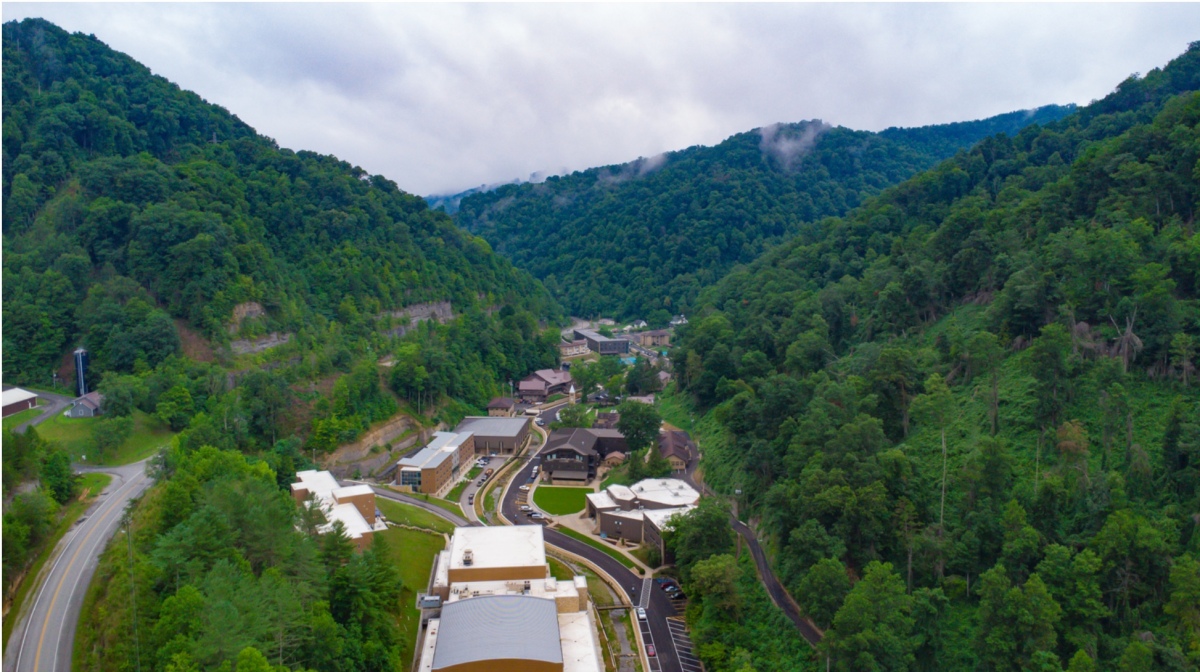
Established in 1923, Alice Lloyd College (ALC) is a private liberal arts college located in Pippa Passes, Kentucky, in the heart of Appalachia. The campus occupies approximately 175 acres in a picturesque mountain valley, offering an idyllic rural setting. Alice Spencer Geddes Lloyd (1876 – 1962) and her co-founder June Buchanan (1887 – 1988) were the co-founders and worked without pay on both education and fundraising for the college.
The school was created to provide post-secondary educational opportunities to serve students from Appalachia; the college remains steadfastly committed to its original mission of providing affordable, quality education, especially to students from Kentucky’s Appalachian region. It became a bachelor’s degree-granting institution in the early 1980s. Alice Lloyd College serves almost exclusively a 108-county Central Appalachian service area. Tuition is guaranteed to full-time students residing in the service area.
Alice Lloyd College remains dependent on the private support of the American free-enterprise system for over half of its revenue sources.
Curricula
Alice Lloyd College offers bachelor’s degrees across numerous academic fields, including Biological Sciences, Education, English, History, Sociology, Business Administration, and Criminal Justice. Education remains a cornerstone of ALC, reflecting its historic mission, with notable concentrations in Elementary Education, Secondary Education, and Special Education.
ALC’s distinctive curriculum model is designed around leadership education and character development, which are integral to the college’s foundational philosophy. Alice Lloyd’s Gatton Winston Scholars Program (formerly The Caney Scholars Program) financially supports ALC graduates seeking advanced degrees. It is the only program of its kind in the nation. Applicants must have high academic standards, be of strong character, and show potential for leadership. The College’s “Caney Scholars” program emphasizes leadership, community service, and personal responsibility, complementing traditional liberal arts education.
Strengths
Tuition Guarantee and Financial Aid: Alice Lloyd College offers free tuition for full-time students residing within its designated service area, making higher education accessible to economically disadvantaged students in Appalachia. This tuition-guarantee policy, funded through endowment revenues and private donations, covers full tuition for eligible students.
Work-Study Program: Uniquely, all full-time students participate in a mandatory work-study program. This program requires them to contribute labor weekly to campus operations, fostering a strong work ethic, practical experience, and reduced operating costs for the institution. Only seven colleges in the US have such a program.
High Graduate Success Rates: Nearly 95% of Alice Lloyd graduates secure employment or acceptance to graduate programs within six months of graduation, demonstrating the effectiveness of the College’s rigorous academic and character development programs.
Leadership and Character Development: A cornerstone of Alice Lloyd College’s educational experience is the emphasis on developing leaders through service learning and character education, which external evaluators consistently recognize as a defining institutional strength.
Weaknesses
Alice Lloyd College’s student retention and six-year graduation rate is below both national and regional averages for private colleges.
Financial Dependency on Donations: Alice Lloyd College operates tuition-free for eligible students from its service region, placing considerable reliance on donations, grants, and endowment income. This dependence can pose financial stability risks if philanthropic trends shift negatively.
Rural Isolation: The College’s isolated location, while picturesque, can deter students seeking urban experiences or greater proximity to metropolitan opportunities, limiting the pool of prospective students to those primarily interested in a rural collegiate experience.
Economic Impact
Alice Lloyd College significantly impacts the economy and social infrastructure of eastern Kentucky. Alice Lloyd College significantly contributes to the local and regional economy, generating $33 million in total economic impact for the Fiscal Year 2021-2022, according to a recent study commissioned by the Association of Independent Kentucky Colleges and Universities. According to Alice Lloyd College President Jim Stepp, “Today, 83% of our alumni live, work, and serve in these mountains and are fulfilling our founders’ vision. Additionally, the college frequently engages in community initiatives, supporting local economic and educational development.
Enrollment
Enrollment at Alice Lloyd College remains stable between 550 and 600, primarily from Appalachia. However, recent years have seen an uptick in applications from outside the immediate region due to increased awareness of its distinctive tuition-free and work-study models. Key points:
The acceptance rate in Fall 2023 is 86%—source: National Center for Education Statistics.
48% of graduates are first-generation, 4-year college graduates.
98% of their students come from the 108-county Appalachia Region.
Graduation and Retention Rates
Source: Alice Lloyd College Student Achievement Report
The graduation and retention rates for private colleges are below both national and regional averages. The National Student Clearinghouse Research Center reports that private nonprofit institutions have an average six-year graduation rate of 68%. In Kentucky, the average six-year graduation rate for private colleges is approximately 52.5%. For freshman-to-sophomore retention, the national average is 75%, and Kentucky is about 79%.
Alice Lloyd College’s graduation and retention rates reflect its explicit mission to serve Appalachian students facing significant socioeconomic, geographic, educational, and cultural barriers. Many students are first-generation, with limited financial resources and weaker academic preparation. The institution’s rural location limits access to employment, internships, and support services common in urban areas. Additionally, strong family obligations in Appalachian culture can disrupt students’ academic progress. The college’s pronounced commitment to educating high-risk students partially accounts for lower retention and graduation rates relative to national and regional averages for private nonprofit colleges.
Degrees Awarded by Major
In 2022- 2023, Alice Lloyd College conferred degrees as follows: 92 seniors graduated. In the Class of 2022, 50% are working (all in Appalachia), 45% are in graduate or professional school, 2% are in the military, and 3% are unemployed 6 months after graduation.
Alumni
Alice Lloyd College boasts an alumni network committed to community service, leadership, and regional development, with graduates frequently occupying influential positions in education, healthcare, business, and public service within Appalachia. According to LinkedIn, which has 1,169 alums registered, of which 704 live in Kentucky.
Notable alumni include:
Carl Perkins ( attended in the early 1930s) House of Representatives 1949 – 1984 Known for his advocacy of higher education, including the Carl D. Perkins Career and Technical Education Act, which focuses on improving career and technical education programs
Dr. Clyde Thornsberry (39) Centers for Disease Control, where he gained a national and international reputation as a scientist and expert in several fields, including microbiology and infectious diseases.
Dr. Warren Grady Stumbo (65) is a Distinguished physician and public servant from Eastern Kentucky.
Preston Spradlin (09) Head Basketball Coach James Madison University
Endowment and Financial Standing
Alice Lloyd College maintains a modest yet healthy endowment, valued around $60 – $70 million. Financial stability remains reliant mainly on consistent fundraising efforts and prudent asset management. Forbes 2023 Financial Health Evaluation gives a GPA of 3.463 out of 4.5 and a grade of A-. This reflects Alice Lloyd College’s fiscal responsibility, with continued positive ratings from financial health assessments.
Why is Alice Lloyd Important?
Strong Regional Commitment: The college addresses Appalachian educational disparities and actively contributes to the region’s long-term economic and social well-being.
Providing Tuition-Free Education: ALC significantly reduces financial barriers for Appalachian students, enabling higher education access for underserved populations.
Community Development: The college nurtures local economic and social growth by educating regional students who return as impactful leaders.
Innovative Work-Study Model: ALC’s mandatory Student Work Program teaches graduates practical workplace skills and instills a strong work ethic.
Alice Lloyd College is a unique school that fulfills its mission to educate mountain people for positions of leadership and service to the Appalachian region. 98% of its students come from the region, and 83% of its alumni return to live, work, and serve in the Appalachian region.
Dean Hoke is Managing Partner of Edu Alliance Group, a higher education consultancy, and a Senior Fellow with the Sagamore Institute. He formerly served as President/CEO of the American Association of University Administrators (AAUA). With decades of experience in higher education leadership, consulting, and institutional strategy, he brings a wealth of knowledge on small colleges’ challenges and opportunities. Dean, along with Kent Barnds, are co-hosts for the podcast series Small College America.
This blog was first published in the Oxford Magazine No 475 (Eighth Week, Hilary term, 2025) and is reproduced here with permission of the author and the editor.
Rachel Reeds’ short but comprehensive book, Surviving and Thriving in Higher Education Professional Services: a guide to success(Routledge, 2025), is both an instruction manual for the ‘professionals’ it was written for and an illuminating account of what they do for the academics and students who benefit. However, Reeds is frank about what is sometimes described as ‘trench warfare’, a ‘tension’ between academics and ‘everyone else’, including differences of ‘perceived status’ among the staff of ‘higher education providers’.
Her chapters begin with a survey of the organisation of ‘UK higher education today’. Then comes a description of ‘job or career’ in ‘professional services’ followed by a chapter on how to get such a post. Chapter 4 advises the new recruit about ‘making a visible impact’ and Chapter 5 considers ‘managing people and teams’. The widespread enthusiasm of providers for ‘change’ and ‘innovation’ prompts the discussion in Chapter 6.
Reeds defines ‘Professional Services’ as replacing and embracing ‘terms such as administrators, non-academic staff or support staff’. In some providers there are not two but three categories, with ‘professional services’ sometimes described as ‘academic-related’ and other non-academics as ‘assistant’ staff. Some academics are responsible for both teaching and research but there may also be research-only staff, usually on fixed-term externally-funded contracts, which may be classified on the sameside of the ‘trench’ as academics. The ‘umbrella carriers’ of ‘middle management’ and ‘dealing with difficult things’ provide matter for Chapter 7. In Chapter 8 and the conclusion there is encouragement to see the task in broader terms and to share ‘knowledge’ gained. Each chapter ends with suggestions for further reading under the heading ‘digging deeper’.
The scope of the needs to be met is now very wide. Government-defined ‘Levels’ of higher education include Levels 4 and 5, placing degrees at Level 6, with postgraduate Masters at 7 and doctorates at 8. The Higher Education and Research Act of 2017 therefore includes what is now a considerable range of ‘higher education providers’ in England, traditional Universities among them, but also hundreds of ‘alternative providers’. Some of these deliver higher education in partnership with other providers which have their own degree-awarding powers, relying on them to provide their students with degrees. These all need ‘professional services’ to support them in their primary tasks of teaching and, in many cases, also research.
Providers of higher education need two kinds of staff: to deliver education and research and others to provide support for them. That was noticed in the original drafting of the Further and Higher Education Act of 1992 s.65, 2 (b) which approved the use of (the then significant) ‘block grant’ public funding for:
the provision of any facilities, and the carrying on of any other activities, by higher education institutions in their area which the governing bodies of those institutions consider it necessary or desirable to provide or carry on for the purpose of or in connection with education or research.
In what sense do those offering such ‘services’ constitute a Profession? The Professional Qualifications Act of 2022, awaiting consideration of amendments and royal approval, is primarily concerned with licence to practise and the arrangements for the acceptance of international qualifications. It is designed to set out a framework ‘whereby professional statutory regulatory bodies (PSRBs) can determine the necessary knowledge and experience requirements to work in a regulated profession (for example nursing or architecture)’. It will permit ’different approaches to undertaking’ any ‘regulatory activity’ so as ‘to ensure professional standards’This is not stated to include any body recognising members of the Professional Services of higher education. Nor does the Government’s own approved list of regulated professions.
The modern Professional Services came into existence in a recognisable form only in the last few decades.The need for support for the work of the ‘scholars’ got limited recognition in the early universities. When Oxford and Cambridge formed themselves as corporations at the beginning of the thirteenth century they provided themselves with Chancellors, who had a judicial function, and Proctors (Procuratores) to ensure that the corporation stayed on the right side of the law. The office of Registrar (Oxford) and Registrary (Cambridge) was added from the fifteenth sixteenth century to keep the records of the University such as its lists and accounts.
The needs to be met expanded towards the end of the nineteenth century. Oxford’s Registrar had a staff of five in 1914. The Oxford and Cambridge Universities Commission which framed the Act of 1923 recommended that the Registrar’s role be developed. The staff of Oxford’s Registrar numbered eight in 1930 and forty in 1958. By 2016 the Registrar was manager to half the University’s staff.
The multiplication of universities from the 1890s continued with a new cluster in the 1960s, each with its own body of staff supporting the academics. A body of University Academic Administrative Staff created in 1961 became the Conference of University Administrators in 1993. The resulting Association of University Administrators (AUA) became the Association of Higher Education Professionals (AHEP) in 2023. CUA traced its history back to the Meeting of University Academic Administrative Staff, founded in 1961. Its golden jubilees was celebrated in 2011 in response to the changing UK higher education sector. It adopted the current name in 2023.
This reflects the development of categories of such support staff not all of whom are classified as ‘Professional’. A distinction is now common between ‘assistant staff’ and the ‘professionals’, often described as ’academic-related’ and enjoying a comparable status with the ‘academic’.
The question of status was sharpened by the creation of a Leadership Foundation in Higher Education (LFHE) in 2004, merged with AdvanceHE in 2018. This promises those in Professional Services ‘a vital career trajectory equal to research, teaching and supporting learning’ and, notably, to ‘empower leaders at all levels: from early-career professionals to senior executives’ That implies that executive leadership in a provider will not necessarily lie with its academics. It may also be described as managerial.
Reading University identifies ‘role profiles’ of four kinds: ‘academic and research’; ‘professional and managerial’; support roles which are ‘clerical and technical; ‘ancillary and operational support’. The ‘professional and managerial’ roles are at Grades 6-8. It invites potential recruits into its ‘Professional Services’ as offering career progression at the University. The routes are listed under Leadership and Management Development; ‘coaching and mentoring’ and ‘apprenticeships’. This may open a ‘visible career pathway for professional services staff’ and ‘also form part of succession planning within a team, department or Directorate or School where team members showing potential can be nurtured and developed’.
Traditional universities tend to adopt the terminology of ‘Professional Services’. Durham University, one of the oldest, details its ‘Professional Services’ in information for its students, telling them that they will ‘have access to an extensive, helpful support network’. It lists eleven categories, with ‘health and safety’ specifically stated to provide ‘professional’ advice. York University, one of the group of universities founded during the 1960s, also lists Professional Services. These are ‘overseen by the Chief Financial and Operating Officer’ and variously serving Technology; Estates and Facilities; Human Resources; Research and Enterprise; Planning and Risk; External Relations; student needs etc. The post-1992 Oxford Brookes University also has its Professional Services divided into a number of sections of the University’s work such as ‘academic, research and estates’. Of the alternative providers which have gained ‘university title’ Edge Hill (2006) lists seven ‘administrative staff’, two ‘part-time’, one described as administration ‘co-ordinator’, one as a ‘manager’ and one as a ‘leader’.
Reeds’ study draws on the experience of those working in a wide range of providers, but it does not include an account of the provision developed by Oxford or Cambridge. Yet the two ancient English Universities have their own centuries-long histories of creating and multiplying administrative roles. The Colleges of Oxford and Cambridge similarly distinguish their ‘academic’ from their other staff. For example St John’s College, Oxford and Sidney Sussex College, Cambridge list more than a dozen ‘departments’, each with its own body of non-academic staff.
In Oxford the distinction between academics and ‘professional’ administrators is somewhat blurred by grading administrators alongside academics at the same levels. Oxford’s Registrar now acts ‘as principal adviser on strategic policy to the Vice-Chancellor and to Council’, and to ‘ensure effective co-ordination of advice from other officers to the Vice-Chancellor, Council, and other university bodies’ (Statute IX, 30-32). Cambridge’s Registrary is ‘to act as the principal administrative officer of the University, and as the head of the University’s administrative staff’ and ‘keep a record of the proceedings of the University, and to attend for that purpose’ all ‘public proceedings of the University’, acting ‘as Secretary to the Council.’
The record-keeping responsibility continues, including ‘maintaining a register of members of the University’, and ‘keeping records of matriculations and class-lists, and of degrees, diplomas, and other qualifications’. The Registrary must also edit the Statutes and Ordinances and the Cambridge University Reporter (Statute C, VI). The multiplication of the Registrary’s tasks now requires a body offering ‘professional’ services. ‘There shall be under the direction of the Council administrative officers in categories determined by Special Ordinance’ (Statute c, VI).
Oxford and Cambridge each created a ‘UAS’ in the 1990s. Both are now engaged in ‘Reimagining Professional Services’. Oxford’s UAS (‘University Administration and Services’, also known as ‘Professional Services and University Administration’) is divided into sections, most of them headed by the Registrar. These are variously called ‘departments’, ‘directorates’, ‘divisions’, ‘services’ and ‘offices’ and may have sub-sections of their own. For example ‘People’ includes Childcare; Equality and Diversity; Occupational Health; Safety; ‘Organisational Development’; ‘Wellbeing’ and ‘international Development’, each with its own group of postholders. This means that between the academic and ‘the traditional student support-based professional services’ now fall a variety of other tasks some leading to other professional qualifications, for example from the Chartered Institute of Personnel and Development, the Chartered Management Institute or in librarianship and technology.
Cambridge’s UAS (Unified Administrative Service), headed by its Registrary and now similarly extensive and wide-ranging, had a controversial beginning. Its UAS was set up in 1996 bringing together the Financial Board, the General Board, and the Registry. Its intended status and that of its proposed members proved controversial. Although it was described as ‘professional’, the remarks made when it was proposed in a Report included the expression of concerns that this threatened the certainty that the University was ‘academic led’. This prompted a stock-taking Notice published on 20 June 2001 to provide assurance that ‘the management of the University’s activities, which is already largely in the hands of academic staff, must also continue to be academic-led’ and that the ‘role of the administration is to support, not to manage, the delivery of high-quality teaching and research’. But it was urged that the UAS needed ‘further development both in terms of resourcing and of organization’. The opportunity was taken to emphasise the ‘professionalism’ of the service.
With the expansion of Professional Services has gone a shift from an assumption that this forms a ‘Civil Service’ role to its definition as ‘administrative’ or ‘managerial’. ‘Serving’ of the academic community may now allow a degree of control. Reeds suggests that ‘management’ is a ‘role’ while ‘leadership’ is a ‘concept’, leaving for further consideration whether those in Professional Services should exercise the institutional leadership which is now offered for approval.
In Cambridge the Council has been discussing ways in which, and with whom, this might be taken forward. On 3 June 2024 its Minutes show that it ‘discussed the idea of an academic leaders’ programme to help with succession planning by building a strong pool of candidates for leadership positions within the University’. It continued the discussion at its July meeting and agreed a plan which was published in a Notice in the Reporter on 31 July:
to create up to six new paid part-time fellowships each year for emerging academic leaders at the University, sponsored by the Vice-Chancellor. Each fellow would be supported by a PVC or Head of School (as appropriate) and would be responsible for delivering agreed objectives, which could be in the form of project(s).
‘In addition to financial remuneration’, the Fellows would each receive professional coaching, including attendance on the Senior Leadership Programme Level 3. Unresolved challenge has delayed the implementation of this plan so far.
The well-documented evolution and current review of Professional Services in Oxford and Cambridge is not included, but the story of Professional Services told in this well-written and useful book is illustrated with quotations from individuals working in professional services.
SRHE member GR Evans is Emeritus Professor of Medieval Theology and Intellectual History in the University of Cambridge.
SHINGLETOWN, Calif. — On a cold morning in October, the sun shone weakly through tall sugar pines and cedars in Shingletown, a small Northern California outpost whose name is a reminder of its history as a logging camp in the 1800s. Up a gravel road banked with iron-rich red soil, Dylan Knight took a break from stacking logs.
Knight is one of 10 student loggers at Shasta College training to operate the heavy equipment required for modern-day logging: processors to remove limbs from logs that have just been cut, skidders to pull logs out of the cutting site, loaders to stack and sort the logs by species and masticators to mulch up debris.
For centuries, logging was a seasonal, learn-on-the-job trade passed down from father to son. But as climate change and innovations in the industry have changed logging into a year-round business, there aren’t always enough workers to fill jobs.
“Our workforce was dying,” said Delbert Gannon, owner of Creekside Logging. “You couldn’t even pick from the bottom of the barrel. It was affecting our production and our ability to haul logs. We felt we had to do something.”
Related: Interested in innovations in higher education? Subscribe to our free biweekly higher education newsletter.
Around the country, community colleges are stepping in to run apprenticeship programs for heritage industries, such as logging and aquaculture, which are too small to run. These partnerships help colleges expand the workforce development programs central to their mission. The partnerships also help keep small businesses in small industries alive by managing state and federal grants and providing the equipment, courses and staff to train workers.
As industries go, logging is small, and it’s struggling. In 2023 there were only about 50,000 logging jobs in the U.S., but the number of logging companies has been on the decline for several years. Most loggers are over 50, according to industry data, and older generations are retiring, contributing to more than 6,000 vacant positions every year on average. The median annual salary for loggers is about $50,000.
Student logger Bryce Shannon operates a wood chipper at a logging site as part of his instruction at Shasta College in Redding, Calif. Credit: Minh Connors for The Hechinger Report
Retirements have hit Creekside Logging hard. In 2018 Gannon’s company had jobs to do, and the machines to do them, but nobody to do the work. He reached out to Shasta College, which offers certificates and degrees in forestry and heavy equipment operation, to see if there might be a student who could help.
That conversation led to a formal partnership between the college and 19 timber companies to create a pre-apprenticeship course in Heavy Equipment Logging Operations. Soon after, they formed the California Registered Apprenticeship Forest Training program. Shasta College used $3.5 million in grant funds to buy the equipment pre-apprentices use.
Logging instruction takes place on land owned by Sierra Pacific Industries lumber company — which does not employ its own loggers and so relies on companies like Creekside Lumber to fell and transport logs to mills.
Each semester, 10 student loggers like Knight take the pre-apprenticeship course at Shasta College. Nearly all are hired upon completion. Once employed, they continue their work as apprentices in the forest training program, which Shasta College runs in partnership with employers like Gannon. State apprenticeship funds help employers offset the cost of training new workers, as well as the lost productivity of on-the-job mentors.
For Creekside Logging — a 22-person company — working with Shasta College makes participation in the apprenticeship program possible.Gannon’s company often trained new loggers, only to have them back out of the job months later. It can cost tens of thousands of dollars to train a new worker, and Creekside couldn’t afford to keep taking the financial risk. Now Gannon has a steady flow of committed employees, trained at the college rather than on his payroll. Workers who complete the pre-apprenticeship know what they’re getting into — working outdoors in the cold all day, driving big machines and cutting down trees.
Workers who complete the apprenticeship, Gannon said, are generally looking for a career and not just a seasonal job.
Talon Gramps-Green, a student logger at Shasta College in Redding, Calif., shows off stickers on his safety helmet. Credit: Minh Connors for The Hechinger Report
“You get folks that are going to show up every day,” Gannon said. “They got to test drive the career and know they like heavy equipment. They want to work in the woods. The college has solved that for us.”
Apprentices benefit too. Workers who didn’t grow up around a trade can try it out, which for some means tracking down an elusive pathway into the work. Kyra Lierly grew up in Redding, about 30 miles west of Shingletown, and previously worked for the California Department of Forestry as a firefighter. She’s used to hard work, but when she looked into getting a job as a logger she couldn’t find a way in. Some companies had no office phone or website, she says. Jobs were given out casually, by word of mouth.
“A lot of logging outfits are sketchy, and I wanted to work somewhere safe,” said Lierly, 25. She worked as an apprentice with Creekside Lumber but is taking a break while she completes an internship at Sierra Pacific Industries, a lumber producer, and gets a certificate in natural resources at Shasta College.
“The apprenticeship made forestry less intimidating because the college isn’t going to partner with any company that isn’t reputable,” Lierly said.
Apprenticeships, with their combination of hands-on and classroom learning, are found in many union halls but, until now, was not known to be common practice in the forested sites of logging crews.
State and federally registered apprenticeships have gained popularity in recent years as training tools in health care, cybersecurity and telecommunications.
Federal funding grew steadily from $145 million in 2018 to more than $244 million during the last years of the Biden administration. That money was used to support apprenticeships in traditional building trades as well as industries that don’t traditionally offer registered apprenticeships, including teaching and nursing.
The investment aims to address the shortage of skilled workers. The number of working adults in the U.S. doesn’t align with the number of skilled jobs, a disparity that is only slowly recovering after the pandemic.
Labor shortages hit especially hard in rural areas, where trades like logging have an outsized impact on their local economies. For regional heritage trades like logging, just a few apprentices can make the difference between staying in business and shutting down.
Lucas Licea, a student logger at Shasta College in Redding, Calif., operates a loader. Credit: Minh Connors for The Hechinger Report
“There’s a common misconception of registered apprentices that they’re only in the building trades when most are in a variety of sectors,” said Manny Lamarre, who served as deputy assistant secretary for employment and training with the Labor Department during the Biden administration. More than 5,000 new occupations have registered with the department to offer apprenticeships since 2021, he said. “We can specifically support unique small occupations in rural communities where a lot of people are retiring.”
Education Secretary Linda McMahon, who was confirmed earlier this month, said in her confirmation hearing that she supports apprenticeships. But ongoing cuts make it unclear what the new federal role will be in supporting such programs.
However, “sharing the capacity has been an important way to get apprenticeships into rural and small employers,” said Vanessa Bennett, director at the Center for Apprenticeship and Work-Based Learning at the nonprofit Jobs for the Future. It’s helpful when employers partner with a nonprofit or community college that can sponsor an apprenticeship program, as Shasta College does, Bennett said.
Once Knight, the student logger, completes the heavy equipment pre-apprenticeship, he plans to return to his hometown of Oroville, about 100 miles south of Shingletown. His tribe — the Berry Creek Rancheria of Tyme Maidu Indians — is starting its own logging crew, and Knight will be one of only two members trained to use some of the most challenging pieces of logging equipment.
“This program is awesome,” said Knight, 24. “It’s really hands-on. You learn as you go and it helps to have a great instructor.”
Student logger Dylan Knight drives a masticator, which grinds wood into chips, as Shasta College instructor Chris Hockenberry looks on. Credit: Minh Connors for The Hechinger Report
Across the country in Maine, a community college is helping to train apprentices for jobs at heritage oyster, mussel and kelp farms that have struggled to find enough workers to meet the growing demand for shellfish. Often classified as seasonal work, aquaculture jobs can become year-round careers for workers trained in both harvesting shellfish and planning for future seasons.
“I love the farm work and I feel confident that I will be able to make a full-length career out of this,” said Gabe Chlebowski, who completed a year-long apprenticeship with Muscongus Bay Aquaculture, which harvests in Damariscotta, Maine. A farm boy from rural Pennsylvania, Chlebowski worked in construction and stone masonry after high school. When his parents moved to Maine, he realized that he wanted a job on the water. With no prior experience, he applied for an oyster farming apprenticeship and was accepted.
“I was the youngest by five years and the only person who’d never worked on water,” said Chlebowski, 22. “I grew up in a landlocked state surrounded by corn fields. I had the work ethic and no idea what I was doing in boats.”
The apprenticeship program was launched in 2023 by the Gulf of Maine Research Institute, which joined with the Maine Aquaculture Association and Educate Maine to create a yearlong apprenticeship with Southern Maine Community College. Apprentices take classes in shellfish biology, water safety, skiff driving and basic boat maintenance. Grants helped pay for the boots, jackets and fishing bibs apprentices needed.
“The workforce here was a bottleneck,” said Carissa Maurin, aquaculture program manager for GMRI. New workers with degrees in marine biology were changing their minds after starting training at aquaculture farms. “Farms were wasting time and money on employees that didn’t want to be there.”
Chlebowski completed the apprenticeship at Muscongus Bay in September. He learned how to repair a Yamaha outdoor motor, how to grade oysters and how to work on a 24-foot, flat-bottom skiff. He stayed on as an employee, working at the farm on the Damariscotta River — the oyster capital of New England. The company is known for two varieties of oysters: Dodge Cove Pemaquid and Wawenauk.
Oyster farming generates local pride, Chlebowski said. The Shuck Station in downtown Damariscotta gives oyster farmers a free drink when they come in and there’s an annual summer shucking festival. But the company is trying to provide careers, Chlebowski said, not just high-season jobs.
“It can be hard to make a career out of farming, but it’s like any trade,” he said, adding that there is work to do year-round. “Welding and HVAC have trade schools and apprenticeships. Why shouldn’t aquaculture?”
Chlebowski’s apprenticeship turned into a career. Back in Shingletown, students in the logging program hope for the same result when they finish.
Until then, they spend Mondays, Wednesdays and Fridays in the woods learning how to operate and maintain equipment. Tuesdays and Thursdays are spent on Shasta College’s Redding campus, where the apprentices take three classes: construction equipment operation, introduction to forestry and wood products and milling.
At the end of the semester, students demonstrate their skills at a showcase in the Shingletown woods. Logging company representatives will attend and scout for workers. Students typically get offers at the showcase. So far, 50 students have completed the pre-apprenticeship program and most transitioned into full apprenticeships. Fifteen people have completed the full apprenticeship program and now earn from $40,000 to $90,000 a year as loggers.
Mentorship is at the heart of apprenticeships. On the job, new workers are paired with more experienced loggers who pass on knowledge and supervise the rookies as they complete tasks. Pre-apprentices at Shasta College learn from Jonas Lindblom, the program’s heavy equipment and logging operations instructor.
At the logging site, Lindblom watches as a tall sugar pine slowly falls and thuds to the ground. Lindblom’s father, grandfathers and great-grandfather all drove trucks for logging companies in Northern California.
An axe sticks out of a freshly cut tree at a logging site used to train student loggers enrolled at Shasta College in Redding, Calif. Credit: Minh Connors for The Hechinger Report
This is a good area for apprentices to “just be able to learn at their pace,” he said. “They’re not pushed and they can get comfortable in the machines without developing bad habits along the way.”
Lindblom, who studied agriculture education at Chico State University, spent all his breaks during college working as a logger. He works closely with the logging companies that partner with the program to make sure he’s teaching up-to-date practices. It’s better for new loggers to learn in this outdoor classroom, he said, than on the job.
“The majority of these students did not grow up in logging families,” he said. “This is a great opportunity to pass on this knowledge and share where the industry is going.”
Contact editor Christina A. Samuels at 212-678-3635 or [email protected].
The Hechinger Report provides in-depth, fact-based, unbiased reporting on education that is free to all readers. But that doesn't mean it's free to produce. Our work keeps educators and the public informed about pressing issues at schools and on campuses throughout the country. We tell the whole story, even when the details are inconvenient. Help us keep doing that.
Abrupt cuts in federal funding for life saving medical research. Confusing and misleading new guidance about campus diversity programs. Cancellation, without due process, of hundreds of millions of dollars in federal grants and contracts held by a major university. Mass layoffs at the Education Department, undermining crucial programs such as federal student aid.
All of this, and more, in the opening weeks of the second Trump administration.
The president has made clear that colleges and universities face a moment of unprecedented challenge. The partnership the federal government forged with American higher education long ago, which for generations has paid off spectacularly for our country’s civic health, economic well-being and national security, appears in the eyes of many to be suddenly vulnerable.
America must not permit this partnership to weaken or dissolve. No nation has ever built up its people by tearing down its schools. Higher education builds America — and together, we will fight to ensure it continues to do so.
Some wonder why more college and university presidents aren’t speaking out. The truth is, many of them fear their institutions could be targeted next.
They are also juggling immense financial pressures and striving to fulfill commitments to teaching and research.
But the American Council on Education, which I lead, has always stood up for higher education. We have done it for more than a century, and we are doing it now. We will use every tool possible — including litigation, advocacy and coalition-building — to advance the cause.
ACE is the major coordinating body for colleges and universities. We represent institutions of all kinds — public and private, large and small, rural and urban — with a mission of helping our members best serve their students and communities.
Let me be clear: We welcome scrutiny and accountability for the public funds supporting student aid and research. Our institutions are subject to state and federal laws and must not tolerate any form of discrimination, even as they uphold freedom of expression and the right to robust but civil protest.
We also know we have much work to do to raise public confidence in higher education and the value of a degree.
However, we cannot allow unwarranted attacks on higher education to occur without a vigorous and proactive response.
When the National Institutes of Health announced on Feb. 7 a huge cut in funding that supports medical and health research, ACE joined with the Association of American Universities, the Association of Public and Land-grant Universities and a number of affected universities in a lawsuit to stop this action.
ACE has almost never been a plaintiff in a lawsuit against the federal government, but the moment demanded it. We are pleased that a federal judge has issued a nationwide preliminary injunction to preserve the NIH funding.
When the Education Department issued a “Dear Colleague” letter Feb. 14 that raised questions about whether campus programs related to diversity, equity and inclusion would be permissible under federal law, ACE organized a coalition of more than 70 higher education groups calling for the department to rescind the letter.
We raised concerns about the confusion the letter was causing. We pointed out that the majority opinion from Chief Justice John Roberts in the Students for Fair Admissions case acknowledged that diversity-related goals in higher education are “commendable” and “plainly worthy.”
We invited the department to engage with the higher education community to promote inclusive and welcoming educational environments for all students, regardless of race or ethnicity or any other factors. We remain eager to work with the department.
Unfortunately, in recent days the administration has taken further steps we find alarming.
ACE denounced the arbitrary cancellation of $400 million in federal grants and contracts with Columbia University. Administration officials claimed their action was a response to failures to adequately address antisemitism at Columbia, though it bypassed well-established procedures for investigating such allegations. (The Hechinger Report is an independent unit of Teachers College, Columbia University.)
Ultimately, this action will eviscerate academic and research activities, to the detriment of students, faculty, medical patients and others.
Make no mistake: Combating campus antisemitism is a matter of utmost priority for us. Our organization, along with Hillel International and the American Jewish Committee, organized two summits on this topic in 2022 and 2024, fostering important dialogue with dozens of college and university presidents.
We also are deeply concerned about the letter the Trump administration sent to Columbia late last week that makes certain demands of the university, including a leadership change for one of its academic departments. To my mind, the letter obliterated the boundary between institutional autonomy and federal control. That boundary is essential. Without it, academic freedom is at risk.
Meanwhile, layoffs and other measures slashing the Education Department’s workforce by as much as half will cause chaos and harm to financial aid and other programs that support millions of students from low- and middle-income families. We strongly urge the administration to change course and Congress to step in if it does not.
Despite all that has happened in the past several weeks, we want President Trump and his administration to know this: Higher education is here for America, and ready to keep building. Colleges and universities have long worked with the government in countless ways to strengthen our economy, democracy, health and security. We cannot abandon that partnership. We must fortify it.
Ted Mitchell is president of the American Council of Education in Washington, D.C.
The Hechinger Report provides in-depth, fact-based, unbiased reporting on education that is free to all readers. But that doesn’t mean it’s free to produce. Our work keeps educators and the public informed about pressing issues at schools and on campuses throughout the country. We tell the whole story, even when the details are inconvenient. Help us keep doing that.
March 17, 2025, by Dean Hoke: This profile of Whitman College is the sixth in a series presenting small colleges throughout the United States.
Background
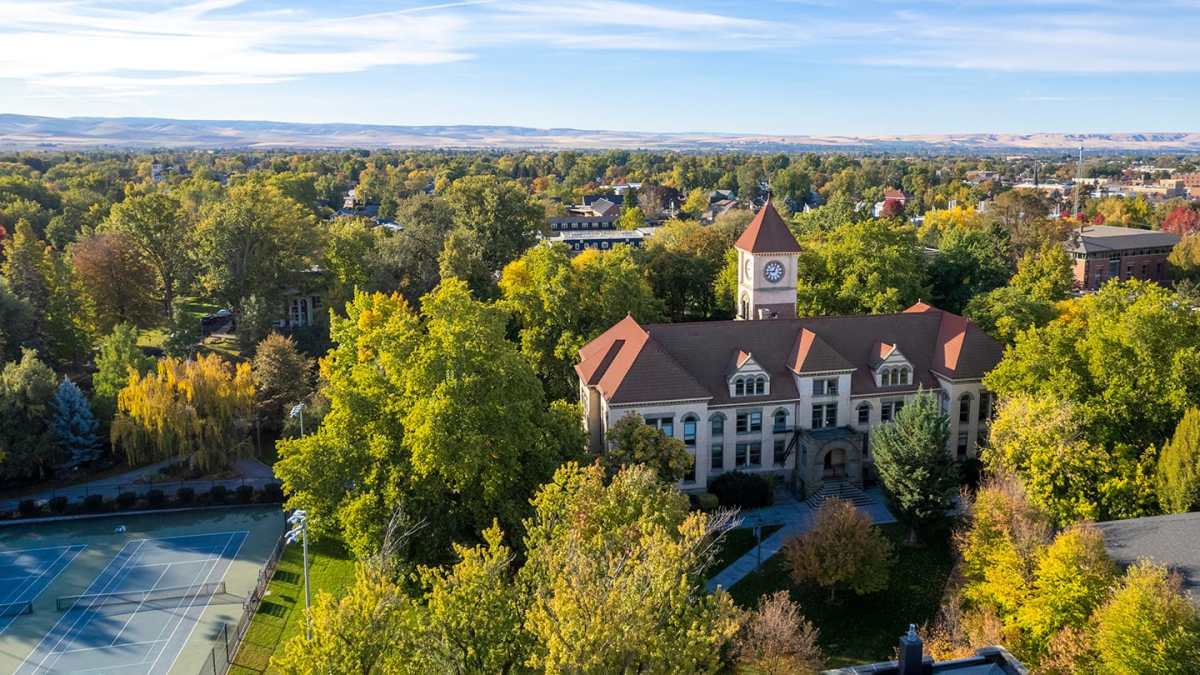
Founded in 1859, Whitman College is a private liberal arts institution located in Walla Walla, Washington. Its 117-acre campus blends historic architecture with modern facilities, creating an inviting environment for academic pursuits and campus life. Originally established as a seminary, Whitman transitioned to a secular liberal arts institution in the early 1880s and has since garnered recognition for its academic rigor, liberal arts commitment, and tight-knit community.
Whitman prides itself on a student-to-faculty ratio of 9:1, facilitating personalized education. Approximately 1,500 students from across the United States and internationally enroll at Whitman, attracted by its personalized instruction and strong emphasis on experiential learning.
Curricula
Whitman College offers over 45 majors and numerous minors spanning the arts, humanities, sciences, and social sciences. Popular disciplines include Environmental Studies, Political Science, Psychology, Economics, and Biology. The curriculum, deeply rooted in the traditional liberal arts, continues to evolve, notably introducing two new majors in Fall 2023: Brain, Behavior & Cognition (Neuroscience) and Ethics & Society, reflecting increasing student interest in neuroscience and applied ethics.
One hallmark program at Whitman is Semester in the West, a unique field-based study experience where students engage directly with environmental and policy research across the American West. Additionally, Whitman’s Encounters Program forms a cornerstone of the first-year academic experience, promoting critical thinking and interdisciplinary learning.
Graduate outcomes at Whitman are exceptional, with nearly 70% of alumni enrolling in graduate or professional programs within five years of graduation. The six-year graduation rate stands at an impressive 88%, among the highest for liberal arts colleges in the Pacific Northwest.
Strengths
Strong Post-Graduate Outcomes: Over 91% of Whitman graduates secure employment or enroll in graduate programs within six months after graduation, highlighting the institution’s effectiveness in preparing students for professional success.
Experiential Learning: More than 80% of students participate in internships, research, or off-campus programs such as Semester in the West and the Whitman in China teaching fellowship, exemplifying Whitman’s commitment to hands-on learning experiences.
Prestigious Recognition: Whitman students consistently win competitive fellowships and awards, including Fulbright grants, Watson Fellowships, and NSF Fellowships. Since 2000, students have secured more than 600 awards.
Sustainability and Outdoor Leadership: Whitman’s Outdoor Program provides extensive opportunities for students to engage in activities like hiking, kayaking, skiing, and environmental stewardship, reflecting the institution’s emphasis on sustainability and outdoor leadership.
Financial Strength and Support: Despite its modest enrollment, Whitman maintains a substantial endowment nearing $800 million. This financial strength enables the college to offer robust financial aid packages, greatly reducing costs for middle-income families and improving access.
Weaknesses
Geographic Isolation and Limited Visibility: Whitman’s location in Walla Walla presents both advantages and challenges. While the picturesque rural setting fosters a tight-knit community, the distance from major urban centers—roughly four hours from Seattle or Portland—can deter prospective students seeking metropolitan amenities. Consequently, Whitman must invest heavily in marketing and recruitment to attract students beyond the Pacific Northwest.
Dependence on Tuition Revenue: While Whitman is financially stable, its operating model remains heavily reliant on tuition, with endowment payouts currently covering around 40% of operational expenses. This reliance necessitates careful financial management and continued growth in the endowment.
Enrollment and Demographic Trends: Like many liberal arts colleges, Whitman faces a national decline in the traditional college-age population, coupled with increased competition for top-tier students. In response, Whitman has significantly expanded merit-based and need-based financial aid packages, currently averaging a tuition discount rate over 50%. To address demographic challenges, Whitman is actively broadening its applicant pool through partnerships with organizations such as the Posse Foundation and Matriculate.
Economic Impact
Whitman College is a significant economic driver in Walla Walla. It is among the largest employers in the region, accounting collectively for roughly 1,600 jobs in Walla Walla County.
Beyond direct employment, Whitman attracts thousands of students and visitors to the area each year, which boosts the local hospitality and retail sectors. Students spend on housing, groceries, dining, and entertainment in town, and their families visit for events like orientation, Family Weekend, and Commencement, filling hotels and restaurants. The tourism bureau has even created guides for families visiting their “scholars” at Whitman, recognizing the economic benefit of college-related travel.
Whitman also fosters long-term regional economic growth through strategic partnerships. A key example is the Gateway Program, in collaboration with Walla Walla Community College, which encourages community college students—particularly first-generation and low-income students—to pursue four-year degrees at Whitman. These initiatives enhance local educational attainment and create a talent pipeline beneficial to the regional economy. Additionally, Whitman engages actively with the Confederated Tribes of the Umatilla Indian Reservation, supporting educational and cultural initiatives that enrich the local community.
Enrollment Trends As of Fall 2024, Whitman enrollment is 1,561 students. Over the past decade, enrollment has slightly increased despite national declines in liberal arts college applications and the COVID crisis. To counteract demographic shifts, Whitman has expanded financial aid offerings and enhanced recruitment efforts in the Western U.S., international markets, and underrepresented student populations.
Degrees Awarded by Major In the 2023 graduating class, Whitman College conferred degrees across various disciplines.
Alumni
Whitman College boasts a vibrant alumni network comprising over 18,000 graduates worldwide. Alumni connections are notably strong in the Pacific Northwest, California, and Washington, D.C., providing substantial networking opportunities through programs such as “Whitties Helping Whitties.” This network significantly aids in securing internships, job placements, and mentoring opportunities for current students.
Notable Alumni
Adam West (Class of 1951) – Actor best known for portraying Batman in the 1960s television series.
William O. Douglas (Class of 1920) – U.S. Supreme Court Justice, serving from 1939 to 1975.
John W. Stanton (Class of 1977)- Chairman of the Board Trilogy Partners and majority owners of the Seattle Mariners.
Peter Adkison (Class of 1985) – Founder of Wizards of the Coast, publisher of Magic: The Gathering.
Dorothy Marie “Dottie” Metcalf-Lindenburger(Class of 1997) is a retired American astronaut. She was a high school science teacher when she was selected in 2004 as an educator mission specialist.
Holly Brooks (Class 2004) – Winter Olympian in Nordic Skiing
Endowment and Financial Standing
As of 2024, Whitman College’s endowment is valued at nearly $800 million. While this places Whitman on solid financial footing, the college remains largely tuition-dependent. In the 2024–25 budget year, the endowment payout will cover over 40% of Whitman’s operating expenses, which significantly reduces reliance on tuition revenue.
Whitman College Endowment Growth:
Whitman’s financial aid program has expanded in recent years, aiming to increase affordability and access for students from all economic backgrounds. Forbes 2023 Financial Health Evaluation gave Whitman a B+ grade and a financial grade of 3.345 out of 4.5. Whitman enters 2025 in a favorable financial position.
Why is Whitman College Important?
Academic Excellence: Whitman College maintains a challenging liberal arts curriculum that prepares students for a wide range of careers and graduate studies.
High Graduate Success Rates: With 91% of graduates employed or in graduate school within six months, Whitman produces competitive and well-rounded professionals.
Experiential Learning and Outdoor Leadership: Signature programs such as Semester in the West and the Outdoor Program allow students to engage in real-world learning.
Sustainability and Civic Engagement: Whitman plays a key role in environmental advocacy, sustainability, and community service.
With its strong academic reputation, experiential learning opportunities, and commitment to sustainability, Whitman College remains a leading liberal arts institution in the Pacific Northwest.
Dean Hoke is Managing Partner of Edu Alliance Group, a higher education consultancy, and a Senior Fellow with the Sagamore Institute. He formerly served as President/CEO of the American Association of University Administrators (AAUA). With decades of experience in higher education leadership, consulting, and institutional strategy, he brings a wealth of knowledge on small colleges’ challenges and opportunities. Dean, along with Kent Barnds, are co-hosts for the podcast series Small College America.
This spring, the number of high school graduates in the United States is expected to hit its peak. Starting in the fall, enrollment will likely enter a period of decline that could last a decade or more.
This looming “demographic cliff” has been on the minds of education leaders for nearly two decades, dating back to the start of the Great Recession. A raft of college closures over the past five years, exacerbated by the pandemic, has for many observers been the canary in the coal mine.
In the years to come, schools at all levels — reliant on per-pupil funding for K-12 and on tuition dollars for colleges and universities — will begin feeling the squeeze.
The question now is whether to treat the cliff as a crisis or an opportunity.
Related: Interested in innovations in the field of higher education? Subscribe to our free biweeklyHigher Education newsletter.
As they prepare for enrollment shortfalls, superintendents and college presidents are primarily focused on crisis management. With good reason, they’re spending the bulk of their time on the hard short-term decisions of cutting programs and personnel to meet looming budget shortfalls.
In the precious few years before the situation becomes even more dire, the question is whether schools should just continue bracing for impact — or if they can think bigger in ways that could be transformative not just for the landscape of education, but for the economy more broadly. In my view, they should think about what it would look like to make a moment of crisis a real opportunity.
Here are some ideas about how that could happen. The first involves blurring the lines between high school and college.
Colleges today feel immense pressure because there aren’t enough high school graduates. High schools feel similar pressure because there are fewer young people around to enroll each year — not to mention the chronic absenteeism and disengagement that has persisted since the pandemic.
What if the two worked more closely together — in ways that helped high schools keep students engaged while enabling colleges to reach a broader range of students?
In many states, this is already happening. At last count, 2.5 million high schoolers took at least one dual-enrollment course from a college or university. But it’s not enough to just create tighter connections between one educational experience and another. Today’s students — and today’s economy — also demand clearer pathways from education to careers. It makes sense to blur the lines between high schools, colleges and work.
So imagine taking these changes even further — to a world in which instead of jumping from high school to college, students in their late teens entered entirely new institutions that paid them for work-based learning experiences that would lead them to a degree and eventually a career.
That’s a lofty goal. But it’s the kind of big thinking that both high schools and colleges may need to reinvent themselves for the country’s shifting demographics.
Colleges have an opportunity right now to double down on creating and expanding job-relevant programs — and to think even bigger about who they serve. That could include expanding opportunities for adult learners who have gained skills outside the classroom through credit for prior learning and competency-based learning. It could also mean speeding up the development of industry-relevant coursework to better align with the needs of the labor market and leaning into short-form training programs to upskill incumbent workers.
Not every student is ready to invest four years of time and money to earn a bachelor’s degree. But they shouldn’t have to be — and colleges have a chance to expand their offerings in ways that give students more pathways into today’s fast-changing economy and further education if they so choose.
Part of the problem with the current trajectory from high school to college is that the wrong things get incentivized. Both K-12 schools and colleges get money and support based on the number of students they enroll and (sometimes) the number of people who graduate — not on how well they do at helping people gain the skills to effectively participate in the economy.
That’s not anyone’s fault. But it often boils down to a matter of policy. Which means that changing policy can create new incentives to tighten the connections between high school, college and work.
States like Colorado are already taking the lead on this shift. Colorado’s “Big Blur” task force put out a report with recommendations on how to integrate learning and work, including by creating a statewide data system to track the outcomes of educational programs and updating the state’s accountability systems to better reflect “the importance of learners graduating ready for jobs and additional training.”
If schools and policymakers stay the course in the decade to come, they already know what’s ahead: declining enrollment, decreased funding and the exacerbation of all the challenges that they’ve already begun to face in recent years.
It’s not the job of the education system to turn the tide of demographic change. But the system does have a unique, and urgent, opportunity to respond to this changing landscape in ways that benefit not only students but the economy as a whole. The question now is whether education leaders and policymakers can seize that opportunity before it’s too late.
This story about demographic cliff in higher education was produced by The Hechinger Report, a nonprofit, independent news organization focused on inequality and innovation in education. Sign up for Hechinger’s weekly newsletter.
The Hechinger Report provides in-depth, fact-based, unbiased reporting on education that is free to all readers. But that doesn’t mean it’s free to produce. Our work keeps educators and the public informed about pressing issues at schools and on campuses throughout the country. We tell the whole story, even when the details are inconvenient. Help us keep doing that.