The doctorate is a subjective experience demanding the re-evaluation of ways of thinking, the navigation of intense emotions, and the adaptation of behaviours by the candidate to achieve new learning goals, transforming the candidate from a consumer to a creator of knowledge. Candidates often face uncertainty and enter a state of liminality during this process, feeling caught between old beliefs and new insights, which can lead to discomfort and feeling ‘stuck’. To navigate this liminal space, candidates benefit from a change in perspective supported by transformative learning. While much of the focus in doctoral support is on the candidate avoiding negative experiences during this process, there is limited attention given to the candidate’s role of self-awareness and self-management. Reflexivity provides one such option to consider.
Reflexivity is a cognitive, or thinking, process that enables individuals to move beyond simple reflection, fostering self-awareness and exploring different options for progress. While candidates have demonstrated its usefulness in understanding their doctoral journeys, further research is needed on initiating and sustaining this process independently. This ability to learn and develop autonomously is essential, as doctoral programs require candidates to show evidence of becoming independent researchers. In organisational literature, reflexivity has been demonstrated to enhance information processing, helping employees understand what, why, and how of learning and change. It enables adjustments in both task execution and personal approach. Moreover, team psychological safety has been demonstrated to be crucial for effective team reflexivity. However, variations in terminology and definitions related to psychological safety limit the extension of this construct beyond the organisational context.
A body of conceptual research adopting a Theoretical Integrated Review (TIR) approach was conducted, with findings highlighting historical use, providing theoretical insights, and clarifying a generalised definition of psychological safety with relevance beyond the organisational setting. Psychological safety is an internal process that helps individuals manage distress, influencing their thoughts, feelings, and actions. It plays a crucial role in growth and development by connecting motivation and goal-directed behaviour, providing the opportunity for a generalised definition:
Psychological safety is a dynamic intrapsychic construct drawn on by individuals to mitigate actual or foreseen distress. The presence or absence of psychological safety is influenced by context, the individual’s existing psychological frames of reference, and current and future motives relating to an endeavour.
This understanding allows the absence or presence of psychological safety to be considered in broader contexts, including independent learning settings like doctoral programs. To explore this potential, a body of qualitative research was conducted with six volunteer PhD candidates enrolled at a regional Australian university awaiting feedback on their theses.
Using the vignette methodology technique to present short fictional scenarios regarding experiences of doctoral knowledge uncertainty, the researcher conducted semi-structured interviews to understand how doctoral candidates deal with knowledge uncertainty. This approach encouraged interviewees to discuss their experiences without the pressure of direct questions, facilitating open discussions about managing uncertainty. At the end of the interviews, findings from the conceptual research were shared, and feedback was gathered on their benefit as a basis for candidate support. The interviews were recorded, transcribed, and thematically analysed.
All six interviewees described experiences with knowledge uncertainty and agreed that the conceptual research findings on psychological safety could improve opportunities for candidate support and warranted further investigation. The analysis of the interviews revealed that the interviewees’ experiences of uncertainty stemmed from intrapersonal, interpersonal, and university governance-level interactions. While similarities existed based on stages in the doctoral program, no strong recurring theme of uncertainty emerged. Notably, the differences lay in how the interviewees discussed their experiences of uncertainty.
Some interviewees emphasised the importance of interpersonal support to help them progress:
… the Confirmation panel Chairperson insisted that I rework my research question … I found it confusing. I felt that I must have grossly mistaken something …. my supervisor just said, okay, well, rebuild methodology … I felt uncertain. But she was very encouraging and supportive … I got through the second time, no questions asked … Interviewee Steve
… my methodology was underdeveloped … I was asked to resubmit this section to the confirmation panel … I was stressed about it having to be perfect because I thought failing would be the worst thing in the world. … I remember that being a big thing … I was embarrassed, … an extra hurdle because no one else I knew needed to resubmit … my supervisors were empowering … they both said, redo what you need to … You’ll get through. You’re going to be okay. Interviewee Amy
Other interviewees’ narratives shifted from reflection to reflexivity, demonstrating self-awareness and developing metacognitive strategies to navigate their uncertainties.
So yeah, it was an unhappy period. It was a couple of months of really hating what I was, what I’d done to myself in choosing this particular topic…I just had to ride that wave, you know, think it through, think, really think about what I was doing and why I was doing it, what the product was, what the process was and what the result needed to be in the end.
Interviewee Julie
… a big part of my uncertainty was about paradigms … I couldn’t write my methodology. … I was just not convinced … if I can’t believe in these views about knowledge and reality, I can’t write about this stuff. So that was a hurdle … I was sometimes reading without knowing what would come of it. … then it felt like, oh, this is it … what had been a major period of uncertainty had also been a cognitively shifting one that changed my perception of the world. Interviewee Jack
The extracts illustrate how interviewees navigated uncertainties and liminal spaces, utilising various strategies to move forward. Some narratives show less use of self-awareness, relying on interpersonal support, while others reflect and use reflexivity as a proactive, independent approach to managing uncertainty.
Understanding psychological safety as a multi-dimensional construct and appreciating its demonstrated moderating effect on reflexivity in the workplace provides an opportunity for further investigation. The differences in interviewees’ narratives offer valuable insights regarding reflexivity and the doctoral experience of uncertainty, collectively establishing a basis for exploring psychological safety in the doctoral context.
CHRISTCHURCH, New Zealand — Many students in New Zealand have a story to tell about “streaming” — being grouped into separate math classes based on their perceived ability to master the subject.
Manaaki Waretini-Beaumont, now 18 and an environmental science major at the University of Canterbury, learned about the downside of streaming when she enrolled in Avonside Girls’, a 1,000-student high school in Christchurch.
Avonside starts at Year 9, equivalent to eighth grade in the United States, and ends at Year 13, equivalent to 12th grade. Before the start of her Year 9 term, Waretini-Beaumont and her fellow students were divided up into groups to take tests in “maths,” reading comprehension, and patterns and shapes.
Afterward, the students were separated into lettered groups that spelled out the word B-I-N-O-C-U-L-A-R-S. Waretini-Beaumont was a “9-N” student in mathematics — as she describes it, “the top of the middle block.”
But she said she didn’t feel comfortable as one of the few Māori students in the class.
“I felt like I wasn’t good enough to be in that space,” said Waretini-Beaumont, whose iwi, or tribal affiliations, are Te Āti Haunui-A-Pāpārangi, Ngāti Rangi, Ngāti Apa, Ngāti Paoa. “If there was something I wasn’t understanding, I felt like I wasn’t able to say that, because I’m supposed to be in the smart class with all these smart people.”
So she shifted to another mathematics class with her Māori friends, who were in the “S” classes.
“Being in two different spaces, I could really see the change,” Waretini-Beaumont said. “At the top classes, the teachers’ language towards the students was always positive and it was always encouraging. And they really wanted students to learn and were trying to help them.”
Manaaki Waretini-Beaumont experienced the effects of “streaming,” or academic ability tracking, during her time as a high school student at Avonside Girls’ School in Christchurch, New Zealand. Credit: Image provided by Richie Mills/Ngāi Tahu
In the classroom where her friends were assigned, in contrast, the mathematics work mostly amounted to simple worksheets — “coloring pages and word find,” Waretini-Beaumont said.
For years, much like in the United States, New Zealand has worried about sliding student proficiency in mathematics, as captured by both national and international test scores. Later this month — the beginning of the New Zealand school year — the country is launching an overhaul of mathematics instruction that education leaders hope will reverse the trend.
But other groups in the country have been trying to approach the problem of academic achievement from a different angle. They believe that streaming is driving achievement gaps in the country, including in mathematics. Tokona te Raki/Māori Futures Collective, a think tank focused on youth, has been working since 2019 to persuade schools to voluntarily end the practice by 2030. The initiative is called “Kōkirihia”— Māori for “take action.”
Streaming is just one of many ways that schools group students by academic ability. Ability grouping can include separating students into vocational or university tracks at different schools as early as age 10, as is common in Germany and other Western European countries. But it could also include teachers creating informal and non-permanent groupings within their own classrooms to provide enrichment or extra support to students who need it.
In New Zealand, critics say streaming pushes two groups into so-called “cabbage,” or lower-level mathematics, at a disproportionate rate: Māori students, who are indigenous to New Zealand, and students who are Pasifika, the New Zealand term for people from Samoa, Tonga and other nations in the Pacific Islands.
In the 14th century, the Polynesian ancestors of today’s Māori migrated thousands of miles by canoe to what they called Aotearoa, the land of the long white cloud. Hundreds of years later, English settlers came to engage in trade and now represent the majority ethnic group in New Zealand. In 1840, the two groups signed the Treaty of Waitangi that established New Zealand’s bicultural identity.
Many youth with Pacific Island backgrounds are descended from people who were encouraged to move to New Zealand after World War II to address a labor shortage.
Both Māori and Pasifika are a fast-growing, and young, population. By the 2040s, more than a third of children in the country are expected to identify as Māori, according to Stats NZ, the country’s official data agency.
The New Zealand Ministry of Education’s official stance discourages streaming, but the country’s more than 2,500 schools operate with a great deal of independence: Principals have similar powers and responsibilities as school superintendents in the United States, and each school has an elected board that sets policy and manages budgets.
New Zealand does not track streaming or ability grouping by race or ethnicity, but surveys show it is common: Eighty percent of students are in schools that group students by ability level in mathematics, according to a 2022 survey conducted by the Program for International Student Assessment.
Other data shows a wide academic gap among students of different ethnicities in New Zealand.
Students at May Road School in Auckland, New Zealand, work through a lesson on fractions. Credit: Becki Moss for The Hechinger Report
In the Auckland region, the country’s most densely populated of 16 regions in all, 76 percent of Asian students left secondary school with the highest of three levels on the country’s National Certificate of Educational Achievement in 2022. Like a high school diploma, the NCEA Level 3 is a minimum qualification to enter college in New Zealand.
About 66 percent of Pākehā, or white, students left school with that credential. About 46 percent of Pasifika students and 40 percent of Māori students did the same.
In comparison, the high school graduation rate by race and ethnicity in the United States in the 2021-22 school year was 94 percent for Asian American/Pacific Islander students, 90 percent for white students, 83 percent for Hispanic students, 81 percent for Black students and 74 percent for American Indian/Alaskan Native students.
Misbah Sadat, the newly appointed principal at Kuranui College, a high school 50 miles northeast of the capital of Wellington, began actively working to “destream” mathematics courses soon after emigrating to New Zealand in 2009 and becoming a teacher there.
As head of mathematics at a high school called Horowhenua College, she started by identifying promising Māori students on her own, moving them to higher level classes, and mentoring them, as described in a Ministry of Education newsletter.
Eventually she convinced her colleagues at Horowhenua to create mixed-ability classes rather than dividing the students. She continued the same work as deputy principal at Onslow College in suburban Wellington, where she worked before her new appointment.
The streaming practice comes from a patronizing mindset, said Sadat, who was also a math teacher in Montgomery County, Maryland.
Schools are telling parents that their children might be lost and overwhelmed in a more rigorous class. In actuality, “We have demoted some students to learn crap,” she said. “And then we are saying that at age 16, ‘You are dumb at maths.’ How dare we decide what a young person is capable of or not capable of?”
Students at Kaiapoi North School in suburban Christchurch, New Zealand, work through a multiplication problem in chalk on the playground blacktop. Credit: Becki Moss for The Hechinger Report
Both of New Zealand’s unions for elementary and secondary teachers signed onto the pledge to end streaming by 2030. In a newsletter to members, the elementary teachers union noted that its members have noticed “a sense of ingrained hopelessness that comes with being in the ‘cabbage’ classes.”
But in the same newsletter, another teacher said educators struggle with the mix of abilities in one classroom, along with managing behavior challenges.
David Pomeroy, a senior lecturer in education at the University of Canterbury in Christchurch, is studying schools that have committed to reducing their reliance on streaming.
It’s a difficult task, he said. So many teachers are accustomed to the practice, since they went through it in school themselves. Parents of students in high-level classes are worried their children will be shortchanged. Teachers also say that it is easier to work with students who are all roughly on the same skill level.
And then there is an emotional connection to the practice, Pomeroy said. Unlike in the United States, lower-level mathematics classes are often taught by teachers who have a lot of classroom experience and who express real fondness for their students, he said. Pushing students too hard is seen as setting them up for repeated failure, which teachers were reluctant to do.
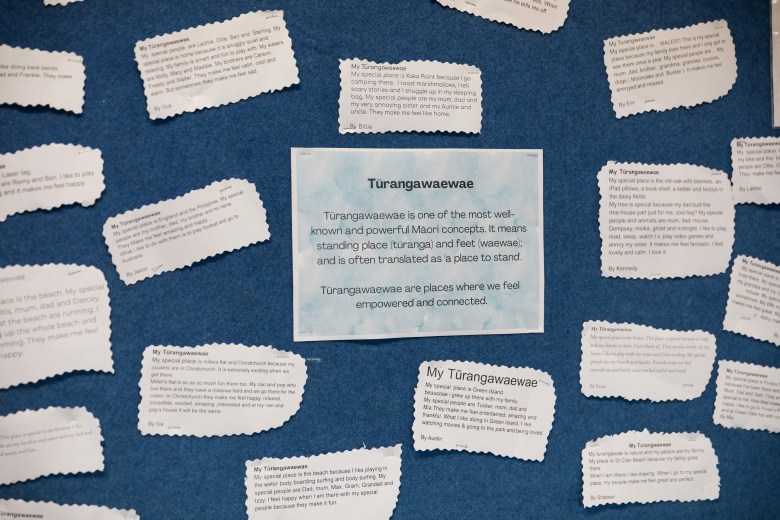
Abby Zonneveld’s bulletin board at St. Clair School in Dunedin, New Zealand, asked students to describe their “tūrangawaewae,” or place where they feel a special connection. Credit: Becki Moss for The Hechinger Report
“Even if they accepted streaming wasn’t the right next step, they wanted to protect them from anything that could damage their confidence,” Pomeroy said.
For schools that have made a commitment to reducing or ending streaming, he said, one useful tool has been to bring mathematics teachers in different schools together so they can work through challenges, such as lesson planning, and share successes.
The research into the benefits or harms of academic tracking or streaming show mixed results. In 2016, a group of researchers compiled all the best U.S-based research on ability grouping and acceleration at that point, going back for a century. They found certain kinds of ability grouping, such as placing highly gifted students together, was a benefit to those students. But grouping students in high- or low-performing classes did not show any benefit or detriment for students.
The New Zealand Initiative, a right-of-center think tank, said that the country should conduct its own research on the effects of streaming in the country, rather than relying primarily on research done elsewhere and on qualitative reports that primarily capture feelings about the practice. “Research suggests that lowerstream students are often taught less engaging content by less experienced teachers. So, it may not be streaming itself that increases gaps in achievement but streaming done poorly,” the initiative said in a report.
But the efforts to reduce streaming voluntarily seem to be catching on.
When looking at all academic subjects, not just mathematics, principals on a 2022 PISA survey said 67 percent of students in New Zealand are grouped by ability into different classes for at least some subjects. That’s a drop from 2015, when 90 percent of principals reported that students were grouped into different classes in their schools.
The change is welcome, said Waretini-Beaumont, who works on social media for Tokona te Raki. Streaming “has more impact than just cutting off some opportunities and stopping someone from doing calculus,” she said. “Our grandparents have been streamed and they don’t know it was even a thing. They just thought they were dumb.”
The Hechinger Report provides in-depth, fact-based, unbiased reporting on education that is free to all readers. But that doesn’t mean it’s free to produce. Our work keeps educators and the public informed about pressing issues at schools and on campuses throughout the country. We tell the whole story, even when the details are inconvenient. Help us keep doing that.
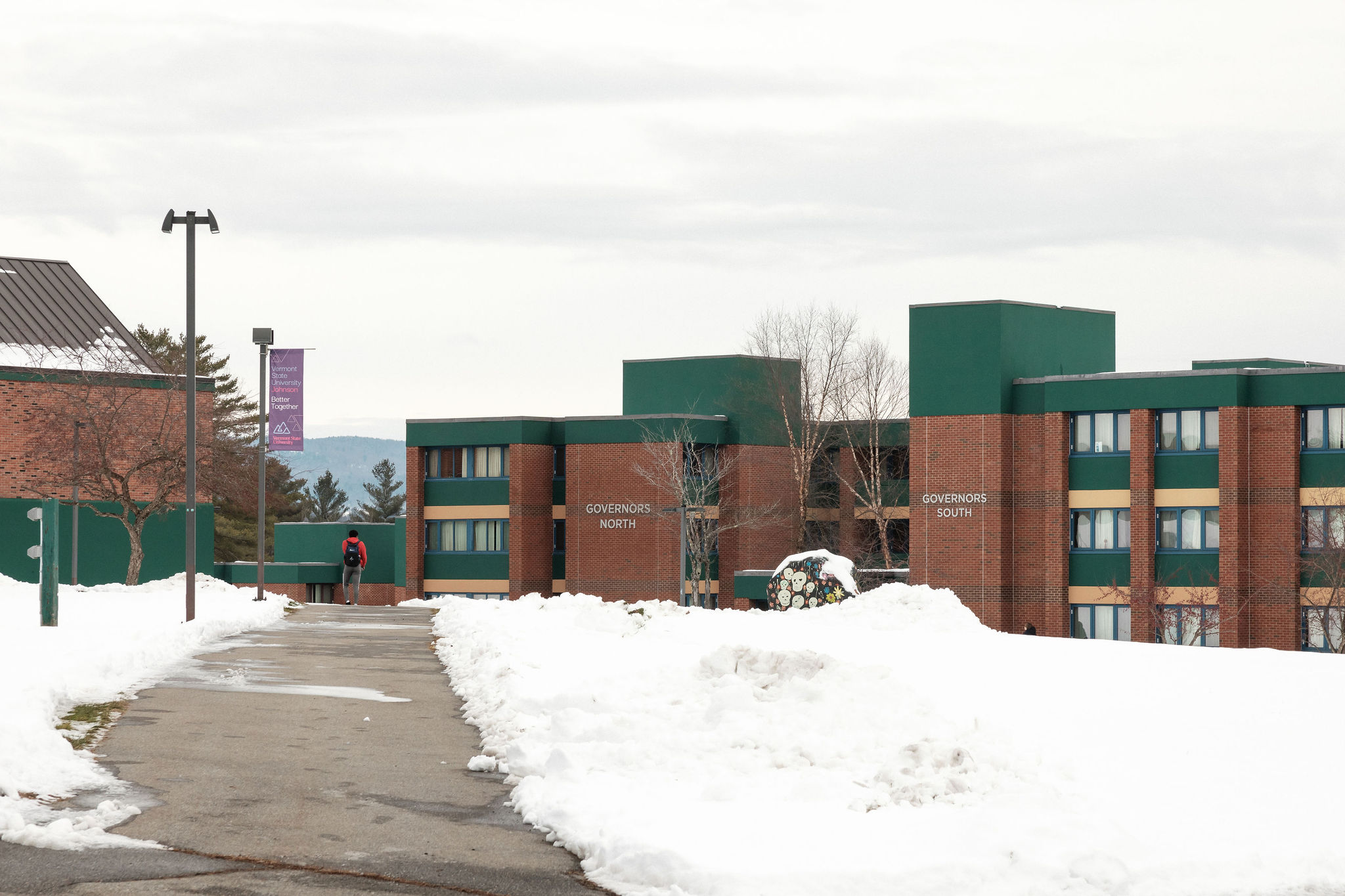
RANDOLPH, Vt. — The thermostat was turned low in the admissions office at Vermont State University on a cold winter morning.
It’s “one of our efficiencies,” quipped David Bergh, the institution’s president, who works in the same building.
Bergh was joking. But he was referring to something decidedly serious: the public university system’s struggle to reduce a deficit so deep, it threatened to permanently shutter several campuses after dramatic drop-offs in enrollment and revenue.
While much attention has been focused on how enrollment declines are putting private, nonprofit colleges out of business at an accelerating rate — at least 17 of them in 2024 — public universities and colleges are facing their own existential crises.
State institutions nationwide are being merged and campuses shut down, many of them in places where there is already comparatively little access to higher education.
David Bergh, president of the newly consolidated Vermont State University, in the building where he works at the VTSU campus in Randolph. “Public institutions are not exempt from the challenges” facing higher education, Bergh says. Credit: Oliver Parini for The Hechinger Report
“Public institutions are not exempt from the challenges” facing higher education, Bergh said. “We are already seeing it, and we’re going to see more of it, and it’s particularly acute in some more rural states, where there’s a real need to balance limited resources but maintain access for students.”
Vermont is a case study for this, and an example of how political and other realities make it so hard for public universities and colleges to adapt to the problems confronting them.
“The demographics of fewer traditional-age college students, the over-building of these campuses, the change in the demand for what we need for our workforce in terms of programs — this is something that’s happening everywhere,” said Vermont State Rep. Lynn Dickinson, who chairs the Vermont State Colleges System Board of Trustees.
Related: Interested in innovations in higher education? Subscribe to our free biweekly higher education newsletter.
Public university and college mergers have already happened in Pennsylvania, Georgia, California and Minnesota, and public campuses have closed in Ohio and Wisconsin. A merger of public universities and community colleges in New Hampshire is under study.
When state university and college campuses close, the repercussions for communities around them can be dire.
Until this month, local students had a college “in their backyard,” said Thomas Nelson, county executive in Outagamie County, Wisconsin, where the two-year Fox Cities outpost of the University of Wisconsin Oshkosh this spring will become the sixth public campus in that state to be shuttered since 2023, after a long enrollment slide. “We’ve had this institution for 60 years in our community, and now it’s gone.”
Not only students are affected. In many rural counties, “there really isn’t a lot beyond the university,” Nelson said. “So that’s going to be devastating for the economy. It’s going to kill jobs. It’s going to be one more strike against them when they are competing with other communities with more amenities.”
Attempts to close these campuses attract the intervention of politicians, who have more control over whether public than private nonprofit colleges in their districts close. After all, “they own the place,” said Dan Greenstein, former chancellor of Pennsylvania’s State System of Higher Education, who — after that state’s enrollment fell by nearly one-fifth — led a reconfiguration that resulted in six previously separate public universities there being merged into two systems.
Even trying to rename a public university can have political consequences. When Augusta State University in Georgia was combined with Georgia Health Sciences University to become Georgia Regents University, there was a local outcry over the fact that “Augusta” was no longer in the name. Within two years, the merged school had yet another new name: Augusta University.
“Public institutions are complex structures,” said Ricardo Azziz, who led that consolidation, served as president of the resulting institution and now heads the Center for Higher Education Mergers and Acquisitions at the Foundation for Research and Education Excellence. “They’re influenced by politics. They’re influenced by elected officials.”
When the proposal to close campuses in Vermont was met with public and political resistance, state planners backed down and decided instead to merge them, laying off staff and cutting programs. That did not go well, either, and resulted in raucous public meetings, votes of “no confidence,” plans that were announced and then rescinded and a revolving door of presidents and chancellors. Only now, in its second year, has the process gotten smoother.
Alarm bells started sounding about problems in Vermont’s state universities before the Covid-19 pandemic. With the nation’s third-oldest median age, after Maine and New Hampshire, according to the Census Bureau, the state had already seen its number of young people graduating from high school fall by 25 percent over the previous decade.
Enrollment at the public four-year and community college campuses — not including the flagship University of Vermont, which is separate — was down by more than 11 percent. A fifth of the rooms in the dorms were empty. And with the birthrate in the state lower than it was before the Civil War, there was no rebound in sight.
These trends have contributed to the closings of six of Vermont’s in-person undergraduate private, nonprofit colleges and universities since 2016.
“We’d be keeping our head in the sand if we didn’t think that those same forces were going to affect our public higher education system,” said Jeb Spaulding, who, as chancellor at the time, merged two of Vermont’s five state colleges, in Johnson and Lyndon, in 2018.
The red ink continued to flow. Two years later, just after Covid hit, Spaulding recommended that three of the five public campuses be shut down altogether — Johnson and Lyndon, plus Vermont Technical College in Randolph.
“What we needed to do was save the Vermont State Colleges System as a whole,” which has 145 buildings for fewer than 5,000 students, Spaulding recalled. That same problem of excess capacity is affecting higher education nationwide.
“It was well known that we had too much bricks and mortar for the number of traditional-type students that were going to be available in Vermont,” Spaulding said. “We saw all that coming, and we had started a process of educating people and working on what would be a realistic public-sector consolidation plan so that we could actually put our resources into having a smaller constellation, but well financed and up to date.”
The reaction to the plan was explosive, even in the midst of a pandemic. At socially distanced drive-by protests, critics brandished signs that said: “Start Saving: Fire Jeb.” Within four days, the proposal to close campuses was withdrawn. A week after that, Spaulding resigned.
“I guess I didn’t realize that in the public realm, you can’t make the kind of difficult decisions that if you were at a private institution you would have to make,” he recounted. “When the politics got involved, then it became clear to me that there was no way that I was going to be able to get that through.”
Instead of closing the campuses, the state decided to combine them with the other two, in Castleton and Williston, all under one umbrella renamed Vermont State University, or VTSU. In exchange, the blended institutions would be required to cut spending to help reduce a deficit estimated at the time to be about $22 million.
That decision was almost as contentious. As in Georgia, even the name was controversial. Alumni petitioned in vain for the new system to be called Castleton University instead of Vermont State, to preserve the legacy of the state’s oldest and the nation’s 18th-longest-operating higher education institution, founded in 1787, instead of demoting it to “Castleton Campus.”
Beth Mauch, who as chancellor has overseen VTSU and Vermont’s community college campuses since January, said she gets this kind of sentiment. “There are community members who have had these institutions in their community. There are folks who are alumni of these institutions who remember them in a certain way,” said Mauch. “Really, they are in the fabric of a community.”
Beth Mauch, chancellor of the Vermont State University system and the state’s community college campuses. “Really, they are in the fabric of a community,” Mauch says. Credit: Oliver Parini for The Hechinger Report
That close relationship between the universities and their communities only resulted in additional friction when 23 full-time faculty positions were cut, out of the then-existing 208. So were an equal number of administrators and staff. Not only were there more beds and buildings than were needed for the number of students, there were too many faculty compared to other comparably sized universities, a planning document said.
Neighbors of the campuses, and their elected representatives, didn’t see it that way.
“The people that work at the colleges are local. Everyone knows people that work at these colleges,” said Billie Neathawk, a librarian at what was formerly Castleton University for more than 25 years, and a union officer. “They’re related to people. Especially in a small state like Vermont, everybody knows everybody.”
The layoffs went through anyway. There were also cuts to majors. Ten academic programs were eliminated, 10 others changed locations and still others were consolidated. That meant students at any campus could take the remaining courses in a format combining in-person and online instruction that the system dubbed “In-Person Plus.”
Lilly Hudson is a junior at Vermont State University, whose consolidation means some programs are being offered online. Hudson prefers learning in a classroom but liked being able to take a class online from another campus that wasn’t available on hers. Credit: Oliver Parini for The Hechinger Report
Lilly Hudson, a junior at Castleton, said she prefers learning in a classroom. “It’s just such a difference to be able to see people and meet your professors and go in person,” said Hudson, who is majoring in early education. But she was also able to take a class online from another campus that wasn’t available on hers.
That can be an underappreciated upside to mergers, said Greenstein, now managing director of higher education practice at the consulting firm Baker Tilly. “You can only run as many programs, majors and minors as you can enroll students into,” he said. But by merging institutions and letting students take courses from other campuses online, “now they can go from 20 programs to 80 or 90.”
While that seemed a step forward, the consolidated university’s inaugural president, Parwinder Grewal, next announced that, to cut costs, its libraries would go all-digital and give away their books, the Randolph campus would no longer field intercollegiate sports teams, and athletics on the Johnson campus would move from the NCAA to the less prestigious U.S. Collegiate Athletic Association.
This proved another blunder in a state so fond of its libraries that it has the nation’s highest per-capita number of library visits, and where rural communities rally around even Division 3 athletics. Faculty and staff unions and student government associations on every campus voted “no confidence” in the university’s administration. Athletes transferred away. Grewal was loudly booed when he met with students.
“There was a hot streak there where, every email, we were, like, now what’s going on?” said Raymonda Parchment, a student who was halfway toward her bachelor’s degree at the time.
Raymonda Parchment, who just graduated from Vermont State University, is grateful that a plan to close some public campuses was reversed. “If you can’t afford to go out of state for college, and you can’t afford to pay for maybe a dorm for a couple of years, where does that leave you if there’s no school within commuting distance?” she asks. Credit: Oliver Parini for The Hechinger Report
The library and athletics decisions were eventually reversed, too, and Grewal was out before he’d served a full year. But the damage was done. When the new university finally debuted, at the start of the 2023-24 school year, freshman enrollment was down by about 14 percent from what it had been at the separate campuses the year before.
“I know a lot of friends whose programs were consolidated and shuffled around,” said Parchment, in an otherwise empty study room on the snow-covered Johnson campus. “That was probably the biggest change for students that had direct impact on them. Some people’s programs don’t exist anymore. Some people’s programs have been moved to a different campus.”
Vermont is still working out the kinks, said Bergh, the system’s current president, who was the president of private, nonprofit Cazenovia College in New York when it closed in 2023.
Although first-year enrollment went up about 14 percent this fall, he said, “We’re still surfacing places where our systems aren’t talking to each other as well as they should be, and that we need to correct.”
Parchment likes that it’s easier now to move from one campus in the system to another, without having to go through the red tape of the transfer process. She graduated at the end of the fall semester after moving from Castleton to Johnson to be closer to an internship.
And no campuses were ultimately closed, as had been proposed — a relief to students, prospective students and community members, Parchment said. “Because if you can’t afford to go out of state for college, and you can’t afford to pay for maybe a dorm for a couple of years, where does that leave you if there’s no school within commuting distance?”
Hudson, the Castleton student, whose father is a sixth-generation farrier — a specialist in trimming, cleaning and shoeing horses’ hooves — agreed.
The campuses are “in the middle of an area where there’s a lot of rural towns,” she said. Keeping them in operation means that students nearby who want to go to college “don’t have to pick up their lives and move.”
But Spaulding, the former chancellor, warned that public higher education budget and enrollment problems aren’t likely to subside, in Vermont or many other states.
“I don’t think the storm is over by any stretch of the imagination.”
The Hechinger Report provides in-depth, fact-based, unbiased reporting on education that is free to all readers. But that doesn't mean it's free to produce. Our work keeps educators and the public informed about pressing issues at schools and on campuses throughout the country. We tell the whole story, even when the details are inconvenient. Help us keep doing that.
Fostering Interdepartmental Collaboration to Drive a More Effective and Engaging Student Journey
Achieving success in your higher education marketing strategy requires seamless collaboration between your admissions and marketing teams to create a connected, consistent student journey experience. When these teams align, they move beyond their isolated efforts and build a unified strategy that not only captures students’ attention but also drives meaningful engagement and enrollments.
Admissions teams gain critical, real-time insights from their conversations with prospective students, and marketing teams transform those insights into strategies and assets that resonate with the right audiences. By sharing their insights, both teams can better inform campaigns, conversations, and touchpoints, ensuring every interaction feels intentional, relevant, and student-centered.
However, this alignment doesn’t happen by chance. It requires deliberate collaboration, thoughtful planning, and the strategic use of data at every stage. From discovery interviews and customer relationship management (CRM) data analysis to shared campaign development, each step in the process plays a vital role in delivering a cohesive, engaging experience that guides prospective students from curiosity to commitment.
The Importance and Benefits of Collaboration Between Admissions and Marketing Teams
In an increasingly competitive higher ed landscape, having admissions and marketing teams that collaborate and communicate with each other regularly can make a meaningful difference in the experience that an institution delivers to prospective students, while optimizing its marketing efforts for maximum impact.
When admissions and marketing operate in silos, the cohesion breaks down. Collaboration prevents these gaps, ensuring every message, from the first ad to the final admissions call, feels aligned and purposeful.
Creating a Unified Message
Students don’t distinguish between “admissions” and “marketing” — they only see the institution. That’s why a unified message is so crucial to every higher education marketing strategy. A consistent and unified message — whether it’s delivered through ads, emails, website visits, or conversations with admissions personnel — builds trust, strengthens the brand, and guides prospective students smoothly through their decision-making journey.
Building a Powerful Feedback Loop
When admissions and marketing teams stay in consistent communication, they create a powerful feedback loop that strengthens the institution’s messaging and better serves its prospective students.
Admissions teams are on the front lines, having daily conversations with students and hearing their motivations, hesitations, and questions firsthand. These interactions provide invaluable qualitative insights that can flow back into marketing assets and strategies.
For example, if students frequently ask about program outcomes — such as what they can do with a certain degree — marketing can develop targeted blog content, alumni video spotlights, or landing page updates showcasing career opportunities, industry connections, and success stories related to the degree. Additionally, if there are common points of confusion that come up in students’ conversations with admissions staff, marketing materials can be created that clearly and directly address these issues.
By tapping into this feedback loop, both teams can make meaningful, real-time adjustments that align the institution’s messaging with students’ priorities, enhance engagement, and drive better outcomes.
Empowering Teams With Critical Insights and Knowledge
Both admissions and marketing teams bring something unique and valuable to the table when it comes to understanding the institution’s brand, its offerings, and its students. While there are areas of overlap, each team also has its own distinct focal points that allow it to provide useful details the other team can benefit from, creating a richer and more comprehensive appreciation of how each team can best serve the institution’s students.
Practical Ways to Collaborate
Now that we’ve established the importance of collaboration, let’s take a look at some practical ways to bring this strategy to life.
Coordinate and Share Learnings During a Discovery Process
The first step is discovery, the phase where both admissions and marketing teams collaborate to analyze and uncover insights that will make their work more accurate, impactful, and aligned. The discovery process includes in-depth conversations with key university stakeholders; audits of existing school resources, marketing collateral, and program materials; and market research and competitive analysis to understand the institution’s positioning and audience needs.
Each team adds unique value to the process. Admissions teams gather information about program-specific details, students’ motivations, and nuances that resonate during enrollment conversations, while marketing teams analyze the institution’s competitive positioning, audience behaviors, and key differentiators. By sharing and coordinating these efforts upfront, teams can reduce redundancies, ensure alignment, and create a more cohesive strategy that delivers consistent, tailored messaging.
Here are some tactics that can help in coordinating and consolidating discovery efforts:
Shared discovery templates
Create standardized templates for interviews, audits, and insight summaries to ensure consistency in how findings are gathered and shared across teams.
Discovery check-ins
Ensure there are opportunities to check in and share progressive findings or learnings with the other team. This not only helps ensure that what is being communicated or uncovered by each team is consistent and in alignment. It also provides each team with valuable information that will help guide deeper conversations or elicit important questions that can be addressed sooner.
Centralized insight repository
Use a shared platform (e.g., Asana, Google Docs, or Notion) to compile key findings, data points, and interview notes in one place.
Joint stakeholder interviews and meetings
Conduct some discovery interviews with stakeholders (e.g., marketing, program directors, faculty, students) jointly. This ensures both teams hear the same information and gain aligned insights.
For separate interviews, share questions between teams beforehand to ensure all interviews are exploring complementary areas.
Schedule Ongoing Check-Ins With Teams
Consistent communication is critical for collaboration. Regular monthly or quarterly meetings that include both admissions and marketing staff create space for sharing insights, identifying trends, and closing messaging gaps.
Admissions teams can spotlight common motivations, pain points, and areas of confusion among students, so marketing teams can update campaigns to address these themes in real time. These sessions ensure all higher education marketing strategies stay aligned and adaptive, making the student experience feel more cohesive.
Leverage CRM Data
Every interaction with a student leaves a breadcrumb trail of data. By tapping into call notes and CRM system data, admissions and marketing teams can track students’ questions, motivations, and hesitations.
Analyzing this data can reveal trends that marketing can address through website updates, FAQs, and ad campaigns. Sharing actionable summaries allows admissions teams to prepare for upcoming conversations and marketing teams to preemptively answer students’ concerns, creating a more seamless experience for prospects.
Share and Understand Key Resources
Developing key marketing resources, such as a Strategic Marketing Guide (SMG), and sharing them across teams can help keep admissions and marketing teams’ collaboration efforts on track.
An SMG isn’t just a document — it’s the framework that ensures every team is aligned in understanding the key components of the institution’s brand, story, and students. Personas, unique value propositions (UVPs), brand stories and positioning, and messaging frameworks outlined in an SMG help admissions and marketing teams speak the same language and tell a shared story.
Connect Your Admissions and Marketing Teams Through Collaboration With Archer
At Archer Education, we don’t just build marketing strategies — we build lasting capabilities. Our approach goes beyond campaign launches and lead generation to focus on sustainable online infrastructure that empowers universities to thrive long after our work is done. From aligning admissions and marketing teams to developing data-driven messaging frameworks, we act as a true partner in developing custom higher education marketing strategies that work.
Our collaboration is designed to transfer knowledge, not just deliver results. We equip your teams with the tools, training, and insights they need to operate with confidence, ensuring your institution isn’t reliant on outside support to maintain momentum. The result is a marketing engine that runs smoothly long after Archer’s involvement has ended, empowering your teams to lead with agility in an ever-changing higher education landscape.
Every year, EducationDynamics welcomes marketing, enrollment, admissions, and higher education leaders from across the nation for InsightsEDU—a higher education conference dedicated to uncovering emerging trends and innovative solutions that help colleges and universities enhance reputation and grow revenue. In 2025, InsightsEDU will be hosted in New Orleans, Louisiana at the Ritz Carlton from February 12-14, 2025.
With 40+ subject matter experts, and 38+ sessions, InsightsEDU is designed to equip attendees with the knowledge, tools, and strategies necessary to successfully engage the Modern Learner. Discover key benefits you will experience by attending InsightsEDU 2025.
Benefits of Attending a Higher Education Conference like InsightsEDU
1. Gain Timely Insights into the Modern Learner
There is no doubt that higher education is undergoing a shift. The Modern Learner, who increasingly values flexibility, personalization, and cost-effectiveness, is driving much of this transformation. This year’s conference theme, “The Era of the Modern Learner,” reflects this pivotal moment in education.
InsightsEDU will help higher education marketers adapt strategies to meet the needs of these students, by equipping them with practical insights on how Modern Learners interact with enrollment teams, make decisions, and engage with content. Understanding these dynamics will allow higher ed professionals to tailor marketing and enrollment strategies to better address the demands of today’s students, while demonstrating value and personalization.
2. Network with Fellow Institutional Leaders, Experts, and Professionals Nationwide
InsightsEDU is more than a learning opportunity; it is also an unparalleled networking opportunity for the higher education community. With over 100 colleges and universities represented, InsightsEDU brings together a diverse group of higher education professionals, including institutional leaders, marketers, admissions professionals, and experts from across the nation and even abroad.
Throughout the conference, attendees will experience everything from informative sessions and panels to networking events infused with New Orleans’ flair. These interactions will provide attendees with opportunities to build lasting connections with fellow professionals who share a commitment to advancing higher education initiatives. Additionally, attendees will be able to participate in discussion forums and stay connected to professional connections through the conference app, allowing attendees to stay engaged even after the conference ends.
3. Access Tailored Strategies for All Student Demographics
InsightsEDU is dedicated to helping professionals connect with today’s diverse student populations through targeted, practical strategies. For traditional students, attendees will explore ways to create personalized outreach and recruitment campaigns that highlight flexibility and value. Sessions focused on online students will uncover data-driven marketing methods and innovative enrollment strategies that address their desire for convenience and personalization. For graduate students, attendees will explore strategies that leverage career-focused messaging and a clear return on investment for advanced degrees.
Attendees will leave InsightsEDU equipped with powerful, actionable strategies tailored to the unique needs of various student demographics—empowering them to drive success and lead in a changing higher education landscape.
4. Experience Expert-Led Sessions Focused on Real-World Solutions
At InsightsEDU, attendees will engage with a stellar line-up of speakers covering the latest trends and challenges in higher education. Our conference agenda features 38+ sessions from industry experts, each with unique and data-backed perspectives on topics such as personalized digital marketing, enrollment management, and student success. With expert perspectives from organizations like Google, Meta, Reddit, EY Parthenon and more, attendees will learn how to apply the latest trends and technologies to enhance their approach. Additionally, attendees will gain exclusive insights to groundbreaking tools and data, including the latest Online College Students Report, giving them a first look at critical insights into today’s students.
Unlock the Future of Higher Education at InsightsEDU 2025
InsightsEDU 2025 is the must-attend conference for higher education professionals who are committed to staying ahead of the curve and driving impact within education. Don’t miss the opportunity to be a part of this innovative event, designed to provide you with strategies and insights for success in higher education.
We look forward to seeing you at InsightsEDU from February 12-14! Register today and secure your spot.
by Márton Demeter, Manuel Goyanes, Gergő Háló and Xin Xu
The dynamics of Chinese social sciences are shifting rapidly. As policies aim to balance domestic priorities with global integration, the interplay between China’s academic output and its international reception highlights critical challenges and opportunities. In a recent study published in Policy Reviews in Higher Education, we analyzed 8,962 publications by the top 500 most productive China-affiliated scholars in Economics, Education, and Political Science between 2016 and 2020.
Uneven impacts across disciplines
Our analysis reveals that most Chinese-authored works in these disciplines are published in Western-edited journals. Political Science publications often focus on China-specific topics, creating what may be interpreted as intellectual silos.
By contrast, Economics stands out for its significant global impact, with Chinese scholars’ publications frequently outpacing the citation rates of their Western peers. Meanwhile, Education and Political Science publications from China generally attract fewer citations compared to those from the U.S., U.K., and Germany.
Why does Economics perform so well? The field’s emphasis on data-driven, globally relevant research – addressing topics like economic policy, market dynamics, and financial crises – positions it effectively within international discourse. Substantial funding and resources further strengthen Economics’ visibility and impact.
In contrast, Education often highlights region-specific practices that may resonate less with a global audience, while Political Science is constrained by political sensitivities and limited opportunities for broad international collaboration.
Patterns of collaboration
Collaboration offers another perspective of Chinese academia’s strengths and limitations. Scholars in Economics and Education often engage in diverse partnerships, with strong connections to both Western and Asian institutions. In contrast, Political Science remains more insular, with most co-authorships occurring within mainland China. This inward focus may restrict the field’s integration into global academic conversations.
At an institutional level, hybrid collaborations – combining domestic and international partnerships – highlight China’s strategic approach to bridging local and global aspirations. However, the predominance of Western collaborators, particularly from the United States, underscores a continued reliance on established academic hubs.
The duality of “siloed internationalisation”
A significant finding of our study is the duality evident in Political Science research: while these publications often appear in international journals, their focus on China-specific issues reflects a form of “scientific nationalism”. This approach limits their global engagement, confining them to niche scholarly communities rather than positioning them as contributors to broader, international dialogues.
The “international in format but national in essence” approach underscores a broader challenge for Chinese academia. It must navigate the tension between adhering to global visibility standards while championing non-Western perspectives and priorities.
Policy and practical implications
Our findings also carry critical implications for policymakers, institutions, and global academic networks. For China, fostering more diverse collaborations – beyond traditional Western partners – can reduce overreliance on dominant paradigms and contribute to a more equitable global knowledge production system. Initiatives with an emphasis on partnerships with Asia-Pacific, Africa, and Eastern Europe, could play a key role in reshaping these dynamics.
We believe that, for the global academic community, greater inclusivity requires deliberate efforts to decenter Western paradigms. Platforms that ensure equitable participation and strategies to protect collaborations from geopolitical tensions are vital for sustaining open and impactful scientific exchange.
Looking forward
The field of Economics exemplifies how targeted investment and international integration can amplify visibility and impact. To replicate this success in Education and Political Science, expanding international collaboration and addressing thematic silos are essential. At the same time, global academic networks must also embrace diverse perspectives to ensure that voices from regions like China enrich rather than merely adapt to dominant discourses.
Importantly, in an era of geopolitical uncertainty, research can serve as a vital conduit for mutual understanding and collaboration. By prioritising equitable partnerships and sustaining global dialogue, we can work toward a more inclusive and, therefore, more resilient academic ecosystem.
Our study offers practical guidance for addressing the challenges of internationalization in Chinese social sciences, providing valuable tools for scholars, institutions, and policymakers working to advance global knowledge production.
For more details, explore our full paper:
Demeter, M, Goyanes, M. Háló, G and Xu, X (2024) ‘The Internationalisation of Chinese Social Sciences Research: Publication, Collaboration, and Citation Patterns in Economics, Education, and Political Science’ https://doi.org/10.1080/23322969.2024.2438240.
Márton Demeter is a Full Professor at the University of Public Service, Budapest at the Department of Social Communication, and he is the Head of Department for Science Strategy. He has extensively published on academic knowledge production in communication studies and beyond.
Manuel Goyanes serves as Associate Professor of Research Methods at Universidad Carlos III de Madrid. His interdisciplinary work revolves around theoretically designing, and empirically testing, cutting-edge quantitative and qualitative methodological procedures to scientifically address challenging aspects of social science inquiry
Gergő Háló, an assistant professor at the National University of Public Service Budapest, specialises in socio-critical studies of geopolitical and gender inequalities in science, academic performance, research assessment frameworks, and higher education policies.
Xin Xu is a Departmental Lecturer in Higher/Tertiary Education at the Department of Education, University of Oxford, and the deputy director of the Centre for Skills, Knowledge, and Organisational Performance (SKOPE). Her research focuses on tertiary education and the research on research.
Over recent years, both policymakers and university leaders have extolled the virtues of moving to a more metricised higher education sector: statistics about student satisfaction with their degree programme are held to improve the decision-making processes of prospective students, while data analytics are purported to help the shift to more personalised learning, for example. Moreover, academic studies have contended that datafication has become an ‘intractable’ part of higher education institutions (HEIs) across the world.
Nevertheless, our research (conducted in ten English HEIs, funded by TASO) – of data use with respect to widening participation to undergraduate ‘sandwich’ courses (where students spend a year on a work placement, typically during the third year of a four-year degree programme) – indicates that, despite the strong claims about the advantages of making more and better use of data, in this particular area of activity at least, significant constraints operate, limiting the advantages that can accrue through datafication.
Little evidence of widespread data use
Our interviewees were those responsible for sandwich course provision in their HEI. While most thought that data could offer useful insights into the effectiveness of their area of activity, there was little evidence of ‘intractable’ data use. This was for three main reasons. First, in some cases, interviewees explained that no relevant data were collected – in relation to access to sandwich courses and/or the outcomes of such courses. Second, in some HEIs, relevant data were collected but not analysed. Such evidence tends to support the contention that ‘data lakes’ are emerging, as HEIs collect more and more data that often remain untapped. Third, in other cases, appropriate data were collected and analysed, but in a very limited manner. For example, one interviewee explained how data were collected and analysed in relation to the participation of students from under-represented ethnic groups, but not with respect to any other widening participation categories. This limited form of datafication, in which only some social characteristics were datafied, was not, therefore, able to inform any action with respect to the participation of widening participation students generally. Indeed, across all ten HEIs, there was only one example of where data were used in a systematic fashion to help analyse who was accessing sandwich courses within the institution, and the extent to which they were representative of the wider student population.
Constraints on data use
Lack of institutional capacity
In explaining this absence of data use, the most commonly identified constraint was the lack of institutional capacity to collect and/or analyse appropriate data. For example, one interviewee commented that they did not have a very good data system for placements – ‘we are still quite Excel- based’. Excel spreadsheets were viewed as limited as they could not be easily shared or updated, and data were relatively hard to manipulate. This, according to the interviewee, made collection of appropriate data laborious, and systematic analysis of the data difficult. Interviewees also pointed to the limited time staff had available to analyse data that the institution had collected.
Prioritisation of ‘externally-facing’ data
Several interviewees described how ‘externally-facing data’ – i.e. that required by regulatory bodies and/or that fed into national and international league tables – was commonly prioritised, leaving little time for information officers to devote to generating and/or analysing data for internal purposes. One interviewee, for example, was unclear about what data, if any, were collected about equity gaps but believed that they were generally only pulled together for high-level reports ‘such as for the TEF’.
Institutional cultures
A further barrier to using data to analyse access to and outcomes of sandwich courses was perceived to be the wider culture of the institution, including its attitude to risk. An interviewee explained that the data collected in their institution was limited to two main variables – subject of study and fee status (home or international) – because of ‘ongoing cautiousness at the university about how some of that data is used and how it’s shared with different teams’.
In addition, many participants outlined the struggles they had faced in gaining access to relevant data, and in influencing decisions about what should be collected and what analyses should be run. Several spoke of having to ‘request’ particular analyses to be run (which could be turned down), leading to a fairly ad hoc and inefficient way of proceeding, and illustrating the relative lack of agency accorded to staff – typically occupying mid-level organisational roles – in accessing and manipulating data.
Reflections
Examining a discrete set of activities within the UK higher education sector – those relating to sandwich courses – provides a useful lens to examine quotidian practices with respect to the availability and use of data. Despite the strong emphasis on data by government bodies and HEI senior management teams, as well as the claims made about the ‘intractability’ of HEI data use in the academic literature, our research suggests that datafication is perhaps not as widespread as some have claimed. Indeed, it indicates that some areas of activity – even those linked to high profile political and institutional priorities (in this case, employability and widening participation) – have remained largely untouched by ‘intractable’ datafication, with relevant data either not being collected or, where it is collected, not being made available to staff working in pertinent areas.
As a consequence, the extent to which students from widening participation backgrounds were accessing sandwich courses – and then succeeding on them – relative to their peers typically remained invisible. While the majority of our interviewees were able to speculate on the extent of any under-representation and/or poor experience, this was typically on the basis of anecdotal evidence and their own ‘sense’ of how inequalities were played out in this area. Although reflecting on professional experience is obviously important, many inequalities may not be visible to staff (for example, if a student chooses not to talk about their neurodiversity or first-in-family status), even if they have regular contact with those eligible to take a sandwich course. Moreover, given the status often accorded to quantitative data within the senior management teams of universities, the lack of any statistical reporting about inequalities by social characteristic, as they pertain to sandwich courses, makes it highly likely that such issues will struggle to gain the attention of senior leaders. The barriers to the effective use of metrics highlighted above may thus have a direct impact on HEIs’ capacity to recognise and address inequalities.
Rachel Brooksis Professor of Higher Education at the University of Oxford and current President of the British Sociological Association. She has conducted a wide range of research on the sociology of higher education; her most recent book is Constructing the Higher Education Student: perspectives from across Europe, published (open access) with Policy Press.
On Monday 2 December 2024, during the online segment of the 2024 SRHE annual conference, Professor Farid Alatas delivered a thought-provoking keynote address in which he emphasised an urgent need for the decolonisation of knowledge within higher education. His lecture was titled ‘The captive mind and anti-colonial thought’ and drew from the themes of his numerous works including Sociological Theory Beyond the Canon (Alatas, 2017).
Alatas called for a broader, more inclusive framework for teaching sociological theory and the importance of doing so for contemporary higher education. For Alatas, this framework should move beyond a Eurocentric and androcentric focus of traditional curricula, and integrate framings and concepts from non-Western thinkers (including women) to establish a genuinely international perspective.
In particular, he discussed his detailed engagement with the neglected social theories of Ibn Khaldun, his efforts to develop a ‘neo-Khaldunian theory of sociology’. He also highlighted another exemplar of non-Western thought, the Filipino theorist José Rizal (see Alatas, 2009, 2017). Alatas discussed how such modes sort of non-Western social theory should be incorporated into social science textbooks and teaching curricula.
Professor Alatas further argued that continuing to rely on theories and concepts from a limited group of countries—primarily Western European and North American—imposes intellectual constraints that are both limiting and potentially harmful for higher education. Using historical examples, such as the divergent interpretations of the Crusades (viewed as religious wars from a European perspective but as colonial invasions from a Middle Eastern perspective), he illustrated how perspectives confined to the European experience often fail to account for the nuanced framing of such events in other regions. Such epistemic blind spots stress the need for higher education to embrace diverse ways of knowing that have long existed across global traditions.
Beyond critiquing Eurocentrism, Professor Alatas acknowledged the systemic challenges within institutions in the Global South, which also inhibit knowledge production. He urged for inward critical reflection within these contexts, addressing issues like resource constraints, institutional biases, racism, ethnocentrism, and the undervaluing of indigenous epistemologies through the internalisation of a ‘captive mindset’. Only by addressing these intertwined challenges, he concluded, can universities foster a more equitable and inclusive intellectual environment, and one that is more practically relevant and applicable to higher education in former colonised settings.
This keynote was a call to action for educators, researchers, and institutions to rethink and restructure the ways in which sociological and other academic canons are constructed and taught. But first, there is an important reflection that must be undertaken, and an acknowledgement, grounded in epistemic humility, that there is more to social theory than Eurocentrism.
There was not enough time to deeply engage with some of the concepts in his keynote; therefore, I hope to invite Professor Farid Alatas for an in-person conversation on these topics during his visit to the UK in 2025. Please look out for this event advertisement.
Ibrar Bhatt is Senior Lecturer at the School of Social Sciences, Education & Social Work at Queen’s University Belfast (Northern Ireland). His research interests encompass applied linguistics, higher education, and digital humanities. He is also an Executive Editor for the journal ‘Teaching in Higher Education: Critical Perspective’s, and on the Editorial Board for the journal ‘Postdigital Science & Education’.
His recent books include ‘Critical Perspectives on Teaching in the Multilingual University’ (Routledge), ‘A Semiotics of Muslimness in China’ (with Cambridge University Press), and he is currently writing his next book ‘Heritage Literacy in the Lives of Chinese Muslim’, which will be published next year with Bloomsbury.
He was a member of the Governing Council of the Society for Research into Higher Education between 2018-2024, convened its Digital University Network between 2015-2022, and is currently the founding convener of the Society’s Multilingual University Network.
References
Alatas SF (2009) ‘Religion and reform: Two exemplars for autonomous sociology in the non-Western context’ In: Sujata P (ed) The International Handbook of Diverse Sociological Traditions London: Sage pp 29–39
Alatas SF (2017) ‘Jose Rizal (1861–1896)’ in Alatas SF and Sinha V (eds) Sociological Theory Beyond the Canon London: Palgrave Macmillan pp 143–170
Let’s set the stage. You’re a sharp, focused higher education leader staring down the realities of expanding your online and hybrid learning programs. You’ve got big goals: running your online operations in-house, owning the process, and driving growth on your terms.
This is where Online Growth Enablement comes in. This isn’t a fancy buzzword. It’s the real work behind sustainable change. It’s the boots-on-the-ground understanding of exactly where you are today so you can figure out how to move forward tomorrow.
At Archer, we do this every day — rolling up our sleeves and digging deep to map out the real picture of an institution’s online learning infrastructure. Because, let’s be honest. The only way to grow is to start with the truth about your current state and your place within the landscape of the communities you serve with your programs.
Why Your Current State Matters
Success doesn’t happen in a vacuum — especially not in online learning. Enabling the growth of your online learning infrastructure takes coordination, collaboration, and a whole lot of buy-in from every corner of your university. Marketing, tech, enrollment, financial aid, the registrar, faculty, leadership — if they’re not on the same page as you, you can’t successfully move forward. Period.
Driving real growth starts with taking an unflinching look at where you stand today. Questions you should be asking about your online operations include:
Where are you strong?
Where are you struggling?
Where are the untapped opportunities you can scale?
This isn’t about a vague, feel-good assessment from 50,000 feet up. It’s about getting into the weeds. Because, until you understand the inner workings of your current infrastructure, you’re not going to build anything sustainable. You’ll just be putting a fresh coat of paint on a crumbling foundation. And that’s not going to cut it in the long run.
The Power of Deep Insights
Let’s take a look at a real-world example of why a close examination of your current online learning infrastructure matters. One of our partner universities was taking 14 days to review and process the transcripts of students applying to their online programs. This might work fine for a traditional on-campus program with two or three big start dates a year, but for an online program, the game changes. To stay competitive, you need five or six start dates annually. And that 14-day turnaround? For our partner, it meant missing out on dozens of potential enrollments.
Fixing this issue wasn’t about throwing money at the problem. It was about setting a clear benchmark and making it happen. We worked with the institution to rethink its processes, reassign its teams’ responsibilities, and streamline every single step of its transcript review.
The effectiveness of every touchpoint you have with a potential student and every handoff between your admissions, financial aid, and academic advising teams affects your ability to deliver an overall positive student experience. Deep operational insights aren’t just nice to have; they’re the key to uncovering bottlenecks so you can clear the way for real, measurable growth.
How We Help: The Growth Enablement Assessment
At Archer, we don’t do guesswork. We help our partners make sense of the current state of their online learning infrastructure through our Growth Enablement Assessment — a no-stone-left-unturned look at every department and operational variable. From enrollment workflows to marketing execution, we get into the details that others overlook to help you figure out where you are and make a plan for where you want to be.
Our approach is anchored in our Good, Better, Best methodology:
Good: Your processes are functional. They get the job done, but let’s be honest — they need improvement to keep pace in a competitive online marketplace.
Better: There’s progress. Your processes are showing alignment, but they’re not quite optimized yet.
Best: This is where you want to be. Your processes are efficient, scalable, and fully aligned with your strategic goals.
This isn’t just an audit. It’s a road map. By pinpointing exactly where you stand and where you need to go, we equip you with the insights and strategies to move your online learning operations from functional to thriving.
Why It’s All Worth It
Yes, this takes time. Yes, it’s hard work. But the payoff is undeniable.
Fully understanding the current state of your online learning infrastructure isn’t just a box to check — it’s the foundation for every initiative that follows. It gives you the clarity to enhance not only your online learning programs but also the overall health and effectiveness of your institution.
When you commit to this process, you’re building something bigger than just operational efficiency. You’re creating alignment across departments, fostering innovation, and embedding collaboration and continuous improvement into your institution’s culture. When every team is in sync, bottlenecks disappear, every touchpoint matters, and your processes deliver on the promise of a strong student experience.
It’s not just worth it. It’s transformative. If you’re ready to take the first step toward long-term success and scalability, contact Archer Education. Let’s build the online learning infrastructure your institution deserves, together.
John Goodwin is Archer Education’s EVP of Online Growth Enablement. Archer revolutionizes the student experience by supporting partners through change, helping institutions achieve sustainable growth while fostering self-sufficiency.
A change of government has not changed the government’s power to intrude upon the autonomy of providers of higher education, which is constrained chiefly by its being limited to the financial. Government can also issue guidance to the regulator, the Office for Students, and that guidance may be detailed. Recent exchanges give a flavour of the kind of control which politicians may seek, but this may be at odds with the current statutory framework.
As Secretary of State for Education, Gillian Keegan sent a Letter of Guidance to the Office for Students on 4 April 2024. She stated her priorities, first that ‘students pursue HE studies that enable them to progress into employment, thereby benefitting them as well as the wider economy’. She also thought it ‘important to provide students with different high-quality pathways in HE, notably through higher technical qualifications (HTQs), and degree apprenticeships’ at Levels 4 and 5. These ‘alternatives to three-year degrees’, she said, ‘provide valuable opportunities to progress up the ladder of opportunity’. As a condition of funding providers were to ‘build capacity’ with ‘eligible learners on Level 4 and 5 qualifications via a formula allocation’. The new Higher Technical Qualifications were to attract ‘an uplift within this formula for learners on HTQ courses’. ‘World leading specialist providers’ were to be encouraged and funded ‘up to a limit’ of £58.1m for FY24/25.
The change of Government in July 2024 brought a new Secretary of State in the person of Bridget Phillipson but no fresh Letter of Guidance before she spoke in the Commons in a Higher Education debate on 4 November, 2024. Recognising that many universities were in dire financial straits, she suggested that there should be ‘reform’ in exchange for a rise in tuition fees for undergraduates which had just been announced. That, she suggested, would be needed to ensure that universities would be ‘there for them to attend’ in future.
However, commentators quickly pointed out that Phillipson’s announcement that there would be a small rise in undergraduate tuition fees from £9,250 to £9,535 a year would not be anywhere near enough to fill the gap in higher education funding. The resulting risks were recognised. When the Office for Students reviewed the Financial sustainability of higher education providers in Englandin 2024 in May 2024 it had looked at the ‘risks relating to student recruitment’ by providers in relation to the income from their tuition fees.
Phillipson was ‘determined to reform the sector’. She called for ‘tough decisions to restore stability to higher education, to fix the foundations and to deliver change’ with a key role for Government. Ministers across Government must work together, she said, especially the Secretary for Education and the Secretary of State for Science, Innovation and Technology in order to ‘deliver a reformed and strengthened higher education system’. This would be ‘rooted in partnership’ between the DfE, the Office for Students and UK Research and Innovation’.
“… greater work around economic growth, around spin-offs and much more besides—I will be working with my right hon. Friend the Secretary of State for Science, Innovation and Technology on precisely those questions.”
In the debate it was commented that she was ‘light on the details’ of the Government’s role’. She promised those for the future, ‘To build a higher education system fit for the challenges not just of today but of tomorrow’. She undertook to publish proposals for ‘major reform’. There were some hints at what those might include. She saw benefits in providers ‘sharing support services with other universities and colleges’. Governing bodies, she said, should be asking ‘difficult strategic questions’, given the population ‘changing patterns of learning’ of their prospective students. The ‘optimistic bias’ she believed, needed to be ‘replaced by hard-headed realism’. ‘Some institutions that may need to shrink or partner, but is a price worth paying as part of a properly funded, coherent tertiary education system.’ She saw a considerable role for Government. ‘The government has started that job – it should now finish it.’
Like her predecessor she wanted ‘courses’ to provide individual students as well as the nation with ‘an economic return’. She expected providers to ‘ensure that all students get good value for money’. Other MPs speaking in the debate pressed the same link. Vikki Slade too defined economic benefit in terms of the ‘value for money’ the individual student got for the fee paid.Laura Trott was another who wanted ‘courses’ to provide individual students as well as the nation with ‘an economic return’. Shaun Davies asked for ‘a bit more detail’ on ‘the accountability’ to which ‘these university vice-chancellors’ were to be held in delivering ‘teaching contact time, helping vulnerable students and ensuring that universities play a huge part in the wider communities of the towns and cities in which they are anchor institutions’.
Government enforcement sits uncomfortably with the autonomy of higher education providers insisted on by the 2017 Higher Education and Research Act. This Act created the Office for Students as ‘a non-departmental public body’, ‘accountable to Parliament’ and receiving ‘guidance on strategic priorities from the Department for Education’. Its ‘operations are independent of government’, but its ‘guidance’ to providers as Regulator is also heavily restricted at s.2 (5) which prevents intrusion on teaching and research. That guidance may not relate to ‘particular parts of courses of study’; ‘the content of such courses’; ’the manner in which they are taught, supervised or assessed’; ‘the criteria for the selection, appointment or dismissal of academic staff, or how they are applied’; or ‘the criteria for the admission of students, or how they are applied’.
This leaves the Office for Students responsible only for monitoring the financial sustainability of higher education providers ‘to identify those that may be exposed to material financial risks’. Again its powers of enforcement are limited. If it finds such a case it ‘works with’ the provider in a manner respecting its autonomy, namely ‘to understand and assess the extent of the issues’ and seek to help.
Listed in providers’ annual Financial Statements may be a number of sources of funding to which universities may look. These chiefly aim to fund research rather than teaching and include: grants and contracts for research projects; investment income; donations and endowments. The Government has a funding relationship with Research England within UKRI (UK Research and Innovation). UKRI is another Government-funded non-departmental public body, though it is subject to some Government policy shifts in the scale of the funding it provides through the Department for Science, Innovation and Technology.
Donations and endowments may come with conditions attached by the funder, limiting them for example to named scholarships or professorships or specific new buildings. However they may provide a considerable degree of financial security which is not under Government control. The endowments of Oxford and Cambridge Universities are substantial. Those made separately for their Colleges. may be very large, partly as a result of the growth in value of land given to them centuries ago. Oxford University has endowments of £1.3 billion and its colleges taken together have endowments of £5.06 billion. Cambridge University has a published endowment of £2.47 billion, though Cambridge’s Statement for the Knowledge Exchange Framework puts ‘the university’s endowment ‘at nearly £6 billion’. Cambridge’s richest College, Trinity, declares endowments of £2.19 billion.
The big city universities created at the end of the nineteenth century are far less well-endowed. Birmingham had an endowment of £142.5 million in 2023, Bristol of £86 million. Of the twentieth and twenty-first century foundations, Oxford Brookes University notes donations and endowments of £385,000 and Anglia Ruskin University of £335,300. The private ‘alternative’ providers of higher multiplying in recent decades have tended to have a variety of business and commercial partnerships supporting their funding. Categories of funding provided by such gifting remain independent of Government interference.
The Review of Post-18 Education and Funding(May 2019) chaired by Philip Augur stated ‘Principles’ including that ‘organisations providing education and training must be accountable for the public subsidy they receive’, and that ‘Government has a responsibility to ensure that its investment in tertiary education is appropriately spent and directed’. ‘Universities must do more to raise their impact beyond their gates’, Phillipson said, so as ‘to drive the growth that this country sorely needs’ including by ‘joining with Skills England, employers and partners in further education to deliver the skills that people and businesses need’.
In the same Commons debate of 4 November Ian Roome, MP for North Devon, was confident that in his constituency ‘universities work in collaboration with FE sector institutions such as Petroc college’. Petroc College offers qualifications from Level 3 upwards, including HNCs, higher-level apprenticeships, Access to HE diplomas, foundation degrees and honours degrees (validated by the University of Plymouth) and ‘in subjects that meet the demands of industry – both locally and nationally’. Roome saw this (HC 4 November 2024) as meeting a need for ‘a viable and accessible option, particularly in rural areas such as mine, for people to access university courses?’ Phillipson took up his point, to urge such ‘collaboration between further education and higher education providers’. Shaun Davies spoke of the £300 million the Government had put into further education, ‘alongside a £300 million capital allocation’, invested in further education colleges’.
However in an article in the Guardianon 4 November 2024,Philip Augur recognised that ‘the systems used by government to finance higher and further education are very different’. ‘Universities are funded largely through fees which follow enrolments’, in the form of student loans of £9,250, now raised to £9,535. ‘Unpaid loans are written off against the Department for Education’s balance sheet’. At first that would not be visible in the full government accounts until 30 years after the loan was taken out. Government steering had become more visible following the Augur Report, with the cost of student loans being recorded ‘in the period loans are issued to students’, rather than after 30 years.
By contrast the funding of individual FE colleges is based on annual contracts from the Education and Skills Funding Agency, an executive agency of the DFE for post-18 education. They may then spend only within the terms of the contract and up to its limit. The full cost of such contracts is recorded immediately in the public accounts. This makes a flexible response to demand by FE colleges far from easy. Colleges may find they cannot afford to run even popular courses such as construction, engineering, digital, health and social care, without waiting lists for places. The HE reform Phillipson considered in return for a rise in tuition fees had no immediate place in FE.
Government funding control maintains a pragmatic but very limited means of means of giving orders to universities. This depends on regulating access to taxpayer-funded student loans. The Office for Students measures a provider’s teaching in terms of its ‘positive outcomes’. These are set out in the OfS ‘Conditions’ for its Registration, which are required to make a provider’s students eligible for loans from the Student Loans Company. Condition B3 requires that a provider’s ‘outcomes’ meet ‘numerical thresholds’ measured against ‘indicators’: whether students continue in a course after their first year of study; complete their studies and progress into managerial or professional employment.
The government’s power to intrude upon the autonomy of providers of higher education continues to be constrained, but chiefly by its being limited to the financial, with many providers potentially at risk from their dependence on government permitting a level of tuition fee high enough to sustain them.
GR Evans is Emeritus Professor of Medieval Theology and Intellectual History in the University of Cambridge.