Category: higher education

  • College students hedge their bets in a chaotic labor market by double-majoring

    College students hedge their bets in a chaotic labor market by double-majoring

    by Jon Marcus, The Hechinger Report
    November 5, 2025

    After he graduates from the University of Wisconsin-Madison, Drew Wesson hopes to begin a career in strategic communication, a field with higher-than-average job growth and earnings.

    One year into his time at the university, Wesson became more strategic about this goal. Like nearly 1 in 3 of his classmates, he declared a second major to better stand out in an unpredictable labor market.

    It’s part of a trend that’s spreading nationwide, according to a Hechinger Report analysis of federal data, as students fret about getting jobs in an economy that some fear is shifting faster than a traditional college education can keep up.

    “There’s kind of a fear of graduating and going out into the job market,” said Wesson, a sophomore from Minneapolis who is double-majoring in international security and journalism. “And having more skills and more knowledge and more majors gives you a competitive edge.”

    The number of students at UW-Madison who double-major has grown by 25 percent over the last decade, the data show. But double-majoring is also on the rise at private, nonprofit colleges across the country, and at other public institutions, including the University of California, San Diego, and the University of North Carolina at Chapel Hill. 

    Nearly 5.4 million credentials — degrees or certificates — were earned by the 4.8 million college and university graduates in 2023-24, the most recent year for which the figure is available. That means about 12 percent left school with more than one, compared to 6 percent ten years earlier. Academic minors don’t count as a credential and aren’t tracked..

    Related: Interested in innovations in higher education? Subscribe to our free biweekly higher education newsletter.

    “Students are feeling a sort of spiraling lack of control in a very dynamic labor market,” said Rachel Slama, associate director of Cornell University’s Future of Learning Lab, which studies how technology and other innovations are changing education. “They’re probably clinging to the one thing that’s in their control, which is the majors they choose. And they think that more is more.”

    They may be right, according to one of the few studies of this topic, by scholars at St. Lawrence University and Vanderbilt Law School. Students who have one major in business and a second in science, technology, engineering or math, it found, earn more than if they majored in only one of those disciplines, the 2016 study found. 

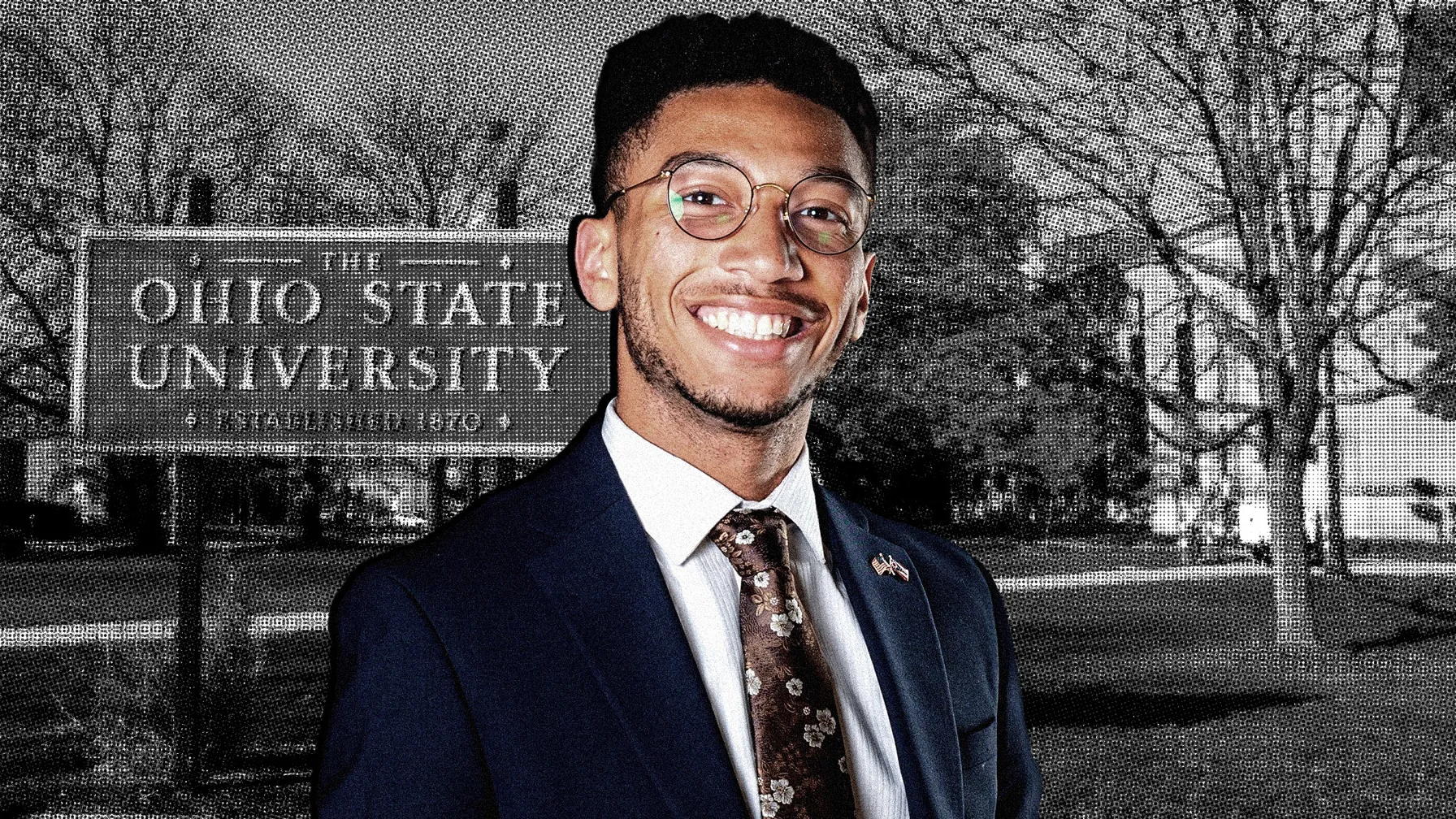
    Graduates who double-major are also 56 percent less likely to be laid off, have their pay cut or suffer other negative effects in economic downturns, according to another study, released last year by researchers at Ohio State and four other universities. These outcomes show “the importance of diverse skill sets,” the researchers concluded. If there’s a drop in demand for the skills associated with one major, “a double major can pursue a job related to the unaffected major.” 

    At Wisconsin, nearly 6 in 10 students in computer science who pick a second major choose the lucrative discipline of data science; the number of jobs in data science is projected by the Bureau of Labor Statistics to increase 34 percent over about the next 10 years, at salaries that are nearly twice the national average.

    The unemployment rate among new bachelor’s degree recipients is now higher than for workers overall, and at its highest level since 2014, not including the pandemic years, according to the Federal Reserve Bank of St. Louis. That’s partly because artificial intelligence and other factors are transforming what employers need. 

    Nearly half of recent graduates feel underqualified to apply for even entry-level jobs, a survey by the education technology company Cengage Group finds. Only 30 percent say they have full-time jobs related to the fields that they studied.

    Meanwhile, colleges and universities — traditionally slow to transform what and how they teach — are encouraging students to combine majors as a faster way to keep up with changes in the labor market, said Taylor Odle, an assistant professor at UW-Madison who studies the economics of education and the value of credentials in the workforce.

    “Institutions are thinking strategically about how to align their degree programs with industry, and it might be by pairing two things they already have,” Odle said.

    There are other reasons for the rising popularity of double majors. At UW-Madison, for example, one factor propelling the growth is that there are no minors, noted Taylor Odle, an assistant professor there who studies the economics of education and the value of credentials in the workforce.. 

    Double-majoring isn’t easy. It typically means earning more than the usual minimum number of credits required to graduate, on top of extracurricular and other obligations. Wesson, at UW-Madison, for instance, is an officer of student government, a reporter and photographer for the campus newspaper and an honors student.

    Some separate majors have overlapping requirements. Even if they don’t, most universities and colleges charge the same tuition per semester no matter how many courses undergraduates take. So unless a second major extends the number of semesters a student needs to complete required courses, or forces him or her to take additional classes in the summers, double-majoring doesn’t typically cost more or take longer.

    Meanwhile, more students are arriving at college having already knocked off credits by taking dual-enrollment and Advanced Placement classes in high school. 

    About 2.5 million high school students participate in dual enrollment, according to an analysis of federal data by the Community College Research Center at Teachers College, Columbia University. (The Hechinger Report, which produced this story, is an independent unit of Teachers College.)

    This means they have room in their schedules in college for second majors, said Kelle Parsons, who focuses on higher education as a principal researcher at the American Institutes for Research.

    Related: After years of quietly falling, college tuition is on the rise again

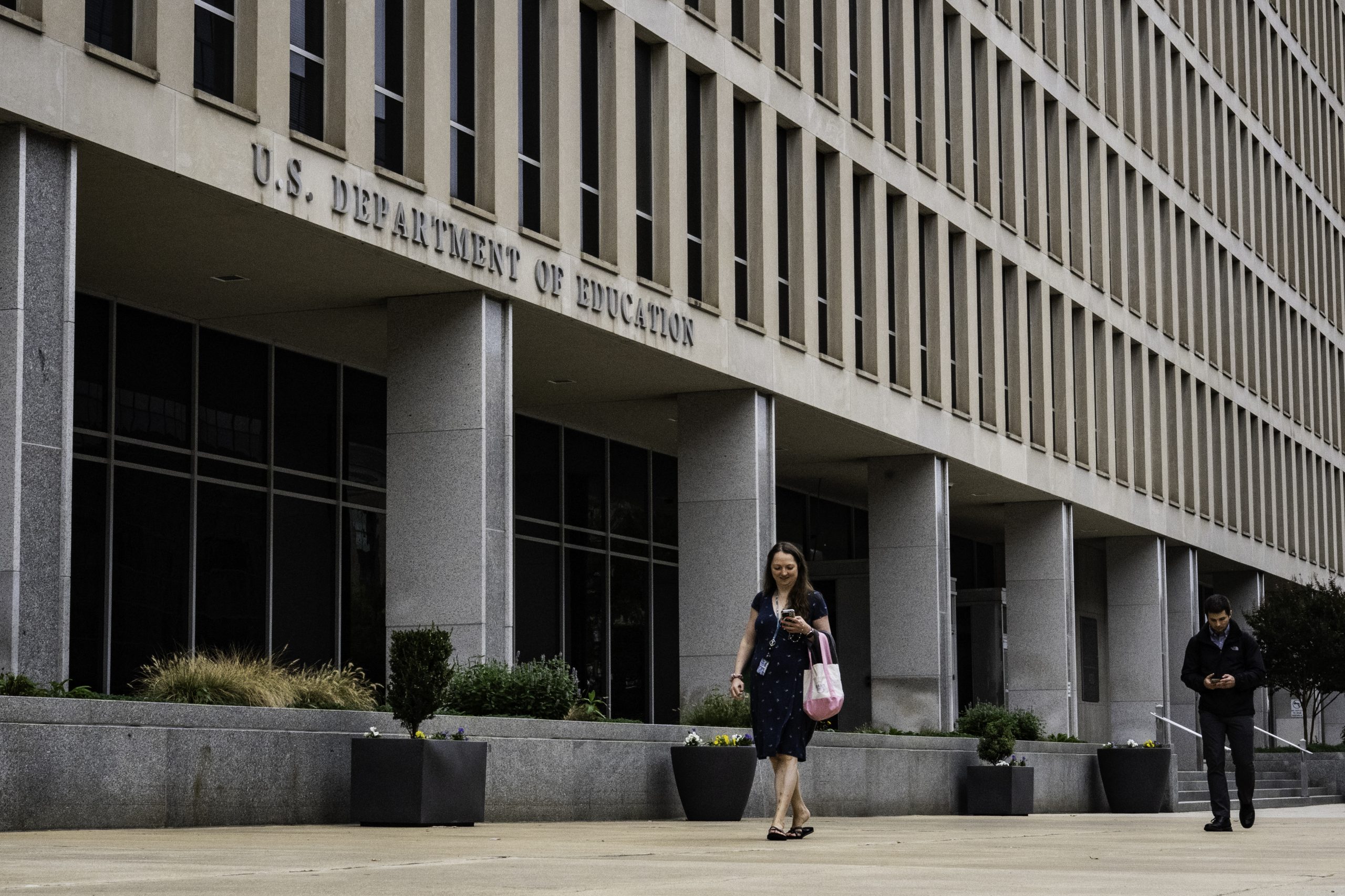
    For some students, double-majoring makes more sense than changing majors altogether. About 30 percent of students change their majors at least once, and 10 percent two or more times, according to the U.S. Department of Education. Adding a second major is less drastic than dropping a first one and starting again from scratch, said Patrick Denice, an associate professor of sociology at the University of Western Ontario.

    “If you add a [second] major, you hedge your bets against a changing labor market without losing those credits and that coursework you’ve already earned” toward the first one, said Denice, who has studied why students at U.S. universities pick and change their majors.

    There’s yet another reason students are increasingly double-majoring. Even as they crowd into specialties associated with career opportunities, such as business and health-related disciplines — which together now account for nearly 1 in 3 undergraduate fields of study — some are adding second majors for which they simply have a passion.

    Related: Students can’t get into basic college courses, dragging out their time in school

    “They’re trying to satisfy their parents, who want them to be employed,” said J. Wesley Null, vice provost for undergraduate education and academic affairs at Baylor University, where there were more than twice as many double majors last year than there were in 2014. “But they’re also interested in a lot of interdisciplinary kinds of things. They’ll combine biology with Sanskrit or Chinese. These really bright students have a lot of diverse interests.”

    At the University of Chicago, where the number of double majors has also more than doubled, “I see students committing to one career but wanting to have more breadth,” said Melina Hale, dean of the college. “They’re going and exploring all of these other majors and finding one they love.”

    Double-majoring is also “a great way for students to demonstrate that they know how to think in different ways,” said Hale, herself a biologist who has collaborated with engineers. “If you’re going into a job in finance and have a deep background in history, you’re bringing different ways of approaching problems.”

    Related: To fill seats, more colleges offer credit for life experience

    This way of thinking is pushing still another trend: More students nationwide are earning certificates, which they can get in a matter of months and alongside their degrees, in subjects such as business management. Seventeen percent of bachelor’s degree recipients also finished college with at least one certificate in 2023-24, the National Student Clearinghouse Research Center reports.

    Known as “stackable credentials,” these kinds of certificates “have been talked about for a long time,” said Ryan Lufkin, vice president of global academic strategy at the educational technology company Instructure. “And now there’s really demand for them.” 

    That’s because — like double-majoring and minoring — they make applicants stand out to employers, said Odle, at UW-Madison. 

    Students, he said, “are trying to emphasize their attractiveness in the labor market. They’re trying to cover their bases.”

    Contact writer Jon Marcus at 212-678-7556, [email protected] or jpm.82 on Signal.

    This story about double majors was produced by The Hechinger Report, a nonprofit, independent news organization focused on inequality and innovation in education.

    Data analysis by Marina Villeneuve.

    Sign up for our higher education newsletter. Listen to our higher education podcast.

    This <a target=”_blank” href=”https://hechingerreport.org/students-worried-about-getting-jobs-extra-majors/”>article</a> first appeared on <a target=”_blank” href=”https://hechingerreport.org”>The Hechinger Report</a> and is republished here under a <a target=”_blank” href=”https://creativecommons.org/licenses/by-nc-nd/4.0/”>Creative Commons Attribution-NonCommercial-NoDerivatives 4.0 International License</a>.<img src=”https://i0.wp.com/hechingerreport.org/wp-content/uploads/2018/06/cropped-favicon.jpg?fit=150%2C150&amp;ssl=1″ style=”width:1em;height:1em;margin-left:10px;”>

    <img id=”republication-tracker-tool-source” src=”https://hechingerreport.org/?republication-pixel=true&post=113148&amp;ga4=G-03KPHXDF3H” style=”width:1px;height:1px;”><script> PARSELY = { autotrack: false, onload: function() { PARSELY.beacon.trackPageView({ url: “https://hechingerreport.org/students-worried-about-getting-jobs-extra-majors/”, urlref: window.location.href }); } } </script> <script id=”parsely-cfg” src=”//cdn.parsely.com/keys/hechingerreport.org/p.js”></script>

    Source link

  • Colleges build environmental lessons into degrees

    Colleges build environmental lessons into degrees

    by Olivia Sanchez, The Hechinger Report
    November 5, 2025

    LA JOLLA, Calif. — On a Thursday this fall, hundreds of students at the University of California, San Diego, were heading to classes that, at least on paper, seemed to have very little to do with their majors. 

    Hannah Jenny, an economics and math major, was on their way to a class on sustainable development. Angelica Pulido, a history major who aspires to work in the museum world, was getting ready for a course on gender and climate justice. Later that evening, others would show up for a lecture on economics of the environment, where they would learn how to calculate the answer to questions such as: “How many cents extra per gallon of gas are people willing to pay to protect seals from oil spills?”

    Although most of these students don’t aspire to careers in climate science or advocacy, the university is betting that it’s just as important for them to understand the science and societal implications of climate change as it is for them to understand literature and history, even if they’re not planning to become writers or historians. UCSD is perhaps the first major public university in the country to require all undergraduate students to take a class on climate change to earn their degree. 

    The requirement, which rolled out with first-year students last fall, came about because UCSD leaders believe students won’t be prepared for the workforce if they don’t understand climate change. Around the globe, global warming is already causing severe droughts, water scarcity, fires, rising sea levels, flooding, storms and declining biodiversity; leaders at UCSD argue every job will be affected. 

    And even as President Donald Trump dismisses climate change as a hoax and cancels funding for research on it, other colleges are also exploring how to ensure students are knowledgeable about the subject. Arizona State University began requiring that students take a class in sustainability last year, while San Francisco State University added a climate justice class requirement to begin this fall. 

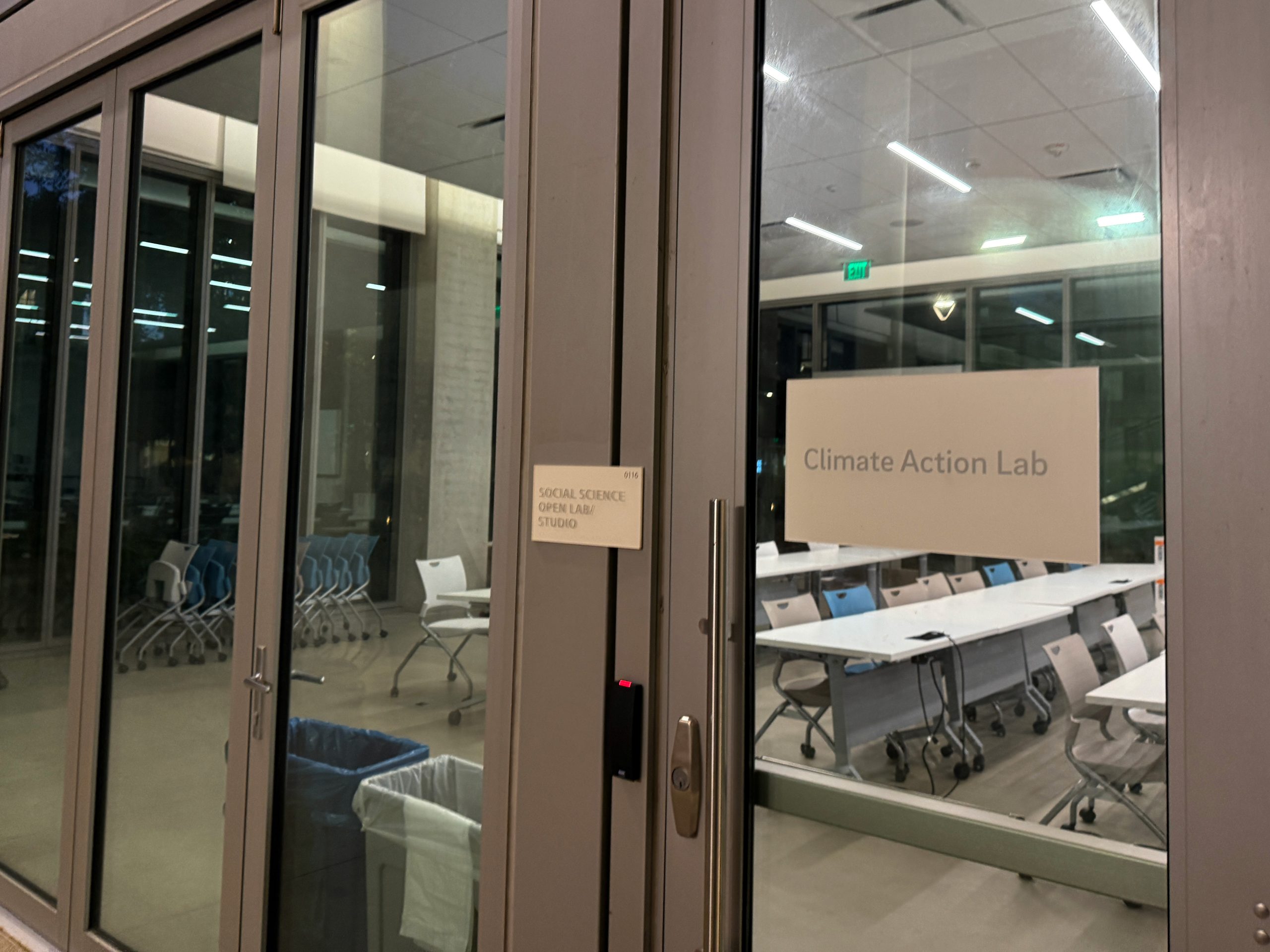
    “You can’t avoid climate change,” said Amy Lerner, a professor in the urban planning department at UCSD. “You can’t escape it in the private sector. You can’t escape it in the public sector. It’s just everywhere.” Students, she said, must be made ready to engage with all of its likely consequences.

    Related: Want to read more about how climate change is shaping education? Subscribe to our free newsletter.

    UCSD, a public university that serves roughly 35,000 undergraduate students, is not demanding that everyone sign up for Climate Change 101. Instead, students can fulfill the requirement by taking any of more than 50 classes in at least 23 disciplines across the university, including sustainable development, the course Jenny is taking. 

    There’s also psychology of the climate crisis, religion and ecology, energy economics, and several classes in the environmental science and oceanography departments, among others. And leaders at the university are working to develop more classes that satisfy the requirement, including one on the life cycle of a computer.

    Bryan Alexander, an adjunct professor at Georgetown University and author of a book on higher education and the climate crisis, said that while colleges have long taught about climate change in classes related to ecology, climatology and environmental science, it’s only been in the last decade or so that he’s seen other disciplines tackle the topic. 

    Climate change, Alexander said, “is the new liberal arts” — and colleges should take it seriously. 

    K. Wayne Yang, a UCSD provost who served on the original group that advocated for the requirement, said every industry and career field will experience the effects of climate change in some way. Health care providers need to know how to treat people who have been exposed to extreme heat or wildfire smoke; psychologists need to understand climate anxiety; and café owners need to know how the price of coffee changes in response to droughts or other natural disasters in coffee-growing regions.  

    Jenny, the senior taking a class on sustainable development, is eager to get answers to a question that has, in their three years as an economics and mathematics major, become difficult not to ponder: How can economic growth be the silver bullet of societal change if it has so many negative consequences for the planet?

    “It’s definitely my hope that this is a class that will teach me something new about how to consider humanity’s path forward without destroying this earth, without destroying each other, without sacrificing quality of life for any person on this planet,” Jenny said. 

    Jenny isn’t subject to the requirement because they entered college before it rolled out. But they said they like the idea of encouraging students to step outside their comfort zones and fields of study and, in many cases, consider their future career paths in the context of the changing climate.

    Other students, like junior Pulido, don’t see a specific link between climate change and their future careers. Pulido, who has spent the last few years working in the visitors center at San Diego’s Balboa Park and aspires to work in museums, said she signed up for the gender and climate justice class simply because it sounded interesting to her. She believes climate change is important, and she’s hoping that taking this class will help give her a better idea of how its role in history and might play into her career.

    Related: How colleges can become ‘living labs’ for combating climate change  

    Colleges are taking different approaches to teaching their students about climate change, with some requiring a course in sustainability, a broad discipline that goes beyond the specific scientific phenomenon of climate change.

    At Arizona State, sustainability classes can cover anything about how human, social, economic, political and cultural choices affect human and environmental well-being generally, said Anne Jones, the university’s vice provost for undergraduate education.

    Dickinson and Goucher colleges have had such requirements since 2015 and 2007, respectively. 

    At San Francisco State University, leaders said they instead chose to require climate justice for all students, beginning with the class of 2029, because of the urgency of understanding how climate change affects communities differently. 

    Students need to understand broader systems of oppression and privilege so that they can address the unequal effects of climate change for “communities of color, low-income communities, global south communities and other marginalized communities,” said Autumn Thoyre, co-director of Climate HQ, the university’s center for climate education, research and action.

    Yang and other UCSD leaders believe that, despite the increased politicization of climate change under Trump, they’ve received little pushback on the new requirement because of the university’s reputation as a climate-concerned institution. (It descended from the Scripps Institution of Oceanography, initially founded in 1903.) But this model may not work as well on other campuses. 

    In communities where people’s livelihoods depend on activities that contribute to climate change, like coal mining or oil production, educators may have to modify their approach so as to not come off as offensive or threatening, said Jo Tavares, director of the California Center for Climate Change Education at West Los Angeles College. 

    “Messaging is so important, and education cannot be done in a way that just forces facts upon people,” Tavares said. 

    Related: One state mandates teaching about climate change in almost all subjects — even PE

    At UCSD, to meet the graduation requirement, a course must be at least 30 percent about climate change: For example, a class that meets twice a week for a 10-week term must have at least six of its 20 sessions be about climate change. And the course syllabus must address at least two of the following four categories: the scientific aspects; human and social dimensions; project-based learning; or solutions.

    The first time Lerner, the urban studies professor, applied for her sustainable development course to count toward the requirement, in July 2024, the committee told her she needed to better explain how the class addressed climate change. It wasn’t enough to simply have “sustainable” in the course name, committee members told her; she had to better articulate the role of climate change in sustainable development, a course she’s been teaching some version of for nearly 20 years. 

    Her students helped her go through the syllabus and identify all the points where she was teaching about how development contributes to climate change, even if she wasn’t explicitly putting those words to paper. After Lerner revised the descriptions of the class topics and made a few additions, the class was approved, she said. 

    On that fall Thursday, Lerner walked around her large glass-walled classroom while discussing development and globalization with the 65 undergraduate students in her sustainable development class. They covered how to balance equity, economy and environment in development, as well as various ways to measure the well-being of societies, including gross national income, food security, birthrate and infant mortality, happiness, fertility, education and lifespan. Lerner peppered her lecture with jokes and relatable examples, asking, for example, how many siblings students had before explaining the role of fertility and birth rate in a healthy society. (One student had 12, but the average was closer to two.)

    Lerner, who now chairs the committee that decides which classes meet the requirement, said most of her students come in with the understanding that climate change is caused by rising levels of carbon dioxide entering the atmosphere, and some have even used an online tool to calculate their own carbon footprints. Often, their education has been focused on the hard science aspect of climate change, but they haven’t learned about what society has experienced as a result of climate change, she said. 

    When she asks them what can be done about climate change, she said, “they’re deer in the headlights.”

    Related: Changing education could change the climate

    Across campus, economics professor Mark Jacobsen teaches a lecture class every Thursday night on the economics of the environment. It meets the climate change requirement, but it also covers a core economics idea, he said: achieving efficiency. 

    Jacobsen is teaching students the formulas and methods they’ll need to answer questions like whether it’s worth it to spend $1 billion now to build renewable energy sources to avoid $10 billion in natural disaster cleanup in 30 years.

    Though Jenny hasn’t taken Jacobsen’s class, this is exactly the type of dilemma they’re worried about. 

    Jenny, a public transit enthusiast so dedicated that they got a commercial driver’s license just to drive for Triton Transit, the campus bus system, said the requirement encourages students to face the climate crisis rather than shy away from it. 

    “It can be easy to kind of put your head down and be like, ‘That is too big for me to think about, and too scary,’” Jenny said. But it’s imperative, they added, that students be “forced to reckon with it and think about it and talk about it, to have that knowledge kind of swirling around in your head.” 

    Contact staff writer Olivia Sanchez at 212-678-8402 or [email protected]

    This story about climate literacy was produced by The Hechinger Report, a nonprofit, independent news organization focused on inequality and innovation in education. Sign up for our climate and education newsletter and for our higher education newsletter. Listen to our higher education podcast.

    This <a target=”_blank” href=”https://hechingerreport.org/climate-change-is-the-new-liberal-arts-colleges-build-environmental-lessons-into-degrees/”>article</a> first appeared on <a target=”_blank” href=”https://hechingerreport.org”>The Hechinger Report</a> and is republished here under a <a target=”_blank” href=”https://creativecommons.org/licenses/by-nc-nd/4.0/”>Creative Commons Attribution-NonCommercial-NoDerivatives 4.0 International License</a>.<img src=”https://i0.wp.com/hechingerreport.org/wp-content/uploads/2018/06/cropped-favicon.jpg?fit=150%2C150&amp;ssl=1″ style=”width:1em;height:1em;margin-left:10px;”>

    <img id=”republication-tracker-tool-source” src=”https://hechingerreport.org/?republication-pixel=true&post=113195&amp;ga4=G-03KPHXDF3H” style=”width:1px;height:1px;”><script> PARSELY = { autotrack: false, onload: function() { PARSELY.beacon.trackPageView({ url: “https://hechingerreport.org/climate-change-is-the-new-liberal-arts-colleges-build-environmental-lessons-into-degrees/”, urlref: window.location.href }); } } </script> <script id=”parsely-cfg” src=”//cdn.parsely.com/keys/hechingerreport.org/p.js”></script>

    Source link

  • Donor Engagement in College Mergers – Edu Alliance Journal

    Donor Engagement in College Mergers – Edu Alliance Journal

    November 2, 2025, By Dean Hoke — When Sweet Briar College’s trustees voted to close in 2015, they framed the decision as a financial necessity. Alumnae mounted an extraordinary campaign—raising $28.5 million in 110 days—and, through a state-brokered settlement, the college reopened under new governance. By 2023, donors had contributed well over $133 million since the crisis. What looked like an inevitable failure became one of higher education’s most remarkable turnarounds.

    Sweet Briar is not only a story of crisis response; it exposes a recurring miscalculation in today’s merger conversations: the assumption that boardroom consensus equals donor legitimacy. Trustees speak for donors in a fiduciary sense—they hold legal responsibility for institutional assets—but not in the communal sense that captures sentiment, legacy, and trust. When colleges announce merger talks, headlines dwell on enrollment curves and debt ratios. Yet behind every deal stands a quieter, decisive constituency: major donors, family foundations, and planned-giving benefactors whose confidence (or loss of it) can determine whether the combined institution thrives—or limps forward under the weight of broken relationships.

    This article reframes mergers as philanthropic integration projects. The legal mechanics matter, but durable success is won in the design phase: early engagement with philanthropic stakeholders, explicit safeguards for identity and donor intent, transparent transition planning, and a mission-first case that invites continued—and new—investment. When leaders bring donors and alumni into the architecture of the merger rather than the press release, they convert anxiety into commitment and preserve the institutional DNA that constituents care about most.

    We’ll see this principle in contrasting cases: mission-advancing acquisitions that attracted significant philanthropic support, integrations that prioritized identity and donor intent from the outset, and lessons from failed or contested processes. The throughline is simple: treat philanthropy as a core workstream—not an afterthought—and the odds of a credible, sustainable merger rise dramatically.

    The stakes have never been higher. Survey data from Ruffalo Noel Levitz’s 2025 National Alumni Survey, which surveyed more than 50,000 alumni, reveals that donor relationships with higher education are already strained. While 81% of alumni report that being philanthropic is important to them personally and 77% make charitable donations, their connection to their alma mater has weakened dramatically. Only 31% of alumni who donate to any charity gave to their alma mater last year, dropping to just 19% among Millennials and 10% among Gen Z graduates.

    Even more troubling: 59% of alumni who never donate to their alma mater actively support other causes, as do 83% of lapsed donors. They have not stopped giving—they have simply redirected their philanthropy elsewhere. This suggests that alumni disengagement reflects institutional failure rather than generational selfishness.

    Satisfaction drives everything. Alumni who report being ‘very satisfied’ with their student experience are 18 times more likely to donate than neutral respondents and 73 times more likely than dissatisfied graduates. Yet only 42% of Gen Z alumni report feeling ‘very satisfied’ with their experience, compared to 72% of Silent Generation graduates.

    Mergers test already-fragile relationships. When institutions announce consolidation, donors who felt lukewarm about their undergraduate experience see confirmation that their alma mater is failing. A merger framed solely as a financial necessity will not inspire them. But a merger presented as advancing mission-driven impact—expanding access, strengthening programs that address social challenges, or preserving an educational model under threat—can mobilize support from the very alumni who have drifted away.

    As Millett (1976) noted, successful integrations often ‘show structure, not just sentiment’—for example, Case Western Reserve kept a distinct Case Institute identity, and Carnegie Mellon created a Carnegie Institute of Engineering and a Mellon Institute of Science to carry legacies forward.

    A half-century ago, John D. Millett’s 1976 analysis of U.S. college mergers examined a range of cases—from research institutes to liberal arts colleges—and distilled lessons that remain strikingly current. Four observations deserve renewed attention today:

    1. Endowments transfer; relationships do not. In many mergers, endowments and restricted funds move to successor institutions through standard legal pathways. The mechanics are manageable. The harder work is relational: ensuring donors can see how their original intent will be honored in the new configuration, and that the program or ethos they loved will not be erased.

    2. Alumni skepticism is predictable—and manageable. Leaders should not assume alumni approval, especially when the smaller institution is absorbed. Visible steps to cultivate and retain legacy alumni—keeping familiar staff contacts for a transitional period, acknowledging a distinct identity, and offering tangible ways to shape the merged future—go a long way.

    3. Governance approval is not donor legitimacy. Even when boards vote, state bodies concur, and presidents sign, philanthropic legitimacy remains a separate test. Communities expect to be consulted; they often oppose mergers if they learn about them too late. Participation must be planned early, not added later.

    4. Language and structure matter more than sentiment. Labels and explanations—federation versus absorption, mission expansion versus rescue—shape how alumni and donors interpret the outcome. Leaders who explain clear educational benefits and who visibly protect identity through formal structures earn trust faster.

    Historical Examples: Structure, Not Just Sentiment

    After the Case Institute of Technology and Western Reserve University merger, the successor Case Western Reserve University continued the designation of Case Institute of Technology as an organizational component. At Carnegie Mellon University, leaders created a Carnegie Institute of Engineering and a Mellon Institute of Science—formal structures that carried legacy identities forward within the new entity.

    The Bellarmine-Ursuline (Louisville) merger (1968-1971) offers another instructive example. The combined institution briefly used the Bellarmine-Ursuline name before reverting to Bellarmine College in 1971, but Bellarmine has continued to honor Ursuline identity through durable structures—explicitly including Ursuline alumnae in alumni awards and honors and recognizing the Ursuline legacy through commemorations and alumni programming. These are structural signals that preserve identity even when the combined name does not persist.

    Millett also notes that successor institutions often made special effort to cultivate and retain alumni of the absorbed college, including keeping an alumni-relations officer from the legacy institution and providing a special alumni designation or status—practical ways to keep traditions and community intact during transition.

    Crisis-Reactive: What Not to Do

    Planning is done privately, the announcement is abrupt, and donors are asked to accept a fait accompli. Mills College’s merger with Northeastern University proceeded despite alumni resistance, prompting legal challenges over donor intent. The Alumnae Association spent hundreds of thousands in legal fees opposing the merger, and a class action lawsuit resulted in a $1.25 million settlement. The litigation divided alumnae and consumed resources that could have been invested in the merged institution’s success.

    Even when the legal mechanics are sound, the community verdict is that identity has been erased. The result: backlash, donor-intent disputes, and years of costly trust repair.

    Compliance-Only: Necessary but Insufficient

    Teams carefully inventory restricted funds, ensure transfers align with donor intent, and communicate the basics. This prevents disasters but rarely generates enthusiasm or new investment. Survey data reveals that 70% of alumni need to believe their gift amount matters, and 66% rate the ability to see how their gift is used as critical. When a college merges, donors worry their legacy has been erased—regardless of legal assurances that funds will be protected.

    The compliance model maintains existing donors but does not mobilize new support for the merged institution’s expanded mission. The message is ‘We will comply,’ not ‘Here is a better future you can help build.’

    Strategic Partnership: The Target State

    Donors and foundations are treated as co-creators from Day 0. Leaders conduct quiet briefings with major benefactors pre-announcement, frame the merger as mission expansion, and embed structural commitments to legacy preservation. This model doesn’t eliminate hard feelings, but it channels energy toward shared outcomes.

    Delaware State University–Wesley College (2020–21). DSU—an HBCU—acquired Wesley and framed the move as mission advancement, launching the Wesley College of Health & Behavioral Sciences to expand pathways in nursing and allied health for underserved students. Financing combined philanthropy and prudence: a $20M unrestricted gift from MacKenzie Scott (with a portion—reported as roughly one-third of the $15M total—applied to transition costs) and a $1M Longwood Foundation grant for the acquisition. The case shows how a mission-first narrative can catalyze major-donor and foundation support.

    By tying dollars to a new health‑workforce pipeline—rather than balance‑sheet triage—leaders converted donor anxiety into visible, restricted impact.

    Ursuline College–Gannon University (ongoing). From the outset, both institutions engaged stakeholders publicly and affirmed philanthropy principles: “Honoring donor intent is important to Gannon University,” and donors will be able to designate gifts to the Pepper Pike campus. Ursuline will retain its identity as the Ursuline College Campus of Gannon University after the transition, and the Ursuline Sisters of Cleveland have voiced support for the merger—signals aimed at preserving community trust and legacy while the integration proceeds through 2026. These commitments, paired with the HLC’s Change-of-Control approval, frame the merger as continuity-minded rather than absorptive.

    University of Tennessee Southern (formerly Martin Methodist College).

    University of Tennessee Southern (formerly Martin Methodist College)
    When Martin Methodist joined the University of Tennessee System in 2021, leaders prioritized transparent, compassionate communication—“a liminal space” requiring a strong plan, as President Mark La Branche put it. They also set aside portions of the legacy endowment (via the Martin Methodist College Foundation) to protect signature programs, showing that integration need not erase institutional identity.

    Public commitments to donor intent and the campus naming convention did early legitimacy work that legal filings can’t.

    When a stronger institution absorbs a struggling one, leaders often assume donor concerns belong primarily to the acquired institution. This is a strategic error. The acquiring institution’s donors also have a stake in the outcome—and their continued support is essential to merger success.

    Major donors to the acquiring institution may question why resources should be directed toward absorbing another college. They may worry that the acquired institution’s struggles will tarnish their alma mater’s reputation, or that merger costs will compete with planned campus improvements. These concerns are legitimate and require proactive engagement.

    Frame the Merger as a Strategic Opportunity

    The narrative for acquiring institution donors must emphasize strategic opportunity rather than charitable rescue. Several frames can be effective:

    Geographic expansion: The merger creates a presence in a new market, expanding the institution’s reach and visibility.

    Program complementarity: The acquired institution brings academic strengths that fill gaps in the acquiring institution’s portfolio.

    Mission advancement: The merger expands capacity to serve students and fulfill the educational mission on a greater scale.

    Competitive positioning: In an era of consolidation, the merger strengthens the institution’s competitive position and long-term sustainability.

    Rather than waiting for resistance to emerge, acquiring institution leaders should brief major donors before public announcement. These confidential conversations acknowledge donors’ legitimate interest in institutional strategy, allow leaders to address concerns directly, and create opportunities for donors to become merger advocates.

    Legal clarity: When restricted funds cannot be used as originally intended post‑merger, pursue a cy‑près modification early—advancement and counsel should partner on donor communication before any filing to preserve trust.

    You can brief a small set of major donors pre‑announcement under strict NDAs without privileging them over faculty governance or regulators. Use a defined rubric for who is briefed (e.g., top 10% of lifetime commitments and active pledgors), disclose no nonpublic counterparties’ terms, and limit to mission rationale, identity safeguards, and timeline. Record each briefing in counsel’s log.

    Before Announcement (Day 0 Work)

    Philanthropic due diligence—parallel to financial. Inventory endowed and restricted funds, bequests in the pipeline, and active foundation grants. Identify potential cy-près risks and draft stewardship language now. Treat this as a distinct workstream with advancement, finance, and counsel at the table from the start.

    Quiet briefings with top donors and foundations on both sides. Under confidentiality, preview the rationale, surface donor-intent questions, and invite advice. Ask for early champions willing to speak publicly when the time comes.

    Identity protections by design, not promise. Prepare a naming plan (e.g., ‘[Legacy] College at [Acquirer]’), preserve scholarship and reporting lines, and keep alumni-relations continuity for 12-24 months. Publish a short ‘Identity & Intent’ brief on day one that shows, in plain language, how donor purposes are carried forward.

    At Announcement

    Mission-driven case for support. Lead with the educational value only possible together: new academic pathways, access expansions, regional partnerships, research synergies. Avoid rescue framing. Make the case specific and concrete, tied to programs and outcomes donors care about.

    Dedicated ‘Legacy to Impact’ funds with challenge matches. Create visible vehicles that convert anxiety into investment—restricted funds for scholarships, program launches, and student success tied to the integrated entity.

    Community-benefit specificity. Spell out local benefits and stakeholder wins (clinics, teacher pipelines, innovation hubs). When people can ‘see’ the upside, they are likelier to invest in it.

    First 12-24 Months

    Quarterly transparency. Report enrollment in merged programs, first scholarship cohorts, renewed or new foundation grants, and capital milestones. Transparency reduces rumors and builds credibility.

    Recognition symmetry. Offer parity for legacy and acquirer donors—naming walls, digital honor rolls, endowed-fund dashboards, and joint stewardship events.

    Two-sided cultivation. Brief the acquirer’s major donors so they see strategic growth rather than a charitable drain. Ask two or three to seed a matching pool restricted to merger priorities; matches signal confidence and reduce perceived risk.

    Because reliable analytics on donor behavior in mergers are sparse, leaders should build their own lightweight evidence base. For each merger, track three years pre- and post-integration for: total private support; alumni participation (where available); number of $1M+ gifts; and the mix of restricted versus unrestricted giving.

    Pair quantitative metrics with a qualitative log: Was identity preserved in naming? Did a Legacy Alumni structure exist? Were there donor-intent disputes? Did the acquirer launch dedicated legacy funds? How soon were KPIs reported?

    Even a simple dashboard, updated quarterly, changes the conversation with trustees and donors. It shows momentum (or lack thereof), prompts targeted stewardship, and gives leaders permission to make mid-course corrections. It also validates the core claim of this article: philanthropy works best when it is built into planning, not bolted on after the fact.

    The most fundamental error in merger planning is treating donors as communications targets rather than strategic partners. Donors are not merely sources of revenue to be managed; they are partners whose investments reflect belief in institutional mission and values.

    Mergers that succeed treat donors, foundations, and alumni as planning inputs, not a downstream audience for PR. Millett’s 1976 study reminds us that while the legal mechanics of endowment transfers are straightforward, the human mechanics are not. Alumni skepticism is predictable; identity needs visible protection through formal structures, not just promises; language and framing carry unusual weight.

    When leaders internalize those lessons—and create structures that honor donor intent, invite co-creation, and make the mission upside measurable—legacy becomes leverage rather than liability. Higher education’s financial pressures are real, but so is the reservoir of goodwill that donors and alumni hold for institutions that respect them.

    The Sweet Briar alumnae who raised $133 million did not do so because they were told the college would comply with donor intent. They did so because they were invited to co-create a future worth investing in. That is the lesson for every merger: bring philanthropic stakeholders into the room early, build identity protections into the design, launch vehicles that convert anxiety into investment, and report steadily and transparently on what their support makes possible.

    That is how two proud legacies become one stronger future—and how the ‘silent stakeholders’ find their voice in shaping it.

    Sources (selected): institutional FAQs and press releases (Ursuline–Gannon; DSU–Wesley; UT Southern), RNL Alumni Giving Data 2025 (for participation/attitudes), and Millett, J.D. (1976) ED134105 on college mergers.

    Dean Hoke is Managing Partner of Edu Alliance Group, a higher education consultancy. He formerly served as President/CEO of the American Association of University Administrators (AAUA). Dean has worked with higher education institutions worldwide. With decades of experience in higher education leadership, consulting, and institutional strategy, he brings a wealth of knowledge on colleges’ challenges and opportunities. Dean is the Executive Producer and co-host for the podcast series Small College America.


    Source link

  • Edu Alliance Group Launches the Center for College Partnerships and Alliances – Edu Alliance Journal

    Edu Alliance Group Launches the Center for College Partnerships and Alliances – Edu Alliance Journal

    October 27, 2025, By Dean HokeAs many of you know, I am deeply committed to helping small and mid-sized colleges find sustainable paths forward. That’s why I’m proud to announce the launch of the Edu Alliance Group Center for College Partnerships and Alliances, dedicated to helping institutions explore partnerships, mergers, and strategic alliances that strengthen their mission and impact.

    The Center will be led by newly appointed partners Dr. Chet Haskell and Dr. Barry Ryan, two distinguished higher education leaders with deep experience in governance, accreditation, and institutional transformation. Together, they bring a wealth of expertise in guiding colleges and universities through complex transitions while preserving mission integrity and academic excellence.

    The Center’s framework draws on insights presented in A Guide to College Partnerships, Mergers, and Strategic Alliances for Boards and Leadership: From Awareness to Implementation,” authored by Dr. Chet Haskell, Dr. Barry Ryan, and Edu Alliance Managing Partner Dean Hoke. The guide outlines a five-stage model: Recognize, Assess, Explore, Negotiate, and Implement. It emphasizes mission integrity, transparency, and trust as the foundation for success.

    “Our goal is to help college leaders and boards move from awareness to action with clarity, confidence, and compassion,” said Dr. Haskell. “Partnerships and alliances can preserve institutional identity while creating new opportunities for students and communities.”

    “Edu Alliance has long supported institutions navigating change,” added Dean Hoke, Co-Founder and Managing Partner. “With the launch of the Center, we’re expanding our ability to help presidents and boards design solutions that are both visionary and pragmatic.”

    About the Leadership

    Dr. Chester (Chet) Haskell recently completed six and a half years as Vice Chancellor for Academic Affairs and University Provost at Antioch University, where he played key roles in integrating the institution academically and structurally, as well as in creating the Coalition for the Common Good with Otterbein University, where he was Vice President for Graduate Programs. He previously held senior positions at Harvard University—including Associate Dean of the Kennedy School of Government—and later served as Dean of the College at Simmons College (Boston). Dr. Haskell went on to serve as President of both the Monterey Institute of International Studies (now part of Middlebury College) and Cogswell Polytechnical College, leading both institutions through successful mergers. He holds DPA and MPA degrees from the University of Southern California, an MA from the University of Virginia, and an AB cum laude from Harvard University.

    Dr. Barry Ryan has served as President of five universities and as Provost and Chief of Staff at three others, spanning state, private nonprofit, and private for-profit institutions. A Supreme Court Fellow in the chambers of Chief Justice William H. Rehnquist, Dr. Ryan is a member of several federal and state bars and has held two terms as Commissioner for WASC (WSCUC). He has led institutions through mergers, acquisitions, and affiliations that preserved academic quality, expanded access, and strengthened long-term viability. His leadership is characterized by transparency, shared governance, and a deep commitment to stakeholder engagement. Dr. Ryan earned his Ph.D. from the University of California, Santa Barbara, his J.D. from the University of California, Berkeley, and a Dipl.GB in international business from the University of Oxford.

    Upcoming Webinar

    As part of the launch, Edu Alliance will host a free national webinar on December 3, 2025, at 1 PM Eastern time titled “Navigating Higher Education’s Existential Challenges: From Partnerships and Mergers to Reinvention.” To register, go to https://admissions.augustana.edu/register/?id=838202a3-c7a7-4ce0-8dc1-11c7979fe27c

    The session will feature a distinguished panel of experts discussing practical strategies for independent colleges and universities.
    Panelists include

    • Dr. Chet Haskell and Dr. Barry Ryan, Partners and Co-Directors of Edu Alliance’s Center for College Partnerships and Alliances;
    • A.J. Prager, Managing Director at Hilltop Securities, specializing in Higher Education Mergers & Acquisitions and Strategic Partnerships;
    • Stephanie Gold, Partner and Head of the Higher Education Practice at Hogan Lovells.

    The program will be moderated by Dean Hoke and Kent Barnds, co-hosts of Small College America.

    Source link

  • Student-parents belong on college campuses. So do their children

    Student-parents belong on college campuses. So do their children

    Too many student-parents never make it to graduation, in no small part because their campuses don’t adequately help them fit college into their lives — or even just fit in.

    Yet over 3 million student-parents across the nation, myself included, are pursuing higher education, seeking the intergenerational benefits that come with earning a degree. To reap them, we must overcome many obstacles, as colleges aren’t designed for students like us.

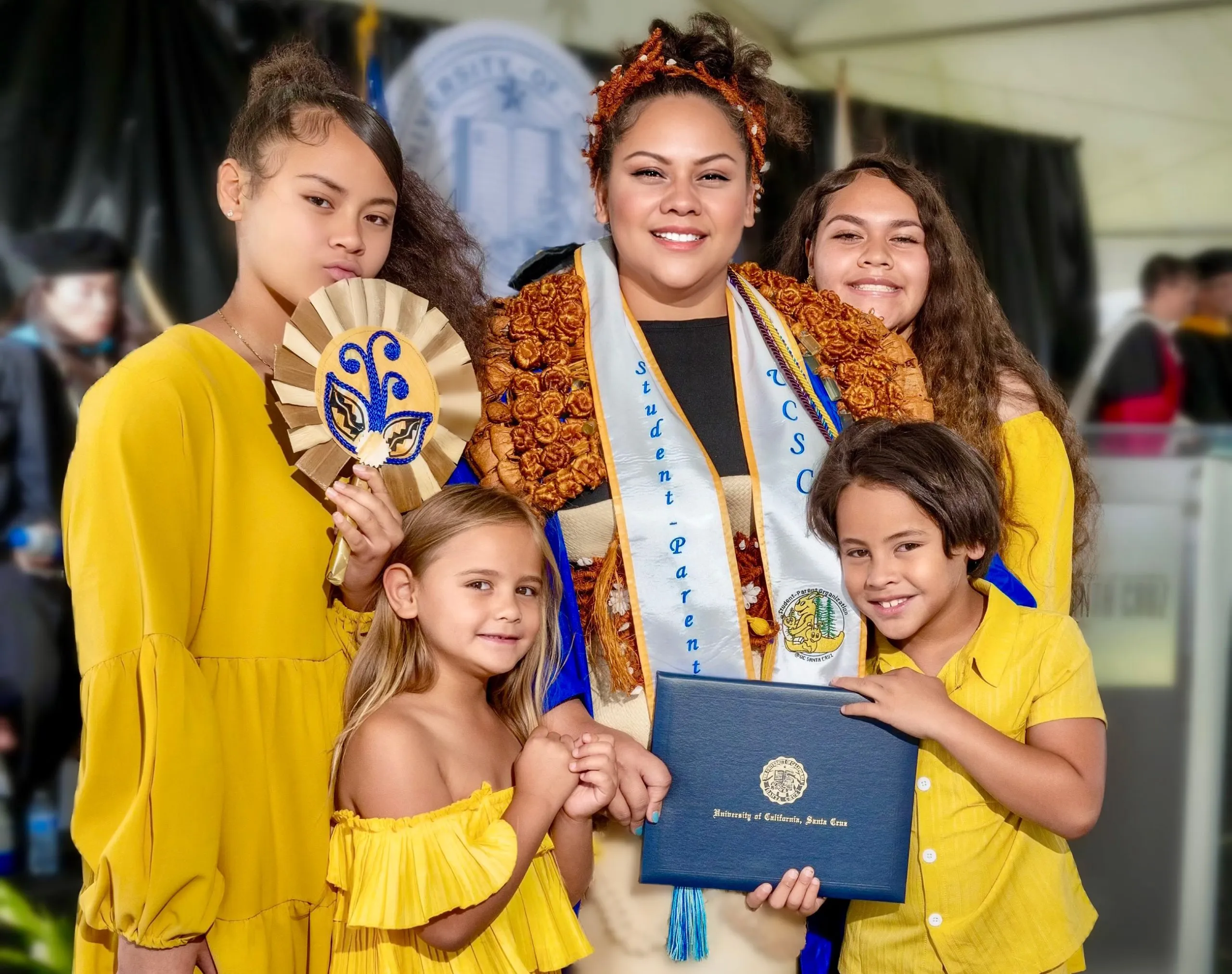
    For me, the last hurdle I had to clear was graduation itself. After years of sacrifice — not just my own, but my whole family’s — walking the stage with my four children at my graduation from the University of California, Santa Cruz was deeply important.

    The university, however, didn’t understand that or account for us. When I asked to accept my diploma with my kids, I was met with resistance, a particularly tough reminder of the work institutions have left to do to meet the needs and priorities of student-parents.

    Related: Interested in innovations in higher education? Subscribe to our free biweekly higher education newsletter.

    Earning my college degree in my late 30s was undoubtedly a major achievement, but so was going back for my bachelor’s in the first place — I didn’t even finish high school the first time around.

    After I became a mom at 20, I earned my GED, hoping it would help me support my family. Continuing my education only got harder. I started and stopped community college more times than I can count, juggling bills, jobs, custody battles and parenting.

    Finally, I transferred to UCSC, proud that I was taking this step two decades in the making and changing the trajectory of my and my family’s lives.

    However, I didn’t fully realize what my education would cost my children. Used to our tight-knit Tongan community, they felt like cultural outsiders when we moved to Santa Cruz, no longer surrounded by family, our native language or familiar foods and music.

    My children sacrificed their home and sense of belonging so that I could pursue this dream. As graduation approached, I knew I wanted to walk the stage with them. They had earned it just as much as I had.

    Yet the administration denied my request, citing the added logistical difficulties. They suggested I bring my kids to a separate, informal celebration for those of us living in family student housing instead. The offer sounded like “be invisible or settle for less.”

    I immediately started mobilizing UCSC’s Student Parent Organization, where I was president. Working with the student government, I drafted a resolution permitting student-parents to walk with their children. I reached out to alumni, administrators, fellow parents and friends for support.

    Thanks to our collective voice, the dean of students changed his mind, offered an apology and committed to changing the policy going forward for all graduating student-parents. Though my kids and I were placed at the end of the ceremony, we crossed the stage together as a family.

    That seed of inclusion will grow in them, just like it will for all the children of student-parents who walk that path in the future.

    The next year, my mentee and friend walked with her son at the UCSC commencement, this time without pushback. The university invited them to rehearsal, and on graduation day, they had VIP seats. She was one of the first to walk, not the last.

    That is the power of advocacy. It turns exclusion into inclusion. It rewrites the rules not just for one person, but for those who come after. I am proud to continue my advocacy work as a graduate student at the University of San Francisco and a member of The California Alliance for Student Parent Success.

    I have since seen institutions across California make good progress on their efforts to support student-parents, but colleges and universities nationwide must still do more. At the University at Buffalo, university police chased a graduating student across the stage when he attempted to bring his infant son with him.

    Related: A federal program helped student-parents thrive. Now it’s on life support

    These stories and the momentum building in the wake of September’s National Student Parent Month should serve as a call to higher education leaders across the country to cultivate campus climates that build trust and belonging among student-parents.

    This work should start before we even step foot on campus and continue until we graduate.

    Institutions that truly wish to serve families will ensure that the value we bring to higher education is visible. They will account for student-parents when planning campus events and weave together support networks of faculty, staff and peers who can respond to our needs.

    When we ask institutions for policies and practices to better accommodate our families, they will listen and act. They will hold themselves accountable to all of their students, parents included.

    Walking the stage with my kids was a step in the right direction, albeit an uphill climb. Let’s keep going and do better by student-parents and their families.

    Krystle Pale is a UC Santa Cruz graduate, a mother of five and a recent Advisory Committee member of The California Alliance for Student Parent Success.

    Contact the opinion editor at [email protected].

    This story about student-parents was produced by The Hechinger Report, a nonprofit, independent news organization focused on inequality and innovation in education. Sign up for Hechinger’s weekly newsletter.

    The Hechinger Report provides in-depth, fact-based, unbiased reporting on education that is free to all readers. But that doesn’t mean it’s free to produce. Our work keeps educators and the public informed about pressing issues at schools and on campuses throughout the country. We tell the whole story, even when the details are inconvenient. Help us keep doing that.

    Join us today.

    Source link

  • Will US science survive and thrive, or fade away?

    Will US science survive and thrive, or fade away?

    by Paul Temple

    When Robert Oppenheimer graduated from Harvard in 1925, young American scientists wanting to work with the world’s best researchers crossed the Atlantic as a matter of course. As a theoretical physicist, Oppenheimer’s choice was between Germany, particularly Göttingen and Leipzig, and England, particularly Cambridge. If you’ve seen the movie, you’ll know that Cambridge didn’t work out for him, so in 1926 he went to work with Max Born, one of the leading figures in quantum mechanics, at Göttingen, receiving his doctorate there just a year later. His timing was good: within a few years from the Nazi seizure of power in 1933, attacks on academics, Jewish and otherwise, and then of course the Second World War, had destroyed what was perhaps the world’s most important university system. Let us note that academic structures, depending on relatively small numbers of intellectual leaders, usually able to move elsewhere, are fragile creations.

    I used to give a lecture about the role of universities in driving economic development, with particular reference to scientific and technological advances. Part of this lecture covered the role of US universities in supporting national economic progress, starting with the Land Grant Acts (beginning in 1862, in the middle of the Civil War for heaven’s sake!), through which the federal government funded the creation of universities in the new states of the west; going on to examine support for university research in the Second World War, of which the Manhattan Project was only a part; followed by the 1945 report by Vannevar Bush, Science – the endless frontier, which provided the rationale for continued government support for university research. The Cold War was then the context for further large-scale federal funding, not just in science and technology but in social science also, spin-offs from which produced the internet, biotech, Silicon Valley, and a whole range of other advanced industries. So, my lecture concluded, look at what a century-and-a-half of government investment in university-derived knowledge gets you: if not quite a new society, then one changed out of all recognition – and, mostly, for the better.

    The currently-ongoing attack by the Trump administration on American universities seems to have overlooked the historical background just sketched out. My “didn’t it work out just fine?” lecture now needs a certain amount of revision: it is almost describing a lost world.

    President Trump and his MAGA movement, says Nathan Heller writing in The New Yorker this March, sees American universities as his main enemies in the culture wars on which his political survival depends. Before he became Trump’s Vice-President, JD Vance in a 2021 speech entitled “The Universities are the enemy” set out a plan to “aggressively attack the universities in this country” (New York Times, 3 June 2025). University leaderships seem to have been unprepared for this unprecedented assault, despite ample warning. (A case where Trump and his allies needed to be taken both literally and seriously.) Early 2025 campus pro-Palestinian protests then conveniently handed the Trump administration the casus belli to justify acting against leading universities, further helped by clumsy footwork on the part of university leaderships who seem largely not to have rested their cases on the very high freedom of speech bar set by the First Amendment, meaning that, for example, anti-Semitic speech (naturally, physical attacks would be a different matter) would be lawful under Supreme Court rulings, however much they personally may have deplored it. Instead, university presidents allowed themselves to be presented as apologists for Hamas. (Needless to say, demands that free speech should be protected at all costs does not apply in the Trump/Vance world to speech supporting causes of which they disapprove.)

    American universities have never faced a situation remotely like this. As one Harvard law professor quoted in the New Yorker piece remarks, the Trump attacks are about the future of “higher education in the United States, and whether it is going to survive and thrive, or fade away”. If you consider that parallels with Germany in 1933 are far-fetched, please explain why.

    SRHE Fellow Dr Paul Temple is Honorary Associate Professor in the Centre for Higher Education Studies, UCL Institute of Education.

    Author: SRHE News Blog

    An international learned society, concerned with supporting research and researchers into Higher Education

    Source link

  • A Conversation with Author Jon Nichols – Edu Alliance Journal

    A Conversation with Author Jon Nichols – Edu Alliance Journal

    By Dean Hoke, October 21, 2025

    🎧 Listen to the full podcast episode: https://smallcollegeamerica.transistor.fm/25
    📺 Watch the video on YouTube: https://youtu.be/5e7TmyDxBWo

    In the newest episode of Small College America, my co-host Kent Barnds and I speak with Jon Nichols, author of Requiem for a College: The Troubling Trend of College Closures in the United States. Nichols’ book offers a deeply personal and reflective look at the 2017 closure of Saint Joseph’s College, an institution intertwined with his family for three generations—his father, Dr. John Nichols, taught there for five decades, and his brother Michael continues to teach at Purdue University.

    The Story of Saint Joseph’s College

    Founded in 1889 by the Missionaries of the Precious Blood, Saint Joseph’s College in Rensselaer, Indiana, was a small Catholic liberal arts institution known for its close-knit community, rigorous Core Curriculum, and dedication to service. For more than a century, it served as both an educational and cultural anchor for Rensselaer and surrounding Jasper County, educating generations of teachers, business leaders, and clergy. At its peak in the 1970s, the college enrolled more than 1,500 students and earned national recognition for its innovative Core Program, which blended history, philosophy, and theology in an interdisciplinary approach to learning.

    Despite its enduring mission and loyal alumni base, Saint Joseph’s faced mounting financial pressures and declining enrollment, leading to the suspension of operations in 2017. By that year, the college’s enrollment had declined to about 900 students, a sharp drop from its earlier decades of strength. The closure reverberated throughout the region, symbolizing a growing crisis among small, tuition-dependent private colleges across the United States.

    About Jon Nichols

    Jon Nichols is an author, educator, and observer of the changing higher education landscape. A graduate of Saint Joseph’s College and longtime member of its academic community, Nichols witnessed firsthand the personal and institutional struggles that informed Requiem for a College: The Troubling Trend of College Closures in the United States. His work combines narrative storytelling with research and reflection, capturing both the emotional and systemic dimensions of college closures. Today, Nichols teaches English at Waubonsee Community College in Illinois, where he continues to write and speak about the sustainability challenges facing small colleges and the communities they serve.

    Nichols captures the profound emotional and social toll of a college closure—on faculty, students, alumni, and the surrounding town. His narrative reminds readers that when a college closes, it is not just an institution that disappears, but a community, a sense of purpose, and a shared legacy.

    Our conversation explores a range of topics, including the warning signs that should have been taken more seriously—both at Saint Joseph’s and across higher education—and how his book captures not only institutional failure but also human loss: the erasure of identity, community, and legacy. Nichols also reflects on what sustainable models of higher education might look like in the years ahead and what long-term effects the closure has had on former students, faculty, and the Rensselaer community.


    Small College America is a podcast series that shines a spotlight on the powerful impact of small colleges across the nation. Hosted by Dean Hoke and Kent Barnds, the podcast brings listeners inside the world of small colleges through candid conversations with higher education leaders, policy experts, and innovators. Each episode explores how these institutions are adapting, thriving, and continuing to deliver a personal, high-quality education.


    Source link

  • A shuttered government was not the lesson I hoped my Texas students would learn on a trip to Washington D.C

    A shuttered government was not the lesson I hoped my Texas students would learn on a trip to Washington D.C

    After decades serving in the Marine Corps and in education, I know firsthand that servant leadership and diplomacy can and should be taught. That’s why I hoped to bring 32 high school seniors from Texas to Washington, D.C., this fall for a week of engagement and learning with top U.S. government and international leaders.  

    Instead of open doors, we faced a government shutdown and had to cancel our trip. 

    The shutdown impacts government employees, members of the military and their families who are serving overseas and all Americans who depend on government being open to serve us — in businesses, schools and national parks, and through air travel and the postal service.  

    Our trip was not going to be a typical rushed tour of monuments, but a highly selective, long-anticipated capstone experience. Our plans included intensive interaction with government leaders at the Naval Academy and the Pentagon, discussions at the State Department and a leadership panel with senators and congressmembers. Our students hoped to explore potential careers and even practice their Spanish and Mandarin skills at the Mexican and Chinese embassies.  

    The students not only missed out on the opportunity to connect with these leaders and make important connections for college and career, they learned what happens when leadership and diplomacy fail — a harsh reminder that we need to teach these skills, and the principles that support them, in our schools. 

    Related: A lot goes on in classrooms from kindergarten to high school. Keep up with our free weekly newsletter on K-12 education.  

    Senior members of the military know that the DIME framework — diplomatic, informational, military and economic — should guide and support strategic objectives, particularly on the international stage. My own time in the Corps taught me the essential role of honesty and trust in conversations, negotiations and diplomacy. In civic life, this approach preserves democracy, yet the government shutdown demonstrates what happens when the mission shifts from solving problems to scoring points.  

    Our elected leaders were tasked with a mission, and the continued shutdown shows a breakdown in key aspects of governance and public service. That’s the real teachable moment of this shutdown. Democracy works when leaders can disagree without disengaging; when they can argue, compromise and keep doors open. If our future leaders can’t practice those skills, shutdowns will become less an exception and more a way of governing. 

    Students from ILTexas, a charter network serving over 26,000 students across the state, got a lesson in failed diplomacy after the government shutdown forced cancellation of their long-planned trip to the nation’s capital. Credit: Courtesy International Leadership of Texas Charter Schools

    With opposing points of view, communication is essential. Bridging language is invaluable. As the adage goes, talk to a man in a language he understands, that goes to his head. Speak in his own language, that goes to his heart. That is why, starting in kindergarten, we teach every student in our charter school network English, Spanish and Mandarin Chinese.  

    Some of our graduates will become teachers, lawyers, doctors and entrepreneurs. Others will pursue careers in public service or navigate our democracy on the international stage. All will enter a world more fractured than the one I stepped into as a Marine. 

    While our leaders struggle to find common ground, studies show that nationally, only 22 percent of eighth graders are proficient in civics, and fewer than 20 percent of American students study a foreign language. My students are exceptions, preparing to lead in three languages and through servant leadership, a philosophy that turns a position of power into a daily practice of responsibility and care for others.  

    Related: COLUMN: Students want more civics education, but far too few schools teach it 

    While my students represent our ILTexas schools, they also know they are carrying something larger: the hopes of their families, communities and even their teenage peers across the country. Some hope to utilize their multilingual skills, motivated by a desire to help the international community. Others want to be a part of the next generation of diplomats and policy thinkers who are ready to face modern challenges head-on.  

    To help them, we build good habits into the school day. Silent hallways instill respect for others. Language instruction builds empathy and an international perspective. Community service requirements (60 hours per high school student) and projects, as well as dedicated leadership courses and optional participation in our Marine Corps JROTC program give students regular chances to practice purpose over privilege. 

    Educators should prepare young people for the challenges they will inherit, whether in Washington, in our communities or on the world stage. But schools can’t carry this responsibility alone. Students are watching all of us. It’s our duty to show them a better way. 

    We owe our young people more than simply a good education. We owe them a society in which they can see these civic lessons modeled by their elected leaders, and a path to put them into practice.  

    Eddie Conger is the founder and superintendent of International Leadership of Texas, a public charter school network serving more than 26,000 students across the state, and a retired U.S. Marine Corps major. 

    Contact the opinion editor at [email protected].  

    This story about the government shutdown and students was produced by The Hechinger Report, a nonprofit, independent news organization focused on inequality and innovation in education. Sign up for Hechinger’s weekly newsletter.  

    The Hechinger Report provides in-depth, fact-based, unbiased reporting on education that is free to all readers. But that doesn’t mean it’s free to produce. Our work keeps educators and the public informed about pressing issues at schools and on campuses throughout the country. We tell the whole story, even when the details are inconvenient. Help us keep doing that.

    Join us today.

    Source link

  • The 2026 Growth Strategy Higher Ed Needs Right Now

    The 2026 Growth Strategy Higher Ed Needs Right Now

    Why Playing It Safe Is the Riskiest Strategy 

    The convergence of changing demographics, economic volatility and the relentless disruption of AI presents every leader with a stark choice: drive transformative growth or manage a legacy of decline. The choice is yours.

    The era of steady traditional enrollment is over. Beginning in 2026, most institutions will confront a lasting decline in their core undergraduate market. At the same time, public faith in higher education’s value is weakening, leaving institutions to rebuild trust through proof, not promises.

    Findings from EducationDynamics’ 2026 Landscape of Higher Education Report highlight a critical truth: volatility is the new normal and transformation is no longer optional.

    Growth in this new era demands more than adaptation—it demands reinvention. Institutions must lead with strategy, act with urgency and build around the Modern Learner. Because in a market defined by disruption, there are only two paths forward: reinvent or risk irrelevance.

    Key Takeaway #1: An Unstable Economic and Employment Landscape 

    Economic volatility is rising as job creation slows, and uncertainty spreads. The workforce is growing more cautious than ambitious, and in this climate, the traditional promise of a college degree is under siege.

    College graduates still enjoy higher employment rates, yet public faith in that value is eroding. The perception gap is widening, and institutions can no longer rely on reputation alone to carry their story.

    This is the moment to lead with proof, not platitude.

    Institutions must demonstrate return on investment with clarity and consistency. Publish outcomes data. Showcase alumni success. Connect every program to real career mobility. This isn’t just about convincing students, it’s about rebuilding trust across the entire ecosystem of alumni, employers, policymakers and the public.

    In today’s economy, outcomes are the new currency of reputation. The institutions that clearly and consistently prove their value will be the ones that grow.

    Key Takeaway #2: A Radically Transformed Enrollment Environment 

    Institutions now operate in a fundamentally different enrollment landscape. The long-anticipated demographic cliff is no longer a future threat; it’s here. The 2025 cycle marked the high-water mark for traditional-aged undergraduates. From 2026 on, institutions will face a sustained and irreversible decline in their core market. 

    But this doesn’t have to be a crisis. It’s an opportunity to pivot and capture where growth has moved. The new lifeblood of higher education lies in: 

    • Adult learners seeking rapid reskilling in a volatile economy 
    • Dual-enrollment students accelerating their path to a degree 
    • “Some college, no credential” learners returning to finish what they started 

    The lines between traditional and nontraditional students have disappeared. These aren’t separate segments—they’re one unified audience shaping the future of higher education.

    Leaders who continue to operate with outdated distinctions risk designing strategies for a market that no longer exists. Modern Learners value cost, convenience and career outcomes—and they expect institutions to deliver all three.

    This is the moment to retire the old playbook, embrace a new mindset and build for the learner who’s already redefining what comes next.

    Key Takeaway #3: AI Is an Unmistakable Force with Far-Reaching Implications 

    AI is accelerating change across every dimension of higher education, from how institutions engage to how graduates build careers. 

    While the technology itself isn’t new, its rapid integration is rewriting the rules. AI has fractured the traditional recruitment funnel. Modern Learners use AI-powered tools to search, compare and evaluate options before they reach an institution’s website. The student journey is now self-directed, hyper-personalized and constantly evolving, demanding that marketing and enrollment teams adapt in real time. 

    But AI’s impact extends far beyond recruitment. Its growing influence in the workforce is forcing institutions to rethink their academic mission. Institutions that lead will design education for the AI era by combining technical fluency with human-centered skills such as creativity, critical thinking and ethics. 

    Key Takeaway #4: AI Is an Unmistakable Force with Far-Reaching Implications 

    Incrementalism is now the greatest risk. In an age of constant disruption, small adjustments and siloed strategies hinder growth. The institutions that succeed will lead with clarity, agility and a unified vision centered on the Modern Learner. 

    Sustained growth demands leadership that acts decisively across three dimensions: 

    1. Align program portfolios with high-growth sectors. Move beyond tradition-bound curriculums. Invest in programs that meet labor-market demand and retire those that no longer serve a clear purpose. 
    2. Unify brand and enrollment strategies. The boundaries between undergraduate, graduate and online student populations are disappearing. Institutions must speak with one voice and focus on the three factors that drive every learner’s decision: cost, convenience and career outcomes. 
    3. Lead the conversation on value and outcomes. Public trust cannot be rebuilt through messaging alone. It must be earned through transparency, data and measurable results.

    This is the moment that will define the next decade of higher education. The difference between survival and sustainable growth hinges on decisive, informed action. Leaders must either seize this moment to shape the future or watch their institutions be defined by it. 

    From Insight to Action: Ten Strategic Imperatives for Sustainable Growth 

    The era of incremental adjustment is over. Conviction is now the currency of leadership. This moment demands bold leadership and a decisive strategy that converts disruption into a roadmap for measurable growth. 

    The EducationDynamics’ 2026 Landscape of Higher Education Report delivers that roadmap. Our Ten Strategic Imperatives are pragmatic, research-driven levers designed to help your institution build resilience and sustainable momentum for 2026 and beyond. 

    Imperative #1: Prove Outcomes. Protect Reputation.  

    Publish transparent results and illustrate career alignment to help students understand program value. 

    Imperative #2: Market ROI Relentlessly. 

    Lead with affordability and clearly communicate a projected and proven return on investment. 

    Imperative #3: Capture the Dual Enrollment Surge.   

    Build structured high school-to-degree pipelines. 

    Imperative #4: Own the Adult Learner Market.

    Offer flexible, online and stackable options with the support working learners need to balance their multiple priorities. 

    Imperative #5: Prioritize Accessibility through the Three C’s.  

    Deliver education that meets learners on cost, convenience and career outcomes. 

    Imperative #6: Lead in Responsible AI Adoption.  

    Optimize marketing for AI discoverability and AI powered platforms, while Integrating AI into advising, engagement and instruction. 

    Imperative #7: Reinvent Vulnerable Disciplines.  

    Reframe liberal arts around adaptability and skills attainment. 

    Imperative #8: Re-engage the Stopped-Out Majority. 

    Convert the 43 million with some college, no credentials into completers through credit recovery, tailored pathways and adult-first design. 

    Imperative #9: Stack Credentials into Careers.  

    Link short-term certificates to degree pathways. 

    imperative #10: Advocate for Policy Stability. 

    Simplify aid communication and push for predictable funding. 

    Together, these imperatives form a blueprint for how higher education can evolve from reactive adaptation to proactive growth. 

    Transform Disruption into Growth

    The time for caution has passed. Those who hesitate or fail to act with purpose will fall behind in a marketplace that does not wait. 

    At EducationDynamics, we partner with colleges and universities prepared to lead this transformation—those who understand that meeting the Modern Learner where they are is not just an enrollment strategy but the new mission of higher education. 

    For deeper insights and actionable strategies, download the full 2026 Landscape of Higher Education Report and learn how your institution can stay ahead of the curve. 

    Source link

  • Who gets to decide what counts as knowledge? Big tech, AI, and the future of epistemic agency in higher education

    Who gets to decide what counts as knowledge? Big tech, AI, and the future of epistemic agency in higher education

    by Mehreen Ashraf, Eimear Nolan, Manual F Ramirez, Gazi Islam and Dirk Lindebaum

    Walk into almost any university today, and you can be sure to encounter the topic of AI and how it affects higher education (HE). AI applications, especially large language models (LLM), have become part of everyday academic life, being used for drafting outlines, summarising readings, and even helping students to ‘think’. For some, the emergence of LLMs is a revolution that makes learning more efficient and accessible. For others, it signals something far more unsettling: a shift in how and by whom knowledge is controlled. This latter point is the focus of our new article published in Organization Studies.

    At the heart of our article is a shift in what is referred to epistemic (or knowledge) governance: the way in which knowledge is created, organised, and legitimised in HE. In plain terms, epistemic governance is about who gets to decide what counts as credible, whose voices are heard, and how the rules of knowing are set. Universities have historically been central to epistemic governance through peer review, academic freedom, teaching, and the public mission of scholarship. But as AI tools become deeply embedded in teaching and research, those rules are being rewritten not by educators or policymakers, but by the companies that own the technology.

    From epistemic agents to epistemic consumers

    Universities, academics, and students have traditionally been epistemic agents: active producers and interpreters of knowledge. They ask questions, test ideas, and challenge assumptions. But when we rely on AI systems to generate or validate content, we risk shifting from being agents of knowledge to consumers of knowledge. Technology takes on the heavy cognitive work: it finds sources, summarises arguments, and even produces prose that sounds academic. However, this efficiency comes at the cost of profound changes in the nature of intellectual work.

    Students who rely on AI to tidy up their essays, or generate references, will learn less about the process of critically evaluating sources, connecting ideas and constructing arguments, which are essential for reasoning through complex problems. Academics who let AI draft research sections, or feed decision letters and reviewer reports into AI with the request that AI produces a ‘revision strategy’, might save time but lose the slow, reflective process that leads to original thought, while undercutting their own agency in the process. And institutions that embed AI into learning systems hand part of their epistemic governance – their authority to define what knowledge is and how it is judged – to private corporations.

    This is not about individual laziness; it is structural. As Shoshana Zuboff argued in The age of surveillance capitalism, digital infrastructures do not just collect information, they reorganise how we value and act upon it. When universities become dependent on tools owned by big tech, they enter an ecosystem where the incentives are commercial, not educational.

    Big tech and the politics of knowing

    The idea that universities might lose control of knowledge sounds abstract, but it is already visible. Jisc’s 2024 framework on AI in tertiary education warns that institutions must not ‘outsource their intellectual labour to unaccountable systems,’ yet that outsourcing is happening quietly. Many UK universities, including the University of Oxford, have signed up to corporate AI platforms to be used by staff and students alike. This, in turn, facilitates the collection of data on learning behaviours that can be fed back into proprietary models.

    This data loop gives big tech enormous influence over what is known and how it is known. A company’s algorithm can shape how research is accessed, which papers surface first, or which ‘learning outcomes’ appear most efficient to achieve. That’s epistemic governance in action: the invisible scaffolding that structures knowledge behind the scenes. At the same time, it is easy to see why AI technologies appeal to universities under pressure. AI tools promise speed, standardisation, lower costs, and measurable performance, all seductive in a sector struggling with staff shortages and audit culture. But those same features risk hollowing out the human side of scholarship: interpretation, dissent, and moral reasoning. The risk is not that AI will replace academics but that it will change them, turning universities from communities of inquiry into systems of verification.

    The Humboldtian ideal and why it is still relevant

    The modern research university was shaped by the 19th-century thinker Wilhelm von Humboldt, who imagined higher education as a public good, a space where teaching and research were united in the pursuit of understanding. The goal was not efficiency: it was freedom. Freedom to think, to question, to fail, and to imagine differently.

    That ideal has never been perfectly achieved, but it remains a vital counterweight to market-driven logics that render AI a natural way forward in HE. When HE serves as a place of critical inquiry, it nourishes democracy itself. When it becomes a service industry optimised by algorithms, it risks producing what Žižek once called ‘humans who talk like chatbots’: fluent, but shallow.

    The drift toward organised immaturity

    Scholars like Andreas Scherer and colleagues describe this shift as organised immaturity: a condition where sociotechnical systems prompt us to stop thinking for ourselves. While AI tools appear to liberate us from labour, what is happening is that they are actually narrowing the space for judgment and doubt.

    In HE, that immaturity shows up when students skip the reading because ‘ChatGPT can summarise it’, or when lecturers rely on AI slides rather than designing lessons for their own cohort. Each act seems harmless; but collectively, they erode our epistemic agency. The more we delegate cognition to systems optimised for efficiency, the less we cultivate the messy, reflective habits that sustain democratic thinking. Immanuel Kant once defined immaturity as ‘the inability to use one’s understanding without guidance from another.’ In the age of AI, that ‘other’ may well be an algorithm trained on millions of data points, but answerable to no one.

    Reclaiming epistemic agency

    So how can higher education reclaim its epistemic agency? The answer lies not only in rejecting AI but also in rethinking our possible relationships with it. Universities need to treat generative tools as objects of inquiry, not an invisible infrastructure. That means embedding critical digital literacy across curricula: not simply training students to use AI responsibly, but teaching them to question how it works, whose knowledge it privileges, and whose it leaves out.

    In classrooms, educators could experiment with comparative exercises: have students write an essay on their own, then analyse an AI version of the same task. What’s missing? What assumptions are built in? How were students changed when the AI wrote the essay for them and when they wrote them themselves? As the Russell Group’s 2024 AI principles note, ‘critical engagement must remain at the heart of learning.’

    In research, academics too must realise that their unique perspectives, disciplinary judgement, and interpretive voices matter, perhaps now more than ever, in a system where AI’s homogenisation of knowledge looms. We need to understand that the more we subscribe to values of optimisation and efficiency as preferred ways of doing academic work, the more natural the penetration of AI into HE will unfold.

    Institutionally, universities might consider building open, transparent AI systems through consortia, rather than depending entirely on proprietary tools. This isn’t just about ethics; it’s about governance and ensuring that epistemic authority remains a public, democratic responsibility.

    Why this matters to you

    Epistemic governance and epistemic agency may sound like abstract academic terms, but they refer to something fundamental: the ability of societies and citizens (not just ‘workers’) to think for themselves when/if universities lose control over how knowledge is created, validated and shared. When that happens, we risk not just changing education but weakening democracy. As journalist George Monbiot recently wrote, ‘you cannot speak truth to power if power controls your words.’ The same is true for HE. We cannot speak truth to power if power now writes our essays, marks our assignments, and curates our reading lists.

    Mehreen Ashraf is an Assistant Professor at Cardiff Business School, Cardiff University, United Kingdom.

    Eimear Nolan is an Associate Professor in International Business at Trinity Business School, Trinity College Dublin, Ireland.

    Manuel F Ramirez is Lecturer in Organisation Studies at the University of Liverpool Management School, UK.

    Gazi Islam is Professor of People, Organizations and Society at Grenoble Ecole de Management, France.

    Dirk Lindebaum is Professor of Management and Organisation at the School of Management, University of Bath.

    Author: SRHE News Blog

    An international learned society, concerned with supporting research and researchers into Higher Education

    Source link