Higher Education is under intensifying scrutiny as federal regulations tighten, and public trust continues to waver. A growing threat to this is student aid fraud. Organized schemes are exploiting institutional systems to siphon millions in financial aid, particularly targeting Pell Grant disbursements and student aid refunds. The result is a direct hit to both institutional revenue and reputation. Institutions can no longer afford to operate passively. They must lead with transparency, accountability and systems built to withstand obstacles. In an era already marked by increasing skepticism surrounding higher education, this is a risk that institutions cannot afford to ignore
In June 2025, The US Department of Education announced identity verification measures for over 125,000 FAFSA applicants—a clear signal that proactive fraud prevention is no longer optional. Failure to act risks financial loss, audit exposure and reputational damage. Explore how your institution can recognize the warning signs, implement smart prevention strategies and build a strong foundation of trust that supports both reputational and revenue goals.
Understanding the Modern Fraudster’s Playbook
Today’s fraudsters are highly strategic. They understand how to game institutional processes—enrolling just long enough to trigger student aid refunds, then disappearing soon after. By carefully selecting enough credits to qualify for more aid, these fraudsters have fueled the rise of “ghost enrollments” — fraudulent student records created to claim federal aid without actual attendance.
This surge is fueled by gaps in infrastructure, less stringent verification procedures and siloed systems, all challenges that hit resource-limited institutions hardest. The rapid expansion of online learning has outpaced the sophistication of verification systems, reducing touchpoints to confirm student legitimacy. Adding to this challenge, outdated or isolated internal systems often lack real-time data sharing between critical departments such as admissions, financial aid and academic offices.
These deceptive tactics lead to more than just financial losses; they corrupt enrollment data, misguide long-term strategic planning and damage an institution’s reputation. Enrollment fraud is not just a compliance problem but a strategic issue that compromises the very accuracy of the data institutions depend on to create budgets, predict enrollment trends and allocate resources effectively.
Without real-time data sharing and alignment between systems, institutions remain vulnerable to fraud and flawed decision-making. EducationDynamics supports colleges and universities in closing these gaps through integrated data strategies that prioritize accuracy and system-wide consistency.
Identifying the Warning Signs
Early detection is an institution’s strongest defense against coordinated financial aid fraud. As schemes grow more sophisticated, so must the systems and vigilance required to stop them. Fraudsters are increasingly leveraging tools like AI to complete assignments, VPNs to hide their locations and fake identities to access financial aid. Even with these evolving tools, fraud leaves detectable patterns—and catching these patterns can become a valuable asset for institutions.
Red Flag Reports are among the most valuable tools institutions can use to identify fraudulent activity before financial aid is disbursed. These reports highlight anomalies in student data that may otherwise go unnoticed, offering a proactive mechanism to pause and review questionable activity. Implementing this type of reporting is a critical step toward closing system gaps and elevating your fraud prevention infrastructure.
To effectively intercept fraud, institutions should actively monitor for specific indicators across the enrollment and financial aid process, such as:
Multiple students tied to the same bank account or IP address
Invalid or recycled phone numbers tied to applicants
Unusual enrollment or participation patterns, such as registering for the maximum credit load with no subsequent academic engagement
Last-minute documentation or sudden changes to refund delivery preferences
VPN usage that obscures geographic location, particularly when login or application behavior conflicts with submitted residence information
By actively seeking out these red flags and embracing modern verification practices, institutions can significantly bolster their defense.
Actionable Strategies for Institutional Defense
This is the era of proactive defense, demanding that institutions build workflows that not only accommodate scrutiny but leverage it to strengthen their practices.
To achieve this, institutions must:
Empower Staff for Early Detection
Use Red Flag Reports to monitor for suspicious indicators such as shared IP addresses, duplicate bank accounts and invalid phone numbers. These reports empower your staff to pause questionable disbursements and trigger manual reviews, catching issues that might otherwise slip through.
Build Verification Workflows to Withstand Volume
Build scalable, repeatable workflows to efficiently handle identity checks, document intake and federal verification requirements. Implement triage systems that ensure timely reviews, minimizing student disruption while maintaining operational efficiency and compliance.
Create Strategic Friction
Introduce intentional friction points that deter fraudsters without impeding legitimate students. Examples include phone verification for refund information or holding disbursements until after the add/drop period. These small process shifts significantly raise the barrier for fraudulent activity, preventing large-scale losses.
Require the Financial Responsibility Agreement
Make it standard practice to collect signed Financial Responsibility Agreements (FRAs) before disbursement. Doing so strengthens your paper trail and creates another point of identity verification, helping deter those attempting to abuse the system.
Modernize Refund Security
Require muti-factor authentication (MFA) when students update refund profiles, and default to e-refunds over checks. Limit paper disbursements and ensure funds are only returned to verified payment methods, significantly reducing fraud risk and maintaining transaction integrity.
Showcase Strong Digital Infrastructure
When institutions adopt secure, transparent payment systems, they project competence. Adopting strong digital infrastructure is more than an operational improvement; it’s a powerful brand message. A secure system builds public trust and reinforces your institution’s responsible stewardship of student funds.
Break Down Silos and Align Teams
Financial Aid cannot combat fraud in isolation. Establish a collaborative task force with key stakeholders from IT, Registrar and Academic Affairs. Faculty, for instance, are often early observers of suspicious academic behavior. When departments share insights, vulnerabilities are closed far more swiftly.
Create Real-Time Communication Loops
Facilitate consistent touchpoints between Financial Aid, Accounts Receivable and IT to rapidly flag and act on anomalies. Integrated communication accelerates response times and minimizes oversight risks.
Strengthen Awareness Across Campus
Incorporate scam awareness into existing financial literacy programs. Students who understand phishing and fraud risks are less likely to fall victim and more likely to report suspicious behavior.
Develop a Crisis Communication Playbook
A public incident of financial aid fraud extends beyond headlines; it directly threatens an institution’s credibility. Build a comprehensive crisis communication playbook that ensures a fast, transparent, and coordinated response. Proactive planning is crucial, and institutions can significantly strengthen their efforts by partnering with trusted reputation management experts.
When institutions elevate fraud prevention to a core business function, they safeguard far more than their balance sheets, protecting their reputation, enrollment pipeline and overall standing.
Why This Matters for Institutional Leaders
Fraud prevention is a strategic responsibility that demands the attention of every institutional leader. The consequences of fraud aren’t limited to financial aid offices. Fraud compromises presidential planning, marketing performance and enrollment numbers—all while chipping away at public trust. If institutional leaders want to chart a course for sustainable growth, defense against fraud must be built into the foundation of that strategy.
Presidents
For presidents, fraud erodes the central pillars that define institutional stability—financial resilience and decision-making confidence. Ghost enrollments and fake students distort budget forecasts, inflate success metrics and mask areas of real vulnerability.
Fraud prevention supports long-term vision by ensuring that enrollment, funding and performance data reflect institutional realities, not manipulations. In an environment where every resource must be justified, clarity is a leadership requirement.
Marketing Leaders
Marketing teams are measured by outcomes. Fraud makes those outcomes unreliable. Invalid inquiries and ghost enrollments inflate to the top of the funnel, while wasting precious budget. For leaders who rely on brand perception to drive engagement and attract prospects, fraud directly undermines their efforts, risking a loss of trust and diminished return on investment.
Enrollment Leaders
Enrollment leaders face rising stakes driven by declining traditional student populations and heightened expectations for conversions. In this environment, fraud distorts the metrics that enrollment leaders depend on. It artificially inflates applicant numbers, conceals melt and obscures true student movement through the funnel.
More importantly, fraudulent applications divert the time and energy of enrollment coaches. Every moment spent chasing a ghost applicant is a moment stolen from a real applicant who may never get the support they need. Over time, this leads to higher melt, poorer service and declining performance. Strategic financial aid conversations can refocus coaching efforts on real prospects and improve yield through trust-building and transparency.
Fraud prevention empowers enrollment leaders to understand their true audience and make decisions rooted in authentic student behavior, not artificial patterns. Aligning enrollment management strategies with proactive fraud prevention creates a foundation that drives sustained success.
Building a Resilient Institution
Fraud prevention is an ongoing commitment to institutional resilience. As fraudsters evolve their tactics, institutions must continually refine their defenses with smarter workflows, updated red flag criteria and technology. The most resilient schools treat fraud prevention as core infrastructure, integrating it into strategic planning rather than siloing it within financial departments. More importantly, many fraud safeguards also enhance the experience of students and staff by eliminating confusion and freeing teams to focus on supporting real students. When institutions take a proactive approach to fraud, they’re not only protecting their operations—they’re actively preserving the credibility and brand reputation that define long-term success.
EducationDynamics is here to help you turn defense into momentum. By aligning revenue strategy with reputation stewardship, we empower institutions to lead with clarity, act with confidence and build a foundation for success in an increasingly high-stakes environment.
The increasing exposure of higher education sectors worldwide to market mechanisms (eg privatisation in and of higher education, platformisation and assetization) generates market-making pressures, technologies and relations that are changing university missions and academic practices in both research and teaching, altering not only forms of knowledge production but also academic identities (Lewis et al, 2022). These corporate, competitive systems operate in and through regimes of time acceleration and compression (Rosa & Trejo-Mathys, 2013; Wajcman & Dodd (eds), 2017) that enable capitalist accumulation via a proliferation of calculative practices and surveillance techniques driven by instrumental logics. In essence, the timescapes of the ‘accelerated academy’ (Vostal, 2016) have come to be not just dominated but defined by the linear rhythms of knowledge production, accumulation, consumption, and distribution.
In this context, ever-present tensions continue to pit institutional time scarcity/pressure against the often non-linear times, rhythms and practices that characterise the craft of intellectual work. These are acutely visible in doctoral education, which is considered both a liminal space-time of profound transformation for students and a rite of passage through which doctoral candidates enter the academic community.
Doctoral students in the accelerated academy experience tremendous institutional pressures to complete their research projects within tight timeframes punctuated by developmental milestones. At the same time, they are pressed to publish and participate in externally funded projects before completing their course of studies, to secure a positional advantage in a hyper-competitive, precarious job market.
Much less attention is devoted to reading as an autonomous practice in relation to educational research. Reading is generally approached instrumentally for research and mostly equated with a strategic, extractive process whereby academics retrieve, survey or review the information needed for writing to maximise efficiency and speed (Fulford & Hodgson (eds) 2016; Boulous Walker, 2017).
Doctoral students are taught to tackle the volume of readings by deploying selective, skim and speed-reading techniques that ‘teach’ them a practical method to ‘fillet’ publications (Silverman, 2010 p323) or ‘gut(ting) an article or book for the material you need’ (Thomas, 2013 p67). Without dismissing the validity of these outcome-oriented techniques, I argue that reading should be approached and investigated as research, which is to say as a philosophical orientation whose intimate relation with thinking (meditation and contemplation) and writing (as a method of inquiry) constitutes a conjuncture with transformative potential for both the reader and the text (Hoveid & Hoveid, 2013; Dakka & Wade, 2018). [RC1][FD2]
In 2024, I was awarded a BA/Leverhulme grant that allowed me to examine, in collaboration with Norwegian colleagues, the under-researched area of reading habits, rhythms and practices among doctoral students in two countries, the UK and Norway, characterised by a markedly different cultural political economy of higher education. The project set out to explore how a diverse group of doctoral students related to, made sense of, and engaged with reading as a practice, intellectually and emotionally. Through such exploration, the team intended to examine pedagogical and philosophical implications for doctoral education, supervision, and, more generally, higher education through a distinct spatiotemporal lens.
The project experimented with slow reading (Boulous Walker, 2017) as an ethico-political countermovement that invites us to dwell with the text and reflect on the transformations it can produce within the self and the educational experience tout-court. Examining the practice of reading is, therefore, vital to foster the development of the criticality and creativity that inform the students’ thinking and, ultimately, their writing, helping to create better conditions for meaningful educational engagement.
As briefly mentioned earlier, there is a dearth of literature in educational research focused explicitly and directly on reading as a research practice. Conversely, Reading Theory and Reader-Response criticism (Bennett, 1995) are well-established strands in literary studies.
Two contributions inspired the project in the cognate fields of philosophy, pedagogy, and education ethics, underpinning the theoretical and methodological framework adopted: Aldridge (2019), exploring the association between reading, higher education and educational engagement through the phenomenological literary theorisations of Rita Felski (2015) and Marielle Macé (2013). Reading here is considered as a phenomenological ‘orientation’ with ontological character: the entanglement of body, thought, and sense makes reading an ‘embodied mode of attentiveness’ with ‘rhythms of rapprochement and distancing, relaxation and suspense, movement and hesitation’ (Felski 2015, p176). Lastly, Boulous Walker (2017) introduces the concept of ‘slow reading’, or reading philosophically against the institution. This practice stands in opposition to the institutional time, efficiency, and productivity pressures that prevent the intense, contemplative attitude toward research that is typical of active educational engagement. The author calls, therefore, for slow reading, careful reading, and re-reading as antidotes against institutional contexts dominated by speed and the cult of efficiency.
Bridging cultural sociology and philosophy of education, the project combined Hermeneutic Phenomenology (Schutz, 1972; Ricoeur, 1984) and Rhythmanalysis (Lefebvre, 2004) to gain insight into the lived experiences, embodied and cognitive processes of meaning-making, and spatiotemporal (rhythmic) dimensions of reading among doctoral students.
The complementarity of these frameworks enabled a richer and deeper understanding of the phenomenon from a socio-cultural and philosophical perspective. The rhythmanalytical dimension drew on the oeuvre of the French philosopher and sociologist Henri Lefebvre. Conceived as both a sensory method and a philosophical disposition, Rhythmanalysis (2004) foregrounds the question of the everyday and its rhythms, offering insightful takes on repetition, difference, appropriation and dwelling. Lefebvre’s analysis of the conflicting rhythms of the social and the critical moments that revive/subvert the humdrum of the quotidian pivot on the experience and resonance of bodies in space-time, their imbrication with the fabric of the social and the multiplicity of their perceptual interrelations with human and more-than-human environments. Methodologically, Rhythmanalysis enabled a closer look at the students’ reading habits, rhythms and practices in relation to their doctoral studies. The emphasis on spatio-temporality and (auto-)ethnographic observations made it possible to register and grasp the tensions that derive from clashes between meso institutional constraints and demands (eg set timeframes for completion; developmental milestones), micro individual responses and circumstances (eg different modes of study, private and/or professional commitments) and macro societal context (eg cognitive, extractive capitalism).
The phenomenological facet of the project drew on the hermeneutic, existential, and ontological dimensions found in Ricoeur’s and Schutz’s philosophy, which are concerned with grasping experiential meanings and understanding the complexity of human lifeworld. Acknowledging the entanglement of being and Dasein as an ontological standpoint, human lived experiences are situated within a contingent spatiotemporality and understood through an interpretivist epistemology founded on intersubjectivity, intentionality and hermeneutics.
This phenomenological-rhythmanalytical inquiry was therefore designed to explore students’ cognitive and affective experiences and practices of reading as they unfolded in the spaces and times of their doctoral education. The project involved two groups of doctoral candidates based in the Education department of, respectively, a teaching-intensive university in the West Midlands of England (Birmingham, UK), and a large, research-intensive university in Norway (Trondheim).
The first phase of data collection involved Focus Groups and Reflective Diaries. It foregrounded the times, places, and rhythms of reading, considering reading modalities and patterns of doctoral students in the context of institutional demands vis-à-vis personal and professional constraints. Rhythmanalysis was employed both as a method (reflective diaries) and as an interpretive, diagnostic tool to uncover and critically reflect on arrhythmias (ruptures) and/or eurythmic pockets in the reading patterns of doctoral students.
The second data collection phase relied on hermeneutic phenomenological techniques, such as Episodic Narrative Interviews (Mueller, 2019), to delve deeper into the affective, material, and cognitive experience that connects and transforms students and their readings.
The final stage of data collection involved an experiment in collective slow reading and re-reading against the institution, inspired by Boulous Walker’s philosophical reading and Felman’s description of the interpretative process as a never-ending ‘turn of the screw’ (Felman, 1977) that generates a hermeneutical spiral of subsequent, ever richer, and different textual interpretations.
Initial findings point to a complex and layered reading time experience, captured in its nuanced articulation by a rhythmic analysis of the students’ everyday practices, habits and affective responses.
Commonsensical as it may sound, reading takes time. Engaging with a text to interpret and understand it is time-consuming, and most of our respondents in this project discussed this. Reading seems to project an experience of oneself as a slow reader, followed by a feeling of guilt for ‘just’ reading.
Interestingly, clock time and phenomenological time appear to be juxtaposed in the reading process, creating conflicts and productive tensions for most of the PhD students in the project. For example, the students often welcome writing deadlines, as they create a linear rhythm that provides structure to their reading time. At the same time, the idea that reading should be done quickly and targeted to extract material for their thesis hovers over many participants, generating performance-related pressure and anxiety. Procedural aspects of reading, particularly managing volume and note-taking, are treated as a sign of success or failure, reinstating Rosa’s neoliberal equation of fast-winner, slow-loser in the accelerated, competitive academy (Rosa, Chapter 2 in Wajcman & Dodd (eds), 2017).
However, a deeper engagement with reading both opposes and coexists with this tendency, evoking the notion of Barthes’ idiorrhythmy (Dakka, 2024) to describe the process of discovering and imposing one’s own rhythm. This rhythm typically resists linearity and dominant structure, requiring slowness as a disposition or a mode of intense attention to oneself and the world through the encounter with text. Even more intriguingly, slowness as heightened focus and immersion often occurs within short and fragmented bursts of reading, strategically or opportunistically carved into the students’ everyday lives, resulting from an incessant act of negotiation over and encroachments with personal, professional, and institutional times.
The project explored, examined, and interpreted the rhythms and practices of reading in contemporary doctoral education along three axes: times (institutional, personal, inner, tempo, duration); spaces (physical, digital, mental); and affects as ways of relating (joy, guilt, anxiety, surprise, fantasy, etc). Together, these elements combine in unique and shifting configurations of dominant rhythms and idiosyncratic responses (rhuthmόs or idiorrhythmy), exposing the irreducibility of students’ experiences to harmful binaries (eg fast versus slow academia) while revealing the pedagogic affordances of a rhythmic and phenomenological analysis for contemporary universities. Spotlighting different approaches to reading, thinking, and writing enhances awareness of and attunement to developing one’s voice, listening and resisting capacity.
Fadia Dakka is an Associate Professor in Philosophy and Theory of Higher Education at Birmingham City University. Her interests lie at the intersection of philosophy, sociology and theory of higher education. She is currently working toward theorising Rhythm as a form of ethics underpinning critical pedagogy in higher education. She recently received a BA/Leverhulme small grant (2024-25) to examine doctoral reading habits and practices in the UK and Norway.
A Black History Month event, canceled. A lab working to fight hunger, shuttered. Student visas revoked, then reinstated, uncertain for how long. Opportunities for students pursuing science careers, fading.
The first six months of the Trump administration have brought a hailstorm of changes to the nation’s colleges and universities. While the president’s faceoffs with Harvard and Columbia have generated the most attention, students on campuses throughout the country are noticing the effects of the administration’s cuts to scientific and medical research, clampdown on any efforts promoting diversity equity and inclusion (DEI), newly aggressive policies for students with loan debt, revoking of visas for international students and more.
Many of the administration’s actions are being challenged in court, but they are influencing the way students interact with each other, what support they can get from their institutions — and even whether they feel safe in this nation.
The Hechinger Report traveled to campuses around the country to look at what these changes mean for students. Reporters visited universities in four states — California, Illinois, Louisiana and Texas — to understand this new era for higher education.
Related: Interested in more news about colleges and universities? Subscribe to our free biweekly higher education newsletter.
Louisiana State University
BATON ROUGE, La. — Last fall, Louisiana State University student A’shawna Smith had an idea for a new campus group to educate students about their legal rights and broader problems in the criminal justice system. Smith, a sociology major, had spent the prior summer interning at a law firm and noticed how many clients didn’t know their rights after an arrest.
Smith, now a rising senior, called it The Injustice Reform and soon recruited classmates and a campus adviser. They wrote a mission statement and trained as student group leaders. On Feb. 20, LSU’s student government, which awards money to campus groups that comes from student fees, gave them $1,200; Smith and her classmates planned to use the award to recruit members and organize events.
At Louisiana State University, in Baton Rouge, students say actions taken by the school’s administration in response to the federal crackdown on diversity, equity and inclusion are changing the campus culture and harming the operations of student government. Credit: Tyler Kaufman/AP Photo
But on April 8, Injustice Reform’s treasurer received a text message from Cortney Greavis, LSU’s student government adviser. She said LSU was rescinding the money: The group’s mission statement ran afoul of new federal and state restrictions on DEI. Its mission mentions racial disparities and police brutality, but the organizers were never told which words violated the rules. Smith and fellow leaders started chipping in their own money to keep the group going: $10 here and there, whatever they could afford, said Bella Porché, a rising senior on the group’s executive board.
Canceling awards to student groups is one way students say administrators at LSU, the state’s flagship university, have restricted what they can do and say since the U.S. Department of Education wrote to schools and colleges nationwide on Valentine’s Day. The letter described DEI efforts — designed to rectify current and historic discrimination — as discriminatory and threatened schools with the loss of federal money unless they ended the consideration of race in admissions, financial aid, housing, training and other practices.
Since the letter, discussion of DEI on campus “has become an anti-gay, anti-Black sort of conversation,” said Emma Miller, a rising senior and elected student senator. “People who are minorities don’t feel safe anymore, don’t feel represented, don’t feel seen, because DEI is being wiped away and their university is not saying anything.”
In a March 7 report, the university detailed dozens of changes made to comply with the letter’s demands. For example, it ended any preference granted to students from historically underrepresented groups for certain privately funded scholarships; opened membership in school-funded student organizations — like a women-in-business group — to all; and canceled activities perceived to emphasize race, even a fitness class kicking off Black History Month.
Student government leaders say the restrictions hinder their ability to operate. Rising junior Tyhlar Holliway, a member of the student government’s Black Caucus, said school administrators essentially shut down the caucus’ proposal that the student government issue a statement after the Department of Education letter in support of DEI programs and initiatives.
LSU public relations staff did not respond to interview requests or to an emailed list of questions, and the school’s civil rights and Title IX division director declined to speak.
Miller said administrators have told student leaders that all their proposed legislation must be reviewed by the school’s general counsel for compliance with the March 7 guidelines. The administration, for example, blocked a student government bill to fund a Black hair care event designed to help students prepare for career and professional opportunities, said senior Paris Holman, a student government member. “We have conferences and interviews and need to know how to take care of our hair,” said Holman, who is Black.
Students have also tailored the language of other bills to avoid the appearance of support for DEI. Holman said that in one case the student senate changed the language in a bill funding an end-of-year event for a minority student organization to remove any reference to the organization as serving minority students.
The school also overrode student government decisions about which groups, like A’shawna Smith’s, could be funded by student fees. In February, the student government voted to provide $641 to help a pre-med student, who is Black, attend a student medical education conference, in part so she could share what she’d learn with other pre-med students. A few weeks later, she received an email from Greavis, the student government adviser, saying she wouldn’t be able to attend with university funds because that money could no longer be used for “DEI-related events, initiatives, programs, or travel.” Greavis didn’t respond to requests for an interview.
The email didn’t specify why the medical conference crossed the line. But the sponsoring organization’s mission statement notes its commitment to “supporting current and future underrepresented minority medical students,” and a conference plenary speaker was scheduled to address the “enduring case for DEI in medicine.” Fewer than 6 percent of doctors are Black and research has shown improved health outcomes for Black patients who are seen by physicians of the same race.
“It doesn’t feel like a democracy,” said Holman of serving in student government at this moment.
She and other students say the university’s actions are starting to change the broader culture at LSU, which serves nearly 40,000 undergraduate and graduate students on its campus of Italian Renaissance buildings shaded by magnolias and Southern live oaks. About 60 percent of students are white and 18 percent are Black, according to federal data.
Mila Fair, a rising sophomore journalism major and a reporter for the campus TV station, said students tell her they’re afraid to join protests, in part because of LSU’s new anti-DEI rules and the national crackdown on student demonstrations. Those who do attend are often afraid to go on camera with her, she said.
Professor Andrew Sluyter of Louisiana State University. The university purged hundreds of webpages referencing DEI-related content, including a press release announcing a prestigious fellowship he’d won that mentioned “higher education’s racial inequities.” Credit: Steven Yoder for The Hechinger Report
Latin American studies professor Andrew Sluyter said administrators normally listen to the student government — even more than to the faculty government — but now worry about students getting the school into “political hot water.” He had his own run-in with the DEI ban: As part of a February effort to scrub school websites of diversity references, in which the university purged hundreds of webpages referencing DEI-related content, LSU deleted a 2022 press release announcing a prestigious fellowship he’d won that mentioned “higher education’s racial inequities.”
Students recognize the pressure LSU is under from the federal government, but they want administrators to stand up for them, said graduate student Alicia Cerquone, a student senator. “We want some sort of communication from the university that shows commitment to its community, that they have our backs and they’ll protect students,” she said.
— Steven Yoder
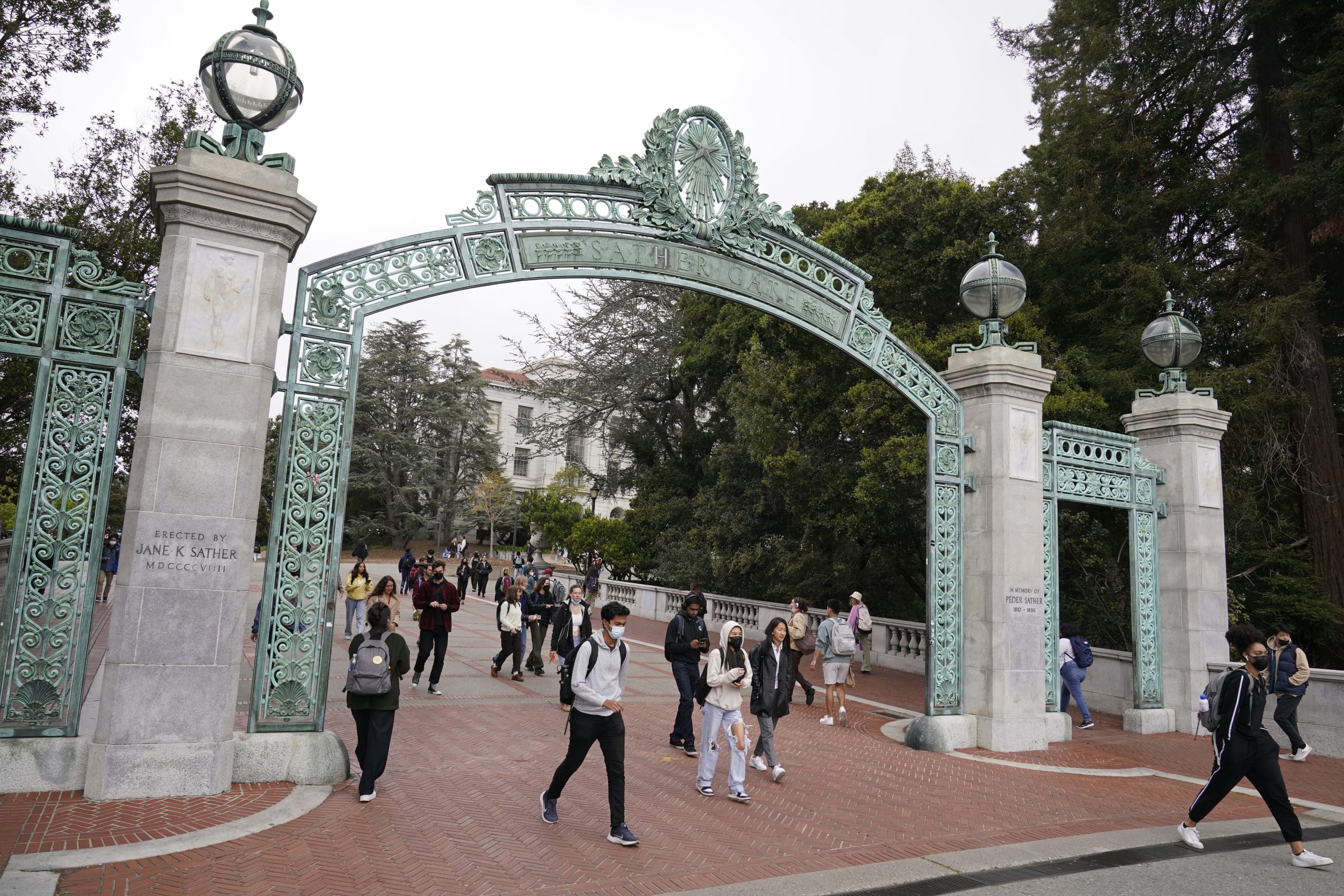
The University of California, Berkeley
BERKELEY, Calif. — Since early April, Rayne Xue, a junior at the University of California, Berkeley, has watched with trepidation as the Trump administration has taken one step after another to limit international students’ access to American higher education.
First came the abrupt cancellation, then reinstatement, of visas for 23 Berkeley students and recent graduates. Then the government cut off Harvard’s ability to enroll international students — a move since blocked by a federal judge — raising fears that something similar could happen at Berkeley. And late last month, as this year’s graduates were celebrating their recent commencements, Secretary of State Marco Rubio paused interviews for all new student visas and announced he would “aggressively revoke” those of Chinese students.
About 16 percent of University of California, Berkeley, students come from outside the United States. Credit: Eric Risberg/AP Photo
Xue, who is from Beijing and won a student senate seat this past spring on a platform of supporting international students, said the administration’s actions strike at a critical part of campus life at Berkeley.
“College is the opportunity of a lifetime to unlearn prejudices and embrace new perspectives, neither of which is possible without a student body that comes from a wide range of geographic and cultural backgrounds,” she said.
About 16 percent of UC Berkeley’s more than 45,000 students come from outside the United States to study at the crown jewel of California’s public research university system, where creeks run through campus beneath cooling redwoods and parking spaces are set aside for Nobel laureates. China, India, South Korea and Canada send the biggest numbers. International students pay higher tuition than California residents, boosting the university’s coffers and subsidizing some of their peers. Many of them conduct cutting-edge research in fields like computer science, engineering and chemistry.
Now the Trump administration’s immigration crackdown, magnified by the yanking of billions in federal research dollars, has international students worried about their future on campus. Many are changing their behavior to avoid scrutiny: Some canceled travel plans and many said they avoid walking near any campus protests in fear of being photographed.
“It’s difficult for international students to feel secure when they cannot anticipate what the administration might charge against them next — or whether they might be unfairly targeted,” said one global studies major who asked not to be identified for fear of attracting retaliation.
Tomba Morreau, a rising junior from the Netherlands studying sociology, said he stopped posting about politics on social media — just in case.
That kind of self-censorship troubles Paul Fine, co-chair of the Berkeley Faculty Association, which represents about a fifth of the university’s tenure-track faculty.
Federal policies are “creating this culture of fear where people start to censor themselves and try to stay under the radar and not show up in their full selves, whether for academic work or activism,” he said.
International students in Fine’s classes told him they wanted to attend a recent protest against federal threats to higher education but were afraid of the consequences, he said. Others told him they were skipping academic conferences outside the United States that they otherwise would have attended.
“Berkeley really prides ourselves on being an intellectual hub that convenes people from all over the world to work on the most important problems,” Fine said. Now that identity is at risk, he said, especially as actual and threatened cuts to grants make it harder for faculty to hire international graduate students and postdocs.
Most poignant, he said, was hearing from demoralized Chinese students who left a repressive government to come to the United States only to see attacks on academic freedom replicated here.
We want to hear from you.
Are you a student, professor, staff or faculty member? Our journalists want to know how the Trump administration is affecting higher education and life on your college campus.
Xue said she hopes the crisis facing universities would draw attention to the challenges international students face, including limited financial aid and the stereotype that all of them are wealthy. With her colleagues in student government, she is lobbying for Berkeley to spend more on the international office, which provides one-on-one advising on visa issues and employment.
For Lily Liu, a Chinese computer scientist, 2025 was shaping up to be a year of milestones. She graduated with a doctorate last month, has a job lined up at a leading artificial intelligence company and is engaged to be married in November.
But the Trump administration’s changing policies toward international scholars have complicated celebrations for Liu, who’s in a federal program that extends her visa for up to a year beyond graduation so she can gain work experience here. She canceled summer travel plans with her family, concerned she might not be let back into the country. And she’s considering moving her wedding to the United States from China, even though many of her relatives wouldn’t be able to attend.
“For international students, every policy affects us a lot,” she said. So Liu is careful. After the publication of her thesis was delayed, she visited Berkeley’s international office to make sure the setback wouldn’t affect her work permit. Her fiancé has a green card, which should theoretically mean his immigration status is more stable. But these days, she said, who knows?
— Felicia Mello
The University of Texas at San Antonio
SAN ANTONIO, Texas — Growing up here, Reina Saldivar had always loved science — all she wanted to watch on TV was “Animal Planet.” Yet until she applied on a whim to a program for aspiring researchers after her first year at the University of Texas at San Antonio, she assumed she would spend her life as a lab technician, running cultures.
The program, Maximizing Access to Research Careers, or MARC, was started by the National Institutes of Health decades ago at colleges around the country to prepare students, especially those from historically underrepresented backgrounds, for livelihoods in the biomedical sciences.
Saldivar got in. And through the program, she spent much of her time on campus in a university lab, helping develop a carrier molecule for a new Lyme disease vaccine. Now Saldivar, who graduated this spring, plans to eventually return to academia for a doctorate.
“What MARC taught me was that my dreams aren’t out of reach,” she said.
Saldivar is among hundreds who’ve participated in the MARC program since its 1980 founding at the University of Texas at San Antonio. She may also be among the last. In April, the university’s MARC program director, Edwin Barea-Rodriguez, opened his email inbox to find a form letter terminating the initiative and advising against recruiting more cohorts.
The letter cited “changes in NIH/HHS [Health and Human Services] priorities.” In recent months, the Trump administration has canceled at least half a dozen programs meant to train scholars and diversify the sciences as part of an effort to root out what the president labels illegal DEI.
In a statement to The Hechinger Report, NIH said that it “is committed to restoring the agency to its tradition of upholding gold-standard, evidence-based science” and is reviewing grants to make sure the agency is “addressing the United States chronic disease epidemic.”
With MARC ending, Barea-Rodriguez is searching for a way to continue supporting current participants until they graduate next academic year. Without access to federal money, however, the young scientists are anxious about their futures — and that of public health in general.
“It took years to be where we are now,” said Barea-Rodriguez, who said he was not speaking on behalf of his university, “and in a hundred days everything was destroyed.”
UTSA’s sprawling campus sits on the northwest edge of San Antonio, far from tourist sites like the Alamo and the River Walk. Forty-four percent of the nearly 31,000 undergraduate students are the first in their families to attend college; more than 61 percent identify as Hispanic or Latino. The university was one of the first nationwide to earn Department of Education recognition as a Hispanic-serving institution, a designation for colleges where at least a quarter of full-time undergraduates are Hispanic.
When Barea-Rodriguez arrived to teach at the school in 1995, many locals considered it a glorified community college, he said. But in the three decades since, the investments NIH made through MARC and other federal programs have helped it become a top-tier research university. That provided students like Saldivar with access to world-class opportunities close to home and fostered talent that propelled the economy in San Antonio and beyond.
The Trump administration has quickly upended much of that infrastructure, not only by terminating career pipeline programs for scholars, but also by pulling more than $8.2 million in National Science Foundation money from UTSA.
One of those canceled grants paid for student researchers and the development of new technologies to improve equity in math education and better serve elementary school kids from underrepresented backgrounds in a city that is about 64 percent Hispanic. Another aimed to provide science, technology, engineering and math programming to bilingual and low-income communities.
UTSA administrators did not respond to requests for comment about how federal funding freezes and cuts are affecting the university. Nationwide, more than 1,600 NSF grants have been axed since January.
In San Antonio, undergraduates said MARC and other now-dead programs helped prepare them for academic and professional careers that might have otherwise been elusive. Speaking in a lab remodeled and furnished with NIH money, where leftover notes and diagrams on glass erase boards showed the research questions students had been noodling, they described how the programs taught them about drafting an abstract, honing public speaking and writing skills, networking, putting together a résumé and applying for summer research positions, travel scholarships and graduate opportunities.
“All of the achievements that I’ve collected have pretty much been, like, a direct result of the program,” said Seth Fremin, a senior biochemistry major who transferred to UTSA from community college and has co-authored five articles in major journals, with more in the pipeline. After graduation, he will start a fully funded doctoral program at the University of Pittsburgh to continue his research on better understanding chemical reactions.
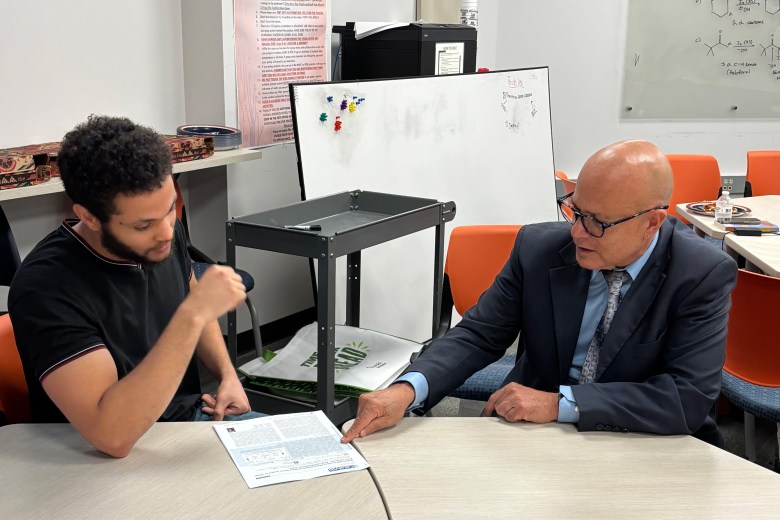
Seth Fremin, a senior biochemistry major at the University of Texas at San Antonio, with Edwin Barea-Rodriguez. Credit: Alexandra Villareal for The Hechinger Report
Similarly, Elizabeth Negron, a rising senior, is spending this summer at the Massachusetts Institute of Technology, researching skin microbiomes to see if certain bacteria predispose some people to cancers.
“It’s weird when you meet students who didn’t get into these programs,” Negron said, referring to MARC. “They haven’t gone to conferences. They haven’t done research. They haven’t been able to mentor students. … It’s very strange to acknowledge what life would have been without it. I don’t know if I could say I’d be as successful as I am now.”
With money for MARC erased, Negron said she will probably need a job once she returns to campus in the fall so she can afford day-to-day expenses. Before, research was her job.
“Without MARC,” she said, “it becomes a question of can I at least cover my tuition and my very basic needs.”
— Alexandra Villarreal
The University of Illinois Urbana-Champaign
CHAMPAIGN, Ill. — When Peter Goldsmith received notice in late January that his Soybean Innovation Lab at the University of Illinois would soon lose all of its funding, he had no idea it was coming. Suddenly Goldsmith, the lab’s director, had to tell his 30 employees they would soon be out of a job and tell research partners across Africa that operations would come to a halt. The lab didn’t even have money to water its soybean fields in Africa.
One employee, Julia Paniago, was in Malawi when she got the news. “We came back the next day,” she said of her team, “and it was a lot of uncertainty. And a lot of people cried.”
The University of Illinois’ Soybean Innovation Lab (SIL) was part of a network of 17 labs at universities across the country, all working on research related to food production and reducing global hunger, and all funded through the U.S. Agency for International Development — until the Trump administration shut down USAID.
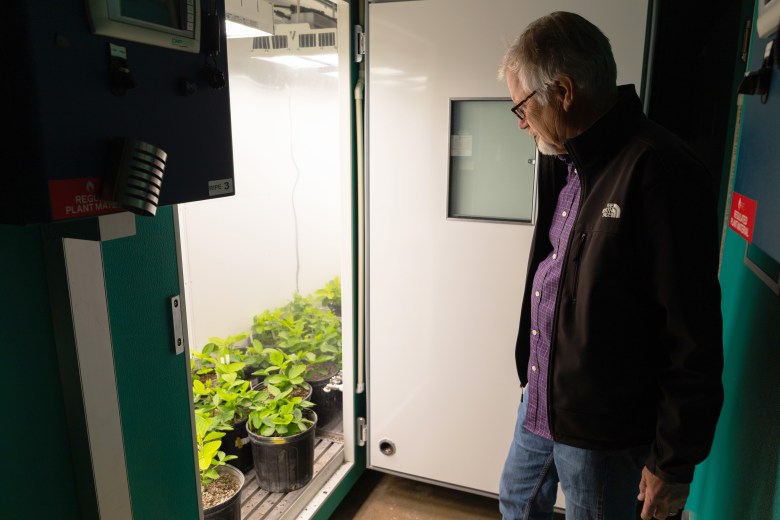
Brian Diers is former deputy director of the University of Illinois’ Soybean Innovation Lab. The lab lost its funding because of cuts to the U.S. Agency for International Development. Credit: Miles MacClure for The Hechinger Report
Soybeans — which provide both oil and high-protein food — aren’t yet commonly grown in Malawi. SIL researchers have been working toward two related goals: helping local farmers increase soybean production and ameliorate malnutrition and generating enough interest in the crop there that a new export market will open for American farmers.
The lab’s researchers work in soybean breeding, economics and mechanical research as well as education. They hope to show that soybean production in Africa is worth further investment so that eventually the private sector will come in after them.
“The people who work at SIL, they like being right at the frontier of change,” Goldsmith said. “It’s high-risk work — that’s what the universities do, that’s what scientific research is about.”
UI, the state’s flagship with a sprawling campus spread between the cities of Urbana and Champaign, is noted for its research work, especially agricultural research.
Labs and researchers across the university lost funding in cuts made by the Trump administration; more than $25 million from agencies including NIH, NSF and the National Endowment for the Humanities was cut, Melissa Edwards, associate vice chancellor for research and innovation, said, a total of 59 grants amounting to 3.6 percent of their overall federal grant portfolio.
Annette Donnelly, who just received her doctorate in education, is among those affected. Her research focuses on educating malnourished children in Africa and developing courses to help Africans learn how to process soybeans into oil.
In April, SIL was handed a lifeline — an anonymous $1 million gift that will keep the lab running through April 2026. The donation wasn’t enough for Goldsmith to rehire all of his employees; SIL’s annual operating budget before the USAID cuts was $3.3 million (and would have kept things running through 2027). But, he said, the money will allow SIL to continue its research in the Lower Shire Valley in Malawi, a project he hopes will attract future donors to fund the lab’s work.
The April donation saved Donnelly’s job, but her priorities shifted. “We’re doing research,” she said, “but we’re also doing a lot of proposal writing. It has taken on a much greater priority.”
Donnelly hopes to attract more funding so she can resume research she had started in western Kenya, demonstrating that introducing soy into children’s diets increased their protein intake by up to 65 percent, she said.
The impact that funding cuts will have on researchers at the soybean lab pales in comparison to the impact on their partners in Africa, Donnelly emphasized. There, she said, the cuts mean processors will likely slow production, limiting their ability to deliver soy products. “The consequences there are much bigger,” she said.
The Soybean Innovation Lab was funded through the Feed the Future initiative, a program to help partner countries develop better agricultural practices that began under the Obama administration in 2010. All 17 Feed the Future innovation labs funded through USAID lost funding, except for the one at Kansas State University, which studies heat-tolerant wheat.
The soybean lab’s office is housed on a quiet edge of the Illinois campus in a building once occupied by the university’s veterinary medicine program. Across the street, rows of greenhouses are home to the Crop Science Department’s experiments.
There, Brian Diers is breeding soybean varieties that resist soybean rust, a disease that’s been an obstacle to ramping up soybean production across sub-Saharan Africa. A professor emeritus who is retired, Diers works part-time at SIL to assist with soybean breeding. The April donation wasn’t enough to cover his work. Now he volunteers his time.
“ If we can help African agriculture take off and become more productive, that’s eventually going to help their economies and then provide more opportunities for American farmers to export to Africa,” he said.
Goldsmith drew an analogy between his lab’s work and the state of American agriculture in the 1930s. As the Dust Bowl swept through the Great Plains, Monsanto or another company could have stepped in to help combat it, but didn’t. Public land-grant universities did.
“That’s where the innovation comes from, from the public land grants in the U.S.,” Goldsmith said. “And now the public land grants still work in U.S. agriculture but also in the developing world.”
Commercial soybean producers hesitate to dip their toes into unproven markets, he said, so it’s SIL’s job to demonstrate that a viable market exists. “That was our secret sauce, in that lots of commercial players liked the products, the technologies we had, and wanted to move into the soybean space, but it wasn’t a profitable market,” Goldsmith said of the African soybean market.
Diers said federal funding cuts imperil not just the development of commerce and global food production but the next generation of scientists as well.
“We could potentially lose a generation of scientists who won’t go into science because there’s no funding right now,” he said.
— Miles MacClure
Contact editor Lawrie Mifflin at [email protected] or 212-678-4078. Contact editor Caroline Preston at 212-870-8965, via Signal at CarolineP.83 or on email at [email protected].
The Hechinger Report provides in-depth, fact-based, unbiased reporting on education that is free to all readers. But that doesn’t mean it’s free to produce. Our work keeps educators and the public informed about pressing issues at schools and on campuses throughout the country. We tell the whole story, even when the details are inconvenient. Help us keep doing that.
Since January, President Donald Trump has taken countless steps to transform the nation’s colleges and universities. His administration has cut scientific and medical research, ended efforts to promote diversity equity and inclusion (DEI), introduced newly aggressive policies on loan repayment, revoked visas for international students, and more. While Trump’s battles with Harvard and Columbia have received the most attention, the administration’s actions have had consequences far beyond those two universities.
We want to know how the Trump administration is affecting higher education and life on your campus. What, if any, changes are you seeing at your college or university because of federal policy shifts? In what ways do you see higher education changing?
If you prefer, you can also email us directly at [email protected]. Contact editor Lawrie Mifflin at [email protected] or 212-678-4078. Contact editor Caroline Preston at 212-870-8965, via Signal at CarolineP.83 or on email at [email protected].
This story about higher education was produced by The Hechinger Report, a nonprofit, independent news organization focused on inequality and innovation in education. Sign up for our newsletters.
The Hechinger Report provides in-depth, fact-based, unbiased reporting on education that is free to all readers. But that doesn't mean it's free to produce. Our work keeps educators and the public informed about pressing issues at schools and on campuses throughout the country. We tell the whole story, even when the details are inconvenient. Help us keep doing that.
The shift to the political right in many countries in the world, including it appears the UK now, presents a new set of challenges for equitable access and success to higher education. Not that it needed any new ones. Inequalities in participation in higher education are pervasive, entrenched and low on the list of priorities of most governments. Since the early 2010s we have been working with other organisations across the world including the World Bank and UNESCO to understand the extent and nature of these inequalities but more importantly to initiate activities to address them. In 2016 working with colleagues including the late, great Geoff Whitty I undertook a project to bring together as much secondary data we could on who participates in higher education by social background across the world.
The Drawing the Global Access Map report found that in all the countries where we could find data (over 90%) higher education participation was unequal. The extent of this inequality differs but it binds together countries and higher education systems of all varieties. Following convening 2 global conferences on higher education access around the time of this report in an attempt to galvanise the global higher education community, we then launched World Access to Higher Education Day (WAHED) in 2018. The aim of WAHED was to create a vehicle that would enable universities to launch activities to address inequalities in access and success on the day in their own place. As the pandemic hit we also started a global online conference and up to 2022 over 1000 organisations from over 100 countries engaged in WAHED. We also produced research to mark the day including the All Around the World – Equity Policies Across the Globe report in 2018 which looked at policies on higher education equity in over 70 countries. The report found that only 32% of the countries surveyed have defined specific participation targets for any equity group and only 11% have formulated a comprehensive equity strategy.
WAHED played an important role as a catalyst for activism, especially in contexts where individuals or departments felt that they were acting in isolation. However, progress will be limited if efforts are restricted just to an International Day of Action. Hence, in December 2024, working again with the World Bank, UNESCO as well as Equity Practitioners in Higher Education in Australasia (EPHEA), and a number of educational foundations, we launched the World Access to Higher Education Network (WAHEN). The aim of WAHEN is to construct an alliance for global, collective action on higher education equity and more information can be found here. It will focus on:
• Capacity Building via the sharing, professionalisation and enhancement of practice in learning, teaching and pre-HE outreach
• Collaboration – enabling organisations to formulate and deliver shared goals through a set of global communities of practice.
• Convening – bringing together those from across countries and sectors to affect change in higher education through World Access to Higher Education Day.
• Campaigning – advocating and working with policymakers and governments around the world producing research and evidence.
• Critical thinking – creating an online space where the knowledge based on ‘what works’ in equitable access and success can be developed & shared.
It was because there was a national organisation that works to tackle inequalities in higher education in the UK, the National Education Opportunities Network (NEON), that I founded and led for 13 years, that WAHED and WAHEN happened. NEON led these efforts to build a global network. There remains a large way to go for WAHEN to be sustainable and impactful. We are working intently on how to position WAHEN and how it should focus its efforts. Inequalities in access and success are locally defined. They can’t be defined from a Euro-centric perspective, and they can also only be tackled through primarily work that is regional or national. The added value of international collaboration in this area needs to be articulated, it can’t be assumed. But at the same time, nor should the default assumption be that such a network or collaboration is less required where equitable access and success is concerned than in other parts of higher education. This assumption encapsulates the very problem at hand, ie the lack of willingness to recognise the extent of these inequalities and make the changes necessary to start to address them.
The present challenges to higher education presented by the global shift to the right brings into sharp focus the consequences of a failure to deal with these inequalities. Universities and left leaning governments are unable to frame higher education as open and available to all with the potential to enter. The accusations of elitism and the threats to academic freedom etc then become an easier sell to electorates for whom higher education has never mattered, or those in their family/community. It is more important than ever then that something like WAHEN exists. It is essential that we develop the tools that give higher education systems across the world to become more equitable and to resist populist narratives, and that we do this now.
Professor Graeme Atherton is Director of the World Access to Higher Education Network (WAHEN) and Vice Principal, Ruskin College, Oxford.
A hybrid conference Access and Geopolitics: Next Steps in Tackling the Equity Crisis in Global Higher Education, was held on 3 June 2025 at the Department of Education in Oxford, jointly organised by WAHEN, The Centre for Skills, Knowledge and Organisational Performance (SKOPE) and the Centre for Global Higher Education (CGHE). There were almost 40 presentations on: the politics – and geopolitics – of widening participation; the challenge of financing access; private provision and higher education as a public good; populism and the equity ‘backlash’; and, the challenge of generating meaningful participation data. Speakers included: John Blake, Director for Fair Access and Participation at the Office for Students, England; Dr Jamil Salmi, global tertiary education expert; Professor Shamit Saggar, Executive Director of Australian Centre for Student Equity and Success; Professor Rachel Brooks, Professor of Higher Education, Oxford and President of the British Sociological Association; Professor Johanna Waters, Professor of Human Geography, UCL; Dr James Robson, Director of SKOPE and Associate Professor of Tertiary Education Systems, Oxford; Graeme Atherton, Director of the World Access to Higher Education Network (WAHEN) and Vice Principal, Ruskin College, Oxford; and Danielle Watkis, DPhil student, Department of Education, Oxford. A full record of the event will soon be available on the CGHE website.
In an era where higher education faces unprecedented challenges and opportunities, the recent Meltwater Summit offered crucial insights for leaders navigating a rapidly changing landscape. This gathering of creative minds, brand leaders and technology experts explored the critical intersection of compelling storytelling, branding and the power of artificial intelligence. Explore strategic takeaways poised to reshape how institutions connect with prospective students, build brand equity and harness AI to drive creative processes.
Creativity Flows with You
Reese Witherspoon set the tone with an honest reflection on the nature of creativity: it’s constantly flowing but rarely on a set schedule. The challenge isn’t finding ideas—it’s cultivating the environment and carving out dedicated time for them to flourish. The solution? Clear, consistent and intentional communication. Whether you’re bridging teams or brainstorming with collaborators, creating space for dialogue is what truly transforms good ideas into great ones. At EducationDynamics, we aren’t just completing tasks; we are constantly collaborating with each of our partners to ensure we produce the best content possible. Our solutions span creative services, brand strategy, awareness marketing and more—turning inspiration into action and strategy into results.
AI: A Teammate, Not a Replacement
AI emerged as a powerful ally throughout Meltwater Summit sessions, particularly when leveraged for the content creation process. One standout tactic shared was the “sandwich approach” to content creation, a straightforward framework for combining human creativity with AI support:
Draft with Intent: Begin by outlining your core message or ideas. This first layer is where your expertise and objectives take shape, setting the foundation for compelling content.
Expand with AI: Use AI tools to build upon your draft—generating copy variations, enhancing clarity or exploring new angles you may not have considered.
Refine with Purpose: Continue to refine and rework AI-enhanced content through your own lens. Strengthen the structure, sharpen the voice and align it with your audience and brand tone. Great content takes more than one pass; it’s built through deliberate iteration.
The takeaway was clear—AI isn’t here to replace your creativity. It should be used to to amplify it. When used intentionally, it becomes a partner in the process, helping ideas take shape faster than before.
At EducationDynamics, we embrace AI as a collaborative tool that helps streamline ideation and improve efficiency. It should be a jump-off point, not a final destination, supporting the creative process without replacing the human insight that drives it.
Prompt Writing with AI
AI can be an amazing content marketing tool, especially when used to generate fresh ideas, streamline workflows, and tailor messaging for specific audiences. In order to achieve these goals using AI, effective prompt writing is also a critical asset.
While a typical Google search might consist of just a few words, an effective AI prompt can span hundreds. The more detail you provide, the better your results will be. Don’t hesitate to ask AI to evaluate or improve your original prompt; collaboration is your asset when using AI. Treat an AI assistant as a teammate. Work with it, and understand it is there to work the foundation, not complete it.
Important Tip: Protect your data. Avoid sharing sensitive information with public AI tools, and use secure, private systems that align with your institution’s compliance and governance policies.
Smarter Workflows with AI
AI isn’t just for writing. It can streamline your entire workflow. From summarizing analytics and setting alerts for media mentions to helping coordinate across teams, AI is becoming an indispensable partner in day-to-day operations.
The takeaway: AI won’t take your job—but it might take over the tasks that are holding you back from your best work.
Content That Captures and Connects
Creative content marketing has the power to elevate your institution’s voice and drive meaningful engagement across platforms. Today’s most effective content does more than inform; it creates an emotional connection. That means capturing content that feels real, engaging and multi-layered. Even one filming session can yield a wealth of valuable content. In each filming session, aim to produce the following:
A core message or question
Authentic behind-the-scenes footage
At EducationDynamics, our creative services span the full content spectrum—including Organic Social strategies designed to help institutions tell their stories in ways that resonate and inspire, reaching students right at their fingertips.
Strategic Content Planning
For university marketing leaders and content marketing managers alike, every piece of content should align with your larger content calendar and overarching brand goals. Don’t post just to fill the gap. Each piece should serve one (or more) of three purposes:
Educate: Deliver useful and relevant information.
Engage: Spark genuine conversation and connection.
Encourage: Motivate your audience to act, advocate, or explore further
In higher education, for example, students crave content that both informs and resonates emotionally. Whether highlighting everyday moments or preparing for crisis communication, a plan—and a designated point of contact—ensures you can respond quickly and effectively.
Always ask: How does this content deepen connections, build school pride or inform? You’re not just telling a story—you’re shaping your institution’s impact.
Build With Intention
From AI integration to authentic content creation, one message echoed throughout this year’s Meltwater Summit: success in today’s digital world means being intentional.
The institutions that thrive are the ones building with purpose, thoughtfully engaging audiences and effectively leveraging technology. They listen, adapt and invest in strategies that meet the Modern Learner where they are, contributing to overall brand health and engagement.
Purposeful creation begins with understanding your community, amplifying their voices and delivering value through every interaction. As a higher education marketing agency, we empower institutions to transform attention into enrollment and inspire students to become advocates.
Your institution has the foundation: vision, community and purpose. With the right tools and the right partner, you can turn that foundation into measurable growth that aligns with your goals. If you are ready to grow with intention and engage on a deeper level, EducationDynamics is here to support you.
As higher education navigates rapid change, the Meltwater Summit, held in New York City in May, was a gathering of creative minds, brand leaders and technology experts. The Summit made one thing clear: compelling storytelling, intentional branding and the thoughtful use of artificial intelligence are interconnected forces that shape lasting reputations. Institutions that invest in purposeful content and strategic technology integration are best positioned to lead with both credibility and measurable impact, connecting brand reputation and revenue growth as part of a unified strategy.
Meltwater is a leading platform in media intelligence, powering reputation management, press monitoring and social listening. At EducationDynamics, we use Meltwater to uncover trends, track brand perception and guide strategies across channels for our partners.
This year, I had the opportunity to attend the Meltwater Summit—a two-day event designed for marketing and communications professionals focusing on how data and creativity shape brand strategy. In my role as Senior Social & Visual Strategist at EducationDynamics, I was especially tuned into the evolving role of social media.
The conversations throughout the Summit reaffirmed the importance of developing content strategies that are cohesive, intentional and fully aligned with broader brand goals. Explore the key takeaways we gathered from the event and how they can benefit higher education marketers.
Reese Witherspoon set the tone with a powerful opening session, delivering honest reflection on the nature of creativity. Creativity is constantly flowing but rarely on a set schedule. The challenge isn’t finding ideas—it is cultivating the environment and carving out dedicated time for them to flourish. The solution? Clear, consistent and intentional communication. Whether you’re bridging teams or brainstorming with collaborators, creating space for dialogue is what truly transforms good ideas into great ones.
What we learned about the creative process is clear: creativity is not merely a component but a foundational pillar of your university’s reputation. When internal teams collaborate, align and ideate together, they build a cohesive and authentic brand that shapes how your institution is seen from the outside.
Moreover, it is important to recognize that your organic social efforts, website content, press releases and all other communications are not isolated channels. They form an interconnected ecosystem. Each piece of content plays a role within a broader narrative of your institution’s reputation. Thinking holistically about how every element comes together and ensures that your university’s story is consistent and impactful at every touchpoint.
For university marketing leaders and content managers, content should do more than fill space—it should move the needle. Every asset should align with your broader strategy, reinforce your institution’s brand and serve at least one of the following purposes:
Educate: Share timely, valuable information your audience can trust.
Engage: Spark genuine conversation and connection.
Encourage: Motivate your audience to act, advocate, or explore further.
Today’s Modern Learners seek content that not only informs but also resonates with their experiences and aspirations. Whether showcasing everyday moments or navigating a crisis, having a clear plan—and a designated point of contact—ensures your team can respond with timely, thoughtful responses.
As you develop your content, ask yourself: Does this content deepen connection, build school pride or inform? Does it strengthen our institution’s reputation? If it does not accomplish any of this, you are just creating noise.
Success in today’s digital landscape demands intentionality. It is not just about telling stories—it is about using every piece of content strategically to shape perception, deepen engagement and build a brand that endures.
To build a brand that endures, every content piece should be seen as an opportunity to reinforce your institution’s voice and values. Strategic content creation, especially through organic social, plays a vital role in shaping how your audience connects with and trusts your brand.
When aligned intentionally, organic social media is a powerful channel that strengthens brand affinity while complementing awareness and digital marketing efforts across multiple channels. Creative content marketing, particularly in video, continues to grow in importance as a relevant medium for establishing reputation. Today’s audiences prefer content that feels authentic and emotionally resonant. To capture that depth, institutions should plan how content will be used across multiple channels. For example, to get the most out of every filming session, aim to capture:
A core message or question
Authentic behind-the-scenes footage
Action shots
Introductory context
Relatable soundbites
These assets do more than fill channels. They bring your strategy to life across multiple touchpoints in a format that is both attention-grabbing and engaging. When your content reflects lived experiences and community voices, it fosters trust and connection. In today’s crowded digital space, trust is a vital currency that drives reputation and results.
No conference in 2025 is complete without discussions of AI. Throughout the Summit, AI was highlighted as a powerful ally, particularly when leveraged within the content creation process. One key tactic shared was the “sandwich approach,” a straightforward framework for combining human creativity with AI support:
Draft with Intent: Outline your core message and ideas based on your expertise.
Expand with AI: Use AI tools to generate variations, improve clarity or explore new angles.
Refine with Purpose: Edit and polish AI-enhanced content to match your brand voice and audience.
Strong results also depend on clear, detailed prompts. Providing AI with context like tone, audience and format helps produce relevant output. Beyond content creation, AI can streamline workflows, freeing marketers to focus on strategy and adding creative touches.
At EducationDynamics, we view AI as a collaborative tool that boosts efficiency and creativity. It serves as a jump-off point, not the final destination, supporting the work driven by our team’s vision.
Meltwater reinforced that when AI is thoughtfully integrated into the creative process, it does not replace your unique insight. Instead, it amplifies it, freeing your team to focus on the meaningful and strategic work that shapes your institution’s brand.
If one message stood out at this year’s Meltwater Summit, it was that creativity and strategic content creation are essential to building a compelling strong and enduring reputation.
The institutions best positioned to thrive are those that engage their audiences intentionally, invest in the right technologies and meet the Modern Learner where they are.
Purposeful creation begins with understanding your community, amplifying their voices and delivering value through every interaction. As a higher education marketing agency, we empower institutions to transform attention into enrollment and inspire students to become advocates.
Your institution already has the foundation: vision, community and purpose. With the right tools and the right partner, you can turn that foundation into measurable growth that aligns with your goals. If you are ready to grow with intention and engage on a deeper level, EducationDynamics is here to support you.
June 8, 2025, by Dean Hoke: Intercollegiate athletics occupy a powerful and unique place in American higher education—something unmatched in any other country. From the massive media contracts of Division I football to the community pride surrounding NAIA and NJCAA basketball, college sports are a defining feature of the American academic landscape. Unlike most nations, where elite athletic development happens in clubs or academies, the U.S. integrates competitive sports directly into its college campuses.
This model is more than tradition; it’s an engine of opportunity. For many high school students—especially those from underserved backgrounds—the chance to play college sports shapes where they apply, enroll, and succeed. According to the NCAA, 35% of high school athletes say the ability to participate in athletics is a key factor in their college decision [1]. It’s not just about scholarships; it’s about identity, community, and believing their talents matter.
At smaller colleges and two-year institutions, athletics often serves as a key enrollment driver and differentiator in a crowded marketplace. International students, too, are drawn to the American system for its academic-athletic fusion, contributing tuition revenue and global prestige. Undermining this model through sweeping changes to federal financial aid, without considering the downstream effects, risks more than athletic participation. It threatens a distinctively American approach to education, access, and aspiration.
A New Threshold with Big Impacts
Currently, students taking 12 credit hours per semester are considered full-time and eligible for the maximum Pell Grant, which stands at $7,395 for 2024-25 [2]. The proposed House budget raises this threshold to 15 credit hours per semester. For student-athletes, whose schedules are already packed with training, competition, and travel, this shift could be devastating.
NCAA academic standards require student-athletes to maintain full-time enrollment (typically 12 hours) and make satisfactory academic progress [3]. Adding another three credit hours per term may force many to choose between academic integrity, athletic eligibility, and physical well-being. In sports like basketball, where teams frequently travel for games, or in demanding STEM majors, completing 15 credit hours consistently can be a formidable challenge.
Financial Impact on Student-Athletes
Key Proposed Changes Affecting Student-Athletes:
Pell Grant Reductions: The proposed budget aims to cut the maximum Pell Grant by $1,685, reducing it to $5,710 for the 2026–27 academic year. Additionally, eligibility criteria would become more stringent, requiring students to enroll in at least 15 credit hours per semester to qualify for full-time awards. These changes could result in approximately 700,000 students losing Pell Grant eligibility [4].
Elimination of Subsidized Loans: The budget proposes eliminating subsidized federal student loans, which currently do not accrue interest while a student is in school. This change would force students to rely more on unsubsidized loans or private lending options, potentially increasing their debt burden [5].
Cuts to Work-Study and SEOG Programs: The Federal Work-Study program and Supplemental Educational Opportunity Grants (SEOG) are slated for significant reductions or elimination. These programs provide essential financial support to low-income students, and their removal could affect over 1.6 million students [6].
Institutional Risk-Sharing: A new provision would require colleges to repay a portion of defaulted student loans, introducing a financial penalty for institutions with high default rates. This could strain budgets, especially at smaller colleges with limited resources [7].
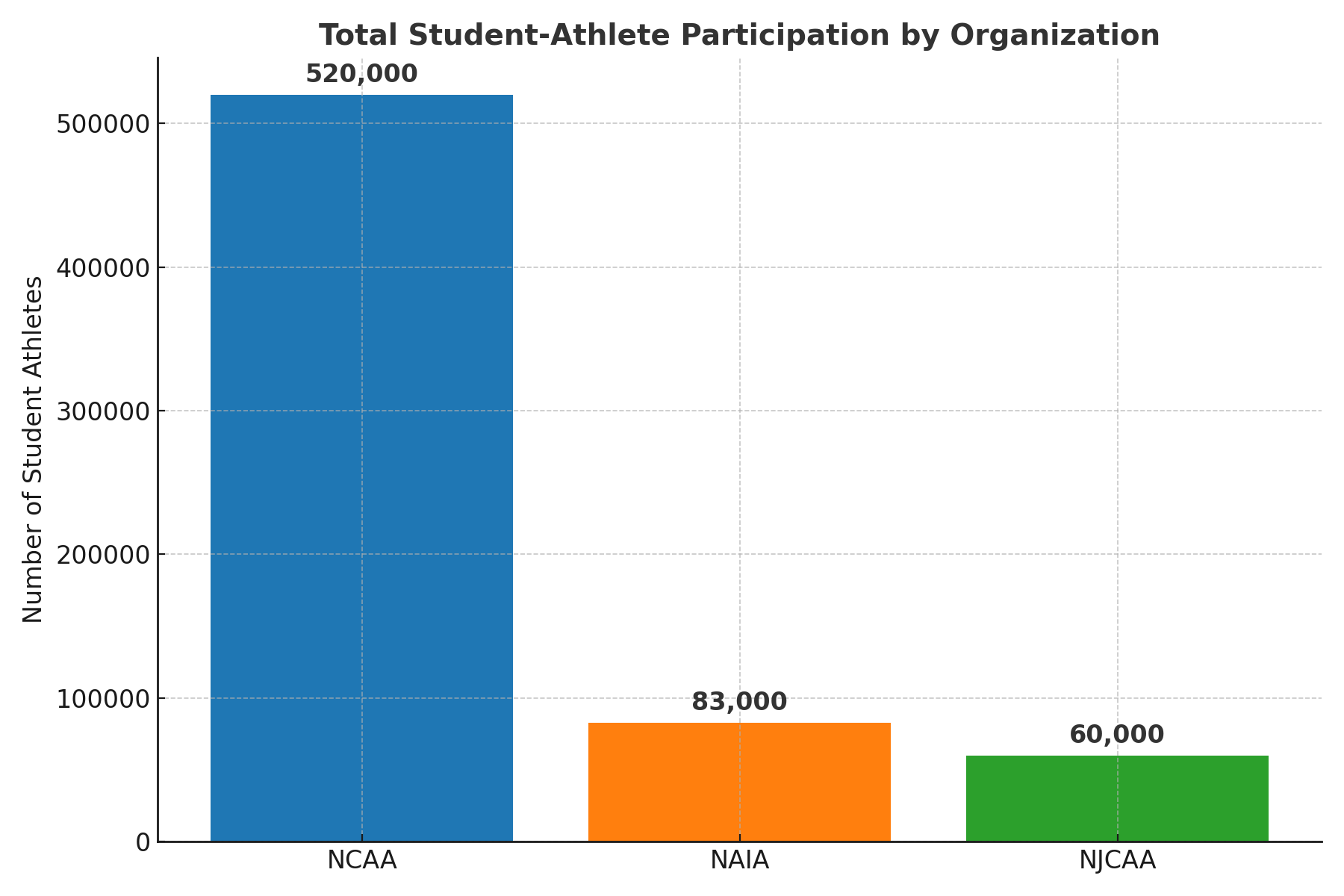
Figure 1: Total student-athletes by national athletic organization (NCAA, NAIA, NJCAA).
While Figure 1 highlights the total number of student-athletes in each organization, Figure 2 illustrates how deeply athletics is embedded in different types of institutions. NAIA colleges have the highest ratio, with student-athletes comprising 39% of undergraduate enrollment. Division III institutions follow at approximately 8.42%, and the NJCAA—serving mostly commuter and low-income students—relies on athletics for 8.58% of its total student base [8].
Even Division I, with its large student populations, includes a meaningful share (2.49%) of student-athletes. These proportions underscore how vital athletics are to institutional identity, especially in small colleges and two-year schools where athletes often make up a significant portion of campus life, retention strategy, and tuition revenue.
Figure 2: Percentage of student-athletes among total undergraduate enrollment by organization (NCAA Divisions I–III, NAIA, NJCAA).
The Pell Grant Profile: Who’s Affected
Pell Grants support students with the greatest financial need. According to a 2018 report, approximately 31.3% of Division I scholarship athletes receive Pell Grants. At individual institutions like Ohio State, the share is even higher: 47% of football players and over 50% of women’s basketball players. In the broader NCAA system, over 48% of athletes received some form of federal need-based aid in recent years [9].
There are approximately 665,000 student-athletes attending college. The NCAA reports that more than 520,000 student-athletes currently participate in championship-level intercollegiate athletics across Divisions I, II, and III [10]. The National Association of Intercollegiate Athletics (NAIA) oversees approximately 83,000 student-athletes [11], while the National Junior College Athletic Association (NJCAA) supports around 60,000 student-athletes at two-year colleges [12].
The NAIA and NJCAA systems, which serve many first-generation, low-income, and minority students, also have a high reliance on Pell Grant support. However, exact figures are less widely published.
The proposed redefinition of “full-time” means many of these students could lose up to $1,479 per year in aid, based on projections from policy experts [13]. For low-income students, this gap often determines whether they can afford to continue their education.
Fewer Credits, Fewer Dollars: Academic and Athletic Risks
Another major concern is how aid calculations based on “completed” credit hours will penalize students who drop a class mid-semester or fail a course. Even if a student-athlete enrolls in 15 credits, failing or withdrawing from a single 3-credit course could drop their award amount [14]. This adds pressure to persist in academically unsuitable courses, potentially hurting long-term academic outcomes.
Athletic departments, already burdened by compliance and recruitment pressures, may face added strain. Advisors will need to help students navigate increasingly complex eligibility and aid requirements, shifting focus from performance and development to credit-hour management.
Disproportionate Effects on Small Colleges and Non-Revenue Sports
The brunt of these changes will fall hardest on small, tuition-dependent institutions in the NCAA Division II, Division III, NAIA, and NJCAA. These colleges often use intercollegiate athletics as a strategic enrollment tool. At some NAIA schools, student-athletes comprise 40% to 60% of the undergraduate population [8].
Unlike large Division I schools that benefit from lucrative media contracts and booster networks, these institutions rely on a patchwork of tuition, modest athletic scholarships, and federal aid to keep programs running. A reduction in Pell eligibility could drive enrollment declines, lead to cuts in athletic offerings, and even force some colleges to close sports programs or entire campuses.
Already, schools like San Francisco State University, Cleveland State, and Mississippi College have recently announced program eliminations, citing budgetary constraints [15]. NJCAA institutions—the two-year colleges serving over 85,000 student-athletes—also face a precarious future under this proposed budget.
Economic Importance by Division
Division I: Athletics departments generated nearly $17.5 billion in total revenue in 2022, with $11.2 billion self-generated and $6.3 billion subsidized by institutional/government support or student fees [16]. Many Power Five schools are financially resilient, with revenue from TV contracts, merchandise, and ticket sales.
Division II: Median revenue for schools with football was around $6.9 million, but generated athletic revenue averaged only $528,000, leading to significant deficits subsidized by institutional funds [17].
Division III: Division III schools operate on leaner budgets, with no athletic scholarships and total athletics budgets often under $3 million per school. These programs are typically funded like other academic departments [18].
NAIA and NJCAA: These schools rely heavily on student-athlete enrollment to sustain their institutions. Athletics are not profit centers but recruitment and retention tools. Without Pell Grants, many of these athletes cannot afford to enroll [11][12].
Figure 3: Estimated number of NAIA, Division III, and NJCAA programs by state.
Unintended Tradeoffs: Equity and Resource Redistribution
Attempting to offset lost federal aid by reallocating institutional grants could result in aid being shifted away from non-athletes. This risks eroding equity goals, as well as provoking internal tension on campuses where athletes are perceived to receive preferential treatment.
Without new revenue sources, institutions may also raise tuition or increase tuition discounting, potentially compromising their financial stability. In essence, colleges may be forced to choose who gets to stay in school.
The High-Stakes Gamble for Student-Athletes
Figure 4: Estimated impact of Pell Grant changes on student-athletes, including projected dropouts and loan default rates.
For many student-athletes, especially those from low-income backgrounds, the Pell Grant is not just helpful—it’s essential. It makes the dream of attending college, competing in athletics, and earning a degree financially feasible. If the proposed changes to Pell eligibility become law, an estimated 50,000 student-athletes could be forced to drop out, unable to meet the new credit-hour requirements or fill the funding gap [19]. Those who remain may have no choice but to take on additional loans, risking long-term debt for a degree they may never complete. The reality is sobering: Pell recipients already face long-term student loan default rates as high as 27%, and for those who drop out, that figure climbs above 40% [20]. Stripping away vital support will almost certainly drive those numbers higher. The consequences won’t stop with individual students. Colleges—particularly smaller, tuition-dependent institutions where athletes make up a significant share of enrollment—stand to lose not just revenue, but the very programs and communities that give purpose to their campuses.
Colleges, athletic associations, policymakers, and communities must work together to safeguard opportunity. Student-athletes should never be forced to choose between academic success and financial survival. Preserving access to both education and athletics isn’t just about individual futures—it’s about upholding a uniquely American pathway to achievement and equity.
Dean Hoke is Managing Partner of Edu Alliance Group, a higher education consultancy. He formerly served as President/CEO of the American Association of University Administrators (AAUA). With decades of experience in higher education leadership, consulting, and institutional strategy, he brings a wealth of knowledge on small colleges’ challenges and opportunities. Dean is the Executive Producer and co-host for the podcast series Small College America.
Congressional Budget Office. (2025). Reconciliation Recommendations of the House Committee on Education and the Workforce. Retrieved from https://www.cbo.gov/publication/61412
NJCAA, NAIA, and NCAA. (2023). Student-Athlete Participation Reports.
The recent HEPI report (number 185), ‘There was nothing to do but take action’: The encampments protesting for Palestine and the response to them, by Josh Freeman, provides a thoughtful, detailed account of the pro-Palestinian student protests that took place during summer 2024 on many British university campuses. “Peak camp” occurred in May 2024, when Freeman’s research shows that activity was taking place at 36 institutions, tailing-off to almost zero by mid-August – although when I last looked, a SOAS student presence remained tucked-up against the wall of the University Church on Byng Place, braving Bloomsbury winter weather, and would perhaps meet Freeman’s definition of an encampment as consisting of “some form of (temporary) structure”.
Freeman’s report focuses mainly on student motivations and on the interactions between students and the administrations of their universities, and is well worth studying to consider how any future student actions might best be handled. There is, though, a particular point for those interested in the structures of UK higher education that emerges clearly from the list Freeman provides of the institutions whose students set up pro-Palestinian encampments during 2024. Of the 36 universities involved, 21 of them were Russell Group institutions (out of a Russell Group membership of 24 – the missing ones were Glasgow, Queen’s University Belfast, and Southampton). Of the remaining 15 universities which had encampments, all except four were pre-1992 institutions (the four being University of the Arts London, Falmouth, Lincoln, and Portsmouth).
What explains the concentration of encampments at “old” universities, with a particular focus on the high-tariff Russell Group ones? Only Portsmouth represents the universities that emerged from the polytechnics. Freeman (in a recent exchange) suggests that having a politically-engaged student community was the key factor – but that of courses raises the question of why that should be found in older-established universities: institutional age itself can hardly be crucial, when many post-’92 universities can trace the histories of predecessor institutions over the last century or more. Freeman also wonders about support from the local community: he suggests that this may have been a factor in the concentration of activity in London – although it was apparently absent at Glasgow University, despite the city having Scotland’s largest concentration of Muslims.
Does a class-based analysis help here? Are students at Russell Group (or Russell-ish) universities, coming predominantly from relatively better-off families, more likely to be politically engaged than those at less-prestigious institutions, even in the same city? And not only more engaged, say in the sense of supporting a political party, but being prepared to take direct action in support of a cause? And even further, when it comes to action, having an expectation that “they” will listen and do something as a result: Freeman lists the motions passed by student bodies calling for university boycotts of Israel and disinvestment as well as wider calls for a Gaza ceasefire and “solidarity” with Palestine. Student politicians have long been attracted to wide-ranging demands for global change, of course, and the Palestinian cause is simply the most recent crisis on which to focus, but the current institutional basis of student activism is striking.
Whatever the explanation, Freeman’s work has shown up, in I think an unexpected way, the rather sharp divisions that seem to exist across UK higher education, ones not always apparent to the casual observer.
(This blog reflects discussion with Michael Shattock and Josh Freeman; I’m grateful for their thoughts.)
PS The Russell Hotel no longer exists – it is now called the Fitzroy, disappointingly not commemorating the Captain of the Beagle and the inventor of the weather forecast, but its architect.
Dr Paul Temple is Honorary Associate Professor in the Centre for Higher Education Studies, UCL Institute of Education.
Preparing for an AI-Powered Evolution in How Students Search
If you’ve ever been involved in your institution’s digital marketing efforts, you’ve undoubtedly heard of search engine optimization — otherwise known as SEO.
But after more than a decade of optimizing keywords and backlinks in content for search engines like Google and Bing, we’re now at the dawn of a new age spurred on by artificial intelligence (AI) and a new approach is required: generative engine optimization (GEO).
As prospective students turn to AI tools and large language models (LLMs) to guide their college search, traditional SEO tactics are no longer enough. Digital marketing teams must also incorporate new GEO-focused tactics into their strategies.
In an increasingly competitive and LLM-driven world, institutions must now rethink their visibility, branding, and recruitment strategies for a digital landscape that continues to evolve.
Understanding Generative Engines and Their Impact on Students’ Search Behavior
Generative engine optimization is emerging as a critical response to the way AI is reshaping how prospective students find and evaluate colleges. Unlike traditional search engines, generative engines powered by large language models deliver conversational, synthesized responses — often without requiring users to click through to a website.
This shift is impacting how institutions need to approach their digital visibility and student engagement efforts.
The Rise of LLMs
As students move away from traditional search engines toward AI search tools, LLMs and LLM-powered tools like ChatGPT, Claude, Perplexity, and Google’s Gemini and Search Generative Experience (SGE) are leading the way.
These platforms generate real-time, AI-powered answers that summarize information from across the web — often citing sources, but not always linking to them directly. Their growing popularity signals a move away from standard search engine results toward fluid, question-driven discovery.
The Impact of LLMs on Students’ Search Experiences
Prospective students are already turning to generative engines to ask nuanced questions such as, “What are the top 20 online MSW programs?” or “Which colleges have the best student support services for veterans?”
Instead of having to navigate a list of blue links, they’re receiving direct, synthesized answers to their questions. This introduces key shifts that digital marketers must consider, including:
Fewer clicks to their institution’s website
A higher priority for being cited in credible content
Reduced visibility in traditional search engine results pages (SERPs)
For colleges and universities, adapting to this new behavior is essential to staying prominent in students’ minds during their decision-making process.
SEO vs. GEO in Higher Education
Search engine optimization and generative engine optimization share a common goal: to ensure content is discoverable, relevant, and credible. Both approaches rely on strategic keyword usage, high-quality content, and data-driven refinement to increase visibility.
SEO was built for traditional search engines that return ranked lists of links. GEO is designed for AI-powered engines that synthesize information and deliver complete answers.
For universities, this change requires a new, blended approach — one that takes both SEO and GEO into account when creating admissions materials, program pages, and search rankings-focused content such as blog posts.
SEO vs. GEO: A Side-by-Side Comparison
Category
SEO (Search Engine Optimization)
GEO (Generative Engine Optimization)
Primary Goal
Ranks web pages in search engine results pages
Surfaces content in AI-generated, conversational responses
Keyword Strategy
Optimizes for exact-match and high-volume keywords
Focuses on semantic relevance and contextual cues
User Experience
Prioritizes site structure, navigation, and readability
Prioritizes clear, structured content that AI can easily parse
Tracks AI referrals, citation frequency, inclusion in LLM answers
Content Strategy
Page-level optimization for ranking
Multisource optimization for synthesis in AI-generated content
Adaptability Requirement
Evolves with search algorithm updates
Evolves with AI behavior, model updates, and platform preferences
User Search Experience
List of blue links with snippets
Zero-click answers, direct responses, and conversational recommendations
How Generative Engines Pull and Rank University Content
Generative engines like ChatGPT and Google’s SGE don’t rank web pages the same way traditional search engines do. Instead, they synthesize information from multiple sources to deliver a single, cohesive answer.
To be included in these AI-generated responses, university content needs to strike a balance between academic credibility and an accessible, student-friendly structure. AI prioritizes information that is well-organized, clearly written, and backed by authoritative sources, such as:
Research publications
Program pages
Institutional blogs
Institutions that prioritize clarity and credibility in their content are more likely to be cited and surfaced in generative search results.
Key GEO Strategies for Colleges and Universities
To stay visible in AI-driven searches, institutions need to adopt innovative content strategies tailored to how generative engines interpret and deliver information. Here are some core GEO tactics:
Showcase Faculty Within Content
Highlight faculty expertise in program pages, blog posts, and FAQs.
Link to faculty bios and published research to boost credibility.
Feature quotes, profiles, or insights to personalize academic offerings.
Ensure AI- and LLM-Friendly Structure and Markup
Use schema (structured data) markup to help AI understand the content’s context.
Organize pages with clear subheadings that mirror common student questions.
Example: “Is an Online EdD Respected?”
Boldface key points and use callout boxes to surface important information.
Design site architecture for easy crawling and content parsing.
Create Concise and Clear Content
Use conversational, student-centered language.
Write in short, scannable paragraphs with clear takeaways.
Address common and next-level questions.
Examples: “How long does it take to complete this degree?” and “What can I do with my degree after graduation?”
Use Content Formats That Perform Well in GEO
Incorporate career outcome and salary tables.
Include degree comparisons.
Example: “MBA vs. MPA”
Use visuals and guides that explain steps for processes such as admissions, licensure, and the student journey.
Build Brand Authority and Trust
Invest in public relations campaigns to generate credible mentions and citations.
Maintain consistent messaging across the web, social media, and paid media.
Grow visibility through strategic content distribution and strong social media channels.
Measuring GEO Performance in Enrollment Marketing
As with every digital marketing initiative, it’s not enough to just roll out a GEO strategy — institutions need to measure its success. Here’s how it’s done in the GEO world:
Create LLM-Focused Dashboards via GA4 and Looker Studio
Institutions can build LLM-focused dashboards using Google Analytics 4 (GA4) and Looker Studio by creating filters for platforms like ChatGPT, Perplexity, Microsoft Copilot, Google Gemini, and Claude.
Google currently doesn’t provide direct data for AI Overview referrals, and they have been neutral in response to questions on if they will ever release AI Overview data.
While LLMs are still evolving, isolating referral traffic from these tools can provide institutions with early insight into how students are discovering their content through AI.
Use Attribution Models for AI-Influenced Student Journeys
To fully understand how GEO affects students’ enrollment behavior, marketers need to evolve their attribution models, or how enrollment conversions are attributed to different channels. AI-generated responses often play a role at the top of the enrollment funnel, influencing students before they ever land on a university’s website.
Measuring that influence through multitouch attribution and long-view funnel analysis will become increasingly important as AI tools reshape how students explore, compare, and commit to higher education programs.
Challenges and Ethical Considerations
As generative engines continue to shape how students discover universities, inherent challenges will likely arise.
AI tools can misrepresent data or present outdated information, raising concerns about their accuracy and whether they can be trusted. There’s also the risk that well-resourced, elite institutions may disproportionately dominate generative search results, reinforcing existing inequities. Lack of transparency in how algorithms surface and prioritize content makes it difficult for institutions to ensure they are receiving fair and accountable representation.
Future Trends in Higher Education GEO
When it comes to emerging digital marketing techniques like GEO, early investments can help institutions stay ahead of the curve.
Multimodal Optimization for Virtual Campus Tours and Visual Content
As generative engines evolve, optimizing for multimodal content — such as images, video, and virtual tours — will become increasingly important.
This goes beyond traditional desktop experiences. In Meta’s first quarter 2025 earnings call, Mark Zuckerberg predicted that smart glasses will eventually replace smartphones, describing them as ideal for AI and the metaverse.
With Meta already partnering with Ray-Ban on AI-integrated eyewear, higher ed marketers need to start preparing content that’s not just LLM-friendly but also immersive, interactive, and wearable-ready.
AI-Driven Personalization for Students
Rather than relying on static rankings or one-size-fits-all search experiences, AI is ushering in a wave of hyperpersonalization. Prospective students may soon interact with personalized advisors, see school rankings tailored to their goals, and receive customized digital content that aligns with their academic and career interests.
This shift will push institutions to deliver flexible, student-centered content that adapts to each individual’s intent and pathway.
Search by Outcome, Not Degree
Generative tools are beginning to trace backward from desired career outcomes by identifying what roles successful professionals hold, then linking those roles to specific programs, professors, and institutions.
For colleges and universities, this means alumni outcomes, employer partnership information, and job title visibility are essential signals. Institutions that surface these elements clearly will be better positioned to show up in outcome-based searches and AI-generated guidance.
Ready to Get Ahead of the Curve?
The use of AI and large language models in search is only going to increase, fundamentally reshaping how students discover, evaluate, and engage with higher education institutions.
Developing a strong generative engine optimization strategy is essential. GEO needs to be seamlessly integrated into your existing SEO and digital marketing efforts to ensure your institution stays visible and relevant in a rapidly shifting landscape.
With generative engines evolving at an unprecedented pace, now is the time to prepare for how you’ll reach the next generation of students.
Want to talk through how GEO fits into your broader enrollment strategy? Contact Archer Education to start the conversation.