Category: History

  • Are treaties worth the paper they are signed on?

    Are treaties worth the paper they are signed on?

    If you agree to something and put it in writing, shouldn’t you abide by that agreement? Until now, that seemed to be a pretty basic idea. 

    Agreements at the international level come in the form of treaties. When countries sign treaties they voluntarily agree to follow a given set of rules. The agreements tend to be broad and carefully negotiated. Once signed and ratified, treaties commit countries to obligations. 

    In June, the countries of Finland, Poland, Estonia, Latvia and Lithuania announced that they will withdraw from the 1997 Anti-Personnel Mine Treaty. Signed by 165 international states, the treaty forbids the use, production, stockpiling and transfer of anti-personnel landmines, which are devices buried in the ground that explode when someone steps on them. 

    This month, Ukraine announced it would also withdraw. 

    Russia’s 2002 invasion of Ukraine radically changed the geopolitical context that existed when the Mine Ban Treaty was signed. But since landmines are only used in times of war, it seems like the potential circumstance of war would have been considered when the countries agreed to ban them. 

    But Russia, which invaded Ukraine in 2022, never signed the treaty. So has the war in Ukraine really changed everything?

    Disarming the power of treaties

    All five countries that announced their withdrawal from the treaty border either Russia or Russia-friendly Belarus. The use of anti-personnel landmines can be easily seen as a defensive military action against Russia. Norway, however, which has a 121 mile land border with Russia, remains committed to its anti-mine obligations. 

    The withdrawals represent a serious weakening of disarmament treaties that have humanitarian objectives as well as respect for international law. The five-country withdrawals could be setting a precedent that could see countries withdraw from other treaties such as those banning biological, chemical and nuclear weapons as well as withdrawals from international institutions.

    The withdrawals are a considerable reversal for the International Campaign to Ban Landmines (ICBL), a loose coalition of non-governmental organizations that was awarded the 1997 Nobel Peace Prize along with its founding coordinator Jody Williams. 

    The campaign was an unusual movement that garnered the support of many high profile people, including Princess Diana, Paul McCartney and James Bond actor Daniel Craig.

    While treaties are formally signed by states, it is unique that the initiative behind the ICBL came from non-state organizations. 

    Banning a conventional weapon

    Back in 1999, Williams wrote that widespread support for a landmine ban came as a surprise. “Few imagined that the grassroots movement would capture the public imagination and build political pressure to such a degree that, within five years, the international community would come together to negotiate a treaty banning anti-personnel landmines,” she wrote. She noted that it was the first time in history that a conventional weapon in widespread use had been comprehensively prohibited.

    That this is no longer the case has shocked land mine opponents.

    “We are furious with these countries,” said Thomas Gabelnick, the current director of the ICBL. “They know full well that this will do nothing to help them against Russia.”

    The signing of the 1997 Ottawa Convention and the awarding of the Nobel Peace Prize were hailed as crucial steps in disarmament – getting governments to reduce their stockpiles of destructive weapons. 

    The treaty was the first disarmament agreement where governments and civil society worked closely together, representing a new form of international diplomacy. Unlike previous disarmament treaties, it banned weapons actually in use instead of striving to prevent or ban weapons designed as deterrents, such as nuclear weapons – weapons so destructive that the mere fear of their use would stop one country from attacking another.

    The treaty ratification process

    Historically, the treaty was signed during the euphoric period after the fall of the Berlin Wall and before the 11 September attacks that took down the World Trade Center in 2001. During this period global tensions seemed to be easing. Following the end of the Cold War many believed that more disarmament treaties would follow.

    The landmines treaty came into force in 1999 when it was ratified by a sufficient number of states. But some of the most largest and most powerful countries declined to sign. Besides Russia, other countries that stayed out include China, India, Iran, Pakistan, Israel and the United States.

    The treaty has successfully led to the destruction of tens of millions of stockpiled landmines. Hundreds of thousands of square miles have been de-mined (13,000 in Ukraine alone) and well the number of civilians maimed or killed by mines has been drastically reduced.

    The withdrawal by the five countries could be an unfortunate example for withdrawals from other disarmament treaties or multilateral organizations. 

    Mary Wareham, the deputy director of the crisis, conflict and arms division at Human Rights Watch, told The New York Times that the withdrawals set a terrible precedent. “Once an idea gets going it picks up steam,” she said. “Where does it stop?” 

    A treaty set to expire

    The last arms control agreement between the United States and Russia, for example, is scheduled to expire in January 2026. Will that treaty — the New Start Treaty — which eliminated important nuclear and conventional missiles, be renewed?

    The legitimate reason for leaving a treaty is force majeure, an unforeseen circumstance. As a Finnish Parliamentarian said justifying her country’s leaving the Treaty, the war in Ukraine “changed everything.” 

    Norway doesn’t agree.

    Writing for the European Leadership Network, Wareham and Laura Lodenius, the executive director at Peace Union of Finland, warned that the humanitarian impact will far outweigh any marginal military advantages. “The deterrent factor of re-embracing anti-personnel mines isn’t worth the civilian risk, humanitarian liabilities and reputational damage, all of which extend far beyond their borders,” they wrote.

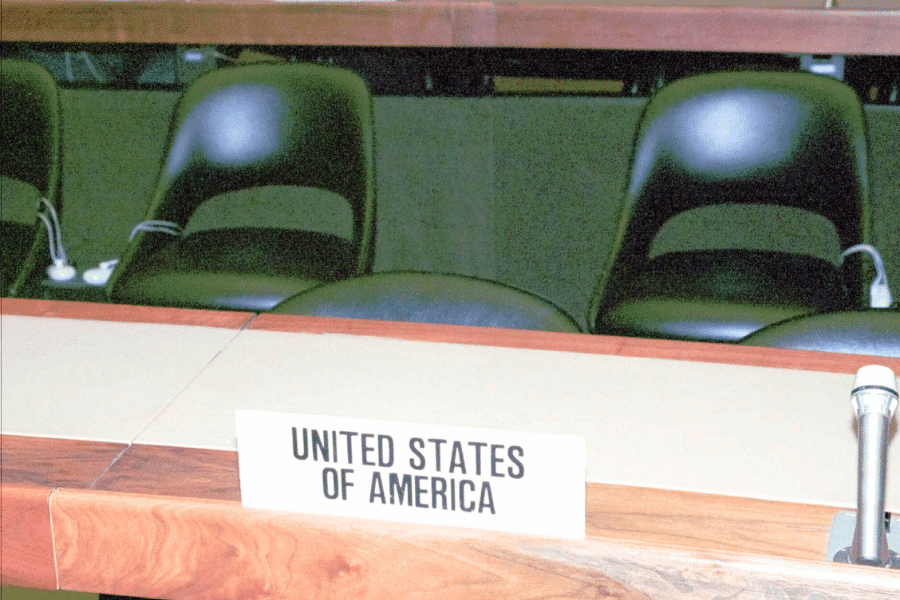
    As for the United States, it has recently withdrawn from bilateral treaties — those between two nations — and several multilateral accords in which multiple parties sign on.

    A treaty that ended the Cold War

    In a historic ceremony in Iceland back in 1987, U.S. President Ronald Reagan and Mikhail Gorbachev signed the Intermediate-Range Nuclear Forces Treaty (INF Treaty), which was largely seen as an end to the Cold War that had lasted since the end of World War II.

    Under the first Trump Administration in 2019, the U.S. withdrew from that treaty. 

    Trump has twice withdrawn the United States from the Paris Climate Accord and, in addition, withdrew from the Open Skies Treaty, which allows for the use of surveillance planes or drones for intelligence capturing purposes. 

    The United States has also withdrawn from institutions like the World Health Organization and is threatening to withdraw from the World Trade Organization. It has already left the U.N. Human Rights Council. 

    In an ominous move for multilateralism, Trump has set in motion a review of U.S. participation in intergovernmental organizations, including those that are part of the United Nations, with the intention of withdrawing from or seeking to reform them. 

    Breaking a treaty by executive order

    Trump’s executive order of 4 February 2025, started by saying: “The United States helped found the United Nations (UN) after World War II to prevent future global conflicts and promote international peace and security. But some of the UN’s agencies and bodies have drifted from this mission and instead act contrary to the interests of the United States while attacking our allies and propagating anti-Semitism.” 

    That’s his subjective interpretation of recent events. There is no justification in the mandate for the review for any change based on force majeure, certainly not that the United Nations and some of its agencies “drifted from this mission and instead act contrary to the interests of the United States.”

    Withdrawing from treaties or organizations has consequences for global stability. The announcement by the five countries that they are withdrawing from the Mine Ban Treaty is a worrisome addition to Trump’s general assault on multilateralism. Pacta sunt servanda, the underlying principle of contracts and law, translates to “agreements must be kept.” It is the foundation of international law and cooperation. 

    The withdrawals are a bad omen. They lessen the value of conventions and treaties. States should not respect their obligations only when they are in their favor. 

    Confidence that states will respect their obligations is the primary support for an international system. 

    The Ukraine war has not changed that. Without that confidence, the system collapses. 

    Can we agree on that?


    A version of this story has been published previously in the publication Counterpunch. 


    Questions to consider:

    1. What is a treaty?

    2. Why would a country decide to not ratify a treaty that bans landmines?

    3. When was the last time you agreed to do something. Was it difficult to keep that agreement?


    Source link

  • Is peace in the Middle East even possible?

    Is peace in the Middle East even possible?

    The State of Israel was created in 1948. The key word is created. While countries come into being in many different ways, such as violence, revolutions and treaties, the creation of the state of Israel was unique and has proven highly controversial.

    To understand the chaos that is now taking place in Israel and the Palestinian territories, one needs to return to that original creation.

    The British government ruled the territory known as Palestine under the League of Nations from 1922 until 1948. Already in 1917, the British government issued what is known as the Balfour Declaration which envisioned a Jewish state in what had been claimed a historic Jewish homeland.

    Jewish organisations had argued that the land called Israel has been the religious and spiritual center for Jews for thousands of years. While many countries recognized the new State of Israel in 1948, its creation did not effectively redress the dislocation of those who had been living on the territory that Israelis would inhabit.

    Following the end of World War II, European Jews who had been displaced during the Holocaust flocked to Israel. The United Nations divided the land into two states, one Jewish, one Arab, which further divided the Arab territory into three sections — the Golan Heights at the Syrian border, the West Bank at the Jordanian border and the Gaza Strip at the Egyptian border.

    The creation of deep divisions

    The division gave more than 50% of the land to Israel, leaving the Arabs with 42% even though they made up two-thirds of the population.

    This resulted in massive Arab displacement and is why the Jewish Independence Day of May 14 is followed by the marking of Nakba Day by Arabs, translated as “The Catastrophe”.

    Since Israel’s founding in 1948, there have been several outbreaks of violence between Israel and its neighbors. Among them were the 1948–49 War of Israeli Independence; 1956 Suez Canal Crisis; 1967 Six-Day War; 1973 Yom Kippur War; 1982 Lebanon War and various large-scale Palestinian uprisings known as Intifadas.

    None of these conflicts resulted in reparations for the hundreds of thousands of Arabs displaced by Israel’s creation, many of whom ended up in crowded refugee camps in Gaza, the West Bank and neighboring countries.

    Further inflaming tensions, Israeli settlers have continued establishing communities in the West Bank, which was conquered by Israel in the 1967 Six-Day War. The international community considers these colonies illegal, and some of the settlers have been found guilty of violence against the Arabs who live there.

    Working towards peace

    There have been several attempts to have peace agreements between Israel and its neighbors.

    The most important are the Camp David Accords of 1978 which was finally reduced to simple diplomatic relations between Egypt and Israel, and the 1993 Oslo accords which established formal relations between Israel and the Palestinian leadership, giving the latter self-governance over the Gaza Strip and the West Bank. Recently, there were talks about a larger regional agreement including Saudi Arabia.

    Then came 7 October 2023, when Hamas, an Islamist militant group, attacked Israeli settlers killing more than a thousand people, many of them women and children, and taking over 200 Israeli hostages.

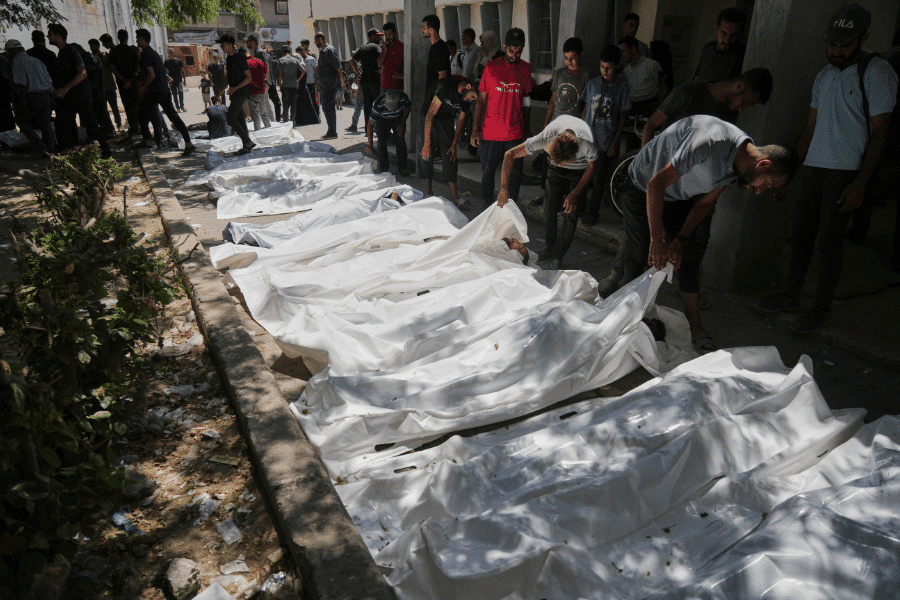
    Israel’s response to the Hamas attack, which it justified as legitimate self-defense, has seen more than 32,000 Gazans killed with over 70,000 wounded, mostly civilians with many elderly and children. Much of Gaza’s infrastructure has been destroyed, including hospitals and humanitarian aid has been blocked. Fighting has continued for more than six months as Israel seeks to destroy Hamas and at the same time free the hostages.

    The emotions behind the conflict are extreme. The Israelis condemn Hamas as a terrorist organisation whom they argue are out to kill all Jews and destroy the State of Israel. Hamas, which was the official ruling organisation in the Gaza Strip, maintains that Palestinians have been reduced to living in an open-air prison since it took control of Gaza in 2005 when Israel disengaged.

    Israel and the international community

    The fighting in Gaza has raised many questions relevant to international humanitarian law. South Africa brought a case before the International Court of Justice in The Hague accusing Israel of genocide. The Court ruled that there was “plausible” genocide and ordered several provisional measures Israel must follow, among them increasing access to humanitarian aid.

    Beyond Israel, Hamas and the International Court of Justice, various resolutions have been proposed before the United Nations Security Council concerning a ceasefire. Although the latest resolution did pass, with the United States abstaining and not using its veto power, no ceasefire has taken place, although increased humanitarian aid is now entering Gaza.

    But the situation of the Palestinians remaining in Gaza remains precarious at best.

    The Israel/Hamas conflict has spread to other countries in the region, including Iran, which has long been a supporter of Hamas. On 1 April 2024, Israeli warplanes destroyed a building in Damascus, Syria, part of an Iranian Embassy complex, killing several Iranian officers involved in covert actions in the Middle East.

    Shortly after, Iran sent hundreds of drones and cruise missiles towards Israel, which were largely intercepted by Israeli and U.S. air defenses. Subsequently, several drones were downed by Iran’s air defense system near Isfahan, but it is not clear whether they came from Israel or other sources.

    What is clear is that there has been enormous international pressure to de-escalate the current situation in order to stop the Israel/Hamas conflict from growing into a regional conflict involving Iran and other countries, or even a more global escalation of violence.


    Questions to consider:

    1. How did the United Nations divide Palestine to create the state of Israel?

    2. What happened to the people displaced in 1948 when Isreal was created?

    3. What kind of compromises do you think might have to take place for there to be peace between Israelis and Palestinians? 


    Source link

  • Project POTUS 2025 Middle School Winners Announced

    Project POTUS 2025 Middle School Winners Announced

    Indianapolis, IN — Project POTUS, a national middle school history initiative from the Benjamin Harrison Presidential Site, has named winners for this year’s competition. 

    Since the founding of our nation, there have been nearly half a billion American citizens. Of those, over 12,000 of us have served in Congress. Just 115 have become Supreme Court Justices. Only 45 citizens have become President of the United States. There’s something exceptional about each POTUS — good, bad, or otherwise. Project POTUS? challenges students in middle school to research an American president and create a video, 60 seconds or less, representing the POTUS chosen in a way that is creative, supported by good history research, and fun. A Citizen Jury made up of nearly 100 people reviewed all qualifying submissions and selected this year’s winners.

    Grand Jury’s Grand Prize and Spotlight Award Selections  

    Grand Prize Winner ($500 award) 

    • 6th grader Peter Gestwicki from Muncie, Indiana won grand prize for his video about Theodore Roosevelt. Watch his winning video  here.

    Spotlight Award  Winners ($400 award winners) 

    • 8th grader Grace Whitworth from St. Richard’s Episcopal School in Indianapolis, Indiana won for her video about President Thomas Jefferson. Watch her winning video  here.
    • 8th grader Izzy Abraham from Sycamore School in Indianapolis, Indiana for her video about President Calvin Coolidge. Watch his winning video  here.
    • 8th grader Clara Haley from St. Richards Episcopal School in Indianapolis, Indiana for her video about President George W. Bush. Watch his winning video  here
    • 8th graders Delaney Guy and Nora Steinhauser from Cooperative Middle School in Stratham, New Hampshire for their video about President James Polk. Watch their winning video  here.

    37 students throughout the country each won their Presidential Category and received $100 awards. Check out all of their videos  here.

    The 2026 Project POTUS competition begins Election Day, November 4, 2025 and all submissions must be entered by Presidents Day, February 16, 2026. Learn more  here.

    Project POTUS is made possible by the generous support from Russell & Penny Fortune. 

    About the Benjamin Harrison Presidential Site

    The Benjamin Harrison Presidential Site is the former home of the 23rd U.S. President. Now celebrating its 150th anniversary, it is a stunningly restored National Historic Landmark that shares the legacy of Indiana’s only President and First Lady with tens of thousands of people annually through guided tours, educational programs, special events and cultural programs. Rated “Top 5 Stately Presidential Homes You Can Visit” by Architectural Digest, the Harrison’s 10,000 square foot Italianate residence in downtown Indianapolis houses nearly 11,000 curated artifacts spanning more than two centuries of American and presidential history. Recently expanded and restored through a $6 million campaign, the Benjamin Harrison Presidential Site is also consistently ranked a Top 5 Thing To Do in Indianapolis by TripAdvisor. Signature programs and initiatives include: Future Presidents of America; Project POTUS, Candlelight Theatre; Juneteenth Foodways Festival; Wicket World of Croquet; and Off the Record. Founded in 1966 as a private 501c(3) that receives no direct federal support, the Benjamin Harrison Presidential Site is dedicated to increasing public participation in the American system of self-government through the life stories, arts and culture of an American President. Find out more at PresidentBenjaminHarrison.org

    eSchool News Staff
    Latest posts by eSchool News Staff (see all)

    Source link

  • Decoder Replay: Let’s celebrate Mandela Day

    Decoder Replay: Let’s celebrate Mandela Day

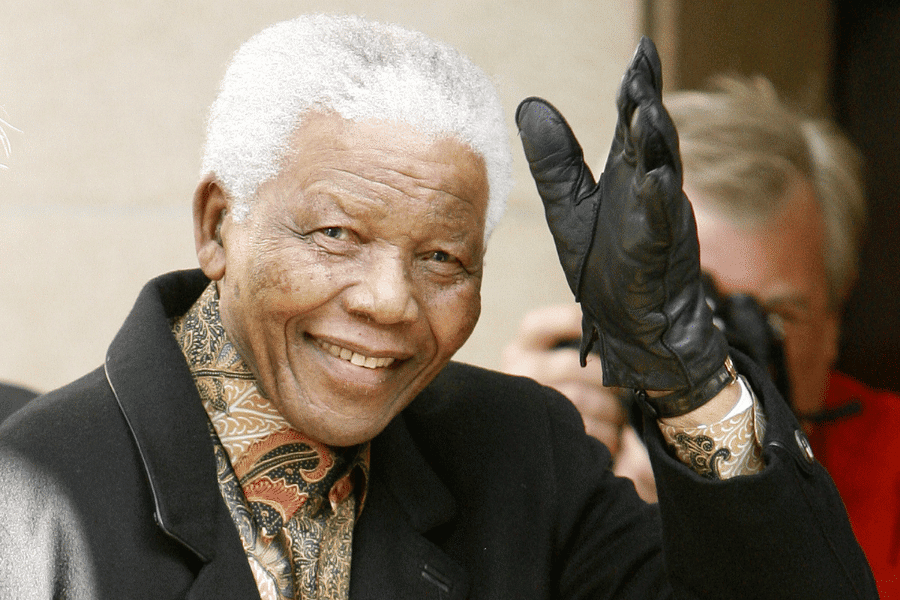
    February 11, 1990 was truly a turning point in the history of South Africa.

    For decades the nation at the southern tip of the continent had been pilloried by much of the rest of the world. This was because of its apartheid racial segregation laws that hugely favoured the white population over the far larger and mostly black majority.

    Apartheid means “separateness” in Afrikaans, the language rooted in Dutch that evolved when the country was a colony.

    By 1989 — itself a remarkable year for the wave of revolutions in communist East Europe — South Africa had made significant steps in its effort to end its pariah status. International sanctions were costing it dearly economically, culturally and in sporting terms.

    As a taste of events to come, the government freed senior figures in the African National Congress (ANC), the exiled organisation waging a low-level guerrilla campaign against apartheid.

    The fight against apartheid

    A favourite weapon of the ANC was small mines. One of them exploded in a shopping mall in the commercial capital Johannesburg just as I had finished shopping there and was safely in the mall’s car park.

    But there was no word when ANC leader Nelson Mandela — who ultimately spent 27 years incarcerated, much of it in an island prison — would be freed.

    Lawyer Mandela entered the world stage with a famous speech at his 1963 trial for sabotage acts against the state in which he stated that freedom and equality were “an ideal for which I am prepared to die.”

    Releasing Mandela from prison was a key card that South Africa could play to regain respectability, and the government would play it “soon,” Anton Lubowski, an anti-apartheid activist and human rights advocate, told me.

    Lubowski did not live to see his forecast fulfilled. In September 1989, gunmen pumped AK-47 rifle rounds into him, with the coup de grace a pistol bullet. He was the latest in a long list of opposition figures in southern Africa to fall victim to unnamed assassins.

    Freedom as news

    Knowing that Mandela was expected to be released — his freedom would be a huge news story — but not knowing how or when it would happen was particularly frustrating for a news agency reporter like me.

    Reuters and its rivals compete tooth and nail to get stories first, and to get them right. Being just one minute behind another news agency on a major story rates as a failure.

    What I dreaded most was that Mandela would be released from prison unannounced, just as his ANC colleagues had been. This possibility made it necessary for me and my colleagues to be constantly alert, straining to catch the first authentic information.

    The problem was that, then as now, the pressure to get hard information was compounded by a fog of fake news and hoaxes, saying that the release of Mandela was imminent or indeed had actually happened.

    These claims were typically relayed on pagers, the messaging devices of the pre-smartphone age. Such messages, no matter how bogus-sounding, had to be checked. This took time and energy and shredded nerves.

    Recognizing a hero

    It was one such scare that prompted reporters to flock to an exclusive clinic outside Cape Town where Mandela was known to be undergoing treatment.

    It was then that another problem surfaced: Nobody among us knew what Mandela looked like after his marathon spell in prison. There had been no pictures of him. Would we even recognise him if he walked out of the clinic?

    The hilarious result was that every black man leaving the clinic — whether porter, delivery man, cleaner or whatever — came under intense scrutiny from the ranks of the world’s press assembled outside.

    But on the timing of the release, I had a lucky break. A local journalist friend introduced me to a senior member of a secretive police unit who was willing to share with me whatever information he had on when Mandela would be a free man.

    The police official’s name was Vic — I did not then know his full name. But he was no fake policeman. He introduced me to his staff in his offices, which were in a shopping arcade concealed behind what looked like a plain mirror but was in fact also a door.

    Verifying fake claims.

    All cloak-and-dagger stuff. With enormous lack of originality, my Reuters colleagues and I referred to Vic as our “Deep Throat,” the pseudonym of the informant who provided Washington Post reporters Bob Woodward and Carl Bernstein with information about the 1972 Watergate scandal.

    Some time in the latter half of 1989, Vic told me in the less than cloak-and-dagger setting of a Holiday Inn coffee shop that Mandela was likely to be released in January or February of 1990.

    This was not precise information, but at least it was better than anything that I had, or apparently anybody else in the news business.

    In later meetings, Vic refined the information without disclosing the exact day of the release, which apparently was known to just four people in the South African government.

    One of the ways Vic was valuable to us was that whenever a fake claim about Mandela’s whereabouts surfaced, I could call him, day or night, to check. And it was Vic who told me on February 10 that “it looked like” Mandela would be a free man the next day.

    And so it proved.

    Mandela instantly became universally recognisable, South Africa disbanded apartheid, elections were held in which all races voted, the ANC won, and Mandela became South Africa’s first fully democratically elected president.

    February 11, 1990 is indeed a day to remember.


    Three Questions to Consider

    1. Why did apartheid last so long?

    2. What was the reaction of South African whites to Mandela’s release?

    3. Can you think of someone today who is trying to fight against an system of oppression?


    Source link

  • How important could one court be?

    How important could one court be?


    A polarized electorate

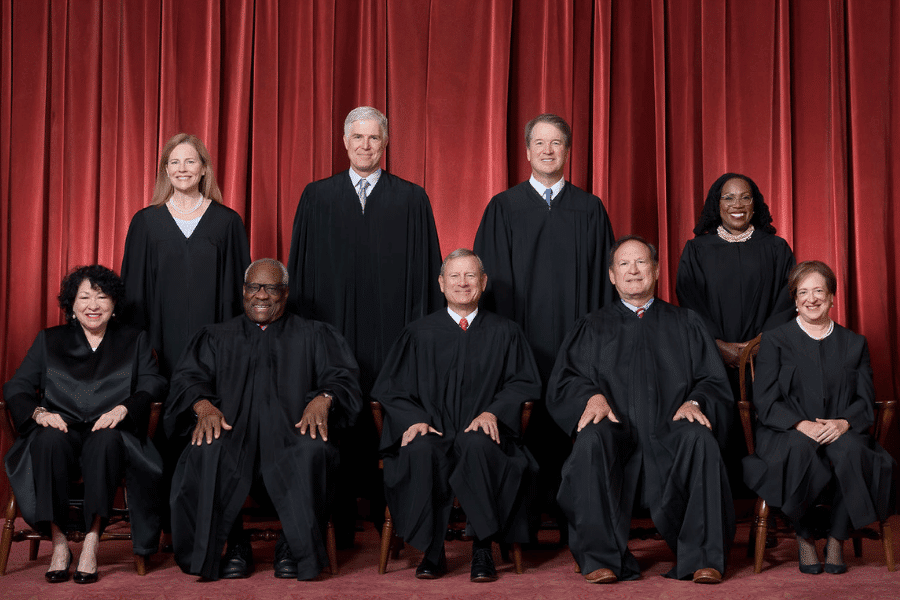
    The first Italo-American to serve on the Supreme Court, Scalia had been appointed by Ronald Reagan, a Republican president. Of the eight remaining justices, four were appointed by Republican presidents and four by Democrats.

    Both parties recognize that Scalia’s successor could tip the scales in close votes. Cases currently before the Court involve climate change, affirmative action, abortion, unions, immigrants and contraception — issues where the electorate is deeply divided.

    Although the Constitution stipulates that the president nominates Supreme Court justices, Republican candidates for the presidency have said the choice of Scalia’s successor should be left to whoever succeeds Barack Obama in the White House next January. Obama, a Democrat, has said he will send a nomination to the Senate in due course.

    That partisan split can be explained by the weight of the Court’s decisions and the polarization of the U.S. electorate.

    Whereas historically the two major parties have been able to agree, sometimes begrudgingly, on the choice of justices, the process has become far more partisan and divisive in recent decades.

    Unfavorable opinions

     The gaping ideological split in the current Congress and an increasingly vitriolic presidential campaign ensure a bitter fight in coming months.

    The political acrimony was reflected in a nationwide poll conducted last year by the Pew Research Center.

    Following recent Supreme Court rulings on Obamacare and same-sex marriage, unfavorable opinions of Court have reached a 30-year high, the survey found. And opinions about the court and its ideology have never been more politically divided.

    “Republicans’ views of the Supreme Court are now more negative than at any point in the past three decades,” it said. Little wonder that Republican presidential candidates are keen to put a conservative in the vacant seat.

    While the Supreme Court is an independent branch of government, its composition is not — and has never been — immune from politics. The nomination of justices is part of the system of checks and balances.

    But at the end of the day, the system requires the willingness of voters and their representatives to adhere to laws, executive orders and court rulings, however deep the political divide. If that faith ever crumbled, the U.S. experiment in democracy would be under threat.


    Source link

  • Decoder Replay: Is truth self-evident?

    Decoder Replay: Is truth self-evident?

    Fake news is dangerous. But it’s hardly new.

    More than 3,000 years ago, the largest chariot battle ever pitted the forces of one of the most powerful pharaohs of ancient Egypt — Ramesses the Great — against the Hittite Empire in Kadesh, near the modern-day border between Lebanon and Syria.

    The battle ended in stalemate.

    But once back in Egypt, Ramesses spread lies portraying the battle as a major victory for the Egyptians. He had scenes of himself killing his enemies put up on the walls of nearly all his temples.

    It was propaganda. “It is all too clear that he was a stupid and culpably inefficient general and that he failed to gain his objectives at Kadesh,” Egyptologist John A. Wilson wrote.

    Disinformation in ancient Rome

    The Roman general Mark Antony killed himself with his sword after his defeat in the Battle of Actium upon hearing false rumors — fake news — propagated by his lover Cleopatra claiming that she had committed suicide.

    American patriots, including the esteemed U.S. statesman and inventor Benjamin Franklin, and their British enemies swapped spurious allegations during the American Revolution that murderous Native Americans were working in league with their adversaries, scalping allies.

    How about the 1938 radio drama, “The War of the Worlds”? Adopted from a novel by H.G. Wells, the radio broadcast fooled some listeners into believing that Martians had landed in America. Newspapers of the day said the broadcast sparked panic.

    But historians today say the panic was exaggerated. So it was fake news about fake news!

    There is no shortage of modern-day instances of fake news. In Myanmar in 2018, the military spearheaded a campaign of fake news, mainly on Facebook, claiming the Rohingya minority had murdered and raped members of the Buddhist majority. The Rohingya were described as dogs, maggots and rapists. The fake news helped trigger violence against the Rohingya that forced 700,000 people to flee their homes.

    The irony is that many in Myanmar had turned to Facebook for information because the military had alienated many citizens with its control of the media. But the same military took advantage of the false reports to crack down on the Muslim minority.

    Election falsehoods

    Similarly, fake news has been used in the Philippines, Indonesia, Malaysia and Sri Lanka to influence the outcome of elections, hide corruption and stir up religious animosity.

    One of the ironies of fake news is it can embolden authoritarian governments to turn the tables and use made-up news as an excuse to crack down on the media. That can enable the regime to control the media message. In other words, fake news to the rescue of autocrats.

    But we should not fool ourselves into thinking that fake news can be cured merely through technological solutions, that it’s a product of our times, that it’s mainly political and that it’s peddled only by our opponents. It’s not the property of any one political party or interest.

    Fake news takes root in the gray area between truth and fiction, an area we can be quite comfortable in. There is something very enticing about fake news, especially if it aligns with our pre-conceived notions. Yet we are apt to think that fake news is the exception, a new aberration.

    We can easily fall victim to fake news in part because we are not always disgusted by lies. We are taught at a very early age that deceit – deception, dishonesty, disinformation – is all around us. And that not all lies are as harmful as others. Our parents read us fairy tales from the earliest of ages, and many tales involve lies.

    The telling of fairy tales

    Take the ancient fable of “The Cock and the Fox,” included in the medieval collection of Middle Eastern folk tales, “One Thousand and One Nights.”

    A hungry fox tries to coax a rooster out of a tree by telling him a tall tale — that there is universal friendship now among hunters and the hunted. The cock has nothing to fear, the wily fox says. It’s a lie, of course.

    So, the equally wily cock resorts to his own lie: he tells the fox that he sees greyhounds running towards them, surely with a message from the King of Beasts. The fox, outwitted, runs away in fear. So here we have two lies in a single story. The moral? “The best liars are often caught in their own lies.”

    Children and their parents are quite comfortable surrounded by lies. Is Santa Claus a malicious or harmless lie?

    Do you know the story of the Wizard of Oz? That classic U.S. movie about a young girl lost in a fantasy world, pursued by witches, struggling to go home? The entire plot relies on a deceit – a supposedly powerful wizard who is nothing more than a bumbling, ordinary conman, who uses magic tricks to make himself seem great and powerful.

    Deceit at the service of entertainment.

    Advertisements are often innocent exaggerations, fiction if you will in the service of business and profit-making. But sometimes ads can veer into falsehoods.

    So fake news is not new. And we’re no strangers to lies. What does that mean for those of us interested in making the world a better place? Should we simply give up because the task is too great?

    Hardly. The lesson is that truth is not black and white, but grey, and it’s a moving target.

    Take, for example, colonialism. From the 15th century on, white Europeans conquered huge swathes of the Americas, Africa, the Middle East, Asia and Oceania. They subjugated millions of people, using brutal violence in many places to subdue indigenous populations. They brought diseases that wiped out millions.

    They exploited natural resources, using native labor and pocketing most of the profit from sales into a global trading network that they established. By 1914, Europeans had gained control of 84% of the globe.

    We know all of that now because colonized peoples have revolted against their colonial rulers and won independence. The wars of independence have been won, yet so many countries around the world are still grappling with the shameful effects of colonialism and racism.

    The ambiguity of truth

    But would everyone have agreed on that depiction of Europeans as rapacious colonialists before the wars of independence?

    Certainly not most of the Europeans, who believed they were exporting a superior civilization to backward natives. Missionaries who led many colonial ventures believed they were doing God’s will by converting native populations to Christianity. And not a few natives turned a blind eye to atrocities and benefited financially.

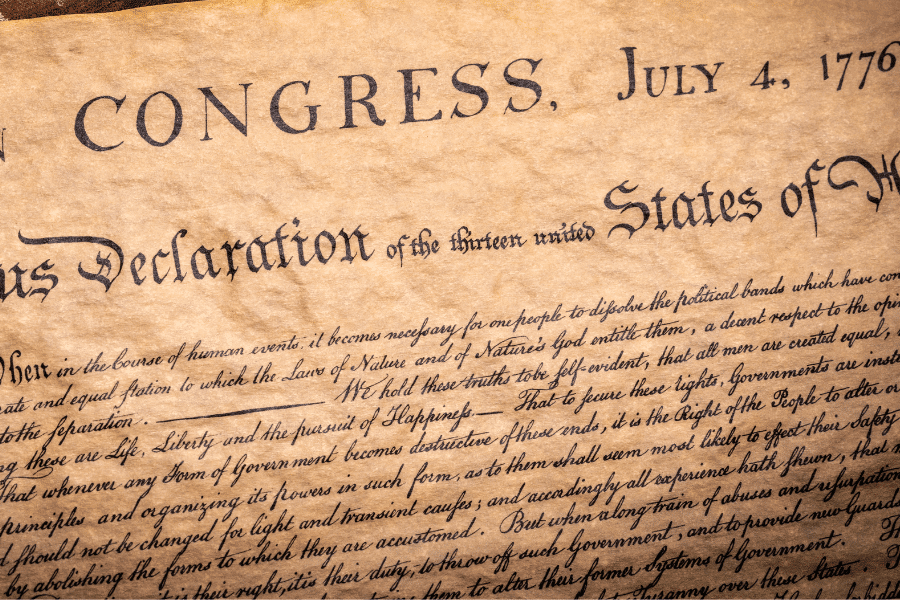
    For a glaring example of the ambiguity of truth, take the United States. Its Declaration of Independence, borrowing from the French enlightenment, states that “all men are created equal,” with “unalienable Rights” to “Life, Liberty, and the pursuit of Happiness.” It put notions of freedom and equality at the heart of the American experiment. Yet it was written by a slave owner, Thomas Jefferson, and represented 13 colonies that all, to one degree or another, allowed slavery.

    Convinced of their superiority and driven by an almost unquenchable appetite for wealth, white settlers drove Native Indians from their homes. The U.S. government authorized more than 1,500 attacks and raids on Indians. By the end of the 19th century, fewer than 238,000 indigenous people remained, down from some 5-15 million living in North America when Columbus arrived in 1492.

    What is more, settlers in the South imported slaves from Africa, forcing them to work on vast plantations and denying them the very rights to life and liberty spelled out in the Declaration of Independence.

    Rights and repercussions

    Both Native Indians and African Americans are struggling to this day to come to terms with the treatment they suffered at the hands of the white colonials.

    Would a white settler have seen himself or herself as a murderer? Hardly. In their minds, they were doing God’s work.

     Mind you, the desire to colonize is not peculiar to Europeans. Imperial Japan and imperialist China both established overseas empires. The Empire of Japan seized most of China and Manchuria. To this day, Chinese nationals and South Koreans harbor ill feelings towards the Japanese. Chinese dynasties won control over parts of Vietnam and Korea.

    There’s an expression in newsrooms around the world: “One man’s terrorist is another man’s freedom fighter.” Put another way, the same individual might seem a terrorist to some, a hero to others.

    Take Yagan, a 19th century indigenous Australian warrior from the Noongar people. He played a key role in early resistance to British colonial rule in an area that is now Perth. His execution by a young settler figures in Australian history as a symbol of the unjust treatment of indigenous peoples by colonial settlers.

    A hero to his people, he was a murderer in the eyes of the British.

    Different perspectives on history

    Or take the Incan emperor, Atahualpa, who resisted the explorer and conquistador Francisco Pizarro, to this day a Spanish hero. Pizarro forced Atahualpa to convert to Christianity before eventually killing him, hastening the end of one of the greatest imperial states in human history.

    How you view Pizarro may depend on where you are sitting and when you lived.

    There are countless modern examples of radically different perspectives on events. Such discrepancies may be inevitable. Dogged journalists can shed light on events and protagonists, and help shape history – for better or for worse.

    Joseph McCarthy was a U.S. senator who in the early years of the Cold War spearheaded a smear campaign against alleged Communist and Soviet spies. Only courageous reporting by a small group of journalists who dared question McCarthy’s tactics and risked being tarred as Communist sympathizers themselves led to McCarthy’s downfall.

    Joseph McCarthy (L) with his attorney Roy Cohn, who later mentored Donald Trump (Wikimedia Commons)

    The New York Times and Washington Post went out on a legal limb when in 1971 they published the Pentagon Papers, a U.S. government history of the Vietnam War that laid bare official lies that drove American policy for more than a decade in Southeast Asia.

    The government called the man who leaked the government documents a criminal and sought to prevent the newspapers from publishing the damning revelations.

    The newspapers won their case before the Supreme Court, and their reporting increased public pressure on the government to withdraw from Vietnam.

    Watergate upended a presidency.

    You’ve perhaps heard of Watergate? Literally speaking, it’s a hotel in Washington, DC. But it has come to stand for the dogged and courageous news reporting by two journalists with the Washington Post who exposed crimes by President Richard Nixon and helped lead to his resignation in 1974.

    Courageous investigative journalism is hardly confined to the United States. A non-profit news outfit called AmaBhungane — in Zulu, “dung beetle,” an animal that digs through shit – has reported on corrupt business deals at the highest levels of South Africa’s government.

    In the Arab world, investigative journalists in Egypt, Yemen, Tunisia, Syria, Lebanon, Jordan, Iraq, Bahrain, Palestine, Mauritania, Algeria, Kuwait and Sudan have uncovered tax evasion, money laundering, drug smuggling, torture and slavery. They have unmasked doctors who have removed the wombs of mentally disabled girls with the consent of parents.

    But it’s not all easy sailing. According to Freedom House, in 2017 there were only 175 investigative journalists in all of China, down 58% since 2011.

    What does this mean for you, a young activist who wants to help change the world?

    Truth is murky.

    The lesson is that the truth may not lie squarely on one side or the other, but rather in a murky, grey area. It can take courage to shine a light in the shadows, teeming with lies. And you may have to hear viewpoints that differ radically from your own. It pays to listen.

    Progress against racism, inequality and injustice depends on an informed public.

    The best journalists recognize their responsibility to uphold the Universal Declaration of Human Rights, which state that: all human beings are born free and equal in dignity and rights; and everyone has the right to freedom of opinion and expression; this right includes freedom to hold opinions without interference and to seek, receive and impart information and ideas through any media and regardless of frontiers.

    As the third U.S. President Thomas Jefferson said: “Were it left to me to decide whether we should have a government without newspapers or newspapers without a government, I should not hesitate a moment to prefer the latter.”

    So stick up for your rights, including the right to free expression. Be fair. And remember that one man’s terrorist may be another man’s freedom fighter. You don’t have a lock on the truth.


    Questions to consider:

    1. Why is it important to understand that fake news is nothing new?

    2. Do you think there is any way to stamp out fake news?

    3. What does it mean to say, “One man’s terrorist is another man’s freedom fighter”?


    Source link

  • To write about what’s new, look to the past

    To write about what’s new, look to the past

    To help explain what’s happening out there now, it helps to delve into the past. 

    That’s because, for one thing, something similar probably happened before and how that ended might help you anticipate what will happen next.

    News story after news story about U.S. President Donald Trump, for instance, talks about things being unprecedented. But did you know that in the 1850s in the United States there was a political party called the Know Nothing party. It was xenophobic and a spreader of conspiracy theories. According to the writer Lorraine Boissoneault, it was anti-immigration and called for mandatory Bible readings in schools. 

    “At its height in the 1850s, the Know Nothing party, originally called the American Party, included more than 100 elected congressmen, eight governors, a controlling share of half-a-dozen state legislatures from Massachusetts to California and thousands of local politicians,” Boissoneault wrote. 

    It is important to delve into history when doing a news story because things don’t just happen. Stuff led up to what is happening now. There are causes, and causes of causes. There might be a whole link of events that led up to the calamity that is now, or the explosion that happened or the political turmoil you find yourself in. 

    Put events into context.

    A little history in a story brings depth and context. It makes the whole story more interesting and helps people better understand what is happening now. News Decoder correspondent Gene Gibbons helped us understand the constitutional crisis the United States finds itself under Trump by looking back at a previous crisis in the 1970s under President Richard Nixon. 

    Correspondent Bernd Debusmann knew he couldn’t really explain the significance of the antipathy Trump now has for the European Union without explaining why the EU was formed in the first place. That meant going back to the aftermath of World War Two. 

    Correspondent Barry Moody helped us appreciate the triumphant win in a rugby game in South Africa by delving into the long history of apartheid and showing how rugby fit into that. 

    But how do you add some history? Well, you find yourself a historian. Every town has one, whether that person carries a title or not. A historian is simply someone who keeps track of past events and often documents them by collecting news stories or photographs, or by keeping journals. They might be the caretaker of archives of one kind or another. 

    You can also seek out professional historians. They can be found in university history departments, libraries and historical societies. Some are super specialized. I once saw a great documentary about a portrait of a woman believed to be painted by Leonardo de Vinci, and to prove it, the owner found a hair historian who found that the hairstyle of the woman was specific to a short time in history in a very small geographical area of Italy. 

    If you were doing a story about technology and wanted to include a bit of history you could contact the Society for the History of Technology. There are historians of politics, war, fashion, movies, food and architecture. 

    You can also just ask about the history of a place or event when you interview experts on what is happening now. You can’t really call yourself an expert on any topic if you don’t know its history. 

    So when you ask about what just happened, ask about what happened a decade or two ago, or more. Ask how things came to be the way they are. Maybe if we all understood the history of our times, history wouldn’t have to repeat itself. 


    Questions to consider:

    1. How can history add context to a news story?

    2. Where might you find a historian?

    3. If you were doing a story about your town, where would you find someone knowledgeable about its history?


    Source link

  • A history lesson on Europe for Donald Trump

    A history lesson on Europe for Donald Trump

    “The European Union was formed in order to screw the United States, that’s the purpose of it.” So said U.S. President Donald Trump in February. He repeats this assertion whenever U.S.-European relations are a topic of debate.

    Trump voiced his distorted view of the EU in his first term in office and picked it up again in the first three months of his second term, which began on January 20 and featured the start of a U.S. tariff war which up-ended international trade and shook an alliance dating back to the end of World War II.

    What or who gave the U.S. president the idea that the EU was “formed to screw” the United States is something of a mystery. If he were a student in a history class, his professor would give him an F.

    Trump’s claim does injustice to an institution that won the Nobel Peace Prize in 2012 in recognition for having, over six decades, “contributed to the advancement of peace and reconciliation, democracy and human rights in Europe” as the Nobel committee put it.

    So, here is a brief guide to the creation of the EU, now the world’s largest trading bloc with a combined population of 448 million people, and the events that preceded its formal creation in 1952. 

    Next time you talk to Trump, feel free to brief him on it. 

    Staving off war

    With Germans still clearing the ruins of the world war Adolf Hitler had started in 1939, far-sighted statesmen began thinking of ways to prevent a repeat of a conflict that killed 85 million people. 

    The foundation of what became a 28-country bloc lay in the reconciliation between France and Germany. 

    In his speech announcing the Nobel Prize, the chairman of the Norwegian Nobel Committee, Thorbjorn Jagland, singled out then French Foreign Minister Robert Schuman for presenting a plan to form a coal and steel community with Germany despite the long animosity between the two nations; in the space of 70 years, France and Germany had waged three wars against each other. That was in May 1950. 

    As the Nobel chairman put it, the Schuman plan “laid the very foundation for European integration.”

    He added: “The reconciliation between Germany and France is probably the most dramatic example in history to show that war and conflict can be turned so rapidly into peace and cooperation.”

    From enemies into partners

    In years of negotiations, the coal and steel community, known as Montanunion in Germany, grew from two — France and Germany — to six with the addition of Italy, Belgium, the Netherlands and Luxembourg. The union was formalized with a treaty in Paris in 1951 and came into existence a year later. 

    The coal and steel community was the first step on a long road towards European integration. It was encouraged by the United States through a comprehensive and costly programme to rebuild war-shattered Europe.

    Known as the Marshall Plan, named after U.S. Secretary of State George C. Marshall, the programme provided $12 billion (the equivalent of more than $150 billion today) for the rebuilding of Western Europe. It was part of President Harry Truman’s policy of boosting democratic and capitalist economies in the devastated region.

    From the six-nation beginning, the process of European integration steadily gained momentum through successive treaties and expansions. Milestones included the creation of the European Economic Community and European Atomic Energy Community.

    In 1986, the Single European Act paved the way to an internal market without trade barriers, an aim achieved in 1992. Seven years later, integration tightened with the adoption of a common currency, the Euro. Used by 20 of the 27 member states, it accounts for about 20% of all international transactions.

    Brexiting out

    One nation that held out against the Euro was the United Kingdom. It would later withdraw from the EU entirely after the 2016 “Brexit” referendum led by politicians who claimed that rules made by the EU could infringe on British sovereignty. 

    Many economists at the time described Brexit as a self-inflicted wound and opinion polls now show that the majority of Britons regret having left the union.

    In decades of often arduous, detail-driven negotiations on European integration, including visa-free movement from one country to the other, no U.S. president ever saw the EU as a “foe” bent on “screwing” America. That is, until Donald Trump first won office in 2017 and then again in 2024.

    What bothers him is a trade imbalance; the EU sells more to the United States than the other way around; he has been particularly vocal about German cars imported into the United States.

    Early in his first term, the Wall Street Journal quoted him as complaining that “when you walk down Fifth Avenue (in New York), everybody has a Mercedes-Benz parked in front of his house. How many Chevrolets do you see in Germany? Not many, maybe none, you don’t see anything at all over there. It’s a one-way street.”

    This appears to be one of the reasons why Trump imposed a 25% tariff, or import duty, on foreign cars when he declared a global tariff war on April 2. 

    His tariff decisions, implemented by Executive Order rather than legislation, caused deep dismay around the world and upended not only trade relations but also cast doubt on the durability of what is usually termed the rules-based international order

    That refers to the rules and alliances set up, and long promoted by the United States. For a concise assessment of the state of this system, listen to the highest-ranking official of the European Union: “The West as we knew it no longer exists.”

    So said Ursula von der Leyen, president of the Brussels-based European Commission, the main executive body of the EU. Its top diplomat, Kaja Kallas, a former Prime Minister of Estonia, was even blunter: “The free world needs a new leader.”


    Questions to consider:

    1. Why was the European Union formed in the first place?

    2. How can trade serve to keep the peace?

    3. In what ways do nations benefit by partnering with other countries?


    Source link

  • 7 new and engaging virtual field trips

    7 new and engaging virtual field trips

    Key points:

    Virtual field trips have emerged as an engaging resource, offering students immersive experiences and allowing them to explore global landmarks, museums, and natural wonders without leaving their classrooms.​

    Virtual field trips connect students to places that, due to funding, geography, or other logistical challenges, they may not otherwise have a chance to visit or experience.

    These trips promote active engagement, critical thinking, and cater to diverse learning styles. For instance, students can virtually visit the Great Wall of China or delve into the depths of the ocean, fostering a deeper understanding of subjects ranging from history to science.

    If you’re looking for a new virtual field trip to bring to your classroom, here are a few to investigate:

    Giant Panda Cam at the Smithsonian National Zoo: Watch Bao Li and Qing Bao–the two new Giant Pandas at Smithsonian’s National Zoo–as they explore their indoor and outdoor habitats at the David M. Rubenstein Family Giant Panda Habitat. The Giant Panda Cam is live from 7 a.m. to 7 p.m. ET daily. After 7 p.m., the cam feed will switch to a pre-recorded view of the last 12 hours.  

    The Superpower of Story: A Virtual Field Trip to Warner Bros. Studios: Students will go behind the scenes on an exclusive virtual field trip to DC Comics headquarters at Warner Bros. Studios in Burbank, California!.They’ll step into the world of legendary superheroes and blockbuster films, uncovering the secrets of how stories evolve from bold ideas to iconic comics to jaw-dropping live-action spectacles on the big screen. Along the way, they’ll hear from the creative minds who shape the DC Universe and get an insider’s look at the magic that brings their favorite characters to life.

    Mount Vernon: Students can enter different buildings and click on highlighted items or areas for explanations about their significance or what they were used for.

    Arctic Adventures: Polar Bears at Play Virtual Field Trip: Do polar bears play? The LEGO Group’s sustainability team, Polar Bears International, and Discovery Education travel to Churchill Manitoba and the Polar Frontier habitat at the Columbus Zoo and Aquarium in search of polar bears at play. Students will meet polar bears and play experts and uncover how arctic animals use play to learn just like humans, while inspiring students to use their voice to change their planet for the better.

    The Manhattan Project: Join The National WWII Museum for a cross-country virtual expedition to discover the science, sites, and stories of the creation of the atomic bomb. Student reporters examine the revolutionary science of nuclear energy in the Museum’s exhibits and the race to produce an atomic weapon in complete secrecy. 

    The Anne Frank House in VR: Explore the hiding place of Anne Frank and her family in virtual reality using the Anne Frank House VR app. The app provides a very special view into the Secret Annex where Anne Frank and the seven other people hid during WWII. In the VR app, all of the rooms in the Secret Annex are furnished according to how it was when occupied by the group in hiding, between 1942 and 1944. 

    Night Navigators: Build for Bats Virtual Field Trip: Join Discovery Education, the LEGO Group’s Social Responsibility Team, and Bat Conservation International as we travel across Texas and Florida in search of bat habitats. Students will meet play experts as they explore how these nighttime pollinators use play to learn and discover the critical role of bats in protecting farmers’ crops from pests and what we can do to help bats thrive.

    Laura Ascione
    Latest posts by Laura Ascione (see all)

    Source link

  • What happens when tyrants fall from power?

    What happens when tyrants fall from power?

    “The despot is dead. Long live … er, who?“

    Unlike kings or queens, dictators and autocrats find it helpful not to have a clear successor or rival who might soften their hold on power.

    Much as that iron-fisted ruler may be loathed, their abrupt departure from the throne can bring significant risk of subsequent turmoil. They have created a system that puts them alone at the centre of power.

    The White House in March was very quick to deny that President Joe Biden was pressing for regime change when he said that his Russian counterpart, Vladimir Putin, should not remain in power.

    There is no shortage of countries in recent decades where fallen autocrats have left a power vacuum all too quickly filled by chancers, thugs and weird ideologues, or simply some drab toady of the old regime.

    Covering tyranny

    As a reporter, it was impossible for me not to get caught up in the excitement after popular unrest had driven out yet another long-serving despot in power so long that they had forgotten who was serving whom. It really is exhilarating.

    During a long career as a journalist, I reported in a number of countries where autocratic, often staggeringly corrupt, leaders were forced unwillingly out of office. Sometimes, I’ve been there at the moment, more often to report on the aftermath.

    The first time was just over 30 years ago in Bangladesh, whose military dictator Hussain Ershad had lost power in the face of mass protests. And in a rarity for the impoverished country, whose relatively short period of independence had been marked by violence and assassinations, the leader’s downfall had been almost bloodless.

    By the time I arrived in Dhaka, crowds were cheerfully marching through the capital’s streets. The two people who would dominate Bangladeshi politics until today — the widow of one assassinated leader and the daughter of another — were happily giving interviews to visiting journalists, promising a new era for their country.

    Since then, Bangladesh’s economy has indeed grown. But the country’s politics remain plagued by autocratic leadership, corruption and a drawn-out feud between those two women.

    The lingering influence of despotism

    In the Philippines, a reporter colleague liked to tell stories about joining a crowd streaming through the Malacanang presidential palace, vacant after President Ferdinand Marcos and his wife Imelda fled the country in the face of a People’s Power revolt in 1986 following more than 20 years of rule marked by excess and rampant graft.

    This month, their son was elected president with little to offer by way of a platform beyond the promise of a return to those “halcyon days” when his parents were in charge some four decades earlier.

    In neighbouring Indonesia, the family of President Suharto, who led another Southeast Asian kleptocracy into near financial ruin until he was forced to step down in 1998 after more than 32 years of iron rule, continues to try to get back into politics. Suharto’s downfall came with mass protests, violence and fears the giant archipelago would split apart. The country has largely recovered, but some of the elites established during the Suharto years remain a powerful influence.

    Later, I was involved in reporting on the “colour” revolutions of former Soviet states, including Georgia and Ukraine. In both cases, infectious enthusiasm for change and the end of the old regimes did not take all that long to sour.

    The leader of the 2003 Georgian revolution, Mikheil Saakashvili, eventually fled into exile. He is now back in his country where he was jailed on charges of abuse of power.

    Sidelining of opposition

    Ukraine struggled to find a competent leader after casting aside the old guard from the Soviet era with its Orange Revolution, which began the following year.

    Paradoxically, and very unexpectedly, it has taken this year’s Russia’s invasion of Ukraine to reveal a leader of commanding stature in President Volodymyr Zelenskiy, a former comedian.

    In many of these countries and others ruled by long-serving autocracies, the incentive is for leaders to crush any emerging threat to their hold on power. Rising political stars are sidelined, opponents are exiled, jailed or killed and domestic news coverage is limited to the official line.

    And Russia? Rumours abound that Putin, ever tightening his control during more than 20 years in power, is seriously ill or even faces a coup. As with the likes of Suharto or Marcos, Putin took office when his country was lurching through economic crisis. He was a bit dull. Unlike his predecessor, Boris Yeltsin, Putin didn’t make a habit of rolling up drunk.

    He was smart, focused on the economy, not in thrall to Russia’s plundering oligarchs and able to bring stability to the lives of ordinary Russians exhausted and disoriented by the collapse of the Soviet Union. He became hugely popular.

    But there was a sense that his inner circle didn’t quite trust that popularity. By most accounts, Putin would easily have won a second term in the 2004 presidential election. But the Kremlin could not resist making sure the deck was stacked in his favour. He won 71.9% of the vote.

    What would Russia be like post-Putin

    Putin has run the country ever since, either as president or prime minister. Such is the state’s grip on Russian media that it is not really possible to be sure how popular Putin may be now. One recent poll suggested his star, which had started to look a bit faded, has brightened considerably since the invasion of Ukraine.

    His government is clearly in no mood to put that popularity up for too much public scrutiny, throttling the remaining independent Russian media and introducing a law to hand long prison terms to those who openly oppose the war on Ukraine.

    Prominent Russians who might credibly challenge Putin’s grip on the country live abroad, are in prison or dead. His most recent serious opponent, Alexei Navalny, is looking at years in a Russian prison. It isn’t all that clear, either, whether the bulk of Russians would prefer Navalny as their next leader.

    If Putin is no longer in office for whatever reason, who would be in the running to replace him?

    It seems very unlikely that the current political elite would readily allow a reformer to sweep them from power. Quite possibly, the average Russian — sympathetic to the view that the West has for years been treating their country with contempt — would prefer stability, a job and some international prestige.

    When Russia faced revolution more than a century ago, an estimated 10 million people died after the autocrat Tsar Nicholas II was removed from power.

    Perhaps that’s why Biden officials were so quick to rule out regime change. Better the devil you know than the devil you don’t.


    Questions to consider:

    • If you were working for local media in Moscow, how would you write about the war in Ukraine?

    Do you think your country’s mainstream media can be relied on to be factual in reporting? Why?

    • If the current leader of your nation loses power, how peaceful do you think the aftermath will be?


    Correction: The editor’s note at the top of the story was changed to correct the date the article was originally published.

    Source link