Category: History

  • China-U.S. animosity goes way back

    China-U.S. animosity goes way back

    The United States and China are increasingly at each other’s throats because of deep-seated distrust, a growing range of disputes and festering wounds from the 19th Century. The current deterioration in bilateral relations risks jeopardizing the global economy and could presage a new chapter in post-1945 great-power competition.

    Their mutual antagonism has not been deeper since U.S. President Richard Nixon embarked on a landmark trip to “Red China” in 1972 to pave the way to normalized relations.

    Ahead of the U.S. presidential election on November 3, disputes have flared over the handling of the coronavirus pandemic, Taiwan, the South China Sea, digital security, trade, journalist expulsions and human rights in Xinjiang, Hong Kong and Tibet.

    Some experts describe the rancor as verging on a “new Cold War”, with the potential to disrupt bilateral cooperation in the fight against COVID-19, climate change, terrorism and the spread of nuclear weapons.

    U.S. President Nixon in China

    Nixon traveled to China during the Cold War struggle between the United States and the former Soviet Union. The start of formal ties between China and the United States was a game-changer: the two had been on opposite sides during the Vietnam War, but each was at odds with Moscow.

    The trip set the stage for an effort to shape China’s strategic choices after the upheaval spurred by Chinese Communist Party Chairman Mao Zedong. Mao had sought to instill the spirit of China’s revolution in the younger generation during his tumultuous last decade in power (1966-76).

    Mindful that the two countries’ systems were radically at odds, Nixon said in his 1972 icebreaking toast in Beijing: “If we can find common ground to work together, the chance of world peace is immeasurably increased.”

    Nearly 50 years later, the relationship lies largely in tatters. Tensions have risen in recent days over self-ruled, U.S.-armed Taiwan, which China deems a breakaway province that must return to the fold. Taiwan scrambled fighter jets last week after Chinese aircraft buzzed the island in response to a visit by the highest-level U.S. State Department official in four decades.

    Washington and Beijing have entered into a fundamentally new phase of their relationship, and that strategic distrust between them is likely to intensify regardless of who wins this November’s presidential election,” Kurt Campbell, a former U.S. assistant secretary of state for East Asian and Pacific Affairs, and Ali Wyne of the Atlantic Council’s Scowcroft Center for Strategy and Security, wrote recently.

    Trump and Xi

    Analysts attribute the mounting friction to a more confrontational U.S. administration under U.S. President Donald Trump and a more assertive China under President Xi Jinping.

    Xi became General Secretary of the Chinese Communist Party in 2012 and added the state presidency in March 2013. Later in 2013, China began building military outposts in the contested South China Sea, and Xi launched the Belt and Road Initiative, a vast plan to build infrastructure links — and increase China’s influence — across the globe.

    The China-U.S. rift could put pressure on some nations to choose sides, as during the 1947-91 Cold War, or to tweak the hedging strategies that some have adopted to remain neutral.

    The path to warmer China-U.S. ties is very narrow, “as the required compromises go against the instincts of both countries’ current leaders,” Carnegie Asia research program’s Yukon Huang, a former World Bank country director for China, wrote this month in an analysis.

    Both Xi and Trump came to power with strong populist agendas, each vowing to return their countries to some vision of past greatness. Seeking reelection, Trump has accused his Democratic opponent, former Vice President Joe Biden, of being soft on China.

    “If Joe Biden becomes president, China will own the United States,” Trump said last month.

    COVID provocations

    Referring to COVID-19 by turns as “the China virus,” “Wuhan virus” and “Kung Flu,” Trump has faulted China for “secrecy, deceptions, and cover-up” in its handling of the disease that emerged in the central Chinese city of Wuhan late last year.

    “We must hold accountable the nation which unleashed this plague onto the world, China,” Trump said in taped remarks delivered to the United Nations General Assembly this week. More than 200,000 Americans have died from COVID-19, more than in any other country.

    Xi, in his address to the General Assembly, called for enhanced cooperation over the pandemic and said China had no intention of fighting “either a Cold War or a hot war with any country.”

    At home, Xi cannot afford to appear weak in the face of foreign demands, and he is bound to his signature “Great Chinese dream,” a drive for greater prosperity for the 1.3 billion Chinese, a larger role on the world stage and international respect consistent with China’s military, financial and economic influence.

    Beijing is angry over what it calls foreign provocations, including protests in Hong Kong it claims were stirred by outsiders, growing U.S. arms sales to Taiwan, visits by senior U.S. officials to Taipei and U.S. moves against Chinese companies including telecom giant Huawei and social media apps TikTok and WeChat.

    Hostility in diplomacy

    U.S. Secretary of State Mike Pompeo has stepped up criticism of the ruling Communist Party of China, which he says is seeking global hegemony.

    We must admit a hard truth that should guide us in the years and decades to come,” he said in a July 23 speech at Nixon’s boyhood home and library at Yorba Linda, California.

    “That if we want to have a free 21st century, and not the Chinese century of which Xi Jinping dreams, the old paradigm of blind engagement with China simply won’t get it done. We must not continue it and we must not return to it,” he said.

    Alluding to the 90 million-plus member Chinese Communist party, Pompeo added: “We must also engage and empower the Chinese people – a dynamic, freedom-loving people who are completely distinct from the Chinese Communist Party.”

    In Beijing’s eyes, the Trump administration has been meddling in Chinese internal affairs, threatening its core interests and leading efforts to contain China, which still smarts from what it calls “a century of humiliation,” largely at Western hands.

    “Century of National Humiliation”

    The “long century” of 110 years was marked by carve-ups of Chinese territory by Britain, the United States and other Western powers, as well as by Russia and Japan, from 1839 to 1949, when Mao’s Communist Party seized power after a five-year civil war.

    A trade war that roiled the world in 1839 pitted Britain against China’s Qing Dynasty. Britain had been buying silks, porcelain and tea from China. But Chinese consumers had scant interest in British-made goods, and Britain started running a significant trade deficit with China.

    To address the trade imbalance, British firms began illegally smuggling in Indian-grown opium, fueling drug addiction in China. The balance of trade soon turned in Britain’s favor, but a Chinese crackdown led to the first Opium War between Britain and China from 1839 to 1842.

    After defeating the Chinese in a series of naval conflicts, the British put a series of demands to the weaker Qing Government in what became the Anglo-Chinese Treaty of Nanjing. Not to be outdone, U.S. negotiators sought to conclude a similar treaty with the Chinese to guarantee the United States many of the favorable terms awarded the British, according to “Milestones in the History of U.S. Foreign Relations,” a U.S. State Department publication.

    Long underpinning the Chinese Communist Party’s hold on power have been inequitable treaties, lingering resentment over the earlier era’s losses and extraterritorial laws imposed on China.

    China learnt its lessons from this period of time,” Lu Jingxian, deputy editor of the state-controlled Global Times tabloid, wrote in a column last year. “Lagging leaves you vulnerable to bullying.”

    “Chinese people have walked out of the pathos of century of humiliation, though the West seemingly wants its century of bullying to continue,” he said.

    Meteoric rise

    China stunned the world with the depth and breadth of its economic growth after embracing market-based reforms in 1978, just before formal relations with the United States began in January 1979.

    It is now projected to supplant the United States as the world’s biggest economy by 2030 or 2040. Scholars consider the bilateral relationship to be the 21st Century’s most consequential for the international order.

    China’s meteoric rise began under Deng Xiaoping, who gradually rose to power after Mao’s death and earned the reputation as the architect of modern China. His market-oriented policies transformed one of the world’s oldest civilizations from crushing poverty to a modern powerhouse in military matters, finance, technology and manufacturing.

    China has become the world’s largest manufacturer, merchandise trader, holder of foreign exchange reserves, energy consumer and emitter of greenhouse gases.

    It became the world’s largest economy on a purchasing power parity basis in 2014, according to the McKinsey Global Institute.

    With economic growth averaging almost 10% a year since 1978, China has doubled its Gross Domestic Product every eight years and lifted an estimated 850 million people out of poverty, according to the World Bank.

    China is the largest foreign holder of U.S. Treasury securities, which help fund U.S. federal debt and keep U.S. interest rates low — reflecting the interdependence of the two economies.

    South China Sea

    Since Trump was elected in 2016, tensions have risen in the disputed, resource-rich South China Sea (SCS).

    They spiked in mid-July when the U.S. State Department for the first time formally opposed China’s claim to almost all of these waters, calling it “completely unlawful, as is its campaign of bullying to control them.”

    The United States will keep up the pace of its freedom of navigation operations in the SCS, which hit an all-time high last year, U.S. Defense Secretary Mark Esper said at the time.

    Four Southeast Asian states — Brunei, Malaysia, the Philippines and Vietnam — have maritime claims that conflict with China’s, as does Taiwan. An estimated $3.37 trillion worth of global trade passes through the SCS annually, which accounts for as much as a third of global maritime trade.

    Over the next 18 months, “a let-up in tensions is unlikely,” Ian Storey, co-editor of Contemporary Southeast Asia at Singapore’s ISEAS Yusof Ishak Institute, wrote in a recent survey of the dispute.

    “China and the United States will increase their military activities in the South China Sea, raising the risk of a confrontation,” regardless of who wins the U.S. presidential election, he said.

    Beijing’s actions in the region have strengthened a conviction on the part of some U.S. strategists that Beijing is seeking control of an area of strategic, political and economic importance to the United States and its allies.

    Taiwan

    The future of Taiwan, an island democracy of 23.6 million people, is a core concern for Beijing.

    Taiwan has been ruled separately since Chiang Kai-shek’s Nationalists fled there after losing the Chinese civil war in 1949. Beijing views Taiwan as sovereign territory that must eventually be unified with the mainland.

    Last month, Alex Azar, the U.S. Secretary of Health and Human Services, met President Tsai Ing-wen of Taiwan in the highest-level visit by a U.S. official since Washington cut formal ties to the island in 1979. As a condition for establishing bilateral relations with Beijing at the time, the United States committed to maintaining only unofficial relations with Taiwan.

    In a further poke at Beijing, a senior State Department official traveled to the island this month in another high-profile visit. The decision to send Keith Krach, Under Secretary of State for Economic Growth, Energy and the Environment, amounted to a rebuke of China’s efforts to isolate Taiwan.

    Chinese military drills off Taiwan’s southwest coast this month were a “necessary action” to protect China’s sovereignty, Beijing said on September 16, after Taiwan complained about large-scale Chinese air and naval drills.

    Hong Kong, Xinjiang

    Another rub has involved Hong Kong, a former British colony and a world financial center that was guaranteed a measure of autonomy by China as part of negotiations for its 1997 return from Britain.

    In May, Trump said he was taking steps to end Hong Kong’s preferential trading status with the United States after China enacted a harsh new security law. The law in effect rolls back the semiautonomous status that had been promised to Hong Kong by Beijing under the mantle of “one country, two systems.”

    In June, Beijing threatened retaliation after Trump signed legislation calling for sanctions against those responsible for repression of ethnic Uighurs and other Muslims in western China’s Xinjiang region. The U.S. State Department has accused Chinese officials of subjecting Muslims to torture, abuse and “trying to basically erase their culture and their religion.”

    Trump did not hold a ceremony to mark his signing of the legislation, which came as newspapers published excerpts from a new book by Trump’s former national security adviser John Bolton. Among other allegations, Bolton said Trump sought Xi’s help to win reelection during a closed-door 2019 meeting and that Trump said Xi should go ahead with building camps in Xinjiang.

    Trump and Xi have refrained so far from ad hominem personal attacks on each other, leaving a door ajar for possible one-on-one efforts to halt the deterioration in ties.


    Three questions to consider:

    1. Why have Chinese-U.S. relations spiraled downward?

    2. What are the main concerns of each country?

    3. What are the implications of the situation for the world?


    Source link

  • Why History Instruction is Critical for Combating Online Misinformation – The 74

    Why History Instruction is Critical for Combating Online Misinformation – The 74

    Can you tell fact from fiction online? In a digital world, few questions are more important or more challenging.

    For years, some commentators have called for K-12 teachers to take on fake news, media literacy, or online misinformation by doubling down on critical thinking. This push for schools to do a better job preparing young people to differentiate between low- and high-quality information often focuses on social studies classes.

    As an education researcher and former high school history teacher, I know that there’s both good and bad news about combating misinformation in the classroom. History class can cultivate critical thinking – but only if teachers and schools understand what critical thinking really means.

    Not just a ‘skill’

    First, the bad news.

    When people demand that schools teach critical thinking, it’s not always clear what they mean. Some might consider critical thinking a trait or capacity that teachers can encourage, like creativity or grit. They could believe that critical thinking is a mindset: a habit of being curious, skeptical and reflective. Or they might be referring to specific skills – for instance, that students should learn a set of steps to take to assess information online.

    Unfortunately, cognitive science research has shown that critical thinking is not an abstract quality or practice that can be developed on its own. Cognitive scientists see critical thinking as a specific kind of reasoning that involves problem-solving and making sound judgments. It can be learned, but it relies on specific content knowledge and does not necessarily transfer between fields.

    Early studies on chess players and physicists in the 1970s and ’80s helped show how the kind of flexible and reflective cognition often called critical thinking is really a product of expertise. Chess masters, for instance, do not start out with innate talent. In most cases, they gain expertise by hours of thoughtfully playing the game. This deliberate practice helps them recognize patterns and think in novel ways about chess. Chess masters’ critical thinking is a product of learning, not a precursor.

    Because critical thinking develops in specific contexts, it does not necessarily transfer to other types of problem-solving. For example, chess advocates might hope the game improves players’ intelligence, and studies do suggest learning chess may help elementary students with the kind of pattern recognition they need for early math lessons. However, research has found that being a great chess player does not make people better at other kinds of complex critical thinking.

    Historical thinking

    Since context is key to critical thinking, learning to analyze information about current events likely requires knowledge about politics and history, as well as practice at scrutinizing sources. Fortunately, that is what social studies classes are for.

    Social studies researchers often describe this kind of critical thinking as “historical thinking”: a way to evaluate evidence about the past and assess its reliability. My own research has shown that high school students can make relatively quick progress on some of the surface features of historical thinking, such as learning to check a text’s date and author. But the deep questioning involved in true historical thinking is much harder to learn.

    Social studies classrooms can also build what researchers call “civic online reasoning.” Fact-checking is complex work. It is not enough to tell young people that they should be wary online, or to trust sites that end in “.org” instead of “.com.” Rather than learning general principles about online media, civic online reasoning teaches students specific skills for evaluating information about politics and social issues.

    Still, learning to think like a historian does not necessarily prepare someone to be a skeptical news consumer. Indeed, a recent study found that professional historians performed worse than professional fact-checkers at identifying online misinformation. The misinformation tasks the historians struggled with focused on issues such as bullying or the minimum wage – areas where they possessed little expertise.

    Powerful knowledge

    That’s where background knowledge comes in – and the good news is that social studies can build it. All literacy relies on what readers already know. For people wading through political information and news, knowledge about history and civics is like a key in the ignition for their analytical skills.

    Readers without much historical knowledge may miss clues that something isn’t right – signs that they need to scrutinize the source more closely. Political misinformation often weaponizes historical falsehoods, such as the debunked and recalled Christian nationalist book claiming that Thomas Jefferson did not believe in a separation of church and state, or claims that the nadir of African American life came during Reconstruction, not slavery. Those claims are extreme, but politicians and policymakers repeat them.

    For someone who knows basic facts about American history, those claims won’t sit right. Background knowledge will trigger their skepticism and kick critical thinking into gear.

    Past, present, future

    For this reason, the best approach to media literacy will come through teaching that fosters concrete skills alongside historical knowledge. In short, the new knowledge crisis points to the importance of the traditional social studies classroom.

    But it’s a tenuous moment for history education. The Bush- and Obama-era emphasis on math and English testing resulted in decreased instructional time in history classes, particularly in elementary and middle schools. In one 2005 study, 27% of schools reported reducing social studies time in favor of subjects on state exams.

    Now, history teachers are feeling heat from politically motivated culture wars over education that target teaching about racism and LGBTQ+ issues and that ban books from libraries and classrooms. Two-thirds of instructors say that they’ve limited classroom discussions about social and political topics.

    Attempts to limit students’ knowledge about the past imperil their chances of being able to think critically about new information. These attacks are not just assaults on the history of the country; they are attempts to control its future.

    This article is republished from The Conversation under a Creative Commons license. Read the original article.

    Source link

  • The military footprint of the United States

    The military footprint of the United States

    The United States is keen to withdraw troops from Afghanistan and end its longest war ever, but the number of American soldiers in the South Asian country is dwarfed by many thousands stationed elsewhere across the globe.

    The 200,000 U.S. troops overseas are testimony to Washington’s persistent international commitment despite deep-seated isolationist impulses reflected in President Donald Trump’s “America First” campaign.

    The costly U.S. military footprint is a legacy of its status as Western leader that America inherited, at times reluctantly, after the two world wars in the last century.

    If Washington ever significantly reduced its network of military bases around the world, it would reflect a major turning point in history and possibly a destabilizing shift in the balance of power.

    The United States, Afghanistan and Taliban insurgents hit a roadblock recently as they tried to implement a face-saving pact leading to the partial withdrawal of American troops in the Asian nation after nearly two decades of hostilities.

    U.S. troops stationed around the world

    The anticipated pullout of about 3,400 of the remaining 12,000 U.S. troops was threatened by continuing violence, a squabble over a prisoner swap and the spread of COVID-19.

    But the American troops in Afghanistan are just the tip of an iceberg. Some 200,000 U.S. troops are stationed in overseas bases across Asia, the Middle East, Europe and Latin America.

    Current lists of U.S. troops overseas by the Defense Manpower Data Center include: 38,000 in Japan, 34,000 in Germany, 24,000 in South Korea, 12,000 in Afghanistan, 12,000 in Italy, 8,000 in Britain, 6,000 in Kuwait, 5,000 in Bahrain, 5,000 in Iraq and 3,000 in Spain.

    Smaller deployments are in Qatar, Turkey, Djibouti, Jordan, United Arab Emirates, Australia, Belgium, Cuba, Romania and El Salvador.

    The overseas deployments are a legacy of global military engagement dating back to the first years of the U.S. republic in the early 19th century.

    A fight against pirates

    U.S. founding fathers were no strangers to warfare. With significant French support, they defeated Britain to win control of the 13 original colonies, but they were soon challenged by pirates.

    “We can trace the roots of overseas conflict back to the skirmishes with the Barbary Pirates in the Jefferson years,” Michael O’Hanlon, a military historian at the Brookings Institution, said in an interview.

    In 1801, Thomas Jefferson, the third U.S. president, sent warships to free U.S. merchant seamen held hostage by North African Barbary Coast pirates.

    Between 1812 and 1814, U.S. troops and warships again sent British forces packing, although the White House was burned.

    “But those skirmishes were not really indicative of any major overseas ambition – just yet,” said O’Hanlon.

    The United States becomes a world leader.

    The next military challenge with standing armies was the U.S. Civil War in the 1860s. Then, a strongly isolationist American public was dragged into two world wars in the 20th century, first in 1917 when the German navy began targeting neutral ships, and then in 1941 when the Japanese bombed the American fleet in Pearl Harbor, Hawaii.

    After the world wars, U.S. isolationists sought to keep America out of foreign conflicts and shrink the size of its standing army. “That stopped,” said O’Hanlon, “with the descent of the Iron Curtain in Europe, the communist takeover in China, the Soviet testing of a nuclear bomb and of course the North Korean attack on South Korea, all in the late 1940s or 1950s.”

    Soon the United States joined the North Atlantic Treaty Organization (NATO) and signed military treaties with Japan, the Philippines, Germany and South Korea, leaving U.S. troops in some cases as a “trip wire” to warn off aggressors that an attack on U.S. or NATO bases would mean war.

    The latest expansion of U.S. military forces overseas is the Pentagon’s Africa Command. It is working with French troops to patrol the Sahara region, where Islamist militants have launched attacks in several former French colonies including Mali, Niger, Burkina Faso, Algeria and Tunisia.

    But a proposal to reduce the U.S. military’s involvement in Africa has stoked fears that militants could end up destabilizing or controlling large parts of the sub-Saharan Sahel.

    The spokesman for U.S. forces in Afghanistan, Col. Sonny Leggett, recently tweeted that despite the risks of the COVID-19 pandemic, the United States will pursue its plan to withdraw troops until 8,600 are left.

    Under the deal signed at the end of February, the U.S. is to cut its forces in Afghanistan to 8,600 service members within 135 days of the deal, and the international coalition backing the United States is to draw down by a commensurate amount, the Hill newspaper reported last month.


    Three questions to consider:

    1. Who were the Barbary pirates?

    2. Why did the United States enter World War One and World War Two?

    3. Why did the United States not revert to form and retreat into an isolationist shell after World War Two?


    Source link

  • Why History Instruction is Critical for Combating Online Misinformation – The 74

    Why History Instruction is Critical for Combating Online Misinformation – The 74

    Can you tell fact from fiction online? In a digital world, few questions are more important or more challenging.

    For years, some commentators have called for K-12 teachers to take on fake news, media literacy, or online misinformation by doubling down on critical thinking. This push for schools to do a better job preparing young people to differentiate between low- and high-quality information often focuses on social studies classes.

    As an education researcher and former high school history teacher, I know that there’s both good and bad news about combating misinformation in the classroom. History class can cultivate critical thinking – but only if teachers and schools understand what critical thinking really means.

    Not just a ‘skill’

    First, the bad news.

    When people demand that schools teach critical thinking, it’s not always clear what they mean. Some might consider critical thinking a trait or capacity that teachers can encourage, like creativity or grit. They could believe that critical thinking is a mindset: a habit of being curious, skeptical and reflective. Or they might be referring to specific skills – for instance, that students should learn a set of steps to take to assess information online.

    Unfortunately, cognitive science research has shown that critical thinking is not an abstract quality or practice that can be developed on its own. Cognitive scientists see critical thinking as a specific kind of reasoning that involves problem-solving and making sound judgments. It can be learned, but it relies on specific content knowledge and does not necessarily transfer between fields.

    Early studies on chess players and physicists in the 1970s and ’80s helped show how the kind of flexible and reflective cognition often called critical thinking is really a product of expertise. Chess masters, for instance, do not start out with innate talent. In most cases, they gain expertise by hours of thoughtfully playing the game. This deliberate practice helps them recognize patterns and think in novel ways about chess. Chess masters’ critical thinking is a product of learning, not a precursor.

    Because critical thinking develops in specific contexts, it does not necessarily transfer to other types of problem-solving. For example, chess advocates might hope the game improves players’ intelligence, and studies do suggest learning chess may help elementary students with the kind of pattern recognition they need for early math lessons. However, research has found that being a great chess player does not make people better at other kinds of complex critical thinking.

    Historical thinking

    Since context is key to critical thinking, learning to analyze information about current events likely requires knowledge about politics and history, as well as practice at scrutinizing sources. Fortunately, that is what social studies classes are for.

    Social studies researchers often describe this kind of critical thinking as “historical thinking”: a way to evaluate evidence about the past and assess its reliability. My own research has shown that high school students can make relatively quick progress on some of the surface features of historical thinking, such as learning to check a text’s date and author. But the deep questioning involved in true historical thinking is much harder to learn.

    Social studies classrooms can also build what researchers call “civic online reasoning.” Fact-checking is complex work. It is not enough to tell young people that they should be wary online, or to trust sites that end in “.org” instead of “.com.” Rather than learning general principles about online media, civic online reasoning teaches students specific skills for evaluating information about politics and social issues.

    Still, learning to think like a historian does not necessarily prepare someone to be a skeptical news consumer. Indeed, a recent study found that professional historians performed worse than professional fact-checkers at identifying online misinformation. The misinformation tasks the historians struggled with focused on issues such as bullying or the minimum wage – areas where they possessed little expertise.

    Powerful knowledge

    That’s where background knowledge comes in – and the good news is that social studies can build it. All literacy relies on what readers already know. For people wading through political information and news, knowledge about history and civics is like a key in the ignition for their analytical skills.

    Readers without much historical knowledge may miss clues that something isn’t right – signs that they need to scrutinize the source more closely. Political misinformation often weaponizes historical falsehoods, such as the debunked and recalled Christian nationalist book claiming that Thomas Jefferson did not believe in a separation of church and state, or claims that the nadir of African American life came during Reconstruction, not slavery. Those claims are extreme, but politicians and policymakers repeat them.

    For someone who knows basic facts about American history, those claims won’t sit right. Background knowledge will trigger their skepticism and kick critical thinking into gear.

    Past, present, future

    For this reason, the best approach to media literacy will come through teaching that fosters concrete skills alongside historical knowledge. In short, the new knowledge crisis points to the importance of the traditional social studies classroom.

    But it’s a tenuous moment for history education. The Bush- and Obama-era emphasis on math and English testing resulted in decreased instructional time in history classes, particularly in elementary and middle schools. In one 2005 study, 27% of schools reported reducing social studies time in favor of subjects on state exams.

    Now, history teachers are feeling heat from politically motivated culture wars over education that target teaching about racism and LGBTQ+ issues and that ban books from libraries and classrooms. Two-thirds of instructors say that they’ve limited classroom discussions about social and political topics.

    Attempts to limit students’ knowledge about the past imperil their chances of being able to think critically about new information. These attacks are not just assaults on the history of the country; they are attempts to control its future.

    This article is republished from The Conversation under a Creative Commons license. Read the original article.

    Source link

  • Decoder: The Silence of America

    Decoder: The Silence of America

    Iconic photos from the Cold War cover the corridors of the Prague headquarters of Radio Free Europe and Radio Liberty, news networks created by the U.S. government to counter censorship and disinformation from the Soviet Union and their East European satellite nations during the Cold War.

    Images from 1989, the year communist rule melted away in more than a dozen countries, were reminders of earlier days when Radio Free Europe and Radio Liberty had broadcast news in Polish, Czech, Slovakian and the Baltic languages; those countries are now robust democracies as well as members of the European Union and NATO.

    Those historic photos jostle with more recent images from countries where human rights and democracy are not observed, including Russia, Belarus, Iran, Afghanistan and other nations across Central and South Asia. In total, the two networks broadcasted in 27 languages to 23 countries providing news coverage and cultural programming where free media doesn’t exist or is threatened.

    The journalists who broadcast there often do so at great risk. 

    Many are exiles unable to return to their own countries. Three of their journalists are currently jailed in Russian-occupied Crimea, Russia and Azerbaijan. The charges against them are viewed as politically motivated.

    Countering power with news

    On 14 March 2025, U.S. President Donald Trump signed an executive order which cut the funding for the U.S. Agency for Global Media, the parent agency of Radio Free Europe and Radio Liberty. It also cut the funding of Radio Free Asia and the Middle East Broadcasting Network, the Voice of America — the “official” voice of the United States — as well as Radio & Television Marti which broadcasts to Cuba.

    The funding cuts would effectively silence these networks. In response, Radio Free Europe and Radio Liberty filed a lawsuit in Washington, D.C. 18 March that argued that Congress has exclusive authority over federal spending and that cannot be altered by a presidential executive order. Voice of America Director Michael Abramowitz filed suit 26 March. 

    On March 27, the Trump administration announced it had restored the funding for Radio Free Europe and Radio Liberty. 

    Radio Free Europe and Radio Liberty came into being after the end of the second World War when Europe became a divided continent. While the wartime allies, including Britain and the United States, focused on rebuilding their economies after years of war, Soviet leader Joseph Stalin sent his army to occupy most of Eastern Europe. 

    Despite promises made at a meeting in the Crimea, known as the Yalta Conference, during the final months of the war in 1945, Stalin refused to allow free elections in East Germany, Romania, Bulgaria, Poland, Hungary and Czechoslovakia. 

    Neither were free elections held in the three Baltic countries — Estonia, Latvia and Lithuania — which the Soviet Union had annexed in 1940. The crushing of democratic rule in so many nations was characterised by British Prime Minister Winston Churchill as “an iron curtain” that had “descended across the continent.” 

    After years of fighting Nazi Germany, half of Europe was now ruled under a Soviet dictatorship.

    Containing communism

    The United States responded with a policy of ‘containment’ that aimed to halt the spread of communism without using soldiers and tanks. Radio Free Europe started broadcasting in 1950 followed by Radio Liberty in 1953. 

    With a system of transmitters pointing east, news programmes that countered the state propaganda were beamed to the countries in the Soviet bloc, eventually in 17 languages. These were tactics that came to be known as ‘soft power’.

    Based in Munich, Radio Free Europe and Radio Liberty, or RFE/RL as they became known, attracted dissidents who opposed the Soviet-imposed governments. Their audiences grew during the Cold War, despite threats of prosecution. 

    In addition to news, broadcasts covered music, sports and science. Banned literature written by dissidents who challenged the communist systems could be heard on RFE/RL. Czech dissident Vaclav Havel was one of those voices.

    The Berlin Wall tumbled down in November 1989. It was followed by the Velvet Revolution that overthrew the Czech government and installed as its president, the former political prisoner Haval. He invited RFE/RL to move their base from Munich to Prague. 

    “My confinement in prison might have lasted longer had it not been for the publicity I had through these two stations,” Haval said at the time. 

    An outcry in Europe and elsewhere

    The news that the Trump administration would shut down the radio networks spread quickly. Listeners, viewers and supporters who had lived through the Cold War years when only pro-government broadcasts were legal, shared their stories on social media:

    “In Romania, they [RFE] lightened communism with the hope of freedom.”

    “As a small girl, living under a communist regime in Poland, I remember my grandfather listening every night to Radio Free Europe, to get uncensored news from around the world, to get different opinions on the world’s affairs, and probably hoping that one day, he would live in a free world. It was illegal to listen to this Radio, and the quality was very poor, and yet, he would do it every night … ” 

    Polish Foreign Minister Radek Sikorski recalled how his father had listened to Radio Free Europe and Voice of America. “This is a great shame,” he wrote. “My grandfather was listening to RFE in Soviet-occupied Poland in 80s. It’s how we learned basic facts about our own countries because communist propaganda was so tightly controlled.”

    On 17 March the Czech Republic asked the foreign ministers of the European Union to support RFE/RL so the journalism could continue. 

    One diplomat who was in the meeting said that stopping RFE/RL’s broadcasts would “be a gift to Europe’s adversaries.” Already Russia’s state broadcaster, Russia Today, had tweeted that cutting the funding for RFE/RL was an “awesome decision by Trump.”

    When Vaclav Havel welcomed Radio Free Europe and Radio Liberty to Prague after democracy had been restored to Czechoslovakia, he said that having RFE/RL in the Czech capital was equivalent to having three NATO divisions. 

    The supporters of the networks are hoping that the soft power of free media is indeed able to pack a powerful punch for free media.

    Update to this story: As of 30 March, Radio Free Liberty has informed News Decoder that, while two weeks worth of funds have been received, the rest of U.S. government funding had not yet been restored. We will continue to update this story as we learn of further developments. 


    Three questions to consider:

    1. Why, during the Cold War, were radio broadcasts across closed borders one of the few ways people could receive news that was not controlled by the government?
    2. In what ways are people limited in accessing news, culture and music?
    3. In what ways might a free media be important in a democracy?


    Source link

  • is-a-musician-rediscovering-our-connection-to-sound – The Cengage Blog

    is-a-musician-rediscovering-our-connection-to-sound – The Cengage Blog

    Reading Time: 4 minutes

    As a music professor, my favorite courses to teach are those for non-majors, especially first-year students without formal training in music. They just have a fearless openness to wonder and discovery about them. The first day of class is a blank slate, one full of potential for new ways to think about music.

    Breaking the ice: Who’s a musician?

    I like to start my class with a simple question: “Who in here is a musician?” I scan the room, watching a few hands go up. Pretending to count them carefully, I suddenly take a step back and announce, “Every single hand should have gone up!” A ripple of nervous laughter follows. “No, really!” I insist.

    At this point, everyone looks puzzled. Maybe they’re wondering if they had picked the wrong class. But then, I ask, “How many of you ever sing in the shower? Sing along to your favorite music in the car? Or whistle a tune while walking to class?” Almost everyone nods or raises a hand. “If you do that,” I tell them, “You are a musician!”

    It’s a good icebreaker — a little silly, maybe, but it gets at a serious point: when did we stop considering ourselves musicians? After all, music is such a fundamental human activity. It’s one that’s existed for as long as humans have made sounds. Even before we had structured language, we had rhythm and melody.

    Music: A force for connection and change

    Music is our universal language and — far beyond mere entertainment — its greatest power lies in building community. It’s a role music has played throughout history, from ancient traditions to the rise of modern media. Consider the early days of radio in the United States. For the first time, Americans from different parts of the country were exposed to each other’s music.

    Music is also fundamental to our personal histories. Think about one of the first questions you might have asked on a date: “What kind of music do you listen to?” The answer to that question can wind up shaping the entire evening.

    Back in college, when asked what music I liked, I answered with brutal honesty, even when it worked against me. One night at a bar (sipping a Coca-Cola), someone asked, “What do you listen to?” I excitedly replied, “Gregorian chant!” And just like that, I was out of the running. Even if I got the chance to explain, I could see the realization dawn on them: “Oh, this guy likes really old and really serious church music.” Eventually, I wised up and started answering with something a little more relatable. But the truth is, Gregorian chant is fascinating — a conversation for another time.

    Every piece of music is a cultural artifact

    Going back to icebreakers on the first day of class, I also like to invite my students (newly anointed musicians!) to think of every piece of music as a cultural artifact, just like an archaeologist would examine a shard of pottery.

    Our first day always has music. But before listening, we explore its world — the people who made it, those who heard it, and the significance of its instruments. Every instrument has a personality and a temperament, much like characters in a play. Taking that to heart, music becomes a richer, more connected experience. As an artifact of culture and a creation of the human mind and body, music of every kind is relatable to anyone curious enough to want to know. We are hardwired for it. If you think about it, some of the first music we ever hear is in the womb.

    So, making, analyzing, and listening to music — deeply and critically — are not the privileged purviews of the trained professional. They are for everyone who wants to rediscover and embrace that part of themselves.

    Listening to music

    In “Listening to Music,” 9th Edition, we hope to spark excitement and rediscovery in every reader. Think of it as more of a guide than a textbook.

    What does that mean? Well, I hear some of the most beautiful music just taking a walk in the woods. I hear the birds singing, and their songs are for me as much as for anyone. But I appreciate them so much more if a good field guide directs my listening to things I might not have noticed! Just as a great field guide helps us hear new layers in birdsong, this textbook directs attention to musical elements that might otherwise go unnoticed.

    In our latest edition, we also take an expansive view, featuring not only the biggest “brand names” in orchestras and musicians, but also lesser-known groups and musicians from around the world. And, of course, every piece of music we study is examined as a cultural artifact, helping us understand history, identity, and our place in the world. We move from the broadest historical context down to the fine details of the music itself. And with directed listening (just like listening to birds in a field), we highlight elements that are often noticed subconsciously, but become even more exciting once we recognize them as part of a larger musical language.

    So, remember: Everyone is a musician!

    Written by Lorenzo Candelaria, Ph.D., Professor of Musicology and former Dean of the Blair School of Music at Vanderbilt University. 

    Source link

  • Do fixed borders guarantee peace?

    Do fixed borders guarantee peace?

    The crumbling of the Soviet Union brought bloodshed. I remember covering clashes in Kyrgyzstan’s Osh province in 1990 between ethnic Kyrgyz, who were mainly animal herders, and ethnic Uzbek, who were mainly farmers, with very different needs and interests.

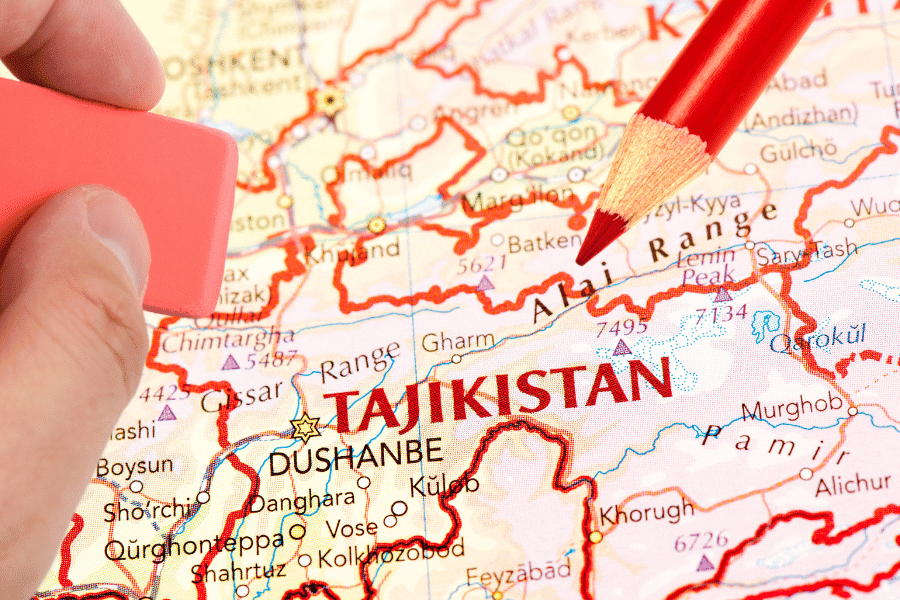
    Since then, disputes over grazing and water rights have also boiled over along the borders of Kyrgyzstan’s Batken region and Tajikistan’s Sughd region. In autumn 2022, in the worst fighting over the border since the fall of the Soviet Union, dozens were killed and thousands forced from their homes.

    It was after this that the leaders of Kyrgyzstan and Tajikistan started working on new demarcation lines. Now, after successful diplomacy to deal with the root cause of the problem, the two nations have agreed to shift their borders.

    “Negotiations have reached the final point and can be discussed openly,” Kamchybek Tashiev, head of Kyrgyzstan’s secret service, told the Kyrgyz parliament in March. “After parliamentary consideration, our presidents will sign the ratification.”

    Under the deal, Kyrgyzstan and Tajikistan will swap small areas of land and make better arrangements to share water resources. A number of disputed roads will be declared “neutral” and made available to both nations, according to the Defense Post.

    Which all goes to show that to secure friendship and good neighbourly relations, you sometimes have to define your boundaries.

    Recommended reading: “Prisoners of Geography” by Tim Marshall, an excellent account of how geography affects history and politics.


    Questions to consider:

    1. Why might there be disputes over borders?
    2. Why does the world generally agree that existing borders should remain untouched?
    3. What does the case of Kyrgyzstan and Tajikistan tell us about changing borders?

    Source link

  • Can France accept its past as an oppressor?

    Can France accept its past as an oppressor?

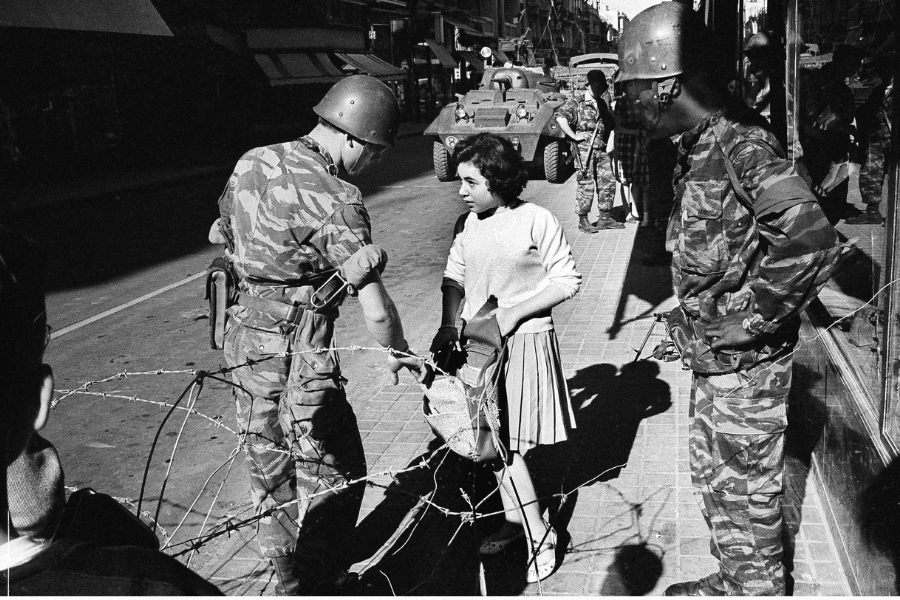
    The captives were taken to a centre where masked Algerian informers picked out suspected rebels. “Those were detained, interrogated, with a lot of violence. The rest were released.”

    Worse followed. Kihn was on guard duty when he first saw a suspect being tortured with electricity from a hand-cranked generator. “It was unbearable. The man was yelling, jerking around. I had tears in my eyes,” he said, his eyes filling again as he re-lived the moment.

    When he was discharged, no one in his village wanted to hear his war stories, so for decades he clammed up. But memories, nightmares and panic attacks kept tormenting him. When he was 70, a film-maker cajoled him into an interview. He later wrote a book and found a measure of relief.

    Kihn, disgusted by his experiences, would not touch his military pension. Instead, he and some other former soldiers send the money to local NGOs in Algeria.

    “What we need is recognition of the truth,” he said. “Yes, we were criminals in Algeria.”

    France has tried to turn the page, but the past will not die.

    It took France until 1999 to recognise formally that its struggle in Algeria had been a “war,” even though it had mobilised up to two million conscripts for “operations to restore order” against the independence-seeking fighters of the Front de Libération Nationale (FLN).

    The French campaign led to widespread torture, the forced displacement of two million civilians to cut the FLN from its rural base and countless summary executions and “disappearances.”

    The FLN was ruthless, too, terrorising French and Algerian civilians and eliminating its political rivals and eventually factions within its own ranks.

    The conflict, which brought violence to both sides of the Mediterranean, exposed deep divisions within France, toppled the country’s Fourth Republic and raised the spectre of civil war.

    After President Charles de Gaulle set Algeria on course for independence with a 1961 referendum, some French die-hards formed the Organisation de l’Armée Secrète (OAS), an armed group that mounted bomb attacks and assassinations, including at least one attempt to kill the French leader.

    OAS members eventually benefited from sweeping post-war amnesties. France sought to draw a veil and forget, but the past refused to die.

    Keeping the past alive

    Suzy Simon-Nicaise, 67, who heads one of the main associations of pieds-noirs, is determined to preserve a particular vision of the lost world of French Algeria, its culture, history and lifestyle.

    In her memory, it was a cosmopolitan place where Europeans mixed freely with Muslims based on mutual respect, where the French colonists had promoted development from the ground up.

    France, she concedes, may have committed some “not very glorious” deeds early on in its conquest of Algeria. “But Algeria did some things that were just as unbearable, if not more so,” she said.

    At a memorial event in Perpignan, Simon-Nicaise, wearing a dress as bright as her red hair, recounted a massacre of pieds-noirs in the mainly European city of Oran on July 5, 1962, the day Algeria became independent.

    She said 700 to 1,200 people were killed that day while French troops, in their barracks since the ceasefire in March, stood by with orders not to intervene. An exact toll has never been established. Macron, in his address to the pieds-noirs this year, said “hundreds” had died.

    Simon-Nicaise’s family had planned to stay on after independence, but an Algerian friend working with her father warned them to leave urgently, advice driven home by a French official who told her father that his name was on an FLN death-list. The family raced to the port with four suitcases.

    Around 800,000 pieds-noirs, the vast majority of the Europeans living in Algeria, also voted with their feet, believing their only choice was “la valise ou le cercueil (the suitcase or the coffin).”

    The French government had not anticipated such an exodus, and the flood of new arrivals met a chaotic and chilly reception.

    “We were treated worse than foreigners,” Simon-Nicaise said, recalling how she, then five, and her family were put up in a holiday village. “My family was crying, and everyone else was dancing the twist.”

    Later, her family had to share a cramped, squalid apartment with another family in Le Havre. Simon-Nicaise went to school there, where she heard a classmate declare: “Don’t talk to her. She’s a dirty pied-noir.”

    France’s rejected allies in Algeria

    If the pieds-noirs were mostly unwelcome in France, the harkis — Algerians who had served with the French military were doubly so. De Gaulle had rejected any idea of taking them in, effectively abandoning tens of thousands of men and their families to FLN vengeance.

    Nevertheless, up to 90,000 harkis made it to France, many helped by their French commanders. They were consigned to grim army camps behind barbed wire, most of them for many years.

    “There were no toilets, one washbasin for 10 families,” said Abdelkrim Sid, who was six on arrival and spent the next 15 years with his sprawling family in isolated camps.

    His father, like many other harkis, was later put to work in forestry settlements on the minimum wage but never fully integrated into the wider economy.

    “My father was a spahi (cavalryman). He really believed in France,” said Sid at the bleak Rivesaltes camp near Perpignan.

    In Rivesaltes, a museum now commemorates successive waves of inmates dumped there from 1939 onwards, among them refugees from the Spanish civil war, Gypsies and Jews interned by the wartime Vichy régime, German prisoners of war and then harkis.

    Sid, a burly retired truck-driver, says he can’t forget how shamefully the harkis were treated in the camps, which he likened to pens for animals.  “It was as if we had the plague.”

    Troubled identity

    The war deeply marked the Algerian diaspora, swelled by migration that also drew in Moroccans and Tunisians whose labour was in demand as the French economy revived after World War Two.

    North Africans today make up the bulk of France’s estimated 5-6 million Muslim citizens, roughly 8% of its total population, the biggest ratio in any European country.

    France, which prides itself on its principle of laïcité, which makes the secular state neutral towards religion, has found it difficult to come to terms with its Muslim minority. The complex relationship is made no easier by mutual mistrust that has lingered since the colonial venture in Algeria.

    Magyd Cherfi has tried hard to integrate in his native France, with outward success as a musician and songwriter, a devotee of French literature and an author in his own right.

    Yet as he explained at a café in a mostly Arab quarter of Toulouse, the city where he grew up, he has never felt fully accepted as French. Ironically, he knows that many in the deprived milieu of his childhood resent him as a traitor to his origins.

    “It’s as if being French is a mountaintop. You climb and climb, and it’s never far enough,” he said.

    “In the street, they ask, ‘Oh, where are you from?’ That means you are not French, because if you are, no one asks that question.”

    Cherfi’s father, a building worker, fled to France after four of his brothers were killed fighting in the maquis, or underground, during the Algeria war. “He only told us fragments of what happened then, about bad things the French did to his family, girls raped, cousins killed, imprisoned, tortured.”

    So Cherfi grew up with an uneasy sense of difference from his French chums because France had been the enemy in Algeria. Yet when his parents decided to stay in France, when he was about 15, they told him, “You must respect the French. They give us work. They feed us.”

    He admires much of what France offers, notably freedom and secularism, but says it fails to honour its own principles when it comes to its non-white citizens.

    “That’s the big rip-off of the republic. France is unable to build a narrative that is anything other than exclusively white. We barely exist in French history,” he said.

    “So France is still sausages, accordions, traditions, villages, and now, with millions of Muslims here, you feel they cling to this even more. So it’s quick, get out the accordions!”


    Questions to consider:

    • What was Algeria’s relationship to France before it gained independence in 1962?

    • How were the post-war experiences of the pieds-noirs and harkis similar and different?

    • Why do you think it took until 1999 for France to recognize the conflict over Algeria as a war?

    • What would you do to improve the integration of France’s Arab/African-origin citizens?


    Source link

  • Will the Vatican find its next pope in an unlikely place?

    Will the Vatican find its next pope in an unlikely place?

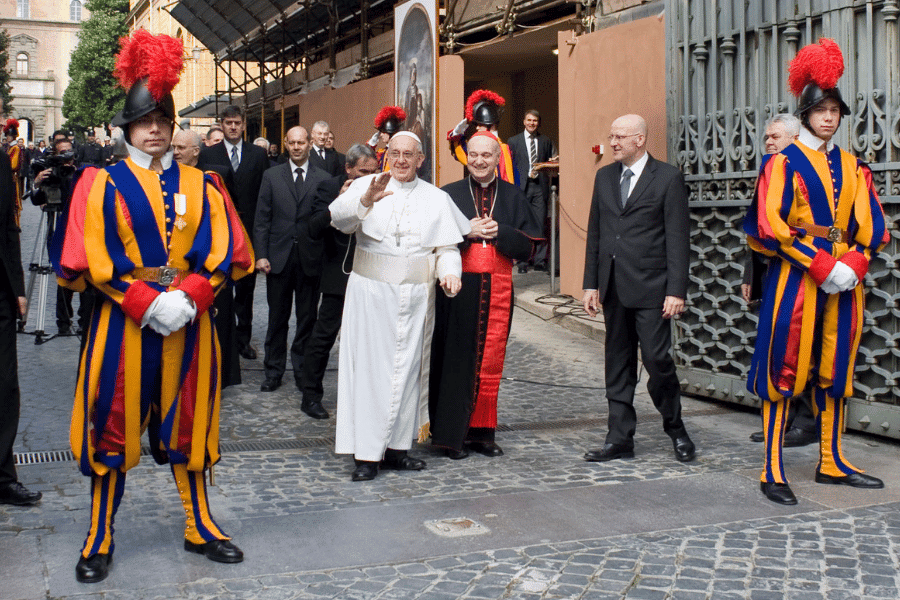
    If you’ve seen the award-winning film “Conclave”, you now know how exciting it can be when Catholicism’s cardinals gather behind closed doors to elect a new pope. The declining health in Pope Francis, 88, means another conclave is coming sooner rather than later. 

    So who is likely to win? The truth is — we have no idea. 

    What are the issues the world’s 1.3 billion Catholics would like the next head of their worldwide Church to tackle? We don’t know that for certain either. 

    In his 12 years as pope, Francis has so scrambled the Church and the traditional paths toward becoming its leader that the conclave — already the strangest election you’ll never see — is even harder than ever to predict. 

    With the 120 cardinal electors so unsure, unforeseen events like a stirring speech behind closed doors can produce big changes. That’s how Buenos Aires Cardinal Jorge Bergoglio became Pope Francis back in 2013. 

    Don’t trust the early bets.

    Another lesson from recent conclaves is to be very wary of any lists of leading candidates. They are not based on opinion polls or popularity contests like forecasts before political elections. 

    They are in fact little more than educated guesses by journalists and bookmakers, and can be laughingly far off the mark. 

    Many lists prior to the 2005 conclave named Milan Cardinal Dionigi Tettamanzi as a leading candidate; he reportedly got only two votes. In 2013, the pro-conclave lists of papabili — potential popes — did not even mention the eventual winner. 

    But readers always want to know what will happen, and the final result we can’t predict. Since this will be the third conclave I’ve either covered or commented on, let me at least say what to expect.

    First of all, if you want, go see the film “Conclave”at best before we learn if it has won any Oscars. Sure, the film is tenser and more action-packed than a real conclave, and its ending seems improbable. Due to timing limits, the leading characters are painted with a rather cartoonish brush. There are some small mistakes.

    But this is entertainment, not a documentary. It is beautifully filmed. It gives an idea of the predictable ritual and possible mishaps that could influence the outcome. It’s worth seeing even if not totally believing.

    Politicking for popedom

    As the film shows, hopeful candidates drum up support without publicly declaring their candidacy. Open campaigning is out but supporters eagerly swap information about favorites and opponents. 

    Speeches about the Church during the closed-door “general congregations” meeting the week before the conclave become veiled campaign pitches for the ambitious.

    Once they enter the Sistine Chapel for the conclave, the cardinals are cut off from the outside world and sworn to secrecy. This lasts for a few days of voting — a two-thirds majority is needed — until white smoke goes up from the chapel’s chimney and the new pope appears in public for the first time on the balcony of St. Peter’s Basilica next door.

    What makes this conclave even more unpredictable than earlier ones is that Pope Francis has often overlooked traditional cardinal’s seats in Europe to give red hats to lesser-known and more pastorally-minded bishops from his beloved “peripheries.”

    There are now cardinals in unlikely places such as Yangon, Ulaanbaatar, Algiers and Tehran, representing minuscule communities of Catholics. It’s hard to say what these prelates think or how they will vote.

    A new pope could mean a new direction.

    Pope Francis has appointed about 80 of the current cardinal electors out of 120, so the two-thirds majority needed for election should be there. But since so many of them are not known in Rome, it’s hard to say whether they want to continue his policies or take the Church in a different direction.

    After the 2013 conclave, several conservative Catholic groups — mostly in the United States — disapproved of Pope Francis’s more open style. They said cardinals did not have enough information before they voted him in, and vowed to publish detailed profiles of all prelates on the internet. 

    The College of Cardinals Report seems the furthest advanced, with profiles of 40 cardinals with their positions on key issues like abortion or woman priests. It is headed by Edward Pentin, a conservative Vatican watcher. 

    Another project, the Red Hat Report, began in 2018 with lots of publicity saying ex-FBI agents would do some of the research and freelancers would help edit cardinals’ Wikipedia pages. It also leans conservative but has not made much noise recently. 

    Their main candidate appears to be Budapest Cardinal Péter Erdő, who headed the Council of the Bishops’ Conferences of Europe from 2006 to 2016. 

    Considered close to Hungarian Prime Minister Viktor Orbán, he seems not to share Pope Francis’s very welcoming views on migration but has hosted two visits by Pope Francis to Budapest.

    Power in the Global South

    Another conservative noticed is Kinshasa Cardinal Fridolin Ambongo Besungu, although the very traditional stances African prelates take turn off other cardinals. 

    Progressives mentioned include Bologna Cardinal Matteo Zuppi, head of the Italian Bishops Conference, and Curia Cardinal Luis Tagle, a Filipino once dubbed the “Asian Francis.” But it’s unclear whether a majority of cardinals wants an extension of the Francis years.

    There are also moderates such as two Italians — possibly too diplomatic Cardinal Pietro Parolin, the current Secretary of Stage (number two man at the Vatican), and Cardinal Pierbattista Pizzaballa, the Latin Patriarch of Jerusalem — as well as French Cardinal Jean-Marc Aveline, who shares Pope Francis’s interest in the Mediterranean and caring for its migrants.

    But with two-thirds of all Catholics now in the Global South, will the conclave return to the Italian and then European monopoly on the papacy after an Argentinian pope?

    There are far more questions than answers. We’ll only start to know the responses after the white smoke rises.


    Three questions to consider:

    1. Why was Pope Francis hailed as a rule-breaker when he was elected to head the Catholic Church in 2013?
    2. How does politics play out in the election of a new pope?
    3. If you were part of the next conclave what would you be looking for in the candidates for pope?


    Source link

  • The importance of Ukraine to the world

    The importance of Ukraine to the world

    A radical violation of international law

    Daniel Warner: Since the end of World War Two in 1945, the relations between countries have been more or less governed by certain norms. The United Nations and international law have been the foundations for over 70 years of relative peace. While there have been small outbreaks of violence, there have been no major violent confrontations. The Cold War was not a hot war.

    The Russian attacks on Ukraine violate numerous parts of that established order. While the Russian president claims that Ukraine is not a real state and is part of Russia, Ukraine, since the end of the Soviet Union in 1991, is a country recognized by the international community. A country bombing another country is a radical violation of international law.

    How to respond? While the government of Ukraine will attempt to respond militarily, other countries will try to impose sanctions on Russia in order to stop the fighting while not engaging in a major conflict.

    The implications around the world will vary. But the most damaging implication for everyone will be the lack of respect for international norms that have been the bedrock of peace for over 70 years.

    Inconsistent champions of international norms

    Alistair Lyon: Putin’s invasion of Ukraine is an unconscionable violation of international law, the integrity of national borders and any respect for the rules of the United Nations, where Russia sits as a veto-wielding member of the Security Council.

    Anglo-Saxon outrage at the Russian leader’s use of military power would carry more weight if the United States and Britain had themselves proved consistent champions of international norms since the Cold War ended with the collapse of the Soviet Union in 1991.

    The U.S.-British invasion of Iraq in 2003 punched a huge hole in the post-Cold War security system. The war, launched on spurious grounds and without U.N. authorisation, was opposed not only by Russia and China, but also by France and other NATO allies such as Germany.

    The assault on Ukraine might seem more shocking to some because it threatens peace in Europe, but the Iraqi debacle helped destabilise the Middle East, spurred Islamic militancy and crippled U.S. influence in the region, leaving a vacuum filled by others, including Turkey, Iran and Russia.

    The commitment of the United States to international law also came into question when former President Donald Trump endorsed Israel’s 1981 annexation of Syria’s Golan Heights and recognised Jerusalem as the Jewish state’s capital, including the city’s occupied eastern sector, which Palestinians see as their future capital. President Joe Biden has not reversed those moves.

    A fear of democracy

    Julian Nundy: What if the reason for invading Ukraine was nothing to do with NATO after all? What if it was just a fear that the functioning democracy that has developed in Russia’s southwestern neighbor could be contagious?

    Amid all the media attention given to Moscow’s calls for NATO to renounce any idea of admitting Ukraine into the western military alliance, there have been commentaries, stirring less debate, that it is President Vladimir Putin’s obsession with “color” revolutions in former Soviet republics — especially the 2004 Orange Revolution in Ukraine that led to a re-run of a presidential election and the final inauguration of a westward-looking government — that prompted his decision to use force to bring Ukraine into line.

    “On the whole, strategic stability is maintained … NATO forces are not building up, and they are not showing threatening activity,” wrote one commentator at the end of January. And not just any commentator. It was retired Colonel General Leonid Ivashov, chairman of the All-Russian Officers’ Assembly, who as a serving general occupied several of the most senior command posts in the Soviet and Russian armies.

    The statement was given prominent coverage on Ekho Moskvy (Moscow Echo) radio, which is owned by the Gazprom gas giant’s media arm, suggesting that Putin had less than total backing for his policy in very high places. Ivashov said Putin threatened to make “Russians and Ukrainians mortal enemies” and turn Russia “into a pariah of the world community.”

    If the invasion really was motivated by a fear of democracy, then Russia itself — where there are now reported to be more political prisoners than in the Soviet Union 40 years ago and where free speech and other rights are being reined in on a regular basis — can expect yet more erosion of basic freedoms. And if Putin succeeds in bringing Ukraine under control, who will be next? The former communist states of eastern Europe, most probably, and then, perhaps, the rest of Europe.

    Climate change will go on the back burner.

    Helen Womack: Quite apart from the suffering of Ukraine, this war may go well beyond its borders. If Putin attacks the Baltic States or Poland, NATO will be obliged to come in militarily.

    NATO member Hungary, which under Prime Minister Viktor Orbán has in the past sought friendly relations with Putin, will be forced to make clear where it really stands.

    War between Russia and NATO would amount to a third world war, and let us not forget that Russia has nuclear weapons. But Putin is NOT Russia, and his war is not likely to be popular with ordinary Russians. The only hope is that internal opposition will grow.

    Ultimately, this war will bring Putin down but at what cost? The world has better things to be thinking about than war, but again climate change will go on the back burner while we focus on this.

    Ukraine does matter.

    Alex Nicoll: Does Ukraine matter to the wider world? Well, if armed gangsters took over your neighbour’s house, what would you do?

    Would you, like Donald Trump, say “genius move,” shrug your shoulders and go back to your golf game? Or might you think that your house, and your friends’ houses, could be next?

    This is the situation facing all western governments today as they watch the invasion of a democratic European country. We live in a sophisticated, digitised world. But we can see plainly that our comforts can be undone by old-style tanks, missiles and bombs. The atrocities of war have not been consigned to history.

    If you are American, your reaction might be that this is happening a long way away, so why should I care? Someone else’s problem! But remember that the United States too was attacked in 1941 and 2001, resulting each time in American involvement in long global conflicts and the loss of many American lives. Because of past traumas, the U.S. is party to numerous alliances, agreements and friendships. These benefit Americans just as much as other people around the world. Thanks to strong alliances, a third world war has been averted.

    So far. It is for mutual self-preservation — leaving aside moral outrage at Russia’s attack on Ukraine — that Western countries now need to unite to starve Putin of money and support, so that the venture in Ukraine fails and global conflict is averted. It does matter.

    None of this bodes well economically.

    Bryson Hull: The conflict in Ukraine is already raising energy prices and that in turn will make climate change policies, which entail higher costs or wholesale energy system changes such as eliminating oil and natural gas, less palatable to voters. Politicians will correspondingly find it less attractive to support aggressive steps to mitigate climate risks until energy prices trend lower.

    The realities of war in Ukraine and the global economic spillover will necessarily put more aggressive carbon-zero efforts to the wayside because of cost concerns. The tradeoff there is that practical, achievable energy and climate policies will fall back into vogue with politicians — who fear high energy costs as the election risk they are — instead of activist/pressure group-driven policies like those that are faring disastrously in the UK and Europe. Good sense and appropriate urgency may now be able to coexist in the sphere of energy prices versus climate ambitions.

    There are already about 20 U.S. liquified natural gas cargoes diverted to Europe from Asia on a pure arbitrage market play because of Ukraine. Already they’re running up against offloading capacity issues. High crude prices fund the war, and you can already see the Biden Administration greens doing everything they can to avoid the U.S. stepping into the gas supply breach with Democratic Senators urging a liquefied natural gas export ban.

    With the highest inflation in 40 years and gasoline (petrol) back at seven-year highs, none of this bodes well economically unless Biden goes Keynesian and cranks up the war machine.

    Europe needs Russian gas.

    Jeremy Lovell: Putin has very openly been using energy as an economic and political lever on Europe for some time. I reckon Europe needs Russian gas on balance rather more than Russia needs Europe’s gas market. It has VAST resources of untapped gas such as the Shtokman field and can always supply elsewhere given time. China is a good option there.

    But both Putin and Xi appear to have megalomaniac tendencies — although one is rather more thuggish than the other, at least on the surface — and an alliance between the two might be a bit fragile in much more than the immediate term.

    Given that the Ukraine venture seems rather unlikely to have been a spur-of-the-moment thing, I assume Putin calculates Europe will fold quietly in a relatively short time, giving him carte blanche to act at will and isolating the U.S. even further.

    The Brits may crow about the fact the UK does not import much if any Russian gas. But gas is a pure commodity. Supplies of floating liquefied natural gas (LNG) frequently change destination several times on any given voyage. So if Russia fiddles with gas supplies — or Ukraine taps off even more than it usually does — then Qatari LNG heading for South Wales or London will simply divert to Belgium or France, and the UK, which has minuscule storage facilities, will be left hanging.

    No legal standing

    Robert Holloway: Putin’s legal justification for the invasion is very flimsy, to say the least. He said he acted “in accordance with Article 51 of the United Nations Charter” after two provinces in eastern Ukraine sought Russia’s help.

    The UN Charter recognises the right of a member state to self-defence in case of armed attack. Even allowing Putin’s breath-taking claim that Ukraine was the aggressor, the breakaway provinces are not UN member states and have no legal standing under the Charter. And Russia, which is a member, is not under attack.

    The Charter goes on to say that an attack on a member state must be reported to the UN Security Council so it can take measures to maintain international peace and security.

    But even if Ukraine reports the invasion to the UN, Russia is one of the five permanent members of the Security Council with the power to veto any of its decisions.

    A carnivore among herbivores

    Tom Heneghan: Before leaving Paris last week, I heard the French philosopher Luc Ferry say on French radio: “Putin is a carnivore in a world of herbivores.” That goes to the heart of what is happening now. Since the fall of the Soviet Union, it seemed that most countries were playing by the post-World War Two rules that say borders are inviolable and problems between countries should be solved peacefully. That has not always been the case, of course, but all knew the rules and mostly kept by them. The speech by the Kenyan ambassador to the U.N. the other day was a good example of that.

    Biden keeps on saying we will not send U.S. troops to Ukraine, and that’s both a recognition of reality in U.S. politics and admission that Russia should not be unduly provoked. But the U.S. has been willing to send U.S. troops to a lot of countries in recent decades, like Kuwait, Iraq, former Yugoslavia and Afghanistan. They were smaller and the wars were theoretically winnable. The wars did not always turn out as planned. Both the U.S. and its adversaries in those countries were carnivores — think Saddam Hussain or Slobodan Milosovic — but the forces were unequal and politics messy.

    Russia has been a carnivore in recent years — Georgia, Crimea, in a lesser way Belarus — and continues now. NATO now shows admirable resolve in standing up for the rules-based world order. But how long will that last? Putin is thinking of history and ready to play a long game here. The West — for lack of a better term — has to adjust to the long term too. This doesn’t mean the West has to become a carnivore as well, but it has to think far more strategically about Russia than it has so far. Ukraine is bigger and more central than those smaller wars. That Putin opted for a full invasion rather than more green-man salami tactics tells us that his goal is to turn the clock back to bloc-style divisions.

    A lot of commentators have been saying this crisis is like the Cuban Missile Crisis of 1962, and in many ways that’s true. But I think another important comparison is with the 1948 Berlin Blockade, when the USSR blocked Allied rights to ship goods through East Germany to West Berlin. The Cuban Missile Crisis was a perilous standoff that ended quickly. The Berlin Blockade lasted about a year and a half and required sustained Allied solidarity and the famous airlift to West Berlin. We’re going to need that kind of sustained solidarity to ensure we can hold the line on the rules-based world order.

    One of the elements in any sustained strategy is weeding the Russian oligarchs out of the Western economic system. Suspending Nordstream 2 was a good start. How about stopping all the money laundering the oligarchs get away with in Western countries? All the property they’ve bought up in London, New York and elsewhere to squirrel their money abroad? And what about their relatives, like the children who get to study in the best universities we have? Part of Putin’s power lies in the way he has allowed oligarchs make money as long as they do not play politics and contribute to soft-power causes he likes, such as the “Russkii Mir” (Russian World) projects promoting Russian culture and the massive church-building of the Russian Orthodox Church? These non-governmental organizations are not non-political.

    A carnivore among herbivores. Not all carnivores have won against smart herbivores, but Moscow has a far more crafty carnivore in power this time around. We need sustained solidarity now to deal with this challenge, probably more than we seem to be capable of these days. Let’s hope we can do it.

    A major blow to Pax Americana

    Jim Wolf: Russia’s armed thrust into Ukraine marks a major blow to the so-called Pax Americana, the state of relative peace since the end of World War Two. That’s when the United States became the world’s top economic and military power.

    The land, air and sea attack on an increasingly pro-Western Ukraine supercharges a Great Power rivalry as U.S. clout has been slipping and China-Russia solidarity is growing.

    The old Soviet Union dissolved in 1991 after a 40-year “Cold War” with the U.S. — a geopolitical struggle that also dominated the world view of both powers’ respective allies and blocs. With the Soviet Union’s collapse, its 15 former Communist-controlled republics gained independence, leaving the U.S. the sole remaining superpower.

    Russian leader Vladimir Putin has called that fall “the greatest geopolitical catastrophe” of a 20th century that was also wracked by two world wars. In launching the biggest attack by one state against another since the end of World War Two, Putin said he was protecting Russian citizens among others subjected to “genocide” in Ukraine, which has infuriated Moscow by aiming to join the U.S-led NATO military alliance.

    Putin warned against outside interference, saying Russia is “a powerful nuclear state.

    Off the Earth, for the Earth

    Tira Shubart: At the moment onboard the International Space Station is a crew of seven: two Russians, four Americans and a German. Other than the German and one American – who is a doctor – they are bred and trained in the military.

    The crew all speak English and Russian.

    In fact, one of the Americans, Kayla Barron, is a Submarine Warfare officer. The doctor has been working with Russians — and on joint missions with the Russians since 1997. His Russian is particularly good.

    The United States and Russia — NASA and Roscosmos — were in the process of negotiating more crew exchanges. And at the moment there are three Russian cosmonauts — who are certainly military as all cosmonauts are — training at the Johnson Space Center in Houston.

    Finally, on March 30, one of the Americans, Mark Vande Hei — also a professor at West Point — will be landing in Kazakhstan with the two Russians. Traditionally, a NASA team flies in through Russia and joins their recovery team, then bounces back through Russia to the United States. It will be interesting to see what happens.

    Twitter posts today from the international space community were saddened and alarmed by the Ukraine crisis but agreed that solidarity in space, which one called “the pinnacle of human cooperation” would not be threatened. After all, the U.S. Astronauts and the Russian Cosmonauts of the Cold War era held each other in high regard and the crew members onboard “have trained together for years and are personal friends.”

    There is a club of Space Explorers which are all the astronauts and cosmonauts who have flown. They say they simply regard themselves as earthlings after looking down and seeing no borders on our planet. But surely the ISS motto of “Off the Earth, For the Earth” will be in their minds now.

    Embers of dead empires

    Jeremy Solomons: An immediate African perspective on the Ukraine invasion was shared by Kenyan U.N. Ambassador Martin Kimani, who used a speech at the UN Security Council on Tuesday to warn Russia to respect its border with Ukraine, using Africa’s colonial past to highlight the dangers of stoking the “embers of dead empires.”

    More controversially, he went on to say: “At independence, had we chosen to pursue states on the basis of ethnic, racial or religious homogeneity, we would still be waging bloody wars these many decades later. Instead, we agreed that we would settle for the borders that we inherited. But we would still pursue continental political, economic and legal integration. Rather than form nations that looked ever backwards into history with a dangerous nostalgia, we chose to look forward to a greatness none of our many nations and peoples had ever known … not because our borders satisfied us, but because we wanted something greater, forged in peace.”

    For some commentators, who are concerned about neo-colonialism on the African continent, this invoked the somewhat cynical conclusion of the late Tanzanian leader, Julius Nyerere, who said: “You multiply national anthems, national flags and national passports, seats at the UN and individuals entitled to 21 guns salute, not to speak of a host of ministers, prime ministers and envoys, you have a whole army of powerful people with vested interests in keeping Africa balkanised.”

    Floods, COVID-19, Ukraine

    Robert Hart: Obviously the UK government, as a committed member of NATO and a devoted ally of the United States, has joined the international clamour denouncing Russia’s attack.

    Prime Minister Boris Johnson has labelled the Russian offensive as “a tidal wave of violence” and declared that a “massive package” of sanctions will be introduced against Moscow.

    No doubt many young UK graduates and university students will see the Russian attack with alarm and deep concern about where this will all lead and how it may affect their future. But many others, young and older, will be reaching for an atlas to check where Ukraine is and wondering how much this matters.

    The UK itself has just come through a period of three consecutive typhoon strength storms which have caused major damage and severe flooding in many parts and given millions of people, young and old, plenty to worry about in their own lives.

    And those who follow national politics at all will have been hooked by the still ongoing saga of the prime minister’s involvement in a string of illicit drinks parties held in No.10 Downing Street during the peak months of COVID-19 lockdown. Smart young people don’t have to be super-cynical to see how the floods and now the Ukraine drama could divert public attention from Boris Johnson’s role in the lockdown parties scandal.

    Russian nuclear missiles feel very close to home.

    Tiziana Barghini: News of Russia’s invasion of Ukraine is an awful awakening. Putin has shown total disdain for international borders, agreements and customs. I wonder what his real motivations are – a way to build domestic consensus? I do not understand who is benefitting from this.

    This morning at a bakery in Milan, someone attached a sign – “Putin = Hitler”. World War Two — a story often told by my parents and grandparents. I feel relieved that I am burying my Mom today. My parents are not here anymore to see the world going on that path again. They were sincerely convinced that wars were something of the past.

    I feel thrown back into the Cold War years. Russian nuclear missiles feel very close to home in Milan and even closer to Germany, where my son lives. First the pandemic and now the war. I can’t believe we are really living this.


    Questions to consider:

    1. What reasons did Russian President Vladimir Putin give for invading Ukraine?
    2. How has the West and its allies reacted to the Russian aggression?
    3. Does the conflict in Ukraine matter to you, and if so, why?


    Source link