Category: History

  • Trump’s idea of peace in Gaza? Hotels and yacht clubs.

    Trump’s idea of peace in Gaza? Hotels and yacht clubs.

    U.S. President Donald Trump views Israel’s war on Gaza through the eyes of the real estate developer he was before he entered politics. 

    “We have an opportunity to do something that could be phenomenal,” he said at a joint news conference with Israeli Prime Minister Benjamin Netanyahu on 4 February. “And I don’t want to be cute. I don’t want to be a wise guy. But the Riviera of the Middle East.”

    He was talking about the possibility of forcing 2.2 million Palestinians from Gaza to make place for “the Riviera of the Middle East.”

    Elaborating the idea in social media posts and interviews, the U.S. president left no doubt that he saw one of the world’s most complex problems — the Israeli-Palestinian conflict — as a real estate deal.

    Trump explained that the United States could take over Gaza, a place where tens of thousands of people have been killed by Israeli air strikes and ground troops over the past 16 months. 

    Taking ownership of the conflict

    Israel has pummelled Gaza ever since 7 October 2024 when gunmen from the militant Hamas group stormed across the border, killed 1,200 Israelis and took more than 250 people hostage. 

     “I do see a long-term ownership position and I see it bringing great stability to that part of the Middle East and maybe the entire Middle East,” Trump said. “We’re going to take over that piece and we’re going to develop it, create thousands and thousands of jobs. And it will be something that the entire Middle East can be very proud of.”

    To make that possible, the people now living in the future Riviera must leave, possibly to neighbouring Jordan or Egypt, he said. 

    Leaders of both countries have rejected that idea, as has the Arab League, the Secretary General of the United Nations, Antonio Guterres and a host of human rights groups.

    Conspicuously absent from statements by Trump and officials of his administration was the matter of international law.

    The thorny issue of international law

    The forced deportation of civilians is prohibited by an array of provisions of the Geneva Conventions which the United States has ratified. 

    Forced deportation has been considered a war crime ever since the Nuremberg Trial of Nazi officials.

    The International Criminal Court lists the kind of forcible population transfer visualized by Trump’s Riviera of the Middle East plan as both a war crime and a crime against humanity. (The United States is not a member of the court because it never ratified the Rome Statute on the court’s establishment).

    The legal and geo-political arguments triggered by Trump’s controversial proposal often leave out the collective trauma that shapes the Palestinians’ national identity and political aspirations.

    That trauma dates back to the violence preceding the establishment of the state of Israel in 1948, more than 50 years after an Austrian Jew, Theodor Herzl, published a book (Der Judenstaat) that inspired the Zionist movement.

    A history of forced expulsion

    An estimated 700,000 Palestinians fled or were expelled from what is now Israel during the war between Zionist paramilitary fighters of the Haganah, the forerunners of today’s Israeli Defence Force, and regular soldiers of six Arab countries. 

    Palestinians call that forced exodus the Naqba (the catastrophe). At the time, many expected to return to their homes once the fighting was over.

    A resolution by the U.N. General Assembly seven months after the formal establishment of Israel provided for a right of return for those who fled. A General Assembly resolution in 1974 declared the right to return an “inalienable right.” 

    Like all General Assembly resolutions, the 1948 vote was not binding, but it was explicit: “Refugees wishing to return to their homes and live at peace with their neighbours should be permitted to do so at the earliest possible date and that compensation should be paid for the property of those choosing not to return…”

    Neither happened but the concept that those who left had a right to return has lived on for four generations, with hopes fading gradually but not entirely. There are still families who keep as heirlooms keys to the houses they fled in the turmoil of the Naqba.

    How history plays out today

    This history helps explain why today’s Palestinians in Gaza take seriously Trump’s proposal to resettle them all and their fear that any resettlement would result in permanent exile. 

    Trump’s “Riviera” proposal came as a surprise, apparently even to Netanyahu who stood next to him at the press conference. But it appears to have been a subject of discussion inside the Trump family for some time.

    At an event at Harvard university in February 2024, Trump’s son-in-law, Jared Kushner, mused about the untapped value of the Gaza strip and its beautiful beaches. “Gaza’s waterfront property, it could be very valuable, if people would focus on building up livelihoods,” Kushner said. 

    He did not specify which people would do the building but his father-in-law appears to be determined that it would not be the people now living there. 

    Who, then? It’s one of many questions yet to be answered in the era of Trump 2.0.


    Questions to consider:

    • What is one problem Trump will have if he wants the United States to take over Gaza?

    • Why do many Palestinians take Trump’s threat of relocation seriously?

    • What makes the idea that people have the right to return to homes their ancestors were force out of complicated?


     

    Source link

  • Registrars assembling – the history of the Association of Heads of University Administration

    Registrars assembling – the history of the Association of Heads of University Administration

    Many will not have seen this rather wonderful short history of AHUA, the Association of Heads of University Administration, published in 2024 and written by John Hogan, who retired as registrar at Newcastle University in 2022.

    Having been involved in AHUA for 18 years to the end of 2024, including 11 years on the executive and a couple of years as Honorary Secretary, I thought I had seen quite a lot in terms of the association’s development. However, as this report shows, I really did not know the half of it and my contributions were genuinely minor alongside the achievements of those who went before.

    In development

    The origins of what is now AHUA date back, in formal records at least, to a “Registrars’ Conference” in 1939, just before the outbreak of war. It was attended by ten people representing seven different universities (with apologies from two more) and chaired by the registrar of Durham University, William Angus (later secretary at the University of Aberdeen from 1952 to 1967 and referred to by his previous colleagues as “Aberdeen Angus,” apparently).

    Extract from the minutes of the 1939 Registrars’ Conference

    While some of the issues discussed were very much of the time, such as air raid precautions, others have contemporary resonance such as ensuring inclusion of students on the electoral register. Admittedly this was a slightly different situation given that there were university constituencies at that time and there were real concerns about institutions’ ability adequately to count potential electors. Other issues though seem very familiar including student health, international students, admissions qualifications and student fees.

    As the organisation developed as the Conference of Registrars and Secretaries (CRS), after the war it became UK-wide and spent considerable time in the 1960s discussing and dealing with an expanded HE sector such that it had 23 UK universities in membership by then.

    As noted in John Hogan’s report – and as is evident from the photographs from conferences in the 60s through to the early 90s – it was a hugely white male-dominated organisation for many years, reflective of university administrations at that time.

    Fortunately, much has changed in composition since then. Structures in universities were rather different in those days too although for the whole membership, regardless of title, a core duty was acting as a confidential source of advice and support for the vice chancellor. Further elements identified in the 1960s which continue to be a part of many AHUA members’ roles include leading a significant portfolio of university services and advising the university’s statutory bodies and other senior officers. Relative to today numbers were tiny – only around 400 administrative staff in 1953 rising to a still modest figure of around 1,900 by 1973, although both of these numbers exclude what were deemed “clerical” posts.

    It is also interesting to note that, under the auspices of the Committee of Vice-Chancellors and Principals (CVCP), a number of registrars were heavily involved in the establishment of the Universities Central Council on Admissions (UCCA) in 1961. This body, reformed as the Universities and Colleges Admissions Service – UCAS – in 1993, was for many years notable as an example of a genuinely efficient and effective shared service in supporting university admissions (although its governance structure and mission has changed somewhat since then).

    Topical matters

    In determining conference topics members were consulted via paper questionnaires on the issues of the day (although, entertainingly, this process generated a big bureaucracy which had to be scaled back). In 1964, responses were sought on the following:

    What information was held in student records, the ratio of secretarial to academic staff, the operation of telephone systems, the appointment of supervisors for higher degrees, amongst many other matters.

    Moreover, the records uncovered by the author show some problems are perennial:

    The fraudulent publication of degree certificates was a concern at the 1948 Conference. Student behaviour, and car parking both featured in 1962. Pressure to change the academic year from October–September to January–December was first acknowledged in 1965. Nearly all universities had considered the possibility and rejected it.

    Excitingly, IT became a white-hot topic in the 1960s and there were discussions over the national coordination of student records – this led to a working party involving the UGC and the Royal Statistical Society. As I recently noted here, the issue has not gone away…

    As Hogan notes, the records of proceedings appear generally cordial, although:

    The occasional acerbic comment was captured in the minutes. Ernest Bettenson, (Registrar of the University of Durham 1952 then of University of Newcastle upon Tyne 1963–1976) expressed the view that the 1972 “…White Paper was like Mrs Thatcher (its author as Education Minister) – well set out and attractive, but somehow unlovable.

    Beyond these formal matters, conferences also included cultural and social events including a formal dinner which, I am astonished to learn, was black tie until 2006 (thankfully that stopped before I joined in the following year). Other features which have, mercifully, not survived include the spouses’ programme, golf sessions and alcohol sponsorship (no fewer than three distilleries were sponsors for the 1995 conference in Aberdeen).

    Grappling with the issues

    CRS operations became a bit more business-like towards the end of the 1970s with the establishment of a standing steering committee and the appointment of a business secretary. Following the significant cuts in funding from 1981–82 the focus of discussions was very much on the consequent organisational challenges and, as Hogan notes:

    More horizon-scanning can be identified in CRS’s discussions during the 1980s than previously. William Waldegrave, then Parliamentary Under Secretary of State in the Department of Education and Science, predicted mergers across the so-called binary line, between universities and polytechnics, within the following ten years, when he spoke to the Conference in 1983.

    Plenty of contemporary echoes there. The Jarratt Report (1985) on management efficiency divided opinion in the CRS, with some supportive and others more sceptical or indeed scathing. Apparently, Jim Walsh, registrar at the University of Leeds, was particularly vocal:

    …warning members that he would oppose any attempt to turn the Conference into a kind of “Jarratt Enforcement” agency and distributing a criticism of the proposals under the title “A Load of Old Cobblers?”

    It is reassuring that CRS members struggled with its name back in the late 1980s in the same way as successors have ever since. It was accepted that “the name ‘conference’ was unhelpful, and ‘association’ was more attractive except for the resulting acronym – ARS.”

    However, before that issue could be resolved the CRS had to grapple with the more serious issue of the impact of the ending of the binary line. While almost every established university in 1992 had a registrar or secretary, the structures in the newer universities was much more varied meaning that it took some time to come to a full settlement on who would be eligible to join an expanded organisation.

    And then, of course, a new name was required. ARS was off the table so the “Association of University Heads of Administration” or the “Association of Heads of University Administration” were the preferred options. CVCP was consulted and it seems some vice chancellors were unhappy with the title on the basis that they saw themselves as the head of the administration. Anyway, a decision was made and the name and abbreviation everyone struggles to pronounce to this day was agreed upon.

    You’ve come a long way

    Hogan goes on to note the broader engagement of AHUA and its member with regulators and other sector agencies from the late 1990s onwards as well as the importance of its regional groupings and the key role played by full-time professional staff support from 2001 (Catherine Webb served as Executive Secretary from 2006 to 2024, providing vital continuity and vast expertise). Policy concerns at executive meetings and conferences throughout the last two decades have included governance, statute changes, pensions, the need for better regulation and a reduction in the regulatory burden.

    Other significant developments in the recent period have included development programmes, for new and aspiring registrars, growing the association’s communications and influencing activities, developing the national Ambitious Futures graduate training programme (which sadly ended as a consequence of the pandemic) and a reciprocal mentoring programme between staff of colour and AHUA launched. All were driven forward by a (much missed) former chair, Jonathan Nicholls, who also sought to establish AHUA as the “go-to” professional organisation in the sector.

    AHUA, as Hogan’s history shows, has come a long way but remains a key UK-wide sector organisation with a slightly more diverse membership than in the past, but there is still some way to go there. It’s an organisation of which I hugely valued being a part and it is great to read this short but comprehensive report on AHUA’s origins and development.

    AHUA Spring Conference 2024 at the University of Leeds

    Source link

  • Black History Month: African Americans and Labor

    Black History Month: African Americans and Labor

    Reading Time: 3 minutes

    This February 2025, we’re honoring Black History Month. The 2025 theme is “African Americans and Labor,” emphasizing the impact Black Americans have made through various working roles.

    We’d like to recognize the significant contributions of three Black educators who helped shape the future of higher education, breaking down barriers and inspiring generations of learners and educational leaders.

    Mary McLeod Bethune

    Mary McLeod Bethune is regarded as one of the most significant Black educators and civil rights activists of the 20th century. The daughter of formerly enslaved parents, Bethune believed education was key to opening the doors of opportunity for Black Americans. She founded the Daytona Normal and Industrial Institute for Negro Girls in Daytona, Florida, in 1904, serving as president of the school. The school was eventually combined with the Cookman Institute for Men in 1923 (other sources cite 1929), merging to form the Bethune-Cookman College, Bethune becoming the first Black woman to serve as a college president. The college was one of the few institutions where Black students could seek a college degree. And as of fall 2023, Bethune-Cookman University enrolled 2,415 undergraduate students.

    Mary McLeod Bethune, Schomburg Center for Research in Black Culture, Photographs and Prints Division, The New York Public Library. (1940 – 1949).

    Kelly Miller

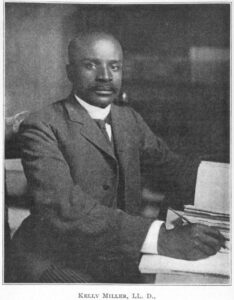
    Kelly Miller was a groundbreaking educator, mathematician and writer, becoming the first Black man to attend Johns Hopkins University for post-graduate study. He would go on to eventually join Howard University’s faculty as a mathematics professor, helping found the American Negro Academy in 1897, the first organization for Black scholars and artists.

    Miller introduced sociology to Howard’s curriculum in 1895, becoming the first person to teach the subject at the university. Eventually becoming dean of Howard’s College of Arts and Sciences in 1907, he worked to add new natural and social science courses, transforming the curriculum. Due to his tireless recruitment efforts across the south, student enrollment tripled during his first four years in that position.

    Kelly Miller.
    Kelly Miller, LL.D. Schomburg Center for Research in Black Culture, Jean Blackwell Hutson Research and Reference Division, The New York Public Library. (1904).

    Mary Jane Patterson

    Becoming the first Black woman to receive a bachelor’s degree when she graduated from Oberlin College in 1862, Mary Jane Patterson quickly established herself as trailblazer. She devoted her career to education, teaching at the Institute of Colored Youth, now known as Cheyney University, eventually becoming the school principal at the Preparatory High School for Colored Youth, the first U.S. public high school for Black Americans. The Mary Jane Patterson Scholarship was established in 2019, which aims to support post-baccalaureate students who are interested in teaching in urban classrooms.

    Mary Jane Patterson
    Mary Jane Patterson, first Black woman to be granted a bachelor’s degree in the U.S. (Oberlin College, 1862). Photo retrieved from Oberlin College Archives.


    During this Black History Month 2025, we celebrate the contributions of these three Black educators whose accomplishments continue to ring out throughout higher education today.

    If you’re interested in history content for your course, we encourage you to browse our history catalog.

    Source link

  • Can regional leaders help bring peace to DR Congo?

    Can regional leaders help bring peace to DR Congo?

    Critics abroad and in Congo accuse DRC president Tshisekedi and his government of being distant, corrupt and ineffective and continually failing to meet promises or even talk to the rebels. 

    “I am exhausted with Tshisekedi’s governance,” said one Congolese citizen.

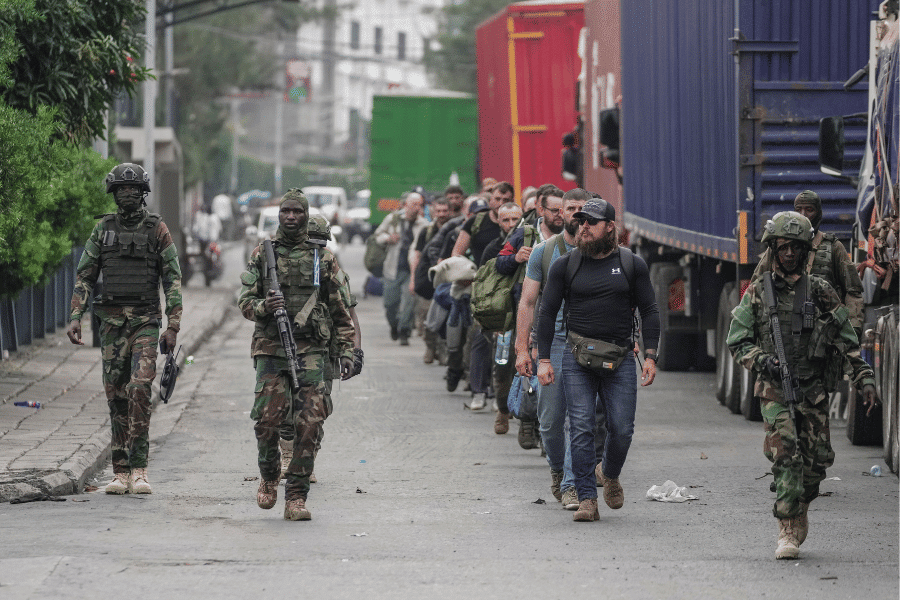
    There have been strong and repeated accusations by the United Nations and others that the M23, which is now part of the broader Alliance Fleuve Congo (AFC), receives both funding and tangible support from Rwanda and its army, that it has been responsible for excessive violence — including reports of rape in a Goma prison last week — and that it has benefited from the increasing control of lucrative mineral mines in the region.  

    A multinational push for peace

    The actual truth is much more complex, nuanced and difficult to distinguish, especially given the direct involvement of national army soldiers on the ground, not just from the DRC and Rwanda but from other countries, such as Burundi, South Africa and Tanzania. 

    There are also about 14,000 UN peacekeeping forces in the region, as well as more than 100 other militia groups and even mercenaries from Eastern Europe. Rwanda recently ensured the safe repatriation of 300 of them back to Romania.

    And then there are powerful political and business leaders in the United States, Europe, Russia and China who somewhat cynically want to ensure the continued supply of precious minerals — such as cobalt, coltan and tantalum — for their cars, cellphones and computers. 

    On a more personal level, I live with my Rwandan wife and young son in a newly-built house just south of Rwanda’s capital city of Kigali, which lies only 150 kilometres away from the current conflict zone and which has been repeatedly threatened by DRC president Tshisekedi and leading government officials.

    Just last week, Rwanda’s ambassador to the UN in Geneva, James Ngango, accused the DRC of amassing a stockpile of weapons — including rockets, kamikaze drones and heavy artillery guns — that are pointed straight at Rwanda.

    Fears that violence will cross borders

    My wife Merveille — whose father and three brothers may well have been murdered by some of the current FDLR militia fighters in eastern DRC — still has nightmares about them possibly attacking or even taking back Rwanda.

    A Rwanda security expert texted me that the threat to “attack Rwanda immediately” was real before the M23 rebels took over Goma and there are still concerns about large weapon stockpiles in South Kivu province. He added that if the M23 can now secure the regional capital of Bukavu and the nearby Kavumu airport “all security risks against Rwanda will be reduced/mitigated.”

    This will allay our personal concerns but we are still worried about the security of some close friends in Goma, who fell silent for five whole days after the M23 rebels took control of their city in late January but thankfully got back in contact right after power and WiFi service were restored.

    Daily life in Goma has returned to something like normal over the last week or so but the nighttime is different.

    One of our friends texted me on Tuesday: “Safety in Goma is degrading day in, day out. Getting armed looters at night. From this night alone we register more than seven deaths. A friend was visited as well. He let them in and his life was spared and his family. He said this morning that it was hard to determine their identity because they had no military uniforms but we all suspect they are they are the Wazalendo or prisoners who escaped from Munzenze prison. They come in to steal, rape and kill who ever shows resistance.”

    The Wazalendo — meaning “patriots” or “nationalists” — are a group of irregular fighters in North Kivu province, who are allied with the Congolese army and opposed to the M23.

    Our friend in Goma said that he still has enough security in his house but when asked about the potentially revitalised multilateral peace process, he said: “I am actually speechless right now, I don’t know what to think about all this. So much has happened.” 

    The weekend summit’s joint communiqué did call for an immediate end to the violence and for defense ministers to come up with concrete plans for sustainable peace measures, such as the resumption of “direct negotiations and dialogue with all state and non-state parties,” including the M23 that DRC president Tshisekedi has long tried to resist.

    Observers see this as a positive sign and there are renewed hopes — along with lingering doubts after so many earlier failed initiatives — that this unusual and timely degree of coordinated Africa-based action and support at the highest levels could mean that the fighting, killing and disruption may wane soon and a long-lasting, peaceful solution can be reached.

    In the words of the sadly-departed Rabbi Lord Jonathan Sacks of the UK: “The greatest single antidote to violence is conversation, speaking our fears, listening to the fears of others, and in that sharing of vulnerabilities, discovering a genesis of hope.”


    Three questions to consider:

    1. Why is the situation in Eastern DRC so difficult to sort out?
    2. Think of a time when you, someone you knew or someone you respected used “direct negotiations and dialogue” to achieve a positive outcome to a challenging problem.
    3. What would you say or do if you were one of the regional African leaders trying to achieve a sustainable, non-violent solution to the Eastern DRC crisis?


    Source link

  • How foreign aid helps the country that gives it

    How foreign aid helps the country that gives it

    In international relations, nation states vie for power and security. They do this through diplomacy and treaties which establish how they should behave towards one another.

    If those agreements don’t work, states resort to violence to achieve their goals. 

    In addition to diplomatic relations and wars, states can also project their interests through soft power. Dialogue, compromise and consensus are all part of soft power. 

    Foreign assistance, where one country provides money, goods or services to another without implicitly asking for anything in return, is a form of soft power because it can make a needy nation dependent or beholden to a wealthier one. 

    In 2023, the U.S. government had obligations to provide some $68 billion in foreign aid spread across more than 10 agencies to more than 200 countries. The U.S. Agency for International Development (USAID) alone spent $38 billion in 2023 and operated in 177 different countries. 

    Spreading good will through aid

    USAID has been fundamental to projecting a positive image of the United States throughout the world. In an essay published by the New York Times, Samantha Power, the former administrator of USAID, described how nearly $20 billion of its assistance went to health programs that combat such things as malaria, tuberculosis, H.I.V./AIDS and infectious disease outbreaks, and humanitarian assistance to respond to emergencies and help stabilize war-torn regions.

    Other USAID investments, she wrote, give girls access to education and the ability to enter the work force. 

    When President John F. Kennedy established USAID in 1961, he said in a message to Congress: “We live at a very special moment in history. The whole southern half of the world — Latin America, Africa, the Middle East, and Asia — are caught up in the adventures of asserting their independence and modernizing their old ways of life. These new nations need aid in loans and technical assistance just as we in the northern half of the world drew successively on one another’s capital and know-how as we moved into industrialization and regular growth.”

    He acknowledged that the reason for the aid was not totally humanitarian.

    “For widespread poverty and chaos lead to a collapse of existing political and social structures which would inevitably invite the advance of totalitarianism into every weak and unstable area,” Kennedy said. “Thus our own security would be endangered and our prosperity imperilled. A program of assistance to the underdeveloped nations must continue because the nation’s interest and the cause of political freedom require it.” 

    Investing in emerging democracies

    The fear of communism was obvious in 1961. The motivation behind U.S. foreign assistance is always both humanitarian and political; the two can never be separated. 

    Today, the United States is competing with China and its Belt and Road Initiative (BRI) for global influence through foreign assistance. The BRI was started by Chinese President Xi Jinping in 2023. It is global, with its Silk Road Economic Belt connecting China with Central Asia and Europe, and the 21st Century Maritime Silk Road connecting China with South and Southeast Asia and Africa and Latin America.

    Most of the projects involve infrastructure improvement — things like roads and bridges, mass transit and power supplies — and increased trade and investment. 

    As of 2013, 149 countries have joined BRI. In the first half of 2023, a total of $43 billion in agreements were signed. Because of its lending policy, BRI lending has made China the world’s largest debt collector.

    While the Chinese foreign assistance often requires repayment, the United States has dispensed money through USAID with no direct feedback. Trump thinks that needs to be changed. “We get tired of giving massive amounts of money to countries that hate us, don’t we?” he said on 27 January 2024. 

    Returns are hard to see.

    Traditionally, U.S. foreign assistance, unlike the Chinese BRI, has not been transactional. There is no guarantee that what is spent will have a direct impact. Soft power is not quantifiable. Questions of image, status and prestige are hard to measure.

    Besides helping millions of people, Samantha Power gave another more transactional reason for supporting U.S. foreign assistance.

    “USAID has generated vast stores of political capital in the more than 100 countries where it works, making it more likely that when the United States makes hard requests for other leaders — for example — to send peace keepers to a war zone, to help a U.S. company enter a new market or to extradite a criminal to the United States — they say yes,” she wrote.

    Trump is known as a “transactional” president, but even this argument has not convinced him to continue to support USAID. 

    Soft power is definitely not part of his vision of the art of the deal.


    Three questions to consider:

    1. What is “foreign aid”?
    2. Why would one country give money to another without asking for anything in return?
    3. Do you think wealthier nations should be obliged to help poorer countries?


    Source link

  • the-authors-of-new-titles-in-the-major-problems-series – The Cengage Blog

    the-authors-of-new-titles-in-the-major-problems-series – The Cengage Blog

    Reading Time: 3 minutes

    Cengage authors dedicate themselves to producing high-quality content, while also prioritizing a functional learning experience for students, equipping them with background information and tools necessary to analyze the important topics covered in their courses. We’re happy to introduce you to the authors of two first edition titles, and one upcoming fifth edition title, within the Major Problems Anthology series, which familiarizes students with important topics in U.S history, world history and western civilization.

    Ready to meet these authors and learn about their titles? We can’t wait for you to get to know them all.

    Jackson J. Spielvogel and Kathryn Spielvogel ― authors of Major Problems in Western Civilization, Volume I and Volume II, 1e 2025

    “Major Problems in Western Civilization,” 1e includes a variety of supporting materials and historical prose, guiding a carefully curated set of primary and secondary source selections. This text preps instructors and students so they can engage primary sources at the highest level.

    Jackson J. Spielvogel is Associate Professor Emeritus of History at The Pennsylvania State University. He received his Ph.D. from The Ohio State University, where he specialized in Reformation history. His work has been supported by fellowships from the Fulbright Foundation and the Foundation for Reformation Research. He is the author of  “Western Civilization,” now in its 12th edition, as well as co-author (with William Duiker) of “World History,” now in its 10th edition. Professor Spielvogel has won five major university-wide teaching awards.

    Kathryn Spielvogel earned a B.A. in history, and M.A. in art history from The Pennsylvania State University. She continued her graduate studies in history at the University at Buffalo, SUNY, before working as a research editor on history textbooks for the past fifteen years. Passionate about historic preservation and economic development, Kathryn volunteers for several non-profit organizations while renovating historic homes and commercial buildings throughout Pennsylvania.

    Read Kathryn Spielvogel’s blog article about this first edition title: “Why the Study of Western Civilization Still Matters”

    William J. Duiker, author of Major Problems in World History, Volume I and Volume II, 1e 2025

    “Major Problems in World History,” 1e is a comprehensive source for documents and secondary essays dealing with a broad sweep of world history. Each chapter begins with a short introductory essay providing historical context for that period of history.

    William J. Duiker is Liberal Arts Professor Emeritus of East Asian studies at The Pennsylvania State University. He earned a Ph.D. in East Asian history at Georgetown University in 1968. A former foreign service officer with assignments in Taiwan and South Vietnam, he is the author of several books on East Asia. He is also co-author with colleague Jackson Spielvogel of “World History,” 10e. He has traveled widely and was awarded a Faculty Scholar Medal for Outstanding Achievement in 1996.

    Plus a new fifth edition

    Elizabeth Cobbs, Edward J. Blum and Vanessa Walker ― authors of Major Problems in American History, Volume I and Volume II, 5e 2025

    “Major Problems in American History” includes both primary sources and analytical essays on important U.S history topics, with an overall goal towards helping students refine their critical thinking skills.

    Elizabeth Cobbs is a Professor and Dwight E. Stanford Chair in American Foreign Relations at San Diego State University and has won literary prizes for both history and fiction, including the Allan Nevins Prize and Stuart Bernath Book Prize. She earned her Ph.D. in American history at Stanford University. She has served on the jury for the Pulitzer Prize in History and on the Historical Advisory Committee of the U.S. State Department. She has received awards and fellowships from the Fulbright Commission and other distinguished institutions. Her essays have been published in the New York Times, Jerusalem Post and Los Angeles Times, among others. Her current project is a history of women soldiers in World War I.

    Edward J. Blum is a Professor of History at San Diego State University. He received his B.A. from the University of Michigan and his M.A. and Ph.D. from the University of Kentucky. He is the author and co-author of several books on United States history and the winner of numerous awards, including the Peter Seaborg Award for Civil War Scholarship and the Gustave O. Arlt Award in the Humanities.

    Read Professor Blum’s blog article about this fifth edition: “The Importance of Discussion in American History”


    Vanessa Walker is the Gordon Levin Associate Professor of Diplomatic History at Amherst College, where she teaches classes on U.S. politics, foreign relations and human rights. She received her B.A. from Whitman College and her M.A. and Ph.D. from the University of Wisconsin-Madison. She is the recipient of fellowships from the Miller Center for Public Affairs at the University of Virginia, the George Mosse Program at the Hebrew University of Jerusalem and the Stanton Foundation Applied History Program.

    Read: “Q&A With Vanessa Walker, Co-Author of Major Problems in American History”


    Did these Major Problems titles pique your interest? Explore them all and decide which one is right for your history course.

    Source link

  • The Importance of Discussion in American History

    The Importance of Discussion in American History

    Reading Time: 3 minutes

    Psychologists call it choice paralysis. For me, it’s more like choice defeat. When confronted with too many options, I shut down. I still remember the first time this happened. I went to the mall for some new clothes (it was the ’90s and there was no internet). Almost immediately, my entire emotional world seemed to collapse. I was overwhelmed and had to leave. So, I drove home in my awesome Subaru Justy (I had a white one!)

    The choices are endless

    Fast forward 30 years, and the same thing happens to me when I’m selecting textbooks and primary sources for my United States history survey. There are so many amazing history textbooks. Each one has so much information with many broad points, specific examples, charts, maps, and student learning outcomes.

    Then, there’s the availability of primary sources, with millions upon millions of available documents. I’m thankful for resources like, Chronicling America and books.google.com, but still struggle. I feel awash in a sea of too many options.

    Major Problems in American History takes a different approach

    Major Problems in American History, Volume I

    I approached our new edition of “Major Problems in American History, Volume I and Volume II” to help educators like me. Instead of offering more content, I tried to offer better direction. I hoped that reading this text would be less like going to the mall for new apparel and more like receiving a curated clothing box. This new fifth edition of “Major Problems in American History” offers clear direction for students in various ways.

    Chapter structure

    Each chapter begins with succinct introductions (two–four pages) that invite students to explore the major themes and issues of a historical era. A timeline with about 10 key moments follows. Together, the short introduction and timeline don’t overwhelm the reader, but rather invite them to engage with the text. This quickly sets the stage for the primary sources later to come.

    Selection of primary sources

    The primary sources revolve around one or two central problems from each era. For example, the chapter on so-called “Jacksonian Democracy” asks: why did some Americans revere Andrew Jackson while others despised him? This fundamental issue, or “major problem,” determines which sources I included and how I ask students to approach them. By looking at sources related to the Indian Removal Act and its consequences, debates about state nullification of federal laws, and every high school teacher’s beloved Bank War, instructors can analyze with a purpose.

    Major Problems in American History, Volume II cover image
    Major Problems in American History, Volume II

    The purpose of secondary sources

    The primary sources and the major problem they address then take center stage in secondary sources where historians offer differing perspectives on the fundamental issue students are analyzing. Students follow how professional historians have dealt with the main problem, what sources they examine, and how they make meaning of the sources. In this way, the historical scholarship becomes a teaching tool. Secondary sources help teach students differing approaches to analysis.

    In the chapter on early English colonizing of North America, historians and source authors, Rachel Herrman and Rachel Winchcombe examine the “starving time” of Jamestown. Herrman looks at reports from this time to understand how the English continued to market colonization as reports of scarcity – and even cannibalism – became widespread. Winchcombe uses archeological evidence and even bone analysis to uncover what the people of Jamestown actually ate to understand how this experience of colonization influenced approaches to dietary behaviors. As students read the primary and secondary sources, they can reflect upon the major problem framed in each chapter, and hopefully embrace the complexities of the past and begin the challenging process of drawing their own conclusions about it.

    This edition of “Major Problems in American History” is for the instructors and students who want to maximize their time interpreting, discussing, and sinking their teeth into fundamental issues from the past. The goal is to avoid overwhelming amounts of content and data, and instead let students wrestle with issues from the past, many of which continue to impact people today.


    Written by Edward J. Blum, Professor of history at San Diego State University and co-author of “Major Problems in American History, Volume I and Volume II,” 5e


    Interested in learning more about “Major Problems in American History” by Edward J. Blum, Elizabeth Cobbs and Vanessa Walker? Check out Volume I and Volume II for your history course, coming later this spring, 2025, and browse other history titles on our discipline page. 

    Source link

  • Would you sell your country to Trump?

    Would you sell your country to Trump?

    Greenland is three times the size of the U.S. state of Texas, making it the world’s largest island if you don’t count the continent of Australia.  

    It sits on critical rare earth minerals and fossil fuel reserves. Its retreating ice, due to global warming, is opening up new trade routes and longer shipping seasons

    No wonder U.S. President Donald Trump wants it for the United States. A purchase price would be steep. Based on past purchases of territory and Greenland’s economic potential, it is estimated that the price of Greenland could be anywhere between $12.5 billion and $77 billion. And he only has to convince the 56,000 people who live there that they would prosper under U.S. rule. 

    Greenland is a former Danish colony that still relies heavily upon Denmark for its economy.

    If Trump were able to buy it, he’d have to take it as is, and the country suffers from high rates of suicide, alcoholism and sexual abuse

    Is there art in the deal?

    A Google map of Greenland.

    Trump made an offer in December, called “absurd” by Danish Prime Minister Mette Frederiksen. It was the second time he broached this subject, having first spoken of it during the lead up to his first presidential term. 

    This time, he said he won’t rule out using economic or military force to buy the world’s biggest island based on the logic that Greenland is necessary for “national security and freedom” of the United States. Greenland and the United States are separated by about 2,289 kilometers (1,422 miles) of water between the two closest points — Grand Manan in the U.S. state of Maine and Nanortalik in Greenland.

    Much of the world has been laughing at Trump’s demand but it is no laughing matter for Denmark. This week, Danish Prime Minister Mette Frederiksen visited German Chancellor Olaf Scholz, French President Emmanuel Macron and NATO General Secretary Mark Rutte, to talk about strengthening the EU’s security and defence and to further prioritise the Arctic.

    In the meantime, Greenlanders are feeling their value to Denmark has risen.

    Greenland was a Danish colony until 1953, when it became a self-governing region of Denmark. This means that it has its own local government and two seats in the Danish parliament. The relationship also means that Greenlanders are citizens of the European Union, with the benefits that come with that. 

    A fractured relationship

    The relationship between Greenland and Denmark is still recovering from that colonial past. The majority of Greenlanders support full independence from Denmark despite its deep reliance on the Danish government. 

    Denmark is still responsible for Greenland’s foreign, security and defence policy, and provides Greenland an annual financial aid of DKK 3.9 billion (roughly €522 million), which makes up around 20% of Greenland’s gross domestic product. That’s the value of all the goods and services a country produces and it is used as a measurement of a nation’s economic health. 

    The scars of colonialism are still fresh for many Greenlanders. In 1953 Denmark allowed the forced relocation of an Indigenous population from the Dundas area in Greenland, for a U.S. military base. The Thule tribe had been semi-nomadic catchers in the Dundas area for thousands of years. Their relocation took place over just a few days. 

    Later, in the 1960s and 70s, Danish health authorities fitted thousands of Inuit women and girls the IUD contraceptive device, many without proper notification or consent. An investigation into the procedure suggests that its aim was to curb a growing population — which worked. Many of these women went on to suffer health issues due to the IUD. 

    Now Greenlanders are being told that their future is theirs to decide. 

    There’s green beneath the ice.

    What does Trump want with Greenland? 

    Greenland’s ice sheet covers nearly 80% of the country, which is losing mass at a rate of around 200 gigatonnes per year due to climate change. That seems like an incomprehensible amount. It is the equivalent of 200 billion metric tons or, according to NASA, if you could picture it, two million fully-loaded aircraft carriers. 

    Trump has framed his interest in Greenland as a matter of national security and freedom. By this, he points to the island’s strategic value: its untapped reserves of rare earth minerals and fossil fuels, as well as emerging trade routes enabled by retreating ice. 

    Greenland’s mineral reserves are largely untouched. The island harbors significant deposits of rare earth elements, essential for various high-tech applications, including electronics, renewable energy technologies and defence systems. 

    Owning Greenland would ease U.S. concerns over China’s dominance in the rare earth market, with China currently controlling 70–80% of the world’s critical rare earth minerals. Acquiring access to Greenland’s mineral reserves could serve to diversify and secure the U.S. supply chain, reducing reliance on Chinese exports. 

    Controlling the Arctic

    Exploiting Greenland’s mineral wealth still presents considerable challenges. The island’s harsh climate and limited infrastructure means large start-up costs for mining projects.

    Having control over new trade routes in the Arctic is also appealing, as well as having an expanded military presence in the region to monitor Russian navy vessels and nuclear submarines.  

    Is it possible to buy another country? 

    This isn’t the first time the United States has offered to buy Greenland. In 1946, President Harry Truman offered Denmark $100 million for the island. Denmark rejected the proposal but permitted the construction of the Pituffik Space Base which is responsible for missile warning systems and monitoring of satellites in space. 

    But for an exchange from Greenland to the United States to happen, both Denmark and Greenland would need to agree to the sale, with an Act on Greenland Self-Government stating that the people of Greenland have a right to self-determination.

    And right now, Greenlanders don’t want to be under anyone’s rule but their own

    The international news service Reuters reported 29 January that a poll commissioned by the Danish paper Berlingske, found that 87% of Greenlanders would turn down Trump’s offer and another 9% are undecided.

    But they’re not telling the United States to go away. While Greenland’s Prime Minister Mute Egede said that his country is not for sale, Greenlanders are open to cooperating with the United States on defence and exploration of its minerals

    And then there’s golf. With all that melting ice, maybe Trump is picturing a fabulous par-72 resort. Right now Greenland only has two courses. Just picture those sand traps on the edge of the Arctic. 


    Three questions to consider:

    1. How would the United States benefit from controlling Greenland?
    2. What’s Greenland’s relationship with Denmark?
    3. If you were a Greenlander, would you vote to become part of the United States? Why?


    Source link

  • The Business Plots, Then and Now

    The Business Plots, Then and Now

    In 1933, a group of American businessman planned a coup to take down the new President, Franklin Roosevelt. In this scheme, General Smedley Butler would be tasked with orchestrating the overthrow. This attempted coup was called the Business Plot.  

    College students today may ask, so what’s so important about this moment in history?  The point is that we have entered an era again where big business has a dominating influence over American politics. In the case of the 1933 moment, the coup was reactive. American business had failed, a Great Depression was in progress, and businessmen were fighting to maintain control, a control that they were used to having under Harding, Coolidge, and Hoover. The man tasked to lead the plot, General Butler, squashed it before it happened. And the story largely faded away. 

    Eight years later, in 1941, the US would be fighting a world war against global fascism and imperialism.  In the aftermath of the war, a stronger nation would arise. Today, we are also a nation facing intense competition and conflict, this time against China, Russia, India and other nations, with global climate change being a factor that wasn’t apparent back then. 

    In 2024, US business people, some of the richest people in the world,
    did something similar, but more proactive and less controversial. Today, folks, in general are OK with American businessmen pulling the strings. The most wealthy man have succeeded where big banks and big business failed before. And they have elected a friend. Today, cryptocurrency is booming. The stock market is booming for now. Unemployment is at record lows–for now. Big business has managed to gain greater control of the US government with little or no uproar. 


    Source link

  • What a peaceful transition of power looks like

    What a peaceful transition of power looks like

    On 20 January, Donald Trump will take the office of president of the United States for the second time. It remains to be seen how this second term — interrupted by the four-year term of Joe Biden — will play itself out. 

    The first time around, President Barack Obama had left Trump a relatively stable nation and world. Trump’s term proved so disruptive, 41 of his 44 top aides, including his own vice president, refused to back him for a return to office. The next four years are likely to be a bumpy ride.

    Americans have long prided themselves on the peaceful transition of leadership.

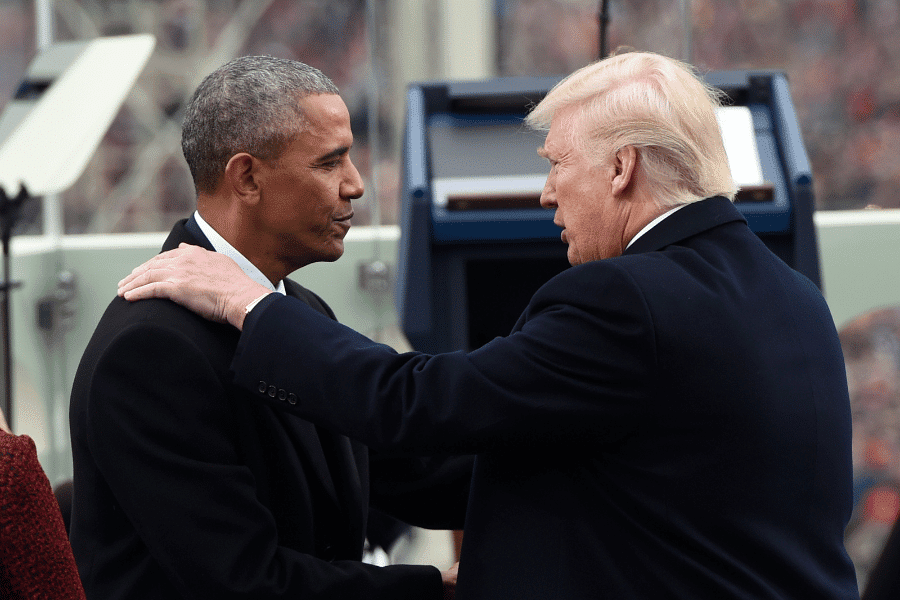
    Traditionally, on the morning of the transfer of power, the outgoing president meets with the incoming president for coffee at the White House, they share a ride to the Capitol, trade places and say goodbye. Trump scorned that tradition by flying home to his Mar-a-Lago club in the state of Florida a few hours before the inauguration.

    Before Trump, outgoing presidents tried to ease the transition by leaving notes offering advice and best wishes to their successors in the top drawer of the desk in the Oval Office. George H.W. Bush’s note to Bill Clinton, with whom he’d waged a bare-knuckles election campaign a few months earlier, was especially gracious. 

    “I wish you well. I wish your family well. Your success now is our country’s success. I am rooting hard for you,” Bush wrote.

    Peaceful transition signals a healthy democracy.

    The tradition of a peaceful transfer of power, which dates back to George Washington, crumbled four years ago when Trump, refusing to accept the voters’ rejection of his bid for another four years of office in the 2020 U.S. election, inspired an angry mob to storm the halls of Congress. Their aim was to block certification of Joe Biden’s election to succeed Trump, something that is generally considered a formality. The would-be insurrection failed.  

    Trump is now poised to again assume the highest office in the United States. To the surprise and disappointment of nearly half the country, he narrowly prevailed over Biden’s vice president, Kamala Harris, in last November’s bitterly contested presidential race. Bowing to tradition and a sense of decency, Harris conceded the election.

    “A fundamental principle of American democracy is that when we lose an election, we accept the results,” Harris said in her concession speech. “That principle, as much as any other, distinguishes democracy from monarchy or tyranny.” 

    The current transfer of power has proceeded peacefully and the inauguration itself is expected to follow the historic norm.

    While the transfer is usually thought to include just a few procedural events and the presidential oath-taking, it consists of much more and begins almost immediately after voters cast their ballots in the fall. 

    Handing over the reins of power

    If the election winner is new to the office of president, they and their team are briefed on issues and challenges they’ll face and undergo background checks to assure their avoidance of conflicts of interest and qualification to handle sensitive information.

    Normally, the focus of a transition is on appointments to top government positions and on policy changes. 

    With the Trump transition, both have been controversial. Some of the people he’s chosen for some of the most critical jobs are far out of the U.S. political mainstream. And some of the policies he says he intends to pursue — a massive nationwide roundup and deportation of illegal immigrants, the annexation of Greenland and a takeover of the Panama Canal to mention a few — are raising alarms in the United States and abroad.

    With the recent passing of former President Jimmy Carter, I can’t help remembering a time of sharp contrast to the one we are in now. 

    The 20th of January 1981 was one of the more memorable days in U.S. history. Carter had lost his bid for reelection in large part because he had been unable to secure the release of 53 U.S. diplomats and citizens who’d been held hostage in Iran for more than a year. He’d been up until 4 a.m. that day trying to sew up a deal for their release.

    It was almost done but still incomplete as he and incoming president Ronald Reagan rode up Pennsylvania Avenue together for the inaugural ceremony in a big black armored presidential limousine known as “The Beast.”

    Front row seat to a presidential transition

    I was one of the newsmen covering Carter that day. So I got a firsthand view of how the transfer of power unfolded. When we reached the U.S. Capitol, one of the television networks aired a report that the hostages had been freed. It was premature. 

    In a final indignity to Carter, the Iranians waited until minutes after Reagan was sworn in to let an Algerian aircraft chartered to bring the hostages home take off.

    What the new president said in his inaugural speech was all but lost in the celebrations over the end of the hostage ordeal. Once the formalities were over, Carter and his entourage — his wife Rosalynn, family members, top aides and a small group of reporters — walked to a small motorcade waiting outside the Capitol building. 

    In place of “The Beast” and a long trail of support vehicles was a small sedan and several vans. We slowly made our way to Andrews Air Force Base in the Maryland suburbs of Washington D.C. where a military transport plane waited to take Carter home to Georgia. 

    Although it was the same plane he’d flown on as president, its radio call sign was no longer “Air Force One.” Now it was identified as “Special Air Mission” followed by the aircraft’s tail number, “Twenty-Seven Thousand.” Reagan was president. Carter was history.

    Before turning south, the plane flew over the White House and dipped a wing. Many aboard were in tears. But the tears turned to laughter when a young Carter aide, Philip Wise, humorously borrowed a line from Dr. Martin Luther King Jr., the martyred U.S. civil rights leader. “Free at last, free at last. Thank God almighty, we are free at last,” Wise shouted.

    Witnessing the most powerful office in the world change hands was like living a real-life version of the storybook “Cinderella” and seeing the coach turn into a pumpkin.

    Having witnessed so many times in so many places where a change at the top was brought about by armed conflict or a military coup, this turnover from Carter to Reagan showed the world the power of a peaceful transition.


    Three questions to consider:

    1. Can you think of a recent changeover from one national leader to the next that wasn’t peaceful?
    2. If a new leader is appointed by the old one without an election, would you consider that a peaceful transition of power?
    3. If you were in an important leadership position, do you think you would find it difficult to step down?


    Source link