Category: identity

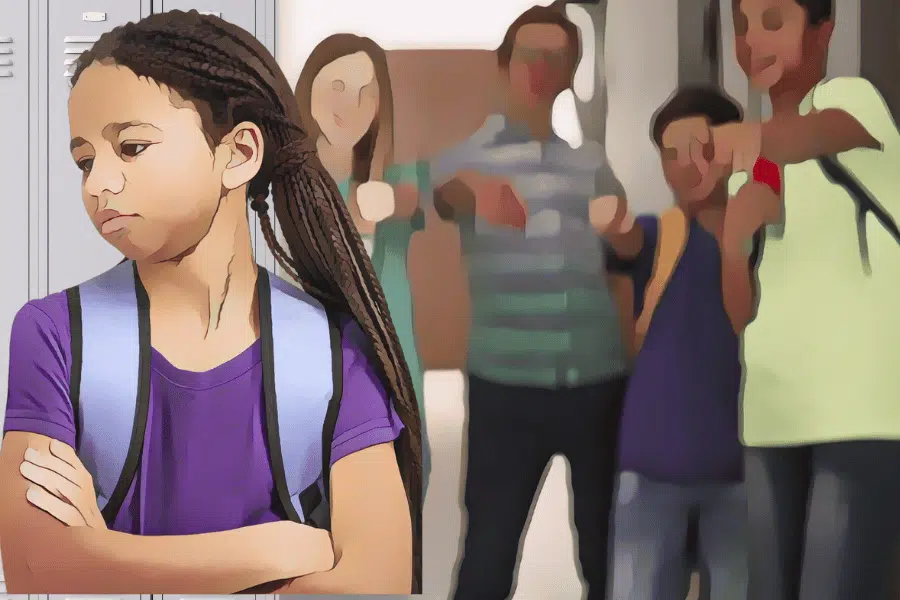
  • It is up to all of us to stand up to bullies

    It is up to all of us to stand up to bullies

    In the northern part of the country of a thousand hills, amidst volcanoes and the freezing air, there resides a Catholic high school. My name is Anderson and this is my story. I went to study there right after finishing my primary school.

    The school was competitive; the smartest, most intelligent and most talented students were found there. It was a school of sciences and it used to be in the top five best high schools in the country. It had an amazing environment. Though strict academically, the teachers were among the best.

    When I arrived, it wasn’t that hard to fit in because my elder sister had studied there before me. Some senior students recognized the resemblance and helped me get used to the school. This also gave me the privilege of not being bullied.

    Normally, new students in S1 were bullied by seniors and couldn’t report it because they were scared of what might happen. The bullying was actually different based on gender. Boys were beaten severely, while girls were pressured into “dating” seniors. You might think dating sounds harmless, but it often involved bullying too.

    There was a male friend of mine who was told to sit on his fork (the one used when we are eating) and say his weight — if he didn’t, the other students would beat him badly. This was also ridiculous because a fork cannot be used to measure someone’s weight. Another was given a leaf from a tree and told to use it to call his parents — again, he was beaten. This was a type of bullying because obviously you can’t talk on the leaf; they wanted him to pretend that the leaf is the phone.

    On the other hand, my girlfriend was called out by senior boys, made to greet each one in a way they preferred and surrounded by a big circle of them. In summary, the first year was really hard for some students.

    The bullied become bullies

    By the second year, we were seniors to new students and some of us began to bully them. At this point, I understood the perspective of bullies — though it didn’t justify their actions. Seeing new students, you feel the tendency to assert your seniority and demand respect.

    Some classmates acted out of revenge, targeting new students for what they had endured. On my side, I welcomed them with kindness and tried to help them adapt, knowing how hard it had been.

    We used to have shows, which were my favorite part. I loved fashion and wanted to model in the shows, but I was always scared. During the shows, boys would often stand at the entrance, waiting to touch the girls’ bodies; breasts, buttocks, even private parts. Girls could complain, but some students and authorities argued that some girls “wanted to be touched.”

    Others said that if girls didn’t want it, they could avoid participating or avoid wearing revealing clothes. Though some authorities promised to investigate, they often ignored the problem. Shows were considered entertainment, so the school left the organization to students. At some point, students feared reporting, worried the school might ban shows entirely.

    It wasn’t only during shows. In class, we had a group of bullies we studied with. When the lights went out, girls would run outside immediately, because boys would touch them by force in the darkness.

    When harassment is condoned

    Once, I was sitting in class, my head on the desk, taking a nap. The lights went out and I didn’t notice. I woke up surrounded by boys. When I tried to leave, they blocked my way. One of them, called Chris, touched my breasts and others grabbed me as well. I felt scared, ashamed and angry. They were about to do more, but fortunately, other students started entering the class, and they left.

    I laid my head back on the desk and cried. When people asked what was wrong, I couldn’t say. I had few friends; just my twin sister and another girl. When I reached the dormitory, I cried the whole night. My friend checked on me and though I hesitated at first, she comforted me.

    I opened up and told her the story. To my surprise, she had also been harassed by the same boy, Chris. He was undisciplined and we didn’t know how to report him; there was no evidence and I wasn’t ready.

    I spent months blaming myself. I was ashamed, hated myself and even had suicidal thoughts. My heart felt broken into pieces and no day passed without crying. But my twin sister was there for me. We cried together and I felt comforted. She suggested that we learn karate so no boy would dare harass me again.

    We joined a karate club at school. It was amazing. The group was friendly, teaching discipline, teamwork and flexibility. Chris still mocked me, but I knew he was scared. In class, he never bullied me again. I continued learning karate even in other schools.

    Fighting harassment

    At other schools, I began my journey in leadership. I was voted Head Girl at two schools, started reading about feminism and realized I was a feminist. I began challenging unfair school policies that hindered one gender. On many campuses, girls were forced to do cleaning chores because culture expected them to be “decent” and “clean.”

    Boys were allowed privileges girls could not have, without clear reason. It was a hard battle because authorities were biased. When I finished high school, I was voted Minister of Gender Promotion at my campus.

    Reflecting on my high school experience, I realized many other girls knew stories of friends who were sexually assaulted and who couldn’t report it. Sometimes it was done to them by teachers or fellow students or authorities.

    Schools often silence reports to protect their reputation. I understand that, but it shouldn’t come at the cost of student safety. There weren’t reporting platforms in place, but when girls tried to report, they were sometimes blamed, told they “wanted it.”

    All of this motivated me to start a high school research project to assess the impact of school policies, sexual harassment and sextortion (this means when someone asks for sexual intercourse in exchange for a certain favor. In this context it may be to give you grades or other favors which you can get after having sex with that person offering it) on gender equality outcomes in high schools.

    I am still working on my proposal, applying feedback and hoping for approval. As a survivor, I want to help my younger sisters get justice. I want to ensure no other girl cries alone at night, hiding the trauma she endured. I want to be their voice and advocate for solutions as youth.

    This is my story — though it is still being written and it is far from over.


    Questions to consider:

    1. How can someone who is bullied become a bully?

    2. Where do you think that some people get the idea that sexual harrassment is acceptable?

    3. Have you ever been bullied or felt harrassed at school?

    Source link

  • When life is bitter, don’t lose hope

    When life is bitter, don’t lose hope

    When life takes away your greatest support, it can feel as if the world is falling apart. For me, losing my father as a child was more than heartbreaking. It was a true test of strength. Yet in a world that often seemed bitter, the kindness of strangers and the power of personal dreams helped me rise above my sorrow and shape a future full of hope.

    My family and I live in the Eastern province of Rwanda. I was only five years old when one morning, my father packed his bag and left the house. He didn’t say where he was going and he never came back. Days turned into weeks, weeks into years, but there was no sign of him. No call. No letter. Nothing. 

    At first, I didn’t understand what was happening. I kept asking my mother, “When is Papa coming back?” But she would just smile sadly and say, “One day, maybe.”

    In her heart, she knew he was not coming back. 

    Life changed quickly after that. Without a father and without money, things became hard for the family. My mother, Catherine, had no job. She had never worked outside the home before. Now, she had to take care of me and my four siblings alone. 

    Struggling with little

    We had no house of our own. We moved from one place to another, staying with kind neighbors or sleeping in small, broken huts. During rainy nights, water would leak through the roof and we had to stay awake holding buckets. Sometimes, we didn’t even have enough food to eat. Many nights, we went to bed hungry. 

    My siblings were in high school at the time, but the family could not afford school fees anymore. One by one, they dropped out and stayed home. It was painful for me to watch them suffer. I loved them deeply and wanted a better life for all of them. 

    Despite everything, I stayed in school. My mother worked hard doing small jobs washing clothes, digging gardens or selling vegetables in the market. She never gave up. “You are our hope,” she would tell me. “Even if your father left, we must move forward.”

    I listened. I promised myself that no matter how hard life became, I would not give up. I wanted to finish school, go to university and one day help my family live a better life. 

    But it was not easy. 

    Help can come from surprising places.

    I often went to school with old shoes. I had no school bag only an old plastic bag to carry my books. I had no lunch and many times, I sat in class with an empty stomach. But still, I worked hard. I listened carefully, asked questions and always completed my homework, even if it meant studying by candlelight or by the dim light of a kerosene lamp. 

    Many teachers began to notice me. They saw that even though I had nothing, I had determination and a kind heart. One teacher gave me exercise books. Another helped pay part of my school fees. A neighbor who owned a small shop gave me a few snacks sometimes. A church group gave my mother food and clothes once in a while. 

    These acts of kindness kept me going. 

    I studied harder than anyone else and soon became the best performer in my class. Every year, I got top marks. My name was always on the honor list. At school, students looked up to me. But at home, things were still hard. My siblings had lost hope, but I kept believing in a better future. 

    After many years of struggle, I finally finished high school. I was the first in my family to do so. On the day I received my final results, my mother cried tears of joy. You did it, my son. You made me proud, she said, hugging me tightly.

    But my journey wasn’t over

    I had one more goal: to go to university. That meant more fees, laptop, more books, more challenges, but I didn’t stop. I applied for scholarships and after many rejections, I finally got accepted to a university with some financial support. 

    Now, I’m 22 years old. I’m in university, studying hard every day. I met with a kind person again, who gave me a place to sleep and dinner. Even though I have that support, I’m still facing challenges. I still lack proper shoes, clothes and transport money, but I keep going. My dream is to become a professional, get a good job first, then become self-employed and return home to support my mother and siblings. 

    I remind myself: “My father left us when I was just a child. We had no house, no food and no money. My siblings could not finish school. But I decided to fight. Kind people helped me and I stayed strong. Now I am at university. I will not stop until I help my family rise again.” 

    I hope my story will teach young people that even when life feels bitter and people let you down, you must not give up. Strength is not about having everything. It is about standing tall even when you have nothing. This is the reason why I’m writing my story. 

    Even when life is painful and people walk away from you, never lose hope. With hard work, faith and the help of kind people, you can still rise, succeed and help others do the same. 


    QUESTIONS TO CONSIDER:

    1. What was one thing the author promised himself when things got really hard for his family?

    2. In what ways did people help the author succeed?

    3. When have people helped you when you were having difficulty?

    Source link

  • East Africa’s Queer communities show progress and hope

    East Africa’s Queer communities show progress and hope

    Around the world, Queer rights are being challenged, attacked and denied. Governments are cutting budgets for important health and other programmes. 

    But in parts of Africa, there are distinct signs of progress. Organizations that serve and advocate for Queer communities in Eastern Africa now see hope for the future. That’s the case even in Uganda where “aggravated homosexuality” has carried the death penalty since 2023.

    “It is still a very hard environment but we are doing much better than a lot of people think,” said Brian Aliganyira, founder and executive director of the Ark Wellness Hub, an organization based in Kampala, Uganda, that helps LGBT community members who have difficulty accessing health services in public hospitals due to both anti-Queer laws and ongoing community stigma and discrimination.

    “We are doing better in terms of fighting back and supporting communities, not necessarily better in terms of protection, rights and freedoms,” Aliganyira said. 

    In Kenya, homosexual acts are illegal. Rodney Otieno, who is the co-founder and policy director for the Queer & Allied Chamber of Commerce Africa of Nairobi (QACC), described the creation of a “Queer ecosystem” that mobilises resources, builds social enterprises, creates sustainable economic pathways for people of the Queer community and attracts impact investments – using money for good causes even as it generates wealth. The QACC now boasts over 3,000 members in Kenya, plus others across Africa.

    Language and discrimination

    Otieno and the four other East African community leaders interviewed for this article generally prefer to use the more fluid term “Queer” rather than “LGBTQ” or any of its many variations. 

    Kevin Ngabo, a Queer activist and social justice advocate, said that local languages often lack positive or even neutral words to describe queer identities — only stigmatizing ones.

    “‘Queer’ gives us an umbrella that feels both flexible and affirming, allowing people to belong without being boxed in by rigid categories,” Ngabo said. “It’s a way of saying: I am different and that difference is valid.”,

    Ngabo was born and raised in Rwanda before moving to Nairobi, Kenya late last year.

    In Rwanda, there are no anti-discrimination laws but the government does not recognize same-sex marriages. 

    Pride in one’s identity

    A Queer rights activist in Kigali, who asked not to be identified, said that young people are feeling more comfortable with their identities. “GenZers are taking up more space as their authentic selves,” the activist said. “They are even getting more understanding and affection from their families. It is not ‘weird’ anymore. This will become the norm.”

    The Kigali activist has recently been involved in both a Pride Party and a Queer film festival, which attracted over 600 paying participants from around the region. 

    Queer community leaders point out different elements of both recent progress and hopes for sustainable success in the future beyond the constant imperative to keep community members safe and to try to get discriminatory laws repealed.

    “We need to continue to work together, make good use of our limited resources, be clear about what we are doing, raise awareness and be diplomatic when dealing with the authorities” says another anonymous Queer activist and feminist in Rwanda.

    Ngabo in Nairobi believes that Queer people across the region need to develop a strong sense of community and be “stubborn when they are told they can’t do something, and take space and stand up for what they believe in.”

    Finding allies to your cause

    Aliganyira in Kampala agrees that people should not run away from their ongoing challenges with safety, respect and equal opportunity and instead continue to show courage, resilience and perseverance to defend their current rights and expand them in future.

    A Queer activist in Rwanda stressed the need to work with allies and others to create more education and training to promote awareness, understanding and empathy.

    Ngabo shared some advice: “Start small and start where you are,” he said. “Speak up when you hear harmful stereotypes. Make space for people to share their stories without fear. Support Queer-led groups, attend events, or even just show up for your friends when they need someone safe to lean on.”

    Allyship isn’t always grand, he said. “It’s often in the quiet, consistent choices to affirm someone’s humanity,” he said.

    Queer community leaders say they are generally optimistic about the future.

    “In five to 10 years’ time, the narrative will change completely,” said Otieno in Nairobi.

    Changing people’s perceptions

    Young queer activists are being empowered and learning how to take on leadership roles in government and in other decision-making spaces, said one Rwandan activist.

    Another Rwandan activist envisions a future where same sex couples will be able to get married, adopt kids and access medical services freely.  

    “Things will improve if we are smart,” the activist said. “I hope we will see more safe spaces, more affirming healthcare (especially in mental health), more economic inclusion, and more media and policy-making representation. In the end though, dignity is more important than law changes.”

    Ngabo in Nairobi agrees: “We want respect,” he said. “We want to feel safe. We don’t want equality. We want equal opportunities. We want to thrive.”

    Real progress means being able to live authentically without having to conform, he said. “Stronger protections under the law, safe spaces to gather, visibility in public life, and most importantly, Queer people leading the narrative about our own lives,” Ngabo said. “These are what a brighter future looks like to me.”

    Even in Uganda, Aliganyira believes things can still change for the better.

    Uganda was once considered the safest place for Queer people in East Africa before the 1990s, he said.

    “Uganda can undo what it has done and get beyond fear and uncertainty,” he said. “It’s up to everyone to come together and overcome division.”


    Questions to consider:

    1. Why do LGBTQIA+ community members in East Africa prefer to call themselves “Queer”?

    2. What are the key elements of a brighter future for the East African Queer communities?

    3. What can you do yourself to stand up for human rights as an ally or a member of a Queer community where you live?


    Source link

  • A decade of giving teens the last word

    A decade of giving teens the last word

    They are important not only for the students writing these stories but for teens all over the world reading or listening to these stories. They see their own anxieties and concerns reflected.

    As managing director at News Decoder, Maria Krasinski has seen how empowering personal reflection stories are when published. 

    “These stories build students’ self-awareness, confidence and empathy,” Krasinski said. “Seeing their stories published is an empowering act that validates their lived experiences and tells them that their voices are worth being heard.”

    She said that what News Decoder does is ask students to pause, analyze and articulate what they learned from an experience. “That creative process strengthens not only their storytelling skills, but also their ability to make sense of the world and step into public conversation,” she said. 

    A decade of publishing student stories

    News Decoder has been doing this for 10 years. Some of the first stories we published were personal reflections sent in by students.

    Back in May 2016, a high school student studying for a year in France wrote a personal reflection article after having encountered a number of her peers from Turkey at a conference in Luxembourg. During the conference they learned that a suicide bomber had killed three people in Istanbul.

    “I can’t even begin to imagine the heartbreak and panic they felt when they found out,” she wrote. 

    She then explored the concept of senseless violence:

    “I’m afraid that I’m beginning to become desensitized to the tragedies that strike all around the world,” she wrote. “When I got home from the conference and brought up the topic of the Turkish bombings, my host mom asked me how that news was different from any other day’s news, and then asked me to pass the pepper.”

    Students reach profound conclusions.

    In the article, she worked through her complicated thoughts and feelings and came to this conclusion: 

    “If we allow ourselves to be desensitized to all the bad, the good will stop motivating us as well.”

    Back in 2017, News Decoder’s founder Nelson Graves wrote that students make use of the News Decoder platform to make their voices heard. 

    “News-Decoder offers students a chance to put their best foot forward, to push the envelope, to confront different viewpoints and to work with professional correspondents,” he said. 

    For 10 years News Decoder has used storytelling to engage students in the process of learning. Through our educational programs, students are encouraged to ask big questions, identify problems they see around them and talk to people to get their questions answered — classmates, neighbours, family and experts.

    All the while, we ask students to compare their lived experiences and the problems they see around them, with what is happening elsewhere in the world. If they see inequities in their communities, how does that manifest in other countries? In doing this, they find out how connected they are to all the people seeing and experiencing these same problems. 

    Seeing the world through a global lens

    Amina McCauley is program manager for News Decoder’s EYES project — Empowering Youth Through Environmental Storytelling. She said that the global connection is important.

    “I think that young people rarely get the chance to articulate their values in a global context,” McCauley said. “Writing a personal reflection allows them to understand themselves better through this different lens.”

    The empowerment comes when they master the art of communicating what they learn to the wider world. 

    We want News Decoder students, and anyone we work with, to be able to respond when they hear or see something they think is wrong, but to be able to do so not just quickly but thoughtfully. 

    We’d like you to join our network and help us do that. If you are a teacher or school administrator, explore our school programs and consider bringing us into your schools. If you are a journalist consider donating articles and time to engage with students across the world. And if you have the means, consider donating funds to our nonprofit. 

    Why should ignorant people and bullies have the last word? 


    Source link

  • A decade getting teens to do something many avoid: Think

    A decade getting teens to do something many avoid: Think

    TikTok reels, attention grabbing headlines and AI that spits out instant answers. The way teens engage with the world today often lacks depth. 

    But at this age, where the teen brain is rapidly developing, deeper thinking — dubbed by psychologists as transcendent thinking — is vital not just for self-reflection and problem solving, but also self-esteem and better relationships in adulthood. 

    Many of us spend a lot of time in what researchers call “surface-level” thinking — reacting to what’s in front of us. Transcendent thinking, though, is when we go beyond concept descriptions, to wrestle with questions like, What does this say about justice? How do systems work? Where do I fit in all this? 

    “Young people get so much information fed to them through social media, influencers and podcasts and AI, and this is such a passive way of learning,” said Marcy Burstiner, News Decoder’s educational news director. “Dangerous, really, if they aren’t critically thinking about the information they are getting.”

    That’s why for 10 years News Decoder has used the lens of journalism to engage students in the process of learning. Through our educational programs, students are encouraged to ask big questions, identify problems they see around them and talk to people to get their questions answered — classmates, neighbours, family and experts. In doing this, they find out information themselves. 

    Spoon-fed learning

    This is more important than ever as the internet transforms from a place where people would lose themselves as they “surfed,” stumbling upon all kinds of new and interesting information along the way, into a place where an AI bot does that for them and spits out summarized results. 

    For 10 years, we’ve been asking teens to find real people to interview, to compare their different perspectives and from that to come up with their own original thoughts about complex topics where there isn’t a clear right and wrong, where there are layers of inequity. 

    Student Jack McConnel at The Tatnall School in the United States did this when he interviewed his state’s congressional representative, Sarah McBride, the nation’s first transgender representative in Congress.

    Through the research he did, and after interviewing McBride, McConnel came to the conclusion that voters in his district didn’t elect her because of gender identity, but because McBride pledged to help solve the more mundane issues they cared most about — protecting consumers from getting scammed, for example, or helping farmers to lower food prices. Gender identity wasn’t their most important concern.

    Students, like McConnel, who work with News Decoder often start with a “pitch” — a proposal for a news story. In the pitch, we have them ask a big question that their story will answer. McConnel’s asked three: “What role does identity play in our elected officials? Has this fixation from both sides made congressional and senatorial positions simply for show? Does it matter more who the person is or what the person does, and have we lost sight of what matters about our politicians?”

    Through his research and his one-to-one interview with McBride, he was able to answer all those questions. 

    Beyond facts

    Hannah Choo is a student at an international school in South Korea, and is working with News Decoder as a summer intern. As part of her work, she creates video content for social media based on articles published on News Decoder.

    Choo has found that through engaging with these stories, she’s forming a deeper connection with the issues the stories explore. She said the challenge is to go beyond merely summarizing the information. The goal is to connect with an audience. 

    “And that puts me in a position where I need to really focus on why this issue matters and why I should care,” Choo said. “And that gives a lot more of a sense of purpose.” 

    Choo remembers talking to a biology graduate student, who told her about apoptosis, a process whereby cells die off — a way our bodies get rid of unneeded cells. Alone, this concept feels meaningless, even dry. 

    But the grad student told Choo that when we’re initially formed in the womb, we have paddle-shaped hands with a webbing of skin connecting the fingers and toes. This webbing disappears as we form, due to this apoptosis. Choo remembers looking at her own hands in fascination.

    “And so later, when I actually got to learn biology and learn about the cell cycle, it was a lot easier for me to engage with the topic,” Choo said. “I wasn’t just studying science but I was studying my own body.” 

    From deep thinking to deeper relationships

    A five-year study, published in 2024 in the journal Scientific Reports, followed 65 teenagers aged 14-18 to see how transcendent thinking shapes their brains, and how this further shapes their lives.  

    The teens were shown emotionally rich mini-documentaries featuring real stories of adolescents around the globe — a method that triggers transcendent thinking. They then talked through what the stories meant: how they felt, why they mattered, and what bigger ideas they raised. 

    They found that teens who engaged in this deeper style of thinking showed stronger connections over time between two key brain networks — those involved in self-reflection and big-picture thought, and focus and problem solving. 

    Crucially, they also found that these teens went on to have a clearer sense of identity in late adolescence, which later linked to greater self-esteem and better relationships in young adulthood.

    One way News Decoder helps young people understand deeper meanings and broader implications is by having them look at societal problems and possible solutions. 

    Searching out solutions

    At News Decoder we ask students to identify a problem in their community and then see if they can find people working to solve that problem. 

    “In the process they see at first that a lot of problems seem to have no solution or the solutions are so far off,” Burstiner said. “But all the complications that prevent solutions are like protective layers around the problem. They are like the levels you need to surmount in a video game.”

    If a teen has the patience and persistence to work through those complications they can not only see the solutions but they can see what is preventing those solutions, Burstiner said. 

    One News Decoder student in India wondered what might happen when climate change causes massive migration. 

    “In exploring the topic she hit on the idea of lost languages — that a language is what often ties a community together and connects generations. But if a community is forced to disperse and the people end up integrating into other lands, the language that connected them could die out,” Burstiner said.

    Connecting dots 

    Another student at The Tatnall School played soccer, and began thinking about how much it cost his family for him to play at a competitive level. “In exploring this he realized how much of competitive sports is elitist and how much more difficult it is for someone to go into professional sports if they are poor,” Burstiner said. 

    When students conduct interviews with people who understand these topics in-depth or who are affected by these issues, they can further connect their sense of self with these stories. 

    Choo, during her internship, pitched a story about cancer, because a close family member was undergoing cancer treatment. She asked this question: “How does climate change affect the quality of healthcare for cancer patients?”  

    In doing the research, uncovering connections and conducting interviews, she connected the often-abstract issue of climate change to her own life. 

    “This was the first time I could really connect climate change to my own life and my own loved ones,” Choo said.

    Source link

  • Can your religion put your nationality at risk?

    Can your religion put your nationality at risk?

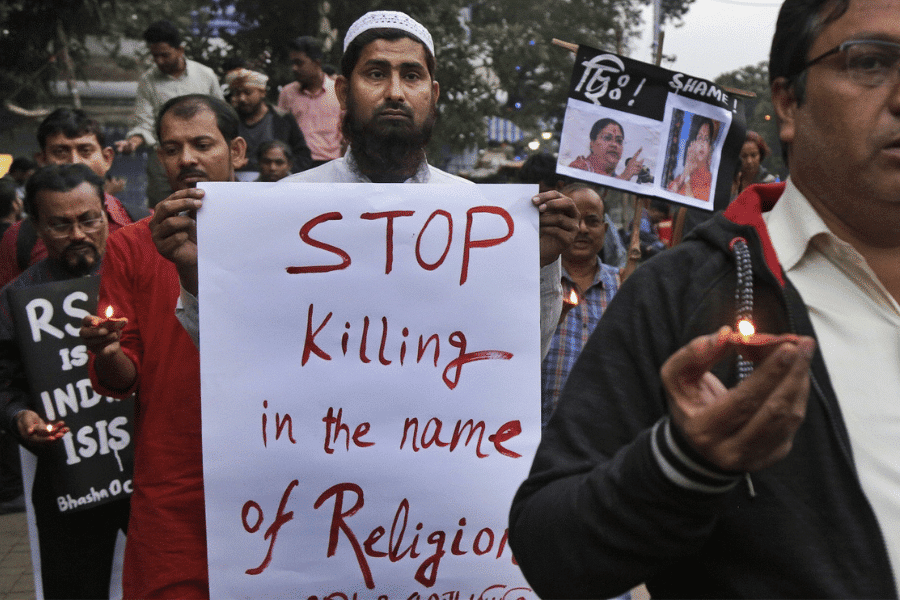
    Standing on the charred remains of his hut in a village near Assam’s Morigaon district in South India, Shafik Ahmed clutched a worn folder of papers: land deeds, ration cards and a laminated voter ID, all declaring the 68-year-old bicycle repairman an Indian citizen.

    None of it mattered when bulldozers rolled into his neighbourhood in June 2025, demolishing 17 homes, all belonging to Bengali-speaking Muslims.

    “I was born here, voted here, paid taxes here,” Ahmed said. “Still, they told me I am a foreigner. They dumped us near the border like we are cattle.”

    Ahmed is among the hundreds of Muslims who say they were pushed across India’s eastern border into Bangladesh in recent months, as part of what human rights lawyers say is a rapidly intensifying campaign of ethnic targeting in Assam, a region famous across the world for the quality of tea it produces. 

    The drive has escalated in the run-up to the 2026 state elections, with Chief Minister Himanta Biswa Sarma branding undocumented Muslims as “infiltrators” and vowing to “protect the culture of Assam.”

    Islamophobia is a global concern.

    The expulsions, many executed without due legal process, have sparked concern far beyond India’s borders. As the United Nations warns of a global surge in anti-Muslim bigotry, activists say Assam’s campaign fits a broader pattern of Islamophobia playing out across continents.

    “They call it pushback,” Ahmed said. “We call it expulsion.”

    Across Assam, particularly in Muslim-majority districts like Dhubri, Barpeta and Goalpara, families wake up to midnight police knocks, arbitrary detentions and the looming threat of forced deportation.

    Rubina Khatun, 53, said she was taken without explanation from her home In May 2025, driven 200km to the Matia detention centre and later left in the no-man’s land near the India-Bangladesh border along with other women and children.

    “The soldiers shouted at us: ‘You’re not Indian anymore. Go to your country’,” she said. “But I have never been to Bangladesh. We spent hours in the swamp. No food, no water. It felt like we were being erased.”

    Applying old laws to new intolerance

    Human rights lawyer Hameed Laskar, who represents several families appealing the orders by the Foreigners Tribunals, says the government is misusing a 1950 law meant for undocumented immigrants.

    “These people have lived in Assam for generations,” Laskar said. “Some even appear on the National Register of Citizens. But a misspelled name or a missing land receipt from 1970 is enough to be declared a foreigner. It’s not legal enforcement. It’s engineered exclusion.”

    The targeting of Muslims in Assam is not new. But since the conservative Bharatiya Janata Party came to power in India in 2014, the rhetoric has hardened and the policies have sharpened.

    In 2019, the national registry process excluded nearly 2 million people, most of them Muslims. That has left families in limbo. While Hindus excluded from the list can claim citizenship under India’s 2019 Citizenship Amendment Act, there is no such provision for Muslims.

    The wife of Parvez Alam, a schoolteacher in the city of Barpeta, Aswas recently declared a foreigner despite having a birth certificate and electoral record.

    “Muslims now need 20 documents to prove their Indian-ness. Hindus only need to declare it,” Alam said. 

    Ping-ponging people across borders

    According to a June statement from Chief Minister Sarma in the state assembly, more than 300 “illegal Bangladeshis” have been expelled since May. Local media and community groups put the number closer to 500, including at least 120 women.

    But the Bangladeshi government has rejected many of these returnees, saying they have no proof of origin. Several have been stranded in border areas, caught in a bureaucratic tug-of-war.

    In one incident that drew widespread attention, 60-year-old Salim Uddin, a retired truck driver from Golaghat, was found wandering along the India-Bangladesh border after his family saw a viral video showing him being handed over to Bangladesh’s border guards.

    His son, Rashid, later confirmed that Uddin had served in the Assam Police for nearly three decades.

    “How can the son of a state police officer be declared Bangladeshi?” Rashid asked. “Had my grandfather been alive, it would have broken his heart.”

    A pattern of prejudice

    The Assam government has denied that the crackdown is communal, insisting it targets only “illegal foreigners.” But the pattern tells a different story. A recent report by a coalition of civil society groups found that over 95% of those detained or expelled this year were Bengali-speaking Muslims.

    The fear gripping Assam’s Muslims mirrors rising Islamophobia globally. From bans on hijabs in French schools to mosque attacks in the United Kingdom, Muslims across continents are facing what the United Nations calls a “widening wave of intolerance.”

    On March 15, UN Secretary-General António Guterres marked the International Day to Combat Islamophobia by warning of a disturbing rise in anti-Muslim bigotry. “This is part of a wider scourge of extremist ideologies and attacks on religious groups,” Guterres said in a video address. “Governments must foster social cohesion and protect religious freedom.”

    He called on online platforms to curb hate speech, and on leaders to avoid rhetoric that demonizes communities. Muslim civil rights groups in Europe and North America have echoed those concerns.

    A spread of intolerance across the globe

    A recent report by the Council on American-Islamic Relations documented a record 8,658 anti-Muslim incidents in 2024 alone.

    In the UK, advocacy group Tell MAMA has reported a 30% increase in Islamophobic hate crimes since October 2023, including attacks on mosques, verbal abuse and discrimination in housing and employment.

    Dr. Arshiya Khan, a political sociologist based in London, said these patterns are not isolated. “They’re interlinked,” Khan said. “What starts as state policy in one country often emboldens vigilante behaviour in others.”

    In Assam’s tea belt, the fear is palpable. In several villages, Muslim residents say they have stopped going to police stations or even hospitals, afraid they might be detained. In one case, a 27-year-old man who went to register a land dispute at a local police station was declared a foreigner after a routine ID check.

    “We don’t know who is next,” said Shahina Begum, a mother of three. “They say we don’t belong here. But where do we go?”

    Fighting back

    At least four petitions have been filed in the Assam High Court since June by families who say their relatives disappeared after being taken by police. Most had no ongoing legal cases against them.

    “They’re being disappeared without a trace,” said Laskar. “This is not law enforcement, it’s ethnic cleansing in slow motion.”

    Back in Morigaon, Shafik Ahmed said he has no plans to leave, even as bulldozers return to neighbouring villages.

    “This land is all I know. If they push me out again, I’ll come back again,” he said, eyes fixed on the debris of his former home.

    But for those like Rubina Khatun the trauma is lasting. “We’re citizens,” she said. “We have documents. We were born here. But in their eyes, we will never be Indian enough.”

    As global attention briefly turns to Assam, with international bodies urging India to uphold human rights, residents say they don’t expect justice, only survival.

    “Every day we live feels like another test to prove we exist,” Ahmed said.


    Questions to consider

    1. Why do Muslim citizens of Assam India believe that their government treats them differently than non-Muslims? 

    2. Should religion be a factor in determining whether someone should get national citizenship?

    3. Should a government be concerned about the religions of its citizens? 


    Source link

  • What’s not talked about when you live overseas

    What’s not talked about when you live overseas

    The first time someone told me I was “too loud” in Latvia, I laughed. Not because it was funny, but because I genuinely hadn’t realized I was being loud. We were eating pizza one evening at Easy Wine in Riga, and despite being the only one not tipsy on the refreshments, I was still somehow the rowdiest at the table. 

    I shrank down an inch in my seat. The moment gave me pause. It was oddly familiar, like déjà vu. Everything around me felt almost known, just slightly askew, like it had been tilted on its axis. 

    The shame of taking up too much space? That I knew. But this time, it didn’t come from being Brown. It came from being American. 

    In the United States, my race is always top of mind. I’m a university student, and as a Government major, it’s a regular feature of my coursework. Having grown up in a nearly all-White town, I’ve been explaining my identity to others since I could talk. 

    With nearly two decades of practice under my belt, I’m well-versed in how my skin color and ancestry shape the world around me, and how to articulate that for others. So, the longer I spent in Riga, the more unsettled I felt by how absent race seemed from the conversation. 

    Conversations not had

    Hours spent gazing out the windows of trolleybuses gliding through the city confirmed what I suspected: Riga is not very diverse. Among the small number of people of color I did see, most were other South Asians, like me. In the United States, race is an ever-present topic, whether it’s in political debates, academic syllabi or heated threads on X. In Latvia, it felt like race had slipped out of the cultural vocabulary altogether. 

    As part of my study abroad program, we often heard from expert guest lecturers. And as each one spoke, a quiet confusion grew inside me: Why is nobody talking about race? I started to feel like a foreign lunatic, playing an internal game of “spot the non-white person” on every street. But the more I searched, the more questions I had. Where was the discussion? Why wasn’t it happening? 

    So, I brought it up with a friend I’d made in my hostel. Arsh is an Indian student studying mechanical engineering at Riga Technical University. He had been living in the city since February. When I asked if he’d experienced discrimination as a visibly Punjabi Sikh, his answer surprised me. 

    “No,” he said. 

    And then he added something that completely shifted my perspective. 

    “Nobody talks.”

    Silence and race

    I’d known Latvians were famously quiet, but I’d never considered how that silence might shape their understanding and construction of race. 

    In the United States, your racial identity is often the first thing people ask about. Strangers want to know what you are and where you’re from. Race in America is personal, political and inescapable. The constant conversation can be both exhausting and empowering: it pushes systems to change, creates space for shared stories of resilience and holds people accountable.

    But it also creates a kind of fatigue. As a person of color, you’re constantly on: explaining, reacting, defending. You’re visible, but often through a lens of trauma or tension. 

    In Latvia, it was different. What I came to think of as a kind of “quiet neutrality” reigned. People didn’t ask where I was from. They didn’t comment on my skin tone. They didn’t bring up diversity or inclusion, mainly because they weren’t speaking to me in the first place. 

    At first, that silence felt like relief. But eventually, it began to feel like an absence, because bias still exists, even if no one’s talking about it. 

    The power of passive racism

    After speaking with Arsh, I turned to the Internet, searching for other South Asian perspectives on racism in Latvia. I found plenty. 

    One Quora user bluntly wrote, “Indians are treated like shit here in Latvia.” Another shared that she didn’t know if others felt negatively about her brown skin, but if they did, they didn’t confront her about it. A Redditor described being told to “go back to your own country.” These stories varied wildly from hate crimes to total indifference, but they painted a clear picture: racism existed here. It just didn’t look the same. 

    Curious to dig deeper, I reached out to Gokul from @lifeinlatviaa on Instagram. A popular Indian content creator who’s lived in Latvia for seven years, Gokul shares his takes on life in the Baltics. Many of his videos humorously cover topics of social culture, stereotypes, education and work. He also co-hosts the podcast Baltic Banter with Brigita Reisone. 

    When I asked Gokul about his experience, he described the racism in Latvia as mostly “passive.” Latvians, he said, are reserved. “If they don’t like something, they won’t be in your face about it,” he said. 

    Still, he shared more overt examples, like housing ads that openly say Indians need not call. He noted persistent stereotypes, too: that Brown people are dirty kebab shop owners or delivery drivers. 

    The familiarity of bias

    None of this was unfamiliar to me. I’ve experienced housing discrimination. I’ve been called dirty by a White person. The common style of racism in Latvia was new to me: distant and quiet. In the United States, I once had a tween boy bike past me and mock an Indian accent — it was less traumatic than it was bizarre. There was certainly nothing subtle about it though. 

    Looking further, I found several reports from Latvian Public Broadcasting documenting hate crimes and prejudice against South Asians. So no, it’s not that racism doesn’t exist in Latvia. It’s that it shows up differently, and more importantly, it’s not widely discussed. 

    That difference matters.

    Race is fluid and contextual; its meaning shifts with time, place and history. In the United States, racism is foundational. It began with colonization and slavery, extending through the systemic injustice known as Jim Crow in the 19th and 20th centuries, to modern-day Islamophobia and racial profiling by police. Racial violence and resistance are woven into the country’s DNA. 

    Latvia’s history tells a different story. Latvia is a nation shaped more by being colonized than by colonizing. Ethnic Latvians have fought for sovereignty under foreign rule, whether by Germans or Soviets. Today, its population is overwhelmingly White, and ethnic tensions tend to focus on Latvians and Russians, or Roma communities. Immigration is relatively new here, so the language to talk about race may simply not have developed yet. 

    And that brings me back to volume. 

    In the United States, being loud is often classed and racialized as “trashy,” especially when tied to communities of color. In Latvia, loudness is framed differently: it’s seen as a kind of cultural rudeness. It’s not about being Brown, it’s about being foreign. And because everyone is generally quieter, the social cues around race, identity and belonging shift, too. 

    Little things like volume, friendliness and eye contact build the scaffolding around how race is perceived in different societies. They may seem like surface-level quirks, but they shape deep-rooted assumptions.

    And they remind us: racism may look different in various places, but it doesn’t disappear. It just changes form. And recognizing that change is the first step to dismantling it.


    Questions to consider:

    1. Why do many people outside the United States connect loudness with being American?

    2. Why was the author troubled about the lack of conversation about racism in Latvia?

    3. What kind of conversations do you have about race and do they make you feel more or less comfortable?


    Source link

  • Going against the grain? Arts Based Research and the EdD: Resistance, activism and identity

    Going against the grain? Arts Based Research and the EdD: Resistance, activism and identity

    by Tim Clark and Tom Dobson

    There has been growing interest in the potential of arts-based research (ABR) methods to enrich educational inquiry (Everley, 2021). However, minimal attention has been given to how accessible or relevant ABR is for practice-based researchers (including lecturers and teachers), who undertake the professional doctorate in education (EdD) pathway. We believe that this lack of attention is significant, partly because institutional frameworks for doctoral programmes are often informed by traditional models of PhD research, which may constrain the creative possibilities of practice-based study (Vaughan, 2021), and partly due to the nature and ‘uniqueness’ of the EdD as a research degree (Dennis, Chandler & Punthil, 2023).

    We have previously argued that ABR potentially holds particular promise for EdD research due to its alignment with the programme’s highly relational and contextual nature and its engagement with diverse audiences. In our 2024 paper, which was part of a special issue of Teaching in Higher Education, we mapped the theoretical similarities in understandings of ABR and the EdD, exploring this alignment across aspects including practice, audience and reflexivity (Dobson & Clark, 2024). Our paper called for colleagues to ‘embrace hybridity’ and provide permission for creativity in EdD research and we attempted to illustrate this within the paper itself, entangling examples of creative nonfiction writing with a traditional scoping review to embody our theorisation. However, we also concluded with a realisation that maximising the potential of ABR requires careful attention to how design, practice and regulations support students’ identity development and agency (Savva & Nygaard, 2021).

    To build on this, throughout 2024 we have been working with a group of nine EdD students studying at our respective institutions, who are all exploring the potential of ABR for their work. These students span professional roles from early childhood through to higher education, and disciplines including the arts, business and science. Following initial narrative interviews with each student, we developed an online cross-institution action learning set (Revans, 1982) to facilitate dialogue and learning relating to some of the key problems and opportunities students were experiencing in relation to their engagement with ABR. As a group we met 6 times, each time agreeing an area of focus, and providing opportunities for individuals to present and group members to ask clarifying and open-ended coaching style questions. This process culminated in creative analysis, where we collaboratively analysed and reflected on the learning that had taken place, and each student presented a creative interpretation of their learning to the group. We are currently working with a group of these EdD students to co-author a paper which captures and illustrates this learning and shares these creative outputs.

    Alongside this, the second paper from our project (Clark & Dobson, forthcoming) explores some of the key learning arising from the initial interview phase – in particular the idea of ABR as a form of ‘resistance’ involving potentially either a deliberate, or more hesitant, decision to ‘go against the grain’. Using Glăveanu’s 5A’s theory (actors, actions, artifacts, audiences and affordances) to understand creativity as embedded in social relations, we developed the interview transcripts into vignettes for each student and identified three key strands of the students’ perceptions of their experiences – many of which continued to be key areas of focus as we worked through the action learning set process. The process highlighted the students’ understanding of how methodological expectations were reflected through key audiences and structures, how methodological choices aligned with their sense of self and identity and the role of ABR in promoting action and agency. The vignettes offered a nuanced illustration of the tensions in these areas, which we feel offers wider value due to the fact that, unlike any previous work we had identified in this area, the understandings related to students both with and without previous artist identities, backgrounds or experiences.

    The focus on audience and structures highlighted the numerous audiences which exist for students’ EdD research, often spanning academic, professional and community spaces and how these can create tensions in terms of expectations of what research ‘should’ look like. Some students talked of an ongoing battle to justify and ensure their ABR projects were taken seriously, whilst others positioned their decision to use ABR as an active decision to resist academic or managerial structures they perceived had been unhelpfully imposed on them. This also highlighted that whilst valuing creativity in research within the micro context of an EdD programme itself (through teaching and supervision) was significant and built confidence, students also needed support to consider how to frame their work in wider contexts, including through institutional processes (such as those for ethics approval) and professional and academic communities. One student, for example, highlighted feeling ‘junior’ and ‘a bit insecure’ about engaging in wider university processes designed for what they felt was understood as more ‘serious research’.

    In relation to identities and self, we explored a complex and nuanced understanding of students’ perceptions of the need for ongoing negotiation of the entanglement between professional, researcher, and in some cases, artist identities. Where students identified pre-existing artist identities, for some this created an obvious alignment with their research, but for others they identified tensions, including feeling ‘nervous’ about bringing this identity into their research and apprehensive of their relevance to an academic audience. Where students had no prior expertise or experience in the arts, they often expressed hesitance regarding using ABR, but strong feelings about its potential to align with aspects of their professional identity and values. For example, they appreciated ABR’s affordances in ensuring research was accessible to wider communities and supporting children’s voices to be heard.

    This also connected with the final strand, action and agency, where ABR was positioned by the students as having the potential to facilitate an emancipatory process in education, promote agency and in some cases play a role in research as a form of activism. This was often associated with ideas of social justice, with one student, for example, talking of ABR as providing agency for him to ‘push back against’ an education system that marginalises certain groups. Alongside this, another highlighted ABR as having stronger potential to be participatory and action based, maximising the benefits of the research process itself on her participants who were also her students.   

    As we continue our work on this project, the learning it has generated allows us to begin to reflect on its implications: implications that are both within individual EdD programs, where teaching and supervision have strong potential to offer spaces to explore, and reflect on, the potential value of ABR within EdD research, and at an institutional level, where regulations need to continue to respond to growing focus on the social and professional relevance of doctoral research and the range of models, and methodologies, they encompass. A key part of the action learning sets has also been their role in highlighting the value of facilitating methodological dialogue and creating a community of doctoral researchers exploring ABR. As one of the students reflected, this has helped with their sense of ‘validation’ for their work and provided a space to navigate some of the key tensions.

    Dr Timothy Clark is Director of Research and Enterprise for the School of Education at the University of the West of England, Bristol. His research focuses on aspects of doctoral pedagogy and researcher development, particularly in relation to academic writing and methodological decision making on the professional Doctorate in Education (EdD). https://www.linkedin.com/in/drtimothyclark/

    Dr Tom Dobson is Professor of Education at York St John University, where he leads the Professional Doctorate in Education (EdD) programme. His research explores creative writing in education as well as the use of arts-based research by EdD students. https://www.linkedin.com/in/tom-dobson-84860388/

    Author: SRHE News Blog

    An international learned society, concerned with supporting research and researchers into Higher Education

    Source link

  • What does it mean to be political for today’s students?

    What does it mean to be political for today’s students?

    When we think about student politics, it is inevitable that the images of student protest and rebellion come to mind. These views of what counts as student politics have been shaped by rather romantic ideals of what it meant to be a student and do politics in 1960s, or perhaps even in 2010-2011 when we witnessed the last large scale student rebellion in England, but also more globally. When we stretch our imagination, perhaps we can also see students engaging with electoral politics, and them being stereotypically more left leaning compared to the general population – or ‘woke’ as portrayed by many right-wing media outlets today. In cases where students do not meet these expectations of political activity, they are often derogatively called ‘snowflakes’: a fragile generation of apolitical students. While there may be some truth in students becoming less politically active, it is important to question why this might be the case, but also to consider the extent to which our own understandings of student politics are perhaps outdated and need changing.

    The cost of student protest

    In contexts where higher education is marketed as an investment into one’s future, the student-as-consumer positioning becomes unavoidable. Consumerism in our universities may be brutally explicit as in the UK where students are protected by the Consumer Rights Act 2015, or more subtle in systems where laws and regulations do not treat students as consumers, but the transactional idea of higher education and human capital development still imply similar understandings. As students are constantly reminded to prioritise ‘value for money’ and question their investment into successful graduate employment, deviating from such a mindset and standing out as a disruptive or disobedient student cannot be a preferred or safe option. This was evident with the recent pro-Palestinian encampments which on British campuses were rather short-lived, often adopted around the exam periods and ending with the closure of the academic year 2023/2024. The cost of non-compliance is very high for our students: how could a student who has accumulated an average of £45k student debt with already insecure graduate employment trajectory drop everything and revolt? My recent book Student Identity and Political Agency: Activism, Representation and Consumer Rights deals with these dilemmas and argues that the modes of student politics have had to change alongside the generational pressures that contemporary students face. In other words, the form that student politics takes is intertwined with what it means to be a student today.

    Alternative forms of political agency

    To counteract the view that students have become apolitical or snowflakes, we need to imagine student politics as more fluid and situational: something that gets embedded within the everyday practices of being a student.

    First, this revisioning invites us to be more open-minded about what counts as student protest. For example, it is evident that when today’s students do protest, their actions tend to be more short-lived while triggered by identity-based issues that matter to them personally. We should also look at the new and alternative spaces that activism takes place within, eg digital platforms. The latter could of course relate to generational shifts and students being more digitally adept, but also to the fact that the university campuses have become heavily regulated by timetabling pressures and health and safety rules, making it difficult for students to socialise, let alone organise on campus.

    Second, our universities have never emphasised student voice as much as they do today. In addition to students’ unions, there is a wide range of new representative roles on university committees and working groups. While there are questions about tokenism and the effectiveness of these roles – and perhaps fairly so – one cannot deny that there is an incredible infrastructure emerging for students to (peacefully) exercise their interest. This could also be politically motivated, and we should not underestimate the power that students as collectives hold through such representative roles.

    Finally and perhaps most importantly, I invite us to consider the power that the student-as-consumer holds. In the age of marketised universities, we need to ask some uncomfortable questions related to the extent to which student-as-consumer positioning itself empowers students with new types of political agency. We know that an increasing number of students are exercising their right to complain, and they often do this to call out universities for their wrongdoings. These wrongdoings may relate to consumer rights and personal grievances, but often they also reflect wider structural inequalities. It could therefore be argued that consumer rights have granted students new tools to exercise their interest. There is a tendency for the sector to view student complaints as something negative and unreasonable, and none of us would want to be the subject of one. However, it is likely that if students are increasingly treated as consumers, it is also this consumer positioning that offers new opportunities for political agency to be exercised. In today’s highly pressurised university environments, consumer complaints might be a more effective way to make oneself heard: making complaints is a legal right for our students, and the potential reputational damage to universities makes complaints high stakes.

    In summary, I argue that the market forces and consumerist discourses that brutally shape students are also what trigger, enable and disable certain new and altered forms of political agency. Such understanding invites us to shift away from the prevailing assumption that contemporary students are becoming apolitical and instead to rethink our normative understanding of what counts as political agency.

    For more details, please see my book published as part of the SRHE and Routledge book series Research into Higher Education:

    Raaper, R (2024). Student Identity and Political Agency. Activism, Representation and Consumer Rights Oxon: Routledge

    Rille Raaper is Associate Professor at Durham University. Rille’s research interests lie in the sociology of higher education with a particular focus on student identity, experience and political agency in a variety of higher education settings. Her research is primarily concerned with how universities organise their work in competitive higher education markets, and the implications market forces have on current and future students. The two particular strands of Rille’s research relate to: a) student identity and experience in consumerist higher education; b) student agency, citizenship and political activism.

    Author: SRHE News Blog

    An international learned society, concerned with supporting research and researchers into Higher Education

    Source link