In the latest move in the government’s dramatic feud with the US’s oldest university – and a major victory for international education sector – district judge Allison Burroughs issued a temporary restraining order yesterday, halting the directive stripping Harvard of its eligibility to enrol students from overseas.
It follows the institution’s swift decision to mount a legal challenge against the administration’s demands that it hand over all disciplinary records for international students from the last five years if it wanted to regain its SEVP status.
In its lawsuit, Harvard said: “With the stroke of a pen, the government has sought to erase a quarter of Harvard’s student body, international students who contribute significantly to the University and its mission.” The next hearing in the case will be held in Boston on May 29.
If it comes to pass, the ban on international student enrolments would significantly harm Harvard’s financial situation – with last year’s 6,793 overseas students making up a sizeable 27% of the student body.
With the stroke of a pen, the government has sought to erase a quarter of Harvard’s student body, international students who contribute significantly to the University and its mission Harvard University
Orders from the Trump administration would not only prevent Harvard from enrolling any F-1 or J-1 students for the 2025/26 academic year, but also force current international students to transfer to another university if they want to stay in the country.
The move cause widespread panic among international students – especially given that some are set to graduate in just one week.
Students told The PIE News that they were worried about what was happening, but trusted Harvard to “have our backs”.
The institution’s row with Harvard stems from the stand it took – one of the only US institutions to do so – against the administrations raft of demands, including that it reform its admissions and hiring practices to combat antisemitism on campus, end DEI initiatives and hand over reports on international students.
When the institution refused to do so, the government froze $2.2 billion in the university’s funding, threatened to revoke its tax-exempt status, and demanded international students’ records if it didn’t want to lose its SEVP certification.
Although Harvard did send over some student information on April 30, and maintained that it had provided the information it was legally bound to supply, this seems to have been insufficient for the Trump administration.
In US homeland security secretary Kristi Noem’s letter to Harvard, she said: “This action should not surprise you and is the unfortunate result of Harvard’s failure to comply with simple reporting requirements”.
The Home Office immigration white paper – Restoring control over the immigration system – has arrived, and there are some seriously consequential decisions for international students and the higher education sector.
The graduate route will be cut from two years (for undergraduates and master’s students) to 18 months. A range of new measures that will make visa sponsorship duties more onerous for higher education providers are coming into effect. There are steps to attract “top scientific talent.”
And most unexpectedly of all, the idea of introducing a levy on international student tuition fees is floated, “to be reinvested into the higher education and skills system.”
Mood music
For all that there are some serious, significant changes to student and graduate visas contained within the white paper, the last few years of policy turmoil has demonstrated that much of the impact of migration policy on student recruitment is determined by how changes are interpreted by prospective students weighing up their choices between different destination countries.
After having spent a couple of months in office making more positive noises about international students – and repeatedly patting themselves on the back about it – Labour has since plunged back into the murky waters of “talking tough on migration”, with students a political football yet again. How much this resonates abroad, and with what tenor the press in key recruiting countries reports on all of this, will probably have the greatest overall effect on what follows for the sector.
But the white paper itself is pretty bullish on international students – more so than we might have expected. There’s plenty of language that would have not looked out of place in a Conservative policy document, had Rishi Sunak not scrambled for an election instead of providing a proper response to the MAC review. So the Home Office tells us:
In recent years, we have seen an increase in students staying in the UK following their studies. Alongside this, we have also seen an increase in sponsored study visas for lower-ranking education institutions.
And that:
We have also seen a series of problems involving misuse and exploitation of student visas, where visas are used as an entry point for living and working in the UK without any intention to complete the course, and increasing numbers of asylum claims from students at the end of their course, even though nothing substantive has changed in their home country while they have been in the UK.
Home secretary Yvette Cooper’s introduction even tries to paint the last government as recklessly pro-international recruitment (our bolding):
Immigration policy during the last Parliament replaced free movement with a free-market experiment which incentivised employers to freely recruit from abroad rather than train at home, allowed education institutions to pursue unlimited expansion of overseas students without proper checks in place, and directly encouraged the NHS and care organisations to bring in far more staff from abroad while still cutting support or training places in the UK.
The Office for National Statistics’ recent finding that more than half of students arriving in 2020 still held leave after three years gets an airing – a point which those in the sector who have repeatedly been arguing that the vast majority of international students return home after graduating would do well to heed.
We’d also note that the white paper’s observation that growth in international recruitment has been particularly pronounced in those institutions further down the international rankings (made up as they are in the main of research output and spurious reputation surveys) is particularly inane, and yet another of those examples of the Home Office weighing in on education policy and the size and shape of the sector. It has its roots in the last government’s response to the MAC review, but it’s profoundly depressing to see it taken forward as a stick to beat teaching-intensive universities with.
The graduate route
The post-study work visa’s reduction in length will likely generate the most headlines, at home and abroad. Drawing on a new piece of evaluation conducted last spring, the Home Office concludes that:
Too many graduates allowed to stay in the UK following the successful completion of their studies are not moving into the graduate level roles for which the Graduate visa route was created.
A survey of just under 3,000 visa holders saw only 30 per cent report being in “professional” occupations, with others either not giving a straightforward answer to the question or (31 per cent) being in occupations whose entry requirements are likely to be A level equivalent or lower.
The build-up to the white paper’s publication was accompanied by a somewhat ludicrous debate over whether the (non-sponsored) graduate visa would somehow be limited to graduate-level work or salary – regardless of the fact that this would have meant turning it into a completely different visa with a heavy overlap with the skilled worker route.
Instead, the government has concluded that it should be reduced to 18 months – it appears that this applies only to undergraduate and master’s students, who currently are entitled to two years, rather than PhDs.
It’s not really spelled out how this new length has been arrived at – the charitable interpretation would be that this is sufficient time to allow graduates who are going to find graduate-level work to indeed find it, while those who are either unable to or were never really serious about doing so (in the government’s eyes) will be obliged to leave sooner.
This Home Office’s statement of the problem is that “the intention behind the Graduate route was to support the economy.” No mention is made of enhancing the UK’s attractiveness as a study destination, which was also a strategic objective at the route’s launch, and part of the international education strategy. The government no longer seems to want to have this conversation.
The survey that (in parts) provides the evidence base for the curtailment of the route also notes that 65 per cent of users said that gaining work experience was one of the most important reasons to engage in post-study work. But – as we’ve observed before – this function of the graduate route gets increasingly ignored. The Home Office frames all graduate route holders as needing to acquire graduate-level roles, as quickly as possible, and then disapproves of the contribution to net migration that this begets.
Diving a bit deeper into the graduate route evaluation that is, in theory, the justification for the changes, we again see the Home Office continuing to divide up the sector in terms of Russell Group and non-Russell Group, despite the fact that DfE under Labour has discontinued this practice in school performance management.
The majority of Graduate route users graduated from a non-Russell Group university (72%), while a quarter (26%) graduated from a Russell Group university.
While this finding doesn’t get a mention in the white paper itself, it’s of a piece with the pronouncements elsewhere that too many students seem to be coming through those less prestigious universities for the Home Office’s liking.
So what’s the upshot? Yet again, the impact modelling deployed in government to assess the effects of visa changes on the higher education sector is pretty pathetic. A student route evaluation published alongside the white paper sees 66 per cent of survey respondents say they were aware of the Graduate route (this gets us down to n = 1,265). Of these, 73 per cent said it influenced their decision. Of these, 29 per cent said they would not have come if it wasn’t available. Blithely multiplying these percentages together leads to an assumption (in the white paper’s technical annex) that 14 per cent of applicants would be put off if the graduate route were abolished.
Of course, the Home Office didn’t ask about reducing it by six months – it’s almost as if this decision was thrashed out in Whitehall horse-trading rather than a pragmatic example of policy implementation. As they are lopping a quarter of the graduate route, they have – genuinely – divided 14 per cent by four to get 3.5 per cent. This would equate to around 12,000 students a year if by some stroke of dumb luck the assumption turned out to be true. But what really comes across is that they have no idea.
For international students who are not put off, the result of shortening the route will be either to reduce the amount of time they have to accrue valuable work experience or – for those who are hoping to build a career in the UK – accelerated pressure on the job hunt. Institutions will need to get even more serious about advice, careers support, and evaluation. This is especially the case given all the other wholesale changes to work visas that the white paper detonates – students will need support in navigating a system that each year is a little different to how it was when they started thinking about where to apply.
Compliance
In a lengthy section entitled “responsible recruitment”, the white paper sets out some serious reforms to how UK Visas and Immigration (UKVI) will manage compliance among those higher education institutions sponsoring students. It’s argued that current thresholds are “too lenient” and “have left the route open to abuse and exploitation.”
We saw promises to make compliance standards stricter in the last government’s response to the MAC review, so there is a sense that some of what’s proposed in the white paper has been held back over the autumn to be made public here. UKVI has already been subjecting certain institutions to enhanced scrutiny for the last few months – but what’s proposed here goes quite substantially beyond that, and could be extremely challenging for some (especially small) institutions.
The current metrics used to determine whether a sponsoring higher education provider is fulfilling its duties are – via the annual basic compliance assessment, or BCA – having a visa refusal rate of less than 10 per cent, a course enrolment rate of at least 90 per cent, and a course completion rate of at least 85 per cent.
The white paper reveals that all of these measures will be made five percentage points stricter. To get an indication of how substantive such changes would be, it is noted that:
Data from the 2023–24 BCA suggests that 22 HEIs would not have met at least one of the tightened criteria set out in this paper. These institutions sponsored approximately 49,000 students while refusing 400 during their 12-month assessment period.
The technical annex also assumes that, of these 22, five would not be able to become compliant and therefore lose sponsorship rights, for at least a year. It puts the impact at between 9,000 and 14,000 fewer student visa grants, given that some students will be squeezed out of the system, whereas other genuine applicants will find alternative study destinations. It’s very much a guesstimate though – but the vastly increased requirements will put enormous pressure on higher education institutions to play it extremely safe with recruitment and agent partnerships, and to subject applicants to even more rigorous checks.
There’s more as well – UKVI will roll out new interventions for sponsors “close to failing metrics”, sign-up to the Agent Quality Framework will be mandated – a measure that has been proposed about a hundred times by this point, and the framework is already widely subscribed to – and a new RAG rating will be used to rate each sponsoring institution’s compliance. On this latter point, it’s mentioned that this will help the public assess institutions’ compliance, raising the intriguing possibility that we are about to get a lot more transparency from UKVI than was ever the case. And massively ramping up the pressure on universities (and, especially, smaller providers) to avoid falling foul of the rules.
It’s also worth not losing sight of the impact on international students themselves of all this bearing down on compliance – a measurably more bureaucratic study experience and, if not well implemented by providers, one that reinforces a sense of unwelcomeness as they are repeatedly asked to jump through hoops that home students do not face.
But probably the most important measure contained within the proposals – and, if implemented properly, an extremely welcome one – is obliging a provider who wants to request a larger CAS allocation to “demonstrate that they are considering local impacts when taking its decision on international recruitment.” There’s no further information on what this would look like, but housing must clearly be front and centre of the government’s thinking here – it’s something Yvette Cooper has mentioned on a number of occasions.
Asylum claims
In the run-up to the white paper’s publication, leaks to the press made it clear that one area where international higher education was in the Home Office’s crosshairs was over the proportion of asylum claims generated by those who had arrived in the UK on student visas – as we’ve recently written about on Wonkhe, this hit 16,000 in 2024, almost 15 per cent of all claims in the year.
The white paper says that this number has been increasing “at pace”, and also reveals that the majority of the students claiming asylum “do so as they approach their visa expiry date” – a fact which is ascribed to students making claims to stay in the UK, rather than due to changes in their own country.
It had been briefed to the media that applications for work and study visas by those deemed most likely to overstay and claim asylum would face higher rejection rates, through some of “pattern spotting” – a predictive measure that would inevitably face legal challenges, it should be noted. The white paper doesn’t, in fact, get too much into the detail here, rather setting out towards the end a “series of further measures” that will be explored.
One of these seems likely to be the use of international students’ proof of funds as evidence that they should not be eligible for asylum. We also get reference to potential “financial measures, penalties and sanctions” for sponsoring institutions – which would include universities. Detail on all this is going to come at a later point.
An international student levy?
When the Australian government commissioned a wholesale review of higher education – the Accord – one of the ideas that generated most pushback from the sector was for a levy on international students. It came out of the Accord commission’s interim report – then education minister Jason Clare said it was analogous to a “sovereign wealth fund” for the sector, and could be spent on infrastructure or research.
Australia’s research-intensives – the Group of Eight – called it a “damaging international student tax”. It was absent from the Accord’s final recommendations, replaced by a “futures fund” with joint contributions from universities and government. It still wasn’t popular and, like much of the Accord’s long-term thinking, there hasn’t been any sign of policymakers picking it up.
And yet – completely out of the blue, something similar has cropped up in today’s white paper:
The Government will explore introducing a levy on higher education provider income from international students, to be reinvested into the higher education and skills system. Further details will be set out in the Autumn Budget.
The Home Office wants to stress that this is not a final policy position – indeed, it is not something that one government department could move forward with on its own. The technical annex gives the “illustrative” example of a six per cent levy on tuition (and also notes that it would likely be passed on to students in higher fees).
A six per cent levy would generate something in the order of £570m, if we generously take into account the reductions in recruitment that the Home Office has modelled (the levy’s putative effects are transmogrified into assumptions about changes to student demand based on some work from London Economics that was only focused on students from the EU, but it’s not even worth getting into that).
There’s no way to reliably say which universities would lose out in terms of paying the levy – the government appears to be assuming that the students that won’t now come are the ones that they don’t want to come, which would likely hit less prestigious providers with more international students. You might imagine that some part of the levy would have to be used to prop up otherwise struggling providers in deprived areas – as we would otherwise lose them.
What that would amount to is a word we’ve not heard from any government for a good few years – redistribution. Though the idea of the sector as a single set of accounts is familiar among headline writers and UCU campaigners, in practice there’s been little deviation from the idea that the market is the fairest means to distribute resources (“the funding follows the student”) with the exception of a very small amount of funds for “world class” small and specialist providers.
Of course, by mentioning that the levy would be spent on “higher education and skills” opens the door to the money going elsewhere in the tertiary space. And, as with the apprenticeship levy, there’s no guarantee that the funds would not be top-sliced by the Treasury. There is absolutely no doubt that such a system, in the event that it came to pass, would be the subject of policy instability for many subsequent years, with everyone and their dog coming up with tweaks, fiddles and overhauls in how it should best be deployed.
We’ve noted that the Home Office vaguely intimates that the cost of the levy would be borne by students (via increased fees) rather than by higher education providers. This may well not be the case. The last decade has shown that providers will set the fees at the level where they think they can recruit, rather than with reference to cost of provision (or home fees). If fees could comfortably go up six per cent, then they already would have. So expect a serious lobbying effort from universities against any further plans to introduce this levy.
There are also substantial issues around devolution here. International student fees are really not there for the Home Office to grab and claim that they are a reserved matter, in the way that visas are. Presumably what’s being considered here would apply England-only – unless the devolved governments suddenly think this is worth going along with.
All the other stuff
Given that higher education is so intimately interconnected with both the visa system and the labour market, there’s barely a page of the white paper that doesn’t have some degree of consequence for the sector. Here’s a rundown.
Global talent: the one area where there is a commitment to increasing migration is “very high talent routes.” There is talk of simplifying the use of the global talent visa to recruit top scientific talent, as well as possibly doubling the number of overseas universities whose graduates qualify for the high potential individual work visa route. Eligibility here is based on international university rankings, and consequently is a complete mess.
Student dependants: there will be a new English language requirement for all adult dependants, at A1 on the Common European Framework of Reference for Languages (CEFR). It’s also noted that the intention is to increase this over time.
Short-term study visas: the government has already increased scrutiny of these visas for students coming on short (six to eleven month) English language courses, but there will also be a review of accreditation bodies, due to a very high refusal rate.
Immigration skills charge: This charge for companies sponsoring those on skilled worker visas (currently £1,000 a year for medium or large sponsors) will be increased by 32 per cent. It’s one of those things that sounds good on paper – reinvesting visa fees into the skills system – but has never been implemented properly, with money just vanishing into the Treasury. In theory, that’s now going to change, with the spending review to announce “skills funding for priority sectors” paid for out of these funds.
We should also note that higher education institutions are currently exempt from paying this charge for many categories of scientist, research managers and teaching professionals – so worth keeping an eye on the detail of the changes here when they do appear.
The Labour Market Evidence Group: this body, which had previously been referred to as “the quad”, is to be made up of the industrial strategy advisory council, the Migration Advisory Committee (MAC), Skills England (and the devolved nations’ skills bodies, to the extent the government will properly involve them rather than dumping policy on them), and the DWP. We don’t learn much that wasn’t in the MAC’s annual report, but this group’s evidence will be used to inform workforce strategies for sectors that have high levels of overseas recruitment.
The Immigration Salary List: this set of occupations eligible for discounts on skilled worker visa salary premiums is to be abolished. This was until recently known as the shortage occupation list, to give you a sense of how much churn successive governments have instituted in migration policy. Instead, the MAC is going to conduct a review of how discounts are used, with the result that the exact salary requirements for different jobs – which universities may want to recruit onto, or international graduates might want to progress to – are up in the air again. Currently those on student or graduate visas are entitled to a discount in the required salary for sponsorship.
International education strategy refresh: Nope, no mention of this. The last we heard this was due for “early spring”, and presumably now the white paper has landed the DfE and the business department have a freer hand to get it launched.
It’s hard to see how some of the original IES targets around diversification can persist, given the increased pressure on compliance (stay out of “risky” markets), potential plans to profile certain nationalities, and the fearmongering about students attending less prestigious institutions. A student number target feels a million miles away from how Labour is trying to position itself politically. And education export objectives, without any detail on what aspects on international activity the government is OK with increasing, are pretty meaningless. So what’s left to be in it?
The surge for Reform in the recent local elections in England has increased fears in the higher education sector that Labour may feel compelled to focus on driving down immigration at the expense of its other priorities and missions – James Coe has set out the risks of this approach on Wonkhe.
Vice chancellors are understandably frustrated with the public debate on immigration and do not relish the prospect of rehearsing the same political cycle in the wake of the forthcoming white paper on legal migration. All can reel off data point after data point demonstrating the value of international student recruitment to their regions and communities, which according to the most recent London Economics calculations for the academic year 2022–23 brought £41.9bn a year in economic returns to the UK. That data is well supported by polling that suggests the public is generally pretty unfussed about international students compared to other forms of legal migration. The latest insight from British Future on the public’s attitudes to international students found:
International students are seen to boost the UK economy, fill skills gaps, improve local economies and create job opportunities for locals and make cities and towns more vibrant and culturally diverse.
Heads of institution also add that of all the many and varied problems and complaints that arise from engagement with their local communities and regions, international students have never once featured. The problem, they say, is not policy, it is politics. And when politics tilts towards finding any means to drive down overall migration, higher education inevitably finds itself in the position of being collateral damage, despite the economic and reputational harm done – because it’s much easier to reduce student numbers than to tackle some of the more complex and intransigent issues with immigration.
Standing the heat
To give the government its due, the signal it wants to send on student visas is not currently about eroding the UK’s international competitiveness as a destination for study, and much more about reducing the use of that system for purposes for which it was never designed, particularly as a route to claiming asylum. Measures proposed are likely to include additional scrutiny of those entering from Nigeria, Pakistan, and Sri Lanka, an approach that may sit uncomfortably as making broad assumptions about a whole cohort of applicants, but at least has the benefit of being risk-based. That nuance may be lost, however, in how the public conversation plays out both within the UK and in the countries where prospective international students and their governments and media pay close attention to the UK international policy landscape and associated mood music.
The political challenge is not limited to higher education. Recognising the derailing effect of constant short-term reactive announcements in immigration policy, a number of influential think tanks including the Institute for Government, the Institute for Public Policy Research, the Centre for Policy Studies, Onward, and British Future have called on the government to create an annual migration plan. The Institute for Government’s explanation of how it envisages an annual migration plan would work sets out benefits including clarity on overall objectives for the system with the ability to plan ahead, the segmentation of analysis and objectives by route, and the integration of wider government agendas such as those on skills, or foreign policy.
For the higher education sector, an annual planning approach could make a big difference, creating space for differentiated objectives, policy measures and monitoring of student and graduate visas – something that in many ways would be much more meaningful than removing student numbers from overall published net migration figures, or presenting them separately. It could open up a sensible discussion about what data represents a meaningful measure, what should be adopted as a target and what should be monitored. It could also open up space for a more productive conversation between higher education representatives and policymakers focused on making the most of the connections between international education, regional and national skills needs, and workforce planning.
In the weeks and months ahead the government is also expected to publish a refreshed international education strategy, which should give the sector a strong steer about what the government wants to see from international higher education. But it will be critical for that strategy to have a clear line of sight to other government priorities on both the economy and the wider immigration picture, to prevent it being siloed and becoming dispensable.
The fate of the last government’s international education strategy tells an instructive tale about what happens when government is not joined up in its agenda. Three years ago the sector and its champions in Westminster celebrated the achievement of a core objective of that strategy – attracting 600,000 students to the UK – eight years earlier than planned. But that rapid growth provided both unsustainable, as numbers dropped again in response to external shocks, and politically problematic, as students bringing dependents drove up overall numbers and the government responded with another shift in policy. The credibility and longevity of the refreshed strategy will depend on the government’s willingness to back it when the political heat is turned up in other parts of the immigration system.
Quality is our watchword
The higher education sector is justifiably proud of its international offer and keen to work with government on developing a shared plan to make the most of opportunities afforded by bringing students to the UK to study. The focus has to be on quality: attracting well-qualified and capable applicants; offering high-quality courses focused on developing career-relevant skills, particularly where there is strategic alignment with the government’s industrial strategy; and further enhancing the global employability of UK international graduates, whether it’s through securing a good job via the Graduate route, or elsewhere.
The value of international recruitment is not always very tangible to people living in communities in terms of valuable skills and cultural capital – and that breaks down to telling stories in ways that people can connect with. As one Labour Member of Parliament suggested to us, many parts of Britain are in the process of reimagining their collective identities, and part of the job is building a compelling identity connection with the new economy rather than harkening back to an imagined past. That is work that sits somewhat apart from simply explaining the value of international students, but may also turn out to be intimately connected to it.
Higher education institutions can work with employers, the regional and national policymakers concerned with skills, innovation and growth, and in local communities, to further that agenda, but they need the breathing space afforded by policy stability and a clear plan from government they can trust will be sustainable. To create that space, the sector will need to demonstrate that it has a high standard of practice and will not tolerate abuse of the system. “Abuse” is a loaded word; many of the practices that raise alarm are technically legal, but they put the system as a whole in jeopardy. The sector has a great track record on developing a shared standard of practice through instruments like the Agent Quality Framework, but it may also need to collectively think through whose job it is to call out those who fall short of those standards, to avoid the whole sector being tarred with the brush of irresponsible practice.
While the landscape is complicated and at times disheartening, UK higher education can cut through the noise by sticking like glue to its quality message. Many universities are bigger and longer standing than Premier League football clubs – but those bastions of community pride have also had to work through challenges with their places and update their practice as the landscape has shifted. There is an opportunity with the forthcoming white paper and international education strategy to get the government and the sector on the same side when it comes to international higher education. Both parties will need to show willing to hear where the other is coming from to avoid another five years of frustration.
This article is published in association with IDP Education. It draws on a private discussion held with policymakers and heads of institution on the theme of international higher education’s contribution to regional economic growth. The authors would like to thank all those who took part in that discussion.
LOS ANGELES — Scattered among the shrubs on the southern border lie belongings migrants left behind — toothbrushes, water bottles, baseball caps. Some of the owners forged north, crossing the boundary undetected. Others were apprehended or succumbed to dehydration, drowning or one of the unimaginable dangers in the harsh desert that straddles Mexico and the United States.
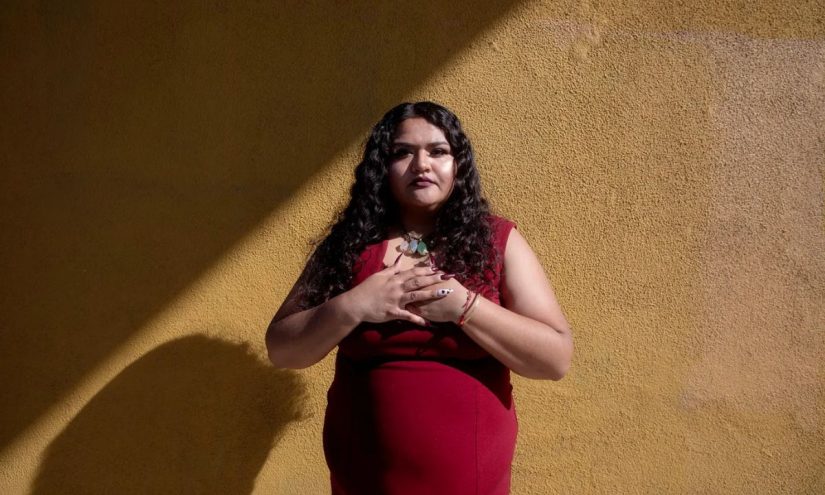
Angélica Reyes survived. At nine months old, she made the journey that could have claimed her life just as it started.
Since 1994, approximately 10,000 migrants have died in the borderlands. That year, the North American Free Trade Agreement (NAFTA) took effect. Designed to open trade between the United States, Canada and Mexico, the now-defunct policy has faced criticism for depressing Mexican wages. Their income flatlining, Reyes said, her parents left the city of Guadalajara, in the western part of Mexico, and headed with her to Los Angeles. They did not have authorization to live in the United States.
Reyes is now 32, though she remembers knowing she was undocumented as early as first grade.
“My mom was very cognizant of the discrimination and the obstacles that I would face throughout my life,” she said. “She made it clear, like, ‘You can’t mess up. You need to be twice as good to get half of the respect. You need to really prove that you earned your spot.’”
To do that, Reyes earned the good grades that set her up to become a history teacher for the Los Angeles Unified School District. She is one of about 15,000 teachers — and among the more than 835,000 undocumented people — who have received temporary permission to live, work and study in the United States through an Obama-era program known as Deferred Action for Childhood Arrivals (DACA). Women represent over half of DACA recipients, whose future in this country has been under threat by legal challenges to the program’s existence and the anti-immigration agenda of President Donald Trump.
https://datawrapper.dwcdn.net/nA5Cv/10/
If DACA ends, the goal of ongoing litigation, 700 education personnel, including teachers and teacher aides, would lose their jobs each month for two years as their work permits are revoked, according to FWD.us, an immigration reform organization. In California, the state with the most DACA recipients, 200 educators would lose their jobs monthly. In Texas, 100 would.
DACA-recipient teachers relate firsthand to the estimated 620,000 undocumented K-1 2 students, who confide in them about their experiences in immigrant families. They show youth that regardless of legal status, it’s possible to attain one’s professional goals. Many of these teachers are also activists, fighting for their students, themselves and other marginalized people. They see themselves as assets to schools.
“My immigration status inspires both my undocumented and documented students because they know all the obstacles that are faced by folks with my immigration status can be overcome,” Reyes said. “They know that if I could do it, that’s something that they could do as well.”
Without undocumented teachers, educator shortages across states could worsen. California has spent about $1.6 billion since the 2016-17 school year to tackle its teacher shortage. Still, the state issued 11 percent fewer teaching credentials between the 2021-22 and 2022-23 school years. Last year, it enacted legislation to eliminate barriers to entry, dropping a standardized test teaching candidates had to pass to demonstrate competence in math, reading and writing. But since undocumented immigrants aren’t widely perceived to be career professionals, the fact that schoolchildren nationwide depend on them has received scant attention in the broader immigration debate.
Maria Miranda, elementary vice president of the United Teachers Los Angeles (UTLA) labor union, said undocumented teachers “bring a different perspective to the table, a different skill set.”
Randi Weingarten, president of the American Federation of Teachers, the nation’s second largest teacher labor union, said DACA recipients in classrooms have strengthened the United States.
“They are role models, like all teachers, and should be treated as such, but instead, they are made to feel uncertain and fearful as their protections are challenged in court and as the Trump administration promotes mass deportations, even from sensitive locations like schools that were once considered off limits,” Weingarten said. “Immigration reform can’t be used as an excuse to rip teachers out of classrooms, where they are so desperately needed.”
Reyes at 1 year old with her father. (Angelica Reyes)
When Reyes was about to register for the SAT during her senior year in high school, one misinformed guidance counselor asked her why she planned to take the college entrance exam, insisting that higher education was off limits to undocumented students.
“I was devastated. It broke my heart,” Reyes said. “I remember crying and telling my mom, ‘I worked hard, for what?’”
Since 2001, however, California has extended access to in-state college tuition to undocumented students who have lived there long term. Unaware of this law and under the assumption that her counselor was correct, Reyes missed the deadline for the SAT and for the application to University of California schools, so she enrolled in a community college she could afford, a common path for many undocumented immigrants.
Then, in 2011, a state law was enacted that made her cry tears of gratitude: the California DREAM Act. The policy allows undocumented immigrants who entered the United States before they were 16 to obtain financial aid if they’ve earned qualifying credits at California schools. These young people have been nicknamed Dreamers after the Development, Relief, and Education for Alien Minors (DREAM) Act, a 2001 federal bill that would have given them legal status had it succeeded.
Reyes said that when she decided to apply to the University of California, Los Angeles (UCLA), a community college counselor took in her light brown skin and wavy black mane and without so much as seeing the 4.0 GPA in her transcript, told her to apply somewhere less competitive.
“I’m a competitive student!” Reyes recalled balking. “She opened my chart and she was, like, ‘Oh, you actually are.’ Her tune changed so quickly. It was really infuriating because if I had believed her, like many students believe counselors, I would have not gone to UCLA.”
In college, Reyes had to make a choice about her career path. Her research project on youth activism at Abraham Lincoln High School, where she graduated in 2010, had drawn her to education. “I realized that’s where I was needed,” she said.
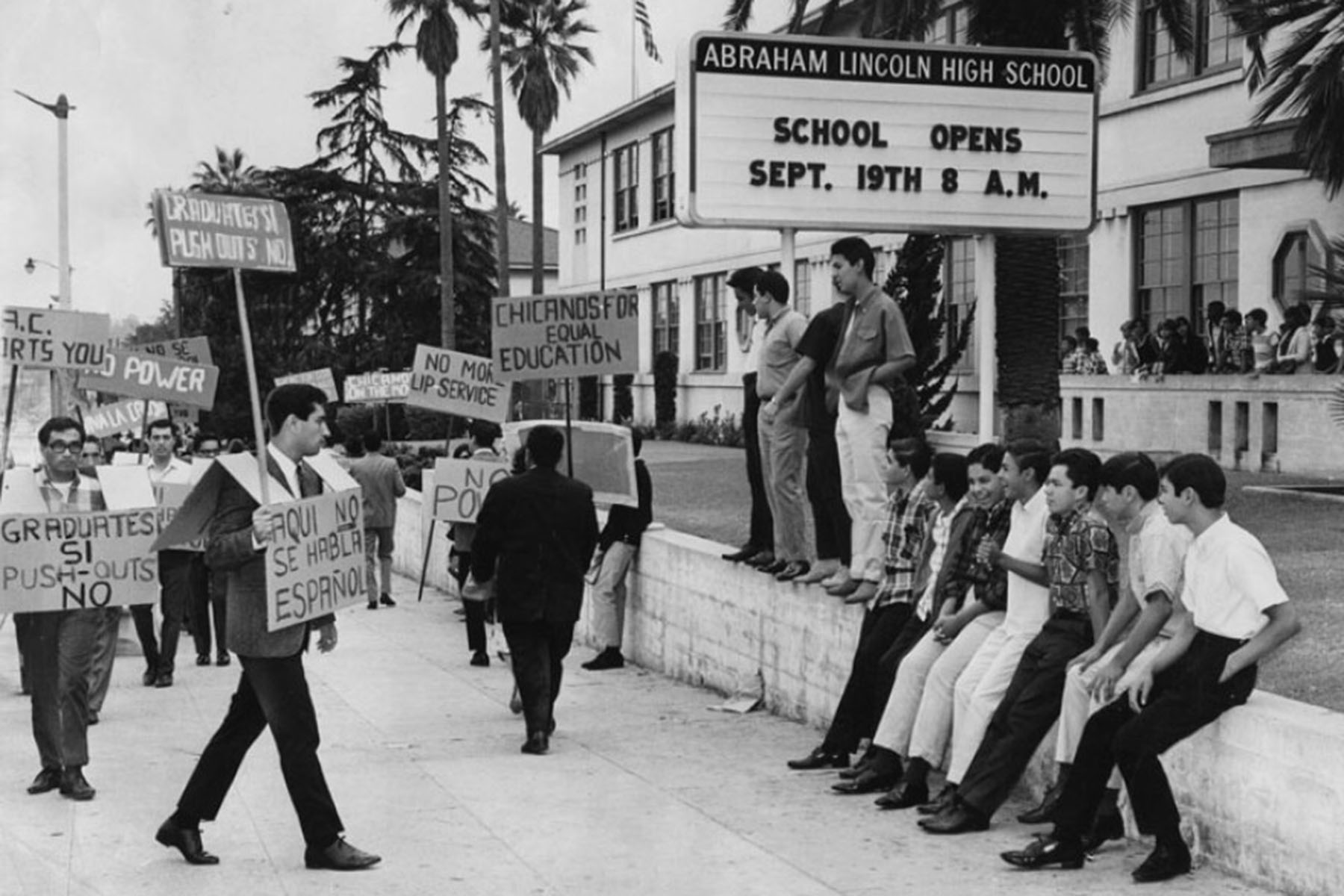
It was at Lincoln High in March 1968 that students spearheaded the protests known as the Chicano Blowouts or East Los Angeles Walkouts. With signs stating “School Not Prison” and “We Are Not Dirty Mexicans,” almost 15,000 youth from Lincoln and other schools in historically Mexican-American East L.A. walked out of classes for a week to protest their substandard education.
Chicano student walkouts in front of Abraham Lincoln High School in East Los Angeles during the 1968 blowouts. (LAPL)
Back then, students could be paddled for speaking Spanish, and with few advanced courses at Eastside schools, they were routinely steered to vocational classes like auto shop. These inequities contributed to a 60 percent dropout rate in the area. Jailed for their activism against these circumstances, the teenagers garnered community support that ushered in sweeping policy changes — bilingual instruction, ethnic studies and more Latino teachers.
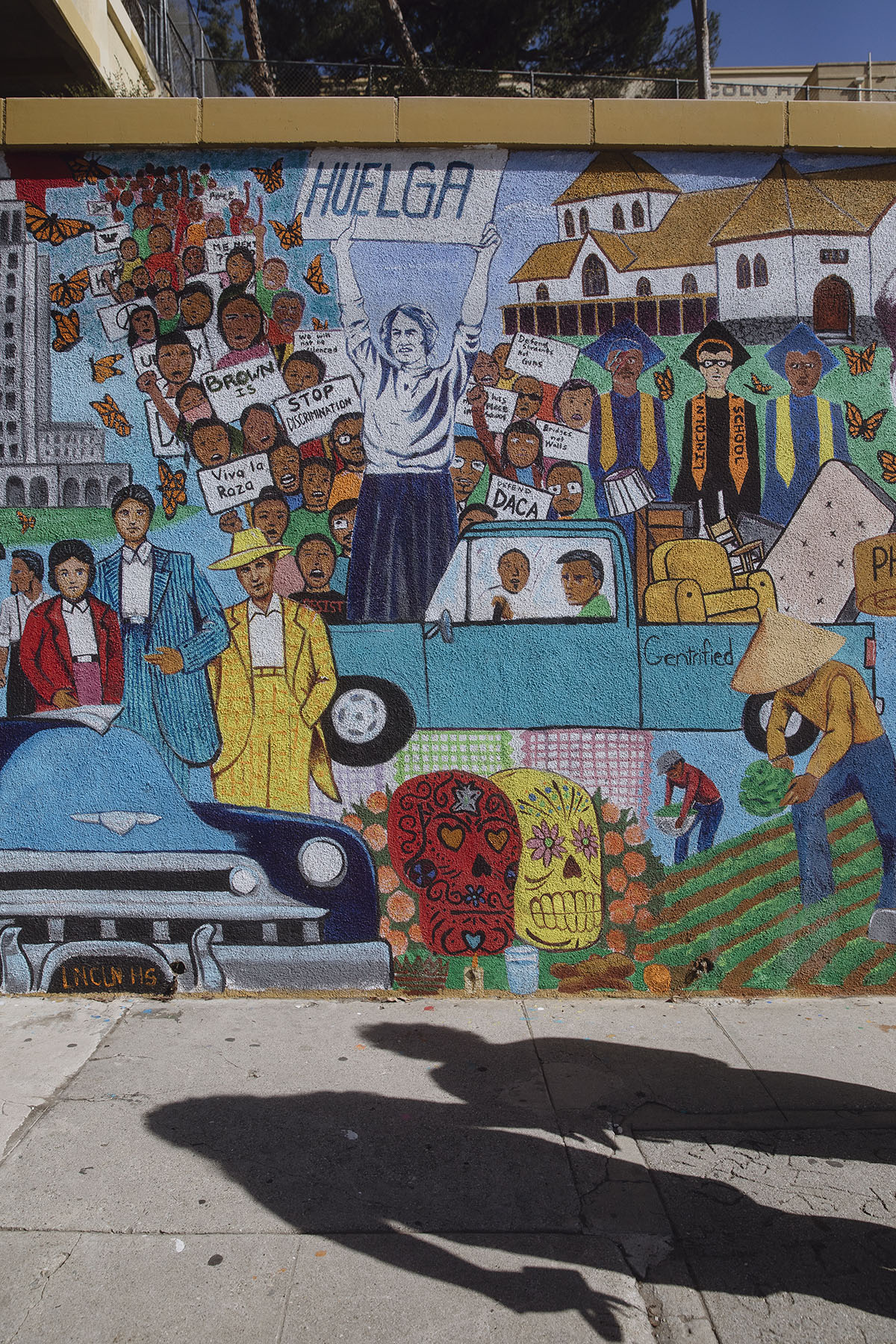
Today, the carnicerías, bungalow homes and palm trees along North Broadway Avenue, leading to 93 acres of green hills, offer no hint of the past tumult, but a mural at Lincoln commemorates the walkouts of nearly six decades ago.
Through her research, which also explored youth activism of the 2010s, Reyes learned that contemporary Lincoln High students continued to have unmet needs, such as support applying for college financial aid or accessing legal services as members of immigrant households. So when Lincoln High teachers asked if she wanted to develop a space to serve students, Reyes threw herself into the effort. The Paula Crisostomo Dream Center — named after a lead activist of the Chicano Blowouts and the inspiration for the 2006 film “Walkout” — opened at Lincoln in 2015.
“We established programming for immigrant students, for immigrant parents. We did immigrant and educational history,” Reyes said. “It’s still a resource for students at Lincoln, and we’ve expanded it to several other schools.”
Working at the Dream Center for three years convinced her that teaching was the best way to reach undocumented and marginalized youth. Rather than dismiss them, as she had been dismissed by school counselors, she would inspire students to excel academically regardless of legal status. In 2012, four years before she graduated from UCLA with a bachelor’s degree in sociology and six years before she earned her master’s in education from the university, DACA enabled undocumented students like herself to become career professionals.
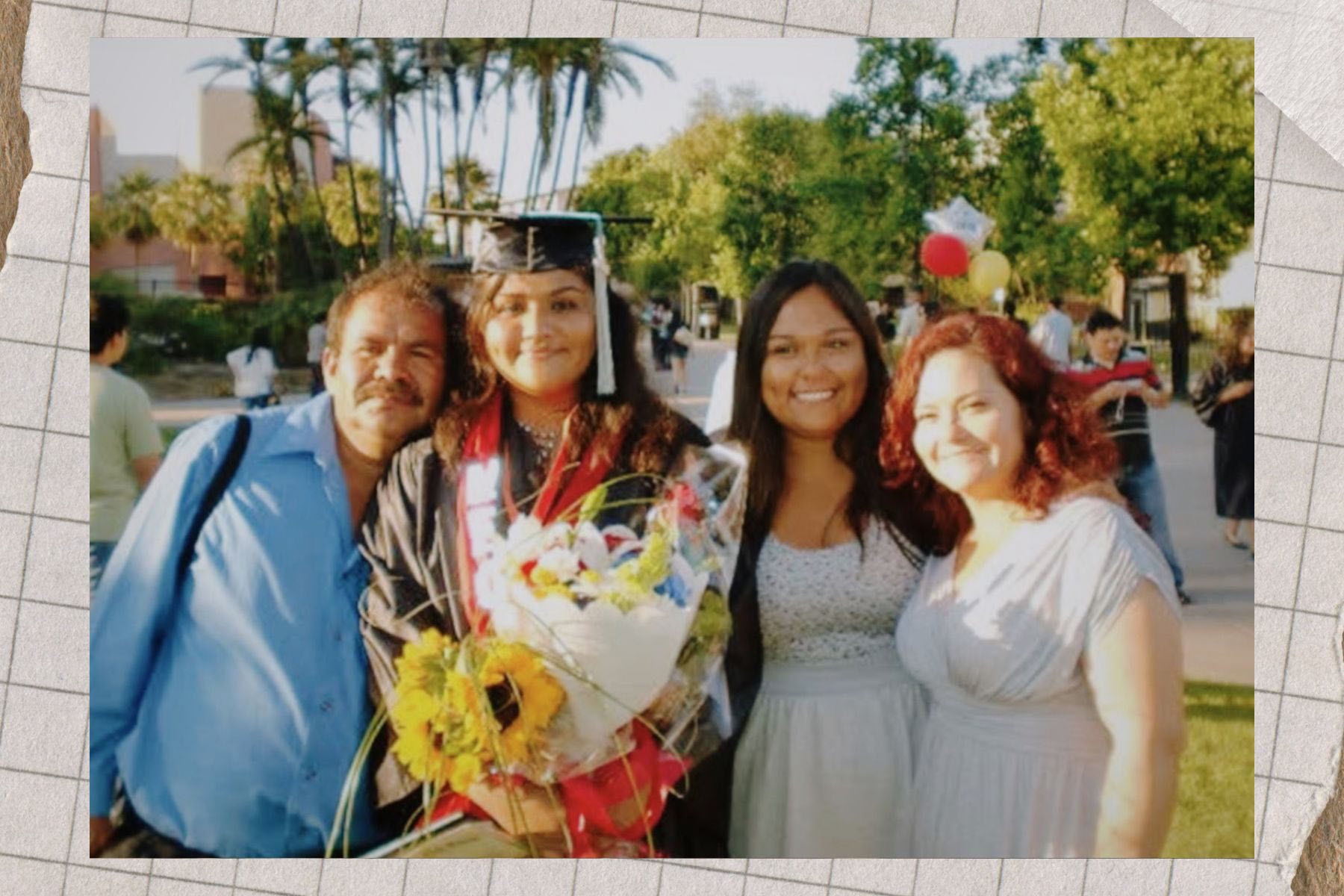
Reyes surrounded by family at her high school graduation. (Angelica Reyes)
It’s complicated: Those two words capture Reyes’ feelings about DACA. Although the program allowed her to teach, she has long viewed it as flawed, exploitative and a “constant reminder” she isn’t “fully accepted.”
DACA stems from the activism of undocumented college students frustrated that the DREAM Act failed and that their immigration status would limit their potential, said Jennifer R. Nájera, author of “Learning to Lead: Undocumented Students Mobilizing Education.” Fighting for immigrant rights, they found a purpose.
Like the DREAM Act, DACA was reserved for young people who came to the United States as children and didn’t have criminal histories. “They had to graduate from high school or college or go to the military, show ‘good moral character,’” said Nájera, an associate professor in the Department of Ethnic Studies at the University of California, Riverside. Instead of citizenship, Obama’s executive order “provided temporary relief from deportation, a two-year relief specifically, that could be renewed, and a work permit, which was a big deal.”
While DACA recipients cherished their professional opportunities, some contended that the policy cast them as second-class citizens, Nájera said.
That includes Reyes.
“I knew it was a Band-Aid,” she said. “In fact, when I first started teaching, my DACA expired because of an issue with the application. They had asked me if I was in a gang, and apparently I didn’t check off the X hard enough, so I wasn’t hired at the beginning of the year. I remember feeling this immense frustration.”
Los Angeles Unified employs about 300 DACA-recipient school personnel, according to Miranda of the UTLA labor union. As Reyes’ teaching career started, DACA weathered the first of multiple legal challenges. Trump rescinded the program during his first term, a move the Supreme Court later blocked; at the time, Reyes told her students about possibly losing her job. Since then, she has endured several other threats to DACA , though she’s now pained to tell her students that the program isn’t accepting new applicants.
DACA, she said, must be replaced with a sustainable alternative.
In a December interview, Trump said, “We’re going to have to do something with” DACA recipients. “They were brought into this country many years ago” and “in many cases, they’ve become successful.”
But that sympathy has been absent from his immigration policies since he resumed office. He has issued an executive order prohibiting undocumented college students from receiving in-state tuition. He has also lifted restrictions on immigration enforcement in “sensitive locations” such as churches, hospitals and schools, prompting parents nationwide to keep kids out of class.
A protester waves the Mexican flag during a demonstration for immigration rights outside Los Angeles City Hall on February 5, 2025. (Qian Weizhong/Getty Images)
“A lot of times, the children are U.S. citizens and the parents are concerned,” Reyes said. “But I’ve had students who shared that their parents are U.S. citizens, and they’re still scared because they know that U.S. citizens are also caught up in these raids. So, this isn’t about criminality. It’s about the targeting of Brown folks.”
Immigration and Customs Enforcement (ICE) agents and other federal authorities reportedly detained or deported at least 10 U.S. citizens, including children, in the first 100 days of Trump’s second term.
Last month, the California state superintendent presented Senate Bill 48 to limit ICE appearances at schools as absences have spiked — and schools could lose millions of dollars since their funding is tied to average daily student attendance. About half of California children belong to families that include at least one immigrant parent, while one in five live in mixed-status families with at least one undocumented parent.
“It’s very taxing emotionally for our members and our students,” Miranda said of ICE enforcement. “We have students at the elementary level who are terrified of seeing anyone in uniform. Some of them are so young that they don’t know the difference between the police and immigration. It’s a very scary moment.”
When Trump targeted DACA during his first term, Reyes warned in a Los Angeles Times opinion piece that disbanding the program could upend public education. But now she says her students deserve more than DACA’s “breadcrumbs.”
“We need to fight for something new because my kids want to be chefs and doctors and lawyers, but they’re being held back by their immigration status,” she said. “It’s excruciating in two ways: One, I want my students to have the opportunities that they deserve to serve the community. And, two, I don’t know when I’m going to be taken from them because of my own uncertainty.”
For now, she knows that her presence makes a difference at her high school. Los Angeles Unified has an immigrant student body of about 30,000 students, according to UTLA. Of those, one in four is undocumented. After Reyes shared her immigration status with students during a recent lunchtime conversation, she said a ninth grader confessed that she planned to quit school because she, too, is undocumented. Learning Reyes managed to become a teacher made the girl reconsider.
“It was really beautiful to see that, like it reignited her hope to have a bright future,” Reyes said.
Although the risks of revealing her status frighten her, her conscience compels her to, Reyes said. She quoted Mexican Revolution leader Emiliano Zapata: “It’s better to die on your feet than to live on your knees.”
Staying silent as the president attacks immigrants would make it hard for Reyes to face the youth in her life — her son, especially.
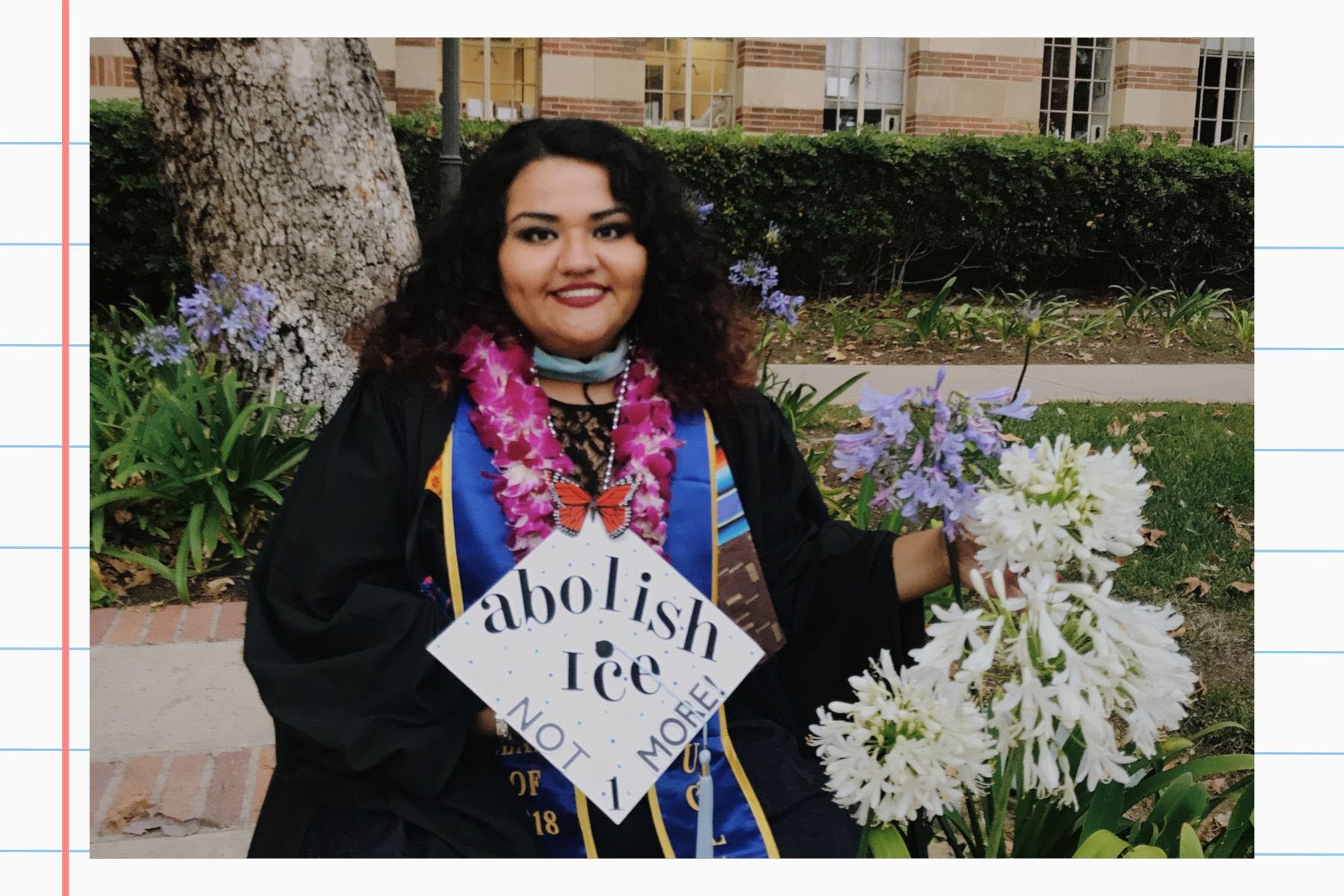
Reyes after receiving her master’s degree in education from UCLA. (Angelica Reyes)
Whenever a state turned red on Election Night, Nathan Reyes felt his anxiety shoot up. Still, he held out hope Kamala Harris would win. Then the Electoral College math made it plain: Donald Trump would be president again.
Although he’s a U.S. citizen, Nathan wondered what lay ahead for his undocumented relatives under a president promising mass deportations.
“I feel worried for them because if they get deported, what am I going to do?” he asked. “Where am I going to stay?”
So, he began to plan. He and his family would “have to pick our poison” — stay in a country hostile to their presence or self-deport together to Mexico regardless of citizenship status.
That her son, with a pile of ringlets and a round cherubic face, was even considering these options stunned Reyes. Nathan is in seventh grade.
“I was like, ‘Oh, my God, this kid is 12,’” Angélica Reyes said. “Why is he talking about this?’”
Rummaging through a bin of childhood possessions in her mother’s bedroom last year, Reyes found a poem she wrote in fourth grade about her fear of police. Her parents were street food vendors, an occupation California criminalized until 2018, so Reyes realized growing up that one brush with the law could have seen them deported.
Just as she did not have a childhood free of deportation fears, neither has her son.
Nathan, now 13, is hardly the only youth pondering the possibility of a relative’s departure, according to Lisette Sanchez, a psychologist in Long Beach, California. She said children are leaving school with “Know Your Rights” cards advising them of their civil liberties during ICE encounters, but they may not understand the information.
“They’re just feeling fear,” she said. “They’re being told something’s gonna happen. So mental health wise, you’re looking at chronic anxiety. You’re looking at hypervigilance.”
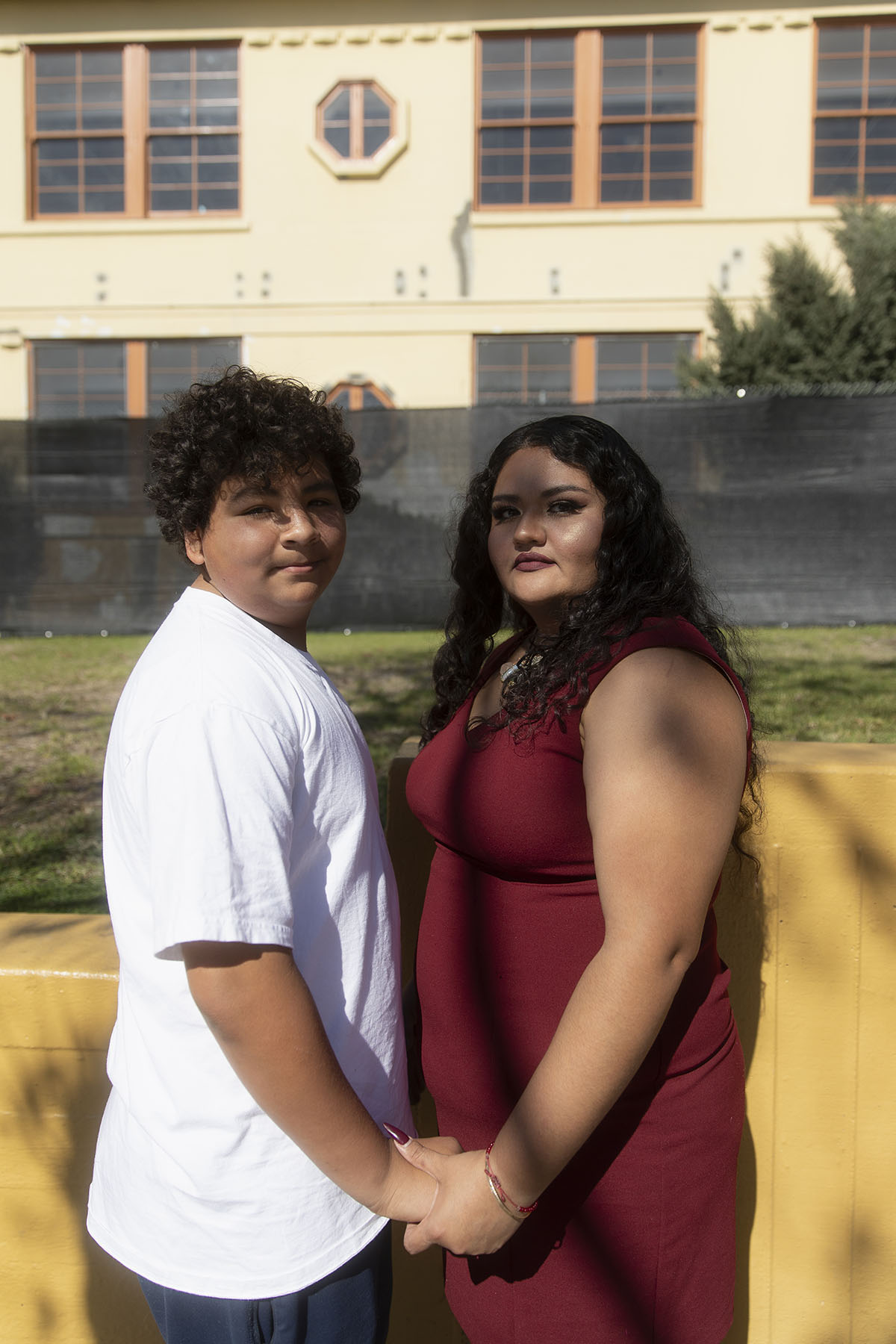
Angélica Reyes and her son Nathan Reyes in front of Abraham Lincoln High School in East Los Angeles, California, on February 9, 2025. (Zaydee Sanchez/The 19th)
To gain some sense of control, they may overconsume social media, leading to racing thoughts, rapid heart rate and sleeping difficulties.
“It’s this chronic nonstop anxiety because the state of uncertainty feels never-ending, and in many ways, it is not ending, right?” Sanchez said. “There’s different news every day.”
By speaking openly with children, parents can help them better manage stress, she said. Teachers, if they’re permitted, can broach the topic of immigration. Nathan appreciated how his Spanish teacher led a class discussion after the election.
“Sharing your feelings and emotions and finding that a lot of other people are feeling very similar can bring comfort to you,” he said.
Reyes gave birth to her son while she was in college and briefly wed to his father. She applied for legal status as an immediate family member of a U.S. citizen, her spouse. But years passed before the federal government responded to her request, she said. By then, her marriage had ended.
“I don’t think people understand how long the path to citizenship can be, what it looks like, how costly and time-intensive it is,” Sanchez said.
Reyes, who has not remarried, said being undocumented seeps into every aspect of her life, including romantic relationships. She feels obligated to tell prospective partners about her status.
“I remember to always be upfront, like, ‘Hey, I’m undocumented. I don’t want you to think I’m going to use you for papers,’” she said.
Reyes lives in one of the country’s 4.7 million mixed-status households, which include undocumented individuals and people with legal status or U.S. citizenship. If she gets deported, she has arranged for others to care for her son.
Her sister, two years younger, is a U.S. citizen. Asked if she resents that twist of fate, Reyes said, “I’m happy that she gets to be safe. I think that there’s a lot of pain and guilt for her.”
Her sister realizes, Reyes said, that her entire family could be taken away.
Reyes and her son Nathan doing a science experiment when he was little. (Angelica Reyes)
Should she be forced out of the only country she considers home, Reyes wants her son to know this: “I would never willingly leave you. I am dedicated to you. I love you, and I will always be working as hard as possible to get back to you.”
For Nathan, it is mind-boggling that anyone would want his mother out. He doesn’t understand why politicians demonize immigrants. Trump launched his first presidential campaign calling them criminals and continues to malign them.
“My mom has done a lot of good for her community,” Nathan said. “She has organized a finders keepers closet where people who don’t have some resources they need, like canned food or clothes, can take what they need.”
Just as Nathan defends her honor, Reyes vouches for her parents. Her mother is now a nail technician and her father is a food vendor. Growing up, she said, she watched them visit the sick, volunteer at churches and fundraise for the poor.
“Whenever they saw a need, they stepped up, and they didn’t wait for someone else to help,” she said.
She’s hurt when people sympathize with Dreamers while disparaging their parents, that the immigration system paints family members as saints or sinners. The DACA recipients she’s researched feel similarly, Nájera said.
“Many of the students that I interviewed were always talking about their parents,” Nájera said. “They did not want their stories to be divorced from their parents and their family stories. These families, they’re units.”
But the Dream Act caused a migrant generational divide, insinuating that those who arrived in this country as children deserve citizenship, while their parents and others who arrived as adults do not, Nájera said.
Angélica Reyes helped paint the red and yellow skulls on the mural across the street from Abraham Lincoln High School in East Los Angeles, where she graduated. (Zaydee Sanchez/The 19th)
Migration often occurs out of necessity. For example, after NAFTA took effect in 1994, U.S. agricultural exports flooded Mexico, displacing workers, according to Edward Alden, a distinguished visiting professor in the College of Business and Economics at Western Washington University. Four years earlier, over 4 million Mexican migrants were in the United States, a figure that ballooned to nearly 13 million — around 9 percent of Mexico’s population — by 2008.
Reyes said NAFTA crushed the bakery business her father’s side of the family owned because it could not compete with the U.S. companies that swooped in. Her parents migrated north to earn higher wages.
Today, economic instability is but one of the reasons that motivate migrants.
“A lot of the Venezuelans are leaving Venezuela because it’s a violent, dangerous place, and the government has destroyed the economy in different ways,” Alden said. “Same thing out of Central America. These are people who aren’t necessarily leaving for economic reasons. They’re doing it for personal safety reasons.”
Reyes said she has Central American students who fled horrors. She wants them to feel safe in the United States, and the fact Los Angeles Unified has pledged not to cooperate with immigration officials voluntarily provides some comfort. Run by a formerly undocumented superintendent, the sanctuary districtblocked Homeland Security agents from entering two schools in April.
The fear of raids on campuses has traumatized her students, Reyes said. “It’s so difficult to convince my students that they are worthy of love and that they’re worthy of respect and that they deserve civil rights.”
It is equally difficult to keep advocating for herself, she said. But as the threat of deportation looms, she has no choice but to keep fighting.
“It’s hard to know that I can’t earn citizenship and that I can’t give my kid stability or safety,” she said. “I feel like if I could earn it, I would have three citizenships. I would have put in the work.”
School (in)Security is our biweekly briefing on the latest school safety news, vetted by Mark Keierleber. Subscribe here.
Tennessee state Sen. Bo Watson wants to eject undocumented students from public school classrooms. But first, he needs their data.
Watson seeks to require students statewide to submit a birth certificate or other sensitive documents to secure their seats — one of numerous efforts nationwide this year as Republican state lawmakers seek to challenge a decades-old Supreme Court precedent enshrining students’ right to a free public education regardless of their immigration status.
Some 300 demonstrators participate in a Waukegan, Illinois, rally on Feb. 1 to draw attention to an increase in Immigration and Customs Enforcement activity in the area. Privacy advocates warn student records could be used to assist deportations. (Scott Olson/Getty Images)
In my latest feature this week, I dive into why those efforts have alarmed student data privacy advocates, who warn that efforts to compile data on immigrant students could be used not just to deny them an education — it could also fall into the hands of Immigration and Customs Enforcement.
As the Trump administration ramps up deportations and tech billionaire Elon Musk’s Department of Government Efficiency reportedly works to create a “master database” of government records to zero in on migrants, data privacy experts warn that state and federal data about immigrant students could be weaponized.
In the news
Cybercriminals demanded ransom payments from school districts nationwide this week, using millions of K-12 students’ sensitive data as leverage after the files were stolen from education technology giant PowerSchool in a massive cyberattack late last year. The development undercuts PowerSchool’s decision to pay a ransom in December to keep the sensitive documents under wraps. | The 74
Gutted: Investigations at the Education Department’s civil rights office have trickled to a halt as the Trump administration installs a “shadow division” to advance cases that align with the president’s agenda. | ProPublica
Civil rights groups, students and parents have asked courts to block the Education Department’s civil rights enforcement changes under Trump, saying they fail to hold schools accountable for racial harassment and abuses against children with disabilities. | K-12 Dive
Among the thousands of cases put on the back burner is a complaint from a Texas teenager who was kneed in the face by a campus cop. | The 74
‘The hardest case for mercy’: Congratulations to Marshall Project contributor Joe Sexton, who was named a Pulitzer Prize finalist for his reporting on a legal team’s successful bid to spare the Parkland, Florida, school shooter from the death penalty. | The Marshall Project
The city council in Uvalde, Texas, approved a $2 million settlement with the families of the victims in the 2022 shooting at Robb Elementary School, the first lawsuit to end with monetary payouts since 19 children and two teachers were killed. | Insurance Journal
In Michigan, a state commission created in the wake of the 2021 school shooting at Oxford High School, which resulted in the deaths of four students, issued a final report calling for additional funding to strengthen school mental health supports. | Chalkbeat
Meanwhile, at the federal level, the Education Department axed $1 billion in federal grants designed to train mental health professionals and place them in schools in a bid to thwart mass shootings. | The 74
A high school substitute teacher in Ohio was arrested on accusations she offered a student $2,000 to murder her husband. | WRIC
Connecticut schools have been forced to evacuate from fires caused by a “dangerous TikTok trend” where students stab school-issued laptops with paper clips to cause electrical short circuits. | WFSB
Eleven high school lacrosse players in upstate New York face unlawful imprisonment charges on accusations they staged a kidnapping of younger teammates who thought they were being abducted by armed assailants. | CNN
Sign-up for the School (in)Security newsletter.
Get the most critical news and information about students’ rights, safety and well-being delivered straight to your inbox.
The Future of Privacy Forum has “retired” its Student Privacy Pledge after a decade. The pledge, which was designed to ensure education technology companies were ethical stewards of students’ sensitive data, was ended due to “the changing technological and policy landscape regarding education technology.” | Future of Privacy Forum
The pledge had previously faced scrutiny over its ability to hold tech vendors accountable for violating its terms. | The 74
New kid on the block: Almost simultaneously, Common Sense Privacy launched a “privacy seal certification” to recognize vendors that are “deeply committed to privacy.” | Business Wire
Google plans to roll out an artificial intelligence chatbot for children as the tech giant seeks to attract young eyeballs to its AI products. | The New York Times
Kansas schools plan to spend state money on AI tools to spot guns despite concerns over reports of false alarms. | Beacon Media
ICYMI @The74
A new report from the Department of Health and Human Services suggests gender-affirming health care puts transgender youth at risk but the report ignores years of research indicating otherwise. (Getty Images)
The index ranks 26 countries and territories in terms of their capacity to shape their external environment. It evaluates international power through 133 indicators across themes including military capability and defense networks, economic capability, diplomatic and cultural influence, as well as resilience and future resources.
The portrait that emerges from its latest survey is that while China’s overall power still lags the United States, it is not far behind, even though the current economic slowdown is holding it back in the short term.
After the two superpowers, trailing a long way back as the next most powerful countries in the Asia-Pacific are Japan, India, Russia and then Australia.
Economic versus military power
The index confirms that China draws its power from its central place in Asia’s economic system, while that of the United States comes from its military capability and unrivaled regional defense networks.
Australia’s relationship with the two mirrors the dilemma facing the whole region.
The United States is far and away Australia’s main strategic partner and has been since the Second World War.
In a deal signed in March 2023, Australia is set to acquire a conventionally-armed, nuclear-powered submarine capability with help from the United States through the AUKUS Treaty, which also involves the United Kingdom.
This was followed by plans to station more U.S. forces in Australia, especially in air bases in northern and western Australia. There are also moves to increase cooperation between both countries in space, speed up efforts for Australia to develop its own guided missile production capability and work with the United States to deepen security relationships with other countries in the region — most notably Japan.
This comes as Australia has been working hard to get trade restrictions eased with China after it imposed tariffs on a range of Australian products in 2020 during a standoff with the previous government.
Dining with Joe and Jinping
China is still Australia’s largest two-way trading partner in goods and services, accounting for almost one third of its trade with the world. Two-way trade with China grew 6.3% in 2020-21 to A$267 billion (about US$180 billion), mostly due to the coal and iron ore sectors.
So as it stands, Australia’s security relies on the United States but its economic prosperity is heavily influenced by China.
It’s no surprise then that Prime Minister Albanese had to walk a fine line in 2023 — going from a state dinner at the White House with U.S. President Biden on 26 October to meeting with Chinese president Xi Jinping 11 days later.
Colin Heseltine, a former Deputy Head of Mission at the Australian Embassy in Beijing and now senior advisor for independent think tank Asialink, said Australia is in a conundrum over China.
“Australia’s major trading partner is also perceived as our No.1 security threat,” he said.
Normalizing relations before an abnormal U.S. election
Heseltine believes there is a mood of cautious optimism about the growing relationship between Australia and China since the election of the Albanese government, but expects the future will not be completely free of headwinds.
In the end, Australia, like many other nations in the region, is pragmatically making the situation work. It has seen relations with Beijing normalize, or as some prefer to describe it, stabilize.
As for the United States, relations between Canberra and Washington remain vibrant and strong.
The next big issue for Australia in managing this twin policy of improving ties with the Asia-Pacific’s two diverse superpowers could well be the 2024 U.S. presidential election — who wins it and if China features in it.
And those things are outside its control.
Three questions to consider:
1. What is the emerging dilemma facing most democratic nations in the Asia-Pacific region? 2. Is China likely to overtake the United States as the Asia-Pacific’s major superpower anytime soon? 3. What is the biggest threat to the current status quo facing nations in the region?
Columbia University student Mohsen Mahdawi spoke with CBS News in his first TV interview since his release from ICE custody. He spent 16 days in detention and now awaits deportation hearings for protesting the war in Gaza.
The expansion of government powers would hand Immigration and Customs Enforcement (ICE) the authority to cancel a student’s legal status if the visa they used to enter the US is revoked.
Previously, a visa revocation would only impact a person’s ability to return to the country but would not end their permission to stay in the US as a student.
The new guidelines were outlined in an ICE document shared in a court filing on April 28, according to Associated Press.
Attorneys for international students said in court the new reasons would allow for faster deportations and would justify many of the Trump administration’s terminations of thousands of students’ legal status on the database maintained by ICE.
“This just gave them carte blanche to have the State Department revoke a visa and then deport those students, even if they’ve done nothing wrong,” said immigration attorney Brad Banias, as reported in AP.
When approached for comment, a State Department spokesperson said it “will continue to work closely with the Department of Homeland Security to enforce zero tolerance for aliens in the United States who violate US laws, threaten public safety, or in other situations where warranted”.
The PIE is yet to hear back from ICE.
This just gave them carte blanche to have the State Department revoke a visa and then deport those students, even if they’ve done nothing wrong
Brad Banias, immigration attorney
Sector leaders welcomed last week’s news that the government was restoring students’ legal status while it developed a new framework for future terminations, though the proposed vastly expanded new powers come as another blow for international students and educators.
The court heard that the new policy went against “at least 15 years of SEVP guidance”, referring to the Student and Exchange Visitor Program managed by ICE.
However, NAFSA emphasised on May 2 that “the document cannot yet be regarded as ICE’s new official policy”.
The document offers two new reasons for termination; non-compliance with the terms of nonimmigrant status and visa revocation by the state department.
In the case of the former, it is not clear whether a SEVIS record termination would also result in the termination of nonimmigrant status, though it would strip students of status benefits including applying for OPT or returning to the US after travelling abroad.
According to immigration attorneys, the new guidance could also allow for revoking student status if their names appear in a criminal database regardless of whether they were ever charged with a crime.
Traditionally, student visa revocations have not been common, but recently the US government began terminating students’ status either in addition to or instead of revoking their visas.
The Student and Exchange Visitor Information System (SEVIS) database is maintained by ICE to monitor international students’ presence in the US.
In the absence of disaggregated counts of visa revocation and SEVIS record termination, it remains unclear how many students will lose their status because of the new termination framework.
Since mid-March, sudden visa revocations by the State Department and SEVIS record terminations by ICE and DHS have caused widespread fear and uncertainty across US campuses.
“Exacerbating the stress was the rationale provided by the government, which ranged from wholly absent, to conflicting, to shifting, to downright baseless,” said NAFSA.
In March, secretary of state Marco Rubio said that his department was revoking the visas of students who took part in pro-Palestinian protests and those with criminal charges.
However, many students who saw their status terminated said they did not fall under those categories and argued that they were denied due process. Others said they were not aware their status had been revoked until logging onto the SEVIS database.
Despite major policy challenges impacting the US international education sector and political tension between the North American country and its neighbours, the 2025 NAFSA conference is on track to host 8,000 attendees, the association has asserted.
The news comes despite some stakeholders choosing to skip this year’s conference due to the Trump administration’s immigration crackdown, which has seen hundreds of international students detained, arrested and fearing deportation, and controversial suggestions that Canada could become the 51st US state.
The NAFSA conference has long been a cornerstone event for the international education sector. As the largest gathering of its kind, recent years have seen approximately 9,500 attendees come together for the annual conference.
NAFSA CEO Fanta Aw told The PIE News that participants from more than 100 countries are expected to attend this year’s event in San Diego, including ministers of education and other high-level leaders and nearly 50 country consortia representing more than 1,000 academic institutions and organisations from around the world.
Jeffrey Smart, co-founder and director of the Lygon Group, based out of Australia, is among those opting out of the event, taking to LinkedIn to explain why he won’t be attending in 2025.
“NAFSA plays a crucial global role in promoting the benefits of global education – 77 years on it keeps on thriving. Sadly, this year, I won’t attend – even though it’s held in glitteringly gorgeous San Diego,” wrote Smart.
“As the new US administration seizes, arrests, and threatens to deport hundreds of international students, and makes updates to INA Section 12(f) – defining who and who can’t enter the US as ‘aliens’ – I demure.”
“The advice US schools, colleges, and universities have had to issue to their current students about what to do when crossing the border, or seized by ICE, are heartbreaking,” said Smart.
Just over three months into Donald Trump’s second term, the number of international students and recent graduates who have had their visas revoked by the administration has surpassed 1,800. However, the latest news suggests hundreds of revocations are being reversed, with immigration officials working on a new system for reviewing and terminating visas for international students.
Stakeholders speaking to The PIE shared anecdotal accounts of international colleagues forgoing NAFSA due to concerns about their experiences upon arrival in the US. One story mentioned a colleague ultimately choosing to attend the conference while considering precautionary measures, such as preparing emergency contact points.
Speaking to The PIE, Aw emphasised the event’s role as a space for colleagues to share strategies, build leadership skills, and find a “sense of community to fuel their resilience.”
“NAFSA’s annual conference and expo is an international event with global appeal, and that is absolutely true for 2025 in San Diego,” said Aw.
“The field of international education has continued to expand and where that growth has been strongest is where we’re seeing increased interest. More than 40% of our registrants so far are from outside of the United States.”
Aw recognised that some US institutions “are facing some budgetary challenges”. But the NAFSA CEO assured that “ebbs and flows are nothing new to the field of international education”.
“I think the field recognises that this is an important time for the sector to come together and our registration numbers reflect that,” she continued.
“Consider that the power of government policy to effect student mobility is playing out in the United States on a daily basis, and other major study destinations have been impacted by restrictive government policies recently as well, San Diego presents a critical time for the field to engage with the latest trends shaping the field and to share strategies for preparing and responding to the current landscape.”
San Diego presents a critical time for the field to engage with the latest trends shaping the field and to share strategies for preparing and responding to the current landscape Fanta Aw, NAFSA
Eddie West, assistant vice-president of international affairs at California State University, Fresno, told The PIE it is “encouraging” to see that the anti-DEI ‘dear colleague‘ letter that prompted alarm among the sector has been blocked.
“As one campus colleague of mine memorably put it, we should be careful not to ‘pre-comply’ regarding issues being actively litigated in the courts,” advised West.
However, West predicts budget challenges will hamper attendance at the conference this year, as many campuses are instituting hiring and travel freezes.
Christopher Connor, vice provost for enrollment management at University at Buffalo, also spoke to The PIE about this year’s conference.
“From what I’ve seen, institutions remain engaged and committed to supporting international education and the organisations that promote it, even in the face of political uncertainty,” said Connor, noting he hasn’t heard concerns that supporting NAFSA’s advocacy could jeopardise federal funding.
“For me, it’s more important than ever that international students are encouraged to pursue their dreams, rather than dwell on ‘what if’ scenarios. Sitting at home, anticipating the worst, serves no purpose and only leads to missed opportunities,” he said.
“The chance to study in the US, engage with diverse communities, and shape one’s future is still very real, and we continue to see students seizing those moments and making lasting contributions. The same goes for professionals in international education, now is not the time to retreat, but to remain engaged, connected, and focused on the broader mission we share.”
Policies will always be dynamic, not static, and it’s important for all of us, students and professionals alike, to be cognisant of that reality Christopher Connor, University at Buffalo
For Connor, the value of a US education for international students remains a “significant and compelling proposition”.
“It offers access to world-class institutions, cutting-edge research, and vast professional networks, all of which open doors globally. Despite current uncertainties, the long-term benefits far outweigh the perceived risks. In fact, the risk remains relatively low compared to the life-changing opportunities that studying in the US can provide,” he said.
“Policies will always be dynamic, not static, and it’s important for all of us, students and professionals alike, to be cognisant of that reality. Remaining adaptable and focused on the enduring value of international education is what allows us to move forward, even when the external environment shifts.”
Their suit argues that the thousands of terminations, which to date have left more than 1,800 students without valid status, are “unlawful” and came “without warning, individualised explanation and an opportunity to respond”.
The Presidents’ Alliance on Higher Education and Immigration, which advocates for immigrant and international student rights, and several impacted students from institutions such as MIT and Boston University filed the suit in the District Court for the district of Massachusetts yesterday.
Not only have students been forced out of housing, jobs or their chosen institution mere weeks away from graduation, but the Trump administration’s crackdown on international students has “undermined’ institutions’ being able to “attract, retain, and effectively serve” students from overseas, the group warned.
The court is asked to find that the policy is unlawful and unconstitutional, reactivate the SEVIS records of affected students, halt the policy while the case is being fought and “vacate all improper SEVIS terminations”.
President and CEO of the Presidents’ Alliance, Miriam Feldblum, warned that students would be put off from studying in the US because of the “fear and uncertainty diminishing our global competitiveness and reputation”.
“The unlawful termination of student records without due process strikes at the heart of higher education’s mission. Colleges and universities drive innovation, research, and workforce growth by fostering global talent – but they can’t do that when students’ futures are derailed without explanation,” she said.
“These actions deter future students from studying here in the US, and hinder campus administrators from carrying out their work by the arbitrary upending of established regulations and processes.”
Meanwhile, Sirine Shebaya, executive Director at the National Immigration Project – which is representing the Presidents’ Alliance – blasted the policy vas “not only lawless… [but] cruel” – marking “yet another manifestation of policies that fly in the face of both legal standards and common decency”.
These actions deter future students from studying here in the US, and hinder campus administrators from carrying out their work by the arbitrary upending of established regulations and processes Miriam Feldblum, Presidents’ Alliance
While the surge in visa revocations was at first thought to mainly affect students who had expressed pro-Palestinian sympathies, international education stakeholders have been left baffled at a growing number being issued at institutions where no such protests had taken place.
Some students – including one unnamed Boston University graduate represented in the legal case – are reporting that their visas had been taken away due to minor traffic infractions. Others have been left confused after their visas were revoked despite having no criminal history.
Yet the State Department continues to back the policy.
“The Trump administration is focused on protecting our nation and our citizens by upholding the highest standards of national security and public safety through our visa process,” a State Department spokesperson told The PIE News this week.
“The Department of State will continue to work closely with the Department of Homeland Security to enforce zero tolerance for aliens in the United States who violate US laws, threaten public safety, or in other situations where warranted.”