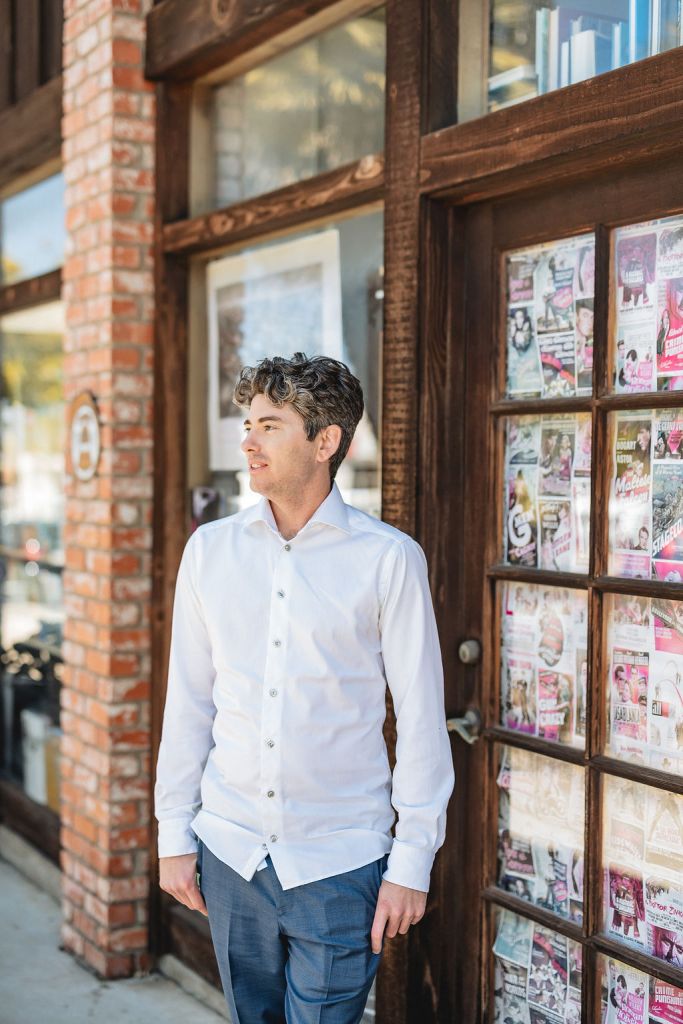
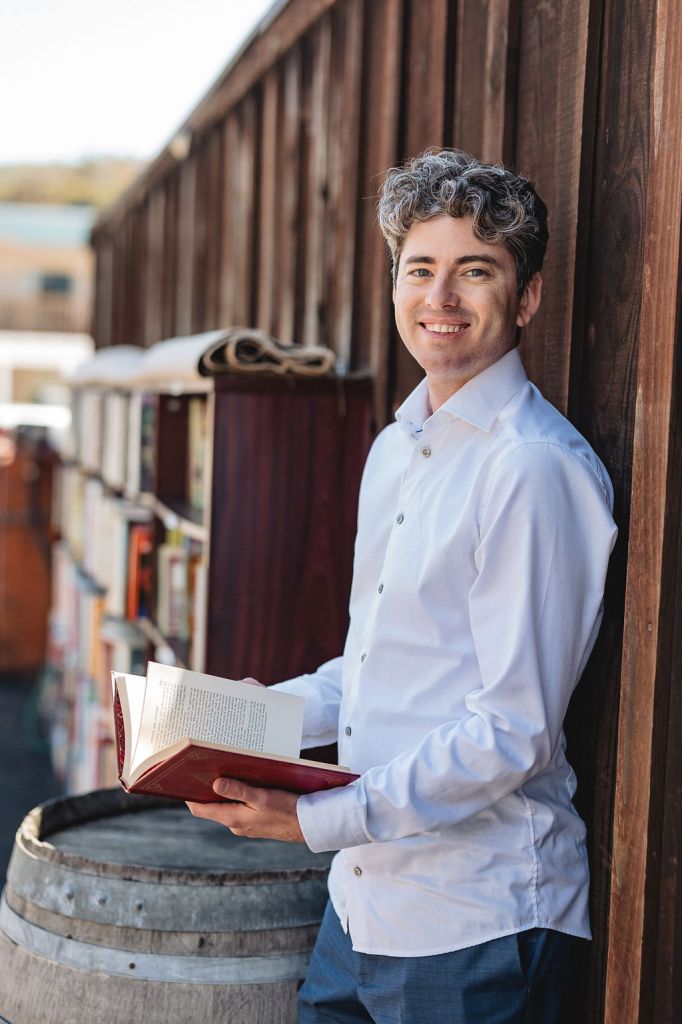
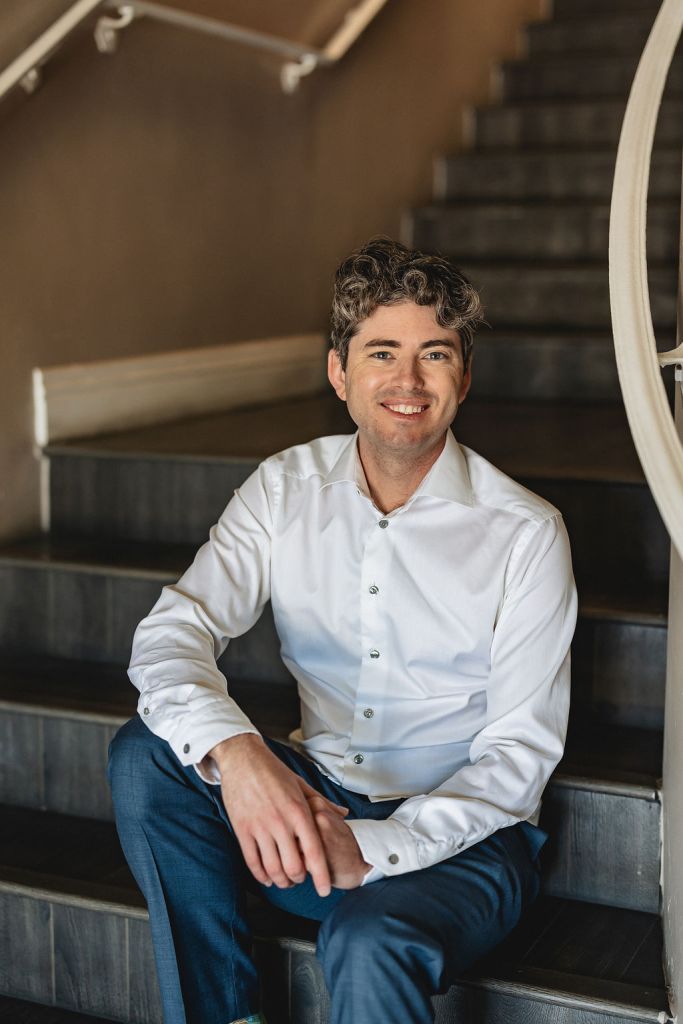
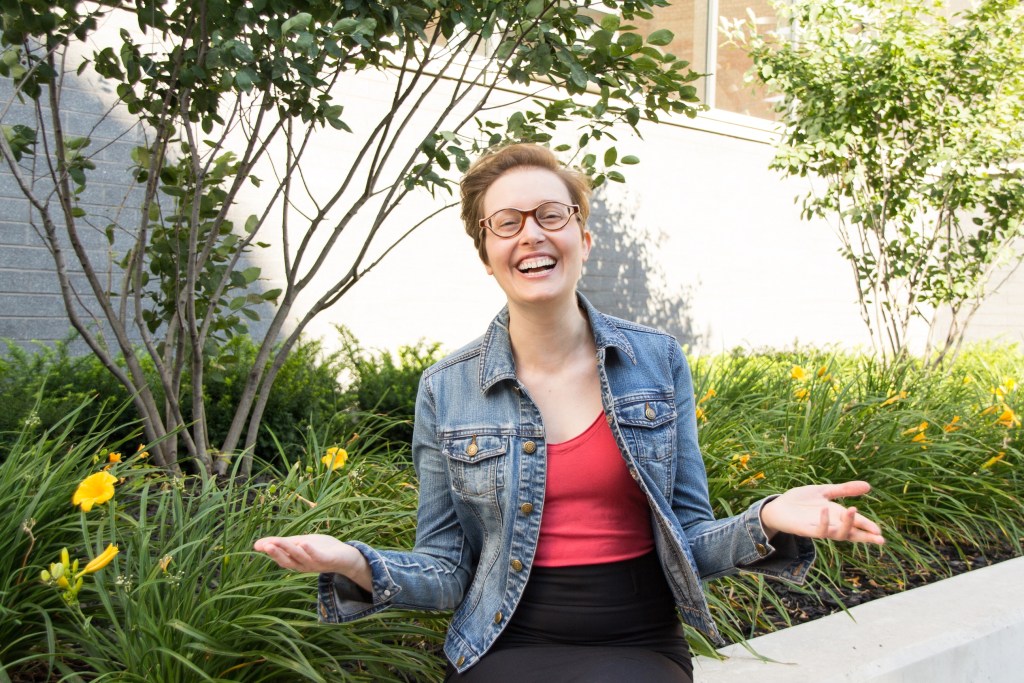
Dr Lily Rosewater designs websites, brand assets, and has a service for social media on demand at her company, Pitch Science. I knew she’d be a great expert to share with you. She joins me live from Australia to talk about what it means to be a visible expert for scientists and researchers.
Lily is an expert for scientist websites, social media, and branding through her company, Pitch Science. What about you? What would it mean to be more visible as an expert yourself? We talk about how many academics are known in their communities, but hidden online. Are you one of the HiddenExperts™? Whether it’s been intentional for you or not, you may want people to find you and your research online. Lily can help you too.
This interview will be also be shared on Spotify soon.
Bio
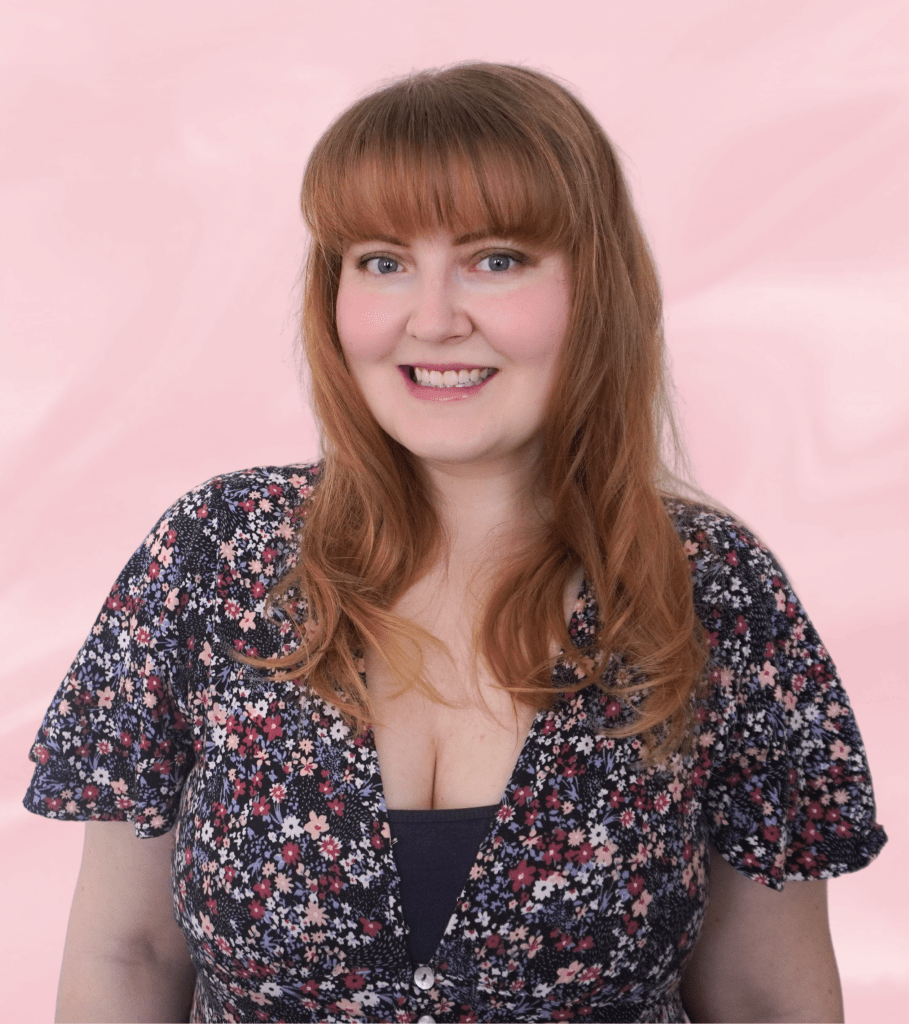
Dr Lily Rosewater is a science communicator, neuroscientist, and founder of Pitch Science. Armed with experience in both scientific research and digital marketing, Lily helps life science organisations and individual scientists share their brilliant ideas with the public to produce meaningful change.
Lily Rosewater, PhD
At Pitch Science, she turns science into stories through her purposeful, strategic, and human-centred online science content. Lily’s branding and website design services transform HiddenExperts™️ into VisibleExperts, so that scientists and science brands are ready to guide online conversations and get their work seen by those who matter. She is also empowering scientists to do science communication themselves and extend their reach beyond traditional academic channels with science communication training sessions and her Pitch Lab community. Because the more research expertise is shared online, the more it benefits everyone.
As a writer, Jo Davis is used to sharing through her online presence. In this episode of The Social Academic, we talk about her life online such as her digital portfolio. And, offline through the coloring books she designed, the Starseed Panic Pages, and journaling. What does it mean to be intentional about your digital and analog life as an academic? We talk about focus and what it can do for your brain to be on paper.
I’ve admired Jo Davis’ writing for years. I followed her on X after reading one of her movie critiques. When she shared a recent podcast appearance on the Moments that Define Us, I thought she was perfect to come on The Social Academic to talk about her life online and on paper. And, what it means to be her authentic self.
Jo Davis is a professor, author, freelance writer, film critic, artist, and a beacon of creativity. She teaches writing and rhetoric at the University of Denver.
When Sarah Layden shared her satire piece, ‘Unfriend Me Now’ on her LinkedIn profile, I reached out right away about her appearing on The Social Academic interview series. She wrote ‘Unfriend Me Now’ after reading research from Floyd, Matheny, Dinsmore, Custer, and Woo, “If You Disagree, Unfriend Me Now”: Exploring the Phenomenon of Invited Unfriending, published in American Journal of Applied Psychology.
Bio
Sarah Layden is the author of Imagine Your Life Like This, stories;Trip Through Your Wires, a novel; and The Story I Tell Myself About Myself, winner of the Sonder Press Chapbook Competition.
Sarah Layden
Her short fiction appears in Boston Review, Blackbird, McSweeney’s Internet Tendency, Best Microfiction 2020, and elsewhere. Her nonfiction writing appears in The Washington Post, Poets & Writers, Salon, The Millions, and River Teeth, and she is co-author with Bryan Furuness of The Invisible Art of Literary Editing.
She is an Associate Professor of English at Indiana University Indianapolis.
We’re back with Dr. Ruth C. White to talk about her life beyond academia. Join us for this conversation about why female academics suffered through the pandemic, and why they are feeling so burned out.
What is burnout? Why are women academics especially feeling it in 2025?
Bio
Ruth C. White, PhD, MPH, MSW, RSW is on a mission to help women find success that feels like them.
Dr. White’s career has taken a meandering path with success in many roles. She has worked as a social worker in the USA, Canada and the UK, and gave up tenure in the social work program at Seattle University to teach in the ground-breaking virtual program at the University of Southern California. Yes… She gave up tenure! Then she left academia for a role as a DEI executive at a Silicon Valley tech firm, and followed up with another DEI role in academia.
Ruth C. White, PhD, MPH, MSW, RSW
Ruth is the author of four books, and has written articles on mental health for Harvard Business Review, Fast Company, and Tracy Anderson Magazine. She built a consulting practice in DEI and mental health, with clients such as PwC, Indeed, JPMorgan Chase, Premera Blue Cross, Aetna, Applied Materials, Protiviti, Gainsight, among others. Since 2020, Dr. White has appeared 30+ times as a mental health commentator on KRON4-TV Bay Area, and she has also appeared as an expert on The Today Show, BBC, podcasts, and radio. Her groundbreaking research on the LGBTQ+ community in Jamaica, led her to be an expert witness in more than a dozen cases in collaboration with Yale, Columbia and NYU Law Schools, and advocacy groups across the USA.
In addition, Ruth has a modeling career, that has included major campaigns, and representation by agencies in Toronto, San Francisco, Paris and London. Recently she merged her love for words and travel to become an in-demand travel writer, with articles in CN Traveler UK & US editions.
And she accomplished all this as a mom with an atypical brain: one labeled with ADHD and bipolar disorder. Her sense of adventure has led to PADI diving certifications, kayaking across San Juan Islands and rapids on the White Nile and Pacuare, hiking solo up Mt. Ellinor, and racing sailing boats in the San Francisco Bay for several years. She is also competent with crochet hooks, knitting needles and sewing machines.
Are you thinking about starting a podcast? I invited Dr. Anna Clemens to share her podcasting journey. We talk about how social media and online presence has changed for researchers in 2025. And, how storytelling can help people connect with your research in meaningful ways.
Dr. Anna Clemens is an academic writing coach who specializes in scientific research papers. She runs the Researchers’ Writing Academy, an online course where she helps researchers to get published in high-ranking journals without lacking structure in the writing process.
Jennifer van Alstyne: Hi everyone, this is Jennifer Van Alstyne. Welcome to the Social Academic Podcast. I’m here with Dr. Anna Clemens of the Researchers’ Writing Academy. Anna, I’m so happy to have you here today. First, because you’re my friend and we’ve been trying to do this for multiple years now. I’m so happy! And second because I want to share the program that you’ve created for scientists to help them write better. It’s actually something I’ve recommended to clients of mine, something clients of mine have participated in. So I wanted to share you with everyone who listens to the podcast. Would you please introduce yourself?
Dr. Anna Clemens: Yeah, of course. Thank you so much for having me. And I’m super excited. And it’s been such a joy having some of your clients in the program.
I run a program called the Researchers’ Writing Academy, where we help researchers, well, kind of develop a really structured writing process so they can get published in the journals they want to get published in. We kind of look a bit more toward top-tier journals, high-impact journals. But honestly, what we teach kind of helps you wherever you want to go.
I have a background in chemistry. So my PhD’s in chemistry and I transitioned into writing after that. So it’s a really fun way to be able to combine kind of my scientific knowledge with writing and helping folks to get published and make that all really time efficient.
Jennifer: Gosh, that’s amazing. I think that I did not have a lot of writing support when I was in grad school. And I really felt like even though I’m an excellent writer, like I’m a creative writer, like that’s what I went to school for.
Anna: You write poetry.
Jennifer: I write poetry and I think I’m a good academic writer, but I feel like I had to teach myself all of that. And it was a lot of correction after something was already submitted in order to bring it closer to what was actually publishable.
Anna: Right.
Jennifer: I lost so much time by not knowing things. So I love that you created a program to support people who maybe aren’t getting the training that they need to publish in those high impact journals.
Anna: Yeah, because that’s so common. Like, honestly, who gets good academic writing training? That’s really almost nobody.
I often see even people who do go on, do some kind of course of their university if they offer some kind of course. They’re often not really so focused on the things that I’m teaching, which is like a lot of storytelling and a lot like being efficient with your writing, like kind of the step by step. You kind of often know just like academic English, how do I sound good? And I think honestly, this is less important than knowing how to really tell a story in your paper and having that story be consistent and not losing time by all the like edits and rewrites, etc., that are so frustrating to do.
Storytelling for Researchers and Scientists
Jennifer: Hmm, you brought up storytelling. That’s really insightful.
As a creative writer, story is so important to the words that we create and how people can connect with them. Why is storytelling important for researchers?
Anna: Well, I think it’s because we’re all humans, right? So we just as humans, really need storytelling to be able to access information in the best way and to connect to that information and to kind of put it into the kind of frameworks that we have already in our minds.
This is what a lot of researchers really overestimate is like, your research is so incredibly specific, right? It’s so much, like that thing to you, it’s all like when you’re doing it, you’re like, of course you know every detail about it. And you just forget how little other people know. It’s even if they’re in the same field because we always think, “Oh, no, everyone knows what I know.” Also a bit this feeling of like, not quite realizing like, it’s also called like the experts curse I think, when you are an expert in something, and you don’t realize how little other people know. And you kind of undervalue what you know.
So anyway, if you really want your papers to be read, if you want to get published, you need to be able to, to make it accessible to like the journal editor, right? The peer reviewers, but also the readers later, they need to be able to understand the data in a way that makes sense to them. And I think that’s where storytelling comes in. Also, it really helps with structuring the writing process. Like honestly, if you think about storytelling first, the really nice side effect is your writing process will be a lot easier because you don’t have to go back and edit quite so many times.
Jennifer: Oh, that’s fascinating. So not only does it improve how the research is being communicated It improves the process of writing it too.
Anna: I think so. Yeah, because when you’re clear on the story, everything is clear in your head from the start. And you don’t need to kind of . . . I mean, when you write a paper for the first time, or even people who’ve written a few papers, they still sometimes start writing with the introduction. And it’s such a waste of time. Like they just start at the start, right? And then they end up like deleting all those paragraphs and all those words after when they actually have written so much that they then after a while understand the story that they want to tell. And instead, what I’m suggesting is like, define the story first. And I like guide people through how to do that.
Because I think the problem is you don’t really know how to do it when you don’t have like a framework for it. You have kind of the framework there from the start. So you know what the story is and you don’t have to kind of figure out the story while you’re writing. Instead, you know what the story is and the way I’m teaching it, I’m like giving people prompts so that it’s really easy to define the story because also story is really elusive, I think. Or we use it in this elusive way often when we like we kind of use it as like a throwaway term. Oh, yeah, you you should tell a story in your paper. And you go like, “Yeah, I guess. But what does that mean?” I’m trying to like give a definition for that. So that is like really clear. Okay?
Jennifer: I appreciate that. I think so many people aren’t sure what it means. And even if they think they know what it means, they don’t necessarily know how it applies to their scientific writing. So that’s really interesting.
Researchers’ Writing Academy
Jennifer: I want to talk about podcasts, but actually, since we’re already talking about program stuff right now, I’m curious about the format of your program because people who are listening to this may not be familiar with your work. And I want to make sure that they get to hear about all the cool things that they get if they join.
Anna: Yeah, the Researchers’ Writing Academy is very comprehensive.
Jennifer: Yeah, in a good way.
Anna: It’s almost hard to tell people about it because there’s so much in there. So, what people get is like, there’s an online course, we call it the journal publication formula, that’s like the step-by-step system, walks you through online lessons that you can watch, super short digestible lessons that walk you through step-by-step. So you can just write your paper alongside the lessons.
And then because we noticed that you really may want some help actually writing in your day to day work, right? Because we’re also incredibly busy. And then it’s just helpful to have some kind of accountability, some community, and that’s what we offer as well. So we do a lot of things around accountability and we have like, cowriting sessions, for example, where we meet, we have six now, six per week across time zones.
Jennifer: Wow, that’s amazing! So if you’re anywhere in the world, there’s a chance that one of those six times during the day will work for you. Oh my gosh, that’s so cool.
Anna: Yeah. I mean, they should work. I mean for Europe and the US, most of them will work. Or not, but it depends where in the US you are, etc. But even like a few in Australia, there’s at least one per week that will work for you depending on how long you want to stay up. Some people do, we have one client who comes, he likes to do writing after his kids are in bed. So he loves nine to 10pm, you know, like, yeah. So yeah, there’s a lot. And we do like, writing retreats every now and again, and writing sprints. So we like offer a lot of support around that. And we have like a really lovely community that are so supportive. Actually, I just talked to one member today, and she just got promoted to full professor.
Jennifer: Exciting
Anna: And she was like, “I couldn’t have done it without this community.” This was so like, valuable, not only getting the feedback on her article, but also, just knowing that like, there’s the support. And that’s really, I mean, that’s so lovely for me to hear, because this is honestly what I dreamed of. This is what I wanted to build. And it’s really nice knowing that people do, you know, really, not only reach career goals, but have a supportive community because academia can be a little toxic.
Jennifer: Yeah, yeah, there’s so many reports that have come out and said, mental health struggles, toxicity, it’s consistent. Yeah.
Anna: And honestly, writing plays a big part in that, because like, kind of the way we are normally not talking about writing. I think writing like, it’s, you sometimes see like, more seasoned academics. They sometimes are really good at writing and then act as if they have it all figured out, but not share their process. So you as like a novice writer think, “Shit, I should have figured it out. Like, why do I not know how this works?”
Jennifer: This is easy for them.
Anna: Yeah, exactly. The other day, someone said to me, “Yeah, I know this professor and he just writes his paper while I’m talking to him at a conference.” And I’m like, “Oh, okay, this is an interesting process.”
Jennifer: Wow. Like, it’s so clear in his brain that he can focus on that and a conversation at the same time. Fascinating.
Anna: Fascinating. And honestly, you don’t have to do that. But she kind of thought like, “This is who I have to be. This is how I have to do it.” That creates so much pressure. And yeah, writing just hits like, emotionally, it’s really hard, right? When we feel like we are procrastinating, when we have really low confidence in our writing and just feel really disappointed in ourselves because we’re like overly perfectionistic, can’t send stuff off, keep like, you know, refining sentences. It’s just really, really hard.
This is really why a community is so beautiful when we can all just open up about how hard it is and also give each other tips. Like, I just love when people, you know, share also what’s working for them. And like, down to little techniques. Like the other day, someone was sharing in the community about how they started having like their Friday afternoons as like a margin in their calendar. So, if they didn’t get, you know, to all the things they had done, if there was any derailing event, they still had like time on a Friday. A little hack like that, right?
That just like makes you more productive, makes you just honestly feel better about your work. Because we’re really tough on ourselves often. Like we’re really harsh and just, you know, having like a community that has this kind of spirit of being kind to yourself and working with your brain and not against it. Yeah, that’s really, really . . . that’s a really lovely place. Really supportive.
Jennifer: That sounds amazing. I’m curious about who should join your program because it sounds like it’s so supportive. It sounds like there’s community and accountability and training. So, I love all of that, but there’s probably some people who the program’s not right for. So, like, maybe who shouldn’t join and who should definitely join?
Anna: Yeah, that’s a good question. I mean, it is in terms of like career stage, it’s pretty open from PhD student up to professor. And we have all of those kind of career stages in the program. The biggest group is assistant professors, just so you know, like who you can expect to be in the program. And also the PhD students who are in there are often older. It’s really interesting. They’re often like second kind of career type students who maybe have, you know, chosen that path a little later in life. Just a little side note. It’s kind of interesting.
Jennifer: I think that makes so much sense because if I’m going back for like a PhD later on, I’m like, “I’m going to get all the support that I can to make the most of this time.” And joining a program like yours would make so much sense to me.
Anna: Yeah, they’re probably also busier most of the time because their parents or other stuff going on in their lives already.
Jennifer: Yeah, that’s what makes it easier to have time for like the life and the people that you care about because you already have these processes in place.
Anna: Yeah, yeah. So as to who shouldn’t join or who this wouldn’t be a good fit for, we don’t actually serve researchers in the humanities. So there’s this really science-based, social sciences included. And you know, physical sciences, life science, earth science, all the sciences we are super happy to have inside the program just because the general publication formula is super focused on just that type of research and really honestly quite focused on like original research papers, even though we have members who write review papers using it because honestly, the process isn’t very different. But we are like, just the examples, everything is from like original research papers. So just FYI.
Otherwise, I would say like we’re really super supportive and we don’t have like a lot of this like hustle culture, you know. This is all about, we don’t believe in like, having to wake up at 4am to have your whole three hour morning routine, including writing done, because a lot of us like have kids or have other kinds of commitments. So there is a lot of like kind of understanding that, you know, all of this has to work for real life. And not just for, I don’t know, people who have, yeah, men I guess who have a lot of support in the background traditionally, right? This is how research has been done. And yeah, even though we do have really lovely men in the program as well. So it’s not just women, but I guess this is kind of the approach that, yeah, we have in the community, in the academy.
Jennifer: I love that. So not hustle culture. More let’s learn these processes and have accountability together so that we can move towards this goal of publishing with kindness.
Anna: Yeah. It’s so funny, like this being kind. I mean, we often say like, “Be kind to yourself,” because sometimes we don’t achieve the goals we set, often we don’t achieve the goals we set ourselves, right? And what I always say is it’s a data point. Like, this was a really good data point this week, because just reflect on what happened. Oh, did your child get sick? Oh, there you go. So maybe you now need to have a process, what happens if my child gets sick? Because then, you can’t plan that, right? So you have to have, or it’s good to have in your kind of system, in your writing system, in your writing practice, that you account for that. Some kind of strategy, what you do when that happens. Or like, this took me a lot longer to complete, like, I thought I would get my introduction section done this week, but actually, I didn’t. Well, really good data point. Actually, maybe it takes you longer.
Look at how where you spend the time doing this section. This is really good to know for next time. Actually, maybe schedule one or two days more for this. So that’s kind of like the approach, the vibe that like is in there. So it’s not so, it’s not harsh.
Jennifer: Yeah, I like that vibe. That’s my kind of vibe.
Anna: Mine too. Yeah, mine too. And it really crystallized for me because I once was in a business coaching program where the vibe was really different. You probably remember me talking about this because I did tell you at the time, and it was so awful for me. And I really. . . but until then, it was really a bummer because I spent a lot of money on it.
Jennifer: And you’re like, “My community needs kindness and support for each other.
Anna: This was my big learning. Apparently, I needed to spend a lot of money to really have this like so, so clear that this is not for me. Like the bro-y culture is not for me. I need the kindness. Because otherwise, it doesn’t work. I don’t work like that if someone tells me I have to, I don’t know, have all these non-negotiables everyday.
Jennifer: Yeah, like change who you are.
Anna: Yeah, like you just have to do it. Like it’s just about the discipline. You know, I don’t think that works. I honestly don’t think it works in the long term. Like maybe you can force yourself for like a few months or years and then you’re burning out or something. Like, I just don’t see how this is a sensible approach.
Jennifer: No. And I remember at the time you mentioned that you felt burned out. Like you were being affected by the culture that you were experiencing. So creating a warm culture for people inside your program, the Researchers’ Writing Academy is wonderful. Everyone gets to benefit from your research.
Anna: Right? Yea!
Anna’s podcasting journey
Jennifer: So I want to chat a little bit about online presence because I mean, we met online, we mostly communicate online, but also like you have taken some actions this year in particular to have a stronger online presence through a new avenue, which is podcasting. I’m curious because when I started my podcast, it was like not very intentional. It was like, “Oh, I just better record this thing and like, it’s going to make it like a little more accessible than if it was just in writing.” And the podcast kind of evolved into a regular series after I had already decided to start it. Whereas you came in more with a plan, you had purpose, you had drive to do more episodes than I could imagine. And so what was it like to kind of get that spark of an idea that like, I want a podcast?
Anna: Yeah, I’ve had this, I mean, I had this desire for a long time. Many, many years. I always wanted to have a podcast.
Jennifer: Really?
Anna: Really because I listen to podcasts a lot. Like I’m really into them. And years ago, someone told me you would have such a good voice for podcasts. I was like, really? I don’t, because when you listen to your own voice, you’re like, “No, I don’t think so.” And I still don’t know whether this is really true, but I wanted to be more online. Like kind of, I wanted to have an online presence that wasn’t just social media.
Because honestly, I have such a weird relationship to social media, myself. It does like cognitively do something to my brain that isn’t always good, you know. Like hanging out there too much or getting sucked in, especially back on Twitter, now on Bluesky it’s a little bit like that too. There’s sometimes a lot of negativity. And I feel like people are too harsh, coming back to the being too harsh. I just can’t take it. Like, it’s not for me, but also just the fact that there’s just a lot going on there.
I wanted to be available to people somewhere else. And a podcast and I did actually simultaneously, like launch my podcast on YouTube as well. So it’s like a video podcast. That just made sense to me. Like, that just felt really aligned with what I like to consume, what I think my ideal clients like to consume. And where I also felt like I can like express myself, I guess, in a really good way. I mean, I do love writing, I do actually have a blog too. But it’s almost like when you have a blog, unless you’re like really, really good at SEO, which is a little hard in my niche, to be honest. Like nobody reads it, right? Unless you like amplify it through social media.
Jennifer: Actively sharing it. It’s its own marketing.
Anna: Yeah, yeah. So it’s still like social media connected. And I kind of wanted to have another avenue. Anyway, yeah. Talking also, I also like talking. So podcast made sense.
Jennifer: That’s amazing. When I started my podcast, it was kind of just like, you know, going on zoom and hitting record. What is your process like? Are there other people involved? What is the kind of behind the scenes for your podcast?
Anna: Yes, I have solo episodes. And I also have episodes with former clients or current clients actually, like members of the research as writing academy or alumni. And I also had one with one of my team members, our kind of client experience manager, Yvonne, where we talked about community. And I also had you on, right, as a guest expert. I think you’re the only guest expert actually we’ve had so far.
Jennifer: I feel so special. That’s amazing.
Anna: So yeah. The process for interviews, I would think of questions ahead of time. And we, for example, then chatted about the questions. This is also what I did with Yvonne. Just have a quick chat. I think both times it was written, like through Slack, just like, “Hey, does this make sense? Where do we want to go with this? Okay, maybe this should be a different discussion. Let’s focus on that.” And similar, actually, with the clients I interviewed. I would just send them a list of questions and be like,” Hey, you don’t need to prepare anything, but if you want to do” and then basically hop on and have a conversation and it’d be quite natural. And like this one where, you know, you don’t necessarily have to follow a script, you just go where it takes you.
For my solo episodes, it’s a little bit different where I do write an outline. And honestly, like, what surprised me was this took a lot of time. Even when I knew what I wanted to say, and maybe this is me being too perfect, too much of a perfectionist, because I would go back. So I’d write the outline, I would go back the next day or the day after I read it again and have more ideas. I’d be like, “No, no, this should be like this.” So, it took me a lot of time. But then also, I think the outlines got better and better and better. And then I was really, you know, proud of the episodes. I was like, “Yeah, I really expressed this, I think, in a good way.” Because what I did afterwards then is I took this transcript from that episode and turned those into a blog post.
Then with the blog post, I’m like, “Yeah, they’re really meaty. There’s so much in there.” Like, there’s so much longer than my other blog posts that were just blog posts without podcast episodes. So that was really interesting to me. Just like, you know, understanding I guess a little bit more about the process of writing or synthesizing ideas and concepts. And yeah, after the outline, I would record on my own, I would record the episodes with that outline like in front of me. So kind of a bullet point outline.
Jennifer: It sounds like your brain really likes the outlining process. And when you come back the second time, you have ideas to flush it out and tell the story even better. That’s really cool.
Anna: Yeah, it was honestly really fun writing those outlines. Because recording sometimes, especially in the beginning, was a little more stressful than I expected. It was shockingly stressful because I’m on video a lot. I thought it would be rather easy to record cause of my experience. And I think it would have been pretty easy if I just had done audio, but because I was also doing video, it felt a lot harder because it’s really hard to read an outline and look in the camera at the same time.
Jennifer: Oh yeah.
Anna: Like really, really hard. And I also couldn’t spend even more time like rehearsing the outline to the point where I didn’t need to look at it anymore. Like I didn’t feel like that made sense. And I was really struggling with that. And I was just like, being a little unhappy about it. Because when I talk, like when I’m like, I’m on a lot of calls, you know, inside the Academy, for example, or like interviews like this. And I find, for me it’s quite natural already to look at the camera. Like, I look at the camera a lot. But when I have an outline, you know, it’s like you do look at it. It was so hard. And actually, you helped me a lot with that.
Yeah, because I was sharing this, that I was really unhappy with my recordings because of, I wasn’t looking at the camera. And you said, “Well, look, so many people aren’t even recording video for that exact reason. And you’re putting something out that is less perfect than you hope will still be so useful to the people, to people watching it. Honestly, that doesn’t matter.” And then I was like, “Yeah, this is like perfectionism.” It was all right. I just wanted to have it perfect. And I had a different standard for myself. But I didn’t need to be there. Like I was just not there. And that was totally fine. It didn’t need to be quite as polished as I thought maybe it should be.
Jennifer: Yeah, and I think that we don’t give ourselves enough grace for like our first things, right? Like the first episodes, like the first launch of something new. Like, we want it to be really great because it’s new and because it represents us. But sometimes like, we’re just not there in terms of our own practice or our own skills, like something may need to build or improve for us to get to where we dream about being. And that’s okay. I really didn’t think, I didn’t have those negative feelings when I started my podcast, but so many of my clients and so many of the people that I’ve met along the way have talked about the first maybe five or six episodes being just such a struggle.
Looking at themselves on video, listening to themselves speak, doing the editing themselves. It brought up all of those feelings about like watching themselves and what it would be like for other people to watch them. But the truth is that like you are watching yourself and doing all of those things more than anyone else is. Like, if someone else is watching it, they may not even listen to or watch the entire thing. And if they are, maybe they’re doing something else, like cleaning up their room. You know, if it’s a podcast, it’s not something that people will always sit there and like stare at your face and look at everything you did that was wrong. That’s what we’re doing.
Anna: Yeah, yeah. Yeah. You’re so right.
Jennifer: For me, this year I have Sir Nic who does all of this kind of sound editing for me and he’s here in the virtual studio with us making sound levels all good. And then my husband Matthew does the video editing. So I don’t have to look at myself anymore or listen to myself. And it is so nice! It’s, oh my goodness, it’s such a relief for me to have those things off my plate. Do you have support on your team for podcast things or is it just the people who are working on, you know, the different kind of accountability coaching and things that are in the program?
Anna: Yeah, I did have support. So I outsource the editing, video and audio editing.
Jennifer: Love that.
Anna: I couldn’t have done it myself, honestly, like not so much. I mean, it takes a lot of time. I think people often underestimate just how much time this takes. And especially if you want the audio to be kind of good, you do want someone, an audio engineer I think. This was important to me to have like a decent microphone, decent audio. So I actually invested quite a lot in this space. I started recording in my former office. I’m not in there now anymore, but it had really high ceilings. So I put all these sound panels up, these like boards and I bought curtains that I now brought into this room as well to like reduce the echo. And that was just worth it to me. But yeah, I did have support. And then in-house, like on my team, my operations manager, she also helped me with the podcast. Like she would do a lot of like even reviewing episodes and suggesting maybe further edits. So I didn’t have to watch myself very much.
Jennifer: Oh, that’s great.
Anna: She would also take out little like clips from the episode that we then put on social media. Like as YouTube shorts, for example.
Jennifer: Yeah.
Anna: Yeah, so it was a really, really smooth process with a lot of support.
Jennifer: Yeah, getting support was something that I didn’t think my podcast deserved in the beginning, but now I feel like my listeners do. My listeners deserve that. If I can keep doing it for them, I’m going to. So I’m glad we got to chat about that because a lot of people are like, “Oh, I’m just going to go on Zoom and record.” And then maybe they’re surprised when the editing process is a lot longer. But also the first few episodes, if you’re starting something new like editing, like audio stuff, like even just being on video, it’s going to be hard. And it might not be as good as you want it to be at first, but it’s going to get better. It’s going to get better. Oh, before we… Oh, sorry. Go ahead.
Anna: No, no, no. I just said so true.
Social media for academics post-Elon
Jennifer: Well, I wanted to chat about the social media landscape and how things have been changing since Elon took over Twitter. I know you are on Bluesky now. I would love to hear a little bit about your experience of that platform.
Anna: Yeah, I’m on Bluesky now and I’m not on X or Twitter anymore. I mean, I do still have the account, but I don’t check it anymore. Some people are still finding me through there, though. That’s kind of interesting. I see it in my data, but I haven’t logged in in like months. Bluesky is very similar to Twitter, honestly, in the sense of the type of conversations that are happening there. But at least for me, there’s a lot less engagement than there was. And I’m actually wondering whether a lot of academics gave up on social media after Twitter went downhill, because there was this like really great academic community on Twitter through which I guess we met.
Jennifer: Yeah.
Anna: Back in the day. And I don’t see that happening on Bluesky. Bluesky does have a few other features, like additional features though that I really like. Like the way you can customize your feed a lot better. You can create those lists. So if you’re new to Bluesky, you can just like, there’s probably a list for researchers in your field.
“I struggle with writing a compelling story that is interesting outside of my field, yet doesn’t oversell my data.” ✍️
Jennifer: Yeah, like the starter packs and the different lists you could put together.
Anna: Exactly, starter packs. That’s what it’s called. Yeah. So you can just like hit follow all and you already have a feed full of people you want to have in your feed. And getting started is kind of really cool on Bluesky. I do think, I don’t know, something is different about the algorithm over there, but I’m not an expert. I don’t really know, but it feels like not as much things are like going viral per se.
Jennifer: Yeah.
Anna: Maybe a little more one to one.
Jennifer: Yeah. Oh, that’s really interesting. When I when I first joined Bluesky, which was much later than everyone else. It was really just last month. I found that it was very quiet. I connected with the people that were like the most talkative on Twitter. I hadn’t run Sky Follower Bridge or any of the tools to help me get connected yet because I wanted to see what the platform was like naturally. Like if someone was just signing up for the first time without having been on Twitter. And I was able to find people pretty easily. Like the people that I most often talked to or connected with, guests on The Social Academic, those kinds of things. But I wasn’t finding conversations. Like the people who I knew from social media weren’t talking all that much. They weren’t posting original content the way that they had on other platforms.
And when I did run Sky Follower Bridge and found all of the people from Threads, from X, etc. I realized that like so many people had accounts that they just hadn’t connected with people yet. Like they, you know, maybe started their account during the big X exodus and then they connected with 12 people because that’s who they found when they first got there. And when they didn’t find their community, it’s like maybe they stopped logging in. And I think that’s really normal for people. Like you’re going to look for the warmth in the conversations or just like the people talking and watching it, being able to see it without even participating in it. Like if you don’t see when you get there, it’s kind of like, “Well, why am I going to spend time in this space?” I had to do a lot more work than I expected in order to find the conversations. And I had to connect with a lot more people without knowing that they were going to follow me back. Like without that anticipation in order for me to feel connected. But once I did that, once I was following, like I follow like over a thousand people now, once I did that, it started to feel like old Twitter to me. Like the community and conversation. Yeah, there’s a lot of people who aren’t talking there, but I was just surprised how much effort it took to get to that feeling. More than other platforms for me.
Anna: Do you enjoy it now? Like the way you liked Twitter?
Jennifer: You know, I don’t think I really enjoy any one social media platform over another anymore. I feel like my relationship with creating content has changed a lot in that I found more ease and I found less pressure and I found like good processes that work for me. And because of that, I don’t spend a lot of time on social media. Like I’m not on there browsing for conversations the way that I think I did when I was on X. Like old Twitter, I liked spending time there and jumping into conversations. And now social media is more, I don’t intentionally put in my day as much anymore. That’s what it is. And I like that. I like how my relationship with social media has changed. But no, I haven’t gone back to how I engaged in old Twitter, I think. What about you?
Anna: That makes sense. Yeah, it’s similar for me, actually. I have to say I go through phases with it. So I do put out like content on several platforms like Threads, Bluesky and LinkedIn and then like YouTube as shorts. And I do go in and kind of check, does anyone comment? Like is anyone starting a conversation? I do this several times a week. But I don’t get sucked in as much anymore, if ever. Yeah, and I’m like super intentional about the time I spend there, I guess.
Jennifer: How are you intentional?
Anna: Well, I kind of set myself a timer as well.
Jennifer: Oh, like a literal timer.
Anna: So I don’t let myself like do more than, I don’t know, five minutes per platform.
Jennifer: Really?!
Anna: If there is like, of course, if there is comments, like actual, interesting conversations to join, I will, you know, override, but I’m really trying not to, not to get sucked in because it’s so easy for me. I don’t know. My brain is really-
Jennifer: That is really smart. I’ve never set a timer for that short amount of time. I’ll be like 30 minutes, you know, 30 minutes a day. Like if I’m going to have a timer maybe that’s what I would set it for. But five minutes is so much more specific, direct. That would wake my brain up. I should try something like that if I get sucked in again.
Anna: Yeah, I like it. I do like it. And because now I feel like the social media landscape for academics has changed in a way. They’re used to be, or for me they’re used to be just Twitter. I was basically just on Twitter and I didn’t really do anything on any other platform whereas now it’s a lot more spread out. And, I don’t know, there’s good and bad things about that. But now I feel like, “Okay, I need to spend time on LinkedIn. I need to spend on Blue Sky and on Threads.” So, you know, I just can’t spend like that much time anymore on just one platform. So it has to be kind of a bit more time efficient.
Jennifer: Okay, so you’re on Bluesky, Mastodon, YouTube, LinkedIn-
Anna: I’m not on Mastodon. Threads.
Jennifer: Not on Mastodon. Threads, LinkedIn and YouTube.
Where can people find your blog and your podcast? I want people to be able to get connected with you after this.
Anna: Thank you so much for that lovely conversation. And it was so fun finally being a guest on your show.
Jennifer: I’m so happy. Anna, I am so happy to have shared the Researchers’ Writing Academy with people because I really believe in your program. I believe in the process. And I know that you’re someone who goes in and updates things and improves them. And so I’ve always recommended the Researchers’ Writing Academy to professors. And I really encourage you if you’re listening to this to check it out.
Jennifer receives no monies or gift when you sign up for the Researchers’ Writing Academy or any of the other recommendations she shares on The Social Academic.
Dr Anna Clemens is an academic writing coach who specializes in scientific research papers. She runs the Researchers’ Writing Academy, an online course where she helps researchers to get published in high-ranking journals without lacking structure in the writing process.
Sign up for Anna’s free training on how to develop a structured writing process to get published in top-tier journals efficiently.
When’s the last time you updated your headshot, academics?
When people come to me about creating their personal academic website, few say, “I have photos ready to go.” Some professors have never taken professional photos. Many find that the photos you have of yourself feel a bit out dated. And that’s okay. What about you?
This is a special interview for The Social Academic. I’m opening up to share a bit of my personal life because I want to introduce you to these amazing professionals, Amanda Thorne, and Melissa McClure. They’re people I trusted with my professor clients because they’ve been a great support in how I show up online this year in photos.
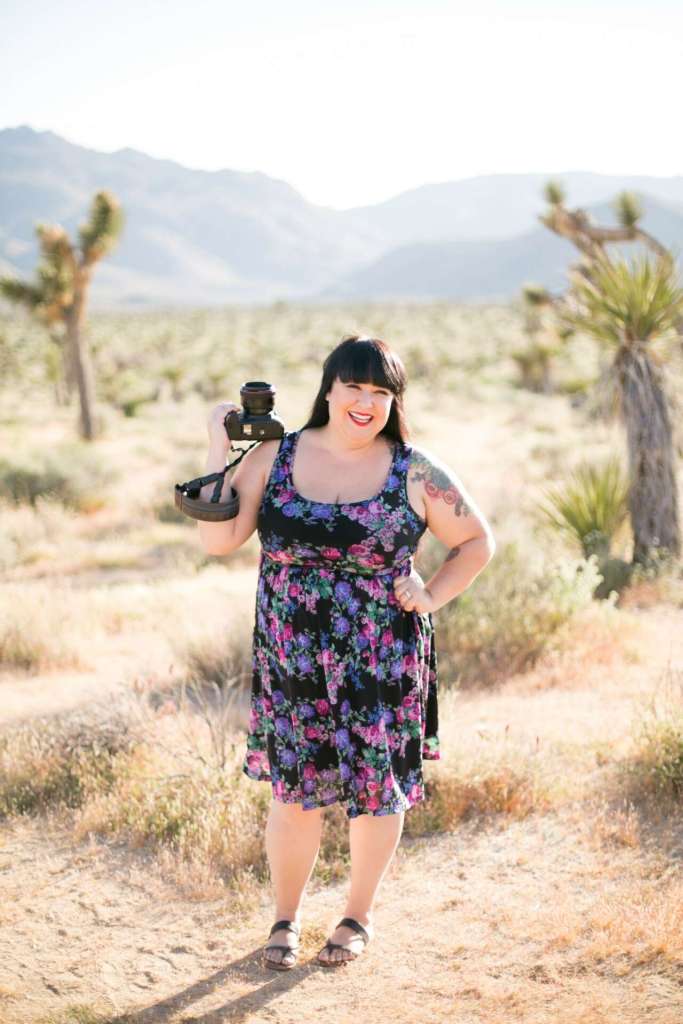
Melissa McClure is a photographer in San Diego, California with 20+ years of experience. She was my wedding photographer when I got married last June at the San Diego Zoo Safari Park. I was lucky to have her support with the camera, and felt especially confident because of the artistry skills of Amanda Thorne who did my hair and makeup.
Why am I sharing my wedding photographer and hair and makeup artist with you? Because that wasn’t the end of our journey together. It was the start. Since then we’ve done a personal branding photo shoot when I updated this website (and my personal website too). Melissa and Amanda teamed up for a photo shoot for my husband, Matthew’s website. And Melissa just did a brand shoot for my art history professor father-in-law, Bob. He’s about to launch a new YouTube channel.
Melissa McClure and Amanda Thorne join me to share their tips and expertise about how you show up visually online. We talk about makeup, hair, photos, and getting comfortable on camera.
In this interview
Meet Amanda Thorne and Melissa McClure
Jennifer van Alstyne: Hello and welcome to The Social Academic. I have a special episode for you today where we’re going to be talking a little bit about photography and makeup and what it means to show up visually online. So I have people from my wedding team here because we actually just did a branding photo shoot for my website redesign and it was so amazing. I knew I had to share these experts with you. So I want everyone to meet Amanda Thorne of Thorne Artistry and Melissa McClure.
Amanda Thorne: Hi!
Jennifer: We are so excited that you could both join us live today. Amanda, would you introduce yourself?
Amanda: Thank you so much for having me, Jennifer. And I love working with you and Melissa for your wedding and your branding shoot. My name’s Amanda Thorne. I’m originally from Ohio. I moved out here about 16 years ago now and I’ve had my company Thorne Artistry for 14 years now. So it’s been a while. I do hair makeup, wardrobe styling, and set styling.
Jennifer: Okay, so what does that mean? If I’m someone who has no idea what any of that is, what kinds of things do you actually help people with one-on-one if you’re just working with an individual?
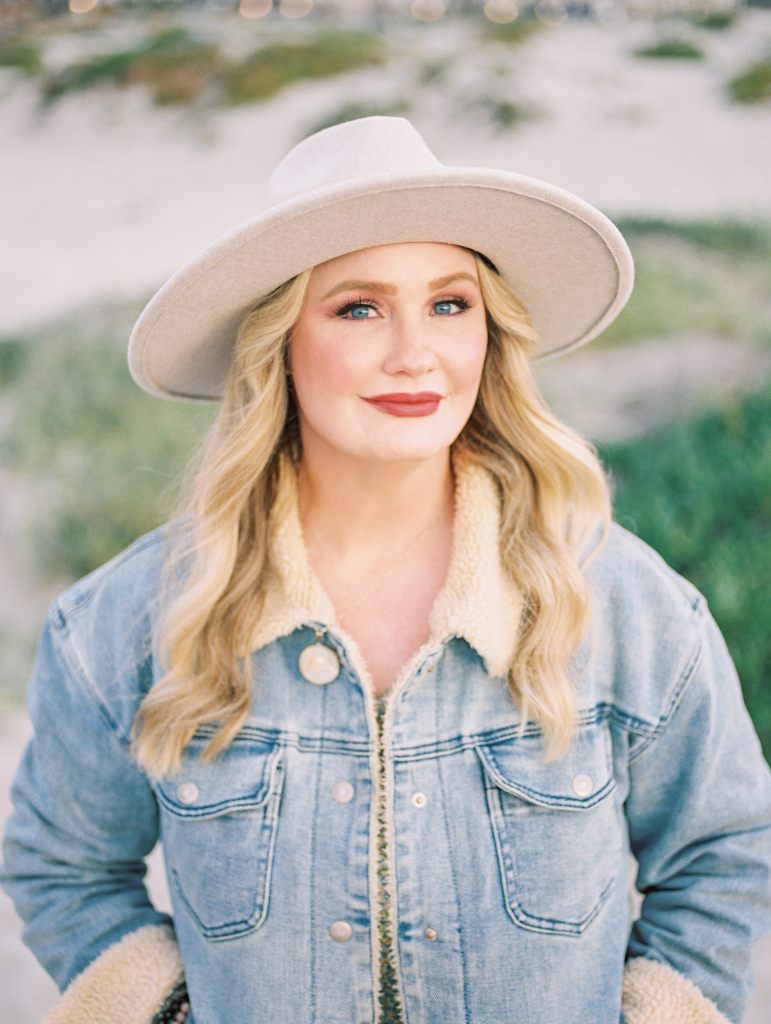
Amanda Thorne
Amanda: So think about it like this. Your image, your branding, what you want to get across to people about yourself and also who you want to attract. That is the big key. And I talk to my clients beforehand about who their audience is in particular and how they want to convey themselves to attract just the right people. And I do that with myself and my own business too, and I’m sure Melissa does.
Jennifer: Melissa, you’ve been a photographer for a long time. Tell me a little bit about how you got started. Why do you enjoy this work?
Melissa McClure: Oh yeah. So I am about to hit my 20 years in business next month. So a little celebration for that. [Clapping] Amanda and I worked together for over a decade. I don’t even know if I can count the years. But-
Jennifer: I didn’t realize that! That’s a long time. Wow.
Amanda: Definitely. We’ve known each other a while. It’s been amazing.
Melissa: And I started my business kind of on a whim. A coworker was getting married and wedding photography kind of fell into my lap and I ran with it. It’s been a real blessing for me over the years. And I forgot your original question, Jennifer.
Jennifer: Oh, it was just kind of introduce yourself and let us know a little bit about who you are, who you like to work with too.
Melissa: Yeah, absolutely. So I love to focus on destination weddings. I’ve always been a traveler. That’s a big part of my identity. Pre-COVID, I was doing almost exclusively destination weddings. Things kind of changed since the pandemic, but I still do local and destination weddings. And I love to work with brides that are just, brides and grooms and all clients. I also do portraits and boudoir. But I love to work with clients that are very chill, very, they know what they want, but they trust. Trust is a big, big part of hiring a wedding vendor…
Jennifer: Ah, trust. I think trust is probably why I hesitated for so long to actually think about taking professional photos for The Academic Designer.
Trusting the process (and who you’re working with)
I’ve had The Social Academic blog and my business since 2018, but I’ve always taken selfies. And that’s always worked for me in the sense that I even told people, like, “If you don’t have time to get a professional photographer, take a selfie. It’ll work.” It’s better than nothing for now.
I didn’t have trust in myself, but I also wasn’t sure how to start trusting potential vendors when it came to taking photos for my business. And when it came to my wedding, it felt like something that I deserved. It felt like something that was kind of part of a typical process. And so it was an easy yes for me to work with you.
But at the same time, it wasn’t until I had that experience and found that the trust was so easy with us. Like, it came so naturally and I felt so comfortable working with both of you that I felt like I could trust myself in the process of actually doing the branding photo shoot. Yeah, it just was so meaningful to me.
I wanted to share you both with everyone here on The Social Academic. A lot of this audience is professors, graduate students, experts, some people who are starting their own businesses now, and people who really want to show up authentically like themselves, the way that people will see them in real life and to feel comfortable in the process of getting there. Because I don’t know, maybe you’re different from me. But like, I don’t know that I’ve ever really felt comfortable in front of the camera, even though people tell me that I look comfortable.
Amanda: You look really comfortable in front of the camera, by the way. I would never know if you hadn’t said that, that you got nervous, you look just like . . . and Melissa is really good about bringing that out of people too, which is amazing.
Melissa: Thank you, Amanda. That’s really sweet. And I want to shout out you too, because I think there’s something about getting glammed up. It’s something we don’t do for ourselves all the time. And having a professional come in and be like, this is how I see your eyes looking the best or I see your skin looking the best. Really gives you that boost of confidence. So that when you get to me as the photographer, you’re already feeling like riding high like, “Hey, I look good. So I think the combination of the two is the sweet spot.
Jennifer: Mmm.
Amanda: It’s really magical, honestly, like the collaboration involved. I think the first part is just establishing what feels like you. And you really struck a note with when you said being authentic to yourself. I’ve always been a huge believer in that. And I try to talk to my clients about that. I’m like, “There are no rules. You don’t have to like pretend to be this or that or whatever the expectation is in your head. You just have to be true to yourself and what you want to convey is your authentic self. You want to pull in those same authentic people. So why would you try to be someone else?” And I do my very best to like, get people to realize, like what it is that is truly them.
Melissa: I think people see themselves in you, too. They want to say like, “Oh, she can do this. I can do this too.” They want to feel seen and heard and you showing up and saying, “Hey, I’m going to do this for myself. You should do this for yourself.” It’s so much easier for people to see that.
Jennifer: Well, one of the reasons that I’m going to be recommending each of you to professor clients that I work with on strategic website plans in the future. It’s because of that personalized touch that I think that, I don’t know. I don’t know that it’s like all photographers and all makeup artists have probably different processes for starting to work with clients.
I felt like each of you really took time to get to know me, get to know the vision that I had and even asking questions to me that like I never would have thought of. I never would have come up with on my own. And I know that that’s something that professors who are listening to this appreciate because questions really help us get to the next step in our thinking, to the next step in what we want for ourselves.
And if you hadn’t asked me those questions, like I wouldn’t have gotten to the photo shoot part and we had like such a great plan.
What Jennifer’s branding photo shoot was like
Jennifer: So wait, what was that like? We set up a time in advance. So we all, we all had like the same day and Amanda, you actually came to my house.
I was able to get my makeup and hair done in the comfort of my own home where we were also doing the photo shoot, which Melissa came. And then we were all together. Is that right?
Melissa: Yeah, I think that was so cool because, I was photographing you in your office, which you are right now. And one of my favorite things was Amanda saw you were wearing this beautiful orange, I think it was a sweater.
And Amanda saw this little pop of orange in the back. She’s like, we have to have this in the back. So it was almost like she acted like a stylist while she was there, which I loved. And it’s just something I didn’t see that she saw. And, you know, having those two people that do artistic frames, working together and seeing things and helping and she was able to be there while I got to do my job photographing you and looking for the light.
Jennifer: Now, I know we all met via like wedding, right? I got married at the San Diego Zoo Safari Park last June. And it was amazing. It’s so beautiful!
Jennifer: So we met through weddings, but you also you both work with businesses, you work with individuals. Is that right?
Amanda: Definitely. I work with other small businesses. I work with people up and coming, just like getting their business started and also seasoned professionals that have been doing it a long time, but just feel like they want to refresh or, you know, some new life in their brand. So I think it’s very, very fun and very interesting just to get to know what each brand does. And as a fellow business owner, I feel like I can also relate in that way where I know what I would want for my own business and how I want to come across. So I think just having that camaraderie there is also very beneficial.
Melissa: Absolutely. I specifically work with creatives that are looking to up their presence on social media specifically. And I kind of handhold them through the process of showing up on social media authentically, like we were been talking about, but also really getting to spend more time doing what you love, which is usually creating. Creating your product, creating your art, and not having to spend all of your free time with marketing specifically.
Jennifer: Yeah, not having to spend all of your time. That’s interesting. You know, professors are so busy, right? Like they’re teaching classes and doing research and having all these administrative duties. And the thought of the booking process for working with professionals like yourselves, even that feels like, ooh, that’s a big commitment, right? But at the same time, it’s almost like once you take that step, then the rest of the process is facilitated with such ease. You both make it so easy and so intuitive. The next step is always ready.
I’m curious, what is the onboarding process like for you? Let’s say someone who’s listening to this is like, “Wait, I need some new photos for my academic website. I’m curious about booking.” Amanda, do you travel, like, are you open to traveling? I know Melissa is.
Amanda: Definitely. I always travel. I also have my own studio in La Jolla and I don’t share it with anyone else. So if anyone feels like they don’t even have a spot where they feel comfortable or like a nice open space, I’m always happy to offer my space too in La Jolla. It’s really pretty. You can go outside, you can be by the beach, you can have different options for shooting, but I definitely travel. So that’s part of what I do.
I like to make people feel comfortable in their own surroundings too. And I did love working in your office and like, you know, just seeing you in your element with your cats and it just, it added a whole other like, like you said, authenticity to the experience. So I thought that was really-
Jennifer: Yeah. I mean, this is what it’s like to work with me, you know. Like this is what you see. And so I really wanted that to be reflected. And you both did amazing at that. Melissa, you travel all over, like really all over, right? Like I know Amanda travels in California. Are you open to traveling? Are you both international traveling or just US?
Amanda: Everywhere, everywhere.
Melissa: I definitely am. I mostly travel for weddings, but I’m totally open for any sort of photography. Let’s put that out there. But yeah, I love to travel. I love to take my camera and meet new people all over the world. And it’s just so much fun.
Jennifer: Perfect. Okay. So this one, I think everyone should work with you, but obviously that’s not realistic. Not everyone is going to need or want a professional photographer and professional makeup for, and hair for when that photo shoot takes place. So I’m curious, like who are some people or what are some things that would clue people in if like you’re not the right fit? Like maybe you don’t need to work with me or you need to work with someone else.
Amanda: That’s an interesting one because I always feel like not just as a sales pitch, but like genuinely I feel it always helps to have another set of eyes. So if you don’t want to hire someone, maybe just like a trusted confidant. If you really don’t feel comfortable working with someone else, I would have like a very close friend that maybe has some style or could offer some really good tips for you. Just someone on your team that can be like what Melissa was saying earlier about during your shoot. Like I picked up on little things. That’s my job. Like details are a big thing for me. So I’ll notice every little thing in the room. And if I can offer up something with, you know, my background with wardrobe or set styling, I love doing that as just sort of like an extra perk of working with me.
But yeah, I mean, I think it’s always beneficial honestly to have someone else that really understands like how it’s going to photograph, what it looks like, not just you personally, but like the background.
If you really are maybe a control freak or like someone that just doesn’t like to work with others or you have a way you really like doing things your way, definitely get another set of eyes in the room at least and have people like pick up like, is your hair sticking out or is there like some crazy thing sitting on your shoulder that’s going to make you look like you have a growth coming out or something? Like those are really big things that can ruin your shoot.
Melissa: I’m going to take a little bit different spin on your question and let’s say somebody’s listening and they’re like, I would love to hire Melissa and Amanda. I just don’t know if I can afford to fly them both out. That sort of thing.
So maybe if you are looking for someone in your area for photography or makeup and hair, then obviously referrals are going to be your best bet, asking your network if you have any referrals. But I would also have a phone conversation at minimum, FaceTime, in person if you can just to make sure you feel comfortable because I think that feeling comfortable, if you don’t feel comfortable with the person, you’re not going to look comfortable in front of the camera.
So having an initial conversation, getting to know them at least over phone conversation, I know these days were all so busy. It’s hard to meet up in person, but I think that that’s important to get to know them and have that level of trust, going back to the word trust. Having that level of trust with them is really going to put you at ease when it comes to your photo shoot day.
Jennifer: Is that the typical process for each of you? It starts with a phone call or FaceTime or some kind of connection?
Melissa: Typically an email, an intro email like, “Hi, I’m interested in this,” and then I’ll share pricing and then we’ll set up a time. And then I like to ask for examples of what they’re looking for because for me, it can be more lifestyle, which is what we did more with you, Jennifer.
Or it can be more studio, very business, plain background. So I like to get an idea of what they’re looking for. I can do both. But starting a Pinterest board with shots that you like, or if you have a friend photo that you like, sending it that way. I think Amanda’s probably very similar with makeup styles as well. Yeah.
Amanda: I think we have the same-
Melissa: Little bit of the same process.
Amanda: Process, definitely.
Melissa: Yea!
Amanda: We’re both very visual people. So I’ll always ask for photos of what you’re specifically attracted to. But I won’t just ask for the photos. I’ll say, “What do you like about these photos?” And then my recommendation is usually find someone that kind of resembles you. It can be someone famous or not famous. Try not to get something that’s overly photoshopped, just like more of a natural picture and something that really kind of represents, if you like the colors or whatever it is. That’s so helpful for creative people.
Jennifer: I really like that. Our processes are quite similar. I always start with a Zoom call because I actually want to be able to talk with people and see their facial expressions. And really get to answer questions, but also look at screens sometimes at the same time because I’m visual too. I want to see what kind of website you actually like because oftentimes the way people describe things isn’t actually their preference. So being able to see things visually is really helpful for me as well. That’s really interesting.
Visual branding and photo shoots for all genders
Jennifer: Now, both of you work with all genders. Is that correct?
Amanda and Melissa: Correct.
Jennifer: My husband Matthew was really unsure if he should do the professional makeup. I think he was set on professional hair when it came to the wedding, but one thing that we ended up doing was a test. Like a test to see how he felt about the makeup, how it felt on his skin. He never wore makeup for anything before. And so it was really fascinating for my PhD husband to go and sit in this chair and experience really how comfortable it was and how personable it was.
The questions that you asked him while you were doing the makeup, while you were doing the hair helped get the look that he was hoping for. And maybe a look he hadn’t really thought of in advance specifically. You obviously had your conversations about those visual preferences, but even what happens in the moment can really impact us. And so I just loved watching that experience because I was also there for a test right before him and it was just so fun.
I wanted to mention that because if you are a professor who identifies as a man or a woman or are transgender, these are people who are excited to help you get the look that you want for yourself and get a look that’s lasting.
These photographs are so usable in different areas of my life. They’ve been used when I’ve been a podcast guest on another podcast. They’ve been used for articles and publications. They’re on my own website. They’re on my social media. And so I really like how intentional it helps to be with other people about ourselves when it comes to things that will end up in a lot of places. Thank you. Thank you! Thank you for making that experience so good for me.
Matthew Manly Pincus, PhD / Photography by Melissa McClure / Hair and Makeup by Amanda Thorne
Feeling safe and comfortable
Amanda: And thank you for trusting us. Honestly, I mean, that does mean a lot because a lot of people. I always tell my husband, I’m like, I’m actually kind of a therapist in the session sometimes too.
Jennifer: Yeah.
Amanda: And things can come up. Everyone has something with their appearance or something that someone may have said to them in their lifetime, and it still is there. You don’t know what’s going to bubble up.
Jennifer: Yeah.
Amanda: It’s great though because we can sort of like work through it together. And I like to be sort of like a safe space for people. And what you said earlier about Matthew coming in, I thought that was really great that you guys came together for the experience and that men understand that. There used to be a stigma, but I really don’t think that’s the case anymore with men getting hair and makeup. It’s so natural and so normal and anyone can come in and it’s great. Who doesn’t want to see yourself from a different perspective or enhancing what you already are is more like what it is.
Melissa: Yeah. Matthew looked very natural. You can’t pick out that he’s wearing makeup in the wedding photos or the branding photos.
Amanda: I never think it’s fair that women in photos have perfect flawless skin and makeup. And the guys, if they get a sunburn or if they have a pimple, it’s like-
Melissa: Too bad, too bad.
Amanda: They just don’t do anything, but it’s nice to have everyone looking flawless in your pictures.
Melissa: Regardless of gender, everybody wants to look really- It looks
Amanda: Yes,exactly. You hit the nail on the head.
Jennifer: His family was so cute. They were like, “You’re all coiffed.” It’s perfect.
Melissa: Coiffed, I love that. I love that. Oh my gosh.
Sifting through selfies (hundreds of them)
Jennifer: Now, when I think back on that process and I think about the day before the, not the wedding photo shoot, but the branding photo shoot that we did. I am someone… Okay, so I like makeup. I like taking selfies. I like taking photographs. I think I’m pretty good at taking photographs too. And so I actually had thousands of photographs that I had to upload from my phone onto my computer and it was because I was going on a trip. So I did this the day before our photo shoot. I uploaded probably 200 photos of myself into this one folder.
And I was like, “Wow, there’s so many photos of myself. Let me look through them and see if any are usable for my website because I’m going to be doing this redesign, but maybe I could fill things in when it comes to the photo shoot that we’re doing together.”
There was nothing. I mean, not that they were bad photos, but there was nothing that I was proud of and excited to share.
The feeling that I had when I got the photos back and I saw myself. I actually got the photos when I was traveling with some friends. And so we all looked at them together at the same time. It’s the only time I’ve ever done that. Like, looked at photos of myself with other people and they were excited for me, but they were excited because they could feel my personality and who I am through the photos and the makeup and the hair that we did together. It was such a collaborative project.
Tips for makeup and photography: lighting and color
Jennifer: We talked about people who maybe can’t afford to have you both out there, maybe can’t let go of some of their control preferences to let someone else in. And that’s okay. What are your suggestions for people who are going to do it themselves? Who are maybe, “I’ve never done makeup before. I’ve never even taken photographs before.” Do you have anywhere to start that you might recommend?
Melissa: Yeah, I’ll go first. With photography, it all comes down to lighting. Lighting is the most important thing. People think it’s backdrop or anything like that. It’s truly lighting. So if you are going to do a self-photoshoot, set up a selfie station, something like that, I would maybe invest in a little remote that can trigger your phone or use the timer feature. They just added a five second timer. So it’s no longer three and 10 seconds on the iPhone. You can also do five seconds, which is great. And find some good light, find a decently plain backdrop or whatever look you’re going for. Dress in a nice solid color and just experiment with how you look.
The lighting is really going to level up the professional look of the photo. Portrait mode is great on the iPhone. Unfortunately, I don’t know Android’s, I’m talking specifically iPhones, but they have something similar. Just to give you a little more of that depth of field blurred background feel, which also makes it a little more professional. So that would be my two tips. Find some really pretty lighting. Get right in front of a nice big window and practice your smiles and your posing.
Amanda: I also think another thing, I think those are great tips and also the lighting, like Melissa said, is key. But also I feel like really being prepared. So what we would have you do too, like we talked about the Pinterest boards. I’m big on that too. Like come up with a styling board of some sort where you’re kind of putting together a palette.
Start with colors that you like, that you gravitate toward. If you want it monochromatic, do that. If you want to do something colorful, what colors are we doing? Start really like looking at photos that resonate with you and put together a styling board, but condense it and make it. Yeah, you don’t want to be overwhelmed with a million things like, “Oh, I should try this or this.” Don’t do that. You’re just going to drive yourself crazy. Just condense it to a few of your favorites and sort of focus on that. Say, “Okay, I can go buy that sweater. I like that color. These are some colors for my makeup that would look really nice and compliment the background or what I’m wearing.” That sort of thing.
So kind of have an idea of what you’re doing and then be organized about it. If you want several looks, have that ready to go. And then if you’re doing hair and makeup switches, what are those going to be? Have little prompts about what you need to change into or what changes for hair and makeup you might make too. And think about your surroundings too. What does the set look like, “the set”? Your home, or what do you want in the photo? I love crystals, so for me, I would add some of my favorite crystals in the background, something like that. Something that’s personal.
Melissa: Also, when you are going into a photo shoot, whether you’re hiring us, whether you’re hiring someone else, doing it yourself, is knowing where the photos are going to go. So are they going to go on social media? Then most likely, you’ll want to take most of the image in vertical, straight up and down, because that is what social media likes. If it’s for your website, you may need more horizontal images. You may need a hero image for your website where you need to be a little more pulled back because it needs to be longer. Having an idea of exactly what you want so you can frame it in the way is going to make your job so much easier afterwards.
And one more tip. I truly feel that when we get photographed, a lot of times we’re very hard on ourselves, especially when we photograph ourselves. Sometimes you’re like, “Oh, I don’t know if I liked any of those.” Walk away from it for a little bit. Give it an hour, give it 24 hours, and then go back because we have very heightened emotion when we’re taking the photos and like, “Oh, I want this to be perfect. I look good. I don’t look good.” That sort of thing.
We kind of fight with ourselves. Sometimes just removing yourself from the photos for a little bit and then going back to them can be super helpful and just seeing them in a different way.
Working with your photographer on campus
Jennifer: That’s so helpful. Now, one thing to know if you’re a professor who’s wanting to do your photo shoot on campus, and I just know this from working university in the university events office when I was in school, is that oftentimes you may need permission to bring a professional photographer or stylist on campus if the photos are going to be used “commercially.” That is often not the case when you are a student of the school or a faculty of the school or you work there. Or maybe even if you’re an alumni, they may have a special form or process for you to fill out. It is good to check in because part of my job when I was doing that was to make sure that photographers who were on campus that didn’t have that slip did go and file things with the office.
This is mostly for the campus, like to protect things. It’s like a liability concern. They do occasionally need insurance for some situations, often not photography, but I just wanted to make that clear.
If you’re planning to do photos on campus, it’s good to ask or clear it with your supervisor or with whatever office is in charge of photography on campus, just to be sure.
Campus photographers are typically not available for outside photo shoots. If you’re looking for someone local, maybe you can’t bring Amanda and Melissa in, especially if they’re flying maybe across the country or to another country. Just know university photographers often are so busy, they just don’t typically have time to work on your project.
Your campus photographer or media office may have local recommendations though, so it’s worth asking. Just maybe don’t expect them to be able to drop things. Unfortunately, they’re typically really booked up with many different offices on campus needing their support. And, universities don’t usually have makeup and hair artists / stylists. So definitely reach out to Amanda no matter what. And, it’s good to ask for recommendations.
Questions to ask your photographer or makeup artist
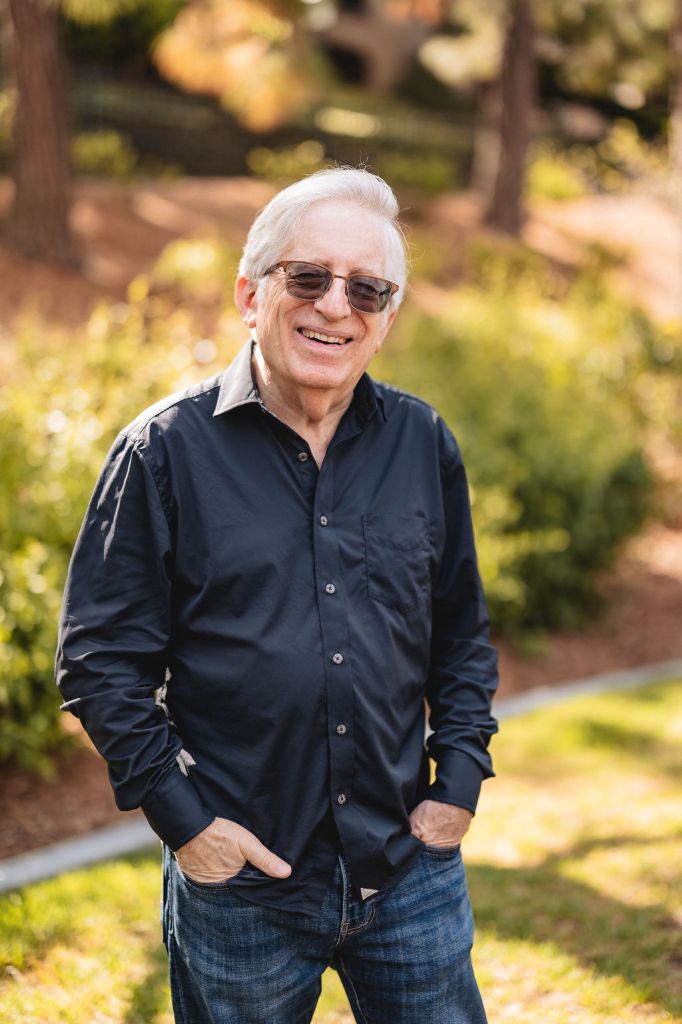
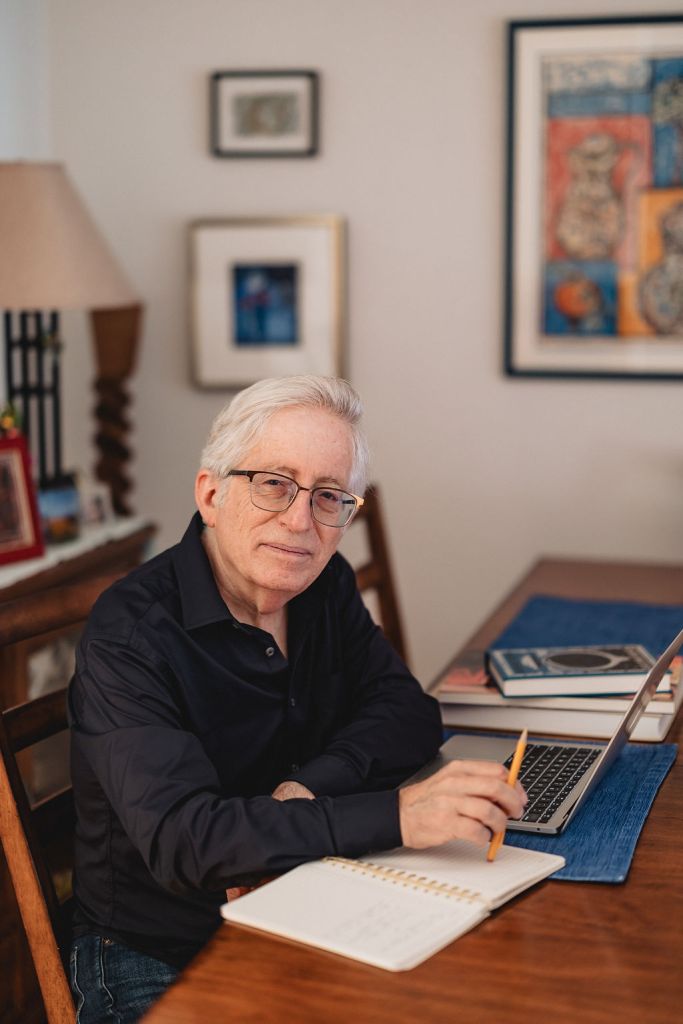
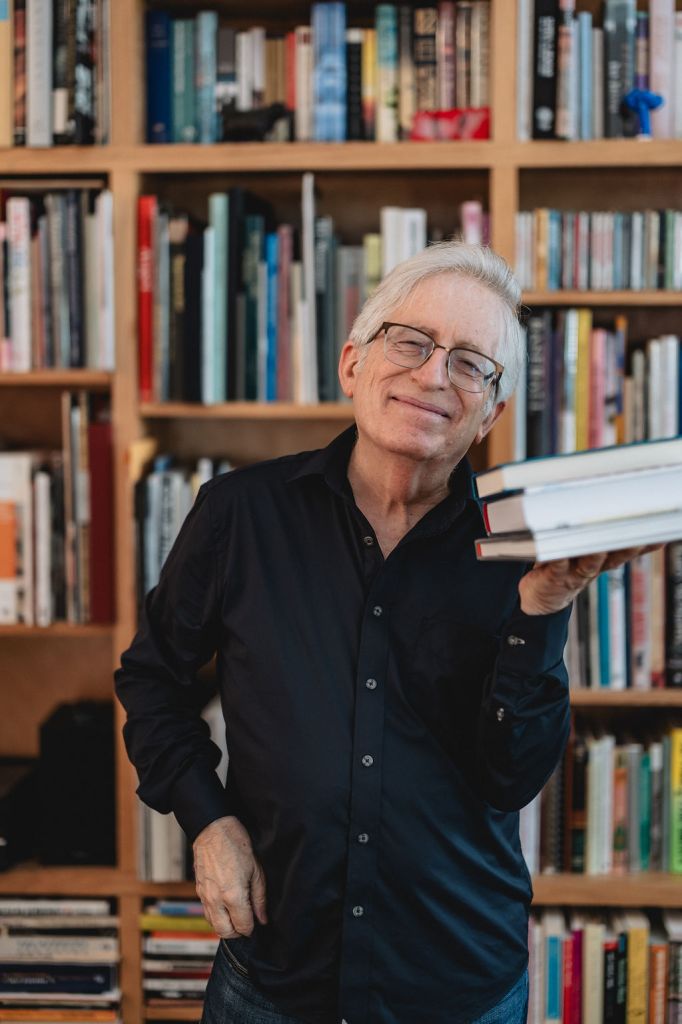
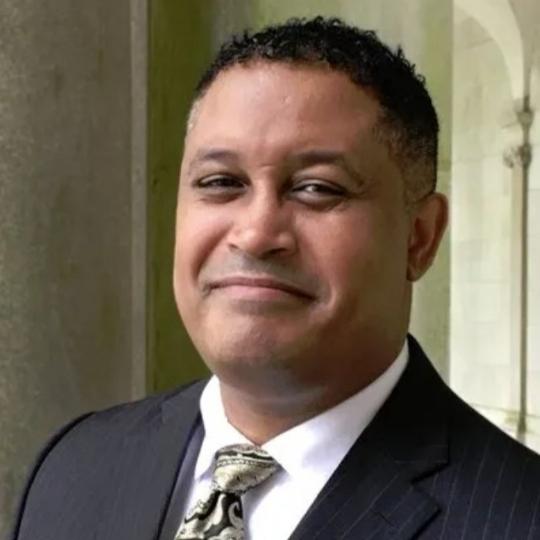
Robert L. Pincus, PhD / Photography by Melissa McClure
Jennifer: I’m curious. Both of you mentioned that kind of introductory call. Are there questions you should be sure to ask a professional if you’re thinking about working with you?
Melissa: Yeah, for me, it’s what the packages look like.
Do you get the digital images?
Am I allowed to use these for commercial, for my website, and for potentially making money off of them?
Because there are some tricky copyrights with photography. So just be very clear on, “Hey, I want to use these for my business. This is a branding photo shoot,” and then see where they lie.
Make sure you’re not just paying for the shoot, you’re paying for the images as well all in one.
Also, what the timing looks like. Photographers will know the best time for lighting, and if you go to them and be like, “I have to shoot at noon,” a photographer might be like, “Let’s rework this a little bit.” So deferring to them for lighting and even location. If you want on campus, that’s one thing. But if you want an off-campus location, asking referrals for your photographer is totally, totally . . . we love it.
Amanda: I think some of the big things to maybe consider if you are hiring a stylist are, if the stylist will stay on set with you for the duration of the shoot. Because, like you said, if you’re doing it yourself, you get hyperaware maybe, and you’re focused too much on every little thing. But to have the stylist like I did with you Jennifer, where I can be there as your person in the background, like, “Oh, hang on. We got to move your hair over a little bit,” or, “Nope, nope, nope. We got to move something here or change this.” I can be that person, so you don’t have to be the one worrying about it. Just find out if that service is available, and if they will stay for the duration of the shoot.
Also, keep in mind maybe what kind of products they’re using. Sometimes it’s important for people to have clean products. I try to use cleaner brands. I think that’s important. I wouldn’t want to use anything on someone’s skin that I wouldn’t use on my own, so I would ask about that and what they use, especially if you have allergies that you’re concerned about or anything like that.
Then just basically some ideas about what they can offer in terms of helping you come up with your look.
Melissa: Knowing what you’re going to wear when you’re going into the shoot, because that’ll help us also with location and colors. Amanda, I know that’ll help with makeup tones and everything like that. I love when clients send me ideas for what to wear, and I could be like, “This one is going to photograph really well.”
For some reason, neon colors are popular and neon colors do not photograph well.” I will tell people that. Stay away from the hot thing.
Jennifer wore this gorgeous orange sweater. I brought it up again, but it just popped with her skin tone and everything. It was the perfect, perfect color. If you’re on the fence about what to wear, ask the professionals.
Jennifer: Amanda, when you mentioned – as a stylist, that was something that I actually kind of wish I had chosen for my wedding. When it came to the branding photo shoot, I remember at the time really feeling like it was a splurge. This is something that I’m gifting to myself because I actually think that this team is so great that I can see our synergy working together even better day of.
Now, when it came to the day of, I really was so glad that I had invested in that because I felt more comfortable. It was almost like having an extra—not that Melissa and I have obviously done photographs together and it’s fine, but having another person there helped me feel more comfortable. It actually helped me feel like, “Oh, I can’t let someone else think about these things that maybe I would want to think about. I would probably be looking around the room. Should I move anything? Should I spot anything?” My brain got to relax. My brain got to kind of let go and let Melissa take these amazing photos. She knew where she was going in the office, so it let my brain focus on just being myself.
It was interesting that having more people in the room was better for me because I’m really introverted. I’m a super introverted person who mostly connects with people virtually. It was fascinating that that made it more comfortable for me. I’m so glad that you were both there.
Melissa: We have that rapport. We have that chemistry already because we have worked together a few times now. I think it’s great. Just having a team to support you is going to maybe have the best results.
Amanda: If it’s someone that is an introvert, they could always do a preview. With weddings, we do what’s called a bridal preview where you come in, you try out your look, you see how it feels, you see if you want to tweak anything. If it’s translating from, say, the photo to your own features, that’s a big deal. That’s totally an option too, just to try it out first and see. Then also that makes you have the chance to build rapport with the artist, with the stylist, especially if I’m going to be on set with you. That’s the time we can get to know each other. Then that day, it’s more cas [casual].
Jennifer: Just for everyone who’s listening, trial is typically a paid experience. I just want to mention, even though it’s called a trial, it doesn’t mean that you’re trying out the service. It means that you’re trying things out to see how it feels on your face, to see how your hair is reacting to it. You’re trying it together.
Oh, this is such a good conversation. Is there anything else you want to chat about or add before you wrap up?
Investing in yourself and being authentic online
Melissa: I think that people, I think you mentioned this earlier, Jennifer, but I think people struggle with the, “Is this worth it? Am I worth it? Investing in yourself?” I really think it is. Pictures really convey a message to your audience. Your branding is very, very important and you want to show up as your authentic self. Spending that little bit of extra money is really going to help you level up your website, your social media, that sort of thing. Selfies are great. Self-photos are good too. A mixture of both I think is where the sweet spot is.
Amanda: I completely agree with you and I also wanted to point out, I’ve seen a lot of branding right now with AI and it just strikes me as too slick. I guess it is the word slick and just not authentic, which I guess if you don’t care about that portion of it, you just want a really polished, flawless picture. That’s fine. But if you really do want to connect, I don’t think AI is where it’s at for authentically connecting.
Jennifer: Yeah, and I don’t think that AI is even there yet.
Amanda: Just my thought, it seems like something’s off almost. If I see it, I can’t connect with it. If I see someone and it’s just . . . I don’t get a sense of who they are.
Jennifer: You can tell, you can tell when it’s an AI photo
Amanda: Definitely.
Melissa: I think it’s an easy out and I think easy outs are always not going to be ultimately the long-term option.
Jennifer: Yeah, and I feel like this audience, academics, they are not easy way out people. They have stayed in school doing their research, doing their teaching for so long in order to create oftentimes quite slow changes that make big impact. That is something that you can do for yourself too. That is something that you can do with this gift to yourself.
The way that I think about it is you don’t even need to be on social media or have a website for this kind of service to really benefit you as an academic. There are news articles that your university or your college might want to write about you. There are local appearances in the news or maybe in an academic society organization where they might not need to share your photo, where they might want to have options for what to share. Maybe that kind of stoic traditional headshot that you took for your campus photographer isn’t going to cut it for that use because it doesn’t feel like you. It doesn’t feel like this purpose. You have options and these two amazing people are my favorite options for you. They’re who I’m going to be recommending to my professor clients from now on.
Amanda: Thank you. And don’t forget guys, this is a tax write-off too. [Laughing]
Jennifer: That is so true.
Melissa: That’s the best advice. That’s the best advice I’ve heard.
Amanda: I do my pictures too and I’m like, “I can just write it off. It’s fine.”
Jennifer: Yes, this is helping your career.
Amanda: And I also wanted to point out, so during the shoot, I was the person that was doing behind the scenes content too. So that’s another element that you’re, it’s kind of like a bonus. It’s like if you have a stylist that loves social media like I do, I’m always video, videotaping everything. I like doing reels. So I love sharing that with my clients too. Like, “Oh, I got these behind the scenes footage” or for the photographers too. I’m like,” I got you in action. Here you go.”
Jennifer: So fun.
Amanda: It’s social content for everybody, which everybody needs.
Jennifer: There are so many ways that we can create more authenticity for ourselves, whether it’s through behind the scenes content or even people who have never worn makeup, never had their hair professionally done can still feel more like themselves by working through this together. And so I really appreciate you both coming on the show and sharing your expertise because you are humans that I care about. And I know can help so many people.
Melissa: Thank you Jennifer.
Amanda: Thank you Jennifer, and I just wanted to point out you don’t have to wear a ton of makeup or do something crazy with your hair. It’s just a little bit of an elevation. So if you are a natural person, we can keep it natural. It doesn’t have to be like another level. But it’s just, I kind of feel like I have an eye for how much you need for it to show up properly in photos and what Melissa needs to capture your features, your best features. That’s what I’m there for, to pick up the best parts about you and kind of show the world.
Jennifer: Thank you so much for coming on The Social Academic and for everyone listening. I’m going to have their contact information in the description below so you can get in touch if you’re interested in working with these amazing people.
Amanda Thorne is the owner of Thorne Artistry, an award-winning, inclusive, creative styling company based in San Diego, California, but available worldwide! Thorne Artistry not only offers hair & makeup for weddings, but all special events including family, branding sessions, and editorial shoots.
Thorne Artistry specializes in, and is known for, soft or natural glam that elevates your beauty, while making sure it still looks & feels like you. Thorne Artistry is also known for a focus on clean beauty, and the best products available.
Thorne Artistry’s work has been published nationally & internationally in Rolling Stone, Vogue India, Martha Stewart Weddings, US Weekly, and People magazine. Locally, you can see Amanda’s work grace the covers of Exquisite Weddings, Pacific, and San Diego Style magazine. You may also see her work appear on The Bachelor, Summer House, or other Bravo favorites.
Thorne Artistry has worked with multiple celebrity clients, and appears regularly in well-known wedding publications like Martha Stewart Weddings, Style Me Pretty, The Knot, Magnolia Rouge and many more. Thorne Artistry has consistently won WeddingWire and The Knot Couples’ Choice Awards, was voted Best Hair and Makeup by the San Diego A-List Awards and voted by her peers for Best Hair & Makeup by California Wedding Day magazine.
Born in Ohio, Amanda has always had the travel bug, has visited over 23 countries, and has lived in Australia, Seattle, San Francisco, & currently resides in the La Jolla neighborhood of San Diego. Her styling career started while studying at the University of Dayton where she produced TV commercials. Amanda is also a former radio DJ, and was the host of Alt949’s Big Sonic Chill.
When Amanda’s not creating beauty, she can be found outdoors with her husband and two kiddos going on lots of road trips, hiking, listening to good music, finding new coffee spots, fun thrift markets, or reading biographies, or a good psychological thriller! Reach out to chat more & reserve your upcoming date.
Melissa McClure | Melissa McClure Creative
Melissa McClure is a wedding and personal branding photographer with 20+ years of experience. She lives in San Diego, California. Melissa is a also a ‘social media goddess’ and coach who helps women entrepreneurs step out of their comfort zone and own their power online.
Melissa McClure is redesigning her photography website. I’ll update this page when her new website is live for you! In the meantime, get in touch through her coaching website.
Want to work with Melissa or Amanda? Yay! I accept no monies or gift when you move forward with them. I share them each with you because they’ve helped me with their expertise and artistry. I trust them to help you too. Thank you!
Are you on the job market or seeking a new career? Professors and researchers, this interview is especially for academics considering leaving academia (or if you’re forced to leave unexpectedly). I’m happy career coach, Dr. Jennifer Polk of From PhD to Life is back for this 2025 episode.
Jen’s been on The Social Academic to chat with me back in 2022 when we talked about Informational Interviews. She also joined me for a YouTube live in 2020 where she answered the question, What Is Networking? This year especially, mid-career and senior academics may be pivoting away from their more traditional academic career path. Many researchers and scientists in the United States of America have been let go. While there’s many resources out there to help with your next steps, such as the From PhD to Life blog, you may want personalized support from a career coach and community. We talk about Jen’s PhD Career Clarity Program which you may find helpful.
While we talk about a service for academics in this and other interviews on The Social Academic, I don’t receive any gift or monies if you choose to move forward with Jen’s PhD Career Clarity Program. I share people including Dr. Jen Polk with you, because I trust and recommend her to clients and friends.
In this interview
Reintroducing Dr. Jennifer Polk (@FromPhDToLife)
Jennifer Van Alstyne[‘Jennifer’]: Hi! Welcome back to The Social Academic, a podcast, blog, YouTube channel about online presence for professors, researchers, PhDs, people who are in academia. Dr. Jennifer Polk is back with me today. She’s someone who we featured here on The Social Academic in the past. She’s been live on the YouTube channel, but this time we have new things to talk about. I mean, the social media landscape has changed in 2025. Jen, would you start by introducing yourself?
Dr. Jennifer Polk [‘Jen’]: Oh no, I’m on the spot!
Yes, I’m Jen Polk. My business is called From PhD to Life. I work with professors, postdocs, and other PhDs who are ready to leave academia and go somewhere where they will be respected and valued and all that good stuff, even if they don’t yet know what the heck that could ever be. I’ll help them figure it out.
Jennifer: I love that. You’re a career coach who’s like, you’re not new to this space, right? You’ve been doing this for a while.
Jen: A while, indeed. What’s a while? More than 10 years? More than 10 years, yes.
Jennifer: Amazing.
Jen: Yes. Someone called me the OG PhD career coach. Am I saying that right? OG, is that what the kids say?
Social media climate for academics in 2025
Jennifer: OG, yeah. I love it. I love it. I’m curious because you’re actually like an early social media user, early online user. How have you seen things shifting or changing in social media in the past year or so?
Jen: Big sigh, sob, hysterics. [Sighs]. Okay, one way of putting it is Twitter is dead to me. I mean, Twitter is dead, right? Twitter is dead to me and Twitter is dead. And now that was a big problem. And please interrupt me when I go on and on and on about this. Most of my clients the last few years found me via Twitter. Not 100%, but that was a big place where people got to know me and eventually work with me. And that was true for individuals who wanted to work with me as like for career coaching, guidance on their own individual job searches, as well as the folks who work in universities and bring in speakers to do workshops and presentations. And so a lot of my business happened in part on Twitter.
Now, I don’t even go to Twitter anymore. So just for me personally, Elon Musk has ruined my life. No, I’m being dramatic. Yeah, just like that’s a small but sort of huge thing for me when it comes to social media. I mean, that’s the first thing that comes to mind.
Jennifer: I’m curious, like, gosh, you’ve been such a prolific Twitter user. Are you finding community elsewhere? Like, are you using other platforms the way you used to use Twitter or what?
Jen: Yeah, it’s a good question. And I don’t have a good answer because my answer right now is also a sigh. And I am on Bluesky, but I haven’t quite started using it for my career. Let’s put it that way. So it’s not that I’m not using it at all, but I tend to go on there more as like a personal, I want to share a thing. And ideally, if it was, if it made sense to spend the time, it would have a mix of like me as a person and me as a business owner that you could work with. That is how I always used Twitter. And Bluesky is different in terms of reach and engagement. That is not just because I’m bad at it, but that was like a deliberate, you know, that’s how it works.
Jennifer: I think that’s so helpful to share with people. I mean, like you are, you have a huge following on social media. Whether Twitter is dead or not, like people still follow you there. And yet on Bluesky, what was working for you in the past, maybe it doesn’t feel the same, maybe it doesn’t get the same engagement. The same thing on different platforms can have different results. And that’s something helpful for people to know when someone has an audience size of yours is still experiencing that, I don’t know, that frustration.
Jen: Yeah. And something else that might be interesting for your audience is that I have mixed feelings, I mean, I have mixed feelings about so many things in life, but including LinkedIn as well. I go through like seasons with LinkedIn. Last year, what is it, 2025 now. So back in 2024, for the first almost six months of the year, most days of the week, I would say I was posting on LinkedIn. And yeah, I did that consistently for those first six months and I got out of the habit and I’m much more sporadic now and I want to like it, but it’s just never, it’s just never really done it for me the way it’s . . . oh, lament, lament for Twitter of old.
I don’t know. I don’t know. I mean, I don’t know social media, you’re not doing it for me, but I want to like it.
Social media for academics who are job seekers in 2025
Jennifer: Mm. Hmm. Now, there are so many job seekers right now, whether they’ve been laid off in federal government and their PhDs or their academics who are finding funding issues that are now unexpectedly needing to search for jobsl for their financial future. I’m curious, what we just talked about in terms of social media, how might that impact job seekers?
Jen: Man, it’s such a scary time. One thing that comes to mind for the impact on job seekers is folks that do have jobs in the US federal government, in the US in general maybe, in universities, I think they might want to be a little bit more circumspect if that’s the right word. A little more cautious about what they put out there. I mean, we’re reading like insane things. Who knows if they’re true, but like, is Grok reading your tweets? Is DOGE [Department of Government Efficiency], are the teenagers surrounding Musk like turning the AI on your tweets and deciding who to fire that way? Like, I don’t mean to sound like a conspiracy theorist, but I think there’s some evidence that, anyways, I think people might be right to be a little bit more cautious about what they put out there. Even Bluesky, my understanding is that Bluesky is open. So you don’t even, I mean, even though it’s not owned by bad faith actors, foreign actors, it’s still maybe, you still want to maybe be a bit cautious about it. I don’t know if that’s what you were getting at with your question, but that’s one thing. That’s not the only thing, but I think that’s one thing that folks might want to think about.
Jennifer: Yeah, I really appreciate you saying that because that’s a question that’s been on my mind lately as professors who, this actually came up in a workshop, have sensitive topics. That was a good way of putting it. Sensitive in the sense that if they talk about it, the thing that they do in their research, in their work every day, they could attract hate. They could attract political controversy, even if they’re just posting about a new publication. And so this is actually something I brought up in a social media mastermind group that I’m in monthly because I wanted to hear how other people, how strategists who work on social media with companies and different agencies are handling the political divide. And it was really great to be open about the worries and fears that some professors are having right now. Yeah, everyone kind of said, “Airing on the side of caution.” Airing on the side of facts doesn’t even always work. It’s not enough anymore. And so really thinking about protecting yourself and having that feeling of safety, if you’re unsure before you post, maybe don’t do it. Ask a friend to look it over in advance. It’s hard.
Jen: I hate it, right? I hate it. I don’t want this. I have a client who is, well, let me not give away too many details, but who is a target of bad actors, right-wing bad actors as a person that shows up on lists, the kind of lists that you don’t want to be on and that is just total BS, right? And her solution, one solution anyways, to continue to be a public intellectual, to write because that’s important to her, is that she has changed the name that she uses. So it’s still kind of basically the same name, but the addition of like an initial or, I forget exactly what it was, the decision, but like of using like the first name instead of the middle name kind of thing as just one, it just makes it easier to differentiate herself from the person who’s being targeted on the internet. And I thought that was a nice, you know, partial kind of practical thing that was in her control, you know, because she can’t scrub the web, doesn’t have any control over that, but she could, you know, add an initial or anyways, you know what I’m saying?
Jennifer: I really like that. That’s such a, it’s a doable solution for people when you’re unsure, just know that you have that option. And maybe now is a time that anonymous accounts could protect you. If you’re someone who does want to say something politically, and you don’t want it to touch your professional or your personal kind of social media. I did hear from a couple of people who do like to say, what is truth? What is science? What is facts? And they need to protect themselves in order to do that by creating maybe an anonymous profile that’s not connected with themselves. So there are options, even though yes, it is scary. Yes, things have changed. [Sighs]
Jen: It’s just like you’re in that lament mode.
Jennifer: I know. I’m sorry. I’m kind of a downer. But honestly, I think that’s how people are feeling. And that’s what people are experiencing right now. So if we didn’t say it, it would be not right.
Jen: Yeah. The free speech brigade is, that’s not what they care about. I mean, this is obvious, right? But let’s just say we know that this is obvious. They don’t have consequences, but you might experience consequences.
Blogging and other ways to share online
Jennifer: Exactly. Exactly. Now, there are other ways to create content and you’re someone who’s actually for a long time tried different forms of content. Blogging is one of them.
Jen: [Laughs] In other words, you have failed so many times, Jen. You have failed to hit on the thing that works.
Jennifer: No. In other words, you’ve experimented with lots of different forms of media and you found things that really work for you for a time. And then sometimes you get curious about something else. And so you switch it up.
Jen: That’s a better way to put it.
Jennifer: I think that’s really what’s happened with you because you were prolific at the things that you do try and experiment with. And the From PhD to Life blog is one of them. I mean, when did you start that? That’s pretty old, right?
Jen: It’s old. So unless my memory is going, I started, so From PhD to Life started as a blog and a website the same day, December 12, 2012. I bought the domain and I got the WordPress site and I wrote my first two posts, I think, if memory serves. Yes, back in 2012, I was really excited about it. The internet was a different place back in 2012, but that is how I started and that is how I grew my business in the early years. I was on Twitter pretty quickly as well, but first the blog, then came Twitter. I think important for folks to know is that although I started my blog on my own website, within, I think I’m getting this right, within a few months, I got asked to blog on an external site. So universityaffairs.ca, which is a Canadian post-secondary ed sector magazine. I don’t know if they’re still a physical magazine, but they were like a 10 times a year kind of magazine and they also had a website. And so I was one of their bloggers, one of their columnists as they called me, but just online. So that was amazing for reach in Canada and beyond as a legitimizing place. Again, the internet is different now, but that was cool.
Jennifer: That is so cool. And you actually, I remember you won an award for that, didn’t you?
Jen: Three!
Jennifer: Three! You won three awards!
Jen: I mean, it’s been a few years now. I think back in 2015, 16, 17, I got the Gold Award in front of the Canadian Online Publishing Awards for best blog or column in the Blue category, which was for business.
Jennifer: Amazing. It’s amazing. I mean, it’s amazing because having a blog about PhDs seeking careers and finding a path that works for their life is like, that should be awarded. But I mean, it’s exciting that that’s the topic that they chose because your blog was so great. Now, the blog did win awards and it did have this big reach, but recently kind of disappeared from the university affairs website, which is typical. I will say like, websites do this. They take down the public writing sometimes in order to put new stuff up. And so when did you notice that it was gone?
Jen: Yeah. So I think I noticed maybe late fall 2024, something like that. I noticed because I think it was when a client alerted me to a broken link in our online platform for my online course. And I was like, “Oh. Oh, it’s all gone. Okay. Okay. All right. Fair enough.” I know. Gut punch, stab, but also, “Yeah, fair enough.” Okay. It’s been a few years. I stopped blogging for them back in 2020. So it’s been a few years. They owe me nothing. But there was a bit of a moment of, there was at least some good content there that, of course, I didn’t have a record of because who’s that organized? Maybe everybody else listening, but not me.
Jernnifer: No, when I’m thinking about it now, like my first two years of blogging, I backed up everything. Like I have like a word document of them at least. Recently, nothing. I don’t have anything saved outside of the website itself.
Jen: Well, it’s time.
Reclaiming online presence from out of the past
Jennifer: I know, it’s time, especially after what happened with the University Affairs version of your blog. Now, what did you do? Like, that stuff was just gone and you had a solution for actually finding the most important things and bringing it back. What happened?
Jen: Yeah. So the immediate issue was that there was this post that I’d linked to from my course that I think was a good one and useful. And I found it on Internet Archive. And so when it came time to think sort of beyond this immediate problem of like, “Okay, that one post, I want to continue to link to it. Oh, can I find all of the ones on Internet Archive?” In fact, I made a donation to Internet Archive because I was like, “Thank you so much!” Yeah. So then with your help JVA, I went through and picked out the blog posts that I thought were worth saving. I mean, there were, there were a handful that was like, “Eh, that was what I was thinking, you know, eight years ago, but whatever.” And yeah, you helped me put them on my website, copy and paste. Anyways, if you want to say more about that, I’ll let you say more about that. But I’m glad for that because now it’s on my site, I own it. Well, whoever owns the internet owns it. I feel like it’s a little bit more in my hands.
Jennifer: Yeah. I think that process is overwhelming for people. So it was kind of nice that we got to do it together. But my father-in-law, for instance, is a critic of art. And so he’s had a long career where he’s written, I mean, like hundreds, like thousands, I don’t know, like so many reviews and articles that, when art critics were being laid off quite a while ago and since then, his writing has disappeared from, a lot of his writing has disappeared from the website. And they did give him permission to pull all of the things that he wanted. But like, is he going to go back through the Internet Archive and pull all of those things? No, he doesn’t have the same drive or motivation that someone like you does. So a lot of that stuff, it’s not lost. He has it in physically bound, beautiful books, but it doesn’t mean that it’s like accessible for other people. And so when that’s the goal, when like that’s what you want, yeah, sometimes the project takes a little bit longer than we might want. It can be a little bit frustrating to have to search down old things, but then you have agency and choice in what you do about it next. And so for Jen, she got to pick the ones that were most important to her, we put them back on her blog, on her website FromPhDtolife.com. And that’s something that you could do for your own website. There’s so many options for you, but just knowing that the Wayback Machine and the Internet Archive exist for you to search, it’s a huge tip for people. Actually, after we worked together on that, I went back and I found some things that I’d written as like guest posts for other people in the past that had disappeared. Like they weren’t on the blog anymore because maybe the business had changed or what they were doing with the organization had changed. And so it was really easy for me to pull my original writing, which I didn’t have a good copy of, and put it back on my website so it could still help people. And when I did, I still put a little note at the bottom that said this has originally appeared on this place because I still want to honor that original purpose for the writing. And it’s really interesting to see how we can create afterlives for the things that we’ve written and created. So I love that.
Jen: Yeah, I will say one thing for folks to know, at least in my experience, the Internet Archive kind of crapped out after a few years. So if you’ve got stuff from like 20 years ago, well, is it even alive after 20 years, I don’t know. But anyways, just do it now. You know, put an hour or two in your calendar, do it now. Don’t wait for five years.
Jennifer: Yeah, right. Pull the content now and you can always do something with it later.
Jen: Yep. Yeah, it really only took me an hour or two-
Jennifer: Perfect.
Jen: And I didn’t have your father-in-law’s archive, but you know, I had a few years of stuff.
Jennifer: There was actually more than I expected in a good way, in the sense that like it really created new life for those pieces of writing that were just lost in the Internet Archive. Now, I’m curious about how your website has kind of changed over time, because the website is 2012. That’s a long time to have a website and actually add new things to it. Like, that’s a lot of new things. So what’s it been like to have a website for that long?
Jen: Whew, boy. Yeah. And for most of that time, I, and only I was the one doing all the things and you could tell. That’s okay, but you know. I always used a free WordPress. So it’s always been a WordPress and I, it’s always been on WordPress.org, is that right?
Jennifer: Yeah, that’s correct for you.
Jen: Yeah. And it’s always been connected to my domain FromPhDtolife.com. Anyways, I’m veering from your question. What was it, a year and a half ago that I hired you? Two years ago?
Jennifer: Yeah, something like that.
Jen: And you, so we’ve done this in two or three stages now. Which has felt manageable, you know, both financially and also in terms of my own need to do some homework, pre-work.
Jennifer: We only have so much capacity to do things for our own websites and stuff.
Jen: Yeah. So that was, I think that’s really a key point because I had not an outrageous number of pages, but it’s not, it’s not just a one page or two or three page website. There’s a few more pages than that. And for the most part I think my pages were ones that I wanted to keep, but they just over, over time they get longer like an academic CV, right? I’m thinking of like one or two pages in particular that they just, they just grow. You know, as if I was some sort of like tenured professor. So it was really good to say, “Okay, let’s focus on this page and this page and then let’s stop.” And then six months later, “Okay, now I’m ready to do this and this,” right? So that was, so yeah, it just made the process a lot more manageable. And now if you go to my website now, unless I’ve messed it up, unless I have messed it up, it’s looking so much more in-, it’s just more inviting and welcoming, easier for people to use and get at the information that will help them. Yeah, so that I can help them, whether they’re just looking at my website or wanting to take another step or two into working with me.
How to work with Dr. Jen Polk
Jennifer: Yeah. Like what, what does that look like? Like what if someone does come to your website and they want to take those next steps to work with you? How can PhDs, professors, researchers thinking of leaving academia, you know, work one-on-one with you, work in a group with you? How does that work?
Jen: Yeah. So folks that are like raring to go. They have options to just pay me money and start working with me immediately. Of course, that’s not going to be most people, especially if you’ve never heard of me before. The main thing that I recommend, so this is for individuals who are interested in their own job search, right? You know, getting another job. There is a free webinar, it’s a video on my website and then there’s like a yellow button kind of all over the place. So I recommend starting with that. You can sign up, you can watch this whenever, you can put it in your schedule and watch it later. It’s got captions and you can press pause, all that good stuff, right? So that I really recommend because it is a, a rich intro to what I teach my clients and the step-by-step process that I recommend everybody go through from like, “Uhh” to “Okay!” You know, I have a great offer and I’m starting a job. Yeah, and then at that point, what most folks do is of course, they feel more confident and more ready to, and they just have a sense of, “Okay, I’m going to stop doing that approach and,” you know, shift my energies more in this direction. And they can go off and do it on their own. There’s a couple of options after that. Individuals can sign up for a one-on-one with me, over Zoom, phone if you want and we can go more in depth for an hour on, you know, your particular issue, whether that’s networking or LinkedIn, or I don’t even know what I should be doing for the rest of my life. Or even better, depending on the person, I have a program. It’s an online course plus, plus other stuff, right? I called a PhD Career Clarity Program and that’s really great for professors, postdocs, other PhDs who are ready to leave academia and leaving academia can mean that you are right now working in academia, or it can mean like in some way you still identify with that profession even if you don’t currently work there. I often get clients who already got a job outside of academia, but that’s not the right fit. So anyways, that’s a very long answer. Start with the free thing and then take it from there.
Feeling hope with the PhD Clarity Program
Jennifer: I love that. And one of the things that we talked about when we were working on kind of the sales page for the PhD career clarity program is that feeling of hope that people have when they are joining this group and feeling like, “Oh, okay, now I can have that support.” What is the emotional journey for some of these people who are going through your program?
Jen: Yeah, it’s really interesting because I asked one of my clients a while back, asked somebody that was in the program like, “Why did you join?” And what my, the things that I thought that she would share or that I think sort of in general people share is that they’re feeling kind of like, despair. Maybe not completely, but like there’s some moment of, there’s some feeling of, “I can’t do anything. I’m no good for anybody. Nobody’s ever going to pay me money to do anything. I can’t do it.” And I think sometimes that’s relatable for some people, not everybody.
Jennifer: Yeah, yeah.
Jen: There are certainly other people that are like, “No, I’m feeling confident. I know I have something to offer. I don’t know what it is outside of academia. And so it’s not that I feel bad about myself. It’s that I need to figure out like, what is this called elsewhere?” So those are kind of two things that I had in mind, depending on the person. I mean, maybe you can tell resonated more personally with the first one.
Jennifer: I think my husband did too. He’s also a PhD who felt some despair. Yeah.
Jen: Yes. So okay, you’re in good company. If you consider me to be good company anyways.
Jennifer: Yes!
Jen: So there was a third option that I found when I asked my own client who was in the program. And, I think of course she probably felt both of those two things. And a third thing, which is the moment that she decided to join the program, she felt hope. Right? It was like, okay, I don’t know. I don’t know what it is that I’m going to do. Right? I don’t, I’m not entirely sure about my place in the world and what I have to offer and how to tell people about who I am and all of that stuff. But I’m hopeful and I’m going to invest that hope, that energy, that time, some money into moving myself forward. And I really, I love that, right? Cause that’s actually, that was I think a missing piece in my understanding of where people were at. Because yeah, I want you to bring some energy, some hope into this, which is not to downplay any of the other emotions: good, bad, ugly. But I think there’s some . . . Yeah, I think that’s a good, that’s a good, helpful thing to have and a hard thing, a hard thing, right?
Jennifer:The PhD Career Clarity Program has like a core course, it has workshops and resources. It also has a community. I’d love to hear a little bit more about that community aspect and how people from all these different fields are coming together and like actually finding support within their job search process?
Yeah. So the community I would say tends to exist, communities are amorphous things, but I would say it comes alive for the most part during our live meetings. And I, there’s two types of live meetings. One is the small group coaching sessions, which these days I do three times a month for an hour. Those are drop-in, you know, bring yourself and whatever’s going on. And then three of those a month. And then once a month, you mentioned I do live workshops. That’s really where the community comes alive, yeah? And it’s really great because the question that sometimes folks ask me is, “Oh, have you ever worked with, you know, a biochemical engineer, right? Or have you ever worked with somebody who goes into like X specific company, right? And the answer could very well be yes, but then the second part of the answer is it doesn’t matter. It doesn’t matter because it’s really magical what happens when people with disparate backgrounds and career trajectories and, you know, knowledge, expertise and skill areas. In fact, we have a lot in common and that there are differences really enrich the discussions that we have because of course, we’re all different. We’re all different men, women, trans folks, like we, you know, life is different: mothers, fathers, people without kids, et cetera. But it really, it’s really great what happens when we’re together sharing updates and commiserations and strategizing and putting our eyeballs, you know, on each other’s resumes and LinkedIn profiles. I think it really helps people feel much more confident. Academia can be so siloed within disciplines that it can be difficult to imagine yourself stepping into a professional world where you’re not surrounded by other chemists or other anthropologists or whoever, right?
Jennifer: Yeah.
Jen: So in a way this is like part of growing your confidence, is interacting in a semi-professional space with people from different backgrounds.
Jennifer: I think it sounds really warm. I think that I’m someone who personally had avoided community or group type things in the past and it was only in the last like five years or so that I have found not just comfort, but like comfortableness within myself because of group programs. Like because I feel more comfortable in smaller communities where we can actually get like a surprising amount of stuff done, whether it’s like emotional relationship building or whether it’s like really getting down and working on strategy and doing something harder. But like my resistance to group programs is like something that, I’m so glad that I have left behind because it really opens up my world to new things. So I’m glad you said that. Yeah.
Jen: You know, when I started my business, I was doing one-on-one coaching and that’s like the typical model for someone with a coaching approach. And I sometimes do that now, but the coaching I do for the most part is group coaching. And it’s facilitation, group discussions, And that I think is, yeah, is just really powerful and fun. You know, I’m happy to chat with anybody who’s interested but concerned because I know that, there are concerns that people have like, “Am I going to be drowning in all of these other people? Am I going to be the odd person out with nothing in common with anybody else,” etc. But let me know. Let’s chat about it. It’s not for everybody, but I think it’s probably for you.
Big sigh, last words
Jennifer: I appreciate you, Jen. I’m so glad you came back on The Social Academic. Is there anything else you’d like to add before we wrap up?
Jen: Big sigh. You know, I think there’s still connection to be made online. There’s still good people out there trying to make a difference in the world in the ways that they can, including online.
Jennifer: Yeah.
Jen: There’s still value in sharing what you’re about. Even if right now in some circumstances, you might choose to be a little bit more circumspect. There’s still value in that. And in the meantime, you may build community in other ways and that’s okay too. You know, you don’t owe your social media followers. Can I say this? You don’t owe them anything, right? You don’t owe them your presence. You don’t, you can choose to pause your activity and you don’t have to stress about it. I mean, what would you say?
Jennifer: Yeah, I think that’s really good. I think that last year, personally, I leaned into more of the pause in the sense that like, I didn’t put as much effort into social media. I really tried to be more relaxed about it. And that meant I was posting less. It meant I was taking some long breaks, sometimes weeks. And it made a difference for my mental health, but it also made a difference for like my brain and what I was able to focus on instead. Letting go of some of that need to post was helpful for me. But on the flip side of that, if you’re someone who struggles to post, being conscientious, being cautious does make sense, but also know that there’s other ways that you can have a strong online presence, whether it’s filling out your LinkedIn profile, creating a simple personal website or portfolio website. There’s so many options for you. And it’s okay if social media isn’t where you want to be spending your time.
Jen: Yeah, it’s great when people reach out and they write because they found you somewhere.
Jen: Thank you. Always, always nice to chat, even if it’s a bit formal like this.
Jennifer: And for everyone who’s listening, I’m going to drop the links to Jen and I’s past interviews on informational interviews and on what is networking so you can check those resources out too.
Jen: Can I say one more thing?
Jennifer: Yeah.
Jen: Just anybody who is thinking about hiring my friend JVA to help with your online presence, writing a bio, you know, let me be more specific, getting your website looking a little better, maybe a lot better. Do not hesitate. Act now. Run, don’t walk.
It’s been really, really fun to work with you, Jennifer. And we’re going to do it again. I’m warning you now. We’re not done.
Jen: Thank you. I love it. I love it. Thank you so much for coming on the Social Academic, Jen.
Dr. Jennifer Polk’s Bio
Dr. Jennifer Polk, photo by Nadalie Bardowell
Jennifer Polk, PhD, is a career coach and expert on PhD careers. Since 2013, she’s worked with graduate students and doctoral degree holders based in Canada, the United States, the UK, Australia, and elsewhere. Jen created her PhD Career Clarity Program to help PhDs navigate their career paths with confidence.
Jen has spoken on university campuses and at academic and professional conferences throughout North America on issues related to graduate education and career outcomes for PhDs. Jen regularly facilitates professional development workshops (now online) and delivers presentations for graduate students and postdocs. In addition, she currently serves on the board of directors for CAGS, the Canadian Association for Graduate Studies.
Her writing has appeared in University Affairs, Inside Higher Ed, the Chronicle of Higher Education, the Globe and Mail, and Academic Matters. Her University Affairs blog (2013–20), “From PhD to Life,” won three gold awards at the Canadian Online Publishing Awards. She’s also contributed essays to three books: Moving On: Essays on the Aftermath of Leaving Academia (2014), Reflections on Academic Lives: Identities, Struggles, and Triumphs in Graduate School and Beyond (2017), and How to Get Your PhD: A Handbook for the Journey (2021). Jen was also an expert panelist for the 2021 Canadian Council of Academies report, Degrees of Success, on the challenges PhDs face transitioning to employment.
Jen was co-founder of Beyond the Professoriate from the company’s founding until her departure in January 2020. Between 2014 and 2019 she co-produced and -hosted several online conferences attended by hundreds of graduate students, PhDs, and career education professionals. For several years she also ran Self-Employed PhD, an online network of freelancers, independent consultants, entrepreneurs, and small business owners. She hosted #withaPhD chat, a twice-monthly Twitter discussion, for three years.
Jen is actively engaged in online conversations about careers for PhDs, especially on social media. Follow her @FromPhDtoLife, or interact with her on LinkedIn and Facebook.
Jen earned her PhD in history from the University of Toronto in 2012, and an MA and BA from Carleton University.
Are you an academic open to making an impact with your research in creative ways? Dr. Walter Greason is back on The Social Academic podcast with artist, Tim Fielder. They created The Graphic History of Hip Hop, a graphic novel taking the education sector by storm. When I asked, “did you expect this kind of response from your book?” It was a definite no. The ripple effect of engagement and impact The Graphic History of Hip Hop is creating for students is inspiring.
Hi, I’m Jennifer van Alstyne. The Social Academic podcast shares interviews with academics and people in Higher Education. When The Graphic History of Hip Hop was announced, Walter and Tim got billions of views that has helped their book and style of sharing history reach people around the world. I’m excited to share this featured interview with you.
Jennifer van Alstyne: Hi everyone, I’m Jennifer van Alstyne and welcome to The Social Academic. Dr. Walter Greason is back for another interview and he brought his collaboration partner for The Graphic History of Hip Hop, Tim Fielder. I’m so happy you’re both here. Tim, would you introduce yourself for people?
Tim Fielder: Hello, I am Tim Fielder. I’m a visual Afrofuturist and graphic novelist who has had the pleasure to work with the endowed chair at Macalester College, Dr. Walter Greason.
Dr. Walter Greason: You’re hilarious, man.
Tim: We’re going to ride him like that. We’re going to ride him. He just got it about a month ago and every time, you used to be Dr. Walter, now he’s the endowed chair Dr. Walter Greason.
Jennifer: Oooh! [Laughing]
Tim: So we’ll see. So we’ve been riding him. He earned it though. I’m so proud of him. It makes me look good to work with Walter because Walter is so accomplished in what he does, not just being a hip hop scholar, generally a nice guy, a unashamedly justice, social justice warrior, and he keeps me, he’s an all-star, north star. And he makes all of us around him work harder. He makes us want to aspire to work harder. And by just the association alone, having done The Graphic History of Hip Hop has made me a better artist and has brought me, you know you think, “Oh, this would just be a freelance job.” Nah. Having done this book with Walter has exposed me to opportunities that I could not have dreamed up. So it has been a true, true ride.
Walter: I appreciate you.
Tim: He’s still crazy though, don’t get it mixed and twisted.
Walter: I appreciate you, you know, really. Anything I bring is a reflection of the people that I work with. And y’all are two of the folks that make me so inspired every single day. For Tim, the way his genius manifests in the production of the work. And I’ve seen it now firsthand, in person. God, its got to be like six years since we first did that thing with N Square. But man, like his ability to touch people’s soul and to move them, to find something extraordinary in themselves that they couldn’t see before he drew them. That, that is just a miracle every single time it happens.
And Jennifer, the work that you’ve done that I’ve seen you put together since our time back in New Jersey. You are doing that with these shows, with this effort to motivate people.
And I want to specifically congratulate you for the amazing series you’ve done recently with Sheena Howard. That’s another colleague of mine going back many years. And so just, this is like family for me to be with y’all. And I couldn’t do the kinds of things I try to do without y’all being out here in the world and showing me different ways to go about making things happen.
Collaboration of academic research and art
Jennifer: That really brings up this amazing collaboration that you did together. I’m curious, it sounds like you worked on something six years ago. What inspired your collaboration and decision to actually work together to create something different, to create something unique?
Tim: Go ahead Walter, you can start. I’ll hold the prop up.
Walter: So Graphic History of Hip Hop, we got invited to put that together by the New York City Public Schools in December of 2022. But prior to that, so Tim and I met in, um, it was Jackson, Mississippi at the Planet Deep South Afrofuturist Conference. Which was just a convocation of talent that has changed the world in, in very literal terms.
This was years before the Black Panther movie debuted. This was long before most people around the world knew what Afrofuturism was. So this was an event that was life-changing for everyone there just to be together, but Tim took the photo that symbolizes the event. And so many, many decades from now, when we are no longer here and people are telling the story of Afrofuturism, it’s going to be Tim’s. Not just his images, but his photography that actually tells the story of how the movement has grown and how it had this impact. That photo still lives in all of our hearts cause his skills with the selfie are unmatched. That was one of the moments where I was like, “This dude has got it. Whatever he’s got, I need to stay in touch and be a part of it.” A couple of years later I want to say 2020, 2021, we got invited by Reynaldo Anderson. No, 2022.
Tim: Oh yeah, I’m sorry. That was Yonkers.
Walter: Then we were trained in technically how to be futurists by a consulting group that works with the Air Force. They were working on how to imagine a world without nuclear weapons.
That’s what convinced me that I had to work with Tim. I’m there talking about all this policy and structural reform. How do we actually build a safer world for the future? And he instantly created visualizations of the things we were talking about. I was like, “Dear God, like that’s, that’s the most amazing thing I’ve ever seen.”
I made a note that the next opportunity I had to ask him to do something I would. Sure enough, December 2022 managed to catch him around Christmas time. He was like, “Oh, this dude, I don’t know. We’ll see.”
He came on board and was like, “All right, I’ll take a shot. I’ll take a shot.” And man, it has just been warp speed, Star Trek ever since just every day. Some amazing new thing happens for us. This has been spectacular. I’m sorry, Tim. You tell the story better than I do.
Tim: No, no, no. He’s right. It’s just, that’s the thing. I’m not the fastest artist out there. You know, I can do fully rendered work. I use advanced technology. I use everything available to me on my work. But unlike other projects I’ve worked on, this project doesn’t seem to want to die.
We did South by Southwest (SXSW). Was there and I thought, ‘Okay, we’re done. That’s it. It’ll slow down.’ Then, you know, we did the Spin Magazine, they featured us in their December physical issue. Told us, “Well, you guys won’t be in the online version, just in the print version.” Then without announcement, bloop, it just pops up in the online version. That’s what it’s been. It’s been that kind of thing that seems to be an experience in perpetual momentum.
Tim: And it’s been that kind of experience. I know so much more about hip hop that I did when I started. I’m not Walter. I’m not a scholar like that, but I have been forced to learn about the form and it has made me a better artist as a result. A dramatically better artist.
We’ll see what happens, you know. But in 2022, he called me and we put it together. First, it was like a floppy. We thought it was a 100,000 copies of this floppy distributed into the New York City School System. Then we were told it was a 150,000 copies. But we learned two weeks ago that it was 200,000 copies. Is that correct, Walter?
Walter: Yeah, that’s what Joe’s been talking about.
Tim: 200,000 copies, which is kind of frightening. But you know, hey, what you going to do, say, “Don’t put 200,000 copies of that book in those schools.” You know? So it’s in there and then we’re working on Volume 2 now.
Our partner, Christina Hungspruke LaMattina partnered with us and we decided to do this here, which is the full-on graphic novel version. So that 24 page version became a 92 page graphic novel, which of course was done, it wasn’t planned like that. I always use this joke, it will be good.
Never request a timeline from a historian
Tim: Never request a timeline from a historian. Don’t do that. It’s like, really, I didn’t know what that meant when someone told you, “Well, you, what do you mean? Don’t give them a timeline. Don’t ask them for a timeline.” They should know. No, it has nothing to do with what they know. They will go above and beyond.
The book was out, there was a lot of media. People would download it. We were on TV and everything, traveling around. We did this New York tour. It was insane. And Christina is like, “We got to do something else because they’re giving the book away,” because it was free. The DOE (Department of Education) version was free. Right? So you can download it right now.
But we wanted to start a company. So we started a company miraculously named The Graphic History Company. Seems so self-explanatory. So we did that. Yes, we did that.
I asked Walter, “Hey man, I need you to give me a timeline because I’m going to put it on the website. And I’m thinking, ‘he’ll do it by decades, you know: the 70s, 90s. It would just be a few paragraphs and I could do it.
This guy comes back a day later with 45 years worth. And I’m like, oh my God. Cause I mean, I just remember saying, “There’s no way I’m putting this on the website. This is the graphic novel. This is the expanded version.” And of course we added dates, moved stuff around. I think it starts in 1964 and it goes all the way to 2006. This is just Volume 1. We could not finish the entire history of hip hop in one volume. We’re doing 3 and it still won’t be done. But it’s as far as we going to take it.
But yeah, it changed my life. I thought when I did it, this is going to be a basic freelance job. It has utterly failed in that department. A career defining moment for me, for sure.
Book adoptions from every major city school district in the country
Walter: Yeah. We knew we had to do something big. We knew we had to do something bigger.
We knew we had to do something big because when we went to Queens and the middle schoolers stormed over the tables. They grabbed us and pulled us to the floor, demanding that we sign copies. We give them more copies. Like it was, Tim was very wise to get a hold of video from the teachers who witnessed the mass assault. It’s just been this thing where we go to DC, we go to Virginia, we go down to Louisiana. Tim was just at South by Southwest in Texas.
Everywhere we go, the energy around this book is so enormous. And that’s the thing. It’s not just in the New York City schools. We’re getting adoptions from every major city school district in the country. I was just talking with somebody in London who’s talking about adoptions over there. It’s far larger than anything we anticipated when we first started trying to put it all together.
Walter: It’s when either a school or a district looks at their student body, looks at their curriculum and says, “Oh, we need this to be part of what we teach.” And so the hundreds of thousands of copies in New York City, they’re just there on demand for everybody in the city.
Then we have folks in Richmond who have written an extraordinary lesson plan that have made it not just available for Virginia, but they’ve made it easy for teachers to teach it everywhere. And so the teachers start clamoring for it because frankly, the educational effect is unparalleled.
Students that are grade levels behind in reading all of a sudden become intensely excited readers and they catch up to grade level. The kids that are at grade level, they start jumping years ahead because they can’t stop reading.
It’s not just literally the history of hip hop. It’s the combination of the art, the music that we discuss, and then underneath all of it is the history that then they learn, they internalize, they memorize cause they literally just can’t stop reading it. It goes on to everything else that they’re trying to learn. It gives them a love of learning and reading that they didn’t have as intensely before.
Art and graphic novels by Tim Fielder
Jennifer: What about working with Tim, what about making this visual makes it more effective not just for young students who are sounds like knocking you down because they’re so excited. Like that’s amazing. But as an adult reading this book, this was fascinating for me to learn about this history and to experience it in a visual way. So I’m curious, what about that partnership was most creative? Or, what lit your spark together?
Walter: So Tim has done a couple books. Yeah. She asked me what the joy of working with you is given your amazing skills. So I’m definitely going to jump on that.
When it comes to Tim’s work and looking at either Matty’s Rocket or Infinitum, which are his books that he did, was really well known before he ever started talking with me for real.
You see in his art, this kind of vibrancy of each individual. But I love in Infinitum, the way that he took his vision of an undying main character and he turns that into this, this experience where you’re looking through the man’s eyes and you’re feeling the kind of arrogance initially. You’re feeling like the embodied intellect, the suffering that comes to be inflicted on the character. It is so visceral that when Tim is crafting work, this is what I was saying about doing portraiture of individuals, is they see things about themselves that they never saw before.
That’s this amazing gift that comes through the production of graphic art. And particularly his skill is that it taps into something that is unique to all of us and often something that we don’t appreciate until we see it reflected back. So now that that’s been for me as a historian, as a scholar who writes about forgotten people in places, to see them just recognized and just presented in a way that other people can encounter them and understand them is astonishing on its own. But then when the people themselves see the way that they’re represented and the way that the joy pours out of them. That they become so excited about what they want to say and how they want to add more to what we’ve done. There’s no better gift. Tim talks often when we go around these places about the way people respond with good will and are just thrilled to connect with us.
As much as I love doing history and can do history well in various contexts, that’s primarily his art. His art is what makes the connection that then inspires the joy and the excitement. And so I’m going to give all the credit because you know, Tim is very, very kind and then, will shy away. But he knows my stuff is full of really deep and hard things to grapple with. People can get overwhelmed by it. He is extraordinarily good about keeping the joy of the process at the center. And that’s what really makes folks most excited to do these things with us.
Making an impact in education with The Graphic History of Hip Hop
Tim: Thank you for that. I appreciate that, brother. However, now let me interject. So the very nature of a graphic history, it’s not a graphic, it’s not a history that’s told just with prose. It’s about the marriage and the dance between the written word and the picture. Right? So it really is a form that is totally unique. It’s a comic book, right? But graphic novels are longer-form comic books. And it really is a longer form where you’re telling a self-contained story as best you can where you’re trying to convey the same level and depth of written narrative by coupling it with the visual narrative.
That’s not an easy thing to do because obviously the academic thing is that, you know, you do a book, 200 people read it and that’s considered a norm. The idea of doing this book, at least for me, was about taking that very learned academic style,(…) right? Which the floppy was initially done for 11th graders.
And then the challenge when we expanded it actually broadened, as far as I’m concerned, broaden it so that it can expand to different ages and people who were much older because we began to deal with more and more and more obscure stuff in the story. So you had your Arsenio Hall, which was, oh, everybody knew Arsenio Hall. But then you have that thing where certain acts I had never heard of. But doing within a context. I forget, who was the one…What’s the one with the World Trade Center?
Walter: That’s not a group. That’s Immortal Technique. That’s Immortal Technique, a basically New York City rapper at the turn of the century and still does amazing work today.
Tim: Exactly. But the way we did that image, we had to juxtapose with the World Trade Center accident because hip hop is not some separate part of culture. It’s a part of the world of black culture. American culture. Latino culture. It’s world culture.
And so the challenge for me was taking this very real kind of real dense, almost Tom Clancy level geopolitical perspective and seeing how he intermixed it with hip hop history. My job was how do I make this stuff look good and be informational? So it’s not just dealing with it. It’s like, yes, you want the images to look good, but you also want them to serve as an infographic if you will.
That kind of blend of those things and I have to say, has absolutely made me a better artist. I know I keep repeating that. But I think it’s made the field of graphic history move for me. There are other books out there. March, you know, just goes on and on out there, Maus that are great. But I’m very proud of this book because it’s moved this form, right? Which in this time of day, you got book bans and all like things like that.
Our book has been able to somewhat survive because doesn’t even really matter your political background. Everybody listens to hip hop. It literally cuts across the board and to be involved with such a project that succeeds on an artistic level, but then it begins to potentially and progressively affect public policy.
That’s when you really getting in the grease because then it’s not just a vanity project based on entertainment. You’re influencing the way people run their school systems, the way they’re running their interactions with their educators. There’s a reason why we just were the keynote at the Minnesota Council for Social Studies thing. And it’s because beyond the fact that, you know, we’re nice guys. We’re always going to have fun. We’re going to bring the joy, bring the fun.
There’s still this context that the teachers can not only get the information, but they get information from how we present that they can take back to the classroom. And I think that, that’s what allows what Walter and I do together. I’ve done some talks before, not a lot. But the last year and a half, we’ve done a lot of these things and we’ve refined at such a point now that now we’re probably going to start bringing music, some form of that into the presentation. That’s literally where we’re at. I’m sorry, that was a droning on answer to your question.
Jennifer: I loved it, especially because what you each gained from this collaboration by working with each other was a spark that really rippled. It had like ripple effects for education systems, for students, for other educators that are seeing themselves in what you’ve done in the sense that like, “Oh, maybe I could do something like that too. Maybe I could create something that’s a little different. That’s not maybe the traditional academic monograph, but still has the potential to influence public policy and practice.”
Tim: It’s in comics or the sequential art medium has the ability to connect with people. It allows people to move into the process of reading much more easily. And this is not just for kids, it’s for adults too.
But I believe particularly due to the travels that Walter and I are engaging, and like I said there have been other graphic novels before that. But because we pretty aggressively…I would have maybe tried to like, well not really. Nah, we pretty aggressively engaged the education sector. I mean, very aggressively in terms of both the local school systems, but then on the college level. So we’re doing all of it at the same time. I know, so much more. Like I didn’t even know there was a convention system for social studies. I didn’t know that. I thought, “Well, it was just-.” But like no, they have their whole convention scene too.
I believe that we are now starting to influence other academics to take the job because they’re using what we do as a model.
Jennifer: Yes.
Tim: It’s not like some stand off thing where you have some larger than life figure. It’s just regular dudes, you know, who are out there. I mean, well, the endowed chair will never be regular. But you get my point though. We’re regular guys who are doing our work and other academics are seeing that “we can do that too.” So it’s all for them. The field of what could be told is unending.
Jennifer: What felt different about creating this book and seeing it out there, seeing it in the hands of students as opposed to your academic monographs. And I’m not saying like some books are better than others, but I’m curious how it felt in terms of that actual interaction with the readers?
Walter: Oh, it’s amazing. So you know me from my work in education and that’s different for me than it is for some other professional historians is that they go in to primarily do their research and to write their books. And teaching is secondary if not third place among their priorities. For me, the teaching is first. That’s always been it. I was teaching in P-12 systems for 17 years before I became a higher ed academic.
Jennifer: I didn’t know that.
Walter: Yeah, this is now 20 years. No, more than that. 27 years since I taught my first college class. And so this has just been a journey for me that is rooted in education. And so the connection with students, connection with families is my top priority. It’s the reason why I teach at Macalester College in St. Cloud, it’s an institution that shares those values and is committed to the education first.
And then everything else, just like in my life, flows from that foundation, that basically I teach so that I can do more research, so that I can do more service in communities around the world. And that’s the way my life is built. To then come up and find a tool like the graphic, like graphic history generally no matter what subject it covers.
But specifically The Graphic History of Hip Hop that shows the commitment that shaped who I am. I would never be who I am without hip hop. And then from there to then grow that out and have that effect spread to people in every part of the world. When we first launched this almost a year ago, we had billions of engagements. Like 3-4 billion engagements from people online looking for, “What is this? What is this content? How can we get a hold of this? How can we use it?”
That’s why we have connects in Germany, and Japan, and New Zealand, and all these other places that are pulling on what we do. This morning, some folks from Senegal were in my ear about “we need this as part of our national education curriculum.” They speak French, they want French copies. So we got to figure out, how do we reword everything in French?
It’s just amazing to me because that’s the highest priority, is that we got to do things that other educators never even attempt to. The other professors that I work with who have had the kind of success that I’ve had in college, they typically say to me routinely, “I only write for 2 other people. You know, there’s me and there’s 2 other experts that that’s who I care what they see. And then how do they understand what I’ve written?”
A big group here in St. Paul has, someone approached me yesterday and was like, “there are like 20 people who can really understand the quality of the work that I do.” And that’s pretty much the academic standard, is that you have a small group of people that you share kind of a community of knowledge.
But this is very different. My community of knowledge grew most rapidly through social media, kind of leading up to the Black Panther release and Afrofuturism. A lot of the work I did on racial violence, these things gained really global audiences. But the practice and the application of this knowledge through The Graphic History of Hip Hop is unprecedented. And so the people read it, they feel it, it moves them emotionally. None of the other books I’ve done have that same kind of impact.
Tim: I have to say that Christine and I, our other partner. First of all, you have to understand for him to say what he said. It took a long time for us to get into that point. I am so proud of him because he’s now, you know, hey, dyed in the wool academic. There’s a certain standard. You have to get your citations right. And all the big wig technical words that I don’t know what they mean. This guy was that. He is that guy.
What I am so proud of him with doing is he has found a way to maintain his integrity with that and blend it with this mass form. And I think frankly, what’s beyond the obvious that many, many, many more people are reading his stuff than almost any academic on the planet with the exception of a handful.
The thing that makes what he’s doing so important is that it’s actively affecting social change in the schools. Think about it. How many people can actually write a book where they can cite that school systems are adopting the book on multiple levels, right? We’re asked to talk about it all over the country, right? There are other countries asking us to utilize this modality. How many people, academic or no, get to have that level of effect?
Jennifer: Did you expect that kind of response when you started this project or was it more of a surprise? Either of you? No, Walter’s face is like, no!
Tim: Hell no. Hell no. I expected, I’m going to be honest with you. Like I said, initially I thought, “this will be a great freelance job. The money is good.” I’ll do it and I’ll be known as that. And that’ll be it. And it won’t take over my life.
It actually took over my life. It took over my other projects, which have not made my other editors very happy, but it really did. And I’m so glad it did because again, it’s made me a better artist.
There are different sectors of the publishing world when it deals with comics. You have the direct sales market, which is Superman, Batman, Spider-Man, but that industry is actually imploding now as we speak. It’s because the primary distributor has gone under and started to sell off the assets. So local comic book shops no longer, it’s difficult for them to get access to content. And you know how the marketplace works. The more difficult you make it for your potential customers to get access to your content, you know, that feeds itself.
But then there are these other aspects. There is the academic market. There’s the graphic novel market, which we’re in. But we braced academic and the graphic novel market. And then there’s manga. So we do graphic novels and academic. Right? So what we’ve done is allowed us to have this ability to be able to effectively surf. And I use that word, both worlds, both waves, if you will. And it, but I couldn’t have told them, “Look guys, we should publish through Ingram.” And that was the best I could do.
But after a while, it is now taking a life of its own to where The Graphic History Company is a multimedia company. It really is. It’s a multimedia company and it’s allowed me as an operator. I have interest in marketing and promotion because I talk a lot, as you can see. But what it’s done is allowed me to be able to practice muscles I never thought I would have been able to practice. Due to this book has gotten me in the Washington DC SET. I never thought that would happen, but it did. You know, it did. It’s allowed us to be approached. We’ve been in the Smithsonian. We’ve been in the Metropolitan Museum of Art. And I’m listening up and thinking, yeah, that’s right. We did that. And it’s all because of this book.
Buy the book
Illustration by Tim Fielder
Jennifer: If you are watching this, it’s time to get your copy of The Graphic History of Hip Hop. And it sounds like, is the graphic novel version also like, can I buy that?
Tim: Yes.
Jennifer: Okay. I’m going to go out and get my copy of the graphic, graphic novel version too because I want to see all of the things that didn’t fit into this one. I’m really excited to see your art, Tim and Walter, to see this breadth of history that I knew nothing about to really dive into it. It’s exciting for me. And for everyone who’s watching, if you’re someone who has an idea or a dream about a book project and maybe it’s not going to look the way that your traditional academic edited collection or monograph is going to look, it sounds like this could be a real opportunity to create the change you want to see in the world. For Walter and Tim, it really sounds like it went beyond your expectations.
Walter: It’s amazing. And I do think you have the graphic novel one. Yours I think is 90 pages. Looks like the hardcover. I’d be amazed if you had the floppy because that didn’t, not many got out of New York.
Jennifer: Oh yeah, no, this is 89 [pages]. Yeah. I want the hardcover version. That’s what I’m asking about. Yeah.
Tim: So you got hardcover and softcover version, 92 pages. And you know, the hardcover can be used as a weapon in a pinch. So really something there for everyone.
Jennifer: Amazing. Is there anything else you’d like to add before we wrap up? I want to give you time for anything else you’d like to share.
Walter: Just that I love the work you do, Jennifer. And anytime we can do anything to support the work, and especially the way that you have served the academic sector has been spectacular.
I want to encourage all of my colleagues, everyone who is doing this work out here to come and visit with you because it is absolutely essential for us to build all the different kinds of careers we have based on the knowledge that we’ve acquired.
Jennifer: Thank you!
Tim, anything you’d like to share?
Tim: Yeah, presently working on Volume 2, which I hope to have some day before my hair grows back. And we’ll have that out and out to the public. And then got to work to Volume 3and hopefully some news, please Lord, I’ll be hearing very soon. I’ve been bothering Walter about why haven’t we heard anything. So if that happens the way I want, it’ll be really interesting, but I’m not going to jinx it.
Jennifer: Fingers crossed.
I wish you both all the best with your collaborations and your own initiatives in the future. This has been such an interesting conversation for me. I can’t wait to share it with people.
I hope they all go out and get The Graphic History of Hip Hop because this is, wow. I mean, it’s just so colorful and engaging and memorable. I think that even if you’re not someone who identifies as a graphic novel reader, maybe you don’t read comics that are in other things, this can still really be engaging. And it was surprising for me to see how into it I got knowing very little about hip hop. Thank you so much for coming on The Social Academic.
Illmatic Consequences: The Clapback to Opponents of Critical Race Theory—edited by Dr. Walter Greason and Danian Darrell Jerry has been honored with the 2025 Anna Julia Cooper and C. L. R. James Prize for Outstanding Research in Africana Studies at the National Council for Black Studies (NCBS) Conference.
Bios
Walter Greason
Dr. Walter Greason, Ph.D., DeWitt Wallace Professor in the Department of History at Macalester College is the preeminent historian of Afrofuturism, the Black Speculative Arts, and digital economies in the world today. Named one of “Today’s Black History Makers” by The Philadelphia Daily News, Dr. Greason has written more than one hundred academic articles and essays. His work has appeared on Huffington Post, National Public Radio, and The Atlantic among other popular, professional and scholarly journals. He is also the author, editor, and contributor to eighteen books, including Suburban Erasure, The Land Speaks, Cities Imagined, Illmatic Consequences, and The Black Reparations Project.
From 2007 – 2012, Dr. Greason was an advisor to Building One America, the coalition that designed the American Recovery and Reinvestment Act (2009). He also served as the Founding President of the T. Thomas Fortune Foundation, an organization that saved the National Historic Landmark dedicated to the leading, militant journalist of the nineteenth century. Dr. Greason’s digital humanities projects, “The Wakanda Syllabus” and “The Racial Violence Syllabus”, produced global responses in the last six years. His work in historic preservation and virtual reality continues to inspire new research around the world. Dr. Greason currently writes about the racial wealth gap and the patterns of economic globalization.
Dr. Greason is currently serving as a special consultant to the Institute for the Study of Global Racial Justice at Rutgers University in New Brunswick, New Jersey.
@WalterDGreason
Tim Fielder
Tim Fielder is an Illustrator, concept designer, cartoonist, and animator born in Tupelo, Mississippi, and raised in Clarksdale, Mississippi. He has a lifelong love of Visual Afrofuturism, Pulp entertainment, and action films. He holds other Afrofuturists such as Samuel R. Delany, Octavia Butler, Pedro Bell, and Overton Loyd as major influences. He is the creator of the graphic novels INFINITUM: An Afrofuturist Tale, published by HarperCollins Amistad in 2021, and the Glyph Award-winning ‘Matty’s Rocket.’ Fielder is also known for participating in the Carnegie Hall Afrofuturism Festival exhibit ‘Black Metropolis’ and The Smithsonian National Museum of African-American History and Culture exhibit ‘AFROFUTURISM: A History of Black Futures’.
How can we help new readers find your words? How can you help your book have a legacy? Website designer / book designer HR Hegnauer joins me for this featured interview. HR has designed over 350 books, creating award-winning covers and interiors for both print and ebook editions. She’s also an expert website designer who helps authors create a lasting presence for their writing online.
We attended the Jack Kerouac School for MFAs in Writing & Poetics at Naropa University (though at different times). HR has also taught in the Summer Writing Program which happens each year in Boulder, Colorado. I had the pleasure of collaborating with HR back in 2014-2016 on Something On Paper, a journal of poetics. I’m so happy she could join me for this featured interview.
Before we get started, don’t miss my live workshop on April 12 on Promoting Your Book Online for Academics. Sign up today.
Are you an academic author who needs a website? I’m partnering up with HR Hegnauer for Team Website VIP Days. If you’d like my team of experts to put our creative brains together for your online presence as an academic, don’t hesitate to reach out. I’m happy to chat with you. Schedule your no pressure Zoom call about working together.
Jennifer Van Alstyne: Hello and welcome to The Social Academic! I am Jennifer Van Alstyne, your host, and my guest today is all about books and book design, and book websites. So I’m so excited to have HR Hegnauer here. HR, would you please introduce yourself?
HR Hegnauer: Sure, yeah, thanks so much for having me, Jennifer. My name is HR. I work as a book designer and also a website designer and run my own design studio. And yeah, I love getting to do the work that I do.
Jennifer: So I think my first question for you is kind of about the book design process. So many people are like, they’re focused on writing their book, they’re so excited, they are getting it published. And then they’re like, “Well, what comes next?” I know it’s different with different presses, but do you think you could walk us through a little bit of the kind of book design process and what that’s like for people?
HR: Yeah, absolutely. And you’re totally right. It really does vary on kind of who that publisher is or maybe they’re self-publishing. There’s a huge spectrum. And I’ve been making books for about 18 years now. I’ve designed over 350 books. And so I’ve really seen that spectrum about every single type of publisher: corporate, institutional, universities, tiny micro nonprofit, self-publishing, the whole thing. When the person’s done writing that book, it’s going to of course go through the editing process and all of that. And then by the time I come on board, what we want to do is take that manuscript and make it into a really good book that someone wants to sit with and read and engage with, right? And it’s my job to make sure, right, that it can do that for the person. It’s legible, it works well. The design works for the book. The cover is like a visual articulation of what’s happening in the content.
Book design and book cover design
Jennifer: Hmm. What’s your process like for cover design? I know cover design and book design, the interior of it are a little bit different. I’d love to hear about covers because that’s honestly what I think people might have the most flexibility with when it comes to academic books. So what are your thoughts about cover design?
HR: That’s such a fun thing to dive into and it can be really hard for the writer to kind of imagine it too because they’re working in words, right? They’re the writer, they’re not working in visuals. And so in my process, I’ve developed this questionnaire over the last, you know, 18 years. And that helps us kind of set the visual tone, right? So is this, is it an academic book talking about something from the 19th century? Is it a hyper-modern poetry book? Is it something from the tech industry or a memoir? There’s all kinds of sort of, I guess, genres, right? That kind of help orient a little bit in ways. But then there’s all these other things to consider. Like maybe the person has a piece of art or photography they really wanna see on the cover, or maybe they wanna just go text only on the cover, which can be super fun. And then that text can be a graphic element itself, right?
Jennifer: So I’m curious, like I know that you partner with presses to sometimes do the cover design. Like what is the, almost like the technical process of like, let’s say an author gets their book accepted and their press is like, “Well, what do you want for the cover design?” Can they ask for a specific cover artist to work with them? What kind of input can they give if maybe they haven’t been offered someone like you to partner with?
HR: Yeah, you can definitely ask. Not sure always what the response is, but definitely ask for sure. I mean, to be an advocate for your own book because sometimes nobody else is. And so, you know and presses, some have their own in-house designers who are amazing. Some presses have certain style guides they’re trying to follow themselves or some series that they’re trying to work within. Oh, one of my friends, Dr. Echo Rivera, she was like really thinking about putting like a presentations book out in the world. And a press was very interested in working with her, but when she heard that she would have no control over the cover, that they were really stuck in this very set cover for the series that it was gonna be published under. She actually decided to not move forward with that project, with that press, just cause the cover is so important for something like presentations and design. Like that’s what she’s talking about. It can’t be a huge mismatch. So I love that you help people really get visual when it comes to their thinking, being introspective about their cover. Now, how does that differ from like the interior of the book? I mean, there’s so many academics that also are interested in self-publishing or wanna create resources that are more like book format. I’m curious about the interior. What’s that process like?
HR: Yeah, well, ideally they’re in conversation with each other, the cover and the interior. They’re not always, but I think when they are, that is when you have the best fully integrated one.
Jennifer: Yeah. (Laughing)
HR: And so what that means, technically speaking, is sometimes elements from the cover are coming into the interior. Maybe that’s in the title font choices or maybe some little graphical, graphic element or embellishment somewhere. But the main thing for the interior is that, sometimes I like to think, you know, if the reader is noticing something about the interior, it’s usually because maybe they’re struggling through it because it’s not well done or not well designed. And I don’t mean that in any kind of like design slight, I just mean it in like, if someone spends sometimes years writing a book, you want your reader to be able to really read it and engage with it and not have to like physically struggle. And so that’s a big part of it. Can your reader really engage with it? And so sometimes an author will come to me or a publisher or somebody and say, “I really love Helvetica. Can you lay out my 400 pages in it, in Helvetica?” Sure, technically speaking, I could. But you know what, that’s my job as a design professional to help the person understand why that’s really not a good design choice because your reader is not gonna be able to work with that themselves.
And then that means like, well number one, they’re not gonna read it. But then, maybe then they’re a professor and they’re not going to teach it either or no one’s going to write a review about it. You know, all these kinds of things that unfold in these multiple ways.
Jennifer: Hm. So it’s almost like when you are being more intentional about the experience that people will have while reading your book and how that plays out in terms of design, that it limits all of those potentials for almost like a breakdown in connection that could happen afterwards. Once people do have a good reading experience with your book, we want them to be able to take the next step, whether that’s in their own life or to help you share your book and so that’s really interesting. Oh, HR, one of the things that you brought up was about some of the things that authors have struggled with. I’m curious. What are some of those, some maybe mindset things, some maybe like just not knowing what their next steps are, what are some struggles authors have when it comes to book covers, book design, sharing their book?
HR: Sure, yeah, especially because, and it’s no fault of an author, it’s not them to have to know everything. The industry is constantly changing all of the time, even in terms of like what are options for self-publishing or then if you’re self-publishing, what does that mean in terms of distribution? How are you supposed to just know that? It’s not like an innate thing. And so those are real struggles. Or how do you promote your book? Maybe you have a really awesome publisher who has that support and foundation behind you, and that is so ideal, honestly, and that’s great. And then if you don’t, maybe you need to kind of build that team yourself. And so like one of the things, like for example, I don’t do marketing myself. I can make some materials to help do that marketing, but I don’t run like social media or something.
Jennifer: Yeah, yeah, you’re not like managing the marketing process.
HR: Yea, I can help that writer understand how to build a really successful team for themselves.
Jennifer: Hmm. I like that. Now you don’t just do like book design and book covers. You do websites for authors too which is, I mean, that is like a marketing deliverable in the sense that it’s long-term. So why should authors have websites for their books?
HR: Yeah, I know that is such a great question. And it’s really changed over a few years even, right? It didn’t always have to be necessary, or maybe someone has a LinkedIn page or something, some kind of digital version of their CV. Or maybe they’re a professor and they have a page on the university website or something. So why need their own website? And it’s such a great place to get to be in control of all your content for one, obviously, but then to get to really interact in different ways. So it can be this like digital up-to-date version of your CV and it can hold all kinds of things, including media and events and whatever you need. But one thing that has been so exciting to me the last couple of years, honestly, is I’ve gotten to work on some projects where it’s not just like a digital sales sheet to promote the book, but it gets to be this real extension of the book itself. So like, for example, you read a book and maybe there’s some images in it or something, or maybe you go to an event to support the book, but there’s some real limitations in how far that can go sometimes. And so, especially if a book really, and not all books need this, but some books really, really benefit from something a little more interactive or media-based or maybe someone is working with a lot of archives too, and they want to bring in different images. And that can get so exciting, I think. I’d love to, can I share just one project about that?
Jennifer: Yeah, yeah.
HR: Like I’ve been working with this woman, maybe you know of her, Sasha Steensen. She’s a professor at Colorado State University.
Jennifer: Cool.
HR: And I’ve loved her writing for many years, but some authors I get to work with for, you know, well over a decade or more. I just love following their work personally, but she was working on this project and had institutional support and funding for it, which was so great. But looking at the past couple hundred plus years of her five acre property, and what happened on this exact plot of land in Colorado where she lives with her family.
Jennifer: Wow, that’s cool.
HR: Yeah, and like the archives, the federal transactional history there, a lot of devastation, all kinds of history on that exact spot where she spends her time with her family, right? And so at first we started making this website to help support that sort of already existing project she was doing. And then like once we’ve started building, there’s a number of pages on it, probably, I don’t know, 15 or so at this point.
And then it’s like we started to understand like, “Oh, this website, maybe what it can do is really actually now helping drive some of the creative work of the project. It’s really exciting, it’s still ongoing, you can go check it out. Stuff like that, it gets so fun.
Jennifer: Yeah, websites are so adaptable and like they can grow to fit your needs, but also they can inspire creativity and give you more flexibility with how you wanna reach people. So it’s fascinating that it sounds like once you started on the website together, it really grew and expanded based on what you were inspired to create long-term. I mean, all these things are so lasting, that’s why I love it. It’s like a book can get out there in the world, but honestly, it has potential to go out of print eventually or not get a second print run.
HR: Exactly, there’s that.
Jennifer: And the website, the resources that you create, the conversations that you have about your book, those things can stay. Oh, fun!
HR: Which means you’re seeing that website at presentations and class visits. And it’s not just for like the general public randomly who comes to it. It’s like, it’s also a teaching tool. It’s also a research archive. It’s also all these things, you know. And it’s a book, by the way.
Jennifer: Yeah, and the book, and the book. (Laughing)
When to start designing your book
Jennifer: Now, I’m curious, like, at what point did that professor reach out to you to maybe start working together? Like, at what point in your manuscript creation process should you start thinking about these things?
HR: Yeah, that’s such a great question. I mean, in that particular instance, I’ve worked with her on a many number of projects. Book cover, her author website to begin with. You know, so many authors I get to work with on multiple projects-
Jennifer: I love that.
HR: For years and really do know their work quite well. But yeah, so it really varies. I mean, sometimes a project like this, the book is not published, it’s not done. It’s an ongoing, real place of discovery in this way. It’s kind of become this collaboration almost.
Jennifer: Wow. That’s so cool!
HR: Yeah, I mean, and that’s fairly unique, I would say certainly. Others like, I’m really not involved in the editorial process in most instances, right? You know, I’m there to help bring that book into that publishing process, whatever that looks like physically or digitally or however. And it’s generally speaking after editorial is done, after editing is done, and that kind of thing.
Jennifer: What kind of transformation do you typically see with authors from before they have a website to after they have a website? Do their feelings change about it?
HR: Yeah, that’s a great question right, definitely. Because before they have a website . . . Okay, for example I made this website a year ago or so for this author, Maureen Owen. She’s a poet, has, I don’t know, 30 or more books, something like this, dozens of works.
Jennifer: She’s prolific.
HR: Beloved poet, right? I’ve loved her work for decades. She’s never had her own personal website, but of course with her books, they’re on publisher sites, on Amazon, on random places. Goodreads of course. There’s all kinds of disparate places where she exists on the web, right? And she has university archives you know in multiple universities, these kind of official places even, but there was not one hub of her place, of her work. And, you know number one, that’s a bummer for the reader trying to just find out more about her or access maybe her work as a student or a grad student learning about her, any of those things. And so to bring all of that together was so great. I mean, and then, exactly, and then for her, that transformation is like people see her in a different way because now they’re seeing, you know, people who don’t necessarily know her personally say are learning about her and they’re able to learn about her in a more comprehensive way in one place from her own voice that she’s in control of because it’s her own website, right?
Jennifer: Yeah, well, it makes such a difference. Some of the professors that I’ve worked with, I mean, many of them are authors. The focus of the website is less book than I think the websites that you typically design. But one of the things that they tell me afterwards is like their friends and their family, like people who they weren’t even expecting as like an initial audience for their website, people they know actually feel like they can understand them a little bit better, they can connect with the book or help share it more effectively. So I really like that there are kind of like unexpected sparks that can happen once you are more open to creating that kind of online presence for yourself.
HR: Definitely, yeah, for sure. And being able to articulate your research about things or your interests, excitement, whatever that might be.
Work with an awesome team
Jennifer: Yeah. Now this year, HR and I are going to be teaming up on some website VIP days. While of course you can work with just HR or just me, if you’re someone that is like, wow, how amazing would it be to have two professionals really thinking deeply with me about what is going to work for my website and actually creating it for you in a day?
I also want you to know HR is an amazing resource. If you need a book cover, if you need the interior of your book design, if you need that book website or author website, you should definitely reach out to her. She’s so nice. And someone that I really trust, someone that I trust to sit there with you and to think in ways that’s going to make sense for you. Not just the way that your publisher wants your book to be, but have you be more of a part of that conversation than sometimes happens in the editorial world. Yeah, I just wanted to be sure to share you with people.
HR: Thank you so much Jennifer. I’m really super excited, honestly, to be collaborating with you. it’s such a great thing. And I think one thing you said a second ago. You know, to get to work with someone who you actually know who they are as a human being and trust them, that means like the world, right? I mean, how do you, it’s such an abstract thing to just be like, “Okay, now I need a website. What does that even mean, right? Like, how do I do that?” Like, how is anybody supposed to know and what do they trust to do that? And I’ve worked with so many people, honestly, who have been like, tried to do some DIY approach over the years or maybe they did something with a student 15 years ago or something. And it’s just like, they’re still paying some ridiculous thing to some web host that, and I look at their stuff. I’m like, “What is going on here? This is so unnecessary. You’ve been, this is ridiculous.”
Jennifer: And you know it’s like, it’s unreasonable to think that anybody who’s not in that kind of field would just know what to do, right? I mean, like, I have professors who are like, information, technology, AI, like, really like experts in different tech areas that are like, “I’m not gonna learn how to make a website. Like, can I learn? Yes. But is it a good use of my time? Honestly, no.” And that’s okay.
HR: Absolutely, yea.
Jennifer: Like, you don’t have to do your website yourself, but also if you’ve done your website yourself and you don’t like it, don’t feel embarrassed. Like, come to us and we’ll help you.
HR: Really, no. Get it to a better place, for sure. And, you know, it’s not magic and it’s not rocket science. It’s just like, it’s something that is just valuable to bring up to speed, really.
Creativity for your author website
Jennifer: HR, is there anything else you feel authors should know either about the book design process or about author websites before we wrap up today?
HR: I just think, especially in say a website when someone, it is really their project and they get to be in control of it, to just really kind of, to really take that, you know, get in control of it. And either if you’re building it by yourself or working with someone, to just know that it is your website and it is, you know the reflection of who you are as a creative person or an academic or whatever that is for you, researcher. And to just think, you know, it doesn’t have to look like one thing or another, it doesn’t have to be some template that someone is telling you to go with because it’s the easiest option or whatever. You know, there’s such a huge spectrum of how things can kind of come together. And a lot of people don’t even know what those kind of possibilities are. So it’s like, it’s that the person who wants that website or needs that website, you know, they get to be in this creative place and then the person who can help bring that to them can like show up with some really fresh ideas for them. And sometimes that like synergy is what’s so exciting to really make something happen.
Jennifer: I love that. This was such a good conversation and perfect timing because I am having a How to Promote your Book for Academic Authors event next month. And so I think that having this interview is a resource that can help people. I mean, there’s so many different stages at which you’re like, “Oh my gosh, I think I need a book cover or I think I need this author website and I didn’t know I needed it before, but I need it now.” And if that’s you, I really, I hope you’ll reach out to HR, schedule a call to see if you’re a good fit to work together-
HR: Absolutely.
Jennifer: Because it really is, it’s like a no pressure call. It’s very warm. And I think that you’ll find that it’s a good space for you to actually have someone who knows who can talk with you about these things, not just your editor or, you know, your publisher. You have options.
HR: For sure. And I love chatting with anybody and about what those options can look like too. It doesn’t have to be with me, but I’m absolutely happy to talk with anybody.
Jennifer: Oh, that’s perfect. All right, thank you so much for joining me on this episode of The Social Academic. HR, how can people find you or get in touch with you afterwards?
My LinkedIn, if that’s a way that’s good to connect. Any of those ways. And on my website, there’s a little button that says like, you know, come and book a consult. Like, I really mean it, like just do it. I talk with people all the time, every week, you know, and love hearing what is going on for them. It’s not like a sales call. You don’t have to be like that, you know. Would love to though connect with anybody or help out with a question if somebody had a question.
Jennifer: I so appreciate your openness, HR. Thank you so much for coming on the show.
HR Hegnauer is a designer, writer, and creative professional specializing in book and web design for authors, independent publishers, and artists. As the owner of a design studio, HR has designed over 350 books, creating award-winning covers and interiors for both print and ebook editions. She is recognized for her website design as a Squarespace Circle Gold Level Member, ranking in the top 8% of over 100,000 professional Squarespace designers worldwide. With over a decade of web design experience, she builds engaging, intuitive websites that help authors not only establish but also grow their digital presence.
She is the author of When the Bird is Not a Human (Subito Press) and Sir (Portable Press at Yo-Yo Labs) and holds an MFA in Writing & Poetics from Naropa University, where she has also taught in the Summer Writing Program. With an MBA from the University of Denver, HR brings a unique blend of artistic sensibility and strategic expertise to her work. Her approach is highly collaborative, ensuring that every project—whether a book or website—amplifies the unique voice of its creator.